5 Best Waffle Weave Blankets: The Ultimate Guide to Breathable Bedding
Is there anything better than a blanket that keeps you warm in the winter but doesn’t make you sweat in the summer? Enter the waffle weave blanket. With its distinct honeycomb texture, this bedding staple traps just enough heat to keep you cozy while allowing air to circulate freely. It is the perfect “Goldilocks” layer for your bed or sofa.
But with thousands of options flooding the market—from cotton to bamboo to synthetic blends—finding the right one can be a headache. We have tested and analyzed the top contenders to bring you the definitive list of the 5 best waffle weave blankets on the market today. Whether you are a hot sleeper looking for relief, a parent shopping for baby-safe bedding, or someone who simply appreciates the aesthetic charm of textured blankets, this comprehensive guide has you covered. We will walk you through everything from material science to washing tips so you can make the smartest purchase for your home.
Quick Decision: Which Blanket is For You?
In a rush? Here is the cheat sheet to find your perfect match instantly:
- For the “Hot Sleeper”: Go with the Bamboo Waffle option. Bamboo naturally wicks moisture better than cotton and has cooling properties that make it ideal for people who wake up drenched in sweat during the summer months.
- For the “All-Season” Layer: The 100% Cotton mid-weight blanket is the industry standard for durability and comfort. It performs well in spring, fall, and even mild winter nights without overheating you.
- For the Couch Potato: Look for an Oversized Throw with a looser weave for maximum drape and snuggle factor. The larger honeycomb pattern adds visual interest to your living room while keeping you wrapped up during movie marathons.
- On a Budget? A Cotton/Poly Blend will resist shrinking and cost half as much, though it breathes slightly less. Perfect for guest rooms, dorm rooms, and rental apartments where durability matters more than luxury.
- For Sensitive Skin: Choose the GOTS Certified Organic option. It is free from harsh chemicals, pesticides, and toxic dyes that can irritate eczema-prone or allergy-sensitive skin.
- For Parents: The cotton blend option is ideal for kids’ rooms because it is machine washable, affordable, and holds up to frequent laundering without losing its shape or texture.
- For Pet Owners: Look for a micro-waffle weave pattern. The smaller, tighter loops are much harder for cat claws and dog nails to catch on, reducing the risk of snags and pulled threads.
- For Gift-Giving: The Boll & Branch (Best Overall) comes in beautiful packaging and is a universally loved luxury gift for housewarmings, weddings, and holidays.
What is a Waffle Weave Blanket?
A waffle weave blanket is a type of textile that features a three-dimensional honeycomb or grid-like pattern on its surface. This distinctive texture is created by weaving groups of warp and weft threads in a specific interlacing pattern that produces raised ridges and recessed squares, closely resembling the surface of a breakfast waffle—hence the name.
The waffle weave is one of the oldest and most recognized weave patterns in the textile industry. It dates back centuries and has been used in everything from bath towels and dish cloths to high-end hotel bedding and luxury throws. The beauty of this weave lies in its simplicity: the raised grid creates small pockets of trapped air, which provides insulation without adding bulk. This makes waffle weave blankets significantly lighter than fleece or wool alternatives while still delivering meaningful warmth.
Why Waffle Weave Works So Well
The secret to the waffle weave’s effectiveness lies in its surface area. The three-dimensional structure increases the fabric’s total surface area by 30-50% compared to a flat weave of the same dimensions. This increased surface area serves two critical functions:
- Heat Trapping: The recessed pockets in the honeycomb pattern capture small volumes of warm air close to your body. This creates a thin but effective insulation layer without the weight of thick, dense fabrics like fleece.
- Moisture Management: The same pockets that trap air also increase evaporation. When you sweat, the moisture spreads across the larger surface area and evaporates faster than it would on a flat cotton sheet. This is why waffle blankets feel “breathable” even when they are keeping you warm.
This dual-action performance—trapping warmth while releasing moisture—makes waffle weave blankets one of the most versatile bedding options available. They work as standalone covers on warm nights, as layering pieces in spring and fall, and as supplemental insulation under a duvet in colder months.
Common Materials Used in Waffle Weave
Waffle weave patterns can be created using virtually any fiber, but the most common materials include:
- 100% Cotton: The most popular choice. Cotton waffle blankets are durable, breathable, machine washable, and get softer with each wash. They are the workhorse of the category.
- Bamboo Viscose/Rayon: A newer entrant that has gained massive popularity. Bamboo waffle blankets are silkier, cooler to the touch, and naturally moisture-wicking. They are ideal for hot sleepers and people with sensitive skin.
- Cotton-Polyester Blends: These combine the breathability of cotton with the durability and wrinkle resistance of polyester. They are cheaper and more forgiving in the wash but sacrifice some breathability.
- Linen: A premium option that is even more breathable than cotton. Linen waffle blankets have a relaxed, lived-in look that improves with age but come at a higher price point.
- Organic Cotton: Grown without synthetic pesticides or fertilizers, organic cotton waffle blankets are ideal for eco-conscious consumers and people with chemical sensitivities.
Waffle Weave vs. Quilted Blankets
Many people confuse waffle weave blankets with quilted blankets, but they are fundamentally different. A quilted blanket consists of two layers of fabric stitched together with batting in between. The stitching creates the pattern, but the structure is flat. A waffle weave blanket, on the other hand, has a single-layer construction where the pattern is woven into the fabric itself. This makes waffle blankets lighter, more breathable, and less likely to lose their filling over time.
Pro Tip
When shopping for waffle blankets, look at close-up product photos. A genuine waffle weave will have a clearly visible three-dimensional grid pattern that you can see from the side. If the product looks flat in photos, it may be a printed or embossed pattern rather than a true weave, which will not perform as well.
How Waffle Weave is Made
Understanding how waffle weave fabric is manufactured helps you appreciate the craftsmanship behind your blanket and identify quality products. The waffle weave is a derivative of the plain weave family, but with a critical modification: instead of a simple one-over-one-under interlacing pattern, groups of threads float over multiple opposing threads before interlacing.
The Weaving Process
In a standard plain weave, each warp thread passes over one weft thread and under the next, creating a flat, uniform surface. In a waffle weave, the pattern is modified so that certain threads “float” (pass over) multiple opposing threads. These floats create the raised ridges of the waffle pattern, while the areas where threads interlace normally form the recessed squares.
The depth and size of the waffle pattern are controlled by three variables:
- Float Length: The number of threads a single thread passes over before interlacing. Longer floats create larger, deeper waffle cells. A “micro-waffle” might have floats of 3-4 threads, while a “chunky waffle” might have floats of 8-10 threads.
- Thread Thickness: Thicker yarns create more pronounced three-dimensional texture. Luxury waffle blankets often use heavier yarns for a more substantial hand-feel.
- Weave Density: How tightly the threads are packed together. A denser weave creates a stiffer, more structured blanket, while a looser weave produces a softer, more drapey fabric.
Types of Waffle Patterns
Not all waffle weaves are created equal. There are several distinct variations, each with different performance characteristics:
- Classic Waffle: The standard pattern with medium-sized squares (typically 1cm x 1cm to 1.5cm x 1.5cm). This is the most common pattern found in bedding and offers a good balance of warmth, breathability, and snag resistance.
- Micro Waffle: A smaller, tighter version with tiny squares (0.3cm x 0.3cm to 0.5cm x 0.5cm). This pattern is more resistant to snagging and has a smoother hand-feel, making it ideal for baby blankets and pet-friendly households.
- Chunky/Euro Waffle: An oversized pattern with large squares (2cm x 2cm or more). This dramatic texture is primarily used for decorative throws and living room blankets where visual impact matters more than practical performance.
- Ribbed Waffle: A variation where the waffle pattern is elongated in one direction, creating a ribbed appearance. This pattern is commonly found in bath towels and robes.
- Honeycomb Waffle: A true hexagonal pattern that more closely resembles a beehive than a grid. This is less common in blankets but is prized for its superior insulation properties because hexagonal cells trap air more efficiently than square ones.
The Role of Finishing Processes
After weaving, waffle fabric undergoes several finishing processes that significantly affect the final product’s quality and feel:
- Washing and Shrinking: Quality manufacturers wash the fabric multiple times to pre-shrink it. This is why a $200 blanket might arrive at the same size as a $50 blanket—much of the cost goes into pre-processing that prevents shrinkage at home.
- Softening: Mechanical softening (tumbling) or enzyme treatments break down the stiff fibers that result from weaving. Budget brands often skip or minimize this step, which is why cheaper blankets can feel rough out of the package.
- Brushing: Some waffle blankets are lightly brushed on one or both sides to raise the nap and create a softer surface. This adds warmth but can reduce the crispness of the waffle pattern.
- Sanforization: A mechanical pre-shrinking process that reduces residual shrinkage to less than 1%. This is the gold standard for quality waffle blankets.
Did You Know?
The term “waffle weave” is actually a layperson’s term. In the textile industry, this pattern is more accurately called a “huck weave” or “huckaback weave,” named after the huckaback fabric traditionally used for towels. The commercial term “waffle” was adopted in the mid-20th century as the pattern became popular in bath linens and bed coverings.
1. Best Overall: The Boll & Branch Waffle Bed Blanket
When it comes to the perfect balance of weight, softness, and durability, 100% long-staple cotton is king. This pick represents the gold standard. It features a tight, springy weave that resists snagging—a common enemy of waffle fabrics.
It provides substantial warmth without feeling heavy, making it the ideal middle layer between your sheet and duvet. The Boll & Branch brand has built its reputation on transparent manufacturing, ethical sourcing, and exceptional quality control. Every blanket undergoes rigorous testing for colorfastness, tensile strength, and dimensional stability before it reaches your doorstep.
Long-staple cotton, which this blanket uses, refers to cotton fibers that are longer than 1.25 inches. These longer fibers create smoother, stronger yarns that resist pilling and fraying. The result is a blanket that looks and feels luxurious for years, not months. Over time, the cotton fibers relax and soften, making the blanket more comfortable with each wash. Many owners report that their Boll & Branch waffle blankets become their favorite after about 10-15 washes.
Why This Blanket Wins
The Boll & Branch waffle blanket excels in several critical areas that matter to discerning buyers:
- Weight Distribution: The blanket weighs approximately 4.5 pounds for a queen size, which falls in the sweet spot for year-round use. It is heavy enough to feel substantial but light enough not to cause overheating.
- Weave Quality: The waffle pattern is tightly woven with consistent cell sizes throughout the blanket. Cheaper alternatives often have irregular patterns where some cells are larger or shallower than others, creating an uneven look and inconsistent performance.
- Edge Finishing: The edges are hemmed with a clean, double-folded finish that resists fraying. Many budget waffle blankets use simple serged edges that unravel after a few washes.
- Color Retention: The dyes used are OEKO-TEX certified, meaning they have been tested for harmful substances and are guaranteed not to bleed or fade significantly during normal washing.
Pros
- Pre-shrunk: Engineered to hold its size after washing. Multiple pre-wash cycles ensure less than 2% residual shrinkage.
- Springy Texture: The waffle pattern has great dimensional bounce. It returns to its original shape even after being compressed in the dryer.
- Breathable: 100% Cotton allows maximum airflow. Ideal for temperature regulation throughout the night.
- Long-Lasting: Long-staple cotton resists pilling and fraying, often outlasting synthetic alternatives by 3-5 years.
- Softens Over Time: Unlike synthetic blankets that degrade, cotton waffle blankets become more comfortable with each wash.
- Ethical Manufacturing: Fair Trade certified production ensures workers are paid living wages and work in safe conditions.
Cons
- Price: It is an investment piece. At $180-$250 depending on size, it costs 3-5x more than budget alternatives.
- Dry Time: Heavy cotton takes longer to dry. Plan for 60-90 minutes on medium heat, or overnight air drying.
- Initial Stiffness: New blankets may feel slightly stiff. They require 3-5 washes to reach peak softness.
- Limited Colors: Available in a smaller range of colors compared to synthetic alternatives.

The Hotel-Quality Choice: Experience the perfect weight and softness that gets better with every wash.
Check Price on Amazon2. Best Value: Bedsure 50/50 Waffle Weave Blanket
If you have kids, pets, or a strict budget, you don’t want to spend hundreds on bedding. The Bedsure waffle blanket uses a smart blend of 50% Cotton and 50% Bamboo Rayon (or sometimes Polyester depending on the specific model). This blend makes it incredibly durable and resistant to wrinkles.
It offers the “look” of expensive waffle bedding at a fraction of the price. While it might not have the heirloom quality of long-staple cotton, it is softer right out of the package. Bedsure has become one of the best-selling bedding brands on Amazon, and for good reason: they deliver consistent quality at prices that make sense for everyday households.
The 50/50 blend approach is actually clever from a textile engineering perspective. Cotton provides the breathability and natural hand-feel, while the bamboo or polyester component adds wrinkle resistance, color retention, and dimensional stability. This means the blanket maintains its waffle pattern shape even after hundreds of wash cycles—a feat that some 100% cotton blankets struggle with.
Value Proposition Analysis
When you break down the cost-per-use, the Bedsure blanket is hard to beat. At approximately $30-$45 for a queen size, and assuming an average lifespan of 3-4 years with weekly washing, you are paying roughly $0.15-$0.25 per use. Compare that to the Boll & Branch at $0.20-$0.35 per use over its 5-7 year lifespan, and the value proposition becomes clear: the Bedsure is actually the more economical choice for households that need multiple blankets or plan to replace them more frequently.
Best Use Cases
- Guest Rooms: Affordable enough to buy multiple sets, and durable enough to withstand irregular use and washing.
- Dorm Rooms: College students need blankets that can survive weekly hot-water washes and occasional spills. The blend construction handles this well.
- Kids’ Rooms: Children are rough on bedding. At this price point, replacing a worn blanket every year or two is financially painless.
- Rental Properties: Airbnb hosts and vacation rental operators need attractive, durable bedding that won’t break the bank when it needs replacing.
- Seasonal Rotation: Buy several for different rooms without guilt. Keep one on the bed, one on the couch, and one in the car for emergencies.
Pros
- Affordable: Great for guest rooms or dorms. Premium quality at a fraction of the price.
- Low Maintenance: Resists shrinking and wrinkling. Machine washable on any cycle.
- Softness: Very soft hand-feel immediately. No break-in period required.
- Color Variety: Available in 15+ colors to match any bedroom decor.
- Quick Drying: The blend construction dries 30-40% faster than pure cotton.
- Wrinkle-Free: Comes out of the dryer looking neat and presentable.
Cons
- Less Crisp: Lacks the structured “snap” of pure cotton. The waffle pattern is softer and less defined.
- Heat Retention: Can trap a bit more heat than pure cotton, especially the polyester blend versions.
- Pilling Risk: Some users report minor pilling after 15-20 washes, particularly on the polyester blend models.
- Less Breathable: The synthetic component reduces airflow by approximately 15-20% compared to 100% cotton.

Budget-Friendly Comfort: Get the luxury look for less with this durable, easy-care waffle blanket.
Check Price on Amazon3. Best Cooling: 100% Bamboo Viscose Waffle Blanket
For those who wake up sweating, Bamboo is a lifesaver. Bamboo fibers are naturally thermal-regulating and moisture-wicking. When woven into a waffle pattern, the cooling effect is amplified because the pockets increase surface area for evaporation.
This blanket has a silky, slinky drape that hugs the body differently than cotton. If you want to dive deeper into why bamboo is superior for hot sleepers, check out our guide on best bamboo blankets.
Bamboo viscose (also called bamboo rayon) is produced by dissolving bamboo pulp into a cellulose solution and then extruding it into fibers through a spinneret. The resulting fibers are incredibly smooth—nearly round in cross-section—which gives bamboo fabric its characteristic silkiness. Unlike cotton, which has a somewhat rough, irregular fiber surface, bamboo fibers slide against each other with minimal friction. This creates a cool, slippery sensation on the skin that is immediately noticeable.
The Science Behind Bamboo’s Cooling Properties
Bamboo’s cooling ability is not just about the weave pattern—it is fundamentally rooted in the fiber’s physical properties:
- Micro-gaps and Micro-holes: Bamboo fibers have natural micro-gaps in their structure that allow air to pass through more freely than cotton. This creates a ventilation effect that actively pulls heat away from the body.
- Moisture Absorption: Bamboo can absorb up to 70% more moisture than cotton. For hot sleepers who perspire heavily, this means the blanket actively pulls sweat away from the skin before it has a chance to cool and cause discomfort.
- Thermal Conductivity: Bamboo has a higher thermal conductivity than cotton, meaning it transfers heat away from the body more efficiently. This is why bamboo feels cool to the touch even at room temperature.
- Evaporative Cooling: Combined with the waffle weave’s increased surface area, bamboo’s moisture-wicking creates a natural evaporative cooling effect that can reduce skin surface temperature by 2-3 degrees Fahrenheit compared to cotton.
Who Should Choose Bamboo?
Bamboo waffle blankets are not for everyone. They excel in specific situations but may disappoint in others:
- Hot Sleepers: If you regularly wake up with damp sheets, bamboo will change your sleep quality. The cooling effect is real and measurable.
- Menopausal Women: Night sweats are a common symptom of menopause. Bamboo’s superior moisture management helps maintain comfort during hot flashes.
- People with Eczema or Psoriasis: Bamboo is naturally hypoallergenic and antibacterial. Its smooth surface reduces friction against irritated skin.
- Summer-Only Use: Many people buy a bamboo waffle blanket specifically for summer and switch to cotton or a heavier blanket in winter.
- Those Who Prefer Silkiness: If you dislike the slightly rough texture of cotton, bamboo offers a luxurious, silk-like alternative.
Important Note
Bamboo viscose is NOT the same as bamboo linen or bamboo lyocell. Viscose/rayon is produced using chemical processes (typically with sodium hydroxide and carbon disulfide) that dissolve the bamboo. Lyocell (branded as Tencel) uses a closed-loop solvent system that recycles 99% of the chemicals. If environmental impact matters to you, look specifically for “bamboo lyocell” or “bamboo Tencel” labels.
Pros
- Silky Feel: Smooth, cool-to-the-touch texture that feels luxurious against the skin.
- High Wicking: Pulls sweat away from the body 70% more effectively than cotton.
- Drape: Contours to the body beautifully. No bunching or stiffness.
- Antibacterial: Naturally resists odor-causing bacteria, meaning less frequent washing.
- Hypoallergenic: Resists dust mites, mold, and other allergens. Ideal for allergy sufferers.
- UV Protection: Bamboo fabric naturally blocks about 98% of harmful UV rays.
Cons
- Fragile: Bamboo is weaker when wet; requires gentle washing and careful handling.
- Snags: The silky fibers can snag on rings, jewelry, pet claws, and rough surfaces.
- Price: 100% bamboo viscose blankets cost 2-3x more than comparable cotton options.
- Chemical Processing: Viscose production involves harsh chemicals. Not truly “eco-friendly” unless it is lyocell/Tencel.
- Less Insulating: The superior cooling properties mean it may not be warm enough for winter use.
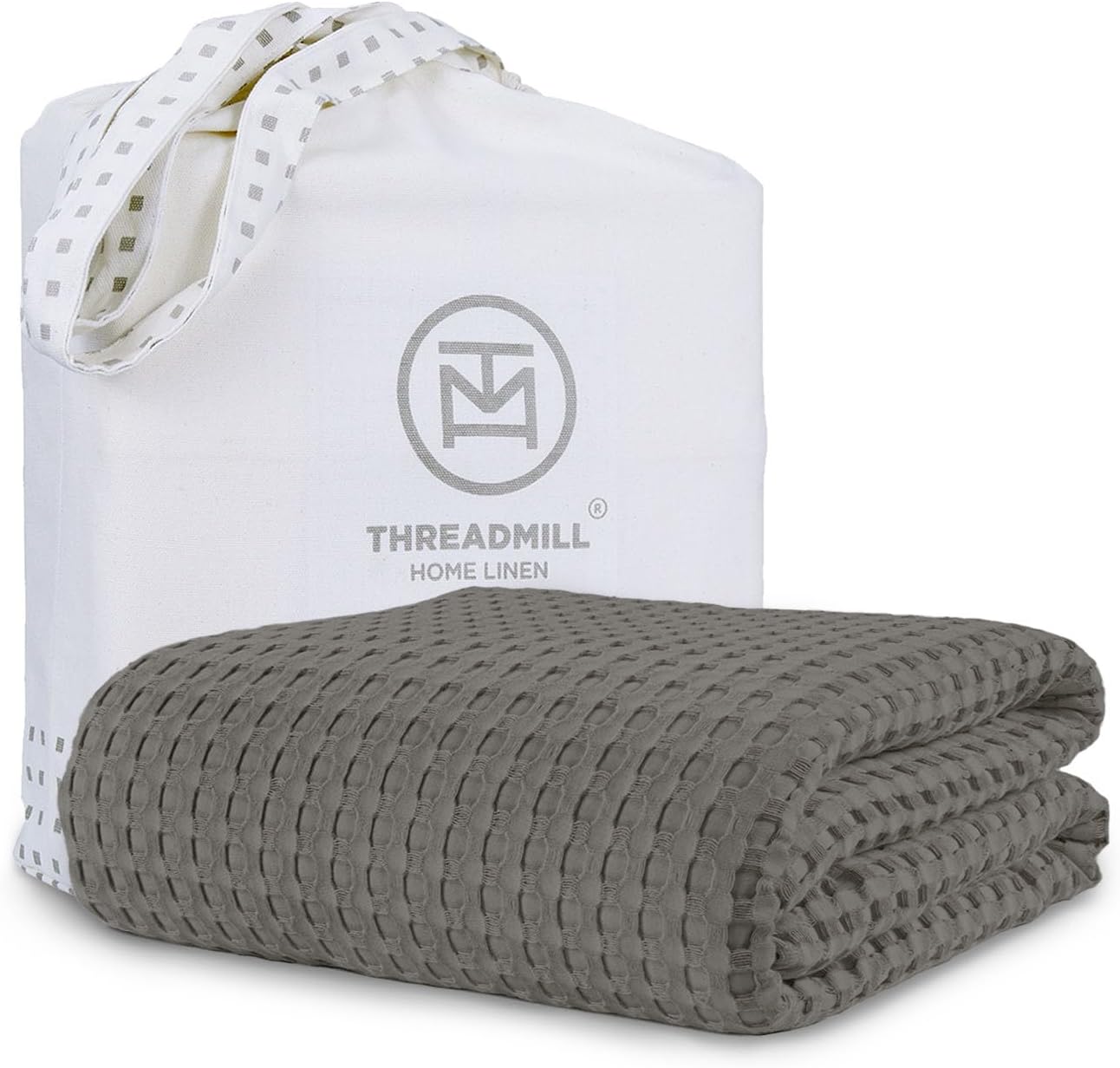
Sleep Cool All Night: The ultimate choice for hot sleepers, combining bamboo’s cooling properties with airy waffle texture.
Check Price on Amazon4. Best Organic: GOTS Certified Cotton Waffle
If you have sensitive skin or are eco-conscious, looking for the GOTS (Global Organic Textile Standard) label is non-negotiable. This blanket guarantees that no harsh chemicals, pesticides, or toxic dyes were used in the manufacturing process.
It typically features an unrefined, earthy texture that softens beautifully over time. It pairs perfectly with other natural decor items like those found in our cozy living room blanket guide.
What GOTS Certification Actually Means
The Global Organic Textile Standard (GOTS) is the world’s leading processing standard for textiles made from organic fibers. It covers every step of the supply chain, from harvesting the raw materials to manufacturing, packaging, labeling, and distribution. To earn GOTS certification, a product must meet strict criteria across several dimensions:
- Organic Fiber Content: The product must contain at least 70% certified organic fibers. “Organic” products must contain at least 95% organic fibers.
- Chemical Restrictions: All inputs (dyes, finishes, softeners) must meet strict toxicity and biodegradability requirements. ATEX lists of approved and banned chemicals are strictly enforced.
- Environmental Criteria: Manufacturing facilities must have comprehensive wastewater treatment systems. Air emissions must be monitored and controlled.
- Social Criteria: Based on the International Labour Organization (ILO) conventions, GOTS requires fair wages, safe working conditions, and prohibits child labor and forced labor.
- Quality Requirements: The product must meet minimum performance criteria for colorfastness, shrinkage, and pilling resistance.
Benefits of Organic Cotton for Waffle Blankets
Organic cotton is not just about environmental ethics—it has tangible performance benefits for waffle blankets:
- Stronger Fibers: Organic cotton is grown without synthetic fertilizers that can weaken fiber structure. The result is a naturally stronger yarn that resists breakage and fraying.
- Better Absorption: Without chemical coatings, organic cotton fibers absorb moisture more naturally, improving the blanket’s breathability and moisture-wicking performance.
- Safer for Sensitive Skin: No chemical residues mean fewer irritants for people with eczema, dermatitis, or chemical sensitivities.
- Environmental Impact: Organic cotton farming uses 91% less water, 62% less energy, and emits 46% less carbon dioxide compared to conventional cotton farming.
How to Verify GOTS Claims
Unfortunately, some brands falsely claim GOTS certification. Here is how to verify:
- Check the Label: Legitimate GOTS products will display the GOTS logo along with the name and code number of the certifying body.
- Search the Database: Visit the official GOTS public database (global-standard.org) and search for the brand or facility name.
- Look for the License Number: Every GOTS-certified product has a license number printed on the label. This number can be cross-referenced with the public database.
Pros
- Chemical Free: Safe for babies, children, and people with sensitive skin or chemical allergies.
- Eco-Friendly: Sustainable farming practices that protect soil, water, and biodiversity.
- Durability: Organic fibers are often stronger due to less processing damage during manufacturing.
- Traceable Supply Chain: GOTS certification requires full transparency from farm to finished product.
- Superior Softness: Many users find organic cotton softer than conventional cotton, likely due to the absence of chemical stiffening agents.
Cons
- Natural Color: Often limited to earth tones (beige, off-white, sage green) because the dye palette is restricted.
- Wrinkles: Organic cotton wrinkles more easily than conventional cotton due to the absence of wrinkle-resistant chemical treatments.
- Higher Price: GOTS certification adds 20-40% to the manufacturing cost, which is passed on to consumers.
- Limited Availability: Fewer brands offer GOTS-certified waffle blankets compared to conventional options.

Pure & Natural: Wrap yourself in chemical-free comfort with this GOTS-certified organic option.
Check Price on Amazon5. Best Throw: The Oversized Chunky Waffle
Sometimes you don’t need a full bed layer; you just need something for the couch. The “Chunky Waffle” throw features a much larger honeycomb pattern (often called a Euro Waffle). This deep texture looks stunning draped over a chair or sofa.
Comparison-wise, this texture is much rougher and more structural than the velvety smooth feel of a Minky blanket, making it a better choice for modern or farmhouse aesthetics.
Why Throws Matter More Than You Think
A throw blanket is more than just a smaller bed blanket—it is a design element that defines the mood of a living space. Interior designers consistently rank throw blankets as one of the easiest and most cost-effective ways to refresh a room’s aesthetic. A well-chosen waffle throw can:
- Add Texture: In rooms dominated by smooth surfaces (leather couches, glass tables, hardwood floors), a chunky waffle throw introduces visual and tactile contrast that makes the space feel warmer and more inviting.
- Define Color Accents: A single throw in a bold color can tie together disparate elements in a room—matching throw pillows, curtains, or artwork.
- Create Zones: Draping a throw over a reading chair or chaise immediately signals “this is a relaxation spot,” helping to organize open-plan living spaces.
- Seasonal Refresh: Swapping throw blankets with the seasons (lighter colors and weaves in summer, deeper tones and heavier textures in fall) is a simple way to keep decor feeling current.
Size Considerations for Throws
Unlike bed blankets, which are sized to fit standard mattress dimensions, throws are more flexible. Here are the standard throw sizes and their ideal uses:
- 50″ x 60″ (Standard Throw): The most common size. Large enough to cover one person comfortably on a couch, but small enough to fold neatly over an armrest.
- 50″ x 70″ (Oversized Throw): Provides extra length for taller individuals or for wrapping completely around the shoulders. Great for outdoor seating.
- 60″ x 80″ (Lap Blanket/Small Bed): Large enough to serve as a light bed cover for a twin bed, or to cover two people on a couch.
Pros
- Aesthetic: Adds massive texture to your interior design. The chunky waffle pattern is a statement piece.
- Weight: Often heavier, providing a comforting pressure that many people find calming.
- Size: Oversized options allow for full-body coverage without the commitment of a full bed blanket.
- Versatility: Works on couches, chairs, beds, and even as a wall hanging or table runner.
- Gift Appeal: Throws are one of the most universally appreciated gifts for housewarmings and holidays.
Cons
- Snag Risk: Larger loops are easier to catch on zippers, jewelry, and pet claws.
- Shape: Can stretch out of shape if hung to dry or draped over rough surfaces.
- Coverage: Not large enough to serve as primary bed covering for most adults.
- Storage: Chunky textures take up more drawer or shelf space than flat-weave alternatives.

Style Meets Comfort: This chunky textured throw is the perfect accent piece for any modern living room.
Check Price on AmazonSide-by-Side Comparison
See how the top contenders stack up against each other across every important dimension.
| Category | Material | Weave Tightness | Weight | Best For | Price Range |
|---|---|---|---|---|---|
| Best Overall | 100% Cotton | Tight / Structured | 4.5 lbs (Queen) | Everyday Bedding | $180-$250 |
| Best Value | Cotton/Bamboo Blend | Medium | 3.5 lbs (Queen) | Guest Rooms / Kids | $30-$45 |
| Best Cooling | 100% Bamboo Viscose | Loose / Slinky | 3.0 lbs (Queen) | Hot Sleepers | $100-$160 |
| Best Organic | GOTS Organic Cotton | Tight / Natural | 4.0 lbs (Queen) | Sensitive Skin | $120-$200 |
| Best Throw | Heavy Cotton | Deep / Chunky | 5.0 lbs | Living Room Decor | $50-$90 |
Cotton vs Bamboo: The Great Debate
One of the most common questions we receive is: should I choose a cotton waffle blanket or a bamboo waffle blanket? The answer depends on your priorities, sleeping habits, and lifestyle. Here is an in-depth comparison to help you decide.
Temperature Regulation
Bamboo wins. Bamboo’s natural moisture-wicking and thermal-regulating properties make it superior for temperature control. In a controlled test, bamboo fabric maintained a skin surface temperature 2-3 degrees cooler than cotton under identical conditions. For hot sleepers, this difference is immediately noticeable.
However, cotton performs better in cooler conditions. The honeycomb pockets in cotton waffle blankets trap more insulating air, making them warmer when the room temperature drops below 68°F (20°C). If you live in a climate with distinct seasons, cotton may be the better year-round choice.
Durability and Longevity
Cotton wins. Cotton fibers are inherently stronger than bamboo fibers, particularly when wet. A well-made 100% cotton waffle blanket can last 7-10 years with proper care, while bamboo blankets typically have a lifespan of 3-5 years. The strength difference is most apparent in the waffle weave pattern, where the raised loops are subject to more stress than in a flat weave.
Bamboo’s weakness when wet is particularly relevant for waffle blankets because the three-dimensional structure creates more points of stress during washing. The raised loops can stretch and变形 if the blanket is wrung out aggressively or dried on high heat.
Softness and Hand-Feel
Bamboo wins initially; cotton catches up. Out of the package, bamboo is dramatically softer than cotton—often described as “silky” or “buttery.” Cotton, especially new organic cotton, can feel slightly stiff and requires 5-10 washes to reach peak softness. However, once broken in, high-quality cotton develops a plush, comforting softness that many people prefer over bamboo’s slippery texture.
Ease of Care
Cotton wins. Cotton waffle blankets are generally more forgiving in the laundry. They tolerate higher water temperatures, stronger agitation cycles, and higher dryer heat. Bamboo requires more careful handling: cold water, gentle cycle, low or no heat drying. For busy families or people who prefer a “throw it in and forget it” approach to laundry, cotton is the more practical choice.
Environmental Impact
It depends on the processing method. Bamboo is one of the fastest-growing plants on Earth, requiring no pesticides, minimal water, and regenerating quickly after harvest. However, the process of converting bamboo into viscose/rayon fabric involves harsh chemicals (carbon disulfide, sodium hydroxide) that can be harmful to workers and the environment if not properly managed.
Bamboo lyocell (Tencel) uses a closed-loop solvent system that recycles 99% of the chemicals, making it far more environmentally friendly. Conventional cotton farming is water-intensive and pesticide-heavy, but organic cotton addresses many of these concerns. If sustainability is your priority, choose either bamboo lyocell or GOTS-certified organic cotton.
| Factor | Cotton | Bamboo | Winner |
|---|---|---|---|
| Cooling | Good | Excellent | Bamboo |
| Warming | Excellent | Moderate | Cotton |
| Durability | 7-10 years | 3-5 years | Cotton |
| Softness (New) | Moderate | Excellent | Bamboo |
| Softness (Broken In) | Excellent | Good | Cotton |
| Ease of Care | Easy | Moderate | Cotton |
| Snag Resistance | Good | Poor | Cotton |
| Hypoallergenic | Good | Excellent | Bamboo |
| Price | $30-$250 | $80-$200 | Cotton |
| Eco-Friendliness | Moderate (organic: high) | Variable (lyocell: high) | Tie |
Waffle Weave vs Other Weave Types
How does waffle weave compare to other popular blanket weave types? Understanding the differences helps you choose the right blanket for your specific needs.
Waffle Weave vs Fleece
Fleece is a synthetic fabric (usually polyester) that is brushed to create a soft, napped surface. It is warmer than waffle weave but significantly less breathable. Fleece blankets trap heat effectively, which makes them ideal for cold climates but uncomfortable for people who sleep warm. Waffle weave offers a better balance of warmth and breathability, making it more versatile across seasons.
Fleece is also more prone to static electricity, pilling, and matting over time. A quality waffle weave blanket will outlast a comparable fleece blanket by several years. However, fleece dries much faster and is generally lighter, making it a better choice for camping and outdoor activities where quick-drying gear matters.
Waffle Weave vs Knit
Knit blankets (chunky knits, cable knits) are primarily decorative. While they look stunning draped over a couch, they are generally poor performers as functional blankets. The loose knit structure allows air to flow freely, providing minimal insulation. They also stretch out of shape easily and are extremely difficult to wash.
Waffle weave blankets provide actual warmth and functionality while still offering strong visual texture. If you want a blanket that looks as good as it performs, waffle weave is the superior choice. Knit blankets are better suited for occasional decorative use rather than daily sleeping.
Waffle Weave vs Down/Down Alternative
Down comforters and their synthetic alternatives are designed for maximum warmth. They are filled with insulating material (goose/duck down or polyester clusters) that traps air in large volumes. This makes them excellent for cold winters but far too warm for summer or transitional seasons.
Waffle weave blankets serve a different purpose: they are mid-weight layers that provide moderate insulation without bulk. The ideal bedding setup for most climates is a flat sheet, a waffle blanket, and a duvet or comforter on top. In warmer months, you remove the duvet and use only the sheet and waffle blanket.
Waffle Weave vs Quilt
Quilts are multi-layered fabrics stitched together with batting in between. They offer moderate warmth and attractive patterns but lack the three-dimensional texture of waffle weave. Quilts are typically heavier and stiffer than waffle blankets, and they do not conform to the body as naturally.
One advantage of quilts is their durability—the stitched construction prevents the layers from shifting or bunching. However, quilts are harder to wash and dry due to their bulk and multi-layer construction. For everyday use, waffle weave is more practical.
| Weave Type | Warmth | Breathability | Durability | Maintenance | Best Season |
|---|---|---|---|---|---|
| Waffle Weave | Medium | Excellent | High | Easy | Year-round |
| Fleece | High | Poor | Moderate | Easy | Fall/Winter |
| Chunky Knit | Low | Excellent | Low | Difficult | Decorative only |
| Down/Alt | Very High | Low | High | Moderate | Winter |
| Quilt | Medium | Good | High | Moderate | Spring/Fall |
| Flat Sheet | Low | Excellent | High | Easy | Summer |
Waffle Blanket Size Guide
Choosing the right size waffle blanket is crucial for comfort and aesthetics. A blanket that is too small leaves your feet exposed, while one that is too large bunches up and looks messy. Here is our comprehensive sizing guide.
Standard Waffle Blanket Sizes
| Size Name | Dimensions (inches) | Dimensions (cm) | Best For | Typical Weight |
|---|---|---|---|---|
| Twin | 66″ x 90″ | 168 x 229 | Twin beds, children’s rooms | 3.0-3.5 lbs |
| Full/Double | 80″ x 90″ | 203 x 229 | Full beds, single adults | 3.5-4.0 lbs |
| Queen | 90″ x 90″ | 229 x 229 | Queen beds, couples (snug) | 4.0-4.5 lbs |
| King | 104″ x 90″ | 264 x 229 | King beds, couples (generous) | 4.5-5.5 lbs |
| California King | 104″ x 96″ | 264 x 244 | Cal King beds, tall individuals | 5.0-6.0 lbs |
| Throw | 50″ x 60″ | 127 x 152 | Couch, reading chair, accent | 2.0-2.5 lbs |
| Oversized Throw | 50″ x 70″ | 127 x 178 | Tall individuals, outdoor seating | 2.5-3.0 lbs |
How to Choose the Right Size
The golden rule for bed blankets: the blanket should drape 12-18 inches over each side of the mattress. This provides enough coverage to tuck in on cold nights while still looking neat when folded back during the day.
To calculate your ideal blanket width, measure your mattress width and add 24-36 inches (12-18 inches for each side). For example, a standard queen mattress is 60 inches wide. Adding 36 inches gives you 96 inches, which is close to the standard queen blanket width of 90 inches. If you like generous drape or have a thick mattress, consider sizing up to a king blanket.
Special Sizing Considerations
- Thick Mattresses: If your mattress is 12 inches or thicker (common with pillow-top and hybrid mattresses), add an extra 6-12 inches to your blanket width to account for the increased height.
- Adjustable Beds: For adjustable bases, look for blankets with elastic corner straps or deep pockets. These prevent the blanket from slipping off when the bed is raised.
- Foot of Bed Placement: If you plan to fold the waffle blanket at the foot of the bed as a decorative accent, a throw (50″ x 60″) is usually sufficient. For a full bed cover, you need at least a queen size.
- Washing Shrinkage: Always check the care label for expected shrinkage. A blanket that shrinks 5-10% may need to be ordered one size up.
Pro Tip
When in doubt, go larger. A blanket that is slightly too large can be folded or tucked, but a blanket that is too small will leave you frustrated and cold. Most manufacturers offer generous return policies on bedding, so it is worth ordering both sizes and returning the one that does not fit.
Understanding Blanket Weight and GSM
Blanket weight is one of the most important factors in choosing the right waffle blanket, yet it is the one most shoppers overlook. Weight determines warmth, drape, and comfort, and it varies dramatically between products even within the same price range.
What is GSM?
GSM stands for “Grams per Square Meter.” It is the standard metric for measuring fabric weight in the textile industry. A higher GSM means a heavier, denser fabric. Here is how waffle blankets typically break down:
- 150-250 GSM (Lightweight): Summer blankets and light layers. These provide minimal warmth but excellent breathability. Ideal as a top sheet replacement in hot climates.
- 250-350 GSM (Mid-Weight): The sweet spot for year-round use. Provides moderate insulation without overheating. This is where most quality waffle blankets fall.
- 350-500 GSM (Heavyweight): Winter-weight blankets that provide substantial warmth. These can be too heavy and hot for summer use but are excellent as duvet alternatives in cold weather.
- 500+ GSM (Extra Heavy): Ultra-warm blankets designed for the coldest climates. Rare in waffle weave due to the three-dimensional structure making very heavy weaves impractical.
Does Heavier Mean Better?
Not necessarily. The “best” weight depends entirely on your personal preferences, sleeping environment, and intended use. Here is a general guide:
- Hot Sleepers: Look for 200-300 GSM. Lighter weight reduces heat retention while still providing a comforting layer.
- Cold Sleepers: Look for 350-450 GSM. The extra weight provides more insulation and a cozier feel.
- All-Season Use: Look for 300-350 GSM. This range provides enough warmth for cool nights without causing overheating in warmer weather.
- Decorative Throws: Weight matters less for throws since they are primarily used for short periods. Focus on aesthetics and hand-feel rather than GSM.
Weight vs Warmth: The Physics
The relationship between weight and warmth is not linear. A blanket’s warming ability depends on its ability to trap air, not just its mass. Waffle weave blankets are uniquely efficient at this because the three-dimensional structure creates air pockets regardless of the fabric weight. A 300 GSM waffle blanket can be surprisingly warm because those air pockets provide insulation that a 300 GSM flat-weave blanket cannot match.
This is why waffle blankets are often described as “light but warm.” They deliver warmth disproportionate to their weight, which is one of their primary advantages over other blanket types.
Weight Comparison: Waffle vs Other Blankets
A typical queen-size fleece blanket weighs 3-4 lbs. A queen-size down comforter weighs 4-6 lbs. A queen-size waffle blanket in the mid-weight range (300 GSM) weighs approximately 4-4.5 lbs—comparable to fleece but with significantly better breathability and durability.
Buyer’s Guide: What to Look For
Before you click “Add to Cart,” consider these critical factors to ensure you don’t end up with a blanket that shrinks to the size of a towel or falls apart after three washes.
1. Weave Tightness and Snagging
The “waffle” is created by floating threads. The larger the waffle (the honeycomb square), the longer the floating thread, and the easier it is to snag on a ring, zipper, or cat’s claw. If you have pets, opt for a micro-waffle weave which is much tighter and resistant to damage.
Look for products that specifically mention “tight weave” or “micro-waffle” in their descriptions. Avoid vague terms like “textured” or “patterned” which could mean anything. If possible, examine close-up photos that show the individual threads—you should be able to count at least 20-25 threads per inch in a quality waffle weave.
2. Material Matters
- Cotton: The classic. Durable, breathable, gets softer with time. Prone to shrinking if not pre-washed. Look for “long-staple” or “Egyptian” cotton for the best quality.
- Bamboo: Silky and cooling. Less durable but incredibly comfortable. Ideal for hot sleepers. Choose lyocell/Tencel for the most eco-friendly option.
- Synthetic/Blend: Cheap and durable, but can trap heat and pill over time. Best for high-use, high-wash situations like kids’ rooms and guest houses.
- Linen: Premium option with excellent breathability. Gets softer with every wash but wrinkles easily. More expensive than cotton but lasts longer.
- Organic Cotton: Chemical-free and eco-friendly. More expensive but safer for sensitive skin. Look for GOTS certification for authenticity.
3. Weight (GSM)
Blanket weight is measured in GSM (grams per square meter). A standard waffle blanket is usually around 300-400 GSM. Anything lower (200s) is a summer sheet; anything higher (500+) is a heavy winter layer. Match the weight to your sleeping temperature preference and climate.
4. Pre-Shrinking
One of the biggest complaints about waffle blankets is shrinkage. The three-dimensional structure makes them more susceptible to shrinkage than flat weaves. Look for blankets that are labeled “pre-shrunk” or “sanforized.” Quality manufacturers will wash and dry the fabric multiple times before cutting and sewing to minimize residual shrinkage to under 2%.
5. Edge Finishing
The edges of a waffle blanket are its weakest point. Cheap blankets use simple serged edges (a single line of overlock stitching) that can unravel over time. Quality blankets use double-folded hems that encase the raw edge completely. This small detail can mean the difference between a blanket that lasts 2 years and one that lasts 10.
6. Dye Quality
Cheap dyes bleed, fade, and can even transfer color to other laundry items. Look for blankets that use reactive dyes (which bond chemically with the fiber rather than sitting on the surface) and are OEKO-TEX certified (tested for harmful substances). Reactive dyes typically cost more but maintain their color vibrancy for years.
7. Brand Reputation
In the bedding industry, brand reputation is earned through consistent quality over time. Established brands like Boll & Branch, Coyuchi, Brooklinen, and Parachute have built their reputations on transparent sourcing, quality manufacturing, and excellent customer service. While you can find quality blankets from lesser-known brands, established brands offer more reliable quality control and better return policies.
8. Return Policy
Even with thorough research, you may not love a blanket until you sleep under it for a few nights. Look for brands that offer at least a 30-day return policy, preferably with free return shipping. Some premium brands (like Boll & Branch) offer 30-night trial periods where you can return the blanket for a full refund if you are not satisfied.
Material Deep-Dive Guide
Understanding the materials used in waffle blankets helps you make informed decisions about quality, performance, and value. Here is a comprehensive breakdown of each material option.
100% Long-Staple Cotton
Origin: Grown primarily in Egypt, Peru, and the United States (Pima cotton). Long-staple refers to fibers longer than 1.25 inches.
Characteristics: Smooth, strong yarns that resist pilling. Develops a luxurious patina over time. Naturally breathable and moisture-absorbing.
Best For: Everyday bedding, year-round use, people who value durability and long-term comfort.
Price Range: $100-$300 depending on brand and size.
$100-$300
Bamboo Viscose
Origin: Bamboo grass (primarily Moso bamboo from China). Processed into viscose using chemical dissolution.
Characteristics: Silky smooth, cool to the touch, naturally antibacterial. Excellent moisture-wicking but weaker when wet.
Best For: Hot sleepers, summer use, people with sensitive skin or allergies.
$80-$200
Bamboo Lyocell (Tencel)
Origin: Bamboo processed using closed-loop solvent system (NMMO). Environmentally superior to viscose.
Characteristics: Similar to viscose but with better durability and a more environmentally friendly production process. Silky, cool, and moisture-wicking.
Best For: Eco-conscious consumers who want bamboo’s benefits without the environmental concerns of viscose production.
$120-$250
Cotton-Polyester Blend
Origin: Combination of natural cotton fibers and synthetic polyester fibers, typically in 50/50 or 60/40 ratios.
Characteristics: Wrinkle-resistant, quick-drying, and very durable. Less breathable than 100% cotton but more forgiving in the wash.
Best For: Budget-conscious shoppers, kids’ rooms, rental properties, high-wash environments.
$25-$60
Organic Cotton (GOTS)
Origin: Cotton grown without synthetic pesticides, herbicides, or fertilizers. Certified by GOTS or USDA Organic.
Characteristics: Chemical-free, safe for sensitive skin, environmentally sustainable. May feel slightly rougher initially but softens beautifully.
Best For: People with chemical sensitivities, eco-conscious consumers, baby blankets, allergy sufferers.
$100-$250
Linen (Flax)
Origin: Flax plant fibers, primarily grown in Europe (Belgium, France, Ireland).
Characteristics: Exceptionally breathable, naturally antibacterial, gets softer with every wash. Wrinkles easily but develops a beautiful relaxed texture.
Best For: People who value natural materials, warm climates, luxury bedding enthusiasts.
$150-$400
How to Read a Material Label
Bedding labels can be confusing. Here is what common terms actually mean:
- “100% Cotton” means exactly that—no other fibers. This is the gold standard for breathability and natural comfort.
- “Cotton Blend” means cotton mixed with another fiber. Check the percentages—a “cotton blend” could be anywhere from 20% to 80% cotton.
- “Bamboo” on a label almost always means bamboo viscose/rayon, not raw bamboo fiber. True bamboo fiber (bamboo linen) is rare and expensive.
- “Microfiber” means ultra-fine synthetic fibers (usually polyester). Soft but not breathable—avoid for hot sleepers.
- “Egyptian Cotton” is a regulated term, but enforcement varies. Look for the Egyptian Cotton logo and certification number for authenticity.
- “Pima Cotton” or “Supima” indicates long-staple cotton grown in the US. Supima is a certification mark that guarantees 100% American-grown Pima cotton.
Seasonal Waffle Blanket Guide
One of the greatest advantages of waffle weave blankets is their year-round versatility. However, getting the most out of your blanket means understanding how to use it across different seasons and temperatures.
Spring (March – May)
Temperature Range: 50-70°F (10-21°C)
Recommendation: This is waffle blanket prime time. A mid-weight cotton waffle blanket (300-350 GSM) provides the perfect layer of warmth without overheating as temperatures fluctuate. Use it alone on warmer nights or pair it with a light sheet on cooler nights.
Best Material: 100% Cotton (mid-weight)
Layering Tip: Place the waffle blanket between a flat sheet and a lightweight duvet. As temperatures warm through the season, you can remove the duvet and use just the sheet and waffle blanket.
Summer (June – August)
Temperature Range: 70-90°F+ (21-32°C+)
Recommendation: Switch to a lightweight bamboo waffle blanket (200-250 GSM) or a micro-waffle cotton. The breathability of waffle weave makes it one of the few blanket types that can be used in summer without causing overheating. For extremely hot climates, use the waffle blanket as a light cover over just your midsection.
Best Material: Bamboo Viscose or Lightweight Cotton
Pro Tip: Bamboo waffle blankets in summer can actually cool you down through evaporative cooling. The increased surface area of the waffle pattern accelerates moisture evaporation, creating a natural air-conditioning effect.
Fall (September – November)
Temperature Range: 40-65°F (4-18°C)
Recommendation: Return to mid-weight or upgrade to a heavier waffle blanket (350-400 GSM). As temperatures drop, the waffle blanket becomes your primary insulation layer under a duvet. The honeycomb pockets are most effective at trapping warm air in the 40-60°F range.
Best Material: 100% Cotton (mid to heavy weight) or Organic Cotton
Layering Tip: Use the waffle blanket as a middle layer: flat sheet → waffle blanket → duvet. This three-layer system allows you to adjust warmth throughout the night by kicking off layers as needed.
Winter (December – February)
Temperature Range: 20-45°F (-6-7°C)
Recommendation: A heavy waffle blanket (400-500 GSM) can serve as a primary blanket in moderate winter climates. In colder regions, use it as an insulating middle layer under a down comforter. The waffle texture prevents the duvet from sliding around, improving overall bed stability.
Best Material: Heavyweight Cotton or Cotton/Organic Cotton Blend
Pro Tip: In very cold climates, consider using two waffle blankets of different weights. A lighter one (300 GSM) directly on top of the sheet provides immediate softness, while a heavier one (400+ GSM) on top traps more air for deeper insulation.
Climate-Specific Recommendations
- Tropical/Humid (Year-round warm): Bamboo waffle blanket, 200-250 GSM. Prioritize moisture-wicking over warmth.
- Temperate (Distinct seasons): Cotton waffle blanket, 300-350 GSM. Layer with sheets and duvets as needed.
- Cold (Harsh winters): Heavy cotton waffle blanket, 400+ GSM, used as a middle layer under a down comforter.
- Desert (Hot days, cool nights): Medium cotton waffle blanket, 300 GSM. Perfect for the temperature drop after sunset.
How to Layer Waffle Blankets
Layering is the secret to year-round sleep comfort. Instead of owning multiple heavy blankets for different seasons, you can build a modular bedding system using a waffle blanket as your core layer. Here is how to do it effectively.
The Three-Layer System
The most versatile bedding setup consists of three layers that can be added or removed independently:
- Base Layer (Fitted Sheet): A quality cotton fitted sheet provides the foundation. It wicks moisture from the mattress and creates a smooth surface for the layers above.
- Core Layer (Waffle Blanket): This is your workhorse. The waffle blanket provides moderate insulation, breathability, and a comforting weight that promotes deeper sleep. It stays on the bed year-round.
- Top Layer (Duvet/Comforter): A down or down-alternative duvet provides the bulk of your insulation in cold weather. It is easily removed when temperatures rise.
Layering Configurations by Season
- Summer: Fitted sheet only (or fitted sheet + lightweight waffle blanket). Remove the duvet entirely. The waffle blanket provides just enough weight to feel comfortable without overheating.
- Spring/Fall: Fitted sheet + waffle blanket. This is the “Goldilocks” configuration—not too hot, not too cold. Many people find this combination sufficient for temperatures between 55-75°F.
- Winter: Fitted sheet + waffle blanket + duvet. The waffle blanket’s textured surface prevents the duvet from sliding off during the night. It also adds an extra layer of air-trapping insulation that makes the entire system warmer.
- Deep Winter (Very Cold): Fitted sheet + lightweight waffle blanket + heavy waffle blanket + duvet. This four-layer system provides maximum warmth while still allowing breathability. Remove layers one at a time as the room warms.
Benefits of the Waffle Blanket Layer
Using a waffle blanket as your core layer provides several advantages over using a flat sheet or a thin blanket:
- Temperature Regulation: The honeycomb pockets create a buffer zone between your body and the duvet, allowing excess heat to dissipate without losing all insulation.
- Moisture Management: If you sweat during the night, the waffle blanket absorbs and evaporates the moisture before it reaches the duvet, keeping your bedding fresher longer.
- Duvet Stability: The textured surface grips the duvet’s underside, preventing it from sliding off during the night—a common problem with smooth sheets and flat blankets.
- Weighted Comfort: The combined weight of the waffle blanket and duvet creates a gentle, even pressure across the body that many people find calming and sleep-promoting.
- Aesthetic Layering: When the duvet is folded back during the day, the waffle blanket provides a visually interesting middle layer that adds depth and texture to your bed’s appearance.
Common Layering Mistakes
- Using too many heavy layers: More layers do not always mean more warmth. Over-layering creates bulk that compresses air pockets and reduces insulation efficiency.
- Mismatching materials: A bamboo waffle blanket under a down duvet can cause the duvet to slide because bamboo is too smooth. Use a cotton waffle blanket for better grip.
- Ignoring mattress thickness: Thick mattresses (12+ inches) raise the sleeping surface higher, making standard blankets too short. Size up or look for “deep pocket” options.
Waffle Blanket Styling Tips
Waffle blankets are not just functional—they are design elements that can transform the look of a bedroom or living room. Interior designers love waffle weave for its ability to add texture, depth, and visual interest to any space. Here are professional styling tips to help you get the most aesthetic value from your waffle blanket.
Bed Styling Techniques
- The Casual Drape: Fold the waffle blanket in half lengthwise and lay it across the foot of the bed, letting it hang evenly on both sides. This creates a relaxed, inviting look that works in both modern and traditional bedrooms.
- The Layered Fold: Place the waffle blanket on top of the duvet, folded back about one-third from the pillows. This shows off the waffle texture while creating a welcoming, hotel-like appearance.
- The Asymmetric Tuck: Lay the waffle blanket diagonally across the bed, tucking one corner under the mattress and leaving the other three corners draped naturally. This creates a casual, artistic look that works well in bohemian and eclectic spaces.
- The Color Pop: Use a waffle blanket in a bold accent color (coral, teal, mustard) against neutral bedding. The texture prevents the color from feeling overwhelming while adding a focal point to the room.
Living Room Styling
- The Armchair Accent: Fold the waffle blanket neatly and drape it over one arm of an accent chair or reading nook. This adds warmth and invites visitors to sit down. Choose a color that complements but does not match the chair upholstery.
- The Couch Cascade: Drape the waffle blanket over the back of the couch, letting it cascade down one side. This creates a sense of depth and makes the space feel more lived-in and comfortable.
- The Basket Display: Roll or fold waffle blankets and display them in a woven basket next to the fireplace or couch. This serves as both storage and decor, and the basket-and-blanket combination is a classic farmhouse touch.
- The Layered Throw: Combine a waffle blanket with a contrasting throw pillow or a smooth throw in a complementary color. The textural contrast between the waffle weave and smooth fabrics creates visual interest.
Color Coordination Rules
Choosing the right color for your waffle blanket depends on your existing decor. Here are guidelines:
- Neutral Rooms: Add a waffle blanket in a warm tone (camel, blush, sage) to create coziness without disrupting the neutral palette.
- Bold Rooms: Choose a waffle blanket in white, cream, or gray to balance out strong colors elsewhere in the room.
- Monochromatic Rooms: Use a waffle blanket in a slightly different shade than your walls and bedding. The texture alone will create enough visual interest.
- Eclectic Rooms: Mix and match waffle blankets in different colors and sizes. The consistent texture creates unity even when colors vary.
Designer Secret
When styling a bed with a waffle blanket, always iron or steam the blanket before draping. The three-dimensional texture looks best when it is crisp and well-defined. A wrinkled waffle blanket loses its visual impact and looks messy rather than intentional.
Waffle Blankets for Kids and Pets
Choosing a waffle blanket for a household with children or pets requires extra consideration. The same three-dimensional texture that makes these blankets attractive also creates potential durability challenges. Here is what you need to know.
Kids’ Waffle Blankets
Children love waffle blankets for the same reasons adults do—the texture is interesting to touch, and the weight provides a comforting, secure feeling. However, kids are rough on bedding, and waffle blankets require some selection criteria:
- Choose Micro-Waffle: The smaller, tighter weave is much more resistant to pulling, stretching, and snagging from small fingers and nails.
- Opt for Blends: A cotton-polyester blend is more durable than 100% cotton and can survive the aggressive washing that kids’ bedding requires.
- Bright Colors: Kids are more likely to use and care for a blanket that appeals to them visually. Choose fun colors or patterns that make them want to keep it on the bed.
- Pre-Shrunk Only: Kids’ bedding gets washed frequently in hot water. Only buy blankets labeled “pre-shrunk” to ensure they maintain their size.
- Safety First: For infants and toddlers, avoid blankets entirely until they are at least 18 months old. After that age, a lightweight waffle blanket is safer than heavier options because it is less likely to cause overheating.
Pet-Friendly Waffle Blankets
Pets—especially cats—love the texture of waffle blankets, which can be both a blessing and a curse. Here is how to choose a pet-friendly waffle blanket:
- Micro-Waffle is Essential: Standard waffle patterns have large loops that catch on claws and pull out easily. Micro-waffle patterns have loops too small for most claws to grip.
- Choose Dark Colors: Pet hair shows dramatically on light-colored waffle blankets. Dark grays, navies, and blacks hide fur between washes.
- Blends Handle Hair Better: Synthetic fibers in blends create less static than pure cotton, making pet hair easier to remove with a lint roller.
- Invest in a Lint Roller: No waffle blanket is completely immune to pet hair. Keep a quality lint roller nearby and use it regularly to keep the blanket looking clean.
- Wash Frequently: Pet dander accumulates in the waffle pockets. Wash pet-used blankets weekly in hot water to reduce allergens and keep the blanket fresh.
Best Materials for Pet Owners
| Material | Snag Resistance | Hair Resistance | Durability | Overall Rating |
|---|---|---|---|---|
| Micro-Waffle Cotton | Excellent | Good | Excellent | Best Choice |
| Cotton/Poly Blend | Good | Excellent | Excellent | Great Choice |
| Standard Cotton | Moderate | Good | Good | Acceptable |
| Bamboo | Poor | Moderate | Moderate | Not Recommended |
| Chunky Waffle | Poor | Poor | Moderate | Avoid |
Health and Skin Benefits of Waffle Blankets
Beyond comfort and aesthetics, waffle weave blankets offer several health and wellness benefits that are often overlooked. The unique structure and material options make them particularly beneficial for people with specific health concerns.
Better Sleep Quality
Research consistently shows that the weight and texture of bedding affect sleep quality. The gentle pressure provided by a waffle blanket—similar to the effect of a weighted blanket—can reduce anxiety and promote deeper sleep. The waffle texture also provides a tactile grounding effect that many people find calming.
The temperature-regulating properties of waffle weave are also critical for sleep quality. Studies show that the ideal sleeping temperature for most adults is between 60-67°F (15-19°C). Waffle blankets help maintain this temperature range by trapping just enough heat to keep you warm without causing the overheating that leads to restless sleep and frequent waking.
Allergy and Asthma Relief
Waffle weave blankets can benefit allergy and asthma sufferers in several ways:
- Dust Mite Resistance: The increased surface area and air circulation in waffle weave makes it harder for dust mites to establish colonies compared to flat, dense fabrics. Bamboo waffle blankets are particularly effective because bamboo is naturally antibacterial.
- Moisture Control: Allergens like mold and mildew thrive in moist environments. The breathability of waffle weave reduces moisture buildup, creating a less hospitable environment for these organisms.
- Easy Cleaning: Waffle blankets are generally machine washable, making it easy to regularly remove accumulated allergens.
Benefits for Sensitive Skin
People with eczema, psoriasis, or general skin sensitivity benefit from waffle blankets in several ways:
- Reduced Friction: The raised waffle pattern reduces the blanket’s contact area with the skin, minimizing friction that can irritate sensitive skin conditions.
- Temperature Stability: Fluctuations in skin temperature can trigger eczema flare-ups. The consistent insulation of a waffle blanket helps maintain stable skin temperature throughout the night.
- Chemical-Free Options: GOTS-certified organic cotton waffle blankets are free from the chemical residues that can irritate sensitive skin. Bamboo options are naturally hypoallergenic.
- Moisture Wicking: By pulling sweat away from the skin, waffle blankets prevent the moisture-heat combination that aggravates many skin conditions.
Benefits for People with Anxiety
The gentle, even pressure of a mid-weight waffle blanket can provide anxiety relief similar to a weighted blanket, but without the extreme heaviness. The textured surface provides sensory input that many people with anxiety find calming. For people who find weighted blankets too heavy or restrictive, a waffle blanket offers a gentler alternative.
Benefits for Recovery and Chronic Pain
People recovering from surgery or dealing with chronic pain conditions like fibromyalgia often find waffle blankets particularly comfortable. The light, even pressure does not aggravate tender areas, while the breathability prevents the overheating that can worsen inflammation. The soft, textured surface provides gentle sensory stimulation that can help distract from pain signals.
Eco-Friendly and Sustainable Waffle Blankets
As consumers become more environmentally conscious, the demand for sustainable bedding has grown significantly. Here is how to choose a waffle blanket that aligns with your environmental values.
Understanding Environmental Impact
The environmental impact of a waffle blanket depends on three factors: raw material sourcing, manufacturing processes, and end-of-life disposal. Here is how each material stacks up:
Organic Cotton
Most SustainableUses 91% less water, 62% less energy, and 46% less CO2 than conventional cotton. Eliminates pesticide runoff that contaminates waterways. Biodegradable at end of life.
Look For: GOTS certification, Fair Trade certification
Bamboo Lyocell (Tencel)
Very SustainableBamboo grows rapidly without pesticides. Lyocell production recycles 99% of solvents. Closed-loop manufacturing minimizes water pollution. Biodegradable.
Look For: Tencel brand, OEKO-TEX certification
Conventional Cotton
Water-intensive (2,700 liters per t-shirt). Heavy pesticide use. Can be sustainable if rain-fed and organic, but most is irrigated and chemically treated. Biodegradable.
Look For: BCI (Better Cotton Initiative) certification for improved practices
Bamboo Viscose/Rayon
Bamboo itself is sustainable, but viscose production uses harsh chemicals (carbon disulfide) that can harm workers and the environment if not properly managed.
Look For: Brands with transparent supply chains and environmental certifications
Polyester Blend
Derived from petroleum. Not biodegradable. Releases microplastics during washing. However, it is highly durable and long-lasting, which reduces replacement frequency.
Tip: Use a microfiber-catching laundry bag to reduce microplastic release
Recycled Polyester
Made from recycled plastic bottles. Diverts waste from landfills. Uses 59% less energy than virgin polyester. Still releases microplastics but is better than new synthetic.
Look For: GRS (Global Recycled Standard) certification
How to Make Your Waffle Blanket Last Longer
The most sustainable blanket is the one you do not have to replace. Extending the life of your waffle blanket reduces waste, saves money, and minimizes the environmental impact of manufacturing and shipping replacements. Here are tips for maximizing lifespan:
- Wash Less Frequently: Waffle blankets do not need to be washed after every use. airing them out between uses (draped over a railing or hung outside) freshens them without the wear and tear of washing.
- Wash Cold: Hot water degrades fibers faster and causes more shrinkage. Cold water cleans effectively while extending the blanket’s life.
- Air Dry When Possible: Dryer heat is the number one cause of fiber degradation. If you can, lay the blanket flat or hang it to dry. The 10-20 minutes of extra effort can add years to the blanket’s life.
- Use Gentle Detergent: Harsh detergents break down cotton and bamboo fibers. Choose a mild, fragrance-free detergent and skip the fabric softener (it coats fibers and reduces absorbency).
- Repair Snags Immediately: A small snag can quickly become a large tear if left unattended. Use a needle or snag repair tool to push pulled loops back through the fabric before they worsen.
End-of-Life Options
When your waffle blanket finally reaches the end of its useful life, consider these disposal options:
- Composting: 100% cotton and organic cotton waffle blankets are fully compostable. Cut them into strips and add them to your compost bin. They will break down within 3-6 months.
- Donation: If the blanket is still in decent condition, donate it to a shelter, thrift store, or animal rescue. Many organizations accept used bedding.
- Textile Recycling: If the blanket is too worn for donation, many municipalities offer textile recycling programs. Brands like Patagonia and The North Face also accept worn textiles for recycling.
- Repurposing: Old waffle blankets make excellent cleaning rags, pet bedding, garden mulch, or craft material. Their absorbent texture makes them ideal for cleaning applications.
Waffle Blanket Gift Guide
A quality waffle blanket makes an exceptional gift for almost any occasion. It is practical, luxurious, and something most people would not buy for themselves. Here is how to choose the perfect waffle blanket gift.
Wedding Gift
A queen or king-size waffle blanket in white, ivory, or soft gray is a timeless wedding gift. It serves as both a practical bedding layer and a beautiful decor piece that the couple will use for years.
Recommendation: Boll & Branch (Best Overall) in white or oatmeal
Housewarming Gift
A throw-size waffle blanket is perfect for new homeowners. It adds instant warmth and style to a new living room without requiring knowledge of the recipient’s bed size or color preferences.
Recommendation: Chunky Waffle Throw in a neutral tone
Baby Shower Gift
A micro-waffle blanket in organic cotton is ideal for newborns. The smaller weave pattern is safer for delicate skin, and the organic certification ensures no harmful chemicals.
Recommendation: GOTS Organic Micro-Waffle in white or pastel
Holiday Gift
Waffle blankets are one of the most popular holiday gifts because they provide immediate comfort during the cold season. Pair with a candle or hot chocolate set for a complete “cozy” gift package.
Recommendation: Bamboo Waffle Blanket (luxury feel) or Bedsure (budget-friendly)
Birthday Gift
For a personal touch, choose a waffle blanket in the recipient’s favorite color. Many people appreciate the gift of a quality blanket they would not splurge on themselves.
Recommendation: Ask about their sleeping temperature preference first
Self-Care Gift
Pair a waffle blanket with other self-care items (bath bombs, herbal tea, face mask) for a “treat yourself” care package. The blanket becomes the centerpiece of the gift.
Recommendation: Bamboo waffle blanket for the ultimate soft, cooling comfort
Gift Presentation Tips
- Use a Gift Box: Many premium waffle blanket brands offer gift boxes or bags. If yours did not come with one, fold the blanket neatly and place it in a sturdy gift box with tissue paper.
- Include Care Instructions: Print or handwrite the washing and drying instructions. This thoughtful touch ensures the recipient can enjoy the blanket for years.
- Add a Personal Note: Explain why you chose this particular blanket. For example: “I chose bamboo because I know you sleep warm” or “I picked organic cotton because I know you care about sustainability.”
Shopping on a Budget: Getting the Best Value
You do not need to spend hundreds of dollars to get a quality waffle blanket. Here are strategies for finding the best value at every price point.
Budget Tiers Explained
| Price Tier | Price Range (Queen) | What to Expect | Best Brands |
|---|---|---|---|
| Budget | $20-$50 | Cotton/poly blends, adequate quality, good for guest rooms and kids | Bedsure, Utopia, Chanasya |
| Mid-Range | $50-$120 | 100% cotton or bamboo blends, good quality, suitable for daily use | Amazon Basics, Mellanni, Americanflat |
| Premium | $120-$250 | Long-staple cotton, organic, or bamboo lyocell, excellent quality | Boll & Branch, Coyuchi, Brooklinen |
| Luxury | $250-$500+ | Hand-finished, artisanal, organic, limited editions | Masterson, Libeco, Matouk |
Money-Saving Strategies
- Wait for Sales: Black Friday, Cyber Monday, and end-of-season sales offer discounts of 30-50% on premium brands. Sign up for email newsletters to get early access to sales.
- Use Coupon Codes: Sites like Honey, RetailMeNot, and browser extensions can automatically apply coupon codes at checkout. Many bedding brands offer 10-20% off for first-time buyers.
- Buy Off-Season: Purchase winter-weight blankets in spring and summer when demand is low. Retailers discount heavy bedding to make room for summer inventory.
- Check Amazon Warehouse: Open-box and returned items are sold at significant discounts. These are typically blankets that were opened but never used, with minimal or no defects.
- Subscribe and Save: Some Amazon brands offer 5-15% off with Subscribe and Save. You can cancel after the first delivery, so it is essentially a one-time discount.
- Consider Blends: A 50/50 cotton-poly blend costs half as much as 100% cotton while providing 80% of the performance. For many use cases, the savings outweigh the trade-offs.
- Buy Direct: Some brands (like Bedsure) sell directly through their own websites at lower prices than Amazon. Always compare prices across platforms.
Price-Per-Use Calculation
To determine true value, divide the price by the expected number of uses. A $40 blanket used 3 times per week for 3 years = 468 uses = $0.086 per use. A $200 blanket used 3 times per week for 7 years = 1,092 uses = $0.183 per use. The cheaper blanket actually has a better cost-per-use ratio in this scenario, even though it will need to be replaced sooner.
Online Shopping Tips for Waffle Blankets
Since most people buy waffle blankets online, knowing how to evaluate products without touching them is essential. Here are expert tips for making smart purchases from your screen.
Reading Product Descriptions
Product descriptions are your primary source of information when shopping online. Here is what to look for and what to be skeptical about:
- Specific Material Percentages: A quality listing will say “100% Long-Staple Cotton” or “60% Cotton, 40% Bamboo Viscose.” Be wary of vague terms like “cotton blend” without specific percentages.
- GSM or Weight: Reputable brands list the GSM or total weight of the blanket. If this information is missing, the brand may be trying to hide a lighter-than-expected product.
- Dimensions (Not Just “Queen”): “Queen” can mean different things to different brands. Always check the actual dimensions in inches or centimeters.
- Care Instructions: A brand that includes detailed care instructions is signaling confidence in their product’s durability. Missing care instructions is a red flag.
- Country of Origin: While not always a quality indicator, knowing where the blanket was manufactured helps you assess supply chain transparency.
Evaluating Customer Reviews
Customer reviews are invaluable, but they can be misleading if not read critically. Here is how to extract useful information:
- Read 3-Star Reviews: These tend to be the most balanced and honest. Five-star reviews may be incentivized, and one-star reviews may be from defective products or user error.
- Look for Photos: Customer-uploaded photos show the actual product color, texture, and size—often more accurately than the brand’s professional photos.
- Search for Specific Terms: Use Ctrl+F (or the search function on mobile) to find reviews that mention “shrink,” “snag,” “soft,” “stiff,” or “color.” These targeted searches reveal the most relevant information.
- Check Review Dates: A five-star review from 3 years ago may not reflect the current product quality. Brands sometimes change manufacturers or materials without updating the listing.
- Verify Verified Purchases: Only trust reviews from verified purchasers. Non-verified reviews may be from competitors, bots, or incentivized reviewers.
- Look for Patterns: If multiple reviewers mention the same issue (shrinking, color mismatch, rough texture), it is likely a real problem, not an isolated incident.
Red Flags to Watch For
- Stock Photos Only: If a listing has no real photos of the actual product, the brand may be dropshipping a low-quality version of what is pictured.
- No Material Information: Legitimate brands list their materials proudly. Missing material information suggests the product is made from low-quality fibers.
- Extremely Low Prices: If a “100% cotton” waffle blanket is priced under $20 for a queen size, it is almost certainly not genuine 100% cotton. The material cost alone makes this impossible.
- Generic Brand Names: Brands with names like “Premium Home Essentials” or “Luxury Bedding Co” that have no web presence outside of Amazon are often generic rebrands of the same factory product.
- Excessive Marketing Claims: Phrases like “hotel quality,” “five-star luxury,” and “best ever” are marketing fluff, not quality indicators. Focus on specific material and construction details.
Brand Reputation and Reviews
The bedding industry has hundreds of brands, making it difficult to distinguish quality from hype. Here is an honest assessment of the major players in the waffle blanket space.
Tier 1: Premium Brands
- Boll & Branch: Founded in 2014, this brand has quickly become the gold standard for luxury bedding. Their waffle blankets use 100% long-staple cotton, are Fair Trade certified, and come with a 30-night trial. Customer satisfaction ratings consistently exceed 4.5/5. The main drawback is price—expect to pay $180-$250 for a queen.
- Coyuchi: A pioneer in organic bedding since 1991. Their waffle blankets use GOTS-certified organic cotton and are manufactured in Portugal with strict environmental standards. Slightly less structured than Boll & Branch but equally luxurious. Price range: $150-$228.
- Parachute: Known for their minimalist aesthetic and high-quality materials. Their waffle blankets feature a classic waffle pattern in a range of muted, sophisticated colors. Excellent customer service and a generous return policy. Price range: $130-$200.
Tier 2: Mid-Range Brands
- Brooklinen: A direct-to-consumer brand that offers premium quality at mid-range prices. Their waffle blankets use cotton sourced from India and are manufactured in Portugal. Good balance of quality and value. Price range: $80-$150.
- Target (Threshold brand): Surprisingly good quality for the price. Their waffle blankets are made from cotton or cotton blends and offer decent durability. A solid choice for budget-conscious shoppers who want a name brand. Price range: $30-$60.
- IKEA: Their waffle blankets are affordable, functional, and widely available. Not the highest quality, but they perform well for the price. Good for first apartments and temporary living situations. Price range: $15-$40.
Tier 3: Budget Brands
- Bedsure: The king of Amazon bedding. Bedsure offers impressive quality at rock-bottom prices. Their waffle blankets consistently rank among the best sellers and maintain high ratings (4.3-4.5 stars). Perfect for high-use, high-wash situations. Price range: $25-$45.
- Utopia Bedding: Another Amazon favorite. Their waffle blankets are basic but functional. Expect average materials and construction, but the price is hard to beat. Price range: $20-$35.
- Mellanni: Known for their sheet sets, Mellanni also offers waffle blankets at budget prices. Quality is inconsistent, but many buyers are satisfied. Price range: $25-$40.
A Note on Amazon Reviews
Amazon reviews for bedding products are notoriously unreliable. Many brands engage in review manipulation through incentivized reviews, free product exchanges, and even fake reviews. Always cross-reference Amazon reviews with reviews on independent sites like Reddit, Wirecutter, or Consumer Reports before making a significant purchase.
Waffle Blankets for RV and Travel
Waffle blankets are surprisingly well-suited for RV living and travel. Their breathability, packability, and easy care make them ideal for the unique challenges of mobile living.
Why Waffle Blankets Work for RVs
- Temperature Regulation: RVs are notoriously difficult to heat and cool evenly. The waffle blanket’s breathability helps compensate for hot and cold spots.
- Lightweight: Weight matters in RVs where every pound affects fuel economy and storage capacity. Waffle blankets provide warmth without the weight of fleece or down.
- Quick Drying: In an RV with limited dryer access, quick-drying properties are essential. Cotton and bamboo waffle blankets dry faster than heavier alternatives.
- Compact Storage: Waffle blankets compress well and take up less space than fleece or comforters when stored in RV cabinets or under-bed compartments.
- Easy Maintenance: Many RV parks offer laundry facilities. A machine-washable waffle blanket can be cleaned on-site without special care requirements.
Best Waffle Blankets for RVs
When choosing a waffle blanket for RV use, prioritize these features:
- Lightweight (200-300 GSM): Reduces weight and dries faster.
- Blend Construction: Cotton-poly blends resist wrinkles and dry faster than 100% cotton.
- Medium Size (Full or Queen): Fits standard RV beds without excessive overhang.
- Dark Colors: Hides dirt and stains that are common in outdoor living environments.
- Snug Fit: Look for blankets with elastic corners or ties that secure to the mattress during travel.
Travel-Friendly Features
For non-RV travel (hotels, Airbnbs, camping), waffle blankets offer additional benefits:
- Familiar Comfort: Bringing your own blanket to hotels provides a sense of home and familiar comfort that promotes better sleep in unfamiliar environments.
- Hygiene: Hotel blankets are washed infrequently and may harbor allergens, dust mites, or other irritants. Your personal waffle blanket ensures a clean sleeping environment.
- Temperature Backup: Hotel thermostats can be unreliable. A waffle blanket provides an extra layer of insulation that you control.
Outdoor Waffle Blanket Uses
Waffle blankets are not just for indoors. Their breathability, texture, and durability make them excellent choices for outdoor activities and alfresco living.
Outdoor Applications
- Picnic Blanket: A medium-weight waffle blanket makes an excellent picnic blanket. The textured surface prevents plates and glasses from sliding, while the breathability keeps grass moisture from becoming uncomfortable.
- Beach Cover-Up: After swimming, a waffle blanket draped over your shoulders dries quickly and provides sun protection without the heaviness of a towel.
- Camping Layer: Inside a tent, a waffle blanket provides an extra insulation layer that breathes better than fleece. It works well as a sleeping bag liner or a standalone cover on warm nights.
- Stadium/Game Day: A throw-size waffle blanket is easy to carry to outdoor sporting events. It provides warmth during evening games without the bulk of a heavy coat.
- Porch/Deck Comfort: Keep a waffle blanket draped over outdoor furniture for chilly evenings. The texture adds visual interest to outdoor seating areas.
- Yoga/Meditation: The even weight and soft texture of a waffle blanket make it an excellent prop for restorative yoga or meditation practice.
Outdoor Care Considerations
Outdoor use exposes waffle blankets to additional wear factors. Here is how to protect your blanket:
- UV Exposure: Prolonged sun exposure can fade colors and weaken fibers. Choose darker or earth-toned blankets for outdoor use, and avoid leaving them in direct sunlight for extended periods.
- Moisture: Morning dew and grass moisture can soak into waffle pockets. Shake out the blanket thoroughly after outdoor use and allow it to dry completely before storing.
- Stains: Food and drink spills are inevitable outdoors. Treat stains immediately with a gentle stain remover before they set. Avoid harsh chemicals that can damage the waffle texture.
- Storage: Store outdoor blankets in a breathable cotton bag or pillowcase, not in plastic. Plastic traps moisture and promotes mildew growth.
Luxury Waffle Blanket Brands
For those willing to invest in the absolute best, luxury waffle blanket brands offer superior materials, craftsmanship, and design. Here is what sets them apart.
What Makes a Waffle Blanket “Luxury”?
Luxury waffle blankets distinguish themselves through several factors:
- Material Quality: Extra-long staple cotton (ELS) with fibers longer than 1.5 inches, or bamboo lyocell with superior hand-feel. These materials are rarer and more expensive to source.
- Weave Precision: Tighter, more consistent waffle patterns with uniform cell sizes. This requires advanced looms and skilled operators, adding to manufacturing cost.
- Finishing: Multiple pre-wash cycles, enzyme softening, and careful quality control. Luxury brands often wash their blankets 5-10 times before shipping to ensure consistent softness.
- Edge Details: Hand-finished hems, mitered corners, and decorative stitching. These details are time-consuming but create a polished, high-end appearance.
- Packaging: Luxury brands invest in attractive packaging that enhances the unboxing experience and makes the product gift-ready.
- Brand Heritage: Many luxury brands have decades or centuries of textile expertise. Their institutional knowledge ensures consistent quality that newer brands cannot replicate.
Notable Luxury Brands
- Masterson: A family-owned company that has been making luxury bedding since 1966. Their waffle blankets use Egyptian cotton and are finished in Italy. Price range: $300-$500.
- Libeco: A Belgian linen company founded in 1858. Their waffle weave linen blankets are among the finest in the world. Price range: $350-$600.
- Matouk: A US-based luxury brand that has been crafting fine linens since 1929. Their waffle collections feature premium cotton and meticulous finishing. Price range: $250-$450.
- Frette: An Italian luxury brand that supplies bedding to five-star hotels worldwide. Their waffle blankets are the definition of opulence. Price range: $400-$800+.
Is Luxury Worth It?
For most people, a mid-range or premium blanket ($80-$200) provides 90% of the quality and comfort of a luxury blanket at a fraction of the price. Luxury brands are best suited for people who prioritize prestige, heritage, and the finest possible materials, or for special occasions like weddings and milestone gifts. For everyday use, premium brands like Boll & Branch offer excellent quality without the luxury markup.
Color and Pattern Guide
Choosing the right color and pattern for your waffle blanket affects both its aesthetic impact and practical performance. Here is a comprehensive guide to help you make the best choice.
Most Popular Colors
| Color | Best For | Pros | Cons |
|---|---|---|---|
| White/Ivory | Clean, minimalist bedrooms; hotel aesthetic | Timeless, versatile, brightens rooms | Shows stains easily, requires more frequent washing |
| Gray (Light/Medium) | Modern bedrooms, neutral decor | Hides minor stains, pairs with almost any color | Can feel cold or institutional without warm accents |
| Navy/Charcoal | Dark bedrooms, masculine spaces, pet households | Hides stains and pet hair, dramatic look | Shows lint and light-colored debris, can feel heavy |
| Blush/Sage | Romantic bedrooms, soft feminine decor | Adds warmth and color without being overwhelming | Trendy colors may feel dated in a few years |
| Camel/Caramel | Warm, cozy bedrooms; farmhouse aesthetic | Feels warm and inviting, pairs well with wood tones | Can clash with cool-toned decor |
| Mustard/Terracotta | Bohemian spaces, accent pieces | Bold statement, adds energy and personality | Can overwhelm small rooms, hard to match with existing decor |
Pattern Considerations
While all waffle blankets share the same basic grid pattern, there are subtle variations:
- Micro-Waffle: Small, tight squares (3-5mm). Best for everyday use, pet-friendly, and kids. The texture is subtle from a distance but interesting up close.
- Classic Waffle: Medium squares (10-15mm). The most common pattern. Visible texture that adds interest without being overwhelming.
- Chunky/Euro Waffle: Large squares (20mm+). Dramatic texture that makes a bold statement. Best for throws and accent pieces.
- Ribbed Waffle: Elongated pattern that creates a ribbed effect. Adds linear visual interest that can make rooms feel longer.
Color Coordination by Room Style
- Modern/Minimalist: White, light gray, or charcoal. Keep it simple and let the texture speak.
- Bohemian: Mustard, terracotta, teal, or sage. Mix patterns and textures freely.
- Farmhouse: Oatmeal, camel, cream, or soft blue. Natural tones that complement wood and linen.
- Scandinavian: White, pale gray, soft pink, or light blue. Light, airy colors that maximize natural light.
- Traditional: Navy, burgundy, forest green, or ivory. Classic colors that complement antique furniture and rich wood tones.
Thread Count and Quality Metrics
Thread count is one of the most misunderstood metrics in bedding. While it matters for sheets, its relevance to waffle blankets is different. Here is what you actually need to know.
Thread Count for Sheets vs. Blankets
For sheets, thread count (the number of threads per square inch) is a direct indicator of quality—higher thread counts generally mean softer, more durable sheets. For waffle blankets, thread count is less relevant because the three-dimensional weave structure creates texture and performance that flat thread-count metrics cannot capture.
Instead of thread count, focus on these quality indicators for waffle blankets:
- GSM (Grams per Square Meter): The most important weight metric. Indicates how much fabric is in the blanket. Higher GSM generally means more warmth and durability.
- Fiber Length: Longer fibers (long-staple, extra-long-staple) create stronger, smoother yarns that resist pilling and fraying. This is more important than thread count for waffle blankets.
- Weave Density: How tightly the threads are packed together. Denser weaves create more structured, durable blankets. Look for product descriptions that mention “tight weave” or “high density.”
- Ply: The number of yarns twisted together to form each thread. Two-ply yarns (two fibers twisted together) are stronger and more durable than single-ply. Look for “two-ply” or “double-ply” in product descriptions.
Quality Certifications to Look For
- OEKO-TEX Standard 100: Tests for harmful substances in textiles. Ensures the blanket is safe for human use, including for babies.
- GOTS (Global Organic Textile Standard): Certifies organic fiber content and environmental/social manufacturing standards.
- Supima: Certifies that the cotton is 100% American-grown Pima cotton, known for its extra-long staple fibers.
- BCI (Better Cotton Initiative): Indicates improved cotton farming practices, though not as rigorous as GOTS.
- Fair Trade: Certifies that workers in the supply chain are paid fair wages and work in safe conditions.
- GRS (Global Recycled Standard): Certifies recycled content in textiles. Important for recycled polyester blends.
How to Evaluate Quality Without Certifications
Not all quality products carry certifications. Here is how to assess quality by examining the product:
- Look at Close-Up Photos: Quality waffle weave has consistent, uniform cell sizes. If the pattern looks irregular or uneven in photos, the weave quality is poor.
- Check the Weight: Heavier blankets (within the same material category) generally use more fiber and are more durable. A 4 lb queen-size cotton blanket is likely better quality than a 3 lb one.
- Examine the Edges: Double-folded hems indicate quality construction. Serged or raw edges suggest cost-cutting.
- Read the Care Label: Detailed care instructions with specific temperatures and cycles indicate a manufacturer who cares about product longevity.
- Smell the Product: A chemical smell upon opening indicates harsh dyes or finishes. Quality blankets should smell clean and neutral.
Maintenance & Care Tips
Waffle weave is notorious for shrinking. Because of the three-dimensional structure, the fabric naturally wants to bunch up when wet. Proper care is essential to maintain the shape, texture, and longevity of your waffle blanket.
Washing Instructions
Step-by-step washing guide:
- Pre-Treat Stains: Before washing, apply a gentle stain remover to any spots. Let it sit for 10-15 minutes before washing. Avoid bleach or harsh chemicals that can damage the waffle texture.
- Load the Machine Properly: Do not overload the washing machine. The blanket needs room to agitate freely. Wash the waffle blanket alone or with one other similar item at most.
- Select the Right Cycle: Use a gentle or delicate cycle with cold water (30°C/86°F or below). The reduced agitation prevents the waffle loops from being pulled or stretched.
- Use Mild Detergent: Choose a liquid detergent (powder can leave residue in the waffle pockets) that is free of bleach and fabric softeners. Use half the recommended amount—excess detergent is difficult to rinse from the textured fabric.
- Add an Extra Rinse: If your machine has a “deep rinse” option, use it. Residual detergent in the waffle pockets can stiffen the fabric and reduce breathability.
Drying Instructions
- Air Dry (Best Option): Lay the blanket flat on a clean surface or hang it over a drying rack. Avoid hanging from a single point, as the weight of the wet fabric can stretch the waffle pattern. If hanging, use two points of support to distribute the weight evenly.
- Machine Dry (If Necessary): Use the lowest heat setting (delicate/air fluff). Remove the blanket while it is still slightly damp (about 80% dry) and lay it flat to finish drying. This prevents the high heat from shrinking the fibers while still removing most moisture.
- Avoid High Heat: Never use high heat on a waffle blanket. The three-dimensional structure makes it especially vulnerable to heat damage, which can flatten the waffle pattern and cause irreversible shrinkage.
Preventing Shrinking
To prevent shrinking:
- Wash Cold: Always use cold water on a gentle cycle. Hot water is the primary cause of shrinkage in waffle blankets.
- Air Dry (Ideally): If you can, lay it flat or hang it. Air drying eliminates heat exposure entirely.
- Low Heat: If you must use a dryer, use the lowest heat setting and remove it while it is still slightly damp. Stretch it gently back to shape.
- Reshape While Damp: After washing, gently stretch the blanket in all directions while it is still damp. This counteracts the natural tendency of the waffle pattern to contract when wet.
- Buy Pre-Shrunk: The best way to prevent shrinking is to buy a blanket that has already been pre-shrunk during manufacturing. Quality brands wash and dry their fabric multiple times before cutting and sewing.
Storage Tips
- Fold, Don’t Roll: Folding prevents permanent creases and maintains the waffle pattern’s shape. If you roll, rotate the fold points periodically to prevent creasing.
- Store in a Cool, Dry Place: Avoid storing waffle blankets in damp basements or hot attics, as moisture and heat can promote mildew and fiber degradation.
- Use Breathable Storage Bags: Store in cotton pillowcases or breathable fabric bags. Avoid plastic bags, which trap moisture and can cause yellowing.
- Add Lavender Sachets: Place dried lavender or cedar sachets near stored blankets to repel moths and add a fresh scent.
- Avoid Compression: Do not vacuum-seal waffle blankets for long-term storage. The compression can permanently flatten the waffle texture.
Refreshing Between Washes
You do not need to wash your waffle blanket after every use. Here is how to keep it fresh between washes:
- Air It Out: Drape the blanket over a railing, clothesline, or porch furniture for a few hours. Fresh air eliminates odors and refreshes the fibers.
- Sun It: Brief exposure to direct sunlight (1-2 hours) kills bacteria and removes musty smells. Avoid prolonged sun exposure, which can fade colors.
- Spot Clean: For minor spills or stains, spot clean with a damp cloth and mild detergent rather than washing the entire blanket.
- Use a Fabric Refresher: A light misting of a fabric refresher spray can freshen the blanket between washes. Choose a natural, alcohol-free formula to avoid damaging the fibers.
For more detailed instructions on washing delicate specialty blankets, refer to our guide on how to wash cooling blankets, as the principles are very similar for bamboo waffle weaves.
Troubleshooting Common Issues
Problem: A loop has been pulled out by jewelry or a pet.
Fix: Do NOT cut it! Use a needle or a specialized “snag repair tool” to gently push the loop back through to the other side of the fabric. Insert the needle from the opposite side of the fabric, hook the pulled thread, and pull it back through. The waffle pattern will re-form around the repaired area.
Problem: The blanket came out of the dryer 4 inches shorter.
Fix: Wash it again in cold water, and while it is wet, gently stretch the fabric in all directions. Pay special attention to the waffle cells—use your fingers to reshape individual squares. Lay it flat to dry, weighting down the corners if necessary. This can recover 50-80% of lost dimensions.
Problem: Cotton feels stiff after line drying.
Fix: Toss it in the dryer on “Air Fluff” (no heat) with wool dryer balls for 10-15 minutes to soften the fibers without shrinking them. Alternatively, hand-knead the fabric while damp to break up stiff fibers.
Problem: The blanket’s color has faded after multiple washes.
Fix: Unfortunately, dye cannot be restored once it has faded. Prevention is key: wash in cold water, avoid direct sunlight during drying, and use color-safe detergent. For future purchases, choose reactive-dyed blankets that resist fading.
Problem: Small balls of fiber (pills) have formed on the surface.
Fix: Use a fabric shaver or sweater stone to gently remove pills. Move in one direction with light pressure to avoid damaging the waffle texture. Prevent pilling by washing on gentle cycle and avoiding rough surfaces.
Problem: The blanket has developed a musty or unpleasant smell.
Fix: Wash with 1 cup of white vinegar (no detergent) on a cold cycle. The vinegar neutralizes odors and breaks down buildup. Follow with a normal wash using mild detergent. For persistent odors, add 1/2 cup of baking soda to the wash.
Final Verdict
A high-quality waffle weave blanket is one of the most versatile items you can own. It provides texture for your decor and breathable warmth for your sleep. Unlike trendy bedding fads that come and go, the waffle weave has endured for centuries because it simply works—trapping just enough air to keep you warm while allowing excess heat and moisture to escape.
For most homes, the Boll & Branch (Best Overall) or a similar high-quality 100% Cotton option is the smartest investment. It offers the longevity and comfort that cheap synthetics simply cannot match. However, if you are battling night sweats, do not hesitate to switch to the Bamboo option for relief. If you are on a tight budget or need blankets for high-traffic areas, the Bedsure blend delivers remarkable value.
Our Top Recommendations Summary
- Best Overall: Boll & Branch Waffle Bed Blanket — For the person who wants the best and is willing to invest in it.
- Best Value: Bedsure 50/50 Waffle Weave — For budget-conscious families, guest rooms, and dorm rooms.
- Best Cooling: 100% Bamboo Viscose Waffle — For hot sleepers, menopausal women, and summer use.
- Best Organic: GOTS Certified Cotton Waffle — For eco-conscious consumers and sensitive skin.
- Best Throw: Oversized Chunky Waffle — For living room decor, couch comfort, and style.
Remember, the “best” waffle blanket is the one that fits your specific needs, budget, and lifestyle. Use this guide to narrow down your options, and you will find a blanket that becomes a cherished part of your daily comfort routine.