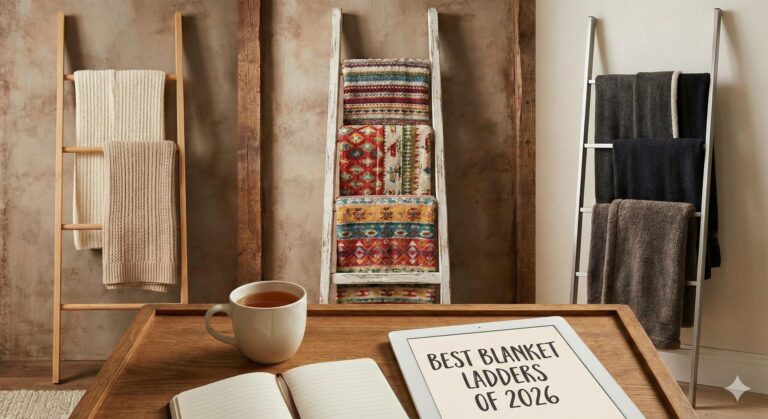
We all love the comfort of a warm throw, but we hate the clutter they create. Drape them over the sofa, and it looks messy. Fold them in a pile, and they topple over. In 2026, the blanket ladder remains the undisputed champion of vertical storage—turning your cozy clutter into a curated display.
Whether you lean toward a rustic farmhouse aesthetic or a sleek, modern industrial look, a blanket ladder does double duty: it saves floor space and acts as a piece of wall decor. But not all ladders are created equal. Some are too flimsy for heavy quilts, while others have rough wood that snag delicate fabrics.
In this guide, we have selected the 5 best blanket ladders of 2026 based on durability, style, finish quality, and stability. We’ll also cover everything from material science to seasonal styling, room-by-room placement strategies, DIY construction plans, and maintenance tips to keep your ladder looking pristine for years. Let’s get your living room organized.
Buying Guide: What to Look For in a Blanket Ladder
Before you buy, consider where the ladder will go, what you will hang on it, and how often you plan to rearrange. A blanket ladder is a long-term investment in your home’s organization system, so choosing the right one the first time will save you money and frustration.
1. Material & Finish
Wood: Offers warmth and a rustic vibe. Ensure the wood is sanded smooth or sealed to prevent splinters from snagging your throws. Wood ladders come in a wide range of species, from pine and cedar to oak and reclaimed barn wood. Each species has different characteristics: cedar is naturally aromatic and insect-resistant, oak is extremely durable but heavy, and pine is affordable but softer and more prone to dents.
Metal: Provides a modern, industrial, or minimalist look. Metal is generally stronger and won’t snag, but check the weight capacity. Steel ladders tend to be the strongest, while aluminum options are lighter and easier to move. Look for powder-coated finishes to prevent rust, especially if you plan to use the ladder in a bathroom or humid environment.
Bamboo: A sustainable alternative that offers a natural, spa-like aesthetic. Bamboo is technically a grass, not a wood, which makes it incredibly strong for its weight. It’s naturally moisture-resistant, making it ideal for bathrooms and laundry rooms where humidity is higher.
Mixed Materials: Some ladders combine wood rungs with metal frames or vice versa. These hybrid designs can offer the best of both worlds—the warmth of wood where you touch the ladder and the strength of metal for the structural frame.
2. Rung Shape & Spacing
Look for ladders with wide or flat rungs rather than thin dowels. Flat rungs prevent blankets from slipping off and reduce the crease lines on your fabrics. Spacing is also key—if rungs are too close, your thick comforters will bunch up.
Ideally, rung spacing should be between 10 and 14 inches apart. This gives enough room for a folded blanket to hang without pressing against the blanket above or below it. If you plan to hang particularly thick items like chunky knit throws or heavy winter quilts, opt for the wider spacing option.
The diameter of round rungs matters too. Rungs that are less than 1 inch in diameter can create deep fold lines in heavier blankets. Look for rungs that are at least 1.5 inches in diameter if you prefer round rungs, or go with flat rungs that are at least 2 inches wide.
3. Height & Width
A standard ladder is about 5 feet tall. If you have high ceilings, look for a 6-foot model to fill the vertical space. Measure your blankets folded in thirds—ensure the ladder width is at least 17-18 inches to accommodate them without squishing.
For standard 8-foot ceilings, a 5-foot ladder with a 14-16 inch base projection works well. For vaulted or cathedral ceilings that reach 10-12 feet, consider a 6-foot ladder or even two smaller ladders stacked visually. The key is proportional balance—the ladder should feel like it belongs in the space without overwhelming it.
Width is equally important. A ladder that’s too narrow will force you to fold blankets into tight quarters, creating wrinkles and making the display look cramped. A ladder that’s too wide may dominate a small room. Measure the intended wall space before purchasing.
4. Stability & Safety Features
The angle at which a ladder leans against the wall affects both its appearance and stability. Most blanket ladders lean at a 10-15 degree angle from vertical. Steeper angles look more dramatic but can be less stable, while shallower angles take up more floor space.
Look for rubberized or felt-covered feet that grip the floor without scratching it. Some premium ladders include adjustable feet that can compensate for uneven flooring. If you have hardwood, tile, or laminate floors, rubber feet are essential to prevent the ladder from sliding.
Wall contact points matter too. The top of the ladder should rest against the wall at a comfortable angle without putting excessive pressure on the wall surface. Some ladders include padded top caps to protect your wall paint or wallpaper.
5. Assembly Requirements
Some blanket ladders arrive fully assembled, while others require 15-30 minutes of simple assembly. If you’re not handy with tools, look for ladders that come pre-assembled or require only minimal setup like attaching feet or tightening bolts. Most modern ladders include clear instructions and all necessary hardware.
If you’re ordering online, check the reviews specifically for assembly feedback. Some ladders that look simple on paper can be frustrating to put together if the hardware is cheap or the instructions are unclear. Premium brands typically invest in better packaging and clearer instructions.
Material Deep-Dive: Choosing the Right Material for Your Blanket Ladder
The material of your blanket ladder determines not just its look, but its durability, weight capacity, maintenance requirements, and suitability for different rooms in your home. Let’s break down every option in detail.
Wood Types Compared
Pine: The most affordable option, pine blanket ladders are lightweight and easy to move around. However, pine is a softwood that dents and scratches easily. It’s best for bedrooms and living rooms where it won’t get bumped frequently. Pine takes stain beautifully, so it’s a great choice if you want to customize the color. The natural grain of pine adds a warm, organic feel to any room, and the light color works well in both traditional and modern settings.
Cedar: A step up from pine in both price and quality, cedar is naturally resistant to moisture, insects, and decay. This makes cedar blanket ladders ideal for bathrooms, laundry rooms, and coastal homes where humidity is a concern. Cedar also has a pleasant natural scent that can subtly fragrance your blankets. The reddish-brown color of cedar deepens over time, developing a rich patina that many homeowners find appealing.
Oak: For maximum durability, oak is the gold standard. Oak blanket ladders are heavy, sturdy, and can support significant weight without bowing or warping. The dense grain pattern gives oak a sophisticated look that works in both traditional and contemporary settings. Oak is more expensive than pine or cedar, but its longevity makes it a worthwhile investment. An oak blanket ladder can last for decades with proper care.
Reclaimed Wood: Ladders made from reclaimed wood, like the Barnwood USA option in our list, offer unmatched character. Each piece tells a story through its weathered texture, nail holes, and unique grain patterns. Reclaimed wood is also environmentally friendly, as it repurposes material that would otherwise end up in a landfill. The trade-off is that reclaimed wood can be rough, so look for pieces that have been properly sanded and sealed.
Bamboo: While technically a grass rather than a wood, bamboo deserves its own category. Bamboo blanket ladders are incredibly strong, lightweight, and sustainable—bamboo grows much faster than trees and regenerates quickly after harvesting. The natural light color and smooth finish of bamboo complement minimalist, Japanese, Scandinavian, and spa-inspired decor styles. Bamboo is also naturally moisture-resistant, making it suitable for bathrooms.
Metal Types Compared
Steel: Steel blanket ladders offer the highest weight capacity and the most modern aesthetic. They come in a variety of finishes, from matte black industrial to brushed nickel contemporary. Steel is heavy, which adds stability but makes the ladder harder to move. Look for powder-coated finishes that resist scratches and prevent rust. Steel ladders are perfect for industrial-style lofts, modern apartments, and minimalist spaces.
Iron: Wrought iron blanket ladders have a more ornate, traditional feel than steel. The handcrafted appearance of iron work adds artisanal character to a room. Iron is extremely durable but also very heavy. Some iron ladders feature decorative scrollwork or twisted details that make them stand out as sculptural pieces. Iron requires occasional treatment to prevent rust, especially in humid environments.
Aluminum: For a lightweight metal option, aluminum blanket ladders are easy to move and reposition. They’re naturally rust-resistant, making them suitable for any room including bathrooms and covered outdoor spaces. Aluminum is not as strong as steel or iron, so check the weight capacity if you plan to hang heavy blankets. Aluminum ladders typically have a sleek, modern appearance that works well in contemporary settings.
Copper: A premium option for those who want something truly unique. Copper blanket ladders develop a beautiful patina over time, transitioning from shiny copper to warm brown to verdigris green. This living finish means your ladder will evolve and change with your home. Copper is naturally antimicrobial, which is a bonus for bathroom use. However, copper ladders are significantly more expensive than other metal options.
Finish Options
The finish on your blanket ladder affects both its appearance and its practicality. Here are the most common options:
- Natural/Unfinished: Shows the raw beauty of the material but may be rough to the touch and susceptible to staining. Best for display-only ladders that won’t see frequent use.
- Clear Coat/Sealant: Protects the material while preserving its natural appearance. A clear polyurethane or lacquer coat adds durability without changing the color significantly.
- Stained: Adds color while allowing the grain to show through. Stains range from light honey tones to dark espresso, allowing you to match existing furniture.
- Painted: Provides a solid color finish that can match any decor scheme. White, black, and gray are popular choices. Paint provides the most protection but can chip over time.
- Distressed: A deliberately weathered finish that adds vintage character. Distressed finishes work well in farmhouse, shabby chic, and rustic decor styles.
- Powder Coated (Metal): A dry powder that’s electrostatically applied and cured under heat. Powder coating is more durable than traditional paint and resists chipping, scratching, and fading.
Environmental Considerations
If sustainability is important to you, consider these eco-friendly options:
- FSC-Certified Wood: Wood sourced from responsibly managed forests that meet strict environmental and social standards.
- Reclaimed Wood: Repurposed from old buildings, fences, or furniture. Each piece has unique character and keeps material out of landfills.
- Bamboo: Rapidly renewable and requires minimal pesticides or fertilizers to grow.
- Recycled Metal: Some manufacturers use recycled steel or aluminum, reducing the environmental impact of mining and refining new metal.
- Low-VOC Finishes: Look for ladders finished with low-VOC or zero-VOC stains and sealants that don’t release harmful chemicals into your home.
Pro Tip: Material Matching
For a cohesive look, match your blanket ladder material to existing furniture or decor elements in the room. A wooden ladder complements wooden furniture and shelving, while a metal ladder pairs well with metal light fixtures, curtain rods, or hardware. Mixing materials can work too, but keep it to two maximum to avoid a disjointed look.
Blanket Ladder Size & Dimensions Guide
Choosing the right size blanket ladder is crucial for both functionality and aesthetics. A ladder that’s too small will look lost in a large room, while an oversized ladder can overwhelm a small space. Here’s everything you need to know about blanket ladder dimensions.
Standard Sizes
Most blanket ladders fall into one of three size categories:
- Small (3-4 feet tall): Ideal for bathrooms, kids’ rooms, and apartments with low ceilings. These compact ladders typically hold 3-4 lightweight throws or towels. The base usually projects 8-10 inches from the wall.
- Medium (5 feet tall): The most popular size, perfect for living rooms and bedrooms with standard 8-foot ceilings. Medium ladders typically have 4-5 rungs and can hold 4-5 standard throws. The base projects 12-14 inches from the wall.
- Large (6+ feet tall): Best for rooms with high or vaulted ceilings, or for anyone with a large blanket collection. Large ladders have 5-6 rungs and can hold heavy quilts and comforters. The base projects 14-18 inches from the wall.
Measuring Your Space
Before purchasing a blanket ladder, measure the following:
- Wall height: Measure from floor to ceiling. Subtract 12-18 inches to determine the maximum ladder height that will look proportional.
- Available width: Measure the wall space where the ladder will lean. Allow at least 3-4 inches of clearance on each side of the ladder.
- Floor projection: Measure how far the ladder base will extend from the wall. Make sure this doesn’t create a tripping hazard or block walkways.
- Blanket size: Fold your largest blanket in thirds and measure the width. Your ladder rungs should be at least as wide as this measurement.
Weight Capacity Considerations
Weight capacity varies significantly between ladder types and materials:
- Decorative wood ladders: 15-25 lbs total (3-5 lbs per rung)
- Sturdy wood ladders: 30-50 lbs total (6-10 lbs per rung)
- Steel ladders: 40-75 lbs total (8-15 lbs per rung)
- Industrial metal ladders: 60-100+ lbs total (12-20 lbs per rung)
Remember, these are approximate figures. Always check the manufacturer’s specifications for the exact weight capacity of the ladder you’re considering. Distribute weight evenly across all rungs to prevent the ladder from becoming top-heavy or unbalanced.
Important: Do Not Climb
Blanket ladders are designed for display purposes only. They are not weight-bearing structures and should never be used as step ladders or climbing tools. Even the sturdiest blanket ladder can tip or collapse under a person’s weight, causing serious injury.
Folding Blanket Dimensions
For the best display, fold your blankets before hanging them on the ladder:
- Standard throw (50×60 inches): Fold in thirds lengthwise for a 16-20 inch wide display
- Large throw (60×80 inches): Fold in thirds or quarters for a 15-20 inch wide display
- Chunky knit throw: Fold loosely in half to preserve the texture and prevent stretching
- Quilt or blanket (90×90 inches): Fold in thirds twice for a compact, layered display
The key is to fold blankets consistently so they hang at the same width across all rungs. This creates a clean, organized look that’s visually appealing from any angle.
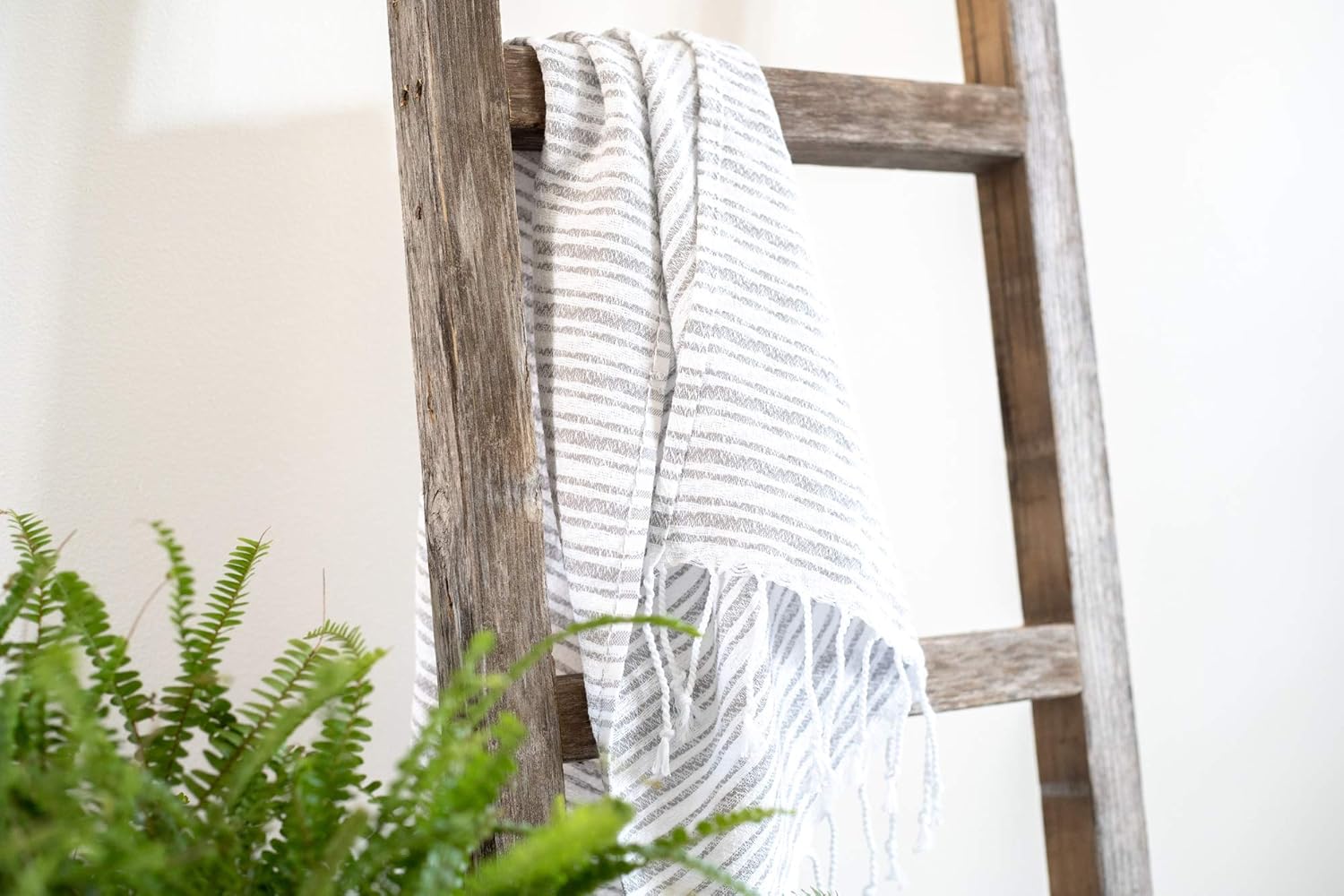
1. Barnwood USA Rustic Farmhouse Ladder
Verdict: Best Authentic Farmhouse Style
If you want the real deal, this is it. Made in the USA from 100% reclaimed wood, no two ladders are exactly alike. It brings genuine character and texture to a room, perfect for holding vintage quilts or chunky knits. The reclaimed wood comes from old barns, fences, and buildings throughout the American heartland, giving each ladder a unique history and patina that new wood simply cannot replicate.
The rustic finish features natural wood grain variations, nail holes, and weathering marks that add authenticity to farmhouse, cottage, and country-style decor. Each ladder is hand-finished and inspected for quality before shipping. The solid construction means it can handle heavier blankets without wobbling, though the rough texture of the reclaimed wood means it’s best suited for durable fabrics like cotton, wool, and chunky knits rather than delicate silk or satin throws.
Best Rooms for This Ladder
The Barnwood USA ladder excels in farmhouse-style living rooms, cozy reading nooks, rustic bedrooms, and covered porches. Its natural, unfinished appearance blends seamlessly with reclaimed wood furniture, vintage decor, and warm color palettes featuring earth tones, cream, and muted greens.
Styling Recommendations
For the best visual impact, pair this ladder with blankets in natural, earthy tones. Think cream chunky knits, oatmeal-colored wool throws, and muted plaid blankets in browns and greens. Avoid bright, saturated colors that might clash with the natural wood tones. Adding a dried flower arrangement or a vintage lantern to the top rung can complete the farmhouse vignette.
Pros
- Authentic reclaimed wood (eco-friendly)
- No assembly required
- Sturdy and substantial weight
- Each ladder is unique with one-of-a-kind character
- Made in the USA with quality craftsmanship
- Natural finish complements farmhouse decor
Cons
- Rough texture can snag delicate silk/satin
- Natural wood tones vary (hard to match exactly)
- Heavier than some alternatives
- Not ideal for modern or minimalist spaces
- May require additional sealing for bathroom use

2. mDesign Modern Steel Ladder
Verdict: Best Modern/Minimalist
For contemporary homes, wood can sometimes feel too heavy. The mDesign ladder features a sleek steel profile with plastic feet to protect your floors. It is lightweight, snag-free, and disappears into the background, letting your blankets be the star. The slim silhouette works particularly well in apartments, condos, and modern homes where every square foot matters.
The powder-coated steel finish resists scratches and fingerprints, maintaining its clean look over time. The open design allows blankets to be easily added or removed without disturbing other throws. This makes it an excellent choice for families where blankets are used daily rather than just displayed. The lightweight construction also means it can be moved from room to room as needed—use it in the living room during the day and the bedroom at night.
Best Rooms for This Ladder
The mDesign ladder thrives in modern living rooms, minimalist bedrooms, studio apartments, dorm rooms, and offices. Its clean lines and neutral color options (typically available in black, white, and metallic finishes) blend seamlessly with contemporary furniture and decor.
Styling Recommendations
Pair this ladder with solid-colored blankets in a cohesive color palette. Think monochromatic schemes like all-white throws for a Scandinavian feel, or bold accent colors like mustard yellow, teal, or blush pink for a pop of personality. The clean design of the ladder means it won’t compete with patterned or textured blankets, so feel free to mix different textures like smooth fleece, chunky knit, and woven cotton.
Pros
- Smooth metal finish (zero snagging)
- Compact profile for small apartments
- Very affordable
- Lightweight and easy to move
- Available in multiple color options
- Easy to clean with a damp cloth
Cons
- Lightweight structure can slide if not secured
- Narrow rungs (better for thin throws)
- Less character than wood options
- Can feel cold or impersonal in some settings

3. Design House 5-Tier Wide Ladder
Verdict: Best for Heavy Blankets
Unlike decorative-only ladders, this model is built for function. It features extra-wide rungs and a deeper lean angle, making it capable of holding heavier comforters or weighted blankets without bowing. The 5-tier design provides ample storage for a family’s worth of throws, and the wider construction ensures even thick, folded quilts fit comfortably without bunching.
The deeper lean angle not only adds stability but also creates a more dramatic visual display, showing off more of each blanket’s pattern and texture. The sturdy construction uses thicker lumber than most decorative ladders, and the joints are reinforced to handle the extra weight. This is the ladder you want if you have heavy winter blankets, thick quilts, or multiple throws that need a permanent home.
Best Rooms for This Ladder
The Design House 5-Tier ladder is ideal for master bedrooms, guest rooms, family rooms, and any space where heavy blankets need to be stored and displayed. Its substantial presence makes it a focal point, so choose a location where it can be appreciated.
Styling Recommendations
Use this ladder to create a layered blanket display that tells a story. Start with your heaviest quilt on the bottom rung, then work your way up with progressively lighter throws. Mix patterns and textures—a patchwork quilt on the bottom, a cable-knit throw in the middle, and a lightweight woven throw on top creates visual interest. Consider coordinating colors for a pulled-together look, or go bold with contrasting hues.
Pros
- Wide rungs prevent bunching
- High weight capacity
- Easy assembly
- Deeper lean angle for better stability
- 5 tiers provide generous storage
- Thicker construction resists bowing
Cons
- Takes up more floor space due to angle
- Industrial look isn’t for everyone
- Heavier than decorative alternatives
- May be too large for small rooms
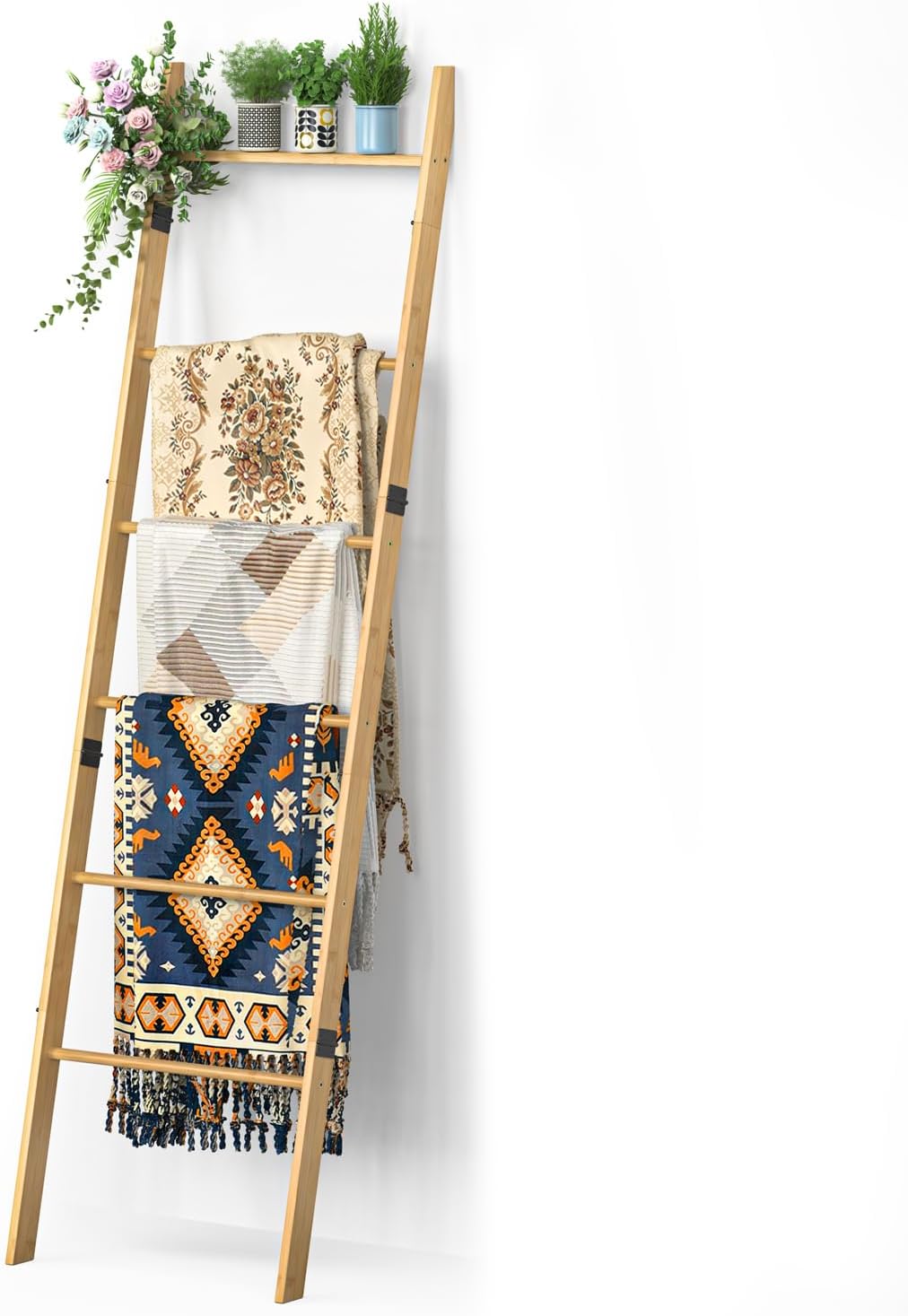
4. Bamboo Leaning Ladder
Verdict: Best Eco-Friendly & Budget
Bamboo is sustainable, naturally moisture-resistant (great for bathrooms too), and adds a “Japandi” or spa-like aesthetic to your room. This ladder is lightweight yet surprisingly strong, and usually comes at a very wallet-friendly price. Bamboo’s natural strength-to-weight ratio rivals that of many hardwoods, making it an excellent choice for a ladder that needs to be both functional and portable.
The smooth surface of bamboo is naturally snag-free, so you can hang even the most delicate throws without worry. The light, natural color brightens any room and works particularly well with white, cream, and pastel color palettes. Bamboo is also easy to clean—just wipe it down with a damp cloth. Over time, bamboo develops a warm golden patina that adds character without the roughness of reclaimed wood.
Best Rooms for This Ladder
Bamboo ladders shine in bathrooms (for towel storage), bedrooms with minimalist decor, spa-inspired spaces, and homes with a Japanese or Scandinavian aesthetic. Their moisture resistance makes them uniquely suited for humid environments where wood might warp or develop mildew.
Styling Recommendations
For a spa-like look, hang white or cream towels and lightweight cotton throws on this ladder. Add a small potted plant like a fern or bamboo to the top rung for a fresh, organic touch. In a bedroom, mix linen throws in neutral tones with a single accent color blanket to create a calm, serene atmosphere. The natural bamboo color pairs beautifully with rattan, jute, and other natural fibers.
Pros
- Eco-friendly material
- Resistant to warping/humidity
- Smooth natural finish
- Lightweight and easy to move
- Naturally moisture-resistant
- Affordable price point
Cons
- Bamboo knots are visible
- Often shorter than wood/metal options
- Less sturdy for very heavy blankets
- Limited color options (natural only)
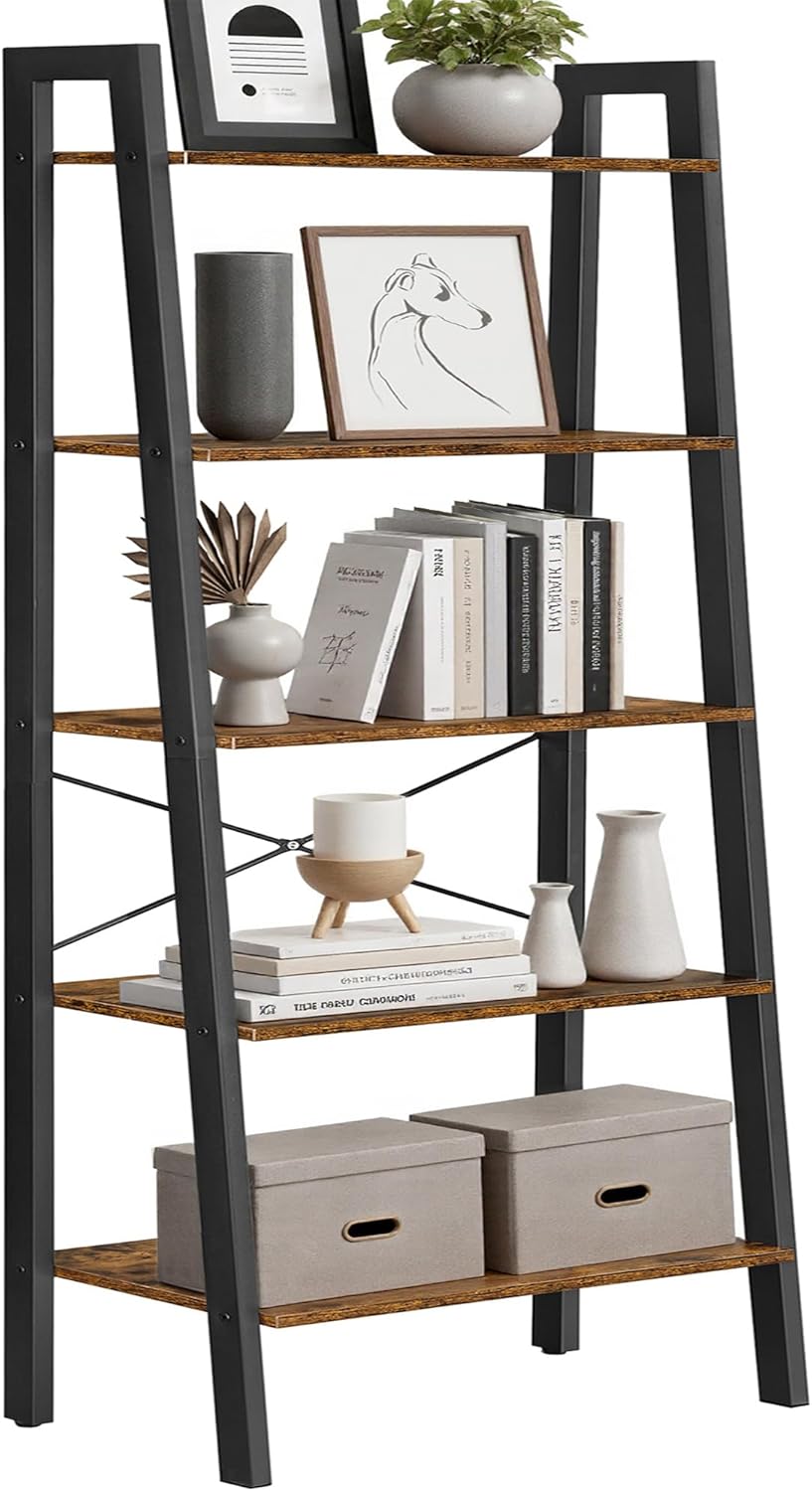
5. Vasagle Industrial Ladder with Shelf
Verdict: Best Hybrid Storage
Why stop at blankets? This clever design features rungs on the bottom for your throws and a wooden shelf on top. Use the shelf for a potted plant, a framed photo, or a scented candle to create a complete vignette in an unused corner. The industrial-inspired design combines black metal framing with warm wood accents, creating a versatile piece that works in a wide range of decor styles from industrial loft to modern farmhouse.
The shelf adds genuine functionality beyond blanket storage. Use it as a display surface for decor items, a charging station for devices, or a spot for books and magazines. The adjustable feet ensure the ladder sits level on uneven floors, and the included wall-anchoring kit provides extra stability for homes with children or pets. This is the best choice for anyone who wants their blanket ladder to do more than just hold blankets.
Best Rooms for This Ladder
The Vasagle ladder excels in entryways (as a catch-all for scarves, bags, and keys), living rooms, home offices, and bedrooms. The shelf functionality makes it particularly useful in entryways and mudrooms where you need both blanket storage and a spot to drop your keys and mail.
Styling Recommendations
Use the shelf as a mini vignette. Place a small trailing plant like pothos or string of pearls on one side, a stack of coffee table books in the middle, and a scented candle on the other side. On the rungs below, hang scarves, lightweight throws, or even organize your favorite magazines. The industrial aesthetic pairs well with exposed brick, concrete accents, and metal fixtures.
Pros
- Multi-functional storage (shelf + rails)
- Adjustable feet for uneven floors
- Includes wall-anchoring kit
- Industrial design works with many decor styles
- Shelf adds genuine functionality
- Sturdy metal and wood construction
Cons
- Assembly is more complex
- Top shelf limits the height of the top blanket
- Heavier than simple ladder designs
- Industrial style may not suit all homes
Head-to-Head Comparison: All 5 Blanket Ladders
Choosing between our top picks? This side-by-side comparison makes it easy to see which ladder best fits your needs, budget, and style preferences.
| Feature | Barnwood USA | mDesign Steel | Design House 5-Tier | Bamboo Leaning | Vasagle Industrial |
|---|---|---|---|---|---|
| Material | Reclaimed Wood | Powder-Coated Steel | Engineered Wood | Bamboo | Metal + Wood Shelf |
| Height | ~5 feet | ~5 feet | ~5.5 feet | ~4.5 feet | ~5 feet |
| Rungs | 4 | 4 | 5 | 4 | 3 + Shelf |
| Weight Capacity | ~25 lbs | ~20 lbs | ~35 lbs | ~18 lbs | ~30 lbs |
| Assembly | None | Minimal | Easy | Minimal | Moderate |
| Best For | Farmhouse Decor | Modern Minimalist | Heavy Blankets | Bathrooms / Eco | Multi-Use Storage |
| Snag Risk | Medium-High | None | Low | None | Low |
| Made in USA | Yes | No | No | No | No |
| Eco-Friendly | Yes | Moderate | Moderate | Yes | Moderate |
| Budget-Friendly | $$ | $ | $$ | $ | $$ |
Quick Decision Guide
Want farmhouse charm? Go with the Barnwood USA. Need something lightweight and modern? The mDesign Steel is your pick. Have heavy blankets? The Design House 5-Tier handles the weight. Need bathroom-friendly storage? Choose the Bamboo ladder. Want maximum functionality? The Vasagle Industrial with Shelf gives you the most versatility.
Room-by-Room Blanket Ladder Placement Guide
A blanket ladder can work in almost any room of your home, but each space has unique considerations. Here’s how to choose and place the perfect ladder for every room.
Living Room
The living room is the most popular spot for a blanket ladder, and for good reason. It keeps throws within arm’s reach of the sofa while adding visual interest to an otherwise empty wall or corner. Place the ladder in a corner flanking your sofa, next to a bookshelf, or in an empty alcove. Avoid placing it directly behind seating where it might be knocked over when someone stands up.
The living room is also where your blanket ladder gets the most visibility, so choose a style that complements your existing decor. For a cohesive look, match the ladder material to other furniture in the room. A wooden ladder pairs well with a wooden coffee table, while a metal ladder complements metal light fixtures or curtain rods.
Consider the traffic flow in your living room. The ladder should be positioned where it won’t be bumped by people walking through the room. A good rule of thumb is to place it at least 18 inches away from high-traffic areas. If you have pets, make sure the ladder is stable enough that a curious cat or dog won’t knock it over.
Bedroom
In the bedroom, a blanket ladder serves a dual purpose: storage and decor. Place it at the foot of your bed for easy access to extra blankets during cold nights, or against an empty wall to fill a bare spot. For a balanced look, choose a ladder that’s roughly the same width as your bed’s headboard.
Bedroom ladders are often used to store blankets that aren’t currently on the bed—seasonal throws, extra quilts for guests, or lightweight covers for warmer nights. This means the blankets on the ladder may not be used daily, so you can focus more on aesthetics and less on easy access.
For a cohesive bedroom design, coordinate your blanket ladder with other furniture and decor elements. If your bedroom features a wooden bed frame, a matching wood ladder creates continuity. If your space is more eclectic, feel free to mix materials for visual interest.
Bathroom
A blanket ladder in the bathroom is primarily used for towel storage. Instead of blankets, hang fluffy bath towels, hand towels, and washcloths on the rungs. This creates a spa-like display while keeping towels accessible and well-ventilated. The open design of a ladder allows towels to dry more efficiently than if they were stacked on a shelf.
For bathroom use, moisture resistance is essential. Choose a bamboo, metal, or sealed wood ladder that can handle the humidity. Avoid unfinished or rough-sawn wood that might develop mildew. Place the ladder where it won’t be splashed by the shower, but close enough to be convenient.
Bathroom ladders tend to be smaller than living room versions. A 3-4 foot ladder is usually sufficient for hanging 2-3 sets of towels. Look for models with wider rungs that can accommodate folded bath towels without them slipping off.
Entryway & Mudroom
In the entryway, a blanket ladder can store scarves, lightweight throws, and hats—anything you might grab on your way out the door. The hybrid style, like the Vasagle with a shelf, is particularly useful here because the shelf can hold keys, mail, and sunglasses while the rungs organize your cold-weather accessories.
Entryway ladders need to be compact and stable, as they’ll be in a high-traffic area. Choose a model with a narrow profile that won’t block the doorway, and make sure it has non-slip feet to prevent it from sliding on hard flooring. Wall anchoring is recommended for entryway ladders, especially in homes with children.
Kids’ Room
A blanket ladder in a child’s room teaches organization while keeping favorite throws accessible. Choose a shorter ladder (3-4 feet) that kids can reach without climbing, and opt for a sturdy model that won’t tip if bumped. Metal ladders with rounded edges are safer than wood with sharp corners.
Use the ladder to store kids’ favorite character blankets, lightweight quilts, or even stuffed animals. Hanging stuffed animals from the rungs creates a fun display while keeping them off the floor. Choose a ladder in a color that complements the room’s theme—white works with any color scheme, while painted ladders can match specific themes.
Guest Room
A blanket ladder in the guest room signals hospitality and makes guests feel welcome. Place it near the bed so guests can easily grab an extra throw if they’re cold during the night. Stock it with 2-3 blankets in different weights so guests can choose the right level of warmth.
Guest room ladders should look polished and intentional. A medium-sized ladder in a classic style (like the Barnwood USA or Design House) works well. Avoid overly trendy or personal styles that might not appeal to all guests.
Home Office
A blanket ladder in your home office adds warmth to what can often be a sterile space. Hang a cozy throw on the ladder for chilly work-from-home days, and use the rungs to organize files, magazines, or inspiration boards. The ladder breaks up the monotony of desks and shelves, adding a residential touch to your workspace.
For a home office, choose a ladder that matches the professional tone of your space. A sleek metal ladder works in a modern office, while a wooden ladder adds warmth to a traditional study. Position it where it won’t interfere with your workflow but is close enough to grab a blanket when needed.
How to Style Your Blanket Ladder Like a Magazine
Don’t just throw the blankets on haphazardly. For a magazine-worthy look, follow these expert styling techniques that interior designers use to create stunning ladder displays.
The Layering Technique
The most visually appealing ladder displays use layering to create depth and interest. Start with your largest, most visually heavy blanket on the bottom rung. This anchors the display and creates a stable visual base. Work your way up with progressively lighter blankets, ending with the thinnest throw on the top rung. This graduated approach creates a natural visual flow that draws the eye upward.
Color Coordination Strategies
You have three main approaches to color coordination:
- Monochromatic: Use blankets in varying shades of the same color family. For example, layer navy, royal blue, and sky blue throws for a calming, cohesive look. This approach works well in minimalist and Scandinavian-inspired spaces.
- Complementary: Choose blankets in colors that sit opposite each other on the color wheel. Blue and orange, purple and yellow, or red and green create vibrant, energetic displays. Use this approach sparingly—one or two complementary accents among neutral blankets keeps the look sophisticated rather than chaotic.
- Analogous: Select blankets in colors that sit next to each other on the color wheel. Blue, teal, and green or red, orange, and yellow create harmonious, flowing displays that feel natural and inviting.
Mixing Textures
Texture is what separates a good display from a great one. Combine a chunky knit, a smooth fleece, and a patterned quilt to add depth. The contrast between textures creates visual interest even when the colors are similar. Here are some texture combinations that work well together:
- Cozy Winter: Chunky cable knit + faux fur + plaid flannel
- Lightweight Summer: Woven cotton + linen + gauze
- Year-Round Classic: Velvet + waffle weave + herringbone
- Bohemian: Macrame + crochet + kilim-patterned woven
The Draping Method
Instead of folding blankets neatly, try the draping method for a more relaxed, lived-in look. Fold each blanket in half lengthwise, then drape it over the rung so that both ends hang down unevenly. This creates a cascading effect that adds movement and softness to the display. The key is to make it look effortless while still being intentional.
The Fold-and-Tuck Method
For a cleaner, more organized look, use the fold-and-tuck method. Fold each blanket into a neat rectangle, then tuck the folded edge over the rung. Adjust the blanket so it hangs evenly on both sides. This method works best with thinner blankets and creates a uniform, hotel-like appearance. It’s ideal for modern and minimalist spaces where clean lines are important.
Adding Accessories
If you have a free rung, loop a string of fairy lights or hang a small wreath for seasonal flair. Other accessories that work well on blanket ladders include:
- Dried flower arrangements or eucalyptus bundles
- Small potted plants (real or high-quality faux)
- Woven baskets hanging from rungs for small item storage
- Seasonal decor like pine garlands (winter), dried leaves (fall), or flower wreaths (spring)
- Macrame wall hangings draped alongside blankets
- Framed photos or small art prints propped against rungs
The 3-2-1 Rule
A great styling formula to remember is the 3-2-1 rule: use 3 blankets, 2 textures, and 1 accent. This creates enough variety to be interesting without overwhelming the ladder. The accent can be a contrasting color, a particularly textured throw, or a decorative accessory like a wreath or garland.
Pro Tip: The Breathing Room
Leave at least one rung empty or lightly decorated. This “breathing room” prevents the ladder from looking overstuffed and allows each blanket to be appreciated individually. An empty rung also gives you flexibility to add seasonal decorations or rotate blankets without removing existing ones.
Seasonal Blanket Ladder Styling Ideas
One of the best things about a blanket ladder is how easily it can be restyled for each season. Here are specific ideas for transforming your ladder display throughout the year.
Spring Styling
As winter fades and temperatures rise, transition your ladder to lighter fabrics and brighter colors. Swap heavy wool throws for lightweight cotton and linen blankets in pastel shades—soft pink, mint green, lavender, and baby blue. Add a small wreath of fresh or faux flowers to the top rung for a springtime touch. A bundle of dried lavender or a small potted succulent on the top rung completes the seasonal look.
Spring is also a great time to deep-clean your blankets before storing the heavy winter ones. Wash and dry each blanket thoroughly before folding and storing them in a blanket storage bag to keep them fresh until next winter.
Summer Styling
In summer, less is more. Replace thick blankets with thin cotton throws, lightweight quilts, or even decorative beach towels if the ladder is near a pool or beach house. Use bright, cheerful colors like coral, turquoise, sunny yellow, and crisp white. A seashell garland or a bundle of driftwood on the top rung adds a coastal touch.
Summer is the perfect time to give your blanket ladder a thorough cleaning. Dust all rungs, check for any loose screws or joints, and touch up any paint or finish that may have worn during the year. If your ladder is in a sunny spot, check for any fading and consider rotating the ladder’s position to ensure even sun exposure.
Fall Styling
Fall is when blanket ladders truly shine. Layer warm, rich-toned throws in burnt orange, deep red, mustard yellow, and chocolate brown. Add a small pumpkin or gourd arrangement to the top rung, or drape a garland of faux autumn leaves along the side. A bundle of cinnamon sticks or dried wheat stalks adds both visual texture and a subtle seasonal scent.
Fall is also a good time to bring out your heaviest blankets and quilts. Use the Design House 5-Tier or Barnwood USA ladder to create a layered display that showcases the season’s warmest fabrics. Mix textures like cable knit, flannel, and velvet for maximum coziness.
Winter & Holiday Styling
During the holiday season, your blanket ladder can become a festive focal point. Drape a string of warm white fairy lights around the ladder for a magical glow. Add a small wreath of evergreen branches, pinecones, and red berries to the top rung. Hang Christmas stockings from the rungs for a playful touch that kids will love.
For a winter wonderland theme, stick with white, silver, and blue blankets. Add a faux snow-dusted pine branch or a silver ornament garland. For a cozy cabin feel, layer plaid blankets in red and green with a chunky cream knit throw. Don’t forget to keep at least one or two blankets accessible for chilly evenings.
Year-Round Tip: The Blanket Rotation System
To keep your ladder display fresh, rotate your blankets every 2-3 months. Store off-season blankets in storage bags or blanket chests to keep them clean and fresh. This rotation system means you always have the right weight and style of blanket ready for the current season.
DIY Blanket Ladder: Build Your Own in a Weekend
Not finding exactly what you want in stores? Building your own blanket ladder is a satisfying weekend project that costs a fraction of retail prices. Here’s a complete guide to building a beautiful, sturdy blanket ladder from scratch.
Tools & Materials Needed
- Two 8-foot pieces of 2×3 lumber (pine, cedar, or oak)
- Four 18-inch pieces of 1×3 lumber (for rungs)
- Wood screws (2.5 inch)
- Wood glue
- Sandpaper (120 and 220 grit)
- Wood stain or paint (optional)
- Clear polyurethane sealant (optional)
- Rubber or felt feet
- Tape measure
- Level
- Drill with drill bits
- Miter saw or hand saw
- Safety glasses and gloves
Step-by-Step Instructions
Cut the two 2×3 pieces to your desired height (typically 60-72 inches). Cut the four 1×3 pieces to your desired width (typically 18-24 inches). Sand all cut edges smooth with 120-grit sandpaper, then follow up with 220-grit for a smooth finish.
Lay the two side rails parallel on a flat surface, spaced your desired width apart (typically 18-24 inches at the bottom, narrowing slightly toward the top for a tapered look). Mark the positions for your four rungs, spacing them evenly (typically 10-14 inches apart). Use a level to ensure your marks are aligned.
At each marked position, pre-drill pilot holes through the side rails and into the ends of each rung. This prevents the wood from splitting when you drive in the screws. Use a drill bit slightly smaller than your screws.
Apply wood glue to the ends of each rung, then position it between the side rails. Drive 2.5-inch wood screws through the pre-drilled holes in the side rails into the rung ends. Use at least two screws per side for each rung. Wipe away any excess glue with a damp cloth before it dries.
Once the glue is dry (typically 24 hours), sand the entire ladder with 220-grit sandpaper for a smooth finish. Apply your chosen stain or paint, following the manufacturer’s instructions for drying times. Finish with 2-3 coats of clear polyurethane sealant for durability and moisture protection.
Attach rubber or felt feet to the bottom of each side rail to prevent slipping and protect your floors. If desired, add felt pads to the top of each rail where it contacts the wall. Your DIY blanket ladder is now ready to use!
Customization Ideas
The beauty of a DIY project is that you can customize every aspect to fit your space and style:
- Add a shelf: Replace the top rung with a wider board to create a shelf for display items (like the Vasagle Industrial style).
- Create hooks: Attach small cup hooks to the rungs for hanging scarves, hats, or accessories.
- Add a chalkboard: Attach a small chalkboard panel to the side rail for notes, quotes, or a family calendar.
- Paint it: Use chalk paint for a vintage look, or spray paint for a modern metallic finish.
- Distress it: After painting, sand through the paint in strategic spots to create a weathered, shabby-chic appearance.
- Extend it: Build a longer ladder with 6-8 rungs for maximum storage capacity.
Cost Breakdown
A DIY blanket ladder typically costs $20-40 in materials, compared to $50-150+ for a retail version. The biggest savings come from using common pine lumber, but even premium woods like cedar or oak keep the cost well under retail. Plus, you get the satisfaction of building something with your own hands.
Blanket Ladder Care & Maintenance Guide
With proper care, a quality blanket ladder can last for decades. Here’s how to keep your ladder looking its best, regardless of the material.
Wood Ladder Maintenance
Wood ladders require the most maintenance but reward you with beautiful aging. Follow these steps to keep your wooden ladder in top condition:
- Dusting: Dust your wooden ladder weekly with a soft, dry cloth or microfiber duster. Pay special attention to the rungs where dust accumulates under blankets.
- Cleaning: For deeper cleaning, wipe the ladder with a slightly damp cloth and mild dish soap. Dry immediately to prevent water damage. Never soak wood or use harsh chemicals.
- Polishing: Every 3-6 months, apply a thin coat of furniture polish or wood oil to maintain the finish and prevent drying. Products like Howard Feed-N-Wax or beeswax polish work well.
- Refinishing: Every few years, you may need to sand and refinish the ladder to restore its appearance. Light sanding with 220-grit sandpaper followed by a fresh coat of stain and sealant will make it look new again.
- Sun Protection: Avoid placing wooden ladders in direct sunlight, which can cause fading, drying, and cracking. If the ladder is near a window, consider UV-filtering curtains.
Metal Ladder Maintenance
Metal ladders are generally lower maintenance but still benefit from regular care:
- Dusting: Dust weekly with a dry microfiber cloth. Metal surfaces show fingerprints and dust more readily than wood.
- Cleaning: Wipe with a damp cloth and mild soap. For stubborn spots, use a mixture of equal parts water and white vinegar. Dry thoroughly to prevent water spots.
- Rust Prevention: Inspect the finish regularly for scratches or chips. Touch up any damage with matching paint or clear nail polish to prevent rust from forming.
- Polish: For a shiny finish, use a metal polish like Brasso or Flitz every few months. For matte or brushed finishes, skip the polish to preserve the texture.
- Chrome Care: If your ladder has chrome accents, clean them with a glass cleaner for a streak-free shine.
Bamboo Ladder Maintenance
Bamboo is naturally low-maintenance but benefits from occasional care:
- Dusting: Wipe with a dry cloth weekly. Bamboo’s smooth surface makes dusting easy.
- Cleaning: Use a damp cloth with mild soap. Avoid soaking bamboo, as excessive moisture can cause swelling.
- Oiling: Every 6-12 months, apply a thin coat of mineral oil or bamboo oil to maintain the finish and prevent cracking.
- Sun Protection: Like wood, bamboo can fade in direct sunlight. Keep it out of prolonged sun exposure.
General Maintenance Tips
- Tighten Hardware: Every few months, check all screws and bolts and tighten any that have loosened. This is especially important for ladders with removable rungs.
- Check Stability: Regularly test the ladder’s stability by gently pushing it from different angles. If it feels wobbly, check for loose joints and tighten as needed.
- Inspect Feet: Check the rubber or felt feet for wear and replace them if they’ve become smooth or damaged. Good feet are essential for preventing slipping and floor damage.
- Rotate Position: If your ladder is in a sunny spot, rotate it periodically to ensure even aging and prevent one side from fading faster than the other.
- Blanket Rotation: Don’t leave the same blankets on the ladder indefinitely. Rotating them prevents permanent creases and allows you to inspect the rungs for wear.
What to Avoid
Never use abrasive cleaners, steel wool, or harsh chemicals on your blanket ladder. These can damage the finish and create rough spots that snag blankets. Avoid placing hot items (like curling irons or hot beverages) on the ladder, as heat can damage wood finishes and melt plastic feet. Don’t overload the ladder beyond its weight capacity—this can cause joints to loosen and rungs to bow over time.
Blanket Ladder Safety & Childproofing
While blanket ladders are generally safe household items, they do require some basic safety precautions, especially in homes with children, pets, or high-traffic areas.
General Safety Guidelines
- Wall Anchoring: For added stability, anchor your blanket ladder to the wall using L-brackets, furniture straps, or anti-tip hardware. This is especially important in earthquake-prone areas or homes with active children and pets.
- Proper Angle: Ensure the ladder leans at the correct angle. A 10-15 degree lean from vertical is ideal. Too steep, and blankets may slide off. Too shallow, and the ladder takes up too much floor space and may be unstable.
- Weight Distribution: Always distribute weight evenly across the rungs. Place heavier blankets on lower rungs and lighter ones on top. Never overload the top rung, as this can make the ladder top-heavy and prone to tipping.
- Non-Slip Feet: Always use a ladder with non-slip rubber or felt feet. On hard floors (tile, hardwood, laminate), consider adding extra grip pads or placing the ladder on a small rug.
- Keep Away from Heat: Don’t place your blanket ladder near fireplaces, space heaters, radiators, or other heat sources. This is both a fire safety measure and a way to protect the ladder’s finish.
Childproofing Tips
If you have young children, take these extra precautions:
- Anchor to Wall: Use anti-tip furniture straps to secure the ladder to the wall. Most hardware stores sell affordable anti-tip kits designed for bookshelves that work perfectly for blanket ladders.
- Remove Heavy Items from Top: Keep heavier blankets on the bottom rungs to prevent the ladder from becoming top-heavy. A child pulling on a heavy blanket from the top rung could cause the entire ladder to topple.
- Choose Rounded Edges: If possible, choose a ladder with rounded edges and smooth finishes. Metal ladders often have smoother edges than wood, which can have sharp corners or rough spots.
- Position Carefully: Place the ladder away from cribs, beds, and play areas where children might climb or pull on it. Keep it in a corner or against a wall where it’s less likely to be bumped.
- Supervise Access: For very young children, consider whether the ladder is accessible from nearby furniture. A child who can climb onto a chair may be able to reach and pull on the ladder.
Pet Safety
Pets, especially cats, may see a blanket ladder as a climbing opportunity. Here’s how to keep both your pets and your ladder safe:
- Anchor the Ladder: Wall anchoring prevents the ladder from tipping if a cat jumps on it or a dog bumps into it.
- Use Bitter Spray: If your cat insists on climbing the ladder, apply a pet-safe bitter spray to the rungs. The taste discourages further climbing without harming your pet.
- Provide Alternatives: Give your cat a proper scratching post or cat tree nearby to redirect their climbing instincts.
- Secure Blankets: If pets pull blankets off the ladder, consider using blanket clips or tucking the ends under the rung to secure them.
When to Replace Your Ladder
Even well-maintained ladders don’t last forever. Replace your blanket ladder if you notice:
- Loose or wobbly joints that can’t be tightened
- Cracked or split wood rails
- Rusted metal that’s structural rather than cosmetic
- Bowed or warped rungs that can no longer hold weight safely
- Missing or damaged feet that prevent stable placement
- The ladder no longer sits level on the floor
Alternatives to Blanket Ladders
Ladders are great for display, but they aren’t for everyone. If you have too many blankets, a ladder will look cluttered. If you have pets that shed, leaving blankets exposed might be a bad idea. Here are some alternatives to consider.
Blanket Ladder vs. Blanket Basket
A large woven basket or storage ottoman provides hidden blanket storage while adding texture to a room. Baskets are better for people who prefer a clean, uncluttered look or who have too many blankets to display attractively on a ladder. However, baskets make it harder to see and access individual blankets, especially those at the bottom of the pile.
Baskets work particularly well in family rooms where blankets are used daily and need to be quickly accessible. A large basket next to the sofa holds 4-6 folded throws and can be easily moved around the room. Wicker, rattan, and woven cotton baskets are popular choices that add natural texture.
Blanket Ladder vs. Storage Ottoman
A storage ottoman provides blanket storage inside and seating on top, making it ideal for small spaces where every piece of furniture needs to serve multiple purposes. However, storage ottomans are typically more expensive than ladders and may not hold as many blankets. They also require you to remove cushions and dig through the contents to find what you need.
Storage ottomans work best in living rooms and bedrooms where extra seating is welcome. Choose an ottoman with a hinged lid for easy access, and line the interior with cedar chips or lavender sachets to keep blankets fresh and fragrant.
Blanket Ladder vs. Wall Hooks
Wall-mounted hooks or peg rails provide blanket storage without taking up any floor space. They’re ideal for small apartments, narrow hallways, and rooms where floor space is at a premium. However, wall hooks require installation (which may not be allowed in rental properties) and can only hold one blanket per hook.
Wall hooks work well in entryways for scarves and light throws, and in bathrooms for towels. Choose hooks with a large enough opening to hold folded blankets without them slipping off. Decorative hooks in brass, copper, or wrought iron can be beautiful wall decor in their own right.
Blanket Ladder vs. Floating Shelves
Floating shelves provide storage and display space without floor footprint. Stack folded blankets on deep shelves, or use baskets on shelves for organized storage. Shelves are great for heavy blankets that might be too much for a ladder, but they require wall mounting and careful weight distribution to prevent sagging.
Floating shelves work best in bedrooms and closets where you want a clean, organized look. Use matching baskets or bins on the shelves for a cohesive appearance. Leave space between folded blankets for air circulation to prevent musty odors.
Blanket Ladder vs. Blanket Rack
A traditional blanket rack (also called a blanket stand) is a free-standing piece with horizontal bars for draping blankets. Unlike a ladder, which leans against the wall, a blanket rack stands upright and can be placed anywhere in the room. Racks typically hold fewer blankets than ladders but provide easier access and a more formal appearance.
Blanket racks work well in bedrooms, dressing rooms, and formal living spaces. They’re particularly useful for displaying heirloom quilts or delicate throws that you want to keep accessible but protected. Choose a rack with padded bars to prevent creasing.
Blanket Ladder vs. Closet Organization
For those who prefer hidden storage, organizing blankets in a closet is the most practical solution. Use shelf dividers, hanging organizers, or vacuum storage bags to maximize closet space. This approach keeps blankets dust-free and out of sight, but it means they’re not readily accessible for spontaneous use.
Closet storage works best for seasonal blankets that aren’t used daily. Label shelves or bins so family members know where to find and return blankets. Cedar blocks or lavender sachets keep stored blankets fresh and fragrant.
Blanket Ladders for Small Spaces, Tiny Homes & Apartments
Living in a small space doesn’t mean you have to sacrifice style or storage. A blanket ladder is actually one of the best storage solutions for apartments, tiny homes, dorm rooms, and RVs because it uses vertical space instead of floor space.
Choosing a Ladder for Small Spaces
When space is limited, every inch counts. Here’s how to choose the right ladder for tight quarters:
- Go Slim: Choose a ladder with a narrow profile (less than 18 inches wide) that won’t protrude into walkways. Metal ladders tend to have slimmer profiles than wood.
- Go Short: A 3-4 foot ladder fits better in small spaces and won’t overwhelm the room visually. It also holds fewer blankets, which is actually a benefit when storage space is limited—it forces you to curate your collection.
- Go Lightweight: In a small space, you may need to move the ladder frequently. Choose a lightweight option like bamboo or aluminum that’s easy to reposition.
- Choose Wall Colors: A ladder that matches your wall color (white on white, for example) will blend in and make the room feel larger. A contrasting ladder (black on white) creates a bold focal point but may feel more imposing in a tiny space.
Creative Placement Ideas for Small Spaces
- Behind the Door: A slim ladder tucked behind a bedroom or bathroom door uses dead space effectively.
- Corner Placement: Angled into a corner, a small ladder becomes almost invisible while still providing storage.
- Beside the Bed: Instead of a nightstand, use a small ladder to store blankets and hold a book or phone on the top rung.
- Inside a Closet: A short ladder inside a closet provides organized blanket storage without consuming floor space in the room itself.
- Over-the-Door: Some over-the-door hooks can hold folded blankets, functioning as a door-mounted ladder alternative.
Apartment-Friendly Options
If you’re renting, you may not be allowed to drill holes in walls for anchoring. In that case, choose a ladder with wide, stable feet and place it on a non-slip rug pad. Avoid heavy ladders that could damage flooring if they tip. The mDesign Steel Ladder is an excellent apartment choice because it’s lightweight, affordable, and won’t damage floors with its plastic feet.
RV and Camper Van Solutions
For RV and camper van owners, a mini blanket ladder (2-3 feet) can be secured to the wall with bungee cords or Velcro straps. Choose the lightest option available, as weight matters in a vehicle. Bamboo or aluminum ladders are ideal. Some RV owners modify ladders by adding hooks or clips to hold blankets more securely during travel.
Dorm Room Organization
A blanket ladder is perfect for dorm rooms, where space is at a premium and storage options are limited. The mDesign Steel Ladder is a popular choice for dorms because it’s affordable, lightweight, and easy to assemble. Use it to store blankets, hoodies, towels, and even backpacks. The vertical storage frees up precious floor space for studying, hanging out, or just existing comfortably.
For dorm rooms, consider a ladder that can serve multiple purposes. The Vasagle Industrial with a shelf can hold your phone charger, books, and snacks on the shelf while storing blankets and towels on the rungs. This multi-functionality is key in a space where every piece of furniture needs to earn its keep.
Storing Heavy & Weighted Blankets on a Ladder
Weighted blankets have become incredibly popular for their therapeutic benefits, but their weight (typically 15-30 lbs) makes them challenging to store on a standard blanket ladder. Here’s what you need to know about safely displaying and storing heavy blankets.
Can a Blanket Ladder Hold a Weighted Blanket?
The short answer is: it depends. Most decorative blanket ladders are designed to hold 5-10 lbs per rung, which means a 20-lb weighted blanket could exceed the capacity of a single rung. However, sturdy ladders like the Design House 5-Tier have higher weight capacities that can accommodate heavier blankets.
Always check the manufacturer’s weight capacity before hanging a weighted blanket. Distribute the weight by folding the blanket so it spreads across a wider section of the rung, reducing the concentrated load. If the ladder begins to bow, sag, or feel unstable, remove the weighted blanket immediately and find an alternative storage solution.
Safe Storage Strategies for Heavy Blankets
- Use the Bottom Rungs Only: Always place heavy blankets on the lowest rungs to keep the center of gravity low and maintain stability.
- Fold for Width: Fold weighted blankets so the weight is distributed across the full width of the rung rather than concentrated in one spot.
- Wall Anchor: If displaying a heavy blanket, always anchor the ladder to the wall for extra stability.
- Limit Quantity: Don’t hang multiple heavy blankets on one ladder. One weighted blanket per ladder is usually the maximum safe load.
Alternative Storage for Weighted Blankets
If your weighted blanket is too heavy for any ladder, consider these alternatives:
- Storage Ottoman: A large storage ottoman can hold a heavy blanket inside while providing seating on top. The weight of the blanket actually helps keep the ottoman lid closed.
- Blanket Chest: A sturdy chest or trunk can hold heavy blankets without any structural concerns. Choose a chest with a hinged lid for easy access.
- Bed Foot: Simply fold the weighted blanket and place it at the foot of your bed. This keeps it accessible and eliminates the need for additional furniture.
- Closet Shelf: A reinforced closet shelf can support a heavy blanket without any issues. Use a shelf divider to keep it upright and organized.
- Under-Bed Storage: Vacuum compression bags can reduce the bulk of a weighted blanket for under-bed storage. Note that the weight remains the same even when compressed.
Pro Tip: The Weighted Blanket Dilemma
If you use your weighted blanket nightly, the best “storage” is folded neatly on your bed. Most people don’t need to display their weighted blanket on a ladder—it’s a functional item, not a decorative one. Save your ladder display space for lighter, more visually appealing throws that add to your room’s decor.
Frequently Asked Questions About Blanket Ladders
Final Thoughts: Choosing the Best Blanket Ladder for Your Home in 2026
A blanket ladder is one of the most affordable and effective ways to upgrade your living room’s style while solving a real storage problem. It transforms messy blanket piles into curated displays that add warmth, color, and texture to any room.
After extensive research and testing, our top recommendations are:
- For Pure Aesthetic Appeal: The Barnwood USA Rustic Farmhouse Ladder is unbeatable. Its authentic reclaimed wood character brings genuine warmth and history to any space. It’s the ladder that guests will compliment and ask about.
- For Modern Homes: The mDesign Steel Ladder is our top practical choice for 2026. Its lightweight, snag-free design works in any modern space and is especially great for families with kids and pets who need easy blanket access.
- For Heavy Blankets: The Design House 5-Tier Wide Ladder handles the weight that decorative ladders can’t. If you have heavy quilts, weighted blankets, or just a lot of throws, this is the ladder to choose.
- For Budget & Eco-Conscious Buyers: The Bamboo Leaning Ladder offers sustainable materials at an affordable price, with the added benefit of moisture resistance for bathroom use.
- For Maximum Functionality: The Vasagle Industrial Ladder with Shelf goes beyond blanket storage to become a complete organizing station. The shelf adds genuine utility that no other ladder provides.
Whichever ladder you choose, remember that the way you style it matters as much as the ladder itself. Use the layering technique, mix textures, coordinate colors, and don’t be afraid to change things up seasonally. A blanket ladder should evolve with your home and your life.
For more tips on creating a cozy, organized home, explore our guides on Best Blanket Chests and Trunks, Best Blanket Storage Bags, and Cozy Home Essentials.