Best Blanket Baskets for Small Apartments: Baskets & Ladder Options
Transform your living space from cluttered to curated with the perfect basket that marries style and storage.
🚀 Key Highlights
- Material Matters: Cotton rope offers softness and safety, while rattan provides structure and texture.
- Vertical Storage: Blanket ladders utilize wall space effectively, perfect for smaller apartments.
- Size Selection: A “XXL” basket (20″+ diameter) is necessary for thick comforters; standard baskets fit 2-3 throws.
- Versatility: Quality baskets double as laundry hampers, toy storage, or even plant pot covers.
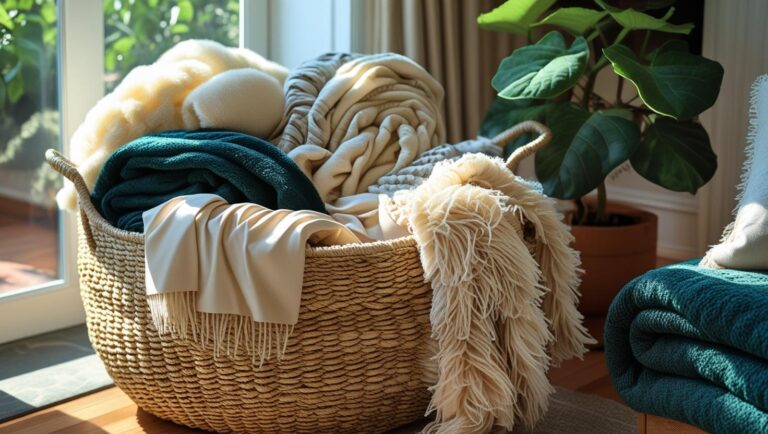
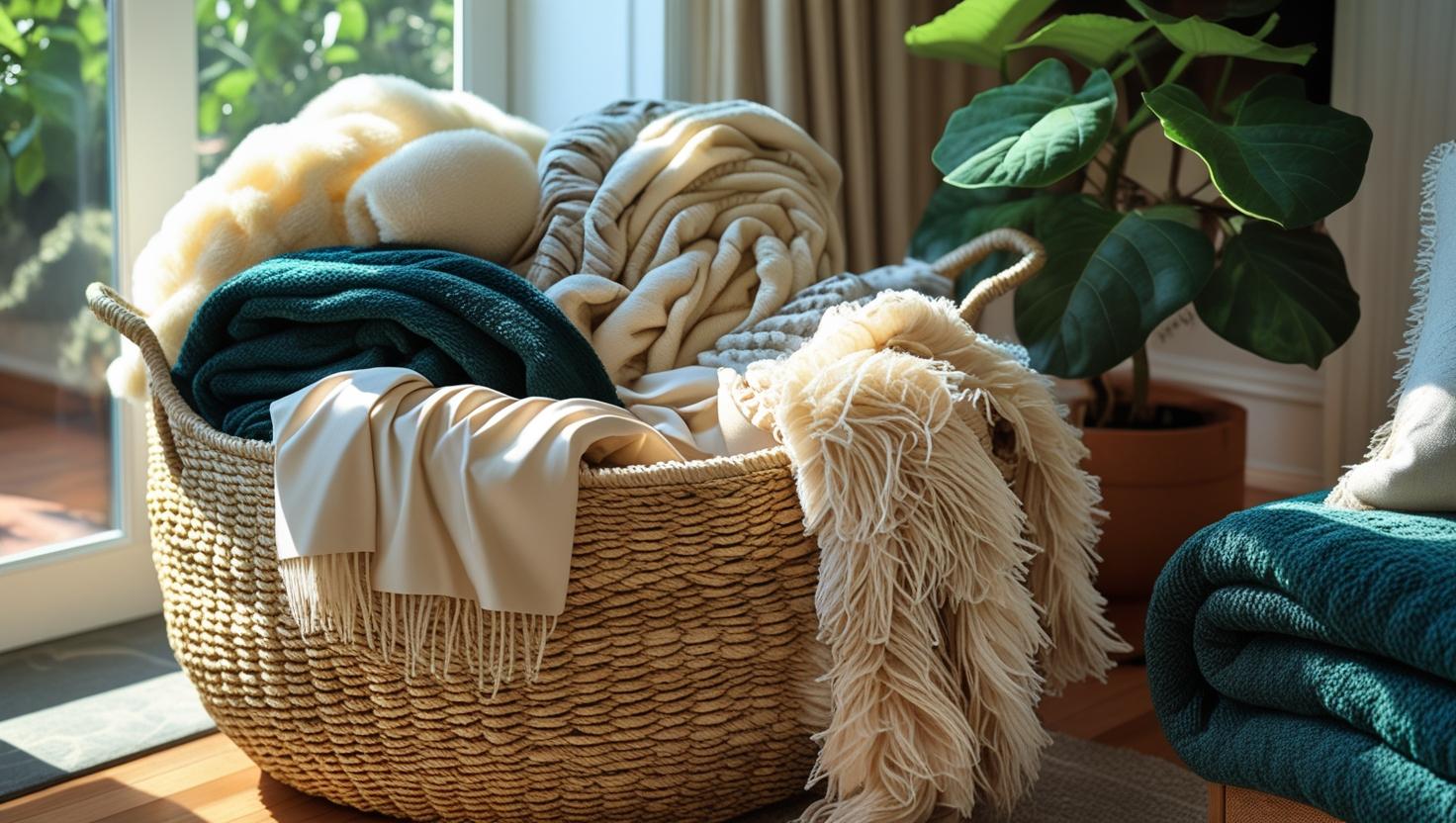
In the world of interior design, “visual noise” is the enemy of relaxation. Blankets draped haphazardly over sofa backs, pillows scattered on the floor, and throws piled on armchairs contribute to a subtle sense of chaos. The humble blanket basket is the antidote. It is more than just a receptacle; it is a design element that grounds a room, providing a dedicated “home” for your comfort items while introducing texture and warmth to your aesthetic.
Choosing the right basket is an exercise in balancing form and function. You must consider the volume of your linens—are you storing heavy wool blankets or light summer throws? You must evaluate the durability required—will this basket sit in a quiet corner of a study, or will it be in a high-traffic living room with toddlers and pets? And finally, you must consider the style—do you need the organic, coastal vibe of woven seagrass, the soft, neutral minimalism of cotton rope, or the sleek industrial edge of a ladder?
Beyond mere storage, these vessels serve as anchors for your living space. A well-placed basket filled with plush textures invites “Hygge”—the Danish concept of cozy contentment. It signals to guests and family alike that this is a space for relaxation. Furthermore, the modern blanket basket has evolved into a multi-functional tool. The same basket that holds throws in winter can store beach towels in summer, act as a stylish planter for a Fiddle Leaf Fig, or corral an explosion of dog toys. In this guide, we dive deep into three top-tier solutions that address different needs, helping you curate a home that is as organized as it is beautiful.
For renters and small-apartment dwellers specifically, blanket storage carries an extra layer of complexity. You cannot knock down walls to add a linen closet, and built-in storage is often minimal or nonexistent. Every square foot has to earn its place, which means the basket or ladder you choose needs to do more than look good sitting empty in a showroom photo. It needs to survive being kicked past the coffee table, tolerate being refilled every single day, and still look intentional when your studio apartment doubles as a home office, a dining room, and a guest room all at once. That reality is exactly why we’ve expanded this guide beyond simple product picks to cover placement strategy, room-by-room sizing, styling techniques, and a full comparison of alternative storage formats, so you can make a decision that holds up under real apartment-living conditions rather than just Pinterest lighting.

Goodpick Large Cotton Rope Basket
A perennial favorite, this cotton rope basket is the epitome of versatile style. It’s soft, making it safe for homes with children, yet durable enough to be stuffed with your chunkiest throws. Its neutral color palette allows it to blend seamlessly into any decor, from coastal to modern farmhouse.
The Upside
- Soft & Safe: Zero sharp edges make it ideal for nurseries and playrooms.
- Machine Washable: Can be cleaned easily if dirty (unlike wicker).
- Flexible Capacity: The rope stretches slightly to accommodate bulky items.
The Downside
- Ships Folded: Requires effort (steaming or stuffing) to regain a perfect round shape.
- Absorbent: Not suitable for humid areas like bathrooms as cotton absorbs moisture.
Deep Dive Analysis
The Goodpick Cotton Rope Basket stands out primarily due to its material science. Cotton rope is woven in a coil technique that provides remarkable tensile strength while remaining pliable. This “soft structure” is a massive advantage for households with active children or pets; if a toddler falls onto this basket, it collapses safely rather than causing injury, unlike rigid wicker or metal alternatives. The aesthetic is inherently “Scandi-Boho,” offering a texture that is cozy rather than rustic.
One of the most frequent challenges with rope baskets is the “crease factor.” Because they are shipped folded flat to reduce shipping carbon footprints, they arrive with distinct creases. However, this is easily remedied. We recommend stuffing the basket tightly with pillows or towels for 24-48 hours to stretch the fibers back into a circular shape. Alternatively, a handheld steamer or a steam iron (with a protective cloth) can relax the cotton fibers instantly.
For small apartments specifically, this basket earns its spot because it does double duty without complaint. Renters who move every year or two appreciate that it folds nearly flat for transport between apartments, something a rigid wicker basket simply cannot do. It also survives being crammed into a closet during a surprise guest visit and popped back out minutes later without losing its shape permanently. If you’re furnishing a first apartment on a budget and need one basket that can plausibly hold blankets in the living room this year and toys or laundry in a nursery next year, the coil-rope format is the safest long-term bet in this entire category.
Functionally, the handles are slit-style, integrated directly into the weave rather than attached externally. This design choice increases durability—there are no rivets to pop off or leather straps to snap under heavy loads. The capacity is deceptive; the flexible sides allow you to “overstuff” it slightly with comforters that wouldn’t fit in a rigid box of the same dimensions. It creates a visually pleasing “overflow” effect that looks styled rather than messy.
Color-wise, this two-tone weave pattern was chosen deliberately by the manufacturer to hide everyday soiling better than a pure white or cream basket would. If your apartment gets heavy foot traffic near the basket—say, it sits directly in the path between your front door and your couch—the subtle tonal variation in the rope disguises scuffs, pet hair, and the general grime of daily use far more forgivingly than a solid pastel would. It’s a small design detail, but it’s the kind of thing that determines whether a basket still looks presentable eight months after purchase or starts looking tired within a few weeks.

Kouboo Rattan Round Wicker Basket
For those seeking texture and structure, the Kouboo basket is a work of art. Handwoven from natural water hyacinth over a robust wire frame, it brings an organic, earthy warmth to your room. It stands perfectly upright and makes a sophisticated statement.
The Upside
- Structural Integrity: The wire frame ensures it never slumps or loses shape.
- Aesthetic Texture: Provides a high-end, organic look that elevates room decor.
- Ventilation: The weave allows airflow, keeping blankets fresh.
The Downside
- Brittle Nature: Natural fibers can snap if impacted heavily.
- Snag Potential: Rough spots in the weave can catch on delicate knits or silk throws.
Deep Dive Analysis
The Kouboo Rattan Basket represents a shift from purely functional storage to decor-forward design. It is constructed using Water Hyacinth, a renewable resource that is dried and woven. Unlike cotton baskets, this unit is built around a rigid metal skeleton. This means it maintains its perfect cylindrical shape regardless of whether it is empty or full. This structural rigidity is crucial for formal living spaces where a slumped or misshapen basket would ruin the visual symmetry.
In a small apartment, this rigidity is actually a space-planning advantage. Because the basket never changes its footprint whether it’s full or nearly empty, you can plan tight furniture arrangements around it with confidence—there’s no risk of it slumping outward and blocking a walkway the way a soft-sided basket might when overstuffed. Design-forward renters often position this basket as a quasi-side-table next to a reading chair, resting a small tray or lamp base on top of the folded blankets, since the rigid rim can support light weight without collapsing.
The weave pattern itself offers significant benefits beyond aesthetics. The gaps between the fibers allow for passive airflow. If you are storing wool blankets or down comforters, this ventilation prevents the buildup of musty odors and mildew, a common problem in solid plastic bins or tight fabric bags. However, users must be mindful of the “snag factor.” While Kouboo sands their products, natural fibers can have microscopic barbs. We recommend using this basket for sturdier fabrics like fleece, wool, or cotton quilts, and perhaps avoiding very loose-knit chenille or silk throws unless you line the basket first.
Placement is key with this piece. Its warm, golden-brown hues contrast beautifully against cool gray walls or white shiplap. It works exceptionally well next to a fireplace or a leather armchair, bridging the gap between nature and interior architecture. Unlike rope baskets which can look casual or “laundry-like,” the Kouboo commands presence as a distinct piece of furniture.
One consideration renters should factor in before buying: because this basket is rigid rather than collapsible, it does not flat-pack for storage or moving day the way a rope basket does. If you anticipate relocating within the next year or two, budget a bit of extra care when packing it, ideally wrapped in moving blankets of its own, since a hard knock during a move is the single most common cause of premature snapping in the outer weave.

SONGMICS Freestanding Blanket Ladder
Break from the traditional basket with this chic, space-saving blanket ladder. It’s the perfect way to display your favorite throws as part of your decor. The blend of rustic wood tones and a sleek metal frame fits beautifully in modern, industrial, or minimalist interiors.
The Upside
- Space Efficiency: Utilizes vertical wall space, leaving the floor clear.
- Display Capability: Turns your blankets into art; allows you to see options easily.
- No “Digging”: Access the bottom blanket without unpacking the whole pile.
The Downside
- Limited Capacity: Can typically only hold 3-4 folded throws.
- Stability: Needs to be properly angled or anchored to prevent tipping.
Deep Dive Analysis
The SONGMICS Blanket Ladder is the solution for the “small footprint” home. In urban apartments or compact bedrooms where floor space is premium real estate, a bulky round basket can feel intrusive. This ladder occupies a mere few inches of floor depth, leaning casually against the wall while providing storage for up to four distinct items. It leverages the design principle of “verticality,” drawing the eye upward and making ceilings feel higher.
From a usability standpoint, the ladder solves the “bottom of the barrel” problem. In a deep basket, the blanket you want is inevitably at the bottom, requiring you to dump everything out to retrieve it. With a ladder, every item is independently accessible. This makes it an excellent choice for guest rooms, where visitors can clearly see available linens without rummaging through your storage. The rungs are typically spaced to allow thick folding, but there is an art to it.
Apartment dwellers in particular gravitate toward this piece because it solves two problems simultaneously: storage and decoration. A studio apartment rarely has room for both a basket on the floor and dedicated wall art above the sofa; the ladder collapses those two needs into a single object. It also photographs well for anyone renting out a space short-term, since a neatly draped ladder reads as “styled” in listing photos in a way that a basket, however tidy, generally cannot replicate.
The material mix of steel and engineered wood creates a sturdy frame that supports roughly 11 lbs per rung. While not designed for climbing (a critical safety note for households with kids), it is robust enough for heavy weighted blankets if placed on the lower rungs. The feet usually come with protective plastic caps to prevent scuffing hardwood floors, and the top often includes wall-mounting hardware for earthquake safety or tip-prevention, which we highly recommend utilizing.
A practical tip we picked up from renters specifically: because most lease agreements prohibit drilling into walls, look for the included anti-tip strap or, if one isn’t provided, a removable adhesive-backed cable strap rated for at least 20 lbs. Anchoring the top rung to the wall this way preserves your security deposit while still meeting the manufacturer’s stability recommendations, which matters most in households with young kids or large dogs that might bump into a leaning ladder.
Side-by-Side Comparison
Before diving into placement and styling strategy, it helps to see how our three featured picks stack up against each other on the factors that matter most for apartment living: footprint, capacity, upkeep, and overall durability under daily use.
| Feature | Goodpick Cotton Rope | Kouboo Rattan | SONGMICS Ladder |
|---|---|---|---|
| Floor Footprint | Moderate (round, ~18-20″) | Moderate (round, ~16-18″) | Minimal (leans flat against wall) |
| Typical Capacity | 3-5 folded throws | 2-4 folded throws | 3-4 draped throws |
| Shape Retention When Empty | Slumps slightly | Holds shape perfectly | N/A (rigid frame) |
| Cleaning Method | Machine washable | Spot clean / vacuum only | Wipe down |
| Best Suited Fabric | Any, including delicate | Sturdy fabrics only | Any, folded or draped |
| Ideal Room | Nursery, playroom, living room | Formal living room, den | Bedroom, studio, guest room |
| Moving-Day Friendliness | Excellent (folds flat) | Fair (handle with care) | Good (disassembles) |
No single option wins across every category, which is exactly the point. A household with a toddler and a dog will value the Goodpick’s soft structure and washability far more than the Kouboo’s polish, while a design-conscious renter furnishing a studio will likely find the SONGMICS ladder solves a floor-space problem the other two simply can’t.
Where to Place Your Blanket Basket in a Small Apartment
Even the best basket looks like an afterthought if it’s shoved into a random corner. Placement is where function and design intersect, and in a small apartment, every placement decision affects traffic flow. Below are the spots that consistently work best, along with the reasoning behind each.
Beside the Sofa or Sectional
The single most common and most functional placement. A basket tucked into the gap between the arm of your sofa and the wall keeps blankets within arm’s reach during movie nights without requiring you to get up. In studio apartments, this spot also visually “anchors” the seating area, signaling where the living zone ends and the rest of the room begins.
Under a Console Table or Media Stand
If your apartment has a TV console or entryway table with open space underneath, a low, wide basket slides in neatly and essentially becomes invisible storage. This works particularly well for XXL baskets holding out-of-season bedding, since you’re not accessing the contents daily.
Beside the Bed
A basket at the foot of the bed or beside a nightstand catches the extra throw you kick off at 2 a.m. This is also the ideal spot for a lidded basket, since the lid doubles as a small side surface for a book or glass of water in rooms too tight for a full nightstand.
Leaning Against an Empty Wall
This is the ladder’s natural habitat. A blank wall that’s too narrow for a gallery wall or too awkward for furniture is often exactly wide enough for a leaning ladder, turning dead space into both storage and a design feature.
Near the Fireplace or Reading Nook
Placing a structured basket like the Kouboo near a fireplace reinforces the “cozy corner” concept, visually pairing the basket’s earthy texture with the warmth of a reading chair or fireplace mantel.
In the Entryway
A basket by the front door isn’t just for blankets—it doubles as a landing zone for scarves, gloves, and cold-weather accessories during winter months, which is particularly useful in apartments without a coat closet.
The common thread across every one of these placements is that the basket is doing double duty: it’s solving a storage problem while also filling a visually “empty” pocket of the room. In small apartments, empty corners often feel unfinished rather than restful, and a well-placed basket resolves that tension without adding bulky furniture.
Styling Tips: Making Your Basket Look Intentional
There’s a meaningful difference between a basket that looks “stuffed” and one that looks “styled.” The gap between the two is almost always technique, not the basket itself. Here are the approaches interior stylists rely on most often.
The Cascade Fold
Rather than folding every blanket into a tight square and stacking them like books, fold one or two neatly and let the top throw drape loosely over the basket’s rim. This “cascade” creates a soft, lived-in look and instantly signals that the basket is decorative, not just functional overflow.
Layered Texture
Mix materials within the same basket. Pairing a chunky knit throw with a smoother waffle-weave blanket adds visual depth the same way a stylist layers textures on a bed. Avoid using three or more blankets in the exact same material and color, as it tends to read as flat rather than curated.
Seasonal Rotation
Swap the contents of your basket with the seasons. Lightweight cotton or linen throws in spring and summer, heavier wool or sherpa options in fall and winter. This keeps the display feeling fresh and also means you’re not trying to cram your entire blanket collection into one basket year-round, a common cause of overstuffing.
The 80% Rule
Fill your basket to roughly 80% of its total capacity, not 100%. A slightly under-filled basket looks intentional and allows the cascade fold technique to work. An overstuffed basket, by contrast, tends to look like laundry that hasn’t found a home yet, which defeats the purpose entirely.
Color Coordination
Choose blanket colors that either match your basket’s neutral tone for a cohesive, monochrome look, or intentionally contrast for a “pop” moment. A muted rattan basket with a single bright mustard or terracotta throw draped over the side creates a focal point without requiring you to redecorate the entire room.
Pairing Baskets with Pillows
In larger baskets, tucking one or two decorative pillows in alongside folded blankets is a simple way to add texture and free up couch space simultaneously. Just be mindful not to overcrowd; a basket serving double duty as pillow and blanket storage should generally be sized up from what you’d choose for blankets alone.
Baskets vs. Alternative Blanket Storage
Baskets and ladders aren’t the only options on the market, and depending on your apartment’s layout, one of these alternatives might actually serve you better. Here’s an honest look at how they compare.
Storage Ottomans
An ottoman with a removable lid hides blankets completely while doubling as extra seating or a coffee table. This is the best choice for small apartments that need multi-functional furniture, but it comes at a higher price point and is far heavier to move than any basket on this list.
Quilt Racks & Stands
Similar in spirit to a blanket ladder but typically freestanding on four legs rather than leaning. Quilt racks display blankets folded over horizontal bars and work well in bedrooms, though they generally take up more floor space than a leaning ladder.
Wall-Mounted Wicker Baskets
For truly micro apartments, a shallow wicker basket mounted directly to the wall frees up all floor space entirely. The tradeoff is capacity—these hold only lightweight throws, not bulky comforters or weighted blankets.
Under-Bed Storage Bags
Zippered, low-profile bags that slide under a bed frame are the best option for out-of-season or rarely used blankets. They’re not decorative, but they’re unbeatable for pure space efficiency in a studio apartment with no closet space.
Wire Baskets with Liners
A more industrial, modern-loft aesthetic. Wire baskets are lightweight, breathable, and easy to wipe clean, though the open gaps mean they’re a poor choice for lightweight or loosely knit throws unless lined with fabric.
Felt Storage Bins
Soft-sided and structured, felt bins split the difference between a rope basket’s softness and a wicker basket’s clean lines. They’re a strong choice for Nordic-minimalist apartments, though they attract pet hair more readily than other materials.
If your primary goal is concealment and multi-functionality, an ottoman wins. If your goal is display and easy access, a basket or ladder wins. If your goal is pure space-saving for items you rarely touch, under-bed bags win. Most small-apartment dwellers end up using a hybrid approach: one decorative basket or ladder for everyday throws in the living room, plus one under-bed bag for seasonal or spare bedding that doesn’t need to be on display.
Room-by-Room Sizing Guide
Basket sizing isn’t one-size-fits-all, and the “right” size depends heavily on which room the basket will live in and what you’re storing. Use this quick reference to narrow down your choice before shopping.
Nightstand / Bedside
Holds one to two throws. Best for a single extra blanket kept within arm’s reach at night.
Standard Living Room
The Goldilocks size for most sofas. Holds 2-3 fleece throws or one heavier quilt.
Family / Shared Living Room
Accommodates multiple family members’ individual throws without daily overstuffing.
King Comforters / Weighted Blankets
Necessary diameter and height for bulky bedding; anything smaller forces excessive compression.
Nursery and playroom baskets deserve special mention. Because these rooms see the most physical contact with the basket itself—little hands pulling items out, occasionally climbing on the basket, or using it as a step stool despite parental objections—the softer, rounder-edged profile of a cotton rope basket is almost always the safer choice over a rigid wicker basket with a firmer rim. If the basket will double as toy storage between nap times, size up one category from what the blanket volume alone would suggest, since toys consume volume far less efficiently than folded fabric.
Guest rooms present a different sizing challenge entirely. Because guests won’t know your storage system, oversized baskets with a single obvious “grab point”—like the SONGMICS ladder’s clearly visible rungs—tend to perform better than deep baskets where the top blanket might not be the one you intended for guest use. If you frequently host overnight visitors in a studio or one-bedroom apartment, consider dedicating a small ladder specifically near the sofa bed or air mattress storage area.
Frequently Asked Questions
The most effective method is to stuff the basket tightly with pillows, towels, or blankets and leave it for 24-48 hours. The tension will stretch the fibers back into a round shape. For faster results, use a steamer on the outside of the basket while pushing it into shape, or iron it with a damp cloth barrier.
Generally, no. Submerging wicker or rattan causes the fibers to swell and warp. To clean, vacuum with a brush attachment to remove dust, and wipe with a barely damp cloth. If it gets very wet, dry it immediately in the sun or with a fan to prevent mold.
Quality ladders come with angled tops or rubber/felt pads where they touch the wall to prevent scratching. If yours doesn’t, you can easily add adhesive felt furniture pads to the contact points.
They can physically hold it, but it’s not recommended for long periods. Cotton creates a humid environment that promotes mildew. If used for laundry, ensure clothes are dry or empty the basket frequently.
Not always. Wire ends or rough welds can snag silk, satin, or loose-knit wool. Inspect the interior of wire baskets or use a fabric liner to protect delicate textiles.
Most decorative ladders are rated for 5-10 lbs per rung. They are designed for textiles, not climbing. Do not use them as step ladders.
You need a basket with at least a 20-22 inch diameter and 15+ inch height. Anything smaller will require you to compress the comforter significantly, which can be difficult.
Yes, spray paint works best on wicker. Use light coats to avoid clogging the weave pattern. Primer is recommended for dark wicker if you are painting it a lighter color.
High-quality coil rope baskets are very durable. However, if you have cats that scratch them, the threads can pull. You can trim loose threads with scissors without unraveling the whole basket.
If the ladder didn’t come with rubber feet, buy self-adhesive non-slip rubber pads (used for furniture legs) and stick them to the bottom of the ladder rails.
A soft-sided cotton rope basket is generally the safest choice for nurseries, since it has no rigid edges or brittle fibers that could scratch or splinter if a child pulls on it or falls against it. Choose one without small decorative attachments that could pose a choking hazard, and confirm the basket meets standard nursery safety guidance if it will be within a crib area.
Yes, particularly cotton rope baskets, which are machine washable if they get soiled. Just be mindful of moisture: if you’re using the basket for slightly damp gym clothes or towels, empty it within a day to prevent mildew, since prolonged dampness against natural or cotton fibers encourages mold growth.
Round baskets with a wide, flat base are inherently more stable on hardwood than tall, narrow designs. If tipping is still an issue, a thin rubber basket liner or a few strategically placed furniture pads on the base can add friction without damaging the floor.
Both are natural plant fibers, but seagrass has a smoother, more matte texture and tends to be slightly more water-resistant, while water hyacinth has a more visible, rope-like weave and a warmer, more golden-brown tone. Both require the same general care: no submersion, regular dusting, and protection from direct sun.
If floor space is your primary constraint, a ladder wins, since it occupies only a few inches of depth against a wall. If you need to store bulkier items like a weighted blanket or several comforters, a basket’s larger interior volume will serve you better despite the larger footprint.
For cotton rope baskets in regular use, a machine wash every 2-3 months is reasonable. For wicker, rattan, or wood, a thorough dusting and damp-cloth wipe-down once a month is sufficient, with spot cleaning as needed in between.
Only if it’s made from a weather-resistant material like polyrattan or treated paper rope with a protective coating. Natural, untreated wicker, seagrass, or cotton rope will degrade quickly with outdoor humidity and UV exposure and should be kept indoors.
Yes, and it’s a common space-saving combination. Just size up from what you’d choose for blankets alone, since pillows take up disproportionate volume, and use the cascade-fold styling technique to keep the combined display looking tidy rather than crowded.
Rigid materials like wicker, rattan, and wood are more likely to splinter if chewed, which can pose a health risk. A cotton rope basket is generally the safer choice around chewing pets, though no fabric or fiber basket is entirely chew-proof, so keep it out of reach if your dog is a persistent chewer.
Stick to natural, neutral tones—tan, cream, walnut brown, or charcoal—for the basket itself, and introduce color and personality through the blankets you rotate inside it. This way, your basket remains a long-term investment piece even as your blanket colors and patterns change with the seasons or your evolving taste.
Shopping by Budget: What to Expect at Each Price Tier
Blanket baskets span an enormous price range, from under $20 to well over $150, and the differences between tiers aren’t always obvious from a product photo alone. Understanding what you’re actually paying for at each level helps you avoid both overpaying for features you don’t need and underspending on a basket that won’t survive daily use.
Budget Tier: Under $30
At this price point, expect smaller baskets, thinner rope or synthetic wicker blends, and less reinforced handles. These are perfectly serviceable for light-duty use, such as a bathroom basket for a single bath towel, or a small bedside basket for one throw. Where budget baskets tend to fall short is under sustained daily use in a busy living room; handles are the first component to fail, so inspect customer photos for handle construction before buying at this tier.
Mid Tier: $30-$60
This is where the majority of quality, brand-name blanket baskets land, including the Goodpick and Kouboo picks featured in this guide. At this price, you can reasonably expect reinforced or woven-in handles, consistent stitching or weave density, and materials rated for daily handling. This tier represents the best value-to-durability ratio for most apartment households.
Premium Tier: $60-$100
Premium baskets typically add design details: two-tone weaves, lidded designs, matching multi-basket sets, or genuine leather accents. You’re often paying for aesthetic cohesion, matched sets that look intentionally coordinated rather than mismatched. This tier makes the most sense if the basket will live in a highly visible spot, like an open-concept living and dining area.
Luxury Tier: $100+
At the top end, you’re generally paying for genuine leather, hand-finished joinery on wooden ladders, or designer collaborations. Functionally, a $150 leather basket won’t hold more blankets than a $40 rope basket. What you’re purchasing at this tier is longevity of finish (leather develops a desirable patina rather than wearing out) and a level of design polish suited to higher-end interiors.
For most small-apartment budgets, the mid-tier range delivers the best outcome. It’s worth stretching from the budget tier into the mid tier if the basket will be handled daily, since the added durability at that price point tends to pay for itself within the first year of ownership through avoided replacements.
Common Mistakes to Avoid When Buying a Blanket Basket
Buying Based on Photos Alone Without Checking Dimensions
Product photography, especially when styled with a single small blanket, makes baskets look larger than they are. Always cross-reference the listed diameter and height against a measuring tape in the actual spot you intend to use, rather than trusting your visual impression from the photo.
Ignoring Weight Capacity for Weighted Blankets
Weighted blankets alone can weigh 15-25 lbs, and a basket rated for “15 lbs total capacity” will be at or over its limit before you add anything else. If weighted blankets are part of your storage plan, look specifically for baskets that state a higher weight rating, or plan to store the weighted blanket separately.
Choosing Rigid Materials for High-Traffic Households with Kids
A beautiful rattan basket can become a liability in a home where toddlers regularly climb on furniture or where a boisterous dog might collide with it at full speed. Rigid natural fibers can crack or splinter under sudden impact in ways that soft cotton rope simply cannot.
Overlooking the “Empty Shape” Problem
Flexible baskets like cotton rope look different, often noticeably slumped, when they’re not fully stuffed. If you tend to use blankets throughout the day rather than leaving them in the basket, a rigid basket that holds its shape regardless of fill level may suit your habits better than a soft one.
Forgetting About Moving Day
Renters who move frequently often regret purchasing large, rigid baskets that don’t flat-pack or nest for transport. If you anticipate relocating within a year or two, favor collapsible or foldable options, or budget extra care and padding for rigid pieces during the move.
Underestimating Placement Clearance
A basket that looks fine in an empty room can suddenly become a walkway obstruction once furniture is arranged. Always measure the clearance around your intended placement spot, accounting for at least 24-30 inches of walking clearance in high-traffic zones like hallways or the path to a shared front door.
Real Small-Apartment Layout Examples
Abstract advice about “measuring your space” only goes so far. Here are three common small-apartment layouts and how each of our featured picks would realistically fit into them.
The Studio Apartment (400-550 sq ft)
In a true studio, every piece of furniture has to justify its footprint because the living, sleeping, and sometimes dining areas share one open room. Here, the SONGMICS ladder is typically the strongest choice, since it can lean against the one wall segment not already occupied by a bed, desk, or kitchenette, adding storage without consuming any additional floor area. A basket, even a modest one, competes for the same visual and physical space as everything else in the room.
The One-Bedroom Apartment (600-800 sq ft)
With a dedicated living room separate from the bedroom, you have more flexibility to use a floor basket without it dominating the room. A Goodpick-style rope basket beside the sofa in the living room, paired with a smaller bedside basket or the ladder in the bedroom, creates a two-zone storage system where blankets never have to travel far from where they’re used.
The Shared Two-Bedroom Apartment
Roommates often share a common living room but maintain separate storage preferences in their own bedrooms. In this scenario, a larger, more neutral-toned basket like the Kouboo works well in the shared space since its polished look suits a communal area that reflects both residents’ tastes, while each bedroom can have its own smaller, personalized basket or ladder.
Across all three layouts, the underlying principle stays the same: match the basket’s footprint and rigidity to how much floor space genuinely goes unused in that room, rather than defaulting to whichever basket looks best online.
A Note on Materials and Sustainability
For shoppers who factor environmental impact into purchasing decisions, it’s worth understanding how the materials in this category differ. Cotton rope is a renewable, biodegradable textile, though conventional cotton farming is water-intensive; organic or recycled cotton rope options, where available, reduce that footprint somewhat. Water hyacinth and seagrass are fast-growing plants, and in the case of water hyacinth specifically, it’s often harvested as an invasive species removed from waterways in Southeast Asia, making its use in basket weaving something of a net environmental positive in its regions of origin. Polyrattan and synthetic wicker are petroleum-based products; they last longer and resist weather better than natural fiber, but they aren’t biodegradable at end of life. Wood ladder frames vary widely depending on whether the wood is sustainably sourced, so look for FSC certification if this matters to your purchasing decision. None of these materials are inherently “wrong” choices, but understanding the tradeoffs allows you to weigh durability, cost, and environmental impact according to your own priorities rather than assuming any one material is automatically the greener option.
Quick Glossary of Basket Terms
Coil Weaving
A technique where rope or fabric is wound in a continuous spiral and stitched together, used in most cotton rope baskets. Produces a soft, flexible structure.
Water Hyacinth
A fast-growing aquatic plant, often considered invasive, whose dried stems are woven into baskets. Known for a warm, golden-brown tone and rope-like texture.
Seagrass
A marine plant fiber with a smoother, more matte finish than water hyacinth, often slightly more resistant to humidity.
Polyrattan
A synthetic, weather-resistant material designed to mimic the look of natural rattan while resisting fading and moisture damage.
Flat-Pack / Collapsible
Describes baskets, typically soft-sided, that can be folded flat for storage or transport when not in use.
Shape Retention
A basket’s ability to maintain its form when empty or lightly filled. Rigid-frame baskets score high; soft rope baskets score lower.
More Frequently Asked Questions
Lining is optional but recommended for rigid wicker or wire baskets holding delicate fabrics, since it protects against snagging. A simple fabric liner, even a folded flat sheet, placed inside the basket before adding blankets solves this without any special purchase.
Yes, tall, narrow baskets in particular work well for this repurposing. Just keep in mind that rubber or foam exercise mats can transfer odor or residue to natural fiber baskets over time, so a wipeable material like polyrattan or a lined basket is the better long-term choice for this use case.
Some initial shedding of loose fiber ends is normal for natural wicker and rattan products, especially in the first few weeks of use. Light shedding typically decreases over time; if it continues heavily after a month of use, the weave quality may be lower than expected.
Always lift by both handles simultaneously rather than one, distributing the weight evenly and reducing strain on any single handle attachment point. For very full or heavy baskets, it’s safer to partially unload before moving them any real distance.
Most ship flat-packed with the rungs, side rails, and hardware separate, requiring basic assembly with an included Allen wrench or screwdriver. Assembly typically takes 15-30 minutes and doesn’t usually require power tools.
Only if both baskets are explicitly designed as a nesting set with graduated sizes. Stacking mismatched baskets is unstable and risks toppling, particularly on hardwood or tile floors.
Measure the basket’s widest point, typically the rim diameter for round baskets, and compare it against your doorway’s clear width, not the frame’s outer width. Rigid baskets that can’t be compressed need at least 2-3 inches of clearance beyond their widest measurement to maneuver through turns in a hallway.
Yes, prolonged direct sunlight fades both natural fiber and dyed rope baskets over time, typically starting with the sun-facing side becoming visibly lighter than the shaded side. Rotating the basket periodically, or keeping it a few feet back from a south-facing window, slows this process.
If you need baskets in multiple rooms and want visual cohesion, a matched set is usually cheaper per-basket than buying the same quantity individually, and it guarantees consistent color and material across your home. If you only need one basket, buying a single piece is more cost-effective.
First, air it out completely in a dry, ventilated space for at least 24 hours. For natural fiber baskets, a light dusting of baking soda left inside overnight before vacuuming it out can help absorb odor. Persistent musty smell after these steps often indicates mold has developed within the fibers, in which case replacement is generally safer than continued use, particularly for households with allergy sensitivities.
Final Thoughts
There’s no single “best” blanket basket for every apartment, only the best basket for your specific combination of space, household, and storage needs. If you’re outfitting a nursery or a home with young kids and pets, the soft, washable structure of a cotton rope basket like the Goodpick is difficult to beat on safety and practicality. If your priority is a polished, design-forward living room where the basket functions as a statement piece, the Kouboo’s rigid rattan structure delivers a level of visual permanence that soft baskets can’t match. And if square footage is your primary constraint, as it is for so many apartment dwellers, the SONGMICS ladder solves the storage problem without ever touching your limited floor space.
Whichever option you choose, remember that placement and styling do as much visual work as the basket itself. A great basket shoved into a bad corner still looks like clutter, while even a modest basket, well-placed and thoughtfully styled with the cascade-fold technique, can become one of the most inviting details in the entire room.