Bamboo vs Cotton Blanket: The Definitive Side-by-Side Guide
Softness, cooling, durability, sustainability, price — we break down every dimension so you can pick the right blanket without second-guessing yourself.
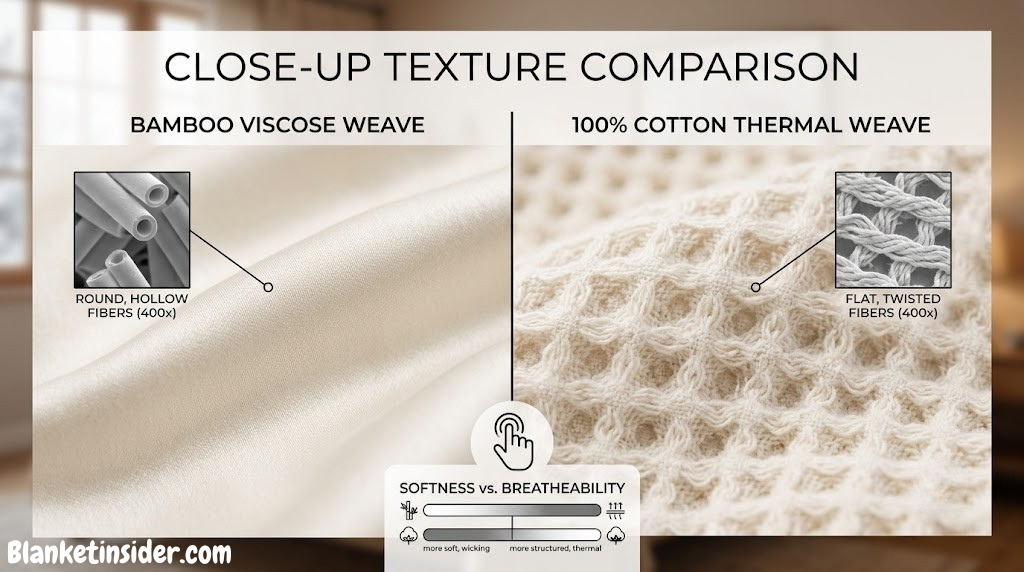
Bamboo viscose (left) vs 100% cotton (right) — the tactile and structural differences become apparent at the fiber level.
Choosing between bamboo and cotton might feel like a trivial bedding decision, but the blanket you pull up at night quietly shapes how deeply you sleep, how your skin feels in the morning, and even how long your bedding investment lasts. This guide cuts through the marketing noise and gives you a real, tactile comparison — fiber by fiber.
What’s the Actual Difference Between Bamboo and Cotton Blankets?
At first glance, bamboo and cotton blankets can look nearly identical on a shelf — a flat, woven rectangle in a neutral shade. The differences live inside the fibers, in the microscopic structure of the yarn, and in how each material interacts with body heat, moisture, and repeated washing over time.
Cotton is a natural seed-hair fiber that has been woven into textiles for thousands of years. It is harvested from the bolls of the Gossypium plant, spun into yarn, and woven or knitted into fabric. It is breathable, durable, and deeply familiar. Most people have grown up with cotton and have an intuitive sense of how it feels against the skin.
Bamboo blankets are a more recent category. Most of what the market calls “bamboo fabric” is technically bamboo viscose or bamboo rayon — a semi-synthetic textile produced by dissolving bamboo cellulose in a chemical bath and extruding it into fibers. A smaller segment of the market uses bamboo lyocell (produced through a cleaner, closed-loop process) or mechanically processed bamboo linen. The fiber type matters enormously for understanding performance, sustainability, and care.
For a broader look at how bamboo performs across different bed textiles, our guide on bamboo vs cotton sheets in cooling and humid climates covers a lot of the same underlying fiber science and is worth reading alongside this piece. And if you are specifically drawn to bamboo as a material category, our curated list of the best bamboo blankets is a useful companion.
Superior wicking and a naturally silkier drape make bamboo the go-to for anyone who runs warm or lives in a humid climate.
Proven durability, easier washing, widely available weave options, and a lower price point make cotton hard to beat for most households.
The closed-loop production process retains more of the natural antimicrobial properties, making lyocell bamboo gentle on eczema-prone or reactive skin.
Quality cotton blankets start well below bamboo equivalents and only depreciate slowly with proper care, making them the smarter value play.
Inside the Fibers: How Each Material Is Made
Understanding what you are actually buying requires a brief visit to the production side of each material. This is not trivia — the manufacturing process directly determines how the finished blanket will perform on your bed.
How Cotton Blankets Are Made
Cotton farming begins with planting, growing, and harvesting the cotton boll — the white, fluffy seed pod of the cotton plant. After harvest, the raw cotton is ginned to separate fibers from seeds, then carded or combed to align the fibers into a consistent strand. Those strands are spun into yarn, which is then woven or knitted into fabric. The weave structure chosen at this stage — thermal, waffle, cable-knit, jersey, muslin — determines most of the blanket’s tactile character.
Long-staple cotton varieties like Pima or Egyptian cotton produce a finer, softer yarn because the longer fibers can be spun into a more tightly wound thread with fewer loose ends poking through the surface. Short-staple cotton is coarser and pills more readily, but it is less expensive and perfectly functional for everyday use. When comparing cotton blankets, the staple length and thread count are meaningful specifications to look for.
How Bamboo Blankets Are Made
The bamboo plant itself is a fast-growing grass, not a tree. The production journey from plant to blanket involves several more steps than cotton. There are three main processing routes, each producing a materially different end product:
- Bamboo Viscose / Rayon: The most common and most affordable process. The bamboo stalk is pulped and dissolved in sodium hydroxide, then extruded through tiny holes into long fibers. The resulting yarn is soft and silk-like but the chemical process is intensive and most of the bamboo’s natural antimicrobial compounds are lost in processing.
- Bamboo Lyocell: A closed-loop process where the solvent is captured and reused. The fibers retain more structural integrity and are considered more eco-friendly. The fabric tends to be slightly crisper than viscose but still very soft.
- Mechanical Bamboo Linen: The bamboo stalk is mechanically separated into fibers the way flax is processed into linen. No harsh chemicals are used, so the material retains more natural properties — but it is coarse, and rarely used in consumer blankets.
This distinction matters when you see marketing claims about bamboo being “naturally antimicrobial” or “chemical-free.” Those claims are significantly more accurate for lyocell or mechanically processed bamboo than for viscose/rayon. Always check the fiber label.

Top-rated pick from BlanketInsider
Premium Bamboo Viscose Throw Blanket — Ultra-Soft, Breathable Check Price on Amazon →Softness & Texture: What Do They Actually Feel Like?
Softness is the first thing most people reach for when shopping for a blanket, and it is where bamboo viscose has built much of its reputation. The fiber structure of bamboo viscose produces a smooth, round cross-section that creates very little friction against skin — hence that cool, silky-against-the-hand feeling when you first unfold a bamboo blanket in a store.
Cotton’s texture varies enormously depending on the weave and fiber grade. A high-thread-count cotton sateen blanket can feel almost as smooth as bamboo viscose. A standard cotton thermal blanket has an open-weave, slightly rough texture that many people associate with warmth and ruggedness rather than luxury. A cotton waffle blanket sits in the middle — textured, satisfying, and a little more grounding than the slippery lightness of bamboo.
Over time, the softness trajectory of the two materials diverges. Bamboo viscose can soften further with washing during the first few cycles, but it is also more susceptible to mechanical degradation if washed in hot water or on aggressive cycles. Cotton often gets softer the more it is washed — a well-loved, well-worn cotton blanket after years of use tends to feel better than the day it was bought, provided it has not been damaged by bleach or extreme heat.
✓ Bamboo Softness Pros
- Immediately silky and smooth straight out of the bag
- Soft enough for sensitive or dry skin right away
- Lightweight drape reduces the feeling of weight on skin
- Viscose weave can produce a near-satin sheen
✗ Bamboo Softness Cons
- Can lose softness if washed incorrectly (heat damage)
- Slippery texture is not to everyone’s taste
- Lyocell variants feel slightly crisper, less plush
- Pills faster than long-staple cotton under friction
✓ Cotton Softness Pros
- Gets softer with every wash (especially long-staple varieties)
- Range of textures — thermal, jersey, waffle, chenille — to match preference
- Familiar, comforting hand-feel most people grew up with
- Durable softness: maintains quality across hundreds of washes
✗ Cotton Softness Cons
- Can start rough — especially short-staple or low-thread-count versions
- Budget cotton may feel scratchy against sensitive skin until broken in
- Heavier weaves can feel dense or stiff on hot nights
The softness question really comes down to whether you prefer immediate, luxurious smoothness (bamboo) or a blanket that earns its softness over time through use and washing (cotton). Neither is objectively better — it is a preference question.
Temperature Regulation & Cooling: The Hot Sleeper’s Guide
Temperature regulation is probably the most contested dimension of this comparison, partly because both materials are marketed aggressively as “cooling” fabrics. Let’s get specific about the mechanisms, because they are genuinely different.
How Bamboo Regulates Temperature
Bamboo viscose fiber has a micro-gap structure — tiny channels within the fiber that are claimed to wick moisture away from the body and allow it to evaporate. When this works well, it creates an active cooling effect similar to the evaporative cooling you experience with performance athletic wear. The silky surface also creates less friction and less of a heat-trapping seal against the skin compared to, say, a thick cotton flannel.
In warm, humid conditions, bamboo blankets genuinely do tend to sleep cooler. The fiber does not hold moisture against the body the way a dense cotton knit can. For hot sleepers in warm climates, this is a meaningful difference, and it is why bamboo often appears prominently in guides to the best blankets for night sweats.
How Cotton Regulates Temperature
Cotton is also breathable and moisture-absorbent, but it absorbs moisture into the fiber itself rather than wicking it away from the body surface. In practice, this means a damp cotton blanket can start to feel clammy if you sweat heavily, whereas a bamboo blanket is more likely to stay dry-feeling at the surface even as it moves moisture away.
That said, open-weave cotton constructions — thermal blankets, waffle weaves — are genuinely cool-sleeping materials. A thin cotton waffle blanket on a summer night is a perfectly capable cooling solution, and for dry-climate hot sleepers, it may perform on par with bamboo. The cooling advantage of bamboo is most pronounced in humid environments where moisture management matters most.
For a broader lens on how natural fibers handle thermal regulation, the comparison between merino wool and its thermoregulation properties offers useful context for how different natural and semi-natural fibers approach this challenge.

Editor’s cooling pick
Open-Weave Cotton Thermal Blanket — Lightweight & Breathable Check Price on Amazon →Durability & Longevity: Which Blanket Lasts Longer?
Durability is where cotton’s multi-thousand-year track record becomes hard to argue with. Cotton is a tough, resilient fiber. A well-made 100% cotton blanket, washed and dried properly, can last a decade or more without significant degradation. The fiber is forgiving of heat, resistant to abrasion (especially in longer-staple weaves), and responds well to most standard laundry processes.
Bamboo viscose, while initially impressive in its softness, is a more delicate fiber under mechanical stress. The viscose production process elongates and softens the cellulose fibers, which makes them luxurious but also more susceptible to pilling, stretching, and breakage if machine-washed on hot cycles or tumble-dried on high heat. With careful laundering — cool water, gentle cycle, low-heat drying — a bamboo blanket can last several years in excellent condition. The key word is careful; it requires more intentional maintenance than cotton.
Bamboo lyocell is somewhat stronger than viscose, thanks to a more controlled fiber production process. If durability is a priority and you want a bamboo blanket, lyocell is the more resilient choice.
Pilling: A Key Battleground
Pilling — the formation of small fiber balls on the surface of the fabric — is a common durability complaint for both materials, but for different reasons. Bamboo viscose tends to pill relatively quickly if the fabric is subjected to friction (folding, pressing against rough bedding, or high-speed washing). Cotton’s pilling behavior depends heavily on staple length: long-staple cotton is resistant to pilling, while short-staple cotton can pill noticeably within the first dozen washes.
Using a fabric shaver periodically can restore the surface of either blanket. But over the long arc, well-maintained cotton is more likely to stay pill-free through years of use.
| Durability Factor | Bamboo Blanket | Cotton Blanket | Edge |
|---|---|---|---|
| Resistance to tearing | Moderate — viscose fibers can snag | High — especially long-staple | Cotton ✓ |
| Pilling resistance | Low–Moderate (viscose) / Moderate (lyocell) | Moderate–High (long-staple) | Cotton ✓ |
| Heat tolerance | Low — degrades in hot wash/dry | High — tolerates 60°C+ washes | Cotton ✓ |
| Expected lifespan (with care) | 3–6 years | 7–15 years | Cotton ✓ |
| Color retention after washing | Good — dye bonds well to viscose | Varies — can fade in hot water | Tie |
| Stretch recovery | Poor — viscose can lose shape | Good — maintains dimensions | Cotton ✓ |
Hypoallergenic Properties & Sensitive Skin
This is an area where careful marketing language has created considerable confusion, so let’s separate fact from claim.
Cotton, particularly organic cotton, is a well-established choice for sensitive and allergy-prone skin. The fiber itself is chemically inert, does not irritate the skin, and has no known natural allergenic compounds. Conventional cotton is heavily sprayed with pesticides during cultivation, and trace residues can remain in non-organic finished fabric — though washing significantly reduces any such residues. Organic cotton, certified under standards like GOTS (Global Organic Textile Standard), eliminates that concern.
Bamboo viscose is often marketed as “naturally hypoallergenic” and “antimicrobial.” The antibacterial compound in bamboo — kun — does exist in the living plant, but research consistently shows that viscose processing largely destroys these properties. The resulting fabric is not significantly more antimicrobial than conventional cotton once it has been processed. Bamboo lyocell retains somewhat more of the original fiber structure and is more credibly described as gentle for sensitive skin, though it is not meaningfully antimicrobial in a clinical sense.
For people with conditions like eczema, the smoothness and low-friction surface of bamboo viscose can be genuinely soothing, even if it is not technically more hypoallergenic. Our resource on the best blankets for eczema covers this nuance in detail and includes both bamboo and cotton options tested against sensitive skin criteria.
Practical Takeaway: For surface texture and tactile sensitivity, bamboo viscose often feels gentler because it is smoother. For chemical/allergen concerns, certified organic cotton is the more trustworthy choice. Both materials beat synthetic options for most sensitive-skin users.

BlanketInsider sensitive-skin pick
GOTS-Certified Organic Cotton Blanket — Chemical-Free, Durable View on Amazon →Eco-Friendliness & Sustainability
Sustainability comparisons between natural and semi-synthetic materials are genuinely complex. Simple claims like “bamboo is eco-friendly because bamboo grows fast” collapse under scrutiny. Here is what the evidence actually shows.
The Cotton Sustainability Case
Conventional cotton is resource-intensive. It accounts for roughly 2.5% of global farmland but uses approximately 16% of all insecticides and 6.8% of all herbicides worldwide. A single cotton T-shirt is estimated to require up to 2,700 liters of water to produce — a number that scales up considerably for a full blanket.
Organic cotton changes this picture substantially. Certified organic cotton farming eliminates synthetic pesticides and fertilizers, uses significantly less water (organic farming practices tend to improve soil water retention), and produces no synthetic chemical runoff into local waterways. It does still require land and water, but the ecological impact per acre is measurably lower.
The longevity advantage of cotton is also meaningful from a sustainability perspective. A cotton blanket that lasts 12 years has a lower lifetime environmental footprint per year of use than a bamboo blanket that must be replaced after 4 years, even if the bamboo blanket scores better on individual material metrics.
The Bamboo Sustainability Case
Bamboo as a plant is genuinely remarkable from a resource perspective. It is the fastest-growing plant on Earth, sequestering carbon at a high rate, requiring no pesticides in most growing conditions, and regenerating from its root system without replanting. If the plant itself were the final product, bamboo would be an easy winner.
The complication is the viscose processing step. The chemicals used in conventional viscose production — primarily sodium hydroxide and carbon disulfide — are hazardous if not managed correctly. Many processing facilities, particularly in regions with less stringent environmental regulation, release these solvents into waterways. The eco-advantage of the raw plant can be largely negated by the processing.
Bamboo lyocell addresses this. The closed-loop process used to produce lyocell captures and recycles the solvent, dramatically reducing chemical discharge. If sustainability is your primary motivation for choosing bamboo, lyocell is the only production method that meaningfully delivers on the eco-promise.
| Sustainability Metric | Conventional Cotton | Organic Cotton | Bamboo Viscose | Bamboo Lyocell |
|---|---|---|---|---|
| Water usage (crop stage) | Very High | Moderate | Low | Low |
| Pesticide use | High | Minimal | Minimal | Minimal |
| Chemical processing impact | Low (mechanical spinning) | Low | High (solvents) | Low (closed-loop) |
| Biodegradability | High | High | Moderate | High |
| Carbon sequestration (crop) | Moderate | Moderate | Very High | Very High |
| Certifications available | GOTS, Fair Trade | GOTS, Fair Trade, OEKO-TEX | OEKO-TEX, some FSC | OEKO-TEX, FSC, Tencel |

BlanketInsider eco pick
Bamboo Lyocell Blanket — Closed-Loop Production, OEKO-TEX Certified Shop on Amazon →Washing & Care: What Each Blanket Actually Needs
Practical maintenance is where many consumers discover the real operational difference between bamboo and cotton. Cotton is forgiving; bamboo viscose is demanding.
Washing Cotton Blankets
Cotton blankets can generally be washed at 40–60°C in a standard wash cycle. Cotton tolerates tumble drying at medium to high heat, making it compatible with a typical household laundry routine. A cotton blanket can be washed with standard detergent, and most cotton fabrics tolerate occasional hot washes (useful for hygiene reasons, particularly for blankets used by pets or children).
Heavier cotton blankets — particularly electric or heavily woven varieties — benefit from larger-capacity washers to prevent mechanical strain during the spin cycle. Our guide on how to wash weighted blankets without damage covers many of the same capacity and cycle considerations that apply to heavy cotton blankets.
Washing Bamboo Blankets
Bamboo viscose requires considerably more care. The standard recommendation is cold or cool water (30°C or below), a gentle or delicate cycle, and either air drying or tumble drying on the lowest heat setting. Hot water and aggressive spin cycles can cause bamboo viscose to shrink, stretch, or develop permanent creases. Fabric softener is generally not recommended, as it can coat the bamboo fibers and reduce their natural wicking ability.
If you are not the type to read care labels carefully or you share laundry duties with someone who defaults to the standard cycle, a bamboo blanket may not survive your household’s laundry habits. Cotton’s tolerance for the regular cycle is a genuine practical advantage for busy households. For a more detailed walkthrough of gentle washing methods for delicate blankets, our guide on washing cooling blankets is worth reading, as many cooling blankets use bamboo-adjacent materials and face the same care constraints.
| Care Requirement | Bamboo Blanket | Cotton Blanket |
|---|---|---|
| Wash temperature | Cold / 30°C max | Up to 60°C depending on weave |
| Wash cycle | Gentle / Delicate | Normal or Gentle |
| Tumble dry | Low heat only / Air dry preferred | Medium–High heat okay |
| Fabric softener | Avoid (coats fibers) | Okay in moderation |
| Bleach | Never | Non-chlorine bleach only for whites |
| Ironing | Low heat, steam setting | Medium–High heat, steam setting |
| Washing frequency | Every 2 weeks | Every 1–2 weeks |
| Error tolerance | Low — damage from one wrong wash | High — resilient to occasional error |
Price & Value: What Does Each Blanket Actually Cost?
Bamboo blankets consistently carry a price premium over comparable cotton options. The reasons are partly material (bamboo processing is more involved) and partly market positioning (bamboo is often marketed as a premium lifestyle product, allowing higher margins). Here is a realistic breakdown of what you should expect to pay across quality tiers:
| Quality Tier | Bamboo Blanket (Queen/King) | Cotton Blanket (Queen/King) |
|---|---|---|
| Budget | $30–$60 | $15–$35 |
| Mid-Range | $60–$120 | $35–$75 |
| Premium | $120–$250+ | $75–$180 |
| Organic/Certified | $150–$300 (lyocell) | $90–$200 (GOTS organic) |
On a cost-per-year-of-use basis, the calculation shifts. A $80 bamboo blanket that lasts 4 years costs $20/year. A $70 cotton blanket that lasts 10 years costs $7/year. If longevity is your primary value driver, cotton represents significantly better economic value — even at slightly higher initial price points for premium versions.
That math changes if you genuinely need the performance characteristics that bamboo delivers. If a bamboo blanket meaningfully improves your sleep quality — particularly for hot sleepers — the cost premium has real return on investment. Better sleep is not a small thing.
If you are building out a bedroom from scratch and thinking through the full ecosystem of blanket needs — sizes, layers, storage — the best blanket materials guide and our overview of king-size blanket options are useful for thinking through what budget to allocate to each layer.
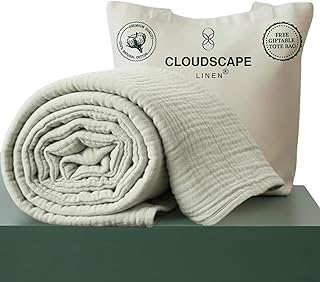
Best value pick
100% Cotton Blanket — Long-Staple, Queen Size, Exceptional Value View Best Deals →Best Use Cases: When to Choose Bamboo and When to Choose Cotton
Rather than declaring a single winner, the more useful framing is understanding which contexts and users each material genuinely serves best.
Choose a Bamboo Blanket If…
- You are a hot sleeper or live in a warm, humid climate and consistently wake up overheated
- You have very sensitive skin that reacts to friction or rough textures, particularly conditions like eczema or psoriasis
- You want an immediately luxurious feel without breaking in a new blanket
- You are willing to follow specific care instructions and handle laundry mindfully
- You are sourcing a special-occasion blanket (a throw for a guest room or a gift) rather than a daily workhorse
- Sustainability is important and you are sourcing bamboo lyocell specifically
Choose a Cotton Blanket If…
- You want a blanket that lasts years without careful coddling
- Your household laundry runs on autopilot and you cannot guarantee gentle cycles every time
- You prefer the familiar, grounded feel of classic cotton rather than the silky lightness of bamboo
- You are buying for a child or baby, where durability and easy sanitizing at higher temperatures matter most
- Budget is a primary concern and you want the most cost-per-year value
- You are outfitting a beach bag, travel kit, or outdoor-use context where durability matters more than luxury. Our best beach blankets guide and the best travel blanket set review explore cotton options across these use cases.
Baby and Infant Use
For baby blankets specifically, organic cotton is generally the recommendation most pediatric dermatologists would support, given its long safety record, washability at hygiene temperatures, and absence of the chemical-processing question that applies to bamboo viscose. Our comprehensive baby blanket reviews cover both materials in detail, including muslin cotton options that are a staple of the newborn stage. For parents navigating the swaddle-to-blanket transition, the baby sleep blanket safety timeline is essential reading.
Dorm Room Use
College dorms are a setting that rewards durability and ease of care over luxurious softness. Cotton wins decisively here. A good cotton blanket tolerates the shared laundry machines, hot washes, and general rough handling of dorm life without degrading. If you are outfitting a dorm, check out our broader dorm room essentials guide for perspective on what else to prioritize.

Baby and nursery pick
GOTS Organic Muslin Cotton Baby Blanket — Safe, Breathable, Durable Find on Amazon →Full Head-to-Head Comparison Table
The table below distills the entire guide into a single scannable reference. Use it as a quick decision aid or as a reminder of the key differentiators when comparing product listings.
| Category | Bamboo Blanket | Cotton Blanket | Winner |
|---|---|---|---|
| Initial Softness | Silky, smooth immediately | Varies; improves with washing | Bamboo |
| Long-Term Softness | Maintained with care | Often softens further over years | Cotton |
| Cooling / Wicking | Superior (especially humid climates) | Good in open weaves | Bamboo |
| Durability | Moderate (viscose); Better (lyocell) | High — multi-year lifespan | Cotton |
| Allergy / Sensitive Skin | Smooth surface reduces friction | Organic cotton chemically safest | Tie |
| Antimicrobial | Minimal (viscose); Slight (lyocell) | None inherent | Tie |
| Eco-Friendliness (base) | Mixed (crop good, processing bad) | Mixed (conventional) / Good (organic) | Bamboo Lyocell |
| Care Simplicity | Demanding — cold, gentle only | Forgiving — standard cycles okay | Cotton |
| Price (mid-range) | $60–$120 | $35–$75 | Cotton |
| Value (cost per year) | Moderate | Excellent | Cotton |
| Availability | Growing — most major retailers | Ubiquitous | Cotton |
| Best for Hot Sleepers | ✓ Clear winner | Open-weave options adequate | Bamboo |
| Best for Kids/Baby | Possible (lyocell/organic) | ✓ Recommended (organic cotton) | Cotton |
For an even broader comparison that includes synthetic materials and blends, our guide to cotton vs polyester blankets and the comprehensive best blanket materials roundup extend this analysis across the full market.
Frequently Asked Questions
-
Is bamboo actually softer than cotton?
Bamboo viscose tends to feel silkier and smoother right out of the package because of the round cross-section of the extruded fiber. However, high-quality long-staple cotton (Pima, Egyptian) can match or exceed bamboo’s softness after a few wash cycles, and well-washed cotton often surpasses bamboo viscose after several years of use. The “softer” label for bamboo is most accurate as an out-of-the-box comparison.
-
Are bamboo blankets better for hot sleepers than cotton?
Generally yes, particularly in humid environments. Bamboo viscose wicks moisture away from the skin surface rather than absorbing it into the fiber, which creates a drier, cooler feel during sleep. Open-weave cotton blankets (thermal, waffle) can approach bamboo’s cooling performance in dry climates, but in humid conditions bamboo typically maintains a meaningful advantage.
-
How do you wash a bamboo blanket without ruining it?
Wash bamboo blankets in cold water (30°C or below) on a gentle or delicate cycle. Use a mild, non-biological detergent and avoid fabric softener, which can coat the fibers and reduce wicking performance. Tumble dry on the lowest heat setting or air dry flat to prevent stretching. One accidental hot wash can cause irreversible shrinkage, so it is worth labeling the blanket for any shared laundry users.
-
Do bamboo blankets shrink?
Yes — bamboo viscose is particularly susceptible to heat-related shrinkage. If washed in warm or hot water or dried at high heat, bamboo blankets can shrink by as much as 5–10%, and this shrinkage is generally permanent. Always wash cold and dry on low or no heat to maintain the original dimensions.
-
Is bamboo or cotton better for eczema?
Both materials have merit for eczema-prone skin, but through different mechanisms. Bamboo viscose’s smooth, low-friction surface reduces mechanical irritation from fabric contact, which is often a trigger for eczema flares. Certified organic cotton eliminates concerns about chemical residues from conventional cotton growing and processing. For people with eczema, the most important factor is often weave tightness and washing the blanket before first use to remove any manufacturing residues.
-
Is bamboo fabric really eco-friendly?
Bamboo as a crop is genuinely sustainable — fast-growing, low-pesticide, high-carbon-sequestering. However, the viscose processing method used for most bamboo textiles involves significant chemical use that can negate the plant’s eco-advantages if managed poorly. Bamboo lyocell, produced through a closed-loop process, is the genuinely eco-friendly form of bamboo fabric. If environmental impact is your primary motivation, look for lyocell specifically.
-
Which lasts longer — bamboo or cotton blankets?
Cotton blankets typically last significantly longer than bamboo viscose. A quality cotton blanket washed with standard care can last 7–15 years. Bamboo viscose, even with careful care, typically shows meaningful wear and softness loss within 3–6 years. Bamboo lyocell is more durable than viscose but still generally falls short of the longevity of high-quality cotton.
-
Can I use a bamboo blanket for a baby?
Bamboo lyocell or organic bamboo blends are used for baby products and are generally considered safe for infant skin. However, for newborns and very young infants, organic cotton remains the more established recommendation among pediatric dermatologists, primarily because of its chemical-processing simplicity and its long safety track record. Check that any baby bamboo product carries an OEKO-TEX Standard 100 certification to confirm the fabric has been tested for harmful substances.
-
Does bamboo fabric really have antimicrobial properties?
The bamboo plant contains a natural antibacterial agent called “bamboo kun,” but research consistently shows that conventional viscose processing destroys most of these properties. Finished bamboo viscose fabric is not meaningfully more antimicrobial than cotton. Bamboo lyocell retains slightly more of the original fiber structure and may have very modest antimicrobial effects, but the claims on packaging are frequently exaggerated relative to what independent lab testing demonstrates.
-
Are bamboo blankets worth the extra money?
For hot sleepers, people with sensitive skin, or anyone who genuinely prioritizes that immediately luxurious feel, yes — bamboo blankets can be worth the premium. For most other users, the combination of higher cost and lower durability means cotton provides better long-term value. A bamboo blanket is worth it if it solves a specific problem for you; it is not worth it as a general upgrade over cotton for average sleepers.
-
What is the difference between bamboo viscose and bamboo lyocell?
Both start with bamboo cellulose, but the processing method differs significantly. Bamboo viscose uses a wet-spinning process with sodium hydroxide and other chemicals that are not fully recaptured — an older, more polluting method. Bamboo lyocell uses a closed-loop dry-jet wet-spinning process where the organic solvent is captured and reused, making it far cleaner environmentally. Lyocell also tends to produce a slightly more durable and crisper-feeling fabric than viscose.
-
Can I use both a bamboo and a cotton blanket on the same bed?
Absolutely — and many experienced bedding layerers do exactly this. A bamboo viscose blanket as a top-layer throw for warm months provides cooling and luxurious feel, while a durable cotton blanket serves as the foundation layer year-round. The two materials layer well together with no compatibility issues. This approach also distributes the laundry care burden: you can wash the cotton layer on a standard cycle without worrying, reserving the careful gentle-cycle treatment for the bamboo layer.
Conclusion: Making the Right Call for Your Bedroom
The bamboo vs cotton debate is, at its core, a question of what you need most from your blanket. Bamboo viscose earns its premium through a genuinely superior cooling and wicking performance, especially in warm or humid conditions, and a silky-smooth surface feel that is hard to match at first touch. If you are a hot sleeper who needs active moisture management, or someone with reactive skin who finds even soft cotton mildly irritating, the extra cost and careful washing requirements of a quality bamboo blanket are justified.
Cotton’s case is quieter but deeper. It is a material that has been trusted across cultures and centuries for very good reason: it works, it lasts, it is easy to maintain, and it rewards long ownership. A quality cotton blanket that fits your sleep climate and preferences can outlast several bamboo equivalents and end up costing far less per comfortable night.
If you are still uncertain, the most honest advice is this: consider the one performance dimension that matters most to you. If that dimension is cooling, buy bamboo. If it is durability or ease of care, buy cotton. If it is sustainability, buy bamboo lyocell or organic cotton. There is a right answer for your specific situation, and this guide has given you everything you need to identify it.
For further reading, the detailed bamboo blanket buying checklist is an excellent next step for anyone who has decided on bamboo and wants to verify they are selecting a quality product. For cotton buyers, the best blanket materials guide helps narrow down which cotton weave suits your climate and sleep style.
Either way, you deserve a blanket that works — and now you have the knowledge to find one.
Ready to Shop? Browse Our Top Picks
We’ve done the testing. Here are the blankets we actually recommend across both materials.
As an Amazon Associate, BlanketInsider earns from qualifying purchases. This does not affect our editorial recommendations.