

The Ultimate Guy’s Guide to Dorm Room Accessories: 12 Essentials to Maximize Your Space & Style
Alright, let’s cut to the chase. You’ve got your acceptance letter, you’ve picked your classes, and now you’re staring at a packing list the length of a CVS receipt. The mission: turn a sterile, shoebox-sized room into your personal command center for the next year. It’s not just about surviving; it’s about thriving. This isn’t just a place to sleep—it’s your study hall, your movie theater, your late-night strategy session hub, and your sanctuary.
As a former RA (Resident Advisor) who has seen hundreds of dorm rooms, I can tell you one thing for certain: the right gear makes all the difference. I’ve seen guys try to tough it out with just a laptop and a milk crate, and I’ve seen rooms so dialed-in they looked like a tech startup’s lounge. Guess who had a better year?
This guide is the culmination of that experience. We’re skipping the fluff and focusing on high-impact, genuinely useful dorm room accessories for guys. We’re talking about items that save space, boost your productivity, make your room the go-to hangout spot, and just make daily life easier. From essential tech to clever organization hacks, consider this your definitive checklist for an epic dorm room setup. Let’s build your base.
Understanding the Modern Dorm Room Landscape
Before we dive into specific products, it’s important to understand the constraints and opportunities of modern dorm living:
- Average Dorm Room Size: 12′ x 9′ (108 sq ft) for a double room, 8′ x 10′ (80 sq ft) for a single
- Typical Power Outlets: 2-4 outlets per room, often in inconvenient locations
- Storage Space: Usually one small closet per person and limited drawer space
- Wall Restrictions: No nails or screws allowed in most campuses
- Internet Connectivity: Varies from high-speed Ethernet to spotty Wi-Fi
Understanding these constraints helps you make smarter purchasing decisions that work within your specific environment.
Before You Buy: The Smart Shopper’s Framework
Hold up before you go on an Amazon shopping spree. The biggest mistake first-year students make is buying everything on some generic list without thinking about their specific situation. Your dorm room is not the same as your buddy’s across the country. A little upfront planning saves you hundreds of dollars and a move-in day full of regret. Let’s walk through the framework that separates the guys who have a dialed-in room from the guys drowning in stuff they never use.
Assessing Your Specific Needs
Every student’s situation is unique, and the accessories you prioritize should reflect that reality. Before purchasing anything, take a hard look at these factors:
- Your Major and Study Habits: An engineering student who needs three monitors and a mechanical keyboard has fundamentally different desk needs than an English major who primarily works with books and a laptop. If your coursework demands specialized equipment, allocate more budget toward your study setup and less toward decor.
- Your Social Style: Are you the guy who always has people over, or do you prefer a quiet, private space? If your room doubles as the hangout spot, invest in guest seating, a good speaker, and ambient lighting. If you’re more of a loner, prioritize personal comfort and noise cancellation.
- Your Climate: A student attending school in Arizona has completely different bedding and climate control needs than someone in Minnesota. Hot-climate students should prioritize cooling mattress toppers, fans, and breathable sheets. Cold-climate students need warmer bedding and possibly a space heater (if allowed).
- Your Roommate Situation: Are you in a single, a double, or a triple? Do you already know your roommate? Shared rooms require more coordination and compromise on space, lighting, and noise. Single rooms give you more freedom but also mean you bear the full cost of furnishing the space.
- Your Physical Needs: If you’re 6’4″, a Twin XL mattress topper and a proper ergonomic chair aren’t luxuries—they’re necessities. If you have back problems, the mattress topper jumps to the top of the priority list. Be honest about what your body needs.
Room Dimensions and Layout Planning
Before you buy a single item, get your room dimensions. Most university housing websites publish floor plans, and many allow you to view your specific room number’s layout. This information is gold. Here’s how to use it:
- Sketch It Out: Use graph paper or a free app like RoomSketcher to create a to-scale layout of your room. Include the location of windows, doors, outlets, and any built-in furniture like desks or dressers.
- Identify Dead Zones: Corners, the space above the door, the area under the bed, and the back of closet doors are all underutilized spaces that organization products can unlock.
- Plan Your Zones: Divide your room into functional zones: sleep, study, storage, social, and hygiene. Each zone needs its own set of accessories. This prevents the common problem of everything ending up crammed around your desk.
- Measure Twice, Buy Once: That bookshelf might look perfect online, but if it’s 36 inches wide and your available wall space is 34 inches, you’ve got a problem. Always verify dimensions before purchasing furniture or large accessories.
The “One In, One Out” Rule
Adopt this rule from day one: for every new item that enters your room, something has to leave. Dorm rooms have a finite amount of space, and clutter accumulates fast over a semester. This rule forces you to be intentional about what you keep and prevents the slow creep of stuff that turns a organized room into a chaotic mess by midterms.
Budget Allocation Strategy
Let’s talk money. Most students are on a tight budget, and it’s easy to blow your entire wad on a flashy LED light setup while sleeping on a rock-hard mattress. Here’s a smart allocation framework based on impact-per-dollar:
| Priority Tier | Category | Recommended Budget | Why It Matters |
|---|---|---|---|
| Tier 1: Essential | Sleep (topper, bedding, pillow) | $100-200 | You spend 7-9 hours a day sleeping. Poor sleep ruins everything else—grades, mood, health. |
| Tier 1: Essential | Study Setup (headphones, charger, lamp) | $100-300 | Directly impacts academic performance and GPA. Non-negotiable investments. |
| Tier 2: Important | Organization (storage, hangers, organizers) | $50-100 | Prevents clutter, reduces stress, and makes your room functional and livable. |
| Tier 2: Important | Comfort (chair, fan, rug) | $50-150 | Enhances daily comfort and makes your room feel like home rather than a cell. |
| Tier 3: Nice-to-Have | Decor & Ambiance (LED strips, posters, plants) | $30-80 | Personalizes your space. Important for mental health but lower priority than function. |
| Tier 3: Nice-to-Have | Entertainment (speaker, projector, games) | $50-150 | Enhances social life and relaxation. Invest here only after tiers 1 and 2 are covered. |
The Trap of “Dorm Essentials” Lists
Be skeptical of overly long shopping lists, including parts of this guide. Not every item is essential for every person. The most common regret from returning students is buying too much stuff that sits unused. Start with the Tier 1 essentials, live in your room for a week or two, and then identify what you actually need. You can always order more stuff after move-in—Amazon delivers to dorm mailrooms every day.
The Tech & Entertainment Hub: Powering Your Work and Play
Your desk area is ground zero for everything from 10-page essays to all-night gaming sessions. Skimping here is not an option. You need reliable tech that works as hard as you do and entertainment gear that helps you decompress. Here’s the essential loadout.
1. Noise-Canceling Headphones: The Ultimate Focus Tool
Your roommate might be a great person, but their 2 AM “quiet” phone calls or love for death metal probably won’t help you study for your midterm. A quality pair of noise-canceling headphones isn’t a luxury; it’s a survival tool. They create a bubble of silence, allowing you to focus in a chaotic environment. They’re also clutch for immersive gaming, listening to lectures, or just zoning out with your favorite podcast.
Pro Tip: Understanding Noise Cancellation Technology
Not all noise cancellation is created equal. There are three main types:
- Passive Noise Cancellation: Physical barrier created by ear cup design and padding
- Active Noise Cancellation (ANC): Uses microphones to detect ambient noise and create opposing sound waves
- Adaptive Noise Cancellation: Smart ANC that adjusts based on your environment and movement
For dorm environments, look for headphones with at least 20dB of noise reduction. The Sony WH-1000XM5 offers up to 30dB, which is why it’s our top pick.

Sony WH-1000XM5 Wireless Noise Canceling Headphones
Industry-leading noise cancellation that magically silences your surroundings. They’re incredibly comfortable for long study sessions, boast a 30-hour battery life, and deliver crystal-clear audio for both music and calls. A true game-changer.
Check Price on Amazon
Anker Soundcore Life Q30 Hybrid ANC Headphones
Anker delivers incredible value with the Q30s. You get surprisingly effective multi-mode noise cancellation, Hi-Res audio, and a massive 40-hour playtime. It’s 90% of the performance of premium brands for a fraction of the price.
Check Price on Amazon| Feature | Sony WH-1000XM5 | Anker Soundcore Q30 | Bose QuietComfort 45 |
|---|---|---|---|
| Noise Cancellation | Industry-leading (30dB) | Multi-mode Hybrid ANC | Excellent (28dB) |
| Battery Life | 30 hours | 40 hours | 24 hours |
| Comfort | Premium materials, lightweight | Good padding, can be warm | Excellent, airy feel |
| Price Range | $350-400 | $80-100 | $330-380 |
| Best For | Serious students, audiophiles | Budget-conscious, value seekers | Comfort-focused users |
2. A Multi-Device Charging Station: The Outlet Savior
You’ve got a phone, laptop, tablet, headphones, and maybe a gaming controller. The standard dorm room gives you two outlets, usually in the most inconvenient places possible. A charging station or a high-quality surge protector with USB ports is non-negotiable. It tidies up the cable mess and ensures all your gear is juiced up and ready to go.

Anker 3-in-1 Cube with MagSafe
For the Apple ecosystem user, this is a masterpiece of design. It wirelessly charges your iPhone, Apple Watch, and AirPods in a super compact, foldable cube. It looks clean on your desk and is perfect for decluttering your nightstand.
Check Price on Amazon
Anker Power Strip Surge Protector (6 Outlets, 3 USB)
This is the workhorse every dorm room needs. It turns one outlet into six, adds three smart USB ports for your devices, and provides crucial surge protection to safeguard your expensive electronics from power spikes. The flat plug is a lifesaver for tight spaces.
Check Price on AmazonImportant Electrical Safety Information
University Regulations: Always check your specific dorm’s electrical policies. Most campuses require:
- UL-listed or ETL-certified surge protectors only
- No daisy-chaining (plugging surge protectors into each other)
- Maximum cord length restrictions (usually 6-8 feet)
- No extension cords—only surge protectors with built-in circuit breakers
Pro Tip: Look for surge protectors with a Joule rating of at least 1000 Joules for adequate protection of your electronics.
2.5. Cable Management: Taming the Wire Jungle
This topic deserves its own spotlight because it’s one of those things nobody thinks about until their desk looks like a plate of spaghetti. Between your laptop charger, phone cable, headphone cord, monitor cable, lamp cord, and speaker wire, you’re looking at a minimum of six to eight cables snaking across your desk and floor. Without a cable management strategy, this mess becomes a tripping hazard, a dust collector, and an eyesore all at once.
Good cable management isn’t about making things look pretty for Instagram—it’s about functionality. When every cable has a designated path and home, you spend less time untangling wires, less time searching for the right charger, and less time dealing with the anxiety that comes from visual chaos on your workspace. Here are the tools and techniques that actually work in a dorm setting:
- Cable Clips and Cord Organizers: These small adhesive clips attach to the edge of your desk and hold individual cables in place. They prevent your phone charger from falling behind the desk every time you unplug it. Look for silicone versions that won’t damage the desk surface.
- Cable Management Sleeves: These zip-up fabric sleeves bundle multiple cables into a single, clean tube. Run them along the back edge of your desk or down to the floor outlet. They turn a chaotic mess of six wires into one neat line.
- Under-Desk Cable Trays: If your desk allows it, a mounted cable tray underneath the desktop is a game-changer. It holds your power strip, excess cable length, and power bricks completely out of sight. Some clamp on without any drilling.
- Velcro Cable Ties: Skip the zip ties (they’re permanent and annoying to redo). Velcro ties are reusable, adjustable, and won’t damage your cables. Use them to bundle excess length and keep things tidy.
- Label Your Cables: This sounds excessive until you’re crawling under your desk at midnight trying to figure out which black cable goes to which device. Small labels or colored tape on each end of a cable save enormous frustration.
- Wireless Where Possible: The best cable management is no cable at all. Where budget allows, invest in wireless peripherals: wireless mouse, wireless keyboard, wireless charging pad, Bluetooth speaker. Every wireless device you add is one fewer cable to manage.
The Desk Cable Management Blueprint
Follow this layout for a clean, functional desk setup:
- Power Strip Placement: Mount or place the power strip at the back-center of your desk or in an under-desk tray. All cables originate from this single point.
- Left Side: Route charging cables (phone, tablet, headphones) to the left side using cable clips. This keeps them accessible but out of your primary work area.
- Right Side: Route computer-related cables (monitor, Ethernet, external drives) to the right side.
- Back Edge: Use a cable sleeve along the back edge to bundle everything going to the wall outlet.
- Excess Length: Coil and velcro-tie any excess cable length. Never leave loose coils dangling—they collect dust and create visual clutter.
3. A Portable Bluetooth Speaker: For Good Vibes Only
The tinny sound from your laptop speakers isn’t going to cut it. A portable Bluetooth speaker is essential for everything from listening to music while you clean to providing the soundtrack for a chill hangout with friends. Look for something with good battery life, durable construction, and decent bass.

JBL Flip 6 Portable Bluetooth Speaker
The JBL Flip line is legendary for a reason. The Flip 6 is waterproof and dustproof (perfect for any environment), delivers surprisingly powerful sound for its size, and has a 12-hour battery life. It’s the perfect all-rounder for a dorm room.
Check Price on Amazon3.5. Entertainment Upgrades: Beyond the Speaker
While a great Bluetooth speaker covers your audio needs, there are a few more entertainment accessories that can transform your dorm room from a basic living space into a legitimate hangout destination. These aren’t strictly essential, but they’re the kind of additions that make your room the place everyone wants to be on a Friday night.
A Compact Streaming Device
If you have a TV or even a decent-sized monitor, a streaming device like a Roku, Fire Stick, or Chromecast turns it into a full entertainment center. Most dorm Wi-Fi networks support streaming, and having access to Netflix, Hulu, YouTube, and gaming platforms without tying up your laptop is incredibly convenient. The compact size means it tucks behind your monitor and stays out of the way.
Card Games and Board Games
This might sound old-school, but hear me out. A deck of cards, a set of dice, or a compact board game like Catan, Codenames, or Exploding Kittens is one of the best social investments you can make. They cost almost nothing, take up zero space, and they’re the ultimate icebreaker when meeting new people in the dorm. Some of the best friendships in college start over a game of cards in a common room. Keep a small collection in a drawer—you’ll be surprised how often they come out.
A Mini Projector (The Room Transformer)
If your budget allows and you want to create an unforgettable entertainment setup, a compact portable projector is a revelation. Point it at a blank wall, pull the blackout curtains, and you’ve got a 60-100 inch screen for movie nights, sports games, or gaming sessions. Modern mini projectors are surprisingly affordable, often under $100, and many connect directly to your phone or laptop via HDMI or wireless casting. The image quality won’t rival a dedicated home theater, but for dorm room movie nights with friends, it’s absolutely electric. Just be sure to pair it with that Bluetooth speaker for audio, since built-in projector speakers are usually weak.
Pro Tip: The Movie Night Setup
For the ultimate dorm movie night, combine these elements: blackout curtains closed, LED strips set to a dim warm color behind the projection wall, the Bluetooth speaker positioned centrally for audio, and everyone seated on the bed or floor with pillows and snacks. It replicates the theater experience in a 100-square-foot room. Trust me, your floor will be talking about it for weeks.
Smart Home Integration for Dorm Rooms
While many dorms restrict major smart home installations, several dorm-friendly options can enhance your living experience:
📱 Smart Plugs
Turn any outlet into a smart outlet. Schedule lamps to turn on at sunset, control appliances remotely, or create routines with voice commands (where allowed).
💡 Smart Light Bulbs
Replace standard bulbs with smart bulbs for adjustable color temperatures and brightness. Great for reducing eye strain during study sessions.
🔊 Smart Speakers (Voice Assistants)
Where permitted, a smart speaker can serve as an alarm, timer, music controller, and information hub. Check campus policies first.
Important: Always check your university’s technology policies before implementing smart home devices. Some campuses restrict certain types of connected devices for network security reasons.
The Comfort Zone: Upgrading Your Sleep and Lounge Game
You’re going to spend a third of your life in your dorm bed, and a good chunk of your waking hours chilling in your room. Making this space comfortable is paramount for your physical and mental health. Standard-issue dorm furniture is built for durability, not comfort. A few key upgrades can transform your space from a cell into a sanctuary.
4. A Quality Mattress Topper: Your Back Will Thank You
Let’s be real: the mattress that comes with your dorm bed has likely seen more history than the campus library and has the comfort level of a thinly padded rock. A mattress topper is the single most important upgrade for getting a good night’s sleep. A 3-inch memory foam or gel-infused topper can turn a lumpy, stiff mattress into a cloud.

Linenspa 3-Inch Gel Infused Memory Foam Topper (Twin XL)
This is the go-to choice for thousands of college students. It provides incredible pressure relief, the gel infusion helps keep you cool, and it completely neutralizes the terrible mattress underneath. Make sure you get the Twin XL size, which is standard for most dorm beds.
Check Price on Amazon| Topper Type | Thickness | Best For | Average Price | Maintenance |
|---|---|---|---|---|
| Memory Foam | 2-4 inches | Pressure relief, body contouring | $50-150 | Spot clean, air out regularly |
| Gel-Infused Memory Foam | 3-4 inches | Hot sleepers, temperature regulation | $70-200 | Same as memory foam |
| Latex | 2-3 inches | Eco-conscious, natural materials | $150-300 | More durable, easy to clean |
| Feather/Down | 2-3 inches | Softness, traditional feel | $100-250 | Professional cleaning recommended |
While you’re at it, don’t forget the frame itself. Many dorms provide one, but if you have any say in the matter, opting for a foldable bed frame for small rooms can offer more under-bed storage space and easier move-in/move-out logistics.
4.5. The Complete Sleep System: Sheets, Pillows, and Bedding Essentials
A mattress topper is the foundation, but the rest of your sleep system matters just as much. Think of your bed as an integrated system where every layer contributes to the quality of your rest. Skimping on sheets or using a flat, lifeless pillow undermines the investment you just made in a quality topper. Here’s how to build a complete sleep setup that actually lets you wake up feeling rested.
Sheets: The Fabric You Touch All Night
Sheet quality directly affects how comfortable you feel in bed. Cheap sheets trap heat, feel scratchy, and pill after a few washes. Quality sheets breathe well, feel soft against your skin, and last through years of weekly laundering. Here’s what to look for:
- Material Matters: Cotton is the classic choice, but not all cotton is equal. Look for 100% cotton with a percale weave for a crisp, cool feel, or a sateen weave for a silkier, warmer feel. Microfiber is budget-friendly and soft but doesn’t breathe as well. Bamboo-derived fabrics (like viscose or lyocell) are excellent for hot sleepers because they’re naturally moisture-wicking and temperature-regulating.
- Thread Count Is Mostly Marketing: Don’t fall for the “1000 thread count” trap. Thread count above 400 is often achieved through multi-ply yarns that actually make sheets heavier and less breathable. A 300-400 thread count single-ply cotton sheet will feel better than a “1000 thread count” sheet made with inferior multi-ply construction. Focus on material quality over thread count numbers.
- Twin XL Is Non-Negotiable: Most dorm beds use Twin XL mattresses (39″ x 80″), which are five inches longer than standard Twin. Regular Twin sheets won’t fit properly and will constantly pop off the corners. Always verify the size before buying. Deep pocket sheets (14-16 inches) are recommended if you’re using a thick mattress topper.
- Get Two Sets: Having two sets of sheets means you always have a clean set ready while the other is in the wash. This is especially important in college when laundry day might get pushed back longer than you’d like to admit. Rotate them weekly for maximum hygiene.
Pillows: The Unsung Hero of Sleep Quality
Your pillow supports your head and neck alignment, and the wrong pillow can cause neck pain, headaches, and poor sleep quality that carries into your entire day. Most guys grab whatever flat pancake of a pillow they’ve had since middle school. Don’t be that guy.
- Sleep Position Dictates Pillow Type: Back sleepers need a medium-loft pillow that supports the natural curve of the neck. Side sleepers need a firmer, higher-loft pillow to fill the gap between shoulder and head. Stomach sleepers need a thin, soft pillow (or no pillow at all) to avoid straining the neck.
- Memory Foam Pillows: These conform to your head and neck shape, providing consistent support throughout the night. Shredded memory foam versions are adjustable—you can add or remove fill to customize the loft. They’re particularly good for side and back sleepers.
- Down Alternative Pillows: If you prefer a softer, more traditional feel, down alternative pillows use synthetic fill that mimics the feel of real down without the allergen concerns or ethical issues. They’re also easier to wash, which matters when you’re dealing with dorm-level cleanliness standards.
- Replace Regularly: Pillows should be replaced every 1-2 years. They accumulate dust mites, body oils, and allergens that build up over time. If you fold your pillow in half and it doesn’t spring back, it’s past its prime.
Comforter or Duvet: The Top Layer Decision
You need something to keep you warm, and you have two main options: a standalone comforter or a duvet with a removable cover. Each has trade-offs in a dorm environment:
- Comforter: Simpler—one piece, no cover to deal with. The downside is that washing a bulky comforter in dorm machines (which are usually smaller than home machines) can be a headache. Look for machine-washable options that fit in standard commercial washers.
- Duvet with Cover: More versatile and easier to maintain. You only need to wash the cover regularly, which is lighter and easier to handle. You can also switch covers to change the look of your room without buying a new comforter. The downside is that duvet inserts can shift inside the cover and get bunched up.
- Warmth Rating: Consider your dorm’s climate control. Many older dorms have inconsistent heating—you might be freezing in January and sweating in March. A medium-weight option works for most situations. If your dorm runs hot, a lightweight quilt or blanket might be more appropriate than a thick comforter.
Bed Risers: Unlocking Hidden Storage Space
This is one of the most overlooked and highest-impact accessories for dorm rooms. Bed risers lift your bed frame an additional 3-6 inches off the ground, creating a significant amount of extra under-bed storage space. For a room where every square inch counts, this is massive. You can slide storage bins, shoes, luggage, or even a small mini-fridge underneath. Heavy-duty plastic risers are the most common and affordable option, typically supporting 1,000-10,000 pounds depending on the model. Some risers even come with built-in USB ports and outlets, solving two problems at once. Just make sure the risers are compatible with your bed frame legs and that your bed doesn’t become so high that getting in and out becomes a gymnastics exercise. An additional 3-4 inches is usually the sweet spot.
Seasonal Sleep Considerations
Fall/Winter: Consider adding a mattress pad protector for extra warmth. Wool or fleece mattress covers can add significant warmth without bulk.
Spring/Summer: Gel-infused memory foam helps dissipate heat. Consider a cooling mattress pad or bamboo sheets for hot nights.
Allergy Season: Hypoallergenic mattress encasements protect against dust mites and allergens, crucial for dorm mattresses of unknown history.
5. Blackout Curtains: For Sleeping In and Movie Marathons
Whether it’s the afternoon sun blasting your screen or campus floodlights piercing your window at 3 AM, light pollution is a real enemy of sleep and relaxation. Blackout curtains are a cheap and effective solution. They block nearly all light, provide some thermal insulation, and can even dampen a bit of outside noise.

NICETOWN Thermal Insulated Grommet Blackout Curtains
These are the industry standard for a reason. They come in tons of colors and sizes, are easy to hang with a cheap tension rod (no drilling required), and they work exceptionally well. Perfect for sleeping in after a late night or creating a theater-like vibe for movie night.
Check Price on AmazonHow to Hang Curtains in a Dorm Room (No Drilling Required)
Step 1: Measure Your Window
Measure the width of your window frame. For proper coverage, curtains should be 1.5-2 times the width of the window. Standard dorm windows are usually 36-48 inches wide.
Step 2: Choose the Right Tension Rod
Select a tension rod that extends 2-4 inches beyond your window width. Spring-loaded tension rods work best for most dorm windows.
Step 3: Install Above the Frame
Place the tension rod 4-6 inches above the window frame and extend it until it’s firmly secured. Test the stability before hanging curtains.
Step 4: Hang Your Curtains
Slide curtain rings onto the rod or use grommet-top curtains. Make sure the curtains are evenly distributed.
Step 5: Adjust for Light Gaps
For maximum blackout effect, make sure curtains overlap in the middle and extend beyond the window frame on all sides.
6. A Comfortable Chair: The Throne for Your Domain
That standard wooden desk chair they give you? It was designed by someone who hates spines. You’ll be spending hours in that chair, so investing in a comfortable one is a must. If you have the space, a proper ergonomic office chair is ideal. If not, even a comfortable folding chair or a dedicated gaming chair can be a massive improvement.
Finding the right balance of comfort, size, and style is key. For a deep dive into the top options that fit perfectly in a small space, check out our complete guide to the best dorm chairs for guys. It covers everything from gaming chairs to sleek, space-saving task chairs.
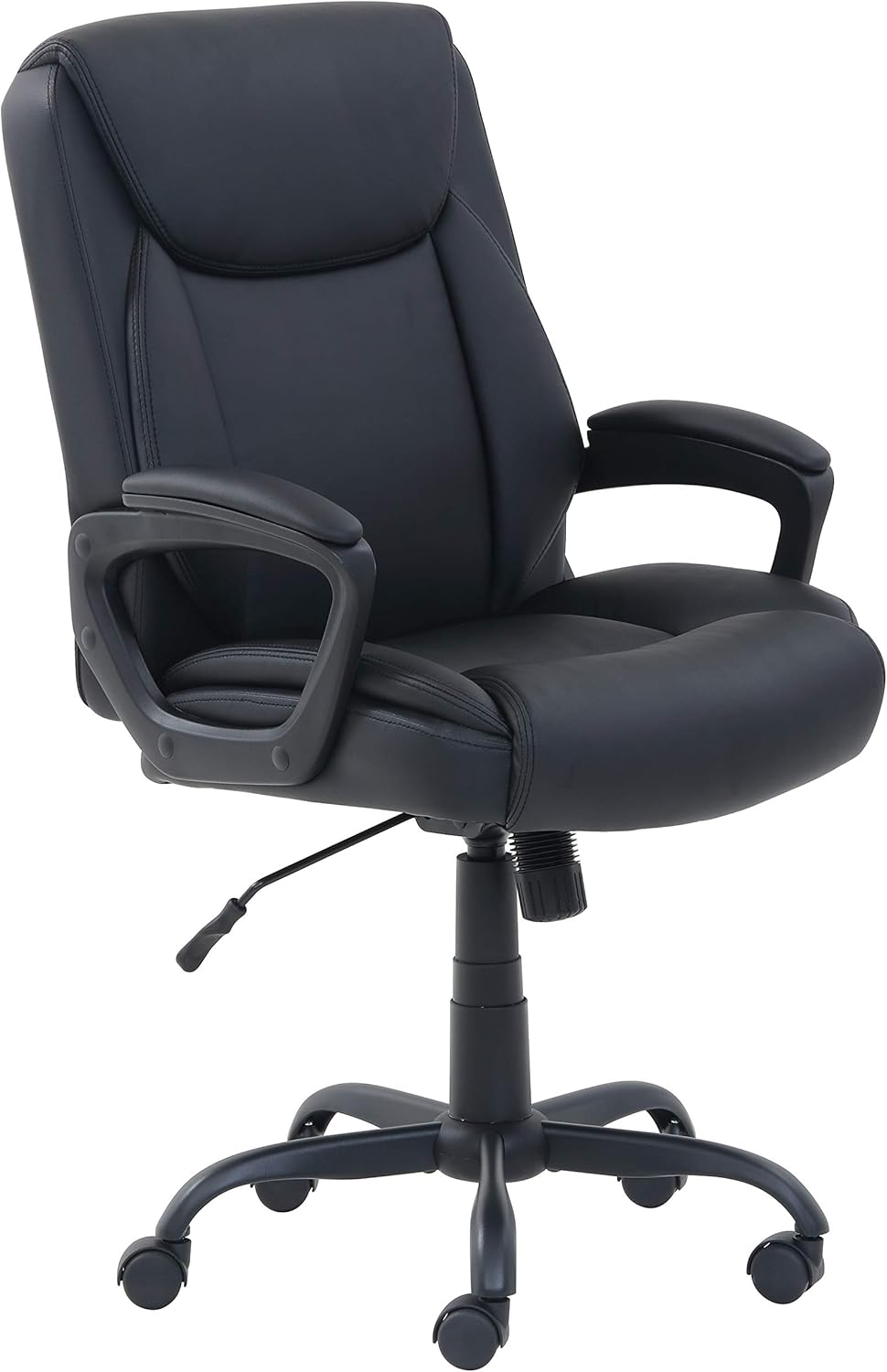
Amazon Basics Padded Mid-Back Office Chair
This chair hits the sweet spot of comfort, affordability, and size. It’s got decent padding, adjustable height, and a professional look that fits well in a study environment. It’s a significant upgrade from the dorm-issued chair without breaking the bank.
Check Price on Amazon6.5. Ergonomic Desk Setup: Beyond Just the Chair
A great chair is only part of the ergonomic equation. How you position your laptop, where your screen sits in relation to your eyes, and how your arms rest while typing all contribute to whether you finish the semester with a healthy neck or a visit to the campus chiropractor. Most students hunch over a laptop for hours, creating what physical therapists call “tech neck”—a painful forward-head posture that strains the cervical spine. The fix is surprisingly simple and affordable.
Laptop Stand or Monitor Riser
The single most impactful ergonomic upgrade for a desk-bound student is raising your screen to eye level. When your laptop sits flat on the desk, you’re looking down at a 30-45 degree angle for hours. A laptop stand elevates the screen so your gaze is naturally forward, reducing neck strain dramatically. The best laptop stands are adjustable in height and angle, fold flat for portability, and have ventilation cutouts to prevent your laptop from overheating. If you use an external monitor, a simple monitor riser or even a stack of sturdy books achieves the same effect. The rule of thumb: the top of your screen should be at or slightly below eye level, and the screen should be about an arm’s length away from your face.
External Keyboard and Mouse
Once you’ve elevated your laptop on a stand, you’ll need an external keyboard and mouse because the built-in keyboard will be at an awkward angle. This is actually a feature, not a bug—it forces better posture. A compact wireless keyboard keeps your desk clean and allows you to position your hands at a comfortable angle. An ergonomic mouse (or even a vertical mouse) prevents wrist strain during long sessions. For students who spend significant time typing papers or coding, a mechanical keyboard with tactile switches can reduce typing fatigue and improve speed. Look for compact layouts (tenkeyless or 60%) that save desk space while maintaining full functionality.
The Ergonomic Desk Zone
Think of your desk setup as three zones:
- Primary Zone (directly in front of you): Screen at eye level, keyboard and mouse at elbow height, wrists straight. This is where you spend 90% of your desk time.
- Secondary Zone (within arm’s reach): Desk lamp, water bottle, phone, frequently used supplies. You should be able to reach these without twisting or stretching.
- Tertiary Zone (requires standing or stretching): Printer, reference books, storage bins. These are items you access occasionally, not constantly.
The 20-20-20 Rule
Every 20 minutes, look at something 20 feet away for 20 seconds. This simple habit reduces digital eye strain, which causes headaches, blurred vision, and dry eyes. Set a timer on your phone for the first few weeks until it becomes automatic. Your eyes will thank you by the time finals roll around.
Chair Recommendations by Student Type
🎮 Gaming Enthusiast
Look for chairs with built-in lumbar support, adjustable armrests, and breathable materials. Gaming chairs prioritize comfort during long sessions.
📚 Study-Focused Student
Ergonomic office chairs with proper back support, adjustable height, and mesh backs for breathability during long study sessions.
🏠 Space-Constrained Room
Folding chairs, stools, or chairs with flip-up arms that can be stored when not in use. Consider multi-purpose furniture.
Organization & Storage: Conquer the Clutter
Space is the most valuable commodity in a dorm room. Without a smart organization strategy, your room will devolve into a chaotic mess of clothes, books, and clutter within a week. The key is to think vertically and utilize every square inch of available space. These accessories are designed to do just that.
The Psychology of Dorm Organization
Effective organization isn’t just about aesthetics—it impacts your mental health and academic performance:
- Reduced Stress: Clutter increases cortisol levels by up to 15%
- Improved Focus: Organized spaces reduce cognitive load, improving concentration
- Better Time Management: No more searching for lost items
- Enhanced Creativity: Clean spaces promote creative thinking
Investing time in organization systems pays dividends throughout your college career.
7. Over-the-Door Organizers: The Unsung Heroes
The back of your door is prime, unused real estate. An over-the-door shoe organizer isn’t just for shoes; it’s perfect for snacks, toiletries, cables, school supplies, and anything else that clutters your desk. Similarly, an over-the-door hook rack is essential for towels, jackets, and backpacks, keeping them off the floor.

SimpleHouseware 24-Pocket Clear Shoe Organizer
The clear pockets are a game-changer, letting you see exactly what’s inside at a glance. It’s incredibly versatile for storing everything from granola bars to deodorant. This is one of the cheapest, highest-impact organizational tools you can buy.
Check Price on AmazonCreative Uses for Over-the-Door Organizers
- Top Row: Snacks, beverages, quick-grab items
- Middle Rows: Toiletries, grooming supplies, medications
- Bottom Rows: Chargers, cables, school supplies, tools
- Side Pockets: Notebooks, pens, small electronics
- Bonus: Use one for laundry supplies—detergent pods, dryer sheets, stain remover
8. Slim Hangers: Double Your Closet Space Instantly
Dorm closets are notoriously tiny. Those bulky plastic hangers you have at home will eat up all your space. Velvet-covered slim hangers are a revelation. They grip your clothes so they don’t slip off, and their ultra-thin profile can literally double the amount of clothing you can fit on the rail.

Amazon Basics Slim Velvet Non-Slip Hangers (50-Pack)
A 50-pack is usually enough to hang up all your shirts, jackets, and pants. The difference in closet space is immediate and dramatic. The non-slip surface is a bonus, keeping wide-neck shirts and hoodies from ending up on the floor.
Check Price on Amazon| Hanger Type | Space Efficiency | Clothes Protection | Durability | Best For |
|---|---|---|---|---|
| Velvet Slim Hangers | Excellent (1/4″ thick) | Non-slip, no shoulder bumps | Good | All clothing types |
| Plastic Hangers | Poor (1/2″ thick) | Can cause shoulder bumps | Fair (can break) | Budget option only |
| Wooden Hangers | Poor (3/4″ thick) | Excellent for heavy items | Excellent | Suits, coats, heavy items |
| Wire Hangers | Good (1/3″ thick) | Poor (can misshape clothes) | Poor | Temporary use only |
9. Under-Bed Storage Containers: The Hidden Storage Goldmine
The space under your bed is massive. Don’t let it go to waste. Use low-profile storage bins on wheels or fabric containers with zippers to store things you don’t need every day, like extra bedding, seasonal clothes, or bulk snacks. This keeps your main living area free of clutter.
Maximizing this area is critical. If your room allows for it, lofting your bed opens up a huge amount of space for a desk or seating. For more ideas on how to leverage every inch of your room, read our guide on space-saving dorm storage solutions.

StorageLab Under Bed Storage Containers [2-Pack]
These fabric containers are great because they can be squished down if they aren’t full. They have sturdy handles, a clear top so you can see what’s inside, and they zip up to keep dust out. Perfect for clothes, shoes, and extra supplies.
Check Price on AmazonCreating an Efficient Dorm Storage System
Step 1: Declutter Before You Pack
Use the “one-year rule”—if you haven’t used it in a year, don’t bring it. College is a fresh start; don’t bring clutter with you.
Step 2: Categorize Your Items
Group items by frequency of use: daily, weekly, monthly, and seasonal. This determines where they should be stored.
Step 3: Implement the Zoning Strategy
Create specific zones in your room: sleeping zone, study zone, clothing zone, and entertainment zone.
Step 4: Utilize Vertical Space
Use shelves, over-door organizers, and wall-mounted storage to maximize vertical real estate.
Step 5: Maintain the System
Spend 10 minutes daily tidying up. This prevents small messes from becoming overwhelming clutter.
The Mini Kitchen: Compact Appliances, Snacks & Hydration
Let’s be honest: you’re not going to eat every meal at the dining hall. Late-night study sessions, early morning rushes, and weekend hangouts all demand quick access to food and drinks in your room. A small but strategic collection of kitchen accessories keeps you fueled without relying on expensive delivery apps or vending machines. The key is choosing compact, dorm-approved appliances and organizing them efficiently so they don’t take over your limited counter and desk space.
The Compact Mini Fridge
A mini fridge is arguably the most commonly purchased dorm accessory, and for good reason. It keeps drinks cold, stores leftovers, holds fresh fruit and yogurt, and eliminates the need to walk to the dining hall every time you want a cold glass of water. When shopping for a dorm mini fridge, consider these factors:
- Size: A 3.0 to 4.5 cubic foot model is the sweet spot for most dorm rooms. Anything larger takes up too much floor space, and anything smaller can’t hold enough to be worthwhile. Measure your available space carefully before buying, including the clearance needed for the door to open fully.
- Freezer Compartment: Many mini fridges include a small freezer section. This is useful for ice, frozen meals, and ice cream, but it reduces overall fridge space. If you have a meal plan and mostly need cold drinks and snacks, you might prefer a model without a freezer to maximize fridge capacity.
- Energy Efficiency: Mini fridges run 24/7, so energy costs add up. Look for Energy Star certified models to keep your electricity bill (if applicable) manageable. Some universities include electricity in the room fee, but efficient models also generate less heat, which matters in a small room.
- Noise Level: A loud mini fridge compressor can be incredibly annoying in a small room, especially when you’re trying to sleep. Check reviews specifically for noise complaints. Some models are designed to be ultra-quiet for bedroom use.
- University Rental Programs: Many schools offer mini fridge rental programs at move-in. This can be cheaper than buying, eliminates the hassle of transporting it, and guarantees the unit meets dorm specifications. Check with your housing office before purchasing.
Snack Organization and Pantry Setup
Having a mini fridge is only half the equation—you also need a system for dry snacks, canned goods, and non-perishable items. Without organization, snacks end up scattered across your desk, shoved in drawers, or forgotten in the back of a closet. Here’s how to set up a compact “pantry” in your dorm:
- Use a Small Shelf or Stackable Bins: A narrow two or three-tier shelf next to or above your mini fridge creates a designated snack zone. Stackable clear bins work well because you can see exactly what’s inside without digging through everything.
- Rotate Stock: When you buy new snacks, put them at the back and bring older items to the front. This prevents the classic college problem of finding a bag of chips from move-in day when you’re packing up in May.
- Keep It Sealed: Open food attracts pests, and dorm buildings aren’t always the most pest-proof structures. Use airtight containers for cereal, granola, crackers, and anything else that comes in a bag. This also keeps food fresher longer.
- Hydration Station: Dedicate a section of your mini fridge or a spot on your shelf to beverages. Having cold water, sports drinks, or whatever you prefer readily available means you actually stay hydrated instead of relying on sugary vending machine options.
The Reusable Water Bottle
This might be the single most important item on this entire list from a health perspective. College students chronically under-hydrate, and dehydration causes fatigue, headaches, poor concentration, and decreased physical performance. A quality reusable water bottle that you carry everywhere is the solution. Look for one that’s at least 24 ounces, has vacuum insulation to keep water cold for hours (you’re more likely to drink cold water), fits in your backpack’s water bottle pocket, and has a leak-proof lid. Some popular options include double-walled stainless steel bottles that keep water ice-cold for 24+ hours. Many campuses have water bottle refill stations throughout buildings, making it easy to stay hydrated between classes. Beyond the health benefits, a reusable bottle saves you hundreds of dollars per semester compared to buying bottled water, and it’s significantly better for the environment.
Dorm Kitchen Policies
Most dorms have strict rules about cooking appliances. Typically prohibited items include hot plates, toasters, toaster ovens, open-coil cooking devices, and anything with an open heating element. Usually allowed items include microwaves (under a specific wattage, typically 700-1000W), mini fridges, coffee makers with auto-shutoff, and electric kettles. Always verify your specific dorm’s policy before purchasing any cooking appliance. Violating these rules can result in confiscation and fines.
The Shower Caddy & Bathroom Organization
If you’re in a traditional dorm with communal bathrooms, your bathroom routine is about to change dramatically. There’s no walking from your bedroom to a private bathroom in your towel. You’re sharing showers, sinks, and counter space with dozens of other people. Having the right organizational tools for your bathroom essentials isn’t optional—it’s a necessity for hygiene, convenience, and sanity.
The Shower Caddy: Your Portable Bathroom
A shower caddy is the single most important bathroom accessory for communal dorm living. It holds all your toiletries in one portable container that you carry to and from the bathroom. When choosing a shower caddy, look for these features:
- Drainage Holes: Water will pool in a caddy without drainage, creating a mildew nightmare. Mesh or perforated designs let water drain out after your shower.
- Compartments: Multiple pockets and sections keep items organized and prevent bottles from toppling over. A separate compartment for razors and small items is particularly useful.
- Handle Design: A sturdy, comfortable handle is essential since you’ll be carrying this thing back and forth every day. Some caddies have a hook design that lets you hang them on the shower partition or a hook on the wall.
- Material: Plastic or quick-drying mesh are the best materials for a wet environment. Fabric caddies stay damp and develop odors quickly. Avoid them for shower use, though they work fine for dry toiletry storage.
- Size: Big enough to hold your essentials but small enough to carry easily and store in your dorm room. A caddy that fits shampoo, conditioner, body wash, a razor, face wash, and a bar of soap is about right.
Beyond the Caddy: Other Bathroom Essentials
- Quick-Dry Towels: Microfiber towels dry significantly faster than cotton towels, which matters when you’re hanging them in a small dorm room and they need to be dry for your next shower. They’re also more compact, saving closet and shelf space. Get at least two bath towels and two hand towels so you always have a clean one available.
- Shower Shoes: This is non-negotiable in communal bathrooms. A pair of rubber flip-flops or shower slides protects your feet from the bacteria and fungi that thrive on communal shower floors. They’re cheap, easy to clean, and can double as casual footwear for quick trips to the laundry room or common areas.
- A Robe: Walking down the hallway in just a towel is doable but uncomfortable, especially when you’re carrying a caddy, towel, and clothes. A lightweight robe solves this problem completely and provides modesty and comfort during the walk back to your room. Quick-dry waffle-knit robes are ideal for dorm use because they’re lightweight, absorbent, and dry fast.
- A Toiletry Organizer for Your Room: Even with a shower caddy for transport, you need a place to store backup supplies, medications, dental care items, and grooming tools in your room. A small desktop organizer, a drawer divider, or a section of your over-the-door organizer works perfectly for this.
- Bathroom Cleaning Wipes: You’re sharing a bathroom with other people. Having a pack of disinfecting wipes to quickly wipe down the toilet seat, sink counter, or shower handle before you use them provides peace of mind and basic hygiene protection. Keep a small pack in your room and take a few with you when you head to the bathroom.
Communal Bathroom Survival Tips
- Learn the Schedule: Within the first week, you’ll figure out when the bathroom is busiest (usually 8-9 AM and 10-11 PM). Shower during off-peak times for a more relaxed experience.
- Keep a Spare: Always have a backup of essential toiletries (toothpaste, deodorant, shampoo) in your room. Running out at midnight when the campus store is closed is not a fun experience.
- Personal Hygiene Kit: Keep a small kit with bandages, pain relievers, antacids, cough drops, and any personal medications in your room. The campus health center may not be open when you need these items.
Laundry Solutions: From Hamper to Clean & Fold
Laundry is one of those adult responsibilities that hits you like a truck when you get to college. At home, your clothes magically appeared clean and folded in your dresser. In the dorm, you’re the magician. Having the right laundry setup makes this chore significantly less painful and prevents the all-too-common college experience of wearing the same hoodie for a week because everything else is “in the hamper” (read: on the floor).
Choosing the Right Laundry Hamper
The ideal dorm laundry hamper needs to be collapsible, lightweight, and easy to carry to the laundry room (which might be on a different floor or even a different building). Here’s what to look for:
- Collapsible Design: A hamper that folds flat when not in use saves precious floor space. Pop-up mesh hampers and foldable fabric hampers are popular choices that take up almost no space when empty.
- Carrying Straps or Handles: You’ll be hauling this thing up and down stairs and across the building. Sturdy handles or shoulder straps make the trip much easier, especially when you’re carrying a full load plus detergent.
- Breathable Material: Mesh or canvas hampers allow air circulation, which prevents mildew and odor buildup in dirty clothes. Plastic hampers trap moisture and can make your dirty laundry smell significantly worse by laundry day.
- Sorting Capability: Some hampers come with two or three compartments for sorting lights, darks, and delicates. This saves time at the laundry room because your clothes are already pre-sorted. If you don’t sort (and let’s be real, many guys don’t), a single large compartment works fine.
- Size: Aim for a hamper that holds about one full load of laundry. Too small and you’re making trips to the laundry room constantly. Too large and it takes up too much floor space and encourages you to let dirty clothes pile up for weeks.
Laundry Detergent and Supplies
For dorm laundry, convenience and portability matter more than bulk savings. You’re carrying your supplies to a shared laundry room, so compact and mess-free options are ideal:
- Detergent Pods or Packs: Pre-measured detergent pods (like Tide Pods or similar) are the easiest option for dorm laundry. No measuring, no spills, no carrying a heavy jug of liquid detergent. Just toss one in with your clothes. Keep them in a sealed container in your room to prevent moisture activation and keep them away from anything that might be mistaken for food.
- Stain Remover Pen: A portable stain remover pen (like Tide-to-Go) is essential for dealing with spills and stains when they happen, not three days later when you finally do laundry. Keep one in your backpack and one in your room.
- Dryer Sheets: They reduce static, add a fresh scent, and soften clothes. A small box takes up minimal space and lasts for months. If you’re eco-conscious, wool dryer balls are a reusable alternative that achieves similar results.
- A Laundry Bag for Delicates: If you have any clothes that need gentle washing (athletic wear, dress shirts, anything with zippers that might snag), a mesh laundry bag protects them in the wash. It costs a few dollars and extends the life of your clothes significantly.
Laundry Room Etiquette and Tips
- Set a Timer: Always set a phone timer for your wash and dry cycles. Leaving clothes in machines after they’re done is the fastest way to make enemies on your floor.
- Off-Peak Hours: The laundry room is busiest on Sunday evenings (when everyone realizes they have no clean clothes for the week). Try Tuesday or Wednesday mornings for shorter wait times.
- Keep Quarters or Know the App: Many campus laundry machines now use apps or student ID card payments. Know how your system works before your first load. If coins are required, keep a roll of quarters in your room.
- Fold Immediately: Clothes that sit in a hamper after drying become a wrinkled mess. Fold or hang them as soon as you get back to your room. This takes five minutes and saves you from looking like you slept in your outfit.
Atmosphere & Decor: Making It Feel Like Home
An undecorated dorm room has the personality of a hospital room. Adding a few personal touches and the right lighting can instantly make the space feel more inviting and less institutional. It’s about creating a vibe that’s uniquely yours.
10. A Good Desk Lamp: Save Your Eyesight
The harsh overhead fluorescent light in most dorms is terrible for studying. A good desk lamp is essential to reduce eye strain during late-night study sessions. Look for one with adjustable brightness levels, different color temperatures (a cool light for focus, a warm light for relaxing), and maybe even a built-in USB port for charging.
The right lamp can be both functional and a cool piece of decor. We’ve compiled a list of the most stylish and practical options in our guide to cool lamps for dorm rooms, which is a great place to find something that fits your style.

LEPOWER Metal Desk Lamp, Adjustable Gooseneck
A classic, no-nonsense design that gets the job done. The flexible gooseneck lets you direct light exactly where you need it, and its sturdy metal construction means it will last all four years. It’s a simple, effective, and affordable lighting solution.
Check Price on Amazon
AFROG LED Desk Lamp with Wireless Charger & USB Port
This is the ultimate desk gadget. It offers 5 lighting modes and 7 brightness levels, has a built-in wireless charger for your phone, and a USB port on the side. It’s a lamp, a charger, and a modern decor piece all in one.
Check Price on AmazonThe Science of Lighting and Productivity
Proper lighting significantly impacts academic performance and well-being:
- Color Temperature: Cool white light (5000-6500K) enhances focus and alertness. Warm white light (2700-3000K) promotes relaxation.
- Brightness Levels: Study areas need 50-100 lumens per square foot. A 60W equivalent LED provides about 800 lumens.
- Glare Reduction: Position lamps to avoid glare on screens. Use lamps with diffusers or adjustable shades.
- Circadian Rhythm: Blue light in the evening can disrupt sleep patterns. Consider lamps with adjustable color temperatures.
Investing in adjustable lighting can improve study efficiency by up to 25% according to lighting research studies.
11. LED Light Strips: Instant Ambiance
Want to completely change the vibe of your room in seconds? LED light strips are the answer. Run them along the top of your walls, behind your desk, or under your bed. With a remote or app, you can change the color and brightness to match your mood, create a party atmosphere, or set a chill, relaxing tone.

Govee RGBIC LED Strip Lights (16.4ft)
Govee is the leader in smart lighting. Unlike cheaper RGB strips, their RGBIC technology allows for multiple colors to be displayed on the strip at once. The app control is fantastic, with millions of colors and modes that can even sync to music.
Check Price on AmazonCreative LED Strip Placement Ideas
- Behind Desk/Monitor: Reduces eye strain and creates a cool glow effect
- Under Bed Frame: Creates a floating effect and provides subtle night lighting
- Along Ceiling Perimeter: Makes the room feel larger and more immersive
- Inside Shelves/Bookcases: Highlights decor items and adds depth
- Behind Headboard: Creates a relaxing atmosphere for reading or winding down
Pro Tip: Use adhesive clips or mounting brackets for cleaner installation that won’t damage walls.
12. Command Strips and Hooks: Damage-Free Decorating
You’re not allowed to drill holes or use nails, so how do you hang posters, flags, or hats? Command products are the answer. They hold strong and, most importantly, come off cleanly without damaging the paint. Stock up on a variety of strips and hooks—you’ll find a million uses for them.

Command Picture Hanging Strips Value Pack
This variety pack is perfect for starting out. It includes different sizes for hanging everything from lightweight posters to heavier framed art. The velcro-like design lets you take down and reposition things easily. An absolute must-have.
Check Price on AmazonDamage-Free Decorating Guide
Step 1: Surface Preparation
Clean the wall with rubbing alcohol and let it dry completely. Dust and oils prevent proper adhesion.
Step 2: Choose the Right Product
Use small picture hanging strips for lightweight items (posters), medium for moderate weight (small frames), and large for heavier items.
Step 3: Apply to Both Surfaces
Apply strips to both the wall and the item you’re hanging. Follow the package instructions for spacing.
Step 4: Press and Hold
Press firmly for 30 seconds after application. Wait at least one hour before hanging heavy items.
Step 5: Proper Removal
When removing, pull the tab straight down parallel to the wall—never pull away from the wall.
Floor Coverings: The Dorm Room Rug
One of the most overlooked dorm room accessories is a simple area rug. Dorm room floors are typically cold, hard tile or industrial carpet that’s been cleaned approximately never. Stepping out of bed onto a freezing hard floor at 7 AM is a rude awakening that nobody needs. A rug solves this problem instantly while also adding warmth, color, texture, and personality to your room.
When choosing a dorm rug, consider the following practical factors:
- Size: A 4′ x 6′ or 5′ x 7′ rug works well for most dorm rooms. It should cover the main walking area between your bed and desk without extending under furniture that would trap dirt underneath. Measure your open floor space before purchasing.
- Material: Low-pile or flat-weave rugs are best for dorm use. They’re easier to vacuum (if you have access to one), less likely to trap dirt and crumbs, and more resistant to heavy foot traffic. High-pile shag rugs feel luxurious but are difficult to clean and can harbor allergens in a dorm environment.
- Color and Pattern: Darker colors and busy patterns hide stains and wear better than solid light colors. This matters when you’re dealing with the inevitable spilled drink, dropped food, or muddy shoe prints. A dark charcoal, navy, or patterned rug will look better for longer.
- Non-Slip Backing: Dorm floors are often smooth surfaces that cause rugs to slide around. A rug with rubber backing or a separate non-slip rug pad underneath prevents slipping and bunching. This is a safety consideration, not just a comfort one.
- Budget-Friendly Options: You don’t need to spend a fortune on a rug that’s going to endure four years of college abuse. Affordable options from stores like IKEA, Target, Amazon, or even discount home stores work perfectly. When it gets too dirty or worn, you can replace it without guilt.
A rug also serves a social function. When friends come over and your floor seating options are limited, a clean rug becomes an impromptu gathering space. Throw some pillows on it, and you’ve got a casual hangout area that doesn’t require extra furniture. It defines the social zone of your room and makes the space feel intentional rather than improvised.
The Full-Length Mirror: A Dorm Room Essential You Didn’t Know You Needed
Most dorm rooms don’t come with a full-length mirror, and the small bathroom mirror only shows you from the chest up. A full-length mirror serves multiple purposes beyond just checking your outfit before class. It makes your room feel significantly larger by reflecting light and creating the illusion of depth—a huge benefit in a small space. It helps you get ready faster in the morning because you can see your complete look without contorting yourself. And if you’re in any way involved with presentations, interviews, or networking events (which is every college student at some point), being able to check your full appearance before walking out the door is invaluable.
For dorm use, an over-the-door full-length mirror is the best option. It hangs on the back of your door using hooks, requires no wall mounting or adhesives, and doesn’t take up any floor space. Shatter-resistant mirrors are recommended for safety in a shared living environment. Some models come with built-in storage pockets or a slim profile that barely extends beyond the door thickness, so it won’t interfere with the door closing. A basic over-the-door mirror is one of the most affordable dorm accessories you can buy, and it punches well above its weight in terms of impact on your daily routine and room aesthetics.
Climate Control: Fans, Air Quality & Temperature Comfort
Dorm room temperature is one of the biggest sources of roommate conflict and general discomfort. Older dorm buildings often have outdated HVAC systems that produce uneven heating and cooling—you might be freezing in January while the room down the hall is sweltering. And in many buildings, you can’t control the thermostat individually. Having your own climate control accessories gives you agency over your comfort without relying on the building’s system.
The Desk Fan or Tower Fan
A compact desk fan or slim tower fan is essential for warm months and stuffy rooms. Even in dorms with air conditioning, the distribution can be uneven, and a personal fan directed at your desk or bed makes a massive difference in comfort. Look for a fan with multiple speed settings, quiet operation (especially important if your roommate is sleeping while you study), and a compact footprint. Tower fans are ideal for dorm rooms because they have a small base footprint while providing wide oscillating airflow. Some models double as air purifiers, which is a bonus in older buildings with questionable air quality. A fan also helps with white noise—many students find that the consistent hum of a fan helps them sleep better, masking the random hallway noises that plague dorm life.
Air Purifiers for Dorm Rooms
This might sound excessive, but consider the reality: dorm rooms are small, enclosed spaces with limited ventilation, carpet that harbors dust and allergens, and you’re sharing the building with hundreds of other people. If you have allergies, asthma, or are just sensitive to air quality, a compact air purifier can make a noticeable difference in how you feel day-to-day. Look for a purifier with a HEPA filter (which captures 99.97% of particles down to 0.3 microns), a compact design that fits on a desk or nightstand, and quiet operation for nighttime use. The filter will need to be replaced periodically, so factor that into the ongoing cost. Even if you don’t have respiratory issues, cleaner air means better sleep and fewer sick days, both of which directly impact your academic performance.
Humidity Control
Depending on your campus location and the building’s age, humidity can be a significant issue. Excessively dry air (common in winter with forced-air heating) causes dry skin, sore throats, and static electricity. Excessively humid air (common in southern climates and older buildings) promotes mold growth and makes the room feel stuffier than it is. A small ultrasonic humidifier addresses dry air issues effectively, and many models double as diffusers if you want to add a subtle pleasant scent. For humidity problems, a compact dehumidifier or moisture-absorbing products like DampRid can prevent mold and musty smells. Just check your dorm’s policy on these appliances before purchasing.
The Visual Command Center: Whiteboards, Corkboards & Planning Tools
In an age of digital everything, there’s something incredibly effective about having a physical planning surface in your line of sight. A whiteboard or corkboard above your desk serves as your visual command center—your semester calendar, to-do list, motivational quotes, important deadlines, and random reminders all in one place. The reason physical planning tools outperform apps for many people is visibility. You can close an app; you can’t close a whiteboard that’s hanging two feet from your face. It’s always there, always reminding you of what needs to get done.
Whiteboard Options
- Traditional Framed Whiteboard: A small to medium whiteboard (18″ x 24″ or 24″ x 36″) hung with Command strips provides ample space for weekly schedules, to-do lists, and quick notes. Use different colored markers to categorize tasks by class, priority, or type.
- Whiteboard Wall Decals: These adhesive whiteboard sheets stick directly to your wall and can be cut to any size. They create a larger writing surface without the bulk or weight of a framed board. Some are even repositionable.
- Dry-Erase Calendar: A pre-printed monthly calendar whiteboard is perfect for tracking deadlines, exams, social events, and important dates at a glance. Hang it where you’ll see it every morning when you wake up.
Corkboard Options
- Push-Pin Corkboard: Great for pinning physical items—tickets, photos, notes from friends, important documents, and inspirational images. Use Command strips to mount it without damaging walls.
- Cork Tiles: Individual square cork tiles can be arranged in any pattern on your wall, creating a customizable pin-board surface. They’re lightweight, easy to install, and can cover as much or as little wall space as you need.
- Combination Boards: Some boards combine a cork section with a whiteboard section or include a fabric bulletin board surface. These multi-purpose boards give you maximum flexibility in how you organize and display information.
The Weekly Planning Ritual
Spend 15 minutes every Sunday evening updating your whiteboard or planning board for the upcoming week. Write down all assignments, exams, meetings, social plans, and personal goals. This simple habit provides clarity, reduces anxiety about forgetting things, and helps you allocate your time effectively. Students who maintain a visible weekly plan report lower stress levels and higher GPAs compared to those who rely solely on memory or digital reminders.
Dorm Room Security & Privacy
College campuses are generally safe environments, but a dorm building with hundreds of people coming and going presents unique security considerations. During move-in, move-out, and weekend nights, there’s a lot of foot traffic through buildings, and doors can get propped open by well-meaning (or careless) residents. Protecting your valuables and maintaining your privacy requires a few simple but important accessories.
A Laptop Lock
If you use an external monitor or tend to leave your laptop at your desk when you step out, a laptop lock provides peace of mind. These small cable locks attach to your laptop’s Kensington security slot (most laptops have one) and loop around a desk leg or other immovable object. They’re inexpensive, lightweight, and deter casual theft. In a dorm environment where people frequently have friends-of-friends visiting, this is a smart precaution.
A Small Safe or Lock Box
For valuables like important documents (passport, Social Security card, birth certificate), cash, jewelry, medications, or small electronics, a compact lock box that fits in a drawer or under your bed provides security when you’re not in the room. Combination locks are preferable to key locks because you can’t lose the combination (well, you can forget it, but that’s on you). Some models are designed to be bolted to a shelf or desk, though in a dorm you’ll likely rely on the box being small enough to hide and heavy enough that walking off with it isn’t easy.
Door Security Accessories
- Door Wedge Alarm: A simple device that you wedge under your door from the inside. If someone tries to open the door, it triggers a loud alarm. Useful for when you’re sleeping or in the shower and want extra peace of mind.
- Door Stopper: A basic rubber door stop keeps your door from being pushed open accidentally (or intentionally) while you’re inside. It’s a low-tech privacy solution that costs almost nothing.
- Privacy Screen for Laptop: This thin film attaches to your laptop screen and limits the viewing angle so that only the person sitting directly in front can see the display. Anyone sitting next to you or walking by sees a darkened screen. This protects your work, your messages, and your browsing from prying eyes in shared spaces.
Important Security Reminders
- Lock Your Door: Always lock your door when you leave, even if you’re just going to the bathroom for two minutes. Most dorm thefts are crimes of opportunity.
- Don’t Prop Doors: Never prop open the building’s exterior door or your room door for convenience. This compromises the security of everyone in the building.
- Register Your Electronics: Record serial numbers for your laptop, phone, tablet, and other valuable electronics. If they’re stolen, this information helps campus police and insurance claims.
- Use Campus Resources: Most campuses offer free engraving for electronics, emergency blue light phones, and campus escort services for walking at night. Take advantage of these.
Shelving & Book Organization: Taming the Textbook Tsunami
Between textbooks, notebooks, binders, reference materials, and recreational reading, the amount of paper-based material in a college student’s life is staggering. Without a dedicated storage system, these items end up stacked precariously on your desk, crammed in drawers, or piled on the floor. Proper shelving and book organization keeps your study materials accessible, your desk clear, and your room looking intentional rather than chaotic.
Desk Shelf or Monitor Stand with Storage
A shelf that sits on your desk, often designed to function as a monitor stand, creates a two-tier storage system. Your monitor goes on top (at a better ergonomic height), and the space underneath stores books, notebooks, or desk accessories. This utilizes the vertical space above your desk that would otherwise be wasted. Many models include small drawers or cubbies for pens, sticky notes, and other small items that tend to clutter a desk surface.
Stackable Cube Shelves
Cube storage units (like the IKEA KALLAX or similar) are versatile dorm room staples. They can stand vertically as a bookshelf, lie horizontally as a bench or TV stand, or be stacked to create a room divider. Each cube can hold textbooks, storage bins, decor items, or folded clothes. They’re modular, so you can configure them to fit your specific room layout. The open design keeps items visible and accessible while the cube structure prevents items from falling off. Use fabric bins inside the cubes to hide clutter and create a cleaner look.
Desktop Book Stand or File Organizer
For the textbooks and notebooks you use daily, a desktop file organizer or book stand keeps them upright and accessible without taking up your entire desk surface. These typically have multiple slots or compartments that allow you to organize by class, subject, or urgency. An upright organizer takes up a fraction of the desk space compared to books laid flat in a stack, and it looks significantly more professional and organized.
Digital vs. Physical Textbooks
One of the best ways to reduce physical book clutter is to go digital when possible. Many textbooks are available as e-books or PDFs, which take up zero physical space and are searchable. If you prefer physical books (and there are legitimate reasons to—less eye strain, better retention for some people), consider renting textbooks instead of buying them. Rental services deliver the book to you and you return it at the end of the semester, so you’re not accumulating a four-year library that you need to store and eventually move.
Study Aids & Productivity Boosters
Your dorm room is where a significant portion of your studying happens, and the right accessories can meaningfully improve your focus, efficiency, and retention. These aren’t flashy gadgets—they’re practical tools that support the actual work of being a student. Think of them as investments in your GPA.
A Physical Planner or Calendar
While digital calendars work for many people, a physical planner has distinct advantages for students. The act of writing down assignments and deadlines improves memory retention compared to typing them. A planner that lays open on your desk serves as a constant visual reminder of what’s coming up. Look for a planner with weekly and monthly views, space for to-do lists, and a durable cover that can survive being thrown in a backpack daily. Some popular student planners include dedicated sections for tracking goals, habits, and project breakdowns. The key is actually using it consistently—a planner that sits in a drawer is worthless. Spend five minutes each morning reviewing your planner and five minutes each evening updating it.
A Productivity Timer
The Pomodoro Technique—working in focused 25-minute intervals followed by 5-minute breaks—is one of the most well-researched and effective study methods. A dedicated Pomodoro timer (physical or app-based) structures your study sessions and prevents the all-too-common pattern of “studying” for three hours while actually spending half that time on your phone. Physical kitchen timers work great for this because they don’t require you to touch your phone (which is the enemy of focus). Some digital timers have visual countdown displays that let you see time remaining at a glance without disrupting your flow. The technique works because it gives your brain a defined endpoint—25 minutes is short enough that it doesn’t feel overwhelming, and the regular breaks prevent mental fatigue.
Index Cards and Sticky Notes
Never underestimate the power of low-tech study tools. Index cards for flashcards remain one of the most effective memorization techniques, especially for language vocabulary, scientific terms, historical dates, and definitions. The physical act of writing on cards and then testing yourself with the Leitner box system (sorting cards into “known” and “needs review” piles) is significantly more effective than digital flashcard apps for many students. Sticky notes serve as quick reminders, bookmarks, and on-the-fly organization tools. Stick them on your whiteboard, monitor bezel, or desk edge for visibility.
Blue Light Blocking Glasses
If you spend significant time staring at screens (and every college student does), blue light blocking glasses can reduce digital eye strain, headaches, and sleep disruption. They work by filtering out a portion of the blue light spectrum that screens emit, which research suggests can interfere with melatonin production and circadian rhythms when exposed in the evening. They’re not a substitute for proper screen breaks and the 20-20-20 rule, but they’re a useful supplementary tool. Many affordable options are available that look like normal glasses and can be worn comfortably for hours.
A Small White Noise Machine or App
Dorm buildings are noisy environments. Between hallway conversations, slamming doors, music from neighboring rooms, and the general hum of a building full of young adults, finding quiet focus time can be challenging. A white noise machine produces consistent, ambient sound that masks these random disruptions. The steady hum of white noise, pink noise, or brown noise creates an audio blanket that your brain learns to filter out, allowing you to focus on your work. Physical white noise machines are particularly effective because they don’t require headphones (which can become uncomfortable during long study sessions) and they can also help with sleep by masking nighttime dorm noises.
The Science Behind Study Environment Optimization
Research in environmental psychology consistently shows that your physical environment significantly impacts cognitive performance:
- Temperature: The optimal temperature for cognitive work is between 68-72°F (20-22°C). Too warm causes drowsiness; too cold causes distraction.
- Lighting: Natural light improves mood and alertness. When natural light isn’t available, cool-toned artificial light (5000K+) mimics daylight effects.
- Noise: Moderate ambient noise (around 70dB, like a coffee shop) can enhance creative thinking. Complete silence is better for detail-oriented analytical work. Random, unpredictable noise (like dorm hallway sounds) is the worst for concentration.
- Clutter: Visual clutter competes for your attention and increases cognitive load, reducing the mental resources available for studying.
- Color: Blue and green tones promote calm focus. Red can enhance attention to detail but also increase stress. Yellow can boost mood and creativity.
Applying even a few of these principles to your dorm room setup can create a study environment that supports rather than hinders your academic goals.
The Dorm Room Cleaning Kit
Nobody wants to think about cleaning, but a small, well-stocked cleaning kit prevents your room from becoming a biohazard and saves you from end-of-semester panic cleaning. The reality of dorm living is that nobody is going to clean your space for you (unless your school charges a cleaning fee and sends someone, which is rare). A basic cleaning routine takes 15-20 minutes per week and maintains a livable, healthy environment. Here’s what your dorm cleaning kit should include:
- Multi-Surface Cleaning Spray: A general-purpose cleaner for wiping down your desk, shelves, nightstand, and other hard surfaces. Disinfecting wipes work too and are more portable, but a spray bottle is more economical for regular use.
- Microfiber Cloths: Reusable, washable, and more effective than paper towels at picking up dust and cleaning surfaces without leaving streaks or lint. Get at least three—one for general cleaning, one for electronics (screens), and one for bathroom use.
- A Small Broom and Dustpan (or Handheld Vacuum): Dorm floors accumulate crumbs, dust, and debris fast. A compact broom and dustpan set or a small handheld vacuum makes quick cleanups easy. Handheld vacuums are particularly useful for cleaning crumbs off your desk, bed, and keyboard.
- Disinfecting Wipes: Quick and convenient for sanitizing surfaces, wiping down door handles, cleaning the bathroom before use, and handling spills. Keep a container in your room and a small pack in your shower caddy for bathroom use.
- Trash Bags: Your room has a small trash can (or it should). Keep a roll of bags to line it and prevent leaks and odors. Empty your trash regularly—don’t let it overflow. A full trash can attracts pests and makes the room smell terrible.
- Lint Roller: Useful for quick touch-ups on dark clothing, furniture upholstery, and bedding. They take up almost no space and solve the common problem of looking unkempt due to pet hair, lint, or dust on your clothes.
- Air Freshener: A small plug-in air freshener, a reed diffuser, or even an open box of baking soda keeps your room smelling fresh. Avoid aerosol sprays that just mask odors—they can trigger allergies in shared buildings. Natural options like essential oil diffusers work well, but check your dorm’s policy on open flames or heated devices.
The 10-Minute Weekly Clean
Set a recurring weekly alarm for your cleaning session. Here’s the routine that keeps a dorm room livable in just 10 minutes:
- Minutes 1-2: Empty trash, replace bag
- Minutes 3-5: Wipe down all surfaces (desk, shelves, nightstand) with cleaning spray
- Minutes 6-7: Sweep or vacuum the floor
- Minutes 8-9: Quick tidy—put away items that are out of place, make the bed
- Minute 10: Take out trash and recycling, spray air freshener
This routine prevents the buildup of grime that makes deep cleaning a miserable all-day project. Consistency is key—ten minutes weekly beats four hours monthly.
Dorm Room Networking & Internet Optimization
Internet connectivity can make or break your dorm experience. Between streaming lectures, submitting assignments, video calling family, gaming online, and general browsing, you’re relying on your dorm’s network more than almost any other utility. Unfortunately, campus Wi-Fi is often congested, inconsistent, and frustrating. Here’s how to optimize your internet experience:
Ethernet Is King
If your dorm room has an Ethernet port (many older dorms do), use it. A wired connection is faster, more stable, and lower latency than Wi-Fi, especially in a building where hundreds of devices are competing for wireless bandwidth. You’ll need an Ethernet cable (Cat6 or higher for best performance) and possibly a USB-to-Ethernet adapter if your laptop doesn’t have a built-in Ethernet port. For gaming and video calls specifically, the difference between wired and wireless in a congested dorm network is night and day.
Your Own Router (If Allowed)
Some universities allow students to set up personal routers in their rooms. This gives you a dedicated, private network that’s faster and more reliable than the shared campus Wi-Fi. If your school permits this, a compact dual-band router creates your own personal network for all your devices. Just make sure to secure it with a strong password—leaving it open creates security risks and can violate campus IT policies. Always check your university’s network policy before setting up a personal router, as some schools prohibit them because they can interfere with the campus network.
Wi-Fi Extender or Mesh Node
If your dorm’s Wi-Fi signal is weak in your specific room (common in rooms far from access points or in buildings with thick walls), a Wi-Fi extender can boost the signal. These small devices plug into an outlet and rebroadcast the campus Wi-Fi with improved strength. They’re inexpensive and can transform an unusable connection into a reliable one. Just note that extenders reduce maximum speed by about 50% (they’re rebroadcasting on the same channel), so a mesh node or direct Ethernet connection is always preferable when available.
Network Security Basics
On a shared campus network, your devices are potentially visible to hundreds of other users. Basic security practices protect your data and privacy:
- Use a VPN: A virtual private network encrypts your internet traffic, preventing anyone on the same network from intercepting your data. Many schools provide free VPN access through their IT department. Use it, especially when accessing sensitive accounts like banking or email.
- Keep Software Updated: Operating system and software updates often include security patches. Keeping your devices updated closes vulnerabilities that could be exploited on a shared network.
- Disable File Sharing: Turn off AirDrop, Bluetooth file sharing, and network file sharing when you’re on the campus network. You don’t want random people sending you files or accessing your shared folders.
- Strong Passwords: Use unique, strong passwords for your campus accounts, email, and social media. A password manager makes this easy and is worth the small investment.
Budget Planning for Dorm Accessories
Cost Breakdown by Category
| Category | Budget Option | Mid-Range | Premium | Priority Level |
|---|---|---|---|---|
| Sleep Comfort | $50-80 (basic topper) | $80-150 (gel topper) | $150-300 (premium topper) | High (affects daily life) |
| Study Tech | $50-100 (basic headphones) | $100-200 (good ANC) | $200-400 (premium ANC) | High (academic success) |
| Organization | $20-50 (basic storage) | $50-100 (system solutions) | $100-200 (premium systems) | Medium (quality of life) |
| Lighting & Decor | $20-50 (basic lamps) | $50-100 (smart lighting) | $100-200 (premium ambiance) | Medium (mood/atmosphere) |
Smart Spending Strategies
- Prioritize Health & Productivity: Invest most in items affecting sleep and study quality
- Buy Multi-Functional Items: Look for products serving multiple purposes
- Wait for Sales: Back-to-school season and Black Friday offer best prices
- Split Costs with Roommate: Coordinate on shared items like mini-fridge, microwave
- Consider Longevity: Quality items last through college, saving replacement costs
Recommended Accessories by Major/Lifestyle
💻 Computer Science/Engineering
Prioritize: Ergonomic chair, multiple monitors, mechanical keyboard, cable management system, blue light blocking glasses.
🎨 Art/Design Majors
Prioritize: Quality desk lamp, digital drawing tablet, art supply organization, comfortable seating, inspirational decor.
🎮 Gaming/Social Focus
Prioritize: Gaming chair, high-quality headset, LED lighting, mini-fridge, comfortable guest seating.
📚 Pre-Med/Law (Study Intensive)
Prioritize: Noise-canceling headphones, ergonomic desk setup, organizational systems, quality lighting, white noise machine.
🎵 Music/Performance
Prioritize: Portable speaker/headphones, instrument storage, sound dampening panels, practice space organization.
🏋️ Athletes
Prioritize: Laundry organization, gear storage, recovery tools, space-efficient workout equipment, odor control solutions.
University Regulations and Prohibited Items
Before purchasing, always check your specific university’s housing policies. Common restrictions include:
- Electrical: Space heaters, hot plates, halogen lamps, non-UL certified electronics
- Furniture: Loft beds (in some dorms), oversized furniture, waterbeds
- Decor: Candles, incense, tapestries (fire hazard), excessive wall coverings
- Safety: Weapons, alcohol paraphernalia (where prohibited), drug-related items
- Pets: Most animals except service animals and small fish in small tanks
Pro Tip: Email your housing department with specific questions about questionable items before purchasing.
Personal Wellness & Stress Management
College is stressful. Between academic pressure, social adjustments, homesickness, financial concerns, and the general challenge of adulting for the first time, your mental and physical health takes a hit. Your dorm room should be a space that supports your wellbeing, not just your productivity. A few intentional accessories can create a restorative environment that helps you manage stress and maintain balance.
A Comfort Item from Home
This isn’t a product recommendation—it’s a life recommendation. Bring something from home that provides comfort and connection. It could be a favorite blanket, a family photo, a childhood stuffed animal (no judgment), or a meaningful object that reminds you of where you come from. Homesickness is real and affects even the most independent students. Having a tangible connection to home in your room provides emotional grounding during tough moments. Place it somewhere you’ll see it daily—on your nightstand, desk, or bed.
A Small Indoor Plant
Research consistently shows that indoor plants reduce stress, improve air quality, and boost mood. Even a small, low-maintenance plant like a pothos, snake plant, or succulent adds life and color to your room. These varieties thrive in low light, require minimal watering (perfect for the forgetful student), and are nearly impossible to kill. Taking care of a plant also provides a small sense of responsibility and routine that can be grounding during chaotic semester periods. If your dorm doesn’t allow real plants (some don’t due to pest concerns), a realistic artificial plant provides the visual benefits without the maintenance.
Stress Relief Tools
- A Foam Roller or Massage Ball: For students who exercise or spend long hours sitting, a compact foam roller relieves muscle tension and soreness. It stores easily under your bed and provides immediate physical relief after workouts or study marathons.
- An Essential Oil Diffuser: Where permitted, a small ultrasonic diffuser with calming scents like lavender, eucalyptus, or chamomile can create a relaxing atmosphere. Aromatherapy has modest but real evidence supporting its stress-reduction benefits. Use it during study breaks or before bed to create a calming ritual.
- A Journal: Journaling is one of the most effective and accessible stress management tools. Writing down your thoughts, worries, and goals helps process emotions and reduces anxiety. It doesn’t need to be profound or consistent—even occasional entries provide benefit. Keep it in your nightstand drawer for easy access.
- A Yoga Mat or Exercise Mat: If your dorm has limited fitness facilities or you prefer to work out in your room, a thin foldable exercise mat opens up options for bodyweight exercises, stretching, yoga, and meditation. It folds up and stores easily under your bed or in your closet. Even 15 minutes of stretching or yoga in the morning can set a positive tone for your entire day.
A Final Word of Advice: Before you buy anything, connect with your future roommate! Coordinate on larger items like a mini-fridge, microwave, or TV. There’s no sense in showing up with two of everything. A quick text or DM can save you both money, space, and a potentially awkward move-in day.
The Complete Dorm Room Setup Timeline
2 Months Before Move-In
Research university policies, connect with roommate, create master shopping list, start watching for sales.
1 Month Before Move-In
Purchase big-ticket items, declutter at home, pack non-essential items, coordinate with roommate.
1 Week Before Move-In
Final shopping for perishables, pack essentials, confirm move-in procedures, charge all electronics.
Move-In Day
Bring basics first, set up bed and desk areas, meet neighbors, attend orientation events.
First Week
Fine-tune organization, purchase missing items, establish cleaning routine, personalize space.
Sustainability and Eco-Friendly Dorm Options
As environmental consciousness grows, many students seek sustainable dorm solutions. Here are eco-friendly alternatives:
♻️ Sustainable Materials
Look for products made from recycled plastics, bamboo, organic cotton, or sustainably sourced wood. Avoid single-use plastics when possible.
💡 Energy Efficiency
Choose LED lighting, Energy Star certified electronics, and smart plugs to reduce energy consumption. Unplug devices when not in use.
🔄 Multi-Purpose Items
Select furniture serving multiple functions to reduce total items needed. Quality items that last reduce waste from replacements.
Maintenance and Care Throughout the Year
Proper maintenance ensures your dorm accessories last through college and beyond:
| Item Category | Weekly Maintenance | Monthly Maintenance | Seasonal Maintenance |
|---|---|---|---|
| Electronics | Dust surfaces, check cables | Deep clean, update software | Backup data, inspect for wear |
| Furniture | Wipe down surfaces | Tighten screws/bolts | Deep clean, check stability |
| Bedding | Change sheets | Wash mattress protector | Rotate mattress topper |
| Storage/Organization | Quick tidy-up | Reorganize, declutter | Deep clean containers |
End-of-Year Packing and Storage Tips
- Clean Everything: Thoroughly clean all items before storage to prevent mold/mildew
- Disassemble Smartly: Take photos before disassembling complex items for easier reassembly
- Label Everything: Clearly label boxes with contents and destination room
- Protect Electronics: Use original packaging or proper protection for electronics
- Consider Storage: For items not going home, research secure summer storage options
Frequently Asked Questions About Dorm Room Accessories
Over the years, certain questions come up again and again from students and parents preparing for dorm life. Here are the most common questions and their answers, organized for quick reference.
Start researching and making your list about two months before move-in. Begin purchasing big-ticket items (mattress topper, headphones, chair) when you find good deals during sales events. Order remaining items about a month before move-in to ensure everything arrives on time. Avoid the last-minute rush in the week before move-in—selection gets picked over and shipping times become unreliable. If you’re buying from Amazon, Prime delivery makes timing flexible, but don’t cut it too close.
A hybrid approach works best. Buy the items you know you’ll need regardless of room layout: mattress topper, sheets, pillows, headphones, charging station, shower caddy, and hangers. These are universal necessities. Wait until you’ve seen your room (or at least obtained the floor plan) before buying furniture, rugs, shelving, and layout-specific items. Many universities provide room dimensions and floor plans online well before move-in, which lets you plan without physically being there.
For a well-equipped dorm room, expect to spend between $300 and $800 depending on how much you’re starting from scratch and what quality level you choose. A bare-bones essentials setup (topper, basic bedding, headphones, surge protector, shower caddy, hangers, organizers) can be done for around $200-350. A mid-range setup adding a good desk lamp, LED strips, a rug, a chair upgrade, and kitchen accessories runs $400-600. A premium setup with top-of-the-line everything can exceed $800. Remember: you don’t need everything on day one. Start with the essentials and add items as you identify actual needs throughout the first few weeks.
It depends on your university’s policy. Some schools allow you to remove dorm furniture and store it, replacing it with your own. Others require all provided furniture to remain in the room. Most schools allow you to supplement (add a chair, shelf, or storage unit) but not remove the provided desk, bed frame, or dresser. Always check with your housing office before making any changes. If you can remove furniture, store it carefully—you’ll need to return the room to its original configuration at move-out.
This is incredibly common and rarely a real problem. Your side of the room is your domain—decorate it however you want. Shared items (like the rug, if it covers the middle of the room, or shared lighting) should be discussed and agreed upon. The key is communication. Reach out to your roommate before move-in to discuss: who’s bringing the mini-fridge, what color rug works for both of you, noise preferences for music and study times, and guest policies. Most conflicts arise from lack of communication, not genuine incompatibility.
Not at all. Most quality dorm accessories transition seamlessly to your first apartment. The mattress topper, sheets, pillows, desk lamp, headphones, charging station, hangers, and organizational tools all work perfectly in an apartment setting. Items like LED strips, speakers, and decor pieces are portable and reusable. Think of dorm accessories as the starter kit for independent living, not disposable college purchases. Investing in quality items now means you’re not buying everything again when you move into your first apartment.
Based on years of move-in day observations, the most commonly forgotten items include: a shower caddy (students realize they need one the first time they try to carry shampoo, soap, a towel, and clothes to the bathroom), a laundry hamper (dirty clothes pile up fast), an extra-long phone charger (outlets are far from the bed in most dorms), a fan (especially in buildings without AC), a first aid kit (band-aids, pain relievers, cold medicine), duct tape or Command strips (you always need them), and a small toolkit with a screwdriver, scissors, and a multi-tool. These items seem trivial until you need them and don’t have them.
This is one of the most common dorm frustrations. Solutions include: a quality surge protector with multiple outlets and USB ports (covered in our charging station section), a flat-plug extension cord that fits behind furniture, USB-powered devices that reduce the number of outlet-dependent items you need, and strategic placement of your desk and nightstand near available outlets. Some students also find that a cord cover or cable raceway running along the baseboard keeps cords tidy when they need to reach across the room to an outlet. Never daisy-chain surge protectors—it’s a fire hazard and likely violates your dorm’s electrical policy.
A mixed approach gives you the best results. Buy online for items where you know exactly what you want (specific headphone models, surge protectors, organizers, LED strips). Buy in-store for items where you want to see, touch, or try before buying (mattress toppers if possible, rugs for color/texture, pillows for firmness). Shopping in-store also gives you items immediately—useful for last-minute purchases during move-in week. Big-box stores near college campuses often run back-to-school dorm sales with significant discounts. Don’t overlook dollar stores for basic items like cleaning supplies, storage bins, and simple organizers.
A mattress topper. Without question. You spend 7-9 hours a night sleeping, and the quality of your sleep directly impacts every other aspect of your college experience—your grades, your mood, your health, your social life, and your energy levels. A $50-70 gel memory foam topper transforms a terrible dorm mattress into something genuinely comfortable. No other single purchase has as much impact on your daily quality of life. If you can afford a second upgrade, add quality noise-canceling headphones. Between sleep and focus, those two items form the foundation of a successful college experience.
Quick Reference Dorm Room Checklist
Use this comprehensive checklist to track your purchases and ensure nothing gets forgotten. We’ve organized it by category and priority so you can tackle the essentials first and add extras as your budget allows.
Sleep Essentials
- Twin XL mattress topper
- Twin XL sheet set (2 sets)
- Pillows (1-2)
- Comforter or duvet
- Mattress protector/encasement
- Bed risers
- Blackout curtains + tension rod
Tech & Study
- Noise-canceling headphones
- Surge protector with USB ports
- Desk lamp (adjustable)
- Bluetooth speaker
- Laptop stand or monitor riser
- External keyboard and mouse
- Blue light blocking glasses
- Ethernet cable
Organization
- Over-the-door organizer
- Slim velvet hangers (50-pack)
- Under-bed storage containers
- Cable management clips/sleeves
- Desktop organizer/file sorter
- Shelf or book organizer
- Command strips and hooks
- Laundry hamper + detergent pods
Bathroom & Hygiene
- Shower caddy
- Quick-dry towels (2 bath, 2 hand)
- Shower shoes/flip flops
- Bathrobe
- Full-length mirror (over-door)
- Cleaning wipes
- Air freshener
Comfort & Decor
- Area rug
- LED light strips
- Desk chair upgrade
- Mini fridge (check dorm policy)
- Reusable water bottle
- Fan (desk or tower)
- Small plant (real or artificial)
- Photos/posters from home
Productivity & Wellness
- Whiteboard or corkboard
- Physical planner
- Productivity timer
- Index cards + sticky notes
- Cleaning kit (spray, cloths, broom)
- First aid kit basics
- Journal
- Exercise/yoga mat
Equipping your dorm room with these essential accessories will set you up for a successful, comfortable, and memorable year. It’s about creating a functional and personal space where you can study hard, relax fully, and make the most of your college experience. Remember that your dorm room is more than just a place to sleep—it’s your home base for academic success, personal growth, and lifelong memories. Invest wisely, organize thoughtfully, and make it your own. Good luck and get ready for an amazing chapter!
Resources and Further Reading
For more detailed information on specific dorm room topics, check out these additional guides:
- Complete Guide to Dorm Chairs – Detailed analysis of seating options
- Space-Saving Storage Solutions – Maximizing limited space
- Dorm Lighting Guide – Creating the perfect ambiance
- Bed Frame Options – Maximizing under-bed storage
- Additional Accessories – More dorm room essentials
Remember: The best dorm room is one that balances function, comfort, and personal style. Take the time to create a space that works for you throughout your college journey.