Your Definitive Weighted Blanket Guide: How to Choose, Use & Care for Deep-Pressure Comfort
Few bedding upgrades have captured mainstream attention the way weighted blankets have. What started as a therapeutic tool used in occupational therapy clinics is now a staple recommendation for anyone struggling with restless nights, anxiety spirals, or simply wanting a more grounded, deeply comfortable sleep. But with hundreds of options flooding the market — varying in weight, fill, fabric, and price — choosing the right one can feel genuinely overwhelming. This comprehensive guide cuts through the noise. Whether you’re buying your first weighted blanket or upgrading after a disappointing purchase, you’ll find everything you need to make a confident, informed decision right here.
What Is a Weighted Blanket?
A weighted blanket is exactly what it sounds like: a blanket engineered to be significantly heavier than a standard comforter. But the magic isn’t in the weight alone — it’s in how that weight is distributed. Unlike stacking several regular blankets, a weighted blanket spreads its mass evenly across hundreds of small internal pockets, each containing a measured quantity of fill material such as glass beads, plastic poly pellets, or natural alternatives like steel beads or organic grain.
The result is a uniform, consistent pressure across the body — not concentrated at one spot. This is the critical distinction that separates a well-made weighted blanket from a DIY pile of heavy quilts. The even distribution is what triggers the therapeutic response in the nervous system, rather than just adding warmth or resistance.
A Brief History
Weighted blankets didn’t begin in bedroom aisles. They were pioneered in occupational therapy settings during the 1990s, drawing on the work of Dr. Temple Grandin, whose pressure-based “squeeze machine” helped individuals with autism manage sensory overwhelm. Therapists began making weighted vests and lap pads using the same deep-pressure principle, and weighted blankets soon followed as a full-body extension of that approach.
By the late 2010s, consumer-grade weighted blankets hit mainstream retail. Today they’re recommended by therapists, sleep specialists, and millions of everyday sleepers looking for a natural way to calm a racing mind at bedtime. If you’re curious about the broader landscape of comfort-focused bedding, our best cozy blankets for the living room guide covers the wider category well.
How a Weighted Blanket Is Constructed
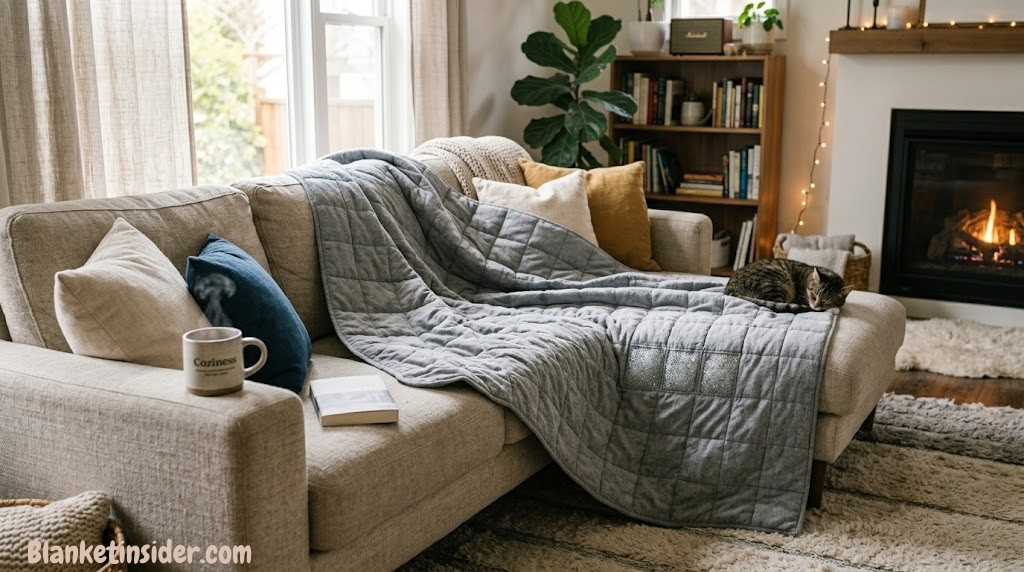
The construction matters as much as the weight itself. Quality weighted blankets use a quilted grid of small, evenly sized pockets — typically 4×4 inches or smaller. Each pocket holds the same measured amount of fill. Cheaper versions may use larger, irregular pockets or simply stuff fill into a single layer, which causes the weight to migrate and bunch.
Look for blankets with pocket sizes under 5 inches square. Smaller pockets = more uniform distribution = better therapeutic effect. Blankets where you can feel large “lumps” when you run your hand across the surface indicate fill migration from poor stitching.

YnM Weighted Blanket — Top-Rated Best-Seller
7-layer construction with micro glass beads. Available in 15, 20, and 25 lbs. Over 90,000 5-star reviews.
View on AmazonThe Science Behind Deep Pressure Stimulation
The reason weighted blankets work isn’t mystical — it’s rooted in well-documented neuroscience. The mechanism is called Deep Pressure Stimulation (DPS), sometimes called Deep Touch Pressure (DTP). When even, sustained pressure is applied to the body, it triggers a cascade of physiological responses that shift the nervous system from a state of alertness to one of calm.
What Happens in Your Nervous System
The human nervous system operates on two primary modes: sympathetic (“fight-or-flight”) and parasympathetic (“rest-and-digest”). Anxiety, restlessness, and poor sleep are often symptoms of an overactive sympathetic nervous system — one that keeps firing stress signals even when there’s no actual threat present.
Deep pressure works by stimulating the parasympathetic branch. The pressure receptors in your skin — called Meissner’s corpuscles and Ruffini endings — send signals to the brain that interpret sustained, even pressure as safe and calming. This is the same reason a firm hug, a tight swaddle for a newborn, or being wrapped in a cozy blanket feels instinctively comforting.
Key Neurochemicals Involved
Serotonin
Released in response to DPS, this neurotransmitter stabilizes mood, reduces feelings of anxiety, and is a precursor to melatonin — the hormone that governs sleep onset.
Oxytocin
The “bonding hormone,” triggered by touch and pressure, reduces blood pressure, lowers heart rate, and creates a pervasive sense of safety and well-being.
Melatonin
The serotonin released by DPS converts to melatonin in the brain, supporting the natural circadian clock and making sleep onset faster and more consistent.
Cortisol Reduction
Studies show DPS reduces cortisol — the primary stress hormone — helping those with chronic anxiety or high-stress lifestyles achieve physiological calm at bedtime.
What the Research Says
Research into weighted blankets and deep pressure therapy is genuinely promising, though still maturing. A Occupational Therapy in Mental Health study found that 63% of participants reported lower anxiety after using a weighted blanket, with physiological markers (electrodermal activity) confirming the subjective reports. A study published in the Journal of Sleep Medicine & Disorders found that participants with insomnia fell asleep faster and woke fewer times during the night after using a 12-lb weighted blanket compared to a regular blanket.
The evidence is strongest for anxiety reduction and moderate for direct sleep improvement. For conditions like autism, ADHD, restless leg syndrome, and PTSD, the evidence base continues to grow — which is why occupational therapists have integrated weighted blankets as a first-line sensory regulation tool for decades.
Most studies use blankets in the 5–15% of body weight range. Exceeding this threshold does not produce proportionally greater benefits and can introduce discomfort or sleep disruption for some individuals.
Benefits of Weighted Blankets for Sleep & Anxiety
Understanding the neuroscience is useful, but what most people want to know is simply: what will I actually feel different? The benefits cluster into several well-documented areas, though individual responses vary.
Sleep Quality Improvements
For people who toss and turn, wake frequently, or lie awake with a racing mind, weighted blankets address the underlying nervous system dysregulation rather than just masking symptoms. Users consistently report:
- Faster sleep onset: The melatonin-promoting effect of DPS can shorten the time it takes to fall asleep, particularly for anxiety-driven insomnia.
- Fewer nighttime wakings: By keeping the nervous system in a calmer baseline state, the blanket can reduce the micro-arousals that fragment sleep architecture.
- Reduced movement during sleep: Some individuals with restless sleep patterns find that the proprioceptive feedback from the blanket’s weight reduces involuntary shifting and restlessness.
- More restorative deep sleep: Studies using sleep trackers suggest users spend more time in slow-wave sleep stages, the most physically and mentally restorative phase.
Anxiety & Stress Relief
Weighted blankets are particularly well-regarded for anxiety management, not just at bedtime but during the day as well. Draping one across your lap while working, reading, or watching television provides a sustained, gentle pressure that keeps cortisol levels lower and creates a physiological sense of being grounded. For people who experience anxiety as a feeling of being untethered or overstimulated, the weight provides a literal counterpoint — you feel held, anchored, and contained.
If you’re exploring anxiety-focused bedding options more broadly, our guide to the best blankets for anxiety covers multiple approaches beyond weighted blankets.
Sensory Processing & Neurodivergence
Occupational therapists have used weighted blankets as a sensory regulation tool for individuals with autism, ADHD, sensory processing disorder, and related conditions for decades. The deep pressure provides a reliable, controllable sensory input that helps regulate an otherwise overwhelmed or under-stimulated sensory system. For children and adults who struggle with self-regulation, a weighted blanket can function as a portable grounding tool.
For dementia care settings, similar principles apply — see our guide on the best fidget blanket for dementia for how tactile tools support cognitive comfort.
Chronic Pain & Fibromyalgia
Some individuals with fibromyalgia, chronic pain syndromes, and related conditions find that weighted blankets reduce the perception of pain through the gate-control theory of pain — essentially, the pressure signals from DPS compete with and partially “drown out” pain signals on the same neural pathways. This is not a universal experience, and for those with pressure-sensitive conditions, heavier blankets may be contraindicated.
Night Sweats & Temperature Regulation
A common concern with weighted blankets is heat retention, and it’s legitimate — many early models trapped significant warmth. However, the current market offers a wide range of cooling-optimized weighted blankets using bamboo, Tencel, and open-weave cotton fabrics that minimize heat buildup. If you’re a warm sleeper or experience night sweats, see our dedicated best blankets for night sweats roundup for appropriate options.
✅ Documented Benefits
- Reduced anxiety and stress response
- Faster sleep onset for anxiety-driven insomnia
- Better sleep architecture and fewer wakings
- Sensory regulation for autism & ADHD
- Lower cortisol levels measurably
- Non-pharmacological intervention
- Works for children and adults alike
⚠️ Limitations to Know
- Not effective for everyone equally
- Heavier models can trap heat
- Can feel claustrophobic for some
- Require larger capacity washers to clean
- May take 1–2 weeks to adapt to
- Not suitable for very young children
- Can be heavy to travel with

Baloo Weighted Blanket — Premium Cotton, No Plastic
100% organic cotton outer with glass micro-beads. Breathable, machine washable. A top choice for hot sleepers.
View on AmazonHow to Choose the Right Weight for Your Body
Weight selection is the single most important decision when buying a weighted blanket. Get it wrong and you’ll either feel like you’re being pinned to the mattress (too heavy) or wonder why you’re not noticing any effect (too light). The good news: there’s a straightforward framework, and it starts with body weight.
The 10% Rule — And Why It’s a Starting Point, Not a Law
The most widely cited guideline is to choose a weighted blanket that is approximately 10% of your body weight. This comes from occupational therapy practice, where it was established as a safe therapeutic range that provides meaningful deep pressure without restricting breathing or circulation.
So for a 150-lb adult, a 15-lb blanket is the starting point. For a 180-lb person, an 18-lb blanket — which rounds to the nearest available increment (usually 15 or 20 lbs). However, this is a guideline with meaningful variation based on individual sensitivity. Some people who have never used a weighted blanket find the 10% threshold too much and should start lower (7–8%). Others, particularly those with significant anxiety or sensory needs, may prefer 12–15% of body weight.
→ 5–7 lbs
→ 10–15 lbs
→ 15–20 lbs
→ 20–25 lbs
Adjusting for Sensitivity
Several factors should nudge your selection up or down from the 10% baseline:
| Factor | Adjust Weight | Why |
|---|---|---|
| First-time weighted blanket user | Start at 7–8% | Your nervous system needs time to acclimate to sustained pressure |
| High anxiety / strong sensory needs | Go to 12–15% | More intense DPS needed for a pronounced calming effect |
| Hot sleeper / warmer climate | Stay at lower range | Heavier fill = more insulation; offset with cooling fabrics |
| Elderly or low muscle strength | Go lighter (6–8%) | Easier to lift off if needed; avoids chest compression discomfort |
| Chronic pain / fibromyalgia | Consult OT first | Some find relief; others find pressure aggravates symptoms |
| Child (6–12 years) | 5–7% of body weight | Lower threshold is safer and still therapeutic |
| Sharing with a partner | Use the lighter person’s weight | Prevents the heavier person’s ideal weight from being excessive for their partner |
Children under 2 years, or anyone who cannot independently remove the blanket. The weight can cause breathing difficulties for those without sufficient core strength to lift it.
The Adjustment Period
Many new users report the blanket feeling surprisingly heavy or even slightly uncomfortable in the first few nights. This is normal — your nervous system is recalibrating its baseline. Most users find the sensation becomes deeply comfortable within one to two weeks of consistent use. If discomfort persists beyond two weeks, the blanket is likely too heavy.
Fill Types Compared: Glass Beads, Plastic Pellets, and Beyond
The fill is what makes a weighted blanket heavy — and the type of fill profoundly affects how the blanket feels, how it performs, how long it lasts, and how easy it is to wash. There are currently five main fill types on the market, each with meaningful differences.
Detailed Fill Comparison
| Fill Type | Weight Feel | Noise | Washable | Eco-Friendly | Cost Impact |
|---|---|---|---|---|---|
| Micro Glass Beads | Even, fluid, sand-like | Near-silent | ✔ Machine washable | Moderate | Mid to high |
| Plastic Poly Pellets | Chunky, can shift | Slight rustle | ✔ Machine washable | ✘ Plastic waste | Low to mid |
| Steel Shot Beads | Dense, thin blanket profile | Very quiet | ✔ Yes (careful drying) | Recyclable metal | High |
| Organic Grain/Rice | Natural, inconsistent | Noticeable crinkle | ✘ Not washable | ✔ Biodegradable | Low (DIY) |
For most buyers, micro glass beads offer the best combination of even weight distribution, near-silent operation, durability, and washability. They’re the industry standard for good reason. If you’re environmentally conscious, look for brands using recycled glass beads — several now offer this.
For everything related to washing these fill types safely, our detailed guide on how to wash a weighted blanket without damage covers machine settings, detergent choices, and drying techniques by fill type.

Bearaby Tree Napper — Chunky Knit Weighted Blanket
Made from Tencel (tree-based fiber). No fill pellets — the weight comes from the dense knit construction itself. Breathable and eco-friendly.
View on AmazonFabric & Materials: What the Outer Shell Changes
While fill determines the weight, the outer fabric determines your tactile experience — how it feels against your skin, how warm or cool it sleeps, how soft it remains over time, and how easily it cleans. Weighted blankets use a wider variety of outer fabrics than most other bedding categories, and understanding these differences will dramatically impact your satisfaction.
Cotton — The Universal Safe Choice
Breathable, durable, hypoallergenic, and easy to care for, cotton remains the most popular weighted blanket outer material for good reason. It’s temperature-neutral, works year-round in most climates, and handles machine washing well. Higher thread counts feel softer and more luxurious; percale weave adds crispness while sateen adds a silkier drape. For hot sleepers, organic cotton with a percale weave is an excellent choice. Our broader guide to best blanket materials explores cotton vs. alternatives in depth.
Bamboo — For Hot Sleepers
Bamboo-derived fabrics (bamboo viscose, bamboo lyocell/Tencel) have surged in popularity for weighted blankets because they combine genuine cooling properties with a silky-soft texture. Bamboo fabric wicks moisture effectively, which is particularly valuable under a heavy blanket that naturally traps warmth. If you run hot at night or live in a humid climate, a bamboo outer-shell weighted blanket is worth the premium. For more on bamboo fabric, see our best bamboo blankets guide or compare materials in our bamboo vs cotton blanket breakdown.
Minky — For Sensory Softness
Minky (also called minkie or plush microfiber) is an ultra-soft polyester fabric with a short, dense pile that feels incredibly plush against skin. It’s particularly popular for children’s weighted blankets and for adults who prioritize tactile softness. The downside is that minky doesn’t breathe well, trapping warmth — fine for cold sleepers, problematic for warm ones. For a deep dive into minky as a fabric, see our guide on what minky fabric is and how it’s made and our minky vs fleece comparison.
Sherpa & Fleece — Maximum Warmth
Sherpa-lined weighted blankets combine a smooth outer face with a plush, lamb-fleece-like sherpa lining for maximum warmth and softness. These are winter favorites but will be uncomfortably warm in summer or for hot sleepers. Our sherpa blanket guide and the sherpa vs fleece blanket comparison cover the differences in warmth, durability, and feel.
Cooling Fabrics — TENCEL, Modal, Linen
The newest category of weighted blanket fabrics focuses specifically on moisture management and temperature neutrality. TENCEL lyocell, modal, and linen all offer excellent breathability and moisture transport. TENCEL is particularly noteworthy for its closed-loop manufacturing process, making it one of the more sustainable fiber choices on the market. Our cooling blanket guide details which fabrics genuinely deliver on temperature regulation versus marketing claims.
| Fabric | Best For | Breathability | Softness | Care |
|---|---|---|---|---|
| Cotton (percale) | Year-round, all sleepers | ⭐⭐⭐⭐ | ⭐⭐⭐ | Machine wash, easy |
| Bamboo viscose | Hot sleepers, humid climates | ⭐⭐⭐⭐⭐ | ⭐⭐⭐⭐ | Gentle cycle, low heat dry |
| Minky / Plush | Sensory softness, cool rooms | ⭐⭐ | ⭐⭐⭐⭐⭐ | Gentle cycle, avoid high heat |
| Sherpa-lined | Cold climates, winter use | ⭐ | ⭐⭐⭐⭐⭐ | Machine wash, low dry |
| TENCEL / Lyocell | Hot sleepers, eco-conscious | ⭐⭐⭐⭐⭐ | ⭐⭐⭐⭐ | Gentle cycle, line dry preferred |
| Linen | Warm climates, minimalist aesthetic | ⭐⭐⭐⭐⭐ | ⭐⭐⭐ | Machine wash, softens over time |
For people with sensitive or reactive skin conditions, fabric choice becomes even more important. Our roundup of best blankets for eczema identifies which materials minimize friction and chemical irritation for sensitive skin.
Sizes & Dimensions: Getting the Fit Right
One of the most consistent mistakes first-time buyers make is ordering a weighted blanket in a bed size rather than a personal size. Unlike a regular comforter — which you want draped over the sides of your mattress — a weighted blanket should fit the person, not the bed. Here’s why that distinction matters.
When a weighted blanket hangs over the sides of a mattress, the fill — and therefore the weight — migrates to the edges, away from your body. This means you’re losing a significant portion of the therapeutic pressure you paid for. For solo use, a personal-sized blanket (typically 48×72 inches) is nearly always more effective than a queen or king option.
Standard Size Guide
| Size | Dimensions | Best For | Weight Range |
|---|---|---|---|
| Child/Lap | 36×48 in | Children 50–90 lbs, lap use | 5–7 lbs |
| Twin / Personal | 48×72 in | Solo adult sleepers (most popular) | 10–20 lbs |
| Full | 60×80 in | Couples sharing one blanket | 15–25 lbs |
| Queen | 60×80 in | Larger bed coverage, not recommended for solo therapeutic use | 15–25 lbs |
| King | 80×87 in | Couples, decorative use | 20–30 lbs |
For couples sharing a bed, the dynamics change. The weight that’s appropriate for the lighter partner should govern selection, as too much weight can disrupt the sleep of the person for whom it exceeds the safe threshold. For dedicated large-format options, our guide to the best king-size blankets includes weighted and non-weighted options for larger beds.
For solo therapeutic use, choose a blanket that covers from your shoulders to your feet with no more than a few inches of overhang on each side. The blanket should feel like it’s wrapping you rather than the mattress.

Luna Weighted Blanket — 100% Organic Cotton
GOTS-certified organic cotton outer with glass beads. Available in 8, 10, 12, 15, 20, and 25 lbs. Great value for a certified organic option.
View on AmazonWho Benefits Most from a Weighted Blanket?
Weighted blankets have broad appeal, but there are specific populations for whom the benefits are most consistently documented and most meaningfully felt. If you fall into one of these groups, the case for investing in a quality weighted blanket is particularly strong.
Adults with Anxiety Disorders
Generalized anxiety disorder (GAD), social anxiety, and panic disorder all share a common physiological thread: a hyperactive stress response that’s difficult to manually downregulate. Deep pressure stimulation offers a direct, non-pharmacological pathway to parasympathetic activation. Clinical reviews consistently rate weighted blankets as a valuable adjunctive therapy for anxiety management — particularly at sleep onset when anxiety symptoms tend to peak.
People with Insomnia
Insomnia driven by a racing, hypervigilant mind responds particularly well to weighted blankets because the deep pressure addresses the root physiological cause rather than masking it. For insomnia rooted in pain, sleep apnea, or circadian disruption, the evidence is less direct — but many users with these causes still report improvements in sleep quality and subjective restfulness.
Individuals with Autism Spectrum Disorder
The occupational therapy evidence base for weighted blankets in autism management is among the most robust in the field. For individuals with ASD who experience sensory processing differences, the consistent, controllable, full-body pressure of a weighted blanket provides a reliable regulatory input that reduces both sensory overwhelm and anxiety. It’s worth noting that response is highly individual — always trial with guidance from an occupational therapist for children with ASD.
Children with ADHD
ADHD involves difficulty with impulse control and arousal regulation, and the grounding, calming effect of deep pressure stimulation can help children with ADHD settle at bedtime — a notoriously challenging transition for this population. Smaller child-specific weighted blankets (typically 5–7 lbs for school-age children) have become a common OT recommendation. For younger children and babies, our baby sleep blanket safety timeline details when and how blankets of any kind can be safely introduced.
Shift Workers & Irregular Sleep Schedules
People whose natural melatonin cycles are disrupted by shift work, jet lag, or irregular schedules can benefit from the melatonin-promoting effects of deep pressure stimulation. By creating a reliable physiological signal for sleep onset, weighted blankets can help anchor the body’s readiness for sleep even when circadian cues are absent or misaligned.
Elderly Adults
Sleep quality naturally changes with age, often becoming more fragmented and less restorative. Older adults also frequently experience higher baseline anxiety, particularly those in care settings. Lighter-weight options (5–10 lbs) can offer genuine benefits without the respiratory or mobility concerns associated with heavier models. Our guide to the best fidget blanket for dementia covers related tactile tools for cognitive comfort in elderly care.
Who Should Avoid or Use Caution with Weighted Blankets
Weighted blankets are safe for the vast majority of adults, but there are specific contraindications that require either caution or complete avoidance. Understanding these is as important as knowing who benefits.
The cardinal rule: anyone who cannot independently remove a weighted blanket should never use one unsupervised. This includes infants under 2, individuals with severe motor impairment, and anyone who has indicated discomfort while using the blanket and cannot remove it themselves.
For those with claustrophobia or a heightened sensitivity to confinement, lighter-weight options (under 10 lbs) may still be tolerable — but it’s best to start with shorter trials under 20 minutes before committing to full-night use.
Weighted blankets should never be used with children under 2 years of age, regardless of weight. The blanket mass can compromise breathing and the child cannot remove it independently. For safe sleeping solutions for infants and toddlers, see our baby sleep blanket safety timeline and our guide to when to switch from swaddle to sleep sack.

Gravity Blanket — The Original Premium Weighted Blanket
The brand that helped launch the weighted blanket mainstream movement. 35-lb option for larger adults, duvet-loop design for removable covers.
View on AmazonTop Weighted Blanket Picks for Every Budget & Need
With the framework above in place, here are the best weighted blankets currently available across key categories. These recommendations are based on construction quality, user feedback at scale, fill type, and real-world performance — not marketing claims alone.
Best Overall: YnM Weighted Blanket
The YnM consistently earns its position as the top-selling weighted blanket on Amazon for a reason. Its 7-layer construction — alternating cotton fill layers with micro glass bead pockets — creates exceptional weight distribution. The seam quality is robust, pocket size is appropriately small (4 inches), and the range of colors, fabrics, and weights is the broadest of any single brand. For most first-time buyers, the YnM represents the best blend of quality, washability, and value. Read our full YnM weighted blanket review for a complete breakdown.
Best Premium: Gravity Blanket
The Gravity Blanket helped define the mainstream weighted blanket market with its elegant duvet-style construction, loop attachment system for covers, and premium micro-glass bead fill. It comes at a significantly higher price point than budget alternatives, but the construction quality and thoughtful design — including the removable, washable cover — justify it for buyers who want the best. For a detailed assessment, our Gravity Blanket review covers it comprehensively.
Best for Hot Sleepers: Baloo Weighted Blanket
Baloo uses 100% GOTS-certified organic cotton (no polyester filler layers) with micro glass beads, creating a genuinely breathable blanket that doesn’t trap heat the way polyester-core alternatives do. It’s also one of the rare weighted blankets rated for home machine washing in a standard large-capacity washer. See our full Baloo weighted blanket review.
Best Eco/Natural: Bearaby Tree Napper
Bearaby takes a fundamentally different approach: no fill at all. The weight comes entirely from the density of a hand-knitted Tencel (tree-derived lyocell) fabric. This creates a naturally breathable, OEKO-TEX certified blanket that’s as close to chemical-free as the category gets. The open-weave knit structure means no fill can ever leak or migrate. Read our Bearaby Tree Napper review for pros and cons of the no-fill design.
Best Budget Under $50: Degrees of Comfort Weighted Blanket
For buyers who want to trial weighted blankets without a premium investment, the Degrees of Comfort hits reliable quality benchmarks at a lower price. It uses plastic poly pellets rather than glass beads, which accounts for part of the savings — and the trade-off in quietness and distribution smoothness is noticeable, but not deal-breaking. Available in a wide range of weights and sizes.
Best for Children: SensaCalm Weighted Blanket
SensaCalm specializes in sensory-focused products and offers some of the most rigorously constructed children’s weighted blankets on the market. Their blankets use smaller pocket sizes than most children’s options, and the company works with occupational therapists to develop weight ranges appropriate for sensory processing needs.
| Pick | Fill | Fabric | Weight Range | Price Tier | Best For |
|---|---|---|---|---|---|
| YnM | Micro glass beads | Cotton / minky | 5–25 lbs | Budget–Mid ($40–80) | First-time buyers |
| Gravity | Micro glass beads | Microfiber cover | 15–35 lbs | Premium ($150–250) | Premium buyers |
| Baloo | Micro glass beads | Organic cotton | 10–25 lbs | Mid ($90–130) | Hot sleepers |
| Bearaby Tree Napper | No fill (knit weight) | TENCEL lyocell | 10–25 lbs | Premium ($200–300) | Eco-conscious |
| Luna | Micro glass beads | Organic cotton | 5–25 lbs | Mid ($60–110) | Value organic |
| Degrees of Comfort | Poly pellets | Microfiber | 7–25 lbs | Budget ($35–60) | Trial/first purchase |
For broader comparison context, our comprehensive weighted blanket review covers additional models across all price points. The down vs weighted blanket guide and the comforter vs duvet vs blanket comparison are also useful if you’re still deciding what category best fits your sleep needs.

Degrees of Comfort — Dual Sided (Cool + Warm)
One warm side, one cool side. Poly pellet fill at an accessible price. Great option for trialing weighted blankets before investing in a premium model.
View on AmazonWashing & Care: Protecting Your Weighted Blanket Long-Term
Weighted blankets have specific care requirements that differ from regular bedding, primarily because of their weight, fill material, and construction. Getting this wrong can damage the seams, cause fill migration, or degrade the outer fabric — potentially ruining an expensive purchase.
Machine Washing: The Capacity Rule
The most important rule: your washing machine must be rated for at least the weight of the blanket, with a 5 lb safety margin. A standard household top-loader is typically rated for 8–12 lbs; a large-capacity front-loader for 15–20 lbs. For blankets over 15 lbs, use a commercial laundromat machine (typically 35+ lbs capacity) to avoid damaging your home appliance’s drum or motor.
Use cold or warm water (never hot — hot water can degrade the outer fabric and loosen fill pocket seams), a gentle cycle, and a mild, chemical-free detergent. Avoid fabric softeners, which can coat glass beads and reduce their smooth flow. For full step-by-step guidance, our guide on how to wash a weighted blanket without ruining the fill is the most comprehensive reference available.
Drying: The Patience Phase
Weighted blankets take significantly longer to dry than standard bedding due to their density. Use low heat in a dryer, pausing every 20–30 minutes to redistribute the fill manually (preventing clumping and hot spots). Glass bead blankets dry faster than poly pellet alternatives because glass doesn’t absorb moisture. Steel bead blankets should be dried with care — extended high heat can affect the outer fabric over time.
Line drying is an option for warmer months, but the prolonged moisture exposure can promote mildew in the fill if not fully dry within 12 hours. If line drying, lay flat (not hung vertically — the weight will pull unevenly on the seams) on a clean surface in direct sunlight.
Spot Cleaning & Covers
The best way to minimize the frequency of full washes is to use a duvet cover. Many weighted blankets — particularly premium models like the Gravity Blanket — include an attachment loop system for exactly this purpose. A removable cotton or bamboo cover can be washed weekly while the weighted blanket itself needs washing only monthly or less. For cooling-focused care, our article on washing cooling blankets covers the specific considerations for temperature-regulating materials.
Storage Between Seasons
When storing a weighted blanket, always ensure it is completely dry before packing — residual moisture in glass beads or between fabric layers can cause mildew that permanently damages the blanket. Store in a breathable cotton or linen bag rather than a plastic zip bag; plastics trap condensation. Never use vacuum storage bags, as the compression can stress the pocket seams and cause fill leakage over time. For storage solutions, our guide to the best blanket chests and storage trunks and our roundup of the best 90L blanket storage bags both cover blanket-safe storage options.
Lifespan & When to Replace
A well-constructed weighted blanket with micro glass beads should last 5–10 years with proper care. Signs it’s time to replace include: visible fill migration that you can no longer redistribute (seam failure), thinning fabric, persistent odor that won’t wash out, or a noticeable loss of the even weight distribution that defines the therapeutic effect.
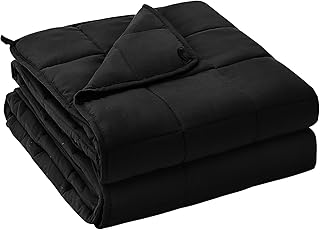
Mesh Laundry Bags for Weighted Blankets — Protects Seams in the Wash
Heavy-duty mesh laundry bags rated for 20+ lbs. Protects pocket seams during the wash cycle and extends blanket lifespan significantly.
View on AmazonHow to Get the Most from Your Weighted Blanket
Owning the right weighted blanket is step one. Using it effectively — especially during the adjustment period — is step two, and often overlooked. These practical strategies will help you build a positive association and see results faster.
The First Two Weeks: Gradual Acclimation
If you’ve never slept under a weighted blanket before, don’t dive straight into sleeping under it all night. Your nervous system and muscles genuinely need time to adapt. Start with 20–30 minute sessions during relaxing activities — reading, watching TV, or resting on a sofa. Once the sensation feels natural (usually after 3–5 days), try using it for the first half of the night, removing it if you become uncomfortable. Full-night use typically becomes comfortable within 10–14 days for most users.
Daytime Use for Anxiety Management
You don’t need to wait until bedtime. Draping a weighted blanket across your lap during stressful work sessions, during phone calls, or while practicing mindfulness provides a sustained DPS effect that can help manage daytime anxiety levels. A lightweight lap-sized option (5–7 lbs) is particularly practical for desk or sofa use without the bulk of a full sleeping blanket. For a broader set of comfort tools for daily life, our cozy home essentials checklist is a useful reference.
Pairing with Other Sleep Hygiene Practices
Weighted blankets are most effective when they’re part of a broader sleep hygiene routine. They work synergistically with consistent sleep/wake times, a cool bedroom temperature (65–68°F is considered optimal for most adults), darkness, and pre-sleep relaxation practices. The physiological calm induced by DPS deepens when your body is also receiving consistent circadian cues from the environment.
Consider combining with a cooling blanket liner in summer months, or with a wearable blanket with sleeves during evening wind-down before switching to the weighted option for sleep.
Using a Weighted Blanket for Travel
Full-sized weighted blankets aren’t inherently travel-friendly, but lighter personal options (10 lbs) can be packed in large luggage for short trips where sleep disruption is a genuine concern — new environments, jet lag, or anxiety-driven sleeplessness away from home. For dedicated travel comfort solutions, our guide to the best travel blanket and pillow sets covers compact comfort for journeys and our cozy car road trip guide has broader tips for in-transit comfort.
Kids & Weighted Blankets: What Parents Need to Know
For children aged 4 and up, weighted blankets used under OT guidance can be profoundly helpful for sleep onset difficulties, sensory processing differences, and anxiety. The weight should be 5–7% of the child’s body weight — slightly less than the adult guideline — and the child should always be able to remove the blanket independently. Never use a weighted blanket for children under 2 or for children who cannot remove it themselves. Our baby blanket reviews covering safety and the best swaddle blankets for newborns guide address safe alternatives for infants.
Frequently Asked Questions
The standard starting point is approximately 10% of your body weight. For a 150-lb adult, that means a 15-lb blanket. If you’re new to weighted blankets or have a lower pressure tolerance, start at 7–8% of body weight. If you have high anxiety or significant sensory needs, 12–15% may be more effective. The key is that you should feel a pleasant, grounding pressure — not constriction or discomfort. Most brands offer blankets in 5-lb increments, so you’ll round to the nearest available option.
Yes, and there’s meaningful research supporting this. Deep pressure stimulation — the mechanism behind weighted blankets — activates the parasympathetic nervous system, which is the physiological opposite of the stress response. Studies have shown measurable reductions in cortisol (the primary stress hormone) and electrodermal activity (a physiological measure of anxiety) in participants using weighted blankets. While weighted blankets aren’t a replacement for therapy or medication for clinical anxiety disorders, they are a well-regarded adjunctive tool. Many therapists and psychiatrists actively recommend them as part of a broader management strategy.
Yes, for most adults, daily use of an appropriately weighted blanket is perfectly safe. There’s no evidence that regular nightly use causes dependency or diminishes the therapeutic effect over time. In fact, consistent use tends to deepen the benefits as your body’s association with the blanket’s pressure and the sleep signal becomes more established. The only scenario where nightly use should be approached cautiously is for individuals with respiratory conditions, where the added chest weight can cause discomfort during extended use — in these cases, consulting a physician first is wise.
This depends heavily on the fabric and fill. Many early weighted blankets were made with polyester outer shells that did trap heat significantly. However, the current market offers excellent cooling-optimized options in bamboo, TENCEL, organic cotton percale, and open-weave knit constructions that minimize heat buildup. For hot sleepers or warm climates, look specifically for blankets marketed as “cooling,” check for bamboo or TENCEL outer fabric, and avoid sherpa or minky constructions. Our dedicated cooling blanket guide reviews the options in depth if this is your primary concern.
Children aged 4 and older who can independently remove the blanket can use weighted blankets safely, particularly under occupational therapy guidance. The weight should be 5–7% of the child’s body weight, which is slightly more conservative than the adult guideline. Never use a weighted blanket for children under 2 years of age — the weight can restrict breathing, and the child cannot remove it independently. For children aged 2–4, consult a pediatric occupational therapist before use. Children with neurodivergent conditions such as autism or ADHD can benefit significantly, but guidance from a trained OT is always recommended for this population.
Most weighted blankets under 15 lbs can be washed in a standard large-capacity front-loading washing machine using cold or warm water and a gentle cycle with mild detergent. For blankets over 15 lbs, use a commercial laundromat machine to avoid damaging your home appliance. Dry on low heat, pausing every 20–30 minutes to redistribute the fill and prevent clumping. Never use fabric softener with glass bead blankets. For the complete care guide by fill type and fabric, see our detailed article on washing weighted blankets without damage.
Micro glass beads are superior in almost every meaningful way. They distribute weight more evenly, are near-silent during movement, are significantly smaller (allowing thinner blanket construction at equivalent weights), and are more environmentally durable. Plastic poly pellets are heavier per bead (requiring fewer for the same weight), can create an uneven, lumpy feel, produce a noticeable rustle sound during movement, and are made from plastic — a material with environmental drawbacks. The main argument for poly pellets is lower cost, which makes them acceptable in budget-tier blankets. If budget allows, always choose glass beads.
For anxiety-driven insomnia, weighted blankets are one of the most consistently effective non-pharmacological interventions available. By triggering the release of serotonin (a melatonin precursor) and reducing cortisol, they address the physiological root of sleep-onset difficulty in anxious individuals. Clinical studies have found faster sleep onset and fewer nighttime wakings in users with insomnia. For insomnia caused by primary factors other than anxiety — such as pain, sleep apnea, or circadian rhythm disorders — a weighted blanket may still improve sleep quality subjectively but is less likely to be the primary solution.
For solo therapeutic use, buy a personal-sized blanket (typically 48×72 inches, marketed as “Twin”) rather than a bed-sized option. A weighted blanket is most effective when it covers your body — from shoulders to feet — with minimal overhang over the sides of the mattress. Weight that hangs off the edge of the bed is weight not on your body, reducing the therapeutic effect. Bed-sized options (Queen, King) are appropriate if two people are sharing one blanket, or for decorative use on a fully made bed, but for sleep they’re less effective than a properly sized personal blanket.
The immediate physiological effect — the parasympathetic response from deep pressure stimulation — begins within minutes of using the blanket. However, the full subjective benefit — particularly for sleep quality — typically builds over 1–2 weeks of consistent use as your nervous system adapts and your body builds a positive association between the blanket’s pressure and sleep readiness. Many users report noticeably better sleep quality after just 3–5 nights; others take up to two weeks. If you’re still not noticing improvement after three weeks, the blanket may be the wrong weight (try slightly heavier or lighter) or the wrong fabric for your temperature preferences.
No — a weighted blanket is a supportive tool, not a clinical treatment. It can meaningfully reduce anxiety symptoms and improve sleep quality for many people, but it is not a medical intervention and should not be used as a substitute for prescribed medication or professional therapy for clinical anxiety disorders, PTSD, or chronic insomnia. That said, many therapists and psychiatrists actively encourage weighted blanket use alongside clinical treatment because the deep pressure stimulation complements — and can enhance the effectiveness of — therapeutic approaches. If you’re managing a diagnosed condition, discuss weighted blanket use with your healthcare provider as part of a comprehensive plan.
The critical difference is weight distribution. A weighted blanket uses hundreds of small, evenly filled pockets (typically 4×4 inches or smaller) so that the fill distributes uniformly across your entire body surface. A regular heavy blanket or pile of blankets concentrates weight unevenly — more at the folds, edges, and thicker sections. This uneven distribution doesn’t produce the same proprioceptive and deep pressure effect as the precisely distributed weight of a purpose-built weighted blanket. Additionally, weighted blankets are engineered to hit a precise total weight relative to body weight, which is integral to the therapeutic mechanism — a regular heavy blanket has no such precision.
Final Verdict: Is a Weighted Blanket Worth It?
For the vast majority of adults who struggle with anxious nights, restless sleep, or simply want a more grounded, deeply comfortable sleep experience — yes, a weighted blanket is absolutely worth the investment. The neuroscience is sound, the research is growing, and millions of users (including this editorial team) have experienced the benefits firsthand.
The key is getting three things right: weight (start at 10% of your body weight, adjust from there), fill (micro glass beads for most buyers), and fabric (cotton or bamboo for year-round use; minky or sherpa for cold-weather comfort). With those three decisions made correctly for your specific situation, the benefits follow reliably.
If you’re still weighing up whether a weighted blanket is the right comfort upgrade for you, our comparison of down vs weighted blanket explores the trade-offs in depth, and our broader weighted blanket reviews page covers the full market. For the right product for your specific needs — anxiety relief, hot sleeping, sensory processing, or simply superior comfort — start with the framework in this guide and let your own body weight and sleep context drive the final selection.
Shop Top-Rated Weighted Blankets on Amazon →