What Does a Weighted Blanket Do? The Full Breakdown of How They Work, Feel, and Help
From deep pressure stimulation to better sleep and calmer nerves — here’s exactly what happens when you get under one, and how to know if it’s right for you.
If you’ve ever wondered why a simple blanket filled with glass beads or plastic pellets has become one of the most talked-about sleep products of the last several years, you’re not alone. Weighted blankets look almost identical to a regular quilt from across the room, yet the moment you pull one over your body, something noticeably different happens. There’s a settling sensation, a kind of full-body hug that regular bedding just doesn’t produce. This guide breaks down exactly what a weighted blanket does — physically, physiologically, and practically — so you can decide whether one belongs on your bed.
See today’s best-selling weighted blankets and current pricing on Amazon.
Shop Weighted Blankets1. What Is a Weighted Blanket?
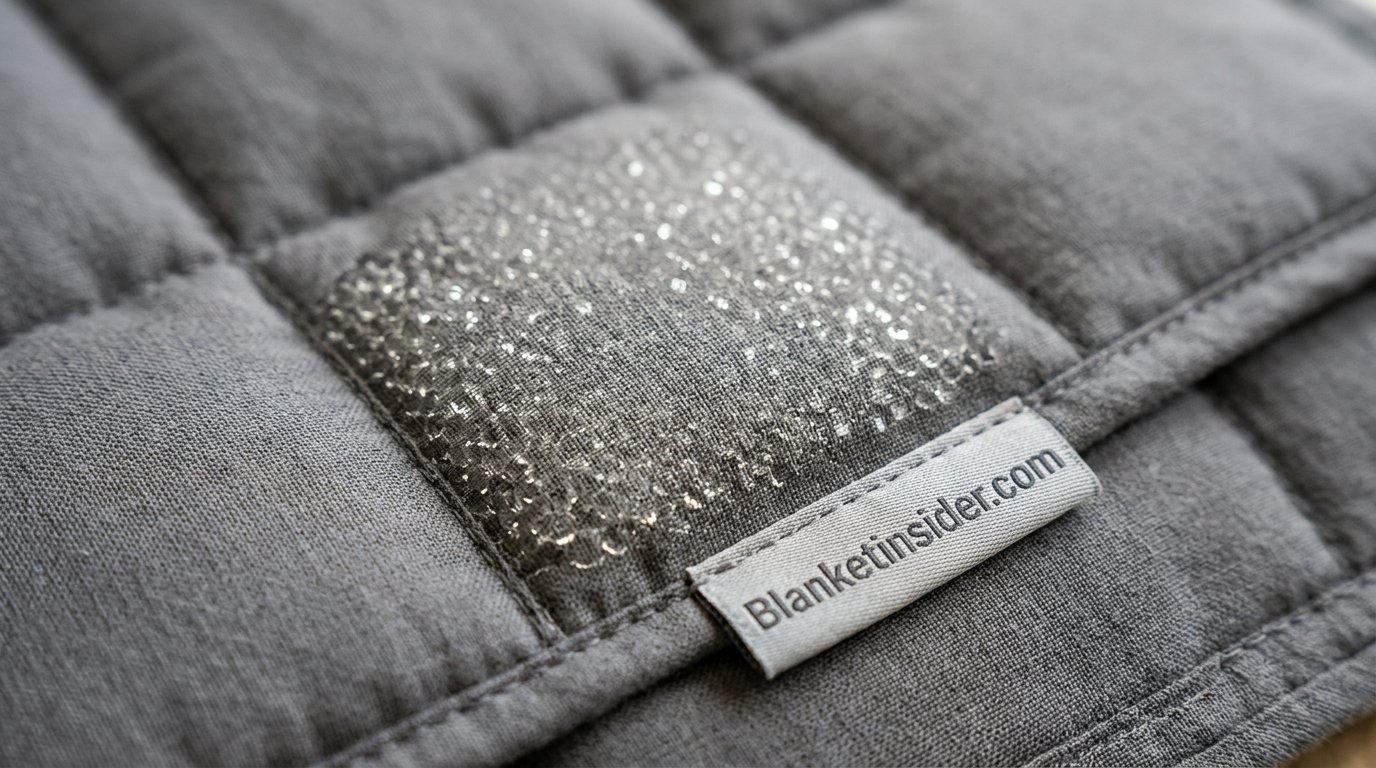
A weighted blanket is exactly what it sounds like: a blanket engineered to weigh significantly more than a standard comforter or throw, usually somewhere between 5 and 30 pounds depending on size and intended user. That extra weight doesn’t come from thicker fabric or extra stuffing in the traditional sense — it comes from small, evenly distributed fillers sewn into a grid of individual fabric pockets across the entire surface of the blanket.
The grid construction matters more than most people realize. Without it, all that added weight would simply slide to the bottom edge of the blanket the moment you shifted in bed, leaving your shoulders and chest uncovered and your feet buried under an uncomfortable pile. By quilting the fill into a checkerboard or diamond pattern of sealed compartments, manufacturers keep the weight spread evenly across your body no matter how you move, so the pressure stays consistent from your shoulders to your toes.
Most weighted blankets consist of three layers: an outer shell fabric (often cotton, minky, or a cooling performance material), an inner layer of quilted pockets holding the fill, and sometimes a removable duvet cover that lets you change the look and wash the outer layer separately from the heavy inner insert. The result is a blanket that behaves, in practical terms, like a firm, gentle hand pressing down on your body — evenly, continuously, and without any single pressure point.
For a deeper walk-through of construction styles, fill options, and sizing logic before you buy, our complete weighted blanket buying guide covers everything in one place.
Ready to feel the difference? Compare top-rated weighted blankets by weight and size.
Browse Weighted Blankets2. The Science: Deep Pressure Stimulation (DPST)
The core mechanism behind everything a weighted blanket does traces back to a concept called Deep Pressure Stimulation, sometimes called Deep Touch Pressure. This isn’t marketing language invented by bedding companies — it’s a real, studied phenomenon in occupational therapy, originally used with swaddled infants, autism therapy, and sensory processing interventions long before weighted blankets became a mainstream consumer product.
Deep pressure stimulation refers to firm, evenly distributed tactile pressure applied to the body, similar to the sensation of a firm hug, a swaddle, or a compression garment. Unlike light touch, which tends to activate the body’s alert systems, deep and sustained pressure appears to have the opposite effect: it signals safety and stability to the nervous system.
When a weighted blanket rests on your body, the fill inside each quilted pocket presses down with consistent, gentle force. That pressure is registered by touch receptors in the skin and communicated to the brain, where it appears to influence the balance between the sympathetic nervous system (responsible for the “fight or flight” stress response) and the parasympathetic nervous system (responsible for “rest and digest” functions). In simple terms, that steady pressure nudges your body out of an alert state and toward a calmer one.
| Touch Type | Typical Nervous System Response |
|---|---|
| Light, unpredictable touch (tickling, brushing) | Can increase alertness or discomfort |
| Firm, constant, even pressure (deep pressure stimulation) | Associated with calming, parasympathetic activity |
| Sudden or sharp pressure | Triggers a startle or stress response |
This is the same underlying principle behind swaddling a newborn, the calming effect of a firm hug, or the reason many people instinctively pull a heavy comforter tight around themselves when they’re stressed. A weighted blanket essentially manufactures that sensation on demand, every night, without needing another person or a specific technique.
Experience deep pressure stimulation for yourself with a top-reviewed weighted blanket.
Shop Best Sellers3. How Weighted Blankets Affect the Nervous System
To understand what a weighted blanket actually does inside your body, it helps to think about your autonomic nervous system as having two main modes: an “on” mode built for reacting to threats, and an “off” mode built for recovery, digestion, and rest. Modern life — screens, notifications, deadlines, traffic — tends to keep a lot of people leaning toward the “on” mode more often than is ideal, especially right before bed.
The sustained, even pressure from a weighted blanket appears to encourage a shift toward the “off” mode. Several small studies and a growing body of anecdotal and clinical-adjacent evidence point to changes associated with reduced physiological arousal under deep pressure: slower heart rate trends, reduced signs of restlessness, and self-reported reductions in feelings of stress. While weighted blankets aren’t a medical treatment and won’t replace therapy or medication for diagnosed conditions, the physiological pathway they act on — the skin’s pressure receptors feeding into the nervous system — is well documented outside the bedding industry.
There’s also a psychological layer at play alongside the physiological one. Many users describe the sensation as feeling “held” or “grounded,” and that subjective sense of security can itself reduce the mental loop of worry that often keeps people awake or on edge. In other words, a weighted blanket does two things at once: it produces a measurable physical input (pressure) and a psychological association (comfort, security) that reinforce each other.
If anxiety specifically is your primary concern rather than general stress, our dedicated roundup of the best blankets for anxiety goes further into which weights, fabrics, and features tend to help the most.
Find the weight and size that fits your body for maximum calming effect.
Compare Weights on Amazon4. Weighted Blankets and Sleep Quality
Sleep is the single most common reason people buy a weighted blanket, and it’s also where the deep pressure effect tends to be most noticeable in practice. Falling asleep isn’t just about being tired — it requires your nervous system to actually downshift, and for a lot of people with racing thoughts or restless bodies, that downshift doesn’t happen easily on its own.
A weighted blanket can shorten that gap in a few concrete ways. First, the pressure itself has a calming effect, as covered above, which can reduce the time it takes to fall asleep (commonly referred to as sleep latency). Second, the weight limits how easily your body tosses and turns, which for some sleepers translates into fewer awakenings and a feeling of staying “anchored” through the night. Third, many users report a subjective sense of deeper, more restorative sleep — even when total sleep time doesn’t dramatically change, the quality of that sleep often feels improved.
What Weighted Blankets Are Not
It’s worth being direct here: a weighted blanket will not cure insomnia, sleep apnea, or other diagnosed sleep disorders, and it isn’t a substitute for good sleep hygiene — consistent bedtimes, a cool dark room, and limited screen exposure before bed still matter enormously. Think of it as one supportive tool in a larger sleep routine rather than a standalone fix.
It also helps to understand why the “anchoring” effect matters so much for sleep continuity specifically. Sleep isn’t a single unbroken state — everyone cycles through lighter and deeper stages multiple times a night, and brief partial awakenings during those transitions are completely normal. The problem is that for restless sleepers, those brief awakenings often turn into fully alert moments, because there’s nothing physically signaling “you’re still safe, stay put.” The steady pressure of a weighted blanket appears to act as exactly that signal, making it easier to drift back into deeper sleep stages instead of fully waking up and reaching for a phone or staring at the ceiling.
There’s also a habit-formation angle worth mentioning. Sleep researchers frequently point to the power of consistent pre-sleep cues — the brain learns to associate specific sensations and routines with the onset of rest. Because a weighted blanket produces such a distinctive, consistent physical sensation night after night, many users find it becomes a strong behavioral cue on its own: the moment the blanket goes on, the body starts downshifting almost automatically, similar to how a consistent bedtime playlist or a cup of herbal tea can become a psychological trigger for winding down.
Where It Tends to Help Sleep
- Reducing time spent lying awake with racing thoughts
- Limiting restless tossing and turning
- Creating a consistent bedtime cue the body learns to associate with sleep
Where It Has Limits
- Won’t resolve sleep apnea or breathing-related sleep issues
- Can feel too warm for hot sleepers without a cooling fabric shell
- Effects vary significantly from person to person
Struggle to fall asleep? A weighted blanket is one of the easiest habit changes to try tonight.
Shop Sleep-Focused Options5. Weighted Blankets and Anxiety or Stress
Beyond sleep, the second-most common reason people reach for a weighted blanket is to manage everyday anxiety or acute stress — whether that’s a stressful workday winding down, a panic-prone moment, or general background tension that builds up over the course of a week. The same deep pressure mechanism that helps with sleep applies here, just in a shorter, more situational way.
Many people use a weighted blanket while watching TV, reading, working from a couch, or simply sitting still for a few minutes when they feel overwhelmed. The physical sensation of being pressed into the couch or chair mimics the grounding effect of a firm hug, and for a lot of users, that translates into a genuine, in-the-moment sense of relief — not because the blanket “fixes” the source of stress, but because it interrupts the physical feedback loop that keeps stress escalating (racing heart, shallow breathing, restlessness).
It’s also worth noting that weighted blankets are sometimes used as a complementary tool alongside therapy, breathing exercises, or other coping strategies for people managing anxiety disorders — but they should be treated as a supportive comfort item, not a replacement for professional care when anxiety is significant or persistent.
The timing of use matters more than people expect. While most buyers reach for a weighted blanket at bedtime, plenty of the calming benefit shows up well before then. Wrapping up in one during a high-stress commute home, a tense work call, or an anxious wait at a doctor’s office can help interrupt the physical spiral of stress in the moment rather than only addressing it once you’re already trying to sleep. Some users keep a smaller weighted lap pad or throw specifically for daytime moments like these, separate from the larger bedtime blanket, so both options are always within reach.
It’s also common for the calming effect to become more pronounced with consistent use rather than less. Unlike some sensory tools that lose their novelty quickly, deep pressure stimulation tends to remain effective because it works on a physiological pathway rather than a psychological trick — your nervous system doesn’t “get used to” firm, even pressure in a way that cancels out the calming response, the way it might tune out a repetitive sound or a familiar scent.
A weighted throw for the couch is an easy way to bring calming pressure into your daytime routine too.
Shop Weighted Throws6. What It Actually Feels Like
Descriptions only go so far, but if you’ve never used one, here’s the most accurate way to picture it: imagine lying down and having someone gently lay both hands, flat and still, across your chest, thighs, and shins simultaneously — not squeezing, just resting there with steady weight. Multiply that sensation across your entire body at once, and you’re close to what a weighted blanket feels like within the first few seconds of pulling it over you.
The initial sensation for first-time users is often described as slightly startling — heavier and more “present” than expected — followed within a minute or two by a noticeable settling feeling, as the body seems to relax into the pressure rather than resist it. Most people describe the ongoing sensation less as “heavy” in an uncomfortable sense and more as “secure,” “anchored,” or “cocooned.”
How it feels also depends heavily on getting the weight right for your body, which is exactly why the sizing section below matters so much — a blanket that’s too heavy can feel restrictive or hot, while one that’s too light won’t produce a noticeable deep-pressure effect at all.
See what actual owners say about the “feel” of different weighted blanket brands.
Read Verified Reviews7. Fill Materials Explained
Not all weighted blankets achieve their weight the same way, and the fill material has a real effect on how the blanket feels, drapes, and holds up over time.
| Fill Type | Feel | Notes |
|---|---|---|
| Glass micro-beads | Smooth, dense, quiet | Most common in premium blankets; compact and low-noise, adds weight without much bulk |
| Plastic poly pellets | Slightly grainier, can be noisier | More budget-friendly; bulkier per pound of weight than glass beads |
| Natural materials (sand, steel shot in older designs) | Very dense | Largely phased out in modern blankets due to washability and durability concerns |
The outer shell fabric matters just as much as the fill for how the blanket actually performs night to night. Breathable cotton or bamboo-blend shells tend to sleep cooler, while minky or sherpa shells add plush softness but retain more heat — an important consideration covered in the safety section below. For a broader look at how different textile choices affect comfort across all blanket types (not just weighted), our guide to the best blanket materials is a useful companion read.
Glass-bead filled blankets tend to feel the smoothest and sleep the coolest — see current top picks.
Shop Glass Bead Weighted Blankets8. How to Choose the Right Weight
Getting the weight right is the single biggest factor in whether a weighted blanket actually works for you. The widely used industry guideline is to choose a blanket that’s roughly 10% of your body weight, though many people comfortably use anywhere from 8% to 12% depending on personal preference.
| Body Weight | Recommended Blanket Weight (~10%) |
|---|---|
| 90–110 lbs | 7–10 lbs |
| 110–140 lbs | 10–14 lbs |
| 140–170 lbs | 12–17 lbs |
| 170–200 lbs | 15–20 lbs |
| 200+ lbs | 18–25 lbs |
A few extra sizing notes that matter in practice: the blanket should typically match the size of the sleeper, not the size of the bed. A weighted blanket meant for one adult usually works best sized closer to a throw or twin, draping over the body without hanging far off the sides of the mattress — the weight should press down on you, not spread out over unused mattress space. Couples sharing one blanket generally need a different approach entirely, since combining two people’s ideal weight into a single blanket usually results in something too heavy; our guide to the best weighted blankets for couples covers dual-zone and split-weight options built specifically for that situation.
For children, the calculation is different and safety-critical — never simply scale down the adult formula without guidance. See our dedicated breakdown on weighted blankets for kids for age- and weight-appropriate recommendations.
Use the sizing table above, then find your exact weight in stock right now.
Shop by Weight9. Who Weighted Blankets Help Most
While weighted blankets are marketed broadly, certain groups tend to report the most noticeable benefit:
- Restless or anxious sleepers who struggle to quiet a racing mind at bedtime
- People with sensory processing differences, including some individuals on the autism spectrum, who often respond strongly to deep pressure input
- Shift workers and travelers trying to fall asleep on an irregular schedule
- Older adults managing restlessness, though weight and mobility should always be considered carefully (see safety section)
- Couples, when using a properly sized dual option rather than one oversized single blanket
It’s worth pointing out who tends to benefit less: very light sleepers who dislike any sensation of restriction, people who sleep hot and don’t pair the blanket with a breathable shell, and anyone with a medical condition that makes added chest or limb weight inadvisable (again, covered fully below).
It’s also worth separating “who benefits most” from “who adjusts fastest,” because those aren’t always the same group. Some people feel the calming effect from the very first night, while others — particularly those who are naturally restless sleepers or who move around a lot — need a short adjustment period of several nights to a couple of weeks before the sensation stops feeling unfamiliar and starts feeling genuinely comforting. If your first night or two feels more strange than soothing, that’s a normal part of the process rather than a sign the blanket isn’t working, and it’s usually worth giving it a fair trial period before deciding it’s not for you.
Real owner reviews from restless sleepers, sensory-sensitive users, and couples — see what worked for them.
See Top-Rated Options10. Weighted Blanket vs. Regular Blanket
It’s easy to assume a weighted blanket is just a “thicker” or “warmer” version of a regular blanket, but functionally they do very different things. A regular blanket’s job is thermal insulation — trapping body heat to keep you warm. A weighted blanket’s primary job is pressure, not warmth, even though most weighted blankets do add some insulation as a side effect of their construction.
| Feature | Weighted Blanket | Regular Blanket |
|---|---|---|
| Primary function | Deep pressure / grounding sensation | Thermal insulation / warmth |
| Typical weight | 5–25+ lbs | 1–4 lbs |
| Best for | Sleep support, anxiety, restlessness | General warmth and comfort |
| Washing | Often needs a large-capacity or commercial washer | Standard home washing machine |
| Price range | Generally higher | Generally lower |
People sometimes compare weighted blankets specifically against down comforters, since both have a reputation for that “sink-in” feeling. The comparison is more nuanced than it looks — down relies on loft and air trapping for a plush, warm feel, while weighted blankets rely on density and pressure with far less loft. Our side-by-side breakdown of down vs. weighted blankets walks through exactly where each one wins depending on what you’re after.
If you’re deciding purely on size and how much surface coverage you need regardless of weight, the general logic in our throw vs. full blanket comparison and our guide to finding the perfect throw blanket size both apply here as well.
Compare weighted and traditional blankets side by side before you buy.
Browse All Blankets11. Safety Considerations and Who Should Avoid Them
A weighted blanket is generally considered safe for most healthy adults and older children when sized and used correctly, but there are real safety considerations worth taking seriously rather than glossing over.
Generally Fine For
- Healthy adults using a correctly sized, weight-appropriate blanket
- Older children under adult supervision with an age-appropriate weight
- People without respiratory or circulatory restrictions
Consult a Doctor or Avoid If
- You have a respiratory condition, sleep apnea, or asthma that affects breathing while lying down
- You have circulatory issues, including certain heart or blood pressure conditions
- You are pregnant, without medical guidance on safe use
- The user is an infant or very young child (weighted blankets are not recommended for babies)
- You have limited mobility and would struggle to move the blanket off yourself unassisted
Overheating is the other practical safety concern worth planning for, especially with thicker minky or sherpa shells. If you sleep hot, prioritize a breathable outer fabric or consider a cooling-specific option — our cooling blanket guide and roundup of the best blankets for night sweats both cover fabric choices that help regulate temperature without sacrificing the pressure benefit.
As with any product involving added weight on the body, when in doubt — particularly for children, pregnant individuals, or anyone with an existing medical condition — check with a healthcare provider before regular use.
Look for breathable, cooling-rated weighted blankets if you tend to sleep warm.
Shop Cooling Weighted Blankets12. Care and Maintenance
One thing that surprises first-time buyers is how differently weighted blankets need to be cared for compared to a standard throw. The dense fill means many weighted blankets exceed the weight capacity of a standard home washing machine, especially once wet, and can be genuinely hard on a machine’s drum and bearings if you’re not careful.
- Check the care label for the specific fill type — glass beads and plastic pellets often have different washing tolerances
- Many owners use a large-capacity or commercial washer for anything above roughly 12–15 lbs
- A removable duvet cover lets you wash the outer layer frequently while spot-cleaning or less-frequently washing the heavier weighted insert
- Always air dry or use low heat — high heat can damage stitching on the internal fill pockets
We’ve written detailed, step-by-step washing instructions specific to weighted blankets, including how to protect the fill during the process: see how to wash a weighted blanket and, if you’re worried about beads shifting or clumping, our guide on how to wash a weighted blanket without ruining the fill.
A duvet cover makes washing far easier — see top-rated weighted blanket covers and sets.
Shop Duvet CoversFrequently Asked Questions
What does a weighted blanket actually do to your body?
Do weighted blankets really help with anxiety?
How heavy should my weighted blanket be?
Can a weighted blanket be too heavy?
Are weighted blankets safe to use every night?
Do weighted blankets make you sleep hotter?
What’s the difference between glass beads and plastic pellets?
Can couples share one weighted blanket?
Are weighted blankets safe for kids?
How do you wash a weighted blanket?
How long does it take to feel the calming effect?
Do weighted blankets lose effectiveness over time?
The Bottom Line
At its core, a weighted blanket does one primary thing extremely well: it delivers firm, evenly distributed pressure across your body that encourages your nervous system to shift toward a calmer, more rested state. That single mechanism is responsible for nearly every benefit people describe — faster time to fall asleep, fewer restless awakenings, reduced situational anxiety, and that unmistakable “held” feeling that regular bedding simply doesn’t replicate.
Whether it’s the right choice for you comes down to getting the details right: choosing a weight close to 10% of your body size, picking a breathable fabric if you sleep warm, and being mindful of the safety considerations above if you have a relevant medical condition. Get those pieces right, and a weighted blanket can be one of the simplest, most effective changes you make to your nightly routine.
If you’re still weighing whether to buy one, a useful way to think about it is by comparing the cost of a decent weighted blanket to the cost of the sleep problems it might help address — lost hours of rest, groggy mornings, or a wound-up mind that never quite settles before midnight. It’s a relatively low-risk, one-time purchase with a genuine physiological mechanism behind it, which is more than can be said for a lot of sleep and comfort products on the market.
Ready to try one tonight? Compare today’s top-rated weighted blankets by weight, size, and fabric.
Shop Weighted Blankets on Amazon