Why Is My Cat Licking My Blanket? Vets and Behaviorists Weigh In
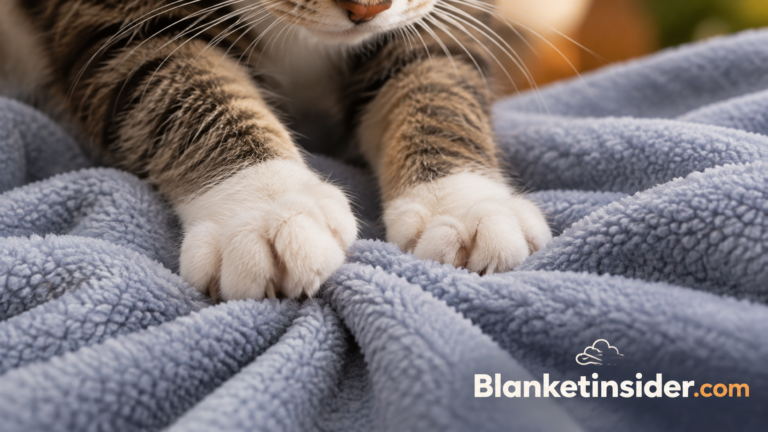
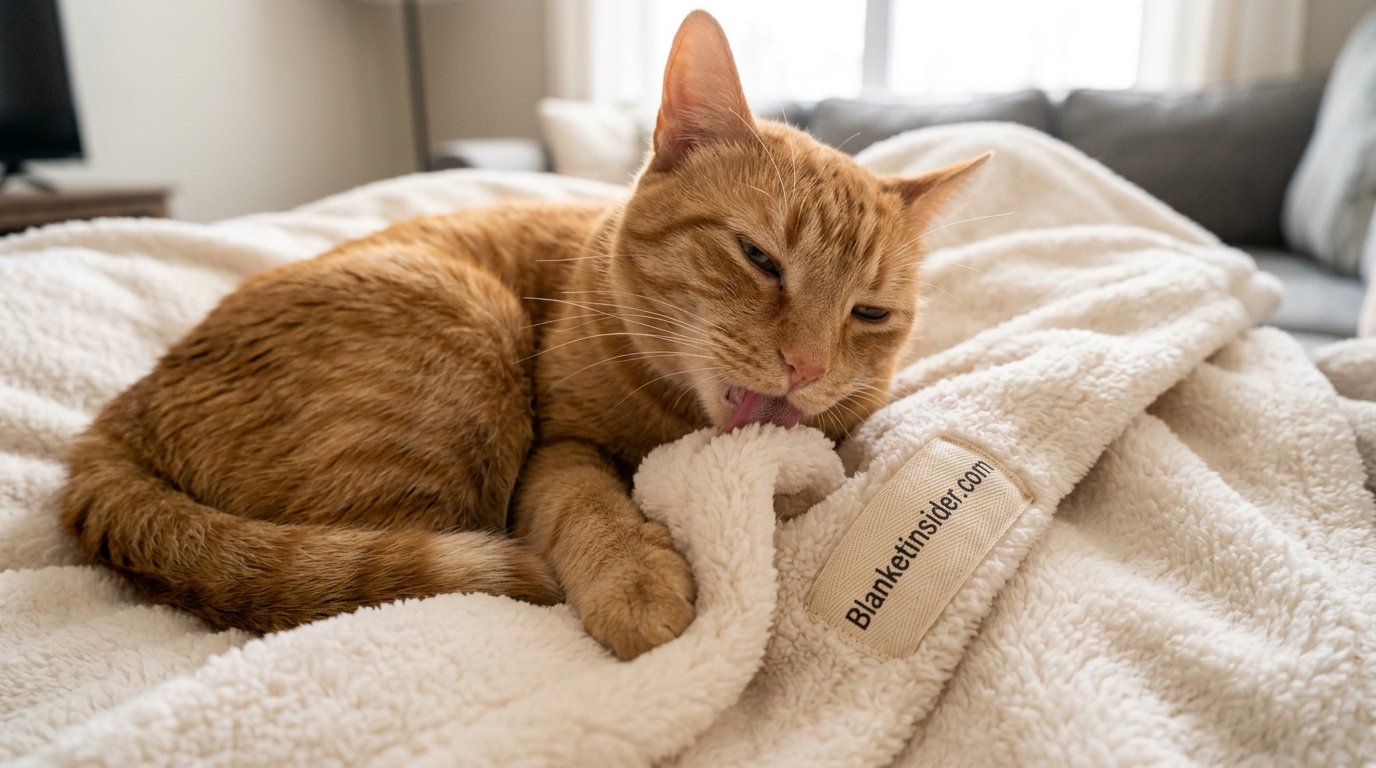
If you’ve caught your cat rhythmically licking your comforter, throw, or favorite fleece — kneading it, purring, maybe even drooling a little — you’re watching one of the most common (and most misunderstood) feline habits. Here’s what’s actually going on, when it’s harmless, and when it’s worth a closer look.
Cats lick blankets for a surprisingly wide range of reasons, and almost none of them mean anything is wrong. In most cases it’s a leftover nursing behavior from kittenhood, a comfort ritual, or simply a fabric your cat finds irresistibly soft against their tongue. But licking can occasionally point to stress, an underlying medical issue, or even a nutrient gap — which is why it’s worth understanding the full picture rather than dismissing it as “just a weird cat thing.”
This guide walks through every common (and uncommon) explanation, how to tell the difference between a harmless habit and something that needs attention, and what you can actually do about it if the licking is getting excessive, destructive, or is keeping you up at 2 a.m.
1. The Short Answer: Why Cats Lick Blankets
At the most basic level, blanket-licking is a self-soothing behavior that traces back to nursing. Cats knead and lick soft materials because the motion, texture, and rhythm mimic nursing on their mother — an action wired into the brain as safe, comforting, and pleasurable. Layer on top of that a cat’s naturally strong grooming instinct, sensitivity to texture and fabric, and tendency to mark objects with scent glands in the cheeks and paws, and you get a behavior with several overlapping causes rather than one single explanation.
None of these explanations are mutually exclusive, and figuring out which one (or which combination) applies to your own cat usually comes down to paying attention to timing, body language, and intensity rather than the licking itself. A cat licking slowly with half-closed eyes on a quiet Sunday afternoon is telling a very different story than a cat licking frantically at 3 a.m. after a stressful week — even though from a distance, both look like “the same behavior.”
The most common reasons, roughly in order of how often they show up in behavior consultations, are:
- Leftover nursing/weaning instinct — the most frequent explanation, especially in cats licking combined with kneading.
- Comfort and self-soothing — licking a familiar blanket lowers stress hormones and triggers a calming feedback loop.
- Scent marking — depositing pheromones to make an object smell like “home.”
- Redirected grooming instinct — an overflow of the same behavior cats use to groom themselves and bonded companions.
- Texture or fabric attraction — fleece, minky, and chenille mimic fur and trigger licking.
- Stress, anxiety, or boredom — repetitive licking as a coping mechanism.
- Attention-seeking — a learned behavior if licking reliably gets a reaction from you.
- Nutritional gaps or pica — less common, but worth ruling out for excessive fabric-directed licking or chewing.
- Underlying medical issues — dental pain, gastrointestinal discomfort, or compulsive disorders in rare cases.
The rest of this guide breaks down each of these in detail, plus how to tell when licking has crossed from “quirky habit” into “worth a vet visit.”
One thing worth keeping in mind before diving in: cats rarely have a single, isolated reason for any repeated behavior. A cat that licks a blanket while purring and kneading is often expressing comfort, nursing instinct, and scent-marking all at the same time — the behaviors overlap and reinforce each other rather than competing for one “correct” explanation. That’s part of why the same habit can look almost identical in two different cats for two very different underlying reasons, and why context (when it happens, how intense it is, what else is going on) matters more than the licking itself.
2. It’s Rooted in Kittenhood: Nursing and Weaning Behavior
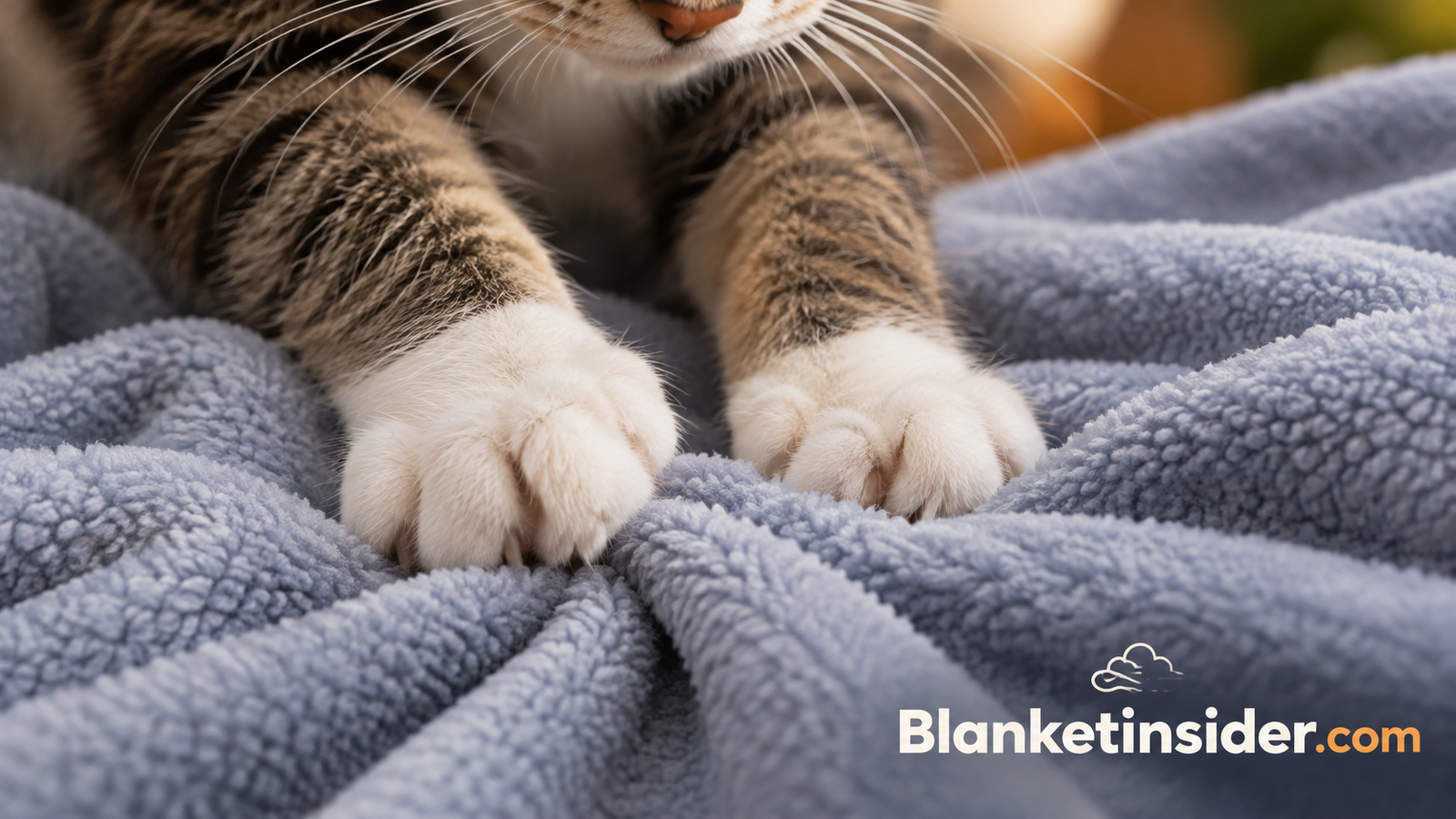
Most behaviorists agree the single biggest driver of blanket licking is a carried-over nursing instinct. Kittens knead their mother’s belly with their paws to stimulate milk flow, and they often lick and suckle at the same time. This combination — paw, mouth, rhythm, warmth, softness — becomes deeply associated with safety, comfort, and food in the first weeks of life.
When a kitten is weaned too early (generally considered anything before 8–10 weeks), this association can become even stronger and more likely to persist into adulthood, because the natural transition away from nursing behavior was cut short. Cats that were orphaned, bottle-fed, or separated from their mother and littermates early are statistically more likely to knead and lick soft objects as adults, treating a blanket as a stand-in for the comfort they didn’t get to finish outgrowing naturally.
You’ll often see this instinct paired with:
- Rhythmic kneading with the front paws (“making biscuits”)
- Purring or a relaxed, half-closed-eye expression
- Sucking or chewing at a corner of fabric, not just licking
- A preference for one specific blanket, sweater, or stuffed toy over others
This version of the behavior is almost always harmless. It tends to show up most during quiet, relaxed moments — right before a nap, after a meal, or when a cat is settling in for the night — and it’s one of the clearest examples of a purely comfort-driven habit rather than a warning sign.
Interestingly, this instinct doesn’t fade evenly across a cat’s life. Some cats grow out of kneading and licking almost entirely by adulthood, while others carry it forward as a lifelong comfort ritual that resurfaces mainly during transitions — a move, a new roommate, the arrival of a new pet. If your cat suddenly starts kneading and licking again after months or years without it, that’s usually a sign they’re processing some kind of change in their environment, not a cause for concern on its own.

3. Comfort, Security, and Self-Soothing
Beyond the nursing connection, licking a blanket is simply relaxing for a cat — in the same way some people twirl their hair or tap a pen. The repetitive motion of the tongue against soft fabric appears to trigger a mild endorphin release, and the familiar scent of a well-used blanket (which by now smells like the cat, the household, and safety) reinforces the behavior every time.
This is why blanket-licking so often clusters around specific triggers: right after you leave for work, during a thunderstorm, when a new pet or person enters the home, or simply during a quiet stretch of the afternoon. The blanket becomes a portable “safe zone” the cat can return to whenever the environment feels slightly unpredictable.
Cats that are especially attached to routine or that were rehomed, adopted from a shelter, or moved recently tend to lean on this behavior more heavily while they settle in, sometimes for weeks or even a few months before the new environment starts to feel fully familiar. It’s very similar to the comfort-object behavior seen in some dogs and even in young children — the object itself isn’t magic, but the consistency and familiarity are what matter. If you’re building out a calmer space for an anxious cat, pairing a blanket chosen specifically for anxious pets with a consistent daily routine tends to work better than the blanket alone.
Signs it’s healthy comfort-seeking
- Happens during calm, predictable moments
- Cat is easily distracted away from it
- No hair loss, skin irritation, or weight change
Signs it’s tipping into a problem
- Licking increases dramatically after a stressful event
- Cat seems unable to stop or settle
- Accompanied by other new anxious behaviors
It also helps to think about where the blanket lives, not just what it’s made of. A cat that licks a blanket tucked into a quiet corner, cat tree shelf, or covered bed is usually doing so as part of a deliberate wind-down ritual. The same behavior aimed at a blanket on a busy couch, in the middle of a high-traffic hallway, or somewhere the cat gets interrupted often, is more likely tied to trying to create a pocket of calm in an otherwise unpredictable spot.
4. Scent Marking and Territory
Cats have scent glands concentrated in their cheeks, chin, paw pads, and around the mouth. Licking, rubbing, and kneading an object all deposit small amounts of these pheromones, which is one reason cats “claim” furniture, doorframes, and blankets so persistently. A blanket that’s licked regularly ends up saturated with a cat’s own scent signature, which — from the cat’s perspective — makes it more valuable and more reassuring to return to.
This scent-marking function overlaps heavily with comfort-seeking, but it explains a few specific patterns: why cats often prefer a blanket that already smells like them (or like you) over a brand-new one straight out of the packaging, why multi-cat households sometimes see mild “blanket disputes” over a favorite piece, and why a freshly washed blanket may briefly get less attention until the cat re-marks it. If you rotate blankets for hygiene, giving a new one a few days near the cat’s usual resting spot before fully swapping it in can ease the transition.
This is also why a blanket that smells like you specifically — a sweatshirt, an old t-shirt, or a throw kept on your side of the bed — often becomes a cat’s favorite licking target over anything else in the house. From a cat’s perspective, an object that already carries a trusted, familiar scent needs less “work” to feel safe than something new, which is part of why moving or unpacking after a move so often comes with a noticeable uptick in licking and rubbing on whatever soft items made the trip along with the cat.

5. Grooming Instinct Carried Over to Objects
Cats are meticulous groomers, spending a significant portion of their waking hours licking their own coat or grooming bonded companions (a behavior called allogrooming). That instinct doesn’t always stay confined to fur — it can spill over onto soft, fur-like textures nearby, including blankets, stuffed animals, and even a person’s hair or sleeve.
This is especially common in cats that are highly bonded to their owner or to another pet in the home. A cat that grooms you or a companion animal regularly is simply applying the same instinct to your blanket when you’re not directly available — it’s often described by behaviorists as a form of “displaced” or “redirected” grooming. It tends to look gentle and rhythmic, similar to how a cat licks another cat, and it’s rarely accompanied by any sign of distress.
You may also notice this behavior increases after a change in the household’s social dynamic — a companion cat passing away, a housemate moving out, or even just a shift in your own schedule that means less lap time together. In these cases, the blanket essentially becomes a stand-in grooming partner, filling a gap left by reduced social contact. Adding a bit more one-on-one time, even just a few extra minutes of brushing or petting, often softens this version of the habit.

6. Texture and Fabric Preference (Why Some Blankets Get Licked More)
Not all blankets are equally “lickable” from a cat’s point of view. Fabrics with a soft, slightly nappy surface — the kind that mimics the feel of fur or a mother cat’s coat — tend to attract far more licking and kneading than smooth, tightly woven fabrics like cotton percale. This is one reason the exact same cat might obsessively lick a fleece throw while completely ignoring a linen bedspread two feet away.
Here’s how common blanket materials compare for cats who are prone to licking and kneading:
| Fabric | Lick/Knead Appeal | Durability vs. Claws & Teeth | Best For |
|---|---|---|---|
| Sherpa | Very high | Moderate — snags can pull | Cats who like a “fur-like” texture |
| Minky | Very high | Good — dense pile resists snags | Heavy kneaders and lickers |
| Fleece | High | Good, budget-friendly | Everyday rotation, easy washing |
| Chenille | Moderate–high | Lower — loops can catch claws | Calmer cats, decorative throws |
| Cotton knit/waffle | Moderate | Very good | Cats who lick but don’t shred |
| Wool | Low–moderate | Good | Cats less prone to licking, allergy-prone owners |
| Smooth cotton/percale | Low | Excellent | Guest bedding you want left alone |
If your cat has clearly picked a favorite, it’s usually more effective to lean into that preference with a dedicated cat blanket in a similar fabric than to fight it. Giving a cat their “own” version of the texture they’re drawn to — placed on their bed, a favorite chair, or a window perch — often reduces how much attention they pay to your comforter or couch throw.
Weight and pile density matter too. A thin, tightly woven throw doesn’t give a cat’s tongue and paws much to grip or knead into, while a plush, deep-pile fabric offers more resistance and a more satisfying sensation — closer to what their claws and tongue would experience against fur. This is part of why a heavier plush or sherpa-style blanket often outperforms a lightweight cotton one when it comes to holding a cat’s attention.
7. Stress, Anxiety, and Compulsive Licking
While most blanket licking is comfort-driven, it can shift into a stress response when a cat’s environment changes suddenly or when anxiety builds without an outlet. Common triggers include moving to a new home, a new pet or baby in the household, a change in routine or work schedule, construction noise, or conflict with another cat in a multi-cat home.
The key difference between comfort-licking and stress-licking is intensity and context. Stress-related licking tends to be more frantic, harder to interrupt, and paired with other anxious behaviors — hiding more than usual, over-grooming their own coat to the point of bald patches, changes in appetite, or increased vocalization. In more extreme or long-standing cases, licking can develop into a compulsive behavior similar to wool-sucking, which is seen more frequently in certain breeds (Siamese and other Oriental breeds are commonly cited) but can occur in any cat.
If licking has clearly escalated alongside a specific life change, addressing the underlying stressor — more vertical space, a consistent routine, a slower introduction to a new pet — usually helps more than trying to stop the licking directly.
A calming, familiar object can genuinely help during a stressful transition. Some owners find success pairing a consistent weighted blanket, sized appropriately for a small pet, with a quiet, low-traffic resting spot, since the gentle pressure can have a similar grounding effect to swaddling.
It’s also worth tracking how long stress-related licking has been going on. A brief uptick around a single stressful week — a loud storm, a vet visit, a weekend of houseguests — usually resolves on its own once things return to normal. Licking that persists for weeks after the trigger has passed, or that seems to have no clear trigger at all, is a stronger signal that the underlying anxiety needs a more deliberate plan, whether that’s more environmental enrichment, a calmer daily routine, or in some cases a conversation with your vet about anti-anxiety support.

8. Attention-Seeking Behavior
Cats are quick learners when it comes to cause and effect. If licking a blanket reliably gets a reaction from you — even a mildly annoyed “hey, stop that” — some cats will repeat the behavior simply because it works. This is especially likely if the licking tends to happen when you’re on the phone, working, or otherwise distracted, and it stops the moment you give the cat direct attention, a treat, or playtime.
This isn’t the cat being “manipulative” in a human sense; it’s straightforward operant learning. The fix isn’t to punish the behavior (which rarely works well with cats and can damage trust) but to make sure the cat’s attention and play needs are being met proactively, so blanket-licking stops being the most efficient way to get a response. A few short, scheduled play sessions a day, plus consistent attention at predictable times, usually reduces this version of the habit within a couple of weeks.

9. Nutritional Deficiencies and Pica
Pica — the compulsion to lick, chew, or eat non-food items — is a less common but real explanation for persistent fabric licking, especially when it extends beyond blankets to plastic bags, wool, cardboard, or houseplants. While the exact cause of pica isn’t always clear, it’s been loosely associated with dietary gaps (particularly fiber), early weaning, boredom, and in some cases underlying gastrointestinal or dental issues that make a cat seek out unusual sensations or oral stimulation.
Pica is worth taking seriously mainly because of the physical risk: cats that progress from licking to chewing and swallowing fabric can develop a linear foreign body obstruction, which is a genuine medical emergency. If your cat is licking a blanket so intensely that fibers are being pulled loose, swallowed, or the fabric is visibly damaged, that’s different from casual comfort-licking and deserves a vet conversation about diet, enrichment, and ruling out contributing medical causes.
Diet quality and feeding schedule can play a supporting role here as well. Cats fed infrequent, large meals sometimes show more oral-fixation behaviors than cats on a more consistent grazing or multiple-small-meal schedule, simply because there’s more downtime between feelings of hunger and satisfaction. This doesn’t mean every food-motivated blanket-licker has a deficiency, but it’s a reasonable, low-effort variable to adjust before assuming something more serious is going on.

10. Medical and Health-Related Causes
Occasionally, blanket licking that seems to come out of nowhere — especially in an older cat, or one with no prior history of the behavior — is linked to an underlying medical issue rather than pure behavior. Dental pain, mouth ulcers, or nausea from gastrointestinal problems can all cause cats to lick and chew at objects as a form of self-soothing or oral fixation, similar to how some people chew gum when queasy. Hyperthyroidism, which is common in older cats, can also increase general restlessness and oral behaviors.
Skin conditions are another possibility, but they typically show up as licking directed at the cat’s own body rather than a blanket. That said, a cat in mild discomfort anywhere in the body may seek out a soft surface more often simply because lying still on something comfortable feels better than moving around.
Medical causes are far less common than behavioral ones, but they’re worth ruling out any time licking appears suddenly, escalates quickly, or is paired with other new symptoms like appetite changes, weight loss, bad breath, vomiting, or lethargy.
Age is a useful piece of context here too. A kitten or young adult cat that has always licked blankets is almost certainly displaying normal, instinct-driven behavior. A senior cat that develops the habit for the first time, especially alongside subtle changes like drinking more water, sleeping differently, or grooming less overall, is a better candidate for a full veterinary workup, since older cats are more prone to the thyroid and dental issues that can drive this kind of behavior.

11. When to Worry: Signs You Should See a Vet
Most blanket licking is completely normal and doesn’t need any intervention beyond maybe giving your cat their own dedicated blanket. That said, a handful of warning signs suggest it’s time to loop in a veterinarian rather than waiting it out:
- Licking has become constant, frantic, or hard to interrupt even with distraction
- Your cat is swallowing or has swallowed pieces of fabric or thread
- The behavior started suddenly with no clear trigger, especially in a middle-aged or senior cat
- Signs of oral pain: pawing at the mouth, drooling, reluctance to eat hard food
- Accompanying symptoms like vomiting, diarrhea, weight loss, or lethargy
- New bald patches or skin irritation from excessive self-grooming alongside the blanket licking
- The behavior is paired with clear signs of anxiety that aren’t improving with environmental changes
A vet visit for excessive licking typically starts with ruling out dental disease, gastrointestinal issues, and thyroid problems, then moves into a behavioral conversation if physical causes are ruled out. This is also when a referral to a veterinary behaviorist becomes useful for compulsive or anxiety-driven cases that don’t respond to basic environmental changes.
It can help to keep a simple log for a week or two before your appointment — when the licking happens, how long it lasts, what seems to trigger or interrupt it, and any other behavior changes you’ve noticed. This kind of pattern data is often more useful to a vet or behaviorist than a single description of “my cat licks blankets a lot,” since it helps separate a habit that’s simply frequent from one that’s genuinely escalating.

12. How to Redirect or Manage the Behavior
If the licking itself isn’t a health concern but you’d rather it not be aimed at your good bedding, the goal isn’t to eliminate the behavior — it’s a normal part of being a cat — but to redirect it somewhere more convenient for both of you.
Practical steps that tend to work
- Give them their own blanket. Choose a texture they’re clearly drawn to (fleece, sherpa, or minky) and place it on their bed, a favorite chair, or a sunny window spot.
- Keep a backup for rotation. Having two of the same blanket means one can be in the wash while the “claimed” one stays available.
- Increase play and enrichment. A few short daily play sessions reduce boredom-driven and attention-seeking licking.
- Avoid punishment. Yelling or spraying water rarely stops the behavior and can add stress, which sometimes makes licking worse.
- Address obvious stressors. New pets, moves, and schedule changes are worth easing into gradually rather than all at once.
- Watch for escalation. If licking turns into chewing and swallowing fabric, swap the blanket for something more durable and mention it to your vet.
Pros of letting it continue (in moderation)
- Genuinely comforting and low-risk for most cats
- Costs nothing to accommodate with a dedicated blanket
- Can strengthen the bond and routine between you and your cat
Cons if left unmanaged
- Can damage or wear out good bedding over time
- Risk of fabric ingestion if licking turns into chewing
- May mask an underlying stressor or medical issue if ignored

Frequently Asked Questions
Is it normal for a cat to lick a blanket every single day?
Why does my cat lick and then suck on the blanket?
Should I take the blanket away if my cat won’t stop licking it?
Why does my cat only lick one specific blanket and ignore others?
Can blanket licking be a sign of separation anxiety?
Is it bad for cats to eat blanket fibers?
Why did my cat suddenly start licking blankets out of nowhere?
Do certain cat breeds lick blankets more than others?
Will getting my cat a “cat blanket” actually stop them from licking mine?
Is kneading and licking together always related to nursing instinct?
Can neutering or spaying change this behavior?
Should I be worried if my cat licks blankets more when I’m away?
The Bottom Line
Licking a blanket is, in the vast majority of cases, a completely normal and even endearing feline habit — a mix of leftover nursing instinct, comfort-seeking, scent marking, and simple texture preference. The behavior only becomes a real concern when it turns frantic, involves swallowing fabric, or shows up alongside other signs of stress or illness. For everyday licking and kneading, the easiest fix is also the simplest: give your cat a soft, washable blanket that’s entirely their own, and let them enjoy one of the most catlike things a cat can do.
Shop Cat-Friendly Blankets on Amazon