
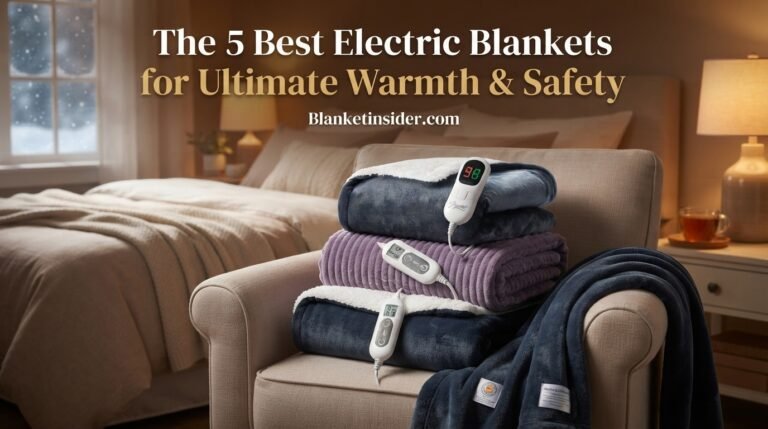
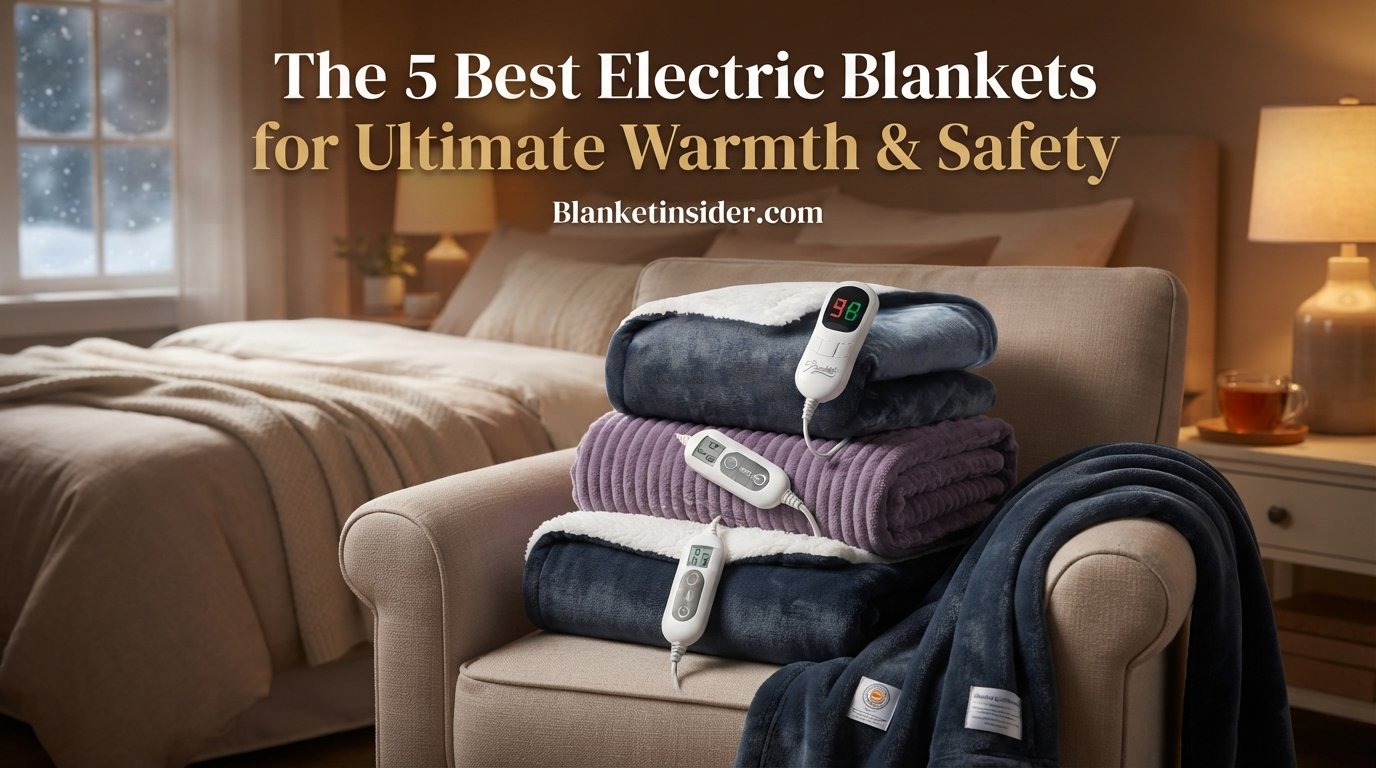
The 5 Best Electric Blankets for Ultimate Warmth & Safety
Chilly nights and cold sheets are a thing of the past. We’ve tested dozens of models to find the coziest, safest, and most reliable electric blankets on the market. Get ready to discover your new favorite winter companion that provides therapeutic warmth, energy savings, and complete comfort during cold winters and chilly bedroom nights.
There are few simple pleasures as satisfying as slipping into a pre-warmed bed on a cold winter night. An electric blanket (also called an electric throw, warming blanket, or bed warmer) is more than just a cozy accessory; it’s a ticket to deep, comfortable sleep and a significant energy saver, allowing you to turn down the thermostat and heat yourself instead of the whole room. Modern heated blanket technology has advanced significantly, with features like carbon fiber heating wires, advanced temperature regulation, and smart energy-saving modes. But with so many options, materials, and safety claims, choosing the right one can be overwhelming.
That’s where we come in. At Blanket Insider, we’re obsessed with comfort and safety. We’ve spent over 60 hours researching, testing, and snuggling with the top-rated electric blankets available today. We’ve evaluated everything from heat distribution and wire thinness to material softness and controller usability. This comprehensive guide is the result of our hands-on experience, designed to help you invest in a blanket that will keep you warm and safe for years to come while potentially providing therapeutic benefits and reducing your heating costs.
Modern Electric Blanket Technology: What’s Changed?
Today’s electric blankets are far safer and more efficient than older models. Most now use advanced microwire or carbon fiber heating elements that are thinner, more flexible, and distribute heat more evenly than the bulky wires of the past. Many feature Mylar insulation and low-voltage systems that minimize electromagnetic field (EMF) exposure. Smart controllers with precise temperature regulation, auto-shutoff timers, and even smartphone connectivity have become standard. These technological advancements mean better safety, improved energy efficiency, and enhanced comfort for users seeking warmth in drafty rooms, cold climates, or for specific therapeutic needs like arthritis pain relief.
Electric Blanket vs. Other Heating Solutions: A Complete Comparison
When the temperature drops, you have several options for staying warm at home. Understanding the differences between electric blankets, heated mattress pads, heated throws, space heaters, and traditional blankets can help you make the smartest investment for your comfort and your wallet. Each heating solution has distinct advantages and ideal use cases, and the best choice depends on your living situation, health needs, and personal preferences.
Electric Blanket vs. Heated Mattress Pad
While these two products sound similar, they serve different purposes and offer distinct advantages:
- Electric Blankets lay on top of your body and provide direct radiant warmth to your skin. They are versatile enough to use on the couch, in bed, or even outdoors in an enclosed patio. They can be used as an extra layer of bedding or as a standalone warming solution. Electric blankets are also easier to remove and use in different locations throughout your home.
- Heated Mattress Pads go beneath your fitted sheet and warm the bed from below. This creates a more enveloping, “wrapped in warmth” sensation because heat rises from below and around you. Many sleep experts actually prefer mattress pads because they deliver more even heat distribution across the entire sleeping surface and don’t shift or fall off during the night.
- Key Difference: If you toss and turn or kick off covers at night, a heated mattress pad stays in place. If you want to move your warmth from the bedroom to the living room, an electric blanket is the clear winner.
Electric Blanket vs. Space Heater
This comparison often comes down to efficiency and targeted heating:
- Energy Consumption: An electric blanket uses 50-150 watts. A standard space heater uses 750-1500 watts. That means a space heater consumes roughly 10 to 30 times more electricity than an electric blanket. Over a winter season, this difference translates to substantial savings on your utility bill.
- Heating Area: Space heaters warm an entire room (albeit unevenly), which is useful if multiple people are present. Electric blankets heat only the person using them, making them ideal for personal comfort without wasting energy on empty space.
- Safety Profile: Electric blankets, when used properly and certified by ETL or UL, are generally considered safer than space heaters. Space heaters are a leading cause of home fires during winter months. Electric blankets have a much lower fire risk profile when used according to manufacturer guidelines.
- Best Strategy: Many energy-conscious households use a combination approach — a space heater set low to take the edge off room temperature, paired with an electric blanket for personal warmth. This dual approach lets you keep the thermostat very low while staying perfectly comfortable.
Electric Blanket vs. Regular Blanket or Comforter
Traditional blankets provide insulation by trapping your body heat, while electric blankets generate their own heat through internal heating elements. Here’s how they compare:
- Warm-Up Time: A regular comforter can take 15-20 minutes to warm up with your body heat alone. An electric blanket can pre-warm your bed in 3-10 minutes before you even get in.
- Temperature Control: You can’t adjust the warmth of a regular blanket. Electric blankets offer multiple heat levels, letting you dial in the precise temperature that’s comfortable for you.
- Cost Over Time: Regular blankets have no operating cost but may require you to run your heating system more. Electric blankets have a minimal operating cost (often under $0.15/night) but may reduce your overall heating bill by allowing lower thermostat settings.
- Layering Strategy: For optimal warmth and efficiency, many sleep experts recommend placing a regular blanket or comforter on top of your electric blanket. The top layer traps the generated heat, reducing energy consumption and creating a more consistent warmth envelope.
How Electric Blankets Work: Understanding the Technology
Understanding how your electric blanket generates and distributes heat can help you use it more effectively, spot potential problems early, and make an informed purchasing decision. Modern electric blankets are surprisingly sophisticated pieces of technology, combining textile engineering with electrical safety systems that were unimaginable just a few decades ago.
The Heating Element: The Heart of Every Electric Blanket
Inside your electric blanket, between the fabric layers, runs a network of thin heating wires or elements. These elements are arranged in a specific pattern (usually serpentine or grid-like) to ensure even heat distribution across the entire blanket surface. The type of heating element used is one of the most important factors in determining a blanket’s performance, safety, and longevity.
Carbon Fiber Heating Elements: Found in premium models like the Homemate and Westinghouse blankets on our list, carbon fiber elements represent the latest advancement in blanket heating technology. Carbon fiber is naturally flexible, extremely durable, and heats very evenly. It produces virtually no electromagnetic fields (EMF) and is resistant to breaking or fraying even after years of use and repeated washing cycles. Carbon fiber elements also warm up faster than traditional wire options and maintain more consistent temperatures across the blanket surface.
Microwire Technology: Used in blankets like the GOTCOZY, microwire heating elements are incredibly thin — often thinner than a human hair. This makes them virtually undetectable to the touch, which is a significant comfort advantage. Microwire elements are typically made from a resistance alloy encased in a thin, flexible insulation. They heat quickly and evenly, and their thin profile means you won’t feel any bumps or ridges through the fabric.
Traditional Nichrome Wire: Older or budget models may still use nichrome (nickel-chromium) wire heating elements. While effective, these wires are thicker and can sometimes be felt through the fabric, creating an uneven sleeping surface. They are also more prone to breakage over time, especially if the blanket is repeatedly folded along the same creases. If you’re considering a budget option, check user reviews specifically for comments about wire durability.
The Controller: Your Command Center
The controller is the brain of your electric blanket. It regulates the flow of electricity to the heating elements based on your selected temperature setting. Modern controllers use one of two temperature regulation methods:
Thermostat-Based Controllers use a built-in temperature sensor (often an NTC thermistor) to continuously monitor the blanket’s temperature. When the blanket reaches your selected temperature, the controller reduces or cycles the power to maintain that level. This provides precise, consistent temperature control and is more energy-efficient than simple variable resistance systems. Most blankets on our top 5 list use this approach.
Variable Resistance Controllers simply limit the flow of electricity to reduce heat output. These are less precise — the blanket’s temperature will vary based on room temperature, how much of the blanket is folded, and other factors. They are simpler and cheaper to manufacture but provide a less consistent warming experience.
For dual-zone blankets designed for queen or king beds, the controller will have two separate channels, each with its own temperature sensor and adjustment controls. This allows each side of the bed to be set to different temperatures, which is invaluable for couples with different warmth preferences.
Safety Systems: Multiple Layers of Protection
Modern electric blankets incorporate several redundant safety systems that work independently to prevent overheating and electrical hazards:
- Primary Overheat Protection: A thermal cutoff fuse is built into the heating circuit. If the blanket’s temperature exceeds a safe threshold (typically 135-150°F), this fuse permanently cuts power to the heating elements. This is a one-time safety device that requires professional service to replace.
- NTC Temperature Monitoring: Advanced blankets use Negative Temperature Coefficient (NTC) thermistors that continuously monitor temperature and communicate with the controller to adjust power output in real time.
- Auto-Shutoff Timers: Programmable timers automatically turn off the blanket after a set period, preventing the blanket from running indefinitely. This protects against both overheating and unnecessary energy consumption.
- Short Circuit Protection: Modern controllers include circuit protection that detects abnormal current flow (such as from damaged wires) and immediately cuts power.
How to Choose the Right Electric Blanket for Your Needs
With so many electric blankets on the market, choosing the right one requires careful consideration of your specific circumstances. The perfect blanket for a college student in a drafty dorm room is very different from the ideal choice for an elderly couple managing arthritis pain in a spacious bedroom. This section will walk you through the key decision factors to help you find your ideal match.
Consider Your Primary Use Case
For Bed Use (Overnight Sleeping)
If your primary goal is to stay warm while sleeping, you’ll want a blanket with an extended timer (8+ hours or a continuous low-heat mode), low EMF output, and a quiet controller that won’t disturb light sleepers. A larger size that covers your entire bed (twin, queen, or king) is ideal. The Westinghouse Electric Blanket Twin is specifically designed for this purpose with its 12-hour timer and zone heating. Heated mattress pads are also worth considering for bed use, as they stay in place throughout the night and provide consistent warmth from below.
For Couch and Living Room Use
A heated throw blanket is perfect for couch use. Look for a throw-sized model (typically 50″ x 60″) with a shorter timer (3-6 hours), multiple heat levels, and a soft, attractive material since it will be visible in your living space. The GOTCOZY Electric Blanket with its luxurious faux fur exterior doubles as a beautiful decorative throw when not in use. Portability matters here — you want something lightweight enough to carry from room to room or even take to outdoor events in cooler weather.
For Therapeutic Pain Relief
If you’re seeking an electric blanket primarily for arthritis, muscle pain, fibromyalgia, or circulation issues, look for models with consistent, even heat distribution and multiple temperature settings. Even heat is crucial for therapeutic use because hot spots could cause discomfort or burns on sensitive areas. Carbon fiber heating elements (like those in the Homemate or Westinghouse models) tend to provide the most even heat. Multiple temperature settings let you fine-tune the warmth to your comfort level for pain management. Always consult your healthcare provider before using heat therapy for medical conditions.
For Cold Climates and Drafty Homes
Living in a cold climate or a poorly insulated home means you need a blanket that heats effectively and efficiently. Higher wattage blankets (100-150W) reach higher temperatures and heat faster. Look for models with at least 8-10 heat levels so you have flexibility when temperatures drop significantly. The ability to use a blanket on high heat initially and then dial it back to a comfortable maintenance level is essential. Consider a full-sized bed blanket rather than a throw for maximum coverage. Layering your electric blanket under a thick comforter will trap heat more effectively and reduce energy consumption.
For RV and Camping Use
RV and camping enthusiasts need an electric blanket that runs on low wattage (ideally under 100 watts) since many campsites and RV hookups have limited power capacity. Throw-sized blankets are more practical for camping than full bed-sized models. Look for models that are lightweight, packable, and durable enough to handle being folded and transported frequently. USB-powered heated blankets are an emerging category for camping, though they typically provide less heat than standard AC-powered models.
For Dorm Rooms and Small Apartments
College students and small apartment dwellers often deal with inefficient heating systems and cold rooms. A versatile electric throw that can be used both in bed and at a study desk is ideal. Look for affordable models with good safety certifications, compact controllers that don’t take up desk space, and energy-efficient operation since electricity costs may be a concern. The Shodu Electric Blanket’s combination of extensive features at an affordable price makes it particularly attractive for budget-conscious students.
For Elderly Users
When selecting an electric blanket for elderly users, simplicity and safety are paramount. Look for models with large, clearly labeled controls, simple operation (fewer buttons are better), and long timer options that don’t require frequent adjustment. Lightweight blankets are easier for elderly individuals to handle. The Bedsure Heated Blanket’s intuitive controls and lightweight design make it particularly well-suited for older adults. Always ensure the blanket has robust safety features including overheat protection and automatic shut-off. Consider models with low EMF output as an extra precaution.
Understanding Temperature Settings and Heat Levels
The number of heat levels an electric blanket offers directly impacts your ability to find your ideal comfort temperature. Here’s a general guide to what different heat level ranges offer:
- 2-3 Heat Levels (Low/Medium/High): Basic control. You’ll likely find one setting too cool and the next too warm. Adequate for occasional use but limiting for daily reliance.
- 4-6 Heat Levels: Good range for most users. Provides enough variety to adjust for different room temperatures and personal preferences. The Bedsure with 6 levels and the GOTCOZY with 4 levels fall into this category.
- 8-10 Heat Levels: Excellent precision. Ideal for users who know exactly what temperature they prefer, for couples with different preferences on dual-zone models, or for therapeutic use where precise warmth control matters. The Homemate (10 levels), Shodu (8 levels), and Westinghouse (10 levels) all offer this range.
Keep in mind that “maximum temperature” varies between manufacturers. Some blankets max out at around 110-115°F, while others can reach 130-140°F. If you live in an extremely cold climate, check the maximum temperature specification before purchasing.
Electric Blanket Myths vs. Facts
There are many misconceptions about electric blankets that persist from outdated information about older models. Let’s set the record straight on some common myths:
- Myth: Electric blankets cause fires.
Fact: Modern certified electric blankets have extremely low fire risk when used according to manufacturer instructions. The vast majority of electric blanket fires involve older blankets (10+ years old) that were recalled, damaged, or improperly used. UL and ETL certified blankets undergo rigorous safety testing, including fire resistance tests. - Myth: Electric blankets are bad for your health.
Fact: Modern low-EMF electric blankets are considered safe for the vast majority of healthy adults. While excessive heat should be avoided during pregnancy, and those with certain medical conditions should consult a doctor, there is no scientific evidence that properly functioning modern electric blankets pose health risks to healthy individuals. - Myth: You can’t wash electric blankets.
Fact: Most modern electric blankets are fully machine washable. The heating elements are designed to withstand regular washing cycles when you follow the manufacturer’s care instructions. (See our detailed washing guide below.) - Myth: Electric blankets will dry out your skin.
Fact: While any heat source can reduce humidity, electric blankets themselves don’t significantly affect skin moisture. If you experience dry skin in winter, it’s more likely due to your home’s overall heating system reducing indoor humidity. A humidifier in your bedroom is a better solution than avoiding an electric blanket. - Myth: You should leave your electric blanket on all night.
Fact: While modern blankets with auto-shutoff timers and overheat protection are safe for overnight use, energy efficiency experts recommend pre-heating your bed for 15-30 minutes before sleep, then either turning the blanket off or using the lowest comfortable setting. This approach saves energy and is perfectly comfortable because your regular bedding traps the residual warmth. - Myth: Electric blankets use a lot of electricity.
Fact: Most electric blankets use 50-150 watts — less than a standard light bulb. Running one for 8 hours typically costs less than $0.15 per night. They’re one of the most cost-effective heating solutions available and can reduce your overall heating bill by allowing lower thermostat settings. - Myth: Old electric blankets work just as well as new ones.
Fact: Electric blankets have a recommended lifespan of about 5-10 years. Older blankets may have degraded insulation, damaged wires, and lack modern safety features like NTC temperature monitoring and automatic shut-off. Using an old, worn electric blanket is genuinely risky, and most fire safety organizations recommend replacing blankets that are more than 10 years old. - Myth: You can’t use an electric blanket with a memory foam mattress.
Fact: You can use an electric blanket with a memory foam mattress, but there are some considerations. Memory foam is heat-sensitive and softens when warm. Some manufacturers advise against using heated mattress pads directly on memory foam as this could affect the mattress’s support properties. An electric blanket on top of the bedding (not under you on the mattress) is generally safe with any mattress type.
How to Wash and Care for Your Electric Blanket
Proper care and maintenance are essential for keeping your electric blanket safe, clean, and functioning optimally for years. Improper washing or storage is the number one reason electric blankets fail prematurely or develop safety issues. Whether you’re dealing with everyday freshness maintenance or a deep seasonal clean, following the correct procedures will protect your investment. For a quick reference, see our dedicated guide on how to wash a heated blanket, but here’s the comprehensive breakdown:
Machine Washing Your Electric Blanket: Step by Step
Step 1 — Disconnect Everything: Before doing anything, unplug the blanket from the wall outlet and carefully detach the controller cord from the blanket. Many blankets have a detachable cord that simply pulls out. Never attempt to wash the blanket while it’s still connected to any electrical source.
Step 2 — Pre-Treat Stains: If you have any visible stains or spots, pre-treat them with a mild, bleach-free stain remover. Apply it gently and let it sit for 10-15 minutes. Avoid harsh chemicals or bleach, which can degrade both the fabric and the heating elements’ insulation.
Step 3 — Machine Settings: Place the blanket in a large-capacity washing machine (front-loading washers are ideal). Select the gentle or delicate cycle with cold or lukewarm water (no more than 85°F/30°C). Hot water can damage the heating elements and their protective insulation. Use a mild, liquid detergent — avoid powdered detergents, which can leave residue in the fabric and around wires.
Step 4 — Spin Cycle: Use a slow spin speed. Excessive spinning can stretch and stress the internal wiring. If your machine allows, select the gentlest spin option available.
Step 5 — Drying: This is where most people make mistakes. You have two safe options:
Option A — Air Dry: Lay the blanket flat on a clean surface or hang it over a drying rack (not a clothesline with clips, which can damage wires). This is the safest method and recommended by most manufacturers.
Option B — Machine Dry: If you must use a dryer, select the lowest heat setting or the air/fluff dry option with no heat. High heat can melt the wire insulation and cause irreversible damage. Remove the blanket while it’s still slightly damp and lay it flat to finish drying.
Important: Never wring, twist, or aggressively fold a wet electric blanket. The wires are most vulnerable when the blanket is saturated with water.
Spot Cleaning and Freshening Between Washes
You don’t need to machine wash your electric blanket every time it needs freshening. For routine maintenance:
- Spot Clean Spills Immediately: Use a damp cloth with mild soap to dab (don’t rub) any spills. Blot dry with a clean towel.
- Fabric Freshening Spray: A light mist of diluted white vinegar (1 part vinegar to 3 parts water) sprayed on the surface and allowed to air dry can neutralize odors without the need for washing.
- Surface Vacuuming: Use a handheld vacuum or upholstery attachment on low suction to remove pet hair, dust, and debris from the blanket surface without washing it.
- Sunlight Airing: On a dry, mild day, hang your blanket outdoors for 1-2 hours. UV light naturally kills bacteria and freshens fabrics. Avoid prolonged direct sunlight, which can fade colors over time.
Proper Storage During Off-Season
When warmer weather arrives and you no longer need your electric blanket, proper storage is critical for ensuring it works perfectly when cold weather returns:
- Clean Before Storing: Always wash the blanket before putting it away for the season. Body oils, skin cells, and dust can degrade fabric and insulation over long storage periods.
- Loosely Roll or Fold: Rather than folding the blanket tightly along the same creases (which can break internal wires), loosely roll it or fold it in alternating directions. Some experts recommend rolling rather than folding to minimize wire stress.
- Use a Breathable Storage Bag: Store in a cotton or canvas storage bag, not a plastic bin or vacuum-sealed bag. Plastic traps moisture, which can cause mildew and damage to electrical components. A breathable bag allows air circulation while protecting from dust.
- Store in a Cool, Dry Place: Avoid attics (extreme heat), basements (dampness), or anywhere with temperature extremes. A bedroom closet is ideal.
- Don’t Stack Heavy Items on Top: Heavy boxes or items stored on top of the blanket can compress and damage the heating elements over time.
- Inspect Before First Use Each Season: Before plugging in your blanket for the first time each fall, carefully inspect the entire blanket surface, power cord, and controller for any signs of damage, wear, discoloration, or rodent chewing (if stored in a garage or basement).
Electric Blanket Safety: A Comprehensive Deep Dive
Safety is the single most important consideration when purchasing and using an electric blanket. While modern certified blankets are remarkably safe when used correctly, understanding the safety landscape will help you make an informed decision and use your blanket with confidence for years to come.
Understanding Safety Certifications
When shopping for an electric blanket, you’ll encounter several safety certification marks. Here’s what each one means and why they matter:
UL (Underwriters Laboratories): UL is one of the oldest and most recognized independent safety testing organizations in the world. A UL mark on an electric blanket means the product has been tested to rigorous standards for electrical safety, fire resistance, and performance. UL testing includes checks for proper insulation, overheat protection functionality, and resistance to mechanical damage.
ETL (Intertek): ETL certification is equivalent in rigor to UL certification. Both are Nationally Recognized Testing Laboratories (NRTLs) accredited by OSHA. An ETL mark certifies that the product meets the same safety standards as UL-listed products. Many manufacturers choose ETL testing due to faster turnaround times, but the safety standards are identical. The Homemate and GOTCOZY blankets on our list both carry ETL certification.
FCC (Federal Communications Commission): FCC certification indicates that the product’s electromagnetic emissions are within limits set by the FCC. For electric blankets, this certification addresses the controller’s electronic components. While FCC certification is not a safety certification per se, it indicates that the product has been tested for electromagnetic compatibility.
OEKO-TEX Standard 100: This certification addresses textile safety rather than electrical safety. An OEKO-TEX Standard 100 certification means that every component of the blanket — fabric, thread, dyes, and accessories — has been tested for harmful substances and found safe for human contact. This is particularly important for those with sensitive skin, allergies, or chemical sensitivities. Several of our top picks, including models from GOTCOZY and Bedsure, carry OEKO-TEX certification.
What to Look For: At minimum, your electric blanket should carry either a UL or ETL mark. Both are equally valid indicators of electrical safety. For additional peace of mind, look for OEKO-TEX Standard 100 certification, especially if you have sensitive skin or chemical sensitivities. Never purchase an electric blanket that does not carry a UL or ETL certification.
Who Should Exercise Extra Caution?
While electric blankets are safe for most healthy adults, certain populations should take extra precautions or consult a healthcare provider before use:
- Pregnant Women: Elevated body temperature, especially during the first trimester, has been associated with certain developmental concerns. While an electric blanket at a moderate setting is unlikely to significantly raise core body temperature, many healthcare providers recommend using electric blankets cautiously during pregnancy — ideally at lower settings and with a timer that turns it off before deep sleep.
- People with Diabetes: Diabetic neuropathy can reduce sensation in the extremities, meaning a person might not notice if the blanket becomes too hot. If you have diabetes with nerve damage, use the blanket at a low setting and always check your skin for any signs of redness or irritation.
- People with Circulatory Conditions: Those with Raynaud’s phenomenon, peripheral artery disease, or other circulatory issues may find electric blankets therapeutic, but should start at low settings and monitor skin response carefully. Consult your vascular specialist for personalized advice.
- Infants and Very Young Children: Electric blankets are not recommended for infants or children who cannot safely operate the controls or communicate discomfort. For guidance on infant bedding safety, see our article on when a baby can sleep with a blanket. Instead, dress infants in appropriate sleepwear and maintain a comfortable room temperature.
- Elderly Individuals with Cognitive Impairment: Seniors with dementia or cognitive decline may not be able to reliably operate electric blanket controls or recognize if something is wrong. If you’re purchasing for an elderly loved one, consider a blanket with a simple, automatic controller and very robust safety features, and supervise initial use.
- Anyone with Reduced Heat Sensitivity: Certain neurological conditions, spinal cord injuries, or medications can reduce your ability to sense temperature. If you cannot reliably feel when something is too hot, you should exercise extreme caution with any electric heating product.
- Pet Owners: While pets love warmth, they cannot operate controls or communicate discomfort effectively. Dogs and cats can also damage blanket wiring with claws or teeth. It’s best to keep pets off active electric blankets or use a dedicated pet-safe warming pad designed with chew-resistant materials.
When to Replace Your Electric Blanket
Even the best electric blanket won’t last forever. Knowing when to replace your blanket is a crucial safety consideration. Here are the clear signs it’s time for a new one:
- Age Over 10 Years: Most fire safety organizations recommend replacing electric blankets that are more than 10 years old, regardless of visible condition. Insulation degrades over time even with proper care.
- Visible Wire Damage: If you can see, feel, or suspect damage to the internal wiring (bumps, exposed wires, areas that don’t heat, charred marks), stop using the blanket immediately.
- Discoloration or Scorch Marks: Any yellowing, browning, or dark marks on the fabric near heating elements indicate overheating has occurred. This is a serious safety warning.
- Controller Issues: If the controller feels hot to the touch, emits a burning smell, or the blanket only works when you wiggle the cord, these are signs of electrical problems that warrant immediate replacement.
- Uneven Heating: If parts of the blanket are noticeably hotter or colder than others, the heating elements may be damaged. Uneven heating creates localized hot spots that can be dangerous.
- Recalled Models: Periodically check the CPSC (Consumer Product Safety Commission) website to see if your blanket model has been recalled. If it has, stop using it immediately and follow the manufacturer’s recall instructions.
Electric Blanket Troubleshooting Guide
If your electric blanket isn’t working properly, don’t panic. Many common issues have simple solutions. This troubleshooting guide covers the most frequent problems and their fixes. However, if you suspect any damage to the wiring or heating elements, always err on the side of caution and discontinue use.
Common Issues and Solutions
Problem: Blanket Won’t Turn On
- Check that the controller cord is firmly connected to the blanket. Many blankets have a plug that can work loose over time.
- Test the wall outlet with another device to confirm it’s working.
- Inspect the power cord and controller for any visible damage, kinks, or bite marks (especially if you have pets).
- If the controller has a fuse, check and replace it if blown (consult your manual for fuse location and specifications).
- Try a different outlet. GFCI outlets in bathrooms or kitchens sometimes trip without obvious cause.
Problem: Blanket Heats Unevenly
- Make sure the blanket is spread out evenly without bunching or folding. Folded sections trap heat, making those areas hotter while creating cold spots elsewhere.
- Check that nothing heavy is placed on top of part of the blanket, which could compress heating elements and affect heat distribution.
- Ensure the controller is properly connected. A partially seated plug can sometimes cause intermittent heating in some zones.
- If unevenness persists, the internal wiring may be damaged. Discontinue use and consider replacement.
Problem: Controller Display Is Blank or Flickering
- This often indicates a loose connection between the controller and the blanket. Disconnect and firmly reconnect the cord.
- Check for bent pins or debris in the connector port.
- If the controller uses batteries for the display, replace them.
- A flickering display may indicate a failing controller. Contact the manufacturer about a warranty replacement.
Problem: Blanket Shuts Off Before Timer Expires
- This is often the overheat protection system activating. Ensure the blanket is fully unfolded, nothing is covering it excessively, and it’s not bunched up.
- Check that the room temperature isn’t causing the blanket to reach its heat threshold quickly.
- Try using a lower heat setting. Some blankets will shut off faster on the highest settings as a safety measure.
- If the blanket consistently shuts off prematurely at moderate settings, the thermostat sensor may be malfunctioning.
Problem: Blanket Has an Unusual Smell
- A slight “new blanket” smell is normal for the first few uses and should dissipate within a few days.
- A burning smell is never normal. Unplug the blanket immediately, do not use it, and inspect for damage or contact the manufacturer.
- A musty smell typically indicates the blanket wasn’t fully dried before storage. Wash and thoroughly dry the blanket before using it again.
- An electrical or ozone smell from the controller could indicate a failing electronic component. Discontinue use and contact the manufacturer.
Problem: Blanket Feels Too Hot Even on Low Setting
- Layer a regular blanket or sheet on top of the electric blanket to diffuse the heat. This also improves energy efficiency.
- Check if your blanket model has a calibration issue by testing with a thermometer placed between the blanket layers.
- In very warm rooms, even the lowest setting may feel too warm. Consider using the blanket only for pre-heating the bed, then turning it off before sleep.
Electric Blanket Care for Specific Materials
Different blanket materials require slightly different care approaches. Understanding the specifics of your blanket’s fabric will help you maintain its softness, appearance, and functionality over time. Here’s a breakdown of the most common electric blanket materials and their care requirements:
Flannel Electric Blankets
Flannel is one of the most popular materials for electric blankets due to its warmth, softness, and breathability. Cotton flannel becomes softer with each washing cycle, so regular gentle washing actually improves comfort over time. However, flannel can pill (form small fabric balls) if washed too aggressively. Use a gentle cycle, cold water, and avoid overloading the washing machine. Tumble dry on low or air dry. If pilling does occur, a fabric shaver or pilling comb can restore the smooth surface. Flannel blankets are ideal for autumn and spring use, as they provide moderate warmth without being too heavy.
Sherpa Electric Blankets
Sherpa, with its characteristic fluffy, sheep-like texture on one side, is a beloved material for electric blankets. However, sherpa requires extra care to maintain its loft and softness. Always wash sherpa blankets inside-out to protect the textured surface. Use cold water and a gentle cycle. Never use fabric softener on sherpa — it coats the fibers, reducing fluffiness and moisture-wicking properties over time. Instead, add a half cup of white vinegar to the rinse cycle as a natural fabric softener. Tumble dry on low with a couple of clean tennis balls or dryer balls to restore the sherpa’s fluffiness. Avoid high heat, which can permanently flatten and mat the sherpa fibers.
Faux Fur Electric Blankets
Faux fur blankets like the GOTCOZY require the most delicate care of all electric blanket materials. Always wash in cold water on the gentlest cycle available. Never use hot water, as it can damage the synthetic fibers and cause matting. Avoid bleach and fabric softeners entirely. Air drying is strongly preferred — lay flat on a clean surface and gently shake or fluff the fur periodically as it dries. If machine drying is necessary, use the air-only (no heat) setting. After drying, gently brush the fur with a wide-tooth comb or pet brush to restore its natural appearance and softness.
Microplush Electric Blankets
Microplush is a synthetic polyester material that’s exceptionally soft, lightweight, and relatively easy to care for. It resists pilling better than natural fibers and dries quickly. Wash in warm or cold water on a gentle cycle. Microplush can be tumble dried on low heat with good results. The main care concern with microplush is static cling — adding a dryer sheet or wool dryer balls during the drying cycle can help. Microplush is an excellent choice for those with allergies, as the synthetic fibers don’t harbor dust mites as readily as natural materials.
The Best Electric Blanket Brands: What Sets Them Apart
Brand reputation matters in the electric blanket market, as you’re trusting a company with a product that generates heat while you sleep. Here’s a closer look at the brands behind our top picks and what distinguishes each one in the marketplace:
Homemate
Homemate has established itself as a leading brand in the heated blanket category by focusing on the intersection of premium comfort and advanced technology. Their blankets consistently feature carbon fiber heating elements, which offer superior durability and heat distribution compared to traditional wire alternatives. The brand is known for offering feature-rich controllers with extensive heat level options and flexible timer settings. Homemate’s commitment to ETL certification and comprehensive overheat protection systems has earned them a strong reputation among safety-conscious consumers. They are particularly popular among users who want precise temperature control for therapeutic applications.
GOTCOZY
GOTCOZY differentiates itself through luxurious materials and design-forward aesthetics. While many electric blankets look purely utilitarian, GOTCOZY blankets are designed to be beautiful enough to serve as decorative throws even when not in use. Their ribbed faux fur material is genuinely among the softest textures available in the electric blanket market. The brand targets consumers who want their heated blanket to enhance their room’s décor while providing gentle, consistent warmth. GOTCOZY products consistently carry ETL and FCC certifications, and they’re one of the few brands that also pursue OEKO-TEX Standard 100 certification for their textile components.
Shodu
Shodu has carved out a niche as the value leader in the electric blanket market. Their philosophy appears to be offering maximum features at accessible price points. The Shodu Electric Blanket with 8 heat levels and 9 timer settings rivals blankets that cost significantly more. The brand doesn’t cut corners on safety either — their blankets include NTC overheating protection and meet standard safety certifications. For budget-conscious buyers who don’t want to sacrifice features, Shodu consistently delivers exceptional value.
Bedsure
Bedsure is one of the most recognized names in the broader bedding market, and their heated blanket extension benefits from the brand’s deep expertise in fabric comfort and textile quality. Bedsure blankets are known for their incredibly soft, skin-friendly materials that are gentle enough for sensitive skin and elderly users. The brand focuses on simplicity and reliability — their controllers are intuitive, their blankets are lightweight, and their safety features are robust. Bedsure is a particularly popular choice for gift-giving, as the brand name carries a positive reputation for quality bedding at reasonable prices.
Westinghouse
With over a century of brand heritage, Westinghouse brings unmatched credibility to the electric blanket market. The Westinghouse name carries weight with consumers who prioritize brand trust and proven safety records. Their electric blankets focus on full-sized bed coverage with features like zone heating (extra warmth in the foot area) and dual-sided material options. Westinghouse blankets tend to be slightly higher wattage than throw-sized competitors, reflecting their design for full-bed warming rather than personal couch use. The brand is a top choice for those who want a bed-sized blanket from a trusted, established manufacturer with a long track record of electrical product safety.
Electric Blankets for Specific Conditions and Lifestyles
Best Electric Blanket for Arthritis and Chronic Pain
Heat therapy has been used for centuries to manage arthritis symptoms, and modern electric blankets offer a convenient, continuous form of heat therapy. The key considerations for arthritis sufferers are even heat distribution (to avoid creating additional pressure points), multiple temperature settings (to find the exact therapeutic temperature), and soft materials (to avoid irritation on sensitive joints). The Homemate Heated Blanket, with its carbon fiber heating elements for even heat and 10 adjustable levels, is our top recommendation for arthritis management. The Westinghouse bed-sized blanket is ideal for those who want whole-body therapeutic warmth throughout the night. Start with the lowest effective temperature and increase gradually. Many arthritis sufferers find that setting 3-5 out of 10 provides the ideal therapeutic warmth without overheating.
Best Electric Blanket for Cold Feet
Cold feet are one of the most common reasons people seek out electric blankets. Poor circulation, low blood pressure, and cold bedroom floors all contribute to chronically cold feet that can prevent falling asleep. For this specific issue, the Westinghouse Electric Blanket with its zone heating feature is the standout choice — it has extra heating elements concentrated in the foot area of the blanket, providing targeted warmth exactly where you need it most. Alternatively, a heated mattress pad that warms from below can be particularly effective for cold feet, as heat rises and creates a warm pocket around your feet and lower legs.
Best Electric Blanket for Couples
Couples with different temperature preferences face a unique challenge: one partner wants to be wrapped in warmth while the other prefers a lighter touch. Dual-zone electric blankets solve this by providing separate temperature controls for each side of the bed. If you’re shopping for a couple’s blanket, look for queen or king-sized models with dual controllers. The Westinghouse Electric Blanket, available in queen size, can serve this purpose. When evaluating dual-zone models, ensure each controller is truly independent — some budget “dual control” blankets actually link the two sides together, defeating the purpose.
Best Electric Blanket for Apartment and Dorm Room Living
If you’re dealing with inefficient baseboard heaters, a drafty old building, or a dorm room where you can’t control the central heat, an electric blanket can be transformative. For apartment living, consider that an electric blanket costs roughly $0.10-$0.15 per night to run, while running a space heater in a cold apartment can cost $1.50-$3.00 per night. Over a winter season, the savings are substantial. For dorm rooms, look for throw-sized blankets with lower wattage (under 100W) that won’t trip circuit breakers. The Shodu Electric Blanket, with its extensive features at a budget-friendly price, is perfect for cost-conscious apartment and dorm dwellers.
How to Layer Your Electric Blanket for Maximum Efficiency
How you layer your electric blanket relative to your other bedding significantly affects both comfort and energy efficiency. The ideal layering strategy depends on your blanket type, your mattress, and your personal warmth preferences.
The Optimal Bed Layering Order
For the best results when using an electric blanket in bed, follow this layering order from bottom to top:
- Layer 1 — Mattress Protector: A thin mattress protector on top of the mattress provides a clean, smooth base.
- Layer 2 — Fitted Sheet: Your standard fitted sheet goes on next.
- Layer 3 — Electric Blanket: Place the electric blanket directly on top of the fitted sheet. Spread it evenly without bunching or folding. If using a heated mattress pad instead, this goes between the mattress protector and fitted sheet.
- Layer 4 — Top Sheet (Optional): A thin top sheet between you and the electric blanket provides a hygienic barrier, absorbs moisture, and makes it easier to keep the blanket clean between washes. Many manufacturers recommend this layer.
- Layer 5 — Comforter or Duvet: A regular comforter or duvet on top of the electric blanket serves a critical purpose — it traps the generated heat, preventing it from escaping upward. This dramatically improves energy efficiency and allows you to run the electric blanket on a lower setting while staying perfectly warm.
Pro Tip: Pre-heat your bed by turning the electric blanket on high for 15-30 minutes before getting in, with the comforter tucked in to trap the heat. When you’re ready to sleep, turn the blanket down to a low maintenance setting or let the timer turn it off. The trapped heat will keep your bed warm for hours.
Understanding Electric Blanket Wattage and Operating Costs
Wattage is one of the most important specifications to consider when choosing an electric blanket, as it directly impacts both heating performance and operating costs. Understanding what different wattage levels mean for your comfort and your electricity bill will help you make a more informed purchasing decision.
What Wattage Means for Your Electric Blanket
In simple terms, wattage measures how much electrical power the blanket consumes. Higher wattage means more heat output and faster warm-up times, but also higher energy consumption. Here’s a general breakdown:
- 50-75 Watts: Low-wattage blankets suitable for mild cold or as couch throws. These blankets take longer to heat up and reach lower maximum temperatures. They’re extremely inexpensive to operate (under $0.08 per night) and are ideal for mild climates or sensitive users who prefer gentle warmth. The GOTCOZY and Bedsure blankets fall in this range.
- 75-100 Watts: The sweet spot for most users. Provides effective warmth for typical cold weather conditions with reasonable heat-up times. Operating cost is approximately $0.08-$0.12 per night. The Homemate and Shodu blankets operate in this range.
- 100-150 Watts: Higher-wattage blankets designed for full-bed coverage or extremely cold conditions. These blankets heat up faster and reach higher maximum temperatures. Operating cost is approximately $0.12-$0.18 per night. The Westinghouse bed-sized blanket operates in this range, reflecting its larger size and zone heating feature.
- 150+ Watts: Typically found only in extra-large king-sized blankets or commercial-grade products. Most residential users will never need this level of heating power.
Calculating Your Actual Operating Cost
To estimate your nightly electric blanket cost, use this formula:
(Wattage ÷ 1000) × Hours of Use × Electricity Rate = Cost
For example, using a 100-watt blanket for 8 hours at the national average electricity rate of $0.13/kWh:
(100 ÷ 1000) × 8 × $0.13 = $0.104 per night, or roughly $3.12 per month for nightly use.
Compare this to heating your home: a typical forced-air furnace running at night might cost $2-$5 per night, while a space heater in a bedroom costs $0.50-$2.00 per night. The electric blanket is the clear winner for personal, localized heating.
Tips for Minimizing Operating Costs
- Use the timer: Set the blanket to turn off after you fall asleep rather than running it all night. The residual warmth trapped under your comforter will keep you comfortable for hours.
- Lower your thermostat: The real savings come from reducing your whole-house heating. For every degree you lower your thermostat, you save approximately 1-3% on your heating bill.
- Pre-heat strategy: Run the blanket on high for 15-20 minutes before bed, then switch to low or off. This uses less energy than running it on medium for hours.
- Layer effectively: A comforter on top of your electric blanket traps heat, allowing you to use a lower setting and less electricity.
- Choose the right size: A blanket that’s too large for your bed wastes energy heating empty space. A properly sized blanket ensures all generated heat reaches you.
Electric Blankets and Sleep Quality: What the Research Says
The relationship between temperature and sleep quality is well-established in sleep science. Your body naturally drops its core temperature by 1-2°F as you fall asleep, and a cooler room (65-68°F) is generally recommended for optimal sleep. This creates an apparent paradox: if cooler rooms are better for sleep, why would you use an electric blanket?
The answer lies in the distinction between your overall body temperature and your skin temperature. An electric blanket creates a warm microclimate around your body that allows your blood vessels to dilate at the skin surface. This dilation actually accelerates the drop in core body temperature by facilitating heat loss through your extremities — the same reason a warm bath before bed helps you sleep. The result is that you fall asleep faster in a pre-warmed bed, even in a cool room.
Additionally, the consistent, gentle warmth of an electric blanket reduces the number of temperature-related awakenings throughout the night. In a cold room without supplemental warmth, your body may wake you partially when you get too cold, even if you don’t fully remember these micro-arousals in the morning. An electric blanket on a low overnight setting maintains a stable thermal environment, supporting unbroken sleep cycles.
For those with insomnia or difficulty falling asleep, the pre-warming strategy is particularly effective. Research has shown that warming the skin surface 30-60 minutes before bedtime can reduce sleep onset latency (the time it takes to fall asleep) by up to 30%. This makes the pre-heat timer function on blankets like the Homemate and Shodu models not just a convenience feature, but a genuine sleep improvement tool.
Top Mistakes to Avoid When Buying an Electric Blanket
Even with all the information in this guide, buyers commonly make mistakes that lead to disappointment, wasted money, or safety concerns. Here are the most frequent errors and how to avoid them:
- Buying Without Safety Certifications: The single most critical mistake. Always verify that the blanket carries UL or ETL certification. Cheap, uncertified blankets from unknown brands may save you a few dollars upfront, but they bypass essential safety testing and could pose a genuine fire or electrical hazard. This is not the place to cut corners.
- Choosing the Wrong Size: A throw-sized blanket (50″ x 60″) on a queen bed won’t provide adequate coverage, while a king-sized blanket on a small couch will be bulky and wasteful. Measure your bed or seating area and match the blanket size accordingly. Remember that blankets should lay flat — don’t buy oversized assuming it will tuck in, as folding electric blankets while in use is dangerous.
- Ignoring the Timer Feature: Some buyers don’t think they need a timer and opt for the cheapest model without one. This is a mistake. Timers prevent the blanket from running unnecessarily, saving energy and reducing wear on the heating elements. They also provide peace of mind if you fall asleep without turning the blanket off manually.
- Overlooking the Return Policy: Comfort is subjective, and you won’t truly know if an electric blanket suits you until you’ve used it for a few nights. Purchase from retailers with generous return policies so you can exchange or return the blanket if the heat levels, material, or controls don’t meet your expectations.
- Not Checking the Controller Design: The controller is the part of the blanket you’ll interact with most, yet buyers often overlook it. Is it backlit for nighttime use? Are the buttons large enough to operate without looking? Does it have a display that shows the current setting? If you’re buying for an elderly person, controller simplicity and button size are especially important.
- Assuming All Materials Feel the Same: Flannel, sherpa, faux fur, and microplush all have very different textures, weights, and warmth properties. If possible, feel the material before buying, or at least read detailed descriptions and user reviews about texture and softness. A scratchy or uncomfortable blanket will end up unused regardless of how well it heats.
- Forgetting About Cord Length and Placement: A 6-foot power cord may seem adequate until you realize your outlet is on the opposite side of the bed from where you sleep. Measure the distance from your nearest outlet to where you’ll use the blanket and add a buffer. Cord management also matters — look for blankets where the cord attaches at a corner or side that aligns with your outlet location.
- Buying Based on Price Alone: While budget-friendly options exist (and the Shodu blanket proves you can get great features at a low price), extremely cheap electric blankets often cut corners on material quality, safety features, and heating element durability. Consider cost-per-use over the blanket’s lifespan — a $60 blanket that lasts 7 years costs about $0.02 per night, while a $25 blanket that lasts 2 years costs $0.03 per night and provides a worse experience.
Our Top 5 Picks: A Detailed Review
After extensive testing, these five electric blankets stood out from the competition for their superior performance, safety features, energy efficiency, and user-friendly designs. Whether you need a cozy electric throw for the couch or a full bed-sized warming blanket, we have recommendations for every need and budget.

The Homemate Heated Blanket earns our top spot as “Best Overall” for its outstanding balance of luxurious comfort, precise control, robust safety features, and efficient heating technology. It’s the perfect choice for anyone seeking a reliable, high-performance heated throw for chilly bedrooms or drafty living rooms. The dual-sided design, with 200gsm flannel on one side and 200gsm sherpa on the other, offers two distinct textures of softness. During testing, we found the heat distribution to be exceptionally even, with no noticeable hot or cold spots—a testament to its quality carbon fiber heating elements.
What truly sets it apart is the controller, which offers 10 distinct heat levels and a flexible auto-off timer (1/2/4/6/8 hours). This level of customization allows you to dial in the exact amount of warmth you need, whether it’s a gentle background heat for arthritis comfort or a toasty cocoon on frigid winter nights. Its ETL certification and built-in overheat protection provide the peace of mind needed for complete relaxation. The energy-saving intelligent system adjusts power usage based on your selected temperature, making it one of the more cost-effective options to run regularly.
🔥Key Features
- 10 Heat Levels with flexible auto-off timer
- Premium 200gsm Flannel + Sherpa dual texture
- Certified by ETL for maximum safety
- Energy saving intelligent system with carbon fiber heating
- Rapid heat-up time (under 5 minutes)
✅Pros
- Highly customizable heat/timer settings
- Extremely soft and durable materials
- Excellent safety features and certifications
- Fully machine washable for easy care
- Even heat distribution for therapeutic warmth
⚠️Cons
- Cord length could be longer for some bedroom setups
- Not available in queen or king sizes
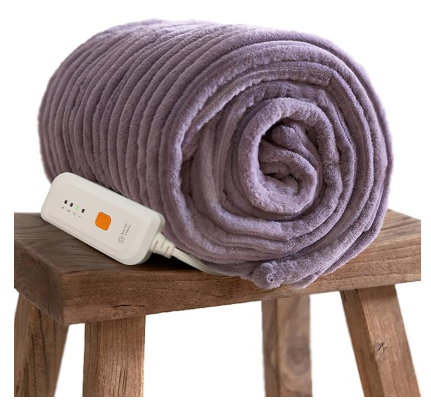
If pure, unadulterated softness and aesthetic appeal are your goals, look no further than the GOTCOZY Electric Blanket. This blanket won our “Most Luxurious Feel” category hands-down, thanks to its stunningly soft ribbed faux fur material that feels incredible against the skin and looks like a high-end decorative throw you’d find in a boutique hotel. It’s the kind of blanket you’ll want to use even without the heat turned on—perfect for adding both warmth and style to your living room or bedroom during cold winters.
The GOTCOZY provides gentle, consistent warmth across its 4 heating levels using advanced microwire technology that’s virtually undetectable. While it doesn’t get as intensely hot as some other models (maxing out at about 130°F), its warmth is perfect for taking the chill off and maintaining a comfortable temperature for hours of muscle relaxation. The 3-hour auto shut-off is a great safety feature for daytime naps or evening relaxation, though some users might wish for a longer option for overnight use. With both ETL and FCC certifications, it’s a stylish and safe choice for anyone prioritizing aesthetics, plush feel, and reliable low-level therapeutic warmth.
🔥Key Features
- 4 Heating Levels with 3-Hour Auto Shutoff
- Luxuriously soft ribbed faux fur exterior
- ETL & FCC Certified for maximum safety
- Built-in overheat protection system
- Ultra-thin microwire heating elements
✅Pros
- Unbeatably soft and stylish appearance
- Great even heating distribution
- Energy-saving low-wattage design
- Lightweight and easy to move around
- Excellent for arthritis and muscle pain relief
⚠️Cons
- Fewer heat settings than some competitors
- Timer is fixed at 3 hours (no other options)
- Not suitable for extremely cold climates
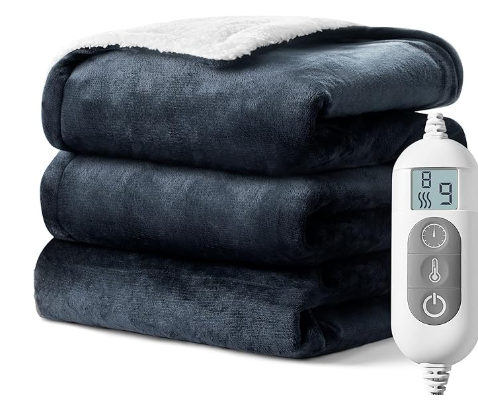
The Shodu Electric Blanket is a powerhouse of features packed into an affordable package, making it our pick for “Best Value & Features.” It boasts an incredible range of options, including 8 heating levels and 9 timer settings (from 1 to 9 hours), rivaling blankets that cost twice as much. This makes it exceptionally versatile for any situation—from a quick 1-hour warm-up after coming in from the cold to all-night gentle heat for improved sleep quality. For those in cold climates or with drafty rooms, this blanket offers exceptional customization.
The dual-sided flannel and sherpa construction is cozy and comfortable, and we were particularly impressed with its rapid heating technology—it gets warm noticeably faster than many other models (achieving maximum temperature in just 3-4 minutes). The advanced NTC (Negative Temperature Coefficient) overheating protection provides an extra layer of safety by continuously monitoring temperature and adjusting power output, making this a smart and economical choice for the feature-conscious buyer who wants both safety and performance. At approximately 60-100 watts (depending on setting), it’s also one of the more energy-efficient models we tested.
🔥Key Features
- 9 Timer Settings & 8 Heating Levels
- Dual-sided flannel & sherpa for year-round use
- Advanced NTC overheating protection
- Machine washable for easy maintenance
- Fast heat-up technology (under 4 minutes)
✅Pros
- Huge range of settings for the price
- Heats up very quickly for immediate warmth
- Soft sherpa side for extra comfort and insulation
- Excellent value for money
- Good for circulation improvement and pain relief
⚠️Cons
- Cord placement can be slightly awkward for some setups
- Slightly heavier than other throws
- Controller backlight could be brighter

From a brand synonymous with comfort, the Bedsure Heated Blanket is exceptionally plush, lightweight, and user-friendly, making it our top choice for “Best for Gifting.” Its GentleSoft™ flannel material is incredibly soft and skin-friendly, perfect for those with sensitive skin, the elderly, or anyone who values gentle therapeutic warmth without harsh textures. The controller is simple and intuitive—ideal for seniors or those less tech-savvy—with 6 heating levels and a 4-setting timer that goes up to 10 hours for all-night comfort.
This blanket feels wonderfully cozy and is light enough not to feel cumbersome—a common complaint with some heated blankets. While it may take a few extra minutes to reach its maximum temperature (about 7-8 minutes), the consistent and gentle heat it provides is perfect for extended periods of use, overnight warmth, or for those seeking arthritis comfort and muscle relaxation. The low EMF design and double-overheat protection make it an exceptionally safe choice. It’s a thoughtful, high-quality gift that anyone would be thrilled to receive during the colder months, whether for their home, RV, or mountain cabin.
🔥Key Features
- Soft GentleSoft™ Flannel with 4 Timer Settings
- 6 Heating Levels for precise temperature control
- Lightweight and skin-friendly hypoallergenic material
- Machine washable design for easy care
- Low EMF design with double-overheat protection
✅Pros
- Extremely plush and lightweight for easy handling
- Long 10-hour timer option for overnight use
- Simple, intuitive controls perfect for all ages
- Excellent for sensitive skin and elderly users
- Energy efficient (approx. 50-80 watts)
⚠️Cons
- Slower to heat up initially than some competitors
- Not as warm on highest setting as other models
- Limited to throw size (no bed-sized options)
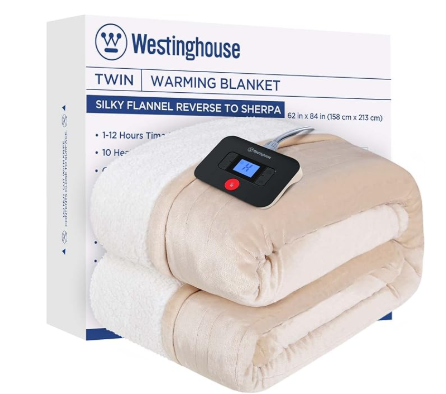
For those who want to heat their entire bed rather than just themselves on the couch, the Westinghouse Electric Blanket is the perfect full-coverage solution. As a Twin-sized blanket (also available in Queen), it provides significantly more coverage than a standard throw, ensuring you’re warm from head to toe—ideal for cold bedrooms, basement apartments, or anyone living in regions with harsh winters. Backed by a trusted brand name with over a century of experience, this blanket combines excellent heating coverage with a highly adjustable controller featuring 10 heat levels and a 1-to-12-hour timer for complete customization.
The reversible design (silky flannel to sherpa) gives you options for your preferred texture and seasonal use. We found its advanced carbon fiber heating elements cover the blanket very evenly, providing consistent therapeutic warmth across the entire bed surface without hot spots. The zone heating is particularly effective, with more heating elements concentrated in the foot area where people typically feel coldest. If you’re tired of chilly sheets and want a reliable, full-coverage bed warmer that can significantly reduce your heating bill while providing pain-relieving warmth for sore muscles, this Westinghouse model is an excellent investment in winter comfort.
🔥Key Features
- 10 Heating Levels & 12-Hour Timer for all-night warmth
- Full Twin-size coverage (also available in Queen)
- Silky Flannel reversible to Sherpa for seasonal versatility
- Advanced overheat protection system with dual sensors
- Zone heating with extra warmth in foot area
✅Pros
- Excellent heat coverage for entire bed surface
- Highly adjustable settings for personalized comfort
- Trusted brand name with proven safety record
- Machine washable despite larger size
- Can reduce room heating costs significantly
⚠️Cons
- Controller buttons can be small for some users
- Higher wattage than throws (approx. 120-150W)
- Takes longer to fully heat due to larger size
Electric Blanket Size Guide: Which Size Is Right for You?
Choosing the correct size is crucial for both comfort and safety. Here’s a quick guide to help you select the right electric blanket or heated throw:
- Throws (50″ x 60″): Perfect for single-person use on couches, recliners, or as an extra layer on top of your bed. Great for RV/camping use, office chairs, or as a personal warming blanket when others in the room prefer different temperatures.
- Twin (66″ x 90″): Fits a standard twin bed or can be used as a full/queen top layer. Ideal for single sleepers who want full bed coverage or for use in guest rooms.
- Full/Queen (84″ x 90″): Designed to fit full or queen-sized beds. Some models offer dual controls with separate heating zones for each side of the bed—perfect for couples with different temperature preferences.
- King (104″ x 90″): For king-sized beds, often with dual controls. Provides maximum coverage but requires careful placement to avoid folding or bunching.
- Specialty Sizes: Some brands offer wheelchair throws, pet warming pads, or mattress pads that go under your fitted sheet for more subtle, all-over warmth.
Remember: Never fold or tuck an electric blanket while in use, as this can trap heat and create safety hazards. Always choose a size that lays flat on your bed or seating area.
Energy Efficiency: How Much Does It Cost to Run an Electric Blanket?
One of the significant advantages of electric blankets is their potential for energy savings compared to heating entire rooms. Here’s what you need to know about operating costs:
- Wattage Range: Most electric throws consume 50-100 watts, while full bed-sized blankets use 100-150 watts. Compare this to a space heater at 1500 watts or central heating for an entire room.
- Cost Calculation: At the U.S. average of $0.13 per kWh, running a 100-watt electric blanket for 8 hours costs approximately $0.10 per night or $3.00 per month.
- Savings Potential: By lowering your thermostat by 5-10°F at night and using an electric blanket instead, you can save 10-20% on your heating bill during winter months.
- Most Efficient Use: Preheat your bed for 30-60 minutes before sleep, then use a lower setting or the blanket’s timer to maintain warmth. This uses less energy than running it on high all night.
- Look for Energy-Saving Features: Some modern blankets have smart sensors that reduce power once target temperature is reached, automatic shut-off timers, and energy-efficient carbon fiber heating elements.
For maximum savings, consider using your electric blanket as a “personal space heater” while awake and as a bed warmer at night, allowing you to keep your home’s overall temperature lower during cold winter months.
At a Glance: Feature Comparison
Here’s a quick side-by-side look at the key specifications of our top 5 picks to help you make a final decision based on heating technology, energy efficiency, size, and intended use.
| Product | Best For | Heat Levels | Timer Settings | Material | Wattage (Approx.) | Heating Technology |
|---|---|---|---|---|---|---|
| Homemate Heated Blanket | Overall Performance & Customization | 10 | 1, 2, 4, 6, 8 Hours | Flannel / Sherpa | 70-100W | Carbon Fiber |
| GOTCOZY Electric Blanket | Luxurious Feel & Low-Level Warmth | 4 | 3 Hours Fixed | Ribbed Faux Fur | 50-80W | Micro-wire |
| Shodu Electric Blanket | Value & Maximum Features | 8 | 1 to 9 Hours | Flannel / Sherpa | 60-100W | Advanced Carbon Fiber |
| Bedsure Heated Blanket | Gifting & Sensitive Users | 6 | 1, 2, 4, 10 Hours | Soft Flannel | 50-80W | Low-EMF System |
| Westinghouse Blanket (Twin) | Bed-Sized Coverage & Whole-Bed Warming | 10 | 1 to 12 Hours | Flannel / Sherpa | 120-150W | Carbon Fiber with Zone Heating |
⚠️ Essential Safety & Care Tips
Using Your Electric Blanket Safely
Your safety is paramount when using any electrical heating product. While modern electric blankets with advanced safety features are very safe when used properly, always follow these essential guidelines:
- Read the Manual Thoroughly: Always follow the manufacturer’s specific instructions for use, care, and storage. Each model may have unique features or requirements.
- Inspect Before Each Use: Regularly check the power cord, controller, and blanket surface for any signs of fraying, cracks, discoloration, or damage. Discontinue use immediately if you find any issues.
- Keep it Flat and Unfolded: Never fold, bunch, or tuck an electric blanket while it is turned on, as this can trap heat and create dangerous hot spots that may lead to overheating or fire.
- Never Use with Infants or Pets Unattended: Electric blankets are not safe for infants, toddlers, or individuals who cannot operate the controls themselves. Similarly, pets should not be allowed to sleep on an active electric blanket. For expert guidance on infant bedding, it’s vital to know when a baby can sleep with a blanket of any kind.
- Mind the Cord Placement: Ensure the power cord is not pinched between the mattress and box spring, run under carpets or rugs, or placed where it could become a tripping hazard.
- Avoid Use with Water Beds or Adjustable Beds: The movement and pressure in these beds can damage heating elements. Only use electric blankets designed specifically for these applications.
- Don’t Use While Wet: Never use an electric blanket if it’s damp or wet, and never use a heating pad on top of an electric blanket.
- Special Considerations for Medical Conditions: Those with diabetes, circulatory problems, nerve damage, or skin sensitivity should consult a doctor before use, as reduced sensation may prevent awareness of overheating.
For other specialty blankets, care rules can differ significantly. For example, if you own a weighted blanket, our guide explains how to wash a weighted blanket without damaging it, which involves different considerations than electric blanket care.
Storage Tip: When not in use (especially during warmer months), loosely fold or roll your electric blanket and store it in a cool, dry place. Avoid compressing it tightly or placing heavy items on top, which could damage the internal heating elements.
Frequently Asked Questions (FAQ)
Are modern electric blankets safe to use overnight?
Yes, modern electric blankets with safety certifications (UL or ETL) and auto-shutoff timers are generally safe for overnight use. Look for models with multiple safety features like overheat protection, automatic shut-off (typically 1-12 hours), and double-insulated wiring. Always follow manufacturer instructions and inspect your blanket regularly for any signs of wear. For the safest overnight experience, set your blanket to a low or medium heat level and use the timer function so it turns off a few hours after you fall asleep. The residual warmth trapped under your comforter will keep you comfortable for the rest of the night without consuming additional electricity.
Can electric blankets help with arthritis pain or muscle soreness?
Many users report that the gentle, consistent warmth from electric blankets provides relief from arthritis discomfort and muscle soreness by increasing blood flow and relaxing tense muscles. Heat therapy is a well-established complementary treatment for chronic pain conditions. However, electric blankets should not be used directly on inflamed joints during acute flare-ups, as additional heat can worsen inflammation. Start with the lowest effective temperature and gradually increase until you find relief. Always consult with your healthcare provider before using heat therapy for medical conditions, especially if you have reduced sensation in the affected areas.
How much electricity does an electric blanket use compared to a space heater?
Electric blankets are significantly more energy-efficient than space heaters. Most electric throws use 50-100 watts, while space heaters typically use 1500 watts. This means an electric blanket costs about 5-10 cents per night to run, compared to 15-30 cents per hour for a space heater. Over an entire winter season (roughly 150 nights of use), an electric blanket costs approximately $10-$20 in electricity, while a space heater running for the same total hours could cost $150-$450 or more. If you’re looking to reduce your heating costs without sacrificing comfort, switching from a space heater to an electric blanket is one of the most effective changes you can make.
What’s the difference between an electric blanket and a heated mattress pad?
Electric blankets lay on top of you and provide direct warmth, while heated mattress pads go under your fitted sheet and warm the bed from below. Mattress pads are often preferred by those who find top blankets too heavy or restrictive, and they can provide more even heat distribution since they’re held in place by the fitted sheet and your body weight. Electric blankets, on the other hand, are more versatile — you can use them on the couch, in a recliner, or move them between rooms. Both offer energy savings compared to room heating, and both are available with similar features like multiple heat settings, timers, and dual-zone controls. Some sleep experts recommend heated mattress pads for overnight use and electric blankets for couch or daytime use.
Can I use an electric blanket if I have a pacemaker or other medical device?
Most modern electric blankets produce very low electromagnetic fields (EMF) and are generally considered safe for use with pacemakers and other implanted medical devices. However, because every person’s medical situation is unique, you should always consult with your cardiologist or healthcare provider before using any electric heating product. Look for blankets specifically marketed as “low EMF” if you have concerns. Some manufacturers provide EMF level measurements for their products, which your doctor can evaluate against your specific device’s sensitivity thresholds.
How long do electric blankets typically last?
With proper care (following washing instructions, avoiding folding while on, and proper storage), a quality electric blanket should last 5-10 years. Many manufacturers offer 2-5 year warranties, with some premium brands offering longer coverage. The lifespan depends heavily on how frequently you use the blanket and how well you maintain it. Blankets used nightly during winter will naturally experience more wear than those used occasionally. Regularly inspect your blanket and replace it if you notice any issues with the wiring, controller, or fabric integrity. Most fire safety organizations recommend replacing any electric blanket that is more than 10 years old, regardless of visible condition.
Can I use an electric blanket with a weighted blanket on top?
Yes, you can layer a weighted blanket over an electric blanket, but there are some important considerations. The extra weight of a weighted blanket (typically 10-25 lbs) can compress the electric blanket’s heating elements, which may affect heat distribution and potentially cause localized hot spots. Place a regular sheet or thin blanket between the two to distribute the weight more evenly. Start with a lower heat setting than you’d normally use, as the weighted blanket will trap heat very effectively. Monitor the blanket for any signs of overheating during the first few uses. If you’re interested in washing a weighted blanket, our guide on how to wash a weighted blanket covers the specific challenges of maintaining these heavier blankets.
Do electric blankets emit harmful EMF radiation?
Modern electric blankets produce very low levels of electromagnetic fields (EMF), well within safety guidelines established by international health organizations. The concern about EMF comes from older electric blankets that used higher-voltage systems with less shielding. Today’s blankets, especially those with carbon fiber or microwire heating elements and low-voltage designs, produce EMF levels comparable to or lower than common household appliances like hair dryers or electric shavers. If you’re particularly concerned about EMF exposure, look for blankets specifically marketed as “low EMF” — brands like Bedsure explicitly design for low EMF output. Maintaining even a small distance (a sheet layer between you and the blanket) further reduces any potential exposure.
Can I use an electric blanket on a memory foam mattress?
Using an electric blanket on top of your bedding with a memory foam mattress is generally safe and won’t affect the mattress. However, using a heated mattress pad directly on top of memory foam is more controversial. Memory foam is temperature-sensitive — it softens when warm and firms when cool. A heated mattress pad could cause the memory foam beneath it to soften excessively, potentially reducing its support properties and altering your sleep posture. If you use a memory foam mattress and want supplemental warmth, an electric blanket on top of your body (not under you) is the safer option. This keeps the heat directed at you without affecting the mattress’s temperature-sensitive properties.
What should I do if my electric blanket gets wet?
If your electric blanket becomes wet from a spill, leak, or other accident, immediately unplug it from the wall outlet and disconnect the controller. Do not attempt to use it while wet. If the blanket was only lightly dampened (a small spill), you can dry it according to the manufacturer’s instructions before using it again. If the blanket was saturated or submerged in water, discontinue use and allow it to dry completely for at least 24-48 hours before testing it. Even after thorough drying, it’s wise to test the blanket on the lowest setting for 30 minutes while you’re present and awake to ensure it functions correctly. If you notice any unusual smells, sparking, or heating irregularities, do not use the blanket again.
Are electric blankets safe for people with allergies or sensitive skin?
Electric blankets can actually be beneficial for allergy sufferers when chosen carefully. Look for blankets with OEKO-TEX Standard 100 certification, which ensures the textiles have been tested for harmful substances. Hypoallergenic materials like microplush or certain synthetic flannels resist dust mites better than natural fibers. The warmth from an electric blanket can also help keep bedding dry, reducing conditions favorable for mold and dust mite growth. For sensitive skin, choose blankets with soft, non-irritating materials and avoid those with rough or scratchy textures. The Bedsure Heated Blanket, with its GentleSoft™ flannel and OEKO-TEX certification, is specifically designed with sensitive users in mind.
Can I use an electric blanket in an RV or camper?
Yes, electric blankets are excellent for RV and camping use, as they provide personal warmth without the high energy cost of running a propane furnace or space heater. When choosing an electric blanket for RV use, consider the electrical capacity of your RV’s system — most RV electrical hookups can easily handle a 50-100 watt blanket, but if you’re running off a battery inverter, lower wattage is better. Throw-sized blankets are more practical than bed-sized models for RV use due to space constraints. Look for blankets with compact controllers and cord lengths that work with your RV’s outlet placement. The GOTCOZY and Bedsure blankets, with their lower wattage and throw sizing, are particularly well-suited for RV camping.
The Final Verdict
Choosing the right electric blanket (whether you call it an electric throw, warming blanket, heated throw, or bed warmer) comes down to your personal priorities, climate, and specific needs. For the absolute best combination of comfort, features, safety, and energy efficiency, the Homemate Heated Blanket is our confident top recommendation for most users. If you’re looking for unparalleled softness, style, and gentle therapeutic warmth, the GOTCOZY Electric Blanket is a luxurious treat. And for those who want the most features for their money with advanced heating technology, the Shodu Electric Blanket offers incredible value and customization.
For whole-bed warming in cold climates or drafty rooms, the Westinghouse Twin Electric Blanket provides complete coverage and potential heating bill savings. And for gift-giving or sensitive users, the Bedsure Heated Blanket offers gentle, user-friendly warmth with excellent safety features.
No matter which you choose from our top-rated selections, any of these electric blankets will transform your experience of cold weather, providing a safe, energy-efficient source of warmth, potential therapeutic benefits, and luxurious comfort all season long. Stay cozy, save on heating costs, and enjoy the simple pleasure of a perfectly warmed bed or couch during even the coldest winter nights!
Note: Always purchase electric blankets from reputable retailers and brands that provide proper safety certifications and customer support. Avoid used electric blankets unless you can verify their condition and safety history.




[…] before you order. If you want to see how this one fits into the wider field, our roundup of the best electric blankets is a good companion […]