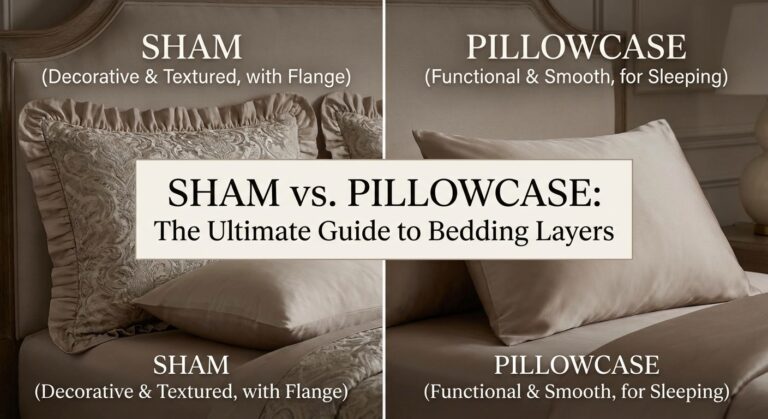
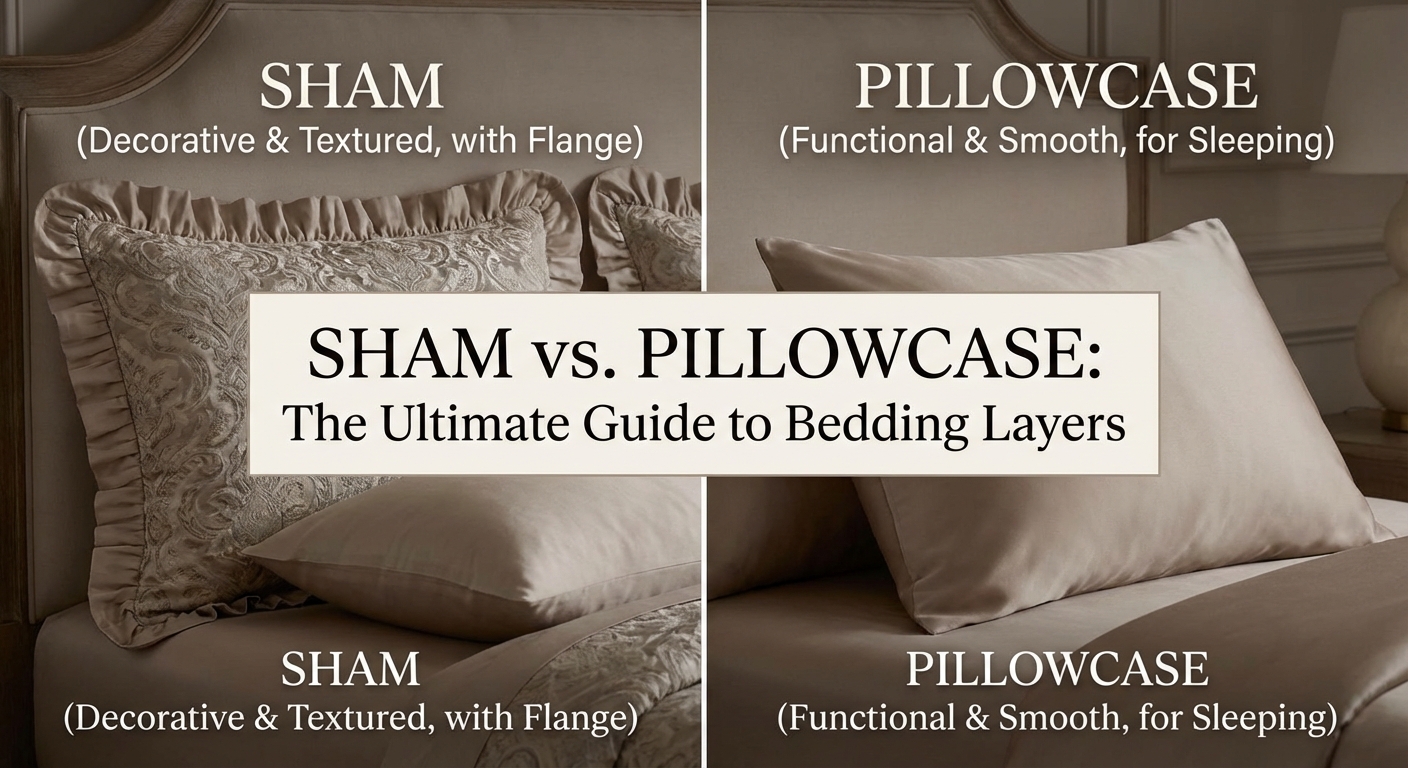
Sham vs. Pillowcase: The Ultimate Guide to Bedding Layers
You’ve just bought a new bedding set. You open the package, and alongside the sheets, you find two thin covers. Then, you open the comforter bag, and out tumble two thicker, more decorative covers. Suddenly, you are staring at four pillow coverings for a bed that only sleeps two people. Welcome to the great debate of sham vs. pillowcase.
While the terms are often used interchangeably by casual shoppers, they refer to two completely different items with distinct functions. One is designed for comfort and hygiene while you sleep; the other is the secret weapon of interior designers to make a room look finished.
If you are trying to upgrade your cozy home essentials or simply figure out what to put on your guest bed, understanding the difference is key. In this guide, we will break down the construction, materials, and styling tips for both, so you never have to guess which pillow goes where again.
Whether you are setting up a master bedroom suite, furnishing a college dorm room, preparing a guest bedroom, or simply trying to understand the difference between the items in your latest Bed-in-a-Bag purchase, this comprehensive guide covers everything. We will explore the history of pillow coverings, the science behind different fabrics, the art of pillow arrangement, and the practical considerations of care, cost, and replacement cycles. By the time you finish reading, you will know exactly what you need, what you want, and how to make your bed look like it belongs in a five-star hotel.
At a Glance: The Key Differences
Before we dive into the fabric details, here is a quick cheat sheet to help you identify what you have in your linen closet.
| Feature | Standard Pillowcase | Pillow Sham |
|---|---|---|
| Primary Function | Sleeping (protects pillow & skin). | Decoration (aesthetics). |
| Opening | Open on one side (side hem). | Back envelope closure (often hidden). |
| Material | Soft (Cotton, Silk, Bamboo). | Textured/Heavier (Matches Quilt/Duvet). |
| Design | Simple, minimal borders. | Flanges, ruffles, embroidery. |
| Placement | Under the head while sleeping. | Stacked in front or removed at night. |
The History and Origin of Pillow Coverings
Understanding where pillowcases and shams came from helps you appreciate why they exist as separate items. The history of pillow coverings stretches back thousands of years, long before the modern bedroom as we know it today.
The Ancient Origins of Pillows
The earliest known pillows date back to Mesopotamia, around 7,000 BCE. These were not the soft, fluffy cushions we know today. Ancient pillows were made of stone, ceramic, or wood, and they served a primarily practical purpose: keeping the head elevated to protect elaborate hairstyles and to keep insects out of the ears during sleep. The ancient Egyptians used carved stone pillows under the heads of mummies during burial preparations, believing the head was the seat of spiritual life.
In ancient China and Japan, pillows were made from bamboo, porcelain, or jade. These hard materials were believed to promote alertness and prevent nightmares. The Chinese also developed silk pillow covers as early as the Tang Dynasty (618-907 CE), recognizing that the smooth surface of silk reduced friction on both hair and skin. This ancient understanding of silk’s benefits is what drives the modern silk pillowcase market today.
The Birth of the Modern Pillowcase
The soft pillow as we know it emerged in Europe during the Middle Ages, initially among the wealthy. By the 16th and 17th centuries, pillows had become common among the upper classes, and with them came the need for removable, washable covers. These early pillowcases were essentially simple linen sacks that slipped over the pillow to protect it from dirt and body oils.
The term “pillowcase” became standard in English by the 18th century. Early pillowcases were always white or off-white because colored dyes were expensive and tended to transfer to skin and hair during sleep. The tradition of white pillowcases persists in hotels and hospitals to this day, though consumer pillowcases now come in every color imaginable.
The Invention of the Pillow Sham
The pillow sham has a more recent history. The word “sham” entered the English language in the 17th century, meaning “a false front” or “an imitation.” Originally, a sham was a decorative cover thrown over a sleeping pillow during the day to disguise it and make the bed look presentable. Before closets and bedroom privacy became standard, the bed was often the most prominent piece of furniture in a room, and having it look neat during the day was important.
By the Victorian era (1837-1901), elaborate bed decoration had become a status symbol. Women competed to create the most impressive bed arrangements, and shams evolved from simple covers into ornate decorative pieces featuring embroidery, lace, ruffles, and intricate needlework. The Victorians popularized the idea of having multiple layers of pillows on a bed, each with its own decorative covering.
The modern pillow sham as we know it — a decorative cover with a back envelope closure and a decorative flange — was standardized in the early 20th century with the rise of mass-produced bedding sets. As department stores began selling coordinated bedding collections, the sham became a standard inclusion alongside sheets and comforters.
Fun Fact
The sham’s original purpose was literally to “sham” or fake a well-made bed. In an era when servants might not have been available to make the bed perfectly every morning, a decorative sham cover could instantly make a messy sleeping pillow look presentable. Today, the tradition continues — shams transform a bed from “slept-in” to “styled” in seconds.
What is a Pillowcase?
A pillowcase is a functional sleeve designed to cover your sleeping pillow. Its primary job is to protect the pillow from body oils, sweat, and drool, while providing a soft, clean surface for your face. Because it touches your skin for 8 hours a night, the texture is paramount.
Pillowcases are almost always sold as part of a sheet set. They are typically open on one end, though some high-end versions offer an internal flap to hold the pillow inside. If you are exploring fabric options for better skin and hair health, you might want to read about silk vs. satin pillowcase benefits.
Common Materials
- Cotton: Breathable and crisp (Percale) or smooth (Sateen).
- Bamboo: Excellent for hot sleepers (check out bamboo blankets for a matching cooling setup).
- Silk/Satin: Reduces friction on hair and skin.
- Flannel: Cozy for winter months.
Pros of Pillowcases
- Comfort: Designed specifically for skin contact.
- Hygiene: Easy to wash and replace frequently.
- Cooling: Lighter fabrics allow for better airflow.
Cons of Pillowcases
- Aesthetics: Can look messy or wrinkled if not tucked in.
- Simplicity: Rarely feature decorative trims or heavy textures.
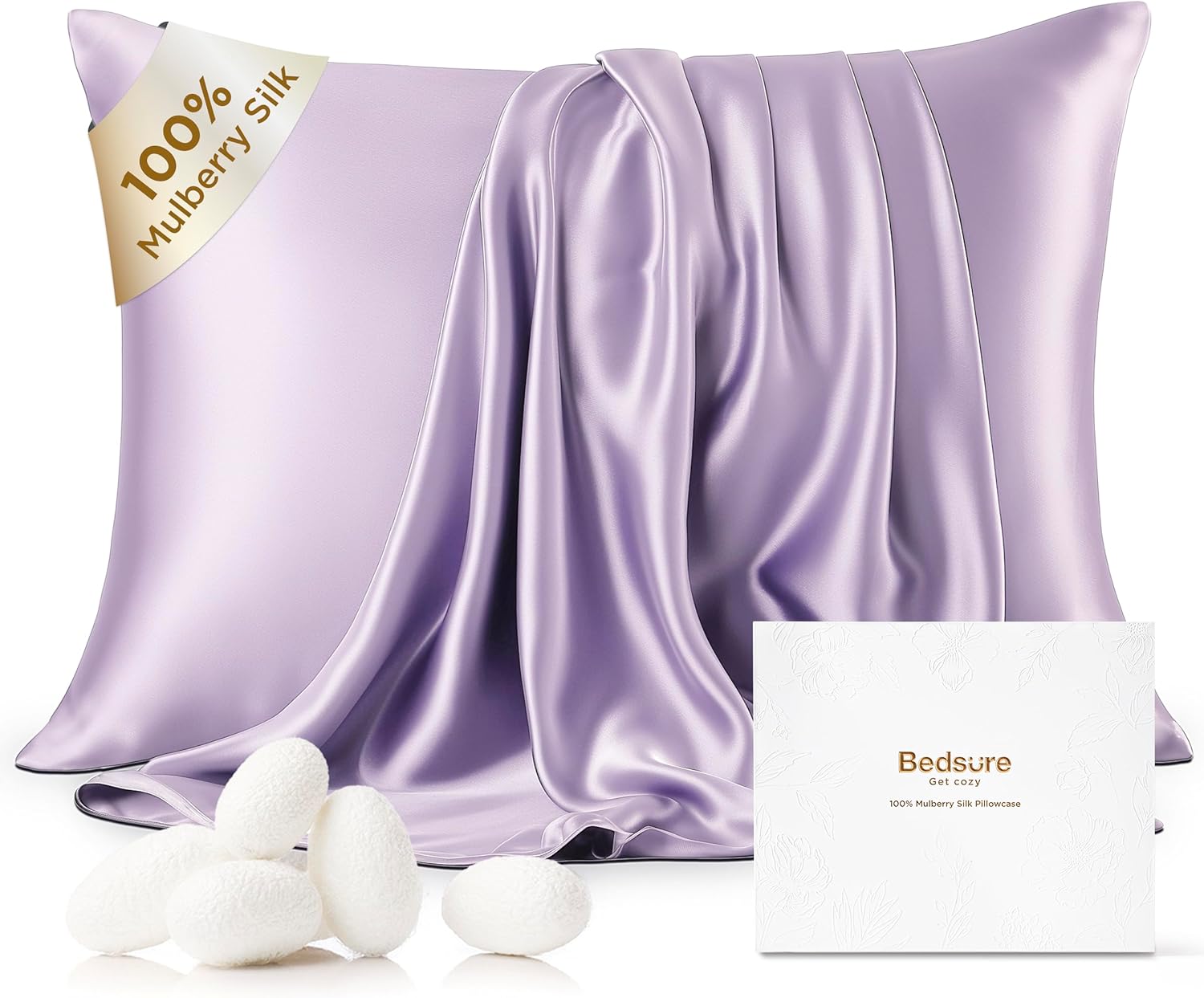
Top Rated: Mulberry Silk Pillowcase for Hair & Skin
Upgrade your sleep with 100% pure mulberry silk. It reduces friction, prevents sleep creases, and keeps you cool all night.
Check Price on AmazonTypes of Pillowcases: A Complete Guide
Pillowcases are not a one-size-fits-all product. There are several distinct types, each with its own construction, closure style, and intended use. Understanding these types will help you choose the right pillowcase for your sleeping habits, comfort preferences, and bedroom decor.
Housewife Pillowcase (Standard Open-End)
The housewife pillowcase is the most common type found in sheet sets worldwide. It is a simple, rectangular sleeve that is open on one end with a hemmed edge (sometimes called a “cuff” or “header”). The pillow slides in through the open end, and the hemmed edge holds it in place. This design is also called a “standard” or “classic” pillowcase in many markets.
The housewife pillowcase is popular because it is easy to put on and take off, easy to wash, and works with virtually any pillow size. The open-end design means the pillow can slide out during the night if you move a lot, but most people find this a minor inconvenience. The hemmed edge is typically 2 to 4 inches wide and may feature a decorative border or embroidered detail in higher-end versions.
Oxford Pillowcase (Bordered)
An Oxford pillowcase is similar to a housewife pillowcase but features a flat, decorative border (called a “flange”) that extends beyond the dimensions of the pillow. The flange is typically 1 to 3 inches wide and gives the pillowcase a more finished, elegant appearance. The Oxford pillowcase is sometimes called a “bordered pillowcase” in certain regions.
The Oxford pillowcase strikes a balance between the simplicity of a standard pillowcase and the decorative appeal of a sham. It works well for both sleeping and display, making it a versatile choice for guest bedrooms where you want the bed to look polished without adding separate shams. The flange does add a slight wrinkle tendency at the border, so Oxford pillowcases may need occasional ironing to look their best.
Envelope Pillowcase (Back Closure)
An envelope pillowcase features an overlapping flap closure on the back side rather than an open end. The pillow is inserted through the back opening, and the overlapping fabric panels hold the pillow securely inside. This design prevents the pillow from sliding out during the night and keeps the pillow completely hidden from view.
Envelope pillowcases are standard in hotel bedding because they create a cleaner, more tailored look. They are also popular for decorative applications where you do not want to see any part of the pillow peeking out. The main drawback is that inserting and removing the pillow requires a bit more effort than with an open-end design.
Zippered Pillowcase
A zippered pillowcase features a zipper closure, usually along one side or the bottom edge. This provides the most secure closure of any pillowcase type, ensuring the pillow stays completely enclosed. Zippered pillowcases are commonly used for hypoallergenic covers, waterproof protectors, and specialty pillow encasements designed to block dust mites and bed bugs.
The main advantage of a zippered pillowcase is its security — the pillow cannot slide out regardless of how much you move during sleep. The main disadvantage is that the zipper can be uncomfortable if it presses against your head, and the zipper mechanism adds a small amount of bulk at the closure point. For standard sleeping pillowcases, the zipper is usually positioned at the bottom edge away from the head, which minimizes this issue.
King-Size Pillowcase (Oversized)
King-size pillowcases are specifically designed for king-size pillows, which measure 20 inches by 36 inches — 6 inches longer than standard/queen pillows. These pillowcases are longer and provide full coverage for the larger pillow without excess fabric bunching. Using a standard pillowcase on a king pillow leaves 6 inches of exposed pillow, which looks unfinished and defeats the purpose of the protective cover.
Body Pillowcase
Body pillow cases are designed for full-length body pillows, which typically measure 20 inches by 54 inches. These elongated pillowcases often feature a decorative border or printed design because body pillows are frequently used as decorative accents on beds. Body pillow cases may have an open end, an envelope closure, or a zippered closure depending on the brand and design.
Euro Pillowcase (Square)
Euro pillowcases are designed for Euro sham pillows, which are large square pillows measuring 26 inches by 26 inches. While you can find sleeping pillowcases in this size, Euro pillowcases are most commonly used as decorative covers for the large square pillows that lean against the headboard. These pillowcases typically match the comforter or duvet set and feature a back envelope closure.
| Pillowcase Type | Closure Style | Best For | Typical Price Range |
|---|---|---|---|
| Housewife (Standard) | Open end with hemmed edge | Everyday sleeping | $5 – $25 |
| Oxford (Bordered) | Open end with decorative flange | Guest rooms, display | $8 – $35 |
| Envelope | Back overlapping flaps | Hotels, neat appearance | $8 – $40 |
| Zippered | Zipper along edge | Allergen protection, secure fit | $10 – $30 |
| Body Pillow | Open end or zip | Body pillows, pregnancy | $10 – $30 |
| Euro Square | Envelope back | Decorative Euro pillows | $8 – $35 |
Pillowcase Fabrics: A Deep Dive Into Every Material
The fabric of your pillowcase is arguably the most important factor in your sleep quality. Since your face is pressed against this material for 7 to 9 hours every night, the fabric affects your skin health, hair condition, temperature regulation, and overall comfort. Let us examine every popular pillowcase material in detail.
Cotton Percale
Percale is a plain-weave cotton fabric with a thread count typically ranging from 200 to 400. The weave creates a crisp, matte finish that feels cool and breathable against the skin. Percale is the classic “hotel pillowcase” fabric — it has a fresh, clean feel that many people associate with well-made beds.
The tight, uniform weave of percale allows air to circulate freely, making it an excellent choice for hot sleepers and warm climates. Percale also gets softer with every wash, which means a percale pillowcase that feels slightly crisp when new will become buttery soft after 10 to 15 washes. The main drawback of percale is that it wrinkles easily, so it may need ironing if you prefer a perfectly smooth appearance.
Cotton Sateen
Sateen is a satin-weave cotton fabric that produces a smooth, lustrous surface with a subtle sheen. Unlike percale’s matte finish, sateen has a silky appearance and a draping quality that feels luxurious against the skin. Sateen typically has a thread count between 300 and 600, though the weave structure means that even lower thread count sateen can feel smoother than higher thread count percale.
Sateen is warmer than percale because the satin weave creates a denser fabric that traps more heat. This makes sateen ideal for cold sleepers and cooler climates. Sateen is also more wrinkle-resistant than percale, which means it looks neater right out of the dryer. The tradeoff is that sateen’s smoother surface can feel slippery to some people, and it may not provide the same crisp, cool sensation that percale lovers prefer.
100% Mulberry Silk
Silk pillowcases are made from the natural protein fibers produced by silkworms. Mulberry silk is the highest quality silk available and is the standard for premium silk pillowcases. The natural smoothness of silk reduces friction against both skin and hair, which helps prevent sleep wrinkles, facial creases, and hair frizz.
Silk is naturally hypoallergenic and resistant to dust mites, mold, and mildew, making it an excellent choice for people with allergies or sensitive skin. Silk also has natural temperature-regulating properties — it keeps you cool in summer and warm in winter. The main drawback of silk pillowcases is their cost (a quality silk pillowcase typically costs $25 to $80) and their care requirements (they usually require hand washing or a delicate machine cycle with cold water).
The momme weight of silk determines its quality and durability. A momme weight of 19 to 22 is considered standard for bedding, while 25 momme or higher is considered premium. Higher momme silk is thicker, more durable, and has a more luxurious feel, but it also costs significantly more.
Bamboo-Derived Fabrics
Bamboo pillowcases are made from bamboo cellulose fibers, which are processed into either bamboo rayon or bamboo viscose. These fabrics are exceptionally soft, with a silky feel that is often compared to cashmere. Bamboo is naturally moisture-wicking and temperature-regulating, making it one of the best choices for hot sleepers.
Bamboo fabric also has natural antibacterial and antimicrobial properties, which help keep the pillowcase fresher between washes. It is hypoallergenic and gentle on sensitive skin. The main drawback of bamboo pillowcases is that they can be less durable than high-quality cotton, and the fabric may develop a slightly textured feel after many washes. For people who prioritize cooling and softness above all else, bamboo is an excellent choice.
Flannel
Flannel pillowcases are made from brushed cotton or a cotton blend that has been napped (brushed) to create a soft, fuzzy surface. Flannel is significantly warmer than standard cotton and is the pillowcase of choice during cold winter months. The brushed surface traps body heat and creates a cozy, comforting feeling against the skin.
Flannel pillowcases come in various weights, measured in ounces per square yard. Lightweight flannel (3 to 4 ounces) provides gentle warmth, while heavyweight flannel (5 to 6 ounces) offers serious cold-weather insulation. Flannel gets softer with each wash and can last for years with proper care. The main drawback is that flannel is too warm for summer use and can cause overheating for warm sleepers even in moderate temperatures.
Linen
Linen pillowcases are made from the fibers of the flax plant, making them a natural, biodegradable option. Linen is one of the most breathable fabrics available, with excellent moisture-wicking properties that keep you cool and dry throughout the night. Linen has a distinctive textured appearance with a slightly rough, lived-in feel that softens with every wash.
Linen is extremely durable — it is one of the strongest natural fibers and can last for decades. It is naturally resistant to bacteria and dust mites, making it a healthy choice for allergy sufferers. The main drawbacks of linen pillowcases are their higher cost, their tendency to wrinkle (which some people consider part of their charm), and their initial roughness, which may take several washes to soften to a comfortable level.
Microfiber
Microfiber pillowcases are made from ultra-fine synthetic fibers (usually polyester or a polyester-nylon blend) that are finer than a strand of silk. Microfiber is soft, affordable, wrinkle-resistant, and easy to care for. It dries quickly, resists stains, and holds its color well through many wash cycles.
The main drawback of microfiber is that it is not as breathable as natural fibers. Microfiber can trap heat and moisture against the skin, which may cause discomfort for hot sleepers. Additionally, microfiber is a synthetic material, so it does not have the natural temperature-regulating or hypoallergenic properties of silk, cotton, or bamboo. For budget-conscious shoppers who want a soft, low-maintenance pillowcase, microfiber is a solid choice.
Tencel (Lyocell)
Tencel is a brand name for lyocell, a fabric made from sustainably harvested wood pulp (usually eucalyptus). Tencel pillowcases are incredibly smooth, with a silky feel that rivals actual silk at a fraction of the cost. Tencel excels at moisture management — it absorbs 50% more moisture than cotton while still feeling dry to the touch.
Tencel is naturally hypoallergenic, antibacterial, and environmentally friendly, as it is produced in a closed-loop process that recycles 99% of the solvents used. For eco-conscious consumers who want a luxurious sleeping surface without the environmental impact of silk or the cost of premium cotton, Tencel is an excellent option.
Jersey Knit
Jersey pillowcases are made from the same knit fabric used for T-shirts. They are incredibly soft, stretchy, and comfortable, with a casual, relaxed appearance. Jersey is warm, breathable, and gets softer with every wash. It does not require ironing and is very easy to care for.
The main drawback of jersey pillowcases is their casual appearance — they tend to look wrinkled and relaxed, which may not suit a formally styled bedroom. Jersey can also stretch out of shape over time, especially if it is made from a lower-quality cotton blend. For a casual, comfortable sleeping experience, jersey pillowcases are hard to beat.
Thread Count Explained: What Really Matters
Thread count is one of the most marketed numbers in bedding, but it is also one of the most misunderstood. Let us demystify thread count and explain what actually matters for pillowcase quality.
What Is Thread Count?
Thread count refers to the number of horizontal (weft) and vertical (warp) threads woven into one square inch of fabric. A fabric with 200 threads per inch in each direction would have a thread count of 400. The idea is that higher thread counts produce softer, more durable, and more luxurious fabric.
The Thread Count Myth
While thread count does matter to a point, the bedding industry has inflated its importance significantly. Many manufacturers artificially inflate thread counts by using multi-ply yarns (twisting two or more thin threads together and counting each one individually) or by including the selvedge threads in the count. This means a pillowcase labeled as “1,200 thread count” may actually have the same fabric density as a genuine 400 thread count product.
The reality is that thread count only tells part of the story. The quality of the cotton, the weave structure, and the finishing process are equally important. A 300 thread count percale made from long-staple Egyptian cotton will feel significantly better than a 1,000 thread count product made from short-staple cotton with a loose weave.
What Thread Count Should You Look For?
- Percale: 200 to 400 thread count is the sweet spot. Below 200 feels rough, and above 400 may indicate multi-ply yarns.
- Sateen: 300 to 600 thread count is ideal. Sateen’s weave structure creates smoothness regardless of thread count.
- Silk: Thread count is not used for silk. Instead, look at momme weight (19 to 25 for bedding).
- Bamboo: Thread count is less relevant because bamboo’s softness comes from the fiber itself, not the weave density.
Pro Tip
Instead of focusing solely on thread count, look for the cotton type and staple length. Long-staple cotton (such as Egyptian cotton, Pima cotton, or Supima cotton) produces smoother, stronger yarns that create a better fabric at any thread count. A 300 thread count pillowcase made from Egyptian long-staple cotton will outperform a 1,000 thread count pillowcase made from regular short-staple cotton.
What is a Sham?
The word “sham” literally means a “false front.” Historically, a pillow sham was a decorative cover with a “false front” used to disguise a regular sleeping pillow during the day, making the bed look like a piece of furniture rather than a sleeping area.
Today, a pillow sham is a decorative casing that typically matches your comforter, duvet, or quilt. Unlike a pillowcase, a sham usually has an opening in the back (an envelope closure) so that no pillow is visible from the front or sides. They often feature a “flange” — a wide strip of fabric that extends beyond the pillow’s edge — giving it a larger, more substantial look.
Can You Sleep on a Sham?
Technically, yes, but you probably won’t want to. Shams are often made of thicker, textured materials like jacquard, quilted cotton, or heavy linen. They may have embroidery, beads, or raised stitching that can feel rough against the face. Furthermore, because they are heavier, they trap more heat, which isn’t ideal for those who need cooling bedding solutions.
Pros of Shams
- Style: Instantly elevates the look of a bed from “dorm room” to “hotel suite.”
- Structure: The flanges allow the pillows to stand upright without flopping over.
- Protection: Keeps decorative pillows clean during the day.
Cons of Shams
- Comfort: Fabric is often too rough or heavy for sleeping.
- Maintenance: Some require delicate washing or ironing to maintain the flange shape.
- Storage: You have to take them off the bed every night.

Editor’s Pick: Textured Euro Sham Covers
Add height and texture to your bed with these waffle-weave Euro shams. Perfect for leaning against while reading.
Check Price on AmazonTypes of Pillow Shams: Every Style Explained
Just as pillowcases come in different styles, pillow shams also have several distinct types. Each type serves a different decorative purpose and is designed for a specific position in the bed arrangement.
Standard Pillow Sham
A standard pillow sham is designed to fit a standard sleeping pillow (20 inches by 26 inches). It typically features a back envelope closure and may have a flange (border) of 1 to 3 inches around the edges. Standard shams are included in most “Bed-in-a-Bag” sets and match the comforter or duvet cover. These are the workhorses of the decorative pillow world and are used in both casual and formal bedroom settings.
Euro Sham (Square Decorative)
Euro shams are large, square pillow covers designed for Euro pillows (26 inches by 26 inches). They are the most visually impactful shams because of their size and position — they lean against the headboard and create the backdrop for the entire pillow arrangement. Euro shams are available in a wide range of textures, including quilted, tufted, embroidered, and smooth fabrics. They are particularly effective at making a bed look taller, fuller, and more luxurious.
Euro shams are especially valuable for beds with tall headboards or in rooms with high ceilings, as they bridge the gap between the mattress and the top of the headboard. For queen and king beds, two Euro shams side by side create a symmetrical backdrop. For twin beds, a single Euro sham provides a finished look without overwhelming the smaller bed.
King Pillow Sham
King shams are designed for king-size pillows (20 inches by 36 inches). They are wider than standard shams and provide full coverage for the longer king pillow. King shams are typically included in king-size bedding sets and match the comforter or duvet. On a king bed, two king shams placed side by side create a seamless, hotel-quality look across the width of the mattress.
Boudoir Sham (Lumbar)
Boudoir shams are small, rectangular decorative pillows, typically measuring 12 inches by 16 inches or 12 inches by 18 inches. They are used as accent pieces in front of larger shams and are often made from luxurious fabrics like silk, velvet, or embroidered cotton. Boudoir shams add a final touch of color, texture, or pattern to the bed arrangement and are the “jewelry” of the bedding world.
Quilted Sham
Quilted shams feature stitched patterns that create a padded, textured surface. The quilting adds dimension and visual interest to the sham, and the padding makes them slightly firmer and more structured than unquilted shams. Quilted shams are commonly found in traditional and farmhouse-style bedding collections and pair well with quilts and coverlets.
Scalloped Sham
Scalloped shams feature a decorative edge treatment where the flange or border has a curved, scalloped shape rather than a straight edge. This detail adds a feminine, romantic touch to the bed arrangement and is popular in cottage, shabby chic, and traditional decor styles. Scalloped shams often feature embroidery or applique along the scalloped edge.
Ruffled Sham
Ruffled shams have gathered fabric ruffles along one or more edges, creating a soft, romantic, or vintage appearance. Ruffled shams are a staple of French country, farmhouse, and shabby chic decor styles. The ruffles can be narrow and delicate or wide and dramatic, depending on the design. Ruffled shams require more maintenance than smooth shams because the ruffles can become crushed or tangled in the wash.
Knife-Edge Sham
A knife-edge sham has a clean, flat seam along the edges with no flange or decorative border. This minimalist style creates a sleek, modern appearance that works well in contemporary and minimalist bedrooms. Knife-edge shams are the simplest sham style and are easy to sew as a DIY project.
| Sham Type | Size | Best Position | Decor Style |
|---|---|---|---|
| Standard Sham | 20″ x 26″ + flange | Front of pillow arrangement | All styles |
| Euro Sham | 26″ x 26″ | Against headboard (back row) | All styles |
| King Sham | 20″ x 36″ + flange | Front of king-size bed | All styles |
| Boudoir/Lumbar | 12″ x 16″ or 12″ x 18″ | Front center accent | Formal, romantic |
| Quilted Sham | Standard or Euro | Front row or back row | Traditional, farmhouse |
| Scalloped/Ruffled | Standard or Euro | Front row | Cottage, shabby chic |
Styling 101: How to Arrange Pillowcases and Shams
Now that you know the difference, how do you arrange them? Whether you have a massive master bed or you are figuring out a foldable bed frame setup for a guest, layering is the secret to a polished look.
The Standard Layering Technique (Queen/King Bed)
- The Sleeping Pillows (Back or Bottom): Place your standard pillows with the soft pillowcases flat against the headboard, or propped up if you prefer. These are the ones you actually use.
- The Euro Shams (Back Row – Optional): Euro shams are large square pillows (usually 26×26 inches). They go against the headboard. They add height and are great for leaning against while reading (similar to a lounge chair support).
- The Standard/King Shams (Front Row): Place the decorative shams in front of the sleeping pillows. These usually match your coverlet or bedspread.
- Accent Pillows (Front Center): Finish with a small lumbar pillow or a round throw pillow for a pop of color.
The Minimalist Approach
If you hate the idea of taking ten pillows off the bed every night, simply stack your sleeping pillows flat. Place the pillowcase-covered pillow on the bottom, and the sham-covered pillow on top. When you go to sleep, just move the sham to a chair or a blanket basket.
The Hotel-Style Arrangement
Luxury hotels have mastered the art of pillow arrangement. Here is their formula: start with two king or queen sleeping pillows in crisp white pillowcases laid flat against the headboard. In front of those, place two standard shams in a matching color or pattern. Finish with a single boudoir or lumbar pillow in the center. The result is a clean, symmetrical look that appears effortless but is carefully calculated.
The Modern Minimalist Arrangement
For a clean, modern look, use just two sleeping pillows in matching pillowcases, standing upright against the headboard. Skip the shams entirely, or add one long lumbar pillow across the front for a sleek, contemporary feel. This arrangement works particularly well in small bedrooms where too many pillows would make the bed look cluttered.
The Farmhouse Layered Look
Farmhouse style embraces abundance and texture. Start with two Euro shams against the headboard (quilted or textured fabric works beautifully here). In front, add two standard sleeping pillows in patterned or ticking-stripe pillowcases. Add two standard shams in a coordinating solid color. Finish with a small accent pillow or two in a complementary pattern. The key to farmhouse style is mixing patterns and textures while keeping the color palette cohesive.
Pillow Arrangement for Different Bed Sizes
Twin Bed: One sleeping pillow with a pillowcase, one standard sham in front. Optionally, one Euro sham against the headboard for added height. Keep it simple — too many pillows overwhelm a twin bed.
Full/Double Bed: Two sleeping pillows with pillowcases side by side, two standard shams in front. One Euro sham centered behind works well if the headboard is tall.
Queen Bed: The most versatile size for pillow arrangements. Two Euro shams, two sleeping pillows, two standard shams, and one accent pillow is the classic queen arrangement.
King Bed: Two Euro shams, two king sleeping pillows, two king shams, and one or two accent pillows. The extra width of a king bed can handle the most elaborate arrangements.
Size Matters: Dimensions Compared
One common mistake is buying the wrong size insert for your sham. While pillowcases are forgiving because they are open-ended, shams must fit perfectly to look good.
- Standard: Both cases and shams are roughly 20″ x 26″.
- Queen: Roughly 20″ x 30″. (Note: Standard cases often fit Queen pillows, but Standard shams will look too small on a Queen pillow).
- King: Roughly 20″ x 36″. You need specific King pillows for these.
- Euro Sham: The square outlier. These are typically 26″ x 26″. There is no “Euro Pillowcase” equivalent generally used for sleeping; this is purely a decorative category.
Pro Tip: For shams, buy a pillow insert that is 1 or 2 inches larger than the sham cover. This ensures the corners are filled out and the pillow looks plump, not saggy. (See also: How big is a 40×30 blanket? for more sizing help).
Complete Pillow and Pillowcase Size Chart
| Pillow Size | Dimensions | Pillowcase Size | Sham Size | Best Bed Size |
|---|---|---|---|---|
| Standard | 20″ x 26″ | 20″ x 30″ (with cuff overlap) | 26″ x 26″ (with flange) | Twin, Full, Queen |
| Queen | 20″ x 30″ | 20″ x 34″ (with cuff overlap) | 26″ x 30″ (with flange) | Queen, King |
| King | 20″ x 36″ | 20″ x 40″ (with cuff overlap) | 26″ x 36″ (with flange) | King, California King |
| Euro | 26″ x 26″ | 27″ x 27″ (rare) | 26″ x 26″ or 28″ x 28″ | All sizes (decorative) |
| Body | 20″ x 54″ | 20″ x 60″ (with overlap) | N/A | All sizes |
| Boudoir | 12″ x 16″ | 13″ x 19″ | 13″ x 19″ (with flange) | All sizes (accent) |
Pillowcase Fabric Comparison: Which Material Is Right for You?
Choosing the right pillowcase fabric can feel overwhelming with so many options available. Here is a detailed comparison to help you match your sleep needs with the perfect fabric.
| Fabric | Softness | Cooling | Durability | Skin Benefits | Price Range |
|---|---|---|---|---|---|
| 100% Mulberry Silk | Exceptional | Excellent | Moderate | Reduces wrinkles and frizz | $25 – $80 |
| Bamboo Rayon | Very Soft | Excellent | Moderate | Hypoallergenic, antibacterial | $15 – $40 |
| Cotton Percale | Crisp/Cool | Very Good | Excellent | Breathable, low irritation | $10 – $35 |
| Cotton Sateen | Smooth/Silky | Good | Very Good | Smooth, less friction | $15 – $45 |
| Tencel/Lyocell | Very Soft | Excellent | Good | Moisture-wicking, gentle | $15 – $40 |
| Linen | Textured | Excellent | Exceptional | Antibacterial, durable | $20 – $60 |
| Flannel | Warm/Soft | Poor | Very Good | Cozy, no static | $8 – $25 |
| Microfiber | Soft | Poor | Good | Wrinkle-free, easy care | $5 – $15 |
| Jersey Knit | Very Soft | Moderate | Moderate | Stretchy, T-shirt feel | $8 – $20 |
Best Pillowcase for Hot Sleepers
If you frequently wake up sweating or flipping your pillow to the cool side, fabric choice is critical. The best cooling pillowcase fabrics are bamboo, linen, cotton percale, and Tencel. These materials all excel at moisture-wicking and airflow, keeping your head cool throughout the night. Avoid flannel, sateen, and microfiber if temperature regulation is a priority.
Best Pillowcase for Acne-Prone Skin
Dermatologists consistently recommend silk pillowcases for acne-prone skin. The smooth surface of silk does not absorb oils, bacteria, or skincare products the way cotton does, which means your face stays cleaner throughout the night. Silk’s natural protein composition is also less likely to irritate inflamed or sensitive skin. If silk is outside your budget, bamboo is a good alternative because of its natural antibacterial properties.
Best Pillowcase for Curly Hair
Curly and textured hair is particularly susceptible to friction damage, which causes frizz, breakage, and loss of curl definition. Silk pillowcases are the gold standard for curly hair because the smooth surface allows hair to glide across the pillow without catching or rubbing. Satin is a good budget alternative, though it does not have the same moisture-regulating properties as silk. Avoid cotton pillowcases if you have curly hair, as the rough fibers create friction that disrupts curl patterns.
Best Pillowcase for Sensitive Skin and Eczema
People with sensitive skin or eczema should prioritize fabrics that are hypoallergenic, free from chemical treatments, and smooth enough to minimize friction. Silk and bamboo are the top choices because both are naturally hypoallergenic and resist dust mites. Look for pillowcases that are OEKO-TEX certified, which means they have been tested for harmful substances. Avoid polyester microfiber and chemically treated fabrics, as these can trigger flare-ups in sensitive individuals.
Best Pillowcase for Allergy Sufferers
Dust mites are a leading cause of indoor allergies, and they thrive in pillow cases that trap dead skin cells and moisture. The best pillowcases for allergy sufferers are zippered allergen-proof encasements made from tightly woven microfiber that blocks dust mites, their waste products, and other allergens. For daily use, silk and bamboo are naturally resistant to dust mites and mold, making them good choices for allergy-prone individuals.
Pillow Insert Guide: Choosing the Right Fill
The insert inside your pillowcase or sham matters just as much as the cover. A beautiful sham on a flat, lumpy insert defeats the purpose entirely. Here is a guide to choosing the right pillow insert for both sleeping pillows and decorative shams.
Sleeping Pillow Fills
Down: The gold standard for luxury sleeping pillows. Goose down is softer and more resilient than duck down, and it molds to the shape of your head and neck. Down pillows are breathable, lightweight, and can last for years with proper care. The main drawbacks are cost (quality down pillows start at $50) and the potential for allergic reactions in some individuals, though hypoallergenic down is widely available.
Down Alternative (Polyester Fill): A budget-friendly alternative to down that mimics the softness and loft of natural down. Down alternative pillows are hypoallergenic, machine washable, and significantly less expensive than down. The main drawback is that they tend to flatten faster than down and may need to be replaced more frequently.
Memory Foam: Memory foam pillows provide firm, consistent support that conforms to the shape of your head and neck. They are excellent for people with neck pain or those who sleep on their backs. The main drawback is that memory foam retains heat, which can be uncomfortable for hot sleepers. Many memory foam pillows now include cooling gel infusions or ventilated designs to address this issue.
Latex: Natural latex pillows offer responsive support similar to memory foam but with better breathability and a bouncier feel. Latex is naturally hypoallergenic and resistant to dust mites, making it an excellent choice for allergy sufferers. The main drawback is the higher cost compared to polyester fill options.
Buckwheat: Buckwheat hull pillows are filled with the outer shells of buckwheat seeds, which conform to the shape of your head and provide firm, adjustable support. They are extremely breathable and naturally hypoallergenic. The main drawback is the rustling sound the hulls make when you move your head, which some people find annoying.
Decorative Sham Fills
For decorative shams, the goal is appearance rather than sleep comfort. Here are the best options:
- Polyester Fiberfill: The most common and affordable option. Good for general decorative use but may flatten over time.
- Down or Down Blend: Provides a luxurious, plump look with excellent loft recovery. Ideal for high-end sham arrangements.
- Memory Foam: Best for Euro shams that you lean against while reading or watching TV, as it provides supportive comfort.
- Feather Blend: A mix of feathers and down that provides good loft at a lower cost than pure down.
Pro Tip: The Oversized Insert Trick
For the plumpest, most luxurious-looking shams, always buy an insert that is 1 to 2 inches larger than the sham cover. A 26-inch sham with a 28-inch insert will look full and perfectly filled. A 26-inch sham with a 26-inch insert will look deflated and sad. This simple trick is the secret to making any bed look professionally styled.
Color and Pattern Coordination for Pillowcases and Shams
Choosing the right colors and patterns for your pillowcases and shams can transform a bedroom from ordinary to extraordinary. Here are the fundamental principles of color coordination for bedding.
The Three-Color Rule
The simplest and most effective approach to bedding color is the three-color rule: choose one dominant color (the comforter or duvet), one secondary color (the shams), and one accent color (the throw pillows). This creates a layered, cohesive look without visual chaos. For example, a navy blue comforter with white shams and gold accent pillows creates a classic, sophisticated combination.
Pattern Mixing Principles
Mixing patterns can make your bedding look designer-quality when done correctly. The key rule is to vary the scale of the patterns: pair a large-scale pattern (like a bold floral) with a medium-scale pattern (like a stripe) and a small-scale pattern (like a dot or tiny geometric). Keep the color palette consistent across all patterns, and anchor the look with at least one solid color.
A practical formula for mixing patterns in bedding: use a solid or subtle texture for the fitted sheet, a bold pattern for the flat sheet or duvet, a coordinating pattern for the pillowcases, and a contrasting but complementary pattern for the shams. Accent pillows can introduce a third pattern or a pop of a solid accent color.
Seasonal Color Rotation
One advantage of separating pillowcases and shams is the ability to change your bedroom’s look seasonally without buying new bedding. Keep your comforter and sheets neutral, and rotate shams and accent pillows to match the season: warm tones (burnt orange, deep red, gold) for fall, cool tones (icy blue, silver, white) for winter, pastels for spring, and brights for summer. This is much more cost-effective than replacing entire bedding sets and keeps your bedroom feeling fresh year-round.
Matching Shams to Your Room’s Palette
When choosing sham colors, look at the overall color palette of your bedroom — the wall color, rug, curtains, and furniture. Your shams do not need to match these elements exactly, but they should exist in the same color family. A bedroom with warm gray walls and walnut furniture looks best with shams in warm neutrals, muted blues, or sage greens. A bedroom with cool white walls and chrome accents looks best with shams in crisp whites, cool grays, or navy.
Silk Pillowcases: The Complete Guide to Skin and Hair Benefits
Silk pillowcases have generated enormous buzz in the beauty and wellness community, and for good reason. The science behind silk’s benefits for skin and hair is well-documented, making silk pillowcases one of the few bedding products that bridge the gap between home decor and skincare.
How Silk Prevents Sleep Wrinkles
When you sleep on a cotton pillowcase, the rough fibers create friction against your skin as you move throughout the night. This friction pushes and pulls the skin, creating temporary sleep lines in the morning that can eventually become permanent wrinkles over years of repeated pressure. Silk’s naturally smooth surface reduces this friction by up to 43% compared to cotton, allowing your skin to glide across the pillow without catching or creasing.
How Silk Benefits Hair
Similarly, cotton’s rough surface catches and pulls on hair strands as you move during sleep, causing frizz, tangles, breakage, and split ends. This damage is particularly noticeable for people with curly, textured, or chemically treated hair. Silk allows hair to move freely across the pillow surface, preserving curl definition, reducing morning frizz, and maintaining hairstyle longevity. Many hairstylists recommend silk pillowcases as a simple way to extend the life of salon treatments and styles.
Silk vs. Satin: What Is the Difference?
This is one of the most common points of confusion in the pillowcase market. Satin is a weave pattern, not a material. Satin can be made from silk, polyester, nylon, or other fibers. Silk satin is genuine silk woven in a satin weave pattern, while polyester satin is a synthetic imitator. The two feel similar to the touch, but silk satin has natural temperature-regulating and hypoallergenic properties that polyester satin lacks. For the full comparison, read our detailed guide on silk vs. satin pillowcase benefits.
Caring for Silk Pillowcases
Silk pillowcases require more care than cotton or synthetic alternatives, but the maintenance is not as demanding as many people believe. Hand washing in cool water with a mild detergent (or a specialized silk wash) is the safest method. If using a machine, select the delicate cycle with cold water and place the pillowcase in a mesh laundry bag. Never use bleach, fabric softener, or hot water on silk, as these will damage the fibers. Air dry away from direct sunlight, or tumble dry on the absolute lowest heat setting for a brief period.
Bamboo Pillowcases: The Eco-Friendly Cooling Alternative
Bamboo pillowcases have surged in popularity as consumers seek sustainable, cooling bedding options. But not all bamboo pillowcases are created equal, and understanding the different types of bamboo fabric will help you make the best choice.
Bamboo Rayon vs. Bamboo Viscose vs. Bamboo Lyocell
Most bamboo pillowcases on the market are made from bamboo rayon or bamboo viscose, which are produced by dissolving bamboo pulp in chemical solvents and extruding it into fibers. These processes produce a soft, silky fabric, but they are not entirely eco-friendly due to the chemical waste involved.
Bamboo lyocell (sometimes marketed as bamboo Tencel) is produced using a closed-loop process that recycles 99% of the solvents, making it the most environmentally friendly bamboo fabric option. Bamboo lyocell is also slightly more durable and breathable than rayon or viscose, though the differences are subtle.
Temperature Regulation Properties
Bamboo fabric’s cooling properties come from two sources: the natural structure of bamboo fibers, which contain micro-gaps that allow air circulation, and the fabric’s excellent moisture-wicking ability, which pulls sweat away from the skin and allows it to evaporate. Studies have shown that bamboo fabric can be 3 to 4 degrees cooler than cotton, making it a genuinely effective cooling pillowcase option for hot sleepers.
Longevity and Durability
Bamboo pillowcases typically last 1 to 2 years with regular use and washing, which is shorter than high-quality cotton but comparable to silk. To extend the life of your bamboo pillowcase, wash it on a gentle cycle with cold water, avoid fabric softener, and air dry when possible. Some users find that bamboo fabric develops a slightly textured feel after many washes, though this can be minimized with proper care.
If you love the bamboo feel, consider matching it with bamboo blankets for a complete cooling sleep system.
Hypoallergenic Pillowcases: Protecting Sensitive Sleepers
Allergies affect millions of people worldwide, and the pillow is one of the primary battlegrounds. Dust mites, mold spores, pet dander, and pollen can all accumulate in pillow cases and triggers allergic reactions during sleep. Choosing the right pillowcase material and construction can significantly reduce allergen exposure.
Dust Mite Proof Pillowcases
Dust mites are microscopic creatures that feed on dead skin cells and thrive in warm, humid environments — exactly the conditions found in pillows. A single pillow can contain millions of dust mites and their waste products, which are the primary trigger for dust mite allergies. The most effective defense is a zippered allergen-proof encasement made from tightly woven fabric with a pore size smaller than 10 microns, which physically blocks dust mites and their waste from passing through.
Naturally Hypoallergenic Materials
Several pillowcase materials offer natural resistance to allergens: silk is naturally hypoallergenic and resistant to dust mites, mold, and mildew; bamboo has natural antibacterial properties that inhibit microbial growth; and linen is naturally resistant to bacteria and dust mites due to the tight weave of flax fibers. For the most comprehensive allergen protection, combine a zippered allergen-proof inner cover with a decorative outer pillowcase in your preferred material.
OEKO-TEX Certification
When shopping for hypoallergenic pillowcases, look for OEKO-TEX Standard 100 certification. This independent certification tests the finished product for over 100 harmful substances, including pesticides, heavy metals, formaldehyde, and other chemicals that can cause allergic reactions. OEKO-TEX certified pillowcases are safe for babies and people with the most sensitive skin.
Sham Fabrics and Construction: What Makes a Great Sham
While pillowcase fabric choices prioritize skin comfort and breathability, sham fabrics prioritize visual impact, texture, and coordination with the overall bedding ensemble. Understanding sham construction helps you choose decorative pillows that look professional and last for years.
Common Sham Fabrics
Jacquard: A woven fabric with intricate patterns built directly into the weave rather than printed on the surface. Jacquard shams have a rich, textured appearance and excellent durability. Common jacquard patterns include damask, brocade, and medallion designs.
Matelasse: A woven fabric with a quilted or puckered appearance that creates a three-dimensional texture without actual padding. Matelasse shams look elegant and add visual depth to the bed without the bulk of quilted shams.
Tufted: Tufted shams feature raised patterns created by stitching through the fabric at regular intervals, pulling the surface into small bumps or decorative motifs. Tufted shams add a tactile, artisanal quality to the bed arrangement.
Velvet: Velvet shams bring rich color depth and a luxurious tactile quality to the bed. Velvet is particularly popular in fall and winter bedding arrangements because its weight and sheen create a cozy, opulent atmosphere.
Linen: Linen shams offer a relaxed, casual elegance that works well in farmhouse, coastal, and Scandinavian-style bedrooms. Linen’s natural texture and subtle color variations give the bed an effortlessly chic appearance.
The Flange: Construction and Care
The flange is the decorative border that extends beyond the pillow’s edge on a sham. Flanges typically range from 1 to 4 inches wide and are an important design element that distinguishes shams from pillowcases. A well-constructed flange should lie flat and maintain its shape without wrinkling or drooping.
Flanges can be constructed in several ways: a simple flat flange is the most common and easiest to maintain; a corded flange has a thin cord sewn into the edge for added structure; a ruffled flange has gathered fabric that creates a romantic, soft appearance; and a mitered flange has diagonal seams at the corners for a crisp, tailored look. To maintain a flange’s shape, some shams require light ironing after washing, while others are designed to be wrinkle-resistant.
Envelope Closure Construction
The back envelope closure of a sham consists of two overlapping fabric panels that hold the pillow inside. A well-constructed envelope closure should overlap by at least 4 to 6 inches to prevent the pillow from showing through the gap. Some premium shams feature a triple-panel envelope with three overlapping sections for maximum coverage. The envelope closure also makes it easy to remove the pillow for washing, as you simply pull it out through the back opening.
How to Match Shams to Different Bedding Types
One of the most common questions shoppers have is whether their shams need to match their comforter, duvet, or quilt. The short answer is: not necessarily, but there are guidelines that make coordination easier.
Shams for Duvet Covers
Most duvet cover sets include matching shams that are made from the same fabric and feature the same pattern or color as the duvet cover. This is the easiest way to achieve a coordinated look because the manufacturer has already done the matching work. If you are buying shams separately to pair with an existing duvet cover, look for shams in the same fabric type and a complementary solid color from the duvet’s pattern.
Shams for Comforters
Comforter sets typically include standard shams that match the comforter’s fabric and design. If your comforter has a bold pattern, consider solid-colored shams that pick up one of the accent colors from the pattern. This creates visual interest without competing patterns. If your comforter is a solid color, you have more freedom to experiment with patterned shams.
Shams for Quilts and Coverlets
Quilts and coverlets have a thinner, more structured profile than comforters, which affects how shams should be chosen. Quilted shams that match the quilt’s stitching pattern create a cohesive, traditional look. Alternatively, smooth shams in a coordinating solid color provide a modern contrast to the quilt’s texture. For coverlets, which often have a waffle or matelasse texture, shams in the same weave pattern maintain visual consistency.
Shams for Bedspreads
Bedspreads are full-coverage bed coverings that drape to the floor, creating a formal, traditional appearance. When using a bedspread, matching shams in the same fabric and pattern create a seamless, elegant look. The shams should be the same weight and drape as the bedspread to maintain visual balance.
Bed-in-a-Bag vs. Buying Separately: What Makes More Sense?
When setting up a new bed, you face a fundamental decision: buy a complete Bed-in-a-Bag set that includes sheets, pillowcases, shams, and a comforter, or buy each piece separately for more control over quality and design.
Advantages of Bed-in-a-Bag Sets
The primary advantage is convenience and guaranteed coordination. Everything matches out of the box, and you do not need to spend time hunting for complementary pieces. Bed-in-a-Bag sets are also typically more affordable than buying all the pieces individually, as manufacturers offer a bundled discount. Most sets include 6 to 12 pieces: fitted sheet, flat sheet, 1 to 2 pillowcases, 1 to 2 shams, a comforter, and sometimes a bed skirt and decorative pillow.
Disadvantages of Bed-in-a-Bag Sets
The main drawback is that you are locked into whatever quality the manufacturer chooses for each component. The sheets might be excellent while the shams feel cheap, or the comforter might be beautiful while the pillowcases are thin and poorly constructed. You also have limited control over the exact design, since you must accept the manufacturer’s pattern and color choices as a package.
Advantages of Buying Separately
Buying pillowcases and shams separately gives you complete control over the quality, material, and design of each piece. You can invest in premium silk pillowcases for sleeping while choosing affordable decorative shams that match your comforter. You can also mix and match styles, patterns, and textures to create a more personalized and unique bedroom look.
When to Buy Sets vs. Separately
Buy a set when you are furnishing a guest room, setting up a temporary living space, or want a quick, coordinated look with minimal effort. Buy separately when you are furnishing your primary bedroom and want to invest in the best quality for each piece, when you have specific fabric preferences for sleeping (such as silk or bamboo), or when you want to create a custom, designer-inspired look that does not exist in any pre-made set.
Maintenance and Laundry
Pillowcases should be washed every week (or more) along with your sheets. Because they collect oils and dead skin cells, hygiene is critical.
Shams, however, can be washed less frequently — perhaps once a month or whenever you wash your duvet cover. Since you don’t sleep directly on them, they don’t accumulate the same level of grime. However, be careful with shams that have intricate embroidery or tassels; they may require a delicate cycle or air drying. If you have heavy bedding, check our guide on how to wash heavy blankets for similar care principles.
Complete Pillowcase Washing Guide by Material
Cotton Pillowcases: Wash in warm water (104-120°F) on a normal cycle with your regular laundry detergent. Tumble dry on medium heat and remove promptly to minimize wrinkles. Iron on a medium-high setting if a crisp, wrinkle-free appearance is desired. Cotton pillowcases can handle bleach for whitening, though oxygen bleach is gentler on the fibers.
Silk Pillowcases: Hand wash in cold water with a mild detergent, or machine wash on the delicate cycle in a mesh laundry bag. Use cold water only — hot water damages silk fibers. Never use bleach or fabric softener. Air dry away from direct sunlight, or tumble dry on the lowest heat setting for 5 to 10 minutes. Do not iron silk unless absolutely necessary, and use the lowest heat setting with a pressing cloth.
Bamboo Pillowcases: Wash in cold or warm water on a gentle cycle. Avoid bleach and fabric softener. Tumble dry on low heat or air dry. Bamboo fabric may shrink slightly on the first wash, so buying one size up is a wise precaution. The fabric softens with each wash and maintains its quality for 1 to 2 years with proper care.
Linen Pillowcases: Wash in warm water on a normal or gentle cycle. Linen can handle machine drying on medium heat, though it will have a naturally wrinkled appearance. This wrinkled look is considered a desirable characteristic of linen, not a flaw. If you prefer smoother linen, iron while slightly damp on a high heat setting.
Flannel Pillowcases: Wash in warm water on a gentle cycle. Flannel develops lint in the first few washes, so wash new flannel pillowcases separately or with other dark colors for the first 2 to 3 cycles. Tumble dry on low heat. Avoid fabric softener, which can reduce flannel’s absorbency and softness.
How Often Should You Replace Pillowcases?
Even with regular washing, pillowcases degrade over time. The fabric thins, the fibers break down, and the weave loosens. Here are general replacement guidelines:
- Cotton pillowcases: Replace every 1 to 2 years, or sooner if the fabric feels thin or develops holes.
- Silk pillowcases: Replace every 1 to 2 years, as silk is more delicate than cotton and can develop thin spots at friction points.
- Bamboo pillowcases: Replace every 6 months to 1 year, as bamboo fabric can develop a textured feel with repeated washing.
- Microfiber pillowcases: Replace every 1 to 2 years. Microfiber can develop static and attract lint over time.
- Flannel pillowcases: Replace every 1 to 2 years. Flannel thins with washing but maintains its softness.
Sham Care Instructions
Because shams are not subject to the same oils and sweat as sleeping pillowcases, they can go longer between washes. However, they still accumulate dust, allergens, and pet dander. Wash shams monthly or whenever you change your bed sheets. Check the care label for specific instructions — some shams with embroidery, beading, or delicate trims may require hand washing or a mesh laundry bag. For quilted shams, wash on a gentle cycle to prevent the quilting stitches from pulling or unraveling.
How to Fix Yellow Pillowcases: Causes and Solutions
Yellow pillowcases are a common problem that affects nearly everyone at some point. Understanding the causes and knowing the right solutions can restore your pillowcases to their original brightness.
Why Pillowcases Turn Yellow
Pillowcases turn yellow primarily due to the accumulation of body oils, sweat, and drool. The natural oils produced by your skin (sebum) contain a pigment called squalene, which oxidizes and turns yellow when exposed to air. Saliva contains enzymes that break down fabric fibers and contribute to discoloration. Over time, these substances build up in the fabric fibers, creating visible yellow stains that become increasingly difficult to remove.
Other causes of yellowing include using too much laundry detergent (which leaves a residue that attracts dirt), washing with hard water (mineral deposits can cause discoloration), and storing pillowcases in damp environments (which can promote mildew growth).
How to Remove Yellow Stains
Baking Soda Paste: Mix baking soda with enough water to form a paste. Apply the paste directly to the yellowed areas and let it sit for 30 minutes to an hour before washing. The baking soda helps break down the oils and brighten the fabric.
White Vinegar Soak: Soak the pillowcase in a solution of 1 part white vinegar to 4 parts warm water for 30 minutes before washing. The vinegar helps dissolve oil-based stains and neutralize odors.
Hydrogen Peroxide: For stubborn yellow stains, apply 3% hydrogen peroxide directly to the stain, let it sit for 15 to 30 minutes, and then wash as usual. Hydrogen peroxide is a mild bleaching agent that is safe for most white and light-colored fabrics. Test on an inconspicuous area first to ensure colorfastness.
Oxygen Bleach Soak: For heavily yellowed pillowcases, soak in a solution of oxygen bleach (such as OxiClean) according to the product instructions. Oxygen bleach is gentler than chlorine bleach and is safe for most fabrics, including silk and bamboo.
Preventing Yellow Stains
The best defense against yellow pillowcases is regular washing. Wash pillowcases at least once a week in warm water with an adequate amount of detergent. Consider using a pillow protector under your pillowcase for an extra layer of protection against oils and moisture. For silk and other delicate pillowcases, a lightweight pillow protector provides the same protection without adding bulk.
Eco-Friendly and Sustainable Pillowcase and Sham Options
As consumers become more environmentally conscious, the demand for sustainable bedding options has grown significantly. Here is a guide to the most eco-friendly pillowcase and sham materials and certifications to look for.
Organic Cotton
Organic cotton pillowcases are made from cotton grown without synthetic pesticides, herbicides, or fertilizers. Organic cotton farming uses 88% less water and 62% less energy than conventional cotton farming, and it produces 46% fewer carbon emissions. Look for GOTS (Global Organic Textile Standard) certification to ensure the entire production process meets strict environmental and social criteria.
Recycled Materials
Some manufacturers now produce pillowcases from recycled polyester (made from plastic bottles) or recycled cotton (made from post-industrial textile waste). These products divert waste from landfills and reduce the demand for virgin materials. While recycled polyester still sheds microplastics, its production uses 59% less energy than virgin polyester.
Hemp and Linen
Hemp and linen are among the most sustainable natural fibers available. Both require significantly less water than cotton, grow without pesticides, and improve the soil they grow in. Hemp pillowcases are durable, naturally antimicrobial, and become softer with every wash. Linen’s environmental credentials are similar — flax requires minimal irrigation and can grow in poor soil conditions.
Sustainable Certifications to Look For
- GOTS (Global Organic Textile Standard): Certifies organic fibers and environmentally and socially responsible manufacturing.
- OEKO-TEX Standard 100: Tests for harmful substances in finished textile products.
- GRS (Global Recycled Standard): Verifies recycled content in textile products.
- Fair Trade Certified: Ensures fair wages and safe working conditions for workers.
- Cradle to Cradle Certified: Evaluates products across five categories of sustainability.
Cost Comparison and Budget Guide: Pillowcases and Shams
Understanding the price landscape helps you make informed decisions about where to invest and where to save.
Budget-Friendly Options ($5 to $15 per pillowcase)
At this price range, you will find microfiber, jersey knit, and basic cotton percale pillowcases. These are perfectly functional for everyday use and guest rooms. Big-box retailers like Walmart, Target, and Amazon basics offer solid options in this range. The quality varies significantly, so read reviews and check thread count before buying.
Mid-Range Options ($15 to $40 per pillowcase)
The mid-range includes higher thread count cotton percale and sateen, bamboo rayon, and quality Tencel pillowcases. Brands like California Design Den, CGK Unlimited, and Mellanni offer popular options in this range. This is the sweet spot for most consumers — you get noticeably better quality and softness without breaking the bank.
Premium Options ($40 to $80+ per pillowcase)
Premium pillowcases include 100% mulberry silk (19 to 25 momme), long-staple Egyptian cotton (400 to 600 thread count percale or sateen), organic cotton, and linen. Brands like Brooklinen, Parachute, Slip, and LAKE Pajamas operate in this range. These pillowcases offer superior softness, durability, and often come with better construction and packaging.
Luxury Options ($80 to $200+ per pillowcase)
Luxury pillowcases include high momme silk (25+ momme), premium Egyptian cotton (600+ thread count), cashmere blends, and custom or monogrammed options. Brands like Frette, Matouk, Sferra, and Abyss & Habidecor are in this range. These are investment pieces that can last for years with proper care.
Sham Pricing Guide
Decorative shams typically cost 20% to 50% more than matching pillowcases because of their more complex construction (envelope closures, flanges, decorative treatments). Standard shams range from $10 to $50, Euro shams from $15 to $60, and boudoir shams from $10 to $40. Premium shams with embroidery, quilting, or luxury fabrics can cost $50 to $150 or more.
DIY Guide: How to Make Your Own Pillowcases and Shams
Making your own pillowcases and shams is a rewarding project that gives you complete control over fabric, fit, and design. Even beginners can create beautiful results with basic sewing skills.
How to Make a Basic Pillowcase
A standard pillowcase requires just one yard of 44 to 60-inch wide fabric and can be completed in under 30 minutes. Here is the basic process:
- Cut the fabric to 42 inches by 30 inches for a standard pillowcase (adjust for king or queen sizes).
- Hem one short edge by folding it over 1/2 inch twice and stitching it down. This will be the opening edge.
- Add a decorative cuff (optional): Cut a contrasting strip of fabric 8 inches by 42 inches, fold it in half lengthwise, and sew it to the hemmed edge before folding the pillowcase.
- Fold the fabric in half with right sides together, aligning all edges.
- Sew the two open sides using a 1/2 inch seam allowance, leaving the hemmed edge open.
- Finish the seams with a zigzag stitch or serger to prevent fraying.
- Turn right side out and press with an iron for a crisp finish.
How to Make a Basic Pillow Sham
A pillow sham requires more fabric than a pillowcase because of the envelope closure and decorative flange. For a standard sham with a 2-inch flange, you will need approximately 1.5 yards of fabric.
- Cut three pieces: Front panel (30 inches by 30 inches), and two back panels (20 inches by 30 inches each).
- Hem one long edge of each back panel by folding it over 1/2 inch twice and stitching.
- Layer the pieces: Place the front panel right side up. Overlap the two back panels on top, right sides down, with their hemmed edges overlapping in the center by at least 4 inches.
- Pin all around the edges and sew with a 1/2 inch seam allowance.
- Trim the corners to reduce bulk, then turn right side out and press.
Fabric Savings Tip
When making pillowcases and shams, shop for fabric during sales at Joann Fabrics or Hobby Lobby (40% to 50% off coupons are frequently available). Buying during seasonal fabric sales can reduce your material costs by 50% or more. remnant bins at fabric stores are also excellent sources for pillowcase-size pieces at deeply discounted prices.
Pillowcase and Sham Storage Tips
Proper storage extends the life of your pillowcases and shams and keeps them fresh between uses.
The Pillowcase-in-Pillowcase Method
One clever storage technique is to fold the matching pillowcases and stuff them inside one of the pillowcases. This keeps each set together, prevents individual pillowcases from getting lost, and makes it easy to grab a complete set when you need to change the bedding. Label the outside of the stuffed pillowcase with the size or bed assignment if you have multiple sets.
Storing Decorative Shams
Shams that are not currently in use should be stored flat in a linen closet or drawer to prevent the flanges from becoming crushed or wrinkled. If closet space is limited, you can store shams in a breathable cotton storage bag or a clean pillowcase to protect them from dust. Avoid storing shams in plastic bags, which can trap moisture and promote mildew growth.
Seasonal Storage
For seasonal pillowcases and shams (like flannel winter cases or holiday-themed shams), wash them thoroughly before storing. Place them in acid-free tissue paper or a breathable cotton storage bag, and store in a cool, dry location. Avoid storing bedding in attics or basements where temperature and humidity fluctuations can damage fabrics.
Common Mistakes to Avoid When Buying Pillowcases and Shams
Even experienced shoppers make mistakes when selecting pillow coverings. Here are the most common errors and how to avoid them.
Mistake #1: Buying the Wrong Size
This is the most common and most frustrating mistake. A king pillowcase on a standard pillow looks sloppy, and a standard sham on a king pillow leaves too much pillow exposed. Always measure your pillows before shopping and double-check the product dimensions. Remember that pillowcase sizes are measured by the pillow they fit, not by the finished dimensions of the case itself.
Mistake #2: Prioritizing Thread Count Over Fabric Quality
As discussed earlier, thread count is not the most important factor in pillowcase quality. A high thread count made from low-quality short-staple cotton will feel worse than a moderate thread count made from premium long-staple cotton. Focus on the cotton type, weave, and construction rather than the thread count number.
Mistake #3: Matching Everything Too Perfectly
While coordination is important, matching every element of your bedding too precisely can make the room look flat and impersonal. Professional designers mix textures, patterns, and shades within a cohesive color palette to create visual interest. A solid comforter with patterned shams and a textured accent pillow creates a more dynamic look than a perfectly matching set.
Mistake #4: Ignoring Care Requirements
A beautiful silk pillowcase is useless if you cannot maintain it properly. Before buying, check the care instructions and make sure they fit your lifestyle. If you want low-maintenance bedding, avoid silk, linen, and other materials that require special care. Cotton percale, microfiber, and jersey knit are the most forgiving when it comes to washing and drying.
Mistake #5: Forgetting About Pillow Inserts for Shams
Many people buy decorative shams without considering the insert. A sham without a quality insert looks flat and unappealing. Always budget for a separate insert when buying shams, and remember the oversized insert trick: buy an insert 1 to 2 inches larger than the sham for the fullest, most professional appearance.
When to Replace Your Bedding: A Complete Guide
Knowing when to replace your pillowcases, shams, and other bedding items helps maintain a clean, comfortable, and hygienic sleep environment.
Pillowcase Replacement Schedule
Pillowcases should be replaced when they show signs of thinning fabric, persistent staining that does not come out with washing, fraying seams, or a rough texture that does not improve with washing. On average, replace pillowcases every 6 months to 2 years depending on the material and how often they are washed. Silk and bamboo pillowcases may need more frequent replacement than cotton or microfiber.
Sham Replacement Schedule
Decorative shams typically last longer than sleeping pillowcases because they are not subjected to the same oils and sweat. Replace shams when the fabric shows signs of fading, the flanges lose their shape, the closure becomes worn, or the style no longer matches your bedroom decor. Most shams last 3 to 5 years with normal use and periodic washing.
Pillow Insert Replacement Schedule
Sleeping pillow inserts should be replaced every 1 to 2 years. Over time, pillow fills break down, lose their loft, and become flat or lumpy. A flat pillow provides inadequate support and can contribute to neck pain and poor sleep quality. Down pillows may last slightly longer (2 to 3 years) than polyester fill pillows (1 to 2 years) with proper care.
Professional Interior Designer Tips for Pillow Styling
We asked professional interior designers for their best tips on using pillowcases and shams to create stunning bedroom designs. Here are their top recommendations.
The Rule of Odd Numbers
Interior designers almost universally agree that odd numbers of pillows look more visually appealing than even numbers. Instead of the standard symmetrical two-sham arrangement, try three shams or five total pillows (two shams plus three accent pillows) for a more dynamic, designer-inspired look.
Varying Heights and Sizes
A visually interesting pillow arrangement uses pillows of different heights and sizes. Start with the tallest in the back (Euro shams against the headboard), medium in the middle (standard or king sleeping pillows), and the shortest in front (boudoir or lumbar pillows). This creates a layered, dimensional look that draws the eye and makes the bed the focal point of the room.
The White Pillowcase Foundation
Many high-end interior designers start with crisp white pillowcases as the foundation of their bedding design. White pillowcases work with any color scheme and create a clean, hotel-like base. From this neutral starting point, you can add colorful or patterned shams and accent pillows that are easy to change seasonally or whenever you want a fresh look.
Texture Over Pattern
For a sophisticated, timeless look, prioritize texture over pattern. A combination of smooth cotton pillowcases, quilted shams, and a linen accent pillow creates visual interest through texture alone, without the commitment of a bold pattern. Texture-based designs tend to age better than pattern-based designs and are easier to coordinate with other room elements.
The Bed Skirt Connection
For a truly finished look, coordinate your pillowcases and shams with your bed skirt. A matching or complementary bed skirt ties the entire bed together and creates a polished, top-to-bottom designed appearance. For beds without bed skirts, ensure the bed frame or box spring is not visible beneath the mattress, as this can make the bed look incomplete regardless of how beautiful your pillow arrangement is.
Buying Guide: What to Look for in Pillowcase and Sham Sets
With hundreds of options available online and in stores, knowing what to look for helps you find the best value for your budget.
Quality Indicators to Check
- Stitch Quality: Look for tight, even stitching with no loose threads. The seams should lie flat and feel secure.
- Hem Depth: A deeper hem (3 inches or more) on a pillowcase opening suggests better quality and helps hold the pillow in place.
- Fabric Weight: Heavier fabrics (measured in grams per square meter or GSM) are generally more durable and luxurious. For cotton, look for fabrics that feel substantial but not stiff.
- Color Consistency: If buying multiple sets, ensure the colors match across all pieces. Batch variations can cause slight color differences between seemingly identical products.
- Pre-Shrunk Treatment: Check whether the fabric has been pre-shrunk. Pre-shrunk pillowcases will maintain their size after washing, while untreated fabrics may shrink by 3% to 5%.
What Is Included in a Typical Set?
A standard pillowcase set includes two matching pillowcases for a queen or king bed, or one pillowcase for a twin bed. A sham set typically includes two matching shams. Some sets include both pillowcases and shams in a coordinated design. Always verify exactly what is included in the set before purchasing, as some products advertise “pillow covers” without clearly specifying whether they are sleeping pillowcases or decorative shams.
Where to Find the Best Deals
Department stores like Macy’s, Nordstrom, and Bloomingdale’s offer frequent bedding sales (especially during holiday weekends and end-of-season clearances) where premium pillowcase and sham sets can be found at 40% to 60% off retail. Online retailers like Amazon, Wayfair, and Overstock offer competitive pricing year-round. For luxury brands, outlet stores and flash sale sites like Gilt and Rue La La can offer significant discounts on premium bedding.
Seasonal Bedding Guide: Swapping Pillowcases and Shams Throughout the Year
One of the easiest ways to refresh your bedroom throughout the year is by rotating your pillowcases and shams to match the season. This approach is cost-effective, environmentally friendly, and keeps your bedroom feeling fresh without the expense of entirely new bedding sets.
Spring Refresh
Spring calls for light, airy fabrics and fresh colors. Swap heavy winter flannel pillowcases for crisp cotton percale in pastels (soft pink, lavender, mint green) or classic white. Replace dark, heavy shams with lighter options in floral patterns, botanical prints, or soft stripes. Add a boudoir pillow in a spring color to complete the look.
Summer Cooling
Summer demands maximum breathability and cooling. Switch to bamboo, linen, or lightweight cotton percale pillowcases in white, pale blue, or other cool tones. Skip the shams entirely during the hottest months, or use lightweight, smooth shams that do not trap heat. The goal is to keep the bed looking clean and inviting while minimizing heat retention.
Fall Warmth
As temperatures drop, transition to warmer tones and richer textures. Bring out shams in burnt orange, deep red, gold, or forest green. Velvet or quilted shams add autumnal warmth and texture. For sleeping pillowcases, cotton sateen provides a warmer feel than percale while still being breathable enough for transitional weather.
Winter Luxury
Winter is the time for maximum coziness and visual warmth. Layer the bed with flannel pillowcases for sleeping and heavy, textured shams for display. Deep jewel tones (navy, burgundy, emerald) and metallic accents (gold, silver) create a luxurious winter atmosphere. Euro shams are particularly valuable in winter because they provide a warm backdrop for sitting up in bed reading or watching television.
Cultural Bedding Traditions Around the World
Pillow and bedding traditions vary significantly across cultures, and understanding these differences adds richness to your knowledge of the sham vs. pillowcase debate.
Japanese Pillow Culture
In Japan, traditional pillows are firm and cylindrical, filled with buckwheat hulls (sobakawa) or green tea leaves. The pillow covers are typically simple cotton cases, and decorative pillow shams are not commonly used in traditional Japanese bedrooms. Modern Japanese bedrooms increasingly follow Western bedding conventions, but the preference for firmer, more structured pillows persists.
Indian Bedding Traditions
Indian bedding is known for its vibrant colors, intricate embroidery, and luxurious fabrics. Traditional Indian bedspreads often include matching shams with elaborate zardozi (gold thread) or chikankari (white thread on white fabric) embroidery. The concept of layering multiple pillows with coordinated shams is deeply embedded in Indian bedroom culture.
Scandinavian Minimalism
Scandinavian bedding emphasizes simplicity, functionality, and natural materials. White or light gray pillowcases in linen or organic cotton are standard, and decorative shams are used sparingly. The Scandinavian approach prioritizes sleep quality over decorative display, resulting in a clean, uncluttered bed that promotes restful sleep.
French Country Style
French country bedding embraces romantic, lived-in elegance. Ruffled pillowcases, embroidered shams, and floral fabrics are hallmarks of this style. The French approach to bed dressing is generous — multiple layers of pillows and shams create an abundant, inviting bed that feels both luxurious and comfortable.
Middle Eastern Bedding Traditions
Middle Eastern bedding traditions emphasize elaborate textile work, including silk, velvet, and embroidered fabrics. The concept of a “diwan” or daybed with multiple decorative pillows is central to Middle Eastern hospitality. Shams in rich colors and intricate patterns create a welcoming, luxurious atmosphere for guests.
Frequently Asked Questions
Final Verdict: Which Do You Need?
The battle of sham vs. pillowcase isn’t really a battle at all — they are teammates.
- You NEED Pillowcases: They are non-negotiable for hygiene and sleep comfort. Focus on material quality here (Cotton, Bamboo, Silk).
- You WANT Shams: If you care about aesthetics, want to hide your rumpled sleeping pillows, or enjoy reading in bed with extra back support.
To create the ultimate sleep sanctuary, we recommend investing in high-quality sheets and pillowcases first. Once the basics are covered, add a pair of shams to bring that cohesive, designer look to your bedroom.
Remember: the right pillowcase can improve your sleep quality, protect your skin and hair, and extend the life of your pillows. The right sham can transform your bedroom from ordinary to magazine-worthy. Together, they form the foundation of a beautifully dressed bed that is both functional and stunning.
Whether you are a minimalist who prefers a single pair of crisp white pillowcases, or a maximalist who layers Euro shams, standard shams, boudoir pillows, and accent cushions in coordinated patterns and textures, understanding the difference between a sham and a pillowcase empowers you to make informed choices about your bedding. No more guessing, no more mismatched sets, and no more wondering what to do with that mysterious fourth pillow cover that came with your new comforter.
Invest in quality materials, follow proper care instructions, replace your pillowcases regularly for hygiene, and change your shams seasonally to keep your bedroom feeling fresh. Your bed is the centerpiece of your bedroom and the place where you spend roughly one-third of your life. It deserves the attention and care that comes from truly understanding every layer that goes on it.