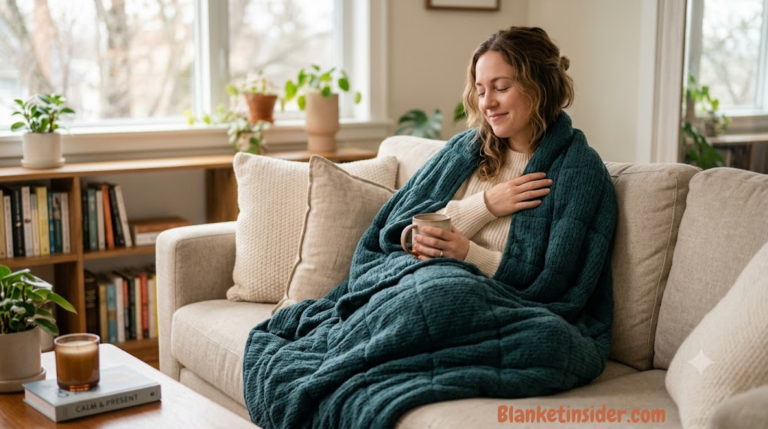
The Best Blankets for Anxiety: What to Look For (and Why It Actually Works)
Sensory comfort isn’t a luxury — it’s science. Learn exactly what makes a blanket soothe an anxious nervous system, then find the right one for you.
Why the Right Blanket Can Actually Reduce Anxiety
Anxiety isn’t just a thought pattern — it’s a full-body experience. When the stress response fires, your heart rate climbs, muscles tense, cortisol floods your bloodstream, and your skin becomes acutely sensitive to everything it touches. The blanket you sleep or rest under isn’t a passive object in this process. It’s an active participant in whether your nervous system can find its way back to calm.
The mechanism behind therapeutic blankets is well-documented in occupational therapy and sleep research. It centers on a concept called Deep Touch Pressure (DTP) — the same neurological principle behind why swaddling calms infants, why firm hugs feel grounding during panic, and why many people instinctively curl into smaller shapes when anxious. When distributed, steady pressure is applied to a large surface area of the body, the parasympathetic nervous system (your “rest and digest” mode) activates in opposition to the sympathetic “fight or flight” response.
This isn’t placebo territory. Studies measuring salivary cortisol, heart rate variability, and self-reported anxiety in populations from autism spectrum disorder to generalized anxiety disorder to PTSD have found measurable benefits from DTP-delivering products. The specific mechanisms include:
Serotonin Boost
Deep pressure stimulates serotonin release, a neurotransmitter closely linked to mood stability and the production of melatonin for sleep onset.
Heart Rate Reduction
Consistent pressure activates the vagus nerve, slowing heart rate and triggering a cascade of parasympathetic responses that reduce perceived threat.
Cortisol Reduction
Studies using physiological markers show measurable decreases in the stress hormone cortisol following DTP interventions, with effects appearing within minutes.
Sleep Quality Gains
Weighted pressure reduces nighttime wakefulness and time to sleep onset — two major anxiety-driven sleep disruptors — in adults and children.
It’s worth understanding, though, that weight alone doesn’t determine whether a blanket will help. Temperature regulation, fabric texture, noise level when moved, and even the fill distribution all play significant roles in whether the blanket delivers a genuinely calming experience — or simply adds another layer of discomfort. That’s why this guide covers the full picture, not just pounds.
The relationship between comfort, warmth, and anxiety also connects to why people reach for specific textures when stressed — soft, smooth fabrics feel fundamentally different to an anxious nervous system than scratchy ones. If you’re exploring options beyond weighted blankets, our comprehensive look at the best cozy blankets for the living room covers texture-first picks that prioritize comfort over weight.

The 8 Features That Matter Most When Choosing a Blanket for Anxiety
Shopping for an anxiety-relief blanket without a clear criteria set is a recipe for disappointment. The market is flooded with products marketed as “calming” that miss the mark on the specific characteristics your nervous system actually responds to. Here are the eight features that genuinely move the needle.
1. Weight and Pressure Distribution
The single most studied variable is weight. The occupational therapy guideline of approximately 10% of your body weight is a reasonable starting point, but it’s not a law — some people find that slightly less pressure (around 7–8%) feels more calming, especially if they experience claustrophobia or have respiratory concerns. What matters more than the total poundage is how that weight is distributed across the blanket.
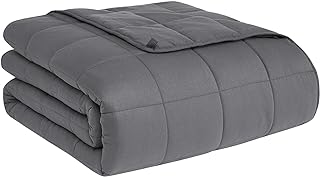
Blankets filled with evenly spaced glass micro-beads in a grid-stitched construction deliver pressure far more consistently than cheaper poly pellet alternatives, which tend to pool toward the edges over time. Gravity and movement will cause uneven fills to shift, creating dead zones and pressure points simultaneously — which is disruptive rather than calming.
2. Fabric Type and Surface Feel
Anxiety heightens tactile sensitivity. A fabric that’s merely “soft enough” under normal circumstances may feel abrasive, scratchy, or overwhelming during an anxiety episode. For most people, the best fabrics are those with minimal surface variation — smooth weaves rather than terry or textured surfaces, or premium minky/plush when warmth and deep softness are the goal. Our guide to what minky fabric is and why it’s so soft explains why this material specifically earns such loyal fans in the sensory-comfort space.
3. Thermal Regulation
A major driver of nighttime anxiety is thermal discomfort — specifically, getting too hot. When body temperature spikes under a heavy blanket, the nervous system can interpret the heat stress as another threat input, compounding anxiety rather than soothing it. Look for blankets with breathable construction, moisture-wicking fills, or explicitly cooling outer layers. If you run warm, blankets designed for night sweats address this exact intersection of heat and sleep disruption.
4. Fill Material
Modern weighted blankets use one of three primary fill types, each with different characteristics relevant to anxiety:
| Fill Type | Feel | Noise | Durability | Best For |
|---|---|---|---|---|
| Glass Micro-Beads | Dense, smooth | Near-silent | Excellent | Adults, all sleepers |
| Plastic Poly Pellets | Uneven, lumpy | Some rustling | Good | Budget picks |
| Steel Shot Beads | Dense, thin profile | Quiet | Excellent | Hot sleepers, minimal profile |
| Organic Cotton Fill | Soft, breathable | Silent | Good | Eco-conscious, sensitive skin |
For people with auditory sensitivities (common in anxiety and autism spectrum conditions), the noise produced when shifting a weighted blanket matters enormously. Glass micro-beads are the gold standard for quiet operation.
5. Size and Coverage
Full-body coverage is important for maximizing the DTP effect. A blanket that only covers the lower body misses the torso, which contains many of the body’s primary sensory receptors. That said, some people with anxiety prefer to begin with targeted pressure — a lap pad or smaller throw — before introducing full-body weight, especially if they have any history of trauma or claustrophobia.
6. Construction and Seam Quality
Flat-locked seams are the preference for sensory-sensitive users. Raised seams, rough hems, or inconsistent stitching are felt acutely during anxiety states when skin sensitivity is elevated. The best blankets use internal grid stitching to prevent fill migration and external flat-lock seams that eliminate friction points.
7. Washability
A blanket that becomes a hygiene concern because it’s difficult to clean is a practical failure regardless of how good it feels. Many weighted blankets now accommodate standard home washing machines, though weight limits and cycle recommendations vary. Our complete breakdown of how to wash a weighted blanket without damage is essential reading before your first wash.
8. Certifications and Chemical Safety
Anxiety often overlaps with chemical sensitivities and skin conditions. Look for OEKO-TEX Standard 100 certification, which verifies that every component of the blanket — fill, fabric, and dyes — has been tested for harmful substances. For people with eczema or contact dermatitis alongside anxiety, our roundup of the best blankets for eczema addresses both concerns simultaneously.

Weighted Blankets: The Most Studied Option for Anxiety Relief
If there’s one product category that has attracted serious scientific attention in the context of anxiety relief, it’s the weighted blanket. The research base is growing, the results are promising, and the mechanism is well-understood. But the category also has significant internal variation — not all weighted blankets work the same way, and some popular products fall short on the exact features that drive the calming effect.
For a thorough primer on the science and shopping landscape, our dedicated weighted blanket guide is the most comprehensive starting point. Here, we’ll focus specifically on the anxiety-relief angle.
How Weighted Blankets Activate the Parasympathetic System
The science is actually elegant in its simplicity. Mechanoreceptors in the skin — Pacinian corpuscles, Merkel discs, Ruffini endings — are specialized for detecting sustained pressure. When these receptors receive consistent, distributed input (as opposed to sharp or point-pressure), they send signals via the dorsal column-medial lemniscal pathway to the brain’s somatosensory cortex. This pathway is distinct from the one used by pain or temperature signals and has a natural inhibitory effect on the amygdala — the brain region most associated with the anxiety response.
In plain terms: the right kind of pressure tells your brain’s alarm system to stand down. Not by distraction, not by effort, but through direct neurological signaling.
The Gravity Blanket: Still a Gold Standard
The Gravity Blanket is one of the most recognizable names in this space, and our in-depth Gravity Blanket review confirms it earns that reputation. It uses micro glass beads distributed across a 7×7-inch grid-stitch pattern — one of the finer distributions available — which creates an exceptionally smooth, even pressure profile without pooling or shifting during the night.
✓ Strengths
- Premium glass micro-bead fill — near silent
- Extremely even weight distribution
- Removable, washable cover included
- Multiple weight and color options
- OEKO-TEX certified materials
✗ Limitations
- Premium price point
- Blanket itself requires large washer
- Heavy for solo travel use
- Limited cooling properties
YnM Weighted Blanket: Best for Customization
The YnM is the most popular weighted blanket on Amazon for good reason. Our full YnM weighted blanket review found it delivers exceptional value, with 7 layers of construction and a glass bead fill that rivals blankets costing twice as much. It’s available in more weight and size combinations than virtually any competitor, making it ideal for finding your exact personal sweet spot.
Bearaby Tree Napper: The Natural Material Alternative
For people who want the weighted experience without conventional blanket construction — particularly those with sensory preferences for natural, breathable materials — the Bearaby Tree Napper is in a class of its own. Made from Tencel (lyocell from tree pulp), it achieves its weight through a chunky knit construction rather than fill material, which means it’s naturally breathable, temperature-regulating, and impossible to leak fill. Our Bearaby Tree Napper review explores how this unusual construction translates to a genuinely different sensory experience.
Luna Weighted Blanket: Budget-Conscious Quality
Not everyone can or should spend top dollar on a weighted blanket at the outset — especially when you’re not yet certain weighted pressure will suit your anxiety profile. The Luna delivers glass bead fill, grid stitching, and OEKO-TEX certification at a noticeably lower price point. Our Luna weighted blanket review found it competes surprisingly well with premium options on the core anxiety-relief metrics.
Baloo Weighted Blanket: The Cotton-Forward Choice
The Baloo is a standout for anyone who prioritizes natural materials. Made from 100% cotton shell and fill, with glass beads for weight, it’s breathable, temperature-neutral, and free of synthetic microfibers. Our Baloo weighted blanket review is particularly relevant for people whose anxiety intersects with environmental sensitivities or a preference for certified organic materials.

Cooling Blankets for Anxiety: When Heat Makes It Worse
A substantial number of anxiety sufferers have a paradoxical relationship with weighted blankets: the pressure is exactly what they need, but the heat is unbearable. Anxiety already elevates core body temperature through cortisol and adrenaline. A heavy blanket that traps warmth compounds this perfectly, turning a tool meant to soothe into an additional stressor.
The solution isn’t to abandon weight — it’s to find products that deliver pressure without thermal load, or to choose a non-weighted cooling blanket for warm seasons or hot climates.
Body temperature and emotional state are deeply interlinked. Research shows that cooling the body (even modestly — as little as 0.5°C reduction in core temp) activates similar parasympathetic responses as DTP. A cooling blanket worn during anxiety episodes may reduce perceived distress even without weighted pressure.
What Makes a Blanket “Cooling”?
True cooling blankets use one or more of these mechanisms: moisture-wicking fibers that pull sweat away from skin before it can accumulate; open-weave constructions that promote airflow; phase-change material (PCM) fabrics that absorb body heat above a threshold temperature; or inherently cool-touch fibers such as lyocell, bamboo viscose, or Q-Max fabrics with high contact cooling values.
Our cooling blanket guide covers the full technical landscape of how these properties are achieved and measured. And if you’re comparing a cooling option to your standard setup, the breakdown of cooling blanket vs. regular blanket differences is worth reading before you decide.
Weighted + Cooling: The Best of Both Worlds
The most effective options for hot, anxious sleepers are weighted blankets that use steel shot bead fill (thinner profile, faster heat dissipation), cooling tencel or bamboo viscose outer shells, and a pocketed or channel-quilted construction that maximizes airflow around the fill. These exist, but they require careful selection — avoid any weighted blanket with a plush or minky exterior if overheating is your primary concern.
Bamboo-based fabrics are a particularly well-suited choice at this intersection. Our guide to the best bamboo blankets shows why this material consistently scores highest on the combination of softness and thermal neutrality — both important for anxious users.
✓ Cooling Blanket Advantages
- Prevents anxiety-compounding heat buildup
- Lighter weight — easier to use anywhere
- Better for humid or warm climates
- Can be used year-round
- Often machine washable easily
✗ Trade-offs to Consider
- No deep pressure if non-weighted
- May feel “too light” for DTP seekers
- Some cooling fabrics are synthetic
- PCM blankets lose effect over time

The Best Fabrics for Anxiety: Texture as Therapy
Fabric choice is frequently underestimated in discussions about anxiety-relief blankets. Most content focuses exclusively on weight, but for people with tactile hypersensitivity — a heightened sensitivity to touch that’s extremely common in anxiety disorders, ADHD, and autism spectrum conditions — the surface feel of a blanket is at least as important as its pressure profile.
Think of fabric as the first point of contact between your skin’s sensory receptors and the blanket’s therapeutic properties. If that contact triggers discomfort, irritation, or sensory overwhelm, the weight underneath doesn’t stand a chance.
Minky / Plush Polyester
For many anxiety sufferers, minky fabric is the equivalent of a soft-hug sensation. Its ultra-dense, short-pile surface creates a uniquely uniform tactile input — no rough patches, no varied texture, just consistent velvet-like contact across the entire surface. People who self-soothe through touch (stroking soft objects, running fingers through fur-like textures) often find minky provides a passive version of that same input. The comparison between minky vs. fleece is instructive — while both are soft, minky’s more uniform pile tends to be more predictable for sensitive users.
Bamboo Viscose and Tencel
Bamboo viscose and Tencel (lyocell) are the thermal regulation champions of the blanket world. Both fabrics are derived from plant cellulose, processed into exceptionally fine, smooth fibers that feel silk-like against skin. The Q-Max value (contact cooling measurement) of bamboo fabrics is substantially higher than cotton, meaning they feel cooler on first contact and maintain that quality through the night. For a deeper comparison, bamboo vs. cotton blanket breaks down exactly where each material wins.
Organic Cotton
For people who are skeptical of synthetic materials or who experience skin sensitivity, organic cotton is the anchor choice. It’s hypoallergenic, breathable, naturally moisture-wicking, and available in a range of weave densities. Percale-weave cotton feels crisper and cooler; sateen-weave cotton feels warmer and silkier — both have relevance for different anxiety profiles.
Wool and Merino
Wool has a specific advantage for cold-climate anxiety sufferers: its natural crimp structure creates insulating air pockets without adding significant weight, and its lanolin content is naturally antimicrobial. The higher the grade of wool (fine merino is the softest), the less likely it is to trigger the prickling sensation that makes many people reject wool outright. Our piece on merino wool thermoregulation explains how this material maintains warmth without overheating — relevant to anxiety management especially during cold seasons.
Sherpa and Fleece
Sherpa and fleece both have a loyal following in the anxiety-comfort space because of their exceptional softness-to-warmth ratio. Sherpa (mimicking the texture of sheep’s wool) tends to be slightly warmer and has a dual-sided texture that many users find satisfying. Our comparison of sherpa vs. fleece covers the specific differences in feel, durability, and care.
Sensory Sensitivity, ADHD, and Anxiety: What’s Different
Anxiety doesn’t exist in a vacuum. For a significant portion of people who turn to calming blankets, the anxiety exists alongside ADHD, autism spectrum traits, sensory processing disorder, or complex PTSD — each of which adds specific nuances to what a “good” anxiety blanket looks like.
ADHD and Sensory Seeking
People with ADHD frequently engage in sensory-seeking behavior — deliberately seeking out intense sensory input as a form of self-regulation. For this group, weighted blankets often serve a dual purpose: the pressure input satisfies the nervous system’s need for stimulation while simultaneously reducing the autonomic arousal that makes anxiety worse. The ideal ADHD-anxiety blanket typically skews heavier (toward the upper end of the personal weight range) and uses a texture that invites active tactile engagement.
Autism Spectrum and Deep Touch Preference
The use of weighted blankets originated in occupational therapy for autism spectrum populations, and remains among the most consistently reported comfort tools in that community. For autistic individuals with anxiety, the key variables are extremely consistent pressure distribution (irregular pressure can be worse than none), noise-free fill (auditory sensitivity is common), and minimal seam texture. A blanket with raised stitching patterns along the edges may be intolerable for someone with sensory hypersensitivity, even if the center field is perfectly comfortable.
For children with sensory processing differences experiencing anxiety, the same principles apply but with weight calibration that must be conservative — never more than 10% of body weight, and always with occupational therapist guidance for clinical applications. Our fidget blanket guide also covers tactile engagement tools for individuals with significant sensory needs.
PTSD and Weighted Blankets: A Nuanced Relationship
For people whose anxiety stems from trauma, particularly trauma involving physical restraint or confinement, weighted blankets require careful introduction. The “held down” sensation can be triggering rather than soothing for some trauma survivors. The approach most recommended by trauma-informed therapists is to begin with partial coverage (legs only, or a lap weight), increase gradually only if the sensation feels comfortable and safe, and always maintain the ability to remove the blanket easily — never tucking it tightly under the mattress.
Our Top Picks: Best Blankets for Anxiety by Category
These recommendations reflect an understanding of what actually drives anxiety relief in a blanket — not just marketing claims. Each pick excels on specific criteria relevant to its category.

The YnM earns the top overall slot by combining near-perfect weight distribution with the broadest customization matrix in the category. Its 7-layer system includes a cotton layer, duvet fill layers, and a glass bead grid that’s stitched into 4×4-inch pockets — small enough to prevent significant bead migration, large enough not to create a rigid feel. The outer cover is 100% cotton, breathable, and flat enough not to irritate sensitive skin. At almost any body weight, you’ll find a matching blanket weight in the YnM lineup. Read our full YnM review →
Check Price on Amazon
The Tree Napper’s breakthrough is that it achieves weight through knit architecture — not bead fill. Each strand of chunky-knit Tencel is woven into a heavy pattern that distributes pressure across the body without any internal fill that could trap heat. The open-loop knit construction allows air circulation on both sides of the blanket simultaneously, making it the best weighted option for people whose anxiety manifests as heat intolerance. Read our full Tree Napper review →
Check Price on Amazon
The Luna offers a direct, no-frills approach: quality glass bead fill, proper grid stitching, an OEKO-TEX certified cotton shell, and competitive weights across standard sizes — at a price that makes it accessible to people who want to trial weighted therapy before committing to a premium option. The made-in-USA variant is worth considering for anyone prioritizing domestic manufacturing and material traceability. Read our full Luna review →
Check Price on Amazon
When budget is secondary to finding the most refined weighted blanket experience, the Gravity Blanket consistently earns its price tag. The 7×7-inch grid stitching is among the smallest pocket sizes available — translating to a pressure profile that’s remarkably consistent from edge to center and never shifts noticeably during the night. The removable cover system also makes hygiene maintenance straightforward. Read our full Gravity Blanket review →
Check Price on AmazonSide-by-Side Comparison: Best Blankets for Anxiety
Use this comparison to identify which blanket fits your specific combination of needs. Most people have more than one variable — for example, anxiety plus hot sleeping plus a limited budget — and this table makes those trade-offs visible at a glance.
| Blanket | Type | Fill | Cooling | Hypoallergenic | Machine Wash | Best For | Price Range |
|---|---|---|---|---|---|---|---|
| YnM Weighted | Weighted | Glass beads | Moderate | Yes | Yes | All anxiety types | $$ |
| Gravity Blanket | Weighted | Fine glass beads | Moderate | Yes | Cover only | Premium pressure | $$$ |
| Luna Weighted | Weighted | Glass beads | Moderate | Yes | Yes | Budget-first buyers | $ |
| Bearaby Tree Napper | Knit weighted | No fill (knit weight) | Excellent | Yes | Yes | Hot/anxious sleepers | $$$ |
| Baloo Cotton | Weighted | Glass beads + cotton | Good | Yes | Yes | Natural material seekers | $$ |
| Bamboo Cooling Blanket | Non-weighted | Bamboo fill | Excellent | Yes | Yes | Warm climates, summer anxiety | $$ |
| Minky Plush Throw | Non-weighted | Polyester fill | Low | Varies | Yes | Tactile comfort seeking | $ |
| Merino Wool Blanket | Non-weighted | Natural wool | Moderate | Fine grades only | Hand wash | Cold climates, calming warmth | $$–$$$ |
How to Choose the Right Weight: A Practical Guide
The 10% body weight guideline is the most widely cited recommendation for weighted blankets, and it’s a sensible starting point — but it’s not immutable. The goal is to find the weight that feels grounding and reassuring without feeling suffocating or restricting. Here’s a practical framework.
Body Weight Reference Table
| Your Body Weight | Try First (7%) | Standard (10%) | Max (12%) |
|---|---|---|---|
| 80–100 lbs | 6 lbs | 8 lbs | 10 lbs |
| 100–130 lbs | 8 lbs | 12 lbs | 15 lbs |
| 130–160 lbs | 10 lbs | 15 lbs | 18 lbs |
| 160–200 lbs | 12 lbs | 18 lbs | 22 lbs |
| 200–250 lbs | 15 lbs | 22 lbs | 25 lbs |
| 250+ lbs | 18 lbs | 25 lbs | 30 lbs |
One important nuance: if you sleep with a partner, the weight guideline applies to the person using the weighted portion. A blanket used exclusively by one partner should still be calibrated to that individual’s body weight, regardless of the shared bed size. The size of the blanket (throw vs. twin vs. full) should match your bed or sleeping space, but the weight calibration is personal.
It’s also worth understanding the difference between weighted blankets and the down alternative. Our comparison of down vs. weighted blanket clarifies exactly when weight-based pressure is the right tool versus when a lighter, insulating option serves better.

Caring for Your Anxiety Blanket: The Complete Guide
An anxiety blanket that’s difficult to clean is a blanket you’ll use less consistently — and consistency is what drives therapeutic benefit. Understanding the care requirements before purchase is as important as understanding the fill type or weight.
Washing Weighted Blankets
Most modern weighted blankets under 15 lbs can be washed in a standard home washing machine with a capacity of at least 4.5 cubic feet. Blankets in the 15–25 lb range typically require a large-capacity home washer or a commercial laundromat machine. Using a machine that’s too small risks damage to both the blanket and the machine’s drum bearings from the centrifugal force of the beads during spin cycles.
Our complete guide on how to wash a weighted blanket without damage covers cycle temperatures, detergent choices, drying methods, and the specific risks associated with different fill materials. We also have a companion guide for washing weighted blankets without ruining the fill — because the fill migration that results from improper washing is a genuine and permanent issue.
Cooling Blanket Care
Cooling blankets — especially those made from bamboo viscose or Tencel — require gentler handling than cotton. High heat in the wash or dryer can break down the cellulose fiber structure that gives these fabrics their cooling properties. Our resource on washing cooling blankets covers the specific temperature limits, cycle settings, and drying approaches for each major cooling fabric type.
Storage Considerations
Weighted blankets, particularly those with glass or steel bead fill, should be stored flat or folded — not hung. Hanging a heavy blanket over a rod for extended periods puts localized stress on the seam stitching and can cause fill migration toward the lowest point. For storage solutions that keep weighted blankets in good condition between seasons, our roundup of the best blanket storage bags offers practical options that protect the structure while keeping blankets accessible.
Who Benefits Most From an Anxiety-Relief Blanket
Not everyone with anxiety will have the same experience with a weighted or comfort blanket. Understanding the profiles most likely to see benefit — and those who should exercise more caution — helps set realistic expectations.
Who Should Exercise Caution
Weighted blankets are not appropriate for everyone. Specific populations should consult a physician or therapist before using them:
- Young children under 2 years old — weight can impair movement and present a suffocation risk. For younger children, swaddle wraps and specific infant sleep products are more appropriate. Our resource on baby sleep blanket safety timelines covers age-appropriate options.
- People with respiratory conditions — asthma, COPD, or sleep apnea can be worsened by the thoracic compression of a heavy blanket.
- Claustrophobia — the enclosed sensation may trigger rather than soothe.
- Circulation disorders — pressure-related impacts on circulation can be significant for diabetics or those with vascular conditions.
Anxiety Blankets for Older Adults and Seniors
Older adults often see significant benefit from weighted blankets for anxiety, particularly those whose anxiety intersects with sleep disorders or dementia-related restlessness. However, weight calibration must be conservative — lighter options (5–8 lbs) are generally preferable to prevent any restriction of movement or breathing during sleep.
Blankets for Travel Anxiety
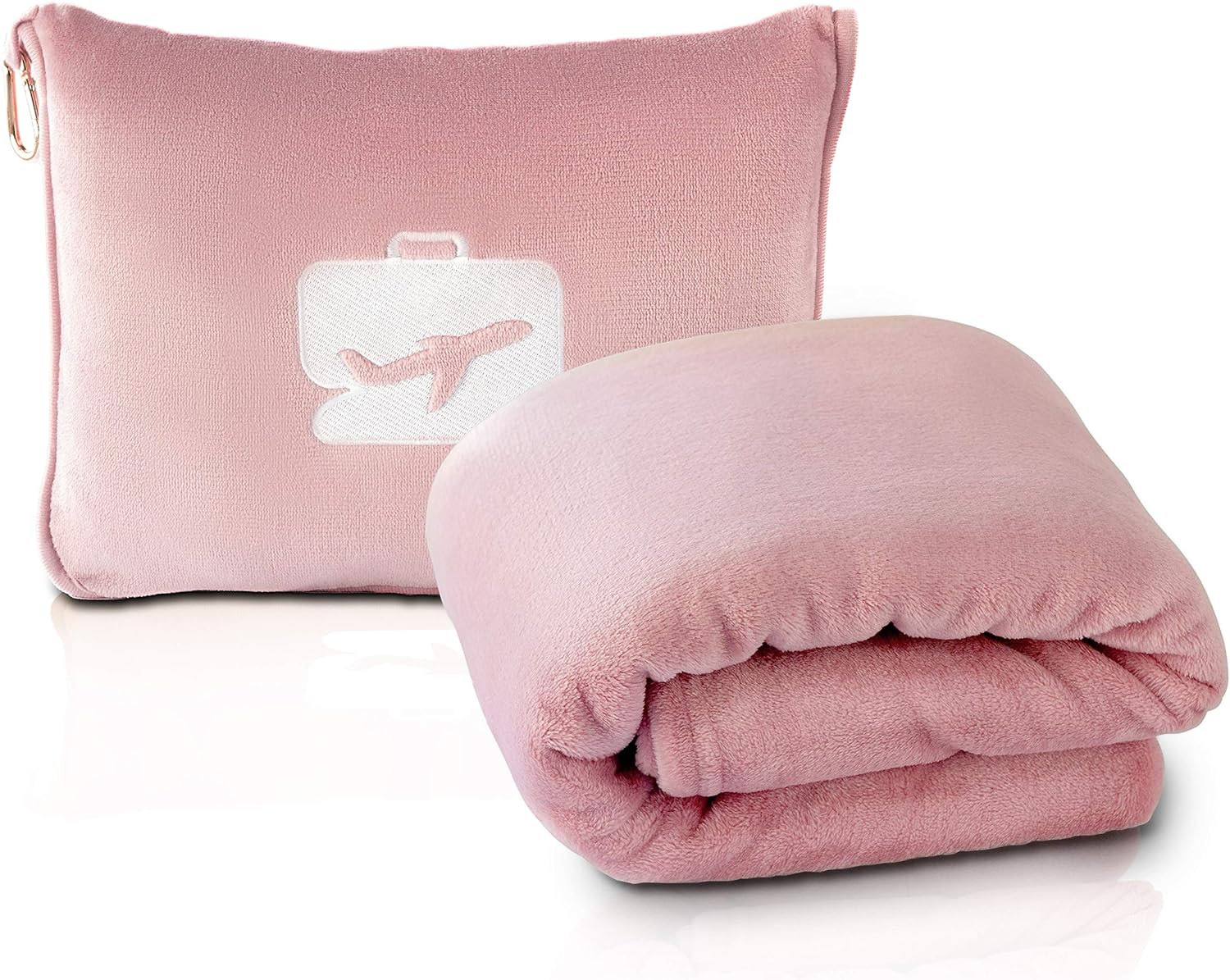
Anxiety doesn’t confine itself to the bedroom. For people whose anxiety spikes during travel — flights, long car journeys, unfamiliar hotel rooms — a compact travel blanket can provide portable comfort. Our guide to the best travel blanket and pillow sets includes options that compress small enough for carry-on bags while still providing meaningful sensory comfort. And for those who travel by car, our cozy road trip guide covers how to set up a comfortable, anxiety-reducing in-car environment.

The Final Buying Checklist: 12 Questions to Ask Before You Buy
Before adding any blanket to your cart, run through this checklist. It’s designed to surface the specific gaps between a product’s marketing and your personal needs.
For specialized use cases, the checklist expands further. If the blanket is for a person with dementia, our guide to the best fidget blankets for dementia adds specific cognitive engagement criteria. For college students setting up a dorm room that supports anxiety management, our dorm room comfort essentials list and cozy home essentials checklist are helpful companion resources.
Alternative Comfort Layers Worth Considering
A blanket isn’t the only tactile tool in the anxiety-management toolkit. For people who want the enveloping quality of a blanket without carrying it everywhere, wearable blankets with sleeves offer mobile comfort. For those who prioritize the sleeping environment more broadly, combining an anxiety blanket with high-quality bedding, appropriate living room throws, and calming home comfort accessories creates a more comprehensive sensory environment.
Frequently Asked Questions
Ready to Find the Right Blanket for Your Anxiety?
Whether you need the grounding pressure of a weighted blanket, the cooling comfort of a bamboo throw, or the tactile soothe of an ultra-plush minky — the right option exists. Use the comparison tables and checklist above to match your specific anxiety profile to the right product, and remember: the best anxiety blanket is the one that makes your nervous system feel genuinely safe.
Shop Anxiety Blankets on Amazon →