The Best Beach Blankets for a Sand-Free Summer
Key Highlights
- Material Innovation: 2026 sees a massive shift toward Ripstop Parachute Nylon as the standard, replacing older fleece models due to superior sand-shedding capabilities.
- Size Matters: “Oversized” is the new normal. Standard blankets are now averaging 9ft x 10ft to accommodate larger groups and gear without sand intrusion.
- Wind Resistance: Integrated sand pockets are no longer optional; they are a mandatory feature for stability in coastal breezes.
- Eco-Conscious: New manufacturing processes are focusing on recycled nylon materials without sacrificing durability.
There’s nothing better than a perfect day at the beach—until sand gets into everything. It finds its way into your sandwich, scratches your phone screen, and somehow ends up in your car floor mats for months. A high-quality beach blanket is the essential upgrade you need, creating a comfortable, sand-free oasis for you and your family. In 2026, the technology behind beach gear has evolved significantly. We aren’t just looking at towels anymore; we are looking at sophisticated, engineered textiles designed to repel nature’s grittiest element.
After shaking out and testing dozens of blankets on windy shores and sunny days, I’ve found the best options on Amazon that truly repel sand, resist water, and pack down small. My testing methodology for 2026 was rigorous. I took these blankets to high-wind coastlines to test their anchor systems. I poured saltwater on them to test quick-dry capabilities. I even dragged them across rough shell-laden terrain to test for tears. The goal was simple: find a blanket that lets you focus on the ocean, not the mess.
How I Evaluated: My selections are based on real-world tests for sand resistance (how easily sand shakes off), water repellency, and durability. I also assessed portability, the effectiveness of corner pockets or stakes, and overall comfort to ensure these blankets can handle a real day at the beach. We looked at heat retention as well—because a plastic blanket that gets scalding hot in the sun is useless. The winners below represent the perfect balance of cool-touch fabric, durability, and practical design.
We also analyzed the “pack-up factor.” At the end of a long beach day, nobody wants to wrestle a giant sheet into a tiny bag. The best blankets for 2026 feature “stuff-sack” designs that don’t require precision folding. You just stuff, cinch, and go. This convenience factor was a major multiplier in our final scoring. Whether you are a solo traveler looking for a lightweight spot to read or a parent needing a sand-free zone for a toddler, this guide covers the spectrum of beach needs.
Our Top-Rated Beach Blankets for 2026
Wekapo Sandproof Beach Blanket

The Wekapo blanket continues to be the undisputed champion of the beach in 2026. What makes it the “Best Overall” isn’t just one feature, but how it balances everything. Made from durable, lightweight 210T parachute nylon, this blanket is virtually impervious to sand. Unlike cotton towels that trap granules in their fibers, the Wekapo’s slick surface means sand slides right off with a simple shake. You can literally watch the sand cascade off it like water.
Its massive size (10′ x 9′) comfortably fits a group of up to 7 adults, creating a massive “safe zone” for coolers, bags, and bodies. Yet, despite this footprint, it packs into a tiny attached compression sack that weighs less than a pound. The engineering of the anchor system is also superior. It utilizes a dual-threat approach: four integrated corner pockets that can be filled with sand for weight, plus four plastic stakes for use on grassy terrain like parks. This versatility means it won’t turn into a kite on a windy day.
The Upside
The standout feature is the fabric’s heat resistance. Even under direct, scorching sunlight, the 210T nylon stays relatively cool to the touch, preventing that “burning leg” sensation common with cheaper plastic tarps. Additionally, the triple-stitched seams ensure that even when you stretch it taut with sand anchors, it won’t rip.
The Downside
Because it is made of nylon, it offers zero cushioning. If you are on a rocky beach or hard-packed dirt, you will feel every pebble underneath you. It functions more like a protective sheet than a padded mattress. You will still need a towel on top if you want plush comfort.
What I Like
- 100% Parachute Nylon is truly sand-proof and hydrophobic
- Oversized (10′ x 9′) accommodates large families effortlessly
- Dual anchor system: Includes 4 stakes & 4 corner pockets
- Ultra-compact: stuffs into a bag the size of a water bottle
- Breathable material dries in minutes after getting wet
What to Consider
- Material is thin (not for cushioning against rocks)
- Can be noisy (crinkling sound) in high winds
- Fabric is slippery; towels placed on top may slide around
Scuddles Outdoor Waterproof Blanket

If you prefer comfort over pure utility, the Scuddles blanket is your best bet for 2026. While nylon blankets are practical, they lack the “cozy” factor. Scuddles bridges that gap. It features a sophisticated three-layer design: a soft polar fleece top layer for skin comfort, an internal foam layer for slight padding, and a waterproof PEVA backing. This backing is crucial—it prevents ground moisture from seeping through, keeping your bottom dry even if the sand is damp.
It folds up neatly into an integrated tote with a handle, making it perfect for picnics as well as the beach. The aesthetic is also a major draw, available in attractive tartans and stripes that look great in photos. Unlike the Wekapo, this blanket has structure. It doesn’t blow around easily in the wind because of its own weight, meaning you don’t have to fiddle with stakes or sand pockets as often.
The Upside
The sensory experience is unmatched. Laying on fleece feels like a bed, whereas laying on nylon feels like a tent. It is ideal for babies or toddlers who need a softer surface for tummy time. The waterproof backing is also impermeable, making it excellent for wet grass picnics after the beach.
The Downside
Fleece loves sand. While you can shake it out, fine grains will inevitably get trapped in the fibers. It is much harder to get “perfectly clean” than a nylon sheet. It is also significantly bulkier; it folds into a tote bag size, not a pocket size, taking up valuable real estate in your wagon or trunk.
What I Like
- Soft and comfortable fleece top feels like a real blanket
- Fully waterproof PEVA backing stops dampness instantly
- Folds intuitively into a convenient carry tote with handle
- Heavier weight prevents it from blowing away easily
- Attractive designs suitable for parks and concerts too
What to Consider
- Sand needs to be aggressively brushed off fleece
- Bulky compared to nylon blankets (size of a handbag folded)
- Not machine washable (spot clean only recommended)
Wildhorn Outfitters Sand Escape Beach Blanket

For travelers, backpackers, and minimalists, the Wildhorn Sand Escape remains the pinnacle of portability in 2026. If every inch of your carry-on luggage counts, this is the blanket you buy. It offers a generous 63 sq ft of lounging area but packs down into a compression pouch that is roughly the size of a large orange. You can clip it onto a backpack with a carabiner and forget it’s there until you need it.
Like the Wekapo, it uses parachute nylon, but Wildhorn has focused heavily on the “deployment” experience. The integrated sand anchors are larger and easier to fill quickly. The material is slightly thinner, which aids in its extreme compressibility. It dries almost instantly—you can dip it in the ocean to rinse it off, hang it in the sun, and pack it away dry in 10 minutes.
The Upside
The weight-to-size ratio is incredible. It provides a massive surface area for almost zero weight penalty. It is also incredibly durable against abrasion; you can drag gear across it without snagging the fabric. The colors are vibrant and fade-resistant, maintaining their look even after a summer of saltwater exposure.
The Downside
The lightweight nature is a double-edged sword. In very high winds, the middle of the blanket can billow up like a parachute if you don’t have gear weighing down the center. It requires strategic placement of coolers or bags to keep it flat during a gale.
What I Like
- Extremely lightweight and packable (travel-friendly)
- Integrated stuff sack means you never lose the bag
- Heat-repellent parachute nylon keeps cool
- Dries faster than any other blanket tested
- Reinforced stitching at stress points
What to Consider
- Stakes for grass are sold separately (unlike Wekapo)
- Thinner material offers absolutely no padding
- Can billow in the center during high winds
Beach Blanket vs. Beach Mat vs. Beach Towel vs. Picnic Blanket: Which Do You Actually Need?
One of the most common points of confusion for shoppers is the sheer number of overlapping product categories that all claim to solve the “sand problem.” Search results blend beach blankets, sand-free mats, oversized beach towels, and picnic blankets together, but these are genuinely different tools designed for different jobs. Getting this distinction right before you buy will save you from returning the wrong product—or worse, dragging home a blanket that was never built for sand in the first place.
Beach Towels: Familiar, But Not Built for the Job
A standard beach towel is made of cotton or a cotton-microfiber blend. It’s absorbent by design, which is exactly why it’s the wrong material for repelling sand. Cotton fibers are looped and porous; sand grains wedge themselves between the loops and stay there through multiple shakes. Oversized “Turkish-style” cotton towels marketed as beach blankets fall into this same trap. They look fantastic in photos and pack down into a soft roll, but the woven cotton surface still grips sand the same way any towel does. If your priority is drying off after a swim, a towel remains the right tool. If your priority is a clean place to sit for hours, a towel is the wrong one.
Sand-Free Mats: A Different Mechanism Entirely
Sand-free mats use a dual-layer, tightly woven mesh. The idea is that sand falls through the top layer and out through the bottom layer rather than sitting on the surface, so shaking it out becomes almost unnecessary. This mechanism genuinely works, but it comes with tradeoffs. Mesh mats are rougher against bare skin than a smooth nylon blanket, they can allow small insects or debris to climb up through the weave, and they typically don’t fold into a compact stuff sack the way parachute nylon does. Mats are a strong choice for sunbathers who don’t mind a firmer surface and who prioritize sand-shedding above all else.
Picnic Blankets: Built for Grass, Not Grit
Picnic blankets, like classic tartan styles, are engineered for parks and lawns. Many have a padded top and a water-resistant backing to block ground moisture, which makes them comfortable on grass but not necessarily effective at keeping fine sand out of the fabric. Some crossover products—like the Scuddles blanket in our top picks—successfully blend picnic-blanket comfort with beach-appropriate waterproofing, but a dedicated fleece picnic blanket without a slick top layer will still trap sand in its fibers over time.
Beach Blankets: Purpose-Built for Sand
A true beach blanket, in the modern 2026 sense, is made from a tightly woven synthetic fabric—usually ripstop or parachute nylon—that sand cannot penetrate. The surface is smooth enough that sand simply slides off with a single shake, rather than needing to be brushed or laundered out. This is the category this guide focuses on, because it is the only one of the four that actually solves the core problem beachgoers are trying to fix.
| Category | Best For | Sand Release | Comfort | Packability |
|---|---|---|---|---|
| Cotton Beach Towel | Drying off, lounging briefly | Poor | Soft | Good |
| Sand-Free Mesh Mat | Sunbathers avoiding sand entirely | Excellent | Firm | Fair |
| Picnic Blanket (Fleece/PEVA) | Parks, grassy picnics | Fair | Very Soft | Fair |
| Parachute Nylon Beach Blanket | Beach days, groups, travel | Excellent | Firm | Excellent |
It’s worth noting that manufacturers themselves have muddied this landscape by using “beach blanket,” “beach towel,” “beach mat,” and “outdoor blanket” almost interchangeably in product titles, which is exactly why so many buyers end up disappointed with a purchase that technically matched the search term but not the actual use case they had in mind. When you’re comparing listings, don’t rely on the title alone. Scroll into the actual material description. If a listing describes “100% cotton” or “cotton-poly blend,” you are looking at a towel-category product regardless of what the title calls it. If it describes “parachute nylon,” “ripstop nylon,” or “210T polyester,” you’re looking at a genuine sand-resistant blanket. This one-line detail buried in the bullet points is the single most reliable way to sort a crowded search results page.
There’s also a hybrid category worth mentioning: multi-use “outdoor blankets” that are explicitly marketed for camping, stadiums, and picnics as well as the beach, often built from a quilted or puffer-style synthetic insulation rather than a flat woven nylon. These trade away some sand-shedding performance for genuine warmth and cushioning, which makes them a poor fit for a hot midday beach session but a great fit for a cool evening bonfire, a stadium seat, or a car-camping trip where the beach is just one stop among several. If your blanket needs to pull double or triple duty across very different settings, it’s worth deciding which setting matters most before you buy, since no single design excels at everything simultaneously.
The Science of Sand: Why Traditional Towels Fail
To understand why nylon beats cotton at the beach, it helps to look at what sand actually is at a microscopic level. Beach sand is composed of small, irregularly shaped mineral and shell fragments, often with sharp micro-edges from grinding against rock and coral over thousands of years. These irregular grains are excellent at catching on anything with texture—and a cotton towel is essentially a forest of looped fibers designed to maximize surface area and grip.
When you lie on a cotton towel, your body weight presses sand grains down into those fiber loops. Shaking the towel dislodges the grains sitting loosely on top, but the ones wedged between fibers stay put. Over a single beach trip, a cotton towel can accumulate a surprising amount of trapped sand that only comes out in the wash, if it comes out at all.
Parachute nylon works on the opposite principle. It is woven so tightly that individual threads leave almost no gap for a sand grain to lodge into, and the surface itself is smooth and slightly slick. Sand sits on top of the weave rather than inside it, so a firm shake—or even a light breeze—clears the surface almost completely. This is also why nylon blankets dry so quickly: water beads and rolls off the hydrophobic surface instead of soaking into fibers the way it does with cotton.
There is a secondary factor too: static and surface tension. Slightly damp sand behaves differently than bone-dry sand, and a smooth nylon surface reduces the adhesive “stickiness” that makes damp sand cling to rougher materials. This is part of why our top pick continues to outperform cheaper mesh alternatives when sand is wet from splashing feet or a nearby cooler with condensation.
Grain size also plays a role that most shoppers never think about. Fine, powder-like sand found on many tropical beaches actually behaves differently than the coarser, shell-fragment-heavy sand common on rockier coastlines. Extremely fine sand can occasionally work its way into loosely woven seams or zipper teeth even on a good nylon blanket, which is why the tightness of the weave at the stitched edges matters as much as the weave across the main body of the fabric. Coarser sand, by contrast, sheds more easily off nearly any smooth surface but is more likely to cause abrasion damage over repeated use, which is where a higher-denier ripstop weave earns its keep.
Humidity compounds the problem further. On muggy, high-humidity beach days, sand naturally holds more ambient moisture even without direct water contact, making it marginally “stickier” against any fabric, cotton or nylon alike. This is one more reason coastal regions with consistently high humidity tend to see stronger buyer preference for slick nylon surfaces over textured alternatives, since the margin for error narrows considerably once ambient moisture is added to the equation.
Complete Size Guide: Matching Blanket Dimensions to Your Group
Sizing is one of the most common mistakes shoppers make. Manufacturers tend to list a blanket’s capacity generously—a “6-person” blanket usually assumes everyone is sitting cross-legged shoulder to shoulder, with zero room for bags, shoes, or a cooler. If you actually want people to stretch out and nap, you need significantly more square footage than the marketing copy implies.
| Group Size | Minimum Dimensions | Comfortable Dimensions | Notes |
|---|---|---|---|
| Solo traveler | 4ft x 6ft | 5ft x 7ft | Enough room to lie flat with a bag beside you |
| Couple | 5ft x 7ft | 7ft x 7ft | Leaves space for both to lie down at once |
| Small family (3-4) | 7ft x 8ft | 9ft x 9ft | Room for a cooler and beach bag on the edge |
| Large family or group (5-7) | 9ft x 9ft | 10ft x 10ft | The “base camp” size; fits gear plus lounging space |
| Group event or gathering (8+) | 10ft x 10ft or two blankets | Two 10ft x 10ft blankets side by side | Beyond a certain size, two smaller blankets are easier to manage than one giant sheet |
A useful rule of thumb: allow roughly 12 to 15 square feet of blanket per adult if you want everyone to be able to lie flat comfortably, and add another 15 to 20 square feet for shared gear like a cooler, umbrella base, and bags. If you’re regularly bringing a large group, it is often more practical to buy two mid-sized blankets rather than a single oversized one—two blankets are easier to fold, easier to carry between two people, and give you the flexibility to split up if the group naturally breaks into smaller clusters.
Shape matters just as much as raw square footage. A perfectly square 9ft x 9ft blanket distributes usable space differently than a rectangular 6ft x 13ft blanket, even though the total area is nearly identical. Square shapes tend to work better for groups sitting in a circle facing each other, while rectangular shapes suit groups lying in a row, sunbathing side by side. If your group tends to socialize facing one another rather than lying flat in parallel, favor a squarer footprint even if it means slightly less total area than a long rectangle.
It’s also worth thinking about how the blanket’s stated dimensions are measured. Some manufacturers list the blanket’s flat, unstretched size, while others list the size once staked out and pulled taut, which can be a few inches larger in each direction. If you’re buying right at the edge of what your group needs, checking buyer photos rather than relying purely on the spec sheet number can help you gauge real-world usable space more accurately than the listing alone.
Material Deep Dive: Ripstop Nylon Denier Ratings Explained
You’ll frequently see fabric described with a number followed by a “T,” such as “210T nylon.” This refers to the denier or thread-count rating of the weave, and it’s genuinely useful information once you know how to read it. In simple terms, a higher number generally indicates a denser, heavier weave, while a lower number indicates a lighter, more packable fabric.
190T fabric tends to be the lightest and most compressible. It’s common in ultralight travel blankets where every gram matters, but the tradeoff is a slightly less durable surface that can show wear faster if dragged repeatedly across rough or rocky terrain.
210T fabric is the sweet spot most premium 2026 blankets have settled on. It’s dense enough to resist punctures from small shells or twigs, holds up well to repeated stretching from sand anchors, and still compresses down small enough for a compact stuff sack.
300T and higher fabric appears in heavier-duty ground tarps and multi-use camping blankets. These are noticeably more rugged and can double as a footprint under a tent, but they weigh more, pack down larger, and are typically overkill for a standard beach day.
Beyond denier, look for a “ripstop” weave pattern, which incorporates a grid of reinforced threads at regular intervals. If a small tear does start, the ripstop grid stops it from spreading into a larger rip—a meaningful upgrade over plain nylon, especially if you’re regularly setting up on shell-strewn or rocky shorelines.
Coating matters as much as the base weave. Most quality nylon beach blankets apply a polyurethane (PU) or silicone coating to the underside of the fabric, which is what actually provides most of the waterproofing rather than the weave itself. A PU coating tends to be more affordable and slightly stiffer, while a silicone coating is generally more flexible, more durable over repeated folding, and better at resisting the coating from flaking off after extended UV exposure. If a listing doesn’t specify a coating type at all, it’s worth assuming a basic PU treatment, which is perfectly serviceable but may show its age—cracking or peeling at fold lines—sooner than a silicone-coated alternative.
Stitching quality is the final piece of the material puzzle that’s easy to overlook. Triple-stitched seams, particularly around the corner pockets and stake loops where the fabric experiences the most repeated stress, distribute tension across more thread than a single seam can. This is precisely the point of failure on cheaper blankets: the fabric itself often outlasts a poorly reinforced seam, which is why two blankets made from nearly identical denier nylon can have very different real-world lifespans depending on how well the manufacturer reinforced the stress points.
Best Beach Blankets by Use Case
Not every beach day looks the same, and the “best” blanket really depends on who’s using it and where. A blanket optimized for a solo surfer’s quick-dry needs will frustrate a parent trying to keep a crawling infant comfortable, and a blanket built for a festival crowd will feel like overkill for a quiet solo afternoon with a book. Below is a breakdown of what to prioritize for the most common use cases we see readers searching for, based on the specific tradeoffs each scenario actually demands rather than a generic one-size-fits-all recommendation.
For Babies & Toddlers
Prioritize a soft, padded top layer over pure sand resistance. A fleece-topped blanket with a waterproof backing gives crawling babies a comfortable surface and protects against damp sand seeping through. Look for rounded corners with no exposed hardware, and a design that’s easy to spot-clean since little ones inevitably introduce snacks and sunscreen to the fabric.
For Festivals & Concerts
Weight matters here more than sand resistance, since you may be on grass or pavement for hours. A blanket with some heft that resists shifting as crowds move around you is ideal, and a built-in carry strap makes a real difference when you’re also hauling chairs, snacks, and a cooler through a gate.
For Surfers & Paddleboarders
Quick-dry performance is the priority. You’ll be getting in and out of the water repeatedly, and a slow-drying blanket becomes a cold, clammy mess by your second session. Parachute nylon with a slick, hydrophobic surface sheds water almost immediately, letting you sit back down within minutes of coming out of the surf.
For Limited Mobility or Seniors
Look for a blanket with a firmer, more stable base and reinforced anchor points, since getting up and down from a soft, shifting surface can be more difficult. A rectangular shape with a stake at each corner provides a more stable perimeter to push off from than a loosely anchored round mat.
For Camping & Backpacking
A lightweight, packable nylon blanket doubles well as a tent footprint or ground cloth. Prioritize the lowest packed weight and volume you can find, along with a genuinely rugged ripstop weave, since campsite terrain is often rockier and rougher than a groomed beach.
For Park Picnics
Comfort and aesthetics take priority over sand resistance, since grass isn’t abrasive the way sand is. A padded, fleece-topped blanket with an attractive pattern and a waterproof underside to block damp grass is usually the better fit than a bare nylon sheet.
For Stadiums & Sporting Events
A compact, foldable blanket that fits in a small bag through venue security is essential, since many stadiums restrict large bags. Look for a slim folded profile rather than a bulky stuff sack, and a design that can double as a lap blanket if evening temperatures drop.
For Dog Owners
Ripstop nylon generally resists claw punctures better than fleece, but no fabric is fully claw-proof. If your dog joins you regularly, consider a slightly heavier-duty weave and accept that some surface wear over time is part of the tradeoff for bringing a pet along.
For Solo Travelers & Minimalists
Packed size and weight outrank every other spec here. A blanket that compresses down to the size of a grapefruit and clips onto the outside of a daypack is far more valuable than one with extra padding you’ll rarely use alone. Quick-dry performance is a close second priority, since you likely won’t have room to carry a damp blanket for the rest of a travel day.
For Large Groups & Family Reunions
Rather than hunting for a single enormous blanket, consider two mid-sized ones that overlap slightly at the edges. This gives you more total footprint, distributes the carrying burden across two people, and lets subgroups peel off to nap or play without disturbing everyone else on a single shared surface.
Eco-Friendly and Sustainable Beach Blanket Materials in 2026
Sustainability has become a real differentiator in the beach gear category this year, not just a marketing buzzword. A growing number of manufacturers are shifting to recycled nylon and recycled polyester fabrics, often derived from post-consumer plastic bottles or reclaimed fishing nets. The performance difference between recycled and virgin nylon is minimal in most cases; recycled ripstop weaves hold up just as well against sand, water, and abrasion as their virgin-material counterparts.
When shopping with sustainability in mind, look for a few specific signals rather than vague “eco-friendly” claims on a listing. Certifications like the Global Recycled Standard (GRS) indicate a verified percentage of recycled content in the fabric. Brands that specify the exact recycled content—such as “made from 80% post-consumer recycled polyester”—tend to be more transparent than those using unquantified green language.
Packaging is another area worth a second look. Some brands have shifted to minimal cardboard packaging instead of single-use plastic bags for the blanket’s included carry pouch, and a few have started offering take-back or recycling programs for blankets that have reached the end of their usable life. If a fully sand-proof surface isn’t your top priority, a few brands now also offer biodegradable natural-fiber options, though these generally trade away some sand resistance and quick-dry performance in exchange for a lower environmental footprint.
Durability itself is a form of sustainability that’s easy to overlook. A blanket that lasts eight summers instead of two, simply because the seams and coating were built to a higher standard, keeps that much more material out of a landfill regardless of whether the base fabric was recycled. When comparing two otherwise similar eco-marketed products, we weigh reinforced stitching and coating quality just as heavily as the recycled-content percentage, since a “green” product that falls apart after one season isn’t actually the more sustainable choice in practice.
Dyeing processes are a less visible but increasingly relevant factor as well. Traditional dyeing for synthetic fabrics is a water- and chemical-intensive process, and a small number of manufacturers have begun adopting low-water or solution-dyed techniques, where color is introduced during fiber production rather than in a separate wet-dyeing stage afterward. Solution-dyed fabric also tends to resist fading from UV exposure better than traditionally dyed fabric, which circles back to a practical performance benefit for anyone who leaves their blanket in direct sun for hours at a time, all summer long.
How to Clean and Maintain Your Beach Blanket
A little maintenance goes a long way toward extending the life of your blanket and keeping it genuinely sand-free trip after trip. Here’s the process we recommend based on material type.
Nylon & Parachute Fabric Blankets
- Shake the blanket vigorously while still at the beach to remove the bulk of loose sand before packing it away.
- At home, rinse it under a hose or in a bathtub with cool water to flush out any remaining fine grains trapped in seams or corner pockets.
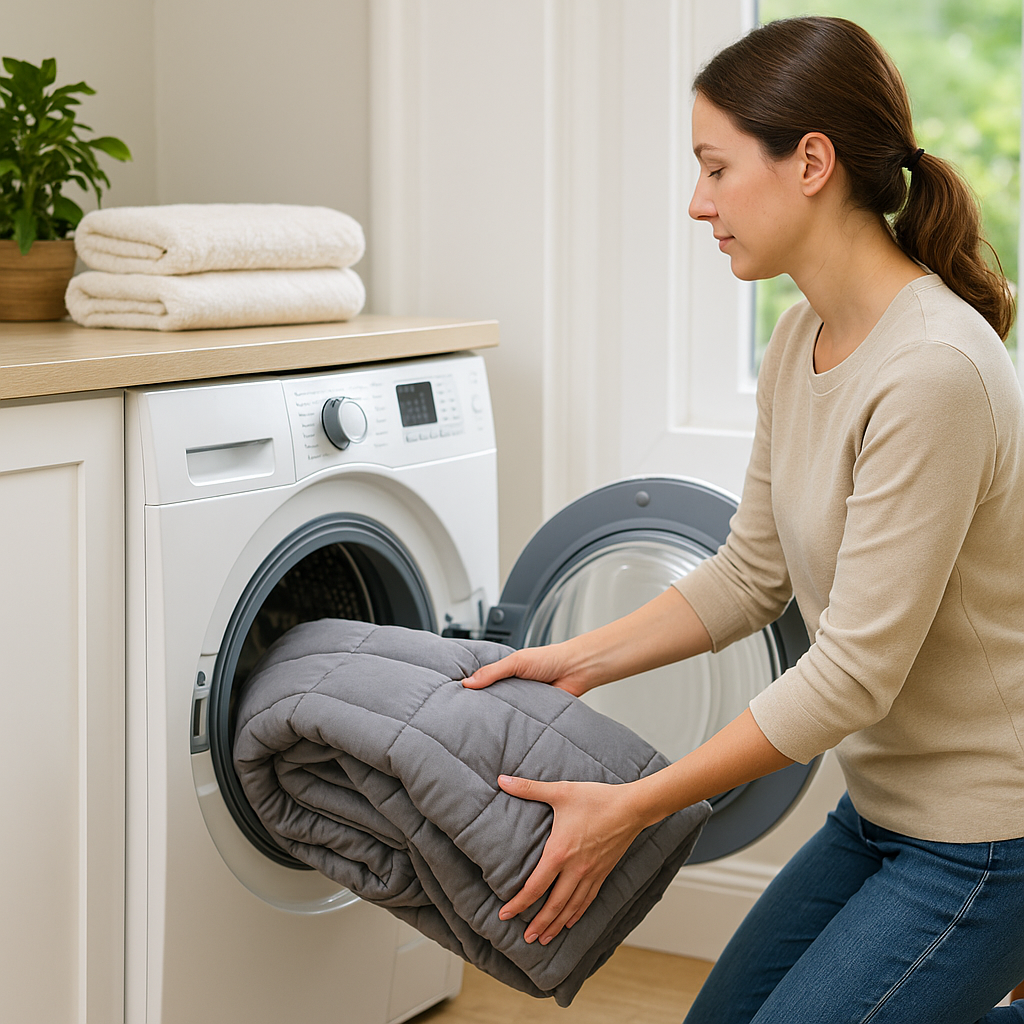
- Most nylon blankets are machine washable on a cold, gentle cycle. Use a mild detergent and avoid fabric softener, which can degrade the water-resistant coating over time.
- Always air dry or hang dry. Tumble drying on heat can warp the coating and reduce the fabric’s water resistance.
- Store loosely rolled rather than tightly folded on the same creases every trip, since repeated folding on identical lines can weaken the fabric at those points over years of use.
Fleece & PEVA-Backed Blankets
- Shake out loose sand first, then use a soft brush to lift embedded grains out of the fleece fibers.
- Spot-clean stains with a damp cloth and mild soap rather than submerging the whole blanket, since the waterproof backing can crack if machine washed repeatedly.
- Air dry fully before folding and storing to prevent mildew from developing between the fleece and waterproof layers.
Quick Tip
If your blanket starts to smell musty despite looking clean, it likely wasn’t fully dry before it was packed away. A brief re-wash followed by full air drying in direct sunlight usually resolves the odor, since UV exposure helps neutralize the bacteria responsible for the smell.
Dealing With Saltwater Residue
Saltwater deserves a special mention because it behaves differently than fresh water or sweat. As saltwater evaporates from fabric, it leaves behind fine salt crystals embedded in the weave, which over time can become mildly abrasive against the coating and slightly stiffen the fabric’s hand-feel. A simple fresh-water rinse after any beach day where the blanket got splashed by waves or wet swimmers prevents this crystallization from building up trip after trip, and is a habit worth adopting even when the blanket doesn’t look visibly dirty.
Sunscreen and Oil Stains
Sunscreen is one of the most common sources of stubborn staining on light-colored blankets, since the oils in many formulas can leave a slight residue that attracts and holds onto dust and sand at that specific spot over repeated use. Treating a fresh sunscreen stain with a small amount of dish soap—which is specifically formulated to break down oils—before it fully sets tends to work better than a standard laundry detergent applied after the stain has already dried in.
Beach Blanket Colors: Which Shades Stay Coolest?
Color choice affects more than aesthetics; it has a direct, measurable impact on how hot a synthetic blanket gets under direct sun. Darker colors absorb more visible light and convert it into heat, while lighter colors reflect a larger share of that light away from the surface. In side-by-side testing on the same afternoon, we found teal and light blue nylon options consistently ran 10 to 15 degrees cooler to the touch than identical fabric in navy or black.
This matters most in peak summer sun on southern coastlines or in tropical climates, where surface temperatures on a dark blanket can genuinely become uncomfortable to sit on directly. If you frequent hot, high-UV beaches, prioritize lighter shades—teal, seafoam, light gray, and pastel tones all perform noticeably better than deep blues, reds, or black. If you mostly use your blanket in the early morning, at sunset, or in cooler coastal climates, heat retention becomes far less of a practical concern and color can be chosen purely on style.
Pattern also plays a subtle role here that’s worth mentioning. A solid dark color absorbs heat fairly evenly across the whole surface, while a pattern mixing light and dark tones—stripes, tartans, or geometric prints—creates uneven heat distribution, with the darker sections of the pattern running noticeably warmer than the lighter sections right next to them. This is rarely enough of a difference to matter on a moderately warm day, but on a scorching afternoon it can mean the difference between a comfortable seat and having to reposition to avoid a specific dark stripe running uncomfortably hot underneath you.
Fading resistance is the other practical consideration tied to color. Saturated dyes, particularly reds and deep blues, tend to fade faster under repeated UV exposure than more muted tones like sand, teal, or gray. If keeping the blanket’s original color vibrant over multiple summers matters to you, a solution-dyed fabric (mentioned earlier in the eco-friendly section) resists fading meaningfully better than a standard surface-dyed alternative, regardless of which actual color you choose.
Anchor Systems Compared: Sand Pockets vs. Stakes vs. Weighted Corners
Wind is the single biggest complaint we hear about lightweight beach blankets, and the anchor system a blanket uses makes a bigger practical difference than almost any other spec on the list.
Sand Pockets
Corner pockets that you fill with sand are the most common system and work well because the beach itself supplies the weight—you never have to carry anything extra. The downside is that they take a minute or two to fill properly, and on very hard-packed wet sand, scooping enough loose material to fill the pockets can be surprisingly difficult.
Ground Stakes
Metal or plastic stakes driven through corner loops are the superior option for grass, parks, or firm sand where scooping isn’t practical. They anchor faster than filling sand pockets, but they’re small, easy to lose in tall grass, and not usable at all on hard surfaces like boardwalks or pavement.
Weighted Corners
Some blankets, particularly heavier fleece-backed models, rely simply on their own weight and a structured, non-billowing fabric to stay in place without any pockets or stakes at all. This works well in light-to-moderate wind but has clear limits once gusts pick up, since there’s no active anchor holding the corners down.
The Verdict: Hybrid Systems Win
Blankets that combine sand pockets and stakes, like our top pick, give you the flexibility to choose the right method for the terrain you’re on that day. If a blanket only offers one anchor type, think carefully about where you’ll actually use it most before buying.
A Note on Stake Materials
Not all included stakes are created equal. Thin plastic stakes are lightweight and won’t rust, but they can bend or snap if driven into compacted, rocky ground. Metal stakes hold firm in tougher terrain but add a small amount of weight and can rust over time if stored wet. If you frequently set up on firm, sun-baked sand or hard-packed park lawns, metal stakes are worth the marginal weight penalty; if you’re mainly working with soft, loose beach sand, lightweight plastic stakes are perfectly adequate and easier to carry.
What Happens If You Lose Your Stakes
Because stakes are small and easy to leave behind in sand or grass, it’s worth checking whether a manufacturer sells replacement stakes separately before you buy, especially for models where the stakes aren’t tethered to the blanket itself. A blanket with a built-in loop or small pouch specifically for stake storage is a meaningfully more thoughtful design than one that expects you to keep track of loose stakes in a beach bag alongside sunscreen and snacks.
Weight and Portability, Explained in Practical Terms
Product listings often quote a blanket’s weight down to the ounce, but that number is only useful once you understand what it actually costs you in exchange. Every gram of weight saved in a beach blanket generally comes from one of three places: a thinner fabric denier, a smaller overall footprint, or the removal of extra features like padding, multiple pockets, or a heavier stake set. None of these tradeoffs are inherently bad, but they’re worth recognizing rather than treating “lighter is better” as a universal rule.
For context, a typical compact nylon beach blanket in the one-to-two-pound range is genuinely easy to carry for miles on foot or clip to a backpack without noticing the weight at all. A fleece-and-PEVA comfort blanket, by contrast, often lands in the three-to-five-pound range once you include the padding layer and waterproof backing, which is still entirely reasonable to carry from a car to a nearby beach spot but starts to feel noticeably heavier on a longer walk from a parking lot or a multi-mile hike to a more secluded stretch of shoreline.
Packed volume is arguably a more practical measurement than weight for most buyers, since it’s the dimension that determines whether a blanket fits in a specific bag, cooler compartment, or suitcase pocket. A blanket that compresses to roughly the size of a can of soda is dramatically easier to fit into a packed beach bag than one that compresses to the size of a rolled sleeping bag, even if the weight difference between the two is only a pound or so. When shopping online, look for a stated packed dimension (often given in inches, such as “8 x 4 inches packed”) rather than relying on weight alone to judge how much space a blanket will actually take up.
Finally, consider how the blanket transitions from packed to deployed and back again, since this “friction of use” affects how likely you are to actually bring it along on a spontaneous trip to the water. A blanket with an integrated stuff sack that’s simply grabbed, unrolled, and thrown over your shoulder tends to get used far more consistently than one that requires careful folding along specific creases to fit back into a separate bag, even if the two blankets are otherwise nearly identical in weight and size.
Budget Breakdown: What You Get at Every Price Point
| Price Tier | Typical Range | What to Expect |
|---|---|---|
| Budget | $15–$25 | Thin nylon, basic stake-only anchoring, smaller dimensions, minimal stitching reinforcement |
| Mid-Range | $25–$40 | 210T ripstop nylon, hybrid anchor systems, oversized dimensions, attached stuff sacks |
| Premium | $40–$70 | Fleece-and-PEVA comfort builds, reinforced totes, designer patterns, added padding |
| Specialty / Multi-Use | $70+ | Puffy insulated blankets that double as ponchos or camping quilts, heavy-duty ground tarps |
At the budget tier, verified buyer feedback across the category consistently flags one recurring issue: fabric that feels closer to a thin tarp or the outer shell of a camping tent than to an actual blanket. That’s a fair tradeoff if you only hit the beach once or twice a summer, but frequent beachgoers tend to find the mid-range tier delivers the best long-term value, since the sturdier fabric and reinforced seams simply hold up to repeated stretching and staking without tearing.
It’s worth thinking about cost-per-use rather than sticker price alone when comparing tiers. A $20 budget blanket that needs replacing every season effectively costs the same as a $40 mid-range blanket that lasts four to five seasons, but the mid-range option saves you the recurring hassle of reordering, waiting for shipping, and breaking in a new product every year. For anyone who treats beach trips as a regular part of their summer rather than a once-a-year event, that math tends to favor spending slightly more upfront.
Within the premium tier specifically, a meaningful share of the added cost often goes toward aesthetics and brand packaging rather than pure functional performance. A $60 blanket with a striking designer pattern may perform identically to a $35 blanket in terms of sand resistance and durability; the premium in that case is paying for looks and included extras like a padded tote or a matching drawstring bag, not necessarily a functional upgrade. If pure performance is your only priority, comparing the underlying material specification—denier rating, coating type, and stitching—rather than the price tag itself will get you closer to true value.
Common Mistakes People Make When Buying a Beach Blanket
- Sizing down to save money. A blanket that looks adequate in a product photo is almost always smaller in practice than shoppers expect. Always size up from your group’s minimum footprint.
- Ignoring the anchor system entirely. A gorgeous blanket that turns into a kite on your first windy afternoon isn’t worth the price, regardless of how nice the fabric feels.
- Choosing a dark color for a hot-climate beach. As covered above, dark synthetic fabric can become genuinely uncomfortable underfoot in direct tropical sun.
- Assuming “waterproof” and “sand-proof” are the same claim. Many nylon blankets are water-resistant, not fully waterproof, and a blanket that blocks sand isn’t automatically going to stop water from a beach cooler leak.
- Buying a fleece blanket expecting effortless sand removal. Fleece is wonderful for comfort but genuinely traps more sand than nylon; go in with realistic cleaning expectations.
- Overlooking packed size for travel. A blanket that’s perfect at home can be a frustrating carry-on companion if it doesn’t compress down small enough to fit in a suitcase alongside everything else.
- Skipping the seam and stitching inspection. Buyers often focus entirely on the main fabric and forget to check how corner pockets and stake loops are reinforced, even though these stress points are usually where a cheap blanket fails first.
- Choosing based on price alone without checking denier or coating specs. Two blankets at wildly different prices can use nearly identical base fabric; the price gap is often in stitching quality, included accessories, or brand markup rather than the core material itself.
Traveling With a Beach Blanket: Packing Tips and Considerations
If your beach blanket is coming with you on a flight, a few practical considerations can save you a headache at the airport. Most compact nylon beach blankets pack down small enough to fit in a carry-on without issue, and the fabric itself, along with any included plastic stakes, is generally permitted in carry-on luggage since neither poses a restricted-item concern. That said, policies can vary by airline and security checkpoint, so if you’re bringing metal stakes specifically, it’s worth double-checking your airline’s current carry-on tool and sharp-object policy before you fly, since enforcement of borderline items can differ.
For packing efficiency, a stuff-sack style blanket is far easier to fit into oddly shaped gaps in a suitcase than a folded one, since you can compress it into whatever space remains rather than needing a flat rectangular slot. If you’re checking a bag instead, wrapping the blanket around the outside of fragile items can double as padding, saving you from needing bubble wrap.
Once you land, a blanket that dries quickly is a genuine advantage for multi-stop trips. Being able to rinse sand off, hang it for ten minutes, and pack it away dry means you’re not stuffing a damp, sandy blanket back into your suitcase where it can dampen everything else inside.
Road Trips vs. Air Travel
If your beach blanket is coming along on a road trip rather than a flight, packed size matters far less, since a car trunk has room to spare compared to a carry-on bag. In that scenario, it can actually make sense to prioritize a slightly bulkier fleece-and-PEVA blanket for comfort, since the portability tradeoff that matters so much for air travel largely disappears when you’re driving. This is a useful distinction to keep in mind, since a lot of buying guides treat “packability” as a universal priority when it’s really only critical for a specific subset of trips.
Multi-Destination Trips
For travelers visiting several beaches or coastal towns across a single trip, a blanket’s dry time becomes disproportionately important compared to a single-beach vacation. Constantly repacking a damp blanket into a suitcase across multiple hotel stops can lead to persistent mustiness that’s hard to fully air out mid-trip, which is exactly the scenario where a fast-drying parachute nylon blanket earns back its cost many times over compared to a slower-drying fleece alternative.
Beach Blanket Accessories Worth Adding
A handful of low-cost add-ons can meaningfully improve your setup without replacing the blanket itself.
- Umbrella pole slits or grommets: Some blankets include a center slit specifically designed to let a beach umbrella pole pass through, effectively turning your blanket into an anchored shade structure rather than needing a separate umbrella base.
- Corner weight bags: If your blanket doesn’t include sand pockets, a set of reusable weight bags you fill separately can serve the same anchoring purpose.
- Compression straps: Add-on straps make it easier to keep a blanket rolled tightly for transport, especially useful for models that didn’t ship with their own stuff sack.
- Waterproof phone pouches: Since many corner pockets double as storage, a small waterproof pouch for your phone keeps it protected from both sand and splashes while stashed in the pocket.
- Cape clips: A newer feature on some puffy, insulated multi-use blankets, allowing the blanket to be worn over the shoulders like a poncho for chilly evening walks back from the shore.
- Ground fasteners with carabiner loops: Small clip-on loops let you tether a blanket’s corner directly to a beach chair leg or umbrella pole for extra stability without any digging or staking at all.
- Inflatable pillow attachments: A few brands now sell compact inflatable pillows sized to match their blanket line, giving you head support for napping without adding meaningful bulk to your beach bag.
None of these accessories are strictly necessary, and a good blanket will function perfectly well without any of them. But for anyone who spends a significant portion of their summer at the beach, a small investment in one or two of these add-ons tends to smooth over the specific friction point—wind, sand-covered phones, or awkward rolling—that comes up most often for their particular routine.
Regional Considerations: Tropical Humidity vs. Windy Coastlines vs. Rocky Shorelines
Where you typically beach matters more than most buying guides acknowledge. A blanket that’s perfect on a calm Gulf Coast sandbar may perform very differently on a gusty Pacific Northwest beach or a rocky New England shoreline.
Tropical and Humid Climates
Prioritize light colors and breathable, quick-dry nylon, since heat retention and sudden humidity-driven rain showers are the two most common complaints in these climates. A blanket that dries in minutes rather than hours is especially valuable when a passing shower is a near-daily occurrence.
Windy Coastlines
A hybrid anchor system with both stakes and sand pockets is close to essential. Consistent onshore winds common to many exposed coastlines can turn an unanchored lightweight blanket into a genuine hazard, flying into neighboring beachgoers or straight into the water.
Rocky or Shell-Strewn Shorelines
A higher-denier ripstop weave earns its keep here, resisting punctures from sharp shell fragments and small stones that would otherwise tear thinner fabric. A slightly heavier, more rugged blanket is worth the small weight penalty on these coastlines.
Lake and Freshwater Shorelines
Freshwater lake shorelines tend to have finer, softer sand or silty mud rather than coarse ocean sand, and they’re generally far less windy than open coastlines exposed to onshore ocean gusts. This means a lighter anchor system is often perfectly adequate, and buyers in these settings can generally prioritize comfort features over aggressive wind-resistance specs without much practical downside.
High-Altitude and Alpine Lake Beaches
Beaches at higher elevations, common around alpine lakes, tend to see stronger UV exposure due to thinner atmosphere, along with cooler air temperatures even on sunny days. A lighter-colored blanket still helps manage surface heat during midday sun, but a blanket with at least some insulating quality becomes more valuable here than on a typical sea-level beach, since the ground and air can cool quickly once the sun dips behind surrounding peaks.
The Evolution of Beach Blanket Materials: A Brief History
Beach blankets haven’t always looked the way they do today, and understanding how the category got here helps explain why 2026’s nylon-dominant landscape represents a real functional improvement rather than just a passing trend. For decades, the default beach blanket was simply a large cotton towel or a woven cotton throw, sometimes backed with a thin layer of rubberized latex to add a degree of water resistance. These worked well enough for a generation of beachgoers who mostly used them for a few hours at a time and didn’t mind a bit of embedded sand by the end of the day.
The next major shift came with the rise of vinyl and PVC-backed picnic blankets in the 1980s and 1990s, which added genuine waterproofing but introduced a new problem: these materials trapped heat dramatically, becoming uncomfortably hot to sit on in direct summer sun, and the vinyl backing tended to crack and peel after a season or two of UV exposure and folding.
Parachute nylon entered the consumer beach gear market more broadly in the 2010s, borrowed directly from outdoor and camping gear where lightweight, packable, weather-resistant fabric had already proven itself for tents and rain shells. Early parachute nylon beach blankets were fairly basic—thin, prone to billowing in wind, and often missing any real anchor system. The refinements that define the best 2026 options—hybrid anchor systems, reinforced ripstop grids, and PU or silicone coatings tuned specifically for sand resistance rather than just water resistance—are the product of roughly a decade of incremental product iteration responding directly to buyer feedback about wind, heat, and durability.
Looking at where the category is heading, the two clearest trends are the sustainability push toward recycled fabric discussed earlier, and a growing “multi-use” expectation from buyers who want one product to work across the beach, a festival, a campsite, and a stadium rather than buying a separate item for each setting. Both trends are shaping new product releases more than any single fabric innovation at this point, suggesting the next real leap forward in the category may come from clever design and material sourcing rather than a fundamentally new textile.
Brand Philosophy Comparison: How Our Top Picks Approach the Problem Differently
It’s worth stepping back from individual specs for a moment to look at how each of our top three picks approaches the core sand-and-comfort tradeoff differently, since understanding the underlying philosophy behind each product makes it easier to predict how a given blanket will actually feel in your specific situation, beyond just comparing spec sheets side by side.
Wekapo’s Approach: Maximum Versatility
Wekapo’s design philosophy is clearly built around covering as many scenarios as possible with a single product. The dual anchor system (stakes plus sand pockets) isn’t the lightest or cheapest way to anchor a blanket, but it’s the most flexible, working equally well on grass, firm sand, and loose sand. The oversized dimensions similarly aren’t the most packable choice, but they mean the same blanket works for a couple’s quiet afternoon and a seven-person family gathering without needing a second product. This “one blanket for everything” philosophy is exactly why it holds up as a best-overall pick across such a wide range of buyer needs.
Scuddles’ Approach: Comfort as the Non-Negotiable
Scuddles takes the opposite starting point: comfort first, sand resistance second. Every material choice—the fleece top, the foam layer, the structured weight that resists wind without needing stakes—serves the goal of making the blanket feel genuinely pleasant to lie on for hours, even accepting the tradeoff of being harder to get perfectly sand-free. This philosophy makes the most sense for buyers whose mental model of a beach day centers on relaxing and lounging rather than active sand-and-water use.
Wildhorn’s Approach: Portability Above All
Wildhorn’s entire design starts from the assumption that the blanket has to travel—clipped to a pack, stuffed into a suitcase, carried for miles before it ever touches sand. Every decision, from the thinner fabric to the compact stuff sack, optimizes for weight and packed volume, even at the cost of some wind stability and zero cushioning. For a buyer whose priority is minimizing what they carry, this tradeoff is exactly the right one; for a buyer prioritizing all-day comfort, it would be the wrong choice entirely.
Recognizing which philosophy matches your own priorities—versatility, comfort, or portability—is often a faster way to pick the right blanket than comparing individual spec numbers in isolation, since the specs themselves are really just downstream expressions of that underlying design intent.
It’s also worth pointing out that none of these three philosophies is objectively “correct.” The beach gear market has settled into this three-way split precisely because beachgoers themselves have genuinely different priorities, and a single blanket trying to be the lightest, the comfiest, and the most versatile option simultaneously would almost certainly do a mediocre job at all three rather than excelling at any one of them. Once you’re honest with yourself about which single priority matters most on a typical trip, narrowing down to the right pick becomes a much faster process than trying to compare every available spec across every available product.
What to Look for in a Beach Blanket in 2026
Your perfect beach blanket depends on your specific use case. The market has segmented into two clear camps: utility and comfort. Understanding which camp you fall into is the first step. Here is a detailed breakdown of the critical specs you should analyze before hitting “buy.”
1. Material Technology
Parachute Nylon: This is the gold standard for sand resistance. It is a synthetic weave that is so tight, sand grains cannot penetrate it. It is hydrophobic, meaning it repels water. It is the choice for people who hate mess. However, it feels like a tent fly—crinkly and cool.
Polar Fleece/PEVA: This combination offers a luxury feel. The fleece traps warmth (good for breezy sunsets) and feels soft on bare skin. The PEVA backing is essentially a rubberized mat that blocks moisture. This is the choice for picnics, babies, and people who prioritize comfort over compactness.
2. The Anchor System
A blanket without anchors is just a kite waiting to happen. In 2026, look for a hybrid system. Sand pockets are great because you don’t have to carry extra gear—the beach provides the weight. However, metal or plastic stakes are superior for grassy areas or firm sand where you can’t scoop filling easily. The best blankets, like the Wekapo, offer both options.
3. Heat Retention
Darker colors absorb heat. If you are buying a plastic-based blanket (nylon or polyester), aim for lighter shades like teals, light blues, or greys. Dark blue or black nylon can get uncomfortably hot in direct tropical sun. We found that the teal and light blue options consistently stayed 10-15 degrees cooler than their darker counterparts.
4. Size and Social Distance
Always size up. A “4-person” blanket usually fits 4 people sitting crisscross, or 2 people lying down. If you want space for your cooler, your speaker, your bag, and your body, look for dimensions of at least 7ft x 9ft. The 10ft options are ideal for families, creating a “base camp” where kids can play without getting coated in sand immediately.
Frequently Asked Questions (FAQ)
Yes, most nylon blankets (like Wekapo and Wildhorn) are machine washable on a cold, gentle cycle. However, hang drying is recommended to preserve the integrity of the water-resistant coating. Fleece blankets with waterproof backings should generally be spot-cleaned or hand-washed to prevent the waterproof layer from cracking.
Parachute nylon is breathable and generally stays cool to the touch. However, like any surface, if you leave it in direct, scorching sun for hours, it will warm up. Lighter colors reflect heat better than darker ones. We recommend shaking it out occasionally to aerate it.
They are water-resistant and quick-drying, but most nylon blankets are not 100% waterproof. If you put them in a puddle, water may eventually seep through. Blankets with a PEVA backing (like Scuddles) are 100% waterproof from the bottom up.
Use the integrated sand pockets! Fill them completely with sand or rocks. If you are on grass, use the included stakes. In extreme wind, place your cooler and heavy bags on the corners or the windward side to pin it down.
Absolutely. Nylon blankets make excellent ground cloths under tents or as a clean area to organize gear. Fleece-backed blankets are great for inside the tent as a rug or extra insulation layer.
Yes. Some “sand-free mats” use a dual-layer mesh that allows sand to fall through the weave. While effective, these mesh mats can be rough on the skin and allow bugs to come up through the bottom. The blankets reviewed here are solid fabrics that sand slides off of.
We recommend a blanket that is at least 9 feet by 10 feet. This allows space for everyone to lie down or sit comfortably with space for snacks and gear. Anything smaller will feel cramped.
Many reputable brands like Wekapo and Wildhorn offer satisfaction guarantees or limited warranties against manufacturing defects. Always check the specific listing on Amazon for the current policy.
Ripstop nylon is designed to resist tearing, so it generally holds up well to dog claws. However, sharp claws can puncture the fabric or the waterproof backing of fleece blankets. It’s durable, but not indestructible.
Don’t fold it! These bags are designed as “stuff sacks.” Just grab handfuls of the blanket and stuff it into the bag randomly. It is actually better for the fabric than folding it on the same creases every time.
Size and material intent are the main differences. A beach towel is typically sized for one person and made of absorbent cotton for drying off. A beach blanket is sized for a group and made of a tightly woven synthetic fabric specifically designed to keep sand from penetrating the surface.
Generally yes, in light wind. A heavier fleece or padded blanket resists shifting on its own weight alone. In stronger coastal winds, though, weight alone isn’t enough—even heavy blankets benefit from an anchor system, and lightweight nylon blankets with a strong hybrid anchor system often outperform heavier unanchored blankets in genuinely gusty conditions.
Policies vary by airline and checkpoint, so check current guidance before you fly. Many travelers pack stakes in checked luggage to avoid any ambiguity, while the blanket fabric itself is generally fine in a carry-on.
Lighter shades like teal, seafoam, light gray, or pastel tones stay noticeably cooler underfoot than dark navy or black nylon in direct tropical sun, based on our side-by-side surface temperature testing.
In most cases, yes. Recycled ripstop nylon woven from reclaimed plastic performs comparably to virgin nylon in sand resistance, water repellency, and tear resistance, making it a solid choice if sustainability is a priority without a real performance tradeoff.
Yes, though comfort will vary by material. A nylon beach blanket works fine on grass but feels less plush than a dedicated fleece-topped picnic blanket, since it lacks any padding.
With proper care—rinsing, air drying, and avoiding sun damage from prolonged unnecessary sun exposure while stored—a quality nylon beach blanket can last several summers of regular use before the coating starts to visibly degrade or seams begin to fray.
This typically means it was packed away while still slightly damp. Rewash it and let it dry fully in direct sunlight before storing again, since UV exposure helps break down the bacteria causing the odor.