How to Wash a Minky Blanket Without Ruining Its Softness
A gentle, step-by-step laundry guide for minky throws, baby blankets, and weighted minky covers — hand-washing, machine-washing, drying, stain removal, and everything in between.
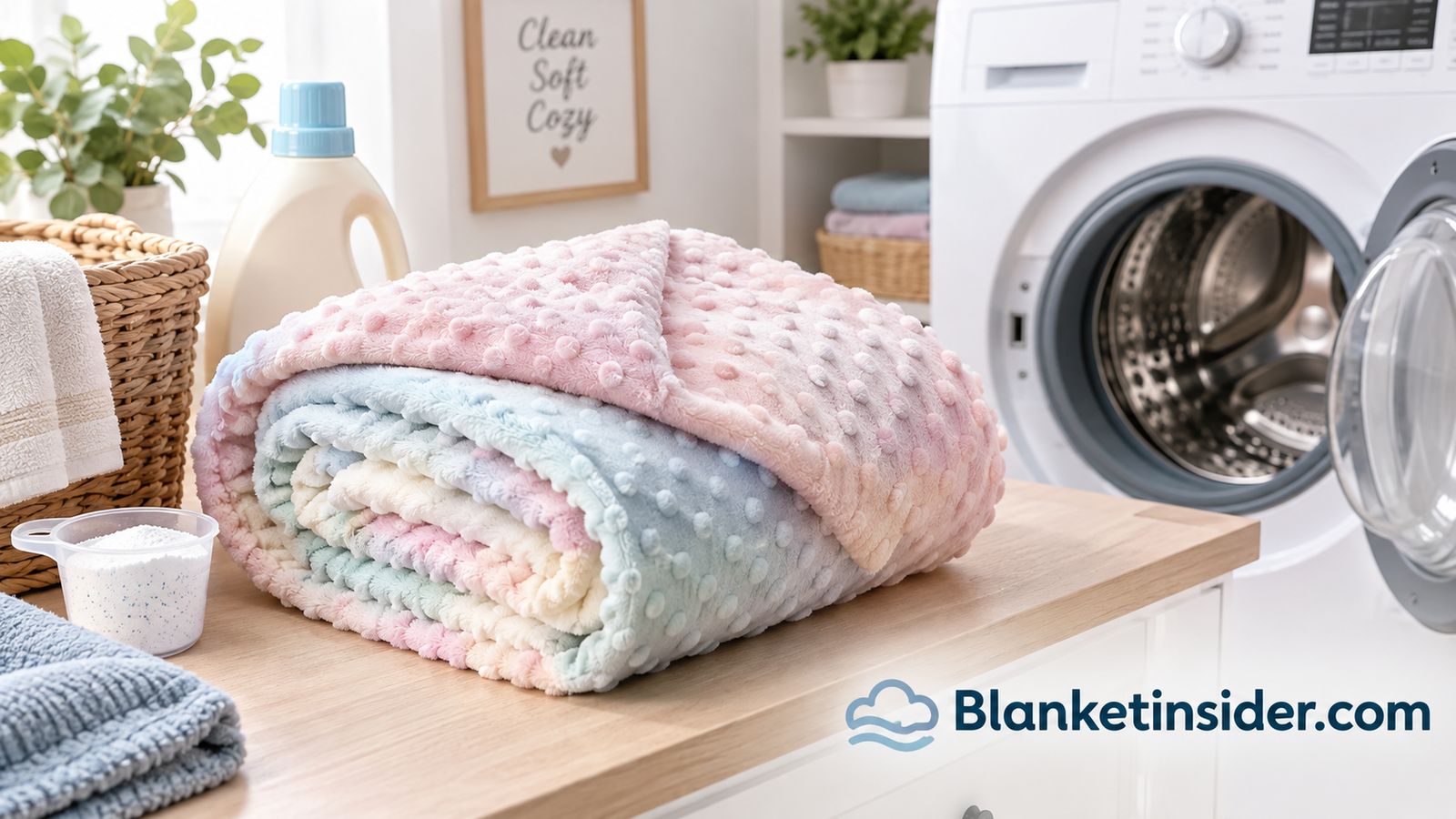
Minky blankets earn their spot on the couch because they feel almost weightless and impossibly plush — right up until the first wash goes wrong. A cycle that’s too hot, a spin that’s too aggressive, or a dryer that runs too long can flatten those signature raised dots into something closer to a stiff, matted throw. None of that is inevitable. Minky is a knit polyester pile, and once you understand how that pile behaves in water and heat, washing it becomes routine rather than risky.
This guide walks through both hand-washing and machine-washing methods in full step-by-step detail, plus drying, stain removal, blend-specific care, baby-blanket safety, and how to bring softness back if a previous wash left the fabric feeling rough. Skip to whichever section applies to your situation using the menu on the left (or the collapsible list above on mobile).
1. What Makes Minky Fabric Different (and Why Washing Matters)
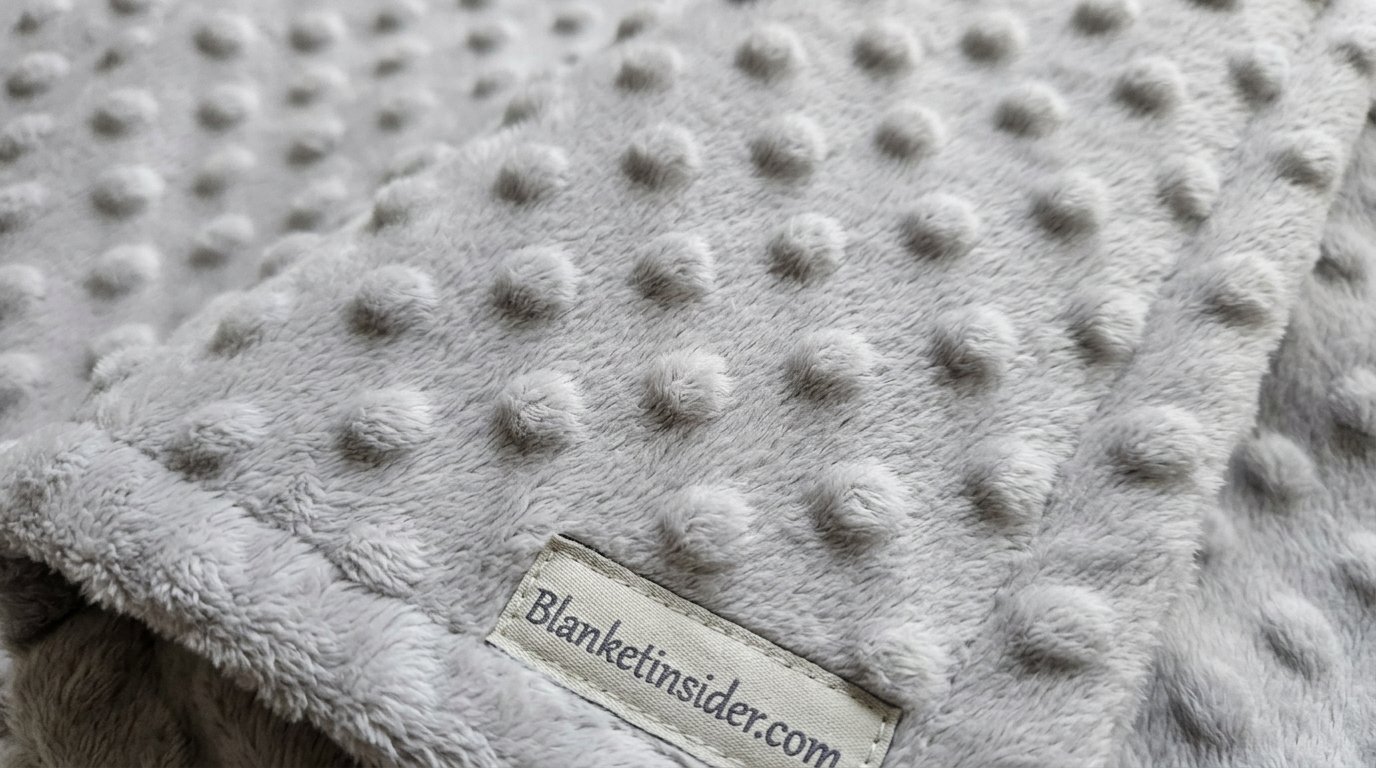
Minky isn’t a natural fiber — it’s a knit polyester with a short, dense pile that’s brushed to create that signature soft-to-the-touch surface. Because the “fluff” is really thousands of tiny raised loops, the fabric behaves more like a low-pile fleece than like cotton flannel. That distinction matters at every stage of laundry: heat and friction press the pile flat, and once it’s compressed and set with high heat, it doesn’t spring back the way it did new.
If you’ve compared it side by side with other plush fabrics, you already know it sits in its own category — softer and lighter than sherpa, less prone to pilling than cheap fleece, but also more heat-sensitive than either. For a deeper look at the fiber itself, this breakdown of what minky fabric is made from and why it feels the way it does is worth a read before you wash anything for the first time. And if you’re deciding between materials for a new blanket altogether, minky versus fleece lays out how the two differ in washing behavior as well as feel.
The manufacturing process is part of why care instructions matter so much. Minky pile is created by knitting a base fabric and then running it through a shearing and brushing process that stands the fibers up and trims them to a uniform, short height. That brushed structure is what gives new minky its almost velvety hand-feel. Hot water and high-heat drying soften the polymer just enough to let those upright fibers bend and lie flat, and once a fiber has spent time bent under heat, it tends to “remember” that flattened position even after the fabric cools. This is a completely different failure mode than what happens with cotton or wool, where shrinkage and felting are the main risks — with minky, the risk is almost entirely about heat setting the pile in the wrong shape.
It also explains why two minky blankets can feel completely different after a year of ownership even if they started out identical. The one that’s been through repeated hot washes and high-heat drying will feel thinner and flatter, while the one that’s been washed cold and air-dried will still have most of its original loft. None of this means minky is fragile — it holds up to years of regular use — it simply means the washing routine you choose has an outsized effect on how long it keeps its signature texture.
2. Before You Wash: Prep Checklist
A few minutes of prep prevents most of the damage that happens during laundering. Run through this checklist regardless of which method you plan to use.
- Read the care tag. Manufacturers occasionally add fill, backing, or trims (like satin binding) that change the safe wash settings.
- Shake it out. Loose pet hair, crumbs, and dust should come off outside before the blanket goes anywhere near water — wet debris grinds into the pile.
- Check for loose seams or trim. Satin edges and appliqués can fray faster than the minky body itself.
- Pre-treat visible stains. Cold water and a dab of gentle detergent worked in with your fingers, left to sit for 10–15 minutes, softens stains before the main wash.
- Turn it inside out if it has a printed or dyed pile side, to reduce surface friction on the finish.
- Close any zippers, snaps, or velcro on weighted or convertible minky covers so they don’t snag the pile during agitation.
- Test colorfastness on darker or hand-dyed prints. Dab a hidden corner with a damp white cloth and mild detergent; if color transfers noticeably, plan on a cold, quick hand-wash rather than a full soak.
- Consider your water hardness. Homes with hard water benefit from a slightly larger detergent dose or a water softener additive, since mineral buildup is one of the more common reasons minky starts to feel gritty over time even when the wash routine is otherwise gentle.
None of these steps take more than a minute or two, but skipping them is where most of the “my minky blanket ruined after one wash” stories actually start. A stain that’s allowed to set, a zipper left open in the same load, or an untested dye can each cause damage that no amount of careful washing afterward will undo.
| Situation | Recommended Starting Point |
|---|---|
| Everyday minky throw, no fill | Machine wash, gentle/cold |
| Baby minky blanket | Hand wash or gentle machine cycle |
| Minky weighted blanket | Hand wash preferred; see section 9 |
| Minky-backed heated blanket | Never machine wash the wired panel — see linked heated-blanket guides below |
| Heavily soiled or first wash | Hand wash to test colorfastness first |
3. Step-by-Step: Hand-Washing a Minky Blanket
Hand-washing is the safest option for weighted minky covers, baby blankets, older or delicate minky, and anything you’re washing for the very first time. It takes longer than tossing it in the machine, but it removes almost all of the risk of pile-crushing agitation.
Step 1 — Fill a basin with lukewarm water and mild detergent
Use a bathtub, large basin, or clean sink. Water should feel neutral against your wrist — not warm, not cold. Add a small amount of a dye-free, gentle liquid detergent and swirl it through the water before adding the blanket, so the detergent doesn’t sit concentrated against the fibers.
Step 2 — Submerge the blanket and swish gently
Push the blanket under the water and move it side to side with open hands for 2–3 minutes. This isn’t scrubbing — the goal is to let the water and detergent carry dirt out of the pile, not to grind the pile against itself.
Step 3 — Press, don’t scrub, on any soiled spots
For stubborn spots, press the fabric between your palms directly over the stain rather than rubbing it against itself. Rubbing minky against minky is the single fastest way to fray the pile.
Step 4 — Drain and refill with clean water to rinse
Detergent residue left in the pile is what makes minky feel gritty or dull after it dries. Drain the soapy water completely, refill with clean lukewarm water, and press the blanket through it. Repeat until the water runs clear with no suds.
Step 5 — Roll in a towel to press out excess water
Never wring or twist minky — that stresses the knit backing. Instead, lay the blanket flat on a large dry towel, roll it up like a jelly roll, and press down along the length to squeeze out water into the towel.
Once the towel has absorbed most of the moisture, move to the drying section below rather than hanging it dripping — wet weight pulls at the seams over time.
4. Step-by-Step: Machine-Washing a Minky Blanket
Most everyday minky throws without fill or wiring can go in the washing machine, as long as the cycle stays gentle and cold. Here’s the safe sequence.
Step 1 — Check the care label and turn the blanket inside out
Confirm the tag doesn’t call for hand-wash-only or dry-clean-only, then flip the blanket so the pile side faces inward. This reduces surface friction against the drum during the spin cycle.
Step 2 — Load it alone or with soft, like-colored items
Wash the blanket by itself, or pair it only with other soft laundry of a similar color. Avoid zippers, hooks, buttons, or anything with velcro in the same load — those catch and pull the pile.
Step 3 — Select the gentle or delicate cycle with cold water
Cold or lukewarm water only — hot water is what sets pile fibers flat permanently. The gentle/delicate cycle uses a slower spin and less aggressive tumbling, both of which protect the pile.
Step 4 — Add a small amount of mild detergent, skip the fabric softener
Fabric softener coats fibers with a waxy residue that makes minky’s synthetic pile feel greasy rather than soft over time. Skip it entirely and use half your usual amount of a gentle detergent instead.
Step 5 — Remove the blanket promptly when the cycle ends
Leaving a wet blanket balled up in the drum encourages musty odor and creases that are hard to release later. Pull it out as soon as the cycle finishes and shake it open before moving to the dryer or drying rack.
| Method | Best For | Time Needed | Risk Level |
|---|---|---|---|
| Hand-washing | Weighted, baby, delicate, first wash | 20–30 min | Low |
| Machine-washing (gentle, cold) | Everyday throws, no fill | 5 min hands-on | Low–Moderate |
Machine-Washing Pros
- Faster and less physically demanding
- Consistent water temperature
- Good for everyday throws washed often
Machine-Washing Cons
- Higher risk of pile crushing if cycle is wrong
- Not suitable for weighted fill or wired blankets
- Agitator-style washers are harsher than front-loaders
5. Drying Your Minky Blanket Properly
Drying is where most of the pile damage actually happens, because heat is what permanently flattens polyester fibers. Two safe approaches:
Air-drying (safest)
Lay the blanket flat on a drying rack or over two parallel chair backs so air can move on both sides. Reshape it periodically as it dries to keep the pile lying in one direction. This typically takes 4–8 hours depending on humidity.
Tumble-drying (faster, more risk)
If you use a dryer, select the lowest heat setting — ideally “air fluff” or “no heat” — and add a couple of clean, dry towels to the load to reduce direct drum friction on the pile. Remove the blanket as soon as it’s dry; over-drying is what sets creases and flattens texture.
Humidity and blanket thickness both affect air-drying time more than most people expect. A thin minky throw in a dry room might be fully dry in under three hours, while a thicker double-layer minky-and-sherpa blanket in a humid bathroom-adjacent laundry room can take closer to a full day. If you’re air-drying somewhere with limited airflow, a box fan pointed at the rack cuts drying time significantly and reduces the musty smell that can develop when damp fabric sits too long. Flipping the blanket halfway through, so the side that was against the rack gets direct air exposure, also speeds things up and prevents one side from drying flatter than the other.
If you do use a dryer, resist the urge to run a second cycle “just to be sure” it’s fully dry — checking by hand and giving it another 15–20 minutes on no-heat is gentler than a full extra cycle at any heat setting. Static tends to build up more in a fully synthetic fabric like minky than in natural fibers, so a wool dryer ball (rather than a dryer sheet) is a safer way to reduce static cling without coating the pile in residue.
6. Removing Common Stains from Minky Fabric
Because minky’s pile traps particles more than a flat weave does, spot-treating before a full wash almost always works better than repeating the whole wash cycle.
| Stain Type | Treatment |
|---|---|
| Food or grease | Blot excess, dab with a small amount of dish soap diluted in cool water, rinse |
| Drool or milk (baby blankets) | Cool water rinse immediately, then a normal gentle wash |
| Pet accidents | Blot, treat with an enzyme cleaner made for pet stains, then wash as usual |
| Ink or marker | Dab (don’t rub) with rubbing alcohol on a cloth before washing |
| General mustiness | Add a half-cup of white vinegar to the rinse cycle instead of softener |
Always test any spot-treatment on a hidden corner first, and avoid bleach entirely — it degrades the synthetic pile and can yellow light colors.
The reason spot-treating works so much better on minky than on a flat weave comes back to the pile structure itself. A stain on a flat cotton sheet sits mostly on the surface, where a normal wash cycle can flush it out easily. On minky, particles tend to work their way down between the raised fibers, closer to the knit backing, which means a quick rinse alone often isn’t enough to fully release them. Working a small amount of cleaner into the pile with your fingertips, in the direction the fibers naturally lie, gives the cleaner time to reach that lower layer before the fabric goes through a full wash cycle.
For grease-based stains specifically, a thin layer of cornstarch or baking soda pressed into the spot and left for 10–15 minutes before brushing off and treating with dish soap can help lift oil that’s bound tightly to the fibers, especially on lighter-colored minky where grease stains tend to show as a dull, darker patch even after a normal wash.
7. How Often Should You Wash a Minky Blanket
A minky throw used regularly on a couch or bed benefits from washing every one to two weeks, similar to a top sheet. A decorative or lightly used minky blanket can go three to four weeks between washes. Baby minky blankets that see daily contact should be washed roughly weekly, or immediately after any spit-up, feeding mess, or diaper-adjacent incident.
Over-washing isn’t harmless either — every cycle causes some fiber wear, so there’s no benefit to washing more often than the blanket’s actual use requires. If you’re weighing minky against other everyday fabrics for wash frequency, it helps to see how a comparable natural-fiber option holds up; this guide to washing a wool blanket is a useful side-by-side for readers who own both types.
A few practical signals are more reliable than a fixed calendar. If the blanket has picked up a noticeable pet or body odor, if it’s been used during a cold or flu recovery, or if you can see a visible sheen or dulling on the pile from body oils, those are all better indicators that it’s time to wash than simply counting days. Conversely, a decorative minky throw kept on a guest bed and used only occasionally may go a month or more between washes without any downside, since infrequent light use puts very little strain on the fibers compared to nightly use on a couch or in a crib.
8. Common Mistakes That Ruin Minky Blankets
What Damages the Pile
- Washing or drying on high heat
- Using fabric softener or dryer sheets
- Wringing or twisting instead of pressing out water
- Washing with zippers, buttons, or rough denim
- Leaving it damp and balled up for hours
- Ironing directly on the pile side
What Protects the Pile
- Cold or lukewarm water only
- Gentle/delicate cycle or hand-washing
- Mild, dye-free liquid detergent in small amounts
- Air-drying or low/no-heat tumble drying
- Reshaping while damp
- Washing minky separately from rough fabrics
Most of these mistakes are individually survivable — one hot wash usually won’t ruin a blanket outright. It’s the accumulation that matters. A blanket washed on warm with softener every week for a year will show noticeably more wear than one washed the same number of times on cold without softener, even though neither single wash looked dramatic in the moment. Treat the guidelines above as defaults you return to every time, not as rules that only apply when the blanket is brand new.
9. Washing Minky Blend Blankets (Minky + Fleece, Minky + Sherpa, Minky + Cotton)
Many blankets pair a minky pile on one side with a different backing fabric on the other — fleece, sherpa, or woven cotton are the most common combinations. When two fibers are sewn together, wash to the more delicate of the two materials, which in almost every case is the minky side.
| Blend | Safe Wash Setting | Dryer Safe? |
|---|---|---|
| Minky + Fleece | Cold, gentle cycle | Low heat only |
| Minky + Sherpa | Cold, gentle cycle, hand-wash if heavily textured | Air-dry preferred |
| Minky + Cotton backing | Cold, gentle cycle | Low heat, tumble briefly |
If you’re not sure which fabric a blanket is backed with, this comparison of sherpa versus fleece and this broader guide to mink and minky-style blankets both help identify texture and care differences at a glance.
Sherpa-backed minky blankets deserve a bit of extra attention because sherpa’s looped texture tends to shed more lint during the first several washes than minky does on its own. Washing a new minky-sherpa blend separately for the first two or three cycles, and cleaning the washer’s lint trap or filter afterward, prevents that shedding from transferring onto other laundry. Once a sherpa-backed blanket has been through a handful of washes, lint shedding typically settles down to a much lower baseline.
Cotton-backed minky blankets — often used for baby quilts and reversible nursery blankets — are generally the most forgiving blend to wash, since cotton tolerates a slightly wider temperature range than minky does on its own. Even so, defaulting to the minky side’s cold-water requirement keeps both layers looking new for longer and avoids any risk of the cotton backing shrinking slightly relative to the non-shrinking polyester pile, which over many washes can cause subtle puckering at the seams.
10. Washing Minky Baby Blankets Safely
Baby blankets get washed far more often than adult throws, and a baby’s skin is more reactive to detergent residue, so the process deserves a couple of extra precautions:
- Use a fragrance-free, dye-free detergent formulated for infant laundry.
- Double-rinse to make sure no detergent residue remains in the pile.
- Hand-wash or use the gentlest cycle available, even if the tag allows machine washing, since baby blankets are washed so frequently that gentler handling extends their life.
- Air-dry when possible rather than using high heat, which shortens the usable life of a blanket that will be laundered weekly for months.
If you’re still comparing fabric options for a nursery, this guide to minky versus fleece for baby blankets covers how each performs under frequent washing, and this roundup of the best baby blankets highlights which materials tend to hold up longest. For newborns specifically, these tested swaddle blankets are worth checking against your current minky option.
It’s also worth thinking about rotation for anything used at bedtime. Pediatric sleep guidance generally recommends keeping loose blankets out of a crib for young infants, so many minky baby blankets are used more during supervised tummy time, stroller rides, or car seat naps than for overnight sleep — which changes how often they realistically need washing. A blanket that only comes out for an hour a day accumulates far less soil than one left in a crib around the clock, so matching your wash schedule to actual usage rather than a fixed weekly rule tends to work better in practice. If you’re weighing when a blanket becomes appropriate for unsupervised sleep, this guide on when a baby can sleep with a blanket covers the timeline in more detail.
11. Restoring Softness After a Rough Wash
If a previous wash left the blanket feeling matted, stiff, or crunchy, it’s often reversible rather than permanent:
- Re-wash on cold with no detergent to strip out any softener or hard-water mineral buildup.
- Add a half-cup of white vinegar to the rinse cycle — it dissolves residue without leaving its own coating behind.
- Fluff by hand while damp, brushing the pile in one direction with your fingers or a soft-bristled brush.
- Air-dry flat rather than hanging, which lets the pile relax back into shape without gravity pulling at the knit backing.
Fabric that’s been through repeated high-heat drying may not fully recover — at that point the polyester fibers themselves have been reshaped, not just coated in residue. Prevention with the wash methods above is far more effective than trying to reverse heat damage after the fact.
One diagnostic worth running before you assume the damage is permanent: wet a small hidden section of the blanket with plain water and watch how the pile responds as it dries. If the fibers spring back up into their original raised texture once dry, the flattening you’re seeing elsewhere is likely residue-related and will respond to the vinegar-rinse method above. If the fibers stay pressed flat even after that test, the polyester has genuinely been heat-set, and the most realistic path forward is slowing further wear rather than expecting a full restoration.
12. Long-Term Care and Storage Tips
Between washes, how a minky blanket is stored affects how long the pile stays lofted:
- Fold loosely rather than compressing it tightly in a bin — sustained pressure flattens the pile over weeks.
- Keep it away from direct sunlight in storage, which can fade dyed minky faster than natural fibers.
- Store in a breathable cotton bag rather than sealed plastic to avoid trapped humidity and musty odor.
- Shake it out every few weeks even when not in regular use, to keep the fibers from settling flat.
For dedicated storage solutions, these blanket storage bags and this roundup of blanket chests and trunks both cover breathable options built for exactly this kind of long-term care.
Frequently Asked Questions
Can you put a minky blanket in the dryer?
Yes, on the lowest heat setting or an air-fluff cycle. High heat is what flattens and mats the pile, so keep the temperature low and remove the blanket as soon as it’s dry.
Does minky fabric shrink when washed?
Minky is polyester, which is naturally shrink-resistant. Any size change you notice after washing is usually the pile relaxing or compressing slightly, not true fiber shrinkage, and cold water washing minimizes even that.
Can you wash a minky-backed heated blanket the same way?
No — heated blankets have internal wiring that can’t go through a normal wash cycle safely. See dedicated guides on whether you can wash a heated blanket and how to wash one safely before attempting it.
What water temperature is safe for minky?
Cold to lukewarm water only. Hot water accelerates pile flattening and can affect dye colorfastness on printed minky designs.
Can you use fabric softener on a minky blanket?
It’s best avoided. Fabric softener coats synthetic pile fibers with a residue that dulls softness over repeated washes rather than preserving it.
How do you make minky fabric soft again after washing?
Re-wash on cold with no detergent, add a half-cup of white vinegar to the rinse, and air-dry flat while brushing the pile with your fingers in one direction.
Can you wash a minky weighted blanket?
Hand-washing is strongly preferred for weighted minky covers, since machine agitation can shift glass or poly-pellet fill unevenly. For fill-specific guidance, see how to wash a weighted blanket without ruining the fill.
Is it safe to machine-wash a minky baby blanket?
Generally yes on a gentle, cold cycle with fragrance-free detergent, though hand-washing is gentler for blankets that see daily use and frequent laundering.
Why does my minky blanket smell after washing?
Lingering odor usually means detergent residue or a damp blanket left balled up too long before drying. Double-rinsing and drying promptly both resolve it.
Can you iron a minky blanket?
Avoid direct ironing on the pile side — heat from an iron can melt or flatten the synthetic fibers permanently. If wrinkles need addressing, a cool steam pass from a distance is safer than direct contact.
How do you remove pet hair from a minky blanket before washing?
Shake the blanket outdoors first, then run a lint roller or rubber pet-hair brush over the surface before it goes into water — wet pet hair binds much more tightly to the pile.
Can minky blankets go in the washing machine with a comforter?
It’s better to wash them separately. A comforter is heavier and bulkier, and the uneven load can cause more aggressive tumbling that stresses the minky pile.
The Short Version
Keep the water cool, the agitation gentle, skip fabric softener, and dry on low heat or air-dry when you can. Minky rewards a light touch — treat it the way you’d treat any other heat-sensitive synthetic, and it holds its plush texture wash after wash.
Shop Minky Blankets