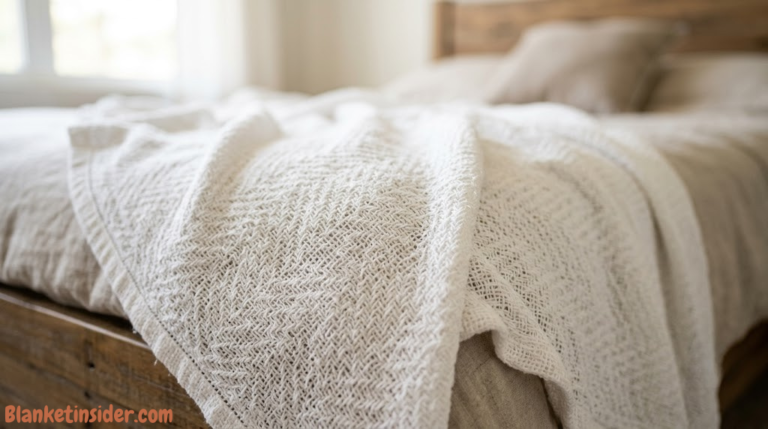
There is nothing quite as frustrating as waking up at 2 a.m., drenched in sweat, furiously kicking a blanket off the bed that cost you sixty dollars because it was labeled “breathable.” Hot sleepers know this experience intimately. And yet the blanket industry continues to sell warmth as the primary feature — because for the majority of the population, that is what a blanket is for.
If you are among the estimated 30–40% of adults who regularly overheat during sleep, you need a blanket engineered around an entirely different principle: one that allows heat to escape, moves moisture away from your body, and does not turn your bed into a sealed thermal envelope. Choosing the right one is not about grabbing whatever has the word “cooling” printed on the label — it requires understanding materials, construction weights, weave science, and how those factors interact with your specific body and sleep environment.
This guide breaks down the selection process into eight concrete steps, each with its own diagnostic tool so you know exactly what to look for. Whether you are managing night sweats, dealing with menopause hot flashes, sharing a bed with a partner who runs cold, or simply live in a warm climate — this guide gives you the framework to choose once and choose right.
Who Actually Needs a Cooling Blanket?
Not everyone who kicks off a blanket at night needs a specialized cooling product. The category covers a spectrum from casual warm sleepers to people experiencing medically significant nighttime heat events. Understanding where you fall determines how seriously you need to shop.
| Sleep Profile | Symptoms | Cooling Need Level | What to Look For |
|---|---|---|---|
| Mild Warm Sleeper | Occasionally feel warm, rarely sweat | Moderate | Lightweight cotton or bamboo, open weave |
| Consistent Hot Sleeper | Run warm most nights, prefer thinner coverage | Moderate–High | 180–220 GSM, waffle or gauze weave, natural fiber |
| Night Sweat Sufferer | Wake damp or wet, frequent sheet changes | High | Moisture-wicking certified, bamboo or Tencel, max 220 GSM |
| Menopause / Hormone-Related | Intense hot flash episodes, sudden heat surges | Very High | Phase-change or Tencel, 150–200 GSM, quick-dry essential |
| Partner Temperature Conflict | One partner runs hot, the other cold | Situational | Individual twin cooling blanket per person, dual-layer options |
| Warm Climate / No AC | Room temperature stays above 72°F at night | High | Linen or open-weave cotton, under 180 GSM, single layer |
💡 Quick Self-Test
Rate these three statements on a scale of 1–3 (rarely, sometimes, often): (1) I wake during the night feeling too warm. (2) My sheets feel damp in the morning. (3) I kick off my blanket before morning. If your total score is 5 or higher, you are a genuine hot sleeper and this guide’s full framework applies to you.
Identify Your Sleep Heat Profile
There is an important distinction between three different heat profiles that are often lumped together as “sleeping hot.” Each has a different root cause and responds to different cooling solutions.
Radiant heat buildup happens when your body generates more heat than the blanket can dissipate — your core temperature rises throughout the night. This is a breathability problem: the blanket is trapping your body’s natural heat output rather than letting it escape. The fix is improved airflow through open weave structures and lower GSM weights.
Sweat saturation is different — you may actually be sleeping at a normal temperature but producing enough sweat that moisture accumulation against the skin creates a damp, clammy discomfort. This is a moisture-wicking problem, not purely a breathability problem. The fix is a hygroscopic fiber that actively absorbs and redistributes moisture.
Sudden heat episodes — hot flashes, night sweats tied to hormonal cycles, medications, or illness — are acute events where temperature spikes dramatically and briefly. No passive cooling blanket fully solves this; what you need is the fastest possible heat dissipation plus quick-drying fibers so that after the episode, the bedding recovers quickly rather than staying wet and cold.
Once you identify your primary heat profile, you have already narrowed down the material and construction requirements significantly. Most people fall primarily into one category, though combinations are possible — a night sweat sufferer who also runs hot consistently needs both excellent breathability AND superior moisture-wicking, which narrows the field to bamboo viscose or Tencel at under 220 GSM.

Best Cooling Blankets on Amazon — Verified for Hot Sleepers
Bamboo, Tencel & cotton options with 4.5+ star ratings from verified buyers.
🛒 Browse Cooling Blankets on AmazonChoose the Right Cooling Blanket Material
Material selection is the foundation of every other decision in this guide. No amount of clever weave engineering or low GSM weight compensates for a fiber that fundamentally traps heat. Before anything else, you must eliminate materials that are incompatible with sleeping cool — and then select the best fit from the remaining options.
The chart above places every major blanket material on a two-axis map of breathability versus moisture-wicking. The top-right zone — high on both axes — is where genuine cooling blanket materials live. Anything in the bottom-left is actively counterproductive for hot sleepers.
For more detail on how bamboo compares to cotton in humid climates specifically, our guide on bamboo vs cotton for cooling in humid environments covers that comparison in depth. For a broader look at natural fiber alternatives, our best bamboo blankets review and bamboo vs cotton blanket comparison are also useful companions.
Pick the Right GSM Weight
GSM — grams per square meter — is the weight density of a fabric. It is one of the most actionable and objective numbers you can find on a blanket specification sheet, and for cooling purposes it functions almost like a thermal dial: the higher the GSM, the more material there is per unit of surface area, and the more heat gets trapped between the fibers, regardless of whether those fibers are cotton, bamboo, or anything else.
This is a critical insight that many shoppers miss: a 400 GSM bamboo blanket will sleep warmer than a 180 GSM cotton blanket, even though bamboo is the “cooler” fiber. Weight is not everything, but it is the fastest way to self-sabotage a good material choice.
The cooling zone starts at approximately 150 GSM and tops out around 250 GSM for most hot sleepers. Below 150 GSM, a blanket can start to feel more like a sheet — providing minimal warmth buffer for nights that cool down. The optimal window for most people running warm is 180–230 GSM: enough substance to feel like a real blanket, light enough not to accumulate heat.
🌡️ GSM by Season Tip
If you live in a climate with distinct seasons, consider buying two cooling blankets at different weights: a 150–170 GSM for summer months and a 220–260 GSM for shoulder seasons when nights get cooler but you still don’t want a heavy quilt. This approach eliminates the “too hot vs. too cold” problem entirely.

Best Lightweight Bamboo Cooling Blankets (150–220 GSM)
Specifically filtered for the cooling GSM range — ideal for night sweat sufferers.
🛒 Shop Bamboo Cooling BlanketsEvaluate the Weave Structure
Weave structure controls the physical air gaps in a fabric. An open weave creates a lattice of tiny spaces through which warm, humid air can escape and cooler ambient air can enter. A tight weave closes those gaps, creating a near-solid surface barrier that traps the microclimate between your body and the blanket. For hot sleepers, weave is the second most important variable after material selection.
Waffle weave creates a three-dimensional grid of raised squares and depressed pockets. The raised portions carry the fabric’s structural weight while the pockets create physical air channels — making it the most effective weave for passive heat dissipation. If you have ever used a good waffle-knit thermal blanket and noticed it sleeps surprisingly cool despite providing decent warmth, the weave physics are why. See our full waffle blanket buying guide for everything on this construction.
Gauze weave (often seen in muslin baby blankets) goes even further in openness, with a very loose plain weave that borders on translucent. A single layer of gauze is nearly useless as insulation, which is why these blankets are often sold in multi-layer construction — two or three layers of gauze provide tactile substance while maintaining exceptional airflow. For a comparison of how this differs from standard cotton, our muslin vs cotton blanket guide covers the weave differences in detail.
Check Moisture-Wicking Performance
Breathability and moisture-wicking are related but distinct properties. A fabric can be highly breathable (good airflow) but poor at actively managing sweat — open-weave polyester would be an example. Conversely, a fabric can be excellent at absorbing moisture into the fiber while having average airflow. For night sweat sufferers, you specifically need both: a fabric that moves sweat away from skin rapidly AND allows that captured moisture to evaporate out the other side.
The key difference between natural fiber wicking and synthetic wicking is where moisture goes. Natural fibers like bamboo and cotton absorb moisture into the cellulose fiber structure itself, distributing it across a vastly greater surface area where evaporation can occur from multiple points simultaneously. Synthetic polyester fibers can only move moisture along their surface through capillary channels — once those channels are saturated, moisture has nowhere to go.
When reading product specifications, look for: “moisture-wicking certified,” “hygroscopic fiber,” or specific moisture absorption rate claims. Bamboo viscose typically absorbs 60–70% more moisture than standard cotton. Tencel (lyocell) is similarly hygroscopic. For a comparison between these natural materials and standard cotton in humid sleeping environments, our bamboo vs cotton in humid climates guide quantifies the difference.
⚠️ Fabric Softener Warning for Night Sweat Sufferers
Fabric softener deposits a thin waxy film on fiber surfaces that dramatically reduces moisture absorption. If you are buying a cooling blanket specifically for moisture management, never use fabric softener — it defeats the purpose. Use a small amount of white vinegar in the rinse cycle instead to maintain fiber softness without coating.
Match the Blanket to Your Sleep Environment
A cooling blanket does not operate in isolation — it is one component in a sleep system that includes your mattress, sheets, pillow, room temperature, humidity level, and air circulation. Before finalizing your choice, you need to account for the environment that blanket will live in, because the same blanket will perform very differently across different conditions.
The warm and humid scenario — living in a subtropical or tropical climate without reliable air conditioning — is the hardest case to solve with a blanket alone. When ambient air is already saturated with moisture, the evaporation mechanism that makes wicking-fiber blankets work becomes compromised. In this scenario, bamboo viscose or Tencel’s superior moisture absorption rate is essential, because moisture evaporation will be slower and the fiber needs to buffer more sweat before it can release it. GSM weight should be at the lower end (150–190) and the weave as open as possible.
For hot sleepers using a memory foam mattress, note that memory foam is significantly more heat-retentive than innerspring or latex. If your mattress traps heat, even an excellent cooling blanket will only partially compensate — pairing it with moisture-wicking sheets is essential.

Best Tencel & Phase-Change Cooling Blankets for Night Sweats
Top-rated for menopause hot flashes and night sweat recovery. Fast-dry certified.
🛒 Shop Night Sweat Cooling BlanketsVerify Size and Fit for Your Bed
This step sounds obvious but is frequently overlooked. The cooling properties of any blanket are irrelevant if the blanket doesn’t provide adequate coverage. If your feet hang out the bottom or the edges pull away from your body when you shift positions, you lose the regulated microclimate the blanket is designed to maintain.
One sizing note that matters specifically for hot sleepers: if you share a bed with a partner who doesn’t run hot, consider two separate twin or full cooling blankets rather than one shared blanket. This “Scandinavian sleep system” approach gives each person independent temperature control — your cooling blanket stays in place without being pulled, and your partner can use their preferred heavier blanket without affecting you. Our guide on best king-size blankets covers couple-specific options in detail.
Review Care Requirements Before You Buy
Hot sleepers wash their blankets more frequently than average. Night sweat sufferers may need to launder weekly. This puts significantly more mechanical and thermal stress on a cooling blanket than typical use — which makes care compatibility an important factor before purchase, not an afterthought.
For bamboo viscose and Tencel blankets specifically: these fibers are structurally strong but can lose their characteristic silkiness if subjected to hot water or high-heat drying repeatedly. The molecular structure of lyocell fibers opens up and softens with washing — but heat causes those same structures to degrade irreversibly. A cold-water wash on the gentle cycle preserves the feel for significantly longer.
For detailed blanket washing guidance, our complete guide to washing cooling blankets walks through every material type, common mistakes, and how to restore a blanket that has lost its cooling effectiveness after improper care.
Cooling Blanket Materials: The Full Breakdown
Now that you understand the framework, here is a consolidated look at every major material used in cooling blankets, with their specific performance characteristics and best-fit scenarios.
Bamboo Viscose: The Current Leader
Bamboo viscose (also called bamboo rayon) is currently the most widely recommended material for cooling blankets, and the reasons are grounded in fiber science. Bamboo cellulose, when processed into viscose fiber, produces a thread that is genuinely hygroscopic — absorbing moisture into the fiber body rather than repelling it — while maintaining a naturally cool, silky surface feel. The fiber structure also includes micro-gaps that enhance airflow.
The environmental caveat: “bamboo” sounds sustainable, but the viscose conversion process uses chemical solvents. Look for “closed-loop” bamboo viscose (sometimes labeled Monocel or Oeko-Tex certified) where solvents are captured and recycled rather than discharged. For a comprehensive review of bamboo options, see our best bamboo blankets guide.
Tencel (Lyocell): Premium and Eco-Responsible
Tencel is a brand name for lyocell fiber produced by Lenzing using a certified closed-loop process — making it both premium and genuinely eco-friendly. Lyocell absorbs moisture into the fiber structure efficiently, is naturally antimicrobial (important for sweat management), and has a uniquely smooth fiber surface that feels cool to the touch even before any airflow factor. It is the top choice for people who want luxury cooling performance with an environmental conscience.
Linen: The Maximum Airflow Option
Linen (flax fiber) is the most breathable natural textile available. Its fibers are naturally hollow, stiff, and widely spaced — creating an exceptionally open structure even in relatively tight weave counts. Linen conducts heat away from the body faster than cotton and has a distinctive cool-and-crisp sensation against skin. The trade-off is a learning curve: linen wrinkles easily, feels rough until broken in (3–5 washes), and has a more “rustic” aesthetic that not everyone loves. But for hot sleepers in very warm climates who want maximum airflow above all else, linen is unmatched.
Cotton Open Weave: The Accessible Standard
Lightweight cotton in a waffle or gauze weave remains the most accessible and affordable cooling blanket option. It is widely available at all price points, machine-washable without special handling, gets softer with age, and performs genuinely well for mild-to-moderate hot sleepers. The gap between cotton and bamboo/Tencel in cooling performance is meaningful for severe night sweaters, but negligible for someone who just runs slightly warm. Our comparison of microfiber vs cotton covers why natural fibers consistently outperform synthetic for temperature management.
Phase-Change Materials: Active Cooling Technology
Phase-change materials (PCMs) are the most technologically advanced option. These blankets incorporate microencapsulated compounds that absorb energy during their solid-to-liquid phase transition — happening at a temperature set just below average skin temperature (around 34°C / 93°F). When your skin makes contact with the fabric, the PCM compound absorbs heat actively, creating a genuinely cool sensation rather than just allowing heat to escape passively.
The limitation: the cooling effect is temporary. Once the PCM has fully transitioned to liquid phase (after 20–90 minutes depending on product), it must return to solid by releasing heat into the environment before it can cool again. In a well-air-conditioned room, this cycle works well through the night. In a warm room, the PCM may not reset efficiently. These blankets also carry a significant price premium and environmental cost. They are best suited for severe night sweat cases and menopause-related hot flashes where the acute cooling effect justifies the cost.
| Material | Breathability | Moisture-Wicking | Softness | Eco Score | Price Range | Best For |
|---|---|---|---|---|---|---|
| Bamboo Viscose | Excellent | Exceptional | Very Soft | Good | $$–$$$ | Night sweats, humid climates |
| Tencel / Lyocell | Excellent | Excellent | Silky | Best | $$$ | Premium buy, eco-conscious |
| Linen | Best | Good | Rough initially | Very Good | $$$ | Hot dry climates, max airflow |
| Cotton (Waffle) | Very Good | Good | Comfortable | Good | $$ | Budget-friendly, all-rounder |
| Cotton (Gauze) | Excellent | Good | Light | Good | $–$$ | Summer, babies, warm climates |
| Phase-Change | Moderate | Varies | Good | Poor | $$$$ | Menopause, severe hot flashes |
| Microfiber/Fleece | Poor | Poor | Very Soft | Poor | $ | Not suitable — avoid |

Top-Rated Linen & Cotton Waffle Cooling Blankets
Maximum airflow options trusted by hot sleepers and summer users.
🛒 Shop Linen & Waffle BlanketsCooling Blankets for Specific Situations
Cooling Blankets for Menopause and Hot Flashes
Menopause-related night sweats are physiologically distinct from ordinary heat accumulation — they involve the hypothalamus triggering a sudden, intense vasodilation response that dumps body heat rapidly and unpredictably. The ideal blanket for this scenario needs to dissipate heat quickly during the episode AND dry rapidly after, so that the wet-cold aftermath does not cause a secondary discomfort.
Tencel or bamboo viscose at 150–180 GSM, with a gauze or jersey knit construction, handles both phases best. Quick-dry properties are particularly important — a blanket that stays damp for 20 minutes after a hot flash episode makes re-warming afterward miserable. Phase-change blankets offer active cooling during the episode itself for severe cases.
Cooling Blankets for Children and Babies
Young children and infants have less developed thermoregulation than adults, making them more sensitive to overheating. For young children (not infants under 12 months — follow SIDS safe sleep guidelines regardless of material), a lightweight organic cotton blanket in a gauze or jersey weave is the appropriate choice. These blankets provide the comfort of coverage without heat accumulation risk. Our detailed baby sleep blanket safety timeline covers exactly when and what to introduce. See also our baby blanket reviews for tested recommendations.
Cooling Blankets for Travel
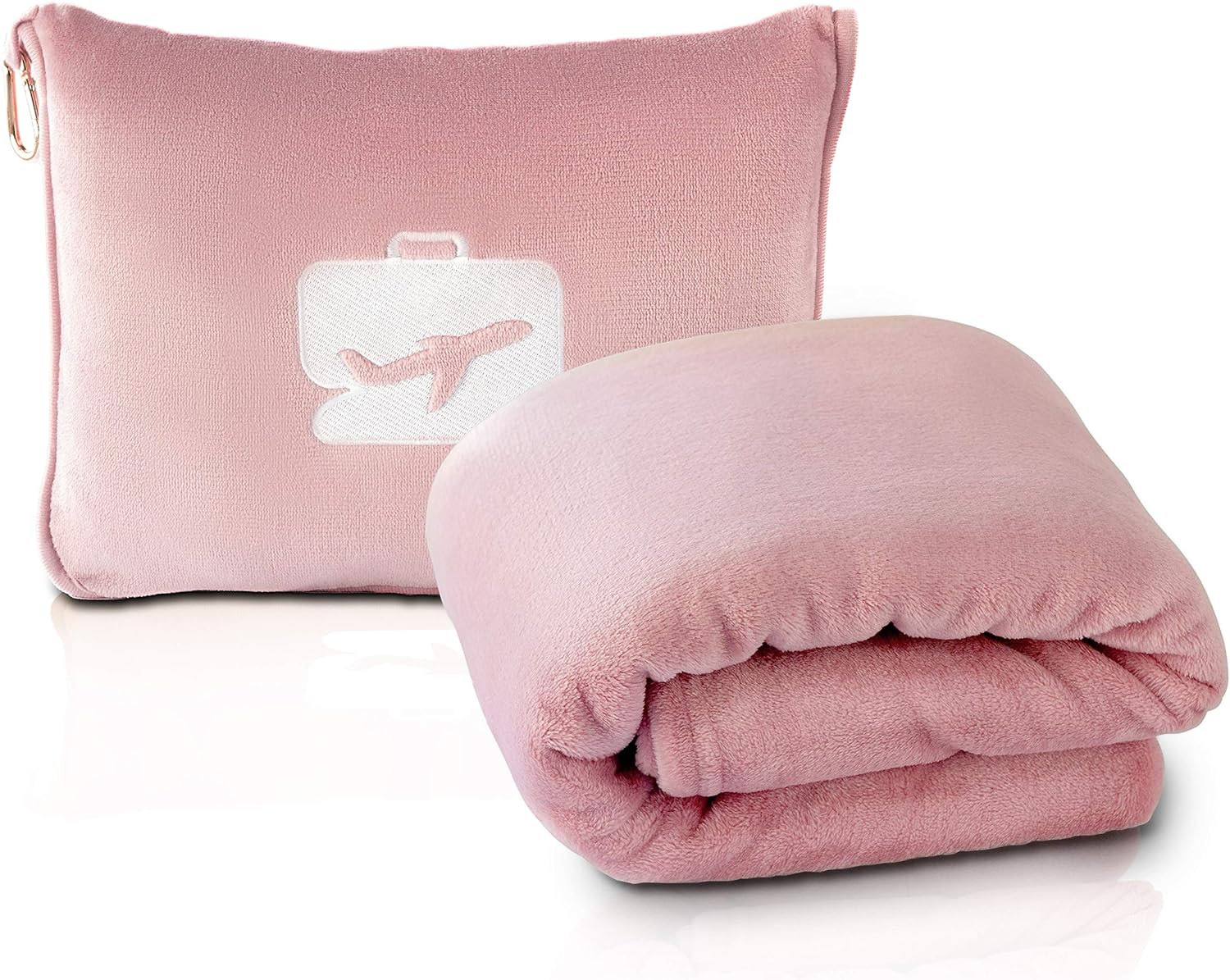
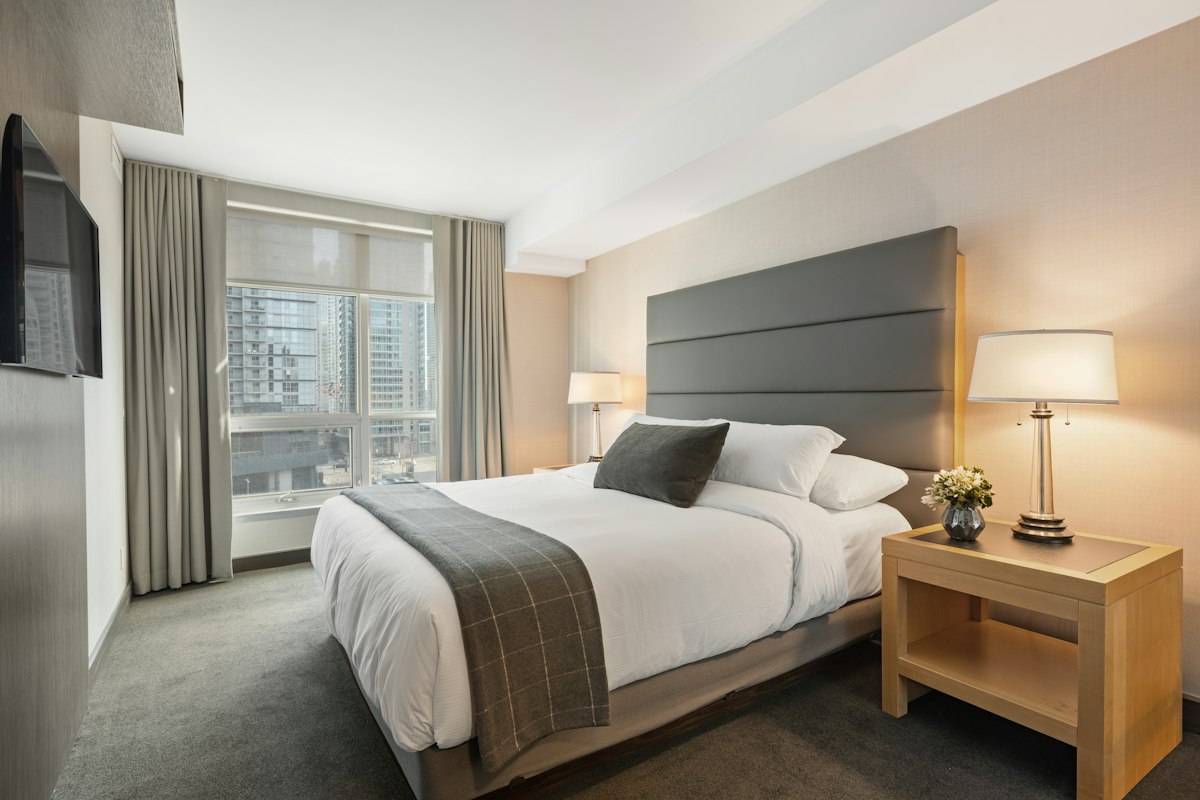
Hotel rooms are notoriously unpredictable in temperature, and the heavy comforters on most hotel beds are the enemy of hot sleepers. A packable cooling throw blanket — lightweight bamboo or cotton gauze at under 180 GSM — is the travel hot sleeper’s best tool. It folds small, substitutes for the hotel comforter, and comes home easily. Our best travel blanket guide includes cooling-specific picks.
Cooling Weighted Blankets
Many hot sleepers who benefit from the anxiety-reducing effects of weighted blankets face a dilemma: weight equals warmth, which worsens their heat problem. Cooling weighted blankets solve this by using glass bead fills (which conduct heat away from the body faster than plastic pellets) in breathable cotton or bamboo outer shells. For context on how to pick the right weighted option, our weighted blanket guide covers the thermal implications of different fill materials. The cooling blanket vs regular blanket comparison is also useful here.
Cooling Blankets for Electric Blanket Users
Some people use electric blankets to pre-heat their bed, then switch to a cooling blanket when they actually sleep. If this describes you, ensure the two blankets are compatible in weight — the cooling blanket’s effectiveness depends on not being buried under a heavy electric blanket at the same time. See our detailed heated blanket vs space heater comparison for the full picture on bedroom thermal management.
Frequently Asked Questions
Q What is the best cooling blanket material for hot sleepers?
Bamboo viscose, Tencel (lyocell), and linen are the top three cooling blanket materials. Bamboo and Tencel excel at moisture-wicking as well as breathability — ideal for night sweats. Linen is unmatched in pure airflow. Lightweight cotton in a waffle or gauze weave is the best budget option. Avoid microfiber and fleece entirely — they trap heat and moisture regardless of marketing claims.
Q What GSM is best for a cooling blanket?
For most hot sleepers, 150–250 GSM is the ideal range. Below 150 GSM starts to feel like a sheet with minimal insulation. Above 300 GSM retains significant heat even in breathable materials. The sweet spot for consistent hot sleepers is 180–230 GSM. For severe night sweats or warm humid climates, go lower — 150–190 GSM — and prioritize open weave construction.
Q Do cooling blankets actually work?
Yes — when made from the right materials at the right weight. A cotton or bamboo blanket at 180 GSM in a waffle weave genuinely dissipates body heat faster than a 300 GSM microfiber blanket. The key is that “cooling” must come from real breathability and moisture management, not just the word printed on the packaging. Many products labeled “cooling” use polyester or light synthetic fills that offer no genuine temperature regulation advantage.
Q Can a weighted blanket be cooling?
Yes, with the right construction. Choose a weighted blanket with a cotton or bamboo outer shell (not polyester), glass bead fill (which conducts heat away from the body better than plastic pellets), and a weight at the lower end of the therapeutic range (7–12 lbs vs. 15–25 lbs). Our weighted blanket guide covers how to balance therapeutic weight with thermal comfort.
Q Is bamboo or cotton better for a cooling blanket?
In humid climates or for night sweat sufferers, bamboo viscose has a meaningful edge — it absorbs 60–70% more moisture than standard cotton and maintains its cooling performance longer into humid conditions. For dry climates or mild warm sleepers, lightweight cotton in an open weave (waffle or gauze) performs comparably and is often more affordable. For full detail see our bamboo vs cotton blanket comparison.
Q What should I avoid in a cooling blanket?
Avoid: polyester and microfiber materials (poor breathability, no absorption), fleece (maximum heat trapping), GSM weights above 350, tight plain weaves with no air gaps, any blanket with a synthetic fiber fill even in a natural outer shell, and marketing terms like “cooling technology” without fiber and GSM specification — those are red flags for greenwashing.
Q How do I wash a cooling blanket without ruining it?
Cold or lukewarm water, gentle cycle, mild detergent — no fabric softener. Fabric softener is the fastest way to destroy a cooling blanket’s wicking properties by coating the fiber surfaces. Air dry or tumble dry on the lowest heat setting. For comprehensive guidance see our complete cooling blanket washing guide.
Q What is a phase-change cooling blanket?
Phase-change blankets contain microencapsulated compounds (typically paraffin-based) that absorb heat energy as they melt from solid to liquid at a temperature slightly below skin temperature. This creates active heat absorption rather than passive heat dissipation. The cooling effect lasts 20–90 minutes per cycle. They are the most technologically advanced option and best suited for severe hot flash or night sweat episodes where passive cooling is insufficient.
Q What size cooling blanket do I need?
For a queen bed, choose at least 90×90 inches — queen beds are 60×80 inches and you need 15+ inches of overhang on each side for proper coverage. For king beds, look for 108×90 inches or larger. For a couch or travel use, a 50×60 inch throw is sufficient. If you share a bed and your partner doesn’t run hot, consider two separate twin cooling blankets (one each) for independent temperature control.
Q Can a cooling blanket help with menopause hot flashes?
Yes — it is one of the most effective non-pharmaceutical sleep interventions for menopause-related night sweats. A lightweight (150–200 GSM) bamboo viscose or Tencel blanket handles the moisture management component well. For severe, acute hot flash episodes, a phase-change blanket provides the active heat absorption that passive materials cannot. Pair with moisture-wicking sheets for best results. For more on menopause-specific sleep comfort, see our blankets for night sweats guide.
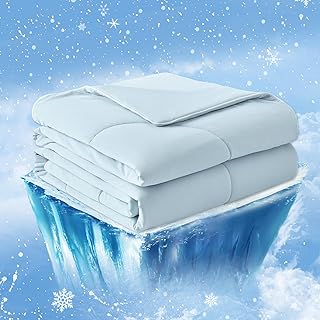
Full Cooling Blanket Category on Amazon — All Materials & Weights
Browse by material (bamboo, linen, cotton, Tencel, phase-change) and weight range.
🛒 Shop All Cooling Blankets on AmazonPutting It All Together: Your Cooling Blanket Decision
Choosing a cooling blanket is not complicated once you have the right framework. Work through the eight steps in order — identify your heat profile, choose material first, then filter by GSM, weave, wicking, environment, size, and care — and the right choice emerges naturally from the intersection of those filters.
The single most common mistake hot sleepers make is choosing a blanket by softness alone, then being disappointed when a plush microfiber product makes them sweat. Softness and cooling are not correlated — they are independent properties that different fiber types can have in different combinations. A Tencel blanket can be extraordinarily soft AND cooling. A microfiber blanket can be soft AND heat-trapping. The fiber determines the thermal character; the weave and weight dial it in.
For the majority of hot sleepers, the decision matrix ends at the same place: bamboo viscose or Tencel, 180–220 GSM, waffle or open weave, sized one step up from your bed dimensions. That combination covers 80% of the hot sleeper population. The remaining 20% — those with severe night sweats, menopause-related hot flashes, or extreme climates — need to add phase-change technology or go down to 150 GSM linen with excellent room ventilation.
For further reading as you shop: our comprehensive cooling blanket guide reviews specific products across all price points, and our comparison of cooling blanket vs regular blanket helps you decide whether you need a specialized cooling product at all or whether a well-chosen regular blanket at the right weight can solve the problem.
Ready to Finally Sleep Cool?
Browse our curated selection of editor-tested cooling blankets across every budget, material, and weight — all filtered specifically for hot sleepers and night sweat sufferers.
🛒 Shop Cooling Blankets on Amazon