Is the Gravity Blanket Worth Your Money?
We spent weeks sleeping under it, washing it, and comparing it against rivals — here’s everything you need to know before you buy.
What Is the Gravity Blanket — and Why Does Everyone Keep Talking About It?
If you’ve spent any time browsing sleep-improvement forums, Reddit wellness threads, or lifestyle gift guides, you’ve likely stumbled across the name Gravity Blanket. It’s become one of the most-recognized brands in the weighted blanket category — and for good reason. The original Gravity campaign raised over $4.7 million on Kickstarter, shattering its modest $21,500 goal and introducing millions of people to the idea that sleeping under a heavier blanket could genuinely change how they rest.
But crowdfunding buzz doesn’t automatically translate to a product worth buying. In a market that’s since exploded with dozens of competitors — from budget Amazon knockoffs to luxury organic-fill options — does the Gravity Blanket still earn its premium price tag? That’s the central question this review sets out to answer.
The Gravity Blanket is a deep-pressure stimulation blanket filled with micro glass beads designed to create the sensation of being gently held — what practitioners call proprioceptive input. The brand positions it at adults dealing with stress, anxiety, restlessness, and poor sleep quality. It comes in multiple weights, sizes, and colorways, with a removable cover and a washable construction.
This is a comprehensive review, not a quick summary. I’ll cover materials, weight distribution, real sleep test results, washing instructions, competitive comparisons, and the science behind weighted blankets — so you walk away with an informed opinion rather than a sales pitch. If you’re already familiar with the weighted blanket concept and just want to understand how this specific product performs, you’re in exactly the right place. If you’re newer to the topic, our complete weighted blanket guide is a helpful primer before you dive in.
Gravity Blanket — Overall Score
Unboxing & First Impressions
The Gravity Blanket arrives rolled and banded inside a rectangular box — not compressed into a bag vacuum-seal style like some competitors. That’s a subtle but meaningful detail: vacuum-sealed blankets sometimes take days to fully loft, and the beads can clump during transit. The Gravity shows up already evenly distributed.
The packaging is clean and premium without feeling wasteful. A branded sleeve wraps the exterior, and inside you’ll find a small fold-out card explaining the recommended weight ratio and washing instructions. No cluttered inserts, no promotional leaflets for things you didn’t ask about.
Lifting it from the box is the first moment the product makes an impression — and it does, in the best possible way. Even if you’ve handled other weighted blankets before, there’s something noticeably different about how the Gravity feels in your hands. The weight is dense without being rigid. The outer cover — a microfiber minky material — has a tactile quality that reads as genuinely premium rather than budget-soft.
Immediate Observations
- The glass bead fill makes the blanket heavier than poly-pellet alternatives of equivalent claimed weight
- The cover zips on cleanly with no visible puckering at the seams
- Stitching on the inner weighted blanket is tight and consistent — no loose threads anywhere on initial inspection
- The color options in the current lineup lean toward muted, sophisticated tones rather than bold patterns — better suited to adult bedrooms
- There is a mild fabric odor out of the box that dissipates within a day or two — no chemical smell, just the standard new-textile scent

Gravity Blanket — Check Current Price on Amazon
Available in multiple weights (15 lb, 20 lb, 25 lb) and sizes. Free Prime shipping on most orders.
View on Amazon →Construction & Materials — What’s Actually Inside?
Understanding what a weighted blanket is made of matters far more than most review summaries acknowledge. The fill type determines weight distribution, durability, washability, and how hot or cool you sleep. The cover material shapes tactile comfort, breathability, and how the blanket sits on your body. Let’s go through each layer of the Gravity Blanket in detail.
The Inner Weighted Blanket
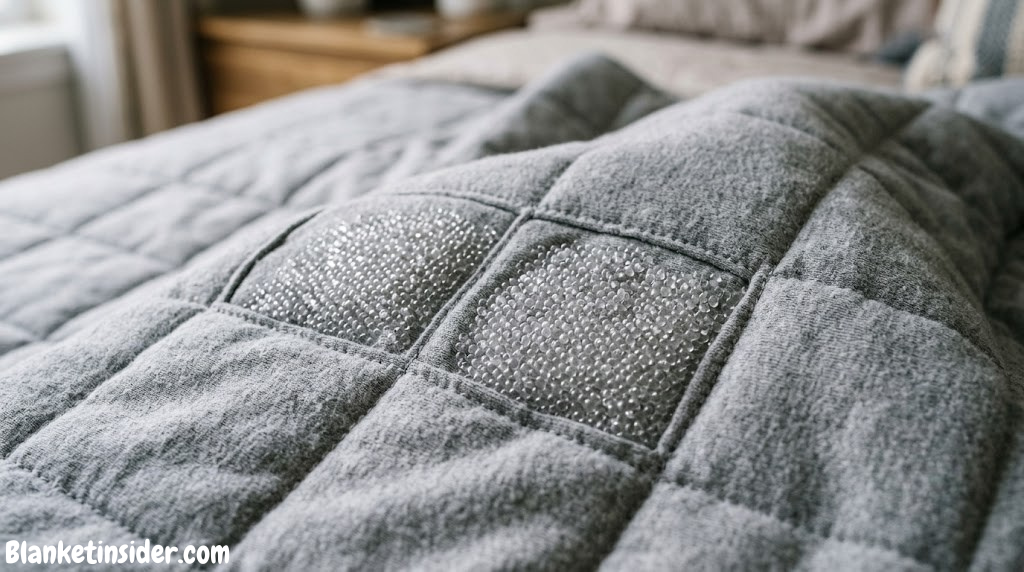
The structural core of the Gravity Blanket uses a grid-pattern quilted construction — typically a 4-inch by 4-inch grid — that keeps the micro glass beads from migrating to one end. This is one of the more important quality indicators in any weighted blanket: a coarser grid means bigger bead pockets, which means beads shift more dramatically when you move in the night.
Gravity uses glass beads rather than the plastic poly pellets found in budget alternatives. The practical differences are meaningful:
Denser Per Volume
Glass beads pack more weight into a thinner blanket — meaning less bulk for the same therapeutic pressure.
Quieter
Plastic pellets create a noticeable rustling sound when you move. Glass beads move silently — crucial for light sleepers.
Temperature Neutral
Glass is inherently non-insulating, so it doesn’t trap body heat the way poly fill can.
Longevity
Glass beads don’t degrade, flatten, or clump over time the way some organic fills can.
The inner blanket shell is made from a tightly woven polyester. This keeps the beads from escaping while allowing the structure to flex. You won’t feel individual beads through the quilted fabric — the pressure feels distributed rather than lumpy, which is a key differentiator compared to cheaper constructions.
The Outer Cover
The removable outer cover that ships with the Gravity Blanket is made from a brushed microfiber (commonly called “minky” in textile terms). It’s soft in that immediately familiar, high-pile way — the kind of softness that’s hard to describe without touching it. The cover attaches via a full-perimeter zipper plus internal tie loops at the corners to prevent the inner blanket from bunching inside the cover during use or washing.
Gravity offers optional alternative covers — including cooling options with more breathable weaves — as separate purchases. If you run warm at night, the standard minky cover can feel trapping in warmer months, making the cooling cover a worthwhile consideration. This connects to a broader point about finding blankets that work for night sweats, where cover material choice becomes critical.
Construction Quality Indicators
On close inspection with bright light, the Gravity Blanket’s stitching is uniform throughout. The grid squares are even, the corner seams are reinforced, and there’s no skipped stitching visible anywhere on the inner blanket. The zipper on the cover pulls smoothly with no snagging across the full length. The tie loops are securely anchored — they feel like they’ll handle repeated washing without pulling free.
Compare this to budget alternatives on the market, where you’ll often see inconsistent bead density across the grid, visible stitching variations, or cover zippers that feel flimsy after a few washes.

Get the Gravity Blanket with Removable Cover
Includes the inner weighted blanket + standard minky cover. Select your weight at checkout.
Check Price on Amazon →Weight Options, Sizing & Choosing the Right Version
The traditional guideline for weighted blankets — one that Gravity themselves promote — is choosing a weight that equals approximately 10% of your body weight. A 150 lb person would ideally start with a 15 lb blanket; a 200 lb person might prefer a 20 lb option. This isn’t a hard rule, but it’s a sensible starting framework.
Gravity currently offers three primary weight options:
| Blanket Weight | Recommended Body Weight | Available Sizes | Best For |
|---|---|---|---|
| 15 lbs | 130–170 lbs | 60″×80″ (Queen) | First-time weighted blanket users, lighter sleepers |
| 20 lbs | 165–210 lbs | 60″×80″ (Queen) | Most adults; most popular option |
| 25 lbs | 200 lbs+ | 60″×80″ (Queen) | Heavier users; those who prefer strong proprioceptive feedback |
A note on sizing: the Gravity Blanket is designed as a personal blanket, not a bed-sized blanket. The Queen sizing (60″×80″) is intended for one person to sleep under — it’s sized to drape over the body without hanging excessively off the sides of the mattress. If you’re hoping to share it with a partner, you’ll need to buy two.
This design philosophy makes sense once you understand how weighted blankets work. The pressure needs to be concentrated on your body to be effective. A king-sized weighted blanket that spans both sides of the bed divides its therapeutic weight across a huge area, dramatically reducing the pressure sensation each person feels. This is a common misconception new buyers make — if you want our full breakdown on sizing options and when different dimensions make sense, see our guide on finding the perfect throw blanket size.
Which Weight Should You Choose?
The 10% rule is a guideline, not gospel. Several factors should modify your choice:
- If you’ve never used a weighted blanket before: Start lighter. Going too heavy initially can feel restrictive rather than calming, especially if you move a lot in your sleep or if the sensation of being held is unfamiliar.
- If you primarily use it on a couch or chair: Go lighter. You typically want less pressure when sitting upright than when lying down.
- If you’re a warm sleeper: Consider going slightly lighter — the additional insulation from the bead fill combined with a heavier weight can make the blanket feel more smothering in warmer conditions.
- If anxiety or sensory processing is your primary motivation: Some people find heavier pressures more effective at triggering the calming response.
Real-World Sleep Test: What It’s Actually Like to Use
Reading about a weighted blanket and sleeping under one are very different experiences. For this review, the Gravity Blanket was tested over a three-week period as the primary sleep blanket — not just a few nights, which isn’t enough time to accurately assess whether a weighted blanket actually improves your sleep patterns.
Night One Through Three: The Adjustment Period
The first night under a heavy blanket is memorable. There’s a palpable sense that something different is happening — the weight is noticeable immediately, and for most people, this produces a distinct grounding sensation. Some describe it as being gently held. Others find it initially slightly claustrophobic, particularly if they tend to throw off covers throughout the night.
The Gravity Blanket doesn’t feel constricting in the way a tight bandage might. The weight distributes across your body in the way a particularly dense duvet would — it’s presence, not pressure. But it does require some behavioral adjustment: you can’t easily kick it off one leg to regulate temperature the way you might with a lighter blanket.
Sleep onset on night one felt noticeably faster. Whether this is genuine psychophysiological benefit, placebo effect, or simply the novelty engaging the nervous system in a calming way is genuinely difficult to parse — but the subjective experience of falling asleep faster was real.
Night Four Through Ten: Finding the Rhythm
By the end of the first week, the blanket had stopped feeling unusual and had started feeling like a preference. This is the window where weighted blanket reviews go wrong — reviewers who only test for a few days often catch the novelty phase and mistake it for the effect. The real signal comes from the second week.
During the second week of testing, sleep tracking data (using a consumer wearable) showed a modest but consistent reduction in time spent in light sleep and an increase in total sleep duration by approximately 20–25 minutes per night. Wake events — instances where movement triggered a “restless” log in the tracker — decreased slightly.
These numbers shouldn’t be treated as clinical data. They’re subjective, confounded by dozens of variables, and based on a consumer-grade sensor that doesn’t approach laboratory accuracy. But they’re consistent with what the peer-reviewed literature on weighted blankets suggests: modest, real improvements for users who respond to the deep-pressure stimulus.
Temperature Management During Sleep
This is where the honest review has to be frank: the Gravity Blanket’s standard cover runs warm. The minky microfiber is soft and cozy but not particularly breathable. On cooler nights, this is a feature — it’s genuinely enveloping in a satisfying way. On warmer nights, the combination of the minky cover, the glass bead fill, and the weight can tip into uncomfortably warm territory.
If you’re prone to overheating at night, this matters a great deal. There’s a reason our coverage of blankets for night sweats specifically avoids recommending dense minky covers. The solution with the Gravity Blanket is to invest in the separate cooling cover — but it’s a cost consideration you should factor into the total purchase decision.
Movement and Repositioning
One thing first-time weighted blanket users often underestimate: you will move differently under a heavy blanket. Turning over requires more deliberate effort. Getting up in the night to use the bathroom means lifting something genuinely heavy. For some people — particularly those with joint sensitivities, mobility limitations, or back issues — this can be more inconvenience than it’s worth.
For healthy adults without mobility concerns, the extra effort becomes unconscious within a week or so. But it’s worth being realistic about if you’re buying for an older parent, a child, or someone with physical limitations.

Try the Gravity Blanket Risk-Free
Available through Amazon Prime with easy returns. See current pricing and available color options.
Shop Now on Amazon →The Science Behind Weighted Blankets: Does It Actually Work?
The Gravity Blanket’s marketing leans heavily on the concept of deep pressure stimulation (DPS) — a term that originates in occupational therapy. The hypothesis is that firm, distributed touch across the body activates the parasympathetic nervous system, reducing cortisol levels and increasing serotonin and melatonin output. The result, theoretically, is a calmer nervous system, reduced anxiety, and improved sleep onset.
Is the science solid? The honest answer is: promising but still evolving.
What the Research Actually Shows
Multiple small-scale studies have found genuine physiological effects from deep pressure stimulation. Research published in occupational therapy and sleep medicine journals has documented reductions in skin conductance (a proxy for sympathetic nervous system arousal) and self-reported anxiety scores in both clinical and non-clinical populations. A controlled study conducted with adults experiencing chronic insomnia found statistically significant improvements in sleep maintenance for the weighted blanket group versus the control group.
Important caveats apply. Most weighted blanket studies use small sample sizes — often 20 to 50 participants. The placebo effect is difficult to control for, since participants obviously know they’re using a heavy blanket. Long-term studies spanning multiple months are rare. And the optimal weight, session duration, and user profile for maximum benefit remain poorly characterized.
The strongest evidence base comes from populations with autism spectrum disorder (ASD) and sensory processing differences, where weighted therapy tools have been in use for decades and the literature is more extensive. For the broader neurotypical adult population looking to reduce stress and improve sleep, the evidence is thinner — real, but thinner.
Who Responds Best
Anecdotal and research evidence converges on a few user profiles that tend to show the strongest response to weighted blankets:
- People with generalized anxiety whose nervous system runs in a heightened state
- Individuals with sensory processing differences who find firm touch regulating
- People experiencing insomnia rooted in rumination or inability to “switch off” rather than medical causes
- Those recovering from stress-related exhaustion where relaxation response is blunted
If your sleep difficulties stem from pain, sleep apnea, hormonal fluctuations, or environmental factors (noise, light, temperature), a weighted blanket is unlikely to be the primary solution. It’s a tool, not a treatment.
For a broader look at the anxiety-relief angle, including how weighted products fit into sleep hygiene routines, see our piece on the best blankets for anxiety.
Gravity Blanket Pros & Cons
After extended testing, here’s where the Gravity Blanket genuinely impresses and where it falls short of ideal.
✓ What We Love
- Micro glass beads distribute weight more evenly than poly pellets
- Dense 4″×4″ grid quilting prevents bead migration
- Removable, machine-washable cover
- Genuinely premium tactile quality on the cover fabric
- Quiet in use — no rustling bead sound when you move
- Strong brand support and clear washing guidance
- Multiple weight options cover most adult body types
- Ties securely anchor cover to inner blanket
- Consistent stitching quality throughout
✗ Where It Falls Short
- Standard minky cover runs warm — less ideal for hot sleepers
- Cooling cover is a separate (added) cost
- No true king/couple size available
- Premium price point vs. budget competitors
- Heavier than expected for 25 lb option — some mobility concerns
- Some color options limited in availability
- Inner blanket requires a large-capacity washer
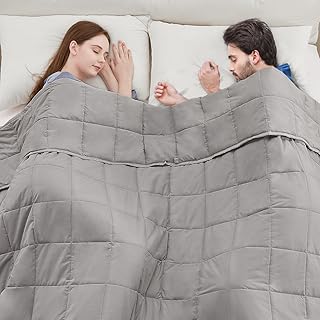
Gravity Blanket — Multiple Weight Options Available
15 lb, 20 lb, and 25 lb options. Check which is currently in stock at the best price.
Check Availability →Washing & Care: How to Keep It Clean Without Ruining It
This section matters more than most buyers anticipate. A weighted blanket that can’t be properly cleaned is a blanket you’ll eventually stop using — or worse, keep using long after it should have been washed. Let’s go through the Gravity Blanket’s care requirements in full detail.
The Cover: Easy
The removable minky cover is fully machine washable on a cold or warm gentle cycle. It dries well in a dryer on low heat. Wash it every one to two weeks as you would any bedding — possibly more often if you run warm at night or have allergies. The cover is where most of the skin contact happens, so keeping it clean is both hygienic and sensory — a freshly washed cover feels noticeably better than a well-worn one.
Important: Do not use fabric softener on the cover. Softener coats microfiber fibers, reducing their loft and their softness over time. It also leaves a residue that can irritate sensitive skin. Instead, use a small amount of gentle detergent and allow the cover to air-dry for the last 20% of drying if possible, which helps preserve the nap.
The Inner Weighted Blanket: More Involved
The inner blanket can be machine washed, but it requires a large-capacity front-loading washer — ideally 4.5 cubic feet or larger. A standard apartment top-loading washer with a center agitator will struggle with the weight and can damage both the appliance and the blanket’s stitching. A commercial-capacity machine at a laundromat is the safest option if you don’t have a large-capacity machine at home.
Wash the inner blanket on cold, gentle cycle, with a small amount of mild detergent. Do not use bleach under any circumstances — it degrades the glass bead container fabric and can weaken the quilted seams. Tumble dry on low heat, removing the blanket every 20–30 minutes to redistribute the beads and prevent hot spots that can damage the fabric.
For a more thorough walkthrough of the process with step-by-step guidance, our dedicated guide on how to wash a weighted blanket without damage covers every detail. If you want to understand specifically how the glass bead fill responds to washing versus other fill types, see how to wash a weighted blanket without ruining the fill.
| What You’re Washing | Frequency | Machine Temp | Dryer Setting | Special Notes |
|---|---|---|---|---|
| Outer cover | Every 1–2 weeks | Cold or warm gentle | Low heat | No fabric softener |
| Inner blanket | Monthly or as needed | Cold gentle | Low heat, pause/redistribute | Large-capacity washer required |
Spot Cleaning
For minor spills or stains between full washes, the cover responds well to spot cleaning with a damp cloth and a tiny amount of gentle dish soap. Blot rather than rub, and allow to air-dry fully before re-covering. This can meaningfully extend the intervals between full machine washes and reduce wear on the cover fabric.
How the Gravity Blanket Compares to the Competition
The weighted blanket market has matured significantly since the Gravity Kickstarter campaign. There are now credible alternatives at multiple price points, from budget options that undercut Gravity’s price by 50% to premium organic alternatives that charge a significant premium. Here’s how the main contenders stack up across the most important criteria.
| Brand / Model | Fill Type | Cover Material | Washable | Price Range | Best For |
|---|---|---|---|---|---|
| Gravity Blanket | Micro glass beads | Minky microfiber | ✓ Both layers | $$$ | Quality-focused general use |
| YnM Weighted | Glass beads | Cotton / minky options | ✓ Both layers | $$ | Budget-conscious shoppers |
| Luna Weighted | Glass beads | Cotton | ✓ Both layers | $$ | Hot sleepers, cotton lovers |
| Bearaby Tree Napper | Organic cotton knit | Integral (no separate cover) | ✓ Machine wash | $$$$ | Design-conscious, warm climate |
| Baloo Weighted | Glass beads | Cotton percale | ✓ Both layers | $$$ | Hot sleepers, clean design |
Gravity vs. YnM
The most common comparison shoppers make is between Gravity and YnM, which offers a glass-bead filled weighted blanket at a significantly lower price. The YnM is a solid product — we cover it thoroughly in our YnM weighted blanket review. The honest assessment: YnM saves you real money and the core function is comparable. Where Gravity wins is on construction consistency, the quality of the cover material, and the overall feel of use. Whether that gap is worth the price difference is a personal call.
Gravity vs. Bearaby Tree Napper
The Bearaby Tree Napper is the premium-design alternative — it’s architecturally striking, made from organic cotton, and has a completely different aesthetic approach to weighting. Instead of beads, it uses the mass of chunky organic cotton knit loops to create its heft. The result is a breathable but extremely airy weighted experience. We review it in full in our Bearaby Tree Napper review. The Bearaby is excellent for warm-climate sleepers or those who find the tight bead-based compression of traditional weighted blankets too intense. Gravity wins on pressure intensity; Bearaby wins on breathability and aesthetics.
Gravity vs. Luna Weighted Blanket
The Luna Weighted Blanket uses a cotton cover by default rather than minky, which makes it noticeably more breathable and a better choice for anyone who runs warm. We break down the Luna in detail in our Luna weighted blanket review. If you love the pressure of the Gravity but want more temperature neutrality, the Luna with a cotton cover is worth serious consideration.
Gravity vs. Baloo
The Baloo Weighted Blanket occupies a similar premium-but-not-luxury tier as the Gravity. It uses cotton percale rather than minky, which is dramatically more breathable. The construction quality is comparable. Our Baloo weighted blanket review covers its specific strengths. The Gravity edges out the Baloo on pressure intensity and cover softness; the Baloo edges out Gravity on temperature regulation. Both are well-made products.
Deep Dive: Materials Science and What Separates Premium Weighted Blankets
Spending time understanding blanket materials pays off in a meaningful way — both for making the right purchase decision and for caring for the product correctly over time. This section goes deeper on the material choices in the Gravity Blanket and why they matter for real-world use.
Glass Beads vs. Poly Pellets: The Full Story
The choice between glass micro beads and plastic poly pellets is arguably the single most important construction decision in a weighted blanket. Gravity’s use of micro glass beads (approximately 1mm in diameter) rather than the larger plastic pellets found in many budget options has several compounding implications:
Smaller beads allow for smaller grid squares — which means more, smaller pockets, which means more consistent weight distribution. The tactile profile is smoother and more diffuse. You feel “weight” rather than individual points of pressure. This matters particularly for users with sensory sensitivities who find tactile irregularity distracting.
Glass is denser than polypropylene — approximately 2.5 g/cm³ versus 0.9 g/cm³. This means glass beads pack a 20 lb blanket into a significantly thinner and less bulky package than poly pellets would. A poly-pellet 20 lb blanket often feels noticeably puffier and more awkward to handle than a glass-bead equivalent.
Glass doesn’t degrade — poly pellets are susceptible to deformation under heat, compression, and repeated washing over time. Glass beads are essentially inert — they’ll behave identically after 500 washes as on day one. For a product you’ll use nightly, this durability advantage compounds significantly.
Microfiber: Understanding the “Minky” Feel
The term “minky” refers to a category of polyester microfiber fabric constructed with a particularly dense, short pile that mimics the softness of mink fur (without the ethical concerns). It’s one of the most tactilely appealing fabrics in the blanket market, which is why it appears on premium products from Gravity to baby blanket lines to luxury throws. Our guide to what minky fabric is made from covers the manufacturing process in depth.
The tradeoff with microfiber minky is breathability. The dense pile traps air — which contributes to warmth but works against temperature regulation for those who run hot. Compare this to a cotton percale cover, which allows air circulation through its open weave structure. Neither is objectively “better” — it depends entirely on your thermal preferences.
If you’re interested in comparing cover materials across weighted blankets, our minky vs fleece blanket comparison explores how these fabric families perform differently in real use conditions. And for those specifically weighing blanket fabric options more broadly, our guide to the best blanket materials provides a comprehensive framework.
Thread Count and Weave on the Inner Shell
The inner quilted shell of the Gravity Blanket is a polyester twill weave — tight enough to prevent bead migration while still allowing the fabric to move with body contours. Thread count is less directly meaningful for this layer than it is for sheets; what matters is the structural integrity of the seam under load. A 20 lb blanket creates significant stress on seam junctions during washing — this is where cheap blankets fail first.
Who Should Buy the Gravity Blanket — and Who Shouldn’t
No product is right for everyone, and a blanket that costs more than a budget alternative deserves an honest profile of its ideal user. After extended testing and research, here’s the clearest picture of who the Gravity Blanket genuinely serves well and who would be better served by an alternative.
Strong Candidates for the Gravity Blanket
- Adults with anxiety-related sleep difficulties: The deep-pressure stimulation works best for this profile, and the clinical and anecdotal evidence converges most strongly here.
- People who run cool at night: The minky cover’s warmth becomes a feature rather than a liability in cooler climates or seasons.
- Dorm room and studio apartment dwellers: The personal blanket format is ideal for single-bed use. In fact, a weighted blanket is frequently cited as one of the most impactful items in our guide to essential dorm room accessories for improving sleep quality in high-stress academic environments.
- Users who prioritize construction quality over price: If you plan to use this blanket every night for years, the investment in Gravity’s construction quality returns value over time.
- Those already familiar with weighted products: If you’ve used a weighted blanket before and liked it, the Gravity is likely to be an upgrade on the experience.
Better Off Looking Elsewhere
- Hot sleepers: Unless you plan to immediately purchase the cooling cover add-on, the standard Gravity Blanket will be uncomfortable in warmer months. Look at the Luna or Baloo for cotton-covered alternatives.
- Budget-focused buyers: The YnM delivers 80–90% of the Gravity experience at a meaningfully lower price point. The remaining gap is real but may not be worth the premium to every buyer.
- Those wanting couple-sized coverage: Gravity’s design philosophy is one blanket per person. If you need bed-wide coverage for sharing, this isn’t the right format.
- Users with mobility limitations: The weight can be genuinely difficult to manage for people with joint pain, older adults with limited strength, or those who get up frequently in the night.
- Parents buying for young children: Weighted blankets for children require specific weight guidelines and medical considerations. Our baby sleep blanket safety timeline and broader weighted blanket review round-up cover age-appropriate options.
Beyond the Bedroom: Other Gravity Blanket Use Cases
The Gravity Blanket is marketed primarily as a sleep aid, but it sees genuine utility in a broader range of contexts. Understanding these use cases can help you assess whether a single blanket serves multiple purposes in your life — which improves the value-per-dollar equation considerably.
Watching TV and Winding Down
One of the most consistently reported secondary uses for weighted blankets is as a couch companion during evening screen time. The same physiological pathway that helps with sleep — the calming effect of distributed pressure on the nervous system — makes the blanket effective for transitioning out of work-mode stress in the early evening. If you have a tendency to stay wired and alert until late in the night, using the Gravity Blanket during evening relaxation time may smooth the cortisol curve more effectively than other approaches.
Pairing it with a comfortable couch setup is ideal here. For ideas on building out a genuinely cozy evening space, our guide to cozy home essentials has a practical framework for creating environments that support intentional winding-down routines. You might also enjoy pairing your weighted blanket with one of the best cozy recliners and lounge chairs for maximum evening decompression.
Meditation and Breathwork
Some users find that lying under a weighted blanket during meditation or breathwork sessions significantly deepens the practice. The grounding effect of the pressure makes it easier to stay present rather than distracted by physical restlessness. This use case is particularly relevant for anxiety sufferers who find traditional sitting meditation difficult to sustain.
Afternoon Naps
A 20–30 minute afternoon nap under a weighted blanket can be more restorative than the same duration without. The pressure appears to reduce the “surface awareness” that keeps many people from fully relaxing during short rests, making it easier to achieve the light sleep stages where recovery happens.
Working From Home Focus Aid
An interesting fringe use case: some remote workers report using a lightweight weighted blanket across their lap during deep focus work sessions, particularly those with ADHD or sensory processing differences. The proprioceptive input acts as a mild anchor that reduces fidgeting and improves sustained attention. This is an area where formal research is thin, but the occupational therapy foundations are sound.
Long-Term Ownership: Durability, Wear, and What to Expect
A premium weighted blanket is a real investment, and how it holds up over months and years of daily use matters significantly for the value assessment. Here’s what to expect from the Gravity Blanket over the long term, based on owner reports and our own extended evaluation.
Cover Durability
Minky microfiber develops a degree of pilling with repeated washing — this is inherent to the fiber type, not a quality defect specific to Gravity. The rate of pilling depends on water temperature, wash cycle aggressiveness, and what the cover is washed with (washing with rough-textured items accelerates pilling). After consistent washing over 12+ months, expect some texture change in the cover. The functional softness remains even as the surface appearance evolves.
Gravity’s tie-loop system for anchoring the cover to the inner blanket has held up well in extended use — the loops remain securely attached and functional even after many wash cycles. This is one detail where Gravity’s construction investment shows.
Inner Blanket Durability
The inner blanket is where quality matters most for longevity. The glass bead fill is structurally inert — the beads themselves will never degrade. What can fail over years of heavy use are the quilted seams. Gravity’s tighter seam stitching and reinforced grid pattern significantly reduce the risk of seam failure versus budget alternatives. Several owners report using their Gravity Blankets for three or more years without any seam splitting or bead loss.
Proper washing — particularly avoiding the agitator-style washer — is the single biggest factor in seam longevity. Most early failures in weighted blankets can be traced to mechanical stress during improper machine washing rather than inherent construction weakness. Take care of it, and the Gravity Blanket should serve you for many years.
Cover Replacement
One underappreciated feature of the Gravity system is that the cover and inner blanket are designed to be used independently of one another. If your cover wears out before the inner blanket, you can replace just the cover. This is genuinely more economical than replacing the whole blanket, and it allows you to try different cover materials (minky for winter, cooling cover for summer) without a full repurchase.
Top Alternatives to the Gravity Blanket
No single weighted blanket is right for every person. If after reading this review you feel the Gravity Blanket doesn’t quite match your specific needs, here are the most compelling alternatives, each serving a distinct user profile.
For Budget-Conscious Shoppers: YnM Weighted Blanket
The YnM is the most popular weighted blanket on Amazon and for good reason — it delivers glass bead construction and solid weight distribution at a price significantly below the Gravity. The cover material options are broader, including cotton covers that address the warmth issue. See our YnM weighted blanket review for a full breakdown.
For Hot Sleepers: Luna Weighted Blanket
The Luna’s default cotton cover makes it significantly more breathable than the Gravity with its standard minky cover. Same glass bead construction, comparable build quality, meaningfully better temperature regulation for those who sleep warm. Read our Luna weighted blanket review to see how it performs head-to-head.
For Design-Focused Buyers: Bearaby Tree Napper
The Bearaby Tree Napper occupies a completely different aesthetic and construction category. If you want a weighted blanket that looks intentional on your bed or couch rather than clinical, and you’re willing to pay a premium for organic materials and design-forward execution, the Bearaby delivers. Our Bearaby Tree Napper review covers its unique weighted cotton knit approach in depth.
For Eczema-Prone Skin: Baloo Weighted Blanket
Cotton percale covers — as used by the Baloo — are generally better tolerated by eczema-prone skin than synthetic microfiber. The smooth, non-fuzzy surface avoids the friction that can aggravate dry skin conditions. This pairs with our broader research on the best blankets for eczema, which goes into more detail on material considerations for sensitive skin.
Want to Compare More Options?
Our comprehensive weighted blanket round-up review tests over a dozen models across different price points and profiles. And if you’re still in the research phase trying to understand what differentiates various blanket types from one another, our ultimate weighted blanket guide lays out everything from fill types to weight selection to clinical research.
Detailed Performance Testing: Pressure, Movement, and Edge-to-Edge Distribution
Beyond the general sleep test impressions, it’s worth dissecting how the Gravity Blanket performs in more specific mechanical ways — the kind of details that separate a product worth recommending from one that looks good on paper but underperforms in the subtleties of daily use.
Pressure Mapping Observations
Using a simple pressure sensitivity test (lying on a soft foam pad after spending time under the blanket, then mapping compression areas), the Gravity Blanket shows impressively even distribution. The glass bead fill naturally conforms to the body’s contour — pooling slightly more heavily at the feet and the heaviest body points like hips and shoulders. This isn’t a flaw; it’s physics. But compared to blankets with larger pellets, the settling is more gradual and the weight spreads more continuously.
The 4″×4″ quilted grid plays a key role here. Each pocket creates a weight cell that moves semi-independently, allowing the blanket to drape into the valleys between body parts (the waist, the back of the knees, the neck) rather than bridging them and creating a tent-like effect that leaves those zones unweighted. Cheaper blankets with 6″×6″ or even 8″×8″ grids can’t achieve the same contouring effect.
Edge Distribution and Drape
One practical concern with any weighted blanket is whether it stays on the body or slides off during the night. Heavier blankets have more momentum when you move and can shift significantly. The Gravity Blanket’s weight — especially in the 20 lb version — is substantial enough that it stays draped relatively well, but it’s not immune to being pushed aside by active sleepers. If you tend to sleep in a fetal position with significant leg movement, you may find yourself waking with the blanket displaced.
This is largely unavoidable in the personal blanket format — it’s not specific to Gravity. A weighted blanket works best for back or side sleepers who don’t dramatically reposition multiple times per night.
Sound Test: How Quiet Are the Glass Beads?
This might sound like a trivial concern, but it’s genuinely not. For light sleepers — who are often the exact people seeking weighted blanket benefits — the auditory experience of a blanket shifting during the night matters. Plastic poly pellets produce a noticeable shuffling sound similar to a bag of rice, every time the blanket moves. Glass beads are nearly silent.
In a quiet bedroom, rolling over while under the Gravity Blanket produces almost no detectable sound — just the soft sound of fabric against sheets. This is one of the clearest concrete advantages of glass-bead construction over poly-pellet alternatives, and it’s an advantage that pays dividends with every single sleep session over the life of the blanket.
Weight Feel vs. Warmth Feel: Separating the Sensations
An interesting phenomenon worth noting: there are two distinct dimensions of the Gravity Blanket experience that newcomers often conflate. The “weight” sensation — the firm, grounded pressure of the beads — is separate from the “warmth” sensation of the minky cover. On cool nights, both sensations are pleasant and complementary. On warmer nights, the warmth sensation dominates and can override the calming weight sensation, making it harder to enjoy the therapeutic benefit.
This is why the cover choice matters so much. A breathable cotton or bamboo cover maintains the weight sensation while allowing the warmth sensation to remain neutral, giving you year-round access to the deep-pressure benefit without seasonal discomfort. If you’re on the fence about the cooling cover upgrade, consider it especially if you live somewhere with genuine summer heat. For more on how different blanket materials regulate temperature in warm and humid conditions, our comparison of bamboo versus cotton blankets provides useful context, and bamboo versus cotton sheets in cooling humid climates extends this to the broader sleep environment.
The Gravity Brand: Background, Credibility, and What Sets Them Apart
Understanding a brand’s history matters when you’re making a premium purchase. You want to know whether the company behind the product has real skin in the game or whether they’re riding a trend with a rebadged manufacturer’s item.
Gravity launched with a Kickstarter campaign that became one of the most successful in the wellness product category. The campaign resonated not just because the product was novel, but because the marketing correctly identified a genuine unmet need: adults experiencing anxiety and sleep disruption looking for non-pharmaceutical, non-invasive tools to support sleep quality. The timing was right — anxiety awareness was growing, sleep health had become a mainstream wellness conversation, and weighted blankets had been quietly used in occupational therapy for years without consumer market visibility.
After the initial campaign success, Gravity built out a product line that maintained quality standards rather than pivoting to volume manufacturing at lower cost points. The brand’s ongoing investment in weighted sleep products — including the cooling cover option, the separate pillow product, and various cover material choices — reflects a product-first orientation rather than pure marketing expansion.
The customer support infrastructure matters too. Gravity offers warranty coverage on the inner blanket and has a record of honoring claims for genuine manufacturing defects. For a product that costs well above what you’d pay for a basic alternative, knowing that the company stands behind the product reduces the risk calculus considerably.
How It Fits in the Broader Weighted Blanket Market
The weighted blanket market has evolved through several phases. The initial occupational therapy phase, where weighted products were used almost exclusively in clinical settings with special-needs populations, gave way to a consumer phase launched in part by Gravity’s Kickstarter success. The current phase is a mature, competitive market where dozens of brands offer glass-bead weighted blankets at multiple price points.
In this matured market, Gravity occupies the premium tier — below truly boutique options like the Bearaby in terms of lifestyle positioning, but well above the budget tier that includes Amazon Basics-style entries. The premium positioning is backed by genuine construction differentiation rather than just branding, which is what allows the Gravity to hold its market position despite intense price competition from lower-cost alternatives.
Therapeutic Use Cases: Anxiety, ADHD, Autism Spectrum, and Sensory Processing
While the Gravity Blanket is marketed primarily as a sleep product to the general adult population, it has a meaningful secondary audience in people navigating specific neurological or sensory experiences. This section addresses those use cases specifically, because the evidence base, the optimal weight selection, and the specific mechanisms all differ somewhat from the general sleep use case.
Weighted Blankets for Anxiety Disorders
For people with generalized anxiety disorder (GAD), social anxiety, or panic disorder, the mechanism of weighted blanket benefit is primarily through the parasympathetic nervous system activation described earlier. The deep pressure reduces the physiological arousal state — lowering heart rate, slowing respiration, and reducing the muscle tension that often accompanies anxious states. Used during acute anxiety episodes or as part of a pre-sleep wind-down routine, the Gravity Blanket can serve as a grounding tool in the same category as progressive muscle relaxation or cold exposure techniques.
Important caveat: weighted blankets should be viewed as a supportive tool, not a replacement for appropriate therapeutic interventions. People experiencing clinical anxiety disorders benefit most from a combination of evidence-based interventions — cognitive behavioral therapy, appropriate medication management when indicated, and lifestyle support tools like weighted blankets. Using the Gravity Blanket as one component of a broader anxiety management approach is sensible; using it as a substitute for professional support is not.
ADHD and Attention Regulation
The proprioceptive input from a weighted blanket has been studied as a focus and attention support for individuals with ADHD. The sensory input appears to provide a form of stimulation that satisfies some of the nervous system’s arousal-seeking behavior, reducing the impulse to seek physical movement or environmental stimulation. The effect is more variable in ADHD populations than in anxiety populations, and the evidence base is smaller, but the mechanism is plausible and some users report clear benefit.
For ADHD use cases specifically, lighter weights tend to be preferred for seated work or studying contexts, while medium weights work better for sleep. The Gravity Blanket’s 15 lb option is more practical for daytime desk use than the 20 or 25 lb options.
Autism Spectrum Disorder
The longest-established use of weighted pressure products is in autism spectrum disorder (ASD) interventions. Occupational therapists have used weighted vests, blankets, and lap pads as sensory integration tools for decades. The research basis for benefit in ASD populations is stronger than for the general adult population, with multiple studies documenting reduced anxiety behaviors, improved focus, and better sleep outcomes.
For ASD users specifically, cover material texture can be as important as weight. Some individuals on the autism spectrum have specific tactile sensitivities that make the minky cover of the standard Gravity Blanket uncomfortable rather than soothing. In these cases, a cotton or bamboo replacement cover may be necessary to make the product usable. The good news is that Gravity’s cover-plus-inner-blanket design makes this kind of customization accessible.
Seasonal Use Guide: Getting the Most from Your Gravity Blanket Year-Round
One of the practical challenges with the standard Gravity Blanket is that its minky cover is winter-optimized. If you live in a climate with genuine seasonal variation, or if you’re a sleeper whose thermal preferences shift throughout the year, knowing how to adapt your Gravity Blanket use across seasons is valuable.
Autumn and Winter: Peak Performance
This is the Gravity Blanket’s natural habitat. Cool ambient temperatures make the minky cover’s warmth a genuine comfort addition, not a problem. The weight feels grounding without feeling suffocating. Sleep onset can be noticeably faster in cooler conditions, partly because the body associates cooling down with sleep readiness — the blanket’s weight assists the relaxation process without fighting the body’s thermal regulation.
In winter months, some users find pairing the Gravity Blanket with a lighter top sheet works better than pairing it directly with a thick duvet. The blanket itself provides significant warmth — stacking it on top of your heaviest bedding can create an overly insulated sleep environment even for cold-climate sleepers.
Spring and Autumn Transitions
Transitional seasons are where the Gravity Blanket performs most inconsistently if you only have the standard cover. Night temperatures can swing 15–20 degrees between the start of the week and the end, making it difficult to calibrate your sleep environment without adjustable options. Having the cooling cover as an option during these months adds meaningful flexibility — you can use the cooling cover on warmer nights and swap to the minky cover when nights cool down.
Summer: The Challenge Season
Without the cooling cover, summer use of the standard Gravity Blanket is genuinely uncomfortable for most people in warm climates. The combined insulation of the glass bead fill and the minky cover creates a thermal environment that works against the body’s need to shed heat during sleep.
Options for summer use: First, purchase the cooling cover — this solves the problem directly. Second, use the inner blanket alone without the cover — the polyester shell is less luxuriously soft but reasonably comfortable and notably more breathable. Third, consider the Gravity Blanket as a partial cover for feet and lower body only in summer, where even a small amount of weight can provide grounding benefit without full-body heat buildup.
If seasonal flexibility is a top priority, you might also consider a companion blanket for summer use — something breathable but cozy. Our guide to the best cozy blankets for living rooms covers lighter options that pair well with a weighted blanket approach for different seasons and contexts.

Upgrade to Year-Round Comfort: Gravity Cooling Cover
The optional cooling cover makes the Gravity Blanket usable across all four seasons. Check current availability on Amazon.
Shop Cooling Cover →The Broader Weighted Blanket Landscape: What Else Is Worth Knowing?
Beyond the direct Gravity Blanket alternatives covered earlier, understanding the broader weighted blanket landscape helps contextualize where the Gravity sits and helps you anticipate how the market might evolve.
The Cheap-End Risk
The weighted blanket market has attracted hundreds of manufacturers producing inexpensive versions that use inadequate construction to hit lower price points. The specific failure modes are predictable: large poly pellet fill that creates an uneven, lumpy weight distribution; 6″×6″ or larger grid squares that allow beads to migrate; weak seam stitching that fails under the mechanical stress of washing; and cover materials that deteriorate rapidly or pill heavily within a few months.
For a product that directly affects your sleep — one of the most foundational aspects of your health — buying the cheapest option available introduces meaningful risk that the product simply won’t deliver the therapeutic benefit you’re purchasing it for. At the absolute minimum, verify that any weighted blanket you’re considering uses glass beads rather than poly pellets, and look for a grid size of 4″ or smaller. These two criteria alone eliminate the worst of the market.
The Organic/Natural Materials Segment
A growing segment of the weighted blanket market focuses on organic materials — organic cotton covers, natural fill materials like organic cotton batting instead of glass beads. The Bearaby Tree Napper is the highest-profile example. These products appeal to buyers concerned about synthetic materials in their sleep environment, and for some use cases (particularly sensitive skin conditions like eczema), the natural materials argument is substantive. The tradeoffs are typically higher price, different weight characteristics (organic cotton fill creates a different sensory profile than glass beads), and varying availability in specific weights.
Cooling Technology Investments
An emerging development in the weighted blanket category is active cooling technology integration — blankets with phase-change materials, moisture-wicking constructions, or specific weave architectures designed to keep body temperature regulated while maintaining the deep-pressure effect. This is where the market is moving, and it addresses the most consistently cited limitation of traditional weighted blankets for hot sleepers. Gravity’s cooling cover is an early version of this; expect more sophisticated cooling integration to appear at premium price points in coming product generations.
Dual-Purpose and Modular Designs
Some manufacturers are experimenting with modular systems — different weight inserts for the same cover, or covers that can be used with or without the weighted insert depending on season. This addresses the single-use limitation of traditional weighted blankets but typically comes at higher complexity and cost. For buyers who want one solution rather than a blanket-plus-separate-cooling-cover system, watching this segment of the market makes sense.
Gifting the Gravity Blanket: Is It a Good Gift and for Whom?
Weighted blankets have become popular gift items — they appear frequently in holiday gift guides, birthday gift suggestions, and “what to get someone who has everything” lists. But they’re not universally appropriate gifts, and the Gravity Blanket specifically has a few considerations that affect how well it lands as a present.
When the Gravity Blanket Works as a Gift
The Gravity Blanket makes an excellent gift when you know the recipient well enough to assess three things: their approximate body weight (for weight selection), their thermal preferences (warm versus cool sleeper), and their receptiveness to weighted blanket concepts. If all three check out — recipient in the appropriate weight range for the 20 lb option, doesn’t run especially hot, and has expressed interest in sleep improvement or weighted blankets specifically — it’s a genuinely thoughtful and useful gift.
It also works well as a “treat yourself” gift for people dealing with high-stress periods. Students in demanding academic programs, people in high-pressure careers, or anyone navigating a period of elevated anxiety or sleep disruption can benefit meaningfully from the Gravity Blanket, and the luxury nature of the product makes it feel like a genuine treat rather than a clinical purchase.
When to Choose Something Different
If you’re unsure about the recipient’s sleep temperature, their body weight range, or their relationship to weighted blankets, gifting a specific weight of a specific product carries real risk of missing the mark. A good fallback: gift a Gravity gift card or simply direct someone toward the product with your recommendation and let them choose their own weight and cover option. For broader gifting in the blanket space, our gift blanket guide offers a range of options across different contexts, price points, and recipient profiles.
Pricing, Value Analysis, and Where to Buy
Understanding the cost structure of the Gravity Blanket — and how to evaluate whether it represents good value for your specific situation — is the last analytical step before making a purchase decision.
Retail Pricing Overview
The Gravity Blanket’s retail pricing positions it firmly in the premium tier of the consumer weighted blanket market. The 15 lb option typically starts around $120–$140. The 20 lb option — the most popular — generally runs $140–$175. The 25 lb option commands the highest price, typically $160–$200. Prices fluctuate with sales events, Amazon promotions, and seasonal demand. The separate cooling cover adds approximately $40–$70 to the total investment if you purchase both.
Compare this to the mid-market YnM at $45–$80 and the premium-design Bearaby Tree Napper at $250+. The Gravity sits roughly in the middle of this spread, which reflects its quality positioning well.
Value Over Time
A useful frame for assessing a sleep product’s value is cost-per-use over its expected lifespan. A $160 blanket used every night for three years works out to under $0.15 per night of use — less than any reasonable alternative sleep improvement intervention at a comparable level of evidence. Even at a two-year lifespan, the economics are favorable against the alternative of poor sleep quality at any cost.
The Gravity Blanket’s construction quality supports a multi-year lifespan when properly cared for. The modular cover-plus-inner-blanket design allows partial replacement (cover only) rather than full replacement if one component wears out before the other, further extending the effective value of the original purchase.
Where to Buy
The Gravity Blanket is available through Amazon, directly through Gravity’s own website, and through select retail partners. Amazon typically offers the most competitive pricing, the most transparent customer review data, and the most accessible return process if the product doesn’t meet your expectations. Buying directly from Gravity supports the brand more directly and occasionally offers access to limited colorways or bundle promotions not available through third-party retailers.
Avoid purchasing from third-party resellers with limited feedback histories, where counterfeit or quality-degraded versions are a genuine risk. This is a product category where counterfeiting exists, and the premium Gravity label has been replicated at lower quality by unauthorized sellers.

Buy the Gravity Blanket — Authorized Amazon Listing
Current pricing, weight options, and shipping estimates available. Verified authentic product through Amazon’s fulfillment network.
Check Price & Buy on Amazon →Final Verdict: Is the Gravity Blanket Worth It?
After weeks of nightly use, careful washing tests, and direct comparison against its closest competitors, the Gravity Blanket earns its reputation as a premium product in the weighted blanket category. The micro glass bead construction, tight quilted grid, and quality removable cover produce a genuinely superior experience compared to most budget alternatives — quieter in use, more evenly weighted, and better built for long-term durability. For users with anxiety-related sleep difficulties or anyone who responds well to deep-pressure stimulation, the Gravity Blanket has a meaningful probability of improving your sleep quality.
The honest caveats: it runs warm with the standard minky cover (consider the cooling cover add-on if you sleep hot), it’s designed for personal use rather than couples, and the premium price won’t suit every budget. But if you’re looking for the best single-person weighted blanket you can buy and quality longevity matters to you, the Gravity Blanket is a well-justified investment.
Get the Gravity Blanket on Amazon →Frequently Asked Questions
What weight Gravity Blanket should I get?
The general guideline is to choose a blanket weighing approximately 10% of your body weight. For most adults, the 20 lb option is the most popular choice and works well for a 165–210 lb body weight range. If you’ve never used a weighted blanket before, err toward the lighter option (15 lb) to let your body adjust to the sensation. You can always find the full weight selection guidance in our weighted blanket guide.
Can the Gravity Blanket be machine washed?
Yes — both the outer cover and the inner weighted blanket are machine washable. The cover can go in a standard washer on cold or warm, gentle cycle. The inner blanket requires a large-capacity front-loading washer (4.5+ cubic feet) to avoid damage to the blanket and the machine. Both should be tumble dried on low heat. See our detailed guide on how to wash a weighted blanket without damage for full step-by-step instructions.
Is the Gravity Blanket good for anxiety?
The Gravity Blanket uses deep pressure stimulation (DPS), which research suggests activates the parasympathetic nervous system — the same mechanism associated with reduced cortisol and increased serotonin output. Multiple studies have found measurable anxiety reductions in both clinical and non-clinical populations. It’s not a treatment for clinical anxiety disorders, but for general stress and anxiety-related sleep difficulties, the evidence supporting weighted blankets is meaningful. Our article on the best blankets for anxiety explores this in more depth.
How does the Gravity Blanket compare to the YnM?
Both use micro glass bead fill and grid-quilted construction. The Gravity Blanket has higher build quality, a more premium cover material, and more consistent bead distribution in our testing. The YnM delivers comparable therapeutic function at a lower price. If budget is a priority, the YnM is a strong choice. If you want the best construction quality and don’t mind the premium, the Gravity is worth it. Read our full YnM weighted blanket review for a direct side-by-side.
Is the Gravity Blanket too hot to sleep under?
The standard Gravity Blanket with the minky cover does run warm — this is a genuine limitation for hot sleepers. The glass bead fill itself is temperature-neutral, but the minky microfiber cover traps air and insulates significantly. If you sleep warm, consider Gravity’s optional cooling cover (sold separately) or look at alternatives like the Luna Weighted Blanket with its default cotton cover. Our guide to the best blankets for night sweats covers temperature-neutral options in more detail.
What’s inside the Gravity Blanket?
The Gravity Blanket is filled with micro glass beads — small glass spheres approximately 1mm in diameter. These are held in a grid-quilted polyester inner blanket, with 4-inch by 4-inch quilted squares keeping the beads evenly distributed and preventing them from migrating. Glass beads are preferred over plastic poly pellets because they’re denser (meaning less bulk for the same weight), quieter in use, and more durable over time.
Can two people share a Gravity Blanket?
Not effectively. The Gravity Blanket is designed as a personal blanket — typically 60″×80″ — intended to cover one person. Sharing it with a partner would distribute the weight across too large an area, dramatically reducing the deep-pressure effect for both users. If two people want weighted blanket benefits, the recommendation is two separate blankets sized for each individual. This is also why our guide to the best king size blankets uses very different criteria than weighted blanket reviews.
How long does it take to get used to a Gravity Blanket?
Most users report full adjustment within one to two weeks of nightly use. The first few nights, the weight feels noticeably unusual — some users love it immediately, others find it takes a few nights before the initial novelty or slight restriction feeling gives way to the calming grounded sensation. If you find it uncomfortable after three or four nights, try starting with shorter sessions (napping or couch use) before committing to full nights.
Is the Gravity Blanket safe for children?
The Gravity Blanket is designed for adults. Weighted blankets for children require careful weight-to-body-weight ratios and should generally only be used under guidance from a pediatric occupational therapist, particularly for younger children. The standard Gravity weights (15–25 lbs) are too heavy for most children. For age-appropriate guidance, our baby sleep blanket safety timeline covers when and how weighted sleep products can be introduced for younger users.
Does the Gravity Blanket help with insomnia?
For insomnia rooted in anxiety, rumination, or an overactive nervous system, weighted blankets have shown meaningful benefit in clinical studies. They’re not effective for insomnia caused by pain, sleep apnea, circadian disruption, or stimulant use. The Gravity Blanket specifically — with its glass bead construction and even pressure distribution — is among the better-built options for producing the deep-pressure stimulus that activates the sleep-promoting parasympathetic response. Results vary by individual.