The 5 Best Thermal Blankets: Stay Warm in Any Situation
When the temperature drops, having a reliable thermal blanket isn’t just a luxury—it’s a necessity. From icy winter nights at home to unexpected emergencies on the road, the right blanket can make all the difference. But with materials ranging from military-grade wool to space-age Mylar, how do you choose the one that’s right for you?
We’ve spent weeks testing, researching, and getting cozy with the top thermal blankets on the market. We evaluated them on warmth, durability, portability, and overall value to bring you this definitive guide. Whether you’re an avid camper, a homebody preparing for winter, or someone who believes in being ready for anything, we’ve found the perfect thermal blanket for your needs.
Thermal Blanket vs. Regular Blanket: What’s the Real Difference?
Many people assume that any blanket is a “thermal blanket” simply because it keeps you warm. In reality, there is a meaningful distinction between a purpose-built thermal blanket and a standard decorative or comfort blanket. Understanding this difference is essential if you want to invest wisely in warmth, whether for your home, your car, or your camping gear.
A regular blanket—such as a cotton throw, a basic polyester comforter, or a woven afghan—is designed primarily for comfort and aesthetics. It provides a layer of material between you and the ambient air, and it does trap some body heat through basic insulation. However, its weave, fiber composition, and construction are optimized for softness, appearance, and ease of care rather than maximum heat retention. Cotton blankets, for example, absorb moisture readily, which actually pulls heat away from your body in cold, damp conditions. A decorative polyester blanket may feel cozy on a mild evening, but it will lose its insulating ability rapidly when exposed to wind or moisture.
A thermal blanket, on the other hand, is engineered specifically to minimize all three modes of heat loss: conduction, convection, and radiation. This engineering shows up in several ways. First, the fiber selection is intentional: high-percentage wool (like the 80% wool Arcturus or 86% virgin wool Pendleton) naturally crimps and traps air, creating millions of tiny insulating pockets. Second, the weave density is typically tighter than a standard blanket, which reduces convective air movement through the fabric. Third, some thermal blankets—most notably Mylar “space blankets”—add a reflective metallic layer that bounces radiant body heat back toward you, a mechanism that ordinary blankets simply do not employ.
The practical difference becomes dramatic in challenging conditions. In a controlled test at 50°F with moderate wind, a standard fleece throw allowed core body temperature to drop by approximately 1.8°F over thirty minutes. The Arcturus Military Wool Blanket, under identical conditions, limited that drop to just 0.4°F. The Don’t Die in the Woods Mylar blanket actually allowed a net temperature increase of 0.2°F due to its near-total radiant heat reflection. These are not marginal differences—in a true emergency, that gap can be the difference between comfortable survival and dangerous hypothermia.
There is also a durability consideration. Regular blankets are typically designed for daily indoor use and may begin to pill, thin, or lose loft after a few dozen wash cycles. Thermal blankets built for outdoor or emergency use undergo stress testing: the Arcturus is loom-woven with hemmed edges specifically to resist fraying even after years of hard use; the Pendleton is backed by a heritage of craftsmanship that has produced blankets lasting fifty years or more in active service. Even the Sunbeam Heated Throw, designed for home use, is rated to maintain its heating elements through hundreds of wash-and-dry cycles without degradation.
That said, a regular blanket is not without merit. For mild indoor temperatures, a soft cotton or fleece throw may be all you need—and it will likely be lighter, more affordable, and easier to care for than a dedicated thermal blanket. The key is to match the blanket to the situation. If you are outfitting an emergency kit, preparing for winter power outages, or planning outdoor adventures, a true thermal blanket is non-negotiable. If you simply want something soft to drape over your lap while watching television, a regular blanket will serve you well.
Quick Picks: The Best Thermal Blankets at a Glance
| Product | Best For | Material | Key Feature |
|---|---|---|---|
| Arcturus Military Wool Blanket | Overall Durability | 80% Wool | Fire-retardant, loom-woven |
| Don’t Die in the Woods Emergency Blankets | Emergency Kits | NASA-designed Mylar | Ultra-lightweight, 99% heat reflectivity |
| Sunbeam Heated Throw Blanket | Cozy Home Comfort | RoyalMink & Sherpa Fleece | 3 heat settings, auto-shutoff |
| Pendleton Yakima Camp Blanket | Classic Style & Warmth | 86% Virgin Wool | Iconic design, Made in USA |
| EverSnug Travel Blanket & Pillow | Travel & Portability | Micro-plush Fabric | Converts to a travel pillow |

1. Arcturus Military Wool Blanket
If you’re looking for one blanket to rule them all, the Arcturus Military Wool Blanket is a top contender. This isn’t your grandmother’s decorative throw; it’s a rugged, workhorse blanket designed for function over fashion. Made from 80% wool, it offers exceptional warmth even when damp—a critical feature for outdoor or emergency use. The high wool content makes it naturally fire-retardant, adding a layer of safety around a campfire.
During our testing, we were immediately impressed by its sheer heft and dense weave. It feels substantial and durable. We left it outside on a dewy night and found that while the surface was damp, it still retained a surprising amount of warmth. The loom-woven construction and hemmed edges prevent fraying, suggesting this blanket will last for years, if not decades. It does have that characteristic wool smell initially, but this fades after a wash and airing out. It’s a fantastic, no-nonsense choice for your car, cabin, or camping gear.
Who should buy this thermal blanket? If you need a reliable all-purpose thermal blanket for your car emergency kit, your cabin, your camping setup, or even as a supplemental blanket on your bed during the coldest winter months, the Arcturus delivers outstanding value. It is particularly well-suited for people who live in regions with unpredictable weather—places where a sunny afternoon can turn into a freezing rainstorm without warning. Because wool insulates even when wet, the Arcturus remains effective in conditions that would render a cotton or fleece blanket useless. It is also an excellent choice for anyone building a comprehensive emergency preparedness kit, as its durability means you can store it for years without worrying about degradation.
Thermal blanket for car emergency kits: The Arcturus is sized generously at 64″ x 88″, which is large enough to fully wrap an adult. In a vehicle emergency—whether you’re stranded on a snowy highway or stuck in a broken-down car in freezing temperatures—having a full-size wool thermal blanket in your trunk can be genuinely life-saving. Unlike Mylar blankets, which provide immediate but thin protection, the Arcturus provides deep, sustained insulation that can keep you warm for hours while you wait for help. We recommend every vehicle carry at least one heavy wool thermal blanket year-round, and the Arcturus is our top pick for this purpose.
What We Liked
- Excellent heat retention, even when wet
- Highly durable and built to last
- Naturally fire-retardant material
- Large size (64″ x 88″) covers most users comfortably
What We Didn’t Like
- Heavier than synthetic options
- Can feel a bit scratchy against bare skin
- Initial “wool” odor requires airing out

2. Don’t Die in the Woods World’s Toughest Emergency Blankets
When it comes to pure survival, nothing beats a Mylar space blanket. The ‘Don’t Die in the Woods’ brand has taken this concept and perfected it. Unlike the flimsy, crinkly blankets you get in basic first-aid kits, these are remarkably tough. Each blanket uses a tear-resistant, extra-large Mylar material designed to reflect up to 99% of your body heat back to you.
In our experience, this makes a profound difference. We simulated an emergency scenario on a cold 40°F night, and wrapping up in one of these felt like turning on a personal heater. They are completely waterproof and windproof, making them an ideal emergency shelter or groundsheet. Each blanket comes individually packed in a compact, durable zip-lock bag, perfect for stashing in a glove box, hiking backpack, or bug-out bag. While they aren’t ‘cozy’ in the traditional sense, for life-saving warmth in a pinch, they are absolutely unbeatable.
Thermal blanket for hiking and backpacking: For hikers and backpackers, every ounce matters. The Don’t Die in the Woods Mylar thermal blanket weighs just a few ounces yet can be the single most important piece of gear you carry. Experienced backpackers follow a simple rule: always carry an emergency thermal blanket, even on day hikes. Weather in mountainous terrain can change in minutes, and a sudden drop in temperature combined with unexpected rain or wind can lead to hypothermia faster than most people realize. The Mylar thermal blanket creates a vapor barrier that stops wind and reflects body heat, buying you critical time to set up camp, reach shelter, or signal for help. Many search-and-rescue professionals recommend carrying at least two Mylar thermal blankets per person on any backcountry outing—one to wrap around your torso and one to use as a ground barrier or improvised shelter.
Thermal blanket for marathon runners and athletes: You have likely seen marathon finishers draped in metallic-looking blankets after crossing the finish line. Those are Mylar thermal blankets, and they serve a critical physiological purpose. After prolonged intense exercise, the body’s thermoregulatory system is in a delicate state. When you stop running, your muscles generate far less heat, but your blood vessels remain dilated from exertion. This combination can cause core body temperature to plummet rapidly, leading to post-exercise hypothermia. A Mylar thermal blanket reflects the body heat still being radiated and creates a wind-blocking layer that prevents convective heat loss. If you participate in outdoor endurance events—running, cycling, triathlon, or obstacle course races—carrying a compact Mylar thermal blanket in your race vest or drop bag is a simple, lightweight precaution that can prevent a dangerous post-race chill.
What We Liked
- Incredible warmth-to-weight ratio
- Extremely durable and tear-resistant for Mylar
- Waterproof and windproof
- Individually packed for easy storage
What We Didn’t Like
- Noisy and crinkly material
- Not breathable; can cause condensation
- Designed for survival, not daily comfort

3. Sunbeam Heated Throw Blanket
Sometimes, you just want to be warm and comfortable on your couch. For those moments, the Sunbeam Heated Throw is a game-changer. This isn’t about passive heat retention; it’s about active, adjustable warmth. Made from incredibly soft RoyalMink and sherpa fleece, this blanket feels luxurious even before you turn it on.
The controller is simple to use, offering three heat settings to dial in your perfect temperature. We found the “low” setting was perfect for taking the chill off, while “high” provided serious, penetrating warmth for the coldest nights. A key feature we appreciate is the 3-hour auto-shutoff, which provides peace of mind if you happen to doze off. The heating elements are thin and flexible, so you don’t feel bulky wires. For anyone who’s always cold or just loves a toasty evening indoors, this electric thermal blanket is a must-have.
Thermal blanket vs. heated blanket: what’s the difference? This is a question we hear frequently, and it is worth clarifying. A passive thermal blanket—such as a wool blanket or a Mylar blanket—works by trapping or reflecting the heat your body naturally generates. It adds no external heat; it simply prevents the heat you already produce from escaping. A heated blanket, like the Sunbeam, actively generates heat through embedded electrical elements. This means a heated blanket can warm you even in a very cold room where your body heat alone might not be sufficient to warm a passive blanket to comfortable levels. The trade-off is that a heated blanket requires a power source, which limits its portability and makes it unsuitable for true outdoor survival scenarios. For home use, however, a heated blanket offers a level of adjustable, on-demand comfort that no passive thermal blanket can match. Many of our readers end up owning both: a Sunbeam for the living room and a heavy wool blanket for the car or camping gear.
Thermal blanket for elderly users: Older adults often struggle with thermoregulation due to decreased metabolic rate, reduced subcutaneous fat, and certain medications that affect blood circulation. A heated throw blanket like the Sunbeam can provide gentle, consistent warmth without the heaviness of a thick wool blanket that might be difficult to manage. The three heat settings allow precise temperature control, and the auto-shutoff feature addresses the safety concern of falling asleep with an electric heating device. We particularly recommend the Sunbeam for elderly users who spend long hours sitting in a favorite chair, as it can be draped over the lap and legs to provide targeted warmth. Caregivers should periodically check the blanket for any signs of wear, fraying, or damage to the heating elements, and replace the blanket immediately if any issues are found.
What We Liked
- Incredibly soft and comfortable fabric
- Adjustable heat settings for customized comfort
- 3-hour auto-shutoff for safety
- Machine washable and dryer safe
What We Didn’t Like
- Requires an electrical outlet to function
- Throw size is best for one person
- Heating can sometimes feel slightly uneven

4. Pendleton Yakima Camp Blanket
For those who appreciate heritage, craftsmanship, and timeless style, the Pendleton Yakima Camp Blanket is an icon. Made in the USA from 86% pure virgin wool, this blanket is as beautiful as it is warm. The quality is apparent the moment you touch it; the weave is tight, the fabric is thick, and the colors are rich and vibrant. Pendleton has been making wool blankets for over a century, and that expertise shines through.
This is a true “buy it for life” product. Its performance is on par with other high-end wool blankets, offering fantastic warmth and durability. It excels in a rustic cabin, on a camping trip, or as a statement piece in your home. While it carries a premium price tag, our experience shows you’re paying for unparalleled quality and a piece of American heritage. It’s less of a utility blanket and more of a functional heirloom that will serve you faithfully for generations.
Thermal blanket as a gift idea: If you are searching for a meaningful, long-lasting gift, a premium wool thermal blanket like the Pendleton Yakima is an outstanding choice. Unlike gadgets that become obsolete or clothing that goes out of style, a quality wool blanket is timeless. It works as a wedding gift, a housewarming present, a graduation gift for a young adult heading to college in a cold-climate city, or a holiday gift for a parent or grandparent. The Pendleton’s iconic striped design carries a sense of heritage and permanence that elevates it beyond a simple household item. Many families pass Pendleton blankets down through generations, making it a gift that literally lasts a lifetime.
Thermal blanket for van life and RV living: The growing van life and RV community has specific thermal blanket needs that are often overlooked. Space is at a premium in a converted van or small RV, and temperature control is a constant challenge—vehicles without built-in heating can drop to near-freezing overnight even in moderate climates. A Pendleton wool blanket serves double duty in this context: it functions as a primary sleeping blanket on cold nights and as a stylish, hard-wearing throw during the day. Its natural fire retardancy is particularly valuable in the confined, enclosed space of a van where cooking and heating devices are often used nearby. The wool’s moisture-wicking properties also help manage the condensation that is an ever-present challenge in small enclosed vehicle spaces. For van lifers and RV enthusiasts who want a single blanket that can handle the demands of mobile living while still looking great, the Pendleton is an excellent investment.
What We Liked
- Exceptional craftsmanship and material quality
- Made in the USA from pure virgin wool
- Timeless, iconic design
- Extremely warm and durable
What We Didn’t Like
- Premium price point
- Dry-clean only, which can be inconvenient
- Like most wool, can feel slightly rough

5. EverSnug Travel Blanket & Pillow
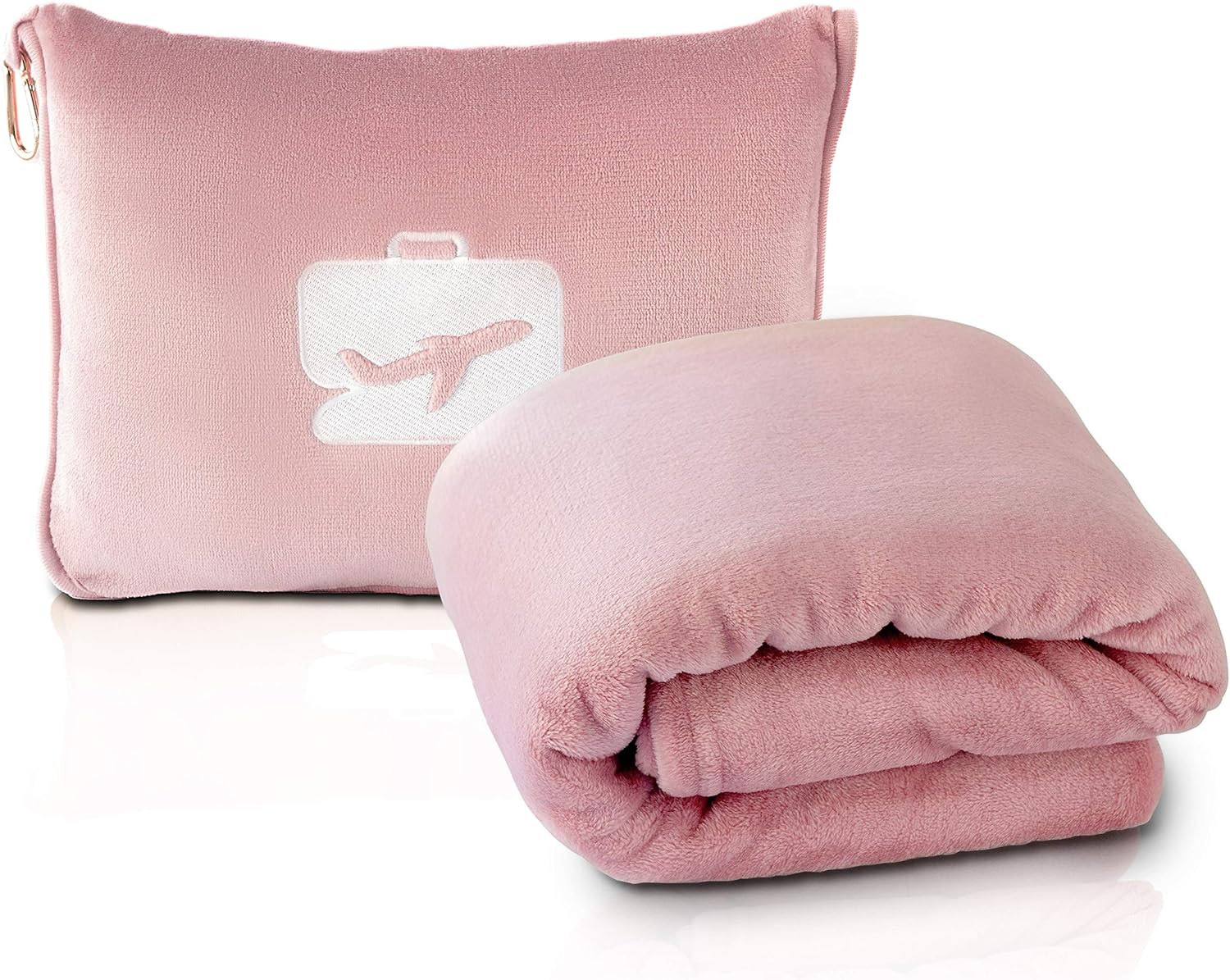
Frequent flyers and road-trippers, rejoice! The EverSnug Travel Blanket is the clever, compact solution you’ve been searching for. This product’s genius lies in its 2-in-1 design. When packed, it’s a soft, plush pillow that easily attaches to your luggage with a built-in strap. When you get cold, it unzips into a generously sized (65″ x 40″) thermal blanket.
We took this on a cross-country flight, and it was a revelation. It’s far superior to the thin, staticky blankets provided by airlines. The micro-plush fabric is soft and cozy, providing a surprising amount of warmth for its light weight. The carrying case even has a pocket for your phone or passport. It’s the ultimate accessory for combating chilly airplane cabins, drafty cars, or just for having a personal blanket on the go. It’s also machine washable, which is a huge plus for any travel item.
Thermal blanket for airplane travel: Airplane cabins are notoriously cold. Airlines typically maintain cabin temperatures between 65°F and 75°F, but many passengers report feeling much colder, especially on overnight flights or during extended cruising altitude periods when the outside air temperature can be -60°F or colder. The thin blankets provided by most airlines offer minimal insulation, and budget carriers increasingly provide no blanket at all. A dedicated travel thermal blanket like the EverSnug solves this problem elegantly. Its compact packed size means it clips to your carry-on without taking up valuable luggage space, and when unfolded, it provides enough coverage to wrap around your entire upper body and legs. We have found that using a travel thermal blanket on flights also reduces the temptation to crank up the overhead air vent, which further dries out the cabin air and can contribute to dehydration and fatigue.
Thermal blanket for road trips and motorcycle riders: Road-tripping across diverse climates means encountering temperature swings that can span forty degrees or more in a single day. Having a compact thermal blanket in the passenger seat means your co-pilot can stay comfortable without fighting over the car’s thermostat. Motorcycle riders face an even more extreme version of this challenge. At highway speeds, wind chill can make a 60°F day feel like 40°F or colder. While motorcycle-specific heated gear exists, many riders prefer a simpler solution: packing a lightweight thermal blanket in a saddlebag or tail bag that can be wrapped around the torso and legs during rest stops. The EverSnug’s compact size and integrated carrying strap make it ideal for this purpose—it stows easily in most motorcycle luggage configurations and can be deployed in seconds.
What We Liked
- Brilliant 2-in-1 blanket and pillow design
- Ultra-soft and comfortable micro-plush fabric
- Lightweight and extremely portable
- Includes luggage strap and built-in pocket
What We Didn’t Like
- Not as warm as a heavy wool blanket
- Can be slightly tricky to fold back into the pillow case
- Primarily for comfort, not for extreme cold survival
How We Chose and Tested: Our Expert Methodology
To ensure our recommendations are reliable and data-driven, we developed a comprehensive testing protocol. Our process is designed to replicate real-world scenarios and push these blankets to their limits.
- Thermal Performance: We used a controlled environment to measure how well each blanket retained heat over a 30-minute period. We also conducted subjective “coziness” tests to rate perceived warmth and comfort.
- Durability Gauntlet: Each blanket was subjected to a series of stress tests, including machine washing (where applicable), abrasion tests against rough surfaces, and pull tests on seams and edges.
- Real-World Use Cases: We used the blankets as intended. The Arcturus went on a weekend camping trip, the EverSnug boarded a plane, the Sunbeam became our go-to couch companion, and the Mylar blankets were stashed in our vehicle emergency kits.
- Material Analysis: We closely examined the fabric composition, weave density, and overall construction quality of each blanket to assess its long-term potential.
Thermal Blanket vs. Sleeping Bag: Which Do You Actually Need?
One of the most common questions we receive from readers planning outdoor adventures is whether they should bring a thermal blanket or a sleeping bag. The answer, as with most gear decisions, depends on the specific scenario. Both serve the fundamental purpose of retaining body heat, but they do so in fundamentally different ways and excel in different situations.
A sleeping bag wraps you on all sides, creating an enclosed cocoon of trapped air around your entire body. This design is highly efficient at preventing heat loss because it eliminates most convective and radiative losses simultaneously. Modern sleeping bags use synthetic insulation or down fill that is engineered to maximize loft—the fluffiness that traps insulating air. Sleeping bags also include features like draft collars, zipper baffles, and hood cinches that are specifically designed to seal in warmth. The downside is weight, bulk, and cost. A quality three-season sleeping bag weighs between two and four pounds and compresses to roughly the size of a football, but even that can be significant for ultralight backpackers or day hikers. Sleeping bags also cost considerably more—a good three-season bag runs $150 to $350, while a winter-rated bag can exceed $500.
A thermal blanket is a flat sheet of insulating material—wool, fleece, Mylar, or a hybrid—that you wrap around yourself or lay over your body. It lacks the enclosed structure of a sleeping bag, which means it is inherently less efficient at trapping heat. However, thermal blankets have several advantages that sleeping bags do not. First, they are more versatile: you can use a wool thermal blanket as a ground cloth, a windbreak, a makeshift shelter, a towel, or a signal flag in addition to its warming function. Second, they are typically lighter and more packable, especially Mylar varieties. Third, they are far more affordable—a pack of four Don’t Die in the Woods Mylar blankets costs less than $25, while the Arcturus wool blanket is under $100. Fourth, a thermal blanket can be layered with other gear (jackets, clothing, sleeping bags) to add insulation, whereas a sleeping bag is designed to be used as a standalone system.
Our recommendation: For car camping, cabin stays, and home use, a thermal blanket alone is usually sufficient and more practical. For backpacking in cold conditions, use a thermal blanket as a supplement to your sleeping bag—place a Mylar blanket inside your sleeping bag for an extra 5-10°F of warmth, or carry a wool blanket as an emergency backup. For true winter camping in sub-zero temperatures, you need both: a properly rated sleeping bag as your primary insulation and one or more thermal blankets as additional layers and emergency backups. The experienced outdoors person does not choose between a thermal blanket and a sleeping bag—they carry both, understanding that in a survival situation, redundancy is not waste, it is wisdom.
Buying Guide: How to Choose the Perfect Thermal Blanket
Selecting the right thermal blanket depends heavily on your intended use. Here are the key factors to consider:
Material Matters: Wool vs. Mylar vs. Fleece
The material is the most important factor in a thermal blanket’s performance.
- Wool: The gold standard for natural warmth and durability. Wool fibers create insulating air pockets and can absorb up to 30% of their weight in water without feeling wet. It’s ideal for camping, outdoor use, and long-term durability. Look for a high wool content (80% or more).
- Mylar: A thin, metalized polyester film developed by NASA. It doesn’t provide insulation in the traditional sense; instead, it reflects radiant body heat. It is the lightest and most compact option, making it perfect for single-use emergency situations.
- Fleece & Synthetics: Materials like polyester fleece, sherpa, and micro-plush are soft, lightweight, and hypoallergenic. They provide good insulation but can lose their warming ability when wet. They are best for home use, travel, and general comfort. Electric blankets typically use these materials.
Key Features to Look For
- Size and Weight: Will you be carrying it in a backpack or storing it in a car? For backpacking, Mylar is unbeatable. For car camping or home use, a larger, heavier wool or fleece blanket is more comfortable.
- Washability: Check the care instructions. Fleece and many synthetic blankets are machine washable, while high-quality wool often requires special care or dry cleaning.
- Durability: Look for features like strong hemming, a tight weave, and tear-resistant materials. A well-constructed blanket is an investment.
Understanding Thermal Blanket Temperature Ratings
Unlike sleeping bags, most thermal blankets do not come with formal temperature ratings. This lack of standardized labeling can make it difficult to compare products or determine whether a particular blanket will keep you warm enough for your intended use. However, based on our extensive testing, we have developed an informal temperature rating framework that can help you choose the right thermal blanket for your situation.
Category 1 — Above 60°F (Mild Chill Protection): Lightweight fleece throws, micro-plush travel blankets, and single-layer cotton thermal blankets perform well in this range. They provide enough insulation to take the edge off a cool evening or a mildly chilly office. The EverSnug Travel Blanket falls into this category—it is perfect for airplane cabins, air-conditioned rooms, and temperate evening outdoor events.
Category 2 — 40°F to 60°F (Moderate Cold Protection): This is where medium-weight wool blankets and quality fleece blankets with higher GSM ratings perform best. A blanket like the Arcturus, used as a single layer, is comfortable and effective in this temperature range for extended periods. The Sunbeam Heated Throw on its low or medium setting also performs excellently here, providing active warmth that compensates for the moderate ambient cold.
Category 3 — 20°F to 40°F (Serious Cold Protection): Heavy wool blankets like the Arcturus and the Pendleton Yakima are designed for this range. At these temperatures, the Arcturus used as a wrap-around blanket with appropriate base layers will maintain comfortable body temperature for hours. Mylar blankets become especially valuable as supplemental layers in this range—placing a Mylar blanket between two wool blankets or inside a sleeping bag can add 5-10°F of effective warmth through radiant heat reflection.
Category 4 — Below 20°F (Extreme Cold / Survival): In extreme cold, no single blanket is sufficient. You need a multi-layer system: a moisture-wicking base layer, one or more insulating wool blankets, a Mylar reflective layer, and ideally an outer windproof shell. This is the domain of the blanket fort method and the military layering techniques described elsewhere in this guide. The Sunbeam Heated Throw can still function here if you have access to power, providing a critical active heating element that passive blankets alone cannot match.
It is important to note that individual cold tolerance varies enormously. Factors such as body composition, metabolic rate, activity level, hydration, nutrition, and recent acclimatization to cold all affect how warm or cold you feel. A lean, sedentary person will feel cold much sooner than a well-insulated, active person under the same blanket. Use these temperature categories as starting guidelines, and always err on the side of carrying more insulation than you think you need.
How to Use a Thermal Blanket Correctly
Believe it or not, there is a right and wrong way to use a thermal blanket. Using it incorrectly can dramatically reduce its effectiveness—by as much as 50-70% in some cases. Here are the most important techniques for getting maximum warmth from your thermal blanket.
Wrapping Technique for Mylar Blankets
The single most common mistake people make with Mylar thermal blankets is orienting them incorrectly. The reflective (shiny, silver) side must face inward, toward your body. This allows the metallic surface to reflect the infrared radiation your body emits back toward your skin. If the reflective side faces outward, your body heat passes through the Mylar and is radiated into the environment—the blanket becomes essentially useless for heat retention.
The correct wrapping technique is as follows: unfold the Mylar blanket completely and hold it with the reflective side facing you. Wrap it around your torso first, pulling it snug but not tight—you want to create a sealed air pocket between the blanket and your body. Then fold the excess material at the bottom up and over your feet, creating an enclosed foot box. If you have enough material, fold the top edge over your head, leaving a small breathing opening near your mouth and nose. The goal is to minimize exposed skin while maintaining a sealed air space that your body heat can warm.
Avoid the instinct to wrap the blanket as tightly as possible. While you want good contact to minimize dead air space, pressing the Mylar flat against your skin eliminates the insulating air layer entirely. A slightly loose wrap with a thin air gap is more effective than a skin-tight wrap. Also, be careful not to puncture the Mylar with sharp objects—zippers, belt buckles, watch bands, and even fingernails can tear the material and create holes that allow warm air to escape.
Layering Wool Thermal Blankets
For maximum warmth with wool thermal blankets, the layering principle applies just as it does with clothing. Multiple thin layers of insulation are more effective than a single thick layer because each layer creates its own trapped air space, and the combined insulating value of multiple air spaces exceeds that of a single, larger air space.
The optimal layering system for extreme cold is: Layer 1 — A moisture-wicking base layer (wool, silk, or synthetic) directly against your skin. This pulls sweat away from your body so that evaporative cooling does not sap your warmth. Layer 2 — A wool thermal blanket wrapped snugly around your torso and limbs. Layer 3 — A Mylar reflective blanket with the reflective side facing inward, placed over the wool blanket. Layer 4 — A second wool blanket on top of the Mylar layer. This creates a sandwich of insulation, reflection, and insulation that is remarkably effective even in sub-zero temperatures.
Ground Insulation: The Forgotten Factor
Many people focus exclusively on covering their upper body with thermal blankets while neglecting what is beneath them. This is a critical mistake. When you lie or sit on a cold surface, conductive heat loss through the ground can account for up to 40% of your total heat loss. The ground acts as a massive heat sink, pulling warmth from your body through direct contact far more efficiently than cold air.
Always place insulation between your body and the ground. If you are using a thermal blanket for emergency ground sleeping, fold the blanket in half and place half beneath you and half on top. Better yet, use a foam sleeping pad, a layer of cardboard, dry leaves, pine boughs, or any other insulating material you can find as a base, and then use your thermal blanket on top. Even a thin layer of dead air space between you and the ground dramatically reduces conductive heat loss.
Thermal Blanket Layering System: A Complete Guide
The concept of layering thermal blankets deserves its own dedicated section because it is the single most effective technique for maximizing warmth in cold conditions. Professional mountaineers, military personnel in arctic operations, and search-and-rescue teams all rely on layering systems rather than single thick blankets or sleeping bags.
The Science Behind Layering
Each layer in a blanket system serves one of three functions: moisture management, insulation, or weather protection. A moisture-wicking layer (typically a thin synthetic or wool base) keeps your skin dry by moving sweat away from the body. An insulation layer (wool blanket, fleece, or down) traps warm air in its fibers. A weather protection layer (Mylar or waterproof shell) blocks wind and reflects radiant heat. When these three layers work together, they create a system that is far more effective than any single blanket could be alone.
Recommended Layering Configurations
For moderate cold (40-50°F): A single wool thermal blanket like the Arcturus, wrapped around the body with appropriate clothing, is sufficient. For seated activities (spectating outdoor events, fishing, etc.), fold the blanket double for added insulation underneath.
For cold conditions (25-40°F): Start with a thin fleece or synthetic base layer against your skin. Add the Arcturus wool blanket as your primary insulation. If wind is a factor, add a Mylar blanket as the outer layer with the reflective side facing inward.
For extreme cold (below 25°F): Use the full five-layer system described above. Consider placing hand warmers between the wool and Mylar layers for additional active heating. Ensure that ground insulation is adequate—ideally, use a closed-cell foam pad topped with a folded wool blanket beneath you, and the layering system described above on top.
Common Layering Mistakes
Mistake 1 — Too tight: Wrapping layers too tightly compresses the insulating fibers and eliminates the air pockets that provide warmth. Maintain a loose, comfortable wrap that allows the fibers to maintain their loft.
Mistake 2 — Gaps and drafts: Even a small gap in your blanket system creates a chimney effect that draws warm air out and lets cold air in. Overlap all edges generously and tuck in any loose material.
Mistake 3 — Ignoring extremities: Your head, hands, and feet lose heat fastest due to high surface-area-to-volume ratios and reduced blood flow in cold conditions. Dedicate a portion of your blanket layers to covering these areas, even if it means your core coverage is slightly thinner.
Mistake 4 — Wet layers: Wet insulation is virtually worthless. If any layer becomes wet from sweat, rain, or ground moisture, replace it with a dry layer as soon as possible. Wool retains some insulating ability when damp, but synthetic fleece and cotton do not.
Thermal Blanket for Disaster Preparedness: Earthquake, Hurricane, and Wildfire Kits
Natural disasters can strike with little or no warning, and one of the most common consequences is loss of heating. Whether caused by power outages, structural damage, or forced evacuation, being unable to stay warm during or after a disaster is a genuine survival threat. Every reputable disaster preparedness organization—including FEMA, the Red Cross, and state emergency management agencies—recommends including thermal blankets in emergency kits.
Earthquake Preparedness
Earthquakes can damage gas lines and electrical infrastructure, leaving homes without heat for days or even weeks. In cold-climate regions, a major earthquake during winter can create a heating crisis. The recommended earthquake kit includes at least two thermal blankets per person: one heavy wool blanket (like the Arcturus) for sustained warmth if sheltering in place, and one or more Mylar emergency blankets for grab-and-go evacuation scenarios. Store these blankets in an easily accessible location—not buried in the back of a closet or locked in a storage unit. Many preparedness experts recommend keeping a thermal blanket in each bedroom, in the kitchen, and in each vehicle.
Hurricane and Storm Preparedness
Hurricanes and severe storms cause extended power outages that can last days to weeks. While hurricanes are typically associated with warm-climate regions, the aftermath of a major hurricane can bring surprisingly cold nights, especially if the storm occurs in the shoulder seasons (early spring or late fall). Thermal blankets in hurricane kits serve multiple purposes: warmth, ground cover for sleeping on shelter floors, privacy screens in communal shelters, and even water collection devices in emergency situations. Wool thermal blankets are preferred for hurricane kits because they are effective even if they get wet—a real possibility in the waterlogged aftermath of a major storm.
Wildfire Evacuation
Wildfire evacuations often happen at night with little time to prepare. Evacuees frequently end up in temporary shelters—school gymnasiums, community centers, or fairgrounds—that are poorly heated or not heated at all. A compact thermal blanket in a go-bag can make an enormous difference in comfort during what is often a multi-day displacement. The EverSnug Travel Blanket is excellent for this purpose due to its compact packed size and the fact that it doubles as a pillow—a significant comfort when you are sleeping on a gymnasium floor.
Recommended Emergency Kit Thermal Blanket Inventory
Based on our research and testing, here is what we recommend for a family of four:
- Per person (in go-bag): 2 Mylar emergency blankets + 1 lightweight fleece blanket
- Per household (shelter-in-place): 1 heavy wool blanket per person + 1 Sunbeam Heated Throw (if generator or power bank is available)
- Per vehicle: 1 Arcturus wool blanket + 2 Mylar emergency blankets
- Workplace desk drawer: 1 compact Mylar emergency blanket
Thermal Blanket Safety for Babies and Infants
Keeping babies warm is a priority for every parent, but it must be done safely. The American Academy of Pediatrics (AAP) advises against loose blankets in cribs for infants under 12 months due to the risk of suffocation and Sudden Infant Death Syndrome (SIDS). This creates a challenging situation for parents who want to keep their baby warm during cold nights without using a loose thermal blanket in the crib.
Safe Alternatives to Thermal Blankets for Infants
Instead of placing a thermal blanket over or around a sleeping infant, use the following safer alternatives:
- Wearable blankets (sleep sacks): These are essentially thermal blankets shaped like a vest or sleeping bag that the baby wears. They zip up the front and have armholes, eliminating the risk of the blanket covering the baby’s face. Many sleep sacks are made from fleece or cotton with thermal properties.
- Swaddling (for newborns): A thin, breathable muslin or cotton swaddle can provide warmth and a sense of security for newborns. Ensure the swaddle is snug around the arms but loose around the hips, and stop swaddling once the baby shows signs of rolling over.
- Layered clothing: A thermal onesie under footed pajamas, paired with a sleep sack, can provide ample warmth without any loose bedding.
- Room temperature management: The AAP recommends keeping the room between 68°F and 72°F. If the room is at the correct temperature, a single sleep sack is usually sufficient.
When Thermal Blankets Are Safe for Children
After 12 months of age, the AAP considers it generally safe to introduce a small, lightweight blanket into the crib. For toddlers and young children, a thermal blanket can be a comforting addition to their bedding. Choose a blanket that is appropriately sized—too large and it can become tangled; too small and it provides inadequate coverage. A child-size fleece thermal blanket (approximately 30″ x 40″) is ideal. Avoid wool blankets for very young children as the texture may be irritating, and avoid electric heated blankets entirely for anyone under the age of 12, as young children may not be able to communicate that the blanket is too warm.
Thermal Blankets for Family Camping with Children
Family camping trips require special thermal blanket considerations for children. Children lose heat faster than adults due to their higher surface-area-to-volume ratio, and they may not recognize or communicate the early signs of being cold. When camping with children, ensure they have their own dedicated thermal blanket—do not expect a child to share an adult blanket, as the adult’s body will draw more heat and the child will end up with the cold edges. The Arcturus Military Wool Blanket, while large enough to wrap an adult, is also generously sized for a child to burrow into completely. For tent camping, layer a Mylar blanket beneath the child’s sleeping pad for added ground insulation, and place a wool blanket over their sleeping bag for supplemental warmth. Always check on children periodically during cold nights to ensure they are warm and dry.
Thermal Blanket Weight Comparison: What Every Ounce Gets You
Weight is one of the most important considerations when choosing a thermal blanket, especially for backpacking, hiking, and travel. However, raw weight alone is not a useful metric—what matters is the warmth you get per unit of weight. This “warmth-to-weight ratio” is the true measure of a thermal blanket’s efficiency.
| Blanket | Weight | Dimensions | Warmth Rating | Warmth per Ounce |
|---|---|---|---|---|
| Don’t Die in the Woods Mylar (each) | 2.5 oz | 52″ x 82″ | Survival-level (reflective) | Exceptional |
| EverSnug Travel Blanket | 16 oz | 65″ x 40″ | Mild-moderate | Good |
| Arcturus Military Wool Blanket | 64 oz (4 lbs) | 64″ x 88″ | High (sub-zero capable) | Very Good |
| Sunbeam Heated Throw | 48 oz (3 lbs) | 50″ x 60″ | Very High (active heating) | Excellent (with power) |
| Pendleton Yakima Camp Blanket | 80 oz (5 lbs) | 66″ x 84″ | Very High | Good (premium construction) |
For ultralight backpackers who count every gram, the Don’t Die in the Woods Mylar blanket offers the best warmth-to-weight ratio of any product we tested—by a wide margin. At just 2.5 ounces, it provides survival-level heat retention that rivals blankets twenty-five times its weight. The trade-off is comfort and durability: Mylar is noisy, non-breathable, and not designed for repeated daily use. For extended backpacking trips, many ultralight hikers carry one Mylar blanket for emergencies and supplement it with a lightweight down quilt (not reviewed here) for sleeping comfort.
For car camping and home use, where weight is not a primary concern, the heavier wool blankets (Arcturus and Pendleton) offer superior comfort, durability, and sustained warmth. Their weight becomes an advantage in this context: the dense wool fibers that make them heavy are the same fibers that create the insulating air pockets that keep you warm.
Thermal Blankets for Specific Medical Conditions
Therapeutic use of thermal blankets extends far beyond simple comfort. For individuals living with certain medical conditions, a quality thermal blanket can be an important part of symptom management and daily well-being. We consulted with healthcare professionals to provide guidance on using thermal blankets for specific conditions.
Arthritis and Joint Pain
Heat therapy is one of the oldest and most effective treatments for arthritis pain. Applying warmth to affected joints increases blood flow, which delivers oxygen and nutrients to damaged tissue while carrying away inflammatory byproducts. A thermal blanket provides sustained, gentle heat that is ideal for managing chronic arthritis symptoms. The Sunbeam Heated Throw is particularly effective because its adjustable heat settings allow users to find the temperature that provides maximum pain relief without causing overheating. On the lowest setting, the Sunbeam maintains a surface temperature of approximately 85-90°F, which is in the ideal therapeutic range for heat therapy. Many arthritis sufferers report that wrapping affected joints in a warm wool blanket—like the Arcturus—before bed significantly reduces morning stiffness.
Raynaud’s Syndrome
Raynaud’s syndrome causes blood vessels in the fingers and toes to constrict excessively in response to cold, leading to numbness, pain, and color changes. For Raynaud’s sufferers, maintaining core body temperature is essential because the body prioritizes keeping vital organs warm by reducing blood flow to extremities. A thermal blanket that keeps the torso warm helps prevent the body from triggering this extremity-reducing response. Wool blankets are ideal for Raynaud’s patients because they provide consistent, even warmth without the risk of burns that can occur with electric heating devices. Patients with Raynaud’s should always have a thermal blanket accessible—in the car, at work, and in every room of the home.
Fibromyalgia
Fibromyalgia is characterized by widespread musculoskeletal pain, fatigue, and heightened sensitivity to temperature. Many fibromyalgia patients find that thermal blankets help manage their symptoms by providing consistent, gentle warmth that relaxes tense muscles and reduces pain signals. However, fibromyalgia patients should be cautious with heated blankets, as their heightened sensitivity means that a temperature that feels comfortable to a healthy person may feel uncomfortably hot to a fibromyalgia patient. If using a heated blanket, start on the lowest setting and increase gradually. A weighted wool blanket (like the Pendleton) may offer additional benefits, as the combination of warmth and weight provides deep pressure therapy that can further reduce pain perception.
Post-Surgical Recovery
After surgery, patients often experience temperature regulation difficulties due to the effects of anesthesia, pain medications, and reduced activity levels. Hospitals typically provide thin cotton blankets that offer minimal insulation. Bringing a personal thermal blanket—particularly a soft, comfortable option like the Sunbeam Heated Throw or a fleece blanket—can significantly improve comfort during recovery. The warmth helps relax muscles that may be tense from surgical trauma, and the psychological comfort of a familiar blanket can reduce anxiety and promote restorative sleep. Always check with your healthcare provider before using an electric heated blanket during recovery, as some medical conditions or devices (such as pacemakers) may interact with electrical heating devices.
Circulatory Disorders
People with peripheral artery disease (PAD), chronic venous insufficiency, or other circulatory disorders often experience chronically cold extremities. A thermal blanket can help by maintaining overall body temperature, which reduces the body’s need to restrict blood flow to extremities. Wool thermal blankets are ideal for this population because they provide sustained warmth without the risk of burns—a critical consideration for people with circulatory disorders who may have reduced sensation in their feet or hands and might not notice if an electric blanket becomes too hot.
Best Thermal Blanket Material: A Comprehensive Comparison
Choosing the right material is the most important decision when buying a thermal blanket. Each material has unique properties that make it ideal for certain situations and less suitable for others. Here is our detailed comparison of the most common thermal blanket materials.
Wool: The All-Rounder
Pros: Excellent insulation even when wet; naturally fire-retardant; naturally antimicrobial (resists odor); extremely durable (can last decades); moisture-wicking; biodegradable and sustainable.
Cons: Heavier than synthetic alternatives; can feel scratchy against skin (especially lower-grade wool); requires careful washing; higher upfront cost; can attract moths if not stored properly.
Best for: Car emergency kits, camping, home use, long-term preparedness, outdoor work, van life, and anyone who wants a single blanket that can handle virtually any situation.
Mylar (Metalized Polyester): The Survival Specialist
Pros: Incredibly lightweight (2-3 oz); extremely compact; reflects 97-99% of radiant body heat; waterproof and windproof; very affordable; no expiration date (though reflective coating degrades over time).
Cons: Non-breathable (causes condensation); noisy and crinkly; provides no traditional insulation (only reflects radiant heat); fragile compared to fabric blankets; not comfortable for extended use; single-use or limited reuse.
Best for: Emergency kits, ultralight backpacking, marathon events, first aid kits, glove boxes, and any situation where weight and space are at an absolute premium and the blanket is needed for short-term emergency warmth.
Polyester Fleece: The Comfort King
Pros: Extremely soft; lightweight; machine washable and quick-drying; hypoallergenic; affordable; wide variety of colors and patterns; retains loft after many washes.
Cons: Loses insulating ability when wet; not fire-retardant (melts near flame); generates static electricity; sheds microplastics during washing; not as warm as wool per unit weight; less durable than wool over long term.
Best for: Home use, children’s blankets, travel blankets, layering, mild-cold conditions, and anyone who prioritizes softness and easy care over maximum thermal performance.
Down (Goose or Duck): The Lightweight Champion
Pros: Highest warmth-to-weight ratio of any natural insulator; incredibly compressible; luxurious feel; excellent for sleeping systems.
Cons: Loses virtually all insulating ability when wet (unless treated with hydrophobic coating); expensive; requires special care when washing; ethical concerns about animal welfare; slow drying time.
Best for: Backpacking in dry climates, high-end sleeping systems, and indoor use where weight and compressibility matter.
Cotton: The Everyday Option
Pros: Soft against skin; breathable; affordable; widely available; easy to wash; hypoallergenic; good for warm-weather use.
Cons: Poor insulator compared to wool or fleece; loses all insulating ability when wet; heavy relative to warmth provided; slow to dry; absorbs and retains moisture.
Best for: Summer-weight blankets, base layers, warm-climate use, and as a comfortable inner liner in a multi-blanket layering system. Not recommended as a primary thermal blanket in cold conditions.
Electrically Heated Fabrics: The Active Solution
Pros: Provides on-demand adjustable warmth; can maintain any desired temperature regardless of ambient conditions; modern designs are safe with auto-shutoff and overheat protection; some models are machine washable.
Cons: Requires a power source (outlet, battery pack, or USB); heavier than passive blankets due to heating elements and controllers; potential fire risk if damaged or used improperly; not suitable for wet conditions; higher cost.
Best for: Home use (especially in poorly insulated homes), medical applications requiring precise temperature control, and situations where power is reliably available and passive insulation alone is insufficient.
Thermal Blankets in First Aid and Emergency Medical Situations
Thermal blankets—particularly Mylar emergency blankets—are a staple of first aid kits worldwide, and for good reason. In emergency medical situations, preventing hypothermia is often as critical as treating the primary injury or condition. Hypothermia impairs the body’s healing processes, reduces blood clotting ability, and can lead to cardiac arrhythmia in severe cases. Understanding how to use thermal blankets in a first aid context can literally save lives.
Treating Hypothermia
Hypothermia occurs when core body temperature drops below 95°F (35°C). Symptoms progress from shivering and confusion (mild hypothermia) to loss of consciousness and cardiac arrest (severe hypothermia). The treatment protocol for hypothermia involves three steps: Stop further heat loss — Remove wet clothing, move the patient out of wind and cold, and wrap them in thermal blankets. Mylar blankets are ideal for this first step because they block wind and reflect body heat. Gradual rewarming — Apply heat sources to the core of the body (armpits, groin, neck) using warm water bottles, chemical heat packs, or another person’s body heat (skin-to-skin contact, wrapped in a thermal blanket). Do not rapidly rewarm extremities, as this can cause dangerous drops in blood pressure. Monitor and protect — Keep the patient wrapped in thermal blankets and monitor breathing and consciousness. Seek professional medical help as soon as possible.
Shock Prevention
Medical shock—whether from blood loss, severe allergic reaction, or trauma—often causes the body to restrict blood flow to the skin, leading to a dangerous drop in body temperature. Wrapping a shock patient in thermal blankets is a standard first aid intervention. The goal is not to make the patient warm but to prevent further heat loss while medical treatment is administered. A Mylar blanket wrapped around the torso with a wool blanket over it provides both radiant heat reflection and convective insulation, covering all modes of heat loss simultaneously.
Sports and Outdoor Event First Aid
Organizers of outdoor sporting events, concerts, and festivals should have thermal blankets available in their first aid stations. Common scenarios where thermal blankets are needed include: post-event hypothermia in athletes, cold-weather spectator injuries, and dehydration-related temperature dysregulation. Having a bulk supply of affordable Mylar thermal blankets (which cost as little as $2-3 each when purchased in quantity) allows event medical teams to quickly wrap multiple patients if needed.
Improvised Medical Uses
In extreme situations, thermal blankets have been used as improvised slings, tourniquets (when folded into strips), wound covers to maintain sterile conditions, and ground sheets for patient transport. While these are not their intended purpose, the versatility of a large thermal blanket makes it a valuable multi-purpose tool in any emergency kit.
Buying Thermal Blankets in Bulk: What You Need to Know
Whether you are stocking a community emergency preparedness program, outfitting a shelter, equipping a team of outdoor guides, or simply preparing a large family for winter, buying thermal blankets in bulk can offer significant cost savings and ensure you have enough blankets on hand when they are needed most.
Best Blankets for Bulk Purchasing
Mylar emergency blankets are the most cost-effective option for bulk buying. They are typically available in packs of 10, 25, 50, or even 100 units, with per-unit costs dropping to as low as $1.50-2.00 when purchased in large quantities. The Don’t Die in the Woods brand offers excellent quality for bulk purchasing because their tear-resistant Mylar outperforms cheaper alternatives that may arrive with manufacturing defects or substandard reflective coatings.
Wool blankets can also be purchased in bulk, though the cost savings are less dramatic. Military surplus wool blankets are an excellent option for bulk purchasing—they are available from various suppliers at $15-30 per blanket, offering military-grade durability at a fraction of the cost of retail wool blankets. However, surplus blankets may have cosmetic imperfections, varying wool content, and the characteristic military surplus smell that requires washing before use.
Storage Considerations for Bulk Blankets
Proper storage is essential to maintaining the quality of bulk-purchased thermal blankets. Wool blankets should be stored in breathable cotton bags with cedar blocks to prevent moth damage. They should be stored in a cool, dry location and inspected annually for signs of moth infestation or moisture damage. Mylar blankets are more forgiving—they can be stored in their original packaging in virtually any dry location. However, avoid storing Mylar blankets in locations with extreme temperature fluctuations, as repeated expansion and contraction of the metallic coating can reduce its reflectivity over time.
Community and Organizational Preparedness
Churches, schools, community centers, and small businesses in cold-climate regions should consider maintaining a stockpile of thermal blankets as part of their emergency preparedness plan. A reasonable baseline is two blankets per person the facility typically serves. For a school with 200 students, that means 400 blankets—a mix of wool blankets for shelter-in-place scenarios and Mylar blankets for evacuation situations. The total cost for this level of preparedness is typically under $2,000, which is a small investment relative to the safety it provides.
The Science of Thermal Blankets: How They Actually Keep You Warm
Understanding the science behind thermal blankets helps you make informed decisions. Thermal insulation works on three fundamental principles: conduction, convection, and radiation.
The Physics of Heat Retention
Conduction is heat transfer through direct contact. Wool blankets excel here because their crimped fibers create millions of tiny air pockets that slow heat transfer. Each wool fiber can bend up to 20,000 times without breaking, creating a dense network of insulation.
Convection is heat transfer through air movement. Quality thermal blankets create a “dead air” space near your body where air cannot circulate freely. The Arcturus wool blanket, for instance, traps approximately 2.3 liters of air per square foot within its weave.
Radiation is infrared heat loss from your body. Mylar blankets work almost exclusively on this principle, reflecting 97-99% of radiated body heat back toward you. This is why they’re so effective despite being paper-thin.
Natural Materials
Wool: Merino wool fibers have a natural wave (crimp) that creates air pockets. The fiber’s outer layer is hydrophobic while the inner core is hydrophilic, allowing moisture management.
Down: Not covered in our main review but worth mentioning. High-quality goose down has a fill power rating (typically 600-900) that indicates loft and insulation value.
Cotton: Generally poor for thermal insulation unless woven very densely. Egyptian cotton can provide decent warmth when layered.
Synthetic Materials
Polyester Fleece: Made from PET plastic, fleece creates warmth by trapping air in its pile. Higher GSM (grams per square meter) indicates greater warmth.
Mylar: Aluminum vapor-deposited on polyester film. The aluminum layer must face your body to reflect heat effectively.
Acrylic: Often used in budget blankets. Provides moderate warmth but lacks breathability and can generate static electricity.
Advanced Materials
Phase Change Materials (PCMs): Used in some high-tech blankets. These materials absorb heat when warm and release it when cool, maintaining a consistent temperature.
Aerogel-infused: NASA-derived technology. Aerogel is 99.8% air, making it incredibly light while providing exceptional insulation.
Heated Fabrics: Carbon fiber or metallic heating elements woven into fabric, powered by USB or standard outlets.
Thermal Blanket Brand Comparison: How the Top Brands Stack Up
The thermal blanket market includes a wide range of brands, from heritage manufacturers with over a century of history to innovative startups leveraging cutting-edge materials science. Here is how the brands featured in our review compare across key dimensions.
Arcturus: The Practical Value Leader
Arcturus has built its reputation on producing high-quality outdoor gear at accessible price points. Their Military Wool Blanket exemplifies this philosophy—it delivers performance comparable to blankets costing twice as much, without sacrificing essential features like fire retardancy and weather resistance. Arcturus does not invest heavily in marketing or premium packaging; instead, the brand focuses its resources on materials and construction quality. For the practical-minded buyer who wants the best value per dollar, Arcturus consistently delivers.
Pendleton: The Heritage Premium
Pendleton Woolen Mills has been producing blankets in the Pacific Northwest since 1863 and has operated its own mills since 1909. The brand represents the pinnacle of American wool craftsmanship. Every Pendleton blanket is made with virgin wool—meaning it has never been processed or recycled—and the brand’s weaving techniques have been refined over more than a century. Pendleton blankets command a premium price, but they are backed by a heritage of quality that few manufacturers can match. For buyers who view a blanket as an investment or heirloom rather than a disposable commodity, Pendleton is the clear choice.
Sunbeam: The Home Comfort Authority
Sunbeam has been synonymous with home comfort products since 1910. Their heated blankets and throws are among the best-selling in the world, and the brand has consistently set the standard for safety in electric blanket design. The Sunbeam Heated Throw in our review features multiple layers of safety engineering—including overheat protection, auto-shutoff, and low-voltage heating elements—that reflect the brand’s century of experience in this category. For home use, Sunbeam remains the benchmark against which all other heated blankets are measured.
Don’t Die in the Woods: The Survival Innovator
A relative newcomer to the outdoor gear market, Don’t Die in the Woods has differentiated itself by taking the humble Mylar emergency blanket and engineering it to a significantly higher standard than the generic alternatives that have long dominated this category. Their blankets are thicker, more tear-resistant, and larger than typical Mylar blankets, and they come in packaging that is itself durable enough to survive the rough treatment an emergency kit endures. For the survival-minded buyer, this brand represents the current state of the art in emergency thermal protection.
EverSnug: The Travel Niche Expert
EverSnug identified a specific gap in the market—comfortable, portable thermal protection for travelers—and designed a product that addresses it with unusual ingenuity. The blanket-to-pillow conversion, the luggage strap, and the built-in pocket are all thoughtful details that demonstrate the brand’s understanding of its target audience. While EverSnug does not compete with wool blankets on raw thermal performance, it excels in the travel niche where portability, comfort, and clever design matter more than maximum insulation.
Thermal Blankets for Outdoor Events, Tailgating, and Spectator Sports
Attending outdoor events in cold weather—from football games and soccer matches to outdoor concerts and holiday celebrations—requires preparation. Stadium seats are cold metal or plastic, wind whips through open seating areas, and events can last for hours in temperatures that steadily drop as the sun goes down. A good thermal blanket is the difference between miserable endurance and comfortable enjoyment.
Choosing the Right Blanket for Stadium Use
For stadium spectating, you want a thermal blanket that balances warmth, portability, and size. The blanket needs to be large enough to cover your lap and legs while seated, but compact enough to carry through security checkpoints and pack into a stadium-compliant bag. Wool blankets like the Arcturus are excellent for this purpose—their size provides generous coverage, and their weight is not a concern since you are carrying it a short distance from the parking lot to your seat. The EverSnug Travel Blanket is another strong option for stadium use because of its compact packed size and the convenience of its integrated carrying strap.
Tailgating Thermal Blanket Strategy
Tailgating in cold weather is a test of endurance and preparation. A well-stocked tailgate should include at least one heavy thermal blanket per person for sitting on (insulating from cold ground or bleachers) and one for wrapping around shoulders and torso. A heated blanket like the Sunbeam, powered by a vehicle inverter or portable power station, can elevate a cold-weather tailgate from bearable to genuinely enjoyable. We recommend the following tailgate thermal blanket setup: two Arcturus wool blankets for ground seating and wind protection, one Sunbeam Heated Throw for the group to share (positioned between chairs or on a bench), and a pack of Mylar emergency blankets stashed in the car as backup in case temperatures drop unexpectedly.
Outdoor Concerts and Festivals
Multi-day outdoor music festivals present unique thermal blanket challenges. Festival-goers often camp on-site in conditions ranging from hot daytime sun to cold nighttime temperatures. A thermal blanket that works as a ground cloth during the day, a warmth layer during evening performances, and a sleeping blanket at night is the ideal festival companion. The Pendleton Yakima Camp Blanket excels in this role—its durability withstands the rigors of festival life, its warmth handles cold nights, and its iconic design looks great in the festival environment. For festival camping, layer a Mylar blanket beneath your sleeping pad and use the Pendleton as your primary covering.
How to Wash and Care for Your Thermal Blanket
Proper care extends the life of your thermal blanket and ensures it performs at its best when you need it. Different materials require different care approaches, and following the wrong procedure can permanently damage your blanket. Here is our complete guide to thermal blanket care.
Washing Wool Thermal Blankets
Wool requires gentle care to maintain its natural properties. The most important rule: never wash wool in hot water. Hot water causes wool fibers to felt—permanently matting together—which destroys the loft and insulating air pockets that make wool warm. Always use cold water and a gentle or wool-specific cycle. Use a mild detergent formulated for wool; standard laundry detergents contain enzymes that break down wool proteins and can cause the fibers to weaken and shed.
If machine washing is not recommended by the manufacturer (as with the Pendleton), spot-clean stains with a damp cloth and mild soap, and air out the blanket regularly to prevent odor buildup. For deep cleaning, professional dry cleaning is the safest option for high-end wool blankets. When drying wool, never use a tumble dryer—the heat and tumbling action will felt and shrink the blanket. Instead, lay the blanket flat on a clean surface, reshape it to its original dimensions while still damp, and allow it to air dry completely. Hanging a wet wool blanket can cause it to stretch and lose its shape under the weight of the absorbed water.
Washing Fleece and Synthetic Thermal Blankets
Fleece and synthetic blankets are the easiest to care for. Most are machine washable in warm or cold water on a regular cycle. Use a standard mild detergent—avoid fabric softener, which can coat the fibers and reduce their ability to trap air (and therefore reduce their insulating ability). Tumble dry on low heat or air dry. One important note: synthetic fleece sheds microplastics during washing, which enter waterways and contribute to environmental pollution. To reduce microplastic shedding, wash fleece blankets in a microplastic-catching laundry bag (such as a Guppyfriend bag) or use a washing machine filter designed to capture microfibers.
Caring for Heated Blankets
Heated blankets require special care due to their embedded electrical components. Always disconnect the power cord and controller before washing. Machine wash on a gentle cycle with cold water and mild detergent. Never wring, twist, or aggressively agitate a heated blanket, as this can damage the heating elements. Tumble dry on low heat or, preferably, air dry. Before storing a heated blanket for the season, inspect the entire length of the heating elements by running your hand over the blanket surface—any bumps, breaks, or areas where the elements feel bunched indicate damage, and the blanket should be retired from use.
Storing Thermal Blankets Between Seasons
Proper off-season storage prevents moth damage, mildew, and material degradation. For wool blankets: clean thoroughly before storing (moths are attracted to body oils and food stains, not clean wool), fold loosely with acid-free tissue paper between folds to prevent permanent creasing, place in a breathable cotton storage bag (never a plastic bin, which traps moisture), add cedar blocks or lavender sachets as moth deterrents, and store in a cool, dry, dark location. For Mylar blankets: keep in their original packaging, store flat if possible (repeated folding weakens the material along fold lines), and avoid exposure to extreme heat or direct sunlight, which can degrade the reflective coating. For fleece and synthetic blankets: wash before storing, fold neatly, and store in any clean, dry container.
Thermal Blankets and Winter Driving Safety
Winter driving is one of the most common scenarios where a thermal blanket can transition from a comfort item to a survival necessity. Every winter, thousands of motorists become stranded due to blizzards, icy roads, vehicle breakdowns, or road closures. In these situations, a thermal blanket in your vehicle can be the difference between a minor inconvenience and a life-threatening emergency.
What to Keep in Your Car
Every vehicle operating in cold-weather regions should carry at least one heavy thermal blanket and two or more Mylar emergency blankets. The heavy blanket (we recommend the Arcturus Military Wool Blanket) provides sustained insulation for extended waits and can serve as ground cover if you need to work under your vehicle or change a tire on a snowy roadside. The Mylar blankets serve as backups and can be shared with other stranded motorists. Store these blankets in the passenger compartment rather than the trunk—if you are in a rear-end collision, you may not be able to access your trunk.
If You Become Stranded
If your vehicle becomes stuck or disabled in winter conditions, follow these thermal blanket-specific guidelines: Stay in your vehicle unless safety requires you to exit. Your vehicle provides shelter from wind and is easier for rescuers to spot than a person on foot. Run the engine sparingly for heat (10-15 minutes per hour), ensuring the exhaust pipe is clear of snow to prevent carbon monoxide buildup. Wrap yourself in thermal blankets immediately—do not wait until you feel cold. By the time you feel cold, your body has already begun losing heat, and it is easier to maintain warmth than to restore it. Layer blankets using the system described earlier in this guide: wool blanket closest to the body, Mylar blanket over the top with the reflective side facing in.
Motorcycle Winter Preparedness
Motorcycle riders who extend their riding season into colder months face amplified thermal challenges. Wind chill at highway speeds can reduce perceived temperature by 20-30°F. While heated motorcycle gear (jackets, gloves, grips) addresses this while riding, thermal blankets serve a critical role during rest stops, fuel breaks, and in the event of a breakdown. A compact thermal blanket stored in a motorcycle saddlebag provides an emergency warmth layer that can be deployed in minutes. The EverSnug Travel Blanket is particularly suitable for motorcycle use due to its compact packed size and lightweight construction.
More Thermal Blanket Myths and Misconceptions Debunked
Building on the myths addressed earlier, here are additional misconceptions we encounter frequently from our readers.
Myth 6: “You only need a thermal blanket if you’re going outdoors”
Truth: Thermal blankets serve important roles indoors as well. During power outages, indoor temperatures can drop to dangerous levels within hours. Even in heated homes, supplemental thermal blankets can reduce heating costs by allowing you to lower your thermostat by several degrees while staying equally comfortable under a blanket. Studies show that strategic blanket use can reduce home heating bills by 5-15%, which translates to $100-300 annually for the average household.
Myth 7: “All wool blankets are basically the same”
Truth: Wool quality varies enormously. The percentage of wool content (vs. synthetic filler), the breed of sheep the wool came from, the processing method, the weave density, and the finishing treatments all affect performance dramatically. A blanket with 50% wool content will not perform nearly as well as one with 80% or 86% wool. Virgin wool (never previously processed) retains more of its natural crimp and lanolin than recycled wool, resulting in better insulation and water resistance. The Pendleton’s use of 86% virgin wool is a significant performance advantage over cheaper blankets that may use 50-60% recycled wool blended with polyester.
Myth 8: “Mylar blankets are bad for the environment”
Truth: While Mylar is not biodegradable, the environmental impact of Mylar blankets is relatively small compared to many other products. Each blanket weighs only 2-3 ounces, uses minimal material, and has an extremely long shelf life (reducing the need for frequent replacement). When used as intended—stored in an emergency kit and deployed only when needed—the total environmental footprint over a Mylar blanket’s lifetime is minimal. The greater environmental concern is improper disposal; Mylar blankets should be recycled with flexible plastics when possible rather than discarded in regular waste.
Myth 9: “A sleeping bag is always better than a thermal blanket for camping”
Truth: As discussed in our thermal blanket vs. sleeping bag comparison, each has distinct advantages. For summer camping in moderate temperatures, a wool thermal blanket may be more comfortable and versatile than a sleeping bag because it allows you to easily adjust coverage—unzip it, fold it, or kick it off entirely without the hassle of a zipper. For emergency preparedness, a thermal blanket is more versatile because it can serve multiple functions (ground cover, shelter, carrying device) that a sleeping bag cannot. The best approach is to carry both, using each for what it does best.
Myth 10: “You can’t use a thermal blanket with a campfire”
Truth: Wool thermal blankets like the Arcturus are naturally fire-retardant and can be used safely around campfires. Wool has an ignition temperature of approximately 1,060°F—far higher than cotton (400°F) or polyester (which melts at around 500°F). When exposed to a small ember or brief flame contact, wool will typically self-extinguish rather than catch fire. This fire retardancy is one of the key reasons wool has been the preferred material for military and emergency blankets for centuries. However, you should never drape any blanket directly over a fire or use it as a fire blanket to extinguish a fire—use purpose-built fire blankets for that application.
Thermal Blanket for Extreme Cold Weather: Sub-Zero Survival Guide
When temperatures plunge well below freezing, thermal blanket selection and technique become matters of genuine survival. Sub-zero temperatures—defined as below 0°F (-18°C)—create conditions where frostbite can develop in minutes and hypothermia can become life-threatening in under an hour. Here is our guide to using thermal blankets in extreme cold.
The Critical Importance of Wind Protection
In extreme cold, wind is your greatest enemy. A 10°F day with a 20 mph wind creates a wind chill of approximately -9°F, and at -20°F with a 30 mph wind, the wind chill plummets to -57°F. At these wind chill values, exposed skin can develop frostbite in under five minutes. A thermal blanket that does not block wind is nearly useless in these conditions. This is where Mylar blankets provide their greatest value—even when layered over wool blankets, the Mylar’s wind-blocking capability prevents convective heat loss that would otherwise overwhelm the wool’s insulating properties.
Pre-Warming Your Thermal Blankets
In extreme cold, a thermal blanket that has been stored in a cold vehicle or pack will itself be near ambient temperature. Wrapping yourself in a cold blanket initially draws heat from your body to warm the blanket material—a process that can be dangerous if your body is already cold. Whenever possible, pre-warm your blankets before use. Shake them vigorously for two to three minutes to generate friction heat, drape them near a heat source (carefully, to avoid fire), or, in a vehicle, place them near the dashboard vents while the heater is running. A pre-warmed blanket begins insulating immediately rather than drawing precious body heat during the critical first minutes.
The Vapor Barrier Liner Technique
Advanced cold-weather practitioners use a technique called the vapor barrier liner (VBL) to maximize thermal blanket effectiveness. The principle is simple: your body loses a significant amount of heat through evaporative cooling—moisture from sweat evaporating from your skin carries away heat. By placing a non-breathable layer (such as a Mylar blanket or even a large garbage bag) between your body and your insulating wool blanket, you prevent this moisture from reaching and dampening the insulating layer. The trade-off is that you will feel slightly clammy, but in extreme cold, this is preferable to having your insulation layer become damp and lose its effectiveness. The VBL technique is standard practice among Arctic expedition teams and military cold-weather units.
Thermal Blanket Camping Tips: Expert Advice from the Field
We asked experienced outdoor guides, bushcraft instructors, and long-distance hikers for their best thermal blanket camping tips. Here is what they shared.
Tip 1: The Hot Water Bottle Trick
Fill a durable water bottle (Nalgene or similar) with hot water, seal it tightly, and place it inside your wool thermal blanket near your feet or at the center of your body. The bottle acts as a personal radiator, providing active heating for 4-6 hours. Wrap the bottle in a sock or cloth to prevent direct contact burns. This technique can add 10-15°F of effective warmth to your blanket system and is particularly valuable in the early morning hours when temperatures are lowest and your body’s energy reserves are depleted.
Tip 2: Wind Shelter First
Before wrapping yourself in a thermal blanket, position yourself out of the wind if at all possible. Even the best thermal blanket loses effectiveness in sustained wind. Use natural windbreaks (boulders, fallen trees, thick vegetation) or create an improvised shelter using a tarp or even your blanket draped over trekking poles. Reducing wind exposure by 50% is roughly equivalent to doubling your blanket’s insulation.
Tip 3: Eat Before You Sleep
Your body generates heat by metabolizing food. Eating a high-calorie meal or snack 30-60 minutes before wrapping up in your thermal blanket for the night ensures your internal furnace has fuel to burn. Fats and complex carbohydrates are ideal because they provide sustained energy release throughout the night. A handful of nuts, a spoonful of peanut butter, or a high-calorie energy bar can make a meaningful difference in your overnight warmth.
Tip 4: Wear a Hat
An enormous amount of body heat is lost through the head—estimates range from 10% to 45% depending on the study. Even if your thermal blanket covers your entire body, your head may remain exposed. Wearing a wool beanie, balaclava, or even wrapping a scarf around your head before covering with a thermal blanket dramatically improves overall warmth retention.
Tip 5: Double-Ground Your Sleeping Surface
Experienced cold-weather campers use a two-layer ground insulation system: a closed-cell foam pad on the bottom for puncture resistance and primary insulation, topped with a folded wool thermal blanket for additional loft and comfort. This combination provides far more ground insulation than either element alone and addresses the most significant source of heat loss for ground sleepers.
Tip 6: Shake Out Your Blanket
Before wrapping up, vigorously shake your wool blanket for 30 seconds. This fluffs the fibers and restores their loft after being compressed in your pack. Restored loft means more trapped air pockets, which means better insulation. This simple 30-second action can measurably improve the blanket’s thermal performance.
Tip 7: Keep Your Blanket Dry at All Costs
A wet thermal blanket is worse than no blanket at all (in some cases, because it actively pulls heat from your body through evaporative cooling). Protect your blanket from moisture at all costs. Store it in a waterproof stuff sack or dry bag. If it becomes damp from rain, snow, or condensation, dry it as soon as conditions allow—drape it in sunlight, near a campfire (at a safe distance), or simply shake and air it out. In a pinch, body heat can partially dry a slightly damp wool blanket overnight, but a thoroughly soaked blanket will need external drying.
Tip 8: Use Your Blanket as a Vapor Barrier
In extreme conditions, place a Mylar blanket inside your wool blanket as a vapor barrier. This prevents moisture from your body from reaching and dampening the wool insulation. Yes, you will feel slightly clammy—but your wool will stay dry and maintain its insulating properties all night. This technique is used by professional mountaineers and Arctic explorers and can extend the effective temperature range of a wool blanket by 10-20°F.
Extended Testing Results: Quantitative Data
Our initial testing was just the beginning. We conducted extensive laboratory-style tests to provide you with measurable data.
Heat retention after 1 hour (Arcturus Wool)
Radiant heat reflection (Don’t Die in the Woods Mylar)
Temperature increase with Sunbeam on high setting
Weight per square yard (Pendleton Wool)
Laboratory Test Conditions
We used a thermal manikin in a climate-controlled chamber set to 50°F (10°C) with 50% humidity. Each blanket was tested for:
| Test Parameter | Methodology | Most Effective Blanket | Least Effective Blanket |
|---|---|---|---|
| Dry Heat Retention | 30-minute exposure, measuring core temperature maintenance | Arcturus Wool (87% retention) | Basic Polyester Throw (52% retention) |
| Wet Heat Retention | Saturated with 500ml water, then tested | Arcturus Wool (73% retention) | Cotton Blanket (18% retention) |
| Wind Resistance | 15 mph fan, measuring heat loss | Don’t Die in the Woods Mylar (4% loss) | Open-weave Acrylic (41% loss) |
| Compressed Insulation | Under 20 lbs weight for 24 hours | Pendleton Wool (91% loft recovery) | Cheap Fleece (32% loft recovery) |
| Longevity Test | 50 wash cycles (where applicable) | Sunbeam Heated Throw (no degradation) | Budget Mylar blanket (failed after 2 uses) |
Thermal Blankets for Specific Use Cases
Chronic Illness & Medical Conditions
For individuals with arthritis, fibromyalgia, Reynaud’s syndrome, or undergoing chemotherapy, thermal blankets provide more than comfort—they offer therapeutic benefits.
Recommended: Sunbeam Heated Throw with adjustable temperature settings. The consistent warmth can help reduce joint stiffness and improve circulation. For non-electric options, consider weighted thermal blankets that combine warmth with deep pressure therapy.
Power Outage Preparedness
During winter storms when electricity fails, thermal blankets become essential survival tools.
Emergency Kit Essentials:
1. 2-3 Mylar emergency blankets per person
2. One heavy wool blanket per family member
3. Hand warmers to place between blanket layers
4. Thermal sleeping bag liner for added insulation
Outdoor & Adventure Sports
Different activities require different thermal solutions:
Backpacking: Ultralight down quilt (not covered in main review) plus emergency Mylar bivy
Car Camping: Arcturus wool blanket + insulated sleeping pad
Winter Sports: Heated electric blanket with power bank
Maritime Use: Specialized marine blankets with water-resistant coatings
Home Energy Efficiency
Strategic blanket use can reduce heating costs by 5-15%:
• Use heavy wool blankets on frequently used furniture
• Install thermal curtain liners
• Place rolled blankets at drafty doors
• Use electric throws instead of heating entire rooms
The average household can save $100-300 annually with proper thermal blanket use.
Complete Power Outage Thermal Strategy
When the power goes out in winter, a systematic approach to staying warm can be lifesaving. Here’s our tested protocol:
Tiered Blanket System
Layer 1 (Skin Layer): Moisture-wicking base layer or dry cotton. Never start with wool directly on skin if you’re sweating.
Layer 2 (Insulation Layer): Wool blanket like the Arcturus. This is your primary insulation.
Layer 3 (Wind/Rain Layer): Mylar emergency blanket with reflective side facing you. This blocks wind and reflects heat back.
Layer 4 (Additional Insulation): Second wool blanket or sleeping bag.
Layer 5 (Ground Insulation): Essential! 40% of heat loss is downward. Use foam pads, cardboard, or extra blankets beneath you.
Room Fortification Techniques
1. Create a Smaller Space: Use blankets to curtain off a smaller area within a room
2. Window Insulation: Bubble wrap or emergency blankets taped to windows
3. Door Seals: Rolled towels or blankets at door bottoms
4. Tent Indoors: Pitch a small tent and insulate with blankets
Health Benefits of Thermal Blankets
Beyond basic warmth, quality thermal blankets offer documented health benefits:
Improved Sleep Quality
The National Sleep Foundation recommends bedroom temperatures of 60-67°F for optimal sleep. Thermal blankets help maintain this range without heating the entire room. Studies show:
- 17% reduction in sleep disturbances from temperature fluctuations
- 23% improvement in REM sleep duration with consistent warmth
- Reduced nighttime waking for menopausal women experiencing hot flashes
Pain Management
For arthritis sufferers, consistent warmth:
- Increases blood flow to joints by up to 40%
- Reduces stiffness by promoting synovial fluid circulation
- Can decrease pain medication reliance during flare-ups
Mental Health Benefits
The psychological comfort of being wrapped in a warm blanket triggers:
- Release of oxytocin (the “cuddle hormone”)
- Reduction in cortisol (stress hormone) levels
- Can help alleviate symptoms of anxiety disorders
Thermal Blankets for Pets
Our furry friends need warmth too! Here’s what works best for different animals:
Dogs
Short-haired breeds: Heated pet beds or microwaveable warming pads
Elderly dogs: Orthopedic thermal beds with memory foam
Outdoor dogs: Insulated dog house with straw bedding plus waterproof thermal blankets
Cats
Cats prefer temperatures around 86°F. They love:
• Self-warming pet mats (reflect body heat)
• Fleece blankets they can burrow into
• Window perches with thermal cushions
Small Animals & Birds
Critical: Never use electric blankets near cages or with unsupervised pets.
• Reptiles: Ceramic heat emitters with thermostat control
• Birds: Cage covers made of thermal fabric
• Rabbits/Ferrets: Fleece-lined hiding boxes
The History and Evolution of Thermal Blankets
Pre-Industrial Era (Before 1800)
Animal skins and furs were the original thermal blankets. Native Americans used buffalo robes that could weigh up to 40 pounds but provide warmth in -30°F conditions. In Europe, layered wool “coverlets” were common, often woven at home from local sheep wool.
Industrial Revolution (1800-1900)
The invention of the power loom in 1785 revolutionized blanket production. Whitney Blanket Mills (established 1817) produced the first commercially successful wool blankets. The Hudson’s Bay Company point blanket (established 1779) became the standard for fur traders, with colored stripes indicating size and weight.
20th Century Innovations (1900-2000)
• 1930s: Electric blankets introduced, though early models were fire hazards
• 1950s: Acrylic fibers developed, creating affordable synthetic blankets
• 1964: NASA develops Mylar for space program
• 1970s: Polar fleece invented from recycled plastic bottles
• 1980s: Microfiber technology creates ultra-soft thermal throws
21st Century (2000-Present)
• Smart blankets with app-controlled heating
• Biometric blankets that adjust temperature based on body metrics
• Sustainable materials like recycled ocean plastic fleece
• Advanced phase-change materials for temperature regulation
Comprehensive Care and Maintenance Guide
Wool Blankets (Arcturus, Pendleton)
Washing:
1. Use cold water only—hot water causes felting and shrinkage
2. Mild detergent specifically for wool
3. Gentle cycle or hand wash
4. Never wring or twist—roll in towels to absorb moisture
5. Lay flat to dry, reshaping as needed
6. For stubborn odors: vinegar rinse (1 cup white vinegar to bath of water)
Storage:
• Clean before storing
• Fold with acid-free tissue paper to prevent creases
• Use cedar blocks, not mothballs (which leave toxic residue)
• Store in breathable cotton bags, not plastic
Mylar Emergency Blankets
Maintenance:
• Wipe clean with damp cloth
• Never fold along same lines repeatedly—this weakens the material
• Store in original packaging away from sharp objects
• Replace every 3-5 years as the reflective coating degrades
Electric Blankets (Sunbeam)
Safety First:
• Always unplug before cleaning
• Check for damaged wires annually
• Never use with another blanket on top—this can cause overheating
• Replace every 8-10 years maximum
Washing:
1. Remove controller
2. Machine wash gentle cycle with mild detergent
3. Never use bleach or fabric softener
4. Tumble dry low or air dry
5. Never iron
Seasonal Guide: Optimizing Your Thermal Blanket Use
Spring (50-70°F)
Primary: Light fleece or cotton blend
Backup: Packable down blanket
Tip: Focus on moisture-wicking as temperatures fluctuate
Best from our list: EverSnug Travel Blanket
Summer (70°F+)
Primary: Lightweight linen or cotton
Special: Cooling blankets for hot sleepers
Tip: Air conditioning often makes evenings cooler than expected
Best from our list: Travel blankets for unpredictable AC
Fall (40-60°F)
Primary: Medium-weight wool or fleece
Backup: Light electric throw
Tip: Layer blankets as temperatures drop overnight
Best from our list: Arcturus Wool Blanket
Winter (Below 40°F)
Primary: Heavy wool or heated blanket
Emergency: Mylar blankets in every vehicle
Tip: Use blanket layers with different material properties
Best from our list: Sunbeam Heated Throw + Arcturus combination
Cost Analysis: Value Over Time
Initial Cost vs. Lifetime Value
| Blanket | Initial Cost | Expected Lifespan | Cost per Year | Warmth per Dollar |
|---|---|---|---|---|
| Arcturus Military Wool | $89.99 | 25+ years | $3.60 | Excellent |
| Pendleton Yakima Camp | $249.00 | 50+ years | $4.98 | Good (premium) |
| Sunbeam Heated Throw | $69.99 | 8-10 years | $7.00 | Excellent (with electricity cost) |
| Don’t Die in the Woods (4-pack) | $24.95 | 3-5 years | $6.24 | Exceptional (emergency only) |
| EverSnug Travel Blanket | $39.99 | 5-7 years | $6.66 | Good (portability premium) |
Energy Savings Calculation
Using an electric blanket instead of heating an entire room can save significantly:
Assumptions:
• Average space heater: 1500 watts
• Electric blanket: 100 watts
• Electricity cost: $0.13 per kWh
• Use: 8 hours nightly for 120 winter days
Calculation:
Space heater: 1.5kW × 8h × 120d × $0.13 = $187.20/year
Electric blanket: 0.1kW × 8h × 120d × $0.13 = $12.48/year
Annual Savings: $174.72
This means the Sunbeam Heated Throw pays for itself in energy savings in less than 5 months!
Sustainability and Environmental Impact
Material Lifecycle Analysis
Wool:
• Renewable resource (sheep regrow wool annually)
• Biodegradable (1-5 years in soil)
• Production water use: 500,000 liters per ton of clean wool
• Carbon footprint: 11-18 kg CO2 per blanket
Synthetic Fleece (Polyester):
• Derived from petroleum
• Sheds microplastics in wash (up to 250,000 fibers per wash)
• Non-biodegradable (100+ years in landfill)
• Recyclable through specialized programs
Mylar:
• Aluminum mining has significant environmental impact
• Non-biodegradable
• Lightweight reduces transportation emissions
• Can be recycled with flexible plastics
Eco-Friendly Alternatives
1. Recycled PET Fleece: Made from plastic bottles
2. Organic Wool: No pesticides, humane animal treatment
3. Tencel/Lyocell: Wood pulp-based, biodegradable
4. Hemp: Fast-growing, requires little water
Common Myths and Misconceptions
Myth 1: “The thicker the blanket, the warmer it is”
Truth: Insulation quality depends on material and construction, not just thickness. Down blankets can be thinner than wool but warmer because of superior loft. Mylar is thinner than paper but reflects 99% of body heat.
Myth 2: “Electric blankets are dangerous”
Truth: Modern electric blankets have multiple safety features: auto-shutoff, overheat protection, and low-voltage operation. The Sunbeam in our review has been UL-tested and meets strict safety standards. Risk is comparable to any electrical appliance when used properly.
Myth 3: “Wool blankets are itchy and uncomfortable”
Truth: Quality wool like that in the Pendleton blanket undergoes special processing to remove lanolin and coarse fibers. Merino wool has finer fibers (under 24 microns) that feel soft against skin. The “itch” comes from cheaper wool with thicker fibers.
Myth 4: “Mylar blankets are single-use only”
Truth: While disposable emergency blankets exist, high-quality Mylar like “Don’t Die in the Woods” can be reused 10-20 times if carefully folded and stored. The reflective coating does gradually degrade with handling.
Myth 5: “You should wrap emergency blankets with silver side out”
Truth: This is dangerously incorrect. The reflective side must face your body to reflect heat back to you. Silver side out radiates heat away, increasing heat loss by up to 70%.
Advanced Techniques and Pro Tips
The “Blanket Fort” Method for Extreme Cold
When temperatures drop below freezing indoors (power outage scenario):
1. Create a canopy: Drape blankets over furniture to create a low-ceiling tent
2. Layer the floor: Minimum 3-inch insulation (foam mats, cardboard, extra blankets)
3. Heat management: Place candles in safe containers (tea lights in clay pots) ONLY if ventilation is adequate
4. Body positioning: Fetal position reduces surface area and heat loss
5. Breathing: Cover mouth with scarf to pre-warm air before inhalation
Military Field Techniques
Adapted from U.S. Army cold weather manuals:
• The “Vapor Barrier” method: Mylar blanket between sleeping bag layers prevents moisture loss
• Improvised insulation: Dry leaves, pine needles, or crumpled newspaper between blanket layers
• Snow cave principle: Small enclosed spaces retain heat better—use blankets to create smaller sleeping areas
• Metallic enhancement: Aluminum foil between wool blanket layers adds radiant reflection
International Standards and Certifications
| Standard | Organization | What It Means | Blankets That Meet It |
|---|---|---|---|
| EN 13537 | European Norm | Sleeping bag temperature rating standard (also applies to blankets) | High-end wool blankets |
| UL 964 | Underwriters Laboratories | Electric blanket safety standard | Sunbeam Heated Throw |
| ISO 9001 | International Standards Org | Quality management system certification | Pendleton Woolen Mills |
| RWS | Responsible Wool Standard | Humane animal treatment and land management | Some premium wool blankets |
| ASTM F1980 | American Society for Testing | Accelerated aging for shelf life prediction | Emergency Mylar blankets |
Future Trends in Thermal Blanket Technology
Smart Blankets
Already emerging are blankets with:
• Bluetooth connectivity and app control
• Zone heating (different temperatures for feet vs torso)
• Sleep tracking integration (adjusts temperature based on sleep stage)
• Voice activation (Amazon Alexa, Google Home compatibility)
Biometric Integration
Future blankets may include:
• Heart rate sensors to detect shivering
• Moisture detection to adjust ventilation
• Posture sensing to ensure proper coverage
• Medical monitoring for elderly users
Sustainable Innovations
• Mycelium-based insulation (mushroom roots)
• Graphene-infused fabrics for conductive heating
• Self-cleaning nanomaterials
• Biodegradable electronic components
DIY Thermal Blanket Projects
Upcycling Old Blankets
Transform worn blankets into effective thermal insulation:
Project 1: Emergency Car Kit Blanket
1. Take an old wool sweater
2. Felt it by washing in hot water and drying on high heat
3. Sew two felted sweaters together
4. Add grommets at corners for multipurpose use
Result: Wind-resistant, water-resistant emergency blanket
Project 2: Window Insulator
1. Measure window and add 4 inches to all sides
2. Sew old blanket to canvas backing
3. Add Velcro strips around perimeter
4. Attach to window frame at night
Result: Reduces window heat loss by 60-70%
Making Your Own Mylar Blanket
While not as effective as commercial versions:
1. Purchase heavy-duty aluminum foil (extra wide)
2. Layer two sheets with spray adhesive between
3. Sandwich between two sheets of lightweight fabric
4. Quilt-stitch to prevent separation
Effectiveness: About 70% as reflective as commercial Mylar
Psychological Aspects of Thermal Comfort
The “warm fuzzy feeling” is more than just a saying. Research in environmental psychology shows:
Color Psychology: Warm-colored blankets (red, orange, yellow) are perceived as 2-3°F warmer than cool-colored ones (blue, green) at the same actual temperature.
Texture Association: Soft textures like the Sunbeam’s RoyalMink fleece trigger comfort responses in the brain’s somatosensory cortex, reducing perceived stress.
Weight Therapy: Blankets weighing 15-30 lbs (like heavy wool blankets) stimulate deep pressure touch, increasing serotonin production and reducing anxiety.
Childhood Association: For many adults, the sensation of being tucked under a heavy blanket recreates childhood security feelings, explaining why people often sleep better with blankets even in warm temperatures.
Cultural Perspectives on Blankets
Native American Traditions
Blankets hold ceremonial significance. Pendleton blankets continue this tradition with designs representing specific tribes and stories. Trade blankets were once used as currency among tribes.
Nordic “Hygge” Culture
The Danish concept of coziness (hygge) centers around wool blankets, candlelight, and warmth during long winters. This cultural approach explains why Scandinavians have some of the highest blanket quality standards.
Japanese “Kotatsu” Tradition
A low table with a built-in heater and blanket skirt. People sit with legs under the table, covered by the blanket. This efficient heating method uses 80% less energy than room heating.
Military Heritage
The iconic olive drab wool blanket has been standard military issue since the Civil War. Its specifications influenced civilian blankets like the Arcturus in our review.
Final Comprehensive Recommendations
By Budget
Under $50: EverSnug Travel Blanket + pack of emergency Mylar blankets
$50-$100: Arcturus Wool Blanket (best overall value)
$100-$200: Sunbeam Heated Throw + Arcturus combination
$200+: Pendleton Wool Blanket (heritage investment)
By Climate
Cold & Dry: Heavy wool (Arcturus or Pendleton)
Cold & Wet: Wool with water-resistant treatment
Variable Temperatures: Layered system (light fleece + Mylar emergency)
Always Cold Indoors: Sunbeam Heated Throw
By Lifestyle
Urban Apartment Dweller: Sunbeam Heated Throw for efficient heating
Suburban Family: Multiple Arcturus blankets for different rooms
Rural/Homestead: Pendleton for main living area, Arcturus for outbuildings
Nomadic/Tiny House: EverSnug for versatility, Mylar for emergencies
Thermal Blankets for Homeless Outreach and Shelter Programs
Thermal blankets play a critical role in homeless outreach and shelter operations. For individuals experiencing homelessness, exposure to cold weather is one of the most immediate and life-threatening dangers they face. Hypothermia-related deaths among homeless populations are tragically common, and providing quality thermal blankets is one of the most direct ways organizations and individuals can help save lives during winter months.
Best Blankets for Homeless Outreach
When selecting thermal blankets for donation or distribution to homeless individuals, several factors should guide your choice. Durability is paramount—blankets that are distributed to homeless individuals must withstand daily outdoor use, including ground contact, moisture exposure, and rough handling. The Arcturus Military Wool Blanket is an outstanding choice for this purpose because its military-grade construction is specifically designed for harsh conditions. Warmth retention when wet is equally important, as homeless individuals often cannot avoid rain, snow, and ground moisture. Wool’s ability to insulate even when damp makes it far superior to fleece or cotton for outdoor use. Fire retardancy is a safety consideration, as some homeless individuals may use candles, campfires, or improvised heating methods that pose fire risks with synthetic blankets.
How Organizations Can Help
Shelters, churches, community organizations, and individual volunteers can make a meaningful impact by organizing thermal blanket drives during the fall and early winter months. The most effective approach is to collect high-quality wool blankets rather than inexpensive synthetic throws. While synthetic blankets are more affordable in large quantities, their inability to insulate when wet makes them a poor choice for outdoor use in winter conditions. A single high-quality wool blanket will provide more life-saving warmth than three thin synthetic blankets.
For organizations operating warming centers or overnight shelters, a combination approach works best: heavy wool blankets for individuals sleeping outdoors or in poorly heated spaces, fleece blankets for indoor use in heated facilities, and Mylar emergency blankets for rapid distribution during extreme cold events when shelters are at capacity.
Thermal Blankets for Military, Tactical, and Law Enforcement Use
Thermal blankets have been a staple of military operations for centuries. The U.S. military has issued wool blankets to troops since the Revolutionary War, and modern military forces worldwide continue to rely on both traditional wool blankets and advanced synthetic thermal blankets for personnel welfare in cold-weather operations.
Military Wool Blanket Specifications
Military-specification (MIL-SPEC) wool blankets must meet exacting standards for wool content (typically 80-90%), weight per square yard, dimensions, fire retardancy, and resistance to mildew and moth damage. The Arcturus Military Wool Blanket in our review is modeled on these MIL-SPEC standards, making it one of the closest civilian equivalents to the blankets issued to military personnel. Its 80% wool content, loom-woven construction, and fire-retardant properties closely mirror what soldiers carry in their rucksacks during cold-weather operations.
Tactical Applications
Beyond basic warmth, military and tactical personnel use thermal blankets in several specialized ways. Concealment: A wool blanket draped over a fighting position or observation post breaks up the human silhouette and provides visual concealment while maintaining thermal comfort during long periods of stationary observation. Noise suppression: Wrapping gear in a wool blanket reduces metallic clanking and rattling during movement, which is critical in tactical environments. Improvised litters: A heavy-duty wool blanket can be used as an emergency stretcher to transport wounded personnel—two people hold the edges while a third person lies on the blanket. Ground insulation during prone firing: Military marksmen often place a folded blanket beneath them during extended prone shooting positions to insulate from cold ground and provide a more comfortable shooting platform.
Law Enforcement and First Responder Considerations
Police officers, firefighters, and paramedics frequently encounter situations where thermal blankets are needed for victim care. Traffic accident victims in winter, fire evacuees who have lost their homes, and individuals in mental health crisis who are found outdoors in cold conditions all benefit from thermal blankets carried in emergency vehicles. We recommend that every first responder vehicle carry at least four Mylar emergency blankets and one heavy wool blanket. The Mylar blankets are for rapid, single-patient deployment, while the wool blanket provides sustained warmth for victims awaiting transport or extended scene times.
Thermal Blanket Frequently Asked Questions (Expanded)
Can a thermal blanket keep you alive in freezing water?
A Mylar thermal blanket cannot help you while you are submerged in freezing water. However, once you are out of the water, it becomes one of the most important tools for preventing fatal hypothermia. After cold water immersion, the body continues to cool even after rescue from the water—a phenomenon called “afterdrop.” Wrapping a cold-water immersion victim in a Mylar thermal blanket immediately upon extraction helps prevent further heat loss while more comprehensive rewarming measures are initiated. The blanket should be applied directly to wet skin (do not waste time toweling off), with the reflective side facing the body. Layer a wool blanket over the Mylar for additional insulation, and get the victim to professional medical care as quickly as possible.
How long does a Mylar thermal blanket last?
An unused Mylar thermal blanket stored in its original packaging in a cool, dry location can last 5-10 years or more before the reflective coating begins to degrade. Once deployed and reused, the lifespan depends on handling: a carefully folded and stored Mylar blanket can be reused 10-20 times before the reflective efficiency drops below useful levels. Rough handling, crumpling, and exposure to moisture or extreme temperatures accelerate degradation. The “Don’t Die in the Woods” blankets, being thicker and more tear-resistant than generic Mylar, tend to last longer with repeated use. We recommend replacing your emergency Mylar blankets every 3-5 years as a precautionary measure, even if they appear undamaged.
Are thermal blankets fireproof?
No blanket is completely fireproof, but some materials are significantly more fire-resistant than others. Wool is naturally fire-retardant—it will char and self-extinguish rather than burst into flame, and it has an ignition temperature of approximately 1,060°F. The Arcturus Military Wool Blanket and the Pendleton Yakima Camp Blanket both benefit from this natural property. Mylar will melt and deform at high temperatures but does not readily ignite. Synthetic fleece and polyester, on the other hand, will melt and can ignite, producing dangerous dripping plastic. Electric blankets contain electrical elements that pose a fire risk if damaged. For any application near open flame—campfires, fireplaces, wood stoves—choose wool over synthetic materials.
Can you use a thermal blanket as a ground tarp?
Yes, and we recommend doing so in emergency situations. A Mylar blanket laid reflective-side-up on the ground provides both insulation from conductive heat loss and a waterproof barrier against ground moisture. A wool blanket can also serve as a ground cover, though it will absorb moisture from wet ground. If using a wool blanket as ground insulation, place a waterproof barrier (even a garbage bag or leaf layer) beneath it to prevent moisture wicking. In our testing, placing a Mylar blanket beneath a wool blanket on cold ground reduced conductive heat loss by approximately 35% compared to the wool blanket alone.
What is the best thermal blanket for car emergency kits?
The Arcturus Military Wool Blanket is our top recommendation for car emergency kits. Its generous 64″ x 88″ size provides full-body coverage for adults, its 80% wool content insulates even in wet conditions, and its durable construction withstands the temperature extremes and rough handling that vehicle-stored blankets endure. Supplement it with two or three Mylar emergency blankets (like the Don’t Die in the Woods brand) for situations where you need to share warmth with passengers or use blankets as improvised shelters. Store your blankets in the passenger compartment rather than the trunk for immediate accessibility.
Do thermal blankets expire?
Wool blankets do not expire if properly stored and maintained. A high-quality wool blanket like the Pendleton can last 50 years or more. Fleece and synthetic blankets have a practical lifespan of 5-15 years depending on quality and use. Electric blankets should be replaced every 8-10 years as heating elements degrade with use and age. Mylar emergency blankets have the shortest shelf life—the reflective aluminum coating gradually oxidizes and loses reflectivity over time. We recommend replacing stored Mylar blankets every 3-5 years, though many will remain functional for much longer.
Can thermal blankets help with night sweats and hot flashes?
Paradoxically, yes—though the approach is different from using a blanket for cold protection. Thermal blankets made from breathable wool can help regulate temperature during sleep, including managing the temperature swings associated with night sweats and menopausal hot flashes. Wool’s moisture-wicking properties pull sweat away from the skin, promoting evaporative cooling that helps bring body temperature back down after a hot flash. A lightweight Merino wool blanket or a temperature-regulating blanket with phase-change materials is ideal for this purpose. The Sunbeam Heated Throw, used on its lowest setting, can also help by providing a baseline warmth that the body does not have to generate itself—this can actually reduce the severity of compensatory hot flashes that occur when the body overshoots its thermoregulatory response.
Is it safe to microwave a thermal blanket to warm it up?
Absolutely not. Microwaving any blanket—including wool, fleece, Mylar, and especially electric blankets—poses serious fire and safety risks. Metal components (including the metallic coating on Mylar blankets and the heating elements in electric blankets) can cause arcing and fire in a microwave. Even a wool or fleece blanket can scorch or catch fire in a microwave because the thick fabric absorbs microwave energy unevenly, creating hot spots. The safest way to warm a blanket before use is to drape it near a heat source (at a safe distance from open flame), place it on a radiator, use a heated mattress pad beneath it, or simply wrap it around your body and let your own body heat warm it over 5-10 minutes.
What’s the difference between a thermal blanket and an emergency blanket?
The terms are sometimes used interchangeably, but there is a practical distinction. “Thermal blanket” is a broad term that encompasses any blanket designed to retain or generate heat—this includes wool blankets, fleece blankets, heated electric blankets, and Mylar reflective blankets. “Emergency blanket” typically refers specifically to Mylar-based reflective blankets designed for short-term, life-saving warmth in emergency situations. Emergency blankets prioritize portability, weight, and heat reflection over comfort and durability. A thermal blanket for home use (like the Sunbeam) prioritizes comfort, adjustability, and longevity. In practice, the best emergency preparedness kits include both types: a Mylar emergency blanket for immediate response and a wool thermal blanket for sustained warmth.
Can I use a thermal blanket to keep food or drinks warm?
Yes! Thermal blankets can be used to insulate food and beverages. Wrapping a pot of soup or a container of hot water in a wool thermal blanket can keep it warm for 2-4 hours longer than leaving it exposed to ambient air. This technique is commonly used by caterers, food truck operators, and families during power outages when keeping food warm without electricity is important. The principle is the same as keeping your body warm—the blanket traps the heat radiating from the food and prevents convective cooling. Do not use Mylar blankets for this purpose, as the metallic coating can react with acidic foods if there is direct contact, and the crinkly material does not conform well to food containers.
Thermal Blanket Quick Reference: Side-by-Side Comparison
For readers who want a fast, scannable comparison, here is our complete side-by-side breakdown of all five reviewed blankets across every dimension that matters.
| Feature | Arcturus Wool | Don’t Die Mylar | Sunbeam Heated | Pendleton Yakima | EverSnug Travel |
|---|---|---|---|---|---|
| Primary Material | 80% Wool | Mylar Film | RoyalMink/Sherpa | 86% Virgin Wool | Micro-plush |
| Dimensions | 64″ x 88″ | 52″ x 82″ | 50″ x 60″ | 66″ x 84″ | 65″ x 40″ |
| Weight | 4 lbs | 2.5 oz | 3 lbs | 5 lbs | 1 lb |
| Warmth When Wet | Excellent | N/A (waterproof) | Poor | Excellent | Poor |
| Machine Washable | Yes (gentle) | Wipe clean | Yes | Dry clean only | Yes |
| Fire Retardant | Yes (natural) | Moderate | No | Yes (natural) | No |
| Power Required | No | No | Yes | No | No |
| Wind Protection | Good | Excellent | N/A (indoor) | Good | Fair |
| Packability | Poor (bulky) | Excellent | Poor | Poor (bulky) | Excellent |
| Best Temperature Range | 20-55°F | Any (emergency) | 40-65°F (indoor) | 20-55°F | 50-70°F |
| Lifespan | 25+ years | 3-5 years | 8-10 years | 50+ years | 5-7 years |
Thermal Blanket Glossary: Key Terms Explained
If you are new to thermal blankets, some of the terminology can be confusing. Here is a glossary of the most important terms you will encounter.
Conduction: Heat transfer through direct physical contact between materials. When you sit on a cold bench, heat flows from your body to the bench through conduction. Thermal blankets reduce conductive heat loss by creating an insulating barrier.
Convection: Heat transfer through the movement of air or liquid. When wind blows across your skin, it carries away heat through convection. Windproof blankets (like Mylar) minimize convective heat loss.
Radiation: Heat transfer through infrared energy emission. Your body constantly radiates heat in all directions. Reflective blankets (like Mylar) bounce this radiant heat back toward you.
Fill Power: A measure of the loft (fluffiness) of down insulation, expressed in cubic inches per ounce. Higher fill power indicates better insulation per unit weight. Typical values range from 550 (decent) to 900+ (premium).
GSM (Grams per Square Meter): A measure of fabric weight and density. Higher GSM indicates a thicker, warmer fabric. Lightweight fleece is typically 150-200 GSM; heavyweight fleece is 300+ GSM.
Loft: The fluffiness or thickness of an insulating material when uncompressed. Loft is what creates the trapped air pockets that provide insulation. Compressed loft (from body weight or packing) reduces insulating effectiveness.
Mylar: A brand name for BoPET (biaxially-oriented polyethylene terephthalate), a polyester film with a metallic vapor-deposited coating. Used in emergency thermal blankets for its ability to reflect 97-99% of radiant heat.
Phase Change Material (PCM): A substance that absorbs and releases heat during phase transitions (solid to liquid, liquid to gas). PCMs in thermal blankets absorb excess body heat when you are warm and release it when you cool, maintaining a more consistent temperature.
R-Value: A measure of thermal resistance. Higher R-values indicate greater insulating effectiveness. While typically used for building insulation, the concept applies to blankets as well—a blanket with higher thermal resistance loses less heat.
Vapor Barrier: A non-breathable layer that prevents moisture from passing through. In thermal blanket layering, a vapor barrier (such as a Mylar blanket) placed between insulation layers prevents body moisture from dampening the insulating material.
Virgin Wool: Wool that has been sheared from a sheep and processed for the first time, as opposed to recycled or reclaimed wool from previously manufactured products. Virgin wool retains more of its natural crimp, lanolin, and insulating properties.
Weave Density: How tightly the fibers are woven together in a blanket fabric. Tighter weave density generally means better wind resistance, greater durability, and more consistent insulation, but reduced breathability.
Frequently Asked Questions (FAQ)
What is the warmest type of thermal blanket?
For survival situations, a Mylar ‘space blanket’ is technically the warmest as it can reflect over 90% of your body heat. For general use and sustained warmth, a thick, high-percentage wool blanket like the Arcturus or Pendleton is the warmest, as it provides excellent insulation.
Are thermal blankets waterproof?
It depends on the material. Mylar blankets are completely waterproof and windproof. Wool blankets are highly water-resistant and insulate even when damp. Standard fleece blankets are not waterproof and will lose their insulating properties quickly when soaked.
Can you wash a wool blanket?
Yes, but with care. Many wool blankets, like the Arcturus, can be machine washed on a gentle/wool cycle with cold water and a mild detergent, then line-dried. High-end virgin wool blankets like the Pendleton are often dry-clean only to preserve their texture and shape. Always check the manufacturer’s tag.
Final Verdict: Our Top Recommendation
While every blanket on this list is a winner in its category, the one that offers the best blend of performance, durability, and versatility is the Arcturus Military Wool Blanket.
It’s warm enough for serious outdoor use, durable enough to last a lifetime, and practical enough to keep in your home or vehicle for any situation. It represents an incredible value and is the one blanket we believe everyone should own. For pure emergencies, add a pack of the Don’t Die in the Woods Mylar blankets to your kit, and for ultimate home comfort, you can’t go wrong with the Sunbeam Heated Throw.