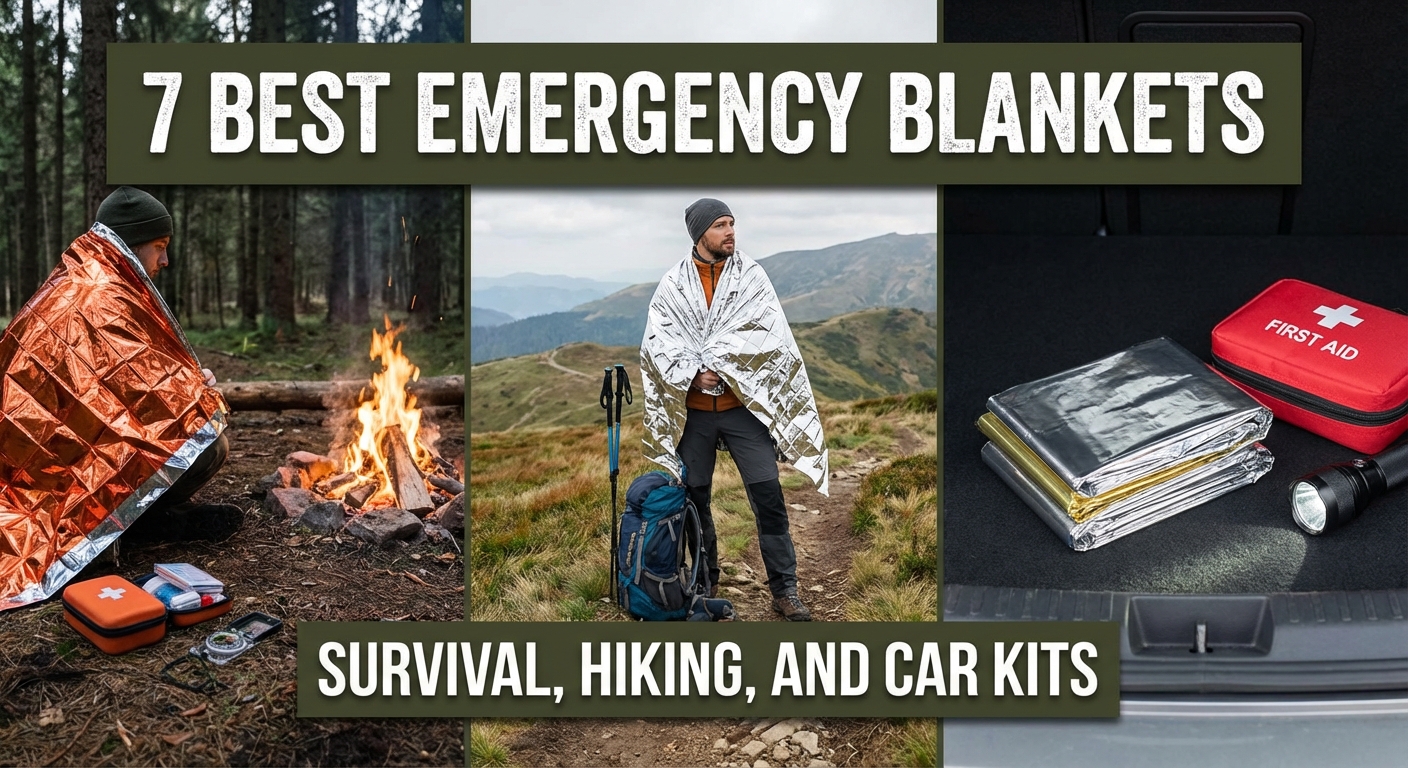
7 Best Emergency Blankets for Survival, Hiking, and Car Kits
Don’t get caught in the cold. We reviewed the top-rated Mylar sheets, bivvy sacks, and heavy-duty wool blankets to find the ultimate survival gear for your go-bag.
Why Every Adventurer Needs a “Space Blanket”
When you are miles from civilization or stranded on the side of the highway in a blizzard, retaining body heat isn’t just about comfort—it is about survival. The humble emergency blanket, often called a space blanket, was originally designed by NASA in 1964. Today, it is a staple in every cozy car road trip guide and hiker’s backpack.
Unlike standard best thermal blankets used for bedding, emergency blankets are engineered to reflect up to 90% of your radiated body heat back to you. They are lightweight, waterproof, and windproof. However, not all are created equal. Some rip instantly, while others are rugged enough to serve as ground tarps.
In this guide, we break down the top 7 options on the market, ranging from ultra-cheap bulk packs to heavy-duty wool investments. We will also cover everything you need to know about emergency blanket science, use cases, and maintenance tips that could save your life.
Quick Comparison: Top Picks at a Glance
| Product | Best For | Material | Weight |
|---|---|---|---|
| Swiss Safe Emergency Mylar | Overall Value | Aluminized Mylar | 2 oz |
| Arcturus Heavy Duty | Rugged / Tarp | Mylar + Polypropylene | 1.4 lbs |
| SOL Escape Bivvy | Breathability | Proprietary Breathable Fabric | 8.5 oz |
| Ektos 100% Wool | Long-Term Survival | 100% Wool | 3.5 lbs |
| Titan Survival Blankets | Tactical / Camo | Mylar | 2 oz |
| Delmera Poncho | Mobility | PE Material | 2.6 oz |
| Don’t Die In The Woods | Size & Coverage | Mylar | 2.5 oz |
1. Swiss Safe Emergency Mylar Thermal Blankets
Best Overall Value
If you are looking to outfit multiple kits at once—say, one for the car, one for the home, and one for each family member’s backpack—Swiss Safe is the industry standard. These come in packs (usually 4 or 10) and offer a dual-sided design: one side is gold (to absorb heat) and the other silver (to reflect heat).
They are significantly thicker than the dollar-store variety, meaning they won’t shred the moment you unfold them. While they aren’t as cozy as cozy blankets for the living room, they are lifesaving tools that fit in the palm of your hand.
Pros
|
Cons
|
2. Arcturus Heavy Duty Survival Blanket
Best Heavy Duty
The Arcturus takes the reflective properties of a space blanket and marries them with the durability of a tarp. One side is reflective Mylar; the other is two layers of polypropylene. This sandwich construction means you can use it as a ground cloth, a lean-to shelter, or even a picnic mat on damp grass (a rugged alternative to the best blanket for beach trips).
It features four reinforced grommets, allowing you to tie it down in high winds—something impossible with standard Mylar sheets.
Pros
|
Cons
|
3. SOL Escape Bivvy
Best Breathable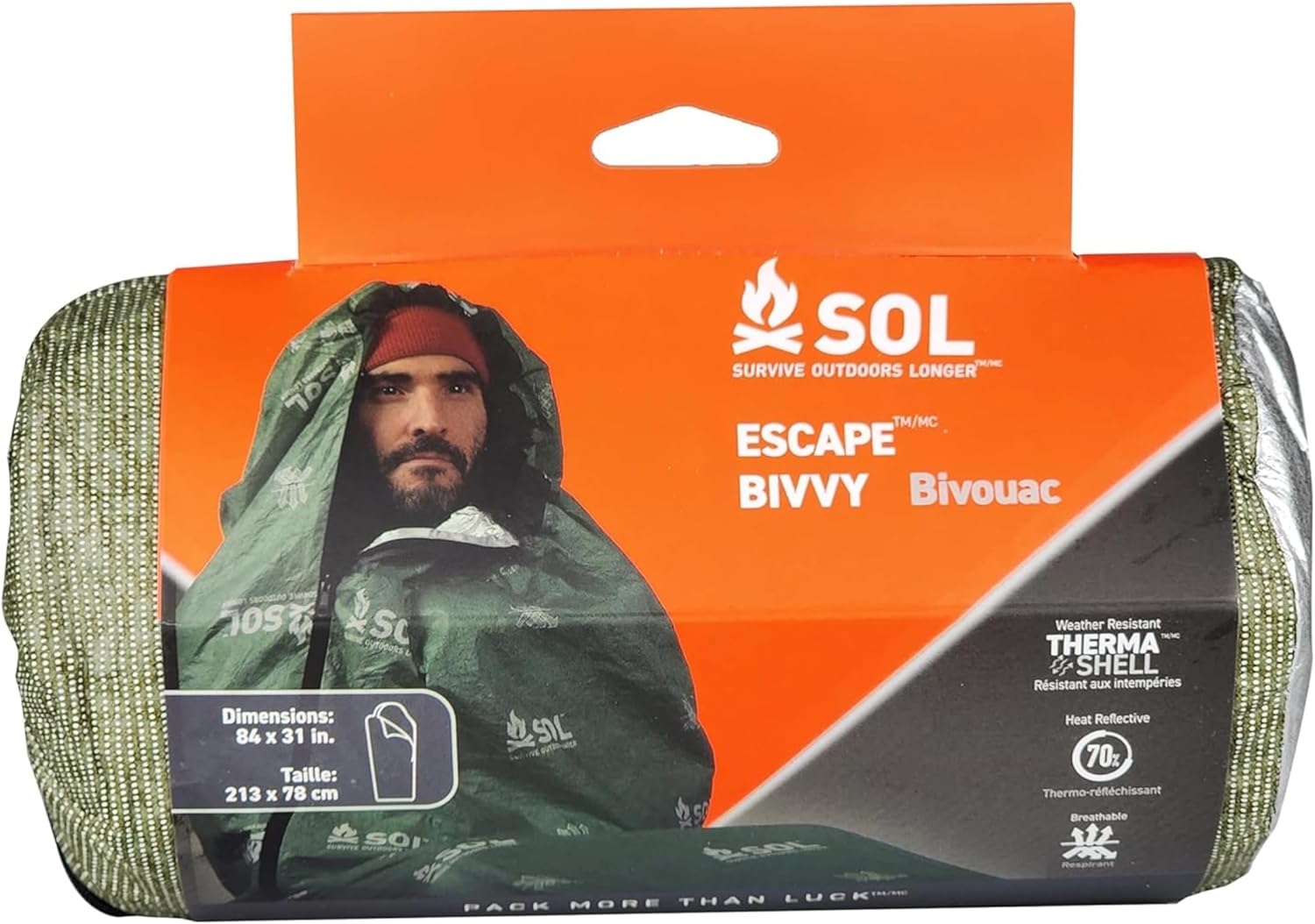
The biggest issue with Mylar is condensation. You seal in heat, but you also seal in sweat, which can eventually freeze and make you colder. The SOL Escape Bivvy solves this with a proprietary fabric that reflects heat but allows moisture to escape.
This is a sleeping bag style system (bivvy), meaning you climb inside it. It pairs perfectly with a travel pillow and blanket set for emergency layovers or unplanned nights in the woods.
Pros
|
Cons
|
Watch: Real World Testing
See how different emergency blankets hold up in actual cold weather conditions.
4. Ektos 100% Wool Blanket
Best Natural Fiber
Sometimes the old ways are the best. Unlike synthetic materials, wool retains its insulating properties even when wet. The Ektos blanket is 100% wool, making it fire-retardant and exceptionally durable. It is ideal for bushcraft or keeping in a vehicle where weight isn’t an issue.
While it lacks the immediate heat-reflection of Mylar, it provides better long-term comfort. For a deeper understanding of why wool is superior for insulation, read about Merino wool benefits.
Pros
|
Cons
|
5. Titan Two-Sided Emergency Mylar Survival Blankets
Best Tactical
Most emergency blankets are bright silver or orange for rescue visibility. However, military personnel or hunters often need to stay hidden. Titan Survival offers a Woodland Camo version that blends into the forest while still providing the reflective silver interior for heat retention.
These are individually packed and fit easily into blanket storage bags or tactical vests. Titan claims their Mylar weave is quieter than standard competitors, reducing that “crinkling chip bag” noise.
6. Delmera Emergency Poncho
Best Wearable
Trying to hold a blanket around your shoulders while walking, gathering wood, or tending to a child is difficult. The Delmera Poncho solves this by adding a hood and arm openings. It acts as a windbreaker and a heat reflector simultaneously.
This is an excellent addition to a family kit, especially if you have children in a stroller who might need coverage in a sudden downpour (see stroller blanket options).
7. Don’t Die In The Woods Freakin’ Huge Emergency Blanket
Best Coverage
Standard emergency blankets are often 52″ x 82″. This option provides significantly more surface area, allowing you to wrap it around your body multiple times or share it with a partner. The extra height is crucial for tall individuals who find their feet sticking out of standard blankets.
It comes with a durable nylon stuff sack, making it easier to repack than the Swiss Safe options.
How Do Emergency Blankets Actually Work? The Science Behind Heat Retention
Understanding the physics behind emergency blankets helps you use them more effectively. The human body continuously radiates heat through infrared radiation. On a cold night, your body can lose heat faster than it produces it, leading to hypothermia—a dangerous drop in core body temperature below 95°F (35°C).
Emergency blankets, also known as Mylar blankets or太空 blankets, are made from a thin layer ofBoPET (biaxially-oriented polyethylene terephthalate) coated with a metallic reflecting agent, typically aluminum. This construction was pioneered by NASA’s Marshall Space Flight Center in 1964 for the Apollo program. The metallic coating reflects up to 90% of your radiated body heat back toward your body.
The Three Types of Heat Transfer
To understand why emergency blankets work, you need to understand how your body loses heat:
1. Radiation: Your body emits infrared radiation constantly. This accounts for approximately 40-60% of heat loss in cold conditions. Emergency blankets are specifically designed to reflect this radiant heat back to you. The shiny metallic surface acts like a mirror for infrared radiation, bouncing it back instead of letting it escape into the environment.
2. Convection: Wind strips away the warm air layer surrounding your body. Emergency blankets are windproof, creating a barrier that traps a thin layer of still air against your skin. This still air acts as insulation, similar to how double-pane windows work. However, standard Mylar blankets don’t breathe, which means moisture from sweat gets trapped inside.
3. Conduction: Direct contact with cold surfaces draws heat from your body. If you’re lying on frozen ground, heat transfers directly from your warm body to the cold earth. An emergency blanket placed between you and the ground creates a thermal barrier, reducing conductive heat loss significantly.
Why Mylar Reflects Heat
The aluminum coating on Mylar blankets has a very low emissivity rating, meaning it doesn’t absorb and re-emit infrared radiation easily. Instead, it reflects the radiation back toward its source—your body. This is the same principle used in reflective insulation installed in attics and walls. The thinner the aluminum layer, the more reflective it tends to be, which is why even ultra-thin emergency blankets can be remarkably effective.
However, the reflectivity also works against you in hot conditions. If you’re trying to cool down, wrapping yourself in a Mylar blanket will trap heat. This is why emergency blankets are sometimes used in desert survival to protect against extreme sun exposure during the day—you can use the reflective side facing outward to bounce solar radiation away from your body.
Complete Guide to Emergency Blanket Types: Which One Do You Need?
Not all emergency blankets serve the same purpose. Understanding the different types helps you choose the right one for your specific needs. From basic Mylar sheets to advanced breathable bivvies, each type has unique advantages and limitations.
Mylar Emergency Blankets (Space Blankets)
Mylar blankets are the most common and affordable type of emergency blanket. Made from aluminized polyester film, they are incredibly lightweight, waterproof, and windproof. Standard Mylar blankets typically measure 52″ x 82″ and weigh just 2-3 ounces.
These blankets excel at reflecting body heat but have significant drawbacks. They are noisy, tear easily, and trap moisture inside, leading to condensation buildup. They are best suited for short-term emergencies, one-time use situations, or as part of a bulk emergency kit.
For a detailed comparison of different thermal blanket options, check out our guide to best thermal blankets for various uses.
Military-Grade Emergency Blankets
Military blankets go beyond basic Mylar construction. They often feature reinforced edges, grommets for shelter construction, and dual-sided designs with one side for heat reflection and the other for camouflage or signaling. These blankets are thicker, more durable, and designed for repeated use in harsh conditions.
The military designation for these blankets is “Hypothermia Prevention and Management Kit” (HPMK). They are standard issue for combat medics and field hospitals. While more expensive than civilian versions, they offer significantly better durability and versatility.
Emergency Bivvy Sacks
Bivvy sacks (short for bivouac sacks) are sleeping bag-shaped emergency shelters. Unlike flat blankets, bivvies completely enclose your body, eliminating drafts and providing superior warmth. The SOL Escape Bivvy in our review exemplifies this category.
Standard Mylar bivvies are cheaper but suffer from the same condensation problems as flat blankets. Premium breathable bivvies use advanced fabrics that allow moisture vapor to escape while retaining heat. These are ideal for hikers, backpackers, and anyone who might spend an unplanned night outdoors.
For overnight camping trips, pairing a bivvy with a quality travel pillow and blanket set provides surprisingly comfortable sleeping arrangements.
Wool Emergency Blankets
Wool blankets represent the traditional approach to cold-weather survival. Unlike synthetic materials, wool maintains its insulating properties even when wet—a critical advantage in rainy or snowy conditions. Wool is also naturally fire-resistant, making it safe to use near campfires or heat sources.
The main drawbacks of wool blankets are weight and bulk. A standard wool blanket weighs 3-5 pounds and takes up significantly more space than Mylar alternatives. For vehicle emergency kits or home preparedness, these tradeoffs are acceptable. For backpacking, wool is usually too heavy unless you’re committed to ultralight wool alternatives.
To learn more about wool’s unique properties, read about Merino wool benefits for cold weather.
Emergency Ponchos with Thermal Lining
Emergency ponchos combine rain protection with thermal reflection. They feature a hood and arm openings, allowing hands-free mobility while maintaining warmth. The Delmera Poncho in our review demonstrates this hybrid approach effectively.
Ponchos are particularly valuable for families with young children, emergency responders, and anyone who needs to remain mobile during a cold-weather emergency. They work well as a supplement to other emergency blankets rather than a primary heat source.
Emergency Blankets with Grommets
Some emergency blankets include reinforced grommets in the corners or along the edges. These attachment points allow you to rig the blanket as a lean-to shelter, wind barrier, rain collector, or ground tarp. Grommet-equipped blankets are significantly more versatile than plain sheets and are worth the modest price premium for serious outdoor enthusiasts.
25 Essential Emergency Blanket Use Cases You Should Know
Emergency blankets are far more versatile than most people realize. Beyond simply wrapping yourself for warmth, they serve dozens of practical purposes in survival, outdoor recreation, and everyday preparedness scenarios.
Camping and Hiking
1. Hypothermia Prevention After River Crossing
After crossing a cold river or stream, immediately wrap yourself in an emergency blanket while you change into dry clothes. The reflective surface accelerates rewarming by bouncing your body’s heat back while you shed wet layers. This technique can prevent hypothermia from setting in during the critical rewarming period.
2. Improvised Sleeping Pad Insulator
Placing an emergency blanket under your sleeping pad creates a reflective barrier between you and the cold ground. This simple trick can add 10-15°F of warmth to your sleeping system without adding any meaningful weight to your pack. The reflective surface bounces heat that would otherwise conduct into the ground back toward your sleeping pad.
3. Emergency Rain Shelter
With a few lengths of paracord and some strategic knot-tying, an emergency blanket can be rigged into a waterproof A-frame shelter. Drape the blanket over a ridgeline and anchor the corners with rocks or stakes. This provides immediate protection from rain and wind while you set up a more permanent camp.
4. Trail Marker and Signal Device
The highly reflective surface of emergency blankets makes them excellent signaling devices. In an emergency, unfurl your blanket in an open area where it can be spotted by search aircraft. The metallic surface reflects sunlight and can be seen from miles away. At night, shine a flashlight on the blanket to create a bright flash visible to rescuers.
5. Windbreak for Cooking
Setting up an emergency blanket as a windscreen around your camp stove dramatically improves cooking efficiency in windy conditions. Wind strips heat from cooking pots, doubling or tripling boil times. A simple windbreak saves fuel and gets hot meals on the table faster.
Vehicle Emergency Preparedness
6. Stranded Motorist Survival
If your car breaks down in winter, an emergency blanket in your glove box or trunk can save your life. Wrap yourself in the blanket while waiting for roadside assistance. The reflective surface retains heat even if the car’s engine is off and the heater doesn’t work. Keep a blanket within arm’s reach, not buried under luggage.
7. Protecting Car Battery in Extreme Cold
Cold weather dramatically reduces car battery performance. Wrapping an emergency blanket around your battery (with the engine off) can help maintain its temperature overnight, making it easier to start your vehicle in the morning. This is particularly useful in northern climates where temperatures regularly drop below 0°F.
8. Windshield Cover
Using an emergency blanket as a temporary windshield cover prevents ice and snow buildup on your windshield. Secure it with the car doors closed, and in the morning, simply remove the blanket to reveal a clear windshield. This saves valuable time in emergency situations when every minute counts.
Home Emergency Preparedness
9. Power Outage Heat Retention
During winter power outages, emergency blankets can be draped over windows to reflect heat back into the room. The reflective surface works similarly to commercial window insulation film, reducing heat loss through glass by up to 50%. Cover multiple windows to maintain livable temperatures while waiting for power restoration.
10. Insulating Frozen Pipes
Wrapping exposed water pipes in emergency blankets provides temporary insulation during extreme cold snaps. While not a permanent solution, this technique can prevent pipes from freezing long enough for temperatures to moderate or for permanent insulation to be installed. Focus on pipes in exterior walls and unheated spaces.
11. Emergency Floor Insulation
In flood situations or when heating systems fail, placing emergency blankets on the floor creates a thermal barrier between your feet and cold surfaces. Layer blankets under sleeping areas to prevent conductive heat loss while sleeping on the floor. This is especially important for elderly family members and young children.
Medical and First Aid Applications
12. Shock Treatment
Emergency blankets are standard equipment in first aid kits for treating shock. Wrapping a shock victim in an emergency blanket helps maintain body temperature while waiting for emergency medical services. Medical professionals use the same principle in hospital settings with specialized versions of these blankets.
13. Post-Surgery Temperature Management
Patients recovering from surgery are particularly vulnerable to hypothermia due to anesthesia and reduced metabolic function. Emergency blankets placed over hospital gowns help maintain body temperature during the critical recovery period. Many hospitals now include these blankets in their standard post-operative care protocols.
14. Runner’s Emergency Blanket at Marathons
Marathon runners crossing the finish line in cold weather immediately receive emergency blankets to prevent rapid cooling. After intense physical exertion, the body’s core temperature drops quickly, especially when sweat evaporates in cold air. The reflective blanket helps maintain warmth during the crucial cooldown period.
Survival and Bushcraft
15. Water Collection Device
An emergency blanket can be rigged to collect rainwater or morning dew. Stretch the blanket between two points and place a small weight in the center to create a funnel. The waterproof surface channels water to the lowest point, where you can collect it in a container. In survival situations, this technique can provide life-saving hydration.
16. Solar Still Construction
Emergency blankets are essential components of solar stills used to purify water or extract moisture from soil. The reflective surface heats the air beneath it, causing water to evaporate from contaminated sources and condense on the underside of the blanket. This ancient technique, modernized with Mylar, provides safe drinking water in survival scenarios.
17. Fish Attractor
The flashing reflective surface of emergency blankets can attract fish in murky water. Cut the blanket into strips and attach them to fishing lines or nets. The movement and reflection mimic small fish scales, drawing predatory fish toward your bait. This technique has been used by indigenous fishing communities for generations.
18. Smoke Signal Enhancer
When building a signal fire, place emergency blanket material near the base to create maximum smoke visibility. The metallic surface reflects heat back into the fire, intensifying smoke production. Combined with green vegetation, this creates thick, visible smoke columns that can be seen from miles away by search and rescue teams.
Everyday Practical Uses
19. Moving Day Furniture Protector
Emergency blankets make excellent furniture pads during moves. Their waterproof surface protects against rain and scratches, while the soft interior prevents scuffing. Unlike traditional moving blankets, they are disposable and can be recycled after use. Keep several in your moving kit for last-minute packing needs.
20. Pet Emergency Blanket
Dogs and cats are susceptible to hypothermia just like humans. Keep an emergency blanket in your pet’s travel kit for cold-weather emergencies. Wrap small pets directly; larger dogs can lie on a blanket spread on the ground. For everyday pet comfort, consider a dedicated pet blanket instead of emergency blankets.
21. Photography Reflector
Emergency blankets serve as excellent makeshift photography reflectors. The silver side creates neutral fill light, while the gold side adds warm tones to portraits. Professional photographers often carry emergency blankets as backup reflectors because they weigh almost nothing and fold into tiny packages.
22. Garden Frost Protection
Emergency blankets provide instant frost protection for sensitive garden plants. Drape them over vulnerable plants before sunset to trap ground heat overnight. Remove them in the morning to allow sunlight and air circulation. This technique extends the growing season by several weeks in cold climates.
23. Car Seat Cooling in Summer
Place an emergency blanket reflective-side-up on your car seat before parking in the sun. The reflective surface bounces solar radiation away from the seat, keeping it significantly cooler. In summer temperatures, this can reduce seat surface temperature by 30-40°F compared to an uncovered seat.
24. Insulating Cooler Boxes
Line the inside of your cooler with emergency blankets to improve ice retention. The reflective surface bounces heat away from the contents, extending ice life by 2-3 hours in hot weather. This is particularly useful for long road trips or outdoor events where access to fresh ice is limited.
25. Emergency Diaper Changing Pad
In a pinch, an emergency blanket serves as a waterproof, disposable diaper changing pad. Lay it flat on any surface, and after use, simply fold it up and dispose of it. The waterproof surface protects against messes while the reflective side provides a clean, dry surface for your baby. For regular use, a dedicated baby blanket is more practical.
Emergency Blanket Buying Guide: What to Look For
Choosing the right emergency blanket depends on your specific needs, environment, and intended use. This comprehensive buying guide covers every factor you should consider before making a purchase.
Size and Coverage
Emergency blankets come in various sizes, from compact personal blankets to large family-sized options. Standard dimensions are 52″ x 82″, which provides adequate coverage for most adults. However, tall individuals (over 6’2″) should seek oversized blankets (60″ x 90″ or larger) to ensure full coverage.
For family emergency kits, consider purchasing multiple blankets rather than one large one. Individual blankets allow each family member to regulate their own warmth and are easier to manage in tight spaces. Large blankets can be shared but are cumbersome when multiple people need independent coverage.
Material and Durability
The material determines how well your emergency blanket performs and how long it lasts. Here’s a breakdown of common materials:
Standard Mylar (BO PET): The most common material, offering excellent heat reflection at minimal weight and cost. However, it tears easily and is designed primarily for single use. Look for thicker Mylar (12 microns or more) for better durability.
Reinforced Mylar: Some manufacturers add nylon or polypropylene reinforcement to Mylar blankets. This dramatically improves tear resistance while maintaining most of the reflective properties. These blankets can withstand multiple uses and light wind.
Polypropylene: Used in combination with Mylar in premium blankets, polypropylene adds durability and weather resistance. It’s the same material used in high-quality tarps and rain gear. Blankets with polypropylene construction can serve as ground cloths and shelter components.
Wool: Natural wool provides insulation even when wet and is fire-resistant. While heavier than synthetic options, wool blankets offer superior comfort and long-term durability. They’re ideal for vehicle kits and home emergency supplies where weight isn’t critical.
Weight and Packability
For backpacking and hiking, every ounce matters. Ultra-light emergency blankets weigh as little as 2 ounces and compress to the size of a tennis ball. These are essential items for ultralight backpackers who count every gram.
For car kits and home emergency supplies, weight is less important than durability and coverage. Heavier blankets often provide better warmth retention and can withstand repeated use. Don’t sacrifice quality for weight savings when building a vehicle or home emergency kit.
For a comprehensive look at lightweight bedding options, explore our guide to cozy blankets for the living room that balance comfort with practicality.
Waterproofing and Weather Resistance
All emergency blankets are waterproof to some degree, but the level of protection varies. Standard Mylar blankets repel water completely but trap moisture inside, leading to condensation. Premium options like the SOL Escape Bivvy use breathable waterproof fabrics that allow moisture vapor to escape while blocking liquid water.
Consider your intended environment when evaluating waterproofing. In dry cold conditions, standard Mylar works well. In wet, humid environments, breathable options prevent the dangerous buildup of internal moisture that can actually make you colder.
Color and Visibility
Emergency blanket color serves important practical purposes. Bright orange or yellow blankets maximize visibility for rescue operations. Silver blankets reflect light effectively for signaling but can be harder to spot against snow. Camouflage blankets (like the Titan Survival option) are essential for hunting and military applications where concealment is necessary.
For general emergency preparedness, bright orange is the most versatile choice. It’s visible in all weather conditions and stands out against virtually any natural background. Keep at least one bright blanket in each emergency kit.
Additional Features to Consider
Grommets: Reinforced attachment points allow shelter construction and secure anchoring. Essential for camping and survival applications.
Stuff Sack: Quality storage bags make repacking easier and protect the blanket from damage during storage. Look for waterproof stuff sacks with compression straps.
Dual-Sided Design: Some blankets offer different colors or materials on each side, providing versatility for various conditions. Gold/silver combinations allow heat absorption or reflection depending on your needs.
Reinforced Edges: Heat-sealed or fabric-bound edges prevent tearing and extend blanket life. This feature is especially important for blankets intended for multiple uses.
Price and Value
Emergency blankets range from under $1 for basic Mylar sheets to over $50 for premium wool or breathable bivvy systems. For most people, a combination approach works best:
- Budget Option ($5-15): Buy bulk packs of standard Mylar blankets for car kits, home supplies, and hiking packs. Replace every 3-5 years.
- Mid-Range ($15-30): Invest in one or two premium blankets for primary use. The SOL Escape Bivvy or Arcturus Heavy Duty blanket provides excellent long-term value.
- Premium ($30-60): For serious outdoor enthusiasts, a quality wool blanket provides comfort and durability that synthetic options can’t match.
Remember, the best emergency blanket is the one you actually have with you when you need it. Don’t let budget constraints prevent you from building basic emergency preparedness. Even a $1 Mylar blanket is infinitely better than nothing when you’re stranded in the cold.
How to Use Emergency Blankets: Step-by-Step Instructions
Simply wrapping yourself in an emergency blanket isn’t always the most effective use of these versatile tools. Proper technique can significantly improve heat retention and survival outcomes. Follow these step-by-step instructions for different scenarios.
Basic Wrapping Technique for Maximum Warmth
1Prepare Your Base Layer: Remove any wet clothing and replace with dry layers if available. Wet clothing against your skin dramatically accelerates heat loss. If you can’t change clothes, wring out as much moisture as possible before wrapping.
2Position the Blanket: Unfold the emergency blanket and orient it with the reflective (silver) side facing inward toward your body. The reflective surface should face your body to bounce radiant heat back to you.
3Create a Cocoon: Wrap the blanket snugly around your body, starting at the shoulders and working down to your feet. Tuck the edges tightly to minimize air gaps. The tighter the wrap, the better the insulation.
4Secure the Wrap: Use tape, string, or even your own body weight to secure the blanket in place. In windy conditions, this step is critical to prevent the blanket from being stripped away.
5Minimize Movement: Once wrapped, stay as still as possible. Movement creates air gaps and accelerates heat loss. Curl into a fetal position to reduce your surface area and conserve heat.
Setting Up an Emergency Shelter
When you need more than body wrapping, an emergency blanket can be rigged into a surprisingly effective shelter. Here are two basic configurations:
The Lean-To Shelter
This is the quickest emergency shelter to construct and provides protection from wind and rain on one side. Find a fallen tree, rock overhang, or construct a ridgeline with paracord between two trees. Drape the emergency blanket over the ridgeline at a 45-degree angle, with the open side facing away from the wind. Anchor the lower edge with rocks, logs, or stakes. Build a fire in front of the open side to reflect heat into the shelter.
The A-Frame Shelter
For protection from all sides, construct an A-frame. Stretch a ridgeline between two trees at waist height. Drape the emergency blanket over the ridgeline evenly on both sides. Secure the edges with rocks or stakes, creating a triangular tunnel. This configuration provides 360-degree wind protection and can be heated with a small, well-ventilated fire at one end.
Ground Insulation Technique
When sleeping outdoors without a sleeping pad, ground insulation is critical. Place an emergency blanket flat on the ground with the reflective side facing up. Lay your sleeping bag or additional blankets on top. The reflective surface bounces your body heat upward instead of allowing it to conduct into the cold ground. This simple technique can add 10-15°F to your effective sleeping temperature.
Improvised Sleeping Bag
If you have two emergency blankets, you can construct an improvised sleeping bag. Fold one blanket in half lengthwise and seal the open edge with tape, creating a bag shape. Leave one short end open for entry. The second blanket can be used as a top cover or ground insulation. This configuration provides significantly more warmth than a single blanket wrap.
For a more comfortable sleeping arrangement when you’re not in immediate danger, consider pairing your emergency blanket with a quality travel pillow and blanket set for better rest.
Emergency Blanket First Aid Techniques
In medical emergencies, proper use of emergency blankets can save lives. Here are essential first aid techniques:
Treating Hypothermia
When treating someone for hypothermia, remove wet clothing gently and wrap them in an emergency blanket with the reflective side against their skin. If available, place additional insulation (clothing, sleeping bags) over the blanket. Warm sweet drinks (if the person is conscious and alert) help raise core temperature. Do not rub extremities or apply direct heat, as this can cause dangerous cardiac arrhythmias.
Managing Shock
For patients in shock, place an emergency blanket over them to maintain body temperature. Elevate their legs slightly (unless spinal injury is suspected) and keep them calm and still. The blanket helps prevent the dangerous temperature drop that accompanies shock. Monitor breathing and consciousness while waiting for emergency medical services.
Post-Injury Stabilization
After stabilizing injuries, wrap the patient in an emergency blanket to prevent hypothermia. Even in mild weather, trauma patients are vulnerable to dangerous temperature drops. Keep the blanket secured and monitor for signs of overheating if the patient is also exerting energy (such as walking out of the wilderness).
Emergency Blanket Care and Maintenance: Making Them Last
Proper care and storage of emergency blankets significantly extends their lifespan and ensures they perform when you need them most. Follow these guidelines to maintain your emergency blanket investment.
Storage Best Practices
Store emergency blankets in a cool, dry location away from direct sunlight. UV radiation degrades Mylar over time, reducing its reflective properties. Avoid storing blankets in vehicles during summer, where temperatures can exceed 150°F in direct sunlight.
Keep blankets in their original packaging or in sealed plastic bags to prevent moisture damage. For long-term storage, consider vacuum-sealing Mylar blankets to minimize space and protect against humidity. Label each package with the purchase date so you can track aging.
Inspecting Your Emergency Blankets
Inspect emergency blankets annually for signs of degradation. Check for:
- Coating flaking: The aluminum coating should be smooth and uniform. Flaking or peeling indicates the blanket has degraded and may not reflect heat effectively.
- Tears or holes: Even small punctures reduce effectiveness. Repair minor tears with metallic tape or replace damaged blankets.
- Crease damage: Deep, permanent creases can crack the metallic coating. Unfold and refold blankets periodically to prevent this.
- Moisture damage: Stains, mildew, or musty odors indicate water damage. Replace any blankets that show signs of moisture intrusion.
Replacement Schedule
Follow these guidelines for emergency blanket replacement:
Budget Mylar Blankets: Replace every 3-5 years. These are designed for short-term use and degrade relatively quickly, especially if stored in less-than-ideal conditions.
Reinforced/Premium Blankets: Replace every 5-7 years with proper care. Higher-quality materials last longer but still degrade over time.
Wool Blankets: Can last 10+ years with proper care. Wool is naturally resistant to degradation and maintains its properties indefinitely with appropriate cleaning and storage.
Cleaning Emergency Blankets
Mylar Blankets: Wipe clean with a damp cloth and mild soap. Do not machine wash, machine dry, or fold tightly when wet. Allow to air dry completely before repacking. Harsh chemicals can damage the metallic coating, so stick to gentle cleaning solutions.
Wool Blankets: Follow wool-specific care instructions. Most wool blankets can be hand-washed in cold water with wool-safe detergent. Avoid hot water and high-heat drying, which can cause shrinkage and felting. For detailed wool care, consult our guide to washing heavy blankets for similar principles.
Breathable Fabric Blankets: Follow manufacturer instructions, as breathable fabrics often have specific care requirements. Most can be machine-washed on gentle cycle with cold water. Avoid fabric softeners, which can clog the breathable pores and reduce effectiveness.
Emergency Blanket Myths Debunked: What You Really Need to Know
Several persistent myths about emergency blankets can lead to improper use and dangerous misconceptions. Let’s separate fact from fiction.
Myth #1: “Emergency blankets generate heat.”
Reality: Emergency blankets do NOT generate any heat. They reflect your body’s own radiant heat back toward you. Without a heat source (your body), a Mylar blanket provides zero insulation. This is why they work for humans but would not warm an inanimate object. Understanding this distinction is crucial for proper use—you must have a functioning metabolism for the blanket to be effective.
Myth #2: “Emergency blankets are only for extreme emergencies.”
Reality: While emergency blankets are essential for survival situations, they’re useful in many everyday scenarios. Runners use them after marathons, photographers use them as reflectors, gardeners use them for frost protection, and families use them during power outages. Don’t save your emergency blankets for “real” emergencies only—use them whenever they provide practical benefit.
Myth #3: “More expensive always means better.”
Reality: Price doesn’t always correlate with effectiveness. A $1 Mylar blanket reflects heat just as well as a $20 version in the short term. The differences lie in durability, features, and intended use. For single-use situations, budget options work fine. For repeated use or harsh conditions, investing in premium options pays dividends.
Myth #4: “You should wrap your entire body including your head.”
Reality: While your head does account for significant heat loss (up to 10-15%), completely sealing your head in Mylar creates dangerous breathing restrictions and moisture buildup. Create a loose hood that covers your head and neck while leaving your face exposed. Your respiratory system needs clear airflow, and condensation inside a sealed hood can wet your face and hair, accelerating heat loss.
Myth #5: “Mylar blankets are one-use only.”
Reality: While cheap Mylar blankets are designed for limited use, many can be carefully folded and reused several times. The key is gentle handling—avoid sharp creases and rough treatment. Premium Mylar blankets with reinforced construction can last through dozens of uses with proper care.
Myth #6: “Emergency blankets work better when doubled.”
Reality: Layering emergency blankets doesn’t proportionally increase warmth. The primary benefit comes from reflecting radiant heat, and doubling the layers doesn’t double the reflection. One well-wrapped blanket is usually more effective than two loosely wrapped ones. However, using one blanket for wrapping and another for ground insulation does provide significant additional warmth.
Myth #7: “Emergency blankets are unsafe for children.”
Reality: Emergency blankets are safe for children when used properly. The concern is suffocation risk if a child’s face becomes completely covered. Supervise children using emergency blankets and ensure their face remains uncovered. For infants, use breathable alternatives specifically designed for babies (see our baby blanket guide). For older children, emergency blankets provide excellent protection when used correctly.
Myth #8: “Emergency blankets only work in winter.”
Reality: Emergency blankets are valuable year-round. In summer, they protect against hypothermia from rain and wind chill. Desert travelers use them to reflect sun during the day and retain warmth during cold desert nights. Emergency blankets also provide sun protection, rain shelter, and ground insulation in any season.
Emergency Blanket Size Guide: Choosing the Right Dimensions
Selecting the correct emergency blanket size ensures adequate coverage and effective heat retention. This comprehensive size guide helps you choose based on your body type, intended use, and emergency kit requirements.
Standard Sizes
| Size Category | Dimensions | Best For | Coverage Notes |
|---|---|---|---|
| Compact/Personal | 52″ x 82″ | Individual backpacking | Fits most adults; tight wrap for tall individuals |
| Standard | 56″ x 84″ | General emergency use | Good coverage for average adults |
| Large | 60″ x 90″ | Tall individuals, couples | Extra length for full coverage |
| Extra Large | 64″ x 96″ | Family use, shelter construction | Sufficient for improvised sleeping bags |
| Oversized | 72″ x 108″ or larger | Ground cover, large shelters | Can cover two people side by side |
Sizing by Body Type
Petite Adults (Under 5’4″): Standard 52″ x 82″ blankets provide generous coverage. You can fold excess material for additional insulation around your core or use the extra length to create a hood.
Average Adults (5’4″ to 6’0″): Standard or large sizes work well. Standard blankets provide adequate coverage for most situations, while large blankets offer more wrapping options and better ground coverage.
Tall Adults (Over 6’0″): Always choose large or extra-large blankets. Standard blankets may leave feet or shoulders exposed, reducing effectiveness. The extra investment in larger blankets is worth it for proper coverage.
Children: Standard blankets can be folded to fit children, but specialized children’s emergency blankets (often featuring brighter colors and age-appropriate designs) may be more practical. Ensure children’s blankets have rounded corners and smooth edges to prevent cuts.
Size by Use Case
Backpacking/Hiking: Compact size (52″ x 82″) is sufficient. Weight and pack size matter more than maximum coverage. Every ounce counts when you’re carrying everything on your back.
Vehicle Emergency Kit: Choose standard or large sizes. Space isn’t as constrained, so prioritize coverage and durability. Consider having two blankets—one for personal use and one for ground insulation or shelter construction.
Home Emergency Supply: Extra-large blankets provide the most versatility. They can serve as window insulation, floor covering, or shelter components. Store several sizes for different family members.
Camping/Bushcraft: Large or extra-large blankets with grommets provide the most options. They can be configured as shelters, ground cloths, or rain collectors. The added versatility justifies the extra weight and bulk.
Emergency Blankets for Every Activity: Activity-Specific Recommendations
Different outdoor activities have unique requirements for emergency blankets. Here’s a breakdown of the best emergency blanket choices for various activities and environments.
Emergency Blankets for Winter Hiking
Winter hiking presents the highest risk of hypothermia and demands the most preparedness. For winter hikes, carry at minimum one premium emergency blanket (like the SOL Escape Bivvy) plus two standard Mylar blankets as backup. The breathable bivvy provides comfort for extended exposure, while the backup blankets offer redundancy.
Winter hikers should also carry their emergency blankets in easily accessible locations—external pockets or the top of the pack—not buried under other gear. In an emergency, you may have only minutes before hypothermia sets in, and fumbling for your blanket wastes precious time.
For a complete winter hiking kit, pair your emergency blanket with quality thermal layers. Check our guide to best thermal blankets for layering recommendations.
Emergency Blankets for Summer Camping
Even summer camping requires emergency blanket preparation. Desert nights can drop below 40°F, and mountain temperatures plummet after sunset. Summer campers should carry at least one emergency blanket per person, stored in a waterproof bag.
In summer, emergency blankets also serve as sun reflectors, rain protection, and ground insulation. Choose bright colors for visibility in case of emergency, and ensure every member of your camping party knows where emergency blankets are stored and how to use them.
Emergency Blankets for Kayaking and Canoeing
Water activities demand waterproof emergency blankets that can withstand immersion. Standard Mylar works well because it’s inherently waterproof, but reinforced options with sealed seams provide better durability. Store emergency blankets in waterproof dry bags to ensure they’re available even after capsizing.
Canoeists and kayakers face elevated hypothermia risk because wet clothing accelerates heat loss. Carry emergency blankets in an easily accessible location and practice quick-deployment techniques before you need them.
Emergency Blankets for Mountaineering
High-altitude mountaineering requires the lightest possible emergency blankets that still provide adequate warmth. Ultra-light Mylar blankets (2 oz or less) are essential for mountaineers who count every gram. However, the increased fragility of ultralight blankets means they should be treated as single-use emergency items.
For multi-day mountaineering expeditions, consider carrying a premium breathable bivvy (like the SOL Escape Bivvy) for planned bivouacs plus a standard Mylar blanket as backup. The breathable bivvy handles condensation better at altitude, where dry air makes moisture management particularly important.
Emergency Blankets for Hunting
Hunters need emergency blankets that provide both warmth and concealment. Camouflage Mylar blankets (like the Titan Survival option) reflect heat while blending into the forest environment. Avoid bright-colored blankets that could alert game animals to your presence.
Hunters should also consider blankets with grommets for constructing ground blinds. A few strategically placed blankets can create effective hunting blinds that provide concealment and wind protection. For everyday hunting comfort, explore our outdoor blanket options for pre-season scouting trips.
Emergency Blankets for Trail Running
Trail runners need ultra-compact emergency blankets that fit in a vest pocket or handheld carrier. The entire blanket should compress to the size of a fist and weigh less than 2 ounces. Trail runners face unique hypothermia risk because they sweat heavily during exertion and then cool rapidly when stopping.
Carry your emergency blanket in a waterproof pouch on your person, not in a pack that might be separated from you during a fall or injury. Practice deploying the blanket with cold, wet hands—fine motor skills deteriorate in cold conditions.
Emergency Blankets for Fishing
Fishermen often sit stationary for hours in potentially cold, wet conditions. Emergency blankets provide critical warmth during long waits, especially in fall and winter. Spread a blanket on your seat for ground insulation and keep another wrapped around your shoulders.
Bank fishermen and pier anglers face additional exposure to wind and rain. Consider a poncho-style emergency blanket that provides rain protection while maintaining warmth. For family fishing trips, ensure every angler has access to their own emergency blanket.
Emergency Blankets for Cycling
Cyclists face unique challenges because emergency blankets can catch wind and create dangerous drag. For cycling emergencies, use smaller emergency blankets that can be wrapped tightly around the body without loose ends. Alternatively, use emergency blankets at rest stops or when waiting for assistance.
Cycling emergency kits should include at least one compact Mylar blanket stored in a waterproof pouch. Pack it in an easily accessible location—top tube bag, jersey pocket, or saddlebag. Practice retrieving and deploying it while wearing cycling gloves, as dexterity is often reduced.
Emergency Blankets by Climate: Choosing for Your Environment
Your local climate significantly impacts which emergency blankets will serve you best. Different environments present unique challenges that specific blanket types address more effectively.
Arctic and Subarctic Climates
In extreme cold, standard Mylar blankets provide essential emergency protection but aren’t sufficient for extended exposure. Arctic travelers should combine Mylar blankets with insulated sleeping bags and layered clothing. The Mylar blanket serves as a vapor barrier and radiant heat reflector, while the sleeping bag provides conductive insulation.
Wool blankets excel in arctic conditions because they maintain warmth even when damp from condensation or snow. The Ektos wool blanket in our review is ideal for arctic vehicle kits where weight isn’t a concern.
For more information on insulation principles, explore our guide to Merino wool benefits for extreme cold.
Temperate Climates
Temperate regions experience moderate cold that standard emergency blankets handle well. A single quality Mylar blanket provides adequate emergency protection for most scenarios. For camping and outdoor recreation, a breathable bivvy like the SOL Escape offers comfortable sleeping in temperatures down to 30°F.
Temperate climate residents should focus on versatile blankets that handle both cold and wet conditions. Reinforced Mylar blankets with polypropylene layers provide the best balance of warmth, durability, and weather resistance.
Desert Climates
Desert environments present paradoxical challenges. Daytime temperatures can exceed 110°F, while nighttime temperatures may drop below 40°F. Emergency blankets in desert conditions serve dual purposes: reflecting solar radiation during the day and retaining body heat at night.
For desert use, carry at least two emergency blankets—one for daytime sun protection (wrapped reflective-side-out) and one for nighttime warmth (wrapped reflective-side-in). Lightweight Mylar blankets work well for this purpose, but breathable options prevent dangerous moisture buildup during the day.
Tropical Climates
Tropical regions may seem too warm for emergency blankets, but they’re essential for rainy season protection and unexpected cold snaps in high-altitude tropical areas. Lightweight, breathable emergency blankets provide rain protection and wind chill defense without causing dangerous overheating.
Poncho-style emergency blankets are particularly valuable in tropical climates because they provide rain protection while maintaining mobility. The Delmera Poncho in our review offers excellent tropical emergency preparedness.
Coastal and Maritime Climates
Coastal environments combine cold temperatures with high humidity and wind. Standard Mylar blankets trap moisture in these conditions, potentially making you wetter inside the blanket than outside. Breathable emergency blankets or wool options are superior for coastal use because they manage moisture while providing warmth.
Boaters and coastal residents should invest in marine-grade emergency blankets that withstand salt spray and UV exposure. Standard emergency blankets degrade quickly in maritime environments.
Mountain and Alpine Climates
Mountain environments demand versatile emergency blankets that handle rapidly changing conditions. Temperatures can vary 40°F or more between base camp and summit, and weather can change in minutes. Alpine adventurers should carry both lightweight Mylar blankets for quick emergencies and a premium breathable bivvy for overnight situations.
For detailed information on wool’s performance at altitude, read about comparing wool types for different conditions.
Complete Emergency Kit Checklist: Emergency Blankets and Essential Gear
An emergency blanket is just one component of a comprehensive preparedness kit. This checklist helps you build complete emergency kits for your home, vehicle, and outdoor adventures, with emergency blankets at the center of your cold-weather protection strategy.
Vehicle Emergency Kit Checklist
- 2x Emergency Mylar blankets (stored in accessible location)
- 1x Heavy-duty emergency blanket (Arcturus or similar)
- Emergency flares and reflective triangles
- First aid kit with medical-grade emergency blanket
- Flashlight with extra batteries
- Portable phone charger
- Waterproof matches and fire starters
- Non-perishable snacks (energy bars, nuts)
- Extra warm clothing layers (hat, gloves, socks)
- Basic tool kit
- Jumper cables or portable jump starter
- Ice scraper and small shovel (winter)
- Kitty litter or sand for traction (winter)
- Reflective sun shade (summer)
Home Emergency Kit Checklist
- 4x Emergency blankets (one per family member)
- 1x Large emergency blanket for shelter construction
- 72-hour supply of water (1 gallon per person per day)
- 72-hour supply of non-perishable food
- Battery-powered or hand-crank radio
- Flashlights and extra batteries
- First aid kit with medical emergency blankets
- Whistle for signaling
- Dust masks and plastic sheeting
- Wrench or pliers for utility shut-off
- Manual can opener
- Local maps
- Cell phone with chargers and backup battery
- Important documents in waterproof container
- Cash in small denominations
- Blankets for each family member (see our cozy blankets guide)
Hiking/Backpacking Emergency Kit Checklist
- 1x Ultralight emergency blanket per person
- 1x Premium emergency blanket (breathable bivvy recommended)
- Water filter or purification tablets
- Fire-starting materials (waterproof matches, lighter, fire starter)
- Multi-tool or knife
- Paracord (50 feet minimum)
- First aid kit
- Emergency whistle
- Map and compass (GPS backup)
- Headlamp with extra batteries
- Extra food (high-calorie, lightweight)
- Emergency shelter (bivy or tarp)
- Sun protection (hat, sunscreen, sunglasses)
- Insect repellent
Family Camping Emergency Kit
- Emergency blankets for each family member (adult and child sizes)
- Family-sized emergency blanket for shared shelter
- Children’s emergency blankets (bright colors, safe edges)
- Medical emergency blankets for first aid
- Full first aid kit
- Extra warm clothing for each family member
- Fire-starting supplies
- Water purification
- Emergency food supply
- Communication devices
- Navigation tools
- Whistles for each family member
More Emergency Blanket Options Worth Considering
While our top 7 picks represent the best overall options, several other emergency blankets deserve consideration for specific use cases. Here are additional recommendations for various needs and budgets.
Best Ultralight: Grabber Outdoors Emergency Blanket
For ultralight backpackers who count every gram, the Grabber Outdoors blanket weighs just 1.6 ounces and compresses to the size of a golf ball. While it sacrifices durability for weight savings, it’s an excellent backup option for experienced hikers who already carry premium insulation.
The Grabber blanket features a reinforced center section that resists tearing better than budget Mylar options. The dual-sided design (orange/silver) provides both visibility and heat reflection. It’s the best ultralight option for hikers who need emergency backup without significant weight penalty.
Best Budget Pack: Primacare Emergency Blankets (10-Pack)
For families and organizations building multiple emergency kits, the Primacare 10-pack offers exceptional value. Each blanket is individually wrapped, making them perfect for distribution to classrooms, offices, or community events. While they’re thinner than premium options, they provide adequate emergency protection.
These blankets are ideal for bulk distribution at outdoor events, marathon support stations, and community preparedness programs. Their low cost makes it practical to provide emergency blankets in situations where expensive options would be prohibitive.
Best for Families: Swiss Safe Emergency Blankets (4-Pack with Bonus Bag)
Building on the Swiss Safe brand’s reputation for quality, this 4-pack includes a convenient carrying bag and bonus space blankets. The larger blankets provide better coverage for families, while the compact packaging makes storage simple. Each blanket is individually wrapped for easy distribution.
For family emergency preparedness, consider pairing these with a quality stroller blanket for younger children who may need additional warmth and comfort.
Best Premium Bivvy: Snugpack Jungle Blanket
While technically more sleeping bag than emergency blanket, the Snugpack Jungle Blanket bridges the gap between emergency protection and camping comfort. It weighs just 24 ounces but provides warmth down to 45°F. The breathable fabric prevents condensation buildup, making it suitable for multi-night use.
For hikers who might face unplanned overnight stays, the Snugpack offers significantly more comfort than Mylar alternatives while remaining relatively lightweight. It’s an investment piece that provides years of reliable service.
Best for Extreme Cold: Carinthia MIG 4.0 Emergency Blanket
The Carinthia MIG 4.0 is a military-grade emergency blanket designed for extreme cold conditions. It features a multi-layer construction with insulation batting between Mylar layers, providing significantly more warmth than single-layer alternatives. The reinforced edges and grommets allow shelter construction in harsh conditions.
While expensive and heavier than standard options, the Carinthia is the choice of serious winter adventurers and military personnel. For extreme cold emergency preparedness, this blanket provides unmatched protection.
Best Eco-Friendly: Cocoon Emergency Blanket
For environmentally conscious consumers, the Cocoon Emergency Blanket uses recycled polyester and water-based reflective coatings. While it costs more than standard Mylar options, it provides equivalent performance with reduced environmental impact. The recycled materials are durable and provide effective emergency protection.
Eco-friendly emergency blankets are becoming increasingly popular as outdoor enthusiasts seek sustainable gear options. While they represent a small market segment, they demonstrate that emergency preparedness and environmental responsibility can coexist.
Emergency Blanket Comparison Chart: All Products Side by Side
This comprehensive comparison chart provides detailed specifications for all emergency blankets discussed in this guide, helping you make an informed purchasing decision based on your specific needs.
| Feature | Swiss Safe | Arcturus | SOL Bivvy | Ektos Wool | Titan | Delmera | Dont Die |
|---|---|---|---|---|---|---|---|
| Material | Mylar | Mylar + Poly | Breathable fabric | 100% Wool | Mylar | PE Material | Mylar |
| Weight | 2 oz | 1.4 lbs | 8.5 oz | 3.5 lbs | 2 oz | 2.6 oz | 2.5 oz |
| Size | 52″ x 82″ | 60″ x 80″ | Standard bivvy | 66″ x 84″ | 52″ x 82″ | One size fits most | 64″ x 96″ |
| Waterproof | Yes | Yes | Water-resistant | No (water-resistant) | Yes | Yes | Yes |
| Breathable | No | No | Yes | Yes | No | No | No |
| Grommets | No | Yes (4) | No | No | No | No | No |
| Reusable | Multiple uses | Many uses | Many uses | Years of use | Multiple uses | Multiple uses | Multiple uses |
| Fire Resistant | No | No | No | Yes | No | No | No |
| Best For | Budget kits | Shelter building | Overnight stays | Vehicle/home | Hunting/military | Families | Tall individuals |
| Price Range | $$ | $$$ | $$$$ | $$$$$ | $$ | $$ | $$ |
Emergency Blankets for Natural Disaster Preparedness
Natural disasters strike without warning, often leaving people exposed to harsh conditions without adequate shelter or warmth. Emergency blankets are essential components of disaster preparedness kits, providing critical protection in the chaotic aftermath of hurricanes, earthquakes, tornadoes, and other catastrophic events.
Hurricane Preparedness with Emergency Blankets
Hurricanes bring multiple threats: high winds, flooding, extended power outages, and exposure to rain and wind. Emergency blankets serve several critical functions during hurricane season:
Power Outage Warmth: After hurricanes knock out power (often for days or weeks), temperatures in homes can drop dangerously low, especially at night. Emergency blankets draped over windows reflect heat back into living spaces, while individual blankets keep family members warm during extended outages.
Post-Storm Shelter: When homes are damaged, emergency blankets provide immediate protection from rain and wind while you assess damage or wait for help. A few blankets rigged with rope can create temporary shelter over damaged roof sections.
Medical Emergency Response: Hurricanes generate numerous injuries from flying debris, flooding, and accidents. Emergency blankets wrapped around injured individuals prevent hypothermia while waiting for medical assistance.
For hurricane preparedness, store at least 4-6 emergency blankets in your home emergency kit, along with waterproof storage for documents and medications. For more information on staying comfortable during extended outages, explore our road trip comfort guide—many principles apply to extended power outage scenarios.
Earthquake Emergency Preparedness
Earthquakes can strike at any time, leaving people trapped or displaced. Emergency blankets are essential for earthquake preparedness because:
Trapped Survivor Warmth: People trapped in collapsed buildings face hypothermia risk even in moderate temperatures. An emergency blanket in a personal survival kit (stored under desks or beds) provides critical warmth during extended rescue operations.
Displacement Shelter: Earthquakes often render homes unsafe, forcing families to shelter in temporary locations. Emergency blankets provide warmth and privacy in shelters, vehicles, or outdoor encampments.
Medical Supply Preservation: Many medications require temperature-controlled storage. Emergency blankets wrapped around medication containers help maintain temperature stability during power outages and displacement.
Earthquake preparedness kits should include emergency blankets stored in multiple accessible locations—under beds, in offices, in vehicles, and in workplace desks. Every family member should know where blankets are stored and how to use them.
Wildfire Emergency Preparedness
Wildfires create unique emergency blanket challenges because of extreme heat, smoke, and rapid evacuation requirements. Emergency blankets serve specific functions during wildfire emergencies:
Heat Radiation Protection: When fleeing wildfires, reflective emergency blankets can protect against radiant heat from nearby flames. Wrap exposed skin in emergency blankets when evacuating through areas with active fire on both sides of the road.
Smoke Inhalation Prevention: While emergency blankets don’t filter smoke, they can be wrapped around the face to reduce smoke exposure during evacuation. Combine with wet cloth for additional smoke filtration.
Post-Evacuation Warmth: Wildfire evacuations often occur at night when temperatures drop. Emergency blankets provide warmth during long evacuation drives and temporary shelter establishment.
Winter Storm Preparedness
Blizzards, ice storms, and extreme cold events can strand people at home, in vehicles, or outdoors. Emergency blankets are critical for winter storm preparedness:
Home Heating Backup: When heating systems fail during winter storms, emergency blankets help maintain livable temperatures. Cover windows, wrap family members, and insulate sleeping areas with blankets from your emergency kit.
Vehicle Stranding Protection: Motorists stranded by snow or ice face hypothermia risk even with the vehicle’s heater running (fuel may run out). Multiple emergency blankets in your vehicle provide critical backup warmth.
Outdoor Survival: Hikers and outdoor enthusiasts caught in sudden winter storms need emergency blankets immediately. Carry them on every winter outing, regardless of expected conditions.
Emergency Blankets for Every Demographic: Age-Specific Considerations
Different age groups have unique vulnerabilities to cold exposure and require specific emergency blanket considerations. This section addresses emergency blanket use for infants, children, adults, elderly individuals, and pets.
Emergency Blankets for Infants and Babies
Infants are extremely vulnerable to hypothermia because their bodies lose heat faster than adults and they cannot regulate temperature effectively. Emergency blanket use with infants requires special precautions:
Safety First: Never wrap an infant directly in a Mylar emergency blanket without breathable layers underneath. The blanket should not cover the baby’s face. Use only as an outer layer over appropriate baby clothing and blankets.
Recommended Approach: Dress infants in layered clothing, wrap in a breathable blanket (see our baby blanket guide), and use the emergency blanket as an outer windproof layer. This provides warmth without the suffocation and condensation risks of direct Mylar contact.
Storage Location: Keep emergency blankets in diaper bags, car seats, and nursery emergency kits. Practice deploying them with one hand (you’ll likely be holding the baby with the other).
Emergency Blankets for Children
Children tolerate cold differently than adults and require specific emergency blanket strategies:
Teaching Proper Use: Teach children how to wrap themselves in emergency blankets before emergencies occur. Practice makes perfect, and children who understand how to use emergency blankets are more likely to use them correctly during actual emergencies.
Supervision Required: Always supervise children using emergency blankets. Ensure faces remain uncovered and blankets are secured to prevent tripping hazards. Bright-colored blankets (orange, yellow) help you keep track of children in emergency situations.
School and Daycare Kits: Ensure children’s schools and daycare centers have age-appropriate emergency blankets in their preparedness kits. Volunteer to help organize emergency preparedness programs at your children’s schools.
Emergency Blankets for Elderly Individuals
Older adults face increased hypothermia risk due to reduced metabolic rate, decreased circulation, and medication effects. Emergency blanket considerations for elderly individuals include:
Accessibility: Store emergency blankets in easily reachable locations for elderly family members. Avoid placing them in high cabinets or locations that require stretching or climbing. Keep blankets within arm’s reach of favorite chairs and beds.
Extended Warmth Needs: Elderly individuals may need more insulation than younger adults. Consider premium options like wool blankets or breathable bivvies for primary protection, with Mylar blankets as backup.
Medical Coordination: Inform elderly family members’ healthcare providers about emergency preparedness plans, including emergency blanket use. Certain medications affect temperature regulation and may require additional precautions.
Emergency Blankets for Pets
Pets are susceptible to hypothermia just like humans, but their needs differ significantly:
Small Dogs and Cats: Wrap small pets directly in emergency blankets, ensuring their face remains uncovered. Cats may resist wrapping, so create a blanket nest they can burrow into voluntarily.
Large Dogs: Large dogs generate more body heat but still need protection in extreme cold. Spread an emergency blanket on the ground for insulation and drape another over their back. Avoid wrapping large dogs tightly—they may panic and injure themselves struggling free.
Pet Emergency Kits: Include emergency blankets in pet travel kits. For everyday pet comfort, explore our pet blanket recommendations instead of relying solely on emergency blankets.
Outdoor Pets: Dogs and cats that spend time outdoors need permanent shelter with bedding, not just emergency blankets. Use emergency blankets as supplementary insulation in outdoor shelters during extreme cold.
The Fascinating History of Emergency Blankets: From NASA to Your Backpack
The emergency blanket has a surprisingly rich history that connects space exploration to everyday survival gear. Understanding this history provides context for why emergency blankets work the way they do and how they’ve evolved over the decades.
NASA Origins (1964)
Emergency blankets trace their origins to NASA’s Marshall Space Flight Center in 1964. Engineers developed aluminized BoPET (biaxially-oriented polyethylene terephthalate) film to protect the Ranger probes from solar radiation and temperature extremes during their journey to the Moon. The material’s ability to reflect infrared radiation made it perfect for thermal management in space.
The material was later dubbed “Mylar” (a trademark of DuPont, now owned by Dupont Teijin Films) and quickly found terrestrial applications. Its lightweight, reflective properties made it ideal for emergency survival gear, and the first civilian emergency blankets appeared in the early 1970s.
Early Civilian Adoption (1970s-1980s)
Emergency blankets gained popularity in the 1970s among hikers, backpackers, and military personnel. The original civilian blankets were thicker and more durable than modern budget options, but also heavier and more expensive.
The 1980s saw emergency blankets become standard equipment for marathon runners, first responders, and outdoor recreation companies. Their use expanded from pure survival situations to everyday practical applications.
Modern Innovations (1990s-Present)
Recent decades have seen significant innovations in emergency blanket technology:
Breathable Fabrics: Companies like SOL developed proprietary fabrics that reflect heat while allowing moisture vapor to escape, solving the condensation problem that plagued traditional Mylar blankets.
Reinforced Construction: Premium emergency blankets now feature reinforced edges, grommets, and multi-layer construction that dramatically improve durability and versatility.
Specialized Applications: Emergency blankets now come in specialized varieties for specific activities—tactical camo for military use, bright colors for visibility, poncho designs for mobility, and family-sized options for group preparedness.
Eco-Friendly Materials: Growing environmental awareness has led to emergency blankets made from recycled materials with reduced environmental impact, maintaining performance while addressing sustainability concerns.
Emergency Blankets in Popular Culture
Emergency blankets have become iconic symbols of survival and preparedness. They appear frequently in survival TV shows, disaster movies, and outdoor education programs. The distinctive silver sheen has become synonymous with emergency response, instantly recognizable to millions worldwide.
This cultural recognition has driven consumer awareness and demand, making emergency blankets more accessible and affordable than ever before. What was once specialized military equipment is now available at every gas station and outdoor retailer.
Emergency Blanket Science: Understanding Thermal Dynamics
A deeper understanding of thermal dynamics helps you maximize the effectiveness of emergency blankets in any situation. This section explores the science behind heat retention and how to apply that knowledge practically.
Infrared Radiation and Body Heat
Your body constantly emits infrared radiation, which is invisible to the naked eye but carries significant thermal energy. A human body at rest emits approximately 100 watts of infrared radiation—enough to power a light bulb. This radiation is what thermal cameras detect and what emergency blankets are designed to reflect.
The wavelength of human body infrared radiation peaks around 10 micrometers. Aluminum-coated Mylar is highly reflective at this wavelength, bouncing more than 90% of the radiation back toward your body. This is why a thin Mylar blanket can feel surprisingly warm despite having virtually no insulating thickness.
The Role of Air Gaps
The effectiveness of emergency blankets depends critically on minimizing air gaps between the blanket and your body. Air is a poor conductor of heat, but convective air movement (drafts) can rapidly strip away the warm air layer next to your skin. A tightly wrapped emergency blanket traps still air against your body, creating a thin but effective insulation layer.
This is why technique matters so much with emergency blankets. A loosely draped blanket provides significantly less warmth than a tightly wrapped one, even though they use the same amount of material. Practice tight wrapping techniques before you need them.
Condensation: The Hidden Danger
While emergency blankets excel at reflecting heat, non-breathable Mylar versions create a dangerous condensation problem. Your body constantly releases moisture through respiration and perspiration. In a sealed Mylar blanket, this moisture condenses on the cool inner surface, eventually soaking your clothing and skin.
Wet clothing dramatically accelerates heat loss through conduction, potentially making you colder inside the blanket than outside. This is why breathable emergency blankets (like the SOL Escape Bivvy) are superior for extended use, and why you should periodically vent non-breathable blankets to release accumulated moisture.
Thermal Bridging
Even the best emergency blanket setup can be undermined by thermal bridging—direct contact between your warm body and cold surfaces. When you lie on cold ground, heat conducts directly from your body to the earth, bypassing the blanket’s reflective properties entirely.
This is why ground insulation is as important as overhead coverage. Place an emergency blanket between you and the ground (reflective side up) to prevent conductive heat loss. The combination of reflective overhead protection and ground insulation provides dramatically better warmth than either alone.
Expert Emergency Blanket Tips and Tricks from Survival Professionals
Experienced survival instructors and outdoor professionals have developed numerous techniques for maximizing emergency blanket effectiveness. These expert tips can significantly improve your emergency preparedness and response.
Pre-Deployment Preparation
Practice Unfolding: Emergency blankets are notoriously difficult to unfold in cold, wet conditions. Practice opening and deploying your blankets at home until you can do it quickly with cold hands. This practice can save critical minutes in an actual emergency.
Pre-Cut Tape Strips: Pre-cut strips of duct tape and attach them to the inside of your emergency blanket package. Having tape ready to secure the blanket in windy conditions saves time and frustration when you need it most.
Label Your Blankets: Write your name and contact information on emergency blankets with permanent marker. If you’re separated from your blanket during an emergency, this increases the chances of it being returned and helps rescuers identify you.
Advanced Deployment Techniques
The Burrito Wrap: For maximum warmth, lay the blanket flat, lie on it, and have someone help you roll tightly into a “burrito” shape. This eliminates air gaps and creates a cocoon of trapped warm air. Solo deployment is possible but requires practice.
The Double-Layer Technique: If you have two blankets, use one as an outer shell (reflective side out) and one as an inner liner (reflective side in). This creates two reflective barriers and traps an insulating air layer between them. This technique nearly doubles warmth compared to a single blanket.
The Emergency Poncho Hack: Cut a head hole in the center of a standard emergency blanket to create a makeshift poncho. This allows hands-free mobility while maintaining upper body warmth. The poncho design works better than wrapping for tasks that require arm movement.
Shelter Construction Tips
The Solar Reflector: In cold but sunny conditions, position an emergency blanket to reflect sunlight onto your body. Angle the reflective surface to catch the sun’s rays and bounce them toward your core. This technique can significantly boost warmth during daytime rest periods.
The Heat Mirror: Position a reflective emergency blanket behind you when sitting near a fire. The mirror bounces fire heat back toward your body, effectively doubling the fire’s warming effect. This technique is especially valuable when fuel is scarce.
The Wind Wall: Rig an emergency blanket as a vertical wind barrier using poles or trees. Position it to block prevailing winds from your shelter or resting area. Even a small windbreak can dramatically improve comfort in exposed locations.
Improvised Tools and Applications
Emergency Water Collector: Stretch an emergency blanket between two points and place a small weight in the center to create a funnel. Position a container at the low point to collect rainwater. The waterproof surface channels water efficiently, providing hydration in survival situations.
Solar Water Purifier: Fill a clear container with contaminated water and cover the opening with an emergency blanket. Place a small stone in the center of the blanket to create a low point above the container. Sun heats the water, causing it to evaporate, condense on the underside of the blanket, and drip into a clean collection vessel placed below. This solar still technique provides safe drinking water from questionable sources.
Signal Mirror: The reflective surface of emergency blankets can be used as emergency signal mirrors. Hold the blanket flat and angle it to reflect sunlight toward rescue aircraft or distant rescuers. The large surface area creates a flash visible from miles away.
Emergency Blankets for Athletes: Marathon, Triathlon, and Sports Applications
Athletes and sports enthusiasts rely on emergency blankets for post-race warmth, event safety, and training preparedness. Understanding how emergency blankets serve athletic applications helps athletes prepare for competition and recovery.
Marathon and Running Events
Emergency blankets are ubiquitous at marathon finish lines, providing immediate warmth to runners whose body temperatures plummet after intense exertion. When you stop running, your body switches from heat production to heat dissipation, and the combination of sweat evaporation and reduced metabolic rate causes rapid cooling.
Marathon runners should carry emergency blankets in their gear bags for training runs, especially in cold weather. The few ounces of weight provide insurance against unexpected circumstances—a twisted ankle, getting lost, or conditions deteriorating faster than forecast.
For regular running comfort (not emergencies), explore our guide to best thermal blankets for post-run warmth at home.
Cycling Events
Cyclists face unique challenges because emergency blankets catch wind and create dangerous drag during riding. However, emergency blankets are essential at rest stops, during mechanical repairs, or when waiting for support vehicles. Keep a compact emergency blanket in your jersey pocket or saddle bag for emergencies.
Cycling teams often carry emergency blankets for riders who crash or become hypothermic after long descents. The combination of wind chill and sweat-soaked clothing creates dangerous cooling that emergency blankets help address.
Triathlon and Open Water Swimming
Triathletes and open water swimmers face extreme hypothermia risk, especially in cold water. Emergency blankets are essential post-swim gear, providing immediate warmth when athletes exit the water. The waterproof nature of Mylar blankets makes them ideal for wet athletes.
Triathlon transition areas should stock emergency blankets for athletes who show signs of hypothermia after the swim leg. Volunteers trained in hypothermia recognition and treatment should distribute blankets proactively to athletes who appear at risk.
Spectator and Event Safety
Event organizers use emergency blankets for spectator safety at outdoor sporting events. Cold-weather events (football, soccer, rugby) generate numerous cases of hypothermia among inadequately prepared spectators. Emergency blankets distributed at gates or available for purchase provide essential safety equipment.
For everyday spectator comfort, dedicated outdoor blankets offer more comfort than emergency blankets, but emergency blankets serve as essential backup for unexpected conditions.
Training and Preparation
Athletes training in cold conditions should incorporate emergency blankets into their standard kit. Practice deploying emergency blankets during training so the technique becomes automatic under stress. Cold-weather athletes should also understand hypothermia symptoms and treatment protocols.
For athletes who also camp or backpack during training camps, our travel blanket guide offers comfort recommendations for overnight trips.
Emergency Blanket Environmental Impact and Sustainable Alternatives
As environmental awareness grows, many consumers question the ecological impact of disposable emergency blankets. This section addresses environmental concerns and offers sustainable alternatives without compromising safety.
The Environmental Challenge
Standard Mylar emergency blankets are made from polyester plastic coated with aluminum. While the thin material minimizes resource use per blanket, the disposable nature of cheap options creates significant waste. Billions of emergency blankets end up in landfills annually, where polyester takes hundreds of years to decompose.
The aluminum coating complicates recycling, as most municipal programs cannot process the thin metal-plastic composite. While technically recyclable, emergency blankets are rarely accepted in curbside recycling programs.
Sustainable Solutions
Choose Durable Options: The most environmentally responsible approach is selecting reusable emergency blankets that last for years. Premium options like wool blankets, reinforced Mylar, and breathable bivvies provide decades of service, dramatically reducing waste compared to disposable alternatives.
Recycled Materials: Some manufacturers now produce emergency blankets from recycled polyester and reclaimed aluminum. These options maintain performance while reducing virgin material consumption. While currently more expensive, prices are dropping as demand increases.
Proper Disposal: When emergency blankets reach end of life, some specialized recycling facilities can process them. Check with local recycling programs for options. As a last resort, polyester emergency blankets can sometimes be included with textile recycling programs.
Balancing Preparedness and Sustainability
Environmental responsibility shouldn’t compromise emergency preparedness. The life-saving potential of emergency blankets justifies their use in genuine emergencies. The key is making thoughtful choices:
- Buy quality over quantity—one durable blanket is better than ten disposable ones
- Use blankets for multiple purposes before discarding
- Choose recycled or eco-friendly options when available
- Properly dispose of damaged blankets through appropriate channels
- Consider the full lifecycle cost, including environmental impact
For eco-conscious consumers who also value everyday comfort, our guide to sustainable cozy blankets offers options that balance environmental responsibility with daily use.
Military and Tactical Emergency Blankets: Professional-Grade Survival Gear
Military emergency blankets differ significantly from civilian versions, designed for the extreme demands of combat operations and field medicine. Understanding military specifications helps civilians choose professional-grade equipment for serious preparedness.
Military Specifications
Military emergency blankets must meet stringent specifications for durability, reflectivity, and weather resistance. The standard military hypothermia blanket (MIL-SPEC) features:
- Reinforced construction that withstands field conditions
- High reflectivity (minimum 90% infrared reflection)
- Waterproof and windproof performance
- Tear resistance significantly exceeding civilian standards
- Size specifications that accommodate fully equipped soldiers
Tactical Applications
Military emergency blankets serve numerous tactical functions beyond personal warmth:
Casualty Evacuation: Combat medics wrap wounded soldiers in emergency blankets to prevent hypothermia during evacuation. The reflective surface maintains body temperature while the waterproof construction protects against rain and snow.
Shelter Construction: Military personnel use emergency blankets with grommets to construct field shelters quickly. The combination of Mylar reflectivity and reinforced construction provides effective wind and weather protection.
Camouflage: Camouflage-patterned emergency blankets (like the Titan Survival option) provide concealment while maintaining thermal protection. The camo side faces outward for concealment while the reflective interior retains heat.
Civilian Tactical Options
Civilians can purchase military-grade emergency blankets for serious preparedness. While more expensive than budget options, they provide superior durability and performance. Key features to look for in tactical emergency blankets include:
- Reinforced edges and corners
- Integrated grommets for shelter construction
- Camouflage options for hunting and outdoor activities
- MIL-SPEC construction standards
- Multiple color options for different applications
The Titan Survival blankets in our review exemplify civilian tactical options, providing military-inspired features at consumer-friendly prices. For hunting applications, our outdoor blanket guide covers additional options for different outdoor activities.
Training and Preparedness
Using military-grade emergency blankets effectively requires training. Military survival courses teach proper deployment techniques, shelter construction, and thermal management. Civilian outdoor enthusiasts can benefit from similar training through wilderness survival courses, military surplus training materials, and outdoor education programs.
Practice emergency blanket deployment regularly with your tactical options. The thicker, more durable construction of military blankets handles differently than thin Mylar, and familiarity improves performance under stress.
Frequently Asked Questions About Emergency Blankets
1. Do emergency blankets actually keep you warm?
Yes, but they do not *generate* heat like a 12v heated blanket. They reflect your own body heat back to you. For them to work effectively, you must minimize the air gap between your body and the blanket.
2. Can I reuse a Mylar blanket?
Most cheap Mylar blankets (under $2) are designed for single use because they stretch and tear easily. Heavy-duty options like the Arcturus or SOL Bivvy are definitely reusable. If you do reuse them, ensure they are dry before folding to prevent mold.
3. How do I clean an emergency blanket?
For Mylar, simply wipe it down with a damp cloth and mild soap. Do not put it in a washing machine. For wool options like Ektos, follow specific wool care instructions or read our guide on washing heavy blankets for similar principles.
4. Are these safe for babies?
Mylar is a choking and suffocation hazard. Never leave an infant unattended with a Mylar sheet. For cold weather protection for infants, stick to breathable layers and approved baby blankets.
5. Can I use these for my dog?
Yes, in an emergency. However, dog claws will rip standard Mylar instantly. The Arcturus tarp or an old wool blanket is a better choice for pets. See our best pet blanket recommendations for everyday use.
6. What is the difference between a bivvy and a blanket?
A blanket is a flat sheet. A bivvy is a bag (like a sleeping bag) that you slide into. Bivvies are generally warmer because they seal out drafts completely, but they are harder to get in and out of.
7. Do they expire?
Mylar does not expire, but the aluminum coating can flake off over many years if folded tightly in high heat. It is good practice to replace cheap foil blankets every 3-5 years.
8. How many emergency blankets should I have in my car?
Keep at least two emergency blankets in your vehicle: one for personal use and one for ground insulation or shelter construction. For family vehicles, add one blanket per regular passenger. Store them in an easily accessible location, not buried under other items.
9. Can emergency blankets be used in summer?
Absolutely. Emergency blankets protect against hypothermia from rain and wind chill in any season. In desert environments, they protect against both extreme heat (reflective side out) and cold nights (reflective side in). They also serve as sun reflectors, rain protection, and ground insulation year-round.
10. What’s the difference between emergency blankets and thermal blankets?
Emergency blankets are thin, reflective Mylar sheets designed for short-term survival situations. Thermal blankets (like those used for bedding) are thicker, more comfortable, and designed for extended use. For details on bedding-quality thermal blankets, see our thermal blanket guide.
11. Are emergency blankets waterproof?
Standard Mylar emergency blankets are completely waterproof—they repel water from both sides. However, they also trap moisture inside, leading to condensation. Breathable emergency blankets (like the SOL Escape Bivvy) are water-resistant but allow moisture vapor to escape, reducing internal condensation.
12. How should I store emergency blankets long-term?
Store emergency blankets in a cool, dry location away from direct sunlight and extreme heat. Keep them in their original packaging or sealed plastic bags. Avoid storing in vehicles during summer, where temperatures can exceed 150°F. Inspect annually for signs of degradation.
13. Can emergency blankets be used as rain ponchos?
Standard emergency blankets can be draped over your body for rain protection, but they lack the arm openings and hood of a proper poncho. Poncho-style emergency blankets (like the Delmera in our review) are designed specifically for this purpose and provide better coverage and mobility.
14. Do emergency blankets work in extreme cold (below 0°F)?
Emergency blankets significantly slow heat loss in extreme cold but aren’t sufficient alone for extended exposure. In temperatures below 0°F, combine emergency blankets with insulated sleeping bags, layered clothing, and shelter. The blankets provide critical radiant heat reflection, while other gear provides conductive insulation.
15. How do I fold an emergency blanket back up?
Folding Mylar blankets back to their original size is challenging because the material doesn’t hold creases well. Fold loosely rather than pressing sharp creases (which can crack the aluminum coating), and store in a bag or wrap rather than trying to fit back in original packaging. Don’t stress about perfect folding—function matters more than form.
16. Are emergency blankets good for camping?
Emergency blankets are excellent backup items for camping but shouldn’t be your primary sleeping system. Use them for ground insulation under your sleeping pad, as emergency backup if your sleeping bag gets wet, or for shelter construction. For regular camping comfort, dedicated camping blankets provide better sleeping experiences.
17. Can emergency blankets be used to keep things warm?
Yes! Emergency blankets are effective at keeping food warm during transport, insulating coolers to extend ice life, and protecting plants from frost. The reflective surface works the same way regardless of the heat source—bouncing infrared radiation back toward whatever is emitting it.
18. Are there emergency blankets designed specifically for children?
Some manufacturers produce child-specific emergency blankets with brighter colors, softer edges, and age-appropriate designs. However, standard emergency blankets can be safely used for children with proper supervision. Ensure faces remain uncovered and blankets are secured to prevent tripping hazards.
19. How do emergency blankets compare to sleeping bags?
Emergency blankets reflect radiant heat but provide minimal insulation from conduction or convection. Sleeping bags provide substantial insulation through trapped air in their filling. For serious overnight camping, use a sleeping bag. For emergencies, unexpected situations, or backup protection, emergency blankets are invaluable.
20. Can emergency blankets be used as ground cloths?
Yes, emergency blankets work well as ground cloths, especially the heavier reinforced options. The waterproof surface protects against moisture, and the reflective surface provides ground insulation when you lie on top (reflective side up). For shelter construction, the Arcturus Heavy Duty blanket in our review excels as a multi-purpose ground cloth and shelter component.
Final Verdict: Our Top Emergency Blanket Recommendations
For most people, the Swiss Safe 10-Pack is the smartest buy. It’s cheap, effective, and allows you to stash a blanket everywhere. However, if you are serious about hiking or winter survival, upgrading to the SOL Escape Bivvy or the Arcturus Heavy Duty Blanket is an investment that could save your life.
Don’t wait for a blizzard to realize your survival kit is empty. Build your emergency preparedness today with the right combination of emergency blankets for your specific needs, environment, and activities.
Our Recommendation by Use Case:
- Budget Bulk Buying: Swiss Safe Emergency Mylar 10-Pack — best value for outfitting multiple kits
- Heavy-Duty Outdoor Use: Arcturus Heavy Duty Survival Blanket — rugged enough for shelter construction
- Breathable Overnight Protection: SOL Escape Bivvy — solves the condensation problem
- Long-Term Vehicle/Home Storage: Ektos 100% Wool Blanket — durable and comfortable
- Hunting/Military Applications: Titan Two-Sided Camo — stealth meets warmth
- Family/Mobility Needs: Delmera Emergency Poncho — hands-free protection
- Maximum Coverage: Don’t Die In The Woods — oversized for tall individuals or sharing
Remember, the best emergency blanket is the one you have with you when disaster strikes. Start with affordable bulk options, then upgrade to premium blankets for your most critical applications. Your future self will thank you.
Additional Resources and Related Guides
Emergency preparedness is a journey, not a destination. Continue building your knowledge and preparedness with these related guides and resources:
- Best Thermal Blankets for Year-Round Comfort — Explore thermal blankets for everyday warmth beyond emergency situations
- Cozy Blankets for the Living Room — Discover comfortable blankets for daily use at home
- Best Travel Pillow and Blanket Sets — Find comfortable travel companions for road trips and flights
- Best Baby Blankets for Infants and Toddlers — Safe, comfortable blankets specifically designed for young children
- Best Pet Blankets for Dogs and Cats — Keep your furry friends comfortable and warm
- Merino Wool Benefits for Cold Weather — Learn why wool excels in survival situations
- Cashmere Wool vs Merino Wool Comparison — Understand different wool types and their applications
- Best Blanket for Beach and Outdoor Activities — Find durable outdoor blankets for recreation
- Best Stroller Blankets for Children — Keep little ones warm during outdoor adventures
- Cozy Car Road Trip Guide — Make long drives more comfortable with the right gear
- Best Blanket Storage Bags — Keep your blankets organized and protected
- Best 12V Heated Blankets for Vehicles — Active heating solutions for car emergencies
- Can You Wash a Weighted Blanket? Care Guide — Learn proper care techniques for heavy blankets