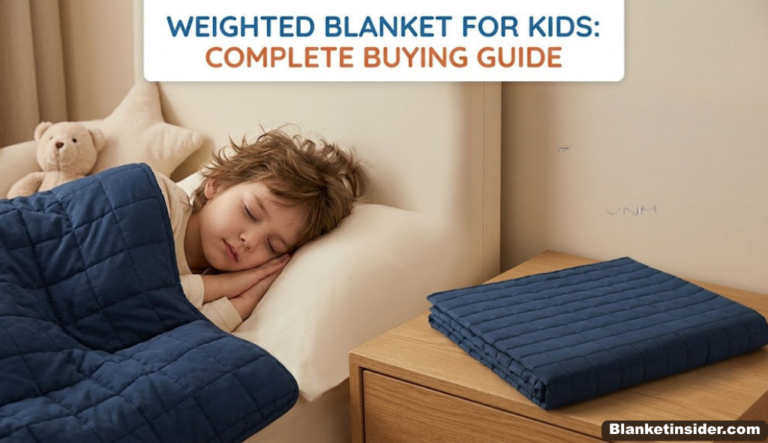

Weighted Blanket for Kids: The Complete Parent’s Buying Guide
Everything you actually need to know before buying a weighted blanket for your child — sizing, safety, materials, and the models worth your money.

What Is a Weighted Blanket for Kids?
A weighted blanket for kids is exactly what it sounds like — a blanket built with an internal layer of evenly distributed weight, usually glass beads or plastic pellets, sewn into a quilted grid so the weight can’t shift or clump. Instead of relying purely on thermal insulation like a regular throw or comforter, a weighted blanket applies gentle, even pressure across the body. That pressure is the whole point. It’s often described as feeling like a firm hug, and for a lot of kids, that steady input is genuinely calming.
These blankets grew out of occupational therapy practices, where deep pressure stimulation has long been used to help regulate the nervous system. Therapists working with children on the autism spectrum or with sensory processing differences noticed that weighted input — whether from a weighted vest, a lap pad, or a full blanket — could reduce anxious behavior and help with transitions like bedtime. From there, the concept moved into mainstream parenting, and today weighted blankets sized specifically for children are a normal fixture in a lot of bedrooms, not just clinical settings.
It’s worth being clear up front: a weighted blanket for kids is not a medical device, and it’s not a cure for anything. It’s a comfort tool. For many families it’s genuinely useful — for some kids it makes zero difference, and for a small number it’s uncomfortable. Understanding how they work and who they tend to help is the fastest way to figure out whether one is worth buying for your specific child.
YnM Exclusive Kids Weighted Blanket
A reliable, widely-used option built specifically for smaller bodies.
Check Price on AmazonHow Weighted Blankets Actually Work
The science behind weighted blankets is rooted in something called Deep Pressure Stimulation (DPS), sometimes called Deep Touch Pressure. When firm, evenly distributed pressure is applied to the body, it appears to influence the autonomic nervous system — the part of the body that governs the “fight or flight” versus “rest and digest” response. Deep pressure is associated with a shift toward the parasympathetic (rest and digest) side, which is linked to lower heart rate, slower breathing, and a general sense of calm.
There’s also a chemical piece to this. Some research on deep pressure touch suggests it may be associated with small increases in serotonin and melatonin, along with reductions in cortisol, the body’s primary stress hormone. Serotonin plays a role in mood regulation, and melatonin is the hormone most directly responsible for signaling sleep onset. Lower cortisol at bedtime generally correlates with an easier time settling down. None of this means a weighted blanket is a sleep medication substitute — but it helps explain why so many parents report their child settles faster and stays asleep longer once weighted bedding becomes part of the routine.
Mechanically, the “how” is simple: even weight distribution matters more than raw heaviness. A poorly made blanket with weight that pools in the corners will feel lumpy, uneven, and honestly annoying rather than soothing. A well-made kids’ weighted blanket uses a quilted or box-stitched grid — small sewn pockets, usually somewhere between 4×4 and 6×6 inches — that keeps the fill locked in place no matter how the child moves during the night.
Which Kids Benefit Most?
Not every child needs or wants a weighted blanket, but certain groups tend to respond especially well:
- Kids with sensory processing differences — including many children on the autism spectrum, who often seek out proprioceptive input and find deep pressure genuinely regulating.
- Kids with ADHD — some parents and occupational therapists report that weighted input helps with the restlessness that can interfere with falling asleep.
- Anxious kids — general childhood anxiety, separation anxiety at bedtime, or nighttime fears sometimes respond well to the “held” feeling a weighted blanket provides.
- Kids who are simply restless sleepers — even without a diagnosis, some children just sleep better under gentle, consistent pressure the same way some adults prefer a firm hug over a light touch.
On the flip side, some kids dislike the sensation entirely, particularly younger children, kids who run hot at night, or kids who are sensitive to anything restrictive. There’s no way to predict this with certainty in advance — it’s worth trying a blanket with a generous return window before assuming it’s the right long-term fit.
Good to know: If your child has a diagnosed medical or sensory condition, it’s worth a quick conversation with their pediatrician or occupational therapist before buying — they may have specific weight or fabric recommendations based on your child’s needs.
Weight & Age Safety Guidelines
This is the single most important section of this guide, and it’s worth reading carefully. Weighted blankets are not recommended for infants or toddlers under the age of two — full stop. The American Academy of Pediatrics advises against any loose or heavy bedding in a crib for exactly the reason you’d expect: suffocation risk. A weighted blanket is not a substitute for safe sleep practices in that age range, no matter how it’s marketed.
For children old enough to safely use one — generally toddlers past the crib stage who can move a blanket off themselves without difficulty — the standard rule of thumb used by occupational therapists and most reputable manufacturers is:
| Child’s Body Weight | Recommended Blanket Weight |
|---|---|
| 20–30 lbs | 3 lbs (only with direct supervision, rarely recommended under age 3) |
| 30–50 lbs | 4–5 lbs |
| 50–70 lbs | 5–7 lbs |
| 70–100 lbs | 7–10 lbs |
| 100+ lbs | Consider a youth or adult-sized blanket at 10%–12% body weight |
The general formula manufacturers use is roughly 10% of the child’s body weight, sometimes with an extra pound added for comfort preference. Going heavier than this “just in case” isn’t a good idea — a blanket that’s too heavy can restrict movement, make it hard for a child to reposition themselves, and in rare cases raises safety concerns, particularly for younger or smaller kids. If you’re ever unsure whether a weight is safe for your child’s age and size, it’s better to size down and see how they respond.
Supervision matters too. Weighted blankets designed for children should always be used with a parent aware of how the child is sleeping, especially in the first weeks of use. If your child has any respiratory conditions, mobility limitations, or is a particularly deep sleeper who doesn’t reposition much during the night, talk to their doctor before introducing one.
Sizing Chart & Fit
Weighted blankets for kids should generally cover the body without hanging far off the sides of the bed — a blanket that’s too large adds extra unaccounted-for weight and can be harder to manage. Most kids’ weighted blankets fall into a fairly standard size range:
| Size | Typical Dimensions | Best For |
|---|---|---|
| Small / Lap | 36″ x 48″ | Younger kids, car rides, couch use |
| Standard Youth | 41″ x 60″ | Toddler beds, twin beds, most 3–8 year olds |
| Large Youth | 48″ x 72″ | Twin/twin XL beds, kids 8–12 |
| Teen / Small Adult | 60″ x 80″ | Preteens, full-size beds |
A good rule of thumb: the blanket should sit close to body-width rather than spilling well past the edges of a twin mattress. Oversized blankets look cozy in product photos, but on a child’s bed they usually mean uneven weight distribution and a blanket that’s harder to launder in a standard home washing machine.
Fill Materials Explained
The fill is what gives a weighted blanket its weight, and the type of fill affects everything from noise level to washability to how the blanket drapes.
Glass Beads
Glass micro-beads are the most common fill in quality weighted blankets. They’re small, dense, and nearly silent, which matters a lot for kids who are sensitive to sound. They also tend to hold up well over repeated washing.
Plastic Poly Pellets
Plastic pellets are lighter and bulkier than glass beads, meaning a blanket needs more volume of fill to reach the same weight. They’re common in budget-friendly blankets and tend to be a little noisier, sometimes producing a faint rustling sound with movement.
Natural Fillers
Some kids’ blankets use fillers like plastic poly pellets combined with cotton batting, or in rarer cases, natural materials for extra softness around the fill layer. These tend to prioritize a plush, quiet feel over precision weight distribution.
Glass Bead Fill — Pros
- Quiet, minimal shifting noise
- Compact, doesn’t add bulk
- Durable through repeated washes
Glass Bead Fill — Cons
- Slightly higher price point
- Feels firmer/denser under the hand
Cover Fabrics Compared
The outer fabric affects comfort as much as the fill does, and for kids specifically, temperature regulation is a big factor — a blanket that runs hot is a blanket that gets kicked off by 2 a.m.
| Fabric | Feel | Best For | Breathability |
|---|---|---|---|
| Minky / Plush | Ultra-soft, velvety | Colder rooms, sensory comfort seekers | Low |
| Cotton | Crisp, breathable | Warmer climates, hot sleepers | High |
| Cotton-Poly Blend | Soft, durable | Everyday all-season use | Medium |
| Bamboo/Cooling Fabric | Silky, moisture-wicking | Kids who sleep hot | High |
If your child already tends to run warm at night, steer toward cotton or a cooling-labeled fabric rather than an all-minky cover. Minky is undeniably cozy and a favorite among kids for the texture alone, but it traps heat far more than woven cotton. Some blankets solve this with a minky top and breathable cotton underside, giving you flexibility depending on the season.
Top Weighted Blankets for Kids
Below are strong options worth comparing, based on fill quality, cover fabric, sizing options, and overall build.
YnM Exclusive Kids Weighted Blanket
A dedicated kids’ line from one of the most established weighted blanket brands. Uses glass bead fill in a tight quilted grid, with a soft cotton-blend cover that holds up well to frequent washing.
Check Price on Amazon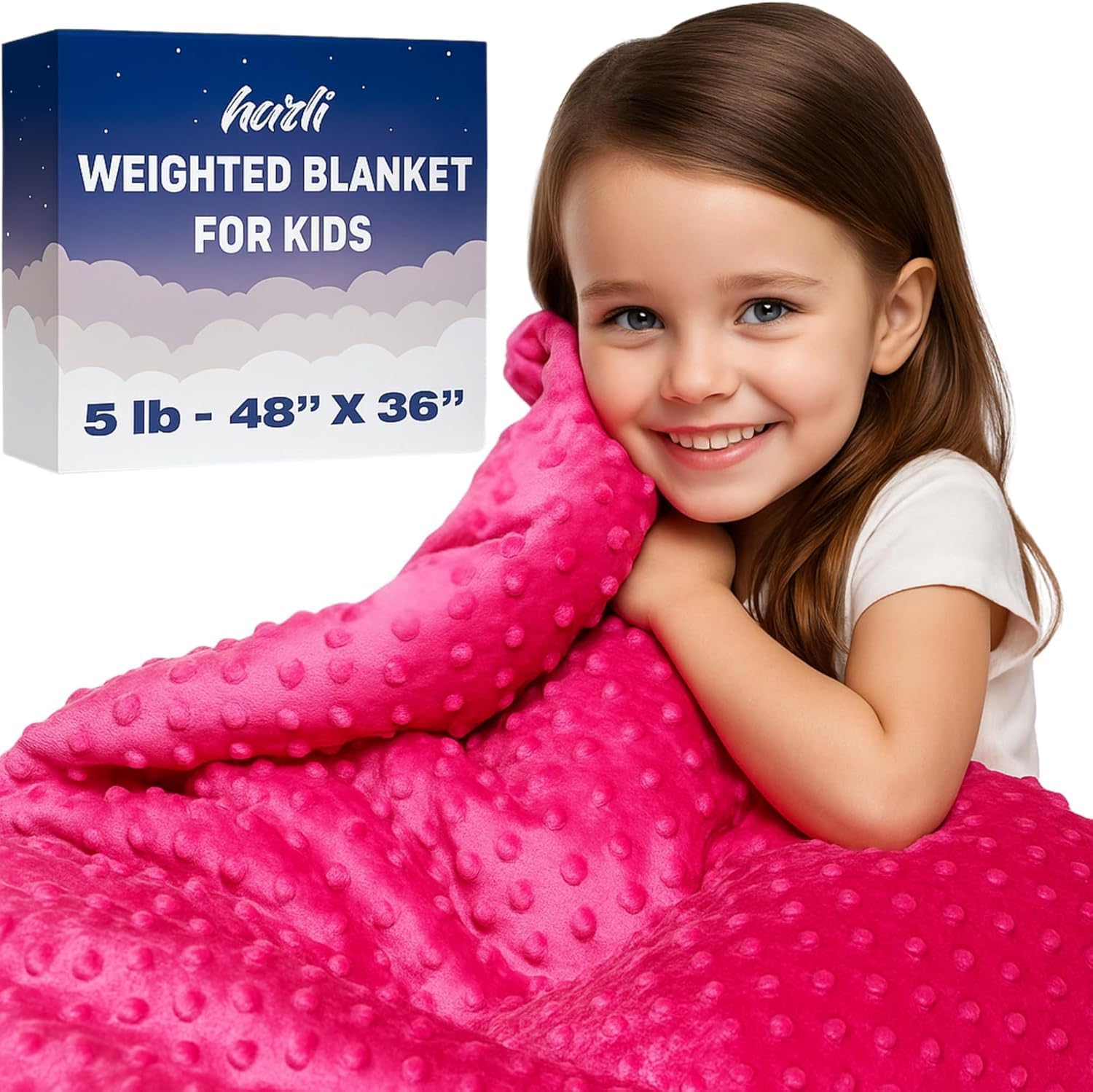
Super-Soft Kids Weighted Blanket
Leans heavily into plush comfort with a minky-style cover, making it a favorite for kids who prioritize texture. Best suited to cooler rooms given the heat retention of the fabric.
Check Price on Amazon
yescool Weighted Blanket
A budget-friendly pick that still uses a properly quilted fill grid to prevent shifting. A solid entry-level option for families testing out whether weighted bedding works for their child before investing more.
Check Price on Amazon
Sivio Weighted Blanket
Offers a nice middle ground between softness and breathability, with a double-sided design — cozy on one side, cooler on the other — that adapts well across seasons.
Check Price on Amazon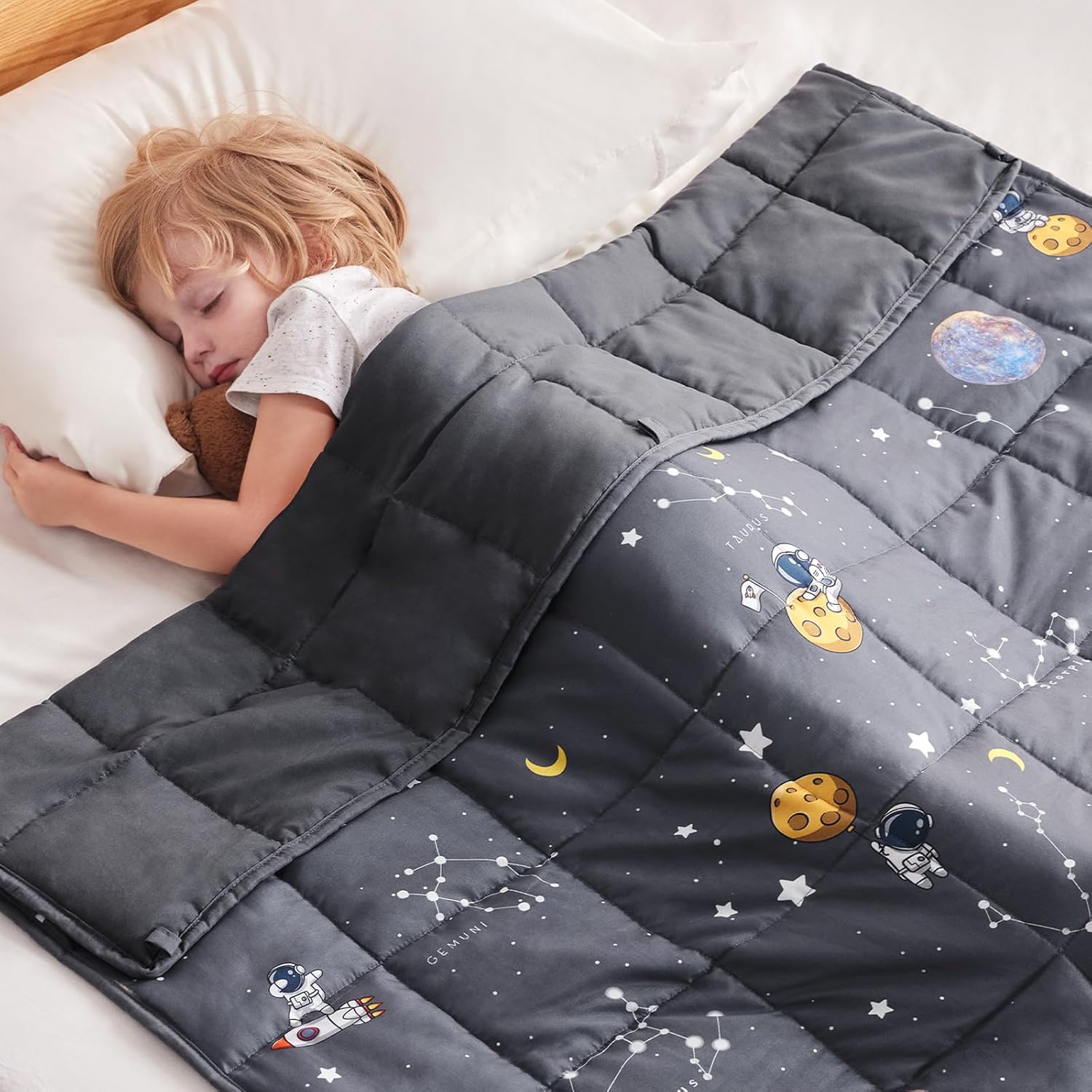
anfie Weighted Blanket Kids
A lightweight-feeling option relative to its actual weight, thanks to an even fill distribution. Comes in a range of youth sizes, making it easier to size correctly for smaller kids.
Check Price on Amazon
MAXTID Weighted Blanket for Kids
Known for tight, small-grid stitching that keeps fill locked evenly in place, even after a child tosses and turns through the night. A dependable mid-range option.
Check Price on Amazon
Mr. Sandman Weighted Blanket
Positioned specifically around sleep quality, with a name that leans into its bedtime-focused branding. Solid stitching quality and a reasonably breathable cover fabric.
Check Price on Amazon
CuteKing Weighted Blanket
Aimed squarely at younger kids with playful cover designs, while still using proper glass bead fill for even weight distribution — a nice balance of fun and function.
Check Price on Amazon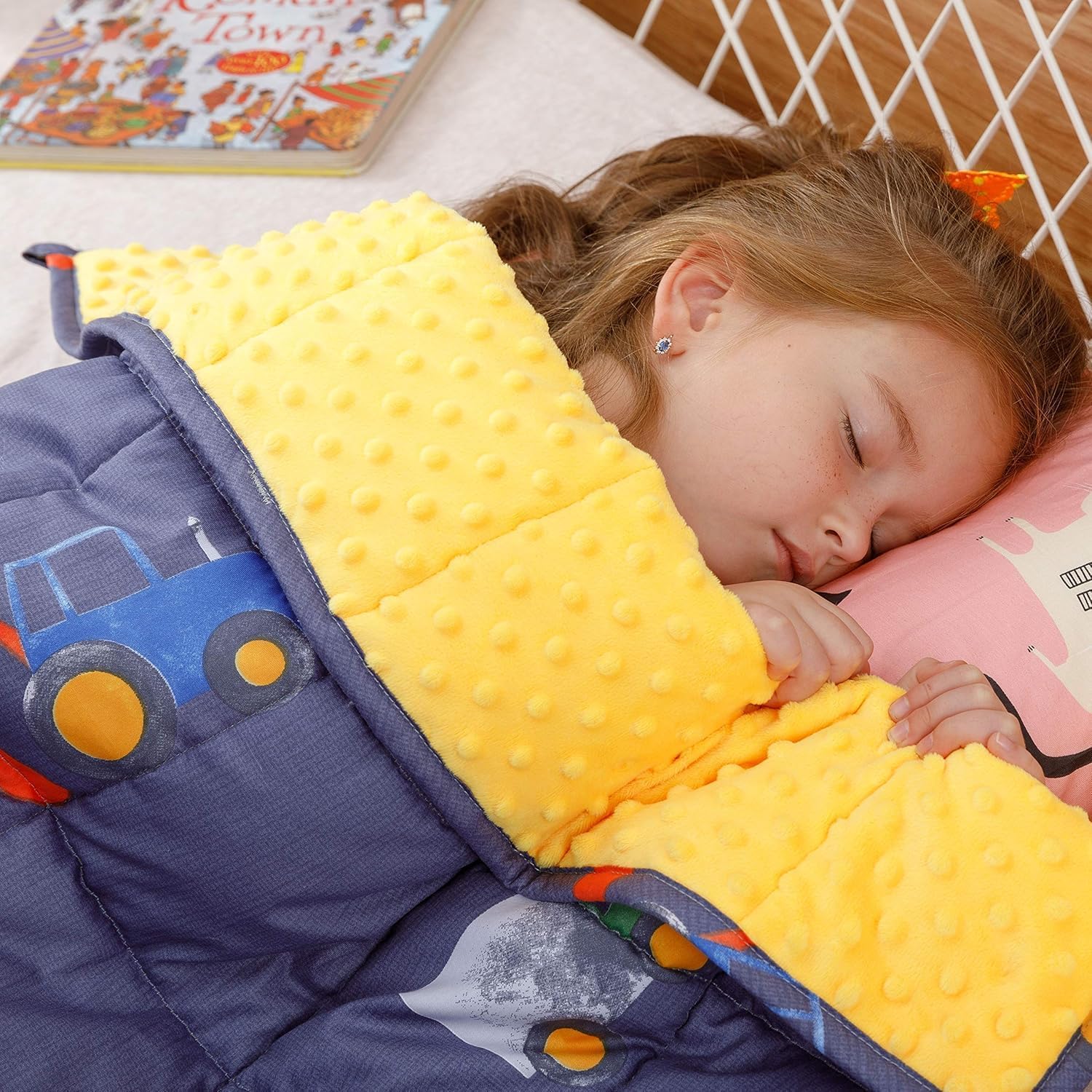
Uttermara Minky Weighted Blanket
A fully minky option front and back, best reserved for kids who run cool at night or for use in air-conditioned rooms. Extremely soft to the touch, which makes it popular with sensory-seeking kids.
Check Price on Amazon
MAXTID Weighted Blanket for Kids
Tight-grid stitching keeps the fill evenly distributed all night long.
Check Price on AmazonFull Comparison Table
| Blanket | Fill Type | Cover Fabric | Best For |
|---|---|---|---|
| YnM Exclusive Kids | Glass beads | Cotton-blend | All-around reliability |
| Super-Soft Kids | Glass beads | Minky | Cold rooms, texture seekers |
| yescool | Plastic pellets | Cotton-poly | Budget-conscious first try |
| Sivio | Glass beads | Dual-sided cotton/minky | Seasonal flexibility |
| anfie Kids | Glass beads | Cotton-blend | Precise youth sizing |
| MAXTID | Glass beads | Cotton-poly | Even weight distribution |
| Mr. Sandman | Glass beads | Cotton-blend | Sleep-focused routine |
| CuteKing | Glass beads | Printed cotton | Younger kids, playful designs |
| Uttermara Minky | Glass beads | Minky (double-sided) | Cool sleepers, max softness |
The Science of Deep Pressure Stimulation and Child Development
Understanding why a weighted blanket for kids works requires a deeper look into the nervous system. Proprioception is the body’s internal sense of position, movement, and pressure. It relies on receptors located within muscles, joints, and tendons that constantly send feedback to the brain about where the body is in space. For children whose proprioceptive systems are under-responsive, the brain essentially craves more input to register a sense of grounding. This is why some kids constantly crash into furniture, hug tightly, or chew on non-food items. A weighted blanket provides a consistent, distributed proprioceptive input that can help meet this sensory need in a safe, controlled way.
The autonomic nervous system is divided into the sympathetic branch (arousing, alerting, and stress-responsive) and the parasympathetic branch (calming, restorative, and digestive). Deep pressure stimulation, such as that delivered by a properly weighted kids’ blanket, activates the parasympathetic nervous system, slowing the heart rate and reducing blood pressure. Clinical observations in occupational therapy settings have long noted that children receiving regular deep pressure input often show improved focus during daytime tasks and reduced latency to sleep onset at night.
Neurotransmitter activity is also modulated. Serotonin, a key neuromodulator involved in mood stabilization, sleep cycle regulation, and appetite control, can be influenced by tactile and pressure inputs. Melatonin, the hormone responsible for governing the circadian sleep-wake cycle, naturally rises in the evening. Cortisol, the stress hormone, should dip at night to allow restful sleep. Early studies on weighted vests and blankets suggest that consistent use correlates with measurable shifts in these biomarkers, although large-scale pediatric randomized controlled trials are still limited. Nonetheless, the anecdotal and clinical evidence base is robust enough that weighted blankets are routinely recommended by pediatric occupational therapists across North America and Europe.
For children with autism spectrum disorder (ASD), sensory processing challenges are extremely common. Hypersensitivity to light touch or hyposensitivity to deep pressure can disrupt sleep architecture. A weighted blanket can filter out the distracting light-touch sensations from standard bedding and replace them with a single, organizing pressure signal. This sensory filtering mechanism is similar in principle to how noise-canceling headphones work for auditory sensitivities. The steady, low-frequency tactile input helps the brain inhibit extraneous sensory information, allowing the child to relax more deeply.
Attention deficit hyperactivity disorder (ADHD) is another condition where weighted blankets have shown promise. Restlessness at bedtime, often described as a “motor” that won’t turn off, is a common parental report. The theory is that the weighted input provides a constant, grounding sensation that reduces the urge to move, essentially giving the brain a clear signal that it is time to be still. While not a substitute for behavioral strategies or medical management, a weighted blanket can be a valuable component of a comprehensive bedtime hygiene routine.
Sensory Integration Therapy and Weighted Blankets
Sensory integration therapy, pioneered by occupational therapist A. Jean Ayres, focuses on helping children process and respond to sensory information more effectively. Weighted blankets are considered a form of sensory-based intervention, specifically targeting the tactile and proprioceptive systems. In a clinical setting, therapists might use weighted balls, vests, or lap pads during structured activities. The adaptation of these tools to the home environment, particularly for sleep, represents a natural extension of therapeutic principles.
A common mistake parents make is assuming that heavier is always better for sensory-seeking kids. In sensory integration, the goal is to provide just enough input to organize the nervous system without overwhelming it. A blanket that is too heavy can trigger a stress response rather than a calming one. This is why the 10% body weight guideline is so important — it approximates the level of input that is noticeable and grounding without becoming oppressive or restrictive. Some occupational therapists recommend starting slightly below 10% and gradually increasing if the child tolerates it well.
Sensory diets, which are individualized schedules of sensory activities designed to meet a child’s specific needs, often incorporate weighted items at strategic times. A weighted blanket might be used during wind-down time before bed, paired with a quiet activity like reading or listening to calming music. The predictability of this routine reinforces the brain’s association between the deep pressure sensation and relaxation, strengthening the sleep-onset response over time.
Psychological and Emotional Benefits for Children
Beyond the neurological mechanisms, there is a powerful psychological component to using a weighted blanket. The sensation of being held is universally associated with safety and comfort from infancy. A weighted blanket recreates a version of this experience without requiring constant physical contact from a parent, which can be particularly useful for children transitioning to independent sleep. For kids experiencing separation anxiety, the blanket becomes a transitional object — a source of comfort that remains consistent even when a caregiver is not physically present.
Children who have experienced trauma or who live with generalized anxiety disorder often have chronically elevated stress responses. The hypothalamic-pituitary-adrenal (HPA) axis, which governs stress reactions, can become dysregulated, leading to hypervigilance and difficulty relaxing. Deep pressure input, including from weighted blankets, has been shown in some studies to lower HPA axis activity, reducing circulating cortisol and allowing the child’s body to enter a restorative state more readily. While a blanket is not a treatment for trauma, it can be a supportive adjunct within a broader therapeutic framework.
Nighttime fears and phobias are common in childhood. Fear of the dark, monsters under the bed, or being alone can significantly delay sleep onset. The proprioceptive input from a weighted blanket can help ground a child in the present moment, anchoring them to the physical sensation of the blanket rather than the abstract fears their mind is generating. This grounding technique is widely used in cognitive behavioral therapy for anxiety and translates well to the tactile experience of weighted bedding.
Temperature Regulation and Night Sweats in Kids
One of the most frequently overlooked aspects of choosing a weighted blanket for kids is thermoregulation. Children have a higher surface-area-to-body-mass ratio than adults, meaning they both absorb and lose heat more quickly. Their metabolic rates are also higher during sleep due to growth hormone secretion and cellular repair processes. Consequently, a blanket that feels perfectly comfortable to an adult might cause a child to overheat.
Minky fabric, while luxuriously soft, is essentially a synthetic microfiber with very low breathability. It traps body heat efficiently, which can be beneficial in a cold bedroom but problematic for a child who already sleeps warm. Cotton, on the other hand, is a natural fiber with excellent moisture-wicking properties. It allows air to circulate and excess heat to dissipate. Bamboo-derived fabrics like viscose and lyocell offer even greater breathability and have the added benefit of being naturally antimicrobial, which helps reduce odor buildup in bedding that cannot be washed daily.
Some manufacturers address thermoregulation through hybrid designs. A summer side and winter side approach, where one side of the blanket uses cooling fabric and the other uses plush minky, gives parents flexibility to adapt to seasonal changes without buying multiple blankets. If your child experiences night sweats, a cooling cover is non-negotiable. Look for terms like “moisture-wicking,” “breathable,” and “temperature-neutral” in product descriptions, but also check independent reviews to confirm these claims hold up in real-world use.
Common Myths About Weighted Blankets Debunked
Myth 1: Weighted blankets are just a fad. While the commercial popularity of weighted blankets has surged in recent years, the therapeutic application of deep pressure is decades old and firmly rooted in occupational therapy practice. This is not a passing trend but a mainstream adoption of a long-established sensory tool.
Myth 2: Any heavy blanket will work. A regular pile of quilts or a heavy comforter does not provide the same even, distributed pressure as a purpose-built weighted blanket. The quilted grid is essential for preventing weight shifting, and household blankets lack this construction. Simply piling on blankets also significantly increases overheating risk without providing the calibrated proprioceptive input.
Myth 3: Weighted blankets are dangerous for all children. When used correctly — appropriate weight, right age, proper supervision — weighted blankets are safe for the vast majority of children past toddlerhood. The danger lies in misuse, such as using an adult-weight blanket on a small child or placing one on an infant. Following evidence-based safety guidelines eliminates most risks.
Myth 4: A weighted blanket will fix all sleep problems. Sleep is complex and influenced by factors including sleep hygiene, screen time, diet, physical activity, and underlying medical conditions. A weighted blanket can be a helpful tool within a broader sleep strategy, but it is not a standalone cure for insomnia, circadian rhythm disorders, or behavioral sleep issues.
Myth 5: Heavier is always better. More weight does not equal more calm. The therapeutic window for deep pressure is relatively narrow. Too little weight and the input is not registered; too much and the body perceives restraint, triggering anxiety or even panic. Sticking close to the 10% guideline is essential for hitting that sweet spot.
Glass Beads vs. Steel Beads vs. Sand: A Detailed Fill Comparison
While glass beads and plastic pellets dominate the market, a few specialty manufacturers use steel beads or even fine sand as fill materials. Steel beads are extremely dense, allowing a thinner blanket profile for the same weight. They are also exceptionally quiet. However, steel beads are generally more expensive and can make the blanket noticeably stiffer. They are also not microwave-safe if the blanket is designed to be warmed (though warming a weighted blanket is generally not recommended for kids anyway).
Sand-filled weighted blankets are rare and typically homemade or from niche sellers. Sand can shift through even tiny stitching gaps, creating uneven weight distribution over time. It also does not hold up well to washing. Sand fill is generally not recommended for children’s blankets due to durability and hygiene concerns.
Plastic poly pellets remain a budget-friendly option. They are dishwasher-safe in loose form (though the blanket itself is machine washable) and hold up decently over time. However, they are bulkier, so a 5-pound plastic-filled blanket will feel noticeably thicker than a 5-pound glass-bead-filled one. Some kids prefer this additional loft and plushness; others find it cumbersome. The faint rustling sound of plastic pellets can also be a make-or-break factor for children with auditory sensitivities or for light sleepers who share a room.
Glass micro-beads strike the best overall balance for most families. They are dense, silent, hypoallergenic, and washable. High-quality glass beads are also non-toxic and lead-free. When evaluating a glass-bead blanket, look for “non-toxic, lead-free glass micro-beads” explicitly mentioned in the product description. Reputable manufacturers will proudly highlight this, as it differentiates them from generic, potentially lower-quality imports.
Stitching, Quilting, and Construction Quality
The longevity and performance of a weighted blanket depend heavily on construction quality. The quilting grid pattern is the most visible quality indicator. Look for grids that are no larger than 6 inches square. Tight 4-inch or 5-inch grids are ideal because they restrict fill movement more effectively. Each pocket should be individually sewn and filled before the next row is stitched, a process that takes more time but results in a blanket where weight truly cannot shift.
Double-stitched or reinforced seams are critical around the outer edges. The edge is under the most stress during lifting, shaking out, and pulling up over a child. A blanket that loses beads from a burst seam is a safety hazard and a mess to clean. Check product images for close-ups of edge stitching. Zigzag or overlock stitching generally holds better than a single straight stitch under the tension that weighted blankets experience.
Internal layers matter as well. A quality blanket will have a separate inner liner that contains the fill, with the outer cover being removable or at least an additional layer. This multi-layer approach prevents beads from working their way through the fabric over time. Some blankets add a thin layer of polyester fiberfill batting between the bead layer and the cover, which improves both comfort and durability by cushioning the beads and reducing abrasion against the outer fabric.
Removable Duvet Covers and Accessories
Many kids’ weighted blankets now come with or are compatible with removable duvet covers. This is a practical feature that dramatically simplifies laundry. The weighted insert itself requires less frequent washing — spot cleaning and airing out between deep cleans usually suffices — while the cover can be stripped off and washed weekly with the rest of the sheets.
Duvet covers also extend the functional life of the blanket. A worn or stained cover can be replaced without discarding the entire weighted insert. Some families keep two covers so one is always available while the other is in the wash. Look for covers with internal ties or zipper closures that securely attach to the insert. Ties prevent the insert from bunching up inside the cover, which would compromise the even weight distribution that is the blanket’s entire reason for being.
Beyond covers, accessories like weighted lap pads, shoulder wraps, and travel-sized blankets can complement the main bedding blanket. A lap pad is useful for homework, car rides, or screen time, providing calming input in situations where a full blanket isn’t practical. Consistency across settings — sleep, relaxation, travel — can reinforce the sensory benefits a child experiences.
Age-by-Age Guide to Weighted Blankets
Toddlers (Ages 2–3)
Use only with extreme caution and under direct supervision. A 2- to 3-pound lap pad is generally a safer starting point than a full blanket at this age. If a blanket is used, it should be lightweight (3–4 pounds maximum), sized no larger than a crib blanket, and used only when a parent is present and alert. The child must be able to push the blanket off independently with no difficulty.
Preschoolers (Ages 3–5)
This is the most common age range for introducing a weighted blanket. Sizes around 36″ x 48″ to 41″ x 60″ work well. Weight should fall between 3 and 6 pounds depending on the child’s body weight. Focus on soft, tactilely appealing fabrics, as preschoolers often respond to texture as much as pressure. Bedtime routines should be well-established before introducing the blanket as an additional element.
School-Age Kids (Ages 6–10)
Children in this range can usually articulate whether the blanket feels comfortable, too heavy, or not heavy enough. Sizes up to 48″ x 72″ are appropriate, with weights ranging from 5 to 10 pounds. This age group also benefits from understanding why the blanket feels good — a simple explanation about “hugs from the blanket helping the body relax” can increase buy-in and make the blanket part of a self-regulation toolkit.
Tweens and Teens (Ages 11+)
Older kids can transition to youth or even small adult blankets, provided the weight-to-body ratio remains appropriate. A 120-pound preteen using a 12-pound blanket is within the 10% guideline. Design preferences matter more at this age — plain, non-juvenile patterns help the blanket feel like a normal part of the bedroom rather than a “therapy tool.”
Integrating a Weighted Blanket Into a Bedtime Routine
Introducing a weighted blanket works best when it is part of a consistent, calming bedtime routine. Start by using the blanket during quiet pre-bed activities rather than only at sleep time. Reading books, listening to an audiobook, or practicing deep breathing exercises under the blanket helps the brain form positive associations before the child is expected to fall asleep under it.
Gradual introduction can prevent resistance. Let the child explore the blanket during the day, touch the fabric, and understand how it feels. Some parents drape the blanket over the child for 10–15 minutes during a calming daytime activity for a few days before moving it to nighttime use. This desensitization period can be especially helpful for children who are initially unsure about the sensation of weight on their body.
The full bedtime routine might look like: warm bath or shower, changing into pajamas, quiet play or reading under the weighted blanket for 15–20 minutes, lights out with the blanket pulled up. The consistency of this sequence signals to the brain that sleep is coming, and the weighted input becomes a reliable component of the sleep-onset cue.
Traveling With a Weighted Blanket
Weighted blankets are, by design, heavy and can be cumbersome to transport. However, for children who rely on them for sleep, leaving them behind is not always an option. Travel-friendly solutions include smaller lap-sized blankets (36″ x 48″) that provide enough coverage for a child in a car seat or on an airplane without taking up excessive luggage weight. Some manufacturers offer travel versions that fold into a compact carrying case.
When flying, note that TSA generally permits weighted blankets in both carry-on and checked luggage, but the dense fill can sometimes trigger additional screening. Allow a few extra minutes at security. For road trips, a weighted lap pad can provide calming input in a car seat without the full bulk of a blanket. Compression sheets, which are much lighter and more packable, can also serve as a portable alternative for maintaining some sensory input while traveling.
Deep Cleaning, Stain Removal, and Long-Term Maintenance
Spot cleaning is the first line of defense for weighted blankets. Most spills and stains can be treated with a mild detergent and cool water applied directly to the affected area with a soft cloth. Avoid soaking the blanket, as fully saturating the fill can cause clumping in some types of fill, particularly if the inner liner is not fully waterproof. Blot rather than rub to prevent pushing the stain deeper into the fibers.
When machine washing is necessary, use a front-loading washer if possible. Top-loading machines with a central agitator can snag the blanket fabric and strain the stitching. Wash on a gentle cycle with cold water and a small amount of mild detergent. Avoid fabric softeners, as they can coat the fibers and reduce breathability, and never use bleach, which can degrade both natural and synthetic fibers over time.
Drying should be done on low heat or air-dry. High heat can damage glass beads (though they are heat-resistant up to a point) and can melt plastic pellets outright. Air-drying on a flat surface is the gentlest method and completely eliminates any risk of heat damage. If using a dryer, add a couple of clean tennis balls or dryer balls to help redistribute the fill within its pockets as it tumbles.
Between washes, airing the blanket outside on a dry, breezy day helps refresh the fabric and dissipate any odors. Sunlight is a natural antibacterial agent, though prolonged direct sun can fade fabrics, so limit exposure to a few hours.
Hypoallergenic Options and Allergy Considerations
Children with allergies or asthma need bedding that does not exacerbate their conditions. Dust mites are a common allergen that can accumulate in any bedding, including weighted blankets. Using a removable, washable duvet cover and washing it weekly in hot water (130°F or higher) is the most effective way to control dust mites. Some manufacturers offer hypoallergenic covers with tightly woven fabrics that act as a barrier against allergens.
Fill materials can also be an allergy consideration. Glass beads are inert and hypoallergenic. Plastic pellets are generally non-allergenic as well, though some very rarely reported sensitivities to certain polymer compounds exist. Natural fills like sand, rice, or organic materials should generally be avoided for children with allergies, as they can harbor mold, dust mites, and bacteria more readily than inorganic fills.
For children with eczema or sensitive skin, fabric choice is paramount. Organic cotton covers certified by OEKO-TEX or GOTS ensure that no irritating chemical residues are present from the manufacturing process. Bamboo-derived fabrics are also a good choice due to their smooth fiber structure that minimizes friction against sensitive skin.
Budget Guide: What to Expect at Each Price Point
Under $30: Typically smaller lap pads or very basic blankets using plastic pellet fill with simple stitching. Suitable for travel or as a trial to see if a child tolerates weight before investing in a full blanket. Quality control is variable; check reviews carefully for reports of leaking fill.
$30–$60: The sweet spot for many families. Blankets in this range usually feature glass bead fill, a cotton or cotton-blend cover, and a reasonably tight quilting grid. Expect decent durability and a range of color and pattern options suitable for children. Most top picks on curated lists fall into this bracket.
$60–$100: Premium kids’ blankets with high-end fabrics like organic cotton, bamboo cooling covers, or premium minky. Often include a removable duvet cover. Stitching quality is generally excellent, with double-stitched seams and small-grid quilting. Warranties and return policies are often better in this tier.
Over $100: Specialty blankets, often from brands with strong occupational therapy roots. May include custom weight and size options, luxury fabric choices, and extended warranties. For most families, this tier is unnecessary unless a specific therapeutic requirement dictates a custom configuration.
Warranties, Return Policies, and Trial Periods
Before purchasing, always check the return policy. A weighted blanket is a significant investment in a child’s comfort, and not every blanket works for every child. Many reputable manufacturers offer 30-night trial periods during which the blanket can be returned for a full refund if the child does not adjust to it. Some extend this to 60 or even 100 nights.
Warranties typically cover manufacturing defects such as seam failure, leaking fill, or faulty zippers on removable covers. One-year warranties are standard; two- to three-year warranties indicate the manufacturer’s confidence in their construction quality. Keep proof of purchase and register the product if the manufacturer offers that option.
When testing a blanket during a trial period, use a duvet cover to keep it in resalable condition, and follow the care instructions meticulously. Returns are often rejected if the blanket shows signs of improper washing or damage that is not a manufacturing defect.
What Pediatric Occupational Therapists Say
To gain a rounded perspective, we reviewed interviews and published guidance from practicing pediatric occupational therapists (OTs). The consensus is strongly in favor of weighted blankets as a tool — but with caveats. OTs emphasize that a weighted blanket is part of a sensory diet, not the entire diet. Children who benefit from weighted input often benefit from a range of proprioceptive activities during the day, including heavy work like carrying groceries, pushing chairs, or jumping on a trampoline. The daytime input prepares the nervous system to better utilize the calming nighttime input of the blanket.
Therapists also stress individualization. “The 10% rule is a starting point, not a law,” one OT noted in a widely-cited webinar on pediatric sleep. “Some kids need slightly less, some slightly more. You have to observe the child’s response.” Signs that a blanket is too heavy include increased restlessness, sweating, attempts to push the blanket off repeatedly, or complaints of discomfort. Signs that it’s too light include no noticeable change in sleep latency or restlessness, or the child piling additional blankets on top.
Another key theme from OTs is that the blanket should never be forced. If a child resists the blanket, pushing it on them can create negative associations with bedtime and sensory input in general. Instead, therapists recommend modeling — letting the child see a sibling or parent use a weighted blanket happily — and allowing the child to choose when and how to use it.
Environmental and Ethical Considerations
The environmental footprint of a weighted blanket depends heavily on its materials. Glass beads are made from silica, an abundant natural resource, but their production involves high-heat industrial processes. Plastic pellets are derived from petroleum, carrying the environmental concerns associated with plastic production and eventual disposal. Some manufacturers are beginning to offer recycled glass bead fill and covers made from recycled polyester, reducing the reliance on virgin materials.
Organic cotton covers are a more sustainable choice than conventional cotton or synthetic fabrics, as organic farming avoids synthetic pesticides and fertilizers. Certifications to look for include GOTS (Global Organic Textile Standard) and OEKO-TEX Standard 100, which ensures the final product is free from harmful substances. Bamboo fabrics are often marketed as eco-friendly, but the manufacturing process for bamboo viscose can involve harsh chemicals unless it is produced in a closed-loop system (lyocell process).
Longevity is perhaps the biggest environmental factor. A durable blanket that lasts through multiple children or can be passed on to another family reduces overall consumption. Investing in a well-made blanket with a removable cover and replaceable components is both economically and environmentally sound. When a weighted blanket reaches the end of its life, the fill can sometimes be repurposed — glass beads, for instance, can be used in craft projects or even drainage applications — though recycling options are limited at the consumer level.
Cultural Perspectives on Weighted Blankets for Children
The use of weighted blankets for children varies across cultures, reflecting different attitudes toward sleep, touch, and child-rearing. In many Western countries, particularly the United States, Canada, and the United Kingdom, weighted blankets have been rapidly normalized through social media, parenting blogs, and occupational therapy advocacy. In Scandinavian countries, where the concept of “hygge” (coziness) is culturally ingrained, heavy duvets and layered bedding have been common for decades, and the transition to purpose-built weighted blankets has been relatively seamless.
In some Asian cultures, co-sleeping with young children is more prevalent, which provides natural deep pressure through parental contact. The need for a weighted blanket as a standalone sleep aid may be perceived differently in these contexts, though interest is growing as sleep independence is increasingly encouraged in urban settings. In parts of South Asia and Africa, bedding is often lighter due to climate, and the idea of adding weight for sensory purposes is still novel, though it is gaining traction through global e-commerce platforms.
Understanding that the weighted blanket as a product sits at the intersection of occupational therapy, parenting culture, and global commerce helps contextualize why it can feel both essential and optional depending on a family’s background and circumstances.
DIY Weighted Blanket Options: Pros, Cons, and Safety
Some crafty parents consider making their own weighted blanket to save money or customize the size and fabric. While DIY is possible, it carries significant risks if not done carefully. The primary challenge is achieving even weight distribution without specialized quilting tools. A home sewing machine may struggle with the thickness of multiple layers and the density of fill. Hand-tying a quilt can work, but knots must be extremely secure to prevent fill migration over time.
Fill material sourcing is another concern. Glass beads sold for weighted blanket making should be explicitly labeled as non-toxic and lead-free. Using rice, beans, or other organic materials introduces hygiene issues — these fills can mold if they get damp and cannot be washed. They also attract pests. Plastic pellets from craft stores are usually safe, but verify they are intended for use in items that will be heated or washed.
If you do attempt a DIY kids’ weighted blanket, keep the weight lighter than commercial guidelines — about 8% of body weight — to account for less precise distribution. Always use a removable, washable cover, and inspect the blanket regularly for shifting fill or seam weakness. For most families, however, the safety and consistency of a commercially manufactured blanket justify the cost.
Frequently Asked Questions — Expanded
At what age can a child safely use a weighted blanket?
Most guidance points to age two and up, and only once a child can move the blanket off themselves without help. Younger toddlers and infants should never use weighted bedding, in line with standard safe sleep guidance.
How heavy should my child’s weighted blanket be?
A common guideline is roughly 10% of your child’s body weight, sometimes with an extra pound for personal preference. Always round down rather than up if you’re unsure.
Can a weighted blanket help with ADHD or anxiety?
Many parents and occupational therapists report that deep pressure input helps some kids with ADHD or anxiety settle more easily at bedtime, though results vary from child to child and it isn’t a guaranteed fix.
Is it safe for my child to sleep under a weighted blanket every night?
For kids who are the right age and using a correctly sized blanket, nightly use is generally considered safe. If your child has any respiratory, mobility, or medical concerns, check with their pediatrician first.
Will a weighted blanket make my child too hot at night?
It depends entirely on the cover fabric. Minky covers trap more heat, while cotton or cooling-labeled fabrics stay breathable. Choose based on how warm your child already tends to sleep.
Can weighted blankets be washed in a regular washing machine?
Most glass-bead-filled blankets under about 10 lbs can be washed on a gentle cycle at home, though it’s always best to check the specific care label first.
What’s the difference between glass bead fill and plastic pellet fill?
Glass beads are denser, quieter, and more compact, while plastic pellets are bulkier and can produce a faint rustling sound. Glass beads also tend to hold up better through repeated washing.
Should I buy a weighted blanket based on my child’s age or weight?
Weight, not age. Age is only a loose proxy — actual body weight determines what blanket weight is safe and comfortable.
Can my child use an adult weighted blanket instead of a kids’ version?
Generally no, unless the adult blanket happens to match the correct weight-to-body-weight ratio. Adult blankets are usually far too heavy for a child’s frame.
How do I know if a weighted blanket isn’t working for my child?
If your child seems more restless, resists using it, or complains of feeling trapped or overheated, it may not be the right fit — some kids simply don’t respond well to the sensation, and that’s completely normal.
Is a weighted blanket a choking hazard?
The blanket itself is not a choking hazard, but loose fill from a damaged blanket certainly is. Regularly inspect seams and stitching. If any beads escape, discontinue use immediately and repair or replace the blanket. The beads are small enough to pose a choking risk to young children and pets.
Can weighted blankets be used year-round?
Yes, but you may need to switch covers seasonally. A breathable cotton or bamboo cover keeps the blanket usable in summer, while a minky or flannel cover adds warmth in winter. Some families keep two blankets — a lighter one for warm months and a heavier one for cold months — though this is a significant investment.
Do weighted blankets work for kids who don’t have sensory issues?
Yes, many children without any diagnosis enjoy the comfort of a weighted blanket. The calming effect of deep pressure is a general physiological response, not exclusive to those with sensory processing differences. A child who simply likes heavy blankets or tight swaddles may naturally gravitate toward a weighted option.
What’s the best weighted blanket for a hot sleeper?
Look for a blanket with a cooling bamboo or cotton cover, glass bead fill (which stays cooler than plastic pellets), and a relatively thin profile. Avoid minky entirely unless it’s on a removable cover that can be taken off in warm weather. Some brands specifically market “cooling weighted blankets” with moisture-wicking fabric technology originally developed for athletic wear.
Final Verdict
A weighted blanket for kids isn’t a magic sleep fix, but for a lot of children — especially those with sensory sensitivities, anxiety, or general restlessness at bedtime — it can be a genuinely useful addition to the nightly routine. The keys are getting the weight right based on body weight (not age), choosing a cover fabric suited to how warm your child sleeps, and sticking with reputable stitching quality so the fill stays evenly distributed night after night.
Of the options covered here, the YnM Exclusive Kids Weighted Blanket stands out as the safest all-around starting point thanks to its dedicated kids’ sizing and reliable construction, while the Sivio and MAXTID picks are worth a look for families wanting extra seasonal flexibility or especially tight, even fill distribution.
Ready to Try One for Your Child?
Start with the YnM Exclusive Kids Weighted Blanket — a dependable, well-reviewed choice for first-time weighted blanket families.
Check Price on Amazon