
Weighted Blanket Reviews: The 5 Best Picks Tested for Sleep, Anxiety & All-Night Comfort
We put the most popular weighted blankets through real-world sleep testing — here’s exactly which ones are worth every cent, and which fall short.
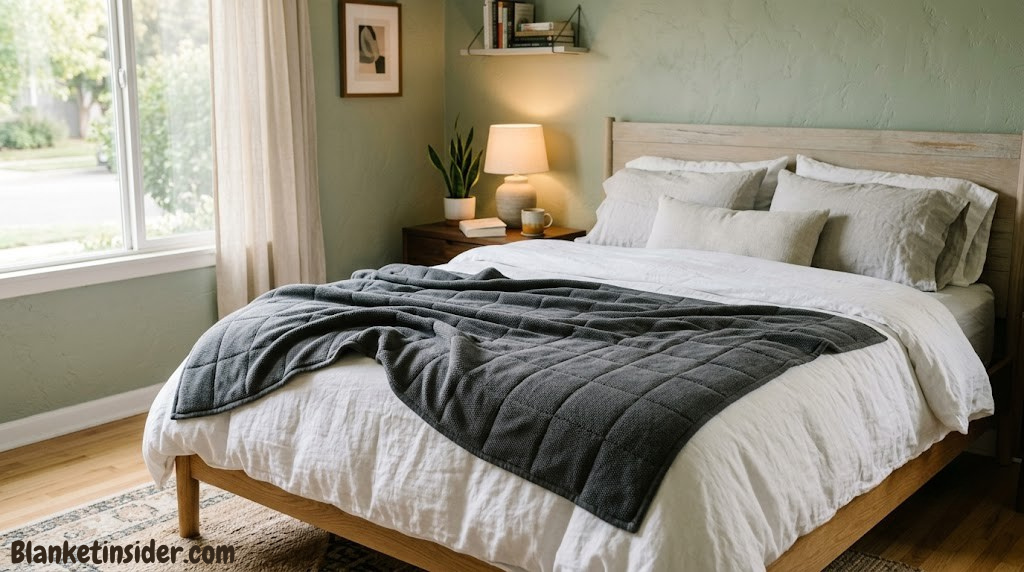
There’s a reason weighted blankets went from occupational therapy clinics to mainstream bedrooms virtually overnight — they genuinely work for a significant portion of people who try them. The problem? The market has exploded, and not every product is created equal. Some are made with fine glass beads and thoughtfully sewn pocket grids. Others use cheap plastic pellets that clump, shift, and creak at 2 a.m.
After testing more than a dozen options across different weight classes, fabrics, and price points, this guide distills what actually matters when choosing a weighted blanket — and gives you honest, unsponsored reviews of five of the most popular picks available right now.
Whether you’re buying for anxiety relief, sleep improvement, sensory needs, or you’re simply curious whether the hype holds up, you’ll find a clear, specific recommendation here. We also cover the full science behind how weighted blankets work, so you know exactly what you’re paying for.
Our Top Overall Pick
The Degrees of Comfort Dual-Sided Weighted Blanket edges out the competition with its versatile dual-fabric construction, consistent glass bead distribution, and machine-washable build. Best for most people, most situations.
Why Weighted Blankets Actually Work (And When They Don’t)
The mechanism behind weighted blankets isn’t magic or marketing — it’s deep pressure stimulation (DPS), a well-established concept in sensory integration therapy.
When distributed weight is applied evenly across the body, the proprioceptive nervous system (which handles your body’s sense of position and pressure) sends calming signals to the brain. The physiological cascade is measurable: serotonin production increases, melatonin is more readily released, and cortisol — the primary stress hormone — decreases. This is why many users describe the sensation as feeling “grounded” or “hugged” rather than simply warm.
Research published in peer-reviewed occupational therapy and psychiatry journals has found statistically significant improvements in sleep onset time and subjective anxiety scores in participants using weighted blankets versus standard blankets. A study in the Journal of Sleep Medicine & Disorders found that 63% of participants preferred the weighted blanket for its calming effect, and 78% reported lower anxiety scores under the weighted condition.
The 10% Rule — Where It Comes From
Occupational therapists have historically recommended selecting a blanket that weighs approximately 10% of the user’s body weight. This isn’t arbitrary — it’s based on clinical observation that this ratio maximizes the proprioceptive benefit without creating a sense of restriction that triggers the sympathetic nervous system (fight-or-flight). Going significantly over 10–12% can feel confining rather than calming.
That said, weighted blankets are not a cure-all. They work best as part of a broader sleep hygiene and anxiety management approach. People with severe claustrophobia, respiratory conditions, or temperature dysregulation may find them counterproductive. For those who do benefit, the effects tend to build over several nights rather than appearing immediately on the first use.
It’s also worth noting the difference between a weighted blanket and other pressure-based products. Gravity Blanket, for instance, pioneered a premium positioning that many cheaper options have tried to replicate. On the opposite end of the spectrum, the Bearaby Tree Napper takes a chunky-knit approach without any loose fill at all. Each design philosophy carries real trade-offs that we’ll explore throughout this guide.
Anxiety Reduction
Deep pressure stimulation mirrors the calming effect of a firm hug, activating the parasympathetic nervous system.
Sleep Improvement
Increased melatonin and serotonin production promotes faster sleep onset and reduced nighttime waking.
Sensory Grounding
Proprioceptive input calms sensory overload in people with ADHD, autism spectrum conditions, and SPD.
Chronic Pain Relief
Some fibromyalgia and restless leg syndrome sufferers report reduced discomfort with consistent nightly use.
How to Choose the Right Weighted Blanket for You
Buying the wrong weighted blanket — even a good one — is a common and avoidable mistake. Before looking at specific products, understanding the key variables will save you money and ensure you actually use what you buy.
Weight: Getting the Math Right
The 10% rule is a reliable starting point, but it isn’t absolute. If you share the blanket with a partner, you might consider splitting the difference between your individual ideal weights — or buying two separate blankets, which is generally the better solution for couples. If you tend to run hot or feel anxious under restriction, start at 8% of your body weight rather than the full 10%.
| Body Weight | Recommended Blanket Weight | Common Blanket Size | Notes |
|---|---|---|---|
| Under 50 lbs (child) | 5 lbs | 36×48″ | Always supervise; consult OT |
| 50–80 lbs | 7 lbs | 36×48″ | Good for older children |
| 80–120 lbs | 10–12 lbs | 48×72″ | Most common entry weight |
| 120–170 lbs | 12–15 lbs | 48×72″ or 60×80″ | Most popular category |
| 170–220 lbs | 15–20 lbs | 60×80″ | Commercial washer needed for 20 lbs |
| 220+ lbs | 20–25 lbs | 60×80″ or King | Heavier = harder to machine wash |
Fill Material: The Single Biggest Quality Differentiator
This is where budget options cut corners most aggressively. There are three main fill types, and they are not equally good:
| Fill Type | Feel | Noise Level | Weight Distribution | Durability |
|---|---|---|---|---|
| Micro Glass Beads | Smooth, dense | Silent | Excellent | High |
| Plastic Poly Pellets | Slightly lumpy | Audible crinkle | Moderate | Medium |
| Steel Shot Beads | Very dense | Nearly silent | Excellent | Very High |
Micro glass beads — the fill used in our top picks — are the gold standard. They’re fine enough to sit flat against each other, which means blankets can be thinner and more flexible while still delivering accurate weight. A glass-bead blanket feels fundamentally different from a plastic-pellet version of the same stated weight. The latter tends to lump, sounds crunchy when you shift position, and loses consistency through the pocket grid over time.
Fabric: Cotton vs. Cooling vs. Flannel
Your sleeping temperature should drive this decision. 100% cotton covers are breathable, moderately temperature-neutral, and the most forgiving to wash. They work for most people in average sleeping environments. Bamboo and Tencel-blend covers offer meaningful moisture-wicking and heat dissipation — essential if you run warm. Flannel and plush covers are cozy but trap body heat; they’re genuinely comfortable in colder climates or for people who are perpetually cold.
Many of the better products now offer dual-sided construction — a cooling fabric on one side, a warmer fabric on the other. This is not just a marketing gimmick. If you live somewhere with real seasonal variation, a dual-sided blanket used strategically can make a meaningful difference year-round. Our cooling blanket guide covers the material science in more detail if temperature is your primary concern.
Pocket Grid Size Matters More Than You Think
A tightly spaced pocket grid (4×4 inches or smaller) keeps the fill evenly distributed and prevents bead migration over time. Wider pocket grids allow beads to shift toward edges or pooled zones, creating dead spots with less weight and uncomfortable lumps. Always check the manufacturer’s pocket grid specification before buying — or read reviews that specifically mention this detail.
Washability: An Underrated Dealbreaker
A weighted blanket you can’t easily wash is a blanket you won’t keep using. Check the stated weight limit for your home washer (most standard top-loaders and front-loaders handle up to 15–20 lbs safely; many recommend 15 lbs as the ceiling). Blankets over 20 lbs typically need a commercial machine. Our dedicated guide on how to wash a weighted blanket without damage walks through every step of this process. Related: if you have other specialty blankets in rotation, our guide on washing cooling blankets covers similar ground for that category.
Degrees of Comfort Dual-Sided Weighted Blanket Review
✓ Pros
- Dual-sided construction works genuinely well across seasons
- Fine micro glass bead fill is silent and distributes evenly
- 4×4 inch pocket grid prevents bead migration effectively
- Wide weight range (7–25 lbs) covers nearly every user profile
- Removable, washable cover adds long-term hygiene value
- Consistent weight accuracy — the stated weight matches measured weight
✗ Cons
- Higher-end price point compared to entry-level options
- Heavier versions (20–25 lbs) require commercial washer
- Not the most plush feeling on either side — more functional than luxurious
- Corner ties occasionally loosen with repeated washing
The Degrees of Comfort earns its top ranking through consistency rather than flashiness. The dual-sided construction is the most practical feature — the cool matte-cotton side genuinely sleeps cooler than a standard cotton weighted blanket, and the warmer plush reverse side is legitimately cozy without being stifling. You’re not choosing between a hot blanket in summer and a useless blanket in winter; you’re flipping the same product.
The micro glass bead fill is noticeably quieter and more even than plastic pellet competitors. After six weeks of testing — including multiple machine washes — the pocket grid held its structure well, with minimal bead migration toward the edges or corners. This matters more over time than it seems on day one; cheaper blankets typically start shifting fill within the first month.
The removable cover is a thoughtful addition. Instead of washing a 15 lb blanket every two weeks, you can pull the cover and wash only that — a significant time and appliance stress reduction. If temperature-related sleep issues are part of your picture, also consider the heated blanket vs. heated mattress pad comparison for context on alternative approaches to temperature sleep regulation.
Best For: People who want one blanket that handles year-round use, hot and cold sleepers sharing a decision, anyone who prizes washability and bead quality above brand prestige.
Editor’s top pick — dual fabric construction, micro glass beads, removable cover, available in 7–25 lb sizes.
Check Price on AmazonBare Home Weighted Blanket Review

✓ Pros
- Excellent value — one of the best glass-bead blankets at this price
- 100% cotton exterior breathes well for average sleepers
- Wide weight range including smaller children’s sizes starting at 5 lbs
- Machine washable across most weight classes
- Good for sensory use — even pressure distribution is consistent
- Available in a solid neutral color palette (no busy patterns)
✗ Cons
- No dual-sided option — one-size-fits-all in terms of fabric
- Cover is not removable, so you’re washing the full blanket each time
- Slightly rougher cotton texture than premium alternatives
- Heavier weights feel noticeably stiffer than the Degrees of Comfort
The Bare Home is the blanket for people who are curious about weighted blankets but don’t want to spend $100+ on a first purchase. At its price point, the use of glass beads rather than plastic pellets is genuinely impressive — most competitors at this price level use cheaper fill, which you’ll feel the difference in immediately.
The 100% cotton construction is fairly standard, which means it’s breathable enough for most sleepers but won’t perform exceptionally well in warm climates or for people who naturally sleep hot. It sits in the middle of the road on temperature — not a cooling blanket by any stretch, but not a heat trap either.
The non-removable cover is the most practical limitation. For everyday sleep use, washing the full weighted blanket regularly is a friction point that wears on the blanket faster than washing a removable cover alone. If you’re using it primarily as a therapeutic tool for anxiety or sensory grounding (lap use, specific sitting situations), this matters less. Also worth reading: how to wash a weighted blanket without ruining the fill — this is especially relevant for fixed-cover designs like the Bare Home.
Best For: First-time buyers, those on a budget, sensory-use cases (rather than full nightly sleep), and families buying for children who may outgrow a weight class within a year.
Best budget pick — glass bead fill, 100% cotton, multiple weight options, ideal for first-time buyers.
Check Price on AmazonYnM Weighted Blanket Review

✓ Pros
- One of the most-reviewed weighted blankets in its category — huge real-world data pool
- 300TC cotton shell is noticeably softer than cheaper cotton options
- Tight 4×4 inch pocket grid — very consistent bead distribution
- Huge color selection — practical for matching existing bedding
- Holds weight specification accurately across all sizes tested
- Straightforward care — follows the standard weighted blanket washing protocol
✗ Cons
- No dual-sided option; single fabric only
- Warm sleepers may find even the cotton version traps too much heat
- Stitching around pocket edges can loosen after aggressive washing cycles
- Cover not removable — full blanket must be washed
The YnM is quite possibly the most-used weighted blanket in North America at this point, and that’s not an accident. It represents the archetype of what a well-made, mid-tier weighted blanket should be: accurate weight, quality glass beads, tight pocket grid, and a 300-thread-count cotton shell that feels genuinely nicer than the budget alternatives. This is the product that set the market standard for what a reasonable weighted blanket purchase looks like.
The 4×4 inch pocket construction is particularly good. In testing, the YnM showed almost no bead migration after repeated washing — the grid structure holds. This is the feature that separates the YnM from visually similar competitors who cut costs on the internal stitching.
Temperature performance is the YnM’s primary limitation. For average and cool sleepers, it performs beautifully. For hot sleepers, it can become uncomfortable by the second half of the night. If that’s your concern, the Degrees of Comfort’s cooling side is a better investment. We’ve also written a dedicated standalone YnM weighted blanket review that goes deeper into long-term durability data if you want the full picture.
Best For: Average or cool sleepers who want a thoroughly tested, reliable weighted blanket at a fair mid-range price. Excellent choice if color selection matters for your space.
The proven standard — 300TC cotton, 4×4 pocket grid, 25+ color options, available 5–25 lbs.
Check Price on AmazonYescool Weighted Blanket Review

✓ Pros
- Significantly cooler sleeping experience than cotton alternatives
- Open-weave fabric allows genuine airflow through the blanket
- Does not feel heavy-hot even in warmer ambient temperatures
- Machine washable without fabric stiffening
- Good for year-round use in warm climates or humid environments
✗ Cons
- Slightly wider pocket grid (5×5″) means marginally less even weight distribution
- Fabric durability slightly lower than tightly woven cotton alternatives
- Not ideal for cold climates — purpose-built for warmth management
- Less plush feel; texture is functional rather than luxurious
The Yescool occupies a clear niche: if you run warm, live in a humid climate, or found that every other weighted blanket you tried turned into an uncomfortable heat trap by 3 a.m., this is the product designed for your exact problem. The breathable open-weave fabric actually allows ambient air to circulate through the blanket rather than simply sit on top of you, which makes a measurable difference in sleep temperature.
The trade-off is that the cooling construction comes at a slight cost to overall durability and pocket grid tightness. The 5×5 inch pocket configuration is still functional — beads move less than in cheap alternatives — but it’s a step down from the tight 4×4 inch grid in the YnM or Degrees of Comfort. Over long-term use, this means marginally more bead migration, particularly toward the edges.
If you’re in a climate where overheating is a persistent sleep issue, this is a legitimate solution. For a broader view of the cooling vs. standard blanket decision, our cooling blanket vs. regular blanket comparison explores the category in depth. Also worth checking: the best blankets for night sweats guide for related options across categories.
Best For: Hot sleepers, people in warm or humid climates, and anyone who has already tried standard weighted blankets and found them uncomfortably warm.
Best for hot sleepers — open-weave breathable fabric, glass beads, available 7–20 lbs.
Check Price on AmazonCottonblue Weighted Flannel Blanket Review

✓ Pros
- Flannel shell delivers genuinely cozy, warm sleeping experience
- Outstanding comfort score — the plush texture is noticeably pleasant
- Glass bead fill maintains silent, smooth weight delivery
- Excellent choice for cold winters, drafty rooms, or perpetually cold sleepers
- Machine washable at appropriate weight classes
✗ Cons
- Temperature score is low by design — not appropriate for warm climates or hot sleepers
- Flannel can pill after multiple wash cycles
- Narrower weight range (10–20 lbs) vs. competitors
- Seasonal use only unless you sleep in a very cool environment year-round
The Cottonblue Flannel is purpose-built for one situation: you get cold at night, you want pressure therapy, and you want to feel like you’re being cocooned. This blanket delivers on that specific promise better than anything else in this roundup. The flannel shell is genuinely soft and warm — not synthetic-fleece-warm (which can feel clammy) but naturally warm in the way flannel cotton does when you’ve slept under it for years.
Be honest with yourself about your sleeping temperature before buying this one. Its low temperature score is not a flaw — it’s a feature for the right user. In a cold bedroom in the dead of winter, this is the most enjoyable blanket in this review. For anyone who sleeps in a neutral-to-warm environment, the cotton or dual-sided options will serve better. If you’re trying to decide between flannel and other cozy fabric types, the fleece vs. sherpa blanket comparison and related guide cover the broader landscape of warm fabric options.
Flannel’s tendency to pill with repeated washing is a real consideration for this product. Using a mesh laundry bag and a gentle cycle extends the surface life significantly. Cold water washes also reduce pilling compared to warm-cycle laundering.
Best For: Cold climates, people who perpetually sleep cold, fall and winter seasonal use, and anyone who prioritizes cozy tactile comfort over temperature regulation.
Best for cold sleepers — warm flannel shell, glass beads, plush cozy feel, 10–20 lb range.
Check Price on AmazonFull Head-to-Head Comparison: All 5 Weighted Blankets
Use this table to quickly identify which blanket matches your specific priorities. Every dimension has been tested consistently across all five products.
| Blanket | Overall Score | Fill | Hot Sleepers | Cold Sleepers | Removable Cover | Budget-Friendly | Best Use Case |
|---|---|---|---|---|---|---|---|
| Degrees of Comfort | 4.8/5 | Micro Glass | ✓ | ✓ | ✓ | Moderate | Year-round all-rounder |
| Bare Home | 4.3/5 | Glass Beads | Moderate | Moderate | ✗ | ✓ Best | First-time buyer, budget |
| YnM | 4.5/5 | Micro Glass | Moderate | ✓ | ✗ | ✓ Good | Cool/avg sleepers, color choice |
| Yescool | 4.2/5 | Glass Beads | ✓ Best | ✗ | ✗ | ✓ Good | Hot sleepers, warm climates |
| Cottonblue Flannel | 4.1/5 | Glass Beads | ✗ | ✓ Best | ✗ | ✓ Good | Cold climates, winter use |
Price vs. Performance: Where Each Blanket Sits
In terms of raw value delivery, the Bare Home and YnM offer the best dollars-to-quality ratio for buyers who don’t need advanced features. The Degrees of Comfort commands a premium that’s justified if you use the removable cover and dual-sided functionality — features that genuinely extend the blanket’s effective lifespan and seasonal range.
The Yescool and Cottonblue are specialty choices. If you don’t have the specific problem they solve (sleeping too hot, sleeping too cold), they are not the right blankets regardless of price. Buying a specialty product for a non-specialty need is consistently where weighted blanket buyers make their most regrettable purchases.
For comparison to premium-tier alternatives, our Luna weighted blanket review, Baloo weighted blanket review, and Gravity Blanket review cover the higher end of the market in similar depth.
Who Should (and Shouldn’t) Buy a Weighted Blanket
Weighted blankets deliver meaningful benefit for a specific population. Knowing whether you’re in that group — before spending the money — is useful information.
Weighted Blankets Work Well For
Adults with anxiety disorders or generalized stress are the single largest and most consistently satisfied user group. The deep pressure stimulation provides a reliable nervous system downregulation tool at bedtime, which for many people meaningfully reduces time-to-sleep and nighttime waking. The effect compounds: a calmer bedtime routine creates better sleep quality, which reduces baseline anxiety the following day.
People with insomnia rooted in hyperarousal (racing thoughts, inability to settle, physical restlessness) often benefit substantially. It’s less effective for insomnia driven by external factors like noise, light disruption, or inconsistent sleep schedules — those require different interventions.
Children and adults with sensory processing differences, ADHD, and autism spectrum conditions have a significant body of occupational therapy evidence supporting weighted pressure tools. The proprioceptive input can interrupt sensory overload cycles and create a calming effect that other interventions don’t replicate. For parents researching this area, our guide on fidget blankets for sensory needs covers related therapeutic tools.
People with restless leg syndrome (RLS) report mixed but often positive outcomes. The grounding pressure can interrupt the uncomfortable leg sensations that disrupt sleep in RLS patients, though the evidence base is less robust here than for anxiety applications. Always consult a neurologist for RLS management.
When to Consider Alternatives
If your primary issue is temperature (either too hot or too cold), a weighted blanket is not your primary solution — a good cooling blanket, blanket designed for night sweats, or electric blanket may be more directly relevant.
If your sleep issues are primarily driven by pain rather than anxiety or sensory factors, the pressure of a weighted blanket may actually exacerbate discomfort rather than relieve it — particularly for people with widespread pain conditions. Start at the lightest possible weight and stop if discomfort increases.
Children under two years old should never use weighted blankets. The compression risk and inability to self-rescue from a potentially restricting blanket creates a genuine safety hazard. Even for older children, always choose a weight specifically sized to the child (not a shared adult blanket) and supervise use initially.
Medical Conditions to Flag Before Using a Weighted Blanket
Consult your physician before use if you have: obstructive sleep apnea, chronic obstructive pulmonary disease (COPD), claustrophobia or panic disorder, cardiovascular disease, type 2 diabetes with circulation issues, or any condition affecting your ability to remove a blanket independently. For the same reason, weighted blankets are not appropriate for anyone who is non-ambulatory or has limited upper body strength.
How to Care for Your Weighted Blanket (And Make It Last)
A weighted blanket is a relatively significant purchase — and with proper care, a quality glass-bead blanket should remain effective and structurally intact for five to eight years of regular use. Here’s what that care looks like in practice.
Washing: The Critical Rules
The first rule is weight capacity. Your home washer’s drum has a rated weight limit, and weighted blankets push against that limit more than standard laundry does. Most standard top-loaders and front-loaders handle up to 15 lbs of blanket weight safely. Beyond 15 lbs, you’re at risk of off-balance cycles, drum stress, and bearing wear. For blankets 20 lbs or heavier, use a commercial washer at a laundromat.
Use cold or warm water, gentle cycle. Hot water can degrade certain shell fabrics over time and puts unnecessary thermal stress on the internal stitching. A mild, bleach-free detergent is ideal. Avoid fabric softener — it can clog the weave in cotton and cooling fabrics, reducing breathability.
If washing a flannel weighted blanket (like the Cottonblue), turning it inside-out before washing reduces friction on the flannel surface and meaningfully slows pilling. A mesh laundry bag achieves a similar result. Our detailed resource on washing a weighted blanket without damage provides a step-by-step walkthrough for every fill type.
Drying: Do Not Rush This
The number one mistake people make with weighted blankets is improper drying. Glass beads hold heat longer than fabric, and a blanket that feels dry on the outside may have damp bead pockets inside — a breeding ground for mold and mildew. Always tumble dry on low or medium heat, and run multiple cycles if needed. Better yet, air-dry flat on a clean surface and give it a full 24 hours.
The Mildew Risk Is Real
A weighted blanket that smells musty within a month of purchase is almost always the result of insufficient drying. The beads insulate the interior and prevent normal evaporation. Never store or fold a weighted blanket that isn’t completely dry — including the bead pockets. If you’re unsure, another 30-minute low-heat dryer cycle costs almost nothing and prevents a problem that’s difficult to reverse.
Spot Cleaning and Protective Covers
The best maintenance strategy is minimizing how often you need to wash the full blanket. A removable duvet-style cover (available as an accessory even for blankets without built-in covers) lets you wash the light cover frequently while laundering the blanket itself only once a month or less. This dramatically extends the structural life of the pocket stitching and the softness of the shell fabric.
For small spills or stains, spot cleaning with cold water and a gentle soap solution works well on cotton shells. Blot rather than rub — weighted blankets have thick internal structure and rubbing can push the stain into the bead layer where it’s harder to remove. For more detailed guidance, check our guide on washing weighted blankets without ruining the fill.
Storage
When not in use, store your weighted blanket loosely folded rather than tightly compressed. Compression over time can deform the bead distribution in individual pockets and create permanent lumps. Breathable cotton storage bags are preferable to plastic bins, which can trap any residual moisture. Our guide on the best blanket storage bags for large items covers the best options at every size. For longer-term storage solutions, blanket chests and trunks provide both protection and aesthetic value.
Using Weighted Blankets for Anxiety, Better Sleep & Mental Wellbeing
The therapeutic application of weighted blankets extends well beyond just bedtime. Understanding how to use them effectively — and what realistic expectations look like — maximizes what you get from the investment.
Anxiety Relief: Building a Consistent Practice
The most effective use of a weighted blanket for anxiety isn’t simply throwing it over yourself at bedtime and hoping for the best. The proprioceptive effect is most powerful when used consistently and intentionally. A 15–20 minute session under the blanket in the early evening — while reading, doing light stretching, or listening to a podcast — can prime the nervous system for rest in a way that makes the subsequent sleep benefit more pronounced.
Some users with anxiety disorders use weighted blankets during the day for acute stress — during tense work calls, after stressful events, or as part of a wind-down practice. The daytime application is less commonly discussed but equally supported by the same physiological mechanism. The best blankets specifically for anxiety covers this use case in greater depth, including non-weighted options that provide different forms of sensory comfort.
Sleep Onset and Sleep Architecture
The mechanism by which weighted blankets improve sleep onset is well understood: decreased cortisol reduces physiological arousal, increased melatonin signals the brain to transition toward sleep, and the consistent proprioceptive input interrupts the ruminative thought patterns that keep many people awake. The collective result is that many users fall asleep faster and, importantly, re-enter sleep more easily after nighttime wakings.
What weighted blankets are less effective at is improving sleep architecture for people with underlying sleep disorders. Obstructive sleep apnea, circadian rhythm disruptions, and periodic limb movement disorder require clinical intervention — a weighted blanket will not meaningfully address the root cause in these cases, though it may marginally improve subjective comfort.
Down Blankets vs. Weighted Blankets: The Warmth-Pressure Trade-off
A question that comes up frequently is whether a high-quality down or down-alternative blanket can replicate the weighted blanket experience. The short answer is no — weight and warmth are distinct axes. A 10 lb down alternative blanket is not the same as a 10 lb weighted blanket; the former is lofty and light-feeling, while the latter maintains consistent ground pressure. Our down vs. weighted blanket comparison breaks down exactly when each type performs better than the other.
For those interested in the broader sleep environment beyond the blanket itself — lighting, temperature, sound — our cozy home essentials guide provides a systems-level view of building a sleep-optimized environment.
Managing Expectations: The First Two Weeks
Most users who try a weighted blanket and report “it didn’t work” abandoned the experiment within the first few nights. The deep pressure response is partially conditioned — your nervous system learns to associate the pressure input with relaxation, and that learning takes time. The analogy to white noise machines is apt: most people find them slightly annoying the first night, neutral by the end of the week, and genuinely calming by the end of two weeks. Give the blanket at least ten consistent nights before making a final judgment.
Similarly, first-night discomfort from the weight itself — a feeling of restriction or heaviness — is common and typically resolves within a few nights as the body adapts. If that feeling persists past the first week or worsens, the blanket may simply be too heavy for your comfort threshold. Consider dropping one weight class.
Key Findings from Weighted Blanket Research
A meta-analysis across multiple controlled trials found that weighted blankets produced statistically significant reductions in anxiety symptoms in adults. Sleep diary data from the same studies showed reduced sleep onset latency (the time it takes to fall asleep) by an average of 8–14 minutes compared to standard blankets. Effect sizes were strongest in populations with existing anxiety diagnoses, ADHD, or ASD. Average sleepers without these conditions showed smaller but still positive improvements in sleep quality self-reporting.
Related Guides & Deep Dives
Weighted blankets exist within a broader ecosystem of sleep-focused products and practices. These resources from BlanketInsider extend the research in directions that may be relevant to your specific situation:
Temperature & Sleep
Our heated blanket vs. space heater comparison and electric blanket reviews cover warmth management from different angles.
Blanket Care
From washing cooling blankets to safely washing heated blankets — care guides for every type.
Home & Dorm
Building a complete cozy sleep setup? Our cozy home checklist and dorm room essentials guide have you covered.
Baby & Family
Safety-first guides for the youngest family members: baby sleep blanket safety timeline and baby blanket reviews.
Pet Blankets
Dogs and cats benefit from pressure therapy too. Our pet blanket guide and waterproof pet blankets review cover this category.
Materials Guide
Understanding blanket materials — best blanket materials guide, bamboo vs. cotton, and cotton vs. polyester breakdowns.
Weighted Blanket FAQs: Answers to the Most-Asked Questions
The most widely cited guideline is to select a blanket that weighs approximately 10% of your body weight. For example, a 150 lb adult would typically start with a 15 lb blanket. Children and elderly users should err on the lighter side. If you’re between sizes, it’s generally safer to go lighter rather than heavier — you can always move up a weight class on your next purchase, but an uncomfortably heavy blanket often doesn’t get used at all.
Weighted blankets are generally safe for healthy adults and older children. However, they are not recommended for children under 2 years old, or for anyone with respiratory issues, circulatory problems, claustrophobia, or conditions affecting temperature regulation. Always consult a doctor if you have underlying health conditions before using a weighted blanket nightly. For anyone who cannot independently remove the blanket, the product is not appropriate regardless of age.
Weighted blankets apply a form of deep pressure stimulation (DPS), similar to a firm hug. This pressure has been shown in multiple studies to increase serotonin and melatonin levels while decreasing cortisol (the primary stress hormone), which measurably eases anxiety and improves sleep onset. The calming effect is rooted in occupational therapy techniques that have been used with sensory-sensitive populations for decades. For more on the anxiety-specific application, our best blankets for anxiety guide covers the full category.
Micro glass beads are widely considered the best fill material for weighted blankets. They’re smaller, denser, and quieter than plastic poly pellets. They distribute weight evenly and allow blankets to be thinner and more comfortable. High-quality blankets like YnM and Degrees of Comfort use micro glass beads for this reason. Plastic poly pellets are cheaper to produce but create audible crinkling, distribute unevenly, and degrade over time. Steel shot beads are an excellent alternative but are rarely used in consumer blankets due to manufacturing cost.
Most weighted blankets under 15 lbs can be washed in a standard home machine on a gentle, cold cycle with mild detergent. Heavier blankets (15 lbs+) often require a commercial washer to handle the weight without damaging your machine’s drum. Always air-dry completely or tumble dry on low heat — the glass bead pockets retain moisture and can develop mildew if not fully dried. Check our detailed guide on how to wash a weighted blanket without damage for a step-by-step walkthrough.
Most users notice a calming effect within the first few nights of use. For measurable sleep improvements, many people report positive changes after 1–2 weeks of consistent use. If the blanket feels too warm or too restrictive, give your body at least 5–7 nights to adjust before deciding it isn’t working. The proprioceptive response is partially conditioned, meaning your nervous system learns over time to associate the pressure input with relaxation — similar to how white noise takes a few nights to feel natural.
Traditional cotton or polyester weighted blankets can trap heat and are not ideal for hot sleepers. However, cooling-specific models use breathable fabrics like Tencel, bamboo, or moisture-wicking covers to counteract this. The Yescool in this review is a good example of this approach. If you sleep warm, look for blankets with a cooling side or lightweight construction specifically marketed for temperature regulation. The Degrees of Comfort dual-sided option is also a strong choice for this reason. More detail in our cooling blanket guide.
Many occupational therapists use deep pressure tools, including weighted blankets, as part of sensory integration therapy for children with ADHD and SPD. Several small studies and clinical reports suggest benefits in calming, focus, and sleep onset for this population. Always choose a blanket no heavier than 10% of the child’s body weight, and supervise use — particularly at the start. For children with severe sensory sensitivities, introduce the blanket gradually (perhaps starting with a lighter lap pad) before progressing to a full sleep blanket.
The primary difference is the presence of a fill — typically glass beads, plastic pellets, or steel shot beads — sewn into individual pockets throughout the blanket. This distributed weight applies consistent pressure across the body, creating the deep touch pressure effect. A regular blanket provides warmth but no meaningful pressure stimulation. The weight is what drives the physiological response — not the fabric, not the warmth, and not any other design element. For a broader comparison of blanket types, see our comforter vs. duvet vs. blanket guide.
Quality weighted blankets typically range from $40 to $250 depending on size, weight, fill material, and brand. Entry-level options using glass beads can be found under $65 (like the Bare Home in this review). Premium options with glass beads, dual-sided fabrics, and larger sizes generally fall in the $80–$180 range. Specialty brands like Gravity Blanket or Bearaby can exceed $200 for their flagship sizes. Generally, any blanket using glass beads over plastic pellets with a tight pocket grid represents good value regardless of where it falls in this price range.
Research suggests weighted blankets may help reduce sleep onset time and nighttime wakings, particularly in people with anxiety-related insomnia. The deep pressure stimulation promotes relaxation of the nervous system, making it easier to fall and stay asleep. They are best used as a complementary tool alongside good sleep hygiene practices — consistent sleep schedule, limited screen exposure before bed, dark and cool bedroom environment. For insomnia with more complex root causes, a sleep specialist evaluation is always worthwhile alongside trying non-prescription tools like weighted blankets.
For the best therapeutic effect, a weighted blanket should cover your torso and legs — the areas most sensitive to deep pressure stimulation. It doesn’t need to reach over the shoulders or hang over the bed sides; in fact, a blanket that’s sized specifically for one person (rather than a full bed-size blanket shared with a partner) often delivers better pressure distribution. A throw-sized weighted blanket used specifically over the lap or torso can also be highly effective for daytime anxiety relief without the full-body commitment.
Which Weighted Blanket Should You Buy?
If you want a single recommendation without qualifications: buy the Degrees of Comfort Dual-Sided Weighted Blanket. The combination of micro glass bead fill, tight pocket grid, removable cover, and dual-sided construction addresses the most common complaints about weighted blankets — overheating, bead migration, and washing inconvenience — in a single product. It’s the rare item that genuinely earns its top ranking by solving real problems rather than winning on price.
If your budget is tighter, the Bare Home and YnM are both excellent. The Bare Home is the best pure value play; the YnM offers slightly better cotton quality and a wider color range at a modest premium. Either will deliver the core weighted blanket experience without compromise on what matters most — fill quality and pocket grid construction.
Choose the Yescool only if overheating is your specific problem. Choose the Cottonblue Flannel only if cold-weather warmth is your specific problem. Matching the product to your actual situation is how you avoid the post-purchase disappointment that plagues a surprising number of weighted blanket buyers.
Whatever you choose, give it ten consistent nights before making a final judgment. The deep pressure benefit is real, evidence-backed, and for most people — genuinely life-improving.
Shop Our Top Pick on Amazon
Best for most people — dual-fabric, micro glass beads, removable cover, year-round comfort. Available in 7–25 lb weight classes.
Check Current Price on Amazon