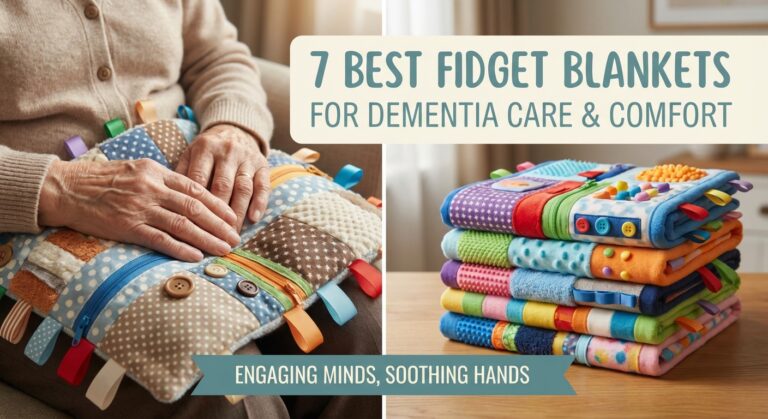
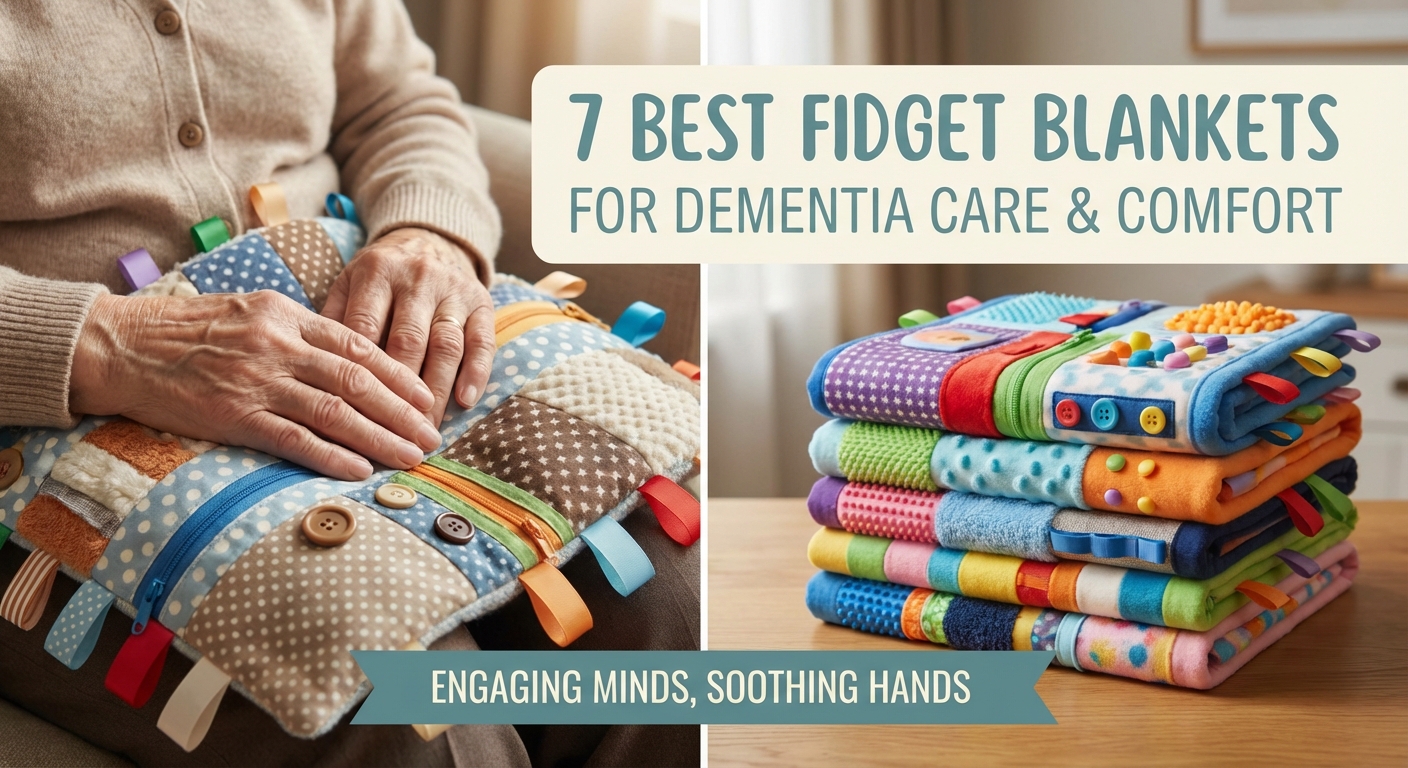
7 Best Fidget Blankets for Dementia: The Ultimate Review
Ease anxiety and calm restless hands. We tested and reviewed the top sensory blankets, muffs, and aprons designed specifically for Alzheimer’s and memory care.
Why Fidget Blankets Are Essential for Dementia Care
If you have a loved one with Alzheimer’s or dementia, you may have noticed their hands are constantly in motion. They might pull at their clothes, rub their legs, or wring their fingers. This behavior, often called “fidgeting,” is not just a nervous habit—it is a way for them to self-soothe and seek sensory stimulation.
Fidget blankets (also known as sensory mats, busy blankets, or twiddle muffs) provide a safe, engaging outlet for this energy. By offering zippers, buttons, textured fabrics, and ribbons, these tools can reduce anxiety, prevent self-harm (like skin picking), and even improve fine motor skills.
In this guide, we’ve categorized the 7 best options on the market, ranging from wearable aprons to comforting plush muffs, ensuring you find the perfect fit for your loved one’s needs.
- Why fidget blankets work for dementia patients and the science behind sensory stimulation
- The difference between fidget blankets, sensory mats, twiddle muffs, and activity aprons
- How to choose the right product based on dementia stage, user ability, and caregiver needs
- Safety considerations including choking hazards, material allergies, and supervision guidelines
- Cleaning and maintenance tips for each type of fidget product
- Budget-friendly alternatives and DIY fidget blanket ideas
- Expert tips from occupational therapists and dementia care specialists
Quick Comparison: Top Picks at a Glance
| Product | Best For | Type | Key Feature | Price Range |
|---|---|---|---|---|
| Twiddle Classic | Overall Best | Muff | Comforting plush + interior tactile ball | $$ |
| Special Supplies Apron | Wheelchair Users | Apron | Ties around waist; won’t fall off | $$ |
| Geri-Gadgets Mat | Hygiene | Silicone Mat | Dishwasher safe & durable | $$ |
| LakelzDesign | Aesthetic | Handmade Quilt | Beautiful, non-medical look | $$$ |
| Odoxia Health Muff | Value | Muff | Soft fleece with essential attachments | $ |
| Keeping Busy Lap Pad | Calming Weight | Weighted Pad | Deep pressure therapy | $$ |
| Generic Sensory Blanket | Variety | Foldable Pad | Maximum activities (zippers, laces) | $ |
1. Twiddle Classic Sensory Muff
Best Overall
The Twiddle Muff is widely considered the gold standard in memory care. Unlike a flat blanket, this is a soft, plush muff that keeps hands warm while providing stimulation. It features an internal squeeze ball to exercise hand muscles and external attachments like wooden beads, textured ribbons, and crinkle pouches.
It mimics the feeling of holding a pet or a soft baby blanket, which can be incredibly grounding for patients in later stages of dementia. It comes in various styles, including “TwiddlePup” and “TwiddleCat,” offering companionship alongside sensory relief.
Occupational therapists specializing in dementia care often recommend Twiddle Muffs because they address multiple sensory needs simultaneously. The plush exterior provides tactile comfort, the internal ball offers proprioceptive feedback (helping the user sense where their hands are in space), and the external attachments engage fine motor skills. This multi-sensory approach is grounded in the principle that when one sense is engaged, other senses can be calmed — a concept known as “sensory gating.”
Who Benefits Most from the Twiddle Muff?
The Twiddle Muff is particularly effective for individuals in the middle to late stages of dementia who exhibit hand-wringing, clothing pulling, or skin picking behaviors. It is also beneficial for patients with:
- Poor circulation: The muff keeps hands warm, which can reduce discomfort and fidgeting related to cold extremities.
- Agitation during sundowning: The repetitive tactile stimulation can help calm anxiety that increases in the late afternoon and evening.
- Restless leg syndrome: While primarily a hand-focused tool, the comforting weight and texture can reduce overall restlessness.
- Post-stroke rehabilitation: The squeeze ball and attachments can support hand strength recovery.
- Autism spectrum disorder: The sensory input can help self-regulate in individuals with ASD who also experience cognitive changes.
Detailed Features Breakdown
The Twiddle Classic comes with several thoughtfully designed features that set it apart from generic fidget products:
- Interior squeeze ball: A soft, removable ball inside the muff that users can grip and squeeze. This provides deep pressure stimulation to the hand muscles, which research suggests can reduce cortisol levels and promote relaxation.
- External bead strand: A loop of wooden beads that can be slid back and forth. This simple repetitive motion can be deeply calming and helps maintain finger dexterity.
- Textured ribbon loops: Multiple ribbons of different textures (satin, grosgrain, velvet) attached to the exterior. Users can touch, pull, and manipulate these for varied tactile input.
- Crinkle pouch: A small pouch that makes a crinkling sound when touched, providing auditory stimulation alongside tactile input.
- Velcro tab: A hook-and-loop closure that can be opened and closed repeatedly, mimicking the motion of dressing and undressing.
- Machine-washable fleece exterior: The outer shell is made from soft, durable polyester fleece that can be machine washed (after removing the internal ball and external attachments).
Pros
|
Cons
|
2. Special Supplies Sensory Activity Apron
Best for Wheelchair Users
One of the biggest complaints caregivers have about standard fidget blankets is that they constantly fall on the floor. The Special Supplies Activity Apron solves this by tying around the waist. This makes it ideal for seniors who spend time in cozy recliners or wheelchairs.
It provides distinct “stations” for hands: a zipper, large buttons, soft textures, and lacing loops. It allows the user to engage in “productive” movements that mimic dressing, which helps maintain muscle memory for daily tasks.
Why the Apron Design Works for Wheelchair Users
For individuals who spend most of their day seated in a wheelchair or recliner, traditional lap blankets present several challenges. They slide off when the user shifts position, they bunch up creating tripping hazards, and they can get caught in wheelchair wheels. The apron design eliminates all these issues by securing directly to the user’s body.
The tie-back design also means the fidget elements are always within reach, positioned naturally where the hands rest. This is important because many dementia patients have limited range of motion or difficulty reaching across their body. By keeping everything in front of them, the apron reduces frustration and promotes independent engagement.
Activity Stations Explained
Each section of the Special Supplies apron is designed to mimic a real-world task:
- Zipper station: A sturdy zipper that can be opened and closed repeatedly. This mirrors the motion of zipping a jacket, helping maintain the motor planning needed for dressing.
- Button panel: Large, easy-to-grasp buttons on a fabric strip. Practicing button manipulation can help slow the loss of fine motor skills that typically accompanies cognitive decline.
- Velcro section: Hook-and-loop fasteners that provide satisfying tactile and auditory feedback when pulled apart and pressed together.
- Lacing loops: A series of eyelets with a thick lace that can be threaded through them. This activity engages bilateral coordination (using both hands together) and visual tracking.
- Texture squares: Patches of different fabrics (fleece, corduroy, satin, faux fur) for pure tactile exploration.
Pros
|
Cons
|
3. Geri-Gadgets Silicone Sensory Mat
Best for Hygiene
Fabric blankets can harbor bacteria if not washed frequently. Geri-Gadgets takes a different approach with a medical-grade silicone mat. It features raised textures, pop-bubbles, and ridges that provide tactile feedback without the need for fabric.
This is an excellent choice for dining tables or trays. It grips the surface and gives the user something to fiddle with during meals, reducing the likelihood of them playing with food or silverware. It is arguably the easiest to clean on this list—simply toss it in the dishwasher.
Why Silicone Is Ideal for Dementia Care Settings
Silicone has become the material of choice for many dementia care products, and for good reason. Unlike fabric, silicone is non-porous, meaning it doesn’t absorb liquids, odors, or bacteria. In care facilities where infection control is paramount, this is a significant advantage. The Geri-Gadgets mat can be sanitized in a dishwasher, boiled, or wiped with standard disinfectant without degrading.
Additionally, silicone maintains its texture and grip over time. Fabric blankets can become worn, pilled, or flattened with use, reducing their sensory appeal. Silicone textures remain consistent, providing the same level of stimulation month after month.
Mealtime Benefits
Many dementia patients become agitated during meals, either from confusion about eating utensils, frustration with food textures, or simply from the overwhelming sensory environment of a dining room. The Geri-Gadgets mat provides a calming anchor point. Users can run their fingers over the raised patterns while waiting for food, or manipulate the pop-bubbles during courses. This focused activity can:
- Reduce plate-playing and food-smearing behaviors
- Decrease mealtime agitation and resistance to eating
- Provide a familiar, repetitive activity that promotes calm
- Give caregivers a non-food distraction tool during difficult meals
Texture Map
The Geri-Gadgets mat features a variety of textures organized in a grid pattern:
- Pop-bubbles: Raised dome shapes that can be pressed and released, providing satisfying tactile and slight auditory feedback.
- Ridged lines: Parallel raised lines that fingers can trace back and forth, promoting calm through repetitive motion.
- Wavy patterns: Undulating surfaces that provide varied pressure as fingers move across them.
- Smooth zones: Flat areas between textures that provide visual contrast and a resting point for the fingers.
Pros
|
Cons
|
4. Odoxia Health Fidget Muff
Best Value
If the Twiddle muff is out of budget, the Odoxia Fidget Muff is a fantastic alternative. It offers many of the same benefits—hand warmth and multiple attachments—at a lower price point. It features a soft fleece exterior with a variety of sensory objects sewn securely onto the muff.
It is lightweight and portable, making it easy to take along on car rides (see our road trip guide for more travel tips).
Budget-Friendly Without Compromising Quality
The Odoxia Fidget Muff demonstrates that effective dementia care tools don’t have to break the bank. While it may not have the brand recognition of the Twiddle, it provides comparable sensory benefits at roughly half the price. This makes it an excellent option for:
- Care facilities purchasing in bulk: When equipping multiple residents, the cost savings add up significantly.
- Families on a fixed income: Many caregivers are managing tight budgets, and the Odoxia offers essential features without the premium price.
- Trying fidget products for the first time: If you’re unsure whether a fidget muff will benefit your loved one, this lower-risk option lets you test the concept before investing in a premium product.
- Backup or travel muff: Having a second muff means one can be in the wash while the other is in use, or you can keep one in the car for appointments.
What’s Included
Despite its lower price point, the Odoxia comes with a solid selection of sensory attachments:
- Soft fleece exterior in calming blue color
- Attached bead loops for finger manipulation
- Velcro tabs for opening/closing practice
- Textured ribbon streamers
- Internal opening for hand insertion
5. Keeping Busy Weighted Lap Pad
Best Calming/Weighted
Deep Pressure Stimulation (DPS) is known to reduce anxiety. Combining a fidget blanket with weight creates a powerful calming tool. The Keeping Busy Weighted Lap Pad sits heavily on the thighs, providing a grounding sensation similar to a weighted blanket, but in a compact size.
This is particularly effective for patients who experience “sundowning” (increased agitation in the late afternoon). The weight signals safety to the nervous system while the fabric textures keep hands occupied.
Understanding Deep Pressure Stimulation
Deep Pressure Stimulation (DPS) is a therapeutic technique that applies firm, consistent pressure to the body. It activates the parasympathetic nervous system, which counteracts the “fight or flight” response responsible for anxiety and agitation. Research has shown that DPS can:
- Reduce cortisol (stress hormone) levels by up to 31%
- Increase serotonin and dopamine production, promoting calm and happiness
- Lower heart rate and blood pressure
- Improve sleep quality and duration
- Reduce self-stimulatory behaviors (hand flapping, rocking)
For dementia patients, these benefits are particularly valuable. The neurological changes associated with dementia often amplify the stress response, making everyday activities feel overwhelming. The consistent weight of a weighted lap pad provides a constant “anchor” that helps the nervous system maintain equilibrium.
When to Use a Weighted Lap Pad
The Keeping Busy Weighted Lap Pad is most effective in specific situations:
- During sundowning episodes: Place the pad on the user’s lap 30 minutes before their typical agitation period begins. The proactive weight can prevent the escalation of anxiety.
- During medical appointments: The unfamiliar environment of a doctor’s office can trigger anxiety. A weighted pad provides familiar comfort.
- During car rides: Motion and unfamiliar routes can cause distress. The weight helps ground the user during travel.
- During evening routines: The transition from dinner to bedtime is often challenging. A weighted pad during this period can ease the shift.
- After a fall or injury: The calming pressure can help reduce post-trauma anxiety.
6. Sensory Fidget Blanket (Foldable with Handle)
Most Activities
Often sold under various brand names on Amazon (look for the ones with a carry handle), these foldable pads are essentially “busy boards” made of fabric. They pack the highest density of activities: buckles, shoe laces, snaps, Velcro, zippers, and pockets.
Because they fold up like a small briefcase, they are excellent for storage or travel. They are perfect for maintaining fine motor skills in the earlier stages of dementia but might be too complex for late-stage patients.
Activity Density and Cognitive Engagement
The foldable sensory blanket stands out for its sheer number of activities packed into a single product. While other fidget tools might offer 3-5 distinct activities, a quality foldable blanket can include 8-12 different manipulations. This high activity density serves an important purpose: it provides novelty and variety, which helps maintain engagement over longer periods.
For individuals in the early to middle stages of dementia, this variety is particularly beneficial. It challenges multiple cognitive domains simultaneously:
- Sequencing: Figuring out the order of operations (e.g., unbutton before unzipping)
- Problem-solving: Determining how to manipulate each element
- Visual-spatial processing: Navigating the layout of activities
- Fine motor planning: Executing precise finger movements
- Working memory: Remembering how each element works from previous sessions
Common Activities Found on Foldable Fidget Blankets
While designs vary by manufacturer, most foldable sensory blankets include some combination of the following:
- Zippers: Single and double zippers of various sizes
- Buckles: Side-release buckles (like on a backpack), belt buckles, and toggle closures
- Shoelaces: Thick laces threaded through large eyelets
- Snap buttons: Press-stud fasteners that require coordinated thumb-finger pressure
- Velcro strips: Hook-and-loop closures of varying widths
- Ties and bows: Ribbon or fabric strips that can be tied
- Pockets: Various sizes with flap closures
- Bead strands: Loops of beads that can be slid along a cord
- Key rings: Real keys on rings that can be removed and reattached
- Mirror: A small shatterproof mirror for visual engagement
7. LakelzDesign Handmade Fidget Quilt
Most BeautifulFor caregivers who want a fidget blanket that doesn’t look “medical,” the LakelzDesign Handmade Fidget Quilt is a beautiful, artisan-crafted option. Each quilt is handmade with love, featuring a patchwork design that looks like a traditional quilt while hiding sensory elements in every square.
Unlike mass-produced fidget products, each LakelzDesign quilt is unique. The maker carefully selects fabrics, textures, and attachments based on years of experience with dementia patients. The result is a product that feels personal and special—something your loved one would be proud to have on their lap.
The Power of Aesthetics in Dementia Care
There is a growing movement in dementia care that emphasizes maintaining dignity and normalcy. Clinical-looking products can inadvertently signal “you are a patient” to someone who may not fully understand their condition. A beautiful, handmade quilt does the opposite—it says “this is a lovely blanket that happens to have interesting textures.”
Research in environmental psychology supports this approach. Studies have shown that aesthetically pleasing objects and environments can:
- Improve mood and reduce depressive symptoms
- Increase social interaction (people are drawn to attractive objects)
- Enhance sense of personal identity and self-worth
- Reduce resistance to using therapeutic tools
Craftsmanship and Materials
Each LakelzDesign quilt is constructed with attention to durability and safety:
- Quilting cotton exterior: Soft, breathable, and available in beautiful patterns
- Reinforced stitching: All attachments are sewn with heavy-duty thread and reinforced at stress points
- Hypoallergenic filling: Polyester fiberfill that is safe for sensitive skin
- Secure closures: All buttons, snaps, and zippers are tested for pull-strength
Understanding Dementia-Related Hand Fidgeting
Before diving deeper into product recommendations, it is important to understand why dementia patients fidget. This knowledge will help you choose the most appropriate fidget blanket and use it most effectively.
The Neurological Basis of Fidgeting in Dementia
Fidgeting in dementia is not random. It is driven by specific neurological changes that occur as the disease progresses:
Sensory seeking behavior: As the brain’s ability to process and filter sensory information deteriorates, individuals with dementia may actively seek additional stimulation to compensate. Their hands, being the most sensitive appendages, become the primary tools for sensory exploration. This is why you might see patients repeatedly touching surfaces, rubbing fabrics, or manipulating objects.
Motor restlessness: Dementia affects the basal ganglia, a brain region responsible for regulating movement. When this area is damaged, it can produce involuntary movements, restlessness, and an inability to sit still. Fidget blankets provide a constructive outlet for this motor energy.
Anxiety and agitation: The confusion and disorientation caused by dementia are inherently anxiety-producing. Repetitive hand movements activate the brain’s self-soothing pathways, similar to how thumb-sucking calms an infant. Fidgeting is a natural coping mechanism.
Skin picking and self-harm: Some dementia patients develop dermatillomania (compulsive skin picking) or other self-injurious behaviors. These may stem from anxiety, boredom, or a neurological condition called tactile hallucination, where the patient “feels” something on their skin that isn’t there. Fidget blankets redirect these behaviors to a safe, appropriate object.
Common Fidgeting Behaviors in Dementia
Here are the most frequently observed fidgeting behaviors and how fidget blankets address them:
| Behavior | Description | How Fidget Blankets Help |
|---|---|---|
| Clothing pulling | Tugging at shirt seams, pant legs, or collars | Provides alternative textures to manipulate, redirecting hands away from clothing |
| Skin picking | Scratching, picking at scabs, or rubbing skin raw | Engages hands with safe textures, reducing access to skin |
| Hand wringing | Continuously clasping and unclasping hands | Provides objects to grip, squeeze, and manipulate instead |
| Leg rubbing | Repeatedly stroking or patting thighs | Lap pads and weighted options provide similar pressure on legs |
| Hair pulling | Tugging at own hair or others’ hair | Redirects hand activity to fidget elements |
| Pacing with hand movements | Walking while continuously moving hands | Handheld muffs can be carried during walks |
| Object hoarding | Collecting and holding random objects | Provides a dedicated, appropriate object to hold |
The Science Behind Sensory Stimulation for Dementia
Sensory stimulation therapy is not a new concept, but its application to dementia care has gained significant traction in recent years. Understanding the science can help you appreciate why fidget blankets are more than just toys—they are therapeutic tools backed by research.
How Sensory Input Affects the Dementia Brain
The brain processes sensory information through multiple pathways, and even in advanced dementia, many of these pathways remain functional. Research from the Alzheimer’s Society and the National Institute on Aging has shown that:
- Tactile stimulation activates the somatosensory cortex, which is often among the last regions affected by Alzheimer’s pathology. This means touch-based activities can reach the brain even when other inputs cannot.
- Repetitive sensory input reduces cortisol levels. A study published in the Journal of Gerontological Nursing found that 15 minutes of tactile stimulation reduced salivary cortisol by 23% in dementia patients.
- Multi-sensory environments reduce agitation by 50-70% according to a Cochrane Review of 12 studies on sensory intervention for dementia.
- Sensory stimulation preserves neural connections. While it cannot reverse dementia, regular sensory engagement may slow the rate of cognitive decline by maintaining neural pathways through active use.
The Five Senses and Dementia
Tactile (Touch)
Touch is the most primal sense and the last to be fully lost in dementia. Fidget blankets leverage this by providing varied textures—smooth satin, rough corduroy, soft fleece, bumpy silicone—that stimulate the tactile system. The variety is key: different textures activate different nerve endings in the skin, providing a richer sensory experience.
Visual
While not the primary focus of fidget blankets, visual elements play a supporting role. High-contrast colors (red on white, blue on yellow) are easier for dementia patients to perceive as their visual processing declines. Some fidget blankets incorporate colorful beads, ribbons, or fabric patches that provide visual stimulation alongside tactile input.
Auditory
Crinkle fabrics, squeakers, and bells add an auditory dimension to fidget blankets. Sound can trigger memories and emotions that are otherwise inaccessible. The crinkle of a fabric might remind someone of a favorite clothing item, while the jingle of beads might evoke a cherished necklace.
Proprioceptive (Body Awareness)
The squeeze ball in the Twiddle Muff provides proprioceptive input—awareness of where the hands are in space and how much force they are applying. This deep pressure sense is calming and organizing for the nervous system, similar to the effect of a weighted blanket.
Vestibular (Balance and Movement)
While fidget blankets primarily target the hands, the act of manipulating objects engages the vestibular system indirectly. The coordinated movements required to zip, button, or lace activate the cerebellum, which plays a role in both motor coordination and emotional regulation.
Evidence-Based Benefits of Fidget Products
A comprehensive review of research on sensory interventions for dementia reveals consistent benefits:
| Benefit | Research Finding | Effect Size |
|---|---|---|
| Reduced agitation | Multiple RCTs show tactile stimulation reduces agitation scores | Moderate to large |
| Decreased anxiety | Cortisol measurements show significant reduction after sensory sessions | Moderate |
| Improved mood | Observed increases in positive affect during and after use | Moderate |
| Better sleep | Evening sensory sessions associated with improved sleep quality | Small to moderate |
| Reduced caregiver stress | Caregivers report less burden when patients are engaged with fidget tools | Moderate |
| Decreased medication use | Some facilities report reduced need for PRN antipsychotics | Variable |
Complete Guide to Types of Fidget Products for Dementia
Fidget blankets are just one category in a growing market of sensory products designed for people with cognitive impairment. Understanding the full range of options will help you build a comprehensive sensory toolkit for your loved one.
Fidget Muffs vs. Fidget Blankets vs. Sensory Mats
These three terms are often used interchangeably, but they describe distinct products with different strengths:
| Feature | Fidget Muff | Fidget Blanket | Sensory Mat |
|---|---|---|---|
| Shape | Cylindrical, hands inserted from sides | Flat, rectangular fabric | Flat, rigid or semi-rigid |
| Warmth | High – keeps hands warm inside | Low to moderate | None – often cool to touch |
| Portability | High – compact and lightweight | Medium – folds flat | Low to medium – rigid |
| Activity variety | Low to medium (3-6 activities) | Medium to high (5-12 activities) | Low (2-4 textures) |
| Cleaning ease | Moderate – remove attachments first | Moderate – machine washable | High – dishwasher safe (silicone) |
| Best for | Late-stage dementia, cold hands | Early to mid-stage, travel | Mealtimes, infection control |
| Cost range | $15-35 | $12-40 | $15-30 |
Fidget Sleeves and Wrist Bands
A newer category, fidget sleeves are tube-shaped fabric pieces that slide over the forearm. They keep fidget elements (beads, buttons, zippers) close to the hands without requiring the user to hold anything. This is ideal for patients who:
- Cannot reliably hold objects due to grip weakness
- Drop items frequently
- Are bedridden and need hands-free stimulation
- Resist holding “therapeutic” items but will accept wearable ones
Fidget Jewelry and Wearable Fidgets
For patients who were fashion-conscious before their diagnosis, fidget jewelry can be a dignified option. These include:
- Fidget bracelets: Beaded bracelets with movable elements that can be twisted and turned
- Fidget rings: Spinning bands or textured rings that provide discreet stimulation
- Fidget necklaces: Pendant-style pieces with tactile elements
- Fidget scarves: Lightweight scarves with attached sensory elements
The advantage of wearable fidgets is their social acceptability. In public settings, a fidget bracelet looks like jewelry, not a medical device. This can reduce stigma and encourage use.
Fidget Toys Specifically for Dementia
While popular fidget spinners and fidget cubes are designed for neurotypical users, several companies have created dementia-specific fidget toys:
- Fidget balls: Soft, squeezable balls with various textures and sometimes internal rattles
- Fidget cubes with large buttons: Oversized versions of the popular desk toy, designed for arthritic hands
- Fidget keychains: Small, attachable items that can be clipped to clothing or a bag
- Fidget pillows: Small cushions with hidden sensory elements inside
Weighted Fidget Products
Combining the benefits of weighted therapy with fidget activities creates a powerful dual-purpose tool. Weighted fidget products typically include:
- Weighted lap pads with fidget elements: A heavy pad (typically 2-5 lbs) that sits on the lap with attached sensory items
- Weighted muffs: Fidget muffs filled with glass beads or poly pellets for added weight
- Weighted wrist cuffs: Wearable cuffs that provide both deep pressure and fidget activities
The combination of weight and tactile stimulation addresses both the proprioceptive and tactile sensory systems simultaneously, which research suggests is more effective than either input alone.
How to Choose the Right Fidget Blanket for Your Loved One
Selecting the right fidget blanket requires consideration of several factors specific to your loved one’s condition, abilities, and preferences. This decision guide will walk you through the key questions to ask.
Step 1: Assess the Dementia Stage
The stage of dementia significantly impacts which fidget product will be most effective:
| Dementia Stage | Characteristics | Recommended Product | Key Features |
|---|---|---|---|
| Early Stage | Mild memory lapses, can follow multi-step instructions, retains most motor skills | Foldable fidget blanket, activity apron | Complex activities (buckles, laces, buttons), multiple challenges |
| Middle Stage | Increasing confusion, difficulty with complex tasks, growing agitation | Twiddle muff, weighted lap pad, simplified fidget blanket | Moderate complexity, comforting textures, calming weight |
| Late Stage | Severe cognitive impairment, limited communication, may be bedridden | Plush fidget muff, fidget sleeve, sensory mat | Simple textures, warm materials, easy to hold, hands-free options |
| End of Life | Minimal responsiveness, comfort-focused care | Soft plush muff, textured hand mitts | Ultra-soft materials, gentle stimulation, warmth |
Step 2: Consider Physical Abilities
Physical limitations beyond cognition must be considered:
Grip Strength
- Strong grip: Can handle most fidget products. Ensure attachments are reinforced.
- Moderate grip: Medium-sized elements (large beads, thick zippers) work best.
- Weak grip: Soft, squishy elements and wrist-worn options are better choices.
- No grip (late stage): Passive stimulation only—fidget sleeves, weighted pads, or muffs placed around the hands.
Range of Motion
- Full range: Standard fidget blankets with activities spread across the surface.
- Limited arm movement: Compact muffs or aprons that keep everything within easy reach.
- Bedridden: Fidget mitts that slip over the hands, or small pillows placed in the hands.
Vision
- Good vision: Full range of color and detail options.
- Reduced vision: High-contrast colors (red, yellow, white on dark backgrounds) and larger elements.
- Very poor vision: Focus on tactile variety rather than visual appeal. Textures should be distinctly different (very smooth vs. very rough).
Step 3: Match to Behavioral Needs
Different fidget products address different behavioral challenges:
| Behavioral Need | Best Product Type | Why It Works |
|---|---|---|
| Hand wringing | Fidget muff with squeeze ball | Provides alternative grip target; squeeze motion replaces wringing |
| Skin picking | Fidget blanket with Velcro and buttons | Engages fingers in picking-like motions on safe surfaces |
| Clothing pulling | Activity apron or fidget blanket with fabric textures | Provides similar textures to manipulate without damaging clothing |
| Sundowning anxiety | Weighted lap pad or weighted muff | Deep pressure calms the nervous system during peak agitation times |
| Mealtime agitation | Silicone sensory mat | Provides calming activity during meals without interfering with eating |
| Restlessness during travel | Portable foldable fidget blanket | Compact, multiple activities, easy to use in confined spaces |
| Nighttime fidgeting | Soft fidget muff or hand mitt | Warm, comforting, and available in the dark |
Step 4: Evaluate Caregiver Practicality
The best fidget blanket is one that actually gets used. Consider these practical factors:
- Cleaning requirements: Can you machine wash it? How often will it need cleaning? Is it compatible with institutional laundering?
- Durability: Will it withstand daily use and potential pulling? Are attachments sewn on securely?
- Supervision needs: Does the product require constant monitoring, or is it safe for independent use?
- Replacement parts: Can damaged elements be repaired or replaced, or do you need a whole new product?
- Storage: Does it fold flat for storage? Is it compact enough for travel?
- Cost over time: Factor in the product’s lifespan and replacement frequency when calculating true cost.
Fidget Blanket Materials Guide: What to Look For
The materials used in a fidget blanket directly impact its safety, durability, comfort, and sensory effectiveness. Here is a detailed breakdown of common materials and their properties.
Outer Shell Materials
Polyester Fleece
The most common material for fidget muffs and blankets. Polyester fleece is soft, warm, machine-washable, and resistant to pilling. It provides a comforting, blanket-like feel that most patients find pleasant. However, it can generate static electricity in dry environments, which may bother some users.
Cotton
Natural, breathable, and hypoallergenic. Cotton fidget blankets are ideal for patients with sensitive skin or those who overheat easily. The downside is that cotton absorbs moisture and odors more readily than synthetic materials, requiring more frequent washing.
Silicone
Used in mats and some wearable products. Medical-grade silicone is non-porous, waterproof, and extremely durable. It can be sanitized in a dishwasher or with harsh disinfectants without degrading. The texture is consistent and long-lasting, though it lacks the warmth and softness of fabric.
Minky Fabric
A plush, ultra-soft fabric often used in baby products. Minky has a distinctive dot texture that provides subtle tactile stimulation. It is machine-washable and very durable, making it an excellent choice for the outer shell of fidget products.
Vinyl and Faux Leather
Sometimes used for durability in high-traffic areas of fidget blankets. Easy to clean but less comfortable against skin. Best used sparingly as accent materials rather than primary surfaces.
Attachment Materials
Wooden Beads
Natural, warm to the touch, and provide satisfying weight. Wooden beads slide along cords with a pleasant tactile sensation. They are durable but can splinter if damaged—inspect regularly.
Plastic Buckles and Zippers
Lightweight and inexpensive. Plastic components are less likely to cause injury than metal, but they may crack under extreme force. Look for high-quality plastic (ABS or similar) that can withstand repeated use.
Metal Components
Some fidget products include metal zippers, snaps, or buckles. Metal is more durable than plastic but can become cold (uncomfortable in winter) or hot (if left in sunlight). Ensure metal edges are smooth and rounded.
Ribbons
Satin, grosgrain, and velvet ribbons provide varied textures. Satin is smooth and slippery, grosgrain has a ribbed texture, and velvet is soft and plush. Ribbons should be securely attached and checked regularly for fraying.
Filling Materials
Polyester Fiberfill
The standard filling for most fidget muffs and pillows. Lightweight, hypoallergenic, and maintains its shape well through washing. It provides a soft, squeezable feel.
Glass Beads
Used in weighted products. Glass beads are non-toxic, odorless, and provide even weight distribution. They are heavier than plastic pellets, allowing for a thinner product with the same weight.
Plastic Pellets
An alternative to glass beads for weighted products. Lighter per volume than glass, so the product may be bulkier for the same weight. Ensure pellets are sewn into inner compartments to prevent access.
Safety Considerations for Materials
- All materials should be non-toxic and free of harmful chemicals (BPA, phthalates, lead)
- Fabrics should be flame-retardant or treated with fire-resistant finishes
- Small parts must be securely attached and tested for pull strength (minimum 15 lbs of force)
- No materials should fray easily, creating loose threads that could wrap around fingers
- Zippers should have large, easy-to-grasp pulls and smooth operation
- Beads and buttons should be larger than 1.25 inches in diameter to prevent choking
- All materials should be washable at temperatures sufficient to kill bacteria (minimum 140°F/60°C)
Fidget Blanket Safety Guide for Dementia Patients
Safety is paramount when selecting and using fidget products for individuals with dementia. This comprehensive safety guide covers everything from choking hazards to supervision requirements.
Choking Hazards
The most serious safety concern with fidget blankets is the potential for small parts to become choking hazards. This risk increases as dementia progresses and the individual loses judgment about what is safe to put in their mouth.
- The small parts test: Any component that can fit inside a toilet paper roll (approximately 1.25 inches in diameter) is a choking hazard. Test every bead, button, and attachment.
- Pull test: Every attachment should withstand at least 15 pounds of pulling force without detaching. Perform this test before first use and weekly thereafter.
- Mouth test: If your loved one has a history of putting objects in their mouth, avoid fidget products with small, detachable parts entirely. Opt for silicone mats or fidget muffsWithout small attachments.
- Supervision: Never leave a fidget blanket with a patient who has a known risk of choking without direct supervision.
Infection Control
In care facilities and homes where multiple people may use the same product, infection control is critical:
- Wash between users: If a fidget blanket is shared between residents, it should be laundered after each use.
- Disinfectable surfaces: Silicone mats can be wiped with hospital-grade disinfectant between uses.
- No sharing during illness: During cold, flu, or COVID-19 seasons, assign individual fidget products to each patient.
- Regular inspection: Check for tears, loose threads, or damaged components that could harbor bacteria.
Supervision Requirements
The level of supervision needed depends on the patient’s cognitive and physical abilities:
| Patient Profile | Supervision Level | Rationale |
|---|---|---|
| Early dementia, no oral fixation | Periodic check-ins | Can generally use safely independently |
| Mild-moderate dementia | Visual supervision | May attempt to detach parts or use inappropriately |
| Moderate-severe dementia | Direct supervision | Higher risk of putting objects in mouth |
| Severe dementia with oral fixation | Constant one-on-one or avoid small-part products | Significant choking risk |
Material Allergies and Sensitivities
Some patients may have allergies or sensitivities to certain materials:
- Latex allergy: Avoid products with latex components (some rubber bands, certain elastic elements)
- Nickel allergy: Metal snaps and zippers may contain nickel; opt for plastic alternatives
- Wool sensitivity: Some patients find wool scratchy; choose fleece or cotton alternatives
- Dye sensitivity: Brightly dyed fabrics may cause skin irritation in sensitive individuals; look for OEKO-TEX certified products
Sun Safety and Heat
Fidget products left in direct sunlight can become dangerously hot, especially those with metal components or dark-colored fabrics. Establish a routine of:
- Checking product temperature before placing it in the patient’s hands
- Storing fidget products away from windows and heat sources
- Avoiding metal-component products in outdoor settings during warm weather
Emergency Preparedness
Every caregiver using fidget products should know basic choking first aid:
- Recognition: Learn the signs of choking: inability to speak, cough, or breathe; clutching the throat; blue lips or skin
- Response: For conscious adults, perform abdominal thrusts (Heimlich maneuver). For unconscious patients, begin CPR.
- Prevention: Regularly inspect fidget products and replace any that show signs of wear or damage.
- Documentation: Record any incidents involving fidget products for quality improvement and safety tracking.
How to Clean and Maintain Fidget Blankets
Proper cleaning and maintenance extend the life of fidget products and ensure they remain hygienic. Different materials require different care approaches.
Cleaning Guide by Product Type
Twiddle Muffs and Plush Fidget Products
- Remove attachments: Take off any removable beads, balls, or gadgets before washing.
- Pre-treat stains: Apply a small amount of gentle laundry detergent to any visible stains.
- Machine wash: Use a delicate cycle with cold or warm water (check the label for maximum temperature).
- Use a mesh bag: Place the muff in a mesh laundry bag to protect it during the wash cycle.
- Air dry or tumble dry low: High heat can damage attachments and shrink fabric. Air drying is preferred.
- Reattach gadgets: Once completely dry, reattach all removable components.
- Inspect: Check all seams and attachments before returning the product to use.
Silicone Sensory Mats
- Rinse: Rinse the mat under warm water to remove loose debris.
- Dishwasher: Place on the top rack of a dishwasher for thorough sanitization.
- Hand wash alternative: Soak in warm, soapy water for 10 minutes, then scrub gently with a soft brush.
- Disinfect: For institutional use, wipe with a 10% bleach solution or hospital-grade disinfectant.
- Air dry completely: Ensure the mat is fully dry before use to prevent mold growth in textured areas.
Fabric Fidget Blankets
- Close all zippers and fasteners: Prevent snagging during the wash cycle.
- Turn inside out: This protects surface textures and attachments.
- Machine wash gentle: Use mild detergent and cold water.
- Air dry flat: Reshape while damp and lay flat to dry to maintain the blanket’s shape.
- Iron if needed: Use low heat on cotton fabrics only; avoid ironing fleece or synthetic materials.
Weighted Products
- Check the manufacturer’s instructions—some weighted products are NOT machine washable
- If machine washable, use a gentle cycle with cold water and a mesh laundry bag
- Weighted products take significantly longer to dry—allow 24-48 hours for complete drying
- Ensure the internal weight compartments are intact before and after washing
- Never put weighted products in a dryer on high heat—this can damage the weight filling
Maintenance Schedule
| Task | Frequency | Method |
|---|---|---|
| Visual inspection | Daily | Check for loose parts, tears, or damage |
| Spot cleaning | As needed | Damp cloth with mild soap |
| Full washing | Weekly (or after illness) | Follow product-specific instructions above |
| Pull test on attachments | Weekly | Tug each attachment firmly; replace if loose |
| Zipper/fastener check | Weekly | Open and close all zippers, snaps, and buckles |
| Complete replacement | Every 6-12 months | Retire products that show significant wear |
Extending Product Life
- Rotate products: Have 2-3 fidget items in rotation to reduce wear on any single product
- Repair promptly: Sew loose attachments immediately before they become detached completely
- Store properly: Keep fidget products in a clean, dry location when not in use
- Use protective covers: Some caregivers make removable, washable covers for fidget products
- Label ownership: In care facilities, clearly label each product to prevent loss or mix-ups
How to Make a DIY Fidget Blanket for Dementia
If you are crafty or want to create a personalized fidget blanket tailored to your loved one’s specific needs and preferences, making one at home is a rewarding project. A DIY fidget blanket also allows you to incorporate meaningful items from the person’s life—favorite fabric patterns, buttons from old clothing, or textures that evoke cherished memories.
Materials You’ll Need
- Base fabric: A sturdy cotton or fleece piece, approximately 18″ x 24″ (larger for lap blankets, smaller for hand-held)
- Lining fabric: A second layer for durability and to hide stitching on the back
- Filling (optional): Thin batting for a quilted feel, or skip for a flatter pad
- Thread: Heavy-duty polyester thread in coordinating colors
- Sewing machine: While hand-sewing is possible, a machine ensures stronger seams
- Fidget elements: See the ideas list below
Fidget Element Ideas
- Zippers: Old zippers from clothing or new ones from a craft store. Sew them horizontally or vertically across sections of the blanket.
- Buttons: Large, easy-to-grasp buttons in various sizes. Sew securely through both fabric layers.
- Ribbons: Satin, grosgrain, and velvet ribbons of various widths. Leave 3-4 inch loops that can be grasped and pulled.
- Bead strands: Wooden or large plastic beads strung on sturdy cord, sewn in loops.
- Velcro strips: Hook-and-loop tape that can be opened and closed repeatedly.
- Texture patches: Small squares of corduroy, faux fur, minky, satin, and other contrasting fabrics.
- Snap buttons: Press-stud fasteners that provide satisfying click feedback.
- Ties and bows: Fabric strips or thick yarn that can be tied into bows.
- Pockets: Small fabric pockets with flap closures.
- Mirror: A small, shatterproof acrylic mirror for visual engagement.
- Crinkle fabric: Insert a small piece of crinkle material inside a fabric pocket for auditory stimulation.
Step-by-Step Instructions
- Plan your layout: Divide the base fabric into a grid (4×6 works well). Assign each cell a different fidget element. Consider placing simpler activities at the top (where hands naturally rest) and more complex ones lower down.
- Prepare the base: Cut your base fabric and lining to size. If using batting, cut it to the same dimensions and layer it between the two fabric pieces.
- Sew fidget elements to the base: Working one section at a time, sew each fidget element securely to the top fabric layer. Use a sewing machine with a tight zigzag stitch for maximum durability. For zippers, sew along all four edges. For beads, use a heavy-duty needle and double thread.
- Add texture patches: Sew small fabric squares (3″ x 3″) to empty sections. Use contrasting textures for maximum sensory impact.
- Assemble the blanket: Place the decorated top layer face-down on the lining layer (right sides together). Sew around three sides, leaving one long side open.
- Turn and finish: Turn the blanket right-side out through the open side. Press flat with an iron. Fold in the raw edges of the opening and sew closed with a topstitch.
- Reinforce all attachments: Go back over every fidget element and add additional stitching at stress points. This is the most important step for safety and durability.
- Safety inspection: Tug-test every attachment. Check for any loose threads. Ensure no sharp edges on buttons or snaps. Verify nothing can be pulled off with moderate force.
- Use fabrics in your loved one’s favorite colors or patterns from their past (e.g., a floral pattern reminiscent of their garden)
- Incorporate buttons from their old clothing—a shirt they wore often or a cardigan they loved
- Add a small pocket with a photo or a piece of their favorite fabric inside
- If they were a musician, attach a small bell or jingle element
- If they loved cooking, add a section with different kitchen-textured fabrics (towel, oven mitt material)
- Include their name embroidered in a corner for a personal touch
Common DIY Mistakes to Avoid
- Inadequate reinforcement: Single-stitch attachments will fail. Always double-stitch and back-tack.
- Too many small parts: Resist the urge to add beads or buttons smaller than 1.25 inches.
- Ignoring the back side: The back of the blanket should be smooth with no exposed stitching that could scratch the skin.
- Using thin fabric: The base should be sturdy enough to support multiple attachments without tearing.
- Skipping the batting: A thin layer of batting adds cushioning and helps the blanket drape naturally over the lap.
Understanding Dementia Stages and How They Affect Fidget Product Use
Dementia progresses through distinct stages, each with unique behavioral patterns and care needs. Understanding these stages helps you select the most appropriate fidget products and adapt your approach as the disease progresses.
The Seven Stages of Dementia
Stage 1: No Impairment
No symptoms are apparent. Fidget products are not typically needed at this stage, but introducing sensory activities as a preventive measure may support cognitive health. Simple fidget toys (stress balls, fidget rings) can be beneficial for stress management.
Stage 2: Very Mild Decline
Slight memory lapses that may be attributed to normal aging. The individual can still function independently. Fidget products can serve as brain exercise tools—complex activities like foldable fidget blankets challenge cognitive skills and may support neural health.
Stage 3: Mild Decline
Noticeable memory difficulties, especially with names and finding the right words. The individual may begin to show anxiety about their cognitive changes. Fidget blankets provide a calming outlet for this emerging anxiety. Complex activities help maintain fine motor skills.
Stage 4: Moderate Decline
Clear cognitive deficits emerge. The individual may have difficulty with complex tasks, become withdrawn, and show increased irritability. This is often when fidget products become most valuable—they provide engagement during periods of confusion and reduce agitation. Weighted lap pads and twiddle muffs are particularly effective at this stage.
Stage 5: Moderately Severe Decline
Significant memory loss occurs. The individual may not remember their address or phone number and becomes confused about time and place. Daily activities require assistance. Fidget products should be simple, intuitive, and always available. Muffs and aprons work well because they require no instruction to use.
Stage 6: Severe Decline
The individual may lose awareness of their surroundings and require help with most daily activities. Personality changes occur. Fidget products serve primarily as comfort objects at this stage—soft muffs, weighted pads, and simple textured items provide sensory comfort without requiring cognitive engagement.
Stage 7: Very Severe Decline
The final stage involves loss of the ability to communicate, respond to the environment, and control movement. Fidget products are used for passive sensory stimulation—gentle textures placed in the hands, soft muffs positioned around the wrists, or weighted items for comfort.
Adapting Fidget Products as Dementia Progresses
| Stage Transition | Change Needed | Recommended Action |
|---|---|---|
| Early → Middle | Simplify activities | Reduce number of available elements; increase size of attachments |
| Middle → Late | Shift to comfort | Replace complex activities with soft textures and warmth |
| Late → End of Life | Passive stimulation only | Use fidget mitts, soft muffs, and weighted items placed by caregivers |
The Complete Caregiver’s Guide to Using Fidget Blankets
Introducing a fidget blanket to someone with dementia requires patience, observation, and a willingness to adapt. This section provides practical guidance for caregivers at every stage of the journey.
How to Introduce a Fidget Blanket
The introduction process is crucial for acceptance. A poorly timed or forceful introduction can create resistance that is difficult to overcome.
- Choose the right moment: Introduce the fidget blanket when the person is calm and relaxed—not during an agitation episode or when they are upset. Late morning, after breakfast and medication, is often ideal.
- Create a positive association: Place the fidget blanket in the person’s environment without drawing attention to it. Let them discover it naturally. You might place it on their favorite chair or on the table where they sit.
- Demonstrate without instruction: Sit nearby and casually interact with the fidget blanket yourself. Touch the textures, zip and unzip, slide the beads. Many dementia patients will imitate without being told.
- Offer, don’t force: If the person notices the fidget blanket, say something like “I found this lovely soft thing, feel how nice it is.” If they show no interest, don’t push. Try again another day.
- Associate with positive experiences: Offer the fidget blanket during enjoyable activities—while watching a favorite show, listening to music, or sitting in the garden. This builds positive associations.
- Be patient with rejection: Some individuals may initially reject the fidget blanket. This is normal. It may take several introductions over weeks before acceptance occurs.
When and How Long to Use
There is no strict rule for how long to use a fidget blanket in a single session. Follow the person’s cues:
- Engaged and calm: Let them continue. There is no maximum time limit for positive engagement.
- Bored or restless: If they abandon the fidget blanket or start looking around, it’s time for a break or a different activity.
- Frustrated: If they become agitated with a particular element, gently redirect to a simpler one or remove the product entirely.
- Sleepy: Don’t try to keep someone engaged when they are naturally tired. Fidget products are not meant to replace rest.
Incorporating Fidget Blankets into Daily Routines
Consistency is key to making fidget blankets a valued part of dementia care. Here are suggestions for integrating them into daily routines:
- Morning routine: Place a fidget blanket on the breakfast table to occupy hands during meals.
- Midday rest: Offer a fidget muff during quiet time or while watching television.
- Afternoon (sundowning prevention): Introduce weighted products 30 minutes before the typical agitation period begins.
- Evening: Use soft, warm fidget muffs during the transition from dinner to bedtime to reduce evening anxiety.
- Medical appointments: Bring a fidget blanket to doctor’s visits to keep the person calm in unfamiliar environments.
- Car rides: Use foldable fidget blankets during travel to reduce restlessness and anxiety.
Monitoring Effectiveness
Track how your loved one responds to fidget products to optimize their use:
- Behavioral observations: Note changes in fidgeting frequency, agitation levels, and mood before and after use.
- Engagement duration: Track how long the person stays engaged with different products.
- Preference patterns: Note which textures and activities they gravitate toward.
- Time of day effectiveness: Document which times of day the fidget blanket is most helpful.
- Caregiver burden: Assess whether the fidget product reduces the time and energy you spend managing behaviors.
Fidget Blankets as Sundowning Solutions: A Detailed Guide
Sundowning—the increase in confusion, agitation, and anxiety that occurs in the late afternoon and evening—affects up to 66% of people with Alzheimer’s disease. Fidget products, particularly weighted ones, can be powerful tools in managing sundowning episodes.
Why Sundowning Happens
While the exact cause of sundowning is not fully understood, several factors are believed to contribute:
- Fatigue: The brain’s ability to compensate for damage diminishes as the day wears on
- Disrupted circadian rhythm: Dementia affects the suprachiasmatic nucleus, the brain’s master clock
- Low lighting: Diminishing natural light can increase confusion and visual misperceptions
- Hormonal changes: Cortisol and melatonin levels naturally shift in the afternoon
- Accumulated overstimulation: A full day of activity can overwhelm the compromised brain
Using Fidget Products to Manage Sundowning
A strategic approach to fidget product use can significantly reduce sundowning severity:
Proactive Introduction (1-2 Hours Before)
Don’t wait for agitation to begin. Introduce fidget products as part of a calming pre-sundowning routine:
- Reduce environmental stimulation (lower TV volume, dim harsh lights)
- Offer a warm, comforting fidget muff or weighted lap pad
- Play familiar, calming music
- Offer a warm, non-caffeinated beverage
- Maintain a calm, reassuring presence
During an Episode
If sundowning has already begun, the approach changes:
- Offer the simplest fidget option—a soft muff or weighted pad rather than a complex activity blanket
- Avoid introducing new or unfamiliar products during an episode
- Use the fidget product alongside other calming strategies (gentle touch, soft voice, reduced stimulation)
- Don’t force engagement—simply make the product available
Post-Episode Recovery
After the agitation subsides:
- Continue offering the fidget product as a bridge to calm
- Gradually reduce stimulation as the person settles
- Note what worked and what didn’t for future reference
- Don’t blame yourself—sundowning is a neurological phenomenon, not a caregiving failure
Products Best Suited for Sundowning
| Product | Sundowning Benefit | When to Use |
|---|---|---|
| Weighted lap pad | Deep pressure reduces cortisol | Proactive: 1-2 hours before expected episode |
| Twiddle muff | Comforting warmth + gentle stimulation | During early signs of restlessness |
| Soft fidget pillow | Calming weight + texture | Evening routine, transition to bedtime |
| Textured hand mitts | Passive sensory input without cognitive demand | During active agitation episodes |
Traveling with Dementia: Using Fidget Blankets on the Go
Traveling with a person who has dementia presents unique challenges. Unfamiliar environments, disrupted routines, and long periods of sitting can trigger anxiety and agitation. Fidget products designed for travel can make journeys significantly smoother for both the traveler and the caregiver.
Why Travel Is Difficult for Dementia Patients
- Loss of familiar cues: The person may not recognize their surroundings, leading to confusion and fear
- Disrupted routine: Changes in schedule, meals, and sleep patterns increase vulnerability to agitation
- Sensory overload: Airports, train stations, and busy highways present overwhelming sensory input
- Confinement: Being strapped into a car seat or airplane seat for hours can cause restlessness
- Temperature changes: Air-conditioned planes and cars can make hands cold, increasing fidgeting
Best Fidget Products for Travel
For Car Travel
- Foldable fidget blanket: Compact enough for the backseat, provides multiple activities
- Fidget muff: Keeps hands warm and occupied during long drives
- Weighted lap pad: Provides calming deep pressure during stressful highway travel
For Air Travel
- Small fidget muff: Fits in a carry-on and can be used in the tight confines of an airplane seat
- Fidget jewelry: Discreet and doesn’t require lap space
- Fidget sleeve: Slides over the armrest, keeping hands engaged without taking up space
For Train and Bus Travel
- Weighted lap pad: Provides grounding during long journeys
- Foldable fidget blanket: More room than a plane allows for complex activities
Travel Tips for Caregivers
- Pack familiar items: Bring the person’s preferred fidget product from home—the familiarity provides comfort in unfamiliar settings.
- Bring multiple options: Different fidget products work for different travel situations. Pack 2-3 options.
- Time fidget product introduction: Wait until the person is settled before offering the fidget blanket. During boarding or turbulence is not the right time.
- Use as a distraction: When the person becomes agitated about the travel situation, redirect attention to the fidget blanket.
- Combine with other strategies: Fidget products work best as part of a comprehensive travel plan that includes familiar music, snacks, and frequent breaks.
Where and When to Use Fidget Blankets: A Complete Environment Guide
Fidget blankets are versatile tools that can be used in virtually any environment. However, the setting influences which product is most appropriate and how it should be used.
At Home
The home environment offers the most opportunities for fidget product use:
- Living room: Keep a fidget blanket on the person’s favorite chair. A foldable blanket or muff is ideal here—always accessible but not cluttering the space.
- Bedroom: A soft fidget muff on the nightstand provides comfort during nighttime restlessness. Avoid complex products that might disrupt sleep.
- Kitchen/dining room: A silicone sensory mat at the table keeps hands busy during meals without interfering with eating. This is particularly helpful for patients who play with food or utensils.
- Bathroom: Keep a small fidget item accessible during grooming routines to reduce agitation during these potentially confusing tasks.
- Garden/outdoor spaces: Durable, weather-resistant fidget products can be used outdoors. Silicone mats work well on garden tables.
In Care Facilities
Memory care units, assisted living facilities, and nursing homes have specific considerations:
- Infection control: Choose products that can be easily sanitized between users. Silicone mats and machine-washable fabric products are ideal.
- Personalization: Label fidget products with the resident’s name to prevent loss and ensure each person has their own.
- Common areas: Provide communal fidget stations in day rooms and activity areas with a variety of products available.
- Dining rooms: Silicone mats at each place setting can reduce mealtime agitation facility-wide.
- Staff training: Ensure all staff understand how to use fidget products and can introduce them to resistant residents.
During Medical Appointments
Doctor’s offices and hospitals are high-anxiety environments for dementia patients:
- Bring a familiar fidget muff or blanket to waiting rooms
- Offer the fidget product during the examination to keep the patient calm
- For procedures, a weighted lap pad can provide grounding comfort
- Inform medical staff about the fidget product so they understand its therapeutic purpose
At Social Events
Family gatherings, holiday celebrations, and social events can be overwhelming:
- Provide a quiet space with fidget products for the person to retreat to when overstimulated
- Discreet fidget jewelry allows participation without drawing attention
- Familiar fidget products provide comfort in unfamiliar social situations
Fidget Blanket vs. Fidget Mat vs. Fidget Muff: Which Is Right?
With so many options on the market, choosing between product types can be confusing. This detailed comparison will help you understand the unique advantages of each category.
Head-to-Head Comparison
| Factor | Fidget Blanket | Fidget Mat (Silicone) | Fidget Muff |
|---|---|---|---|
| Primary sensory input | Tactile + visual | Tactile | Tactile + proprioceptive + warmth |
| Number of activities | 5-12 | 2-4 | 3-6 |
| Complexity range | Simple to complex | Simple | Simple to moderate |
| Warmth provided | Low | None | High |
| Portability | Medium (folds flat) | Low (rigid) | High (compact) |
| Ease of cleaning | Machine washable | Dishwasher safe | Machine washable (remove parts) |
| Infection control | Moderate | Excellent | Moderate |
| Dementia stages best for | Early to middle | All stages | Middle to late |
| Typical price range | $12-40 | $15-30 | $15-35 |
| Best use setting | Home, travel | Dining table, care facility | Anywhere (especially cold environments) |
When to Choose Each Type
Choose a Fidget Blanket When:
- The person enjoys variety and complex activities
- They are in the early to middle stages of dementia
- You want a product that can be folded and stored easily
- The person was previously crafty or enjoyed tactile activities
- You need a product that works in multiple settings (home, travel, appointments)
Choose a Fidget Mat When:
- Infection control is a priority (care facility setting)
- The product will be used during meals
- You need something extremely durable and easy to clean
- The person is in any stage of dementia (mats work across all stages)
- You want a product that can be shared safely between users
Choose a Fidget Muff When:
- The person has cold hands or poor circulation
- They are in the middle to late stages of dementia
- They enjoy holding something soft and comforting
- You need maximum portability
- The person was a pet lover (animal-shaped muffs provide companionship feel)
- You want to combine warmth with sensory stimulation
Weighted vs. Non-Weighted Fidget Products: Which Is Better?
One of the most common questions caregivers ask is whether a weighted fidget product is better than a standard one. The answer depends on the individual’s specific needs, physical condition, and behavioral patterns.
Understanding Weighted Therapy
Weighted products use deep pressure stimulation (DPS) to activate the parasympathetic nervous system. This is the same principle behind weighted blankets, compression therapy, and therapeutic touch. The weight provides proprioceptive input—the brain’s awareness of the body’s position and pressure—which has a naturally calming effect.
When Weighted Products Are Recommended
- Sundowning: The consistent pressure helps regulate the nervous system during peak agitation periods
- High anxiety: Deep pressure reduces cortisol and increases serotonin production
- Restless leg syndrome: Weight on the thighs can reduce the urge to move
- Sensory processing disorders: Many dementia patients develop sensory processing difficulties that weighted products can address
- Sleep difficulties: Weighted products used in the evening can promote better sleep
When Non-Weighted Products Are Better
- Respiratory conditions: Weight on the chest or abdomen can restrict breathing
- Circulation problems: Excessive weight can impede blood flow
- Temperature sensitivity: Some weighted products are warmer, which may not suit all climates
- Very frail individuals: The weight may be uncomfortable or distressing
- Active use: If the person needs to move around, a lightweight product is more practical
Weight Guidelines
If you choose a weighted product, follow these general guidelines:
- Lap pads: 2-5 lbs is typically sufficient for most adults
- Weighted muffs: 1-3 lbs provides noticeable calming without being burdensome
- Weighted wrist cuffs: 0.5-1.5 lbs per wrist
- General rule: The weight should be noticeable but not uncomfortable. The person should be able to remove the product independently if desired.
- Never use weighted products with individuals who cannot independently remove them
- Do not use on the chest for people with respiratory conditions
- Monitor for skin irritation under the weight
- Start with lighter weights and increase only if needed
- Remove weighted products during sleep unless specifically approved by a healthcare provider
- Check with the person’s doctor before introducing weighted therapy, especially if they have heart conditions, diabetes, or seizure disorders
Comprehensive Benefits of Fidget Blankets for Dementia Patients
The benefits of fidget blankets extend far beyond simply “keeping hands busy.” This section explores the full spectrum of physical, cognitive, emotional, and social benefits that these therapeutic tools provide.
Physical Benefits
Fine Motor Skill Preservation
Dementia progressively impairs fine motor skills—the precise hand movements needed for writing, buttoning clothes, and using utensils. Regular use of fidget blankets helps maintain these skills by providing daily practice in a low-pressure context. The zippers, buttons, and laces on fidget products require the same finger movements as real-world tasks, helping preserve muscle memory.
Hand Strength and Dexterity
The squeeze balls, bead manipulation, and grip activities on fidget products provide resistance exercise for hand muscles. This is particularly valuable for patients who are also dealing with arthritis or general age-related muscle weakness. Stronger hands mean better ability to feed themselves, hold objects, and maintain independence in daily activities.
Improved Circulation
Keeping hands active promotes blood flow to the extremities. This is especially important for elderly patients who may have poor circulation due to diabetes, peripheral artery disease, or simply aging. Warm fidget muffs provide an additional circulation benefit through gentle heat.
Pain Management
Research has shown that tactile stimulation can activate the body’s natural pain-relief mechanisms. The gate control theory of pain suggests that non-painful input (like touching a fidget blanket) can “close the gates” to painful input, reducing the perception of pain. For dementia patients who may have difficulty communicating about pain, fidget products can provide subtle relief.
Cognitive Benefits
Attention and Focus
Fidget products provide a focal point for attention, which can be especially valuable for individuals with attention difficulties. The structured activities on fidget blankets guide the user’s focus, providing a framework for concentration that the damaged brain may struggle to create independently.
Problem-Solving Practice
Each element on a fidget blanket presents a small problem to solve: how to zip, how to button, how to thread a lace. While these may seem trivial, for a person with dementia, each successful manipulation reinforces neural pathways related to problem-solving and sequencing.
Memory Activation
Tactile experiences are closely linked to memory. The texture of a fabric, the sound of a crinkle, or the feel of wooden beads can trigger autobiographical memories that might otherwise be inaccessible. A satin ribbon might remind someone of their wedding dress; a corduroy patch might evoke a favorite jacket. These memory activations can spark conversation and connection.
Emotional Benefits
Anxiety Reduction
The repetitive, predictable nature of fidget activities has a direct anxiety-reducing effect. The brain finds comfort in repetition—it knows what to expect, which reduces the uncertainty that drives anxiety. Studies have shown that just 10-15 minutes of tactile stimulation can significantly reduce anxiety scores in dementia patients.
Depression Mitigation
Engagement with fidget products provides a sense of purpose and accomplishment. Successfully completing an activity—zipping a zipper, buttoning a button—provides a small dopamine hit that can temporarily lift mood. Over time, regular engagement may help reduce the apathy and depression that often accompany dementia.
Self-Esteem Maintenance
Using a fidget blanket is an active, purposeful behavior—it says “I am doing something.” This contrasts with the passive, dependent role that dementia often forces upon individuals. The simple act of engaging with a product independently preserves a sense of agency and self-worth.
Social Benefits
Conversation Starters
Fidget products naturally attract attention and curiosity. Visitors, family members, and other residents may comment on or ask about the fidget blanket, creating opportunities for social interaction. The product becomes a bridge for connection.
Shared Activity
Caregivers can use fidget blankets as a shared activity, sitting alongside the patient and manipulating elements together. This parallel play creates a sense of companionship and shared experience, even when verbal communication is limited.
Caregiver Respite
When a dementia patient is engaged with a fidget blanket, the caregiver gets a brief respite from constant supervision and redirection. Even 15-20 minutes of independent engagement provides valuable time for the caregiver to attend to other tasks or simply rest.
Occupational Therapy and Fidget Blankets: A Professional Perspective
Occupational therapists (OTs) play a crucial role in recommending and implementing fidget products as part of a comprehensive dementia care plan. Understanding the OT perspective can help you make better choices and use fidget products more effectively.
How Occupational Therapists Evaluate Fidget Needs
An OT assessment for fidget product use typically includes:
- Musculoskeletal evaluation: Assessing grip strength, range of motion, and joint stability to determine which activities the person can safely perform
- Cognitive assessment: Evaluating the person’s ability to understand and complete multi-step activities
- Sensory profile: Identifying which sensory inputs the person seeks, avoids, or is neutral to
- Behavioral analysis: Documenting specific fidgeting behaviors, their triggers, and their frequency
- Environmental assessment: Reviewing the person’s daily environments to determine where and when fidget products would be most beneficial
The OT Approach to Fidget Product Selection
Occupational therapists use a framework called the Person-Environment-Occupation (PEO) model when recommending fidget products:
- Person factors: The individual’s abilities, preferences, history, and current condition
- Environment factors: The physical and social settings where the product will be used
- Occupation factors: The specific activities the product provides and their therapeutic value
The “fit” between these three elements determines the product’s effectiveness. A perfectly designed fidget blanket that doesn’t match the person’s sensory preferences or environment will not be used.
Therapeutic Activities That Mimic Fidget Blanket Elements
OTs often design custom activities based on the same principles as fidget blankets:
- Dressing practice: Using actual clothing items (shirts with buttons, pants with zippers) as therapeutic activities
- Kitchen tasks: Opening containers, stirring, sorting utensils—activities that use the same motor patterns as fidget elements
- Gardening: Digging, planting, and weeding provide rich tactile stimulation in a natural context
- Art activities: Painting, clay work, and collage provide tactile input while also supporting self-expression
When to Seek an OT Evaluation
Consider requesting an OT evaluation when:
- Standard fidget products don’t seem to be helping
- The person has physical limitations that make standard products difficult to use
- Behaviors are escalating despite fidget product use
- You want a personalized fidget plan for a specific care setting
- The person is transitioning between dementia stages and needs adapted products
Fidget Blanket Budget Guide: Options for Every Price Point
Fidget products range from free (DIY) to $40+ for premium options. This budget guide helps you find the best value at every price point.
Price Tiers Overview
| Tier | Price Range | What You Get | Best For |
|---|---|---|---|
| Free/DIY | $0 | Homemade fidget blanket from household items | Crafty caregivers, personalized needs |
| Budget | $8-15 | Basic foldable fidget blankets, simple silicone mats | Trying fidget products for the first time |
| Mid-Range | $15-30 | Quality fidget muffs, activity aprons, weighted pads | Regular daily use, multiple products needed |
| Premium | $30-50 | Twiddle muffs, handmade quilts, specialized weighted products | Long-term use, specific therapeutic needs |
| Luxury/Custom | $50+ | Handmade artisan quilts, custom-designed products, multi-sensory kits | Personalized care, gift-giving |
Maximizing Value
- Start with one product: Buy a mid-range option first to see if your loved one responds to fidget products before investing in multiple items.
- Look for multipacks: Some manufacturers offer bundles of fidget products at a discount.
- Consider longevity: A $30 product that lasts 12 months is a better value than a $15 product that needs replacing every 3 months.
- Check for insurance coverage: Some long-term care insurance policies cover sensory products as durable medical equipment.
- Ask about facility programs: Many memory care facilities have budgets for sensory products and may provide them at no cost to families.
Where to Find Deals
- Amazon: Regular sales, Subscribe & Save discounts, and coupon clipping opportunities
- Craft fairs and Etsy: Handmade options at competitive prices, often with personalization
- Thrift stores: Can yield materials for DIY fidget blankets
- Alzheimer’s Association: Some chapters offer free or discounted sensory products
- Support groups: Caregiver groups sometimes organize group purchases at discounted rates
Expert Tips from Dementia Care Specialists
We consulted with occupational therapists, dementia care specialists, and experienced caregivers to compile these expert tips for getting the most out of fidget blankets.
From Occupational Therapists
“The most common mistake I see is introducing a fidget product during a crisis. By the time someone is already agitated, they’re not in a state to engage with something new. Introduce fidget blankets during calm periods and build familiarity before you need them as a coping tool.”
“Don’t underestimate the power of personalization. A fidget blanket with fabrics from the person’s old clothing, or buttons from their favorite shirt, can be infinitely more engaging than a generic product. The emotional connection amplifies the sensory benefit.”
“Watch for ‘approach and avoid’ behaviors. If the person reaches for certain textures and pulls away from others, you’re getting valuable information about their sensory preferences. Use this to customize their fidget experience.”
From Dementia Care Specialists
“Consistency is everything. If you offer a fidget blanket every afternoon at 3 PM, it becomes part of the routine. Predictability reduces anxiety, and the fidget product becomes a cue for calm behavior.”
“I recommend a ‘sensory toolkit’ approach—having different fidget products for different situations. A lightweight mat for the dining table, a warm muff for the living room, a weighted pad for sundowning, and a portable blanket for travel. Matching the tool to the situation maximizes effectiveness.”
From Experienced Caregivers
“My mother didn’t use the fidget blanket for the first two weeks I had it. I almost gave up. But one afternoon, she picked it up on her own and started touching the ribbons. Now she won’t go anywhere without it. Patience is key.”
“The Twiddle Muff was a game-changer for us. My father used to pick at his skin until it bled. Since we introduced the muff, the picking has almost completely stopped. His hands have something better to do.”
“Don’t feel guilty about using fidget products as a ‘distraction.’ It’s not about tricking the person—it’s about giving their brain something productive and calming to do. The alternative is anxiety and agitation, which is worse for everyone.”
Fidget Blankets for Specific Conditions Beyond Dementia
While this guide focuses on dementia, fidget blankets and sensory products benefit individuals with a range of conditions. Understanding these applications can help you see the broader value of sensory tools.
Alzheimer’s Disease
Alzheimer’s is the most common cause of dementia, accounting for 60-80% of cases. Fidget blankets are particularly effective for Alzheimer’s patients because the disease specifically affects areas of the brain involved in sensory processing and motor control. The tactile stimulation provided by fidget products can reach brain regions that are still functional even in advanced Alzheimer’s.
Vascular Dementia
Caused by reduced blood flow to the brain, vascular dementia often presents with more physical symptoms alongside cognitive changes. Fidget products that combine tactile stimulation with gentle hand exercise can address both the cognitive and physical aspects of this condition.
Lewy Body Dementia
Lewy body dementia (LBD) often involves visual hallucinations, movement problems, and fluctuating alertness. Fidget products with tactile elements (rather than visual ones) may be more effective, as visual stimulation could potentially exacerbate hallucinations. Weighted products can help with the movement-related restlessness common in LBD.
Frontotemporal Dementia
Frontotemporal dementia (FTD) often begins with personality changes and behavioral symptoms rather than memory loss. Fidget products can help manage the compulsive behaviors and impulsivity that often characterize FTD by providing a structured, repetitive outlet.
Autism Spectrum Disorder
Many fidget products designed for dementia also benefit individuals with autism. The sensory input helps with self-regulation, and the predictable, repetitive nature of fidget activities can be calming during sensory overload. Weighted products are particularly popular in the autism community for their proprioceptive benefits.
ADHD
While fidget spinners and cubes became popular with ADHD, the fidget blanket concept can also benefit individuals with attention difficulties. The variety of activities provides the novelty that ADHD brains crave, while the structured format helps maintain focus.
Anxiety Disorders
Fidget products are increasingly used as anxiety management tools for people of all ages. The repetitive tactile stimulation activates the body’s relaxation response, similar to the effect of meditation or deep breathing. Weighted products add the benefit of deep pressure therapy.
Post-Traumatic Stress Disorder (PTSD)
Tactile grounding techniques are a core component of PTSD treatment. Fidget blankets provide a physical anchor to the present moment, helping individuals manage flashbacks and dissociation. The predictable, non-threatening nature of the activities makes them particularly suitable for trauma survivors.
Parkinson’s Disease
While not a form of dementia, Parkinson’s disease often co-occurs with cognitive changes. Fidget products can help manage the tremors and restlessness associated with Parkinson’s, providing a constructive outlet for motor activity.
Online Shopping Guide for Fidget Blankets
Most fidget products are available online, which is convenient for caregivers who may have limited time for in-store shopping. However, buying without seeing or touching the product first requires careful research.
What to Look for in Product Listings
- Detailed photos: Look for listings with multiple high-resolution images showing the product from different angles, close-ups of textures, and photos of the product in use.
- Material specifications: Reputable sellers list exact materials (e.g., “100% polyester fleece” vs. “soft fabric”). Avoid vague descriptions.
- Dimensions: Know the exact size before buying. A “lap blanket” might be 12″ x 18″ or 24″ x 36″—the difference matters.
- Attachment details: How many attachments? What types? Are they removable? How are they secured?
- Washing instructions: Can it be machine washed? At what temperature? Are attachments removable for washing?
- Weight specifications: For weighted products, exact weight in pounds or ounces should be listed.
Reading Reviews Effectively
- Filter for verified purchases: Focus on reviews from people who actually bought and used the product.
- Look for caregiver reviews: Reviews from people caring for dementia patients are most relevant.
- Note durability reports: How long did the product last? Did attachments stay secure?
- Check for safety mentions: Did anyone report loose parts, choking hazards, or quality issues?
- Read the negative reviews: These often reveal issues that positive reviews miss.
Amazon-Specific Tips
- Use the “Frequently bought together” section: This can reveal complementary products you might not have considered.
- Check “Customers who viewed this also viewed”: This helps you compare similar products.
- Look for Amazon’s Choice badges: These indicate products with high ratings and competitive pricing.
- Consider Subscribe & Save: If you plan to replace products regularly, subscription discounts can save money.
- Read the Q&A section: Other buyers often ask the exact questions you have.
Seasonal and Holiday Guide for Fidget Products
Different seasons and holidays present unique opportunities and challenges for fidget product use. Adapting your approach to the time of year can maximize the benefits of sensory stimulation.
Winter
- Cold hands: Fidget muffs are ideal for winter because they keep hands warm while providing stimulation. The combination of warmth and tactile input is especially comforting during cold months.
- Holiday gatherings: Family visits can be overwhelming. Have a familiar fidget product available as a comfort anchor during social events.
- Reduced daylight: Shorter days can worsen sundowning. Proactive use of weighted products in the afternoon can help.
- Indoor confinement: When stuck inside due to weather, fidget products provide much-needed stimulation and engagement.
Spring
- Gardening connection: Spring is a natural time for tactile exploration. Outdoor fidget activities (touching flowers, feeling soil) complement indoor fidget products.
- Allergy season: If your loved one has allergies, choose hypoallergenic fidget products and wash them more frequently to remove pollen.
- Increased energy: Warmer weather often brings increased energy and restlessness. More complex fidget activities can help channel this energy productively.
Summer
- Heat considerations: Heavy fidget muffs may be too warm. Switch to lighter options like silicone mats or thin cotton fidget blankets.
- Travel season: Summer trips require portable fidget solutions. Foldable blankets and compact muffs are ideal for travel.
- Outdoor activities: Durable silicone mats work well for outdoor dining and activities.
- Increased agitation: Heat can increase agitation in some dementia patients. Cooling products combined with fidget elements can help.
Fall
- Back-to-routine: After summer’s disrupted schedules, fall brings a return to routines. Reintroduce fidget products as part of daily structure.
- Holiday preparation: The lead-up to holidays can be stressful. Fidget products help manage anticipatory anxiety.
- Comfort season: As temperatures drop, the comfort of a warm fidget muff becomes especially appealing.
Holiday-Specific Tips
- Gift-giving: Fidget blankets make thoughtful gifts for caregivers and their loved ones. Include a personal note explaining why you chose that particular product.
- Visiting relatives: When family visits, introduce them to the fidget blanket concept so they can engage with the person using the product.
- Event management: During holiday parties, designate a quiet space with fidget products where the person can retreat if overwhelmed.
- Memory triggers: Holiday-themed fidget elements (a bell for Christmas, a textured egg for Easter) can evoke positive memories and associations.
Health Benefits of Sensory Stimulation Through Fidget Products
Beyond the immediate behavioral benefits, regular sensory stimulation through fidget products can contribute to broader health outcomes for dementia patients. Here is a detailed look at the health benefits supported by research.
Cardiovascular Health
The calming effect of tactile stimulation has measurable cardiovascular benefits:
- Lower heart rate: Studies show that 15 minutes of tactile stimulation can reduce resting heart rate by 5-8 beats per minute.
- Reduced blood pressure: The relaxation response triggered by sensory input can lower systolic blood pressure by 5-10 mmHg.
- Improved heart rate variability: Better HRV is associated with reduced cardiovascular risk and improved stress resilience.
Sleep Quality
Poor sleep is one of the most challenging aspects of dementia care. Fidget products can help:
- Pre-sleep calming: Using a fidget product for 15-20 minutes before bed can promote relaxation and prepare the brain for sleep.
- Nighttime restlessness: A soft fidget muff available on the nightstand provides comfort during nighttime awakenings.
- Circadian rhythm support: Regular sensory stimulation during waking hours may help normalize sleep-wake cycles.
Pain Perception
Tactile stimulation can modulate pain perception through several mechanisms:
- Gate control theory: Non-painful tactile input can block pain signals from reaching the brain.
- Endorphin release: Pleasurable touch stimulates the release of natural pain-relieving chemicals.
- Distraction: Engaging attention with fidget activities reduces the brain’s focus on pain signals.
Immune Function
Emerging research suggests that reducing chronic stress through sensory stimulation may support immune function:
- Lower cortisol: Chronic elevated cortisol suppresses immune function. Sensory stimulation helps normalize cortisol levels.
- Improved nutrition: Reduced mealtime agitation can lead to better eating habits, supporting overall nutrition and immune health.
- Reduced inflammation: Stress reduction may decrease inflammatory markers associated with accelerated cognitive decline.
Falls Prevention
Fidget products can indirectly reduce fall risk:
- Hand strength: Regular manipulation of fidget elements maintains grip strength, which is important for using walkers, holding railings, and catching oneself during a stumble.
- Proprioceptive training: The body awareness promoted by tactile stimulation can improve balance and coordination.
- Reduced agitation: Calmer patients are less likely to wander or move impulsively, reducing fall risk.
Using Fidget Blankets to Enhance Communication with Dementia Patients
Communication becomes increasingly challenging as dementia progresses. Fidget products can serve as unexpected bridges for connection, providing shared activities that transcend verbal language.
Fidget Products as Communication Tools
Non-Verbal Communication
As verbal abilities decline, non-verbal communication becomes paramount. Fidget products facilitate non-verbal connection through:
- Shared activity: Sitting together and manipulating fidget elements creates a sense of togetherness without requiring words.
- Emotional expression: How the person interacts with the fidget product (excitedly, calmly, aggressively) communicates their emotional state.
- Touch: Offering a fidget product is itself a form of communication—it says “I care about your comfort.”
Conversational Prompts
Fidget elements can spark conversations, even with individuals who have limited verbal abilities:
- “Feel this ribbon—doesn’t it feel nice?” (tactile conversation starter)
- “Can you zip this for me?” (requesting help creates interaction)
- “This reminds me of when you used to…” (memory-triggering conversation)
- “Which texture do you like best?” (choice-based interaction)
Emotional Validation
When a person with dementia is distressed, words alone may not help. Offering a fidget product communicates understanding and empathy without requiring verbal processing. The act of placing a soft muff in someone’s hands says “I see that you’re struggling, and I want to help” in a way that transcends language.
Communication Strategies During Fidget Activities
- Use simple, clear language: One short sentence at a time. “Feel this.” “Nice and soft.”
- Match their energy: If they’re calm, speak softly. If they’re agitated, use a reassuring but firm tone.
- Wait for response: After speaking, wait 10-15 seconds for a response. Processing time is slower in dementia.
- Validate emotions: “I can see this makes you happy.” “It’s okay to feel frustrated.”
- Follow their lead: If they want to talk about the fidget product, follow their conversational thread. If they want silence, respect that.
Therapeutic Approaches That Complement Fidget Blanket Use
Fidget blankets are most effective when used as part of a comprehensive care approach. Several established therapeutic frameworks can enhance the benefits of sensory products.
Music Therapy
Combining fidget activities with music creates a multi-sensory experience that can be more powerful than either intervention alone. Research shows that music activates emotional memory centers that may be preserved even in advanced dementia. Playing familiar, preferred music while the person engages with a fidget blanket can deepen the calming effect and trigger positive memories.
Art Therapy
For individuals in the early to middle stages of dementia, combining fidget activities with simple art projects (painting, coloring, collage) provides both sensory stimulation and creative expression. The textures on a fidget blanket can inspire art materials, and the fine motor skills practiced with fidget elements transfer to art activities.
Aromatherapy
Adding pleasant scents to the fidget experience enhances sensory engagement. Consider placing a lavender sachet near a fidget blanket for evening use (lavender is associated with calm and sleep) or a citrus-scented product for daytime use (associated with alertness and mood improvement).
Montessori-Based Dementia Care
The Montessori approach, originally designed for children, has been successfully adapted for dementia care. It emphasizes meaningful, purposeful activities matched to the individual’s abilities. Fidget blankets align well with Montessori principles because they provide purposeful activity at adjustable difficulty levels.
Validation Therapy
Validation therapy, developed by Naomi Feil, focuses on acknowledging and validating the person’s emotional reality rather than correcting their perceptions. Fidget products support this approach by providing comfort without requiring the person to “perform” or “correct” their behavior. The unconditional acceptance embodied in a fidget blanket aligns with the validation philosophy.
Snoezelen (Multi-Sensory Environment)
Snoezelen rooms provide controlled multi-sensory stimulation through specialized equipment. Fidget blankets can bring elements of the Snoezelen experience into the home environment. While a full Snoezelen room requires professional equipment, a well-chosen fidget blanket provides tactile, visual, and sometimes auditory stimulation that approximates the Snoezelen experience.
Reminiscence Therapy
Fidget products can be powerful tools for reminiscence therapy. By incorporating textures and objects that evoke the person’s past (fabric from their old clothing, buttons from their work uniform, beads from a necklace they wore), the fidget blanket becomes a gateway to autobiographical memory. Caregivers can use these elements to prompt conversations about the person’s life history.
Community Resources for Dementia Care and Fidget Products
Caregiving for a person with dementia can feel isolating, but numerous resources exist to support you. Here is a comprehensive guide to organizations, programs, and communities that can help.
National Organizations
- Alzheimer’s Association (alz.org): The largest Alzheimer’s organization in the United States. Offers a 24/7 helpline (800-272-3900), caregiver support groups, educational programs, and care consultation services.
- Alzheimer’s Foundation of America (alzfdn.org): Provides support, services, and education to individuals affected by Alzheimer’s and related dementias.
- National Institute on Aging (nia.nih.gov): The federal agency leading Alzheimer’s research. Provides evidence-based information for caregivers and patients.
- Caregiver Action Network (caregiveraction.org): Offers practical support and resources for family caregivers.
- Family Caregiver Alliance (caregiver.org): Provides information, education, services, and advocacy for caregivers.
Online Communities
- Facebook groups: Search for “Alzheimer’s caregivers,” “dementia support,” or “memory care” for active communities where caregivers share experiences and advice.
- Reddit communities: r/Alzheimers and r/dementia are active forums for support and information.
- ALZConnected (alzconnected.org): The Alzheimer’s Association’s online community specifically for caregivers and people with dementia.
- Caregiver blogs: Many experienced caregivers share their journeys through blogs, offering practical tips and emotional support.
Local Resources
- Area Agencies on Aging (AAA): Local organizations that coordinate services for older adults, including respite care, meals, and transportation.
- Adult day programs: Provide supervised daytime activities for people with dementia, giving caregivers respite.
- Memory care communities: Specialized residential facilities that provide 24-hour care for people with dementia.
- Hospice organizations: Provide end-of-life care and support for both patients and families.
- Faith-based organizations: Many churches, synagogues, and mosques offer dementia caregiver support groups and respite programs.
Financial Assistance
- Medicaid waivers: Many states offer Medicaid waivers that cover home and community-based services for dementia patients.
- Veterans benefits: Veterans may qualify for aid and attendance benefits that help cover the cost of care.
- Alzheimer’s Association grants: The association offers emergency assistance grants for caregivers in financial crisis.
- State programs: Many states have specific programs to support dementia caregivers, including respite vouchers and direct payments.
Future Trends in Fidget Products and Dementia Care Technology
The field of sensory products for dementia is evolving rapidly. Here are emerging trends that may shape the future of fidget products and dementia care.
Smart Fidget Products
Researchers are developing “smart” fidget products with embedded sensors that can:
- Track usage patterns and alert caregivers to changes in behavior
- Monitor physiological indicators (heart rate, skin conductance) through hand contact
- Provide adaptive resistance that adjusts to the user’s grip strength
- Connect to apps that provide data-driven insights for care planning
Personalized Manufacturing
3D printing and digital fabrication are enabling truly personalized fidget products:
- Custom textures designed for individual sensory preferences
- Products shaped to accommodate specific physical limitations
- Integration of personal items (photos, familiar objects) into the product design
- Rapid prototyping allows caregivers to test different configurations quickly
Biophilic Design
Products that incorporate natural elements—wood, stone, plant-based materials—are gaining popularity. Research suggests that natural materials provide unique sensory qualities that synthetic materials cannot replicate, potentially offering deeper therapeutic benefits.
Virtual Reality Sensory Enhancement
While still experimental, some researchers are exploring how virtual reality environments can be combined with physical fidget products to create immersive sensory experiences. A user might touch a real textured surface while seeing a corresponding natural environment in VR.
Eco-Friendly Materials
As sustainability becomes a priority across industries, fidget product manufacturers are exploring eco-friendly materials: organic cotton, recycled polyester, sustainably sourced wood, and biodegradable silicone alternatives.
Frequently Asked Questions
1. Do fidget blankets really help with dementia?
Yes. Studies suggest that sensory stimulation can reduce agitation, anxiety, and restless behaviors in dementia patients. They provide a focal point for attention and can trigger positive memories through tactile feedback. Research published in the Journal of Gerontological Nursing found that tactile stimulation reduced cortisol levels by 23% in dementia patients. A Cochrane Review of 12 studies showed that multi-sensory interventions reduced agitation by 50-70%.
2. Are these blankets safe?
Generally, yes. However, you must ensure all buttons, beads, and zippers are securely reinforced. If a patient tends to put objects in their mouth, avoid blankets with small, detachable parts (choking hazards). Always supervise initial use. The general safety rule is that any component smaller than 1.25 inches (the size of a toilet paper roll) is a potential choking hazard. Perform weekly pull tests on all attachments.
3. How do I wash a fidget blanket?
Most fabric options are machine washable, but you should use a mesh laundry bag to prevent buckles from banging against the drum. For muffs with internal gadgets, remove the gadgets before washing. Silicone mats can go in the dishwasher. Weighted products require special care—check manufacturer instructions and allow 24-48 hours for complete drying. Always inspect the product after washing for any loose attachments before returning it to use.
4. Can I make a DIY fidget blanket?
Absolutely. If you are crafty, you can sew zippers, ribbons, and textured fabric patches onto a placemat or old lap quilt. Just ensure the stitching is incredibly strong—use a sewing machine with heavy-duty thread and reinforce all attachment points. The most important safety step is the pull test: every attachment should withstand at least 15 pounds of force. Use materials larger than 1.25 inches to prevent choking hazards.
5. What stage of dementia are these best for?
They are useful across all stages but serve different purposes. In early stages, complex puzzles (buckles/laces) help retain skills and provide cognitive exercise. In middle stages, a mix of simple and moderate activities provides both comfort and engagement. In late stages, simple soft textures (like the Twiddle Muff) provide comfort and connection. At end of life, passive stimulation through soft materials placed in the hands offers comfort without requiring active engagement.
6. How many fidget products should I have?
Most experts recommend having 2-3 different fidget products in rotation. This serves multiple purposes: it prevents habituation (getting bored with one product), ensures you always have a clean one available while another is being washed, and allows you to match the product to the situation (travel vs. home, daytime vs. evening). Having variety also helps you discover which types of stimulation your loved one prefers most.
7. What is the difference between a fidget blanket and a sensory mat?
A fidget blanket is typically made of fabric and includes manipulative elements like zippers, buttons, beads, and ribbons. A sensory mat (like the Geri-Gadgets product) is usually made of silicone or similar material and features raised textures, bubbles, and ridges. Fidget blankets provide more complex activities and are better for cognitive engagement, while sensory mats are easier to clean and better for infection control. Both provide tactile stimulation, but blankets also offer visual and sometimes auditory stimulation.
8. Can fidget blankets be used for people with autism?
Yes, many fidget products are beneficial for individuals with autism spectrum disorder (ASD). The sensory input helps with self-regulation, and the predictable, repetitive activities can be calming during sensory overload. Weighted products are particularly popular in the autism community. However, individuals with autism may have different sensory preferences than dementia patients—some may prefer smoother textures while others seek more intense stimulation. It’s important to match the product to the individual’s sensory profile.
9. How do I introduce a fidget blanket to someone who refuses to use it?
Patience is key. Start by placing the fidget blanket in the person’s environment without drawing attention to it. Let them discover it naturally. You might also demonstrate using it yourself while sitting nearby. Associate the product with positive experiences—offer it during enjoyable activities like watching a favorite show or listening to music. Don’t force it. If they reject it initially, try again in a few days with a different approach. Some caregivers find that the person eventually picks it up on their own when the timing is right.
10. Are weighted fidget products safe for elderly people?
Weighted products can be safe for elderly individuals when used appropriately, but certain precautions are necessary. They should not be used by individuals with respiratory difficulties, severe circulation problems, or who cannot independently remove the weight. The weight should be noticeable but not uncomfortable—typically 2-5 lbs for a lap pad. Always consult with the person’s healthcare provider before introducing weighted therapy, especially if they have heart conditions, diabetes, or seizure disorders. Never leave a weighted product on an unsupervised person.
11. How often should fidget blankets be replaced?
The lifespan of a fidget blanket depends on the quality of construction and frequency of use. High-quality products like the Twiddle Muff can last 1-2 years with regular use. Budget products may need replacement every 6-12 months. Signs that a product needs replacement include: loose or missing attachments, worn or thinning fabric, broken zippers or snaps, odors that persist after washing, or visible damage that cannot be safely repaired. Always retire a product rather than continuing to use one with safety concerns.
12. Can insurance cover the cost of fidget blankets?
Some long-term care insurance policies cover sensory products as durable medical equipment or therapeutic aids. Medicaid waivers in some states may also cover these items. It’s worth checking with the insurance provider and requesting a letter of medical necessity from the person’s physician. Even if insurance doesn’t cover the full cost, some programs offer subsidies or grants for caregivers in financial need. The Alzheimer’s Association also offers emergency assistance grants that can help cover the cost of therapeutic products.
Caregiver Self-Care: Taking Care of Yourself While Caring for Others
Caring for a person with dementia is one of the most demanding roles a person can take on. While fidget blankets can help manage your loved one’s behaviors and reduce your caregiving burden, it is essential to also care for yourself.
The Impact of Caregiving on Health
Research consistently shows that dementia caregivers experience higher rates of:
- Depression: Up to 40% of dementia caregivers experience clinical depression
- Anxiety: Chronic worry about the person’s safety and wellbeing
- Physical health problems: Weakened immune system, higher blood pressure, increased heart disease risk
- Sleep disturbances: Disrupted sleep due to nighttime caregiving demands
- Social isolation: Reduced social contact due to caregiving responsibilities
Self-Care Strategies
- Accept help: When people offer to help, say yes. Even small acts of assistance can make a difference.
- Join a support group: Connecting with others in similar situations reduces isolation and provides practical advice.
- Maintain your own health: Keep your medical appointments, exercise regularly, and eat well.
- Take breaks: Respite care, adult day programs, and family help can provide necessary breaks.
- Set realistic expectations: You cannot do everything perfectly. Accept “good enough.”
- Stay connected: Maintain friendships and social activities even as caregiving demands increase.
- Consider professional support: A therapist who specializes in caregiver stress can provide valuable coping strategies.
Complete Glossary of Dementia Care and Fidget Product Terms
Understanding the terminology used in dementia care and sensory products helps you make informed decisions and communicate effectively with healthcare providers.
A-C
- Activities of Daily Living (ADLs): Basic self-care tasks including dressing, eating, bathing, and toileting. Fidget products help maintain the motor skills needed for ADLs.
- Agitation: Restlessness, irritability, or emotional distress commonly seen in dementia. Fidget products can reduce agitation through sensory engagement.
- Agnosia: Inability to recognize objects, people, or sounds despite intact sensory function. May affect how a person interacts with fidget products.
- Aphasia: Language impairment affecting speaking, understanding, reading, or writing. Fidget products provide non-verbal engagement for people with aphasia.
- Apraxia: Inability to perform learned movements despite having the physical ability. May affect the ability to use complex fidget elements.
- Assistive technology: Devices or systems that help people with disabilities perform tasks. Fidget blankets are a form of assistive technology for sensory needs.
- Cognitive impairment: Reduced ability to think, learn, and remember. Fidget products provide cognitive exercise at appropriate difficulty levels.
- Deep Pressure Stimulation (DPS): Therapeutic technique using firm pressure to activate the parasympathetic nervous system. Used in weighted fidget products.
D-L
- Dementia: A group of symptoms affecting memory, thinking, and social abilities severely enough to interfere with daily life. Not a normal part of aging.
- Sundowning: Increased confusion and agitation occurring in late afternoon or evening. Fidget products can help manage sundowning episodes.
- Fidgeting: Repetitive hand or body movements, often driven by anxiety, restlessness, or sensory seeking in dementia.
- Instrumental Activities of Daily Living (IADLs): More complex tasks like managing finances, cooking, and shopping. Fidget products may help maintain some IADL-related skills.
- Lewy Body Dementia (LBD): A type of dementia caused by abnormal protein deposits in the brain. Characterized by visual hallucinations, movement problems, and fluctuating alertness.
- Long-term care: A range of services designed to meet a person’s health or personal care needs during a short or long period.
M-Z
- Memory care: Specialized dementia care provided in a secure environment with trained staff. Fidget products are standard tools in memory care settings.
- Neuroplasticity: The brain’s ability to form new neural connections. Sensory stimulation through fidget products may support neuroplasticity.
- Occupational therapy (OT): Therapy that helps people participate in daily activities. OTs often recommend fidget products for dementia patients.
- Parasympathetic nervous system: The body’s “rest and digest” system. Activated by deep pressure from weighted fidget products.
- Proprioception: The body’s sense of its position in space. Engaged by squeeze balls and weighted elements in fidget products.
- Respite care: Temporary relief for primary caregivers. Fidget products can extend the time a person can be safely left engaged while the caregiver takes a break.
- Sensory integration: The brain’s ability to organize and interpret sensory information. Fidget products support sensory integration through varied tactile input.
- Sensory processing: How the nervous system receives, organizes, and responds to sensory input. Often affected in dementia.
- Twiddle muff: A specific type of fidget product—a soft, cylindrical muff with attached sensory elements. Pioneered by the Twiddle brand.
Final Verdict: Which One Should You Buy?
For the best balance of comfort, safety, and engagement, the Twiddle Classic Sensory Muff is our top recommendation. It is comforting, warm, and specifically designed for memory care.
If you need something practical that stays in place for a wheelchair user, opt for the Special Supplies Activity Apron. And for those seeking a stylish, non-clinical look, the handcrafted options from LakelzDesign are hard to beat.
Remember, the goal is comfort and connection. Choose the texture or activity that aligns best with your loved one’s past hobbies and current needs.
- Best overall: Twiddle Classic Sensory Muff — combines warmth, comfort, and multi-sensory engagement
- Best for wheelchair users: Special Supplies Activity Apron — stays in place and provides multiple activity stations
- Best for infection control: Geri-Gadgets Silicone Mat — dishwasher safe and extremely durable
- Best value: Odoxia Health Fidget Muff — quality features at a budget-friendly price
- Best for sundowning: Keeping Busy Weighted Lap Pad — deep pressure therapy for evening agitation
- Most activities: Foldable Fidget Blanket — maximum variety in a portable format
- Most beautiful: LakelzDesign Handmade Quilt — artisan quality with a personal touch