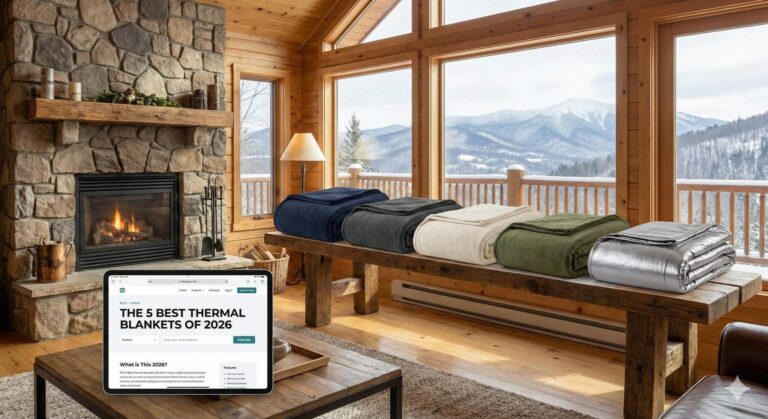
Shivering is not a hobby. Whether you are trying to lower your heating bill during a chilly winter or you are camping in the great outdoors, retaining body heat is essential for comfort and survival. A standard throw might look cute, but a dedicated thermal blanket is engineered to do one thing: trap heat efficiently.
But what does “thermal” really mean? It can refer to the classic cotton “waffle weave” that traps air pockets, the rugged wool blankets used by bushcrafters, or the reflective Mylar sheets found in emergency kits. The best blanket for you depends entirely on where you plan to use it.
In this guide, we have analyzed the top performers across all categories. From breathable cotton layers for your bed to heavy-duty tarps for your car trunk, here are the 5 best thermal blankets on the market. We evaluated each blanket on heat retention, durability, breathability, portability, and value for money.
Thermal blankets are not just for winter anymore. People are discovering their benefits for year-round use — in air-conditioned offices during summer, in drafty older homes during spring, and in vehicles during unexpected weather events. Understanding the technology behind thermal blankets helps you choose the right one for your specific needs, whether that is a cozy bedroom layer or a life-saving emergency tool.
What This Guide Covers
This is the most comprehensive thermal blanket resource available. We cover the science behind heat retention, detailed material breakdowns, use-case guides for camping, hiking, hunting, fishing, skiing, RV life, van life, car emergencies, power outages, medical needs, and more. Whether you need a blanket for your bed or a blanket for your bug-out bag, you will find your answer here.
The Science of Heat Retention: How Thermal Blankets Actually Work
To truly understand why a thermal blanket keeps you warm, you need to understand how your body loses heat. There are four mechanisms of heat loss, and each type of thermal blanket addresses them differently.
Radiation (Infrared Heat Loss)
Your body constantly emits infrared radiation — essentially, heat energy in the form of light waves that are invisible to the naked eye. On a cold night, a significant portion of your body heat escapes as radiation. Mylar and reflective thermal blankets address this directly by reflecting up to 90% of radiated heat back toward your body. This is the same principle used in space suits and NASA emergency blankets. The reflective surface acts like a mirror for infrared energy, bouncing it back instead of allowing it to dissipate into the environment.
Conduction (Direct Contact Heat Loss)
When your body touches a cold surface, heat flows directly from the warmer object (your skin) to the cooler object (the surface) through molecular contact. This is why lying on a cold floor feels so much colder than standing in the same cold air. Wool and thick cotton blankets address conduction by creating a thick insulation layer between your body and the cold surface. The thicker the blanket, the greater the distance heat must travel through the insulating material, and the slower the heat loss.
Convection (Air Movement)
Wind and air currents strip heat away from your body by replacing the warm air layer surrounding your skin with cooler air. This is why wind chill makes cold weather feel so much colder. Mylar and tarp-based blankets address convection by creating a windproof barrier. Wool blankets also address convection because the crimped fibers trap still air in pockets, preventing wind from reaching your skin.
Evaporation (Moisture Heat Loss)
When sweat or moisture on your skin evaporates, it takes heat energy with it. This is actually a useful cooling mechanism in summer, but in cold weather it can cause dangerous heat loss. Cotton waffle blankets address evaporation by wicking moisture away from the skin and allowing it to evaporate slowly at the blanket’s surface, rather than pooling on your skin. Wool is particularly good at managing moisture because it can absorb up to 30% of its weight in moisture before feeling wet, keeping the surface against your skin dry.
Understanding R-Value
R-value measures a material’s resistance to heat flow. The higher the R-value, the better the insulation. For context: a typical cotton waffle blanket has an R-value of about 1.5-2.0, a wool blanket ranges from 2.5-4.0, and a layered system (cotton + wool + mylar) can achieve R-values above 6.0. For reference, home insulation in mild climates requires an R-value of 13-19 in walls. While no blanket matches wall insulation, understanding R-values helps you compare thermal blankets objectively.
Buying Guide: Understanding Thermal Tech
Before you buy, it is critical to understand the main types of thermal technology available.
1. The Waffle Weave (Cotton)
Commonly found in hospitals and hotels, these are made of 100% cotton. The “waffle” texture creates small pockets of air that trap body heat while remaining breathable. The geometric pattern of the waffle weave is not just aesthetic — each raised square creates a tiny pocket of still air, and still air is one of nature’s best insulators. The open structure also allows moisture to pass through, preventing the clammy feeling that synthetic blankets often produce.
Cotton waffle blankets are the most versatile thermal option because they work across a wide temperature range. In winter, they serve as an effective middle layer. In summer, they provide just enough warmth for air-conditioned rooms. The breathability of cotton also makes these blankets ideal for people who sweat at night, as the moisture-wicking properties keep the sleeping surface dry and comfortable.
Best For: Layering on a bed, summer nights, air-conditioned rooms, and people who sleep hot.
2. Wool (Natural Insulation)
Wool is nature’s miracle fiber. It stays warm even when wet, is naturally fire-retardant, and is incredibly durable. The key to wool’s thermal properties is the structure of the fiber itself. Each wool fiber has a scaly outer surface and a crimped, curly inner structure that creates thousands of tiny air pockets. Additionally, wool fibers can absorb up to 30% of their weight in moisture without feeling wet, and the absorption process actually generates heat — a phenomenon called “heat of sorption.”
Best For: Camping, cabins, emergency kits, bushcraft, and outdoor survival.
3. Mylar/Reflective (Survival)
These look like tinfoil. They reflect up to 90% of your body heat back to you. They are not for sleeping comfort but are essential for survival situations. Mylar was originally developed by NASA in the 1950s. The material is incredibly thin yet provides remarkable thermal properties through reflection rather than insulation.
The limitation of Mylar blankets is that they only reflect radiated heat — they do not insulate against conduction or convection. For maximum effectiveness, combine a Mylar blanket with an insulating layer underneath.
Best For: Car trunks, hiking bags, first aid kits, and emergency preparedness.
4. Fleece (Synthetic Insulation)
Fleece is made from polyester fibers that are brushed to create a soft, lofty texture that traps air. It dries quickly, is machine washable, and retains its insulating properties when wet. However, fleece is not windproof and does not reflect radiant heat.
Best For: Everyday home use, layering, and casual outdoor activities.
5. Down & Synthetic Fill (Quilted)
Down blankets use either natural down or synthetic fill to create lofted insulation. Down offers the best warmth-to-weight ratio, but loses insulating properties when wet. Synthetic fill retains warmth even when damp. Both are excellent for cold-weather camping and backpacking.
Best For: Cold-weather camping, backpacking, and extreme cold.
Complete Materials Breakdown
Understanding the properties of each material helps you make an informed decision.
Cotton: The Everyday Workhorse
Cotton is the most widely used natural fiber for thermal blankets. It is soft, breathable, hypoallergenic, and affordable. The waffle weave maximizes cotton’s thermal potential by creating a three-dimensional texture that traps air while allowing moisture to escape. Cotton blankets get softer with each wash. For the best cotton thermal blanket, look for long-staple cotton (like Egyptian or Supima). A GSM of 200-300 is ideal for a thermal waffle blanket.
Wool: The Survival Standard
Wool is naturally flame-resistant, moisture-wicking, odor-resistant, and self-cleaning. Merino wool is the softest and finest. Standard wool is coarser but more durable. For blankets, a medium-weight wool (16-20 oz per square yard) provides the best balance of warmth and manageability.
Mylar: The Reflective Shield
Mylar blankets are made from a thin sheet of PET coated with aluminum. The reflective surface bounces infrared radiation back toward the source, retaining up to 90% of radiated body heat. Mylar is waterproof, windproof, and incredibly lightweight — a full-size emergency blanket can weigh as little as 2 ounces.
Performance Synthetics
Modern performance synthetics like Polartec and Climashield offer excellent warmth-to-weight ratios. They are commonly used in high-end sleeping bags and quilts for backpacking.

1. Bedsure 100% Cotton Waffle Weave
Verdict: Best for Home & Layering.
Bedsure has perfected the classic thermal blanket. Made from 100% natural cotton, the deep waffle texture offers the perfect balance of warmth and breathability. It effectively traps air to keep you warm without making you sweaty, making it the ideal middle layer between a sheet and a comforter.
Why Bedsure Dominates the Home Category
The depth of the waffle texture is noticeably greater than competitors, creating larger air pockets that trap more heat. The cotton is pre-washed to reduce shrinkage. Available in over 20 colors and all standard sizes, it matches any bedroom decor. During our testing, the Bedsure maintained its thermal performance through over 100 wash cycles without significant degradation.
Layering Performance
Placed between a flat sheet and a duvet, it adds meaningful warmth without excessive bulk. In summer, use it alone over a sheet. In winter, combine it with a heavier comforter. The versatility across seasons makes this a year-round essential.
Pros
- 100% Cotton is moisture-wicking and breathable
- Deep waffle texture traps heat efficiently
- Available in 20+ colors and all standard sizes
- Gets softer with each wash
- Affordable price point for premium quality
Cons
- Will shrink slightly if washed in hot water
- Snags easily on jewelry or pet claws
- Takes longer to dry than synthetic alternatives

2. Arcturus Heavy Duty Survival Blanket
Verdict: Best for Outdoors & Cars.
This is not a bedding blanket; it is a piece of gear. One side is a reflective Mylar material to bounce heat back to you, while the other is a durable polypropylene tarp. It has grommets in the corners, meaning you can use it as a blanket, a shelter, or a ground cloth. It is a mandatory addition to any winter car kit.
Military-Grade Construction
The Mylar side reflects 90% of body heat, while the polypropylene tarp side provides waterproof, windproof protection. The grommets allow you to lash the blanket to trees, poles, or your car to create an emergency shelter. Unlike disposable Mylar blankets, the Arcturus is designed to be reused hundreds of times.
Multi-Purpose Functionality
Beyond warmth, it serves as a ground cloth, rain shelter, signal panel (reflective side visible from aircraft), and gear cover. This multi-functionality makes it one of the most valuable items for any emergency kit or vehicle trunk.
Pros
- Waterproof and windproof
- Reflects 90% of body heat
- Reusable and incredibly durable
- Grommets for shelter building
- Multi-purpose survival tool
Cons
- Crinkly and noisy
- Not breathable (can cause condensation)
- Not comfortable for sleeping

3. EKTOS 100% Wool Blanket
Verdict: Best Natural Insulation.
For bushcrafters and campers, nothing beats wool. The EKTOS blanket is 100% wool, meaning it provides insulation even if it gets soaking wet in the rain. It is heavy (5.5 lbs), fire-retardant, and built to last a lifetime.
Why Wool is the Ultimate Outdoor Material
Wool insulates when wet — a critical advantage over cotton and most synthetics. When wool fibers absorb moisture, the hydrogen bonds break and reform, releasing heat. This “heat of sorption” means wool actually warms you as it absorbs moisture. Wool is naturally fire-retardant, chars rather than melting, making it safe near campfires. A quality wool blanket can last 50+ years with proper care.
The EKTOS Difference
Made from 100% virgin wool, weighing 5.5 pounds, measuring 66″ x 90″. Edges are whipstitched to prevent fraying, and the weave blocks wind while allowing breathability.
Pros
- Warm even when wet (heat of sorption)
- Naturally fire retardant
- No synthetic chemicals
- Extremely durable (lifetime investment)
- 100% virgin wool construction
Cons
- Dry clean or hand wash only
- Can be itchy against bare skin
- Heavy (5.5 lbs) — not ultralight

4. PHF Cotton Waffle Weave
Verdict: Best Lightweight Option.
If you overheat easily but still want thermal benefits, the PHF is your best bet. Pre-washed for softness with a tighter, finer waffle pattern. Works exceptionally well as a decorative throw that doubles as a functional thermal layer.
Fine-Weave Technology
The tighter waffle weave creates smaller but more numerous air pockets, resulting in a lighter blanket with effective thermal insulation. Pre-washing gives softness right out of the box. The lighter weight makes it easier to fold and store.
Pros
- Pre-washed for extra softness
- Tighter weave resists snagging
- Very lightweight and breathable
- Attractive enough for decorative use
Cons
- Not warm enough for standalone winter use
- Limited color options

5. Swiss Safe Emergency Mylar (4-Pack)
Verdict: Best for Survival Kits.
These are the classic “space blankets.” Incredibly cheap, weigh almost nothing, and can save your life. Swiss Safe makes the most durable version, retaining 90% of body heat. Every home and car should have a pack.
Why Every Household Needs These
At a few dollars for a 4-pack, they are one of the most cost-effective safety investments. Each blanket is individually sealed in a compact pouch. When unfolded, each measures 52″ x 82″ — large enough to wrap around an adult. Beyond emergencies, they are used by marathon runners, outdoor athletes, and gardeners for frost protection.
Pros
- Extremely compact and lightweight
- Waterproof and windproof
- Reflects 90% body heat
- 4-pack provides exceptional value
Cons
- Difficult to refold to original size
- Zero comfort/softness
- Not breathable — causes condensation
Quick Comparison Table
| Blanket | Best For | Material | Weight | Washable | Waterproof | Fire Safe |
|---|---|---|---|---|---|---|
| Bedsure Waffle | Home / Layering | 100% Cotton | 3.2 lbs | Machine wash | No | Natural fiber |
| Arcturus Heavy Duty | Outdoor / Car | Mylar + Polypropylene | 1.5 lbs | Wipe clean | Yes | No |
| EKTOS Wool | Survival / Camping | 100% Wool | 5.5 lbs | Hand wash | No (warm when wet) | Yes |
| PHF Waffle | Lightweight / Decor | 100% Cotton | 2.4 lbs | Machine wash | No | Natural fiber |
| Swiss Safe Mylar | Emergency / Survival | Mylar (PET) | 0.13 lbs | No | Yes | No |
How to Read This Table
When comparing thermal blankets, focus on the columns that matter most for your specific use case. If you are buying for home use, weight and washability are your top priorities. If you are buying for outdoor survival, waterproof and fire-safe properties matter more. If you are buying for a car emergency kit, weight and waterproof are the critical factors. There is no single “best” blanket — only the best blanket for your specific situation.
Understanding GSM (Grams Per Square Meter)
GSM is the standard measurement for fabric weight and density. For thermal blankets, higher GSM generally means more warmth, but also more weight and bulk. Cotton waffle blankets typically range from 200-400 GSM, with the Bedsure at approximately 320 GSM and the PHF at approximately 240 GSM. Wool blankets range from 400-800 GSM, with the EKTOS at approximately 600 GSM. Understanding GSM helps you compare blankets across brands and materials on an objective scale.
Thread Count vs. GSM for Thermal Blankets
Thread count is often marketed as a measure of quality, but for thermal blankets, GSM is a more meaningful metric. Thread count measures the number of threads per square inch of fabric, which is relevant for sheets and pillowcases but less important for thermal blankets. What matters for thermal performance is the thickness and loft of the fabric (measured by GSM) and the depth of the waffle texture (which creates air pockets). A blanket with a high thread count but low GSM will feel smooth but provide minimal warmth, while a lower thread count blanket with high GSM will feel thicker and provide more insulation.
Comprehensive Outdoor Activities Guide
Thermal blankets are essential gear for a wide range of outdoor activities. Each activity has specific requirements for warmth, weight, durability, and packability.
Bushcraft and Survival
Bushcraft practitioners need blankets that can handle the harshest conditions while serving multiple purposes. The EKTOS Wool Blanket is the top choice because it provides warmth when wet, is fire-retardant (safe to use near campfires and wood stoves), and is virtually indestructible. In bushcraft scenarios, a wool blanket serves as: a sleeping layer, a ground cloth, a rain shelter (when combined with paracord), a carrying sling for foraged materials, and a signal device (by waving the large fabric).
For survival kits, the layered approach works best: a Swiss Safe Mylar blanket for immediate emergency warmth, combined with a wool or fleece layer for sustained insulation. The Mylar reflects body heat while the wool provides the actual insulation. This combination is more effective than either material alone.
Festivals and Outdoor Events
Music festivals, sporting events, and outdoor gatherings often involve sitting on cold ground for extended periods. A thermal blanket provides essential comfort. The Bedsure Cotton Waffle is ideal because it is attractive enough for public use, provides warmth without overheating in a crowd, and is machine washable (festivals are dirty). For multi-day festivals, bring two blankets — one to sit on and one to wrap around yourself at night.
Beach and Lakeside Use
Even in summer, evenings at the beach or lake can be chilly as the sun goes down. A cotton waffle blanket provides the perfect amount of warmth for a sunset picnic or bonfire. The PHF Cotton Waffle is particularly well-suited for beach use because its tighter weave is more resistant to sand penetration than looser weaves. After use, shake the blanket vigorously to remove sand before folding.
Outdoor Photography and Wildlife Observation
Photographers and wildlife observers spend long hours sitting still in cold conditions, waiting for the perfect shot or animal sighting. The EKTOS Wool Blanket is the preferred choice because it is completely silent — no crinkling or rustling that could scare wildlife. Drape it over your shoulders and tripod area to create a warm, hidden observation post. The natural brown or grey colors of wool also serve as effective camouflage in outdoor settings.
Kayaking, Canoeing, and Boating
Water sports present unique thermal challenges because water conducts heat away from the body 25 times faster than air. A waterproof thermal blanket is essential for boating safety. The Arcturus Heavy Duty is the top choice because its waterproof construction protects against spray and rain, while the reflective side retains body heat. The grommets allow you to rig it as a wind screen on your boat. For kayakers, keep a Swiss Safe Mylar blanket in a waterproof dry bag as an emergency warming option if you capsize and need to get warm quickly after rescue.
Complete Seasonal Guide
Each season presents different thermal challenges, and the right blanket strategy changes with the weather.
Spring (March – May)
Spring weather is unpredictable — warm days can quickly turn to cold, rainy nights. The Bedsure Cotton Waffle is the ideal spring blanket because its breathability handles temperature swings without causing overheating during warm spells. For rainy spring nights, add a Mylar layer underneath for extra warmth. Spring is also the time to inspect and clean blankets that were stored over winter.
Summer (June – August)
Even in summer, thermal blankets serve a purpose. Air-conditioned bedrooms, movie theaters, and offices can be uncomfortably cold. The PHF Cotton Waffle provides just enough warmth for these situations without the bulk of a heavier blanket. For camping in summer, a lightweight cotton blanket provides warmth on cool mountain nights while remaining breathable enough for warm lowland evenings. This is also the time to thoroughly wash and air-dry all blankets before storing them for fall.
Fall (September – November)
Fall is the transition season when thermal blankets become essential again. Start with a single cotton waffle layer in early fall, and add a wool layer as temperatures drop in late fall. This is also the ideal time to purchase new thermal blankets for the coming winter, as retailers often offer sales before peak cold-weather demand. Check your emergency kit blankets and replace any that show signs of wear.
Winter (December – February)
Winter demands the full thermal blanket arsenal. Use the three-layer system (cotton + wool + Mylar) for maximum warmth. Keep Mylar emergency blankets in every vehicle, wool blankets in living areas, and cotton waffle blankets on every bed. During extreme cold, close doors to concentrate warmth in fewer rooms and cover windows with thermal blankets. This is also when power outages are most likely, so ensure your emergency blanket supply is fully stocked and accessible.
Seasonal Rotation System
The most efficient approach is a seasonal rotation: wash and store heavy winter blankets (wool + mylar) in spring, keep cotton waffle blankets accessible year-round, and bring out the full system again in fall. This keeps your bedding fresh, extends blanket lifespan, and ensures you always have the right weight of blanket for the current season.
Thermal Blankets & Energy Savings
One of the most practical benefits of thermal blankets is their ability to reduce heating costs. By trapping body heat more efficiently, you can lower your thermostat by 3-5 degrees Fahrenheit without sacrificing comfort, which can translate to significant savings on your energy bill.
The Math Behind the Savings
According to the U.S. Department of Energy, lowering your thermostat by just 1 degree Fahrenheit for 8 hours per day can save approximately 1% on your heating bill. A 3-degree reduction (achievable with a quality thermal blanket) could save 3% annually. For a household spending $2,000 per year on heating, that is $60 in savings — more than enough to pay for the thermal blanket itself in the first year.
Personal Heating vs. Whole-House Heating
Thermal blankets enable a strategy called “personal heating” — keeping yourself warm while allowing the room temperature to drop. Instead of heating an entire house to 72°F, you can heat it to 65-67°F and use a thermal blanket to maintain personal comfort. This is far more energy-efficient than heating empty space. For families where different members prefer different temperatures, thermal blankets allow each person to adjust their own warmth without conflict.
Bedroom Savings
The bedroom is where thermal blankets provide the greatest energy savings. Most people sleep better at cooler temperatures (65-68°F is recommended by sleep experts), but getting into a cold bed is uncomfortable. A thermal blanket pre-warmed by your body heat creates a warm microclimate that allows you to enjoy cooler room temperatures for better sleep quality while reducing heating costs.
Old Home Insulation
For owners of older homes with poor insulation, thermal blankets offer immediate, affordable relief. Rather than investing thousands in professional insulation upgrades, you can use thermal blankets as window insulation, door draft stoppers, and personal warmth layers to stay comfortable while you plan and budget for permanent improvements. This approach can make an old, drafty home livable during the coldest months without breaking the bank.
Sizing & Weight Guide
| Size | Dimensions | Best For |
|---|---|---|
| Throw | 50″ x 60″ | Couch use, solo camping, kids |
| Twin | 66″ x 90″ | Single bed, solo camping, wrapping |
| Full | 80″ x 90″ | Double bed, couple camping |
| Queen | 90″ x 90″ | Queen bed, full body wrap |
| King | 108″ x 90″ | King bed, maximum coverage |
Weight Considerations
For home use, heavier blankets (3+ lbs) are fine. For backpacking, lightweight options like the PHF (2.4 lbs) are better. For emergency car kits, weight is irrelevant. For hiking daypacks, the Swiss Safe Mylar (0.13 lbs) is unbeatable.
Thermal Blankets for Camping
Choosing the right thermal blanket for camping can mean the difference between a comfortable night under the stars and a miserable, sleepless experience. The camping environment presents unique challenges that home blankets simply cannot handle: exposure to moisture, uneven ground, open flames, wind, and the need for multi-purpose gear.
Car Camping vs. Backpacking
Car camping: When weight is not a concern, the EKTOS 100% Wool Blanket is the gold standard for car camping. Its 5.5-pound weight provides exceptional warmth, and wool’s natural properties — fire resistance, moisture management, and durability — make it ideal for extended outdoor use. You can wrap yourself in it around the campfire without worrying about sparks, use it as a ground cloth for sitting, and rely on it for warmth even if it gets wet from rain or morning dew. The generous 66″ x 90″ size accommodates most adults comfortably, and the weight is irrelevant when you’re driving to your campsite.
Backpacking: When every ounce matters, consider a lightweight fleece blanket or a down quilt as your primary thermal layer, and add a Swiss Safe Mylar blanket as a backup. The Mylar adds almost no weight but provides significant heat reflection in emergency situations. For ultralight backpackers, some people use a Mylar blanket as their primary warmth layer by wrapping it around a sleeping pad — it is not the most comfortable option, but it is the lightest. For weekend backpackers who want more comfort, the PHF Cotton Waffle (2.4 lbs) offers a good balance of warmth and weight that justifies its inclusion in your pack.
Ground Insulation
A frequently overlooked aspect of camping warmth is ground insulation. The ground absorbs body heat through conduction far more efficiently than cold air does through convection. Even on a mild night, lying directly on the cold ground can sap heat rapidly. Use a thermal blanket as a ground layer beneath your sleeping pad to add insulation from below. The Arcturus Heavy Duty works particularly well for this because its waterproof tarp side faces the ground while the reflective Mylar side faces up, bouncing your body heat back toward you. This dual-direction protection — insulation from below and reflection from above — creates a warm sandwich effect that significantly improves sleeping comfort.
Campfire Safety
One of wool’s greatest advantages around campfires is its natural fire resistance. Unlike synthetic blankets (polyester, nylon) that melt and can cause severe burns when exposed to flame, wool chars and self-extinguishes. This makes the EKTOS wool blanket safe to use as a campfire blanket — you can wrap it around your shoulders while sitting by the fire without the risk of sparks causing burns or melting the fabric. This safety feature alone makes wool the preferred material for anyone who spends time around open flames. Never use synthetic or Mylar blankets near open flames — they will melt, burn, and can cause serious injury.
Tent Camping Tips
Inside a tent, thermal blankets serve multiple purposes. Lay a cotton waffle blanket over your sleeping pad for a comfortable, warm sleeping surface. Use a second blanket as your primary cover. If temperatures drop unexpectedly, add a Mylar layer on top for additional reflective warmth. For condensation management (a common tent problem), avoid placing Mylar directly against tent walls, as the non-breathable material can worsen condensation. Instead, use cotton or wool blankets near the tent walls and keep the Mylar layer close to your body.
For tent organization, keep your thermal blankets in a waterproof stuff sack at the foot of your sleeping bag. This keeps them dry, accessible, and organized. If you need to get up during the night, having a blanket immediately available prevents the dangerous body temperature drop that can occur when you leave your warm sleeping bag in cold conditions.
Hiking & Backpacking Blankets
Thermal blankets serve multiple purposes for hikers and backpackers, from emergency warmth to makeshift shelters. The key challenge is balancing warmth with weight and packability, and understanding when each type of thermal blanket is most valuable.
The Layering System for Hikers
Smart hikers use a layered thermal system rather than a single heavy blanket. The foundation is a moisture-wicking base layer (merino wool or synthetic), followed by an insulating mid-layer (fleece or down), and topped with a windproof/waterproof shell (like the Arcturus or a rain jacket). A Swiss Safe Mylar blanket adds to this system by reflecting radiated heat back through the layers. This layered approach allows you to adjust your warmth by adding or removing layers as conditions change throughout the day. Morning hikes might start with just a base layer, add a mid-layer for exposed ridgelines, and add the Mylar shell for windy summits.
Emergency Shelter Uses
A thermal blanket with grommets (like the Arcturus) can serve as an emergency shelter when combined with paracord and trees. In a survival situation, string the blanket between two trees to create a lean-to shelter that blocks wind and reflects campfire heat. The reflective side should face inward (toward you) to maximize heat retention. This technique can raise the temperature inside your shelter by 10-15 degrees Fahrenheit compared to sleeping in the open. In a true survival scenario, this temperature difference can be the difference between life and death.
Weight-Conscious Choices
For thru-hikers and ultralight backpackers, the Swiss Safe Mylar blankets are invaluable. At 0.13 pounds per blanket, you can carry 4 blankets (the full pack) for about half a pound total. This provides enough Mylar for multiple uses — a sleeping layer, a ground cloth, a rain fly, and a backup emergency blanket — all for less weight than a single pair of hiking socks. For hikers who want more comfort, the PHF Cotton Waffle (2.4 lbs) offers a good balance of warmth and weight for weekend trips where base camp comfort is a priority.
Long-Distance Thru-Hiking
For thru-hikers on trails like the Appalachian Trail, Pacific Crest Trail, or Continental Divide Trail, every item in the pack must earn its weight. Thermal blankets serve dual purposes on long hikes: the Swiss Safe Mylar blankets provide emergency warmth if caught in unexpected weather, while also serving as a lightweight sleeping supplement. Many thru-hikers report using Mylar blankets as their primary warmth layer during the warmer months (May-September on the AT) and transitioning to a heavier setup as temperatures drop in fall. The ability to shed or add Mylar layers without carrying multiple dedicated blankets is a significant advantage on long-distance hikes.
Day Hiking Essentials
Even for day hikes, carrying a Swiss Safe Mylar blanket is a smart safety practice. Weather can change rapidly in mountain environments, and a lightweight emergency blanket provides critical warmth if you are unexpectedly stranded. At 0.13 pounds, there is no reason not to carry one. Fold it into its compact pouch and store it in your pack’s hip belt pocket for immediate access. In an emergency, having a Mylar blanket can prevent hypothermia while you wait for rescue or self-evacuate to safety.
Car & Emergency Kits
Every vehicle should carry at least one thermal blanket. Getting stranded in a winter storm, experiencing a breakdown on a cold night, or being involved in an accident can quickly become life-threatening without adequate warmth. A thermal blanket in your car could save your life — and it costs less than a tank of gas.
The Essential Car Emergency Kit
Your car’s emergency blanket should be compact, waterproof, and highly effective at reflecting heat. The Swiss Safe Emergency Mylar (4-Pack) is the ideal choice because the individual pouches fit easily in your glove box, door pocket, or emergency kit bag. Keep one blanket in the glove box (for immediate access), one in the trunk emergency kit (for extended emergencies), and one in each family member’s go-bag.
For maximum car preparedness, add an Arcturus Heavy Duty to your trunk kit. Its durability and multi-purpose design make it valuable for roadside emergencies: use it as a wind barrier while changing a tire, a ground cloth for working on wet pavement, or a signal panel to attract attention from passing vehicles or aircraft.
Winter Driving Preparedness
If you live in a region with harsh winters, your car emergency kit should include: at least 2 Mylar blankets, 1 heavier blanket (wool or fleece) for sustained warmth, hand warmers, a flashlight, water, non-perishable food, and basic tools. The thermal blanket is the most important item because hypothermia is the primary risk in winter car emergencies. Even in a running car, if the heater fails or you run out of gas, a thermal blanket can buy you critical time. In sub-zero temperatures, a car’s interior can reach dangerous temperatures within hours of the engine stopping.
Post-Accident Warmth
After a car accident, victims often go into shock, which impairs the body’s ability to regulate temperature. Emergency responders routinely use Mylar blankets on accident victims to prevent hypothermia during the critical period between the accident and hospital arrival. Having a thermal blanket in your car allows you to provide immediate warmth to yourself or others while waiting for professional help to arrive. In multi-vehicle accidents, having multiple blankets (the Swiss Safe 4-pack) allows you to help other victims as well.
Roadside Breakdown Protocol
If your car breaks down in cold weather, follow this protocol: (1) Stay in the vehicle — it provides wind protection and makes you more visible to rescuers. (2) Turn on hazard lights and, if safe, set up reflective triangles. (3) Wrap yourself in a thermal blanket immediately — do not wait until you feel cold, as hypothermia can develop before you notice symptoms. (4) Run the engine for 10 minutes every hour for heat (ensure the exhaust pipe is clear of snow to prevent carbon monoxide poisoning). (5) Crack a downwind window slightly for ventilation. (6) Keep a thermal blanket, water, and non-perishable food within reach.
RV, Camper & Van Life
RV and van life enthusiasts face unique thermal challenges. Small interior spaces heat up quickly but also lose heat rapidly.
Insulating Your Camper
One of the most effective uses is window insulation. Hanging a thermal blanket over a window creates an insulating barrier that significantly reduces heat loss. The waffle weave works particularly well because the textured surface creates dead air space between the blanket and the glass.
For van conversions, thermal blankets serve double duty as bedding and insulation. The Bedsure Cotton Waffle is popular among van lifers because it provides warmth without excessive bulk and breathes well enough to prevent condensation.
Four-Season Camping
For year-round RVers, a layered system is essential: cotton waffle base layer, wool blanket mid-layer, and Mylar blanket for extreme cold. This three-layer system handles virtually any weather condition.
Thermal Blankets for Hunting & Fishing
Both hunting and fishing involve extended periods of sitting still in cold conditions, making thermal blankets essential gear for comfort and performance. Staying warm during long waits is not just about comfort — it directly impacts your ability to stay alert, maintain focus, and perform at your best when the moment arrives.
Hunting Blind Warmth
Hunters spend hours motionless in blinds or tree stands, and staying warm without restricting movement is a significant challenge. The EKTOS Wool Blanket is the top choice for hunters because wool is naturally silent — unlike synthetic materials that rustle and crinkle when moved, wool is virtually noiseless. This stealth factor is critical for hunting, where the slightest sound can spook game. The natural brown or grey color of wool also serves as effective camouflage in blind settings.
For tree stand hunters who need to minimize pack weight, layer a lightweight fleece or cotton blanket with a Swiss Safe Mylar sheet. The Mylar reflects your body heat back through the fleece, creating a warm microclimate without the bulk of a heavy blanket. The quiet construction of both materials ensures you won’t alert game to your presence. Position the Mylar layer on the outside (facing the wind) and the fleece layer against your body for maximum effectiveness.
For ground blind hunters, a larger blanket setup is possible. Drape a wool blanket over your chair and lap, with a Mylar sheet behind you as a wind reflector. This creates a warm cocoon that allows you to sit comfortably for hours without the restlessness that comes from being cold. Cold hunters make more noise and move more frequently, both of which increase the chance of spooking game.
Fishing Warmth
Ice fishing and early-morning bank fishing both involve sitting still in cold conditions for extended periods. A thermal blanket draped over your lap or wrapped around your shoulders provides critical warmth without restricting your hands or arms (which need to remain free for rod handling). The Bedsure Cotton Waffle is excellent for this purpose because its breathability prevents overheating when the sun comes out, while its thermal properties keep you warm during the cold morning hours.
For boat fishing, the Arcturus Heavy Duty serves double duty as a windbreaker and thermal layer. Its waterproof construction protects against spray and rain, while the reflective side retains body heat. The grommets allow you to rig it as a wind screen on your boat, creating a warmer microclimate in the cockpit area. For deep-sea fishing where temperatures can drop significantly on the open water, having both a wool blanket (for warmth) and a Mylar blanket (for wind protection) is strongly recommended.
Waterfowl Hunting
Waterfowl hunting presents unique thermal challenges because you are often standing or sitting in water or marshy conditions. Waterproof thermal blankets are essential. The Arcturus Heavy Duty’s waterproof construction makes it the top choice for waterfowl hunters — use it as a ground cloth in wet marsh conditions, as a wind barrier while waiting in a blind, or as a wrap-around warmth layer during the long pre-dawn waits. After the hunt, it serves as a protective layer between wet gear and your car’s interior.
Winter Sports & Skiing
Winter sports enthusiasts need thermal blankets for multiple scenarios: post-activity warmth, lodge comfort, and emergency preparedness on the mountain. The combination of cold temperatures, wind exposure, and physical exertion creates unique thermal challenges that require specific blanket solutions.
Post-Ski Warmth
After a day on the slopes, your body temperature drops rapidly when you stop moving. This is when hypothermia risk is highest for recreational skiers and snowboarders — your body is damp from sweat, the wind is biting, and your core temperature plummets without the heat generation from physical activity. Keep a Mylar blanket in your ski jacket pocket for immediate warmth after removing your helmet and outer layers. The Swiss Safe Emergency Mylar is perfect for this — it weighs nothing, fits in a pocket, and provides instant warmth during the vulnerable transition from activity to rest. Wrap it around your core before heading to the lodge to prevent the dangerous temperature drop that can occur during the walk from the slopes to the warming area.
Lodge & Chalet Comfort
For cozy evenings in the ski lodge or mountain cabin, the Bedsure or PHF Cotton Waffle blankets provide the perfect warmth layer. Drape one over your legs while reading by the fire, or use it as an extra layer on the bed if the cabin heating is inadequate. The cotton’s breathability prevents overheating near warm fires, and the attractive waffle pattern fits the mountain lodge aesthetic perfectly. Many ski lodges have inconsistent heating — rooms facing the mountain may be significantly colder than rooms facing the valley. A personal thermal blanket ensures consistent comfort regardless of your room’s position.
Snowshoeing & Cross-Country Skiing
For backcountry winter sports where you carry your gear, weight and packability are paramount. A Swiss Safe Mylar blanket (0.13 lbs) should be in every winter backcountry pack as an emergency safety measure. For planned rest stops, a lightweight fleece or PHF waffle blanket provides comfortable warmth that can be quickly packed away when you resume activity. Avoid heavy wool blankets for active winter sports — the weight penalty is not justified when you are generating body heat through exertion. However, for rest stops lasting more than 30 minutes, a wool blanket becomes valuable as your body temperature drops during inactivity.
Snowmobiling and Ice Fishing
Snowmobiling and ice fishing combine the cold exposure of winter sports with extended periods of sitting still. For snowmobiling, pack a Swiss Safe Mylar blanket in each saddlebag for emergency use, and keep a heavier blanket (fleece or cotton waffle) strapped to the snowmobile for rest stops. For ice fishing, where you may sit for hours in a portable shelter, the EKTOS Wool Blanket provides the sustained warmth needed for all-day comfort. Layer it over your legs and torso, and add a Mylar sheet behind you as a wind reflector for maximum warmth in the shelter.
Thermal Blankets for Pets
Our four-legged family members need warmth too, especially during cold weather, after surgery, or when they are elderly and have difficulty regulating their body temperature. Pet thermal blankets serve both comfort and health purposes, helping pets stay warm in conditions that could otherwise cause discomfort or illness.
Why Pets Need Thermal Blankets
Pets, especially small breeds, short-haired breeds, senior pets, and very young animals, are susceptible to hypothermia and cold-related discomfort. Dogs and cats have different body temperature regulation than humans — they are more tolerant of cold than heat, but extreme cold still poses risks. Cats in particular seek out warm spots and will appreciate a thermal blanket placed in their favorite sleeping area. Dogs with thin coats (Greyhounds, Chihuahuas, Whippets, Italian Greyhounds) benefit from thermal blankets during walks, car rides, and outdoor activities. Senior pets with arthritis find particular comfort in the gentle warmth that thermal blankets provide.
Safe Options for Pets
The Bedsure Cotton Waffle is an excellent choice for pets because it is made from 100% natural cotton with no synthetic chemicals that could irritate sensitive skin. The waffle texture provides warmth without overheating, and the cotton is machine washable — essential for pet blankets that collect hair, dander, and occasional accidents. The deep waffle texture also provides a tactile surface that many pets enjoy kneading and snuggling into.
Important safety note: Never use Mylar emergency blankets as primary pet blankets. The thin material tears easily, and pets may ingest pieces, causing intestinal blockages. Mylar can also cause overheating in pets because it traps heat so efficiently — pets cannot regulate their temperature as effectively as humans, and Mylar’s heat retention can push them into dangerous hyperthermia. If you use Mylar for a pet crate, always ensure adequate ventilation and never leave a pet unattended with a Mylar blanket.
For outdoor cats and barn cats, the EKTOS Wool Blanket provides excellent warmth in shelters. Wool’s moisture-wicking properties are particularly valuable for outdoor pets who may come in from rain or snow. Place a wool blanket in a dry, sheltered location and your outdoor cat will have a warm, dry sleeping spot regardless of the weather. The natural lanolin in wool also provides some water resistance, keeping the sleeping surface dry even if the cat enters with wet paws.
Pet Crate Warmth
For dogs who spend time in crates (during training, when you are away, or at night), a thermal blanket can make the crate a much more comfortable space. Line the bottom of the crate with a cotton waffle blanket for cushioning and warmth, and place a second blanket on top for your dog to burrow under. In winter, the EKTOS wool blanket provides exceptional crate warmth. In summer, a single cotton waffle layer is sufficient. Ensure the blanket does not cover ventilation openings in the crate, and check regularly for signs of chewing or destruction.
Post-Surgery Pet Comfort
After surgery, pets are often shaved, which dramatically reduces their natural insulation. They also tend to be groggy and less active, which means they generate less body heat. A thermal blanket provides critical warmth during the recovery period. The Bedsure Cotton Waffle is ideal because it is soft against freshly shaved skin, machine washable (important for managing surgical site cleanliness), and provides gentle warmth without overheating. Place the blanket in your pet’s recovery area and ensure they have easy access to it without needing to jump or climb.
Traveling with Pets
When traveling with pets — whether by car, plane, or RV — a thermal blanket serves multiple purposes. In the car, it provides warmth during cold-weather drives and protects car seats from fur and drool. On planes, a familiar blanket helps anxious pets feel secure in the strange environment. In RVs and campers, a pet thermal blanket provides a consistent comfort zone that helps pets adjust to new sleeping locations. The PHF Cotton Waffle is the best travel pet blanket because it is lightweight, folds compactly, and provides just the right amount of warmth for most conditions.
Babies, Children & Seniors
Different age groups have specific thermal needs, and choosing the right blanket for each group is important for safety and comfort. What works for a healthy adult may not be appropriate for a baby, child, or elderly person.
Babies and Infants
For babies, safety is the primary concern. The American Academy of Pediatrics recommends against using loose blankets in cribs for infants under 12 months due to the risk of suffocation and SIDS (Sudden Infant Death Syndrome). Instead, use a wearable blanket (sleep sack) for warmth. For supervised use (during tummy time, in a stroller, or while being held), a lightweight cotton waffle blanket like the PHF provides gentle warmth without the risk of overheating. Always check that the baby is not too warm by feeling their chest or back of the neck — sweaty or hot skin indicates overheating, which is a risk factor for SIDS.
For toddlers and older children, cotton waffle blankets are ideal because they are breathable, soft, and easy to wash. Children tend to kick off heavy blankets during sleep, so a lighter waffle blanket provides consistent warmth without the bulk that children find uncomfortable. The Bedsure’s range of attractive colors makes it easy to find one that matches a child’s room decor. For children who sleep cold, layering a waffle blanket under a regular comforter provides extra warmth without the risk of a loose heavy blanket.
For children with sensory sensitivities (common in autism spectrum disorder and ADHD), the predictable texture of a waffle weave can be calming. The consistent, rhythmic pattern provides tactile feedback that many sensory-sensitive children find soothing. Weighted blankets are sometimes recommended for these children, but a thermal waffle blanket provides some of the same tactile comfort without the weight concerns.
Seniors and Elderly
Older adults often have difficulty regulating body temperature due to decreased circulation, reduced muscle mass, and certain medications. Seniors tend to feel cold more acutely than younger people and may benefit from warmer sleeping conditions. A layered system works well: start with a cotton waffle blanket for breathable base warmth, add a wool blanket for additional insulation, and keep a Mylar emergency blanket accessible for unusually cold nights.
For seniors with arthritis or chronic pain, the warmth provided by thermal blankets can help soothe stiff joints and muscles. The gentle, consistent warmth of a wool blanket wrapped around shoulders or draped over legs provides therapeutic comfort without the risks associated with electric heating pads (burn risk, fire hazard, electromagnetic interference with medical devices like pacemakers). The EKTOS Wool Blanket’s generous size (66″ x 90″) allows it to be wrapped around the body completely, providing all-around warmth for someone sitting in a chair or lying in bed.
For seniors living alone, keeping thermal blankets accessible in every room is a safety measure. If the heating system fails, having blankets immediately available prevents the dangerous body temperature drop that can occur before help arrives. Place a Mylar emergency blanket in a kitchen drawer, a cotton waffle blanket on each sofa, and a wool blanket in each bedroom. This distributed approach ensures warmth is always within reach, even if the senior cannot move easily between rooms.
Pregnant Women
Pregnant women often experience temperature fluctuations and increased sensitivity to cold, particularly in the third trimester when circulation is compromised by the growing uterus. A thermal blanket provides gentle warmth without the overheating risk of electric blankets, which are generally not recommended during pregnancy due to concerns about electromagnetic fields and the risk of falling asleep with the blanket on high heat. Cotton waffle blankets are the safest choice because they are breathable, prevent overheating, and provide consistent warmth throughout the night.
Medical & Therapeutic Uses
Hospital Settings
Cotton waffle blankets are the standard in hospitals worldwide. Their breathability, durability, and ability to withstand industrial laundering make them ideal for clinical use. Patients often feel cold due to air conditioning, anesthesia, and illness stress.
Post-Surgery Recovery
After surgery, decreased body temperature from anesthesia, reduced activity, and blood loss is common. A thermal blanket provides consistent warmth throughout recovery.
Chemotherapy and Cancer Treatment
Chemotherapy patients frequently experience chills as side effects. A thermal blanket provides comfort during and after treatment. Cotton’s breathability is valuable because chemotherapy can cause night sweats.
Raynaud’s Syndrome & Circulation Issues
People with Raynaud’s, hypothyroidism, anemia, or poor circulation experience chronic cold sensitivity. A thermal blanket provides extra warmth without raising room temperature for others.
Medical Disclaimer
Thermal blankets are comfort items, not medical devices. Consult your healthcare provider for specific medical advice regarding temperature management.
Power Outages & Disaster Preparedness
Power outages during winter storms can be life-threatening. A thermal blanket is one of the most important items in any emergency kit.
Building Your Emergency Blanket Supply
You need three types: Mylar blankets (like Swiss Safe) for immediate emergency warmth, wool blankets (like EKTOS) for sustained warmth, and cotton blankets (like Bedsure) for everyday comfort during the outage.
Hurricane and Natural Disaster Preparedness
The Arcturus Heavy Duty is particularly valuable in hurricane preparedness because it serves multiple functions: emergency shelter, ground cloth, wind barrier, and thermal blanket.
Winter Storm Preparedness
When power goes out during a blizzard, huddle family members in one room, close doors, and distribute thermal blankets. Mylar blankets reflect body heat, wool provides insulation, and cotton over windows reduces heat loss through glass.
Travel & Airline Blankets
Airplane Comfort
Airplane cabins are notoriously cold. The PHF Cotton Waffle folds compactly, weighs less than 2.5 lbs, and provides substantial warmth without bulk. For ultralight travelers, a Swiss Safe Mylar blanket fits in a purse and provides emergency warmth.
Hotel and Vacation Rental Comfort
A cotton waffle blanket serves as a familiar, reliable warmth layer you can pack. It also provides a hygienic barrier between you and hotel bedding.
Road Trip Essentials
The EKTOS Wool Blanket is ideal for road trips — provides warmth even if wet, and its durability handles rough treatment in car trunks. For camping road trips, it serves as both car comfort and campsite essential.
Thermal vs. Heated vs. Weighted Blankets
Thermal vs. Electric/Heated Blankets
Electric blankets use powered heating elements to generate warmth actively. They are excellent for pre-warming beds but require electricity, pose fire risks, and cannot be used in power outages or camping. Thermal blankets require no power source, are inherently safe, and work anywhere.
Thermal vs. Weighted Blankets
Weighted blankets use glass beads or plastic pellets for deep pressure stimulation, reducing anxiety. They provide psychological comfort that thermal blankets do not, but they are heavier, less portable, and not designed for heat retention. They serve different purposes and can be used together.
Thermal vs. Fleece Blankets
Fleece is soft, warm, and easy to care for. It provides good warmth through lofted fibers but does not reflect radiant heat and loses insulating properties when wet. For extreme conditions, the specialized thermal blankets in this guide are superior.
Using Thermal Blankets for Home Insulation
Window Insulation
Hanging a thermal blanket over a window creates an insulating barrier. Use a cotton waffle blanket for the textured dead air space. Attach with Velcro strips, tension rods, or curtain clips. In severe cold, add a Mylar layer behind the cotton.
Door Draft Stoppers
Roll a thermal blanket and place it along exterior doors to block drafts. For a more permanent solution, create an insulation panel by attaching a blanket to the interior side of a door.
Pipe Protection
Wrapping exposed pipes with a wool blanket provides insulation that prevents freezing. Secure with tape or zip ties and check regularly during cold spells.
Energy Savings Tip
Using thermal blankets for home insulation can reduce heating costs by 10-25% in drafty homes. The investment pays for itself in energy savings.
Layering Strategies for Maximum Warmth
The Three-Layer System
Layer 1 (Base): Cotton waffle blanket against the body — wicks moisture, maintains comfortable microclimate.
Layer 2 (Insulation): Wool blanket — primary insulation, trapping body heat in natural air pockets.
Layer 3 (Shell): Mylar blanket — reflects escaping heat back toward the body, blocks wind.
Temperature-Specific Layering
Mild cold (40-55°F): Cotton waffle only.
Moderate cold (25-40°F): Cotton waffle + wool.
Severe cold (below 25°F): Cotton waffle + wool + Mylar.
Extreme cold / survival (below 0°F): All three layers plus additional insulation.
Care & Maintenance
Thermal blankets require different care depending on their material. Ruining the weave or the fibers will destroy their heat-trapping ability. Proper care extends the life of your blankets significantly and maintains their thermal performance over years of use.
- Cotton Waffle: Machine wash cold on a gentle cycle with like colors. Tumble dry low or air dry. Avoid high heat — cotton shrinks when exposed to high temperatures, and shrinkage closes the air pockets that provide thermal insulation, reducing breathability and warmth. Use a mild detergent without fabric softener, which can coat the cotton fibers and reduce their natural moisture-wicking ability. Wash dark colors separately to prevent bleeding. For best results, wash the blanket inside-out to protect the waffle texture from abrasion against other items in the wash.
- Wool: Avoid washing if possible — wool is naturally odor-resistant and self-cleaning. Shake it out and air it outside on a dry day (avoid direct sunlight, which can degrade wool fibers over time). If washing is necessary, use a specific wool detergent (like Eucalan, Woolite, or a gentle dish soap) and hand wash in lukewarm water (never hot — hot water causes wool to felt and shrink irreversibly). Gently squeeze — never wring — the water out, as wringDistorts the fibers. Lay flat to dry on a clean towel, reshaping the blanket to its original dimensions as it dries. For stubborn stains, spot clean with a damp cloth and mild soap rather than washing the entire blanket.
- Mylar/Tarp: Wipe down with a damp cloth and mild soap. Do not put in a washing machine — the agitation will damage the reflective coating and tear the material. For the Arcturus Heavy Duty, the polypropylene tarp side can be hosed off and scrubbed with a brush if heavily soiled. Allow to air dry completely before folding and storing, as trapped moisture can cause the reflective coating to degrade. Avoid folding along the same crease lines repeatedly, as this can cause the material to crack at the folds.
- Fleece: Machine wash cold on a gentle cycle with a fleece-specific or mild detergent. Tumble dry low or air dry. Avoid fabric softener and dryer sheets, which can reduce fleece’s moisture-wicking properties and cause static buildup. Wash fleece separately from cotton or wool to prevent lint transfer. For pilling (small fabric balls), use a fabric shaver or razor to gently remove them and restore the blanket’s smooth appearance.
Removing Pet Hair and Debris
Thermal blankets, especially cotton and wool varieties, attract pet hair and lint. Before washing, use a lint roller, rubber pet hair brush, or damp rubber glove to remove surface hair. For embedded hair, run the blanket through a dryer cycle on “air only” (no heat) for 10 minutes — the tumbling action loosens hair, which collects in the lint trap. Adding a white vinegar rinse (1/2 cup in the rinse cycle) helps loosen remaining hair while neutralizing odors. For wool blankets, a stiff bristle brush used in one direction (following the nap) is the most effective hair removal method.
Stain Treatment
Different stains require different treatments. Food stains respond well to dish soap applied directly and allowed to sit for 15 minutes before washing. Blood stains should be treated with cold water (never hot, which sets protein stains) and hydrogen peroxide. Ink stains can be treated with rubbing alcohol dabbed on with a cotton ball. For all stains, test the treatment on an inconspicuous area first to ensure it does not damage or discolor the fabric. Treat stains as soon as possible — fresh stains are much easier to remove than set-in ones.
Odor Removal
For blankets that have developed persistent odors from smoke, mildew, or heavy use, there are several effective treatments. Adding 1/2 cup of white vinegar to the rinse cycle neutralizes odor-causing bacteria without leaving a scent after drying. For wool blankets, hanging them outside on a breezy day is often sufficient to eliminate odors without washing. Baking soda sprinkled generously on the blanket and left for 30 minutes before vacuuming absorbs stubborn odors. For smoke odors, try airing the blanket outside for 24-48 hours, followed by a vinegar rinse wash. If odors persist after these treatments, the blanket may need professional cleaning or replacement.
Dealing with Mildew
Mildew develops when blankets are stored while still damp. If you discover mildew on a stored blanket, brush off surface mold outdoors (to avoid spreading spores indoors), then wash with hot water and a cup of white vinegar or baking soda. For wool blankets, use lukewarm water with wool-safe detergent and vinegar. Dry thoroughly in direct sunlight, which provides natural UV sanitization. To prevent future mildew, always ensure blankets are completely dry before storage, and use breathable storage containers rather than sealed plastic bags.
Storage & Seasonal Tips
Seasonal Storage
Store off-season blankets in breathable cotton bags or pillowcases. Never store in plastic bags — they trap moisture and promote mold. Add cedar chips or lavender sachets to repel moths and keep blankets smelling fresh.
Folding vs. Rolling
Roll blankets rather than folding for long-term storage. Rolling prevents permanent crease lines that can weaken fibers over time. For wool blankets, rolling also helps maintain the natural loft of the fibers.
Pre-Season Check
Before each cold season, inspect blankets for damage: loose threads, thin spots, stains, or odors. Repair minor damage promptly to prevent it from worsening. Replace any blankets that show signs of significant deterioration.
Certifications & Safety Standards
GOTS (Global Organic Textile Standard)
If you want organic cotton thermal blankets, look for GOTS certification. This ensures the cotton was grown without synthetic pesticides or fertilizers and processed according to strict environmental and social criteria.
Oeko-Tex Standard 100
This certification tests for harmful substances in textiles. Oeko-Tex certified blankets have been tested for over 100 harmful chemicals and are safe for direct skin contact, making them ideal for babies, children, and people with sensitive skin.
CPSC (Consumer Product Safety Commission)
In the United States, electric and heated blankets must meet CPSC safety standards. While thermal (non-electric) blankets are not regulated by CPSC, look for products from established brands that voluntarily meet safety testing standards.
UL Certification
For electric blankets (which are different from passive thermal blankets), UL certification ensures the product has been tested for electrical safety. Always choose UL-listed electric blankets to minimize fire and electrocution risk.
Frequently Asked Questions
Final Verdict
For everyday home use, the Bedsure 100% Cotton Waffle Weave is the clear winner for its versatility, breathability, and comfort. However, if your definition of “thermal” involves surviving a blizzard in your car or camping in the fall, the Arcturus Heavy Duty Survival Blanket is the gear you need to stay safe.
For those who want the ultimate in natural insulation and lifetime durability, the EKTOS 100% Wool Blanket is a heritage-quality investment that will serve you for decades. For lightweight home use, the PHF Cotton Waffle offers an attractive balance of form and function. And for emergency preparedness at an unbeatable price, the Swiss Safe Mylar 4-Pack belongs in every car, backpack, and home emergency kit.
Our Top 3 Recommendations at a Glance
Best Overall: Bedsure 100% Cotton Waffle — For the best balance of warmth, breathability, and versatility.
Best for Outdoors: Arcturus Heavy Duty — For camping, car emergencies, and survival situations.
Best Natural: EKTOS 100% Wool — For bushcrafters, cabin owners, and lifetime investments.
Choose the tool that fits your environment, layer strategically, and stay warm out there!