Weighted Blanket vs Comforter: Which One Actually Belongs on Your Bed?
Pressure or loft, calm or cozy, one blanket or two. Here is the honest, side-by-side breakdown that helps you choose without regret.
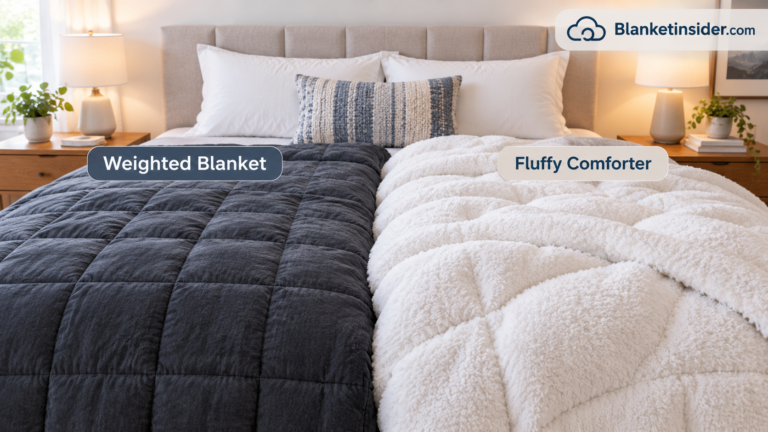
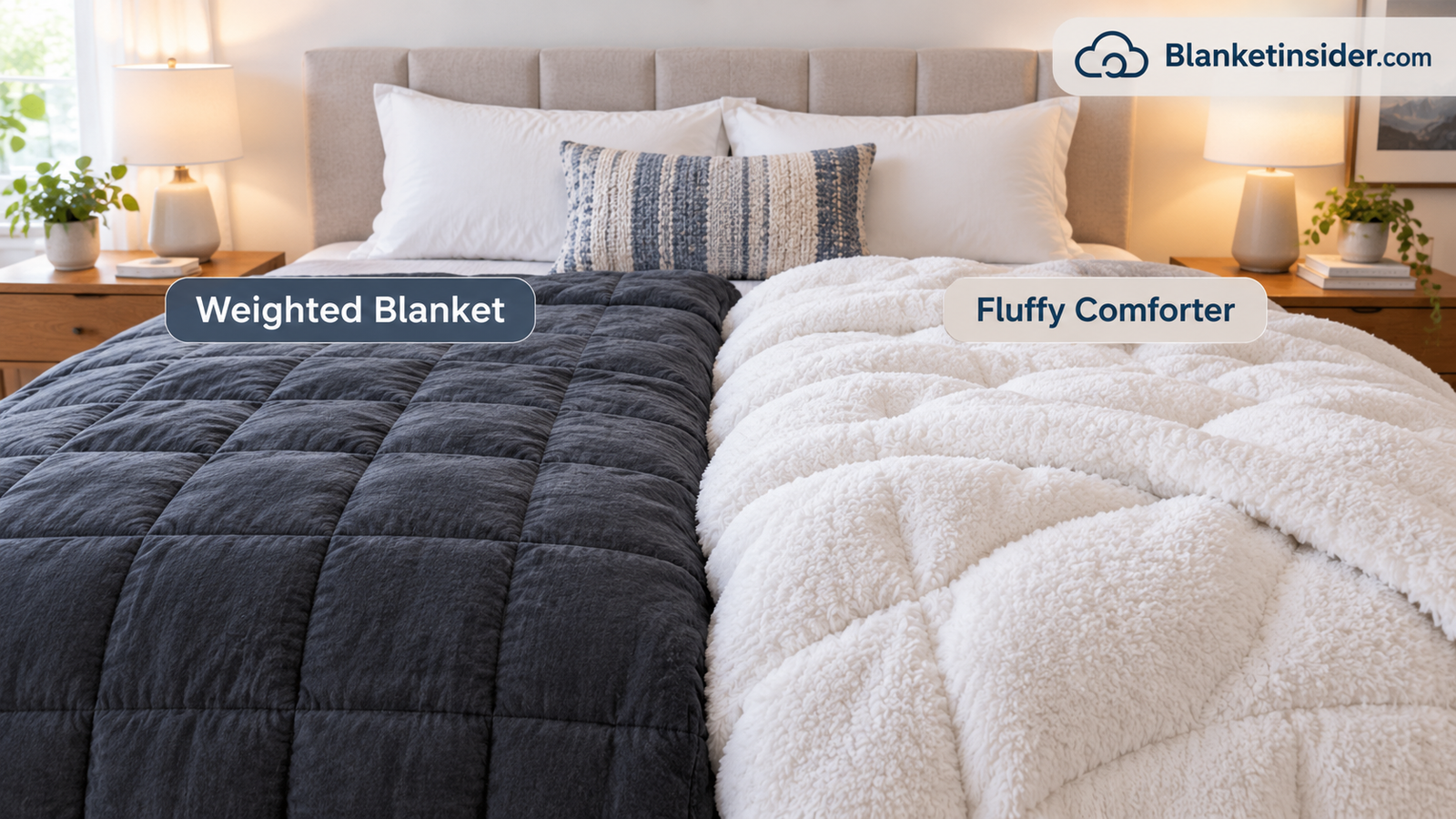
Walk into any bedding aisle and you will meet two very different philosophies of comfort. The comforter says warmth comes from air: a big, fluffy, lofty layer that traps heat and makes the bed look like a cloud. The weighted blanket says calm comes from pressure: a dense, evenly loaded layer that settles onto your body like a long, steady hug.
Both promise a better night. Both are sold with glowing language. And the question we hear most often, from readers deciding where to spend their money, is some version of: do I need the weighted blanket, the comforter, or both? The honest answer depends on how you sleep, how warm you run, who shares your bed, and what you expect a blanket to do.
This guide compares the two without hype. We cover construction, feel, sleep effects, temperature, materials, sizing, washing, safety, and cost, then finish with a practical plan for matching each option to a specific kind of sleeper. If you want a deeper primer on the heavy option first, our weighted blanket guide is a good companion read, and the comforter vs duvet vs blanket breakdown covers the traditional side.
1. The Short Answer: Weighted Blanket vs Comforter at a Glance
The two products solve different problems. A comforter is a thermal product first: its job is to hold warmth around you using loft. A weighted blanket is a sensory product first: its job is to add mild, distributed pressure, and warmth is a side effect that some people love and others work to avoid.
That difference explains almost every other contrast in this article. Comforters are light and fluffy and cover a whole bed. Weighted blankets are heavy and compact and often sized to a single sleeper. Comforters are easy to wash. Weighted blankets can be a chore. Comforters are cheap to replace. Quality weighted blankets cost noticeably more.
| Feature | Weighted Blanket | Comforter |
|---|---|---|
| Main purpose | Deep pressure and calm | Warmth through loft |
| Typical weight | 5 to 30 lb | 2 to 8 lb |
| Feel | Dense, hugging, grounded | Fluffy, airy, cloud-like |
| Warmth | Moderate; can run hot | Adjustable by fill and weight |
| Best bed fit | Single sleeper or side-by-side | Whole bed, shared |
| Washing | Often fussy, some need a cover | Usually machine washable |
| Price range | Mid to high | Low to high |
| Look | Utility first | Decor first |
If a quick table is all you needed, you can stop here. If you want to know why those differences exist and how to act on them, keep reading. A few of the details, particularly around heat and safety, genuinely change which one is right for you.
Who each option suits best
Think of the weighted blanket as a specialist and the comforter as a generalist. The specialist shines when you know exactly what you want from it: a calm, grounded, tucked-in feeling at bedtime. The generalist shines when you want dependable warmth, easy care, and a bed that looks pulled together without much effort. Many households end up needing the generalist first and the specialist later, which is why we often suggest starting with a good comforter and adding weight once you know you enjoy the sensation.
If you are shopping for a gift instead of for yourself, a comforter is the safer surprise, because sizing and feel are predictable. A weighted blanket is better as a thoughtful gift only when you know the recipient already likes heavy covers. Our gift blanket guide has more ideas for both situations.
Compare weighted blankets on Amazon
Shop Weighted Blankets2. What a Weighted Blanket Actually Is
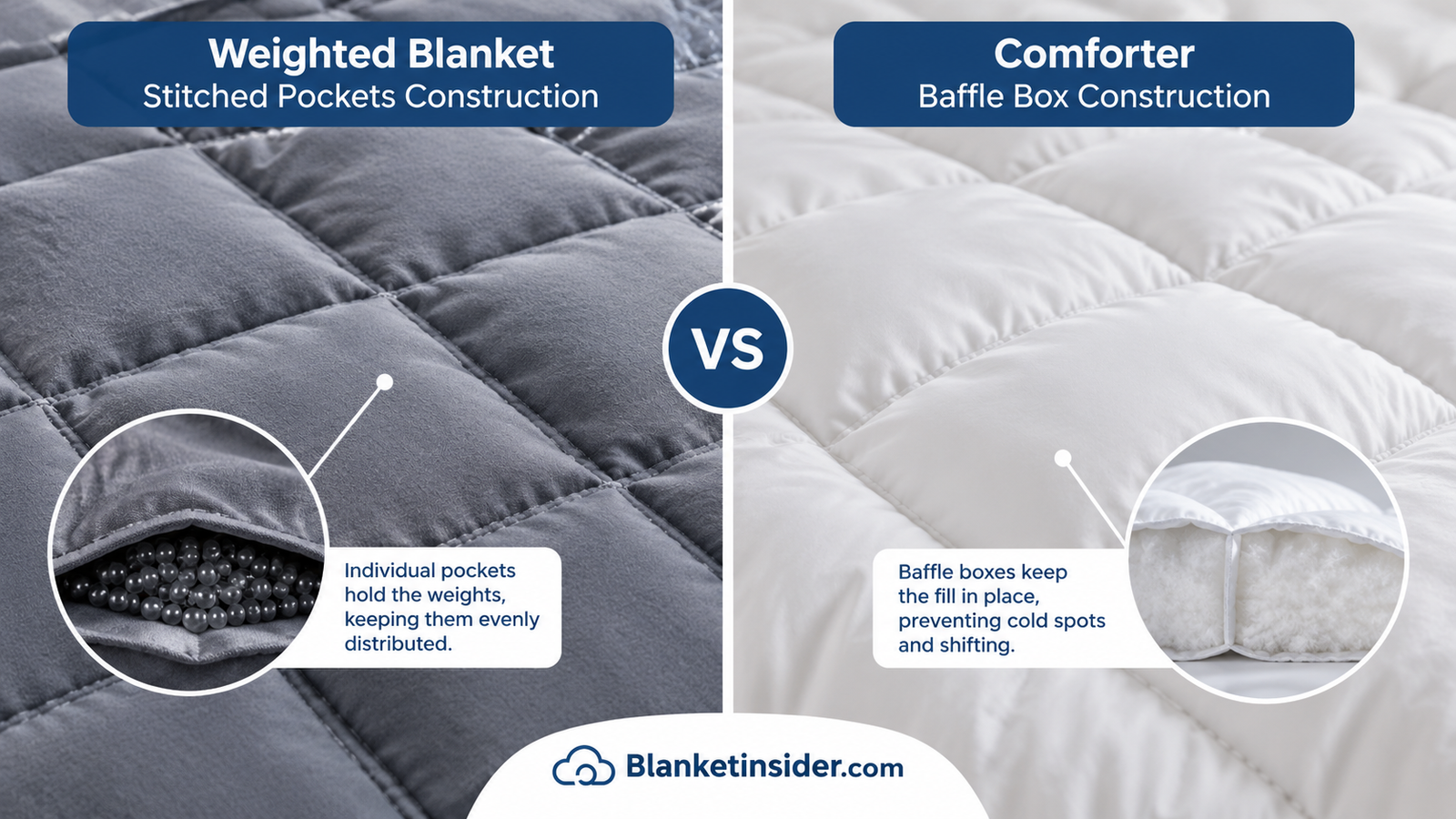
A weighted blanket is a quilted blanket loaded with a filler that is much heavier than ordinary batting. The fill sits in small stitched pockets so the weight stays spread evenly instead of sliding to one end. Most are built in layers: an outer fabric, an inner lining that keeps the beads from shifting, the weighted fill itself, and a second outer fabric.
What is inside
- Glass beads: small, quiet, and dense, so the blanket stays thinner. They tend to feel smoother and sit flatter.
- Plastic poly pellets: the budget standard. They are lighter by volume, so the blanket is a little bulkier, and some people notice a faint rustle.
- Natural fills or chain-style weights: less common, found in knit or specialty designs where weight comes from the yarn itself or from built-in elements.
Knit designs deserve their own mention. Instead of beads, they get weight from thick, chunky yarn, which makes them more breathable and very photogenic. Our Bearaby weighted blanket review and the Tree Napper review look at that style in detail.
The weight rule most people follow
The common guideline is to choose a blanket around ten percent of your body weight, then adjust a pound or two up or down for preference. Someone at 150 pounds would look at a 15-pound option; someone at 200 pounds would look closer to 20. The rule is a starting point, not a law. Lighter sleepers or those new to pressure often prefer to start slightly under, while people who want a very snug feel go a bit over.
Why people use them
The appeal rests on an idea called deep pressure stimulation: firm, even contact that many people associate with feeling settled. Researchers have studied the approach in small trials, mostly in specific populations, and results are encouraging but not a promise for every sleeper. We explain what we know in what does a weighted blanket do, and you can see how specific products stack up in reviews such as Gravity, YnM, Luna, Baloo, and Layla.
- 5 to 30 lb
- Glass beads or poly pellets
- Pocketed stitching
- Often sold per sleeper
Common myths about weighted blankets
Myth: heavier is always better. Past a certain point, extra weight just makes the blanket harder to move under and hotter to sleep beneath. The goal is a gentle, reassuring load, not a feeling of being pinned.
Myth: they only help people with a diagnosis. Plenty of ordinary sleepers simply like the snug sensation. At the same time, a blanket should never replace professional care for a medical or mental health concern.
Myth: one size fits everyone. A blanket that suits a 120-pound sleeper will feel too light for someone at 220, and a very large blanket is not automatically better. Match weight and dimensions to the person, and treat the percentage guideline as a starting point you can adjust.
See top-rated glass bead options
Browse Weighted Blankets3. What a Comforter Actually Is
A comforter is a thick, quilted top layer meant to sit over your sheets. It is filled with insulating material, stitched through so the fill does not clump, and finished with a decorative shell. Unlike a duvet insert, which is designed to live inside a removable cover, a comforter is usually used as a finished piece on its own, though you can absolutely add a cover for easier cleaning. The duvet cover vs comforter cover guide explains how that works.
Common comforter fills
- Down: soft clusters from waterfowl. Exceptionally light for the warmth it gives, but pricier and not ideal for people sensitive to feathers.
- Down alternative: polyester fibers designed to mimic down. Affordable, hypoallergenic for most, and easy to wash.
- Wool: naturally temperature-responsive and moisture-wicking. Our merino wool benefits article explains why many sleepers swear by it.
- Cotton or silk: thinner and breathable, usually chosen for warm climates or summer weight.
Construction details that matter
Two features separate a decent comforter from a great one. First, baffle-box or sewn-through stitching holds the fill in place so you do not get cold spots. Baffle boxes allow more loft; sewn-through is flatter and lighter. Second, fill power and fill weight tell you how lofty and warm it is. Higher fill power means the same warmth from less material, which equals less weight on you.
Comforters are also part of a wider bedding family. If you are unsure how they differ from coverlets and bedspreads, the coverlet vs bedspread vs comforter comparison sorts out the vocabulary. And if you would rather skip the bed-sized layer, a lighter option from our best cozy blankets for the living room list may fit better.
What a comforter does well
It is the all-rounder. It covers a full bed edge to edge, anchors the look of the room, and works across a huge range of climates because you can choose a lightweight, all-season, or extra-warm fill. Its weakness is the flip side of that: it gives warmth, but it does not give pressure.
A quick comforter shopping checklist
- Climate and sleep temperature: pick a weight that matches how warm you run, not just the season.
- Fill type: down for lightweight warmth, down alternative for easy care, wool for moisture control.
- Construction: baffle box for loft, sewn-through for a flatter and lighter feel.
- Corner loops: handy if you plan to use a duvet-style cover so the fill does not shift.
- Care label: confirm it fits your washer before you buy, since oversized comforters often do not.
It also helps to think about sheets. A crisp, breathable sheet set under a comforter makes a bigger difference to sleep comfort than many people expect, and our bamboo vs cotton sheets guide shows how fabric choice changes how warm the whole bed feels.
Find a comforter that fits your bed
Shop Comforters4. How Each One Feels: Pressure vs Loft
Feel is the single biggest reason people end up loving one and returning the other, so it deserves real attention.
The weighted blanket feeling
Draped over your torso and legs, a weighted blanket applies a steady, distributed load. People describe it as being tucked in, held, or grounded. The sensation is immediate and does not fade after the first few minutes, which is why some folks find it relaxing and others find it restrictive. If you are someone who kicks off covers, you may be surprised: many people say the weight makes them stop fidgeting. If you tend to feel claustrophobic under heavy covers, it can feel like too much.
Important point: because the weight is concentrated, the blanket does not move with you the way a fluffy layer does. Rolling over under a 20-pound blanket takes a little more effort, and you will feel it if you change positions often.
The comforter feeling
A comforter feels airy. It conforms loosely around you, creates a warm pocket of air, and weighs almost nothing relative to its volume. You can push it off, pull it up, or tuck one leg out without effort. It suits sleepers who like freedom of movement and the feeling of sleeping under a soft cloud.
Where preferences split
You may prefer a weighted blanket if you…
- Like being tucked in tightly
- Toss and turn from restlessness
- Enjoy heavy hugs or a snug sleeping bag feel
- Want a calming wind-down ritual
You may prefer a comforter if you…
- Dislike feeling pinned down
- Change positions a lot at night
- Want a bed that looks plush and styled
- Share covers with a partner
One quick test: think of how you feel after a long hug from someone you trust, or how you feel in a snug swaddle-style hoodie. If that sounds comforting, you are a weighted-blanket candidate. If it sounds suffocating, stick with loft and consider a lighter textured throw from our best blanket materials guide.
A simple two-week test plan
If you are on the fence, run a small experiment. For the first three nights, use the new blanket only for the first hour you are in bed, such as while reading or winding down, then switch to your usual cover. For the next several nights, sleep under it fully. Note how quickly you fall asleep, whether you overheat, and how you feel when you wake up.
By the end of two weeks you will know whether it is a keeper. If you feel hot, restless, or uneasy, that is useful information too. Try a lighter weight, a more breathable cover, or go back to your comforter and save yourself the upgrade.
Try a weighted blanket for yourself
See Weighted Blankets5. Sleep Quality and Relaxation
Here is where the marketing gets loudest, so let us be careful and specific. Weighted blankets are popular largely because of how they may influence relaxation and sleep. A number of small studies have looked at weighted blankets in people with insomnia and anxiety-related conditions, and some have reported improvements in perceived sleep quality and a calmer feeling at bedtime. The studies are modest in size, and a blanket is not a medical treatment. Treat it as a comfort tool that helps some people, not a cure.
What a weighted blanket may help with
- Winding down: the pressure can act as a cue that it is time to settle.
- Restlessness: some people report fewer repositionings and a steadier night.
- Feeling secure: the enclosed sensation can be comforting during stressful stretches.
If anxiety is the main reason you are shopping, read best blankets for anxiety, which goes through what to look for and what to be realistic about.
What a comforter does for sleep
A comforter supports sleep in a different way: by keeping your body at a stable, comfortable temperature. Sleep researchers consistently point to a cool, comfortable bedroom as one of the more reliable levers for better sleep, and the right comforter helps you hold that balance. If you wake up shivering or overheated, your issue may be the thermal performance of your top layer rather than a lack of pressure.
Setting realistic expectations
Give any new blanket about two weeks. A heavy blanket can feel strange at first, and a new comforter can feel too warm or too light until you adjust the room temperature or your sheets. Keep notes: how quickly you fall asleep, how often you wake, how you feel in the morning. That is more useful than any review, including ours.
If you are specifically hoping a blanket will help with eczema or irritated skin, pay attention to fabric, not just weight. Our best blankets for eczema guide covers soft, low-irritation options, and some weighted blankets are available in gentler fabrics.
Sleep position matters
Back sleepers tend to get the most out of a weighted blanket because the load spreads evenly across the torso and legs. Side sleepers may find the weight pressing on the hips and shoulders, and a lighter blanket often feels better. Stomach sleepers usually prefer a lighter layer of any kind, since added weight on the back can feel restrictive. A comforter, with its low weight, is friendly to every position.
See weighted blankets people use for sleep
Shop for Better Sleep6. Temperature and Hot Sleepers
This is the make-or-break category for a lot of buyers. A weighted blanket can run warm. The dense fill and tight quilting leave less room for air to move, and the full-body contact reduces natural ventilation. A comforter, by contrast, can be anywhere from a thin summer layer to a deep-winter powerhouse.
Why weighted blankets feel hot
- Dense fill traps body heat close to the skin.
- Full contact means less airflow than a loft layer sitting above you.
- Many budget versions use polyester shells that do not breathe well.
How to keep a weighted blanket cooler
- Choose breathable fabric. Cotton, bamboo, and tencel-style covers breathe better than plush microfiber. See bamboo vs cotton blankets and microfiber vs cotton for a closer look.
- Look for a cooling construction. Some brands use specialty fabrics, glass-bead fill, or open-knit designs. Our cooling blanket guide explains the technology, and cooling blanket vs regular shows what the difference actually feels like.
- Lower the thermostat slightly. A cooler room offsets a warmer blanket.
- Swap the comforter for a sheet. If the weighted blanket is your main cover, you often do not need anything else on top in warmer months.
If night sweats are part of your story, best blankets for night sweats is worth a read before you buy anything heavy.
How to match a comforter to your climate
| Sleeper type | Best comforter weight | Fill suggestion |
|---|---|---|
| Hot sleeper | Lightweight | Cotton, silk, or thin down alternative |
| Average sleeper | All-season | Down alternative or medium down |
| Cold sleeper | Warm or extra warm | Higher fill-power down or wool |
| Two sleepers with different needs | Medium, plus personal layers | All-season comforter, add a light throw |
The practical takeaway is simple. If you sleep hot and want the weighted experience, buy breathable fabric and size it cautiously. If you sleep cold, the density of a weighted blanket is a bonus. And if you cannot decide, the comforter gives you more range, since you can add or remove layers freely.
A seasonal strategy that actually works
Most sleepers get the best results by treating bedding as a system rather than a single purchase. In winter, you might layer a weighted blanket under a warm comforter. In spring and autumn, a lighter comforter or the weighted blanket alone may be enough. In summer, a thin cotton sheet with a breathable weighted blanket, or just a lightweight comforter, keeps things comfortable. Rotating layers through the year costs little and keeps every piece in better shape.
Look at cooling weighted blankets
Find a Cooler Option7. Weight, Fill and Materials Compared
The two products differ dramatically in how they are built, and construction explains both price and care. Here is the full comparison.
| Aspect | Weighted Blanket | Comforter |
|---|---|---|
| Weight source | Glass beads, poly pellets, or heavy knit yarn | Air-trapping fill only |
| Typical fabrics | Cotton, bamboo, microfiber, minky, knit | Cotton, sateen, microfiber, linen-blends |
| Stitching | Small pockets to hold weight | Baffle box or sewn-through |
| Breathability | Varies widely | Usually higher |
| Noise | Poly pellets can rustle faintly | Silent |
| Cover option | Removable duvet-style cover recommended | Optional duvet-style cover |
| Packability | Heavy and bulky | Compressible |
Fabric choices change the experience
Fabric matters as much as fill. A weighted blanket in plush minky feels cozy and warm, which is great in winter and uncomfortable in summer. Our minky vs fleece blanket guide and sherpa vs fleece blanket comparison show how those fabrics behave. Cotton versions are cooler and crisper. Bamboo-derived fabrics feel silky and tend to be cooler to the touch. If you are weighing cotton against synthetics, cotton vs polyester blanket is a quick, useful read.
Comforters offer their own materials debate. Sateen shells feel smooth and luxurious, percale shells feel crisp, and microfiber shells feel soft and are very budget-friendly. Wool adds the unusual advantage of regulating moisture and temperature at once, and our wool vs fleece blanket guide explains why wool sleepers rarely switch back. If you are shopping for a premium fabric feel, you might also find is Egyptian cotton good useful.
Allergy and sensitivity notes
Down can aggravate sensitivities for some people, while down alternatives and cotton generally do not. Weighted blankets are rarely made with natural allergens, but fillers and dyes still vary, so check labels if you have sensitive skin.
What the labels really tell you
Shopping labels can be confusing, so here is how to read them. On a weighted blanket, look for the stated weight, the fill type, the shell fabric, and the care instructions. Pocket size matters too: smaller pockets spread weight more evenly and reduce shifting. On a comforter, look for fill weight, fill power for down, thread count or fabric weave for the shell, and whether the stitching is baffle box or sewn through.
Be a little skeptical of vague claims such as “premium” or “luxury” with no numbers attached. Specifics, like gram weights, fill power figures, and fabric blends, are what actually let you compare one product against another. If a listing does not give them, that alone is worth noting.
Browse breathable weighted blankets
View Bamboo Options8. Sizing, Bed Fit and Sharing With a Partner
Sizing is where weighted blankets and comforters behave most differently, and it is also where couples run into trouble.
Comforters are sized to the bed
A comforter is designed to cover the whole mattress and hang over the sides, so you buy to match your bed: twin, full, queen, king, and so on. Both sleepers share it. Overhang gives that classic made-bed look, and the size is straightforward.
Weighted blankets are sized to the sleeper
Weighted blankets are typically made smaller than the mattress, because the goal is to cover your body, not to drape over the bed. Common dimensions are around 41 by 60 inches for small adults and kids, 48 by 72 for medium, and 60 by 80 or larger for adults who want more coverage. A blanket the size of your whole bed would be enormous and very heavy, which is why this is rarely done.
Practical couples options
- Two personal weighted blankets on each side, with a shared comforter above or below. This avoids tug-of-war entirely.
- One large weighted blanket for a shared bed, understanding that the weight is divided and one partner may prefer to sleep without it.
- One comforter only, with weighted blankets used on the couch for relaxation, a common compromise.
If you are shopping for a big bed, best king size blanket helps with larger comforter-style options, and perfect throw blanket size and throw vs full blanket help you think about sizing in general.
A note about children
Weighted blankets for children need extra care. Weight, sizing, and age limits matter much more for kids than adults, and many manufacturers recommend against use for very young children. Please read weighted blanket for kids before buying one for a child, and talk with your pediatrician first.
Mattress, frame and bedroom setup
Mattress height and bed style change how bedding hangs. A tall mattress needs a comforter with generous overhang, while a low platform bed can handle a shorter drop. If you are setting up a smaller space such as a dorm, weighted blankets sized for one person suit twin beds well, and our dorm guides, including dorm room storage hacks and foldable platform bed frames, can help you plan the rest of the room.
Shop couples-size weighted blankets
See Couples Options9. Cleaning, Care and Durability
This is the category where comforters win most clearly, and where many weighted-blanket owners quietly wish they had planned ahead.
Caring for a comforter
Most comforters, especially down alternative, cotton, and microfiber styles, can go in a large-capacity washer on a gentle cycle and then dry on low heat, ideally with a couple of clean dryer balls to keep the fill fluffy. Down and wool versions need a bit more care, and some are better cleaned professionally. Using a removable cover, as explained in our duvet cover guide, dramatically reduces how often the comforter itself needs washing.
Caring for a weighted blanket
A weighted blanket is heavy when dry and much heavier when wet. Many home washers cannot handle the larger sizes, and the stitching can be stressed by a heavy, soggy load. Some blankets are machine washable, some are spot-clean only, and some require commercial machines. Always read the tag first.
- Use a removable cover and wash that weekly or biweekly instead of the blanket.
- Spot-clean small spills quickly with mild soap and a damp cloth.
- Avoid high heat on poly-pellet fills, since heat can damage plastic.
- Dry flat or use low heat, and make sure the fill dries all the way through to avoid mildew.
We walk through the process step by step in how to wash a weighted blanket and how to wash a weighted blanket without ruining the fill. If your blanket has wool in it, how to wash a wool blanket applies too.
Durability
Weighted blanket durability
- Well-made versions last for years
- Stitching quality is the key factor
- Fill can shift if pockets fail
Comforter durability
- Down can last a decade or more with care
- Cheap fills flatten and clump sooner
- Covers absorb most of the wear
Storage matters too. A bulky comforter can be compressed in the offseason, while a weighted blanket is best stored flat or loosely rolled. Our guide to the best blanket storage bags can help with both.
How often should you wash each one?
Cover and sheets get the most frequent washing, ideally weekly or every other week. The comforter or weighted blanket itself can usually go several months between deep cleans if you use a cover. Air them out in fresh air now and then, since sunlight and movement help refresh the fill and reduce odors. If you notice a persistent smell, check that the blanket has fully dried after any washing, because trapped moisture is the usual culprit.
Find covers that protect your blanket
Shop Blanket Covers10. Safety, Kids, Pets and Who Should Skip a Weighted Blanket
Safety is not the glamorous part of a comparison, but it matters. Comforters are generally low-risk for healthy adults. Weighted blankets carry a few more considerations, and being honest about them is part of giving good advice.
Who should be cautious with a weighted blanket
- Infants and toddlers. Weighted blankets are generally not recommended for very young children because of suffocation and overheating concerns. Always follow the manufacturer guidance and your pediatrician’s advice.
- People who cannot easily move or remove the blanket on their own. If you cannot shift or throw it off, a heavy layer is a risk.
- People with respiratory, circulation, or mobility conditions. Speak with a healthcare professional first, since added weight might not be appropriate.
- Anyone who feels anxious or trapped under heavy covers. Comfort is the point, so if it feels wrong, stop using it.
Comforter safety notes
Comforters and loose bedding are not recommended for infants either. For older children and adults, the main concerns are overheating and allergies. If you are shopping for little ones, when can a baby sleep with a blanket explains safe-sleep timing in plain language.
Pets and heavy blankets
Cats and small dogs sometimes curl up on top of weighted blankets, which is usually harmless, but make sure a pet cannot get trapped underneath. If your cat has a habit of kneading or licking blankets, why is my cat licking my blanket explains the behavior.
Electric and heated alternatives
If warmth is your main goal, a heated option might be better than either a weighted blanket or a comforter. Make sure to review electric blanket safety before using one, and see heated blanket vs space heater to compare cost and safety.
Questions worth asking a healthcare professional
If you have any health condition that affects breathing, circulation, temperature sensitivity, or mobility, ask your clinician whether a weighted blanket is appropriate and what weight range is sensible. The same applies if you are buying for an older adult or someone with limited ability to move. A short conversation is far better than guessing, and a comforter is always an easy fallback.
Shop adult weighted blankets
View Adult Sizes11. Cost and Value Over Time
Price is the easiest way to separate these two, but the real answer is about cost per year of use.
| Cost factor | Weighted Blanket | Comforter |
|---|---|---|
| Entry price | Moderate | Low |
| Premium price | High | High (premium down) |
| Add-ons | Removable cover often needed | Cover optional |
| Cleaning cost | Possible laundromat or pro cleaning | Usually home washing |
| Lifespan | Several years with care | Several to many years |
| Replacement | Costly if sized wrong | Easy and affordable |
Where the value is
A comforter is a strong value because it does two jobs at once: it keeps you warm and it makes the bed look finished. A mid-range option often delivers the best balance, and extreme budget picks tend to lose loft quickly. Weighted blankets are worth the money only if you actually use them nightly or at least regularly. A weighted blanket that stays folded in a closet is the most expensive blanket you own.
How to reduce the risk of wasting money
- Try before you commit, if you can. Borrow a friend’s weighted blanket or test one in a store to see if you enjoy the sensation.
- Pick the right weight. Too light and you will not notice it; too heavy and you will resent it.
- Check the return policy, because a trial period can protect you.
- Buy the breathable fabric the first time, since the upgrade later costs more than the difference now.
For reference points, our independent reviews of a popular weighted blanket and the Degrees of Comfort weighted blanket show real-world value across different budgets. And if you are building a cozy, well-priced home overall, the cozy home essentials checklist is a nice companion.
A short buying checklist
- Decide whether your main goal is warmth, calm, or both.
- Choose weight and size for the sleeper, not for the bed.
- Pick breathable fabric if you run warm.
- Plan for cleaning, including a removable cover.
- Check the return window and warranty before you buy.
- Give the product two weeks before judging it.
Following those six steps will protect you from the most common regrets, whether you end up with a comforter, a weighted blanket, or both.
Check current weighted blanket prices
Compare Prices12. Using Both Together: Layering Strategy and Final Picks by Sleeper Type
The good news is that this is not always an either-or decision. Plenty of sleepers use a comforter and a weighted blanket together, and the combination can be excellent when you plan it.
The two common layering methods
- Weighted blanket first, comforter on top. The weighted layer sits against your body, and the comforter adds warmth and a polished look. Good in winter.
- Comforter first, weighted blanket on top. Keeps the weight on top of everything, which some people find more secure. Warmer, so better for cold sleepers.
A simple tip for managing heat: in warm months, use only the weighted blanket with a breathable cover and skip the comforter, or reverse and use a lightweight comforter alone.
Quick picks by sleeper type
| If you are… | Go with | Why |
|---|---|---|
| A hot sleeper | Lightweight comforter, or cooling weighted blanket | Better heat management |
| A cold sleeper | Weighted blanket plus warm comforter | Layered warmth |
| A restless sleeper | Weighted blanket | Steady pressure may help you settle |
| A frequent position-changer | Comforter | Easy movement |
| A couple with different needs | Comforter plus one personal weighted blanket | Each person customizes |
| On a tight budget | Comforter first | Lower cost, broader use |
| A decor-focused shopper | Comforter with a statement cover | Looks finished |
Related comparisons worth reading
Weighing these two products often leads to adjacent questions. If you are also comparing warmth-focused options, down vs weighted blanket digs into that exact match-up. For a bigger vocabulary lesson, read comforter vs duvet vs blanket. If you want something cozy to use while relaxing rather than sleeping, wearable blankets with sleeves is a fun alternative.
Building a simple bedding system
If you like the idea of both, a three-part system is easy to manage. Start with breathable sheets that suit your climate. Add a mid-weight comforter in a washable cover as your all-season base. Then keep a weighted blanket in a breathable cover for nights when you want extra pressure, or leave it on the sofa for evening relaxation. This approach spreads wear across pieces, keeps laundry manageable, and lets you adjust to the weather, your mood, and even a partner’s preferences without buying new bedding each season.
When the room is hot, you can simply remove a layer. When it is cold, add one. That flexibility is the real advantage of owning both types of cover, and it is why so many longtime sleepers eventually end up with a small collection instead of a single hero product.
Build your layered setup
Shop Layered BeddingFrequently Asked Questions
Is a weighted blanket warmer than a comforter?
Often, yes, at least against your body. The dense fill and snug contact trap heat, so many people find a weighted blanket warmer than a lightweight comforter of the same size. A thick, high-quality comforter can match or beat it, though. Fabric and fill make the biggest difference, so a breathable cotton or bamboo weighted blanket will run cooler than a plush minky one.
Can I use a weighted blanket instead of a comforter?
Yes, many people do, especially in warmer seasons or if they sleep alone. A weighted blanket provides coverage and some warmth. The downside is that it is usually smaller than the bed, so it will not cover a whole mattress like a comforter does. Couples often pair it with a lighter layer or use individual blankets.
Can you put a weighted blanket on top of a comforter?
You can. Layering a weighted blanket over a comforter is common in cold weather, and the weight helps hold the comforter in place. Just keep an eye on heat: the combination can feel very warm. If you wake up sweating, remove one layer or switch to a lighter comforter.
How heavy should a weighted blanket be compared to a comforter?
A weighted blanket is usually around ten percent of your body weight, so most adults choose between 12 and 20 pounds. A typical comforter weighs only a few pounds. That gap is the whole point: a comforter provides loft and warmth, while a weighted blanket provides pressure.
Is a weighted blanket better for sleep than a comforter?
It depends on what is disrupting your sleep. If restlessness or a racing mind keeps you up, some people find a weighted blanket helpful. If temperature is the issue, the right comforter might help more. Research on weighted blankets is still limited, so treat them as a comfort tool that works for some sleepers and not others.
Do weighted blankets need a cover?
It is strongly recommended. A removable cover protects the blanket from sweat, oils, and spills, and it is far easier to wash than the blanket itself. A cover can also change the feel and temperature, so choose a breathable fabric if you run warm.
Can a weighted blanket be used with a duvet?
Yes. Some people place the weighted blanket inside a large duvet cover or layer it beneath or on top of a duvet. If you use a cover, make sure it fits securely so the weight does not bunch up, and check the cover’s size so the blanket does not slide around.
Can couples share one weighted blanket?
They can, but the weight is split between two people, so each person feels less pressure than the label suggests. Many couples are happier with two individual weighted blankets or one larger blanket sized for sharing. This also avoids the tug-of-war that comes with sharing any single blanket.
Are weighted blankets safe for kids?
It depends on age and size. Weighted blankets are generally not recommended for infants and toddlers, and older children should only use properly sized options under adult guidance. Check manufacturer age and weight limits and ask your pediatrician before buying one for a child.
Which is easier to wash, a weighted blanket or a comforter?
A comforter, in most cases. Many comforters can be washed at home in a large washer, while weighted blankets are heavier, more fragile, and sometimes limited to spot cleaning or commercial machines. A removable cover makes either option easier to maintain.
How long do weighted blankets and comforters last?
Both can last several years with proper care. A well-made comforter with a good cover can last even longer, especially if it uses quality down. Weighted blankets last as long as the stitching and fill stay intact, so check seams and avoid overheating or aggressive washing.
Should I buy a weighted blanket or a comforter first?
If you do not already own a good comforter, start there. It handles warmth and bed styling, and it is a better value for most households. Add a weighted blanket afterward if you want extra pressure for relaxation and sleep. If you already have a good comforter, a weighted blanket is a natural next step.
Conclusion: Which One Should You Choose?
The weighted blanket and the comforter are not really rivals. They are two tools for two jobs. A comforter gives you warmth, style, and easy care across the whole bed. A weighted blanket gives you pressure, a snug feeling, and a bedtime ritual that many people find soothing. Which one belongs on your bed depends on what you actually want your blanket to do.
If you want one pick: for most households, a quality all-season comforter is the smarter first purchase. If you already have good bedding and want a calmer, cozier night, add a breathable weighted blanket in a weight you can easily manage. And if you sleep with a partner who has different needs, give each person their own layer.
Whichever way you lean, buy for the sleeper you are, not the one an ad imagines. Check the weight, fabric, and care instructions, give it a couple of weeks, and keep the return policy handy. A good night’s sleep is worth a bit of homework.
Ready to upgrade your bed? Shop weighted blankets and comforters
Shop Now on AmazonYou May Also Like
Disclosure: As an Amazon Associate, we earn from qualifying purchases made through links on this page, at no extra cost to you. This article is for general information and is not medical advice. Talk with a healthcare professional before using a weighted blanket if you have health concerns.