Do Grounding Sheets Really Work? What the Science Says
Grounding sheets promise better sleep, less inflammation, and calmer mornings — all through a wire clipped to your bed. Here is an honest, plain-English look at how they actually work, what researchers have and have not shown, and whether the idea deserves a place in your bedroom.
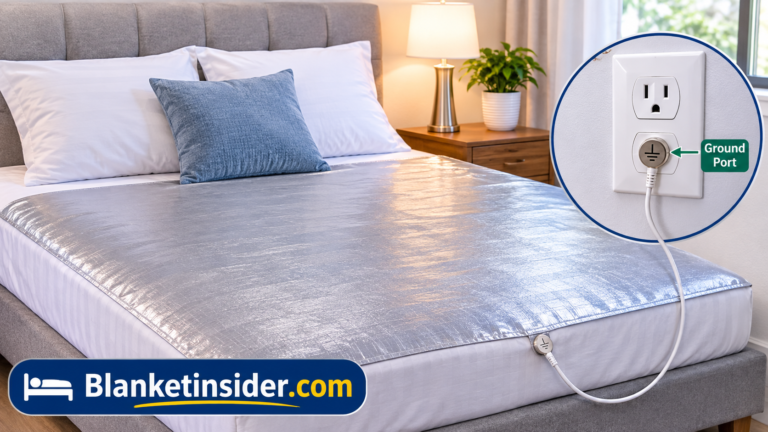
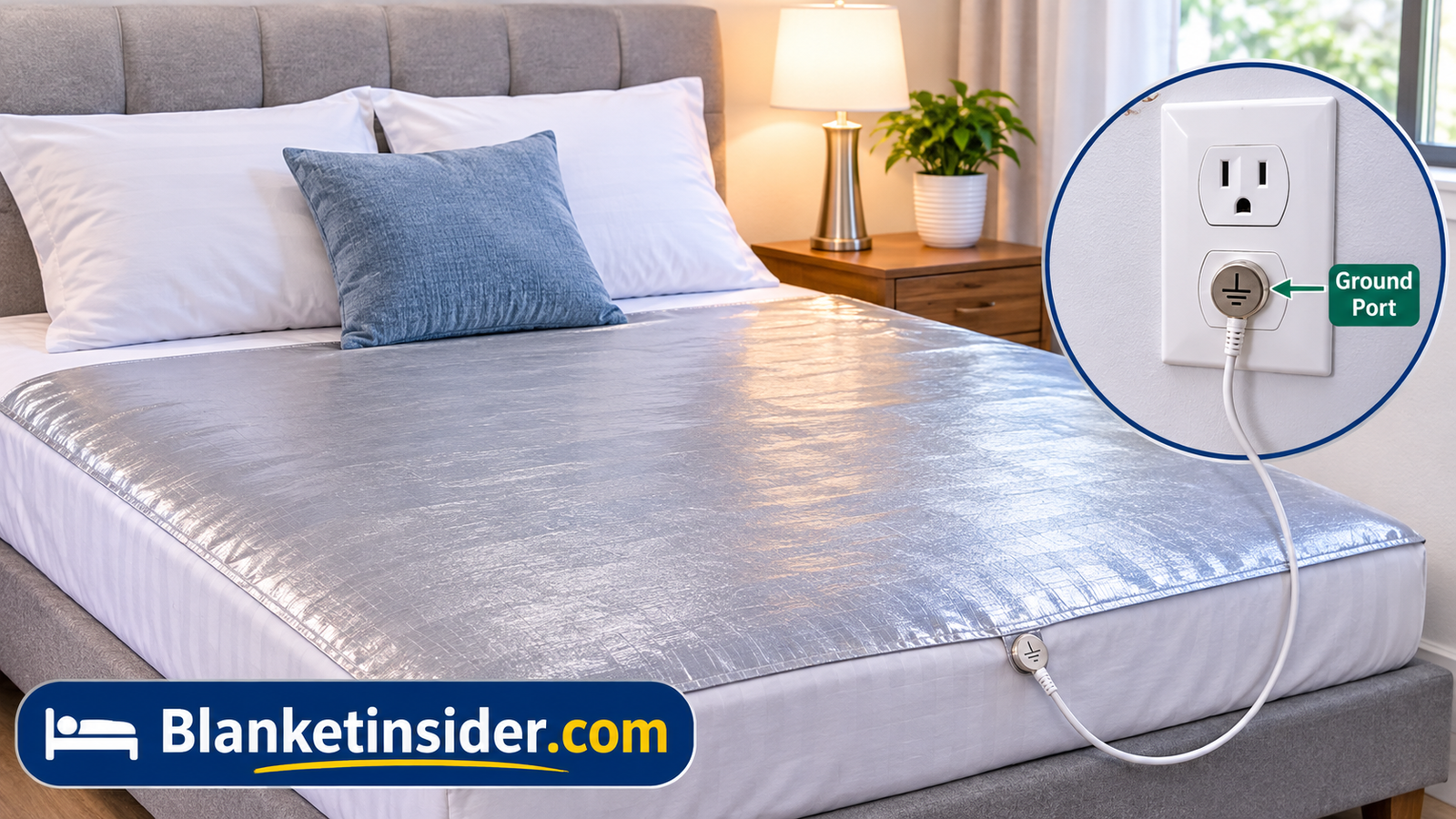
The pitch is seductive. You make your bed exactly as you always do, except the fitted sheet has a thin wire trailing off the corner into a grounded wall outlet. Then, supposedly, your body reconnects to the electrical charge of the earth while you sleep — and you wake up with less pain, deeper rest, and lower stress.
Grounding (also called earthing) has moved from barefoot-in-the-park wellness talk to a genuine bedding category, sold by mainstream retailers and talked about everywhere from recovery forums to sleep clinics. The claims range from the modest (“I fall asleep faster”) to the sweeping (“it reduces chronic inflammation”). With that much noise, the useful question is not “is grounding popular?” It is “does grounding do what people say it does, and what would convince us either way?”
This article is built to answer that. We look at the mechanism first, because a claim without a plausible mechanism is just marketing. Then we examine the research that exists — including its size, its design, and its weaknesses. After that we get practical: how to set a sheet up properly, how to tell whether yours is actually conducting, how long before you can judge it fairly, what the downsides are, who should avoid it, and whether the price makes sense against the alternatives.
Grounding sheets are physically real and mechanically simple — the conductive fabric does connect you to earth ground if it is set up correctly. The health claims, however, rest on a small body of early research that shows promising signals for sleep, pain, and stress markers but is nowhere near conclusive. If you buy one, buy it as a low-risk sleep experiment with realistic expectations, not as a medical treatment.
One framing note before we start: nothing here is medical advice. Grounding is a lifestyle and comfort practice. If you have a diagnosed condition, take prescription medication, or use an implanted medical device, talk to your clinician before adding anything to your sleep setup — including something as deceptively simple as a conductive sheet.
Want the Comfort Version First?
If your goal is simply better sleep and a cozier bed, there are well-studied bedding upgrades to try alongside grounding.
Check Price on AmazonWhat Is a Grounding Sheet and How Does It Work?
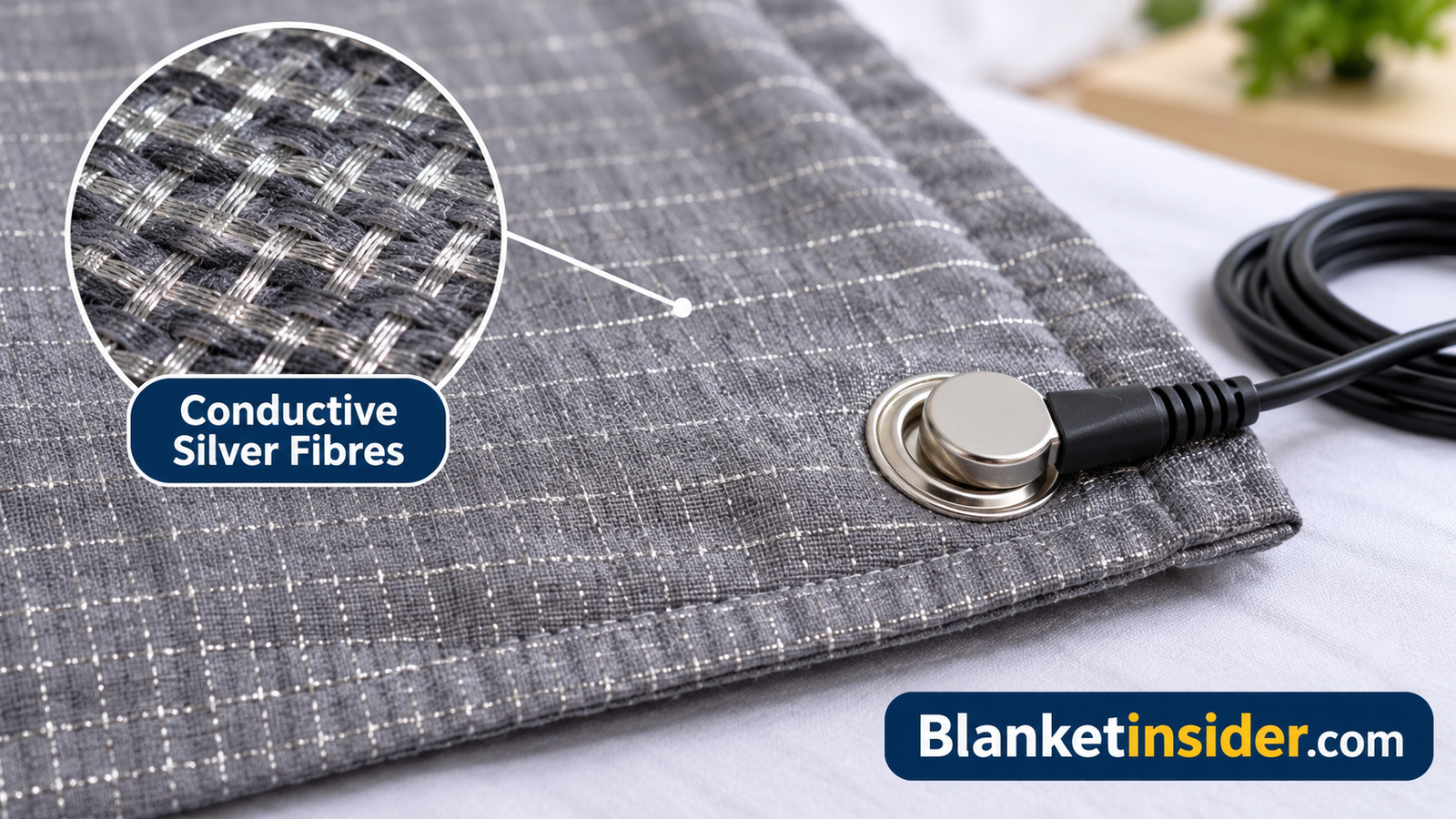
A grounding sheet is a bed sheet — fitted, flat, or a half-sheet laid across the mattress — that contains conductive threads woven into the fabric. Those threads are usually fine silver fibre, stainless steel fibre, or a carbon-based conductive yarn blended with cotton or polyester. The result looks and feels close to ordinary bedding. You will notice the difference mainly as a slightly crisper, cooler hand-feel and a thin cord attached to a corner of the sheet.
That cord is the entire mechanism. One end snaps onto a metal stud or contact patch on the sheet. The other end plugs into the ground port of a wall outlet — the round hole beneath the two flat slots on a modern socket. That port is connected to your home’s grounding wire, which runs to a rod driven into the earth outside. Flip the switch and your sheet is now electrically bonded to the planet.
The physics, without the jargon
The earth carries a steady negative surface charge. Your body accumulates a small positive charge through daily contact with insulating materials — shoes with rubber soles, synthetic carpets, mattresses, plastic chairs. Grounding proponents argue that modern life has effectively insulated us from a natural electrical relationship we evolved with, and that reconnecting allows free electrons to flow into the body, where they can neutralise reactive molecules involved in inflammation.
You do not need to accept the biochemistry to understand the plumbing. The physical claim is testable and, on its own, uncontroversial: conductive fabric plus a ground wire equals electrical continuity between your skin and earth ground. Whether that continuity produces meaningful biological change is a separate question — and the one this article spends most of its time on.
What a grounding sheet is made of
Silver fibre weave
The most common design. Silver is highly conductive and naturally resistant to odour-causing bacteria, though it gradually loses conductivity with repeated washing.
Carbon or stainless yarn
Used in mats and some sheets. Carbon holds up well to washing and abrasion; stainless fibre is durable but gives the fabric a slightly stiffer feel.
Cotton, polyester, or blends
The conductive yarn is blended into a normal textile base. The base determines softness and breathability; the conductive yarn determines whether the sheet works.
Cord, plug, and ground stud
A snap connector on the sheet, a coiled or straight cord, and a plug with an earth pin. Some include an inline resistor as a safety feature.
Do you feel anything while using it?
Usually not. A properly grounded sheet should not tingle, buzz, or produce any sensation at all. Some people report a faint warmth, a “heavy” feeling in the limbs, or simply an easier time falling asleep — but most describe it as indistinguishable from sleeping on regular bedding. If you feel a definite tingling or shock, that is not grounding; that is a wiring problem, and you should unplug immediately and have the outlet checked.
Start With a Simple Setup
A basic grounded fitted sheet and cord is all you need to test the concept properly.
Check Price on AmazonEarthing vs Grounding: What’s the Difference?
In practice, almost nothing. In theory, a small distinction exists depending on who is speaking.
Earthing is the term popularised by the researchers and authors who first framed direct physical contact with the earth as a health practice. It tends to appear in the wellness and research literature, and it carries the slightly more holistic flavour. Grounding is the term electricians and engineers use for connecting a circuit or conductor to the earth — an electrical safety concept that long predates the wellness movement.
When a bedding brand says “earthing sheet” and another says “grounding sheet,” they are describing the same product doing the same job. Marketing language aside, there is no regulatory definition separating them, and no product category difference you should pay more for.
Where the terms start to diverge
The nuance shows up in method. Traditional earthing is usually framed as skin contact with the ground — bare feet on grass, soil, sand, or stone. Grounding, in the product sense, is electrical connection to earth ground through a conductor, which can be achieved indoors via wiring. So walking barefoot in a park is earthing in the classic sense; sleeping on a sheet wired to your outlet is grounding achieved artificially.
That distinction matters for one reason: the research that exists was mostly conducted on people connected to earth ground through conductive patches, mats, or sheets — not on barefoot walkers. So when someone cites “studies on earthing,” those studies generally tested the indoor, wired version.
| Point of comparison | Earthing | Grounding (product sense) | Does it matter to you? |
|---|---|---|---|
| Everyday meaning | Direct contact with the earth’s surface | Electrical bond to earth ground via wiring | No — same intended outcome |
| Typical setting | Outdoors, barefoot | Indoors, in bed | Yes — indoors is the practical use case |
| Equipment needed | None | Sheet or mat, cord, grounded outlet | Yes — cost and setup apply |
| Research base | Often used loosely in wellness writing | Matches how most studies were actually run | Yes — read studies carefully |
| Marketing premium | Sometimes priced higher as a “brand” | Priced as bedding | Yes — do not pay for a label |
Related terms you will run into
- Grounding mat or pad: a smaller conductive surface for a desk, chair, or underfoot. Same mechanism, different use case.
- Grounding band or patch: a wrist or ankle strap with a cord, often used in research settings because it guarantees consistent skin contact.
- Ground rod: a metal rod driven into soil outdoors, used when a room has no grounded outlet. Effective, but a genuinely different installation.
- Earthing footwear: sandals or insoles with conductive soles designed to mimic barefoot contact outdoors.
If you are comparing products, ignore which word the packaging uses and look instead at the conductive material, the connection quality, the wash durability, and whether the maker provides a way to verify continuity. Those are the details that separate a working sheet from an expensive piece of cotton.
Shopping Around?
Compare grounding sheets, mats, and bands side by side before you commit.
Check Price on AmazonIs Grounding Scientifically Proven?
Not in the way that phrase is usually meant. It has not been proven beyond reasonable doubt, it has not been endorsed as a treatment by major medical bodies, and it has not been tested in the large, multi-site, independently funded trials that would be required to settle the question. What exists instead is a body of small, early, largely positive studies that have generated interest and criticism in roughly equal measure.
Let us walk through what has actually been looked at, and then through the weaknesses — because the weaknesses are where an honest answer lives.
What researchers have examined
The published grounding literature is concentrated in a handful of areas. Sleep quality and cortisol rhythm have received the most attention, with researchers measuring self-reported sleep alongside salivary cortisol across the day. Pain and muscle recovery have been studied in small groups, often after exercise. Blood chemistry markers related to inflammation and viscosity have been measured in pilot work. Mood, stress, and anxiety scores appear in several exploratory papers. A few case reports and small series have described changes in thyroid markers, wound healing, and skin conductance.
The recurring finding across these papers is a directionally favourable signal: participants tend to report better sleep and less pain, and some measured markers shift in a way the authors interpret as reduced physiological stress. That is genuinely interesting. It is also exactly the pattern you would expect to see from an intervention with a real effect, a placebo effect, or both.
The evidence at a glance
| Area studied | What was measured | What the studies generally reported | How strong is the evidence? |
|---|---|---|---|
| Sleep quality | Self-reported sleep, cortisol timing, night waking | Participants commonly reported falling asleep faster and waking less, with some cortisol pattern changes | Preliminary — small samples, short durations |
| Pain & soreness | Pain scales, muscle soreness after exertion | Modest reductions in reported pain and delayed soreness in several small trials | Preliminary — inconsistent blinding |
| Inflammation markers | Blood markers linked to immune response | Some papers report marker reductions; replication is limited | Weak — needs independent replication |
| Stress & mood | Questionnaires, heart rate variability, mood logs | Reported improvements in calmness and stress scores | Weak — highly placebo-prone outcome |
| Circulation & viscosity | Blood flow and viscosity measurements | Early pilot data suggests measurable changes during grounding sessions | Weak — small, exploratory designs |
Why the evidence is not stronger
Four structural problems recur across the grounding literature, and you should weigh each one.
1. Small sample sizes
Many studies involve a few dozen participants or fewer. Small studies are prone to exaggerated effects and to results that fail when someone else repeats the work. A favourable finding from twenty participants is a hypothesis generator, not a conclusion.
2. Difficulty blinding
In a drug trial you can give half the participants a placebo identical in appearance. Grounding is hard to blind convincingly. A participant who knows they are connected to the earth may sleep differently purely because they expect to. Sham-grounding setups exist but are rarely used, and when a study cannot blind participants, self-reported outcomes like “I slept better” carry much less weight.
3. Conflicts of interest
A meaningful share of the grounding literature has been authored or funded by people connected to the earthing products industry. That does not automatically invalidate the findings — industry-funded research is common across medicine — but it does mean independent replication matters enormously, and independent replication is thin on the ground.
4. Short study windows
Most interventions last days to weeks. Sleep and pain fluctuate for dozens of unrelated reasons: weather, stress, caffeine, exercise, illness, hormone cycles. Short studies struggle to separate signal from that noise.
What a stronger evidence base would look like
Large randomised controlled trials with sham-grounding controls, pre-registered protocols, independent funding, objective sleep measurement, and multi-month follow-up. None of that is exotic — it is the standard applied to any health claim. Until that work exists, the fair description is “promising early signals, unproven benefit.”
Mechanism: plausible and verifiable. The conductive connection is real and easy to confirm. Efficacy: suggestive but unproven. Early studies are positive in direction but small, mostly unblinded, and often industry-linked. Treat grounding as a low-risk comfort practice with a real but unquantified chance of helping — not as an established therapy.
Prefer Well-Established Sleep Upgrades?
Bedding materials have a much longer track record of comfort research than grounding does.
Check Price on AmazonWhat Do Doctors Say About Grounding Sheets?
Ask ten clinicians and you will get a spread of answers, but the distribution is fairly predictable. Most land somewhere between “unlikely to hurt, unlikely to be the answer” and “worth trying if it helps you sleep, as long as it does not replace treatment.”
The mainstream position
Mainstream medicine judges interventions by evidence quality. By that standard, grounding sheets sit in the same drawer as many wellness practices: insufficient data to recommend, insufficient harm to forbid. Doctors tend to be comfortable with a patient trying one for sleep quality while keeping expectations modest. They tend to become uncomfortable when a patient uses grounding instead of evidence-based care for a diagnosed condition.
The three concerns clinicians raise most
- Displacement of effective treatment. The real risk is not the sheet — it is delaying treatment for sleep apnoea, insomnia, thyroid disorders, anaemia, or depression because a bedding product seemed easier. Persistent fatigue or poor sleep deserves clinical evaluation, ideally before shopping.
- Electrical safety. Any device connected to mains wiring deserves care. Reputable grounding cords use only the earth pin and include an inline resistor that limits current. Cheap or improvised setups that tap live wiring are genuinely dangerous.
- Interaction with medical devices. Anyone with an implanted pacemaker, defibrillator, insulin pump, or similar device should ask their specialist first. Theoretically, an externally grounded body changes the electrical environment a device operates in.
Where clinicians are more open
Some integrative and pain-management practitioners are more positive, particularly where the alternative is another medication. Their reasoning is pragmatic: the intervention is passive, it carries few risks, and subjective sleep improvements matter even when the mechanism is debated. A patient who sleeps better on a grounded sheet is sleeping better — the debate about why matters more to researchers than to that patient.
Sleep specialists also point out something useful regardless of your view on grounding: anything that makes your bed feel like a place of rest and makes you protect your sleep routine has value. If buying a grounding sheet makes you go to bed earlier, stop scrolling, and take your wind-down seriously, the sheet may be working as a ritual rather than a conductor. That is not a small thing.
A sensible way to use clinician advice here
Mention it at your next appointment rather than treating it as a secret. “I’ve started sleeping on a grounding sheet” gives your doctor context if your symptoms change. And if you are being treated for a sleep disorder, keep the treatment — use the sheet as an addition, never a substitute.
Building a Sleep-Friendly Bed?
Start with the layers you touch most: sheets, blankets, and temperature control.
Check Price on AmazonBenefits of Sleeping on a Grounding Sheet
Below are the benefits most often claimed by users and manufacturers, described honestly. For each one, we separate what people report, what early research hints at, and what is established. That three-way split is the only way to read this category without getting swept along.
1. Falling asleep faster
This is the most consistently reported user benefit, and the one most likely to matter in daily life. People describe a shorter wind-down and less “tired but wired” lying-awake time. Small studies measuring sleep onset have pointed the same direction. Established? No. Commonly experienced? Yes, according to user reports.
2. Deeper, less interrupted sleep
Users frequently mention fewer middle-of-the-night wake-ups and a sense of heavier, more continuous sleep. Some research has measured overnight cortisol patterns and interpreted changes as reduced nighttime arousal. The most plausible non-mystical explanation is comfort: a well-fitting, slightly cool-feeling sheet on a good mattress simply helps.
3. Reduced next-day pain and stiffness
People with everyday aches — stiff lower backs, sore shoulders, general morning tightness — are among the most enthusiastic reviewers. Pilot work on pain and post-exercise soreness has reported modest improvements. For anyone already prioritising recovery, it is a low-effort layer to add.
4. Lower perceived stress and calmer mood
Reported frequently, measured less convincingly. Stress and mood are enormously responsive to placebo and expectation, so these outcomes need careful studies before being treated as more than anecdote.
5. Reduced nighttime restlessness
Some users describe less tossing and turning. If you share a bed, this may be the benefit your partner notices first.
6. Static reduction
This one is straightforward and genuinely mechanical. A conductive sheet that is properly grounded bleeds off static charge, which means fewer of those small shocks when you get out of bed and less cling in synthetic bedding. It is not a health claim — it is physics — but it is a real, appreciable everyday difference.
7. A consistent evening ritual
Underrated and underrated on purpose. Sleep responds strongly to routine. A bed you have deliberately configured for rest becomes a cue. Whether the electrons matter, the ritual does.
| Claimed benefit | What users report | What research hints at | Confidence level |
|---|---|---|---|
| Faster sleep onset | Very commonly reported | Small studies show shorter time to sleep | Moderate signal, unproven |
| Fewer night wakings | Commonly reported | Some measured sleep continuity changes | Moderate signal, unproven |
| Less morning pain | Common in pain communities | Pilot pain studies report modest reductions | Low to moderate |
| Lower stress | Frequently described | Cortisol pattern changes in small samples | Low — placebo-prone |
| Static elimination | Immediately noticeable | Follows directly from electrical grounding | High — mechanical fact |
If better sleep is your goal, grounding is one lever among many. Temperature, light, caffeine timing, and the bedding you actually touch all have larger evidence bases — see our guides to blankets for night sweats and cooling blankets if overheating is the real problem, or blankets designed for anxiety if restlessness is. For some people, a well-chosen blanket does more than a wire.
Fix the Basics First
Temperature and fabric choice move the sleep needle more reliably than anything else.
Check Price on AmazonHow to Use a Grounding Sheet (Plugging In, Socks, Sleeping Directly on It)
Setup is simple, but the details decide whether the sheet is doing anything at all. A surprising number of grounding sheets are used incorrectly — plugged into an ungrounded outlet, buried under a mattress protector, or covered by thick pyjamas — and then blamed when nothing happens. Follow these steps in order and you will know your setup is genuinely working.
Check that your outlet is actually grounded
Before anything else, confirm the socket has a working earth connection. In many older homes the round ground port is present but not connected to anything. The cheapest way to know is an inexpensive outlet tester — a small plug-in device with indicator lights. Plug it in and read the pattern against its chart. If it reports “open ground” or “no ground,” stop here: the sheet cannot work until that is fixed.
Only the round earth port is used by a grounding cord. The live and neutral slots are never touched.
Lay the sheet flat and centre it
Fit the sheet over your mattress the way you would any fitted sheet, or lay a flat grounding sheet directly across the mattress surface with the conductive side facing up. Smooth out folds and bunching. The goal is an even conductive surface in the area where your skin will rest — typically the torso, shoulders, and legs.
Smooth placement matters: folds reduce contact area and create uneven conductivity.
Connect the cord to the sheet
Snap the connector onto the sheet’s metal stud or contact tab. Give it a gentle tug — it should hold firmly. Most cords are a metre or two long and are designed to run from the bed to the wall without being under tension. Route the cord so it will not be stepped on, caught under a leg, or pulled when someone moves in bed.
A loose snap connector is the most common reason a sheet “stops working.”
Plug into the ground port — and decide on skin contact
Plug the cord into the round earth port of the grounded outlet. Then think about what you will wear. Grounding requires conductive contact between your skin and the sheet. Thin cotton sleepwear allows some charge transfer; thick fleece, heavy pyjamas, or a full duvet between you and the sheet effectively block it.
The two reliable options are direct skin contact — bare arms, legs, or torso on the sheet — or conductive socks or gloves woven with silver thread if you prefer not to sleep bare-skinned. Regular cotton socks will not do the job.
If your skin never touches conductive fibre, the sheet is decorative.
Test continuity before your first night
Use the continuity tester most grounding kits include — usually a small device with two leads or a plug-in lamp module. Attach one contact to the sheet and the other to the earth port; the tester should light up or beep. If it does not, work backwards: re-seat the snap connector, try a different outlet, check that nothing insulating sits between the sheet and the ground path.
A two-minute test saves you weeks of wondering whether the sheet is doing anything.
Keep it clean and re-test periodically
Body oils, lotions, and detergent residue gradually coat conductive fibres and raise their resistance. Wash the sheet on a gentle cycle with mild detergent, skip fabric softener and bleach entirely, and air dry or tumble dry on low. Every month or so, run the continuity test again so you know the sheet is still performing.
Softener is the number one cause of a grounding sheet losing its conductivity over time.
What about socks, gloves, and other conductive accessories?
Socks woven with silver thread are a genuinely good workaround for people who dislike bare skin contact or who get cold feet. They conduct charge from foot to sheet while keeping you covered. Conductive gloves exist for the same reason and are occasionally used by people who want contact at the hands. Standard cotton socks, slippers, and most pyjamas will not conduct meaningfully — if you want coverage, buy coverage designed for the job.
Common setup mistakes
- Grounding through a surge protector. Many surge protectors filter or break the earth path. Plug the cord directly into the wall.
- Burying the sheet under a mattress protector. Waterproof protectors are insulating. The sheet must be on top, in contact with you.
- Using an ungrounded outlet without testing it first.
- Thick bedding between you and the sheet. A heavy duvet is fine on top of you; a thick blanket under you is not.
- Expecting results on night one. Give it at least a couple of weeks of consistent use before deciding.
Bedding dimensions matter too — if the sheet is too small it will lift and lose contact. Our blanket size chart by bed size explains how to match layers to mattress dimensions, and the throw blanket size guide is useful if you layer a throw over a grounded sheet.
Everything for a Grounded Bed
Sheets, cords, testers, and conductive socks in one search.
Check Price on AmazonHow Long Does It Take to See Results From Grounding?
There is no universal timeline, and anyone who promises one is guessing. What we can do is lay out the range of experiences people report, and give you a way to judge the experiment fairly rather than abandoning it after two nights or clinging to it for six months on faith.
The typical pattern people describe
A minority notice something immediately — usually a sense of calm, warmth in the limbs, or simply falling asleep faster on the first night. A larger group reports changes somewhere between the first week and the third. Others feel nothing subjective but notice differences only when they stop using the sheet and their old sleep pattern returns.
That last pattern is the most informative. It suggests a subtle effect that is hard to perceive in the moment but visible in contrast.
Nights 1–3
Adjustment period. Most people notice no difference, or simply sleep normally on a new sheet.
Week 1–2
Early reporters describe faster sleep onset and fewer wake-ups. Keep a simple log to avoid wishful memory.
Week 3–4
The window where sleep and pain changes tend to stabilise. This is the fairest point for a first judgement.
Beyond 1 month
Long-term users report sustained comfort. Any claimed anti-inflammatory benefit would need longer, controlled study.
Variables that speed up or slow down perception
- Your baseline. Someone with severe insomnia has more room to notice improvement than a good sleeper.
- Consistency. Using the sheet three nights a week gives you a muddled signal. Use it every night for a clean trial.
- Other changes. If you also bought a new mattress, cut caffeine, and started exercising, you will never isolate the sheet’s contribution.
- Skin contact. People who sleep in thick pyjamas may see nothing because they are not actually grounded.
- Expectation. Strong belief biases perception in both directions. A log helps.
Run a fair two-week test
| Step | What to do | Why it matters |
|---|---|---|
| Baseline week | Before using the sheet, log bedtime, estimated time to fall asleep, night wakings, and morning energy for 7 nights | Without a baseline you are comparing against a feeling, not data |
| Control variables | Keep caffeine, screens, room temperature, and bedtime as consistent as you can | Isolates the sheet from bigger sleep influences |
| Use nightly | Sleep on the grounded sheet every night for at least 14 nights | Consistency gives a clean signal |
| Compare honestly | Compare the two logs side by side rather than relying on impression | Memory of sleep is famously unreliable |
| Decide | Keep it if the log improves, stop if it does not | Prevents both premature quits and indefinite hope |
If your sleep is the real problem, treat the sheet as one element of a wider approach. Temperature regulation, breathable layers, and a consistent routine all contribute — see our guides to thermal blankets and blanket materials for the layers that matter most.
Give It a Proper Trial
Two consistent weeks is the minimum before drawing any conclusion.
Check Price on AmazonHow to Know If Your Grounding Sheet Is Working
Feelings are a poor instrument here. The good news is that grounding is one of the few wellness products whose core function is directly measurable with cheap equipment. You can confirm the physical claim in minutes, then evaluate the health claim separately over time.
Test 1: The continuity tester
Most kits ship with one. Connect one lead to the sheet’s conductive surface and the other to the earth port of your outlet. A light, beep, or meter reading confirms the circuit is complete. Test at several spots on the sheet — the centre, the far corner, and near the connection stud — to confirm the conductive weave is intact across the surface.
Test 2: A multimeter
If you own a multimeter, set it to resistance (ohms) and measure between a point on the sheet and the earth pin of the outlet. A working setup should read close to zero resistance — continuity, in other words. A very high or infinite reading means the path is broken somewhere.
Test 3: An outlet tester
Cheap and indispensable. It confirms that the socket’s earth port is genuinely connected to ground. Without that, nothing else matters.
Test 4: Body voltage
This is the more interesting one for the curious. Using a multimeter set to AC voltage, you can measure the voltage on your body relative to ground while standing on a carpet versus while touching a grounded sheet. Most people see a substantial drop when grounded. It demonstrates that the connection is real and doing something measurable — it does not, by itself, prove any health benefit.
| Test | What you need | What a pass looks like | What it proves |
|---|---|---|---|
| Continuity tester | Kit-supplied tester | Light or beep | Sheet is electrically connected |
| Multimeter resistance | Multimeter | Near-zero ohms | Low-resistance path to earth |
| Outlet tester | Outlet tester | Correct indicator pattern | Wall socket is truly grounded |
| Body voltage | Multimeter, earth reference | Large drop when grounded | Your body is being discharged |
Signs something is wrong
- The tester shows no continuity anywhere on the sheet.
- Continuity works near the stud but not in the middle of the sheet.
- The sheet used to test fine and now does not — usually a washing or wear issue.
- You feel tingling or small shocks — disconnect immediately and call an electrician.
Test Before You Trust
An outlet tester costs little and answers the most important question instantly.
Check Price on AmazonDisadvantages and Negative Effects of Grounding Sheets
No product is pure upside, and a balanced review has to say so plainly. Grounding sheets are low risk, but “low risk” is not “no drawbacks,” and some of the disappointment people report is entirely avoidable if you know what to expect.
1. The evidence gap is the biggest disadvantage
You are paying for something whose health benefits are unproven. If that bothers you, this product category will frustrate you. The honest framing is that you are buying comfort, a plausible mechanism, and a modest chance of benefit — not a clinically validated intervention.
2. Cost versus ordinary bedding
Grounding sheets cost more than comparable cotton bedding. Part of that is the conductive material and the cord assembly; part is the premium attached to anything in the wellness space. Whether that premium is justified depends entirely on whether you experience a benefit.
3. Maintenance and durability
Conductive fibres degrade. Silver thread oxidises and loses conductivity with washing, body oils, and time. A sheet that tested perfectly at month one may test poorly at month twelve. You cannot judge longevity by softness — a sheet can feel lovely and conduct poorly.
4. Setup requirements
You need a grounded outlet. In older housing that is not guaranteed, and fixing it can involve an electrician. Apartments, historic homes, and rooms with two-prong outlets create real friction.
5. Cord logistics
A wire running across a bedroom is a small but genuine annoyance. It can snag, be pulled by a partner or pet, and creates a trip hazard when getting out of bed in the dark. Households with cats should consider cord placement carefully.
6. Sleep disruption for partners
Some sheets are fitted to the whole mattress, which means both sleepers are grounded whether they want to be or not. Usually harmless, occasionally a source of disagreement.
7. Skin and fabric feel
Conductive blends can feel crisper, less silky, and slightly cooler than bamboo or high-thread-count cotton. If your priority is softness above all else, you may not enjoy the hand-feel — compare with our guides to minky fabric, chenille, and bamboo blankets if texture is your deciding factor.
8. Overclaiming and disappointment
Marketing sometimes promises transformations. When reality delivers “slightly better sleep,” buyers feel cheated. Managing expectation is the single best way to end up satisfied.
Pros
- Mechanically simple and easy to verify
- Very low risk for healthy adults
- No electricity use, no heat, no noise
- Static reduction is real and immediate
- Promising early signals for sleep and pain
- Passive — no effort during the night
Cons
- Health benefits scientifically unproven
- Higher price than ordinary bedding
- Conductivity declines with washing
- Requires a genuinely grounded outlet
- Cord creates clutter and snag risk
- Fabric feel is not for everyone
What is definitely not a disadvantage
Electricity cost. A grounding sheet consumes no meaningful power — it is a passive conductor, not an appliance. If you are comparing bedding running costs, the real question is heating, not grounding; see our breakdown of whether electric blankets use a lot of electricity.
Compare Bedding Options
See how conductive bedding stacks up against heated and weighted alternatives.
Check Price on AmazonWho Should Not Use a Grounding Sheet?
Grounding sheets are widely described as safe for the general population, and the reported side-effect profile is mild. But there are groups who should pause and ask a professional first, and a few situations where the sensible answer is simply no.
Talk to a clinician before using one if you…
- Have an implanted electronic medical device — pacemaker, defibrillator, neurostimulator, or insulin pump. The electrical environment around these devices should be discussed with the specialist managing them.
- Take blood thinners or medication affecting clotting. The theory behind grounding involves blood viscosity; whether that is beneficial or relevant is unresolved, so professional input is warranted.
- Are pregnant. There is no evidence of harm, and equally no evidence of safety in this specific application. Standard caution applies.
- Have a diagnosed sleep disorder such as sleep apnoea. Grounding should never delay a proper diagnosis or prescribed therapy.
- Have unexplained symptoms — persistent fatigue, chronic pain, palpitations. Investigate the cause first; comfort products second.
Situations where you should not use one
| Situation | Why it is a problem | What to do instead |
|---|---|---|
| Ungrounded or damaged outlets | No earth path, or a genuine electrical hazard | Have an electrician repair the circuit before using any grounding product |
| Improvised or modified plugs | Bypassing safety design risks shock | Use only manufacturer-supplied cords with an earth pin and inline resistor |
| Shared bed with a reluctant partner | A full fitted sheet grounds both sleepers | Use a half-sheet or a personal grounding mat on your side |
| Very young children | No research in this group; safe-sleep guidance comes first | Follow paediatric safe-sleep advice; see when a baby can sleep with a blanket |
| Open wounds or broken skin | Contact with conductive fabric and cords may irritate | Keep the sheet away from affected areas until healed |
A word about children and babies
Baby bedding is governed by strict safe-sleep guidance, and nothing about grounding changes that. Infants should sleep on a firm, flat surface without loose bedding regardless of what that bedding is made of. If you are navigating that stage, our guides to swaddle blankets for newborn sleep, swaddles versus sleep sacks, and receiving blankets versus swaddles cover the topic properly. For older children, a weighted blanket raises its own safety questions — see are weighted blankets safe and weighted blankets for kids.
Electrical safety basics worth repeating
Any product wired into your home deserves respect. Use only the supplied cord. Never route cords under rugs where they can overheat or wear through. Do not use grounding products in wet environments. And if you feel any sensation from a grounded sheet, disconnect it and have the wiring inspected — that is a fault, not a healing response.
For broader household electrical caution around bedding, our guide to electric blanket safety and the explanation of whether static from a blanket can cause a fire are useful reading.
Safety First, Always
Check your outlets, use supplied cords, and keep manufacturer instructions.
Check Price on AmazonHow Long Do Grounding Sheets Last?
Two lifespans matter here, and they are different. The textile lifespan is how long the sheet remains comfortable and intact — usually measured in years with reasonable care. The conductive lifespan is how long the silver or carbon weave continues to carry current effectively, and that is often shorter.
What shortens conductivity
- Washing frequency. Every cycle strips a small amount of conductive material and leaves detergent residue.
- Fabric softener and dryer sheets. These coat fibres in an insulating film. This is the single most common cause of premature failure.
- Bleach and harsh enzymes. Aggressive chemistry degrades metal fibres.
- Body oils, lotions, and sweat. Build-up raises surface resistance.
- High heat drying. Can damage both the conductive yarn and the elastic in fitted versions.
- Abrasion. Pilling and friction from rough mattress surfaces wear the weave.
Care rules that extend life
- Wash on a gentle or delicate cycle with cool or warm water.
- Use a mild liquid detergent — no softener, no bleach, no stain removers with optical brighteners.
- Air dry flat or line dry where possible; if machine drying, use the lowest heat.
- Remove body lotion and heavy creams before bed.
- Store loosely folded in a breathable bag rather than compressed.
- Re-test continuity every month so you know when performance is slipping.
If you want your bedding to last, our care library covers the specifics by material: how to wash a weighted blanket, the gentler method that protects the fill, wool blanket washing, minky fabric care, whether cooling blankets can be washed, and the correct process for washing a heated blanket safely. Proper storage matters too — see our picks for blanket storage bags and blanket chests and storage trunks.
| Stage | What is happening | Textile condition | Conductivity |
|---|---|---|---|
| New | Full conductive fibre exposure, clean weave | Excellent | At its best |
| First months | Settling in, minor residue from first washes | Excellent | Typically unchanged |
| Mid-life | Gradual fibre wear and oil build-up | Very good | Re-test regularly |
| Late life | Oxidised fibres, reduced contact area | Soft but worn | May need replacing |
When to replace rather than repair
Replace the sheet when it no longer passes a continuity test across its surface, when the connection stud becomes loose or corroded, or when the fabric is thinning in the contact area. Do not judge by softness — a sheet can feel wonderful and conduct badly.
Keep It Working Longer
Gentle detergent, no softener, low heat — that is the whole formula.
Check Price on AmazonAre Grounding Sheets Worth the Money?
Here is the honest calculation. Grounding sheets sit in the awkward middle ground where the risk is low, the cost is moderate, the mechanism is sound, and the proven benefit is not established. Whether that combination is “worth it” depends almost entirely on your expectations and your budget.
When they are worth it
- You have already fixed the basics — dark room, cool room, consistent bedtime, comfortable mattress — and want to try one more variable.
- You get static shocks in bed or dislike cling in your bedding. This alone delivers a real, immediate improvement.
- You are curious, comfortable with uncertainty, and can afford the cost without stress.
- You have a condition where comfort matters and you want a passive addition alongside proper treatment.
- You value a deliberate sleep ritual and will actually use the product consistently.
When they are not
- You expect a medical cure or plan to replace treatment.
- Money is tight — the same budget spent on a better mattress topper, breathable sheets, or blackout curtains usually returns more.
- Your bedroom outlets are not grounded and rewiring is not feasible.
- You dislike cords in the bedroom or have pets that chew.
- You will not test the setup or give it a proper trial period.
The comparison that matters
| Upgrade | Evidence strength | Best for | Worth it if… |
|---|---|---|---|
| Grounding sheet | Early, unproven | Curious experimenters, static-prone homes | You value comfort, ritual, and low risk |
| Cooling blanket | Strong for temperature comfort | Hot sleepers and night sweats | Overheating is waking you up |
| Weighted blanket | Moderate for calm and sleep onset | Restlessness and anxiety | You want a tactile, no-wire option |
| Heated bedding | Strong for warmth and comfort | Cold rooms and winter | Cold, not charge, is the issue |
| Better sheets | Well established | Everyone | Your current sheets are old or uncomfortable |
Temperature deserves particular attention because it has the strongest evidence base of any sleep variable you can control from bedding alone. If you sleep hot, read our cooling blanket guide, the comparison of cooling versus regular blankets, and our picks for night sweats. If you sleep cold, compare heated blankets against space heaters and heated blankets against mattress pads before spending.
If deep pressure appeals to you more than electrical theory, look at weighted options instead — our weighted blanket guide, what a weighted blanket actually does, and whether they help with anxiety are good starting points.
Worth it as a low-risk comfort experiment with a plausible mechanism. Not worth it as a treatment, and not the highest-return purchase if your basics are unaddressed. Buy it with realistic expectations and you will almost certainly be satisfied either way.
Decide With Real Prices
Compare current options and pick a price point that feels sensible.
Check Price on AmazonReady to Buy? See Our Best Grounding Sheets
If you have got this far and still want one, good — you are now shopping with clear eyes. Before spending, read our full hands-on breakdown in the grounding sheet review, where we compare real products on conductive material, cord quality, wash durability, and fit.
Choose your format first
Grounding bedding comes in several shapes, and the right one depends on your bed, your partner, and how much skin contact you want.
| Format | How it works | Contact area | Best for | Watch out for |
|---|---|---|---|---|
| Fitted grounding sheet | Conductive fitted sheet over the mattress | Whole body | Most people, simplest setup | Grounds both sleepers |
| Flat half-sheet | Laid across one side of the mattress | Torso and legs | Couples with different preferences | Can shift during the night |
| Grounding mat | Placed under a sheet or underfoot | Localised | Desk use or targeted contact | Easily misplaced |
| Ankle or wrist band | Strap with cord to earth | Single point | Research-style, guaranteed contact | Cord tangles overnight |
What to look for in a grounding sheet
Verified conductive fibre
Silver, carbon, or stainless yarn stated clearly. Vague language like “mineral-infused” is not the same thing.
Proper earth-only plug
A cord that connects only to the ground pin, ideally with an inline resistor for safety.
Continuity testing method
A supplied tester, or clear instructions for verifying with your own meter. No way to test means no way to trust.
Wash-durable weave
Look for guidance on washing and any stated wash-cycle expectations. Softener-free care is non-negotiable.
Correct fit
Match the size to your mattress depth. A sheet that lifts loses contact — see our size chart.
Removable cord
A detachable cord makes washing easier and reduces wear on the connection point.
Accessories worth considering
- Conductive socks or gloves — for people who want contact without bare skin.
- An outlet tester — arguably more important than the sheet itself.
- A spare cord — the most commonly lost or damaged component.
- A breathable storage bag — see our storage bag picks for options that protect conductive fibres.
Shop Grounding Sheets
Compare current options, formats, and prices in one place.
Check Price on AmazonFAQs
Do grounding sheets really work, or is it placebo?
The physical connection is real and easy to measure — a properly set up sheet genuinely bonds your body to earth ground. Whether that produces meaningful health changes is still unresolved. Early studies on sleep, pain, and stress markers are directionally positive but small and often unblinded, which means placebo cannot be ruled out. Most likely, some people experience real comfort benefit and some experience expectation benefit, and the current evidence cannot separate the two.
Do I need a special outlet or an electrician?
You need a properly grounded three-prong outlet. Many homes already have these. If yours reports “open ground” on a tester, the fix is electrical work — either repairing the circuit or, in some designs, connecting to a ground rod outdoors. Do not improvise; have a qualified electrician handle it.
Can I plug the cord into a power strip or surge protector?
Generally no. Surge protectors and many extension leads filter or interrupt the earth path, which defeats the purpose. Plug the grounding cord directly into a wall outlet that you have verified is grounded.
Do grounding sheets use electricity?
No. A grounding sheet is a passive conductor. It draws no meaningful power, adds nothing to your energy bill, and contains no heating elements, motors, or electronics. It simply provides a path to earth.
Can I wear pyjamas or socks while using one?
Thin cotton sleepwear allows some charge transfer, but for reliable contact, bare skin is best. Thick fleece, heavy synthetic pyjamas, and ordinary cotton socks insulate rather than conduct. If you prefer coverage, buy socks or gloves woven with silver or conductive thread — those are designed for exactly this purpose.
Can I use a grounding sheet with an electric blanket or heating pad?
Most manufacturers advise against combining them, since heated bedding introduces its own wiring and controllers. If you use both, alternate rather than stacking, and follow the safety guidance in our electric blanket safety and overnight use guides.
Do grounding sheets work through a mattress protector or topper?
Not reliably. Waterproof protectors and thick toppers are insulating layers. The conductive sheet must be in direct contact with your skin, so it goes on top of any protector and above any insulating layer beneath you.
How do I know if my outlet is grounded?
Use an inexpensive outlet tester. Plug it in and compare the indicator lights to the chart printed on the device. If it reports an open ground, the outlet looks grounded but is not, and the sheet will not function. You can also verify the sheet end-to-end with a continuity tester or multimeter.
Are grounding sheets safe during pregnancy or for children?
There is no evidence of specific harm and equally no evidence of safety for these groups. Talk to your clinician before use during pregnancy. For infants and young children, follow standard safe-sleep guidance first — see our articles on when a baby can sleep with a blanket and bassinet versus crib versus play yard.
Can I wash a grounding sheet?
Yes, and you should. Use a gentle cycle with mild detergent and cool or warm water. Never use fabric softener, dryer sheets, or bleach — these coat or damage conductive fibres. Air dry or tumble dry on low. Then re-test conductivity periodically to confirm the sheet is still working.
What is the difference between a grounding sheet and a grounding mat?
Functionally they are the same: conductive material connected to earth ground. A sheet is sized for a bed and gives broad skin contact overnight. A mat is smaller and used at a desk, underfoot, or on a chair, and gives localised contact. Sheets suit sleep; mats suit daytime use.
How long do grounding sheets last before they stop working?
It varies with wash frequency, detergent, body oils, and fabric construction. The textile may stay comfortable for years while conductivity declines gradually. The only reliable way to know is to test — check continuity monthly and replace the sheet when it no longer passes across its surface.
Conclusion
So — do grounding sheets really work? The most accurate answer is layered. They work mechanically: the conductive fabric does connect you to earth ground, and you can prove it with a ten-dollar tester. They work anecdotally: large numbers of people report better sleep, less pain, and calmer mornings, and those reports are consistent enough to be interesting. They are not proven clinically: the research base is small, mostly unblinded, and insufficient to support strong health claims.
That combination makes grounding sheets a particular kind of purchase. They are not a scam — the product does exactly what it physically claims to do. They are not medicine either. They are a low-risk, moderately priced comfort addition with a plausible mechanism, a devoted user base, and an evidence base that has not yet caught up with the enthusiasm.
If you decide to try one, do it properly: verify your outlet, set up the sheet correctly, test continuity, sleep on it nightly for at least two weeks, and judge it against a written baseline rather than a vague impression. If it helps, wonderful — you have found a genuinely useful upgrade. If it does not, you have lost little and learned something real about your own sleep.
And whatever you decide about grounding, do not skip the fundamentals. A cool, dark room, a consistent bedtime, and bedding that suits your body temperature will do more for your sleep than any single product. If overheating is your issue, start with blankets designed for night sweats. If you share a bed, look at king-size blankets and our weighted blankets for couples. If you simply want a cozier bedroom, the cozy home essentials checklist is a good place to begin.
Buy a grounding sheet because you want a comfortable bed and a plausible low-risk experiment — not because you expect a cure. That single adjustment in expectation is the difference between a purchase you enjoy and one you regret.
Ready to Try It?
Compare grounding sheets and pick the format that fits your bed.
Check Price on AmazonDisclosure: some links in this article are affiliate links. If you purchase through them, we may earn a commission at no additional cost to you. This article is for general information only and is not medical advice. Grounding products are not intended to diagnose, treat, cure, or prevent any disease. Consult a qualified healthcare professional before making changes to your sleep environment if you have a medical condition or use an implanted medical device.