Are Weighted Blankets Safe? Everything You Need to Know Before You Buy or Use One
Weighted blankets feel like a warm, steady hug — but heavy bedding is not automatically right for every body, every age, or every health condition. Here is the honest, evidence-aware breakdown of where the safety line really sits.
If you have been searching for whether weighted blankets are safe, you have probably run into two very different kinds of answer: one camp calling them a calming miracle, and another warning that heavy bedding can be genuinely dangerous. The truth sits between those poles, and it depends almost entirely on three things — who is under the blanket, how heavy it is, and how it is being used.
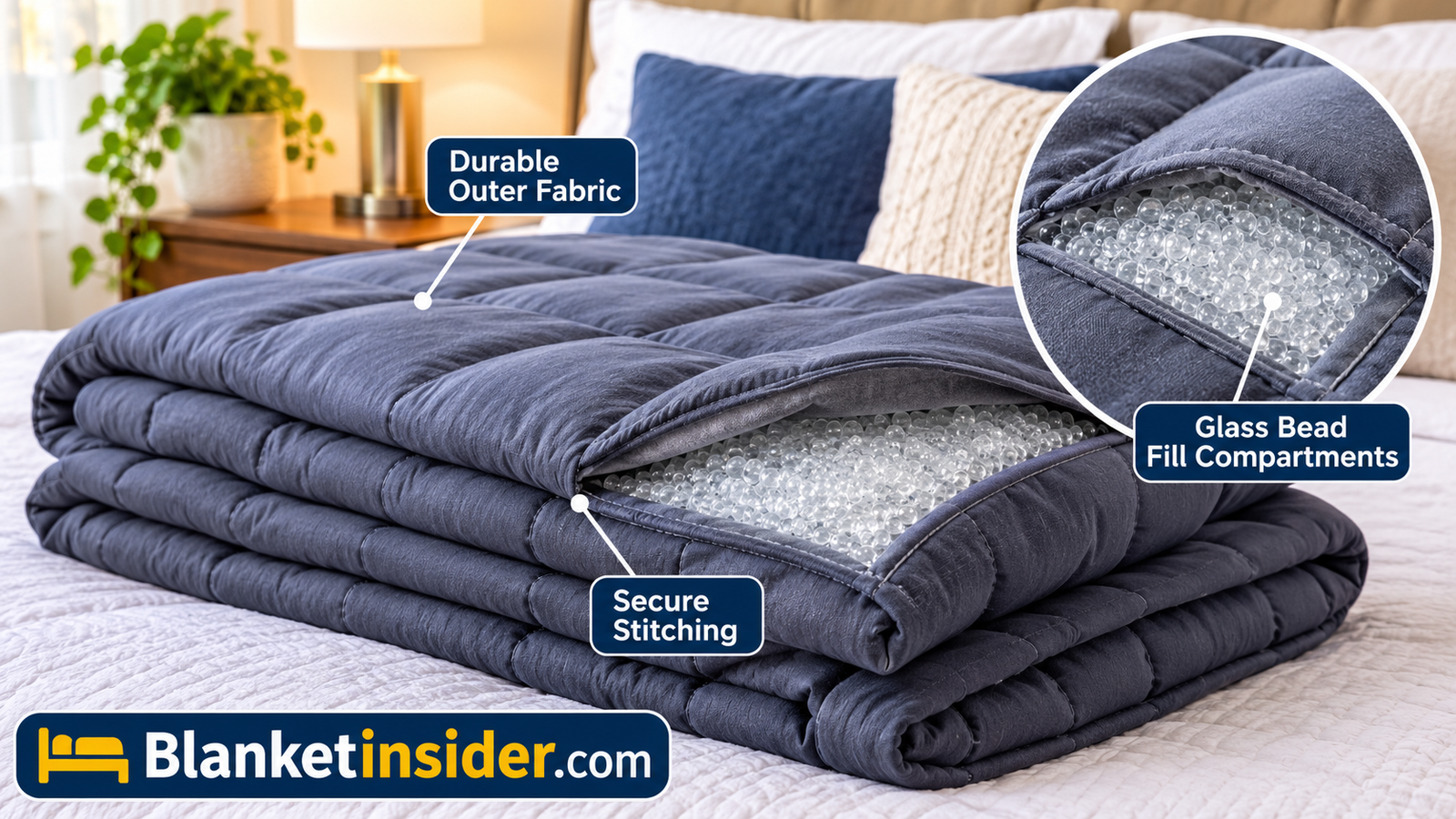
A weighted blanket is simply a blanket engineered to be heavier than normal bedding, usually by distributing dense fill — most often fine glass beads or plastic pellets — across stitched compartments so the weight stays even instead of pooling in one corner. That even, gentle pressure is what people describe as “deep pressure,” and it is the reason these blankets have moved from occupational therapy clinics into mainstream bedrooms.
But heaviness is a double-edged design choice. The same property that makes a weighted blanket comforting for a restless adult is the property that makes it unsuitable for an infant, risky for someone with a breathing condition, and uncomfortable for anyone who overheats at night. So the useful answer to “are weighted blankets safe?” is not a simple yes or no. It is a set of conditions.
Yes for most healthy adults and older kids — with clear exceptions
Used at an appropriate weight, on a suitable surface, by a healthy adult or supervised older child, weighted blankets are widely regarded as low-risk comfort bedding. They are not safe for infants under one year, they require caution with respiratory, circulatory and mobility conditions, and they should never be layered over electric bedding. If any of those situations describe you, the rest of this guide will tell you exactly what to do.
Before we go deeper, it helps to establish what weighted blankets actually are in the eyes of the market. They are sold as consumer comfort products, not as medical treatments. Plenty of brands market them with sleep and calm in mind, and plenty of people genuinely find them helpful, but no blanket replaces medical care, therapy, or a proper diagnosis. That framing matters, because “safe” and “suitable” are two different questions — and a product can be perfectly safe for one person and completely wrong for another.
We will work through the safety question the way a good buying guide should: first understanding what the blanket is doing to your body, then matching weight to person, then walking through the specific groups who need to be careful, then the practical risks people overlook — heat, fill materials, electrical hazards, physical strain, and long-term care. If you are brand new to this category, our complete weighted blanket guide covers the basics of construction and sizing, and our overview of what a weighted blanket actually does is a useful primer before you read the safety detail below.
And if you are specifically wondering whether something has gone wrong with a blanket you already own, our rundown of weighted blanket side effects is worth a quick read before you continue.
Ready to Compare Weighted Blankets?
See today’s most popular weighted blankets for adults.
Check Price on Amazon1. What “Safe” Really Means When You Ask About a Weighted Blanket
People use the word “safe” as if it were one single quality, but when you are talking about something that presses on your body for eight hours at a time, safety splits into several independent questions. A blanket can pass one test and fail another, and most of the bad experiences you read about online come from a blanket that was fine in general but wrong in a specific dimension.
There are five dimensions worth thinking about, and each one deserves its own answer.
Physical Safety
Can the weight itself hurt you? Crush risk, restricted breathing, circulation, joint strain and the ability to get out from under the blanket freely.
Developmental Safety
Is it appropriate for the age of the person underneath? This is where infants and very young children become a hard no.
Thermal Safety
Does the blanket push you into overheating? Heavy bedding traps more warmth than a normal duvet, which has real consequences for sleep quality.
Product Safety
Is the construction sound? Fill leakage, weak seams, chemical smells, exposed zippers and poor stitching all create avoidable hazards.
Psychological Safety
Does it create calm or panic? For some people, deep pressure is soothing; for others, it triggers claustrophobia or a sense of being trapped.
Interaction Safety
Does it conflict with something else you use, such as an electric blanket, a heated mattress pad, medication, or a medical device?
Why “safe for most people” is the honest answer
For a healthy adult of average strength and mobility, lying under a weighted blanket at a sensible weight is a low-risk activity. You are not being compressed in a medical sense; the pressure is distributed across a large surface area and is closer to the sensation of a heavy quilt or a firm hug than to anything restrictive. Most adults can throw a weighted blanket off at any moment, and most weighted blankets are designed to move and drape rather than lock you in place.
That is why the answer you will hear from most sleep and occupational therapy professionals is broadly reassuring — with footnotes. The footnotes are where people get hurt, and they are exactly the ones this article will spend the next eleven sections on.
Where the reassuring answer breaks down
The reassuring picture starts to crack in four situations. First, when the person underneath is an infant or a very small child, because the physics of heavy bedding on a small body is completely different. Second, when someone has a condition affecting breathing, circulation, or the ability to move freely. Third, when the blanket is far too heavy for the person using it, which is more common than you might think because weight charts are often applied carelessly. Fourth, when the blanket is combined with other heat sources or with poor-quality construction that fails over time.
A Useful Way to Think About It
Treat a weighted blanket more like a fitness tool than like a piece of furniture. A kettlebell is safe for a trained adult using sensible weight and catastrophic for a toddler. Blankets are not that dramatic, but the principle holds: the right dose for the right person is the whole game.
Safe versus suitable
There is a quieter version of this question that rarely gets asked: not “will this hurt me” but “will this actually suit me?” Plenty of people buy weighted blankets expecting instant deep sleep and instead find them warm, fussy and hard to make the bed with. None of that is dangerous, but it does mean the product is wasted money and a disappointed user. Suitability is worth investigating just as carefully as safety, and by the end of this guide you will have a clear picture of both.
It is also worth saying plainly: weighted blankets are not a treatment for insomnia, anxiety, ADHD, autism, or chronic pain. Many people find them a helpful comfort aid alongside other strategies, and we will look at that in detail later, but no blanket should delay a conversation with a qualified clinician about symptoms that are affecting your life.
Looking for a Safe Starter Blanket?
Browse adult weighted blankets with removable covers.
Check Price on Amazon2. How Deep Pressure Actually Works Inside Your Body
To judge whether a weighted blanket is safe, it helps to understand what it is doing to you. The sensation has a name in therapeutic circles — deep touch pressure — and it is the same broad sensation produced by a firm hug, a swaddled infant, a compression garment, or a heavy winter coat resting on your shoulders. Receptors in your skin and muscles respond to steady, distributed pressure, and the nervous system tends to read that signal as “settled” rather than “alert.”
Think of your arousal system like a volume dial. Stress, noise, screens, and worry all push the dial up. Deep pressure appears to nudge it down — not by knocking you unconscious, but by making it easier for your body to stop bracing. That is why people describe weighted blankets as “grounding,” and why the same blanket can feel enormously comforting to one person and slightly suffocating to another. The pressure is the active ingredient, and the dose-response is individual.
What the research actually shows
Research into weighted blankets has grown steadily, but it would be a stretch to call it settled. Some studies report improvements in self-rated sleep quality, reduced evening anxiety, and lower physiological markers of stress. Others find the effect is small, inconsistent, or partly explained by expectation and comfort rather than by pressure itself. Sample sizes are often modest, designs vary, and the blankets used in research are rarely identical to the ones sold online.
What we can say responsibly is this: deep pressure is a plausible mechanism with a reasonable physiological story behind it, weighted blankets appear helpful for a meaningful number of people, and the effect is not universal. Anyone promising that a weighted blanket will cure insomnia, eliminate anxiety, or replace therapy is overstating the evidence.
The mechanism theory in plain language
The common explanation you will read involves the autonomic nervous system. Steady pressure is thought to encourage a shift from the “fight or flight” branch toward the “rest and digest” branch, which in turn is associated with relaxation and easier sleep onset. Some explanations extend this to the calming of the stress response and the promotion of sleep-friendly chemistry. Treat these as working hypotheses rather than proven chains of cause and effect — they are reasonable, widely discussed, and not fully nailed down.
What is not in doubt is the subjective experience. Many users describe falling asleep faster, waking less often, and feeling less restless under a weighted blanket. Others feel hot, restricted, or anxious. Both responses are genuine, and neither one makes the blanket inherently safe or unsafe.
Why pressure quantity matters for safety
Here is where the mechanism connects directly to risk. If pressure is the active ingredient, then more pressure is not automatically better. Beyond a certain point, extra weight stops producing extra calm and starts producing restriction — heavier breathing effort, more trapped heat, more effort to turn over, and a greater chance of waking up uncomfortable. This is why blanket weight selection is not a matter of preference alone. It is a safety parameter.
It is also why “the heaviest one available” is a bad shopping strategy. Some buyers assume a heavier blanket will be more effective and choose by that logic alone. In practice, the sweet spot for most people is moderate, and going too heavy is the single most common reason a weighted blanket gets returned.
Expectation Matters Too
If you buy a weighted blanket expecting a medical treatment, you are likely to be disappointed. If you buy it expecting a comfortable, calming layer that might help you settle at bedtime, you are far more likely to be satisfied. Framing shapes experience more than most people admit.
If you want to read more about the anxiety question specifically, we have a dedicated breakdown of whether weighted blankets help with anxiety, plus a broader look at the best blankets for anxiety if a weighted option turns out not to suit you. And for people wondering whether nightly use is sustainable rather than just pleasant for a week, our guide to sleeping with a weighted blanket every night covers the practical reality.
Want to Feel the Pressure Difference?
Compare weighted blanket styles built for calm, steady pressure.
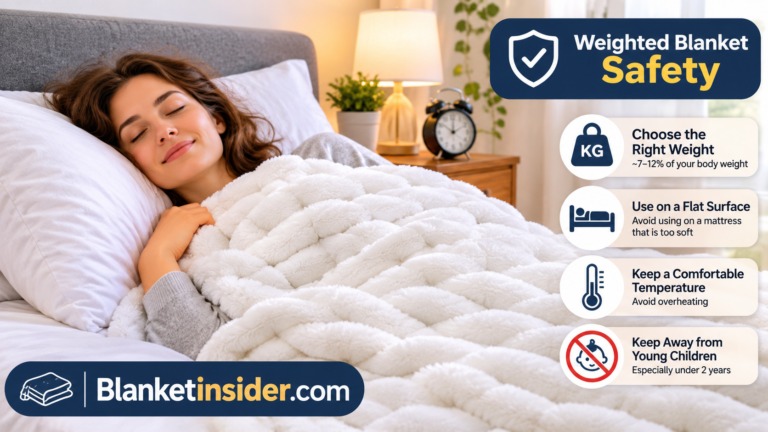
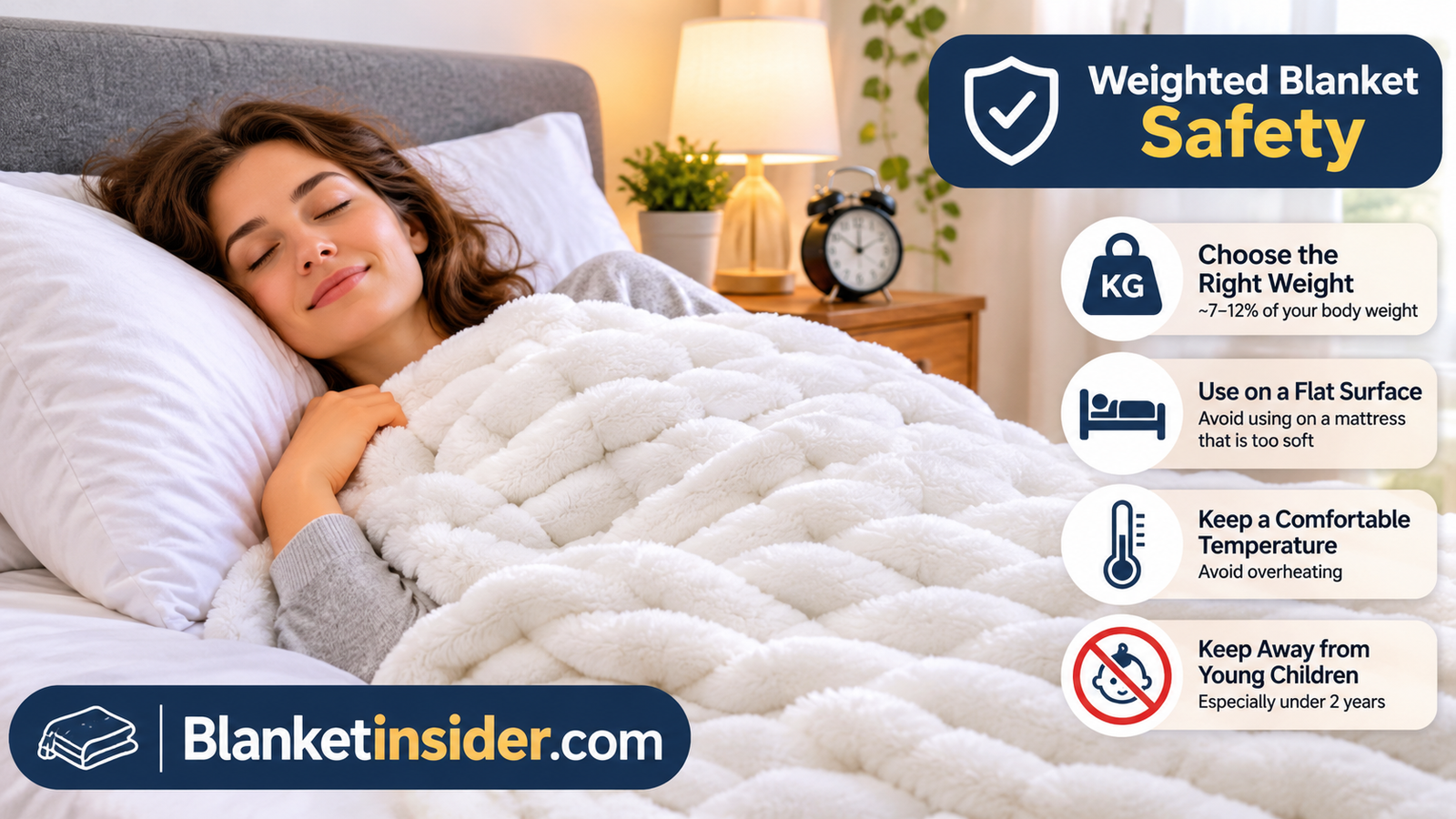
Check Price on Amazon3. Choosing a Safe Weight: The Rule Everyone Quotes and How to Use It Properly
Ask how heavy a weighted blanket should be and you will get the same answer almost everywhere: around ten percent of your body weight. That guideline exists for good reason — it reliably lands most adults in a comfortable, non-restrictive range — but it is a starting point, not a law of physics. Applying it blindly is one of the easiest ways to end up with a blanket that is either uselessly light or genuinely unpleasant.
The goal is simple to state: the blanket should feel like a firm, even hug. It should never feel like a load you have to fight. If you have to strain to turn over, if you wake up with pressure marks, or if you notice your breathing changing, the blanket is too heavy regardless of what the chart says.
| Body Weight Range | Commonly Cited Blanket Weight | Practical Notes |
|---|---|---|
| Under 60 kg / 130 lb | Around 4.5–6.8 kg / 10–15 lb | Err toward the lighter end if you are petite, older, or low in strength. |
| 60–80 kg / 130–180 lb | Around 6.8–9 kg / 15–20 lb | The most common adult range; most people land comfortably here. |
| 80–105 kg / 180–230 lb | Around 9–11.5 kg / 20–25 lb | Match weight to bed size so the blanket drapes rather than hangs. |
| Above 105 kg / 230 lb | Around 11.5 kg / 25 lb and up | Only if you are mobile and can lift the blanket easily; otherwise stay lighter. |
Two things are worth pointing out about that table. First, the ranges overlap, because comfort is not a formula. Second, the numbers describe blanket weight, not the combined weight of a blanket plus a heavy duvet. If you plan to use your weighted blanket as a top layer over other bedding, choose lighter than you otherwise would.
Why going lighter is usually the safer mistake
If you are torn between two weights, pick the lighter one. A slightly light blanket still delivers noticeable pressure and is far easier to move under, kick off, and launder. A slightly heavy blanket can cause exactly the problems this guide is about — trapped heat, restricted movement, and uncomfortable pressure on the chest and hips. You can always add a folded throw on colder nights; you cannot subtract weight from an over-heavy blanket.
Size matters as much as weight
Weight that is concentrated in a small blanket behaves very differently from the same weight spread across a large one. A weighted throw on a couch puts concentrated pressure on your lap and legs, which is exactly what many people want during the day. A weighted blanket sized for a bed spreads that weight across the whole body, including the chest and shoulders. Neither is wrong, but they are different experiences, and buying a weighted blanket the same size as your mattress is not automatically the best choice.
Blankets that hang over the sides of the bed also tend to slide off during the night, pulling weight toward the floor and leaving you with a partly off balance covering. A weighted blanket sized slightly smaller than the mattress — covering the sleeper without much overhang — usually stays put better and drapes more evenly. Our blanket size chart by bed size and our guide to the perfect throw blanket size both explain this in more detail, and our comparison of a throw versus a full blanket helps if you are choosing between couch and bed use.
Couples, sharing, and the weight trap
Couples run into a predictable problem: a blanket heavy enough for the larger partner is far too heavy for the smaller one. Sharing a single weighted blanket is one of the more common sources of “this isn’t working” feedback, and it has nothing to do with the product quality. The cleanest solutions are two separate weighted blankets side by side, or one shared blanket chosen to suit the lighter partner, layered over a normal duvet for the heavier one.
We cover the full range of options in our guide to the best weighted blankets for couples, and children’s sizing is a completely different conversation that we will handle in the next section. If you are deciding between weighted and traditional bedding altogether, our comparison of a weighted blanket versus a comforter lays out the trade-offs.
Skip the Ten Percent Rule Entirely If…
- You have limited mobility, weakness, or a condition affecting your ability to move freely in bed.
- You are buying for a child — children’s weights need far more conservative selection and adult supervision.
- You are pregnant, recovering from surgery, or managing a respiratory or circulatory condition.
- You are frail, elderly, or prone to falls and need to get out of bed quickly at night.
In any of those cases, talk to a clinician first and start with the lightest option available.
Not Sure Which Weight to Choose?
Browse weighted blankets across the full weight range.
Check Price on Amazon4. Weighted Blankets and Children: The Safety Line You Should Never Cross
This is the section where the answer stops being nuanced. Weighted blankets are not safe for infants. Not as a nap aid, not under supervision, not “just for a few minutes.” The safe sleep guidance for babies under one year is consistent and clear: a firm, flat sleep surface with no loose bedding, no soft items, no pillows, and no heavy or weighted coverings. A baby does not have the strength or coordination to move a heavy layer away from their face, and the consequences of restricted breathing in an infant are simply not worth any possible benefit.
If you are currently in the newborn stage and reading this at 2 a.m., the practical version is: skip weighted blankets entirely for now. Our guide to when a baby can sleep with a blanket covers the age milestones, and our comparison of a swaddle versus a sleep sack explains the safer alternatives. If you are still setting up the sleep space, our look at bassinets versus cribs versus playards is a good companion read.
What about toddlers and young children?
Older toddlers and preschoolers sit in a gray zone. There are weighted blankets marketed specifically for children, and occupational therapists do sometimes recommend weighted products for sensory support. But the rules change dramatically at this age. Children weigh much less, so the margin between “comforting” and “too heavy” is razor thin. A blanket that is a fraction of a kilogram too heavy becomes a much larger percentage of a child’s body weight than it would for an adult.
The safer approach for children is: choose a blanket on the very light end of any guideline, keep it sized to the child rather than the bed, use it only while awake and supervised at first, and involve a pediatrician or occupational therapist if the blanket is being used for sensory or behavioral reasons rather than ordinary comfort. Never let a young child sleep under a weighted blanket unsupervised until a professional who knows the child has said it is appropriate.
| Age Group | Weighted Blanket | What to Use Instead | Key Safety Note |
|---|---|---|---|
| Under 12 months | Not safe | Firm flat surface; swaddle only until rolling begins, then a sleep sack | No loose or heavy bedding of any kind in the sleep space |
| 1–3 years | Avoid | Sleep sack or wearable blanket; a lightweight blanket only if a clinician agrees | Young children cannot reliably free themselves from heavy layers |
| 4–11 years | Conditional | Light, child-sized weighted blanket under adult guidance | Keep weight at the low end; supervise at first; check seams for leaks |
| Teens | Generally fine | Adult-style selection based on body weight and mobility | Same precautions as adults; watch for overheating |
Product safety issues specific to children
Even when the weight is right, children’s products raise separate hazards. Fine glass bead fill is a choking risk if a seam splits and beads escape, so construction quality matters enormously for kids. Look for double-layer fabric, tight compartment stitching, concealed zippers, and no small detachable parts. Avoid blankets with long ties, decorative elements, or anything a curious child could pull free and put in their mouth.
Wash and inspect a child’s weighted blanket more frequently than an adult’s, and retire it the moment you see a leaking seam, thinning fabric, or exposed fill. Children are harder on bedding than adults, and a blanket that looks fine on a shelf may be failing in the places that matter.
Choosing safer bedding for babies in general
If you are shopping for a newborn right now and the weighted blanket question has made you cautious about bedding generally, that caution is healthy. Newborn bedding should be boring by design: fitted sheets, a firm mattress, and layered clothing or a sleep sack for warmth rather than loose blankets. Our guides to the best baby blankets, the best swaddle blankets, and the differences between a receiving blanket, swaddle and muslin will keep you right. If you have been wondering whether a receiving blanket and a swaddle are the same thing, that article clears up the confusion quickly.
Fabric choice matters for little ones too. Our comparison of minky versus fleece for baby blankets covers softness, warmth and washing — all the things parents actually care about at 3 a.m.
Shopping for a Child’s Blanket?
Look at lightweight, kid-sized options designed for supervised use.
Check Price on Amazon5. Health Conditions and Precautions: Who Should Check With a Clinician First
Most weighted blanket safety conversations focus on weight and age, and then stop there. That leaves out the group who actually needs the most careful thinking: adults living with a health condition that interacts with pressure, heat, restricted movement, or sensory input. None of this means you can never use a weighted blanket. It means the default “just buy one and try it” advice is not enough.
Below is a plain-language map of the conditions that deserve a conversation with a professional before you buy. It is not medical advice, and it is not a substitute for individual guidance — it is a checklist of the questions worth raising.
| Condition or Situation | Why It Matters With a Weighted Blanket | What to Do Before Using One |
|---|---|---|
| Asthma, COPD, sleep apnea | Extra weight across the chest can make breathing feel more effortful during sleep | Ask your clinician; if approved, use the lightest option and avoid covering the upper chest |
| Poor circulation, diabetes with neuropathy, clotting risk | Sustained pressure on limbs may be poorly tolerated when sensation or circulation is impaired | Seek individual advice; keep weight low and check skin regularly |
| Arthritis, fibromyalgia, chronic pain | Pressure can soothe or aggravate tender joints depending on the person and the weight | Trial a lighter blanket first; note how joints feel after a few nights |
| Claustrophobia, panic disorder, PTSD | Being covered by heavy layers can trigger a feeling of being trapped | Start with a lap blanket while awake; never use as a coping tool during acute distress |
| Mobility impairment or fall risk | Difficulty moving freely can turn a heavy layer into a practical obstacle | Prioritise the ability to get out of bed unaided; often better to avoid |
| Pregnancy or post-surgical recovery | Comfort needs change and pressure tolerance varies through recovery | Follow your own clinician’s guidance before adding weight to sleep |
| Autism or sensory processing differences | Deep pressure helps some sensory profiles and overwhelms others | Trial during waking hours first; consider occupational therapy input |
Respiratory conditions deserve special respect
Breathing is the one area where caution is not optional. Any condition that already makes breathing harder during sleep — obstructive sleep apnea being the obvious example — deserves a proper conversation before you add weight across the torso. The concern is not that a weighted blanket will smother a healthy adult; it is that sustained extra load on the chest can increase the effort of breathing in someone whose breathing is already compromised. If you use a CPAP machine or any other sleep device, ask how a heavy blanket interacts with your setup before assuming it is fine.
When pressure becomes a problem instead of a comfort
Deep pressure is not universally calming. For some people — particularly those with panic tendencies, trauma histories, or certain sensory profiles — the same sensation that feels like a hug to one person feels like confinement to another. The telltale signs are straightforward: a rising sense of panic, a need to get the blanket off immediately, shallow breathing, or a feeling of dread at bedtime. If any of that happens, the blanket is not for you, and that is not a failure of willpower.
A Practical Trial Protocol
Before committing to nightly use, try the blanket for twenty to thirty minutes while awake and resting, in daylight, with the room cool. Notice how your breathing feels, whether you can turn over comfortably, and whether your mood settles or tightens. A calm daytime trial tells you far more than a single anxious night.
Side effects worth recognising early
Most weighted blanket complaints are mild and reversible: feeling too warm, waking up tangled, sore shoulders from lifting the blanket, or a sense of heaviness that persists into the morning. These are signals about fit and weight rather than injuries. Ongoing discomfort, numbness, tingling, breathlessness, or skin irritation are different, and they are the point at which you stop using the blanket and seek advice.
Our full rundown of weighted blanket side effects goes into these in more detail, and our article on nightly use discusses what long-term use actually feels like. For sensory and attention-related questions, we also cover weighted blankets and ADHD, and for anyone managing skin sensitivity, our guide to the best blankets for eczema is useful alongside any weighted option.
For caregivers, there is another category worth knowing about: tactile, activity-based blankets designed for people living with dementia. These are a different product from weighted blankets, and our look at the best fidget blankets for dementia explains the distinction.
Want a Gentle, Low-Weight Option?
Start with a lighter weighted blanket while you test comfort.
Check Price on Amazon6. Heat, Breathability, and the Overheating Risk Nobody Warns You About
If there is one complaint that appears in almost every negative weighted blanket review, it is heat. Weighted blankets are, by construction, denser than normal bedding. Denser bedding traps more warm air, holds more moisture, and slows the release of body heat through the night. For a cold sleeper in winter, that is a bonus. For a hot sleeper, it can be the difference between restful sleep and a night of kicking covers off.
Overheating is not just uncomfortable. It fragments sleep, causes sweating and dehydration, and can be genuinely unpleasant for people whose temperature regulation is already tricky — anyone dealing with hot flushes, night sweats, certain medications, or hormonal changes will know exactly what this feels like. So thermal safety deserves as much attention as weight safety.
How fill and fabric decide how hot you get
Two variables control the thermal character of a weighted blanket: what is inside it and what touches your skin. Fine glass beads are dense and relatively thermally neutral, meaning they do not add insulation but they do hold the blanket’s shape tightly against you. Plastic pellets add more bulk per unit of weight, which can feel puffier and warmer. Knitted or open-weave weighted blankets have no loose fill at all and allow substantially more airflow, which makes them the standout choice for warm sleepers.
On the fabric side, the cover matters enormously — often more than the blanket itself. A plush minky or sherpa cover adds significant warmth. A cotton, bamboo-derived, or other breathable weave lets heat escape. Many weighted blankets ship with a cover you can swap, which is the single most useful feature for anyone worried about temperature.
| Blanket or Cover Type | Heat Retention | Breathability | Best Suited To |
|---|---|---|---|
| Knitted / open-weave weighted | Low | Excellent airflow through the structure | Hot sleepers, summer use, warm climates |
| Cotton-covered, glass bead fill | Moderate | Good; natural fibre wicks moisture | Year-round use for most sleepers |
| Bamboo-derived or lyocell cover | Low to moderate | Very good; smooth and cool to the touch | Warm sleepers who still want a duvet-style blanket |
| Plush minky or sherpa cover | High | Limited; pile traps warm air | Cold sleepers and winter months |
Practical ways to use a weighted blanket without overheating
- Swap the cover seasonally. A breathable cover in warm months and a plush one in winter gets far more value from a single blanket.
- Layer down underneath. Use a lighter sheet set and thinner pyjamas when the weighted blanket is on.
- Lower the room temperature. A cooler bedroom makes a dense blanket far more tolerable.
- Choose the lightest weight that still feels comforting. Extra weight means extra contact and extra trapped air.
- Consider a knitted style. If you have tried a bead-filled blanket and found it too warm, an open-knit design is a genuinely different experience.
- Give it a week of adjustment. Your body adapts to a new thermal load, but if you are still overheating after a week, the blanket is wrong for you.
When heat is a real warning sign rather than an annoyance
Feeling warm under a blanket is normal. Feeling flushed, dizzy, excessively sweaty, or waking with a headache is not, and those are reasons to stop. People who have difficulty regulating body temperature, who are unwell with fever, or who are taking medication that affects sweating or thermoregulation should be especially conservative. As with everything in this guide, the pattern matters more than any single night.
There is an entire world of bedding built specifically for warm sleepers. Our cooling blanket guide covers the category, and our picks for the best blankets for night sweats address the most common complaint directly. If you are choosing between materials, the comparison of bamboo versus cotton blankets, the differences between a cooling blanket and a regular blanket, and our roundup of the best bamboo blankets are all worth reading.
Material fundamentals matter too: our guide to blanket materials, the comparison of cotton versus polyester, and the breakdown of microfiber versus cotton will make every future bedding decision easier. Humid climates are their own challenge, which we cover in bamboo versus cotton sheets for humid weather, and if you end up with a cooling blanket you will want our guide to washing cooling blankets without damaging their performance.
Sleep Hot But Love the Weight?
Explore breathable weighted blankets built for warm sleepers.
Check Price on Amazon7. Fill Materials and Construction: What Is Inside Your Blanket Matters More Than You Think
Weighted blanket marketing tends to focus on the cover — how soft it is, how it looks folded at the foot of the bed. The safety-relevant part is what you cannot see: the fill and the stitching that keeps it in place. Fill choice affects weight distribution, temperature, noise, durability and, crucially, what happens if the blanket is damaged.
The main fill types and what they mean for you
| Fill Type | Strengths | Watch Out For | Best For |
|---|---|---|---|
| Fine glass beads | Dense and low-bulk, so the blanket stays thin and drapes closely | Spilled beads are a choking hazard for children and pets; requires tight seams | Adults who want a slim, quiet, close-fitting blanket |
| Plastic poly pellets | Lightweight per unit, widely used and generally inexpensive | Bulkier, can feel lumpy, and some people notice rustling | Budget options and children’s blankets with strong construction |
| Knitted / woven (no loose fill) | Nothing to leak, excellent airflow, machine-friendly care | Can stretch and lose shape over time; heavier for its size | Hot sleepers and anyone worried about fill leakage |
| Natural or organic fills | Appealing to people avoiding synthetics; often breathable | Can shift and clump, may attract moisture, often harder to clean | Eco-focused shoppers who will follow careful washing routines |
Construction quality is a safety feature
A weighted blanket lives or dies by its compartments. These are the stitched squares or channels that keep fill from migrating into one heavy lump at the bottom of the bed. When compartments are large or poorly stitched, fill shifts with use and washing, and you end up with an uneven blanket that presses hard in some places and not at all in others. That is a comfort problem first, but it becomes a safety problem when uneven weight concentrates on the chest or hips.
- Small, evenly stitched compartments keep weight distributed across your body instead of pooling.
- Double-layer fabric around the fill reduces the chance of beads working through the weave.
- Reinforced seams and strong zips survive repeated washing without failing.
- Concealed or covered zippers avoid scratchy hardware against skin and snagged bedding.
- Ties at the corners hold an optional duvet cover in place and stop the blanket sliding.
Chemical smells and material sensitivities
New bedding sometimes has a factory smell, and weighted blankets are no exception. A mild scent that fades with airing is normal. A strong chemical odour that persists after washing is not, and it is a reasonable reason to return a product — particularly if you have asthma, allergies, or skin sensitivities. Look for independent textile certifications where available, read care labels carefully, and give any new blanket a wash before first use if the manufacturer allows it.
Skin contact matters too. If the blanket is the only layer between you and the fill, the cover fabric is doing double duty. Plush textures like minky and sherpa are wonderfully soft but warmer; smoother weaves are cooler and easier to keep clean. Our explanation of what minky fabric actually is, our guide to sherpa blankets, and our full chenille blanket guide all help you match texture to tolerance. For the plush-versus-smooth decision, our comparison of minky versus fleece is short and practical.
Storing a weighted blanket without damaging it
Weighted blankets are heavy, and heavy things stored badly deform. Folding one tightly into a small basket compresses the fill and strains the seams; hanging one for months on a thin hook distorts the shape. The best storage is loose and horizontal — a breathable bag on a shelf, or folded in a chest with room around it. Our picks for blanket storage bags cover the breathable options worth buying.
Want a Blanket Built to Last?
Compare weighted blankets with reinforced compartment stitching.
Check Price on Amazon8. Fire, Electrical, and Static Safety: The Overlap Most Buyers Never Consider
Weighted blankets are not electric products, which lulls people into thinking there is nothing electrical to discuss. In reality, the biggest electrical risk involving a weighted blanket is not the blanket itself — it is what people layer it with. Combining a dense, insulating blanket with an electric blanket or a heated mattress pad is a genuinely poor idea, and it is worth explaining exactly why.
Never stack a weighted blanket on top of electric bedding
Electric blankets and heated mattress pads work by generating warmth through embedded wiring and releasing it into the bedding above. Place a heavy, close-fitting weighted blanket on top and you do two things: you trap that heat far more efficiently than intended, and you apply constant pressure to the heating element and its wiring. Most electric bedding manufacturers explicitly instruct users not to place heavy items on top of the heating layer for exactly this reason.
The practical risks are overheating of the bedding, damage to internal wiring from sustained pressure and folding, and a build-up of heat that can disturb sleep or, in a damaged unit, create a real hazard. If you want both warmth and weight, use them separately: the heated layer as a pre-warm before bed and the weighted blanket on its own once you are settled, or choose a heavier conventional duvet for warmth instead.
Hard Rules for Electrical Bedding
- Do not place a weighted blanket over an electric blanket or heated mattress pad.
- Do not fold, bunch, or pin electric bedding, and do not sit on it.
- Stop using any heated product that shows fraying, scorching, exposed wiring, or damaged controls.
- Follow the manufacturer’s instructions on unattended use; when in doubt, switch off before sleeping.
- Never use electric bedding that has been washed incorrectly or dried on high heat.
Static electricity: annoying, rarely dangerous
Static shocks from bedding are common in dry winter air, especially with synthetic fabrics. They are startling and unpleasant, but a static discharge from a blanket is very unlikely to start a fire — the energy involved is tiny. That said, static can be a nuisance that disrupts sleep, and it is worth managing: keep bedroom humidity up, choose natural-fibre or blended covers where possible, avoid overdrying bedding, and use a dryer sheet or wool dryer balls as the manufacturer allows.
If static and bedding fires are on your mind, our article on whether static electricity from a blanket can cause a fire covers the physics and the practical risk honestly.
General bedroom fire safety still applies
Whatever you sleep under, the basics remain the same. Keep candles, cigarettes, space heaters, and portable heat sources well away from bedding. Do not drape blankets over lamps or radiators. Check that smoke alarms work. If you use any heated bedding, inspect it before each season rather than assuming it survived storage intact. Our guide to electric blanket safety covers the whole topic in detail, including the questions we hear most: whether you can leave one on all night, how much electricity they use, and how long they typically last.
If you are weighing heated bedding against other ways to warm a bedroom, our comparison of heated blankets versus space heaters and our look at heated blankets versus heated mattress pads are both genuinely useful. And when a heated blanket eventually needs cleaning, do it properly — our guide to washing a heated blanket safely prevents the most common cause of damage.
Prefer Warmth Without Wiring?
Shop insulated blankets that need no electricity at all.
Check Price on Amazon9. Movement, Mobility, and Physical Strain: The Risks That Have Nothing to Do With Sleep
There is a category of weighted blanket problem that never shows up in weight charts: the sheer practical difficulty of handling a heavy object every day. Making the bed, pulling covers up, turning over in the night, getting out of bed quickly, or simply moving the blanket to wash it — all of these are harder with ten extra kilograms of glass beads, and the strain accumulates.
Making the bed becomes a workout
Ask anyone who owns a weighted blanket and they will tell you the same thing: the first week is a learning curve. Lifting and spreading a weighted blanket repeatedly puts load on the lower back, shoulders and wrists, and if you already deal with joint pain or limited strength, this can be a daily irritation rather than a one-off. Smaller, lighter weighted blankets — including weighted throws sized for one person — sidestep most of this, which is one reason many people prefer a throw on the couch to a bed-sized blanket.
Turning over and getting out of bed
Night-time movement is the other practical concern. Under a heavy blanket, rolling over takes more effort, and if you are the kind of sleeper who gets up at night — for the bathroom, for a child, for any reason — the blanket becomes a small obstacle each time. For a fit adult this is trivial. For an older adult, someone recovering from surgery, or anyone with a fall risk, it is not.
The rule of thumb is simple: if you cannot throw the blanket off and stand up quickly and easily, it is too heavy for you. That single test covers a surprising amount of the mobility risk in one sentence.
Pressure on joints and sensitive areas
Weighted blankets press on whatever is underneath them. For people with shoulder, hip, or knee sensitivity, concentrated pressure on a sore joint can aggravate rather than soothe. Side sleepers often find the weight lands awkwardly on the hip and shoulder; back sleepers usually tolerate it better. If you sleep on your side and want to try a weighted blanket, choose lighter and consider draping it only from the waist down.
Where the Physical Side Works Well
- Steady, gentle pressure on a healthy adult body
- Weighted throws used while sitting are easy to manage
- Calming for people who fidget or feel restless at bedtime
- Can reduce the urge to pile on multiple heavy layers
Where Physical Problems Appear
- Back and shoulder strain from lifting during bed-making
- Difficulty turning over or exiting bed at night
- Aggravated pressure on sore joints and side-sleeping hips
- Weighted blankets left on the floor become a trip hazard
Children and pets are a special case
We have already covered children at length, but pets deserve a mention too. A small dog or cat cannot free itself from a heavy blanket, and curious animals can chew through a cover and ingest fill material. Keep weighted blankets off pet beds, and if your animal shares your bed, make sure the blanket is never draped over them. If your pet has an unusual relationship with blankets altogether, our article on why cats lick blankets is a fun and surprisingly informative read.
For people who like the idea of covered comfort during the day without the weight-management problem, wearable blankets with sleeves are worth considering, and a small weighted throw used on the couch sidesteps almost every mobility issue. Our guide to what to use a small blanket for covers lap, pet and travel uses. If you are torn between weighted and down bedding altogether, our comparison of a down versus a weighted blanket lays out the practical differences. And for pet households, our picks for the best pet blankets keep the good blankets clean.
Want Weight Without the Bulk?
Look at lighter weighted throws for couch and lap use.
Check Price on Amazon10. Mental Health and Neurodiversity: Realistic Expectations About What a Blanket Can Do
Much of the enthusiasm around weighted blankets comes from people looking for help with anxiety, insomnia, ADHD, autism spectrum differences, or the general difficulty of winding down at the end of the day. That enthusiasm is understandable, and many people genuinely benefit — but the gap between “helpful comfort aid” and “treatment” is where disappointment, and sometimes risk, creeps in.
What weighted blankets can reasonably do
Used well, a weighted blanket can be one element of a calming bedtime routine. It can give you a physical anchor when your mind is racing, help some people settle more quickly, and make the transition into sleep feel more contained and deliberate. For people who fidget, who feel ungrounded, or who find ordinary bedding too insubstantial, that sense of steady pressure is often the missing piece.
They are also simply pleasant, and there is no shame in buying one for comfort rather than for a clinical reason. Comfort has real value, and a good night’s sleep supports nearly everything else you are trying to do.
What they cannot do
- They do not treat anxiety disorders, depression, ADHD, autism, PTSD, or insomnia on their own.
- They do not replace therapy, medication, or an assessment from a qualified professional.
- They do not work for everyone, and a poor response is not a sign that you did it wrong.
- They are not a crisis tool. If you are in acute distress, reach out to appropriate support rather than reaching for a blanket.
Neurodiversity: the same blanket, two opposite experiences
Sensory profiles vary enormously. One autistic person may find deep pressure profoundly regulating and use a weighted blanket every night; another may experience the same pressure as overwhelming and distressing. The same is true for people with sensory processing differences, ADHD, anxiety, or trauma-related hypervigilance. There is no universal response, and the only way to know is a careful, low-stakes trial.
How to Trial Without Pressure
Start with a lighter blanket in a low-demand moment — reading on the sofa in daylight — rather than at bedtime when you are already tired. Note what happens in your body over ten or fifteen minutes. If it feels good, extend the trial gradually. If it feels wrong, stop; nothing is lost.
Children, attention, and sensory needs
Parents often ask whether a weighted blanket will help a child who struggles to settle, focus, or self-regulate. The honest answer is that some children respond well and others do not, and the safest and most effective route usually runs through an occupational therapist who can assess the child’s sensory profile and recommend appropriate weight, timing and supervision. A blanket chosen at random for a child is far more likely to be the wrong weight than one chosen with professional input.
We go deeper into the anxiety question in do weighted blankets help with anxiety and into attention-related use in weighted blankets and ADHD. If you want the wider landscape of calming bedding options, our guide to the best blankets for anxiety covers weighted, warm and textured alternatives, and our honest weighted blanket review gives a realistic picture of what owning one is actually like.
Building a Calmer Bedtime Routine?
Pair a weighted blanket with the right bedding layers.
Check Price on Amazon11. Care, Cleaning, and Long-Term Safety Maintenance
A weighted blanket that is well cared for stays safe and comfortable for years. A neglected one becomes a hygiene problem, develops uneven fill, and quietly loses the construction integrity that keeps the weight where it belongs. Care is not a boring footnote in a safety guide — it is one of the places where safety actually lives over time.
Washing without wrecking the fill
The number one mistake is treating a weighted blanket like ordinary bedding. These are heavy, dense objects that stress washing machine drums, absorb enormous amounts of water, and can be damaged by aggressive spin cycles. The safest approach is almost always to use a removable cover and wash that frequently, cleaning the inner weighted blanket only occasionally and carefully.
- Read the label first. Fill type dictates care; glass bead and natural fill blankets have very different limits.
- Use a large-capacity machine. A cramped drum prevents proper rinsing and puts strain on seams.
- Go gentle. Mild detergent, cool or warm water, low spin, no bleach and no fabric softener where the manufacturer advises against it.
- Dry thoroughly. Damp fill clumps and can develop odour or mildew; air-dry flat or use low heat if permitted.
- Never dry clean unless specified. Some solvents and processes damage fill materials.
We have step-by-step detail in our guide to how to wash a weighted blanket, and a more targeted version on washing without ruining the fill. If your household also has wool, plush or heated bedding, we cover how to wash a wool blanket and how to wash a minky blanket as well.
Hygiene, allergies and dust
Bedding collects skin cells, moisture, dust and allergens, and a dense blanket is no exception. If you have allergies or asthma, wash the cover regularly and give the inner blanket a full clean according to its care instructions at sensible intervals. Air the bed during the day rather than pulling covers up tightly straight away, and let sunlight into the room when you can. A blanket that smells musty or feels damp is not a blanket you should be sleeping under until it has been properly cleaned and dried.
Inspecting for damage
Make a habit of checking seams, zips and fabric wear when you change bedding. Look for loose threads, thinning areas where fill is becoming visible, broken zippers, and any escaping beads. Any of those is a retirement signal, particularly in a home with children or pets. A weighted blanket in good repair is safe; a failing one introduces choking, hygiene and comfort problems all at once.
Storing between seasons
When warm weather arrives and the weighted blanket goes away for a while, store it clean, completely dry, and loosely folded in a breathable container. Avoid vacuum-sealing for long periods — compression stresses fill and seams. A breathable storage bag on a shelf is ideal, and a chest or trunk that gives the blanket room to sit without being crushed works well too.
For storage solutions, see our picks for blanket chests and storage trunks, our guide to blanket baskets, and if you prefer your blankets on display, our look at blanket ladders covers the display-friendly options.
Keep Your Blanket Fresh for Years
Shop washable weighted blankets with removable covers.
Check Price on Amazon12. Buying Smart: Labels, Red Flags, and Matching the Blanket to the Person
By this point you know what makes a weighted blanket safe in principle. The final step is turning that knowledge into a purchase that actually suits the person who will use it. The market is crowded, marketing claims are vague, and two blankets at the same weight can feel completely different. Here is how to choose well.
Red flags to walk away from
- No fill disclosure. If a listing will not tell you what is inside the blanket, that is deliberate.
- Weight described only as “heavy”. You need an actual number, and ideally the blanket size too.
- No care instructions. A weighted blanket you cannot clean properly will not stay hygienic.
- Health claims that sound like treatment. Blankets are comfort products, not cures.
- Strong chemical smell in reviews. Persistent odour suggests poor materials or quality control.
- Visible complaints about leaking beads. This is the clearest sign of weak construction.
- One-size-fits-all weight. There is no such thing; weight must match the person.
Matching the blanket type to the person
| Blanket Style | Best For | Why It Fits |
|---|---|---|
| Slim glass-bead duvet style | Most adults, back sleepers | Drapes close to the body, distributes weight evenly, stays relatively thin |
| Open-knit weighted blanket | Hot sleepers, warm climates | No loose fill to leak and far more airflow through the weave |
| Lightweight or child-sized | Older children, petite adults, first-time users | Lower weight means a gentler introduction and easier handling |
| Weighted throw with cover | Couch use, travel, daytime calming | Easy to manage, low mobility demand, simple to clean |
| Plush-covered weighted blanket | Cold sleepers, winter months | Adds warmth alongside weight; swap for a breathable cover in summer |
What well-known options look like in practice
Different brands take genuinely different approaches to the same problem, and reading how they handle weight distribution, covers and sizing is far more useful than comparing star ratings. Some emphasise glass bead fill with compartment quilting and removable covers; others use knit construction with no loose fill at all; others focus on breathable natural covers for warm sleepers; and several offer lighter weights specifically for children or first-time users.
If you want detailed, hands-on style evaluations rather than marketing summaries, we have reviewed the most discussed options individually — including the Gravity Blanket, Bearaby Tree Napper, YnM weighted blanket, Luna weighted blanket, Baloo weighted blanket, Layla weighted blanket and the Degrees of Comfort weighted blanket. We have also covered the Bearaby weighted blanket range more broadly and the Cozy Earth blanket for anyone prioritising breathable natural covers.
Weighted blankets versus other bedding
It is worth stepping back occasionally and asking whether a weighted blanket is even the right category for your problem. If your issue is temperature rather than restlessness, a cooling blanket may serve you far better. If it is warmth in winter, a heavier conventional duvet might be simpler. If it is ease of care, a lighter blanket you can wash without a trip to a laundromat wins every time.
Our comparisons cover the main decision points: weighted blanket versus comforter and the best weighted blankets for couples for shared beds, plus our overall roundup of the best weighted blankets if you would rather see the shortlist first.
Ready to Choose With Confidence?
Compare weighted blankets by weight, fill and cover type.
Check Price on AmazonFrequently Asked Questions About Weighted Blanket Safety
These are the questions readers ask most often, answered plainly so you can act on them rather than wade through more research.
Are weighted blankets safe for everyday use?
For most healthy adults and older children, yes — used at an appropriate weight and in a comfortable environment. The concerns that matter most are age (never for infants), the person’s health conditions, and how heavy the blanket is relative to their body. Used sensibly, a weighted blanket is ordinary comfort bedding rather than anything hazardous.
Can a weighted blanket be too heavy?
Absolutely, and it is the most common mistake buyers make. Too much weight creates pressure on the chest, makes turning over difficult, traps more heat, and can leave you feeling restricted rather than comforted. If you have to strain to move under it or to throw it off, it is too heavy regardless of any guideline.
Are weighted blankets safe for babies or toddlers?
No — weighted blankets should never be used for infants under one year, and they are strongly discouraged for very young children. Safe sleep guidance calls for a firm, flat surface free of loose or heavy bedding. For older children, only very light, child-sized options should be considered, ideally with guidance from a pediatrician or occupational therapist.
Can weighted blankets cause breathing problems?
For a healthy adult, a correctly weighted blanket should not affect breathing. For someone with asthma, COPD, sleep apnea, or another respiratory condition, weight across the chest can make breathing feel more effortful during sleep. Anyone with a breathing condition should talk to a clinician first and, if they proceed, choose the lightest option and avoid covering the upper chest.
Do weighted blankets make you overheat?
They can. Dense blankets trap more warm air than standard bedding, and plush covers make this worse. Hot sleepers should look for breathable covers, open-knit designs, lighter weights and a cooler bedroom. If you consistently wake up sweating, the blanket is wrong for you rather than something to push through.
Can I use a weighted blanket with an electric blanket?
No, this combination should be avoided. A heavy weighted blanket traps heat from the electric layer and applies sustained pressure to its wiring. Use them separately instead — warm the bed first, then use the weighted blanket on its own.
What weight should my weighted blanket be?
The commonly cited guideline is roughly ten percent of body weight, adjusted downward for children, older adults, and anyone with mobility or health considerations. When torn between two options, choose the lighter one. The goal is a firm, even hug — never a load you have to fight.
Are weighted blankets safe during pregnancy or after surgery?
This is one for your own clinician rather than a general guide. Comfort needs, pressure tolerance and mobility all change through pregnancy and recovery, so individual advice is the only responsible answer. If you do use one, keep weight low and make sure you can move freely.
Can weighted blankets cause pain?
They can aggravate sensitive joints, particularly for side sleepers, where weight tends to concentrate on the hip and shoulder. Soreness after use is a sign to reduce weight or change how the blanket is draped. Persistent pain, numbness or tingling is a reason to stop using the blanket and seek advice.
How do I wash a weighted blanket safely?
Wash the removable cover frequently and the inner blanket only occasionally. Use a large-capacity machine, mild detergent, gentle cycles and low heat or flat drying. Never assume it can be washed like ordinary bedding, and check the care label first — fill type dictates what is safe. Our full washing guide walks through the details.
Are weighted blankets safe for people with anxiety?
Many people with anxiety find deep pressure genuinely calming, and weighted blankets can be a useful part of a wind-down routine. However, some people experience the pressure as confinement or panic-inducing. Trial the blanket while awake first, and remember it complements rather than replaces professional support.
How long do weighted blankets last?
That depends on construction quality and care. Compartment stitching, fabric weight and how the blanket is washed all matter. Retire a blanket when seams start leaking fill, fabric thins noticeably, or the weight becomes unevenly distributed — those are safety issues as much as comfort ones.
Still Deciding on a Weighted Blanket?
Browse top-rated options and compare features side by side.
Check Price on AmazonFinal Verdict: Are Weighted Blankets Safe?
Yes — for most healthy adults and older children, used at the right weight, in the right conditions, from a well-made product. That is the honest, unglamorous answer, and it holds up across everything we have covered.
The safety question was never really about the blanket as an object. It was about the match between the blanket and the person underneath it. A ten-kilogram blanket is a comfort for one sleeper, a hazard for an infant, a nuisance for a hot sleeper, and a genuine obstacle for someone with limited mobility. Get the match right and weighted blankets do what they promise: they make bedtime feel calmer, more contained and more restful.
So before you buy, run through the essentials. Choose weight carefully and err light. Keep weighted blankets entirely away from babies. Be cautious with respiratory, circulatory and mobility conditions, and ask a clinician when in doubt. Never layer one over electric bedding. Choose breathable materials if you sleep warm, and buy construction quality you can inspect — good compartment stitching, strong seams, a washable cover. And give yourself an honest trial period, because the right blanket reveals itself over a week of use rather than a single night.
- Right weight for the person, erring on the lighter side
- Never for infants or unsupervised young children
- Clinician input for breathing, circulation, mobility or pregnancy
- No electric blanket or heated pad underneath
- Breathable materials if you are a warm sleeper
- Solid construction with even compartment stitching
- Regular inspection, proper washing and correct storage
If you are ready to move from research to shopping, our roundup of the best weighted blankets is the natural next step, and our weighted blanket guide covers sizing and construction in more depth. Wherever you land, choose the blanket that fits the person, not the one with the most impressive number on the label.
Find Your Ideal Weighted Blanket
Compare today’s options by weight, material and cover.
Check Price on Amazon