How to Wash a Wool Blanket Without Shrinking, Felting, or Ruining It
A complete, fiber-first guide to cleaning wool blankets by hand or machine, removing stains safely, and drying them so they keep their softness and shape for years.
Wool is one of the most forgiving fibers to own and one of the least forgiving to wash carelessly. Toss a wool blanket into a hot machine cycle with the wrong detergent and you can end up with a stiff, matted, several-sizes-smaller version of what you started with. Wash it correctly, though, and a good wool blanket can outlast almost anything else in your linen closet. This guide walks through exactly how to do that — from reading the label to the final reshape-and-dry step — whether you’re caring for a lightweight throw or a heavy full-size wool bed blanket.
Understanding Your Wool Blanket Before You Touch a Drop of Water
Not all “wool” is the same fiber, and how a blanket is constructed changes how much abuse it can take. Before you decide on a washing method, it helps to know what you’re actually holding.
Most wool blankets fall into one of a few categories: tightly woven virgin wool (common in traditional bed blankets), merino wool (finer, softer, and generally more delicate), lambswool, and wool-blend blankets that mix in acrylic, cotton, or polyester for durability and easier care. A blend blanket behaves very differently in the wash than 100% wool — blends are usually more machine-friendly, while pure wool is the fiber most likely to felt if it’s agitated in warm water.
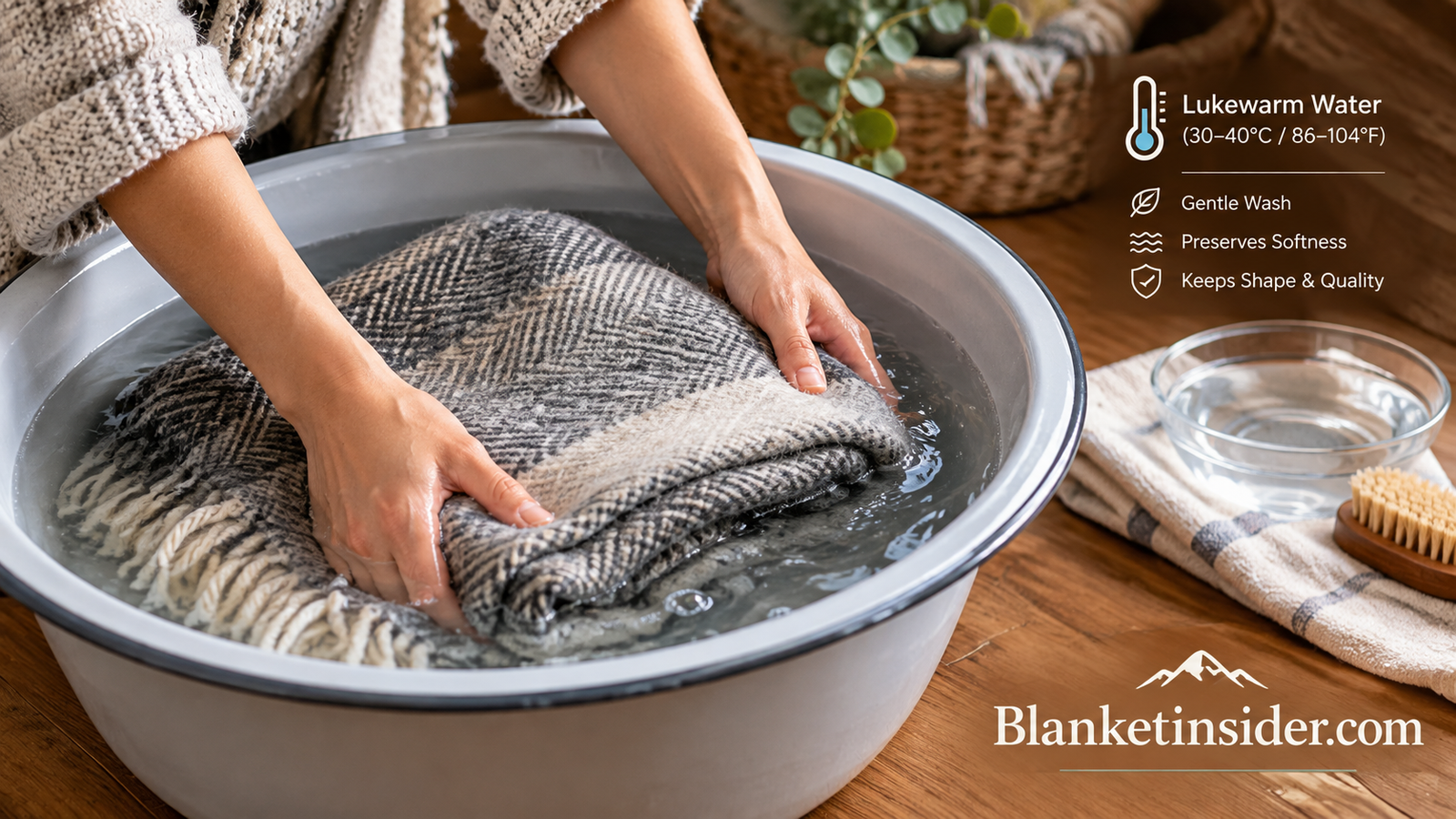
Felting happens when the microscopic scales on a wool fiber open up under heat, moisture, and friction, then lock together permanently as the fiber cools and dries. Once that happens, there’s no undoing it — the fabric becomes dense, stiff, and smaller than it was. That single fact drives almost every rule in this guide: keep the water temperature stable, keep agitation minimal, and never combine hot water with vigorous movement.
Knowing the weave also matters. A loosely woven, low-density throw can usually tolerate a gentle hand wash with more confidence than a dense, felted-look wool blanket, which is often pre-felted on purpose and needs almost no agitation at all to avoid over-shrinking further. If you’re unsure what you own, treat it as delicate until proven otherwise — it’s a lot easier to be cautious upfront than to repair a shrunken blanket afterward. For a deeper look at how wool compares to other common fills, our guide on wool vs. fleece blankets breaks down fiber behavior side by side, and if your blanket is a merino piece specifically, cashmere wool vs. merino wool covers why merino needs slightly gentler handling than coarser wool.
Weight and thickness are worth factoring in too, since they affect how much water a blanket absorbs and how long it takes to dry. A heavy double-weave wool bed blanket can hold several times its dry weight in water once fully soaked, which changes how you need to support it when lifting it out of a basin and how much time you should budget for drying. A lightweight lambswool throw, by contrast, behaves more like a large scarf — quick to soak, quick to rinse, and quick to dry — but its finer fibers can also be more prone to stretching out of shape if it’s handled while sopping wet. Matching your handling technique to the actual weight and density of the piece in front of you, rather than following one generic set of instructions for “wool,” is what separates a blanket that lasts a decade from one that needs replacing after a single bad wash.
It’s also worth thinking about how the blanket was originally constructed. Woven blankets, knitted blankets, and needle-punched or boiled-wool pieces all respond differently to moisture because the way the yarns interlock changes how easily they can shift and lock together. A woven blanket has a more stable structure and tends to resist felting slightly better than a loosely knitted one, where individual loops of yarn have more freedom to migrate and tangle under agitation. None of this means knitted wool blankets can’t be washed at home — it simply means the margin for error is a little smaller, and the gentle, low-agitation approach described later in this guide becomes even more important.
Not sure what your blanket is made of? A fabric magnifier makes fiber ID easy.
Check on AmazonReading the Care Label (And What to Do If There Isn’t One)
The care label is the single most reliable piece of information you have, and it’s worth decoding properly rather than skimming it. A hand-wash symbol (a basin with a hand in it) means the manufacturer has tested the fabric and determined it can tolerate careful hand washing. A washtub with an “X” through it means don’t wash at all — dry clean only. A washtub with a number inside indicates the maximum safe water temperature in Celsius, and a single underline beneath the tub means use a gentle or delicate cycle if you do machine wash.
If the label has faded, been cut out, or never existed (common with older or handmade blankets), assume the most cautious approach: cold water, hand washing, and flat drying. You can always test on a small hidden corner — like a corner of the binding or an inside seam allowance — before committing the whole blanket to a method.
Care labels are also required to disclose fiber content by percentage, which is worth reading alongside the wash symbols rather than on its own. A blanket labeled “80% wool, 20% acrylic” will generally tolerate slightly more handling than one labeled “100% wool,” since the synthetic fiber blended in adds a degree of structural stability that pure wool doesn’t have. If the percentage isn’t listed anywhere, a quick burn test on a small loose thread (performed carefully, away from the blanket itself) can help distinguish natural wool from synthetic blends — wool tends to curl and self-extinguish with a faint burning-hair smell, while synthetics typically melt and continue burning with a sweeter, plastic-like odor.
| Label Symbol | Meaning | Safe Action |
|---|---|---|
| Hand basin icon | Hand wash only | Cold or lukewarm water, no machine |
| Washtub with number | Max safe water temp (°C) | Never exceed that temperature |
| Washtub, single underline | Gentle/delicate cycle only | Use wool or delicate machine cycle |
| Washtub with “X” | Do not wash | Dry clean exclusively |
| Circle icon | Dry cleaning symbol | Professional dry cleaning recommended |
| Triangle with “X” | Do not bleach | Avoid all chlorine bleach products |
It’s also worth checking whether your blanket is a genuine wool weave or a wool-look synthetic — some acrylic throws are marketed with “wool-style” branding but wash completely differently. If you’re piecing this together from a gift or hand-me-down with no tag, our blanket materials guide can help you identify what you’re working with by look and feel alone.
Keep a magnifying tag reader handy for blankets with worn or tiny care labels.
Shop Care Label GuidesPre-Wash Prep: Inspecting, Brushing, and Spot Testing
Skipping prep is the fastest way to turn a routine wash into a repair job. Before any water touches the blanket, run through three quick checks.
1. Inspect the whole surface
Lay the blanket flat in good light and look for loose threads, weak seams, moth damage, or areas where the weave has thinned. Washing a blanket with an existing small tear can turn it into a large one once the fabric is wet and heavier.
2. Brush off loose debris
Use a soft-bristle clothes brush or a lint roller to lift surface dust, pet hair, and loose fibers before washing. This reduces the amount of debris that has to be rinsed out later and prevents it from redepositing onto the fabric during agitation.
3. Spot test your cleaning product
Mix your chosen detergent at wash strength, dab it onto a hidden corner (an inside hem or underside seam), let it sit for two to three minutes, then blot with a clean white cloth. If any dye transfers onto the cloth, that detergent or water temperature is too aggressive for this blanket and you should switch to a gentler formula or a professional cleaner instead.
4. Check binding, edges, and trim separately
Satin binding, fringe, tassels, or embroidered borders often use different fibers than the body of the blanket and can react differently to water and detergent. Run your spot test on the trim itself, not just the main fabric, since it’s common for a blanket’s body to tolerate a wash perfectly well while its binding puckers, bleeds color, or frays. If the trim looks even slightly questionable during testing, hand washing with extra care around those edges — or skipping straight to professional cleaning — is the safer route.
Taking five extra minutes on these checks before you start is genuinely the highest-leverage step in this entire process. Most of the wool-washing horror stories you’ll come across online trace back to skipping exactly one of these three checks: an unnoticed weak seam that tore under wet weight, a detergent that wasn’t tested and turned out to strip dye, or debris that got reground into the fibers during agitation instead of being brushed away first.
A soft fabric brush is worth keeping on hand for every wool item you own, not just blankets.
Browse Fabric BrushesHand Washing a Wool Blanket, Step by Step
Hand washing is the safest default for most wool blankets, especially anything labeled hand-wash-only, anything with sentimental or heirloom value, or anything you’re not 100% sure about. It takes longer than tossing it in a machine, but it gives you full control over temperature and agitation — the two variables that cause almost all wool washing damage.
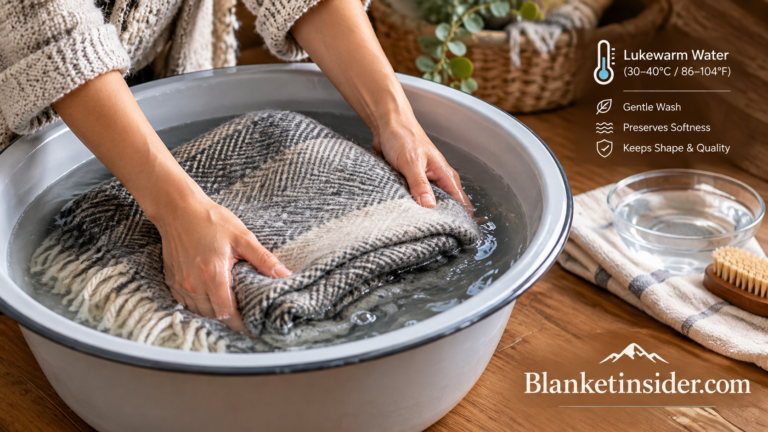
Step 1 — Fill the Tub With Lukewarm Water
Use a bathtub, a large basin, or a utility sink. Fill it with lukewarm water — around 86–95°F (30–35°C). Water that’s noticeably warm to the touch is already too hot for wool; it should feel neutral, close to skin temperature.
Step 2 — Add a Wool-Safe Detergent
Add a small amount of a pH-neutral, wool-specific detergent to the water and swirl gently with your hand to distribute it before the blanket goes in. Never pour concentrated detergent directly onto the dry fabric — it can leave residue spots that are hard to rinse out evenly.
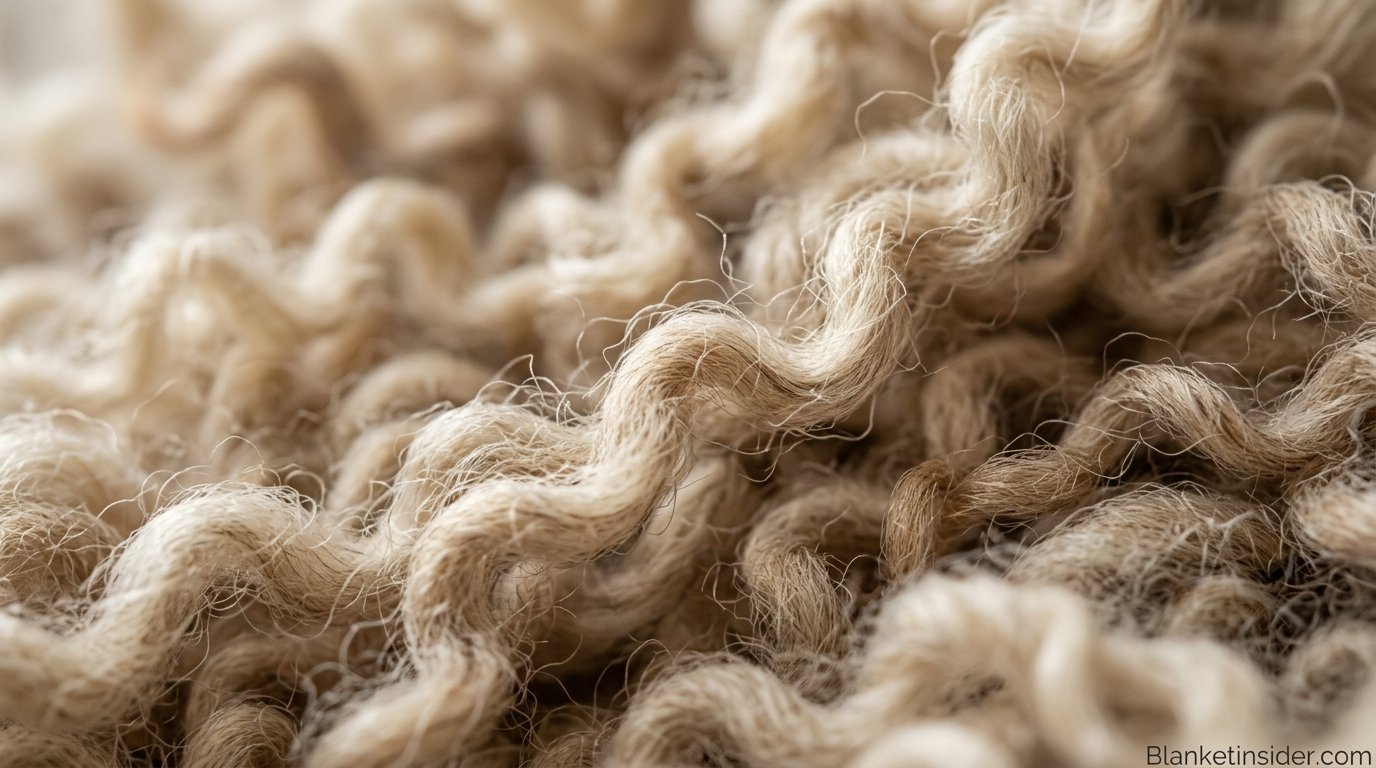
Step 3 — Submerge and Press, Never Rub
Push the blanket down into the water so it’s fully submerged, then gently press and squeeze sections of fabric between your hands to move soapy water through the fibers. Do not rub, twist, wring, or scrub — that friction is exactly what causes felting. Let it soak for 10–15 minutes if the blanket is only lightly soiled, longer for visible dirt.
Step 4 — Drain and Rinse Thoroughly
Drain the soapy water, then refill with clean water at the same lukewarm temperature. Press the blanket gently to move rinse water through it, then drain and repeat until no suds appear. Temperature swings between wash and rinse water are a common, avoidable cause of felting — keep every bath the same temperature.
Step 5 — Squeeze Out Water (Don’t Wring)
Lift the blanket out with both hands, supporting its full weight — wet wool is heavy and can stretch out of shape if it hangs unsupported. Press it gently against the side of the tub to squeeze out excess water. Never wring or twist it like a towel; twisting distorts the weave and can leave permanent creases.
Step 6 — Roll in Towels to Absorb Remaining Moisture
Lay the blanket flat on top of one or two large clean towels, roll them up together like a jelly roll, then press along the length of the roll to transfer moisture from the blanket into the towels. Unroll, swap in dry towels, and repeat once more if the blanket still feels heavily saturated.
A collapsible washing basin makes hand-washing large blankets far easier than a bathtub.
See Washing BasinsMachine Washing: When It’s Actually Safe
Machine washing isn’t automatically off-limits for wool — it just requires the right settings and, ideally, a machine with a genuine wool cycle. A wool cycle uses very low agitation, cold or lukewarm water, and a slow, gentle spin, which mimics the pressing motion of hand washing rather than the tumbling motion of a normal cycle.
If your machine doesn’t have a wool setting, the delicate or hand-wash cycle is the next best option, paired with cold water and a mesh laundry bag to reduce friction against the drum. Wool blends with synthetic fibers tend to tolerate this far better than 100% wool weaves, so check your label’s fiber content percentage before committing a pure wool blanket to a machine.
When Machine Washing Works
- Blanket is a wool blend (wool + acrylic/cotton)
- Machine has a dedicated wool or delicate cycle
- Care label doesn’t restrict to hand-wash only
- Blanket fits loosely in the drum without stuffing
When to Avoid It
- Label shows hand-wash-only or dry-clean-only symbols
- Blanket is 100% fine wool (merino, lambswool)
- Machine only has a standard/normal cycle
- Blanket is an heirloom or hand-loomed piece
One more detail people overlook: load size. A wool blanket needs room to move freely without being crushed against the drum wall, so wash it alone rather than with other laundry. This is the same principle used for other delicate bedding — see how it applies to a weighted blanket wash or a heated electric blanket, both of which need their own dedicated, low-agitation cycle for different reasons.
Front-loading machines are generally gentler on wool than top-loading machines with a central agitator post, since the tumbling motion in a front loader is lower-impact than the twisting action of an agitator. If a top loader is all you have and it lacks a true wool setting, hand washing is the safer choice rather than improvising with the gentle cycle, since even “gentle” on an agitator-style machine can still involve more twisting force than wet wool fibers can comfortably handle. Whatever machine you use, always run a cold rinse afterward rather than relying on the machine’s built-in rinse temperature default, and check that the spin cycle is set to a low RPM — a high-speed spin can leave permanent crease lines pressed into damp wool that are difficult to smooth back out once the fabric dries.
Mesh wash bags reduce drum friction significantly for wool items.
Shop Mesh Wash BagsChoosing the Right Detergent for Wool
Regular laundry detergent is formulated with enzymes and alkaline builders designed to break down protein-based stains — which is a problem, because wool itself is a protein fiber (keratin). Those same enzymes that dissolve grass and food stains can slowly degrade wool fibers over repeated washes, leaving the fabric weaker, duller, and rougher to the touch.
A dedicated wool wash is formulated to be pH-neutral and enzyme-free, which cleans effectively without attacking the fiber itself. Many also contain a small amount of lanolin, the natural oil found in raw wool, which helps keep fibers supple wash after wash.
Dosage matters more with wool than with everyday laundry, too. Because you’re not relying on strong agitation to distribute and flush out detergent, using too much product can leave a residue that’s genuinely difficult to rinse fully out of dense wool fibers, leading to the stiffness described later in this guide. As a general rule, use noticeably less than the bottle’s standard scoop suggests for a full-size laundry load, and err on the side of under-dosing with an extra rinse rather than over-dosing and hoping the rinse handles it.
| Detergent Type | Safe for Wool? | Notes |
|---|---|---|
| Wool-specific liquid wash | Yes | pH-neutral, no enzymes, often lanolin-enriched |
| Baby shampoo (diluted) | Emergency use only | Mild, but not formulated for fiber care |
| Regular biological detergent | No | Enzymes break down wool protein over time |
| Bleach-based products | Never | Yellows and weakens wool fibers |
| Fabric softener | Avoid | Coats fibers, reduces natural loft and breathability |
A dedicated wool wash is one of the best small investments you can make for blanket longevity.
Shop Wool-Safe DetergentsRemoving Common Stains From Wool Blankets Safely
Spot-treating before a full wash handles most stains without needing harsh chemicals across the entire blanket. The key with wool is to blot rather than scrub, work from the outside of the stain inward, and always test any treatment on a hidden area first.
Food and Drink Spills
Scrape off any solid residue with the dull edge of a spoon, then blot (don’t rub) with a cloth dampened in cold water and a drop of wool-safe detergent. Blot from the outer edge in toward the center to avoid spreading the stain wider.
Pet Accidents or Odors
Blot up excess liquid immediately, then treat with a diluted white vinegar solution (one part vinegar to three parts cold water) before a full wash. Avoid enzymatic pet stain removers formulated for carpets — they’re often too aggressive for protein-based wool fiber.
Oil-Based Stains
Sprinkle cornstarch or talc-free baby powder directly onto a fresh oil stain, let it sit for a few hours to absorb the oil, then gently brush it away before washing as usual.
Wine, Coffee, and Tannin Stains
Blot immediately with a dry cloth to lift as much liquid as possible before it sets into the fibers. Follow with a cold-water blot using a small amount of wool-safe detergent mixed with a drop of white vinegar, working from the outer ring inward. Avoid hot water on tannin-based stains specifically — heat can set them permanently into protein fibers like wool, turning a treatable stain into a lasting one.
General Musty or Storage Odor
If a blanket smells stale from long-term storage rather than from an actual spill, a full wash isn’t always necessary. Hang it outdoors in a shaded, well-ventilated spot for a few hours, or use a fabric steamer, before deciding whether a full wash is really needed. Odor alone, without a visible stain, is often better solved with airing than with water.
A soft-bristle stain-removal brush pairs well with any spot-cleaning routine.
Browse Stain Removal ToolsDrying a Wool Blanket Without Shrinking or Warping It
Drying mistakes cause just as much damage as washing mistakes — heat and gravity are the two enemies here. Never put a wool blanket in a tumble dryer unless the care label explicitly allows it; dryer heat is one of the fastest routes to permanent shrinkage and felting.
Instead, lay the blanket flat on a mesh drying rack, a clean dry towel, or an outdoor drying rack in the shade. Reshape it gently to its original dimensions while it’s still damp — gently tugging corners and edges back into a neat rectangle — since wool holds whatever shape it dries in. Flip it periodically so both sides get even airflow, and keep it out of direct sunlight, which can fade natural dyes over time.
Expect a full flat dry to take anywhere from 12 to 36 hours depending on blanket thickness and humidity. Patience here matters more than speed; a blanket that’s rushed near a heater or left folded while still damp is at high risk of mildew odor and shape distortion.
A flat mesh drying rack is the single best tool for wool care — worth owning if you have multiple wool pieces.
Shop Flat Drying RacksFixing Common Wool Washing Mistakes
If damage has already happened, a few gentle interventions can sometimes partially recover the blanket — though prevention is always easier than repair.
Minor Shrinkage
Soak the blanket in lukewarm water with a small amount of hair conditioner or wool wash for 15–20 minutes to relax the fibers, then gently stretch it back toward its original size while laying it flat to dry, re-checking and adjusting every few hours.
Light Felting or Pilling
A wool comb or fabric shaver can lift surface pills without damaging the base fabric. Work in one direction only and in short, light strokes rather than pressing hard.
Stiffness After Drying
Stiffness usually means residual detergent wasn’t fully rinsed out. A second lukewarm rinse with no soap, followed by a proper flat dry, typically restores softness.
Color Fading or Dye Bleeding
If color has bled onto lighter areas of the blanket or onto the towels used to dry it, act quickly: a fresh cold-water soak with a small amount of color-catching detergent sheet can sometimes lift excess dye before it fully sets. Going forward, always wash strongly dyed or patterned wool blankets separately from anything lighter, and repeat the spot test described earlier any time you switch to a new detergent brand, since formulations can vary in how they interact with natural dyes.
A Faint Sour or Wet-Dog Smell That Won’t Go Away
This is almost always a sign the blanket dried too slowly or was folded away while still slightly damp, allowing mildew-causing bacteria to develop. Re-wash with an extra rinse cycle, then dry it faster than before by using a fan pointed at the flat-laid blanket to speed airflow, and make sure it’s bone dry — not just dry to a quick touch — before folding or storing it again.
A fabric shaver is inexpensive and extends the life of every wool item in the house.
Shop Fabric ShaversHow Often Should You Actually Wash a Wool Blanket?
Wool is naturally odor- and dirt-resistant compared to most other fibers, thanks to its structure and natural lanolin content, so it needs far less frequent washing than cotton or synthetic bedding. Airing a wool blanket outdoors in shade for a few hours can refresh it between washes without any water at all.
| Usage | Recommended Wash Frequency |
|---|---|
| Daily use on a bed | Every 3–4 months, plus regular airing |
| Occasional throw/couch use | 1–2 times per year |
| Used by pets or children | Every 4–6 weeks, spot-clean between |
| Storage/seasonal blanket | Before storing and after unpacking |
Over-washing wool actually accelerates wear by stripping natural oils and repeatedly exposing the fiber to moisture and agitation cycles. If odor is the only concern, a light steam or an afternoon outside is often enough on its own.
A handheld garment steamer freshens wool between full washes without any water immersion.
Shop Garment SteamersStoring a Wool Blanket Between Washes and Seasons
Always store wool completely dry — any residual moisture invites mildew and musty odor over weeks in a closed container. Fold loosely rather than tightly to avoid permanent crease lines, and choose breathable cotton storage bags over sealed plastic, which traps humidity.
Cedar blocks or lavender sachets are effective, gentle moth deterrents that don’t rely on chemical mothballs, which can leave a lingering smell in wool fibers. If you’re storing several blankets seasonally, a dedicated breathable blanket storage bag or a cedar-lined blanket chest keeps them protected far better than a stacked shelf. For blankets you use often enough that full storage doesn’t make sense, a blanket ladder keeps them accessible while still airing between uses.
Cedar blocks are a simple, natural way to protect stored wool from moths.
Shop Cedar Moth ProtectionDry Cleaning vs. Home Washing: How to Decide
Some wool blankets are genuinely better off in professional hands — particularly anything with an explicit dry-clean-only label, elaborate trim or embroidery, loose or hand-finished edges, or significant sentimental/monetary value where a mistake would be costly.
Choose Home Washing When
- Label allows hand or machine washing
- Blanket is a simple weave with no delicate trim
- You have time for a slow, careful flat dry
- Budget or frequency makes dry cleaning impractical
Choose Professional Dry Cleaning When
- Label explicitly says dry clean only
- Blanket has beading, fringe, or delicate embellishment
- It’s a valuable heirloom or hand-loomed piece
- Previous home washing has already caused minor felting
If you regularly rotate between a wool blanket and other bedding types, comparing overall care burden is useful — a cotton vs. polyester blanket or an acrylic throw is generally far less fussy to maintain, which is worth factoring in if you’re deciding what to buy next rather than just how to wash what you already own.
A garment care spray extends time between full washes or dry-clean trips.
Shop Fabric RefreshersFrequently Asked Questions
Yes, if the care label allows it and your machine has a wool or delicate cycle with cold water. Wool blends tolerate this better than 100% wool weaves.
Lukewarm, around 86–95°F (30–35°C). Keep the wash and rinse water at the same temperature to avoid shocking the fibers into felting.
Shrinkage almost always comes from a combination of heat, moisture, and agitation — hot water, a machine’s normal cycle, or a hot tumble dryer are the usual causes.
It’s not recommended. Standard detergents contain enzymes that break down protein fibers like wool over repeated washes, gradually weakening the fabric.
Lay it flat on a mesh rack or clean towels, reshape it while damp, flip periodically, and keep it out of direct sunlight until fully dry.
Only if the care label explicitly permits it. Even low heat combined with tumbling agitation can cause shrinkage in many wool weaves.
Roughly every 3–4 months for daily-use blankets, or 1–2 times a year for occasional throws, with airing in between to refresh it.
Felting is largely permanent, though gentle soaking with conditioner and careful re-stretching while flat-drying can offer partial improvement in mild cases.
Hand washing uses water and gentle pressure at home; dry cleaning uses solvents instead of water and is better suited to delicate trims or valuable pieces.
Yes, to a meaningful degree. Wool’s structure and natural lanolin content make it more odor- and stain-resistant than cotton or synthetic fabrics, reducing how often it needs full washing.
It’s best avoided. Fabric softener coats the fibers and can reduce wool’s natural loft, breathability, and moisture-wicking properties over time.
Store it completely dry, loosely folded, in a breathable cotton bag with cedar or lavender for moth protection, away from sealed plastic containers.
The Bottom Line
Washing a wool blanket well comes down to controlling just two variables: temperature and agitation. Keep the water lukewarm and consistent, keep your hands gentle, use a wool-safe detergent, and dry it flat rather than in a machine, and there’s very little that can go wrong. Whether you hand wash occasionally or run it through a wool cycle a few times a year, the same core principles protect the fiber and keep the blanket soft for years of use.
Shop Wool Care Essentials