Pendleton Blanket Review: Is the Famous Wool Throw Worth Keeping for Life?
An honest look at the weave, the warmth, the patterns, the care, and who should (and shouldn’t) buy one.
Few blankets carry as much baggage, in the best possible way, as a Pendleton. You see them draped over ranch-house sofas, folded at the end of lodge beds, and passed down in families like a good watch. But reputation is not the same as performance, so this review looks at what you actually get: the wool, the weave, the warmth, the upkeep, and whether the price makes sense for how you live.
1. What a Pendleton Blanket Actually Is
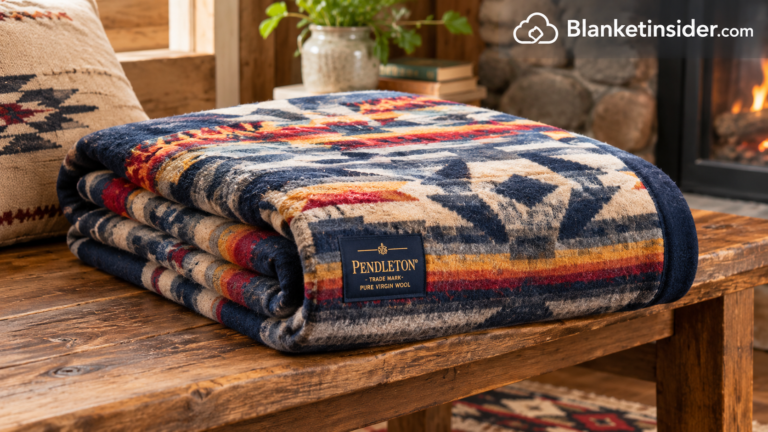
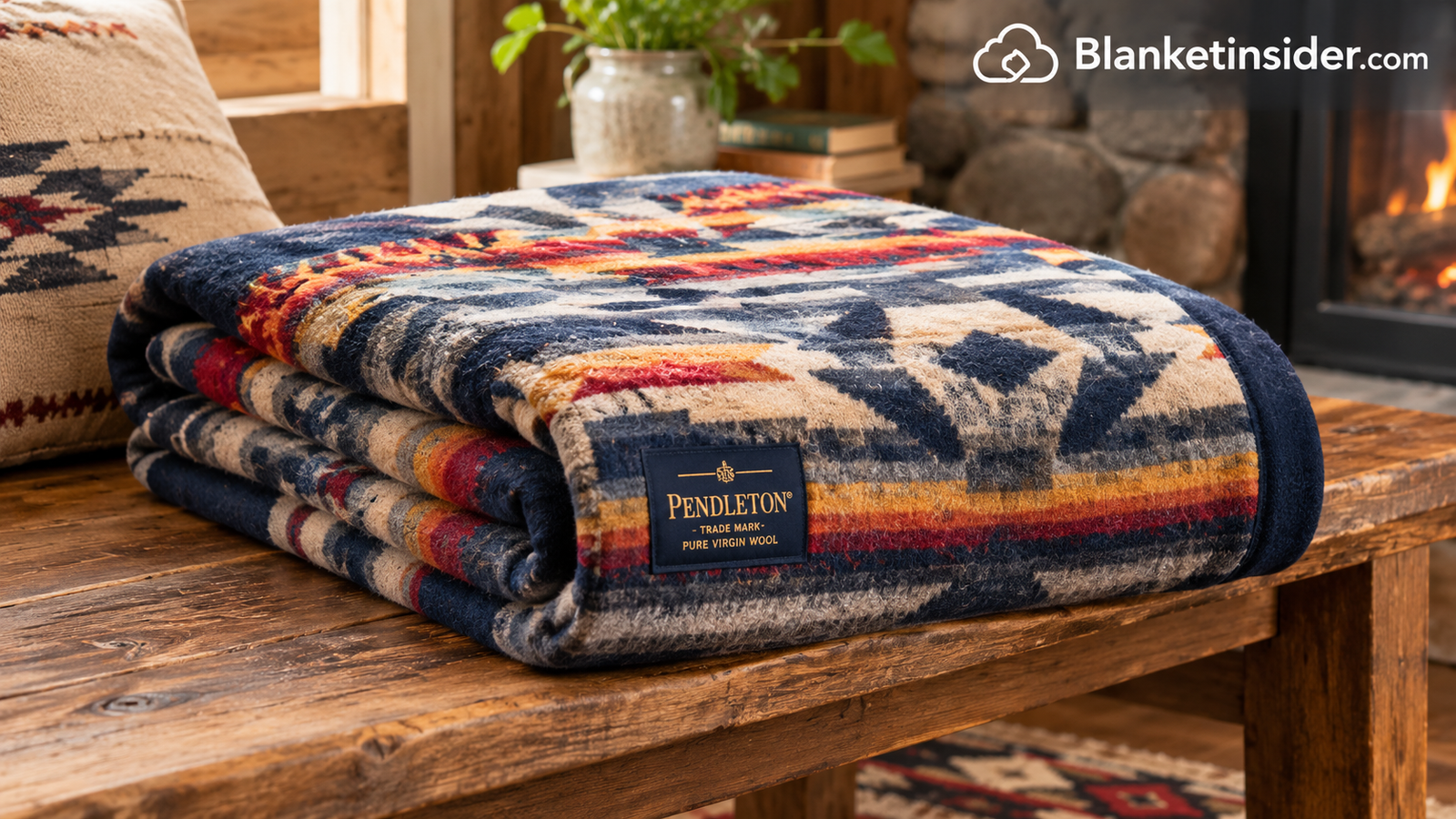
A Pendleton blanket is a woven wool blanket made by Pendleton Woolen Mills, a company based in the American Northwest. The classic versions are heavy, tightly woven, and finished with a bound or fringed edge. Most people picture the bold geometric designs, but the lineup also includes solid colors, plaids, and softer everyday throws.
What sets it apart from a typical store-brand throw is intent. This is a blanket designed to be used hard for decades, not replaced when the pile flattens. If you want a quick primer on the fiber itself, our guide to the best blanket materials explains why wool still wins on longevity.
Who it's really made for
Pendleton sits in an unusual spot. It is not a fashion throw you replace every season, and it is not a technical outdoor blanket either. It is a household staple for people who want one dependable wool layer that looks good draped over a couch and still earns its keep at a bonfire. Think of it as the cast-iron skillet of the blanket world: heavy, a little stubborn at first, and better the longer you own it.
What you'll notice on day one
Out of the package you'll feel the heft before anything else. The edges are clean, the pattern is crisp on both sides, and there's a faint wool scent that fades with airing. That first impression matters, because it tells you the blanket was made to be handled, folded, and used rather than admired from a shelf.
How we approached this review
Instead of repeating marketing language, we judged the blanket on the things owners actually care about: how it feels in the first week, how it behaves after months of use, how hard it is to keep clean, and whether it justifies its price. Every section below answers one of those questions, so you can skip straight to the part that matters to you using the table of contents.
It also helps to know what we're not claiming. Different Pendleton lines vary in weight, fiber blend, and finish, so treat this as a guide to the brand's wool blankets in general and always confirm details on the specific listing you're considering.
The short version
If you only have a minute: it is warm, durable, handsome, and a bit rugged. It isn't the cheapest, softest, or easiest-care blanket you can buy, but it may be the one you keep longest. The rest of this review explains exactly why, so you can judge whether that trade suits your home.
Common reasons people buy one
Buyers usually fall into three groups: décor shoppers who want a statement piece, practical shoppers who want a warm, hardy blanket, and gift shoppers who want something with meaning. Knowing which group you're in makes every later choice, from size to color, much easier.
Want to see the current colors and sizes for yourself?
Check the Pendleton Blanket on Amazon2. Heritage, Mills, and Why It Matters
Pendleton traces its roots to the nineteenth century and built its name weaving blankets for Native American communities and settlers across the West. The designs many people now call “Pendleton patterns” grew out of that trade, and the company has continued to collaborate with Native artists on licensed designs.
Why does this matter to a buyer? Because a long manufacturing history usually means consistency. A mill that has produced the same category for generations tends to know exactly where quality slips, and it shows up in even edges, clean color registration, and a fabric that doesn’t feel thin in the middle.
A brand built on a single material
Many blanket brands chase every fabric trend. Pendleton built its identity around wool, and that focus shows. Deep experience with one fiber tends to produce better judgment about yarn weight, weave density, and finishing, which are exactly the details that separate a blanket you keep from one you donate.
The cultural side of the story
The patterns are tied to a real history, and thoughtful buyers will want to know it. Look for official collections that credit their designers and collaborators, and be wary of cheap lookalikes that borrow the visual style without the story or the quality behind it. Authenticity is part of what you're paying for.
Why heritage affects quality
Heritage isn't just a story on a tag. When a company has made woven blankets for generations, it tends to keep tight control over yarn selection, dyeing, and finishing. Those steps are invisible in a product photo yet they decide whether colors stay clean, whether edges stay flat, and whether the blanket still looks sharp after its tenth winter.
What to check on the label
Look for fiber content, country of origin, care instructions, and size. These four details tell you more than any slogan. If something is missing from a listing, treat that as a reason to look closer before buying.
Why this matters for gifting
A blanket with a real backstory makes a better gift than a generic one. Recipients tend to remember the name, the pattern, and the feel, and they're more likely to keep it on display. That emotional weight is part of the product, even if it doesn't show up on a spec sheet.
Buying with confidence
Buy from reputable sellers, read the full listing, and compare it with the brand's own descriptions. Because the style is so recognizable, imitations exist, and the difference shows in weight, weave, and finish within a few weeks of use.
Browse more Pendleton wool throws and blankets.
See Pendleton Wool Blankets3. The Wool and the Weave
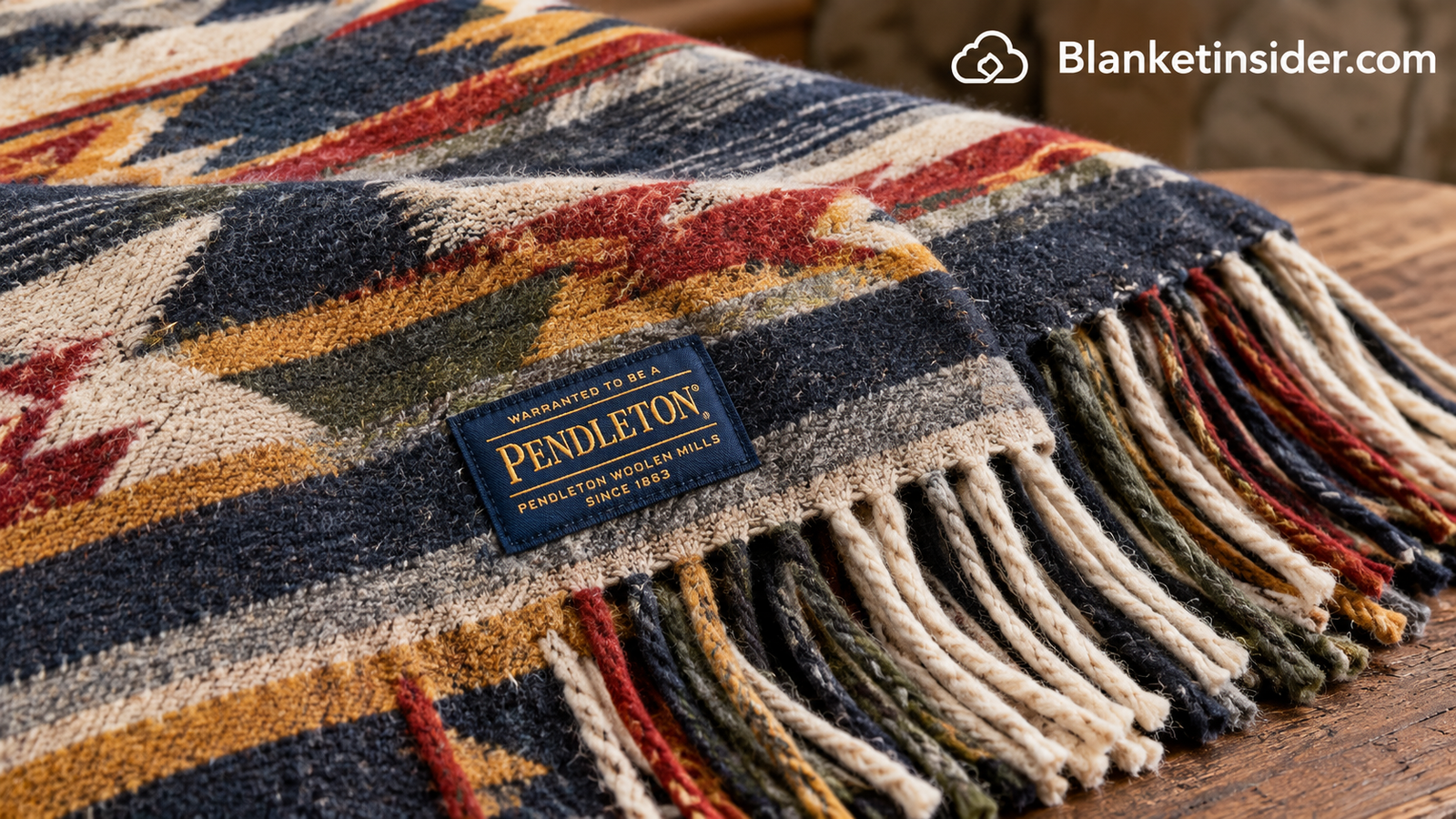
The heart of the product is wool, and the heart of the wool is the weave. Pendleton’s signature blankets are typically jacquard woven, which means the pattern is built into the fabric rather than printed on top. The result is a design that looks the same on both sides and won’t crack, peel, or fade in a hurry.
Why a woven pattern holds up
Printed fabric is surface decoration. Woven fabric is structure. When you wash or wear a woven blanket, the colors are carried in the yarn itself, so wear tends to look like gentle softening rather than damage.
Wool versus the alternatives
Wool is naturally breathable, resists odors, and stays warm even when slightly damp. If you’re weighing it against synthetics, read our comparisons of wool vs fleece and acrylic vs wool throws. For finer, softer fibers, merino wool benefits and cashmere vs merino are worth a look.
Why weight and density matter
Two wool blankets can look similar in a photo and behave very differently in real life. Density determines how well a blanket blocks drafts, how it drapes, and how it ages. A tightly packed weave keeps its shape, resists snagging, and holds warmth because there are fewer gaps for air to slip through. A looser weave feels softer sooner but may stretch or pill earlier.
Wool's quiet advantages
Beyond warmth, wool manages moisture well. It can absorb vapor without feeling wet, which is why a wool blanket feels comfortable on a damp camp evening where a synthetic one turns clammy. It also resists odor naturally, so airing it out often beats washing it. If you're also comparing softness-focused fabrics, see microfiber vs cotton blankets for a different kind of comfort.
Reading a wool blanket like a pro
Hold the blanket up to the light. A dense weave lets very little through and looks uniform. Pinch a corner and let go; good wool springs back. Run your hand across the surface; a quality weave feels even rather than patchy. These simple checks work on any wool blanket, not just this brand.
Wool grades and softness
Not all wool feels the same. Coarser fibers feel sturdier and slightly scratchier, while finer fibers feel gentler on skin. If you want a softer touch for daily use, explore finer options in our merino guide, then decide whether the extra softness is worth trading some ruggedness.
Why jacquard stands apart
Jacquard weaving uses a system that controls individual threads, which is how intricate patterns are built into the cloth. That's why the design looks sharp up close and why it reads identically on both faces. For you, it means no wrong side, which makes the blanket easier to drape, fold, and reverse for a fresh look.
Thread, twist, and finish
Tightly twisted yarn resists pilling and holds its shape. A finishing step after weaving can soften the surface and bind the fibers together. These small manufacturing choices explain why two wool blankets of the same size can feel and age so differently.
Compare wool weights and weaves side by side.
Shop Pendleton Jacquard Blankets4. Patterns and Design
This is where Pendleton plays on home turf. The bold stripes, diamonds, and stepped motifs read as authentically Western without being costume-y, and the color palettes lean earthy: rust, teal, mustard, cream, and deep indigo. They tend to sit comfortably in cabins, modern farmhouses, and surprisingly well in minimalist rooms where one strong textile does the heavy lifting.
If you’re styling a living room, pair the blanket with neutral upholstery and let the pattern be the accent. Our roundup of cozy blankets for the living room has more ideas.
Matching pattern to room
Bold geometric designs work best when the rest of the room is calm. Over a cream or gray sofa, a strongly patterned wool blanket becomes the focal point. In a room with a lot of existing pattern, choose a solid or a quieter stripe so nothing fights for attention.
Display it, don't hide it
One reason owners love these blankets is that they look intentional when displayed. Drape one over the arm of a chair, fold one across the foot of a bed, or hang one from a ladder. A blanket ladder or a nice blanket basket turns storage into décor.
Colorways to consider
Warm rust and mustard tones feel cabin-ready, while teal, indigo, and cream feel cleaner and more modern. If you're unsure, pick the color already present in your rug or curtains and let the blanket echo it.
Pattern longevity
Trends fade, but classic geometric patterns rarely look dated. Because the design is woven in rather than applied, you won't see peeling or cracking, so the look you buy is the look you keep. That's a big reason these blankets hold their place as décor staples year after year.
Mixing with other textiles
Wool pairs well with linen, cotton, leather, and wood. Try layering it with a smooth cotton throw or a textured knit for depth. If you like crafted textures, you may also enjoy our guides to chenille blankets and waffle weave blankets.
Designing a whole room around it
Start with the blanket, then build outward. Pull one accent color into pillows, another into a lamp or vase, and keep larger surfaces neutral. This gives the room cohesion without looking staged, and it makes the blanket feel like part of the space rather than an afterthought.
Small-space styling
In an apartment or dorm, one patterned wool blanket can replace several decorative pieces. Fold it over a chair or the end of the bed and let it do double duty as décor and warmth. Our dorm guide on under-bed storage systems shows how to keep it tidy when it's not in use.
Find a pattern that suits your space.
Explore Pendleton Patterns5. Warmth and Feel
Expect a substantial, dense blanket. It is not fluffy and it won’t feel like a cloud. The warmth comes from wool’s natural insulation and the tight weave, and it does a good job holding heat without trapping moisture the way polyester can.
The touch test
Heavier wool can feel slightly textured on first use, especially against bare skin. Most owners find it softens with use and with gentle laundering. If you’re sensitive to wool, layer it over a sheet or use it as a sofa throw rather than a direct-contact blanket. Those with skin concerns may prefer our guide to blankets for eczema.
Temperature range
Great for cool evenings, camp chairs, and cold bedrooms. In hot sleeping environments it may be too much; see blankets for night sweats for cooler picks.
How the warmth behaves over a night
Wool warms you gradually and then stays steady. Unlike some synthetics that spike heat and then trap sweat, a wool blanket tends to regulate, which is why many people sleep comfortably under one in a cool room. In a heated room, though, it can feel like too much, and you'll want to use it as a throw rather than as your main cover.
Layering strategies
The best way to use a heavy wool blanket in bed is as a top layer over a lighter cover. Start with a sheet, add a duvet or comforter, and lay the wool across the top or the foot. Our explainers on comforters, duvets, and blankets and coverlets, bedspreads, and comforters help you plan the stack.
Comfort versus coziness
If your idea of cozy is sinking into something plush and clingy, wool will feel more structured than you expect. If your idea of cozy is a substantial, reassuring weight and real warmth, it hits the mark.
Using it in different seasons
Winter is the obvious season, but wool earns its keep in spring and fall too. Cool mornings on the porch, chilly evenings at a ballgame, and drafty rooms all benefit from a breathable layer that doesn't overheat you. In summer, store it clean and dry, or use it only in air-conditioned spaces.
Sleep expectations
If you plan to sleep under it, be realistic: it's heavier than a comforter and less forgiving than a cotton blanket. Many people prefer it as an extra layer on the coldest nights. If you want a deliberate, calming weight, a purpose-built option such as in our weighted blanket review serves a different goal.
Warmth without bulk
Because wool insulates efficiently, you often get strong warmth from a blanket that isn't excessively thick. That makes it easier to fold, drape, and carry than some puffy alternatives with similar heat.
Moisture and comfort
Wool can hold a surprising amount of moisture before it feels damp, which is why it handles humid evenings and light drizzle better than many synthetics. It's one of the reasons outdoor enthusiasts have trusted it for generations.
Allergy and sensitivity notes
If you have sensitive skin or respiratory concerns, check the fiber content and test the blanket briefly before committing to long use. Keep it clean and well aired to reduce dust.
Ready for a blanket that actually holds heat?
View on Amazon6. Sizes and Versions
Pendleton sells everything from compact throws to full bed-size blankets. Picking the right size is the most common regret point, so measure first.
| Type | Best For | Notes |
|---|---|---|
| Throw | Sofa, chair, lap | Easiest to style and store |
| Twin / Full | Layering on a single bed | Good as a footer or top layer |
| Queen / King | Main bed blanket | Heavy; check wool weight |
| Stadium / Travel | Games, car, outdoors | Lighter and portable |
For sizing help, read our perfect throw blanket size guide, the breakdown of throw vs full blanket, and our best king size blankets.
Choosing for sofa use
For a sofa, a throw gives enough coverage for one or two people without overwhelming the cushions. If you share the couch regularly, step up a size so nobody is fighting over the edge.
Choosing for a bed
A bed-size wool blanket should overhang the mattress sides enough to look intentional. Measure your mattress depth, then add the drop you want on each side. Remember that wool is heavy, so a very large size can feel substantial when you're making the bed every morning.
Choosing for travel and outdoors
Smaller, lighter versions are easier to throw in the trunk or stuff in a bag. They're handy for sporting events, picnics, and cold car rides, and they pair well with a good storage bag to keep them clean between trips.
A simple sizing checklist
- Measure the sofa, chair, or mattress before ordering.
- Decide whether you want the blanket to tuck in or drape loosely.
- Think about how many people will share it.
- Allow for how heavy a larger size will feel during daily bed-making.
When two sizes beat one
Many households do best with a throw for the living room and a larger size for the bedroom, rather than trying to make one blanket do everything. It also lets you rotate them, which reduces wear on each.
Matching size to purpose
Think about the job first. Reading in a chair needs less fabric than covering a couple on a sofa. Camping needs something compact; a guest room needs something that looks generous. Write down the main use, then choose the size that serves it best.
Don't forget storage
Bigger blankets take up real room. Before buying, picture where it will live. A blanket chest or storage trunk keeps larger sizes protected and out of sight.
Pick the size that fits your bed or sofa.
Shop Pendleton Sizes7. Durability and Long-Term Wear
This is the main argument for paying more. Tightly woven wool resists pilling better than most synthetics, and the structure doesn’t flatten the way polyester fill does. With sensible care, these blankets commonly last for decades, and plenty end up as heirlooms.
Realistic wear points: edges and corners take the most abuse, especially in homes with pets, and any wool is a snack for moths if stored carelessly. A cedar-lined chest helps; see our best blanket chests and trunks.
What wear looks like over time
Well-made wool ages gracefully. Expect gentle softening, slight fuzz in high-contact areas, and perhaps a little edge wear. That's normal and often adds character. What you shouldn't see is thinning, holes, or colors bleeding, and when you do it's usually from improper washing or poor storage.
Pets and kids
Wool is tougher than it looks, but claws can snag the weave and spills need quick attention. If pets share your furniture, designate a cheaper blanket for them; our guides to pet blankets and waterproof pet blankets are good starting points.
Storage that protects your investment
Store clean, fully dry, and loosely folded in a breathable container. Avoid sealed plastic for long periods, because trapped moisture and wool don't mix. A cedar chest or breathable cotton bag is ideal.
Edges, corners, and stress points
The edges take the most stress from folding, pulling, and washing. Check them periodically for loose threads and trim any strays rather than tugging them. Catching small issues early keeps them from spreading.
Seasonal rotation
Rotating blankets between rooms and seasons spreads out wear and gives fibers time to recover. Air the blanket outside on a dry day, out of direct harsh sun, before packing it away. This simple habit extends life more than almost anything else.
Realistic lifespan
No manufacturer can promise forever, but wool blankets that are cleaned correctly and stored well commonly outlast several synthetic replacements. Your results depend on use, climate, pets, and care.
Climate and humidity
Humid climates raise the risk of mildew if a wool blanket is stored damp, while very dry climates can build static. In both cases, regular airing and breathable storage solve most problems before they start.
Sun exposure
Bright direct sun can fade any dyed textile over time. If your blanket lives near a window, rotate it occasionally or position it where it won't take hours of harsh light each day.
Repair options
Small snags can often be worked back into the weave with a needle, and loose edges can be re-stitched by a tailor. Repairing a quality wool blanket is usually more sensible than replacing it.
Invest in a blanket built to last.
Get the Pendleton Blanket8. Washing and Care
Care instructions vary by product, so always check the label first. Many classic wool blankets are dry-clean only, while some washable versions can go through a gentle cycle. Hot water and aggressive agitation are the two things that shrink and felt wool.
Simple care routine
- Air out in fresh air regularly instead of washing often.
- Spot clean spills right away with cool water and mild soap.
- If the label allows washing, use cold water, a wool-safe detergent, and a gentle cycle.
- Lay flat or hang to dry away from direct heat.
Our full walkthrough on how to wash a wool blanket covers the details.
Spot cleaning basics
Blot, don't rub. Rubbing pushes stains deeper and roughens the fibers. Use cool water and a tiny amount of mild soap, then blot with a clean cloth and let it dry flat.
When to go professional
If the label says dry clean only, trust it. A professional cleaner handles wool without the shrinkage risks of home machines. Schedule it once a year or less, since wool needs washing far less often than cotton or synthetics.
Common mistakes
- Using hot water, which can cause shrinking and felting
- Putting wool in a dryer
- Using bleach or harsh detergents
- Hanging a wet blanket by one corner, which stretches it
Most of this advice overlaps with our guide on washing specialty blankets, where gentle handling is the golden rule.
Dealing with odors
Wool resists odor, so a fresh-air session often solves the problem. Hang it outdoors in shade on a breezy day. If a smell lingers, a light spot clean or professional cleaning is gentler than a full wash.
Removing pet hair and lint
A soft brush or a lint roller lifts hair without stressing the fibers. Avoid sticky tape on delicate edges. Brush in one direction and finish with a gentle shake outdoors.
Handling static
Wool in dry winter air can build static. A humidifier helps, and our article on static electricity and blankets explains what's harmless and what deserves caution.
A seasonal care calendar
- Start of winter: Air it out and check for any damage from storage.
- Mid-season: Spot clean as needed and brush off lint.
- End of winter: Clean per the label, dry fully, and store breathably.
Why gentle wins
Most wool damage comes from heat, friction, and rushing. Slow, cool, and gentle methods protect the fibers and the pattern alike. If you're ever unsure, choose the less aggressive option.
Stock up on wool-safe detergent.
Shop Wool Detergent9. How Pendleton Compares
| Option | Warmth | Softness | Longevity | Upkeep |
|---|---|---|---|---|
| Pendleton wool | High | Moderate | Excellent | Moderate |
| Fleece throw | Moderate | High | Fair | Easy |
| Cotton throw | Low to moderate | Moderate | Good | Easy |
| Plush luxury throw | Moderate | Very high | Good | Easy to moderate |
If softness is your top priority, compare it with our Barefoot Dreams blanket review. If you’re torn on fibers, see fleece vs cotton and cotton vs polyester.
Versus fleece
Fleece wins on price and softness, and loses on longevity and breathability. It pills sooner and tends to hold static, which some people find irritating. Our fleece vs sherpa comparison shows where each synthetic shines.
Versus cotton and muslin
Cotton and muslin are lighter and easier to wash, which makes them better for warm climates and everyday use. They won't match wool for winter warmth. See muslin vs cotton for a closer look.
Versus other premium throws
Premium plush throws feel luxurious immediately, while Pendleton's strength is endurance and character. Many households end up owning both: one for sinking in, one for lasting.
Cost-per-use comparison
A cheaper blanket looks like a bargain until you replace it twice. If you use a blanket daily for several winters, the higher price often evens out, and sometimes comes out ahead. If you only use a throw occasionally, a budget option may be perfectly sensible.
Choosing between wool and weighted
Wool offers warmth, while weighted blankets offer pressure. They solve different problems. If you're considering both, read our weighted blanket guide and down vs weighted blanket comparison.
Long-term satisfaction
Many buyers regret cheap throws within a season but rarely regret a well-made wool blanket. The satisfaction tends to grow with time, as the blanket softens, gains character, and becomes part of the home.
When another choice is smarter
If you need a blanket for a hot sleeper, a small child, or a heavily used pet bed, a different material may serve better. Our guides to cooling blankets vs regular and weighted blankets for kids cover those cases.
See how it stacks up in person.
Check Price on Amazon10. Pros and Cons
Pros
- Woven patterns that don’t fade or peel
- Exceptional warmth and breathability
- Long lifespan, often decades
- Distinctive, recognizable design
- Strong gift and heirloom appeal
Cons
- Higher upfront cost than typical throws
- Can feel coarse on bare skin at first
- Many versions need dry cleaning
- Heavier than synthetic blankets
- Wool can attract moths if stored poorly
The honest bottom line on trade-offs
The biggest downside is the price-to-softness ratio. You pay more and get a blanket that's less cuddly than a plush throw. The biggest upside is that the same blanket can look good, keep you warm, and survive for years. If those priorities match yours, the cons are easy to live with; if softness is non-negotiable, you may prefer a different pick.
Deal-breakers worth knowing
If you're highly sensitive to wool, test it against your skin before committing, or plan to use it only as a top layer. If you need everything machine washable, check the care label first. And if you'd rather not spend more than the cost of a casual throw, set expectations that this is an investment piece.
Deal-makers worth knowing
If you want character, durability, and a blanket with a story, few options compete. The woven design and the heritage give it something mass-market throws can't replicate.
How the pros and cons play out in real homes
In a living room, the pros dominate: the look, the warmth, the durability. In a bedroom, the cons carry more weight, mainly heaviness and texture. Matching the blanket to the right room is the simplest way to be happy with it.
Weighing the trade-offs? See current options.
Browse Pendleton Blankets11. Who Should Buy a Pendleton Blanket
A great fit if you:
- Want one blanket to last for years, not seasons
- Love a bold, classic Western look
- Camp, tailgate, or sit outside on cool nights (see our outdoor sports blankets and outdoor blanket guide)
- Appreciate heritage and craftsmanship
Probably skip it if you:
- Sleep hot or want a very soft, cuddly feel
- Prefer machine-wash-everything convenience
- Need a budget blanket for kids or pets who will wreck it
Curious about other classic styles? Read what an afghan blanket is.
Specific use cases
- Cabin or lodge: It fits the aesthetic and stands up to heavy use.
- Cold bedrooms: A reliable winter layer over bedding.
- Campfire evenings: Warm and breathable, but keep it clear of sparks.
- Emergency kit at home: Wool stays warm when damp, though a dedicated emergency blanket is still smart for kits.
- Home décor: A pattern piece that doubles as a conversation starter.
A quick decision guide
| If you want… | Choose… |
|---|---|
| Maximum longevity | Classic wool, tightly woven |
| Easy care | A washable version or a different fabric |
| Ultra soft feel | A plush throw instead |
| Statement décor | A bold patterned wool blanket |
Households that love them
Outdoor-minded families, rustic and farmhouse decorators, people who host often, and anyone who likes keeping a single reliable blanket by the door tend to be the happiest owners.
Households that may prefer alternatives
Families with very young children, people who sleep hot, and anyone needing quick machine washing may find other fabrics easier. There's no shame in choosing convenience; the best blanket is the one you'll actually use.
Sounds like you? Take a closer look.
See It on Amazon12. Price, Value, and Gifting
Pendleton blankets cost more than mass-market throws, and that’s the honest hurdle. The way to judge value is cost per year of use. A blanket that serves you for decades through camping trips, movie nights, and cold winters works out cheaper than replacing a throw every few seasons.
They’re also among the safest gift picks for weddings, housewarmings, and milestone occasions because the pattern feels personal and the quality is obvious on unboxing. For more ideas, see our gift blanket guide.
Making the math work
Divide the price by the number of winters you expect to use it. Even a conservative ten years brings the yearly cost down to something reasonable, especially compared with replacing cheaper throws every other season.
Gifting tips
Choose a neutral colorway if you don't know the recipient's taste, and a bolder pattern if they love Western or outdoor style. Include a note about care so it lasts. Pair it with a blanket chest for a standout housewarming gift.
Buying checklist
- Confirm the fiber content and care label.
- Choose a size based on measurements, not guesses.
- Pick a color that works with your existing room.
- Check the return policy.
- Plan where and how you'll store it.
Where to look next
If you're still comparing options across the category, our electric blanket picks and thermal blankets cover warmth in other forms, and the cozy home essentials checklist helps you plan the rest of the room.
Occasions that suit it
Weddings, anniversaries, housewarmings, retirements, and holiday gifts all fit well. It's the kind of present that feels considered without being fussy.
Presentation ideas
Fold it neatly, tie it with a simple ribbon, and add a handwritten note about how to care for it. Pairing it with a blanket basket turns a nice gift into a memorable one.
Final value check
Ask yourself three questions: Will I use it often? Will I care for it properly? Do I love the look? Three yeses mean the price is probably justified.
Find a gift-ready Pendleton.
Shop Pendleton GiftsFrequently Asked Questions
Are Pendleton blankets worth the money?
For most buyers who value longevity and classic style, yes. The woven wool construction is built to last for years of regular use.
Are Pendleton blankets itchy?
Some heavier wool versions feel textured against bare skin, though many people find they soften with use. Using a sheet or layer between you and the blanket helps.
Can you machine wash a Pendleton blanket?
It depends on the specific product. Many are dry-clean only; some are washable. Check the care label and avoid hot water or heavy agitation.
Are they 100% wool?
Many classic styles are wool, but fiber content varies by line. Confirm it on the product page.
Will the colors fade?
Woven patterns carry color in the yarn, so they hold up well compared with printed designs, especially if you avoid harsh detergents and long sun exposure.
Is a Pendleton blanket warm enough for winter?
Yes, the dense wool weave is excellent for cold evenings and works well as a bed layer in winter.
What size should I buy?
Choose a throw for sofas and chairs and a larger size for beds. Measure your space first; our size guide can help.
Do they shrink?
Wool can shrink if exposed to heat and agitation. Cold water, gentle handling, and flat drying reduce the risk.
How do I stop moths from damaging it?
Clean it before storage, use a breathable bag or cedar chest, and check it periodically.
Does it work for camping?
Absolutely. Wool stays warm even when slightly damp and handles campfire-side use better than many synthetics, though you should keep it away from sparks.
Is it a good gift?
It’s one of the most dependable blanket gifts: attractive, durable, and meaningful.
How do I choose between Pendleton and a cheaper wool-blend throw?
Compare fiber content, weave density, and care instructions. If the cheaper option is mostly synthetic, it will likely be softer and lighter but less durable and less breathable.
Final Verdict
After weighing the weave, the warmth, the care demands, and the price, the picture is consistent: this is a blanket for people who value substance over softness. It rewards patience, looks great on display, and keeps its shape and color long after lighter throws have faded. Buy it for the long game, and give it the modest care wool asks for.
A Pendleton blanket isn’t the softest or cheapest option, and it isn’t trying to be. It’s a durable, warm, handsome piece of woven wool that rewards you year after year. If you want a blanket you’ll still be using, and probably still admiring, long after trendier throws have worn out, it’s an easy recommendation.
Ready to bring one home?
Get the Pendleton Blanket on Amazon