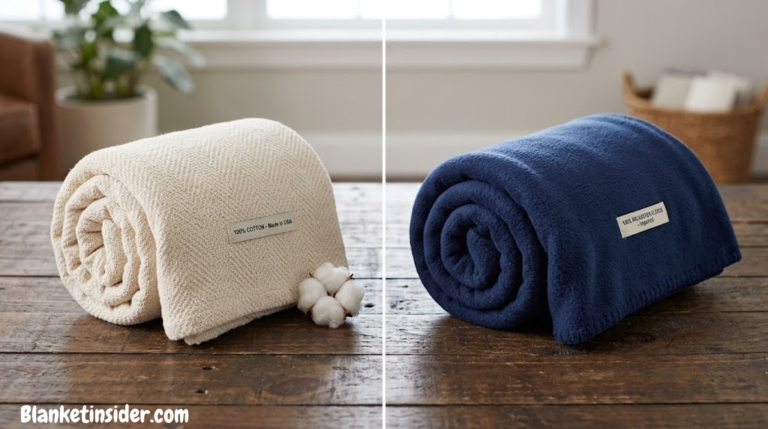
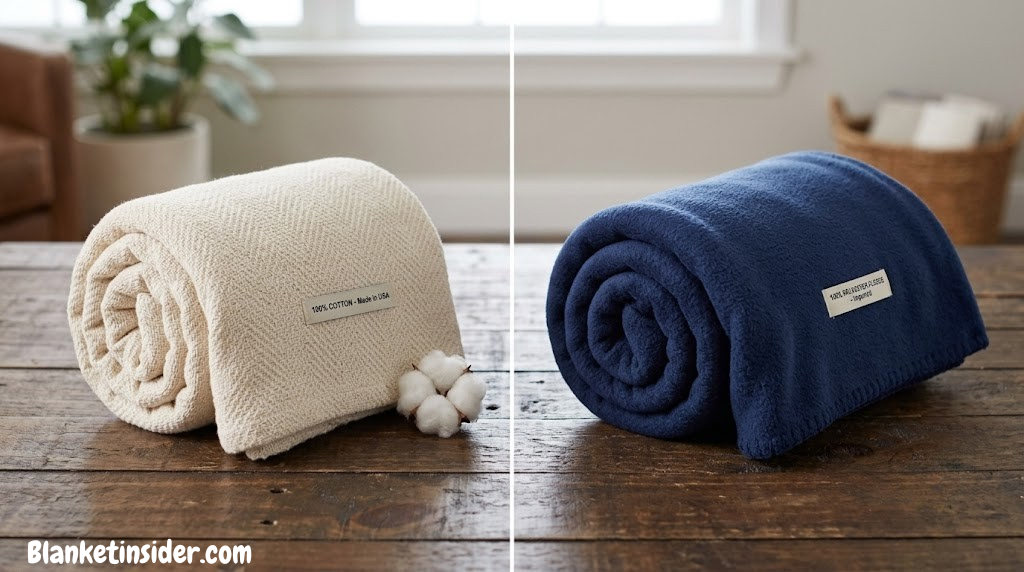
Cotton vs Polyester Blanket: The Complete Fabric Showdown
Every thread counts when choosing your next blanket. Here’s the honest, data-backed comparison of two of the world’s most popular blanket materials — so you know exactly which one belongs on your bed.
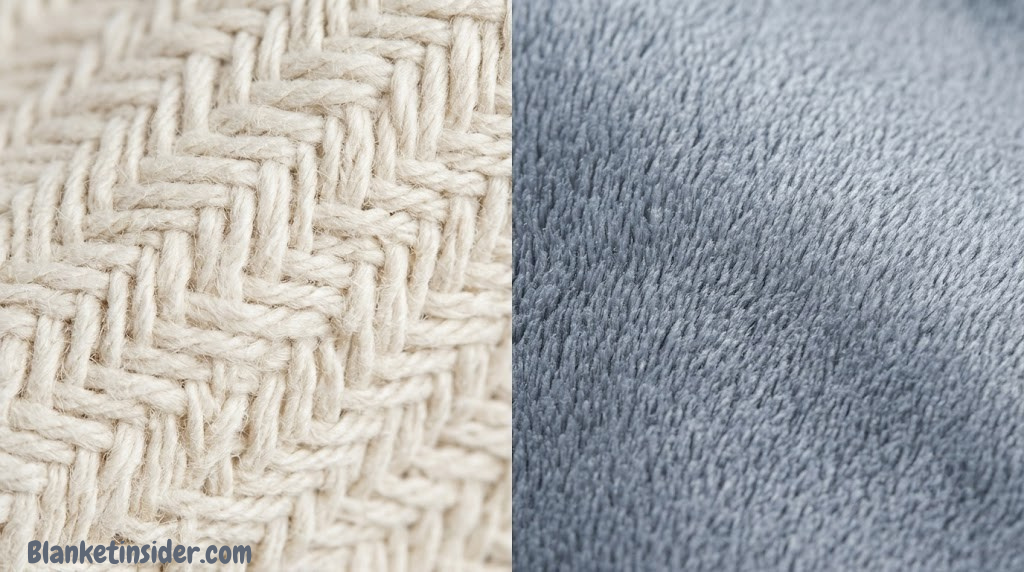
Left: cotton’s open, natural weave. Right: polyester’s tighter synthetic fiber structure. The difference is visible — and felt.
What’s the Real Difference Between Cotton and Polyester Blankets?
Cotton and polyester are the two most widely used blanket materials on the planet. But calling them “similar” is like calling a wool sweater and a windbreaker similar because they’re both outerwear. The fibers behave completely differently — and those differences shape how you sleep, how you feel, and how long your blanket actually lasts.
If you’ve ever reached for a blanket in the middle of summer and woken up drenched in sweat, you’ve likely experienced a polyester blanket doing its job a little too well. If you’ve thrown a cotton blanket in the dryer and pulled out something that fits a toddler’s bed, you’ve experienced cotton’s notorious shrinkage. Both materials have real strengths and real weaknesses — and the right choice depends entirely on how you use your blanket and in what conditions.
This is not a surface-level “cotton is natural, polyester is synthetic” overview. We’re going deep: fiber structure, thermal properties, moisture behavior, wash durability, skin compatibility, environmental footprint, and the cases where blends outperform either material alone. By the end, you’ll know exactly which fabric deserves a spot on your bed, couch, or guest room — and why.
It’s also worth noting that the cotton-vs-polyester decision doesn’t exist in a vacuum. If you’ve been comparing sherpa vs fleece blankets or weighing the merits of wool vs fleece, many of the same principles apply. Blanket fabric science rewards the curious — so let’s dig in.
- ✓ Natural, biodegradable fiber
- ✓ Breathes exceptionally well
- ✓ Hypoallergenic & skin-safe
- ✓ No static buildup
- ✗ Prone to shrinking
- ✗ Heavier when wet
- ✗ Less insulating in cold
- ✗ Costs more than basic poly
- ✓ Excellent heat retention
- ✓ Very affordable
- ✓ Fast-drying
- ✓ Resists shrinking & fading
- ✗ Traps heat & moisture
- ✗ Static-prone
- ✗ Sheds microplastics
- ✗ Can irritate sensitive skin
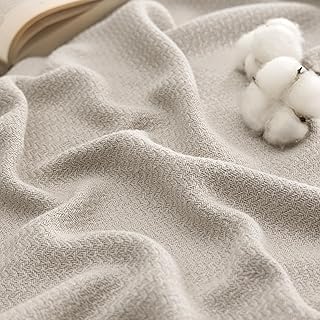
Premium Cotton Throw Blankets on Amazon
Lightweight, breathable, and perfect for year-round use — see the top-rated cotton blankets shoppers love.
🛒 Shop Cotton Blankets on AmazonFiber Science: Understanding What You’re Actually Sleeping Under
To compare cotton and polyester meaningfully, you need to understand what they’re made of at the fiber level. Their physical structure explains everything — from why one breathes and the other insulates, to why one biodegrades in a landfill while the other persists for centuries.
Cotton: A Natural Cellulosic Fiber
Cotton fibers are plant-based cellulosic structures — hollow tubes harvested from the seed pod (boll) of the Gossypium plant. Each fiber is roughly 1.5 to 2.5 inches long in standard cotton, but premium long-staple varieties like Pima and Egyptian cotton produce fibers that reach 2.5 to 3.5 inches. Longer fibers spin into finer, stronger, smoother threads.
Under a microscope, cotton fibers have a twisted ribbon-like shape — a natural crimp that gives woven fabric its softness and that creates microscopic air pockets between fibers. These air pockets are cotton’s defining thermal feature: they allow moisture vapor (sweat) to move through the fabric rather than being trapped against your skin.
Cotton also has a moisture regain rate of about 8.5%, meaning it can absorb a significant amount of moisture from the air without feeling wet — a property that makes it naturally comfortable in humid environments.
Polyester: An Engineered Synthetic Fiber
Polyester is a petroleum-derived synthetic fiber — technically polyethylene terephthalate (PET). Unlike cotton’s hollow, twisted ribbon structure, polyester fibers are solid, smooth, and circular in cross-section. They don’t crimp naturally; manufacturers crimp them mechanically during production to give fabrics bulk and loft.
The smooth, non-porous surface of polyester fibers is what makes the material so different from cotton. It cannot absorb moisture the way cotton does — which is why it dries faster, but also why it traps sweat against your skin during hot nights. Moisture regain for polyester is under 0.5%, compared to cotton’s 8.5%.
In blanket construction, polyester is often formed into hollow-fill fibers or microfibers (fibers finer than a human hair) that trap air and mimic the insulating properties of down. This engineered loft is what makes polyester fleece and microfiber blankets so warm and lightweight.
| Property | Cotton | Polyester |
|---|---|---|
| Fiber source | Plant (Gossypium seed) | Petroleum (PET synthesis) |
| Fiber shape | Hollow, twisted ribbon | Solid, smooth cylinder |
| Moisture regain | ~8.5% | <0.5% |
| Tensile strength | Moderate (higher when wet) | High (stable when wet) |
| Thermal conductivity | Higher (releases heat) | Lower (retains heat) |
| Static electricity | Minimal (natural conductor) | High (insulator = static buildup) |
| UV degradation | Some fading, fiber weakens | Good UV resistance |
| Biodegradability | Fully biodegradable | Non-biodegradable (500+ years) |
These fiber-level differences cascade into every practical property you care about — breathability, warmth, washing behavior, and how the blanket ages. Nothing about the cotton vs polyester debate is arbitrary: it all traces back to that hollow ribbon versus solid cylinder at the microscopic level.
If you’re interested in how other natural fibers stack up in this equation, our deep dive on merino wool’s thermoregulation is worth reading alongside this guide.
Breathability & Moisture Wicking: The Hot Sleeper Test
Of all the differences between cotton and polyester blankets, breathability is the one most people feel most personally — often at 3 a.m. when they’re trying to figure out why they’re soaking in sweat or kicking off their blanket for the fifth time.
How Cotton Breathes
Cotton’s breathability comes from two sources: the hollow fiber structure and the open weave that most cotton blankets use. The hollow core of each cotton fiber allows moisture vapor to travel through the material by a process called moisture vapor transmission. When you sweat, the vapor doesn’t just sit on your skin — it moves through the fiber and evaporates from the outer surface of the blanket.
The weave structure amplifies this. Most cotton blankets use a waffle, thermal, or plain weave with relatively open gaps between threads. Air circulates freely through these gaps, carrying away body heat and moisture. The result is a blanket that sleeps cool — sometimes dramatically cooler than an equivalent polyester blanket.
This is why cotton blankets are the dominant choice for people who sleep hot, those living in humid climates, and anyone with night sweats. If this is your situation, our round-up of the best blankets for night sweats covers specific cotton options worth considering. Lightweight woven cotton is also often recommended for people with eczema, which you can explore further in our best blankets for eczema guide.
How Polyester Handles Moisture
Polyester does not breathe in the same way — and that’s intentional. The smooth, solid polyester fiber has almost no capacity to absorb moisture, so sweat stays on the fiber’s surface and on your skin rather than being transported away. In fleece or microfiber constructions, the dense fiber structure also blocks airflow significantly.
What polyester does offer is fast surface drying. If the blanket itself gets wet (rain, spills, a quick soak), it dries much faster than cotton. But during sleep, when moisture is being continuously generated by your body, polyester’s inability to breathe becomes a liability for warm or hot sleepers.
It’s worth noting that some high-end polyester microfiber constructions have improved moisture management through wicking channel engineering — channeled fibers that guide sweat away from the skin surface. These are much better than standard polyester, but still don’t reach cotton’s natural breathability for most users.
Cotton wins breathability comprehensively. If you run warm, live in a humid climate, or experience night sweats, a cotton blanket will meaningfully improve your sleep quality compared to polyester. For cold-climate sleepers who never sweat under their blanket, polyester’s heat retention may actually be preferable.
Breathability Winner
Cotton wins this category decisively. For hot sleepers, night sweats, and humid climates, the breathability gap between cotton and polyester is significant enough to determine whether you sleep well or poorly.

Top-Rated Polyester Fleece Blankets on Amazon
Ultra-soft, warmth-first blankets perfect for cold climates, camping, and couch cuddling.
🛒 Shop Polyester Blankets on AmazonWarmth & Insulation: Which Blanket Keeps You Warmer?
Warmth is where polyester often wins — and wins decisively. Understanding why requires understanding how insulation works in soft goods. Insulation is not about a material generating heat; it’s about a material trapping the heat your body generates and preventing it from escaping into the air around you.
Polyester’s Insulating Architecture
Polyester fibers — especially in fleece, microfiber, and hollow-fill constructions — are engineered to create maximum trapped-air space per unit of weight. The mechanically crimped fibers pile up in a three-dimensional network that locks warm air in place. The material’s low thermal conductivity means that the heat from your body doesn’t transfer through the blanket to the cooler air above it; it stays in the trapped-air matrix right next to you.
This is why a polyester fleece blanket can feel warmer than a cotton blanket of the same weight. The fleece’s lofted structure has a higher air-to-fiber ratio, and since still air is one of the best insulators in existence, polyester fleece effectively acts as a series of tiny warm-air pockets suspended between your body and the cold.
For extreme cold situations — camping trips, emergency preparedness, winter road trips — polyester’s warmth-to-weight ratio is genuinely impressive. If you’re planning a cold-weather outing, see our best thermal blankets guide, which covers how synthetic materials perform at low temperatures.
How Cotton Handles Cold
Cotton’s higher thermal conductivity means it allows heat to pass through more readily than polyester. In warm weather, this is the feature that makes cotton sheets and lightweight blankets feel cool and refreshing. In cold weather, it means cotton blankets lose more body heat to the surrounding air.
Heavier cotton blankets — particularly tightly woven thermal cotton (also called “waffle weave” thermal) — do a reasonable job of insulation in mild cold. The waffle weave creates air pockets within the weave structure that provide some insulating effect. But pound-for-pound, a polyester fleece will outperform cotton thermal at equal weights.
Cotton also has a significant disadvantage when damp: wet cotton loses most of its insulating value. If you’re using a blanket in damp outdoor environments or if you tend to sweat heavily under your covers, a wet cotton blanket provides almost no warmth. Polyester retains much of its insulating ability even when damp — a key advantage for outdoor and camping use.
| Scenario | Cotton | Polyester | Winner |
|---|---|---|---|
| Cold climate, indoors | Moderate warmth (heavy weave) | Excellent — traps heat efficiently | Polyester Win |
| Mild climate, bedroom | Comfortable — won’t overheat | May feel too warm | Cotton Win |
| Camping / outdoors | Poor when damp | Retains warmth when damp | Polyester Win |
| Summer use | Breathes, stays cool | Traps heat — uncomfortable | Cotton Win |
| Warmth per unit weight | Lower ratio | Higher ratio (lofted fleece) | Polyester Win |
If you sleep cold and want a natural fiber with better insulation than standard cotton, consider a wool blanket — wool offers significantly better thermal performance than cotton while remaining a natural fiber. Or layer a cotton base blanket with a polyester fleece throw for the best of both worlds.
Durability & Longevity: Which Blanket Lasts Longer?
Durability is a nuanced topic when comparing cotton and polyester because both materials degrade differently, under different conditions, and at different rates depending on quality tier.
Polyester Durability: The Structural Story
Polyester is inherently resistant to many of the forces that degrade natural fibers. Its solid, smooth fibers don’t absorb moisture, which means they’re resistant to mildew and mold. Polyester fibers don’t break down from repeated laundering the way cotton fibers can — they resist pilling, tearing, and fiber separation at the microscopic level better than cotton under standard wash conditions.
Polyester also resists shrinking. Because the fibers don’t swell or contract significantly with changes in moisture or temperature, a polyester blanket washed 300 times looks almost identical to one washed 10 times in terms of size and shape. Color fading is also slower in polyester because dyes penetrate the fiber deeply during manufacture.
The main durability concern with polyester is heat damage. High dryer temperatures can melt or distort polyester fibers at a microscopic level — the blanket won’t melt visibly, but repeated high-heat cycles break down fiber structure over time, reducing softness and potentially causing pilling. Use low-to-medium heat when drying polyester blankets.
Cotton Durability: Quality Tiers Matter Enormously
The durability story for cotton is more complicated because quality varies dramatically. Short-staple cotton (used in budget blankets) has shorter fibers that are more prone to pilling, fiber breakage, and thinning over time. Long-staple cotton (Pima, Egyptian) uses longer fibers that produce stronger, smoother yarns that withstand hundreds of wash cycles while actually softening and improving with age.
Cotton’s biggest structural enemies are heat, mechanical stress, and harsh detergents. Hot-water washing breaks down cotton fibers and causes significant shrinkage — especially in the first few washes. Bleach degrades cellulosic fiber structure rapidly. However, properly cared-for high-quality cotton blankets can last 10 to 15 years while remaining beautiful and comfortable.
A practical note: most people overestimate how important baseline durability is in their buying decision. If you’re comparing a $15 polyester blanket to a $60 premium cotton blanket, the cotton will almost certainly outlast the polyester — the price differential reflects a quality differential that durability metrics at equivalent price points don’t capture. Always compare within comparable quality tiers.

Best of Both: Cotton-Poly Blend Blankets
Get breathability and durability in one blanket. These blends are the most practical choice for everyday use.
🛒 Shop Blend Blankets on AmazonWashing & Care: A Complete Guide for Both Fabrics
Care requirements differ significantly between cotton and polyester blankets — and getting this wrong is one of the fastest ways to shorten a blanket’s life or ruin its dimensions.
Washing Cotton Blankets
The non-negotiable rule for cotton blankets is: cold or warm water only, never hot. Hot water (above 60°C/140°F) causes cotton fibers to swell and shrink dramatically — particularly in the first few washes. Pre-washing is critical for new cotton blankets, as most cotton fabric shrinks 3–5% after the first wash, and some lower-quality cotton as much as 8–10%.
Use a gentle or regular cycle with mild detergent. Avoid bleach — even “oxygen bleach” can degrade cotton cellulosic fibers over time with repeated use. Tumble dry on low heat or, ideally, air dry flat. Hanging cotton blankets to dry can cause stretching in the direction of gravity. For down-alternative or cotton-fill blankets, add a few dryer balls to restore loft.
For a comprehensive washing process, our guide on washing cooling blankets (many of which use cotton) covers the full process in detail.
Washing Polyester Blankets
Polyester is more forgiving with water temperature but more sensitive to heat during drying. A warm wash (up to 40°C/104°F) is perfectly safe for most polyester blankets. Polyester is also quick to dry — often half the time cotton takes in a tumble dryer.
The critical rules for polyester are: no high heat in the dryer, no fabric softener on fleece (fabric softener coats the fibers and reduces their ability to wick even the minimal moisture they can handle), and wash inside-out to reduce pilling on exterior surfaces. Polyester static can be reduced by adding a splash of white vinegar to the rinse cycle or using dryer balls.
| Care Step | Cotton | Polyester |
|---|---|---|
| Water temperature | Cold to warm (30–40°C max) | Warm (up to 40°C) |
| Wash cycle | Gentle or regular | Gentle to regular |
| Detergent | Mild, no bleach | Regular — no fabric softener on fleece |
| Drying | Low heat or air dry flat | Low to medium heat only |
| Ironing | Low-medium iron if needed | Very low iron only — no steam |
| Dry cleaning | Rarely needed | Not required |
| Frequency | Every 1–2 weeks (regular use) | Every 1–2 weeks (regular use) |
Cotton blankets can shrink 3–10% on first wash. Always buy cotton blankets in a slightly larger size than you need if you haven’t pre-washed them, or specifically buy “pre-washed” or “pre-shrunk” cotton. Polyester does not shrink, but can distort if exposed to high dryer heat repeatedly.
Skin Sensitivity, Allergies & Health Considerations
Your blanket is in contact with your skin for six to eight hours every night. For most people, this is a non-issue. For people with sensitive skin, eczema, allergies, or reactive skin conditions, the blanket material can meaningfully affect sleep quality and skin health.
Cotton’s Hypoallergenic Advantage
Cotton — especially undyed, unbleached, or organic cotton — is one of the most hypoallergenic materials in common use. Its natural cellulosic structure doesn’t off-gas chemicals, doesn’t trap heat against the skin, and has been used for millennia without reported systemic allergic reactions to the fiber itself. Most cotton “allergies” are actually reactions to dyes, finishes, or pesticide residues in non-organic cotton rather than the cotton fiber itself.
For people with eczema, the National Eczema Association consistently recommends cotton as the primary choice for skin-contact textiles. Cotton’s breathability prevents the heat-and-moisture microenvironment that triggers eczema flares. Our detailed guide on best blankets for eczema covers exactly why — and which specific cotton weaves work best for reactive skin.
Polyester and Skin Reactions
Polyester is not inherently toxic or allergenic — the PET polymer itself is inert. However, polyester creates conditions that can worsen skin conditions even if the fiber itself isn’t the allergen. The heat-trapping and moisture-trapping properties of polyester create a warm, damp microenvironment against the skin — ideal conditions for bacterial growth, dermatitis flares, and fungal skin conditions in predisposed individuals.
Some polyester textiles also use chemical finishing agents (anti-wrinkle treatments, fire retardants, optical brighteners) that can cause contact dermatitis in sensitive individuals. If you’re buying polyester, look for OEKO-TEX Standard 100 certified fabrics, which have been independently tested for harmful substances.
- ✓ Naturally hypoallergenic fiber
- ✓ Breathes — prevents heat rashes
- ✓ Wicks moisture — reduces fungal risk
- ✓ No static (no cling, no zaps)
- ✓ Safe for newborns and infants
- ✓ Eczema-friendly weave options
- ✗ Traps heat — can cause heat rashes
- ✗ Moisture-trapping worsens eczema
- ✗ Static electricity — uncomfortable
- ✗ Chemical finishes — potential irritants
- ✗ Not recommended as baby swaddle
- ✗ May worsen night sweats
For baby use specifically, cotton is the nearly universal recommendation from pediatric dermatologists and infant safety advocates. A breathable cotton or muslin blanket is appropriate for a baby’s sleep environment in ways that polyester fleece is not — particularly in the first months. Our baby blanket reviews cover this in depth, and if you’re thinking about swaddling specifically, the muslin vs stretchy swaddle comparison is essential reading.

Organic Cotton Blankets — Safe for Sensitive Skin & Babies
GOTS-certified organic cotton blankets with no harsh dyes or finishes — ideal for eczema-prone skin and newborns.
🛒 Shop Organic Cotton Blankets on AmazonEnvironmental Impact: The Sustainability Scorecard
Neither cotton nor polyester comes out looking pristine on sustainability. Both materials have serious environmental costs — but they’re different kinds of costs at different points in their lifecycle. Understanding this complexity is essential if eco-impact is a significant factor in your purchase decision.
Cotton’s Environmental Costs
Cotton is natural and biodegradable — and those are real advantages. A cotton blanket at end of life decomposes within a few years under composting conditions, returning its carbon to the soil without leaving persistent microplastics in the environment. This circular lifecycle is one of cotton’s strongest environmental arguments.
However, conventional cotton cultivation is resource-intensive to an extreme degree. Growing enough cotton for a single blanket requires approximately 700 to 2,000 gallons of water depending on the growing region. Cotton is one of the most heavily pesticide-treated crops in the world, accounting for roughly 6% of global pesticide use despite covering only 2.5% of arable land. These upstream costs are enormous.
Organic cotton is grown without synthetic pesticides and with more sustainable water management, dramatically reducing the environmental impact. However, it typically yields less per acre and costs more. If sustainability matters to your purchase, GOTS-certified organic cotton is worth the premium. For a different sustainable natural fiber worth comparing, our bamboo blanket guide and bamboo vs cotton comparison explore the trade-offs.
Polyester’s Environmental Costs
Polyester is derived from petroleum — a non-renewable fossil fuel. The production process emits significant CO₂ and uses various chemical processes that generate industrial waste. Unlike cotton, polyester does not biodegrade — a polyester blanket thrown in a landfill will persist for 500 to 1,000 years, slowly fragmenting into microplastics that leach into soil and groundwater.
The microplastic problem extends into the use phase as well. Studies have shown that washing a single polyester garment can release tens of thousands of microplastic fibers into wastewater. These fibers pass through most wastewater treatment plants and accumulate in aquatic ecosystems, where they concentrate up the food chain. A polyester blanket washed regularly over its lifetime releases a non-trivial mass of microplastics into the environment.
| Environmental Factor | Conventional Cotton | Polyester (Virgin) | Sustainable Option |
|---|---|---|---|
| Feedstock | Agricultural crop (annual) | Petroleum (non-renewable) | Organic cotton / rPET |
| Water consumption | Very high (700–2,000 gal/blanket) | Low | Organic cotton (improved) |
| Pesticide use | High (6% global pesticide use) | None (but chemical processing) | Organic cotton (near zero) |
| Carbon footprint | Moderate | Higher (fossil-fuel derived) | rPET (recycled plastic) |
| Microplastic shedding | None | Significant in every wash | Washing bag filter can reduce |
| End-of-life | Fully biodegradable | Persists 500–1,000 years | Cotton wins here |
If you’re choosing polyester, look for blankets made from recycled polyester (rPET) — spun from post-consumer plastic bottles. rPET reduces fossil fuel use by 30–50% compared to virgin polyester and diverts plastic waste from landfills, though it still sheds microplastics. Use a microplastic-catching laundry bag (like a Guppyfriend) when washing synthetic blankets to reduce environmental impact significantly.
Cost & Value: What You Actually Get for Your Money
Price is often the deciding factor for many buyers — and both materials have dramatically different cost profiles that extend beyond the sticker price into total cost of ownership.
Initial Cost
Polyester blankets are significantly cheaper at entry-level price points. A basic polyester fleece throw costs anywhere from $10 to $30 and delivers reasonable softness and warmth. Budget cotton blankets occupy a similar price range, but the quality of budget cotton (short-staple, thin construction) often feels inferior to budget polyester fleece at equivalent prices.
Mid-range and premium cotton blankets — particularly those made with long-staple Pima or Egyptian cotton — start at $50 and can rise to $200 or more for high-thread-count woven cotton blankets. At these prices, you’re paying for fiber quality, weave craftsmanship, and the experience of a material that genuinely improves with age.
Cost Per Use: The Long View
A useful metric for bedding is cost-per-use, which accounts for blanket lifespan. A $20 budget polyester blanket that holds up reasonably well for 3 years used 365 nights per year costs about 1.8 cents per night. A $80 long-staple cotton blanket that lasts 12 years costs about 1.8 cents per night. The numbers converge — which means the real differentiator is the experience, not the economics.
Where polyester wins on cost is in specialty applications: heavy outdoor-use blankets, large-format king-size throws, and multi-piece sets. At those scales, polyester’s lower cost-per-square-inch is genuinely significant. If you’re outfitting a king size bed or a dorm room, the price difference between cotton and polyester for equivalent coverage area can be $50 or more.
The best value move in cotton: buy mid-range long-staple cotton blankets (often labeled “Pima” or “combed cotton”) during end-of-season sales. These blankets routinely go to 40–60% off and will outlast budget polyester blankets several times over while feeling dramatically better.
The best value move in polyester: buy rPET fleece or microfiber at mid-range prices ($25–$50 range) rather than budget options. The fiber quality difference between $12 and $35 polyester blankets is enormous in terms of pilling resistance and long-term softness retention.
Cotton-Polyester Blends: The Best of Both Worlds?
The cotton vs polyester debate doesn’t always require a binary choice. Cotton-polyester blends have been a staple of the textile industry for decades, and for good reason: a well-engineered blend genuinely combines the strengths of both fibers while mitigating their individual weaknesses.
What Blending Achieves
When cotton and polyester fibers are spun together into a blended yarn, the resulting fabric inherits characteristics from both. The polyester component contributes dimensional stability (shrink resistance), color retention, tensile strength, and faster drying. The cotton component contributes breathability, moisture absorption, a natural soft hand-feel, and reduced static buildup. The proportion of each fiber in the blend shifts the balance accordingly.
A 60/40 cotton-polyester blend (60% cotton, 40% polyester) is often considered the sweet spot. It breathes well enough for most climates, shrinks minimally in the wash, resists pilling, holds color excellently, and feels noticeably more natural than pure polyester. Many people find blended blankets require less maintenance anxiety than pure cotton — you can throw them in a warm wash and not worry about catastrophic shrinkage.
Common Blend Ratios and Their Trade-offs
| Blend Ratio | Breathability | Durability | Feel | Best For |
|---|---|---|---|---|
| 80/20 Cotton/Poly | Very good | Good | Natural, soft | Hot sleepers who want durability |
| 60/40 Cotton/Poly | Good | Very good | Balanced, smooth | Year-round general use — best all-rounder |
| 50/50 Cotton/Poly | Moderate | Excellent | Smooth, slightly synthetic | Heavy-use situations, children’s blankets |
| 35/65 Cotton/Poly | Moderate-low | Excellent | Durable, synthetic feel | Outdoor / pet blankets where durability dominates |
When Blends Are the Right Call
Blends make the most sense when you want the natural feel and breathability of cotton but you’re concerned about care complexity or durability — for instance, a children’s bedroom blanket that gets washed weekly, or a travel blanket that needs to tolerate irregular washing conditions. The cozy road trip blanket you keep in your car for road trips is another good candidate for a cotton-poly blend.
Blends also work well in living room throws where you want visual warmth from cotton’s natural appearance but need the practical durability of polyester. If you’re building out a cozy living room aesthetic, a blended cotton-poly throw often delivers better value than a pure cotton throw at equivalent quality levels.
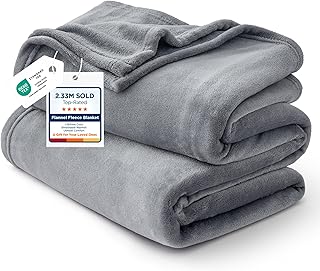
Microfiber Fleece Blankets — Ultra-Plush Warmth on a Budget
For cold climates and couch cuddling, these polyester microfiber options deliver incredible softness and warmth at unbeatable prices.
🛒 Shop Microfiber Throws on AmazonBest Use Cases: Matching the Right Fabric to Your Life
No material is universally superior — the best blanket fabric for you depends on how and where you use it. Here’s a scenario-by-scenario breakdown of which material wins in real-world situations.
Cotton’s breathability and moisture wicking make it the dominant choice for warm bedrooms and hot sleepers. A lightweight cotton thermal or woven cotton blanket is significantly more comfortable than polyester fleece for warm-climate sleep.
For cold bedrooms where you need maximum warmth and never overheat, polyester fleece or microfiber delivers superior thermal performance per dollar. Layer a polyester blanket over cotton sheets for balance.
For decorative and casual couch use, both work well. Cotton looks more elegant; polyester fleece is cozier and cheaper. A woven cotton throw elevates a living room’s aesthetic; a fleece throw maximizes movie-night comfort.
Cotton is the recommended choice for direct infant contact — breathable, hypoallergenic, and safe. Muslin cotton is especially suitable for swaddling. Polyester fleece can work for outer layers but not for swaddling or infant sleep blankets.
Polyester retains warmth when damp, dries faster, and is more durable under outdoor conditions. For camping, a polyester fleece blanket significantly outperforms cotton in all practical metrics. Our outdoor sports blanket guide covers this in depth.
Polyester fleece travel blankets compress smaller, dry faster, and are more durable. For air travel and road trips, the practical advantages of polyester are significant. Lightweight microfiber blankets pack to near-nothing while providing real warmth.
Polyester fleece is the dominant choice for pet blankets — it’s durable, easy to clean, holds up to claws and chewing, and dries fast after washing. Our best pet blankets guide reviews tested options.
If environmental impact is your primary concern, organic cotton wins for biodegradability and absence of microplastic shedding. rPET polyester is the best poly option for eco-conscious buyers — recycled content reduces fossil fuel use significantly.
Specific Situations Worth Highlighting
Beach use: Cotton wins — it’s sand-friendly, absorbs water without feeling cold, and breathes in the sun. Our best beach blanket guide covers cotton-rich options that hold up to outdoor summer use.
Dorm rooms: Polyester fleece wins on budget and warmth — dorm rooms are famously cold in winter and the economics favor fleece significantly. A polyester microfiber blanket and a cotton sheet is the optimal combo for dorm room comfort.
Emergency preparedness: Polyester wins — specifically aluminized polyester emergency blankets for their thermal efficiency and compact size. Our best emergency blanket guide covers survival-grade options.
Night sweats: Cotton wins unequivocally. If night sweats are disrupting your sleep, switching from polyester to a breathable woven cotton blanket is often the single most impactful change you can make. Our best blankets for night sweats guide covers the best options in detail.
Which One Should You Choose? The Decision Framework
By now, you have everything you need to make an informed decision. Let’s synthesize it into a practical decision framework based on the most common buyer situations.
| Your Situation | Recommended Material | Why |
|---|---|---|
| You sleep hot or have night sweats | Cotton | Breathes and wicks — polyester will make this worse |
| You sleep cold and never overheat | Polyester | Best warmth-per-dollar, lofted structure traps heat |
| You have sensitive skin or eczema | Cotton (organic) | Hypoallergenic, breathable, no chemical finishes |
| You want a baby or infant blanket | Cotton / Muslin | Safety, breathability, and hypoallergenicity for newborns |
| You’re on a tight budget | Polyester | More warmth and softness per dollar at entry prices |
| You want a long-lasting investment piece | Long-staple cotton | Improves with age; premium cotton outlasts budget poly |
| You want easy-care, no shrinkage worry | Polyester | Dimensionally stable; cotton shrinks without care |
| You’re eco-conscious | Organic cotton | Biodegradable, no microplastic shedding |
| You want a couch throw that looks great | Cotton (woven) | More elegant drape and textile aesthetic than fleece |
| You live in a 4-season climate | 60/40 Blend | Best year-round balance of breathability and durability |
| Camping and outdoor use | Polyester | Retains warmth when damp; dries faster; more durable |
| You’re buying for a pet | Polyester | Durability, easy cleaning, claw and scratch resistance |
Overall Verdict
There is no universally superior blanket material — only the right material for your specific situation. Cotton wins on breathability, skin safety, aesthetics, and environmental end-of-life. Polyester wins on warmth, durability, care ease, and budget value. The best single all-around choice for most households is a quality 60/40 cotton-polyester blend blanket paired with a dedicated cotton layer sheet for warm nights and a dedicated polyester fleece throw for cold ones.
If you’re shopping across multiple blanket types simultaneously, it’s worth comparing adjacent material decisions too. Our guides on comforter vs duvet vs blanket, microfiber vs cotton, and the fleece vs sherpa comparison all apply similar thinking to adjacent choices you may be making.

Find Your Perfect Blanket on Amazon
Whether you’ve decided on cotton, polyester, or a blend, Amazon has thousands of options at every price point. Shop by material, size, and style.
🛒 Browse All Blanket Styles on AmazonCotton vs Polyester Blanket FAQs
-
Cotton is better for hot sleepers, sensitive skin, and eco-conscious buyers because it breathes, wicks moisture, and is biodegradable. Polyester is better for cold climates, budget shoppers, and durability — it retains heat efficiently, resists pilling, and dries faster. Neither is universally superior; your climate, sleep temperature, and budget determine the winner.
-
No. Polyester traps heat more effectively than cotton because its synthetic fibers form tighter insulating structures with less airflow. Cotton’s breathability actually releases body heat, which is an advantage in warm climates but a disadvantage for cold sleepers who need maximum insulation.
-
Polyester is generally more durable over hundreds of wash cycles because it resists shrinking, fading, and fiber breakdown. High-quality cotton (especially long-staple varieties like Pima or Egyptian) can match polyester’s longevity, but budget cotton blankets tend to thin and soften unevenly over time. Always compare within similar quality and price tiers for a fair assessment.
-
Polyester can aggravate sensitive or eczema-prone skin because it traps moisture and heat against the body, creating conditions that promote irritation. The fiber itself is inert and not an allergen, but the thermal microenvironment it creates is unfavorable for reactive skin. Cotton’s natural, breathable fibers are hypoallergenic and far gentler for sensitive skin types.
-
Yes. Both are machine washable, but cotton typically needs a cold or warm cycle to prevent shrinking (hot water can cause 5–10% shrinkage, especially on first wash), while polyester tolerates warmer water. For polyester, avoid high dryer heat as it can melt or distort fibers over time. Always check the care label for specific instructions.
-
Cotton wins for summer use comprehensively. Its open fiber structure allows airflow and moisture wicking, keeping you cool and dry. Lightweight woven cotton or cotton thermal blankets are the go-to for summer sleeping in most climates. Polyester’s heat-retention properties make it far better suited for fall and winter use.
-
Generally yes. Polyester is a petroleum-derived synthetic produced at industrial scale, making it significantly cheaper to manufacture. Cotton costs more due to agricultural production, harvesting, ginning, and processing — especially premium long-staple varieties. At the budget tier, polyester provides noticeably more softness and warmth per dollar than equivalent-priced cotton.
-
Cotton is more eco-friendly in end-of-life biodegradability, but its cultivation consumes enormous amounts of water and pesticides. Polyester is derived from fossil fuels and sheds microplastics in the wash, persisting in the environment for centuries. Organic cotton or recycled polyester (rPET) are the most sustainable choices in each respective category. Neither conventional option is truly “clean.”
-
Yes. Polyester is prone to static buildup because it is a poor conductor of electricity and generates triboelectric charge through friction. This is especially noticeable in dry climates during winter. Using a fabric softener, dryer ball, or anti-static spray significantly reduces this issue. Cotton, being a natural conductor, generates minimal static.
-
Cotton is the preferred choice for baby blankets and swaddles. Its natural fibers are breathable, hypoallergenic, and non-irritating to delicate newborn skin. Muslin cotton is especially popular for swaddling because it softens dramatically with each wash while remaining breathable. Polyester micro-fleece can work for outer layers in cold environments but should not be used as a swaddle or primary sleep blanket for newborns.
-
A 60% cotton / 40% polyester blend is widely considered the sweet spot — offering breathability and softness from cotton alongside durability and shrink-resistance from polyester. Some blankets use a 50/50 blend for maximum wrinkle resistance while maintaining a natural feel. Higher cotton ratios favor comfort in warm climates; higher polyester ratios favor durability and warmth retention.
-
Cotton is generally better for allergy sufferers because it is naturally hypoallergenic and does not off-gas chemicals. However, cotton can harbor dust mites if not washed regularly — at least weekly for allergy sufferers. Polyester resists mold and mildew but can cause contact dermatitis in some individuals through chemical finishing agents. For severe allergies or chemical sensitivities, GOTS-certified organic cotton is the gold standard.
Conclusion: Cotton vs Polyester Blanket — The Right Choice Is Yours
After examining both materials from the fiber level up through every practical use case, the honest answer is that cotton and polyester are both excellent blanket materials for different people in different situations.
Choose cotton if you sleep hot, have sensitive or reactive skin, care about environmental biodegradability, have a baby or infant in the house, or simply value a premium natural textile experience that improves with every wash. Invest in long-staple cotton — Pima or Egyptian — and care for it properly, and it will be one of the longest-lasting, most satisfying blankets you’ve ever owned.
Choose polyester if cold climate warmth is your priority, budget is a primary concern, you need a pet-friendly or outdoor-use blanket that can take abuse, or you simply don’t want to think carefully about laundry temperatures. A quality polyester fleece or microfiber blanket delivers outstanding comfort per dollar — especially in winter.
Choose a blend if you live in a climate with real seasonal variation and want one blanket that works reasonably well year-round without demanding careful care. A 60/40 cotton-poly is the practical, low-drama option that most households will use and love for years.
Whatever you choose, we hope this guide has given you the clarity to shop confidently. If you’re interested in exploring more blanket material comparisons, our full materials hub covers everything from cashmere vs merino wool to bamboo vs cotton for hot climates.
🛒 Shop Top-Rated Cotton Blankets on Amazon 🛒 Shop Top Polyester Blankets on Amazon