Standing in a bedding aisle (or scrolling through product pages at midnight), you have probably stared at two blankets that feel almost identical and wondered: what is the actual difference between microfiber and cotton? They are both soft. They are both widely available. They are often priced similarly. But underneath the surface, these two materials are built on completely different science — and that science matters enormously for how well you sleep, how long your blanket lasts, and whether it ends up in a landfill after two years.
This guide goes deep. We are talking about fiber construction, thread count, heat retention, moisture management, environmental footprint, care requirements, and everything in between. Whether you are shopping for a bedroom blanket, a couch throw, a gift, or something for your baby, this comparison covers every angle so you can pick the right fabric for your specific life.
📌 Quick Navigation
This is a long-form comparison. Use the Table of Contents on the left (or above on mobile) to jump directly to the section most relevant to your buying decision. If you just want the summary verdict, skip to Section 12: Who Wins Each Category.
Quick Overview: Key Differences at a Glance
Before we go deeper, here is the high-level picture. Microfiber and cotton differ across every meaningful dimension — from how the fibers are made to how they age, feel, breathe, and break down at the end of their life.
| Feature | 🟦 Microfiber | 🟨 Cotton | Winner |
|---|---|---|---|
| Material Origin | Synthetic (polyester, polyamide) | Natural plant fiber | Cotton |
| Initial Softness | Very soft out of the box | Softens with washing | Microfiber |
| Long-Term Softness | Stays similar, may degrade | Gets softer over time | Cotton |
| Breathability | Low — traps heat | High — airflow-friendly | Cotton |
| Moisture-Wicking | Moderate (surface wicking) | Excellent (fiber absorption) | Cotton |
| Warmth Retention | High | Moderate to Low | Microfiber |
| Durability | Good (pill-resistant short-term) | Excellent (improves with age) | Cotton |
| Shrinkage Risk | Very Low | Moderate (hot wash) | Microfiber |
| Hypoallergenic | Mostly yes (dense weave) | Yes (especially organic) | Tie |
| Eco-Friendliness | Poor (plastic, microplastics) | Better (natural, biodegradable) | Cotton |
| Price (Budget) | Cheap — $15–$40 | Mid — $30–$80+ | Microfiber |
| Care Ease | Easy (quick-dry, wrinkle-free) | Easy (slightly more effort) | Microfiber |
| Best Season | Fall / Winter | All-season (esp. Spring/Summer) | Cotton |
| Best For | Warmth, budget, quick dry | Hot sleepers, babies, eco buyers | Depends |
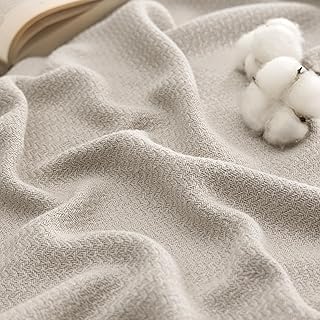
Shop Top-Rated Cotton Blankets on Amazon
Certified organic, all-season comfort with free returns.
🛒 Browse Cotton Blankets on AmazonWhat Is Microfiber? A Closer Look at the Material
Microfiber is not a single fabric type — it is a category of extremely fine synthetic fibers, typically defined as any fiber with a diameter of less than one denier (roughly 10 micrometers or less). For reference, a human hair is approximately 70 micrometers wide. Microfiber strands are so thin they can be finer than 1/100th of a human hair.
The fibers are most commonly made from polyester, though blends with polyamide (nylon) are also common, usually in a 70/30 or 80/20 ratio. These synthetic polymers are derived from petroleum, meaning microfiber is fundamentally a plastic-based product that is engineered at the fiber level for specific performance characteristics.
How Microfiber Is Made
The manufacturing process begins with melting down polyester pellets and extruding them through extremely fine nozzles called spinnerets. The resulting filaments are then split — often into wedge or pie shapes at the microscopic level — to create fibers far thinner than standard polyester. These split-fiber structures give microfiber its signature soft, silky feel and dramatically increase its surface area, which is why microfiber cleaning cloths are so effective.
When used in blankets specifically, microfiber fibers are typically woven into a plush or brushed fabric that traps air in the tiny pockets between strands, creating a lightweight but remarkably warm product. Many of what consumers know as “fleece blankets” are actually a form of microfiber fabric — for a deeper look at how those two overlap, see our comparison of sherpa vs fleece blanket options.
Types of Microfiber Blankets
Not all microfiber blankets are constructed the same way. The four most common constructions you will find include:
| Microfiber Type | Construction | Best For | Warmth Level |
|---|---|---|---|
| Brushed Microfiber | Mechanically raised surface fibers | All-purpose blankets, bedding | ★★★☆☆ |
| Microfiber Fleece | Knit, napped polyester loops | Cold weather throws | ★★★★☆ |
| Microfiber Sherpa | Double-face: smooth + loopy pile | Ultra-cozy lounging, winter | ★★★★★ |
| Woven Microfiber | Tight weave, thinner profile | Travel, layering blankets | ★★☆☆☆ |
- Exceptionally soft from day one, no break-in period
- Lightweight despite high warmth-to-weight ratio
- Resists shrinking and wrinkles effectively
- Dries very quickly — often 60–70% faster than cotton
- Dense weave resists dust mites penetration
- Highly affordable at the budget end
- Excellent stain resistance (repels surface moisture)
- Vibrant, colorfast dyes that resist fading
- Traps heat — not suitable for warm sleepers
- Sheds microplastics into waterways with every wash
- Prone to static electricity buildup
- Not breathable — can cause night sweats
- Petroleum-based, non-biodegradable
- Can attract and hold pet hair
- May degrade in texture after extensive washing
- Sensitive to high heat in dryer (can melt fibers)
What Is Cotton? Understanding the World’s Favorite Natural Fiber
Cotton is one of the oldest and most widely used textile fibers in human history, with evidence of cultivation dating back over 5,000 years. Unlike microfiber, which is engineered from petrochemicals, cotton is a purely natural plant fiber derived from the seed pods (bolls) of the Gossypium plant. The U.S., India, China, Brazil, and Pakistan collectively produce the vast majority of the world’s cotton supply.
At the fiber level, each cotton strand is a hollow, cellulose-based filament. This hollow structure is key to understanding why cotton behaves so differently from microfiber — it absorbs moisture directly into the fiber itself (up to 25 times its own weight in moisture), rather than just moving it along the surface. If you have ever worn a cotton shirt on a warm day and noticed it felt cool despite being damp, that is the fiber at work.
Cotton Varieties Used in Blankets
Not all cotton is created equal. The variety, staple length, and weave structure significantly impact how a cotton blanket performs:
| Cotton Type | Staple Length | Softness | Durability | Price |
|---|---|---|---|---|
| Upland Cotton | Short-medium (7/8″–1 1/8″) | Good | Good | Budget-friendly |
| Pima / Supima | Extra-long (1 3/8″–2″) | Excellent | Excellent | Mid-premium |
| Egyptian / Giza | Extra-long (1 5/8″+) | Exceptional | Exceptional | Premium |
| Organic Cotton | Varies | Good to Excellent | Good | Mid-premium |
| Recycled Cotton | Short (reclaimed) | Decent | Moderate | Budget-mid |
Longer staple length directly correlates with softer, stronger, more durable fabric. This is why Egyptian cotton carries such a strong reputation — the fibers are longer, which means fewer exposed fiber ends in the final fabric, resulting in a smoother surface that gets silkier with every wash rather than rough or pilly.
Cotton Weave Structures Matter Too
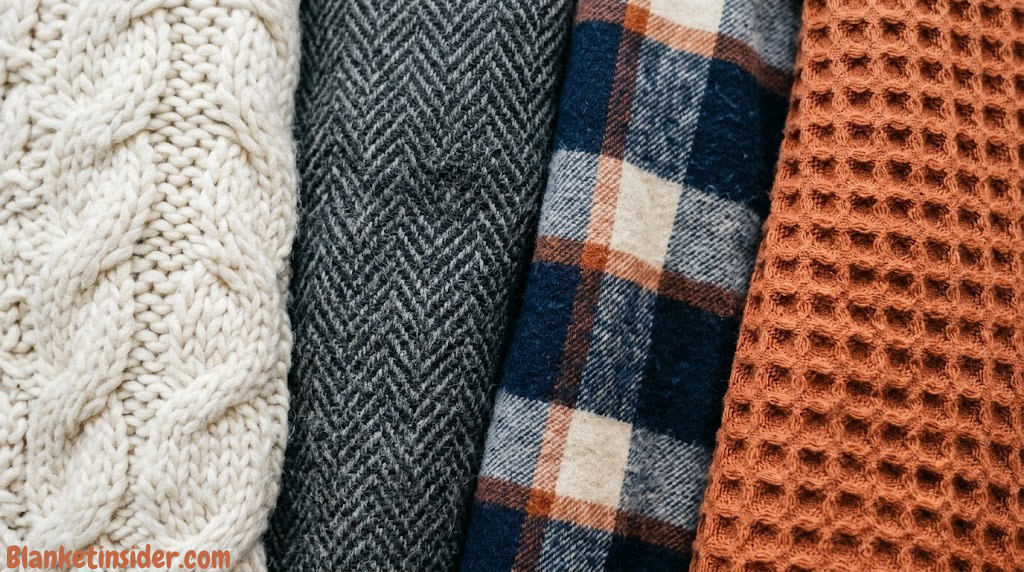
Even within the same cotton type, the weave dramatically changes the blanket’s character. Thermal weaves (waffle-knit) trap insulating air pockets for warmth. Percale weaves are crisp and cool. Jersey knit cotton stretches and drapes like a T-shirt. For a technical deep dive on weave types, our waffle blanket buying guide walks through GSM weight and construction in detail.
- Naturally breathable — keeps air flowing, heat releasing
- Absorbs sweat directly into fiber, regulating temperature
- Gets softer and better with each wash
- Biodegradable — breaks down naturally at end of life
- Safe for babies and sensitive skin
- All-season usability, especially summer and spring
- No static electricity buildup
- Long lifespan when properly cared for (5–15 years)
- Can shrink significantly in hot water
- Heavier than microfiber for same warmth level
- Takes longer to dry thoroughly
- Wrinkles more easily than synthetic fabrics
- Higher upfront cost, especially premium varieties
- Conventional cotton farming is water-intensive
- May fade faster without proper washing care

Shop Best-Selling Microfiber Blankets on Amazon
Ultra-soft, quick-dry, and available in 50+ colors.
🛒 Browse Microfiber Blankets on AmazonComfort & Softness: Which One Truly Feels Better?
Softness is the first thing most people assess when they reach for a blanket. But “soft” is not a simple measurement — it involves initial texture, long-term feel, drape, weight distribution, and how the fabric interacts with your skin at body temperature. Microfiber and cotton approach softness from completely different starting points.
Microfiber: Instant Gratification Softness
Open any microfiber blanket out of the box and the first thing you notice is how immediately plush and luxurious it feels. That sensation comes from the split-fiber structure described earlier — those ultra-fine strands create an enormous number of tiny contact points per square centimeter, which feels incredibly smooth and gentle against skin. There is no break-in period. A $25 microfiber throw can feel like something that costs significantly more, at least on first touch.
However, that initial plushness has a ceiling. After repeated washing cycles, the split fibers can begin to clump or mat together, reducing the fluffed-up texture. Low-quality microfiber blankets may develop pilling — small balls of tangled fiber on the surface — after 20–30 washes. Higher GSM microfiber (above 200 GSM) holds its texture better, but even premium microfiber does not dramatically improve in softness over time.
Cotton: Slow-Building, Lasting Softness
Cotton behaves in the opposite direction. Fresh off the loom, many cotton blankets — particularly tight-weave varieties like percale or plain-woven cotton — feel slightly stiff or scratchy. This is normal. The stiffness comes from sizing agents used during manufacturing and from the way cotton fibers orient before they have been flexed and washed multiple times.
With each wash cycle, the cotton fibers relax and the cellulose structure opens up, creating a progressively softer and more supple feel. Long-staple Egyptian or Pima cotton blankets become genuinely extraordinary in texture after five to ten washes — a softness that microfiber simply cannot replicate because it does not have the same fiber flexibility and natural molecular structure. If you want a blanket that gets better every year, cotton is the path.
Drape and Weight: How the Blanket Feels When You Are Under It
Comfort is not just about the surface texture — it is also about how a blanket drapes across your body during sleep. Cotton is heavier and denser, creating a gentle, grounding weight that many sleepers find deeply comfortable. If you enjoy the feeling of weighted blankets, you may naturally prefer cotton’s body-conforming drape.
Microfiber blankets tend to be lighter and more voluminous. They can feel almost weightless while still providing warmth, which appeals to people who dislike the sensation of heaviness but still want to feel cocooned. The choice between these two weight profiles comes down entirely to personal preference — there is no objectively superior option here.
↑ Back to TopBreathability & Temperature Regulation: The Most Critical Difference
If you are a hot sleeper, run warm, live in a humid climate, or experience night sweats — this section is the most important one for your buying decision. Nothing divides microfiber and cotton more sharply than their ability to manage heat and moisture.
Why Cotton Is Inherently Breathable
Cotton breathes for two reasons. First, the molecular structure of cotton cellulose is hydrophilic, meaning it attracts and absorbs water molecules. When you sweat, the cotton fiber draws moisture away from your skin and into the fiber itself, distributing it across a large surface area where it can evaporate. This is true moisture-wicking at the fiber level, not just surface transport.
Second, most cotton blankets — particularly loosely woven ones like thermal, waffle, or open-weave styles — have air gaps between the yarns. These gaps allow ambient air to circulate through the fabric, continuously exchanging the warm, humid air trapped near your body with cooler, drier air from outside the blanket. This creates what textile scientists call a microclimate buffering effect.
This is exactly why cotton is the go-to material for blankets for night sweats and why our guide on cooling blankets strongly favors natural fibers for temperature-sensitive sleepers. The breathability of cotton also makes it compatible with all seasons — it provides moderate warmth in winter while staying cool enough to use in spring and summer, particularly in lighter weaves.
Why Microfiber Traps Heat
Microfiber’s exceptional warmth is both its greatest strength and its most significant limitation. The ultra-fine, densely packed fibers create thousands of tiny insulating air pockets within the fabric structure. These pockets do exactly what insulation is supposed to do: they prevent heat exchange between the body and the surrounding air. That is fantastic for a cold January night. It is suffocating for a warm sleeper in any other season.
Unlike cotton, polyester (the primary component of microfiber) is hydrophobic at the core. It does not absorb moisture into the fiber. Instead, microfiber moves moisture along the surface of the strands through capillary action — fine for athletic wear designed for air exposure, but inadequate when you are sealed under a blanket. The moisture has nowhere to go, and the dense structure prevents adequate airflow, which means heat and humidity accumulate rapidly beneath a microfiber blanket.
| Scenario | 🟦 Microfiber | 🟨 Cotton | Recommended |
|---|---|---|---|
| Winter cold nights | ✓ Excellent warmth | Adequate (layer up) | Microfiber |
| Spring shoulder season | ✗ Often too warm | ✓ Perfect balance | Cotton |
| Summer use | ✗ Very uncomfortable | ✓ Breathable & cooling | Cotton |
| Night sweats | ✗ Worsens sweating | ✓ Absorbs & wicks moisture | Cotton |
| Hot sleepers | ✗ Creates heat pocket | ✓ Breathes naturally | Cotton |
| Cold climates (sleeping cold) | ✓ Maximum insulation | Needs layering | Microfiber |
| Humid environments | ✗ Traps humidity | ✓ Manages moisture | Cotton |
🌡️ Pro Tip: The Best of Both Worlds
Many experienced sleepers use a cotton sheet directly against the skin for breathability, then layer a microfiber or fleece blanket on top for warmth. This setup lets the cotton manage moisture while the microfiber provides insulation — solving both problems simultaneously without overheating.

Best All-Season Cotton Throws on Amazon
Woven cotton blankets rated 4.5+ stars by thousands of verified buyers.
🛒 Shop All-Season Cotton BlanketsDurability & Longevity: Which Blanket Survives the Long Haul?
Durability is not just about tear resistance — it is about how a blanket ages across hundreds of wash cycles, years of daily use, and the inevitable stresses of an active household. Microfiber and cotton age in fundamentally different ways, and understanding that difference helps you make a smarter long-term investment.
Microfiber Durability: Strong Start, Variable Finish
Microfiber blankets are actually quite resilient in the short-to-medium term. Polyester fibers do not weaken when wet (unlike some natural fibers), and the synthetic material resists UV degradation better than cotton when stored in bright conditions. Budget microfiber blankets withstand regular machine washing with minimal structural damage for the first two to three years of use.
Where microfiber begins to degrade is at the fiber level after extensive mechanical stress. The split-fiber structure that makes microfiber soft is also vulnerable to the friction of repeated washing. Over time, those micro-split fibers can begin to tangle, mat together, or lose their separation, dulling the soft surface texture. Pilling — those small fuzzy balls on the surface — is a common complaint about lower-GSM microfiber blankets after 30–50 wash cycles. High heat in drying can permanently damage polyester fibers by partially melting them, reducing both softness and structural integrity.
Cotton Durability: Slow Gain, Long Game
Quality cotton — particularly long-staple Egyptian or Pima varieties — is among the most durable natural textiles humans have ever worked with. The longer the fiber, the fewer exposed fiber ends there are in the fabric, and the lower the likelihood of surface pilling or snapping under mechanical stress. A well-made cotton blanket, properly cared for, can easily outlast five to ten years of regular use and often emerges from that decade softer and better-looking than the day it was purchased.
The caveat is care. Cotton is vulnerable to hot-water washing, high dryer heat, and harsh detergents. Thermal shock — going from very hot wash water to high-heat drying — is the primary cause of the premature breakdown and significant shrinkage (up to 7%) that gives some cotton blankets a bad durability reputation. Our guide on how to wash blankets without damage covers the principles that apply to cotton care in detail.
| Durability Factor | 🟦 Microfiber | 🟨 Quality Cotton |
|---|---|---|
| Pilling Resistance | Good (initially), moderate long-term | Excellent with long-staple cotton |
| Shrinkage Resistance | Excellent — minimal shrinkage | Moderate — pre-wash or cold wash needed |
| Fading Resistance | Excellent — colorfast dyes | Good — can fade in sunlight over time |
| Structural Integrity (10 yrs) | Moderate — fibers can degrade | Excellent — improves with washing |
| Resistance to Heat Damage | Poor — melts at high heat | Good — tolerates moderate heat |
| Tear/Abrasion Resistance | Good | Very Good (long-staple) |
Care & Washing: How to Keep Each Blanket in Top Condition
Washing is where blanket ownership gets practical. Both microfiber and cotton are machine-washable, but they have different needs — and ignoring those needs is the fastest path to a ruined blanket.
How to Wash a Microfiber Blanket
The cardinal rules for microfiber care all stem from one principle: heat and fabric softener are the enemy. Fabric softener deposits a waxy coating on the split fiber tips that clogs the microstructure, permanently destroying the soft feel that made the blanket attractive in the first place. And high dryer heat risks melting or deforming the polyester filaments.
| Setting | Microfiber Blanket | Why |
|---|---|---|
| Water Temperature | Cold or Warm (max 85°F) | Prevents fiber deformation |
| Wash Cycle | Gentle / Delicate | Reduces mechanical stress on split fibers |
| Detergent | Mild, liquid (no fabric softener) | Softener destroys microfiber structure |
| Spin Speed | Low-medium | Protects delicate fiber tips |
| Drying Method | Air dry or tumble low heat | High heat melts polyester |
| Ironing | Never | Destroys the fabric permanently |
How to Wash a Cotton Blanket
Cotton is more forgiving but still benefits from thoughtful care. The biggest concern is shrinkage — particularly with first washes. Pre-washing cotton blankets in cool water before regular use is the single most effective way to prevent the frustrating experience of a blanket that no longer fits your bed after laundering. For more detailed guidance on laundering delicate blankets, our article on how to wash without ruining fill covers the general principles that apply here too.
| Setting | Cotton Blanket | Why |
|---|---|---|
| Water Temperature | Cold to Warm (avoid hot) | Hot water accelerates shrinkage |
| Wash Cycle | Regular or Gentle | Cotton is generally durable |
| Detergent | Mild or standard detergent | Fabric softener is safe for cotton |
| Spin Speed | Regular | Cotton handles normal centrifuge well |
| Drying Method | Tumble dry medium or line dry | Line drying extends lifespan |
| Ironing | Safe on medium-high setting | Cotton handles heat well |
⚠️ Microfiber Washing Warning
Every time you wash a microfiber blanket, it releases tiny plastic fibers — microplastics — into the wastewater system. Many of these pass through water treatment plants and end up in rivers, oceans, and the food chain. If environmental impact matters to you, consider using a Guppyfriend washing bag, which captures up to 86% of released microplastics before they enter drainage.
Allergies & Skin Sensitivity: Which Is Safer for Sensitive Users?
For people with eczema, contact dermatitis, asthma, dust mite allergies, or sensitive infant skin, blanket material choice is not merely a comfort issue — it is a health decision. The good news is that both materials have legitimate hypoallergenic properties; the nuances matter here.
Microfiber and Allergies
The dense weave of microfiber creates a physical barrier against common allergens. Dust mites — the primary trigger for most indoor allergy sufferers — are too large to penetrate microfiber’s extremely fine mesh structure, meaning they cannot colonize inside the blanket the way they can in loose-weave natural fabrics. This is a genuine advantage, particularly for asthma and dust mite allergy sufferers.
However, microfiber carries its own set of concerns for chemically sensitive individuals. The polyester fibers may retain traces of the dyes, finishing chemicals, and anti-static treatments used during manufacturing. People with contact dermatitis or polyester sensitivities can experience skin irritation. The static electricity that microfiber generates can also attract pet dander and fine particles, which may paradoxically worsen airborne allergies.
Cotton and Allergies: The Safer Default
Organic cotton is widely regarded as the safest option for people with sensitive skin and allergies. Certified organic cotton (GOTS or OEKO-TEX Standard 100) is grown without pesticides and processed without harsh chemical finishes, meaning the blanket carries minimal risk of chemical irritation. This is particularly important for baby blankets and for users managing eczema.
The breathability of cotton also indirectly supports skin health. Overheating and sweat accumulation are known triggers for eczema flares — cotton’s heat-dissipating properties help maintain the stable skin temperature that reduces inflammatory skin responses.
For Babies Specifically
Pediatric dermatologists and most infant care guidelines consistently recommend natural, breathable fibers for babies. Cotton — particularly organic cotton or muslin — is the gold standard for infant blankets. The key concern is not just skin irritation but overheating, which is a significant risk factor in early infancy. Microfiber’s heat-trapping characteristics make it inappropriate as a primary infant blanket. For detailed infant sleep safety guidance, our baby sleep blanket safety timeline breaks down what materials are appropriate at each developmental stage.
↑ Back to Top
Best Organic Cotton Blankets for Sensitive Skin
GOTS-certified, chemical-free, and gentle for eczema and infant use.
🛒 Shop Organic Cotton BlanketsEnvironmental Impact: The Sustainability Scorecard
Environmental consciousness has become a major driver in textile purchasing decisions. Both microfiber and cotton have environmental footprints, but they are strikingly different in nature and scale. Understanding them helps you make a more informed choice that aligns with your values.
The Microfiber Problem: Plastics and Microplastics
Microfiber blankets are made primarily from polyester, which is derived from petroleum — a fossil fuel. The production process involves significant energy consumption and releases greenhouse gases. But the more pressing environmental concern with microfiber is what happens during and after use.
Every time a synthetic textile is washed, it releases tiny plastic fibers into the water — these are microplastics, typically 0.5–5mm in length and sometimes as small as a few microns. Studies have found that a single wash of a synthetic garment can release hundreds of thousands to millions of these particles. Most pass through wastewater treatment facilities unfiltered, ending up in rivers, oceans, and eventually the marine food chain. Researchers have found microplastic contamination in fish, shellfish, drinking water, soil, and even human blood and breast milk.
At end of life, microfiber products do not biodegrade. They fragment into ever-smaller plastic particles over hundreds of years, but they never chemically return to the Earth.
Cotton’s Environmental Footprint: Complex but Manageable
Cotton’s environmental story is more nuanced. Conventional cotton farming is famously water-intensive — producing a single kilogram of cotton fiber requires an estimated 10,000–20,000 liters of water, depending on cultivation methods and irrigation efficiency. It has historically been associated with heavy pesticide use, accounting for approximately 16% of global insecticide use on less than 3% of agricultural land in peak conventional cultivation periods.
However, cotton is a natural, cellulosic fiber that fully biodegrades at end of life. It does not release persistent plastic pollutants during washing. Organic cotton certification (GOTS) mandates strict restrictions on synthetic pesticides and fertilizers, dramatically reducing the environmental impact. Recycled cotton blends further reduce raw material demand. And innovations in drip irrigation have reduced water usage in modern cotton farming by 40–60% in many regions.
| Environmental Factor | 🟦 Microfiber | 🟨 Organic Cotton | 🟨 Conventional Cotton |
|---|---|---|---|
| Raw Material Source | Petroleum (fossil fuel) | Renewable plant fiber | Renewable plant fiber |
| Biodegradability | ✗ Non-biodegradable | ✓ Fully biodegrades | ✓ Fully biodegrades |
| Microplastic Shedding | ✗ Every wash cycle | ✓ None | ✓ None |
| Water Footprint | Lower in production | Lower (rain-fed or drip) | ✗ Very high |
| Pesticide Use | None in production | ✓ Minimal (certified) | ✗ Significant |
| Carbon Footprint (fiber) | High (petroleum derived) | Lower (carbon sequestering) | Moderate |
| End-of-Life | ✗ Landfill (centuries) | ✓ Compost or repurpose | ✓ Compost or repurpose |
🌿 Sustainability Tip
If you choose to buy microfiber, you can significantly reduce microplastic pollution by using a Guppyfriend washing bag or a Cora Ball in your laundry. These tools capture loose microfibers before they enter the drain. Also, washing in cold water and on a gentle cycle reduces fiber shedding compared to hot, agressive washing settings.
Cost & Value: Breaking Down the Real Price of Each Blanket
Price is always a factor, but the smarter question is cost per use — how much does each blanket cost you per night of comfortable sleep over its actual lifespan? The upfront price and the lifetime value tell very different stories for these two materials.
Upfront Cost Comparison
| Category | 🟦 Microfiber Blanket | 🟨 Cotton Blanket |
|---|---|---|
| Budget | $12 – $28 | $28 – $55 |
| Mid-Range | $28 – $55 | $55 – $120 |
| Premium | $55 – $90 | $120 – $250+ |
| Organic / Certified | Limited availability, $60–$110 | $80 – $200+ |
| Expected Lifespan | 2 – 5 years (typical) | 5 – 15 years (quality cotton) |
| Estimated Cost/Night | $0.02 – $0.06 | $0.02 – $0.03 (long-term) |
The cost-per-night calculation is illuminating. A $35 microfiber blanket lasting four years costs you about $0.024 per night. A $80 quality cotton blanket lasting ten years costs you approximately $0.022 per night — slightly cheaper per use despite the higher sticker price. And because cotton improves with age rather than degrading, you are getting better product at the end of its life than at the beginning, which is a genuinely unusual value proposition in consumer goods.
When Microfiber Is the Right Financial Choice
Budget constraints are real and valid. If you need to furnish a dorm room, outfit a guest bedroom, or replace a seasonal blanket quickly, microfiber delivers extremely strong value for the upfront dollar. For a dorm setup, pair a microfiber throw with a quality cotton sheet — our dorm room accessories essentials guide covers how to layer bedding for comfort and practicality on a tight budget.
↑ Back to Top
Best Value Cotton Blankets — Long-Term Picks
Top-rated mid-range cotton blankets that last 8–12 years with proper care.
🛒 Shop Value Cotton BlanketsBest Use Cases: Which Blanket Works Best Where?
The ideal blanket material is always context-dependent. Rather than declaring one material universally better, this section walks through the most common blanket use scenarios and identifies which material wins in each situation — based on performance evidence rather than marketing claims.
For Travel and Road Trips
Microfiber wins here. Its lightweight nature and quick-drying properties make it ideal for packing. A microfiber travel blanket compresses smaller, washes faster in a hotel sink, and dries before your next move. Check our best travel blanket and pillow set guide for the top picks that use both microfiber and lightweight cotton options — and our full cozy road trip guide covers all the essentials for comfort on the move.
For the Beach
Cotton is the winner for beach use, particularly tightly woven cotton that resists sand sticking to loose fibers. Microfiber, with its split-fiber structure, actually clings to fine sand particles, making it frustrating to shake clean. Our best blanket for the beach review covers the best sand-resistant options across material types.
For Pet Owners
This is a mixed bag. Microfiber’s static charge attracts pet hair, making it magnet-like for fur that is difficult to remove. Cotton blankets shed pet hair more easily in the wash. However, microfiber is more stain-resistant for the liquid messes pets inevitably create. Our best pet blankets guide tests both types against real-world pet ownership conditions.
For Living Room Throws
The decorative couch throw market is where microfiber and cotton are most evenly matched. Microfiber plush throws look rich and inviting on furniture and come in a vast range of colors. Cotton throws — particularly chunky knit or woven styles — offer sophisticated texture that photographs and styles beautifully. For a curated selection of the best cozy blankets for living rooms, we break down both material categories with specific product recommendations.
For Gifting
Both work well as gifts, but cotton carries more perceived luxury, especially in higher-end contexts. A quality woven cotton throw suggests thoughtfulness and longevity. Our gift blanket guide has recommendations across price points and materials for every occasion.
↑ Back to Top
Top Microfiber Throws for Your Couch or Guest Room
Plush, colorful, and under $35 with 4.6+ star ratings.
🛒 Shop Microfiber Throws on AmazonHead-to-Head: Who Wins Each Category?
After examining every dimension of the microfiber vs cotton comparison, here is the definitive category-by-category verdict. This is designed to give you an at-a-glance reference for whichever factors matter most to your specific situation.
Related Material Comparisons Worth Reading
If you’re exploring blanket materials more broadly, several other comparisons on this site will deepen your understanding of the full spectrum of options available:
- Cotton vs Polyester Blanket — a broader synthetic vs natural comparison
- Fleece vs Sherpa Blanket — two types of microfiber-adjacent fabrics compared
- Bamboo vs Cotton Blanket — the eco-friendly alternative to both cotton and synthetic
- Sherpa vs Fleece — when both options are microfiber-based
- Wool vs Fleece — natural insulation vs synthetic warmth
- Muslin vs Cotton — within the cotton family, which open-weave wins?
- Minky vs Fleece for Babies — important for parents
- Comforter vs Duvet vs Blanket — structure comparison beyond material
Frequently Asked Questions: Microfiber vs Cotton Blanket
Q Is microfiber or cotton better for hot sleepers?
Cotton is significantly better for hot sleepers. Its open weave structure allows air to circulate freely, wicking moisture away and releasing body heat efficiently. Microfiber’s dense synthetic fibers trap heat, creating an uncomfortable thermal pocket beneath the blanket. If night sweats are a concern, our blankets for night sweats guide identifies the best options.
Q Which blanket is softer: microfiber or cotton?
Out of the box, microfiber typically feels softer due to its ultra-fine synthetic fibers and immediate plushness. However, high-quality cotton — particularly long-staple Egyptian or Pima varieties — softens significantly with each wash and can surpass microfiber in comfort after several years of regular laundering. If you want softness that compounds over time, invest in quality cotton.
Q Does microfiber hold up better than cotton over time?
Not in the long run. Microfiber resists shrinking and pilling well in the short-to-medium term, but the split-fiber structure degrades after extensive washing. Quality cotton — especially long-staple varieties — becomes more durable and softer with age, often lasting a decade or more when properly cared for.
Q Is microfiber safe for people with allergies?
Microfiber’s dense weave resists dust mite penetration, making it potentially beneficial for dust mite allergy sufferers. However, people sensitive to synthetic materials or polyester may react to microfiber chemically. Cotton — particularly organic cotton — is the broadly safer choice for most allergy sufferers due to its natural composition.
Q Can I machine wash both microfiber and cotton blankets?
Yes, both are machine washable. Microfiber requires cold water, a gentle cycle, no fabric softener, and low-heat drying. Cotton tolerates warmer water and a medium heat dryer, though hot settings cause shrinkage. For detailed care guidance, our article on washing blankets without damage covers both material types.
Q Which blanket is more eco-friendly: microfiber or cotton?
Organic cotton is significantly more eco-friendly. Microfiber is petroleum-derived, non-biodegradable, and sheds microplastics into waterways with every wash cycle. Conventional cotton has a large water footprint but biodegrades naturally. Organic cotton, grown without synthetic pesticides and processed minimally, is the most sustainable blanket fiber available at scale.
Q Which blanket is better for babies?
Cotton — particularly organic cotton or muslin — is the clear recommendation for babies. It is breathable, naturally hypoallergenic, and free from the synthetic chemical finishes found in microfiber products. Overheating is a serious infant safety concern, and microfiber’s heat-trapping properties make it unsuitable for young babies. See our baby blanket safety guide for age-by-age recommendations.
Q Does microfiber shrink in the dryer?
Microfiber is largely shrink-resistant because polyester fibers do not absorb water the way cotton does. However, high heat can permanently damage or melt polyester filaments, reducing the blanket’s softness and structural integrity. Always use a low or medium heat setting for microfiber blankets.
Q Which blanket material is cheaper?
Microfiber blankets are cheaper upfront, generally ranging from $15 to $40 for a standard throw or blanket. Comparable cotton blankets typically start at $30–$55, with premium cotton (Egyptian, organic) commanding significantly higher prices. Over a lifetime of use, however, quality cotton’s longer lifespan equalizes or reverses the cost-per-use equation.
Q Is a microfiber blanket the same as a fleece blanket?
Not exactly. Microfiber describes extremely fine synthetic fibers (under 1 denier), while fleece is a specific knit fabric construction usually made from polyester microfibers. All fleece blankets use microfiber, but not all microfiber blankets are fleece. Woven microfiber blankets, for example, are quite different in texture and construction from fleece. For a full breakdown, see our fleece vs sherpa comparison.
Q Can microfiber cause static electricity?
Yes. Microfiber, being a synthetic polyester material, generates static electricity, especially in dry climates or during winter when indoor humidity drops. This static attracts pet hair and fine dust particles, and can cause minor discomfort (the classic “zap” shock). Cotton produces virtually no static. Using a humidifier or a dryer sheet can help manage static in microfiber blankets.
Q Which blanket is better for winter: microfiber or cotton?
Microfiber wins for maximum winter warmth. Its dense synthetic structure traps body heat exceptionally well at a light weight. For the best cold-night setup, layer a cotton sheet against the skin (for moisture management) and use a microfiber or fleece blanket on top for maximum insulation without direct synthetic contact. If you want a single blanket for winter, microfiber is the warmer choice.
Final Verdict: Microfiber vs Cotton — Which Should You Choose?
After going ten rounds across every meaningful dimension — softness, breathability, durability, care, allergies, environmental impact, and cost — the final verdict looks like this: neither material is universally better. They serve fundamentally different needs, and the right choice depends entirely on who you are, how you sleep, and what you value.
Choose cotton if you: run warm at night, have sensitive skin or eczema, are shopping for a baby or young child, care about environmental sustainability, want a blanket that improves over a decade of use, or need an all-season option that works in both summer and winter (with layering).
Choose microfiber if you: are on a tight budget and need excellent warmth for the dollar, sleep in a cold environment, want something that dries fast for travel or shared laundry situations, prefer instant plushness without waiting for fabric to soften, or need a couch throw that holds its shape and color easily.
The most sophisticated approach? Use both deliberately. A cotton sheet or light cotton blanket against your skin for breathability and moisture management, with a microfiber throw on top for warmth. That layered system delivers the best qualities of both materials in a single sleep setup — and costs less than one premium blanket in many cases.
For further reading, explore how cotton compares to other natural alternatives in our bamboo vs cotton sheets for cooling in humid climates guide, or look at a full spectrum of best blanket materials if you haven’t settled on a direction yet.
Ready to Upgrade Your Blanket Game?
Browse our curated picks for both microfiber and cotton blankets at every budget — all tested and reviewed by the Blanket Insider team.
🛒 Shop Top-Rated Blankets on Amazon