Wool vs Fleece Blanket:
The Definitive Guide
Everything you need to know before choosing — warmth science, durability testing, eco impact, care instructions, cost breakdown, and which wins for every lifestyle and climate.
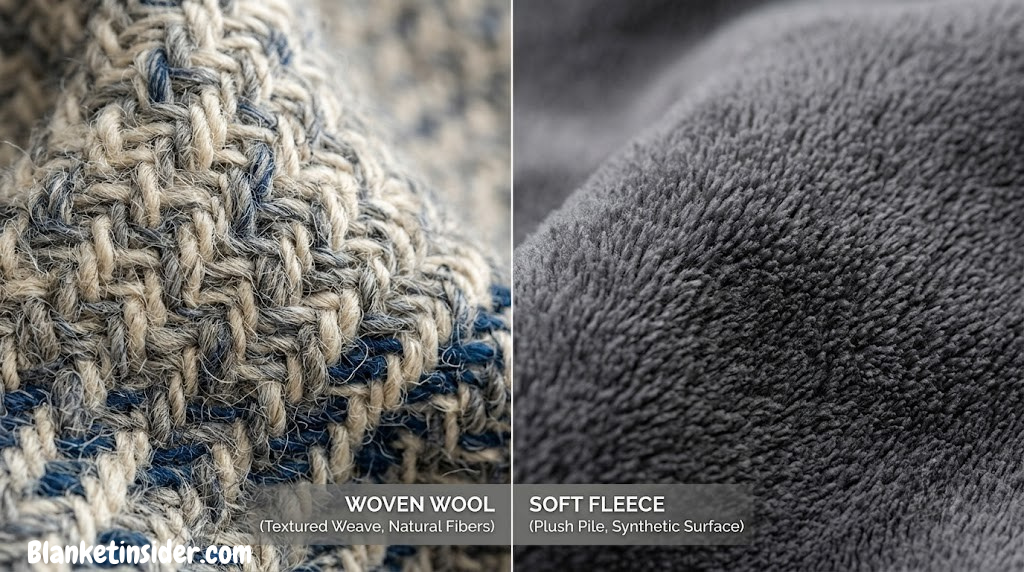
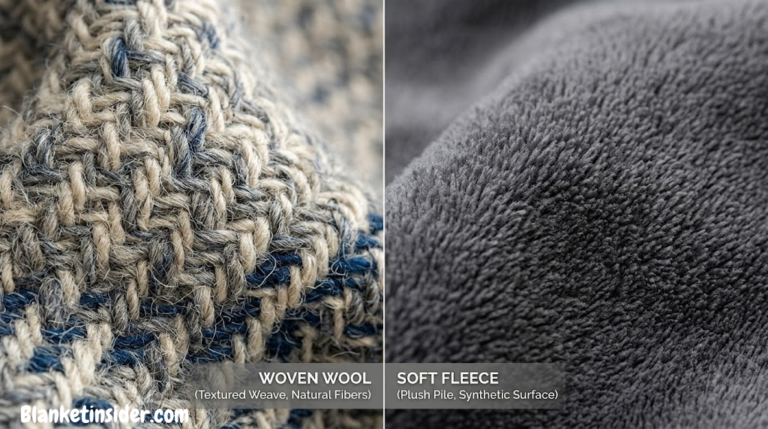
Left: natural wool weave with visible crimp structure. Right: synthetic fleece with uniform loop texture.
You’re standing in a store — or scrolling at midnight — staring at a wool blanket priced like a small investment and a fleece blanket that costs less than dinner. Both promise warmth. Both look cozy. But they are built from completely different worlds: one woven from the back of a sheep, shaped by millions of years of biological engineering, and the other spun from recycled plastic bottles using chemistry that didn’t exist until the 1970s.
This guide cuts through the marketing fluff. You’ll get the real science of how each fiber behaves in heat, cold, moisture, and wear — plus a clear breakdown of which one deserves a place on your bed, couch, camping pack, or nursery floor. If you’ve ever wondered about what separates great blanket materials, wool and fleece are the two poles every other fabric gets measured against.
Origins & Fiber Science: Where Each Material Comes From
Understanding what a blanket is made of — at the molecular level — explains almost everything about how it will perform on your bed or couch for the next decade. Wool and fleece couldn’t come from more different places, and that origin story has direct consequences for your sleep, your wallet, and the planet.
Wool: A Biological Marvel Millions of Years in the Making
Wool is a protein fiber grown from sheep follicles, and it is one of the most sophisticated natural materials humans have ever domesticated. The fiber is composed primarily of keratin — the same protein found in human hair and nails — but structured in a way that no synthetic has fully replicated. Each strand is covered in microscopic overlapping scales (called cuticle cells) that interlock when agitated, which is why wool felts, but also why it creates such effective air-trapping loft.
Inside each wool fiber is a cortex that acts like a tiny spring: naturally crimped, with a helical structure that stores elastic energy. This crimp creates the characteristic loftiness of wool blankets and is the primary reason wool insulates so effectively even in damp conditions. When you hear about merino wool’s legendary thermoregulation, it’s this fiber architecture working exactly as nature designed it.
Different sheep breeds produce dramatically different wool quality. Merino sheep yield the finest fibers (14–22 microns), while coarser breeds like Rambouillet or Corriedale produce the thicker, more textured wool typical of traditional blankets and throws. The micron count directly affects softness — lower microns feel buttery against skin, while higher micron wool gives that familiar rustic texture. Cashmere and other luxury wools occupy the ultra-fine end; if you want to understand the difference, our cashmere vs merino wool breakdown goes deep on that comparison.
Fleece: Born from a Chemistry Lab, Not a Pasture
Fleece as we know it today was invented by Malden Mills in 1979 under the brand name Polartec. It’s a synthetic fabric, typically made from polyethylene terephthalate (PET) — the same polymer used in plastic bottles — that is mechanically brushed or knitted into a dense pile structure. The result mimics the loft and warmth of natural wool without using any animal fiber at all.
At the fiber level, fleece is composed of long, straight polymer chains. Unlike wool’s scaly, crimped architecture, fleece fibers are smooth, uniform cylinders. They don’t interlock with each other, which means fleece doesn’t felt in the wash. But this smooth structure also means fleece fibers can migrate and pill when they rub against surfaces — that familiar balling-up of the surface you see on well-loved fleece sweaters and blankets.
Modern fleece comes in multiple weights and constructions. Microfleece uses extremely fine denier fibers for lightweight warmth. Mid-weight fleece is the most common in blankets. High-pile or Sherpa-type fleece (which you can read more about in our Sherpa vs fleece comparison) adds a thicker, wool-like textured surface to one side. Each construction behaves differently in terms of warmth, pill resistance, and care.
🔬 Key Structural Difference
Wool’s scaly, crimped architecture allows it to absorb up to 35% of its weight in moisture while still feeling dry — a property no synthetic polymer can match. Fleece, by contrast, is hydrophobic at the fiber level, meaning it repels water rather than absorbing it. This single difference drives most of the practical distinctions between the two materials.

Pendleton National Park Throw — Pure Merino Wool
Classic American craftsmanship, pure wool warmth, and iconic patterns that never date. Ships with free Amazon returns.
Shop on AmazonWarmth & Insulation: Which Blanket Actually Keeps You Warmer?
This is the question everyone asks first, and the honest answer is more nuanced than most product listings will tell you. Raw warmth depends on loft, fiber architecture, and — crucially — the conditions you’re sleeping or relaxing in. Wool and fleece are both excellent insulators, but they work differently, and that difference matters enormously in different climates and seasons.
How Wool Insulates
Wool insulates primarily through air entrapment. The natural crimp of each fiber creates millions of tiny pockets of still air between the strands. Since still air is one of the best insulators known to science, a thick wool blanket acts like a passive thermal barrier that responds to your body temperature rather than just piling on heat indiscriminately.
The truly remarkable property — unique to wool among all blanket materials — is active thermoregulation. As your body temperature rises, wool fibers absorb moisture vapor from your skin (via the cortex’s hygroscopic core), which triggers a mild exothermic reaction that releases warmth. As you cool down and the air around you dries, wool releases that stored moisture back — helping keep your microclimate stable. This is why a wool blanket feels appropriate across a much wider temperature range than its weight would suggest.
If you want to geek out on the science behind this phenomenon, our piece on merino wool thermoregulation covers it in depth. The short version: wool doesn’t just trap heat, it manages heat.
How Fleece Insulates
Fleece insulates through pile loft alone. The brushed or knitted polymer loops create a three-dimensional structure that traps air between the fibers, very similar in principle to wool — but without any of the adaptive hygroscopic properties. Fleece is a passive insulator: it traps whatever body heat is present and holds it there.
This makes fleece feel intensely warm in cold, dry conditions — many people find it too warm for anything above around 65°F (18°C) indoors. Because fleece can’t regulate moisture, it can feel clammy if you start to sweat under it, which is why fleece blankets can feel stifling in warmer climates or for people who sleep hot.
Fleece loses almost none of its insulating ability when wet — which is why it’s the go-to choice for outdoor and sports blankets in rainy or damp conditions. Wool maintains roughly 80% of its insulating value when wet, while down collapses to near zero. For truly waterlogged situations, fleece edges out wool on immediate practical warmth retention.
The Weight-for-Weight Comparison
When compared at equal weights, wool generally outperforms fleece in dry-cold insulation and dramatically outperforms it in temperature adaptability. A 400g/m² Merino wool blanket will keep you comfortable across a roughly 20°F wider temperature range than a 400g/m² fleece blanket of the same dimensions. But most fleece blankets sold as bedding are considerably lighter in actual weight, which is part of their appeal — they deliver substantial warmth at minimal heft.
For those who sleep cold, particularly in climates that drop well below freezing, layering two fleece blankets can approximate the warmth of one thick wool blanket at roughly half the price and significantly less weight per blanket. The tradeoff is the loss of wool’s moisture management, which matters most for people who sleep with night sweats or live in humid environments — a topic we explore in our guide to best blankets for night sweats.

Bedsure Plush Fleece Throw Blanket — Ultra-Soft All-Season
One of the top-rated fleece blankets on Amazon with thousands of verified reviews. Lightweight, machine-washable, and comes in 30+ colors.
Shop on AmazonWeight, Breathability & That “Under the Blanket” Feel
Weight is one of the most personal aspects of blanket selection. Some people want the cocooning sensation of something substantial; others need a light layer they barely notice. Breathability is equally personal — it determines whether you wake up sweating at 3am or whether you maintain that perfect microclimate all night.
Wool: Dense, Heavy, and Gloriously Breathable
Wool blankets are typically heavier than comparable fleece. A queen-size wool throw might weigh anywhere from 3 to 7 pounds depending on weave density and fiber type — which gives it a comforting substantial feel that many people genuinely love, comparing it to a lighter version of the deep pressure sensation people report with weighted blankets.
Despite its weight, wool breathes exceptionally well. The open weave structure of most wool blankets allows air circulation, while the fiber’s moisture management ensures that heat and humidity are regulated rather than trapped. You get warmth without stuffiness — a combination that’s genuinely hard to replicate synthetically. This breathability makes wool the default choice for people who run warm or live in climates with significant humidity variation through the night.
Fleece: Feather-Light and Wonderfully Cozy — But Less Breathable
Fleece blankets are remarkably lightweight for the warmth they provide. A queen-size fleece throw typically weighs between 1 and 2.5 pounds — far lighter than wool. For people who don’t like the weight of blankets but still want substantial warmth, fleece is the clear winner.
The breathability story is more complicated. Fleece pile is quite good at trapping air (which is why it feels so warm), but that same mechanism limits airflow. Standard fleece is less breathable than an open-weave wool blanket, meaning it holds a microclimate more aggressively. For cold sleepers in cool rooms, this is a feature. For warm sleepers or anyone in a climate with warm nights, it can become oppressive very quickly.
💡 The Humidity Factor
If you live in a humid climate — think coastal areas, tropical regions, or anywhere with humid summers — wool’s moisture management becomes a genuine quality-of-life advantage. Wool can absorb up to 35% of its own weight in moisture vapor before feeling damp, silently managing the humidity your body generates during sleep. Fleece simply lets that moisture sit at the surface, which is why sheets under a fleece blanket can feel damp by morning in humid conditions.
Woven vs Knitted Wool: The Breathability Spectrum
Not all wool blankets are equally breathable. Tightly woven wool (like many traditional military or camp blankets) is denser and less breathable than open-knit wool throws. If breathability is your top priority, seek out open-weave or loosely knitted wool options rather than the dense camp-blanket style. For comparison, our guide to waffle blanket weaves shows how weave structure alone can transform a fabric’s airflow performance.
Durability & Pilling: Which Blanket Survives the Long Haul?
A blanket’s lifespan is one of the most underappreciated purchase factors — yet it may be the single most important one when calculating true cost and environmental impact. Here’s where the two materials diverge most dramatically.
Wool: The Multi-Generational Blanket
A well-made wool blanket, properly cared for, can genuinely last 20 to 30 years — and family heirlooms passed through multiple generations are not uncommon among quality wool blankets. The natural fiber’s elasticity means it resists permanent compression: wool bounces back after pressure in a way synthetic fibers cannot replicate long-term. Wool also has a natural resistance to the kind of surface breakdown that plagues synthetic fabrics.
Wool’s durability comes with caveats. It is vulnerable to moths (which consume the keratin protein in the fiber), requires more careful washing than synthetics to avoid felting, and can pill somewhat if low-quality short fibers are used. High-quality wool blankets with longer fiber staples — particularly merino — pill far less than budget-tier wool blends. Storing wool properly (clean, in cedar or lavender, away from light) is part of maintaining that multi-decade lifespan.
Fleece: Great Short-Term, Degrades Over Time
Fleece is remarkably durable in the short-to-medium term — it doesn’t shrink, doesn’t felt, doesn’t attract moths, and handles machine washing without ceremony. For the first few years of a fleece blanket’s life, it holds up extremely well.
The problem is surface degradation over time. Fleece pills as the cut polymer fiber ends migrate to the surface and tangle into small balls. High-quality anti-pill fleece uses a special shearing and finishing process to remove loose fiber ends before they reach your blanket, but even anti-pill finishes degrade after many wash cycles. By year three to five of regular use, most fleece blankets show visible surface wear — a matted, pilled appearance that no amount of washing reverses.
| Factor | Wool | Fleece | Winner |
|---|---|---|---|
| Expected Lifespan | 20–30+ years (with care) | 3–7 years before visible wear | Wool |
| Pilling Risk | Low (especially fine merino) | Moderate to High | Wool |
| Moth Vulnerability | Yes — requires prevention | None | Fleece |
| Felting Risk | Yes (hot water / agitation) | None | Fleece |
| Tear Resistance | High (woven construction) | Moderate (knit loops can snag) | Wool |
| Color Fastness | Good (natural dye affinity) | Good (synthetic dye bonds) | Tie |
| Snag Resistance | High | Low (loops catch on zippers, velcro) | Wool |
The bottom line on durability: wool wins comprehensively when you’re thinking in decades, and fleece wins when you’re thinking in years. For a college dorm room or a frequently-replaced guest blanket, fleece’s resilience to washing and low upkeep makes it the practical choice. For a living room statement piece or a blanket you intend to keep for your lifetime, the investment in quality wool pays for itself many times over.
Cedar blocks, lavender sachets, and proper sealed storage are the primary defenses. Moths target dirty wool (they’re attracted to oils and perspiration), so always wash or dry-clean wool blankets before seasonal storage. Never store wool in a damp environment — moisture attracts both moths and mildew.
Care & Washing: What Each Blanket Actually Needs
Nothing deflates excitement about a new blanket faster than ruining it in the first wash. Care requirements are also a genuine lifestyle consideration — if you have kids, pets, or simply prefer the convenience of machine washing, the care demands of wool vs fleece matter as much as their warmth properties.
Washing Wool Blankets: The Careful Approach
Wool requires more considered care than fleece, but the basic rules are simple once you understand why. The principal enemy of wool is the combination of heat + agitation + moisture. These three conditions together cause the cuticle scales on each fiber to interlock permanently (felting), irreversibly shrinking and stiffening the blanket.
For most wool blankets: wash in cold water on a gentle or hand-wash cycle, use a specialist wool wash or very mild detergent (never regular biological detergent — the enzymes attack keratin), and never tumble dry on heat. Dry flat to prevent stretching. For quality merino wool blankets, machine washing on cold-gentle is typically safe; for tighter woven traditional wool, hand washing or professional dry cleaning is the safer route.
The full protocols — including specific product recommendations for wool-safe detergents — are covered in our in-depth guide on how to wash delicate blankets without causing damage. Many of the principles apply directly to wool care.
Washing Fleece Blankets: The Easy Option
This is where fleece wins unequivocally on convenience. Fleece is machine washable in warm water, tumble dries quickly on low heat, and requires no special detergents. It doesn’t shrink, doesn’t felt, and doesn’t require flat drying. For households that need blankets washed frequently — think toddler spills, pet hair, or pet-dedicated blankets — fleece’s hassle-free care is a genuine practical advantage.
A few fleece care tips worth knowing: wash in cold or warm (not hot) water to minimize fiber damage and extend anti-pill life. Avoid fabric softeners, which coat the fibers and reduce fleece’s natural loft over time. Wash fleece inside out to reduce pilling during the wash cycle. Line drying or air drying preserves the fleece surface better than tumble drying, even though tumble drying won’t damage it.
For specialty blankets that combine materials — like a fleece-backed wool throw — the safest approach is always to follow the care instructions for the more delicate material. Our guide on washing specialist blankets applies many of these same principles to other technical fabrics.
Eucalan Delicate Wash — No-Rinse Wool & Delicates Cleaner
Specifically formulated for wool, cashmere, and fine knits. No-rinse formula preserves lanolin and fiber integrity — an essential for anyone who owns wool blankets.
Shop on AmazonEco Impact & Sustainability: The Environmental Truth About Both Materials
Environmental impact is an increasingly important purchase consideration, and the wool vs fleece comparison here is genuinely complicated — neither material gets a clean green bill of health, but for very different reasons.
Wool’s Environmental Footprint
Wool is a renewable natural fiber: sheep regrow their coats annually, and the fiber itself is fully biodegradable, breaking down into soil nutrients in roughly 1 to 5 years. For a material you’ll use for decades and then compost rather than landfill, the lifecycle picture is genuinely positive.
The complications lie in agriculture. Sheep farming has significant land and water requirements, and methane emissions from sheep contribute to agricultural greenhouse gas totals. Mulesing — a controversial animal welfare practice still used by some Australian wool producers — is an ongoing ethical concern. Responsible wool certifications like ZQ Merino, Responsible Wool Standard (RWS), and GOTS (Global Organic Textile Standard) address both animal welfare and environmental standards. When shopping for sustainable wool blankets, these certifications are meaningful signals.
Fleece’s Environmental Footprint
Here’s fleece’s dirty secret: it sheds plastic. Every wash cycle releases microscopic polyester fibers — known as microplastics — into wastewater. Studies suggest a single synthetic fleece blanket can shed hundreds of thousands of microfibers per wash, many of which pass through sewage treatment systems and enter waterways and oceans. This is an ongoing environmental problem without a clean solution yet.
The counternarrative from fleece advocates is the recycled-PET angle: many modern fleece products are made from recycled plastic bottles, giving plastic waste a second life as textiles. Brands like Patagonia have made this a cornerstone of their environmental story. Recycled fleece carries a genuinely lower production footprint than virgin polyester, and it diverts plastic from landfill — but it still sheds microplastics.
| Eco Factor | Wool | Fleece |
|---|---|---|
| Biodegradability | Fully biodegradable (1–5 yrs) | Non-biodegradable (500+ yrs) |
| Microplastic Shedding | None | High — every wash cycle |
| Carbon Footprint | Moderate (agriculture + transport) | Moderate–High (petrochem + mfg) |
| Renewable Material | Yes — annual regrowth | Partially (if recycled PET) |
| Water Footprint | High (sheep farming) | Moderate (manufacturing) |
| Animal Welfare Concerns | Yes — check certifications | None (synthetic) |
| Longevity Impact | Excellent — decades of use | Poor — replaced every 3–7 years |
If environmental impact is your primary concern: certified wool from a responsible source is likely the better long-term choice because of its biodegradability and longevity (fewer replacements = less manufacturing impact over a lifetime). If you choose fleece, opting for recycled-PET versions and using a microplastic filter bag (like a Guppyfriend wash bag) significantly reduces the waterway pollution concern.
A wool blanket lasting 30 years replaces 4–6 fleece blankets over the same period. Even accounting for wool’s higher production footprint, the net lifecycle impact of a single well-made wool blanket is substantially lower than cycling through multiple fleece replacements. Durability is one of the most underrated environmental factors in textile purchasing.
Allergies & Sensitivities: Is Wool Really Itchy?
The “wool is itchy” reputation is one of the most persistent and most misunderstood ideas in textile perception. Whether wool feels itchy against your skin depends almost entirely on the micron count of the specific fiber — not some inherent property of all wool.
The Wool Itch Myth — Mostly Debunked for Fine Wools
Coarse wool fibers (above about 30 microns in diameter) cause a mechanical prickling sensation when they contact skin — the fiber is stiff enough to deflect rather than bend, triggering itch receptors. This is the origin of the “itchy wool” reputation, largely associated with traditional country blankets and outerwear made from coarser breeds.
Fine merino wool, typically 17–22 microns, is soft enough to bend on contact with skin rather than prick it — which is why merino base layers are worn directly against skin in cold-weather sports without discomfort. Many people who believe they are “allergic to wool” are actually reacting to coarse fiber prickling, not a true immune response. Genuine wool allergies (IgE-mediated) do exist but are relatively uncommon.
If you have sensitive skin, eczema, or past negative experiences with wool, look specifically for certified fine merino blankets. Our guide to best blankets for eczema explores the skin-contact properties of different materials in depth, and merino wool consistently ranks as a skin-kind option for many eczema sufferers.
Fleece: The Hypoallergenic Default
Fleece’s synthetic origin means it carries essentially no allergy risk for protein-sensitive individuals. It doesn’t contain lanolin (the natural oil in wool that occasionally triggers reactions in lanolin-sensitive people), doesn’t attract dust mites as readily as many natural fibers, and doesn’t break down into organic compounds that can trigger respiratory sensitivities.
For households with known wool sensitivities, multiple chemical sensitivities, or infants and young children with reactive skin, fleece is the reliably safe choice. The considerations for infant use are particularly important — our baby blanket safety and material review covers how synthetic fibers interact with newborn and infant skin in detail.
✅ Wool — Sensitivity Pros
- Fine merino is skin-safe for most sensitive skin
- Natural lanolin can be soothing for some people
- No synthetic chemical off-gassing
- Doesn’t generate static electricity
- Naturally resistant to dust mite growth
⚠️ Wool — Sensitivity Cons
- Coarse wool triggers mechanical prickling
- Lanolin can cause reactions in sensitized people
- May contain residual processing chemicals if uncertified
- True wool allergy (uncommon but possible)
✅ Fleece — Sensitivity Pros
- No animal proteins — no wool allergy risk
- No lanolin — safe for lanolin-sensitive skin
- Uniformly soft surface — no prickling
- Widely used for infants without issues
⚠️ Fleece — Sensitivity Cons
- Synthetic dyes can cause reactions in some people
- Static buildup can be problematic for some skin types
- Less breathable — can increase sweating and irritation
- Microfiber shedding (airborne particles)

100% Fine Merino Wool Throw — 17 Micron Certified Ultra-Soft
Premium fine merino wool rated below 20 microns — comparable to cashmere softness without the price premium. Safe for sensitive skin and eczema-prone users.
Shop on AmazonCost & Value: Breaking Down the Real Price of Ownership
The price gap between wool and fleece blankets looks enormous on a shelf — and it is, in terms of sticker price. But cost-per-year-of-use tells a very different story that most people never calculate.
Sticker Price Comparison
Entry-level fleece throws can be found for $10 to $25. Quality fleece blankets from established brands typically run $30 to $70. High-end fleece — Polartec-based, anti-pill finished — runs $80 to $150 for larger formats.
Wool throws start around $40 to $60 for wool-blend options and typically run $80 to $200 for pure wool blankets from quality producers. Certified merino wool blankets from premium brands like Pendleton, Woolrich, or New Zealand Wool push into the $150 to $400+ range for queen/king sizes. Full-size wool blankets from heritage producers can exceed $600.
The Cost-Per-Year Calculation
This is where the math gets interesting. A $50 fleece blanket lasting four years costs $12.50 per year. A $200 merino wool blanket lasting 25 years costs $8 per year — and can be passed on rather than landfilled. This is the calculation that explains why wool blankets have been passed down through generations and why serious blanket buyers almost always end up gravitating toward wool as they get older and more experienced with textile quality.
| Tier | Fleece Cost | Wool Cost | Cost/Year (Fleece) | Cost/Year (Wool) |
|---|---|---|---|---|
| Budget | $15–40 | $40–80 | ~$6–12 | ~$3–6 |
| Mid-Range | $40–100 | $80–200 | ~$10–25 | ~$4–10 |
| Premium | $100–200 | $200–500+ | ~$20–50 | ~$8–20 |
For those managing a tight budget in the short term, fleece is the clear practical choice — paying $20 for a blanket that lasts five years is a perfectly sound decision when a $200 wool blanket simply isn’t accessible right now. For those with the financial flexibility to make a longer view purchase, wool’s cost-per-year advantage becomes substantial over a decade or more of use. This is the same calculus behind the value proposition explored in our best king-size blanket roundup — price and quality are rarely the same thing.
A wool-acrylic or wool-polyester blend (often labeled “wool blend” or “lambswool blend”) typically costs $50–120 and delivers 70–80% of pure wool’s performance at half the price. These are excellent transitional options for people who want wool’s thermal properties without the full premium outlay. Our breakdown of acrylic vs wool throws helps you evaluate what exactly is being sacrificed and gained in these blends.
Best Uses by Lifestyle: Which Blanket Belongs Where?
Context matters enormously in blanket selection. The right choice for a mountain cabin is different from the right choice for a Manhattan studio apartment, a child’s bedroom, or a weekend camping pack. Here’s how wool and fleece stack up across the most common use cases.
Living Room Throw
Wool’s durability, sophisticated drape, and aesthetic variety make it the premium choice for a statement living room piece.
Wool WinsCamping & Outdoors
Fleece’s light weight, quick dry time, and performance when wet make it the practical outdoor companion. Our outdoor blanket comparison goes deeper here.
Fleece WinsCold Climate Bedding
Wool’s superior thermoregulation and breathability make it the better choice for cold winters where temperature swings through the night.
Wool WinsTravel Blanket
Lightweight fleece compresses easily and survives rough handling. A great option alongside a travel pillow set.
Fleece WinsMeaningful Gift
A quality wool blanket is one of the best long-term gifts you can give — it will outlast nearly any other home textile.
Wool WinsPet & Kids Use
Machine-washable fleece is the overwhelmingly practical choice for anything that needs regular washing. Check our best pet blankets guide for top picks.
Fleece WinsFor road trips and car use, fleece wins on practicality — it’s light, washable, and doesn’t take up much space. Our cozy car road trip guide has specific recommendations for travel blankets of both types. And if you spend time at the beach, check out our dedicated beach blanket guide where wool’s anti-UV properties make it a surprising winner in certain sandy scenarios.
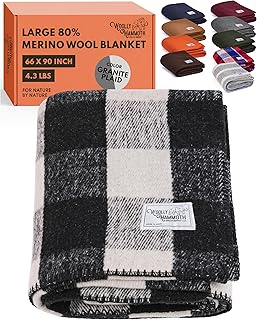
Arcturus Heavy Duty Outdoor Fleece Blanket — Windproof 60×80″
One of the most popular outdoor fleece blankets on Amazon — weather-resistant, heavy-duty construction with carry handle. Ideal for camping, stadium use, and car travel.
Shop on AmazonBabies, Kids & Pets: Safety Considerations for the Most Vulnerable Users
When a blanket is going to be used by infants, young children, or beloved pets, the decision calculus shifts significantly. Safety, skin gentleness, and practicality take precedence over purely performance-based criteria.
Infant and Baby Use
For newborns and infants under 12 months, the most important blanket consideration is actually safety rather than material — loose blankets of any kind are not recommended for sleep environments for very young babies because of suffocation risk. Our detailed baby sleep blanket safety timeline walks through exactly when and how blankets can safely be introduced to a baby’s sleep environment.
For swaddling and supervised use with newborns, muslin and organic cotton are typically the first choice, but both fleece and fine merino wool have roles to play as babies get older. Fleece’s hypoallergenic properties and machine washability give it a strong practical case for baby blankets. Fine merino wool’s thermoregulation makes it particularly valuable for infants in climates with significant temperature variation — a sleeping baby can’t remove a blanket if they get too warm. For a full material comparison in the baby context, see our reviews of baby blankets by material type.
Children’s Bedrooms
For children old enough to manage their own blankets (typically 18 months and older), both materials work well. Fleece’s softness, washability, and wide color/character print availability make it enormously popular for children’s rooms. Wool becomes more practical as children get older and are less likely to spill on their bedding multiple times a week.
For children with eczema or reactive skin, fine merino wool or certified organic fleece (avoiding harsh dyes) are both viable options. Our guide to blankets for eczema covers the specific fiber and fabric properties that matter for this condition.
Pets
Fleece is the near-universal choice for pet blankets, and for good reason. Pet blankets get soiled regularly, must withstand claws and chewing to some degree, and need frequent machine washing. Fleece handles all of this graciously. Wool would be destroyed far faster by most pets, and the cost-to-lifespan ratio makes fleece the sensible default.
High-pile fleece (essentially the Sherpa-type construction) is particularly popular for pets — the deep, soft texture provides insulation and is popular with dogs who like to burrow. For a full review of options, our best pet blankets guide covers tested options across materials and price points.
Aesthetics & Home Style: Texture, Drape, and Interior Design Impact
Blankets aren’t just functional objects — they’re part of a room’s visual and tactile identity. The material you choose affects how a blanket drapes, how it holds its shape on a sofa, and what design story it tells in your living space.
Wool: Natural Texture, Sophisticated Drape, Timeless Appeal
Wool blankets have a natural, organic texture that varies enormously by weave and fiber type — from the dense, structured feel of a traditional Pendleton herringbone throw to the airy openness of a loosely knit merino wrap. The natural variation in wool fiber gives blankets a depth of texture that reads as quality and craftsmanship even from across a room.
Wool’s natural crimp gives it excellent draping properties — a good wool throw folds and arranges itself on a sofa arm or chair in a way that looks intentional and composed. It holds its form rather than collapsing completely (unlike fleece) or staying rigid (like some synthetic fabrics). This is why you see wool throws prominently featured in interior design photography — they’re visually effective as both functional objects and decorative ones.
Wool blankets are also available in a vast range of pattern traditions — from Pendleton’s Native American-inspired geometric prints to classic tartan plaids, Nordic Fair Isle patterns, and contemporary Scandinavian minimalism. If visual variety and pattern quality matter to you, wool’s dye affinity and weave flexibility give it a wider aesthetic range. For living room display on a blanket ladder or in a beautiful blanket basket, wool throws are generally more visually interesting than their fleece counterparts.
Fleece: Casual, Plush, and Contemporary
Fleece has a consistent, uniform pile texture that reads as modern, casual, and approachable. It doesn’t have the visual complexity of a woven wool blanket, but its softness is immediately apparent even to the eye — the plush surface communicates comfort in a direct, accessible way. For contemporary, relaxed interior aesthetics — coastal casual, hygge, Scandinavian-minimalist — a simple, quality fleece throw in a well-chosen color works extremely well.
Fleece is also available in far more bold and varied color options than traditional wool, particularly at mass-market price points. If you want an exact color match for a room’s color scheme, fleece’s synthetic dye system gives you more precision than wool’s more variable natural dye uptake. Our best cozy blankets for living rooms guide explores how both materials fit into different interior styles.
For traditional, transitional, and high-design interiors: wool. Its natural texture, weave variety, and sophisticated drape simply photograph and style better. For casual, contemporary, or hygge-inspired spaces: quality fleece in a considered color is perfectly appropriate. Both look excellent when thoughtfully chosen — neither is a wrong answer for a well-decorated room.
Final Verdict: The Complete Head-to-Head
| Category | Wool | Fleece | Winner |
|---|---|---|---|
| Warmth (Cold Climate) | Excellent — adaptive thermoregulation | Very Good — passive insulation | Wool |
| Warmth (Warm Climate) | Adapts — stays comfortable | Often too warm, little adaptability | Wool |
| Moisture Management | Outstanding — absorbs and releases moisture | Hydrophobic — lets moisture sit | Wool |
| Weight | Heavy (3–7 lbs for queen) | Light (1–2.5 lbs for queen) | Fleece |
| Softness (Fine Merino) | Exceptionally soft (<20 micron) | Very soft (uniform pile) | Tie |
| Ease of Care | Requires careful washing | Machine wash, tumble dry — easy | Fleece |
| Longevity | 20–30+ years with care | 3–7 years before surface wear | Wool |
| Pilling Resistance | Good (fine wool) | Moderate — pills over time | Wool |
| Allergy Safety | Fine merino safe for most; coarse can prick | Hypoallergenic — no animal proteins | Fleece |
| Eco Impact | Biodegradable; agricultural footprint | Non-biodegradable; microplastic shedding | Wool |
| Fire Safety | Naturally flame-resistant | Synthetic — melts and burns | Wool |
| Sticker Price | $40–500+ (pure wool) | $10–150 | Fleece |
| Cost Per Year | $4–20/year (long lifespan) | $6–50/year (shorter lifespan) | Wool |
| Camping / Outdoors | Good — warm when slightly damp | Excellent — light, quick-dry, packable | Fleece |
| Aesthetics / Design | Rich, sophisticated, wide pattern range | Casual, plush, color-precise | Wool |
| Pet & Child Use | Works with care; costly if destroyed | Practical, washable, affordable to replace | Fleece |
🐑 Choose Wool If…
- You live in a climate with cold winters and want year-round adaptability
- You value longevity and are thinking in decades, not years
- Sustainability and biodegradability matter to your purchasing decisions
- You want a statement living-room throw that looks beautiful for years
- You’re a hot or sweaty sleeper who needs moisture management
- You’re giving a meaningful, lasting gift
- Fire safety is a consideration in your home
🧪 Choose Fleece If…
- Budget is a primary constraint right now
- You need a blanket that can go in the washing machine without ceremony
- It’s for pets, young children, or high-mess environments
- You camp, hike, or spend time outdoors in wet conditions
- You or a family member has a wool sensitivity or lanolin allergy
- You sleep cold and want the lightest possible warmth solution
- You need a travel blanket that packs small
For those who simply can’t decide, a wool-blend throw (50–80% wool) offers an excellent middle ground — warmer and more breathable than pure fleece, more affordable and washable than pure wool. These are also explored in our broader guide to blanket materials, which covers every major fiber used in modern blankets.
If you’re exploring other comparison questions in the blanket world, we have detailed guides covering comforters vs duvets vs blankets, cotton vs polyester blankets, and fleece vs Sherpa blankets — all using the same evidence-based format.

The Dream: A Quality Wool-Blend Throw — Performance Without the Full Premium
Wool-blend throws (60–80% wool) deliver the best practical balance of warmth, breathability, and care ease. These are the blankets most people end up happiest with long-term.
Explore Wool Blend Throws on AmazonFrequently Asked Questions
Wool is significantly better for hot sleepers. Its hygroscopic fiber structure actively manages moisture vapor from your body, absorbing up to 35% of its weight in moisture before feeling damp, then releasing it as conditions change. This keeps your microclimate regulated rather than increasingly hot and clammy. Fleece is hydrophobic at the fiber level — it doesn’t absorb moisture, so body heat and sweat simply sit at the surface. For hot sleepers, a lightweight merino wool blanket or a wool-blend throw is almost always more comfortable than any weight of fleece. You can also explore options in our guide to best blankets for night sweats.
Many modern wool blankets — particularly those made from merino wool — are machine washable on a cold-water gentle or hand-wash cycle. The enemy of wool is the combination of heat, agitation, and water, which together cause irreversible felting. Always use cold water, a delicate cycle, and a wool-safe detergent (never biological detergent, which contains enzymes that attack keratin protein). Dry flat rather than in a tumble dryer. Traditional woven wool blankets (as opposed to knitted throws) are generally safer with hand washing or professional dry cleaning. Always check the garment label first, as formulations vary between manufacturers.
In most conditions, yes. Fleece is a hydrophobic synthetic — it doesn’t absorb moisture and has limited breathability compared to a natural fiber like wool. When you sleep or relax under a fleece blanket, body heat and moisture vapor build up between you and the fabric rather than being managed by the material. This can cause you to feel clammy or sweaty, particularly during the night or in warmer ambient temperatures. Wool, by contrast, absorbs moisture vapor quietly and regulates your temperature more actively. If you find yourself waking up sweating under fleece, switching to a lightweight merino wool layer often resolves this entirely.
For most camping situations, fleece has a practical edge. It’s significantly lighter, packs down much smaller, dries quickly when wet, and performs well across a wide range of cold conditions. Wool is heavier and takes longer to dry thoroughly if it gets soaked — a real disadvantage in rain-exposed camping situations. However, wool handles damp conditions better than fleece handles wind, and traditional wool blankets have served campers for centuries. The best compromise for serious outdoor use is a high-quality mid-weight fleece blanket combined with a wind layer. Our outdoor sports blanket comparison covers this in detail.
Pilling occurs when loose fiber ends on the fleece surface work their way out and tangle into small balls through friction — in the wash, from contact with rough surfaces, or from regular use against clothing and upholstery. Prevention strategies include: washing fleece inside-out, using a gentle wash cycle with cold water, avoiding fabric softeners (which weaken fiber bonds), air-drying rather than tumble drying when possible, and keeping fleece away from Velcro and rough surfaces. Once pilling occurs, a fabric shaver (lint remover) can temporarily restore the surface, but the underlying fiber damage is permanent. Investing in anti-pill fleece from the start is the most effective prevention.
This depends significantly on the wool type. Coarse wool can cause mechanical prickling that is uncomfortable and inappropriate for delicate newborn skin. Fine merino wool (under 20 microns) is soft enough for infant skin and is used in many baby garments and blankets safely. However, for sleeping environments under 12 months, no loose blanket of any material is recommended due to suffocation risk — refer to our baby sleep blanket safety timeline for age-appropriate guidance. For supervised use and swaddling in older infants, certified fine merino wool is a safe and thermally excellent choice. Always check for lanolin sensitivity if using wool with very young children.
A quality wool blanket, properly cared for, typically lasts 20 to 30 years — and some heirloom wool blankets have been passed through multiple generations. The natural fiber’s resilience, combined with wool’s resistance to permanent compression, means it maintains its structure and appearance far longer than synthetics. Fleece, by contrast, typically shows visible surface degradation (pilling, matting, loss of loft) within three to seven years of regular use, even with good care. When you calculate cost per year of use, a $200 wool blanket that lasts 25 years ($8/year) often outperforms a $30 fleece blanket that needs replacing every four years ($7.50/year) — and the wool can often be composted at end of life.
Wool is actually naturally flame-resistant — one of its most overlooked safety properties. Wool has a high ignition temperature (around 570–600°C), doesn’t melt, doesn’t drip burning material, and self-extinguishes when the ignition source is removed. This is why wool blankets are standard issue in emergency kits and why wool has been used historically in fire-adjacent environments. Fleece, being a synthetic polyester, melts and drips when exposed to flame rather than charring, which can cause serious burns if it ignites near skin. From a fire safety standpoint, wool is significantly safer — particularly relevant for fireplace use, candle-lit environments, and households with children. Our guide to emergency blankets covers fire-resistant options in detail.
Recycling fleece blankets is challenging. While fleece is made from PET polyester (which is theoretically recyclable), most municipal recycling programs don’t accept textiles, and the multi-material construction of many blankets (fleece + binding + labels) complicates mechanical recycling. Some brands — particularly outdoor gear companies — have take-back programs for polyester fleece products. The best sustainable approaches are: donation when the blanket is still usable, textile recycling through programs like H&M’s in-store collection or TerraCycle, or repurposing as pet bedding, cleaning rags, or craft material. Never put a fleece blanket in a home compost — the synthetic fibers will not biodegrade meaningfully within a human timeframe.
Wool fleece — sometimes called “boiled wool” or “felted wool” — is a fabric made from natural wool fibers that have been processed (typically using heat and agitation) to create a dense, matted, non-woven fabric with a fleece-like texture. It retains all of wool’s natural properties: biodegradable, thermally adaptive, moisture-managing. Synthetic fleece is a petroleum-derived polyester fabric manufactured from PET polymer. The two share a similar pile texture and tactile softness but are completely different in origin, performance properties, sustainability profile, and care requirements. When you see “fleece” on a care label without the word “wool,” it is almost always synthetic unless explicitly stated otherwise. Wool fleece is comparatively rare and considerably more expensive than synthetic fleece.
The Bottom Line
Wool and fleece are both excellent blanket materials — but they’re excellent in different ways, for different people, in different contexts. Wool is a biological masterpiece that manages temperature, resists moisture, ages gracefully, and decomposes without harm when its long life finally ends. Fleece is an engineering achievement that delivers consistent warmth at a fraction of the price, survives machine washing without complaint, and asks almost nothing of its owner in return.
The choice that matters most depends on your honest answer to a few questions: How long do you intend to keep this blanket? How often will it need washing? How important is sustainability to you? Does anyone in your household have sensitivities? Is this for indoor warmth, outdoor adventure, or both?
Answer those questions and the right material tends to reveal itself. For the majority of everyday household uses — sofa throws, guest room layering, cozy living room pieces that will be used for years — the modest extra investment in quality wool or a high-grade wool blend typically pays for itself in longevity and comfort within the first five years. For camping, travel, pet blankets, or any situation where machine washability and budget are paramount, fleece delivers more value per dollar than anything else on the market.
If you’re still exploring, our comprehensive guides on blanket materials, Sherpa vs fleece, and the full fleece comparison guide will help you narrow down to exactly the right blanket for your specific situation.