
Best Weighted Blanket for Couples: Top King & California King Picks
Sharing a bed is easy. Sharing a weighted blanket without one of you waking up cold, exposed, or pinned under lopsided filler is a different problem entirely. Here’s what actually works for two people, and why.

Why Couples Need a Different Kind of Weighted Blanket
A weighted blanket built for one sleeper is engineered around a single body’s proportions. The glass beads or poly-pellet fill is distributed to sit evenly across roughly 30 to 40 inches of shoulder-to-hip width, and the weight recommendation is calculated as a percentage of one person’s body mass. None of that math holds up once a second body enters the picture.
Couples running into trouble with weighted blankets almost always report the same three complaints. First, tug-of-war: a twin or queen weighted blanket simply isn’t wide enough to cover two adults without one partner yanking it and exposing the other’s shoulder. Second, uneven pressure: when the blanket shifts, the internal baffle boxes that hold the fill in place shift with it, so one side of the bed ends up under significantly more weight than the other. Third, overheating: a blanket sized and filled for one person, stretched over two, traps far more body heat between two adults than the same blanket would over one, especially with warm-sleeping partners or in humid climates.
The fix isn’t complicated once you understand it. You need a blanket cut wide enough that both partners keep full coverage even with normal nighttime movement, filled heavily enough that the total weight still lands in a therapeutic range once split roughly in half per person, and constructed with fabric that breathes rather than traps heat. That’s the entire filter we ran every product on this list through.
It’s also worth acknowledging upfront that “best for couples” doesn’t mean the same thing to every couple. Two roommates sharing a guest bed occasionally have very different needs than two partners who sleep together every night year-round. A couple in a cold-climate apartment with no air conditioning has different priorities than a couple in a warm, humid region who runs a fan every night. Rather than pretending there’s one universal winner, this guide breaks down which specific pick fits which specific situation, so you can match the recommendation to your actual bedroom rather than a generic average.
There’s also a financial angle worth mentioning honestly. A quality king or California king weighted blanket built for two people is a meaningfully bigger purchase than a twin-sized single-sleeper version, both in upfront cost and in the amount of glass bead fill required to reach a comfortable weight for two adults. Treating this as a considered purchase rather than an impulse buy, using the checklist and sizing tables later in this guide, will save you from the most common and most expensive mistake we see: buying the wrong size or weight and having to return it, sometimes at your own shipping cost.
How We Tested and Chose These Picks
We didn’t just look at star ratings. Every blanket on this list was evaluated across five practical dimensions that matter specifically for two-person use:
Coverage Width
We measured whether the blanket’s actual dimensions allow both sleepers to keep their shoulders and feet covered without pulling from the other side, accounting for a typical king or California king mattress.
Fill Distribution
We checked baffle box size and stitching density. Smaller, tighter boxes keep glass beads from sliding to one side of the bed during the night.
Breathability
Fabric weave, cotton vs. minky vs. bamboo blends, and whether the cover is removable and washable independently of the weighted insert.
Total Weight Range
Whether the blanket is available in weights heavy enough to still feel therapeutic once effectively shared across two people’s shoulders and hips.
We also factored in price per pound of fill, since weighted blankets are one of the few bedding categories where raw material cost (glass beads specifically) drives most of the retail price, and cutting corners there usually shows up fast as lumpy or noisy fill.
Quick Picks: Best Weighted Blankets for Couples at a Glance
| Blanket | Best For | Sizes Available | Cover Material | Fill Type |
|---|---|---|---|---|
| Yescool King Size | Best overall value for couples | King | Cotton / minky reversible | Glass beads |
| Bare Home Weighted | Sensory-sensitive sleepers | Multiple, incl. King | Soft-brushed microfiber | Glass beads |
| HomeSmart King Size | Budget-conscious couples | King | Cotton blend | Glass beads |
| OMYSTYLE King Size | Hot sleepers, breathable design | King | Cooling cotton weave | Glass beads |
| TONGDADA California King | Larger beds and taller couples | California King | Cotton / minky reversible | Glass beads |
Each of these earned a spot for a different reason, and none of them is objectively “best” independent of your mattress size, your climate, and how differently you and your partner sleep. Let’s go through them one at a time.
Yescool King Size Weighted Blanket
The Yescool earns the overall top spot on this list because it solves the single biggest complaint couples have with weighted blankets: coverage width. At full king dimensions, it’s cut wide enough that two adults of average build can both keep their shoulders tucked in without stealing fabric from each other, which sounds like a small thing until you’ve spent a week fighting over a too-narrow blanket at 2 a.m.
The internal construction uses a seven-layer design with small, evenly spaced baffle boxes that keep the glass bead fill from migrating toward whichever side of the bed is lower or whoever moves more during the night. In practice, that means if one partner tends to toss and turn while the other sleeps still, the weight distribution stays roughly consistent across both sides through the night rather than pooling on one end.
The cover is reversible, with a soft cotton side for warmer nights and a plush minky side for colder ones, which is a genuinely useful feature for couples who run at different temperatures. One partner can effectively choose a cooler-feeling texture against their skin while the other opts for the warmer plush side, even though it’s the same physical blanket.
Pros
- True king-width coverage for two adults
- Reversible cotton/minky cover suits mixed temperature preferences
- Tight baffle box stitching minimizes bead shifting
- Machine washable cover
Cons
- Heavier weights can feel bulky to move or fold
- Minky side runs warm for hot sleepers
Check current price and available weights for the Yescool King Size Weighted Blanket on Amazon.
Check Price on AmazonBare Home Weighted Blanket

If either you or your partner deals with sensory sensitivity, skin conditions, or just prefers an ultra-soft hand-feel over anything with texture or sheen, the Bare Home stands out. The brushed microfiber cover is noticeably softer to the touch than the cotton or minky covers used on most of the other blankets in this roundup, and it doesn’t carry the slight static cling some minky fabrics develop in dry winter air.
Bare Home also offers this blanket across a wider range of sizes and weights than most competitors, which matters for couples with a significant body weight difference between partners. Rather than being locked into one fixed weight for the whole blanket, you can select a total weight that averages out to a therapeutic range for both people even if one partner is considerably heavier or lighter than the other.
Corner and edge stitching on the Bare Home is reinforced more heavily than most budget-tier weighted blankets, which reduces the risk of glass beads working their way out through seams over years of regular washing, a failure point that’s common in cheaper weighted blankets after 18 to 24 months of use.
Pros
- Exceptionally soft brushed microfiber cover
- Wide range of size and weight combinations
- Reinforced seam and corner stitching
- Good option for skin-sensitive sleepers
Cons
- Microfiber runs warmer than cotton for hot climates
- Not reversible like some competitors
See sizing options and pricing for the Bare Home Weighted Blanket on Amazon.
Check Price on AmazonHomeSmart King Size Weighted Blanket

Not every couple wants to spend premium money to try a weighted blanket for the first time, and the HomeSmart is where we’d point anyone testing the waters before committing to a pricier option. It delivers the two things that matter most, real king-size coverage and evenly baffled glass bead fill, without the reversible fabric or extended size range you’d pay more for elsewhere on this list.
The cotton-blend cover is simple but functional. It’s not going to feel as plush as the Bare Home or as versatile as the Yescool’s reversible design, but it launders easily, dries at a normal cycle length, and doesn’t pill after repeated washing the way some ultra-cheap weighted blanket covers do within the first few months.
For couples specifically, the HomeSmart’s baffle box pattern is slightly larger than the tightest options on this list, which means very heavy-set beads have marginally more room to shift compared to the Yescool. In day-to-day use this is a minor difference, not a dealbreaker, but if minimizing bead migration is your top priority the Yescool edges it out.
Pros
- Genuine king-size coverage at a lower price point
- Cotton-blend cover resists pilling over repeated washes
- Simple, low-maintenance design
Cons
- Larger baffle boxes allow slightly more bead shift than premium picks
- Not reversible, single fabric texture only
Compare weights and current pricing for the HomeSmart King Size Weighted Blanket.
Check Price on AmazonOMYSTYLE King Size Weighted Blanket

Two bodies sharing one blanket generate meaningfully more heat than one body alone, and if either you or your partner already runs warm at night, that combined heat load can turn an otherwise great weighted blanket into something you kick off by 3 a.m. The OMYSTYLE was built with this exact problem in mind, using a more open cotton weave than the tightly woven minky or brushed microfiber covers used elsewhere on this list.
The breathable weave doesn’t sacrifice much on the softness front, but it does let more air circulate between the fill layer and your skin, which measurably reduces the trapped-heat sensation compared to denser fabrics. For couples where one partner runs hot and the other runs cold, this is a reasonable middle-ground pick, since it won’t feel as sauna-like as a plush minky cover but still provides the deep-pressure sensation that makes weighted blankets effective in the first place.
If you live somewhere humid or you’ve had bad experiences with weighted blankets feeling suffocating in summer, this is the pick on our list most likely to solve that specific complaint, more so than switching to a lighter overall weight.
Pros
- Noticeably more breathable than minky or microfiber covers
- Solid choice for warm climates or hot-sleeping partners
- Maintains therapeutic pressure despite lighter fabric feel
Cons
- Less plush feel than minky-covered options
- Cold sleepers may want an extra top layer in winter
See available weights and current pricing for the OMYSTYLE King Size Weighted Blanket.
Check Price on AmazonTONGDADA California King Size Weighted Blanket
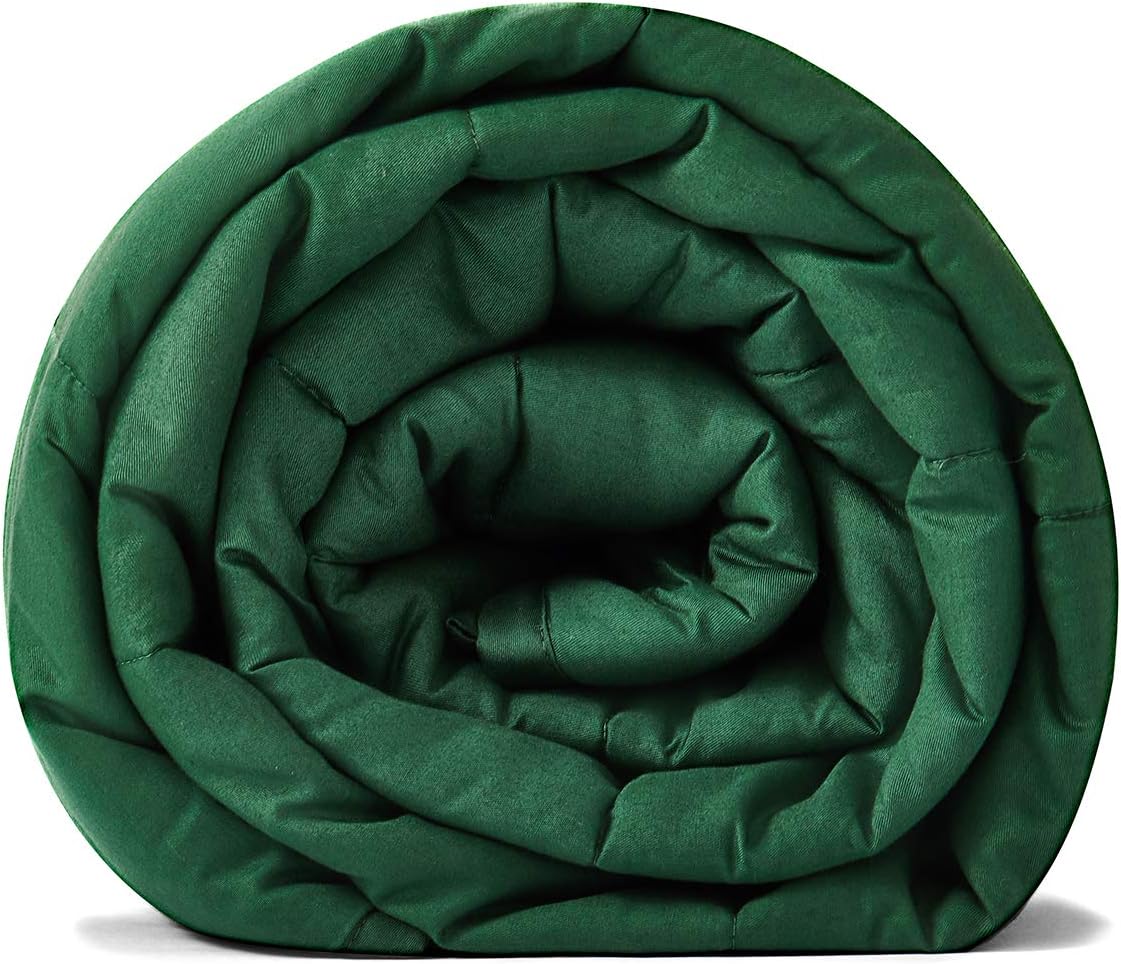
Standard king weighted blankets, including most of the others on this list, are sized for a standard king mattress at 76 by 80 inches. If your bed is a California king instead, at 72 by 84 inches, a standard king weighted blanket will actually leave your feet exposed even though it’s technically the “biggest” size most brands offer. The TONGDADA is one of the few weighted blankets built specifically to California king proportions, which makes it the right call for taller couples or anyone with a California king mattress specifically.
Beyond the sizing advantage, the TONGDADA follows the same reversible cotton-and-minky construction as the Yescool, giving both partners the option to choose their preferred texture depending on the season. The extra length also means less foot-exposure risk for taller sleepers, a complaint we saw repeatedly with standard king blankets used by couples over 6 feet tall.
Because California king weighted blankets require more total fabric and fill to reach the same per-square-foot weight density as a standard king, expect this option to run slightly heavier in total pounds for the same “feel” as a standard king blanket at a lower listed weight. Factor that into your weight selection rather than assuming the numbers translate directly across sizes.
Pros
- True California king dimensions, no foot exposure for taller sleepers
- Reversible cotton/minky cover
- Solid choice for couples over 6 feet tall
Cons
- Heavier overall due to larger surface area
- Pricier than standard king options on this list
Check current pricing and weight options for the TONGDADA California King Weighted Blanket.
Check Price on AmazonSizing: King vs. California King, and Why It Matters More for Two People
Mattress size and blanket size are not automatically the same thing, and this gap causes more couple-specific complaints than any other single factor. A standard king mattress measures 76 by 80 inches. A California king measures 72 by 84 inches, four inches narrower but four inches longer. A weighted blanket cut for a standard king, draped over a California king mattress, will leave roughly four inches of exposed foot area unless it’s oversized to compensate.
Beyond raw mattress dimensions, you also want to account for overhang. A blanket that matches your mattress width exactly will not hang over the sides at all, which means any nighttime shifting toward the edge immediately exposes skin to room-temperature air. Look for a weighted blanket with at least 6 to 10 inches of additional width and length beyond your literal mattress dimensions if you or your partner tend to move around during sleep.
| Mattress Size | Dimensions | Recommended Blanket Size |
|---|---|---|
| Queen | 60 x 80 in | Queen or King weighted blanket (for two sleepers) |
| King | 76 x 80 in | King weighted blanket, 80+ in wide |
| California King | 72 x 84 in | California King weighted blanket, 84+ in long |
Notice that a queen mattress is listed here as workable for two sleepers with a king-sized blanket. This is a common and reasonable workaround if you’re not ready to upgrade your entire mattress but want more blanket coverage for two people, since the blanket’s width matters more than perfectly matching mattress dimensions.
How Much Weight Do Two People Actually Need?
The standard weighted blanket guideline for a single sleeper is roughly 10 percent of body weight. That guideline breaks down immediately once two people are under the same blanket, because the fill doesn’t magically double to compensate, it just spreads thinner across a wider surface area.
Here’s the practical math. If you weigh 150 pounds and your partner weighs 180 pounds, the 10 percent rule would suggest 15 pounds and 18 pounds respectively if you each had your own blanket. Under one shared blanket, you’re not adding those numbers together, you’re looking for a total blanket weight that lands somewhere in a range both of you find comfortable individually, typically landing in the 20 to 30 pound range for most couples, with heavier or lighter combinations depending on both partners’ preferences and body weights.
| Combined Body Weight Range | Suggested Total Blanket Weight |
|---|---|
| Under 250 lbs combined | 15–20 lbs |
| 250–350 lbs combined | 20–25 lbs |
| 350–450 lbs combined | 25–30 lbs |
| Over 450 lbs combined | 30 lbs and up, or consider a split blanket instead |
This table is a starting point, not a hard rule. Personal preference plays a huge role in weighted blanket comfort, and some people prefer noticeably lighter or heavier pressure than the formula suggests regardless of body weight. If you and your partner disagree significantly on ideal weight, the split blanket approach discussed later in this guide is worth serious consideration.
Materials, Fill, and Temperature Regulation
Almost every weighted blanket worth buying today uses glass beads rather than plastic poly-pellets as the internal fill. Glass beads are denser than plastic pellets, which means a glass-bead blanket can reach a given weight using a noticeably thinner, less bulky layer of fill compared to a plastic-pellet blanket at the same weight. For couples specifically, thinner fill layers tend to feel less bulky and hot when shared across two bodies, which is part of why every blanket on this list uses glass bead fill rather than pellets.
Cover fabric matters just as much as fill type when it comes to temperature. Cotton and cotton-blend covers breathe the best and are the safest default choice for couples with mismatched temperature preferences. Minky and plush covers feel luxurious and add warmth, which is great for cold sleepers but can push warm sleepers into discomfort, especially once two bodies are sharing the heat load under one blanket. Brushed microfiber, like the Bare Home uses, sits somewhere in the middle, soft but slightly warmer than plain cotton.
If you’re deciding between fabric options and can’t test them in person, a reasonable rule of thumb is this: if either partner already sleeps hot, prioritize cotton or a cooling weave over minky or heavy microfiber, even if the reversible options seem more versatile on paper. You can always add a lightweight top sheet for extra warmth on cold nights, but you can’t easily cool down an overheating minky blanket mid-sleep.
For a deeper look at how different weighted blanket materials compare side by side, our full weighted blanket buying guide breaks down fill types, cover fabrics, and construction quality in more detail than we can cover here.
Washing and Long-Term Care for Shared Weighted Blankets
Weighted blankets used by two people every night wear out faster than single-sleeper blankets simply due to more frequent contact, more body oil exposure, and generally heavier day-to-day use. A few care habits go a long way toward extending the life of a shared weighted blanket.
Always check whether the cover is removable before washing the entire blanket. Most quality weighted blankets, including the Yescool, Bare Home, and TONGDADA reviewed above, use a removable duvet-style cover that zips or buttons off from the weighted insert, allowing you to wash the cover frequently without repeatedly running the heavy, bead-filled insert through a washing machine, which shortens its lifespan and risks seam damage.
When you do need to wash the weighted insert itself, use a front-loading machine if possible, since top-loading machines with a central agitator can stress the seams of a heavy weighted blanket more than a front-loader’s gentler tumbling action. Cold or lukewarm water and a low-heat or air-dry cycle will help preserve both the fabric and the internal stitching over years of regular use. For a complete step-by-step washing walkthrough, see our dedicated guide on how to wash a weighted blanket without damage, and if you’re specifically worried about the fill shifting or clumping during washing, our guide on washing a weighted blanket without ruining the fill covers that exact concern in depth.
Inspect seams periodically, especially along baffle box edges, for any small tears or loose stitching. Catching a minor seam issue early and reinforcing it with a needle and thread takes a few minutes and can prevent a full bead leak that would otherwise ruin the blanket months down the line.
Common Mistakes Couples Make When Buying a Weighted Blanket Together
Buying Based on One Partner’s Preference Only
It’s easy for the partner doing the shopping to pick a weight and fabric that suits their own preference and assume the other person will adjust. This almost always leads to buyer’s remorse when the non-shopping partner finds the blanket too heavy, too hot, or too narrow. Involve both people in the decision, even briefly, before committing to a purchase.
Underestimating Combined Heat Output
Two bodies under one blanket generate significantly more heat than the manufacturer’s product description, tested with a single sleeper, would suggest. If you’re on the fence between a cooler cotton weave and a warmer minky option, lean cooler than you think you need, especially if you sleep in a warm climate or don’t run air conditioning at night.
Ignoring Mattress Size Mismatch
As covered earlier in the sizing section, a standard king blanket on a California king mattress, or vice versa, leaves gaps. Always double check your specific mattress dimensions against the blanket’s listed dimensions rather than assuming “king” means the same thing across every product listing.
Choosing Weight Based on Combined Body Weight Alone
The 10 percent body weight rule was designed for single sleepers. Simply adding two people’s ideal individual weights together and buying a blanket that heavy will almost always feel excessive once shared, since the pressure sensation compounds differently across two adjacent bodies than the math suggests.
Real Sleep Scenarios: Matching a Blanket to How You and Your Partner Actually Sleep
Product specs only tell part of the story. The way two specific people actually behave in bed at night, how much they move, how differently they run in temperature, whether one of them steals covers out of habit, matters just as much as raw dimensions and weight when you’re picking a weighted blanket built to be shared. Below are a handful of common sleep dynamics we see couples describe, along with which pick from this list tends to fit best.
One Partner Runs Hot, the Other Runs Cold
This is probably the single most common mismatch we hear about, and it’s a genuinely tricky one to solve with a single shared blanket. The instinct is often to compromise on a “medium” fabric, but medium fabrics tend to satisfy neither person fully. A better approach is to lean toward the cooler option, since it’s much easier for a cold sleeper to add a lightweight throw or adjust the room’s thermostat than it is for a hot sleeper to cool down mid-sleep under a blanket that’s already trapping heat. This is exactly why the OMYSTYLE’s breathable cotton weave earns its spot on this list specifically for mixed-temperature couples, and it’s also why the Yescool’s reversible design is worth considering, since it at least gives you the flexibility to flip the blanket seasonally even if it can’t solve a nightly mismatch.
One Partner Is a Restless Sleeper
If one of you tends to shift positions frequently through the night, tighter baffle box stitching becomes more important than it would be for two still sleepers. Every time the blanket shifts with a restless sleeper’s movement, the internal fill has an opportunity to migrate if the baffle boxes are too large or loosely stitched. The Yescool’s seven-layer construction with small, evenly spaced boxes is the strongest pick here, since it resists fill migration even under frequent movement better than blankets with looser internal stitching.
Significant Body Weight Difference Between Partners
When one partner is considerably heavier than the other, a single fixed-weight blanket sized around an average can end up feeling too light for one person and too heavy for the other. The Bare Home’s wider range of available weight and size combinations gives you more room to land on a total weight that splits reasonably well across two very different body weights, rather than being locked into a single one-size-fits-most option.
Different Blanket Preferences Entirely
Sometimes the honest answer is that no single shared blanket is going to make both people equally happy, and that’s fine. If you’ve tried adjusting weight, fabric, and size and one partner still consistently prefers a completely different feel than the other, revisit the split blanket approach covered earlier in this guide rather than continuing to compromise on a shared option neither of you loves.
The Basic Idea Behind Deep Pressure and Why It Applies to Two People at Once
Weighted blankets work on a concept generally referred to as deep pressure stimulation, a gentle, evenly distributed pressure applied across the body that many people find calming before and during sleep. The theory behind it draws on similar principles used in swaddling infants or the firm, even pressure of a hug, both of which are widely reported to have a settling effect on the nervous system.
For a single sleeper, achieving that even pressure is relatively straightforward, since the blanket only needs to account for one body’s shape and weight distribution. For two people sharing a blanket, the pressure sensation each person experiences depends heavily on how evenly the fill is distributed across the entire surface, not just the total weight number printed on the packaging. This is part of why baffle box construction quality matters so much for couples specifically. A blanket that shifts unevenly during the night can end up delivering an inconsistent pressure experience to one or both sleepers, undermining the entire point of choosing a weighted blanket in the first place.
It’s worth noting that weighted blankets are generally considered a comfort and relaxation aid rather than a medical treatment, and individual results vary widely from person to person. If you or your partner have a specific medical condition, are pregnant, or have mobility limitations, it’s worth checking with a healthcare provider before introducing a heavy blanket into your regular sleep routine, particularly at the higher end of the weight ranges discussed in this guide.
Setting Up a Shared Bedroom Around a Weighted Blanket
A weighted blanket doesn’t exist in isolation, and a handful of small adjustments elsewhere in the bedroom can make a shared weighted blanket noticeably more comfortable for both partners. If temperature mismatch is a concern, consider layering a lighter top sheet under the weighted blanket that the colder partner can pull up higher on their side without disturbing the warmer partner’s coverage. Ceiling fans or a bedside fan pointed away from direct airflow onto the bed can also help offset the added heat two bodies generate under a heavier blanket, without requiring either partner to compromise on the blanket itself.
Mattress protectors and breathable sheet materials underneath also play a bigger role than most people expect. A moisture-wicking sheet set paired with a breathable cotton weighted blanket cover, like the OMYSTYLE’s, does more to manage combined body heat than switching blanket weight alone. If you’re revisiting your broader bedding setup while you’re at it, our guide on duvet covers vs. comforter covers and our comparison of bamboo vs. cotton sheets for cooling in humid climates are both useful companion reads for couples optimizing a shared bed for temperature control.
Finally, think about how the blanket fits into your actual daily routine, not just how it performs overnight. If you make the bed every morning, a heavier weighted blanket takes more effort to fold and position neatly compared to a standard comforter, and reversible covers in particular can be slightly more cumbersome to fold evenly. None of this should be a dealbreaker, but it’s a small quality-of-life factor worth being aware of before you buy, especially if one partner is typically the one making the bed.
When to Upgrade From a Single-Sleeper Blanket to a Couples Blanket
A common path we see is a couple where one partner originally bought a personal weighted blanket, liked it, and then the other partner started borrowing it or sleeping under it too, informally turning a single-sleeper product into a shared one out of convenience rather than intention. This usually works fine for a short trial period but starts showing its limits within a few weeks, typically through the same three complaints outlined at the start of this guide: not enough coverage width, uneven weight distribution, and excess heat.
If that sounds familiar, and you’ve been sharing a queen or smaller weighted blanket that wasn’t designed for two people, it’s a reasonably strong signal that upgrading to a purpose-built king or California king option, like the ones reviewed in this guide, will solve the friction points more effectively than continuing to adjust and compromise around a blanket that was never sized for two people to begin with.
On the other hand, if you’ve never tried a weighted blanket together at all and you’re not sure whether the concept will work for your relationship, starting with a moderately priced option like the HomeSmart before committing to a premium pick is a reasonable way to test the waters without a large upfront investment. You can always upgrade to a more feature-rich option later once you’ve confirmed that a shared weighted blanket is something you both actually want to keep using long term.
Frequently Asked Questions
Can two people really share one weighted blanket comfortably?
Yes, as long as the blanket is sized wide enough to cover both sleepers without tugging and the total weight is chosen with both people’s preferences in mind rather than one partner’s ideal weight alone. King and California king weighted blankets designed with couples in mind, like the ones reviewed above, are built specifically to solve this.
What size weighted blanket do we need for a king bed?
Look for a weighted blanket at minimum 80 inches wide by 87 inches long to properly cover a standard king mattress with some overhang. Blankets that match your mattress dimensions exactly tend to leave no margin for nighttime movement.
Is a heavier weighted blanket always better for couples?
Not necessarily. Heavier isn’t automatically better, and going too heavy for either partner’s preference can make the blanket feel restrictive rather than calming. Aim for a total weight that falls in a comfortable middle ground for both people rather than maxing out the heaviest option available.
Will a weighted blanket make the bed too hot for two people?
It can, depending on the fabric and fill. Cotton and cooling-weave covers with glass bead fill, like the OMYSTYLE, minimize this risk significantly compared to plush minky covers, which trap more heat especially once two bodies are sharing the same blanket.
Should we get one weighted blanket or two separate ones?
If you and your partner have similar body weights and temperature preferences, one shared king or California king blanket is usually simpler and just as comfortable. If your preferences differ significantly, two separate twin-sized weighted blankets placed side by side can be a better solution.
How do I know what weight to choose if my partner and I weigh different amounts?
Use the combined-weight reference table earlier in this guide as a starting point, then adjust based on personal preference. Many couples find a middle-ground weight in the 20 to 25 pound range works well even with a moderate weight difference between partners.
Are glass bead weighted blankets better than plastic pellet ones?
Generally yes. Glass beads are denser, allowing the same weight to be achieved with a thinner, less bulky fill layer, which tends to feel less hot and cumbersome when shared by two sleepers compared to plastic poly-pellet fill.
How often should we wash a shared weighted blanket?
Wash the removable cover every one to two weeks, similar to regular bedding, since it sees more frequent skin contact with two sleepers. The weighted insert itself typically only needs washing every few months unless it’s directly exposed to skin without a cover.
Can a weighted blanket help with sleep issues for couples specifically?
Many people report that the deep pressure stimulation from a weighted blanket helps with relaxation and settling into sleep, and this benefit isn’t limited to solo sleepers. Couples often report that a properly sized, properly weighted shared blanket provides the same calming effect for both partners simultaneously.
What’s the difference between a king and California king weighted blanket?
A king weighted blanket is generally wider but shorter, matching a standard king mattress at 76 by 80 inches. A California king weighted blanket is narrower but longer, matching a California king mattress at 72 by 84 inches. Using the wrong one on the wrong mattress size typically results in either excess overhang on the sides or exposed feet at the bottom.
Do weighted blankets for couples cost more than single-sleeper versions?
Generally yes, since king and California king weighted blankets require significantly more fabric and fill than twin or queen versions built for one person, and glass bead fill is priced by weight, so larger blankets simply cost more to manufacture.
Can I use a weighted blanket on a queen bed for two people?
It’s possible if you opt for a king-sized weighted blanket rather than a queen-sized one, since the extra width helps compensate for the narrower mattress and gives both sleepers enough coverage without tugging.
How long does a couples weighted blanket typically last with regular use?
With proper care, including washing a removable cover regularly and washing the weighted insert less frequently, a well-constructed weighted blanket used nightly by two people generally holds up for two to four years before seams or fill distribution noticeably degrade. Reinforced-corner options tend to land on the longer end of that range.
Is it normal for a weighted blanket to feel too heavy at first?
Yes, a slight adjustment period is common, especially if neither of you has used a weighted blanket before. Most people report the sensation feels more natural within the first one to two weeks of regular use. If it still feels uncomfortably heavy after that, consider sizing down to a lighter total weight rather than pushing through discomfort.
Pre-Purchase Checklist for Couples
Before you check out, run through this short list together. It takes about five minutes and catches the vast majority of the buyer’s remorse issues we hear about from couples who skipped straight to the “add to cart” button.
Measure First
Actually measure your mattress rather than assuming “king” or “California king” on the label matches your bed. Mattress dimensions can vary slightly by manufacturer, and a few inches makes a real difference in coverage.
Talk About Temperature
Have a two-minute conversation about who runs hot and who runs cold before choosing fabric. This single conversation prevents more returns than any other step on this checklist.
Agree on a Weight Range
Use the combined weight table earlier in this guide as a starting point, then let both partners weigh in, so to speak, on whether that range sounds too heavy, too light, or about right based on any prior experience with weighted blankets.
Check the Return Policy
Weighted blankets are heavy and sometimes awkward to ship back, so confirm the seller’s return window and any restocking fees before buying, especially if you’re trying the concept for the first time as a couple.
None of these steps take long, but skipping them is the single biggest reason couples end up disappointed with an otherwise well-reviewed weighted blanket. A product that’s a five-star match for one type of sleeper can be a genuinely poor fit for a different combination of preferences, and the difference usually comes down to exactly the factors in this checklist rather than any flaw in the blanket itself.
It also helps to think about timing. Ordering a new weighted blanket right before a stretch of especially hot or especially cold weather can skew your first impression of it, since you’re experiencing an edge-case temperature scenario rather than a typical night. If possible, give the blanket a fair trial across a range of nights and temperatures before deciding whether the weight or fabric choice was right, rather than judging it entirely off the first uncomfortable night.
What Separates a Well-Made Weighted Blanket From a Cheap One
Not all weighted blankets are built to the same standard, and the difference often isn’t obvious from photos alone. A few construction details are worth checking closely, especially since a shared blanket used by two people every night sees roughly double the wear of a single-sleeper version.
Baffle box size is the first thing to look at. Smaller boxes, generally in the 4 to 6 inch range, keep glass beads more evenly distributed and resist clumping better over time than larger boxes in the 8 to 10 inch range. You can often estimate box size from product photos by counting the visible stitched compartments across the blanket’s width.
Seam reinforcement at corners and edges matters more than most shoppers realize. Corners take the most stress during folding, washing, and everyday handling, and a blanket with reinforced double-stitching at these points, like the Bare Home, will typically outlast a single-stitched budget alternative by a meaningful margin, even if the sticker price looks similar at first glance.
Finally, pay attention to whether the outer cover is removable and independently washable, or whether the entire weighted blanket has to go through the wash as one unit. Removable covers extend the life of the weighted insert significantly, since the insert itself, which contains the expensive glass bead fill, gets washed far less often and experiences less mechanical stress over its lifetime.
Final Verdict: The Best Weighted Blanket for Couples
If you want the single best all-around option for most couples, the Yescool King Size Weighted Blanket is our top recommendation. It solves the width problem that causes most couple-specific complaints, distributes fill evenly enough to avoid one-sided pooling, and its reversible cover accommodates two people with different temperature preferences without requiring two separate blankets.
If either of you deals with sensory sensitivity or simply prioritizes an ultra-soft feel above all else, the Bare Home is worth the switch. If you’re testing whether a shared weighted blanket works for your relationship before investing heavily, the HomeSmart is a sensible, lower-risk starting point. Hot sleepers and warm-climate couples should look closely at the OMYSTYLE, and anyone with a California king mattress should skip standard king options entirely in favor of the TONGDADA.
Whichever option you choose, remember that sizing and total weight matter more for couples than for single sleepers, and it’s worth taking the time to actually measure your mattress and talk through weight preferences with your partner before checking out. A well-chosen weighted blanket is one of the easier upgrades you can make to a shared bedroom, and getting it right the first time saves you from a return process neither of you wants to deal with.
Ready to upgrade your shared bed? See our top overall pick, the Yescool King Size Weighted Blanket, for current pricing.
Check Price on Amazon