

Sherpa vs. Fleece Blanket: The Ultimate Guide to Cozy Comfort
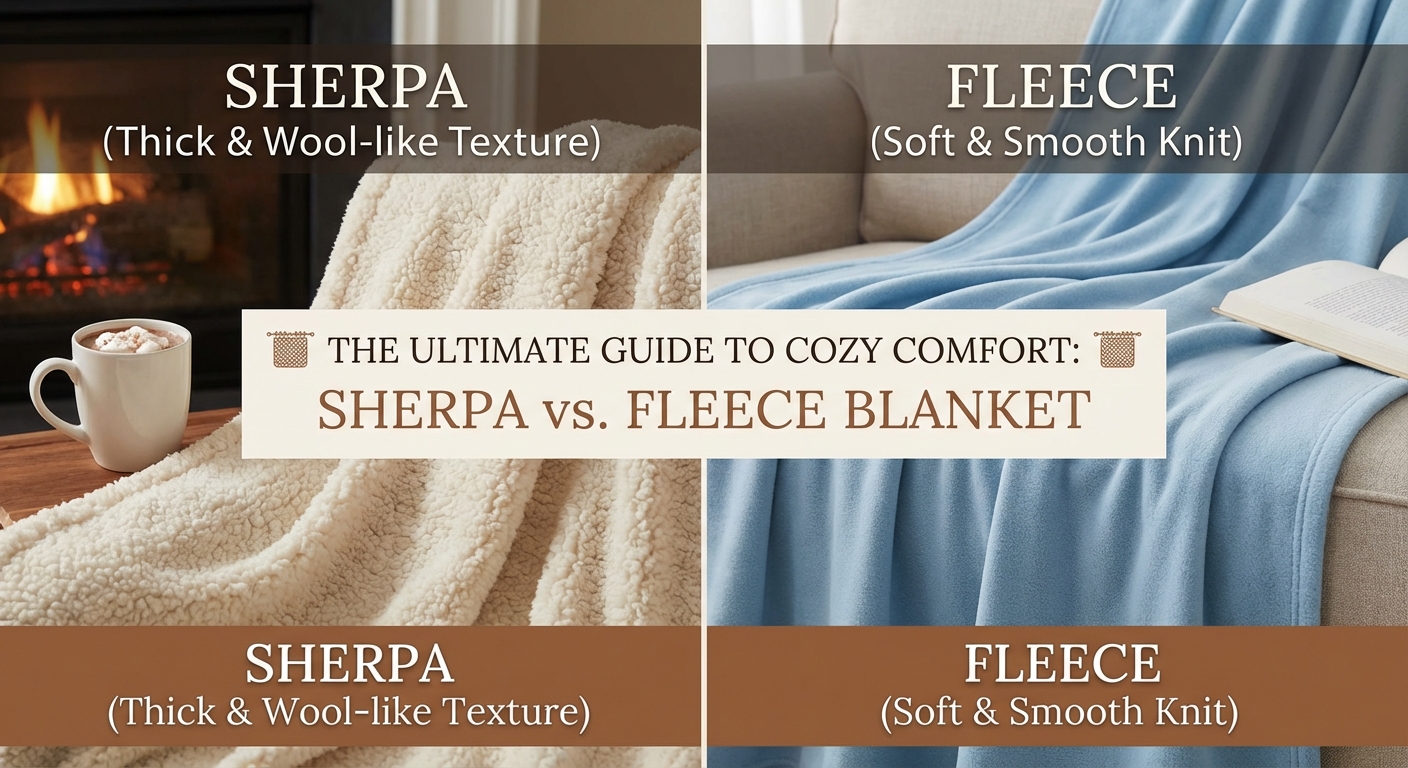
When the temperature drops and the wind starts howling outside, nothing beats the feeling of curling up on the sofa with a warm drink and a high-quality blanket. But when you are shopping for that perfect layer of warmth, you are often faced with a common dilemma: Sherpa vs. Fleece.
Both materials are synthetic, affordable, and incredibly popular, yet they offer distinctly different experiences. One mimics the rugged warmth of sheep’s wool, while the other offers a sleek, lightweight softness perfect for layering. Choosing the wrong one can lead to overheating in the summer or shivering in the winter.
In this comprehensive comparison, we will break down the differences in texture, warmth, durability, and maintenance. Whether you are looking for cozy home essentials for your master suite or durable gear for a dorm room, this guide will help you decide which fabric deserves a spot on your bed.
At a Glance: Sherpa vs. Fleece
Don’t have time to read the full breakdown? Here is the cheat sheet to help you decide quickly.
| Feature | Fleece Blanket | Sherpa Blanket |
|---|---|---|
| Primary Texture | Smooth, soft, velvet-like | Fluffy, bumpy, wool-mimicking |
| Material | 100% Polyester (brushed) | 100% Polyester (high pile) |
| Warmth Level | Medium (Breathable) | High (Insulating) |
| Weight | Lightweight | Medium to Heavy |
| Best For | Layering, Travel, Mild Cold | Deep Winter, Cozy Aesthetics |
| Durability | Prone to pilling | Prone to matting/shedding |
What is a Fleece Blanket?
Standard fleece (often called Polar Fleece) is a magical fabric born from polyester fibers. It was originally designed to mimic the warmth of wool without the itchiness, weight, or complex care requirements. To create fleece, polyester is woven into a light fabric and then brushed aggressively to increase its volume.
This brushing process creates pockets of air that trap body heat, keeping you warm. However, because the fibers are cut short, the resulting texture is smooth and soft, similar to velvet or flannel.
Fleece is the “workhorse” of the blanket world. It is what you typically find in travel pillow and blanket sets because it rolls up tightly and weighs next to nothing.
Key Characteristics of Fleece:
- Moisture Wicking: It pulls moisture away from the body, making it great for active situations.
- Breathable: It keeps you warm but allows air to circulate, preventing the “sweat box” effect.
- Design Versatility: Because the surface is smooth, it prints very well. This is why you see fleece blankets in complex patterns, tie-dye, and logos.

Our Top Pick: The Classic Microplush Fleece
Lightweight, breathable, and perfect for year-round layering.
Check Price on AmazonWhat is a Sherpa Blanket?
If you have ever wondered what is a sherpa blanket, think of it as the ultimate faux-sheepskin. Named after the Sherpa people of Nepal (who wear wool-lined clothing to survive freezing temperatures), this fabric is designed to replicate the bumpy, curly texture of raw wool.
Technically, Sherpa is a type of fleece. It is also made from polyester, but the fibers are left longer and processed to create a high-pile, fluffy texture on one side. Most Sherpa blankets are actually dual-sided: they feature a smooth knit or suede-like fabric on the outside (the display side) and the fluffy Sherpa material on the underside (the skin-contact side).
Key Characteristics of Sherpa:
- Superior Insulation: The lofty, fluffy fibers trap significantly more air than standard fleece, making it much warmer.
- Tactile Comfort: It feels like hugging a cloud or a teddy bear.
- Aesthetic Appeal: The white, fluffy lining gives a rustic, cabin-like look that pairs perfectly with cozy fireplace accessories.

Our Top Pick: Dual-Sided Sherpa Throw
The ultimate winter warmer with a velvety face and fluffy sherpa backing.
Check Price on AmazonVideo Comparison: Seeing the Texture
Sometimes it is hard to visualize the difference in “fluffiness” just by reading. In a popular comparison by Sleepopedia, they highlight several key physical differences that you can spot instantly.
Key Takeaways from the experts:
- The Shedding Factor: Sherpa is noted to be more prone to shedding and matting over time because of its loose, high-pile structure.
- The Static Issue: Smooth fleece blankets tend to generate more static electricity, which can be annoying in dry winter months.
- Visual Interest: Sherpa adds texture to a room, whereas fleece adds color and pattern.
Detailed Comparison: Which One Wins?
1. Warmth and Insulation
If your primary goal is surviving a blizzard, Sherpa wins. The thickness of the fabric provides a heavy barrier against the cold. It is often comparable to the warmth you might get from the best thermal blankets, without the industrial feel.
Fleece is better for “active warmth.” It keeps you warm without overheating. If you are looking for best cozy blankets for living room lounging where the heating is already on, fleece is often sufficient.
2. Durability and Maintenance
Fleece is generally more durable in the wash. It dries incredibly fast and resists shrinking. However, cheap fleece is notorious for “pilling” (forming those little annoying balls of fabric) after a few washes.
Sherpa requires more care. If you wash it in hot water or dry it on high heat, the fluffy texture will “melt” or mat down, losing its softness forever. It acts similarly to how you must be careful when you wash a weighted blanket.
3. Style and Decor
For a modern, sleek look, fleece is great. It drapes easily over cozy recliners and lounge chairs without adding bulk.
Sherpa is a statement piece. It adds volume and texture. A Sherpa blanket thrown over the end of a bed can make the whole room feel softer. It pairs beautifully with natural textures like wood or the best blanket ladder displays.
4. Pet Friendliness
This is a big one. Pets love Sherpa because it mimics animal fur. It effectively becomes a best pet blanket instant favorite. However, Sherpa traps pet hair like velcro, and it is very hard to remove.
Fleece is smoother, so pet hair shakes off more easily. If you have a long-haired dog, fleece might save your vacuum cleaner some work.
Pros and Cons Summary
Fleece Pros
- Lightweight and breathable.
- Inexpensive.
- Dries very fast.
- Pet hair shakes off easily.
- Comes in unlimited prints/patterns.
Fleece Cons
- Not warm enough for extreme cold.
- High static electricity.
- Can look “cheap” if low quality.
- Prone to pilling.
Sherpa Pros
- Incredibly warm and insulating.
- Luxurious, fluffy texture.
- Looks expensive and rustic.
- Softest skin-feel.
Sherpa Cons
- Traps dirt, crumbs, and pet hair.
- Can mat down if washed incorrectly.
- Takes longer to dry.
- Can be too hot for summer use.
Who Should Buy What?
The College Student
Winner: Fleece. Dorm rooms are small and laundry is a hassle. A fleece blanket is durable, easy to wash, and works perfectly in a compact dorm desk setup where you might need a wrap while studying. It’s also one of the essential dorm room accessories for guys because it’s no-fuss.
The Outdoor Enthusiast
Winner: Fleece. If you need a blanket for the beach or a camping trip, fleece is hydrophobic (repels water) and shakes clean. Sherpa will attract sand and twigs that you will never get out.
The Luxury Homebody
Winner: Sherpa. If you are outfitting a master bedroom or a cozy reading nook, you want the plushness of Sherpa. It layers well with high-end bedding, such as beneath a king size blanket or alongside silk vs satin pillowcases for a texture contrast.
The Cold Sleeper
Winner: Sherpa. If you are constantly turning up the thermostat, skip the fleece. You need the high-pile insulation of Sherpa. You might also consider layering it with the best electric blanket for maximum heat retention.
Frequently Asked Questions
Is Sherpa warmer than fleece?
Yes, generally speaking. Sherpa is a type of fleece, but its high-pile structure traps more body heat, making it a better insulator than standard, smooth polar fleece.
How do I keep my Sherpa blanket soft?
The golden rule for Sherpa is no heat. Wash on cold with a gentle detergent (no fabric softener, which clogs the fibers) and hang dry or tumble dry on “air only.” Heat melts the synthetic fibers, causing the rough, matted texture.
Is Sherpa material natural or synthetic?
Despite looking like wool, most Sherpa is 100% synthetic, usually made from polyester. If you are looking for natural fibers, you should explore Merino wool benefits or cashmere options.
Do fleece blankets shed?
High-quality fleece rarely sheds. However, cheaper fleece may shed slightly when new. Sherpa is much more prone to shedding loose fibers than smooth fleece.
Can I use a Sherpa blanket in the summer?
It depends on your climate, but typically Sherpa is too warm for summer use. A thin fleece or a bamboo blanket is a much better choice for warm weather breathability.
Final Verdict
The battle of Sherpa vs. Fleece doesn’t have a single winner; it comes down to what you value most.
If you want a blanket that is lightweight, easy to clean, acts as a great travel companion, and comes in fun prints, Fleece is your best bet. It is the practical choice for active families and students.
However, if you are looking to turn your home into a sanctuary of warmth and want a blanket that feels like a warm hug on a snowy day, Sherpa is the way to go. Its aesthetic appeal and superior insulation make it the king of cozy.
Ready to upgrade your comfort level?
Shop the Best of Both Worlds
Can’t decide? Get a reversible blanket that features smooth fleece on one side and plush sherpa on the other!
Explore Reversible Blankets on Amazon