
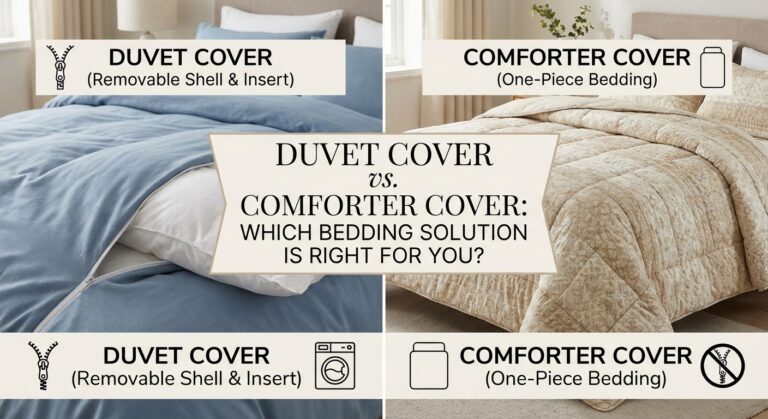
Duvet Cover vs. Comforter Cover: Which Bedding Solution is Right for You?
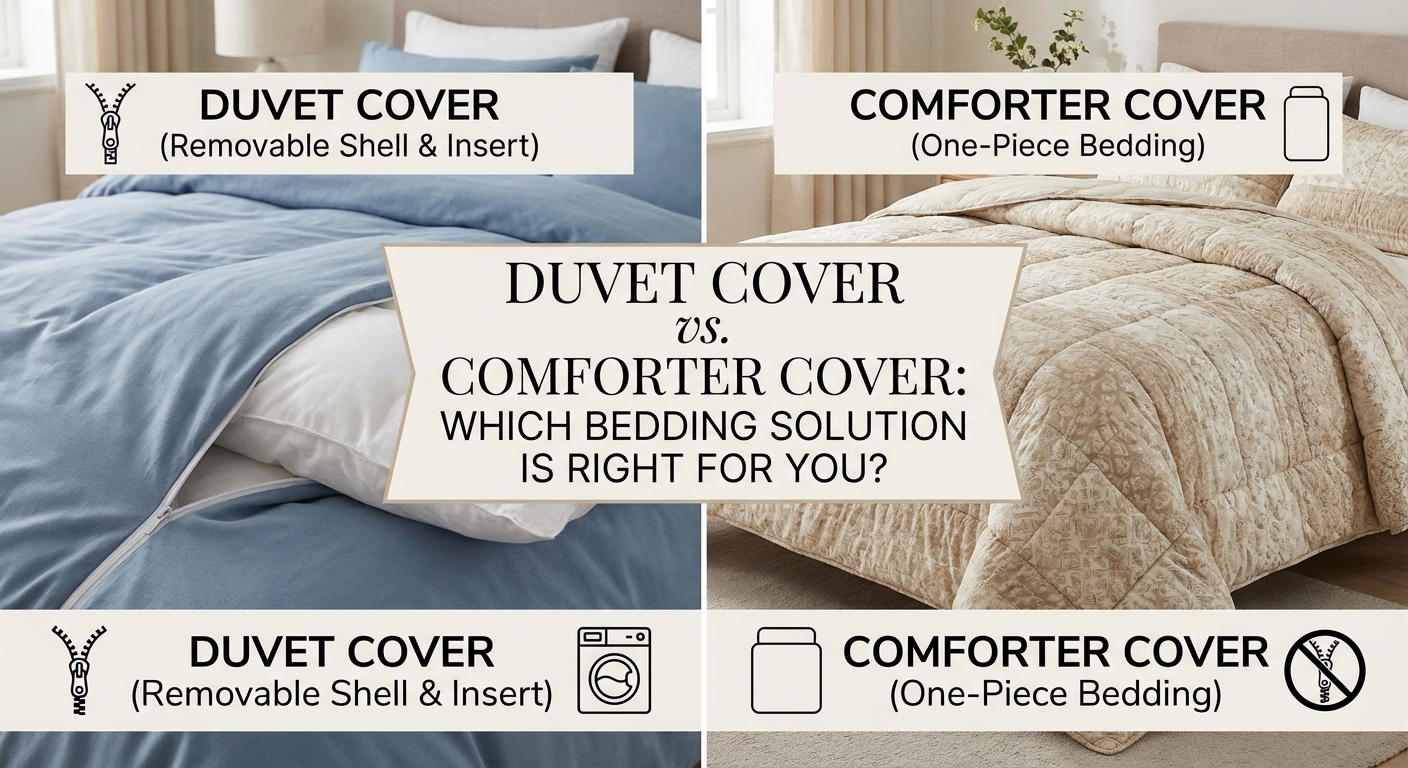
Walking down the bedding aisle or scrolling through Amazon can feel like learning a new language. You see terms like “duvet,” “duvet insert,” “comforter,” and the confusing “comforter cover.” Are they the same thing? Do you need both? If you are setting up a new home or upgrading your cozy home essentials, getting the terminology right is the first step to a good night’s sleep.
The debate of the duvet cover vs. comforter cover is actually a trick question. In the bedding world, a “comforter cover” is almost always just a duvet cover used to protect a comforter. However, the real choice lies between two distinct systems: the Duvet System (two pieces: an insert and a shell) versus the Comforter System (one standalone quilted piece).
In this comprehensive guide, we will break down the differences, pros, cons, and maintenance requirements of each. Whether you are looking for the best king-size blanket for a master suite or outfitting a small room with dorm room accessories, we have the answer.
Defining the Contenders
Before we compare performance, we must define what we are actually talking about. The terminology varies by region (Europe vs. USA), but here is the standard breakdown.
What is a Comforter?
A comforter is a “ready-to-go” bedding topper. It is a single piece of bedding that is quilted or stitched to keep the inner filling (down, feathers, or synthetic fibers) evenly distributed. It typically features a fashion fabric on the outside, meaning it doesn’t need a cover.
Comforters are often sold in “Bed-in-a-Bag” sets that include matching sheets. They are common in dorms or for people who want a quick, easy setup without the hassle of assembly. If you’ve ever looked into best dorm chairs and matching bedding, you’ve likely seen comforter sets.
What is a Duvet Cover (or Comforter Cover)?
Think of a duvet cover as a massive pillowcase for your blanket. It is a protective shell that encases a “duvet insert.” The insert is usually plain white and filled with down or a down alternative.
Here is where the confusion lies: Many people own an old comforter that has an outdated pattern or has lost its fluff. They will buy a duvet cover and put the *comforter inside it*. In this context, the duvet cover acts as a “comforter cover.” This is a brilliant way to refresh a room without buying a whole new heavy blanket.

Looking to refresh your bedding instantly? Check out this top-rated Duvet Cover Set.
Check Price on AmazonAt a Glance: Duvet Cover vs. Comforter
| Feature | Duvet Cover System | Traditional Comforter |
|---|---|---|
| Components | 2 Pieces (Insert + Cover) | 1 Piece (Integrated) |
| Washing | Easy (Wash cover only) | Difficult (Whole blanket in machine) |
| Style Versatility | High (Change cover cheaply) | Low (Must buy new blanket) |
| Assembly | Required (Attaching ties/buttons) | None (Ready to use) |
| Profile | Fluffy, Cloud-like | Flatter, Quilted, Lay-flat |
| Best For | Clean freaks, Style changers | No-fuss sleepers, Guests |
Round 1: Hygiene and Washing
One of the biggest factors in the duvet cover vs comforter cover debate is how you clean them. We all know the struggle of trying to stuff a massive King-sized comforter into a standard washing machine.
The Duvet Advantage
A duvet cover is lightweight and thin. You strip it off the insert and wash it just like a sheet. This means you can wash your top bedding weekly with your sheets, leading to better hygiene and reduced allergens. The heavy insert only needs to be washed once or twice a year. This is similar to the maintenance ease discussed in our guide on washing cooling blankets.
The Comforter Struggle
A comforter must be washed as a whole unit. Frequent washing can cause the filling to clump or the fabric to pill. Furthermore, many large comforters require commercial-sized laundromat machines. If you own a heavy Sherpa blanket or a dense comforter, you know it takes forever to dry.
Winner: Duvet Cover. It is far easier to keep clean.
Video Guide: Seeing the Difference
Sometimes it is easier to see the difference than to read about it. The team at Mattress Nerd has put together a fantastic visual guide breaking down the physical differences and showing you exactly how these two bedding types function in a real bedroom.
As you can see in the video, the duvet creates that “plump” hotel look, while the comforter offers a tidy, tucked-in aesthetic.
Round 2: Style and Aesthetics
Are you someone who loves to redecorate for the seasons? Do you switch from cozy blankets for the living room to light throws in the summer?
Versatility of Covers
Using a duvet/comforter cover allows you to change the entire look of your bedroom for the price of a sheet set. You can have a dark, moody linen cover for winter and a crisp, white percale cover for summer. It also takes up significantly less storage space. You can fold five duvet covers into the same space as one blanket storage bag containing a single comforter.
The “Fixed” Look of Comforters
With a traditional comforter, you are married to that pattern. To change the look, you have to buy a whole new bulky bedding set. However, comforters often feature intricate stitching, embroidery, or pintucks that might be flattened by a duvet cover.
Winner: Duvet Cover. It offers infinite style possibilities with minimal storage requirements.

Need a fluffy base? This Down Alternative Comforter Insert is the perfect filler for any cover.
Check Price on AmazonRound 3: Ease of Use (The “Duvet Wrestle”)
We have to address the elephant in the room. Putting a duvet cover on an insert is a skill. It involves turning things inside out, tying corner ties, and shaking the blanket until your arms are tired.
If you have mobility issues or simply hate making the bed, a comforter is superior. You just pull it up, and you are done. There is no shifting, no bunching, and no “empty corners” where the blanket has slid away from the cover.
Pro Tip: If you choose a duvet cover, ensure both your insert and your cover have at least 4 corner ties (8 is even better). This prevents the dreaded shifting. You can also use magnetic clips, a popular accessory mentioned in our compact dorm setup guides where ease is key.
Winner: Comforter. It is zero-maintenance regarding assembly.
Round 4: Warmth and Weight customization
How do you sleep? Are you freezing in July or sweating in December?
The Duvet System creates a customizable thermal experience. You can buy a “Summer Weight” insert, an “All-Season” insert, or a “Winter Weight” insert, and use the same decorative cover for all of them. You can even choose different fill materials—from down to silk to wool. (See our comparison of cashmere wool vs merino wool to understand material warmth).
A comforter is generally one-weight-fits-all. While you can layer it with the best thermal blankets or a heated blanket, the comforter itself cannot be adjusted.
Winner: Duvet System. It allows for precision temperature control.
Pros and Cons Summary
Duvet Cover System Pros
- Hygiene: Easy to wash the cover regularly.
- Style: Cheap and easy to update decor.
- Longevity: You can replace just the cover if it stains, keeping the expensive insert.
- Feel: Generally fluffier and more luxurious.
- Customization: Swap inserts for different seasons.
Duvet Cover System Cons
- Assembly: Putting the cover on can be frustrating.
- Shifting: The insert can bunch up inside the cover.
- Sizing: Inserts and covers from different brands may not align perfectly.
Traditional Comforter Pros
- Simplicity: Ready to use right out of the bag.
- Layering: Lays flat and neat; great for layered bedscapes.
- Cost: Often cheaper upfront (especially synthetic sets).
- Cohesion: Often comes with perfectly matching skirts and shams.
Traditional Comforter Cons
- Cleaning: Hard to wash; may require dry cleaning.
- Wear and Tear: If you stain it, the whole blanket is ruined.
- Flatness: Synthetic fills can go flat and lumpy quickly.
Which Should You Choose?
For the College Student
Space is tight, and laundry machines are far away. While a comforter seems easier, a Duvet Cover is actually smarter for dorms. It takes up less room in the laundry basket. Pair it with a foldable bed frame for small rooms for a flexible setup.
For the Guest Room
A Comforter is often best here. It looks neat, stays in place, and guests typically won’t be using it long enough to require deep laundering of a heavy insert.
For the Master Bedroom Sanctuary
Go for the Duvet System. Specifically, invest in a high-quality down or wool insert and a linen or bamboo duvet cover. This gives you that “cloud-like” luxury hotel feel. It pairs perfectly with silk or satin pillowcases for the ultimate beauty sleep experience.
For Families with Pets/Kids
If your dog sleeps on the bed (check out our best pet blanket guide), you need a Duvet Cover. It protects the expensive filling from muddy paws and spills, and can be bleached or washed on high heat (depending on fabric).
Frequently Asked Questions
Can I put a regular comforter inside a duvet cover?
Yes! This is a great way to repurpose an old comforter. Just make sure the dimensions match. Since old comforters usually lack corner loops, you may need to sew loops on or use magnetic duvet clips to keep it from sliding around.
Why is my duvet cover bigger than my insert?
This is a common issue. Duvet covers are often made slightly larger to account for shrinkage after washing. However, for a fluffy look, many designers recommend buying an insert that is 2-3 inches larger than the cover to create a super-stuffed appearance.
What is a “Duvet Cover Set”?
A duvet cover set typically includes the duvet cover (the shell) and two matching pillow shams. It rarely includes the actual duvet insert or fitted sheets, unlike a “Bed-in-a-Bag” comforter set.
How often should I wash a duvet cover vs a comforter?
A duvet cover should be washed as often as your sheets (weekly or bi-weekly). A comforter (or the duvet insert) usually only needs washing 2-3 times a year unless there are spills.
Is a quilt the same as a comforter?
No. A quilt is much thinner, consisting of three thin layers (top, batting, bottom) stitched tightly. A comforter is lofty and thick. Quilts are often used as decorative layers or for summer sleeping.
How do I keep the duvet from bunching up?
Use the ties! Almost all modern duvet covers have ties in the inner corners. Tie these tightly to the loops on your insert. If you don’t have them, you can buy “duvet grippers” or safety pins to secure the corners.
Final Verdict
The decision between a duvet cover vs. comforter cover ultimately comes down to your lifestyle.
If you prioritize convenience in making the bed and want a “one-and-done” purchase, stick with a traditional Comforter. It’s reliable, easy, and often cheaper upfront.
However, if you prioritize hygiene, longevity, and style flexibility, the Duvet Cover System is the superior investment. It allows you to protect your bedding investment, wash it easily, and customize your warmth levels throughout the year. For most modern homes, the ability to wash the cover easily makes the duvet the winner.
Ready to build your perfect bed? Start with a high-quality insert and a cover that matches your vibe.
Top Pick: The Hybrid Solution
Get the best of both worlds with this fluffy, baffle-box stitch Down Alternative Duvet Insert. Use it alone as a comforter or inside a cover!
Shop Top Rated Bedding on Amazon