Throw vs Full Blanket: What’s the Actual Difference and Which Do You Need?
Most people buy the wrong blanket size not because they’re careless — but because the labels make no intuitive sense. This guide fixes that with real dimensions, real-world use cases, and a clear decision framework.
Exact Dimensions: Throw vs Full Blanket by the Numbers
Before anything else, let’s anchor this comparison in real measurements. Blanket sizing is one of the most inconsistently labeled categories in home goods — manufacturers round up, use “standard” loosely, and rarely explain what the numbers mean in practical terms. Here is the baseline most consumers work from, followed by the real-world range you’ll encounter.
These standard figures are the starting point, but it helps to understand the range. Throw blankets sold at major retailers span anywhere from 46″×60″ (a compact throw) to 60″×80″ (an oversized throw that approaches small bed coverage). Full blankets similarly range from 76″×90″ on the modest end to 84″×90″ on the generous end. When in doubt about a specific product, measure the dimensions listed rather than trusting the category label alone.
A “full blanket” is sized for a full/double bed — but this doesn’t mean it only covers the mattress. A 80″×90″ blanket on a 54″×75″ full mattress leaves about 13 inches of overhang on each side and roughly 15 inches at the foot. That’s a modest, neat drape — enough for comfort, not enough for the dramatic cascade of a luxury hotel look. If you want significant drape, you’ll want a queen or king size even for a full bed.
The Entire Blanket Size Family
Throws and full blankets don’t exist in isolation — they sit within a standardized size ladder. Understanding where each fits helps put the throw-vs-full comparison in context:
| Blanket Size | Typical Dimensions | Designed For | Overhang on Target Bed |
|---|---|---|---|
| Baby Blanket | 30″ × 40″ | Infants, swaddling, strollers | N/A |
| Lap Blanket | 36″ × 48″ | Desk, wheelchair, seated use | N/A |
| Throw Blanket ← | 50″ × 60″ | Couch, chair, accent, travel | Not suited for beds |
| Twin Blanket | 66″ × 90″ | Twin mattress (38″×75″) | ~14″ each side |
| Full/Double Blanket ← | 80″ × 90″ | Full mattress (54″×75″) | ~13″ each side |
| Queen Blanket | 90″ × 90″–100″ | Queen mattress (60″×80″) | ~15″ each side |
| King Blanket | 108″ × 90″–100″ | King mattress (76″×80″) | ~16″ each side |
For a dedicated exploration of every blanket size and what it covers, our guide to the perfect throw blanket size goes deep on the throw category specifically, while our best king size blanket guide addresses the opposite end of the size spectrum.

Visualizing the Size Difference: How Much Bigger Is a Full Blanket?
Numbers alone rarely communicate scale. Here’s a more intuitive way to understand the difference: a standard throw blanket covers roughly the same area as a large bath towel folded in half. A full blanket covers roughly the area of a double bed mattress plus modest overhang. They inhabit completely different physical contexts.
Another way to appreciate the difference: if you laid both blankets on the floor, you could fit approximately 2.4 throw blankets inside the footprint of one full blanket. When you’re choosing between them for a specific purpose, that scale difference is everything.
The Throw Blanket: Everything You Need to Know
The throw blanket sits at the intersection of function and décor in a way no other blanket size does. Its dimensions — roughly 50 inches wide by 60 inches long — are large enough to wrap around one adult torso, but small enough to drape artfully over a sofa arm, fold over the back of a reading chair, or tuck into a basket by the fireplace. It does both jobs well because both jobs ask for the same basic thing: something manageable in scale that provides immediate warmth without overwhelming the space.
The name “throw” is itself revealing: it refers to the action of throwing it over yourself or over a piece of furniture with one casual motion. You don’t make a bed with it. You don’t wrestle it into a duvet cover. You reach for it from the couch, wrap it around your shoulders, and watch a movie. That’s the entire design brief.
✓ Throw Blanket Strengths
- Perfect for sofa, armchair, and reading use
- Light and portable — easy to move room to room
- Decorative — designed to be seen and styled
- Easy to wash in home washer at any capacity
- Lower price point — less material to produce
- Ideal for travel, stadium, and outdoor events
- Great for guest hospitality and gifting
- Takes up minimal storage space
✗ Throw Blanket Limitations
- Cannot cover two people simultaneously
- Too small for use as primary bed blanket
- Legs-only coverage when used on a sofa
- Slides off beds when used as accent layer
- Insufficient for cold-night solo sleeping
- Not suited for tall adults (over 6 ft) lying down
Who Uses Throws (and Why)
The throw’s natural habitat is the living room, and its primary users are people who want quick, accessible warmth during sedentary activities — reading, watching television, working from home, or simply relaxing. It’s the blanket you want to be able to grab in two seconds from wherever you’re sitting. For living room context and the best options across materials and styles, our curated roundup of the best cozy blankets for the living room is the most direct reference. For organizing and displaying throws attractively, blanket ladders and blanket baskets are the go-to storage solutions.
Throws also serve an important decorative function that full blankets rarely do. A well-chosen throw — the right color, texture, and drape — can anchor a sofa arrangement, introduce a textile accent to an otherwise hard-surfaced room, or signal the “cozy corner” of a space. Interior designers routinely use throws as the finishing layer of a living room scheme.
Oversized Throws: The Middle Ground
Many retailers now offer “oversized” or “large” throws in the 60″×80″ range. This size exists specifically for people who want throw-level portability and living room presence, but need enough coverage to wrap their whole body — not just from the waist down. An oversized throw at 60″×80″ is genuinely usable for a solo sleeper on a twin mattress as a light layer, though it still falls short of full bed coverage for most adults. Think of it as the throw for tall people, side sleepers who kick, or anyone who’s been frustrated by the standard 50″×60″ being just a few inches short.

The Full/Double Blanket: Designed for Bed, Built for Coverage
A full blanket — also called a double blanket — is sized to work with the full/double bed, one of the most common mattress sizes in American bedrooms. At 80″×90″, it provides meaningful overhang on all sides of a 54″×75″ mattress while remaining manageable in terms of weight and laundry logistics.
The full blanket’s design language is completely different from a throw. Where a throw prioritizes accessibility (grab it fast, use it anywhere), a full blanket prioritizes coverage (cover the bed, stay put all night, provide enough material to tuck or drape properly). The experience of using one is correspondingly different — you’re making a bed, not throwing something over a couch cushion.
✓ Full Blanket Strengths
- Complete bed coverage with overhang
- Works for solo sleeper on queen as light layer
- More warmth than a throw — more material
- Can be used as a stand-alone bed covering in mild weather
- Appropriate weight for weighted blanket sizing
- Works as a floor activity blanket for families
- Better for two people sharing a sofa than a throw
✗ Full Blanket Limitations
- Too large for single-person couch use — bunches and drags
- Heavier — harder to transport or use as travel blanket
- May require large-capacity washer for heavy variants
- More storage space required
- Less decorative flexibility — scale overwhelms small sofas
- Not ideal as an accent piece — too large to drape gracefully
Full vs Queen Blanket: A Common Confusion
Many shoppers on a full/double bed upgrade to a queen blanket rather than buying the exact-size option, and this is often the right call. A queen blanket at 90″×90″ provides 18 more inches of width on a full mattress — turning modest overhang into a generous, hotel-like drape. The trade-off is a heavier, more expensive blanket that’s slightly harder to wash at home. If you prioritize the polished bed appearance over economy, sizing up to queen on a full bed is standard practice in hospitality and interior design.
Our full-length guide to the best king size blankets covers the upper end of the sizing spectrum and explains how to choose overhang dimensions for different aesthetic goals.
Which Blanket Size Fits Which Bed? The Complete Chart
This is the most practically useful table in this entire article. Use it before every blanket purchase for a bed application, and cross-reference the dimensions of the specific product you’re considering.
| Mattress Size | Mattress Dims | Minimum Blanket | Recommended | For generous drape |
|---|---|---|---|---|
| Twin / Single | 38″ × 75″ | Twin (66″×90″) | Twin / Full | Full or Queen |
| Twin XL | 38″ × 80″ | Twin (66″×90″) | Twin XL | Full or Queen |
| Full / Double | 54″ × 75″ | Full (80″×90″) | Full or Queen | Queen |
| Queen | 60″ × 80″ | Queen (90″×90″) | Queen | King or Cal King |
| King | 76″ × 80″ | King (108″×90″) | King | Cal King |
| Cal King | 72″ × 84″ | Cal King (108″×90″) | Cal King | King or Oversized King |
| Throw on any bed | — | Too small | Accent use only | Not designed for beds |
The rule of thumb that works in almost every situation: buy a blanket that is at least 24–26 inches wider than your mattress to get 12–13 inches of overhang per side. For a more layered look, 36+ inches of total overhang (18+ per side) creates the plush, hotel-quality drape.

Throw vs Full Blanket: Best Use Cases by Activity
The clearest way to settle the throw-vs-full question for any specific person is to map their most common blanket-use scenarios to the size that actually serves them. These are the nine most common applications, each with a clear recommendation.
The throw’s entire existence is justified by this use case. At 50″×60″, it covers legs and torso while seated without pooling on the floor or requiring complicated folding.
A throw cannot adequately cover a sleeping adult. The full blanket’s 80″×90″ dimensions are designed specifically for this — providing edge-to-edge coverage with proper overhang.
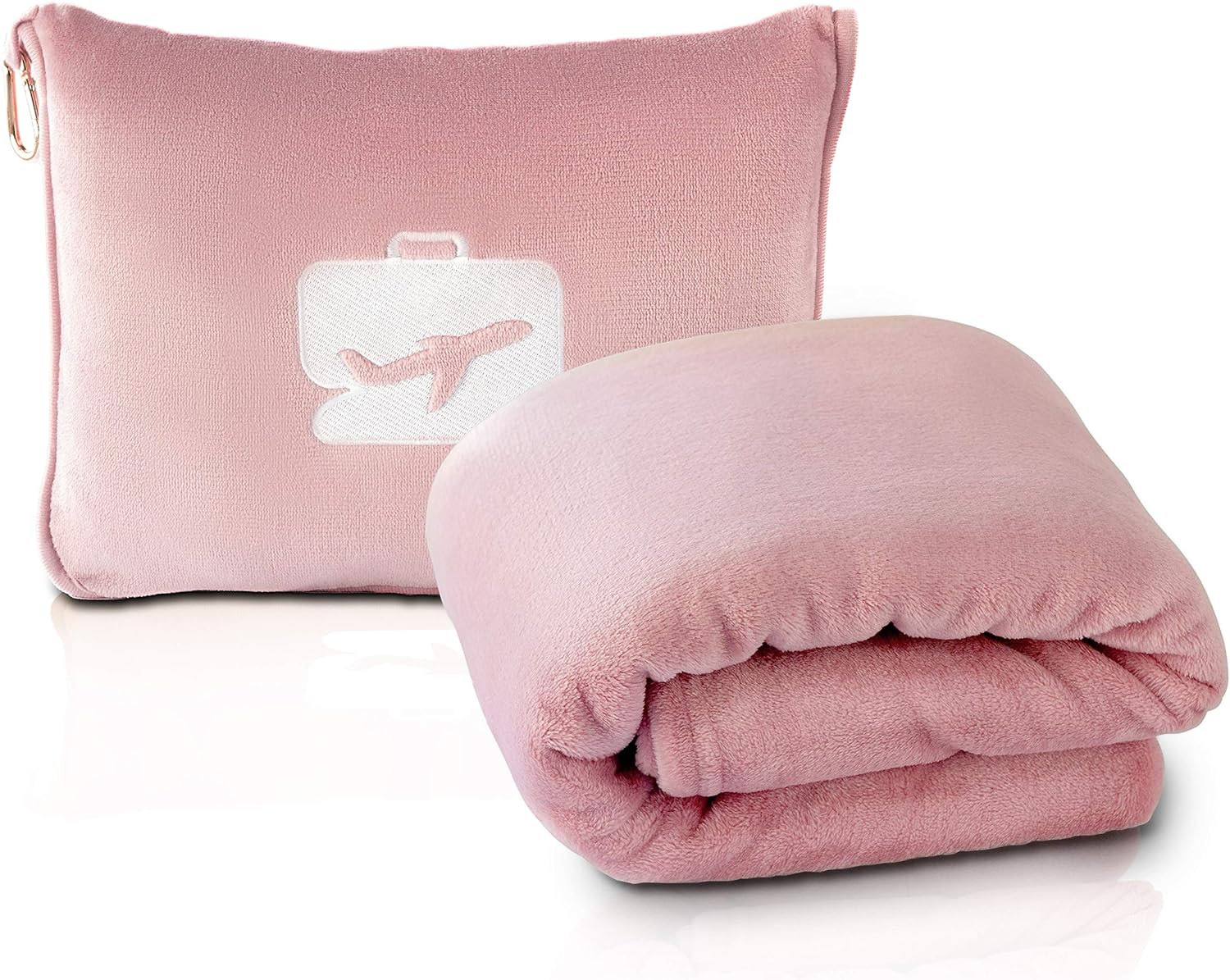
Throws pack small and weigh little. Many travel blankets are throw-sized. For flights, road trips, or hotel rooms, the throw’s compact footprint is exactly right. Our travel blanket guide covers the best options.
Throws are the universally appropriate gift blanket size — useful regardless of the recipient’s bed size, and sized to display beautifully in a gift box. Our gift blanket guide explores this further.
If two or more people want to share a blanket on the sofa, a throw falls short. A full blanket at 80″ wide can cover two adults seated side by side, even if it’s slightly large for a single sofa.
The dedicated reading chair is throw territory. A full blanket is unwieldy in a small chair — too much fabric to manage. A throw sits properly, stays in place, and doesn’t drag on the floor.
For picnics and stadium events, a throw is ideal. For car camping or a ground blanket for a family, a full blanket provides more coverage. Check our outdoor blanket guide for purpose-built options.
Throws are decorator’s tools. Their size makes them easy to fold, drape, and style on furniture. A full blanket is too large for most furniture-draping applications and tends to look sloppy rather than intentional.
For floor stretching, meditation, or children’s floor play, the full blanket’s area provides a proper surface. A throw is too small to lie on comfortably for most adults.
Coverage & Comfort: How Each Size Actually Feels to Use
Coverage is the most tangible daily difference between a throw and a full blanket. Not just how many square inches each covers, but how that coverage translates to the physical sensation of using the blanket in its intended context.
The Foot Problem: Why Throw Blankets Feel Short for Tall Adults
The most universal complaint about throw blankets is that they leave feet uncovered. At 60 inches long, a 50×60 throw covers exactly 5 feet of length. The average American adult male is 5 feet 9 inches; the average female is 5 feet 4 inches. When seated upright on a sofa, this isn’t an issue — the blanket covers torso and thighs. When someone reclines or lies across the sofa, the feet-uncovered problem becomes real. This is precisely why oversized throws (60″×80″) exist and why they outsell standard throws for anyone over 5 feet 7 inches who uses blankets lying down.
How Size Affects Material Choice and Weight
The size of a blanket isn’t just a coverage decision — it’s also a weight and material decision, because the same fabric in a throw versus a full blanket is a very different physical object. A 400 GSM fleece throw weighs roughly 1.5–2 lbs; the same fabric in a full blanket weighs 4–5 lbs. That difference matters for everything from how easy the blanket is to carry to how it drapes on furniture.
This size-weight relationship is why material choices often need to shift when you change blanket size. A heavy, luxurious woven cotton throw is beautiful and manageable. That same fabric in a king size blanket requires a commercial washer and is difficult to reposition during the night. Conversely, a lightweight microfleece that’s perfect as a bed blanket may feel too insubstantial as a throw — too little material for the warmth its size implies.
Chunky Knits
Best as throws — their visual texture and drape are designed for furniture display. At full-blanket scale, chunky knits become extremely heavy and challenging to wash. Our Tree Napper review shows how this works in practice.
Fleece
Scales well from throw to full and beyond. Lightweight enough at full-blanket scale to remain manageable. Anti-pill fleece is particularly well-suited to full blankets given the higher wash frequency of bed blankets.
Cotton Weaves
Excellent at both sizes. A waffle-weave cotton throw is a living room staple; the same construction in a full blanket is a breathable summer bed covering. For more, see our waffle blanket buying guide.
Weighted Fills
Weighted blankets are calibrated to body weight (target ~10% of body weight), so size matters here mainly for coverage — the weight per square inch should remain consistent regardless of blanket dimensions. Our full weighted blanket guide covers sizing thoroughly.
Sherpa & Minky
Both work at throw scale but become heavy at full-blanket scale. A sherpa full blanket can weigh 5–7 lbs, which is cozy but requires adequate washer capacity. For a comparison of these materials, see sherpa vs fleece.
Bamboo & Tencel
Ideal at full-blanket scale because their cooling and breathable properties are most valuable for sleeping adults. At throw scale, the cooling advantage matters less — a sofa user rarely overheats as acutely as a sleeping one. See our best bamboo blankets roundup.

Layering & Styling: How Throws and Full Blankets Work Together
One of the most underappreciated facts about throws and full blankets is that they often work best together rather than as either/or choices. Interior designers and hospitality professionals routinely layer both sizes on the same bed or sofa, using each for what it does best.
The Bed Layering Formula
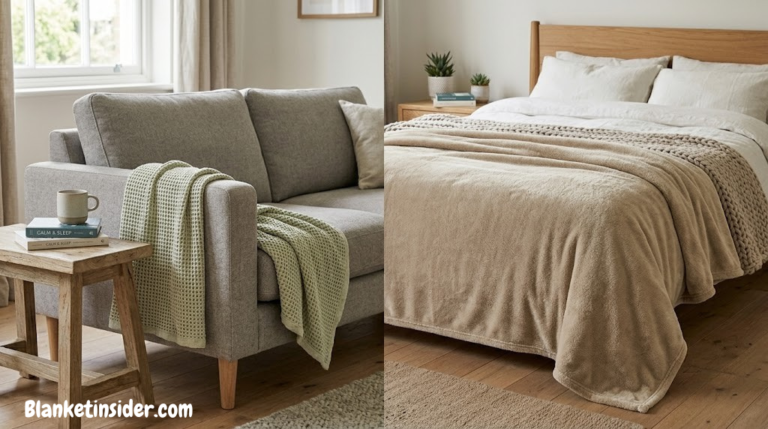
The classic hotel bed layering approach uses a full (or queen) blanket as the primary functional layer — the one that actually keeps the sleeping person warm — with a throw or decorative blanket folded across the foot of the bed as an accent. This combination provides the warmth of the larger blanket with the visual finish of the smaller one. It also gives a guest (or yourself) an easy additional layer to pull up on a colder night.
Bottom: Fitted Sheet
The foundation — stays in place, protects the mattress.
Middle: Full Blanket or Duvet
The primary warmth layer — sized appropriately for the bed with proper overhang. This is where the full blanket lives. For a deeper look at the layering options in this tier, see our guide on comforter vs duvet vs blanket.
Top: Throw or Coverlet (Folded at Foot)
A decorative throw folded in thirds and placed across the lower third of the bed. Adds visual texture, provides an extra warmth layer on demand, and creates that “hotel finish.” For the difference between this and a full coverlet, see our guide to coverlet vs bedspread vs comforter.
The Sofa Layering Approach
For living rooms, the decorating convention is to keep throws visible and accessible rather than hidden. A throw draped over one arm of a sofa signals warmth and comfort. For storage solutions that keep throws organized without hiding them, our roundup of the best blanket baskets and blanket ladders covers the options.
The cozy home essentials checklist is worth bookmarking as a comprehensive resource for building a comfortable, well-layered home environment across every room.
Price Comparison: Throw vs Full Blanket Across Materials
Size directly affects price — more material means higher cost, all else being equal. But the relationship isn’t perfectly linear because throws often carry a premium for their role as gift items and décor pieces, while full blankets are sometimes priced more aggressively to compete in the functional bedding category.
| Material | Throw (50″×60″) | Full Blanket (80″×90″) | Size Premium |
|---|---|---|---|
| Basic Fleece | $10–$25 | $20–$45 | ~1.8× |
| Anti-Pill Fleece | $18–$40 | $30–$65 | ~1.7× |
| Woven Cotton | $25–$60 | $45–$100 | ~1.8× |
| Sherpa | $30–$70 | $50–$110 | ~1.6× |
| Minky Plush | $30–$65 | $55–$120 | ~1.9× |
| Weighted Blanket | $35–$80 (lap) | $60–$150 | ~2× |
| Bamboo / Cooling | $30–$75 | $50–$130 | ~1.8× |
| Merino Wool | $60–$150 | $120–$300 | ~2× |
The practical takeaway from these price ranges: if budget is a constraint, a high-quality throw in premium material is often more achievable than a full blanket in the same fabric. A $60 merino throw is a realistic purchase; a $60 merino full blanket is not. Sizing down to buy better material is a legitimate strategy, provided the smaller size actually meets your use case.

The Decision Framework: Which Should You Actually Buy?
If you’ve read this far, you likely have a specific situation in mind. This decision framework is designed to give you a clear answer in under a minute. Work through the questions below in order, and stop at the first one that applies to your situation.
The Three-Question Shortcut
If the decision tree felt like too much, here’s the compressed version:
- Is it for a bed? → Get the right blanket size for your mattress (full or larger). A throw is not a bed blanket.
- Is it for a sofa, chair, or travel? → Get a throw. A full blanket is too large for furniture use.
- Is it a gift? → Get a throw. Universally useful, size-agnostic, and always appropriate.

The Full Blanket Size Reference: Every Standard Size Explained
Beyond just throw and full, understanding the entire size landscape helps with every future blanket purchase. This is the reference you’ll want to bookmark.
| Size Name | Dimensions | Fits Mattress | Best For | Drapes to floor? |
|---|---|---|---|---|
| Baby / Receiving | 30″ × 40″ | Crib | Swaddling, strollers, tummy time | No |
| Lap / Small Throw | 36″ × 48″ | N/A | Desk, wheelchair, elder care | No |
| Throw ← this article | 50″ × 60″ | Not designed for beds | Sofa, chair, décor, travel, gift | No (sofa use) |
| Twin | 66″ × 90″ | Twin (38″×75″) | Kids beds, daybeds, bunk beds | Partial |
| Full / Double ← this article | 80″ × 90″ | Full (54″×75″) | Full bed, guest rooms, solo adults | Modest |
| Queen | 90″ × 90″–100″ | Queen (60″×80″) | Most common adult bed size | Partial |
| King | 108″ × 90″–100″ | King (76″×80″) | King bed, couples, wide beds | Yes (sides) |
| Cal King | 108″ × 100″ | Cal King (72″×84″) | Tall sleepers, California King beds | Yes (sides) |
Several specialized sizes exist beyond this standard ladder. For the largest dedicated resource on throw dimensions and how to choose within that category, see our in-depth guide to the perfect throw blanket size. For the top end of the spectrum, our best king size blanket roundup covers both sizing and product recommendations.
Related Comparisons Worth Reading
Size is just one dimension of the blanket decision. The following comparisons cover the other major variables:
- Comforter vs duvet vs blanket — what each layer does and when you need each
- Coverlet vs bedspread vs comforter — the decorative bedding hierarchy explained
- Down vs weighted blanket — warmth versus therapeutic pressure
- Sherpa vs fleece blanket — the two most common synthetic options compared
- Best blanket materials guide — fabric-by-fabric breakdown for every use case
Frequently Asked Questions
Now You Know Exactly Which Size to Buy
Whether you need a throw for the sofa or a full blanket for the bed, you now have the dimensions, the decision framework, and the context to make the right call every time. No more buying the wrong size.