Comforter vs. Duvet vs. Blanket: The Ultimate Bedding Comparison Guide
Walking into the bedding aisle or browsing online for cozy home essentials can quickly become overwhelming. You are bombarded with terms that seem interchangeable but actually refer to distinctly different products. The debate of comforter vs. duvet vs. blanket is more than just semantics—it defines how you sleep, how you wash your bedding, and the overall aesthetic of your bedroom.
Are you looking for the fluffy “cloud-like” experience of a duvet? The convenience of a ready-to-use comforter? or the versatile layering capability of a high-quality blanket? Making the wrong choice can lead to overheating at night, difficult laundry days, or a bedroom style that falls flat.
In this comprehensive guide, we are stripping back the layers. We will define exactly what each item is, compare their pros and cons, and help you decide which top layer deserves a spot on your bed. Whether you are outfitting a dorm room, a nursery, or a master suite, here is everything you need to know.
This guide goes far beyond surface-level comparisons. We dive deep into the science of sleep comfort, break down every material option available on the market, explain thread count myths, reveal hotel bedding secrets, and provide seasonal strategies that will transform how you think about your bed. By the end of this article, you will have the expertise of a bedding specialist and the confidence to make the perfect purchase for your unique sleep needs.
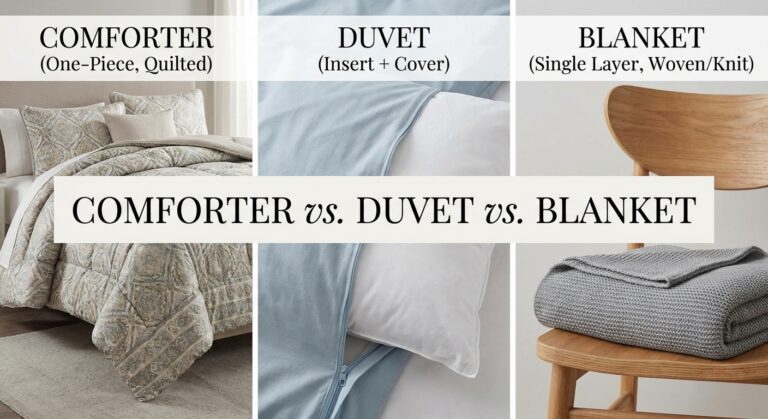
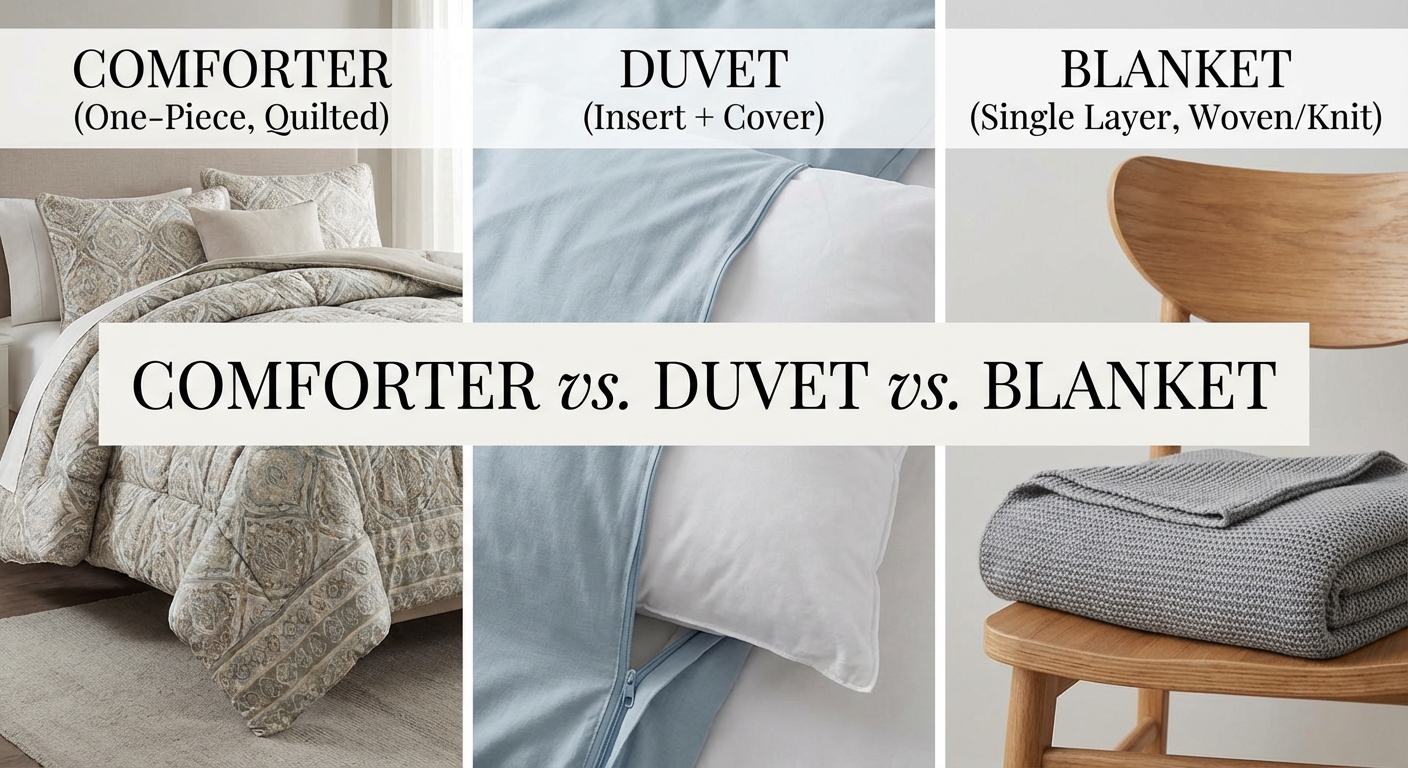
At a Glance: The Key Differences
Before we dive deep, let’s look at the fundamental differences between these three bedding heavyweights.
| Feature | Comforter | Duvet (Insert + Cover) | Blanket |
|---|---|---|---|
| Structure | One piece (shell & filling stitched together). | Two pieces (Insert goes inside a removable cover). | Single layer of fabric (woven, knit, or fleece). |
| Warmth | Medium to High (Fixed warmth). | Adjustable (Switch inserts by season). | Low to Medium (Used for layering). |
| Cleaning | Difficult (Whole unit must be washed). | Easy (Wash just the cover). | Easy (Fits in standard machines). |
| Style | Patterns/colors are permanent. | Versatile (Change cover to change style). | Textural/Decorative accents. |
| Price | Often cheaper (sold in sets). | Higher initial cost (Insert + Cover). | Varies widely based on material. |
What is a Comforter?
A comforter is a thick, quilted, fluffy blanket that is used as the top covering on your bed. The defining characteristic of a comforter is that it is one single piece. The outer fabric (shell) and the inner filling (down or synthetic fibers) are stitched together, usually in a grid or baffle-box pattern, to keep the filling evenly distributed.
Comforters are famously sold as “Bed-in-a-Bag” sets, making them a popular choice for those who want a coordinated look without the hassle of mixing and matching. If you are setting up a student space, check out our guide on compact dorm setups where comforters often reign supreme due to their simplicity.
Key Characteristics
- Construction: The filling is permanently enclosed.
- Sizing: Typically hang over the sides of the bed more generously than duvets.
- Style: Often feature dyed patterns, floral prints, or specific textures directly on the fabric.
Pros of Comforters
- Ready to use: Open the bag and put it on the bed. No assembly required.
- Cohesive design: Often comes with matching shams and bed skirts.
- No shifting: The filling is quilted in place, so you don’t get cold spots.
- Layering: Can be used over a top sheet or a thin thermal blanket.
Cons of Comforters
- Hard to wash: You must wash the entire bulky item. Large sizes (King/Cali King) often require a commercial laundromat.
- Fixed style: If you get bored of the pattern, you have to buy a whole new comforter.
- Flattening: Over time, the filling can compress, and since you can’t replace just the inside, the whole item wears out.

Top Rated: Utopia Bedding Comforter Duvet Insert
A versatile option that works as a standalone comforter or a duvet insert. Box-stitched specifically to keep filling in place.
Check Price on AmazonWhat is a Duvet?
The word “duvet” (pronounced doo-vay) is French for “down.” A duvet system consists of two separate parts: the duvet insert and the duvet cover. Think of it like a pillow and a pillowcase. The insert is usually white and plain, filled with down feathers, wool, or a down alternative. The cover is the decorative fabric shell that goes over it.
Duvets are favored in Europe and by luxury hotels because of their “fluff factor.” They are designed to be used without a top sheet, although many people still use one. If you are confused about the terminology, we have a deep dive on duvet covers vs. comforter covers that explains the nuances further.
Key Characteristics
- Customizable Warmth: You can use a lightweight silk insert in summer and a heavy down insert in winter, keeping the same cover.
- Hygiene: You only need to wash the cover regularly, which is as easy as washing sheets.
- Sizing: Duvets tend to fit the exact dimensions of the mattress top, with less overhang than comforters.
Pros of Duvets
- Easy Cleaning: Remove the cover and toss it in the wash. Great for pet owners (see our best pet blanket guide for more pet tips).
- Style Versatility: Change the look of your room instantly by swapping the cover.
- Fluffiness: Generally provides a loftier, cloud-like sleeping experience.
Cons of Duvets
- The “Wrestle”: Putting the cover back on the insert after washing can be physically frustrating.
- Shifting: If the insert doesn’t have corner ties, it can bunch up inside the cover.
- Price: Buying a high-quality insert and a high-thread-count cover separately is usually more expensive.
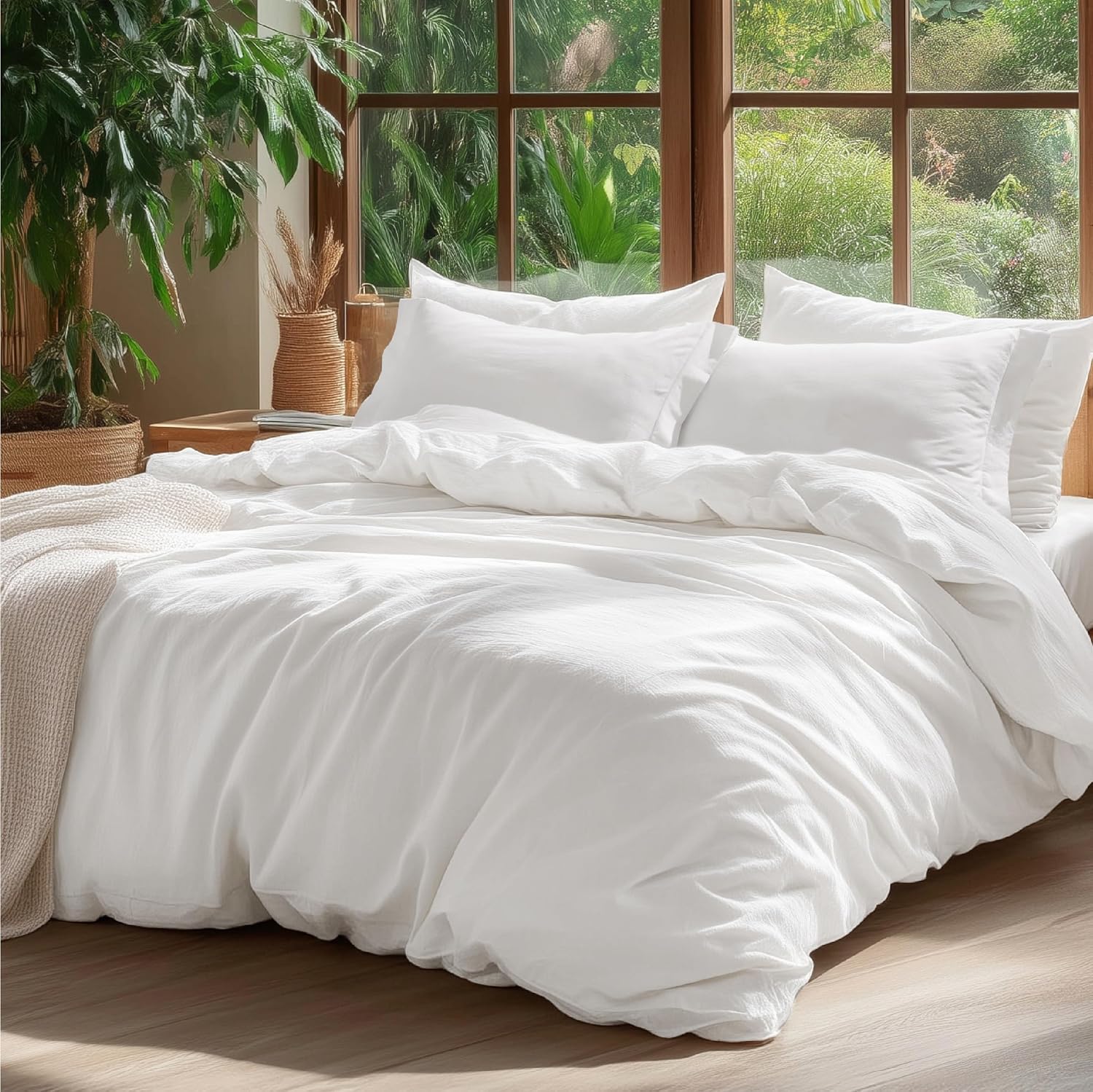
Editor’s Pick: Bedsure 100% Washed Cotton Duvet Cover
Give your bedroom a relaxed, lived-in look with this breathable, button-closure duvet cover set.
Check Price on AmazonWhat is a Blanket?
While comforters and duvets are the “main event,” a blanket is the versatile supporting actor. A blanket is a single layer of fabric, usually woven, knitted, or fleece. They are significantly thinner than duvets or comforters and are rarely used as the sole covering during colder months.
Blankets serve two primary purposes: layering for warmth and decoration. For example, a Sherpa blanket adds texture to a room, while a heated option (see best electric blankets) adds utility.
Common Blanket Materials
- Cotton: Breathable and soft, perfect for summer or layering.
- Wool/Merino: Excellent for temperature regulation. Learn more about merino wool benefits here.
- Fleece/Synthetic: Affordable, warm, and durable. However, you must know Sherpa vs. fleece differences to choose the right texture.
- Weighted: Filled with glass beads for anxiety relief. Hygiene is key here; read our guide on how to wash a weighted blanket.
Pros of Blankets
- Versatility: Use them on the bed, the couch, or even for a cozy car road trip.
- Durability: Woven blankets last for years and often get softer with washing.
- Breathability: Ideal for hot sleepers who feel suffocated by thick duvets.
Cons of Blankets
- Not warm enough alone: In winter, you will need multiple blankets to match the warmth of one duvet.
- Sizing confusion: From throws to king size, getting the right fit matters. (See: How big is a 40×30 blanket?).

Top Pick: Bedsure Fleece Throw Blanket
Velvety soft, lightweight, and perfect for layering or lounging on the sofa.
Check Price on AmazonHead-to-Head Comparisons
Duvet vs. Comforter: The Bedding Battle
This is the most common dilemma. If you value convenience and budget, the comforter wins. It is often cheaper and requires zero assembly. However, if you value longevity, hygiene, and aesthetics, the duvet wins. Washing a duvet cover is much easier than stuffing a King-sized comforter into a washing machine, which can damage the filling over time.
Pro Tip: If you love the look of a duvet but hate the “shifting,” look for covers with 8 internal ties rather than the standard 4.
Blanket vs. The Rest: When to Use Which?
You shouldn’t really choose between a blanket and a comforter; you should usually have both. A blanket is an essential layer.
- Summer: Use a cotton blanket or a bamboo blanket alone.
- Spring/Fall: Use a lightweight comforter.
- Winter: Layer a thermal blanket under your duvet or comforter for maximum heat retention.
For specialized needs, blankets offer solutions that comforters cannot, such as swaddle blankets for newborns or blankets designed for the beach.
Storage and Maintenance
Regardless of what you choose, proper care extends the life of your bedding. Comforters and duvets are bulky. In the off-season, you need proper storage solutions. Vacuum bags are popular, but be careful with natural down, as crushing the feathers can ruin their loft.
We recommend breathable fabric bags. Check out our review of the best blanket storage bags and blanket chests to keep your linens fresh and dust-free.
When it comes to washing, always check the care label. For heated options, reading our guide on how to wash a heated blanket is crucial to avoid damaging the wiring.
The Science of Bedding Materials: What You Need to Know
Understanding the materials that go into your bedding is just as important as choosing between a comforter, duvet, or blanket. The fabric determines breathability, durability, softness, moisture-wicking ability, and even how your skin reacts during sleep. In this section, we break down every major bedding material so you can make an informed decision that goes beyond surface-level aesthetics.
Cotton: The Gold Standard of Bedding
Cotton has been the dominant bedding material for centuries, and for good reason. It is naturally breathable, soft, and relatively affordable. However, not all cotton is created equal. The quality of cotton bedding depends on the weave type, staple length, and processing method.
Long-staple and extra-long-staple (ELS) cottons such as Egyptian cotton, Pima cotton, and Supima cotton produce fibers that are significantly longer than standard cotton. Longer fibers mean fewer joins in the yarn, which results in smoother, stronger, and more lustrous fabric. A sheet set made from Egyptian cotton will feel noticeably silkier and last years longer than one made from standard upland cotton.
Cotton weaves also play a major role in how the fabric feels against your skin:
- Percale: A plain weave that produces a crisp, matte finish. Percale sheets feel cool and airy, making them ideal for hot sleepers. Think of the crisp feel of a high-end hotel sheet — that is usually percale.
- Sateen: A satin weave that exposes more thread surface, creating a silky, lustrous finish. Sateen feels warmer and heavier than percale, making it better for cooler climates or people who prefer a buttery-smooth touch.
- Jersey: A knit fabric (like a t-shirt) that is stretchy, soft, and casual. Jersey sheets are wrinkle-resistant but tend to pill over time.
- Twill: Characterized by diagonal ribs, twill is durable and resistant to stains. It is commonly used in duvet covers and heavy blankets.
- Crinkled or washed cotton: Pre-washed for a relaxed, lived-in texture. This weave is low-maintenance since it does not need ironing and looks intentionally rumpled.
Understanding Organic Cotton
Organic cotton is grown without synthetic pesticides or fertilizers. It is better for the environment and generally softer because the fibers are not weakened by harsh chemical processing. If you have sensitive skin or chemical sensitivities, organic cotton bedding — especially GOTS-certified (Global Organic Textile Standard) — is an excellent choice. The downside is that organic cotton typically costs 20-40% more than conventional cotton, but the investment pays off in both comfort and longevity.
Down: The Luxury Filling
Down refers to the soft, fluffy clusters found beneath the outer feathers of ducks and geese. It is the gold standard for insulation in duvets and comforters because of its incredible warmth-to-weight ratio. A high-quality down comforter can keep you warm in freezing temperatures while weighing a fraction of a synthetic equivalent.
The key metric for down quality is fill power, measured in cubic inches per ounce. Fill power indicates how much space one ounce of down occupies — higher fill power means more loft, better insulation, and lighter weight.
- 550-600 fill power: Good quality. Suitable for most sleepers in moderate climates.
- 650-750 fill power: Premium quality. Excellent warmth with less weight. Recommended for most buyers.
- 800-900+ fill power: Ultra-premium. Used in luxury hotels and high-end brands. Extremely warm, extremely light, and extremely expensive.
Down also comes in two forms: cluster down (the highest quality, consisting of intact fluffy clusters) and feather-down (a mix of down clusters and small feathers, which is cheaper but less lofty). When shopping, look for “all-cluster down” or “white goose down” for the best experience.
Down Allergy Myth Busted
True down allergies are extremely rare. Most people who think they are allergic to down are actually reacting to dust mites, dander, or allergens that accumulate in old, poorly maintained down products. New, properly washed down bedding is hypoallergenic. If you are still concerned, look for down that has been RDS certified (Responsible Down Standard) and thoroughly cleaned — the cleaning process removes dust, dander, and other potential irritants.
Down Alternative: The Synthetic Solution
Down alternative fills are synthetic fibers (usually polyester microfibers) designed to mimic the loft and warmth of natural down. They are hypoallergenic, machine washable, and significantly cheaper than real down. Modern down alternatives have come a long way — premium options from brands like Downlite and Utopia Bedding can feel remarkably close to real down.
The main advantages of down alternative are:
- Hypoallergenic: Safe for allergy sufferers.
- Machine washable: No special cleaning required.
- Moisture-resistant: Does not absorb moisture the way down does, making it better for humid climates.
- Cruelty-free: No animal products involved.
The main disadvantage is that down alternative does not last as long as high-quality down. Over time (usually 3-5 years), the synthetic fibers compress and lose their loft. Down, by contrast, can last 10-20 years with proper care.
Wool: Nature’s Temperature Regulator
Wool is one of the most underrated bedding materials. Merino wool, in particular, has remarkable temperature-regulating properties that make it suitable for year-round use. Unlike cotton or synthetic materials, wool can absorb up to 30% of its weight in moisture without feeling wet, and it actively wicks moisture away from your body.
Wool bedding works in a unique way: it insulates you when it is cold and breathes when it is warm. This makes it an excellent choice for people who experience night sweats or who live in climates with dramatic temperature swings between seasons.
Types of wool used in bedding:
- Merino wool: The softest and most comfortable. Sourced from Merino sheep, it has shorter fibers that do not itch like traditional wool.
- Wool batting: Used in wool comforters and mattress toppers. Provides a medium-loft, breathable insulation.
- Wool fleece: Used in blankets. Warm, moisture-wicking, and naturally antimicrobial.
Wool vs. Down: Which Is Better?
The choice between wool and down depends on your priorities. Down offers superior warmth-to-weight ratio and a cloud-like luxury feel. Wool offers superior temperature regulation, moisture management, and durability. If you are a cold sleeper who wants maximum warmth, choose down. If you are a hot sleeper or experience night sweats, choose wool. Many sleep experts recommend wool as the single best material for people who struggle with temperature regulation at night.
Bamboo: The Eco-Friendly Innovator
Bamboo fabric has surged in popularity in recent years, and for good reason. Bamboo is one of the fastest-growing plants on earth, requiring no pesticides and minimal water to cultivate. The fabric produced from bamboo viscose or lyocell is exceptionally soft — often compared to silk — and has natural moisture-wicking and antimicrobial properties.
Bamboo bedding is particularly well-suited for:
- Hot sleepers: Bamboo is highly breathable and wicks moisture away from the body.
- Sensitive skin: The smooth fiber surface is less likely to irritate eczema or dermatitis.
- Allergy sufferers: Bamboo’s natural antimicrobial properties resist dust mites and mold.
- Eco-conscious buyers: Bamboo cultivation has a lower environmental footprint than cotton.
The main downside of bamboo is durability. Bamboo fabrics can pill over time, especially with frequent washing. They also tend to be more expensive than standard cotton. To maximize the lifespan of bamboo bedding, wash on a gentle cycle with cold water and avoid high-heat drying.
Linen: The Timeless Texture
Linen is made from the flax plant and has been used for bedding for thousands of years. It is the most durable natural bedding fiber, getting softer and more comfortable with every wash. Linen has a distinctive textured look that gives bedrooms a relaxed, sophisticated aesthetic.
The key characteristics of linen bedding:
- Temperature regulation: Linen is excellent at wicking moisture and allowing air circulation. It keeps you cool in summer and provides light insulation in winter.
- Durability: Linen is up to three times stronger than cotton. A high-quality linen sheet set can last 20+ years.
- Hypoallergenic: Linen is naturally resistant to bacteria and fungi.
- Sustainability: Flax requires less water and fewer pesticides than cotton.
The main drawback of linen is its initial texture. New linen can feel slightly rough or stiff compared to cotton or bamboo. It takes several washes to break in, but once it does, it becomes incredibly soft. Linen also wrinkles easily, which can be a pro or a con depending on your aesthetic preference.
Microfiber: The Budget-Friendly Option
Microfiber is a synthetic material made from extremely fine polyester or nylon fibers. It is incredibly affordable, wrinkle-resistant, and easy to care for. Microfiber sheets and blankets are widely available at budget retailers and are a popular choice for guest rooms, dorms, and rental properties.
The advantages of microfiber include:
- Low cost: Microfiber is significantly cheaper than natural fibers.
- Stain resistance: The tight weave repels liquids and stains.
- Wrinkle-free: Comes out of the dryer smooth without ironing.
- Quick drying: Dries much faster than cotton in the dryer.
The main disadvantage is breathability. Microfiber traps heat more than natural fibers, making it a poor choice for hot sleepers or warm climates. Over time, microfiber can also develop a “slick” or “plasticky” feel that some people find uncomfortable. For the best microfiber experience, look for products with a higher GSM (grams per square meter), which indicates a denser, softer weave.
Tencel and Lyocell: The Sustainable Luxury
Tencel (a brand name for lyocell) is a semi-synthetic fiber made from wood pulp, typically from eucalyptus trees. It is produced in a closed-loop process that recycles 99% of the solvents used, making it one of the most environmentally friendly fabrics available.
Tencel bedding offers a unique combination of properties:
- Extremely soft: Often described as feeling like a blend of silk and cotton.
- Highly absorbent: Tencel absorbs 50% more moisture than cotton.
- Temperature regulating: Keeps you cool in summer and comfortable in winter.
- Resistant to wrinkles: Holds its shape better than cotton or linen.
Tencel is still a relatively niche material in bedding, but it is rapidly gaining traction among sleep enthusiasts who want a luxury feel without the environmental impact of conventional textiles.
Thread Count Myths: What Actually Matters
Thread count is one of the most heavily marketed numbers in the bedding industry, yet it is also one of the most misunderstood. Marketing has led consumers to believe that higher thread count automatically equals better quality. This is simply not true. Here is what you actually need to know about thread count and how to see through the marketing hype.
What Is Thread Count?
Thread count refers to the number of horizontal and vertical threads per square inch of fabric. A 300 thread count sheet, for example, has 300 threads woven into each square inch. Generally, a higher thread count means a denser, softer, and more durable fabric — but only up to a point.
The Thread Count Ceiling
Most bedding experts agree that the sweet spot for thread count is between 200 and 800. Below 200, the fabric may feel thin and rough. Above 800, you start encountering diminishing returns and, in many cases, outright deception.
Warning: The Thread Count Scam
Some manufacturers artificially inflate their thread count by using multi-ply yarns. Instead of counting one two-ply thread as two threads, they count each ply separately. A 400 thread count sheet using two-ply yarn might be marketed as “800 thread count.” Additionally, some brands use picked threads (tiny fibers pulled from the fabric surface) to boost the count. The FTC has cracked down on some of these practices, but they still persist. Always look at thread quality, not just the number.
What Matters More Than Thread Count
Instead of fixating on thread count, consider these more meaningful indicators of quality:
- Fiber quality: A 300 thread count sheet made from Egyptian cotton will feel better than an 800 thread count sheet made from standard upland cotton.
- Weave type: Percale vs. sateen has a bigger impact on feel than thread count.
- Finishing: Mercerization (a treatment that strengthens and adds luster to cotton) and calendering (a process that smooths the surface) affect the final feel significantly.
- Single-ply vs. multi-ply: Single-ply threads produce lighter, softer fabric. Multi-ply threads are thicker and heavier but not necessarily better.
How to Shop Smart
When evaluating bedding, ignore the thread count on the label and instead focus on: (1) the type of cotton or material used, (2) the weave type, and (3) reviews from real customers. A sheet set described as “400TC long-staple Egyptian cotton percale” is almost certainly better than one described as “1200TC premium hotel quality” with no mention of fiber type.
The Science of Sleep Temperature and Your Bedding
Your body temperature plays a critical role in sleep quality. According to sleep researchers, the ideal bedroom temperature for sleep is between 60 and 67 degrees Fahrenheit (15.5 to 19.4 degrees Celsius). Your body needs to drop its core temperature by about 2-3 degrees Fahrenheit to initiate and maintain deep sleep. The bedding you choose directly affects this thermoregulation process.
Why You Overheat at Night
Night sweats and overheating are among the most common sleep complaints, affecting up to 41% of adults. The causes range from hormonal changes and medical conditions to simple bedding mistakes. Here is what the science says about how bedding contributes to nighttime overheating:
- Trapped body heat: Non-breathable materials like polyester microfiber and certain foam mattresses trap heat against your body, preventing the natural cooling process.
- Moisture accumulation: The average person loses about 1 liter of moisture per night through sweat. If your bedding does not wick this moisture away, it accumulates on your skin, causing discomfort and disrupting sleep.
- Layering mistakes: Using too many heavy layers or choosing the wrong combination of sheets, blankets, and comforters can create a “heat trap” that raises your effective sleeping temperature by several degrees.
- Poor air circulation: Thick, dense bedding materials prevent air from circulating around your body, creating a microclimate that gets progressively warmer as the night goes on.
How to Choose Bedding Based on Your Sleep Temperature
The right bedding for you depends largely on whether you sleep hot, cold, or neutral. Here is a detailed guide:
For Hot Sleepers
- Choose percale cotton sheets (200-400TC) for maximum airflow.
- Use a lightweight down alternative comforter or a wool blanket instead of a heavy comforter.
- Consider a cooling mattress pad or Tencel sheets.
- Avoid sateen weaves, flannel, and fleece.
- Use a breathable duvet cover made from linen or cotton percale.
- Layer lightly: a sheet plus a single lightweight blanket is often enough.
For Cold Sleepers
- Choose sateen cotton sheets (300-600TC) for a warmer feel.
- Use a high fill-power down comforter (700+ fill power).
- Add a wool or fleece blanket underneath your duvet for extra insulation.
- Consider flannel sheets in winter for ultimate coziness.
- Use a duvet cover made from sateen or flannel to trap warmth.
- Layer generously: fitted sheet, flat sheet, blanket, comforter or duvet.
The Role of Humidity in Sleep Comfort
Temperature is not the only factor — humidity also plays a major role. The ideal bedroom humidity level for sleep is between 30% and 50%. High humidity makes it harder for sweat to evaporate, causing you to feel sticky and uncomfortable. Low humidity can dry out your skin and airways, leading to discomfort and snoring.
Your bedding interacts with humidity in important ways:
- Cotton and linen absorb moisture and release it into the air, helping to regulate humidity around your body.
- Wool can absorb up to 30% of its weight in moisture without feeling damp, making it exceptional for humid climates.
- Polyester and microfiber do not absorb moisture well, which means sweat stays on your skin rather than being wicked away.
- Bamboo and Tencel have superior moisture-wicking properties, making them excellent choices for humid environments.
Allergies and Bedding: Creating an Allergen-Free Sleep Environment
Your bed is supposed to be a sanctuary, but for millions of allergy sufferers, it can become a source of misery. Dust mites, pet dander, mold, and pollen can accumulate in your bedding, triggering allergic reactions that disrupt sleep and affect daytime productivity. The good news is that the right bedding choices can dramatically reduce allergen exposure.
Understanding Bedding Allergens
The most common bedding allergens include:
- Dust mites: Microscopic creatures that thrive in warm, humid environments. They feed on dead skin cells and are found in virtually every bed. A single mattress can contain millions of dust mites.
- Pet dander: Tiny flakes of skin shed by cats, dogs, and other pets. These particles are extremely light and can remain airborne for hours, settling into bedding fibers.
- Mold spores: Thrive in damp environments. If your bedroom has high humidity or poor ventilation, mold can grow in or on your bedding.
- Pollen: Can be carried into the bedroom on clothing, hair, and skin, settling into bedding.
Best Bedding Materials for Allergy Sufferers
Allergen-Resistant Bedding Checklist
- Encasements: Use dust-mite-proof encasements on your mattress, pillows, and duvet insert. These zippered covers create a barrier that prevents allergens from reaching you.
- Hypoallergenic fills: Choose down alternative instead of natural down if you are concerned about allergens. While true down allergies are rare, down alternative eliminates the concern entirely.
- Tight-weave fabrics: Fabrics with a tight weave (percale cotton, microfiber) prevent dust mites and dander from penetrating deep into the fibers.
- Washable materials: Choose bedding that can be washed in hot water (130°F / 54°C) to kill dust mites. This means avoiding dry-clean-only items.
- Antimicrobial options: Bamboo and silver-infused fabrics have natural antimicrobial properties that inhibit the growth of bacteria and fungi.
Washing Frequency for Allergy Sufferers
Regular washing is the most effective way to reduce allergens in bedding. Here are the recommended frequencies:
- Sheets and pillowcases: Wash weekly in hot water (130°F minimum).
- Duvet covers: Wash every 1-2 weeks.
- Pillows: Wash every 3-6 months (or use pillow protectors and replace pillows every 1-2 years).
- Comforters and duvet inserts: Wash every 2-3 months, or use a duvet cover and wash the cover more frequently.
- Blankets: Wash monthly, or more often if used daily.
Important: Dryer Temperature Matters
Washing in hot water kills dust mites, but you also need to dry on high heat for at least 15 minutes to finish the job. If you air-dry your bedding, residual moisture can allow surviving dust mites to rebound quickly. For allergy sufferers, the dryer is just as important as the washer.
Pet Owners: Bedding Strategies
If your pets share your bed (and many do), you need a bedding strategy that manages dander without sacrificing comfort:
- Use a duvet cover rather than a comforter. You can wash the cover frequently without dealing with the bulk of a full comforter.
- Choose darker-colored covers that do not show pet hair as easily.
- Keep a dedicated pet blanket (see our best pet blanket guide) on top of the bed that can be washed separately and more frequently.
- Use a lint roller or pet hair remover regularly between washes.
- Consider a microfiber duvet cover — its tight weave resists pet hair penetration and is easy to clean.
Complete Seasonal Bedding Guide: What to Use When
One of the biggest advantages of understanding the comforter vs. duvet vs. blanket distinction is the ability to optimize your bedding for each season. The wrong seasonal bedding choice can lead to sweaty, restless nights in summer or shivering discomfort in winter. Here is your month-by-month guide to seasonal bedding mastery.
Spring (March – May)
Spring temperatures fluctuate wildly — warm days followed by chilly nights. The key is flexibility.
- Switch from your heavy winter duvet to a lightweight insert (300-400 fill power or 4.5 tog).
- Use cotton percale sheets for breathability.
- Keep a medium-weight blanket at the foot of the bed for unexpected cold snaps.
- Open windows during the day to air out winter bedding odors.
Summer (June – August)
Summer demands maximum breathability. Overheating is the enemy of summer sleep.
- Use lightweight cotton or bamboo sheets exclusively.
- Replace your duvet with a lightweight summer blanket or a thin cotton coverlet.
- Consider cooling-specific bedding: Tencel sheets, moisture-wicking bamboo, or phase-change cooling mattress pads.
- Store heavy comforters and winter duvets in breathable storage bags.
- Sleep with a fan or AC to maintain the ideal 60-67°F bedroom temperature.
Fall (September – November)
Fall is transitional. Start adding layers back as temperatures drop.
- Switch from summer sheets to a heavier sateen weave or light flannel.
- Bring back a medium-weight comforter or a higher-fill-power duvet insert (550-650).
- Add a wool or fleece blanket as a mid-layer between your sheet and comforter.
- This is a great time to wash and fluff stored winter bedding before you need it.
Winter (December – February)
Winter requires maximum insulation and strategic layering.
- Use heavy flannel or sateen sheets for warmth.
- Switch to a high-fill-power down duvet (700+ fill power) or a heavy comforter.
- Layer a thermal blanket underneath your duvet for added insulation.
- Consider a heated blanket for extra warmth on the coldest nights.
- Use a down-filled mattress pad or a wool mattress topper for additional insulation from below.
Bedroom Humidity by Season
Seasonal humidity changes also affect bedding comfort. In winter, indoor air tends to be very dry (often below 20% humidity) due to heating systems. This can cause static electricity, dry skin, and irritated airways. A bedroom humidifier can help, but your bedding choices matter too — wool and flannel are better at retaining moisture against your skin than synthetic materials.
In summer, humidity rises, making the air feel heavy and sticky. This is when moisture-wicking materials like bamboo, Tencel, and lightweight cotton become essential. Avoid heavy, non-breathable materials that trap moisture against your skin.
Bedding Size Guide: Getting the Perfect Fit
Buying the wrong size bedding is one of the most common and frustrating mistakes consumers make. A fitted sheet that pops off the corners, a comforter that barely reaches the sides of the mattress, or a duvet that bunches up inside an oversized cover — these problems are all avoidable with the right sizing knowledge.
| Mattress Size | Dimensions (inches) | Fitted Sheet Size | Flat Sheet Size | Comforter/Duvet Size | Quilt/Blanket Size |
|---|---|---|---|---|---|
| Twin | 38 x 75 | 39 x 75 (6-16″ deep) | 66 x 96 | 66 x 90 | 66 x 90 |
| Twin XL | 38 x 80 | 39 x 80 (6-16″ deep) | 66 x 102 | 68 x 92 | 68 x 92 |
| Full/Double | 54 x 75 | 55 x 75 (6-16″ deep) | 81 x 96 | 84 x 90 | 80 x 90 |
| Queen | 60 x 80 | 61 x 80 (6-18″ deep) | 90 x 102 | 90 x 90 | 90 x 90 |
| King | 76 x 80 | 78 x 80 (6-18″ deep) | 108 x 102 | 104 x 90 | 108 x 90 |
| California King | 72 x 84 | 73 x 84 (6-18″ deep) | 108 x 108 | 104 x 98 | 108 x 98 |
Common Sizing Mistakes
- Ignoring mattress depth: Modern mattresses are often 12-16 inches thick (or more with a mattress topper). Standard fitted sheets may not fit. Always check the pocket depth of fitted sheets.
- Confusing mattress size with bedding size: A “King” comforter is not the same size as a King mattress — it is typically wider and longer to provide proper drape over the sides.
- Not accounting for mattress toppers: If you use a 3-inch memory foam topper, you need sheets with a deeper pocket to accommodate the extra height.
- Assuming all brands size identically: Sizing can vary between manufacturers. A “King” from one brand may fit differently than a “King” from another. When in doubt, measure your mattress (length, width, and depth) and compare to the product specifications.
Deep Pocket Sheets for Thick Mattresses
If your mattress is 14 inches or thicker (including any toppers or pads), look specifically for “deep pocket” or “extra-deep pocket” fitted sheets. These typically accommodate mattresses up to 18-21 inches deep and will stay securely in place throughout the night. Brands like California Design Den and CGK Unlimited specialize in deep-pocket options.
Down vs. Down Alternative: An In-Depth Comparison
The choice between natural down and synthetic down alternative is one of the most consequential decisions when buying a duvet insert or comforter. This choice affects your comfort, budget, allergies, environmental impact, and how you care for your bedding. Let’s break it down comprehensively.
| Factor | Natural Down | Down Alternative |
|---|---|---|
| Warmth-to-weight ratio | Excellent. The best insulation per ounce of any material. | Good, but heavier for the same warmth level. |
| Loft and fluffiness | Exceptional. Creates a cloud-like sleeping experience. | Good. Premium alternatives can approach down-like loft. |
| Durability | 10-20+ years with proper care. | 3-5 years before significant loft loss. |
| Hypoallergenic | Yes, if properly cleaned and certified. | Inherently hypoallergenic. |
| Moisture management | Absorbs moisture well but can become clumpy when wet. | Resists moisture but does not absorb as well. |
| Care requirements | Requires professional cleaning or careful home washing. Must be dried thoroughly. | Machine washable and dryer-friendly. |
| Price range | $150-$800+ depending on fill power and quality. | $30-$200 depending on brand and quality. |
| Environmental impact | Depends on sourcing. RDS-certified down is ethical. Biodegradable. | Synthetic (petroleum-based). Not biodegradable. Sheds microplastics. |
| Temperature regulation | Excellent. Naturally adjusts to body temperature. | Moderate. Can trap heat more than natural down. |
| All-season versatility | Yes. Lightweight down for summer, heavier for winter. | Less versatile. May need separate summer and winter inserts. |
When to Choose Natural Down
- You prioritize the ultimate sleeping experience and are willing to invest in it.
- You live in a cold climate and need maximum warmth without weight.
- You want bedding that will last a decade or more.
- You are comfortable with occasional professional cleaning.
- You prefer natural, biodegradable materials.
When to Choose Down Alternative
- You have a limited budget but still want a cozy sleeping experience.
- You need easy-care bedding that can go in the washing machine.
- You have genuine concerns about animal products or prefer vegan options.
- You are buying bedding for a guest room that will not be used frequently.
- You want to try a duvet system before committing to the cost of natural down.
The Best of Both Worlds: Down-Blend Inserts
If you cannot decide between down and down alternative, consider a down-blend insert. These combine natural down clusters with synthetic fibers, offering a middle ground in terms of warmth, loft, price, and care requirements. A 50/50 down-alternative blend, for example, provides genuine down loft at a lower price point while being easier to care for than pure down.
Mastering the Art of Bedding Layering
Layering is the secret to a bed that looks magazine-worthy and feels incredibly comfortable. Professional bedding stylists and luxury hotels use layering techniques to create depth, texture, and visual interest. Here is how to layer your bed like a pro, regardless of whether you use a comforter, duvet, or blanket as your primary top layer.
The Classic Layering Order (Bottom to Top)
- Mattress Protector: The foundation of every well-made bed. A waterproof, breathable mattress protector shields your mattress from spills, stains, dust mites, and allergens. This is non-negotiable — a quality mattress is a significant investment, and a protector extends its life.
- Fitted Sheet: Goes over the mattress protector. Choose a material that suits your sleep temperature (percale for hot sleepers, sateen for cold sleepers, bamboo for all-around comfort). Ensure the pocket depth matches your mattress thickness.
- Flat Sheet (Optional): Placed on top of the fitted sheet, this is a traditional American bedding element. In Europe and many luxury hotels, the flat sheet is skipped in favor of the duvet cover acting as the sleeping surface. If you use a comforter, a flat sheet between you and the comforter helps keep the comforter clean and adds a layer of warmth adjustment.
- Blanket or Light Quilt: This is the mid-layer that provides additional warmth and creates a visual break between the sheets and the top layer. A Sherpa blanket, cotton quilt, or thin wool blanket works well here. Folded at the foot of the bed when not in use, this layer adds a decorative element.
- Comforter or Duvet: The primary top layer. This is what provides the bulk of your warmth and defines the bed’s visual style. Drape it evenly over the bed, leaving enough overhang on the sides for a polished look.
- Decorative Pillows and Throw: The finishing touch. Standard sleeping pillows go first (usually two for a Queen, two for a King), followed by Euro shams (26×26) for height, and then decorative accent pillows. A small throw blanket draped casually at the foot of the bed completes the look.
Layering for Different Seasons
The beauty of layering is its adaptability. You do not need to completely overhaul your bed every season — you simply add or remove layers.
Summer Layering (Minimal)
- Fitted sheet (bamboo or percale cotton)
- Light cotton coverlet or blanket
- 2 sleeping pillows
- 1 decorative pillow (optional)
Total layers: 1-2 above the mattress
Winter Layering (Maximum)
- Fitted sheet (sateen or flannel)
- Flat sheet
- Wool or thermal blanket
- Down comforter or high-fill-power duvet
- Throw blanket at foot of bed
- 2-4 pillows with shams and accent pillows
Total layers: 3-4 above the mattress
Color and Texture Coordination
Professional bedding stylists follow these principles when layering:
- Start with a neutral base: White, cream, or gray sheets provide a clean foundation that works with any color scheme.
- Add texture through blankets: A chunky knit blanket, a waffle-weave cotton, or a plush Sherpa blanket adds visual interest without introducing competing patterns.
- Use your comforter or duvet cover as the statement piece: This is where you can introduce color, pattern, or a bold design.
- Coordinate accent pillows with the duvet cover or comforter: Pull 2-3 colors from the main pattern for your accent pillows to create a cohesive look.
- Mix patterns deliberately: If you want to mix patterns (e.g., a striped duvet with floral pillows), ensure they share at least one common color and vary in scale (large stripes + small florals).
Weighted Blankets: Everything You Need to Know
Weighted blankets have exploded in popularity in recent years, and for good reason. Research has shown that the deep pressure stimulation provided by weighted blankets can reduce anxiety, improve sleep quality, and help manage conditions like ADHD, autism, PTSD, and insomnia. But weighted blankets are a unique product category that operates differently from comforters, duvets, and standard blankets.
How Weighted Blankets Work
Weighted blankets use a principle called deep pressure stimulation (DPS). The evenly distributed weight — usually glass beads, plastic pellets, or steel beads — applies gentle, firm pressure across your body. This pressure triggers the release of serotonin and melatonin (the sleep hormone) while reducing cortisol (the stress hormone). The result is a calming, anxiety-reducing effect similar to a firm hug.
How to Choose the Right Weight
The general rule of thumb is to choose a weighted blanket that is approximately 10% of your body weight. However, this is a guideline, not a strict rule. Some people prefer lighter or heavier blankets depending on their sensitivity to pressure.
| Your Body Weight | Recommended Blanket Weight | Ideal For |
|---|---|---|
| 100-120 lbs | 10-12 lbs | Teens, smaller adults |
| 120-150 lbs | 12-15 lbs | Average-sized adults |
| 150-180 lbs | 15-18 lbs | Larger adults |
| 180-220 lbs | 18-22 lbs | Heavier adults |
| 220+ lbs | 22-25+ lbs | Very large adults (consider two blankets) |
Weighted Blanket Materials
- Glass bead fill: The most common and highest quality option. Glass beads are smaller, smoother, and quieter than plastic pellets. They distribute weight more evenly and feel less bulky.
- Plastic poly-pellets: Cheaper but larger and heavier per unit. They can shift more and create a “lumpy” feel.
- Steel shot beads: Very dense and heavy, allowing for a thinner blanket profile. However, they can feel cold and are not as widely available.
- Sand or mineral fill:
Weighted Blanket Sizing
Unlike comforters and duvets, weighted blankets should generally be sized to fit your body, not your bed. A weighted blanket that hangs over the edges of the bed will slip off due to gravity. Choose a blanket that is roughly the size of your body (Twin size for most adults, Full/Queen for couples).
Safety Considerations
Weighted blankets are not suitable for everyone. They should NOT be used by:
- Children under 5 years old
- People with respiratory conditions (COPD, sleep apnea) without consulting a doctor
- People who are claustrophobic or feel uncomfortable under pressure
- People with certain circulatory conditions
- Anyone who cannot independently remove the blanket if needed
Always consult with a healthcare provider before using a weighted blanket if you have any medical conditions.
Top Pick: Bedsure Weighted Blanket
Glass bead fill for even weight distribution. Available in multiple weights and sizes to match your body weight.
Check Price on AmazonLuxury vs. Budget Bedding: Is the Price Difference Worth It?
Bedding prices range from $20 for a complete bed-in-a-bag set to $500+ for a single set of sheets. Is luxury bedding worth the investment, or can you get comparable quality at a fraction of the price? The answer depends on what you value and how long you expect your bedding to last.
What You Get with Budget Bedding ($20-$100)
- Materials: Standard upland cotton, polyester blends, or microfiber.
- Weave: Basic percale or plain weave.
- Durability: 1-3 years before noticeable wear, pilling, or thinning.
- Comfort: Adequate. May feel rough or thin compared to luxury options.
- Best for: Guest rooms, dorm rooms, temporary housing, or anyone on a tight budget.
What You Get with Mid-Range Bedding ($100-$300)
- Materials: Long-staple cotton (Pima, Supima), quality down alternative, or bamboo.
- Weave: Quality percale or sateen.
- Durability: 3-7 years with proper care.
- Comfort: Noticeably softer and more comfortable than budget options.
- Best for: Most adults who want quality without overspending. The sweet spot for value.
What You Get with Luxury Bedding ($300+)
- Materials: Egyptian cotton (ELS), high fill-power down (700+), cashmere, silk, or linen.
- Weave: Expertly finished percale, sateen, or specialized weaves.
- Durability: 7-20+ years. Improves with age.
- Comfort: Exceptional. The difference is immediately noticeable.
- Best for: People who prioritize sleep quality, want bedding that lasts decades, or appreciate fine craftsmanship.
The Cost-Per-Night Analysis
Here is a helpful way to think about bedding investment. A $200 sheet set that lasts 7 years costs about $0.08 per night. A $40 sheet set that lasts 1 year costs about $0.11 per night. Surprisingly, the “expensive” option is actually cheaper per use. When you factor in that better sleep improves productivity, mood, and health, the return on investment becomes even clearer.
Where to Splurge and Where to Save
- Splurge on: Sheets (you spend 8 hours every night touching them), your duvet insert or comforter fill (this determines warmth and comfort), and your mattress protector (protects a $1000+ investment).
- Save on: Decorative pillows (you can find beautiful accent pillows at any price point), duvet covers (mid-range options from brands like Bedsure are excellent), and blankets used for decoration rather than warmth.
Hotel Bedding Secrets: How to Recreate the Luxury Hotel Bed at Home
There is something undeniably luxurious about sliding into a perfectly made hotel bed. The sheets are crisp, the pillows are fluffy, and the comforter drapes just right. The good news is that you can recreate this experience at home without spending a fortune. Here are the secrets that luxury hotels use to create their signature sleep experience.
Secret #1: Crisp White Sheets
Most luxury hotels use white sheets for a reason. White sheets feel cleaner, brighter, and more inviting. They can be bleached for sanitation (which colored sheets cannot), and they create a neutral canvas that allows decorative pillows and throws to pop. The sheets used in high-end hotels are typically high-quality cotton percale with a thread count between 300 and 500.
Secret #2: The Pillow Formula
Luxury hotels use a specific pillow arrangement that creates height and luxury:
- 2 sleeping pillows per person (placed flat, side by side)
- 2 Euro shams (26×26) propped up against the headboard for height
- 1-2 decorative accent pillows in front for color and texture
Hotel pillows are typically medium-firm with a down or down-alternative fill. The key is having enough pillows to create a plush, layered look while still providing functional sleeping support.
Secret #3: The Triple Sheeting Method
Instead of using a traditional comforter, many hotels use a technique called triple sheeting. This involves:
- A fitted sheet on the mattress
- A flat sheet over that
- A lightweight blanket or coverlet
- Another flat sheet on top
- A final flat sheet or duvet folded at the foot of the bed
This method creates a clean, crisp look and is easy for housekeeping to launder. At home, you can simplify this by using a fitted sheet, a flat sheet, and a duvet or comforter on top.
Secret #4: The Hospital Corner Fold
Hospital corners are the neat, tucked-in corners that give hotel beds their polished look. To create them:
- Tuck the foot of the flat sheet under the mattress
- Lift the side of the sheet about 12 inches from the corner and tuck the excess under the mattress, creating a 45-degree fold
- Drop the folded section and tuck it tightly under the mattress
- Repeat on the other side
This simple technique instantly makes your bed look more professional and intentional.
Secret #5: Regular Fluffing and Rotation
Hotel staff fluff pillows, shake out duvets, and smooth sheets every single day. At home, make it a habit to:
- Fluff your pillows every morning when you make the bed.
- Shake out your duvet or comforter to redistribute the filling.
- Smooth out wrinkles with your hands for a polished look.
- Rotate your duvet insert or comforter 180 degrees once a week to prevent uneven wear.
Bedding for Specific Sleep Needs
Not everyone sleeps the same way. Your sleep position, health conditions, lifestyle, and personal preferences all influence which type of bedding is best for you. In this section, we address specific sleep scenarios and recommend the ideal bedding setup for each.
For Side Sleepers
Side sleepers need bedding that supports their shoulder and hip alignment while providing enough warmth without constriction. The key challenge is that side sleepers often need firmer pillow support, which means the bedding around the pillow area needs to accommodate extra loft.
- Choose a comforter or duvet that is long enough to cover your feet when you curl up (consider going one size up if you are tall).
- A lightweight blanket layered under the comforter allows you to adjust warmth without kicking off the entire bed covering.
- Use sheets with a bit of stretch (jersey or bamboo) to accommodate the movement associated with side sleeping.
For Back Sleepers
Back sleepers tend to have more even body heat distribution and may overheat less than side sleepers. The ideal bedding setup for back sleepers prioritizes breathability and even coverage.
- A medium-weight comforter or duvet provides adequate warmth without excess bulk.
- Percale cotton sheets promote airflow and prevent the back-to-sheet heat buildup that can cause discomfort.
- A single pillow with medium loft keeps the spine aligned; avoid stacking multiple pillows that push your neck forward.
For Stomach Sleepers
Stomach sleepers face unique challenges. The pressure on the chest and neck can restrict breathing, and the face-down position traps heat. Bedding choices should minimize these issues.
- Use lightweight, breathable bedding — a thin cotton blanket or a lightweight comforter. Avoid heavy duvets that add downward pressure.
- Percale or bamboo sheets help dissipate heat from the face-down position.
- Use a very thin pillow or no pillow at all to keep the neck and spine aligned.
For Couples with Different Sleep Temperatures
One of the most common relationship sleep challenges is when one partner sleeps hot and the other sleeps cold. Here are solutions:
- Separate blankets: The Scandinavian “bed divorce” method — each partner has their own blanket. This eliminates blanket-stealing and allows each person to choose their ideal warmth level.
- Dual-zone duvet: Some duvets are designed with different warmth levels on each side (e.g., a warmer side and a cooler side).
- Layered system: Use a shared lightweight sheet/blanket layer with individual top layers (one partner uses a thin blanket, the other uses a comforter).
- Temperature-regulating materials: Wool duvets or bamboo-blend sheets can help moderate temperature differences between partners.
For People with Chronic Pain
Chronic pain conditions like fibromyalgia, arthritis, and back pain require bedding that supports the body without adding pressure points.
- Weighted blankets can provide pain relief through deep pressure stimulation (consult your doctor first).
- Soft, smooth sheets (sateen cotton or bamboo) minimize friction and pressure on sensitive skin.
- A supportive mattress topper (memory foam or latex) combined with appropriate bedding can reduce pressure point pain.
- Extra pillows for propping up knees (back sleepers) or between the knees (side sleepers) can significantly reduce lower back and hip pain.
For Night Sweaters
Night sweats affect millions of people and can be caused by menopause, medications, anxiety, or medical conditions. The right bedding can dramatically improve comfort.
- Bamboo or Tencel sheets: Superior moisture-wicking keeps sweat away from the skin.
- Wool blankets: Absorb up to 30% of their weight in moisture without feeling damp.
- Lightweight cotton percale: Breathable and quick-drying.
- AVOID: Polyester, microfiber, and fleece, which trap moisture and heat.
- Keep a spare set of sheets handy for middle-of-the-night changes.
- Consider a moisture-wicking mattress protector to protect your mattress from sweat damage.
Sustainable and Eco-Friendly Bedding: A Complete Guide
As consumers become more environmentally conscious, the demand for sustainable bedding has grown dramatically. The bedding industry has a significant environmental footprint — from water-intensive cotton farming to petroleum-based synthetic fills — but there are increasingly better options for eco-minded buyers.
The Environmental Impact of Conventional Bedding
- Cotton farming: Conventional cotton accounts for 16% of global insecticide use and requires approximately 10,000 liters of water to produce 1 kilogram of cotton.
- Polyester production: Derived from petroleum, polyester manufacturing releases microplastics into waterways with every wash.
- Down farming: Ethical concerns exist around live-plucking and force-feeding in some down production operations.
- Textile dyeing: Conventional textile dyeing is the second-largest polluter of clean water globally.
- Shipping and packaging: Most bedding is manufactured overseas and shipped globally, adding to the carbon footprint.
Eco-Friendly Bedding Materials
Organic Cotton
Grown without synthetic pesticides or fertilizers. Uses 91% less water than conventional cotton (when rain-fed). GOTS certification ensures the entire supply chain meets environmental and social standards. Costs more but lasts longer and feels better.
Organic Bamboo/Lyocell
Bamboo grows rapidly without pesticides. Lyocell (Tencel) production uses a closed-loop process that recycles 99% of solvents. Both are biodegradable and have a lower environmental impact than cotton or polyester.
Recycled Materials
Some brands offer bedding made from recycled PET bottles (polyester) or recycled cotton. While recycled polyester still sheds microplastics, it diverts waste from landfills and requires less energy than virgin polyester production.
Responsibly Sourced Down
RDS (Responsible Down Standard) and TDS (Responsible Traceable Down Standard) certifications ensure down is sourced ethically, without live-plucking or force-feeding. Look for these certifications when buying down products.
Hemp
Hemp is one of the most sustainable fibers available. It requires no pesticides, minimal water, and actually improves soil quality. Hemp bedding is durable, naturally antimicrobial, and gets softer with each wash.
Linseed Flax
Linen (from flax) requires 20 times less water than cotton and no pesticides. It is fully biodegradable and one of the strongest natural fibers. A linen sheet set can last 20+ years, reducing replacement waste.
Tips for a More Sustainable Bedding Routine
- Buy less, buy better: Invest in high-quality bedding that lasts years instead of replacing cheap bedding annually.
- Wash in cold water: Cold water cleaning uses 90% less energy than hot water and is gentler on fabrics.
- Air dry when possible: Line drying extends the life of your bedding and eliminates dryer energy use.
- Donate or recycle: When you do replace bedding, donate usable items to shelters or textile recycling programs.
- Choose brands with take-back programs: Some bedding brands offer recycling or composting programs for end-of-life products.
- Use a microfiber-catching laundry bag: If you wash synthetic bedding, use a Guppyfriend bag to capture microplastic fibers before they enter waterways.
Bedding Care Guide: How to Wash and Maintain Every Material
Proper care is the single most important factor in extending the life of your bedding. Different materials require different care approaches, and following the wrong instructions can ruin even the highest quality bedding. Here is a comprehensive care guide for every bedding material.
Cotton Care
- Washing: Machine wash in warm or cold water (check the label). Use a gentle, phosphate-free detergent.
- Drying: Tumble dry on low to medium heat. Remove promptly to minimize wrinkles. Over-drying damages fibers.
- Ironing: If desired, iron on medium heat while slightly damp for the crispest look.
- Avoid: Bleach (weakens fibers), fabric softener (coats fibers and reduces absorbency), and hot water (causes shrinkage).
- Frequency: Wash every 1-2 weeks.
Down and Down Alternative Care
- Washing: Machine wash on a gentle cycle with cold or warm water. Use a down-specific detergent (like Nikwax Down Wash) or a small amount of liquid dish soap. Do not use powder detergents — they leave residue in down clusters.
- Drying: Tumble dry on low heat with 2-3 clean tennis balls or dryer balls. The balls help break up clumps and restore loft. This process may take 2-3 hours for a full-size comforter.
- Avoid: High heat (melts synthetic fills and damages down), overloading the washer (down needs room to agitate), and dry cleaning (harsh chemicals strip natural oils from down).
- Frequency: Wash every 3-6 months, or use a duvet cover and wash the cover more frequently.
Critical: Down Must Be Completely Dry
A partially dried down comforter or insert can develop mold and mildew inside the filling. Always ensure down products are 100% dry before storing or using them. If you are unsure, put the item back in the dryer for another cycle. It is better to over-dry than to store damp down.
Linen Care
- Washing: Machine wash in warm water on a gentle cycle. Use a mild detergent. Linen becomes softer with each wash.
- Drying: Tumble dry on low heat or line dry. Linen wrinkles more than cotton, so removing while slightly damp and hanging can reduce wrinkling.
- Avoid: Fabric softener (reduces linen’s natural absorbency) and chlorine bleach (weakens fibers).
- Frequency: Wash every 1-2 weeks. Linen is naturally antimicrobial, so it stays fresh longer than cotton.
Wool Care
- Washing: Machine wash on a wool or delicate cycle in cold water. Use a wool-specific detergent. Some wool items are hand-wash only — always check the label.
- Drying: Lay flat to dry or tumble dry on the lowest heat setting with a wool dryer ball. Never wring or twist wool — it can cause felting and permanent distortion.
- Avoid: Hot water (causes shrinkage and felting), bleach, and high-heat drying.
- Frequency: Wash wool bedding every 2-4 months. Wool is naturally antimicrobial and odor-resistant, so it requires less frequent washing than cotton.
Bamboo and Tencel Care
- Washing: Machine wash on a gentle cycle in cold water. Use a mild, eco-friendly detergent.
- Drying: Tumble dry on low heat or line dry. Avoid high heat, which can damage the fibers.
- Avoid: Fabric softener (coats the moisture-wicking fibers), bleach, and rough handling.
- Frequency: Wash every 1-2 weeks. Bamboo and Tencel resist bacteria naturally, so they stay fresh longer.
Flannel Care
- Washing: Machine wash in warm water. Use a gentle detergent. Wash flannel separately for the first few washes, as it tends to shed lint.
- Drying: Tumble dry on low heat. Remove while slightly damp to prevent over-drying, which can make flannel pill.
- Avoid: High heat (causes pilling and shrinkage), bleach, and fabric softener.
- Pro Tip: To reduce lint shedding, soak new flannel in cold water with a cup of white vinegar before the first wash.
Weighted Blanket Care
- Washing: Check the care label — many weighted blankets are machine washable on a gentle cycle. Some require hand washing or spot cleaning. Glass bead-filled blankets are generally machine washable; bead-free knitted versions may not be.
- Drying: Air dry or tumble dry on low heat. Ensure the blanket is completely dry before use.
- Avoid: High heat (can damage glass beads or cause them to crack), and bleach.
- Tip: Use a duvet cover on your weighted blanket to reduce the frequency of washing the blanket itself.
15 Common Bedding Mistakes That Are Ruining Your Sleep
Even with the best bedding, small mistakes can significantly reduce your sleep quality. Here are the most common bedding mistakes and how to fix them.
- Using the wrong pillow for your sleep position: Side sleepers need firm, high-loft pillows. Back sleepers need medium-firm, medium-loft pillows. Stomach sleepers need soft, low-loft pillows. The wrong pillow creates neck strain and disrupts spinal alignment.
- Not washing your pillows: Pillows accumulate sweat, oil, dust mites, and dead skin cells. Wash them every 3-6 months and replace them every 1-2 years.
- Over-washing your comforter: Over-washing breaks down the filling and reduces loft. Use a duvet cover and wash it frequently while washing the insert only 2-3 times per year.
- Ignoring mattress protector care: A waterproof mattress protector can trap heat and moisture if not breathable. Choose a breathable protector and wash it monthly.
- Using fabric softener on performance fabrics: Fabric softener coats the fibers of bamboo, Tencel, wool, and moisture-wicking fabrics, destroying their performance properties.
- Making the bed immediately after waking: Making the bed right away traps moisture from your body in the sheets, creating a breeding ground for dust mites. Instead, pull back the covers and let the bed air out for 30 minutes before making it.
- Buying a comforter that is too small: A comforter that barely covers the mattress top looks skimpy and leaves you exposed on cold nights. Choose a comforter that hangs at least 12-18 inches over each side of the mattress.
- Not matching the fitted sheet to mattress depth: A standard fitted sheet on a deep mattress will pop off the corners. Measure your mattress depth and buy accordingly.
- Using only one pillow: One flat pillow rarely provides adequate support. Most adults sleep better with two pillows stacked at the appropriate height for their sleep position.
- Ignoring thread count myths: Buying the highest thread count you can find (1200+) does not guarantee quality. Focus on fiber type and weave instead.
- Not rotating bedding seasonally: Using the same heavy comforter year-round leads to overheating in summer and wasted energy. Store seasonal bedding and rotate as needed.
- Using a duvet cover without corner ties: Without ties, the duvet insert shifts and bunches inside the cover, creating lumpy, uncomfortable sleeping conditions.
- Neglecting to fluff pillows regularly: Pillows compress over time. Fluffing them daily redistributes the filling and extends their life.
- Washing everything on hot: Hot water damages many fabrics. Always check the care label and use the recommended water temperature.
- Not having enough bedding options: Having at least two sets of sheets allows you to always have clean bedding available while the other set is in the wash.
Bedding Trends for 2025 and Beyond
The bedding industry is constantly evolving with new materials, technologies, and design trends. Here is what is shaping the future of sleep comfort.
Technology-Enhanced Bedding
- Cooling technology: Phase-change materials (PCMs) embedded in fabrics that absorb and release heat to maintain a consistent temperature. Brands like ChiliSleep and Eight Sleep are leading this space.
- Smart mattresses and bedding: Sleep tracking technology built into mattress pads and sheets that monitors sleep stages, heart rate, breathing, and temperature.
- Antimicrobial fabrics: Silver-ion and copper-infused fabrics that actively kill bacteria and odor-causing microbes.
- UV-protective bedding: Fabrics that block UV rays for people who sleep near windows or want additional skin protection.
Design Trends
- Earth tones and natural textures: Warm neutrals, terracotta, sage green, and natural linen textures dominate bedroom design.
- Quiet luxury: High-quality materials in subtle, understated designs. Think cashmere throws, washed linen, and muted color palettes.
- Japandi style: A blend of Japanese minimalism and Scandinavian functionality. Clean lines, natural materials, and purposeful simplicity.
- Maximalist layering: For those who prefer bold expression, mixing patterns, textures, and colors for a rich, collected look.
- Sustainable luxury: Growing demand for bedding that is both luxurious and environmentally responsible.
Material Innovations
- Graphene-infused fabrics: Graphene conducts heat efficiently, helping to dissipate body heat and regulate temperature.
- Cactus silk (Sabra): A traditional Moroccan fabric made from cactus fibers. It is naturally hypoallergenic, moisture-wicking, and has a beautiful texture.
- Seaweed-derived fabrics: Emerging textiles made from seaweed that are naturally antimicrobial and rich in minerals beneficial for skin.
- Mycelium-based materials: Made from mushroom roots, these experimental materials offer sustainable alternatives to both synthetic and animal-based fills.
Guest Room Bedding: Creating a Welcoming Space
Your guest room bedding should make visitors feel pampered and comfortable. Unlike your own bed, guest room bedding needs to accommodate a wide range of preferences and be easy to maintain between visits.
Essential Guest Room Bedding Checklist
Guest Room Must-Haves
- 2 sets of sheets per bed: Always have a backup set ready.
- 1 medium-weight comforter or duvet: Suitable for most temperature preferences.
- 1 lightweight blanket: For guests who run hot or want an extra layer.
- 4 pillows per bed (2 sleeping, 2 Euro shams): Accommodate different pillow preferences.
- 1 mattress protector: Protects against spills and accidents.
- Extra blankets in the closet: Let guests grab more warmth if needed.
- Blackout curtains or shades: Not bedding per se, but essential for guest comfort.
Best Guest Room Bedding Choices
- Sheets: White cotton percale (300-400TC). White looks clean and fresh, percale is universally comfortable, and cotton is easy to wash.
- Comforter: A medium-weight down alternative comforter. It is hypoallergenic, machine washable, and suitable for most guests.
- Pillows: Medium-firm down alternative pillows. They suit most sleep positions and are easy to wash.
- Blanket: A cotton or fleece throw blanket for extra warmth or decorative purposes.
Guest Room Pro Tip
Keep a small basket in the guest room with essentials: a sleep mask, earplugs, a phone charger, and a small bottle of water. These thoughtful touches make guests feel welcome and cared for. Also, provide a clear instruction card showing how to adjust the thermostat, open windows, or control the lighting.
Nursery and Kids Bedding: Safety First
Choosing bedding for babies and children requires special attention to safety standards, materials, and age-appropriate options. The American Academy of Pediatrics (AAP) has specific guidelines for infant bedding that every parent should follow.
Infant Bedding Safety (0-12 months)
Critical Safety Guidelines
- Back to sleep: Always place babies on their backs to sleep, on a firm, flat mattress.
- No loose bedding: The AAP recommends NO pillows, blankets, comforters, or bumper pads in the crib for infants under 12 months.
- Sleep sack instead of blanket: A wearable blanket (sleep sack) provides warmth without the suffocation risk of loose blankets.
- Firm mattress: The mattress should fit snugly in the crib with no gaps.
- No crib bumpers: Bumpers pose a suffocation and strangulation risk. They have been banned in the US since 2022.
Toddler Bedding (1-3 years)
- Transition to a toddler bed with a standard toddler mattress (27″ x 52″).
- Use a lightweight blanket or a toddler-sized blanket instead of a full-size comforter.
- Choose soft, breathable materials like cotton or bamboo.
- Avoid heavy blankets that could pose a safety risk if the child rolls onto them.
Kids Bedding (4-12 years)
- Fun patterns and colors help kids feel excited about their bed.
- Durable, machine-washable materials are essential (kids are messy).
- Microfiber is a good budget-friendly option for kids because it is stain-resistant and easy to clean.
- Consider fleece blankets for cozy warmth and durability.
- Teach kids to layer their bedding so they can adjust warmth independently.
Teen Bedding
- Teens want bedding that reflects their personal style. Let them choose colors and patterns.
- Quality matters more now — teens are growing and need proper sleep support.
- A dorm-ready comforter or duvet set is a great choice for teens heading to college.
- Consider a travel blanket and pillow set for teens who sleep at friends’ houses or travel frequently.
Bedding Shopping on a Budget: How to Get the Best Value
You do not need to spend a fortune to have a comfortable, attractive bed. Here are proven strategies for getting the best bedding at every price point.
Where to Find Deals
- Amazon: The largest selection with competitive pricing. Look for coupons, Subscribe & Save discounts, and seasonal sales (Prime Day, Black Friday, Cyber Monday).
- TJ Maxx / Marshalls / HomeGoods: High-quality bedding from brand-name manufacturers at 40-70% off retail prices. Inventory changes constantly, so check frequently.
- Costco: Excellent quality bedding at wholesale prices. Kirkland Signature sheets are consistently rated among the best value in bedding.
- Target: The Threshold brand offers surprisingly good quality at budget prices. Their linen and percale sheets are particularly well-reviewed.
- Walmart: Mainstays and Better Homes & Gardens lines offer basic, functional bedding at the lowest prices.
- Overstock: Often has clearance sales on mid-range to luxury bedding brands.
Timing Your Purchase
Bedding goes on sale at predictable times throughout the year:
- January (White Sales): The traditional time for bedding sales. Many retailers discount sheets and comforters by 50-70%.
- Presidents’ Day (February): Major bedding sales at department stores and mattress retailers.
- Memorial Day (May): Good sales on mid-range bedding.
- Prime Day (July): Amazon’s biggest bedding deals of the year.
- Labor Day (September): End-of-summer clearance sales.
- Black Friday / Cyber Monday (November): The deepest discounts of the year across all retailers.
The Budget Bedding Stack
Here is how to outfit a Queen bed for under $150 total:
- Queen fitted sheet (microfiber or cotton blend): $15-25
- Queen flat sheet: $10-20
- 2 pillowcases: $8-15
- 2 pillows (down alternative): $20-40
- Lightweight comforter: $25-40
- 1 throw blanket: $10-15
- Total: $88-$155
This stack will provide a comfortable, attractive bed that beats sleeping on a bare mattress by a mile.
How Your Bedding Affects Your Skin Health
Your skin spends approximately 8 hours every night in direct contact with your bedding. The material, cleanliness, and condition of your sheets, pillowcases, and blankets can significantly impact your skin — for better or worse.
How Bedding Causes Skin Problems
- Bacteria and oil transfer: Dirty pillowcases accumulate bacteria, oil, and dead skin cells that can clog pores and cause breakouts (sometimes called “acne mechanica”).
- Friction: Rough or textured fabrics (like low-quality polyester or heavily starched cotton) can irritate sensitive skin and exacerbate conditions like eczema and rosacea.
- Moisture trapping: Non-breathable fabrics trap sweat against the skin, creating an environment where bacteria and fungi thrive. This can cause body acne, folliculitis, and skin irritation.
- Chemical residues: New bedding often contains formaldehyde, flame retardants, and other chemical finishes that can irritate sensitive skin. Always wash new bedding before first use.
Best Bedding Materials for Skin Health
Best for Acne-Prone Skin
- Silk pillowcases: Reduce friction, absorb less oil, and are naturally hypoallergenic.
- Bamboo sheets: Antimicrobial and moisture-wicking.
- White cotton percale: Easy to bleach for sanitation, breathable.
Best for Eczema/Sensitive Skin
- Organic cotton: No chemical residues, gentle on skin.
- Bamboo lyocell: Ultra-smooth fiber surface, moisture-wicking.
- Silk: Naturally hypoallergenic, incredibly smooth.
- Avoid: Wool (can be itchy), polyester (traps heat/moisture).
Bedding Hygiene Tips for Clear Skin
- Change pillowcases every 2-3 days (or flip to a fresh side each night).
- Wash sheets weekly in hot water (130°F minimum) to kill bacteria and dust mites.
- Wash your face before bed every night to prevent oil and makeup from transferring to your pillowcase.
- Use a satin or silk pillowcase if you also want to reduce hair frizz and breakage.
- Replace pillows every 1-2 years — they accumulate oil, bacteria, and allergens that washing cannot fully remove.
Complete Bedding Glossary
The bedding industry uses many specialized terms. Here is a comprehensive glossary to help you navigate product descriptions and make informed decisions.
- Baffle-box construction: A stitching pattern in comforters and duvets that creates individual compartments (boxes) to keep the filling evenly distributed and prevent shifting.
- Batting: The layer of insulating material (cotton, polyester, wool, or silk) placed between the top and bottom layers of a quilt or blanket.
- Box stitch: A simpler version of baffle-box construction where the top and bottom layers are stitched together in a grid pattern. Less loft than baffle-box but more affordable.
- Calendering: A finishing process where fabric is passed through heated rollers to create a smoother, shinier surface.
- Coverlet: A lightweight, decorative bed covering that is smaller than a comforter and does not hang over the sides of the bed. Used as a top layer in warm weather or as a decorative accent.
- EGS (European Geese Standard): A certification ensuring ethical treatment of geese in down production.
- Fill power: A measure of down quality, indicating the volume (in cubic inches) that one ounce of down occupies. Higher fill power = better insulation with less weight.
- Flannel: A soft, brushed cotton fabric with a napped surface. The brushing creates tiny air pockets that trap body heat, making flannel ideal for cold-weather bedding.
- GSM (Grams per Square Meter): A measure of fabric weight. Higher GSM indicates heavier, denser fabric. Typical ranges: 90-120 GSM for lightweight sheets, 130-170 GSM for medium-weight, 170+ GSM for heavyweight.
- Huckaback (huck): A type of weave commonly used for Turkish towels. It has a textured surface that is absorbent and quick-drying.
- Jersey knit: A stretchy, t-shirt-like fabric used for casual, comfortable sheets and blankets.
- Loft: The thickness and fluffiness of a comforter, duvet, or pillow. Higher loft means more air pockets and better insulation.
- Mercerization: A chemical treatment that strengthens cotton fibers, increases luster, and improves dye absorption. Mercerized cotton is smoother and more durable.
- Napping: A finishing process where the fabric surface is brushed to create a soft, fuzzy texture (used in flannel and fleece).
- Percale: A plain weave cotton fabric with a crisp, matte finish. Thread count typically 200-400.
- Pilling: Small balls of fiber that form on the fabric surface due to friction and washing. Lower-quality fabrics pill more easily.
- RDS (Responsible Down Standard): A certification ensuring down is sourced humanely, without live-plucking or force-feeding.
- Sateen: A satin weave cotton fabric with a smooth, lustrous finish. Sateen is warmer and heavier than percale.
- Sham: A decorative pillow cover that matches the bedding set. Shams are not intended for sleeping — they are placed in front of or on top of sleeping pillows.
- Tog rating: A measure of thermal resistance (insulation) used primarily in the UK and Europe. Higher tog = warmer. A 4.5 tog is for summer; a 13.5 tog is for winter.
- Top sheet: A flat sheet placed between the sleeper and the comforter or duvet. It adds a layer of warmth and helps keep the comforter clean.
- Tumble dry low: A drying instruction meaning to use the dryer on its lowest heat setting to prevent damage to delicate fabrics.
Understanding Duvet Tog Ratings: A Complete Guide
If you have ever shopped for a duvet in the UK or Europe, you have likely encountered tog ratings. The tog system measures the thermal resistance (insulation) of a duvet, telling you exactly how warm it will be. Understanding tog ratings takes the guesswork out of choosing the right duvet for your needs.
What Does Tog Mean?
The word “tog” is derived from a unit of thermal resistance used in textile science. One tog equals 0.1 m²K/W (meters squared Kelvin per watt). In simpler terms, the higher the tog number, the warmer the duvet. Here is how tog ratings translate to real-world warmth:
| Tog Rating | Warmth Level | Best For | Typical Fill Weight |
|---|---|---|---|
| 1-2.5 tog | Very lightweight | Hot summer nights, air-conditioned rooms | 150-250g/m² |
| 4-4.5 tog | Lightweight | Summer, warm sleepers, tropical climates | 250-350g/m² |
| 7-7.5 tog | Medium | Spring/Autumn, average sleepers | 350-450g/m² |
| 10-10.5 tog | Warm | Late autumn, cool rooms, average-to-cold sleepers | 450-550g/m² |
| 13-13.5 tog | Very warm | Winter, cold rooms, cold sleepers | 550-700g/m² |
| 15+ tog | Extra warm | Harsh winters, poorly insulated rooms | 700+g/m² |
How to Choose the Right Tog
Choosing the right tog depends on several factors:
- Your sleep temperature: Hot sleepers should choose lower tog ratings (4-7 tog). Cold sleepers should go for higher ratings (10-13 tog).
- Your bedroom temperature: A well-heated bedroom (68°F+) needs a lower tog than a poorly insulated room.
- Your other bedding layers: If you use a thick mattress topper, a blanket underneath, and heavy sheets, you need a lower tog duvet to compensate.
- Seasonal flexibility: Many people find that a 10-10.5 tog duvet works for most of the year, with a lighter insert for summer and an extra blanket for the coldest winter nights.
The European Approach to Tog Ratings
In the UK and Europe, many duvet systems are designed to be modular. You can buy two separate duvet inserts (e.g., a 4.5 tog for summer and a 9 tog for winter) and clip them together for a 13.5 tog combined duvet in winter. This approach is gaining popularity worldwide because it provides year-round flexibility without the bulk of a single heavy duvet.
How Mattress Toppers Interact with Your Bedding
Many people focus on their top layer (comforter, duvet, or blanket) while ignoring the foundation — the mattress topper. A mattress topper is a cushioned layer that sits on top of your mattress and underneath your fitted sheet. It can dramatically change how your bedding feels and performs.
Types of Mattress Toppers
- Memory foam: Conforms to your body shape, providing pressure relief. Available in soft (2″), medium (3″), and firm (4″) thicknesses. Retains heat — not ideal for hot sleepers without a cooling gel layer.
- Latex: Bouncy, responsive, and naturally breathable. More expensive than memory foam but cooler and more durable.
- Wool: Natural temperature regulation, moisture-wicking, and hypoallergenic. Provides a medium-firm feel.
- Down/feather: Ultra-soft and luxurious. Provides a plush, cloud-like feel. Best for stomach sleepers who want more cushion without firmness.
- Egg-crate foam: Budget-friendly option with basic cushioning. Good for temporary use or guest rooms.
How Toppers Affect Bedding Fit
Adding a mattress topper increases your mattress height, which means you may need deeper-pocket fitted sheets. Measure your mattress with the topper added to ensure proper sheet fit. A common mistake is buying sheets for the mattress alone, only to find they pop off when the topper is added.
- Thin topper (1-2″): Standard fitted sheets (9-12″ pocket) usually still work.
- Medium topper (3″): You may need deep-pocket sheets (12-15″ pocket).
- Thick topper (4″+): You will likely need extra-deep-pocket sheets (15-18″ or more).
Specialty Bed Sizes and Bedding Solutions
Beyond the standard Twin through King sizes, there are several specialty bed sizes that require specific bedding solutions. If you have an unusual bed size, this section will help you find the right bedding.
California King (Cal King)
The California King is longer and narrower than a standard King (72″ x 84″ vs. 76″ x 80″). It is ideal for tall individuals who need extra legroom. However, Cal King bedding is harder to find than standard King bedding. Make sure to search specifically for “California King” or “Cal King” bedding — standard King sheets and comforters will be too short and too wide.
Split King
A Split King is two Twin XL mattresses placed side by side on a King frame. This is common for adjustable beds where each side can be raised independently. For a Split King, you need two Twin XL fitted sheets and either two Twin XL duvet inserts/comforters or one King-size top layer. Some brands offer “split” duvet covers designed specifically for this configuration.
Twin XL
The Twin XL (38″ x 80″) is 5 inches longer than a standard Twin and is the standard size for college dorm beds. If you are shopping for a dorm room, make sure to buy Twin XL bedding — standard Twin sheets will not fit properly.
RV and Camper Sizes
RV beds come in a variety of non-standard sizes (Short Queen, RV Bunk, etc.). Measure your RV mattress carefully and look for specialty RV bedding brands that offer the right dimensions. Many RV owners use twin or full-size bedding as a workaround, but this often results in poor fit and excessive overhang.
Adjustable Bed Sizes
If you have an adjustable bed, you need bedding that can accommodate movement without bunching or coming untucked. Look for:
- Deep-pocket fitted sheets that stay in place when the head or foot is raised.
- Lightweight duvets or comforters that flex easily with the bed frame.
- Sheet fasteners or suspenders that clip to the corners of fitted sheets to prevent them from popping off during adjustment.
Debunking 10 Common Bedding Care Myths
Misinformation about bedding care is everywhere. Here are the most persistent myths — debunked.
Myth #1: “You Should Wash New Sheets Before First Use”
Verdict: TRUE. New bedding contains chemical residues from manufacturing, dyes, and packaging. Washing before first use removes these chemicals and any dust from storage and shipping. Use a gentle detergent and warm water.
Myth #2: “Fabric Softener Makes Sheets Softer”
Verdict: FALSE. Fabric softener coats fabric fibers with a thin layer of chemicals that feels slick but actually reduces absorbency, breathability, and softness over time. It can also irritate sensitive skin. Skip the fabric softener entirely — your sheets will be softer without it.
Myth #3: “You Should Wash Your Comforter Every Week”
Verdict: FALSE. Washing a comforter too frequently breaks down the filling and reduces loft. If you use a duvet cover, the insert only needs washing every 2-3 months. Without a cover, wash every 1-2 months.
Myth #4: “Hot Water Kills All Germs”
Verdict: PARTIALLY TRUE. Hot water (130°F/54°C) kills most dust mites and bacteria, but it does not kill all pathogens. Some viruses and fungi survive at this temperature. The combination of hot water, detergent, and high-heat drying is more effective than hot water alone.
Myth #5: “Higher Thread Count Always Means Better Quality”
Verdict: FALSE. As we covered in our thread count section, a 300TC Egyptian cotton sheet is often superior to an 800TC sheet made from low-quality cotton with inflated counts. Focus on fiber quality and weave, not just the number.
Myth #6: “You Should Never Put Down in the Washing Machine”
Verdict: FALSE. High-quality down can be machine washed on a gentle cycle with the right detergent. The key is using a large enough washer (down needs room to move), a down-specific detergent, and drying thoroughly with tennis balls. Professional cleaning is recommended but not strictly necessary.
Myth #7: “Bleach Sanitizes Everything”
Verdict: FALSE AND DANGEROUS. Bleach weakens cotton fibers, damages elastic in fitted sheets, and can cause yellowing on white fabrics over time. It also releases harmful fumes. Use oxygen-based bleach (OxiClean) for a safer, gentler alternative.
Myth #8: “Silk Pillowcases Are Just for Luxury”
Verdict: FALSE. Silk pillowcases offer real benefits: they reduce friction (preventing hair breakage and sleep lines), absorb less moisture than cotton (keeping skin hydrated), and are naturally hypoallergenic. They are a practical choice, not just a luxury.
Myth #9: “You Can Put All Bedding in the Dryer on High”
Verdict: FALSE. High heat damages most bedding materials. It causes cotton to shrink, melts synthetic fibers, strips natural oils from down, and weakens elastic in fitted sheets. Always use low to medium heat and check care labels.
Myth #10: “All White Bedding Looks Hospital-Like”
Verdict: FALSE. White bedding is the foundation of luxury hotel design. When paired with textured throws, colorful accent pillows, and quality bedding materials (like linen or sateen), white creates a clean, sophisticated, and inviting look. The key is in the layering and accessories.
Accessible Bedding Solutions for People with Disabilities
For people with limited mobility, chronic pain, or disabilities, bedding choices can significantly impact comfort, independence, and quality of life. Here are specialized bedding considerations and solutions.
Bedding Challenges and Solutions
- Limited hand dexterity: Buttons and zippers can be difficult to manage. Choose duvet covers with magnetic closures, snap buttons, or envelope-style openings that do not require fine motor skills.
- Mobility limitations: Getting in and out of bed is easier with lower bed heights and lightweight bedding. Choose lightweight comforters or blankets that are easy to move and do not require heavy lifting.
- Incontinence: Waterproof mattress protectors and duvet covers with waterproof backing provide protection without sacrificing comfort. Look for products that are quiet (non-plasticky) and breathable.
- Temperature regulation disorders: Conditions like MS, menopause, and thyroid disorders can cause extreme temperature fluctuations. Wool bedding and moisture-wicking bamboo sheets provide excellent temperature regulation.
- Sensory sensitivities: For people with autism or sensory processing disorders, the feel of bedding is critically important. Smooth, flat-weave cotton or silk minimizes tactile discomfort. Avoid textured fabrics like fleece, sherpa, or rough knits.
- Pressure sore prevention: Pressure-relieving mattress toppers (memory foam, gel-infused foam) combined with breathable, moisture-wicking sheets help prevent pressure sores for people who spend extended periods in bed.
Adaptive Bedding Products
Several companies now specialize in adaptive bedding for people with disabilities. These products include duvet covers with magnetic closures, weighted blankets with easy-release mechanisms, bed-making aids for people with limited reach, and specialized pillow supports. When shopping for adaptive bedding, prioritize ease of use, comfort, and durability.
A Brief History of Bedding: From Caves to Smart Beds
The history of bedding mirrors the history of human civilization itself. From animal skins draped over caves to climate-controlled smart beds, our quest for comfortable sleep has driven remarkable innovation.
Ancient Bedding
The earliest known bedding dates back approximately 77,000 years to a site in South Africa, where humans bundled together reeds and grass to create a sleeping surface. Ancient Egyptians used piled palm fronds covered with linen sheets — a surprisingly sophisticated approach for the time. The Chinese developed silk bedding around 3000 BCE, while Romans used stuffed mattresses filled with wool, reeds, or feathers.
The Middle Ages
Medieval bedding varied dramatically by social class. Wealthy families slept on feather beds (mattresses stuffed with down) covered with fine linen sheets. Peasants slept on straw pallets covered with rough wool blankets. The concept of the “bed” as a piece of furniture (rather than just a pile of materials on the floor) became standard during this period.
The Modern Era
The invention of the sewing machine in the 19th century revolutionized bedding production, making quilted comforters and stitched mattresses affordable for the middle class. The 20th century brought synthetic fills (rayon, polyester), memory foam (developed by NASA in 1966), and machine-washable bedding that eliminated the need for professional cleaning.
The Future of Bedding
Today’s bedding innovations include smart mattresses that adjust firmness automatically, cooling fabrics embedded with phase-change materials, antimicrobial treatments using silver and copper, and sustainable materials like mushroom mycelium and seaweed fibers. The future promises even more personalized sleep experiences driven by biometric data and AI.
Top Bedding Brands Compared: Quality, Price, and Value
With hundreds of bedding brands competing for your attention, choosing the right one can be overwhelming. Here is an honest comparison of the most popular bedding brands across different price points.
Budget Brands ($20-$100)
Utopia Bedding
Offers excellent value with comfortable, durable products at rock-bottom prices. Their comforters, sheets, and pillows are consistently top-rated on Amazon. Best for: budget shoppers, guest rooms, dorm rooms.
Bedsure
Wide range of products from basic to premium. Known for their bamboo and cotton duvet covers and blankets. Good quality control for the price. Best for: all-around value seekers.
CGK Unlimited
Specializes in deep-pocket fitted sheets and bed-in-a-bag sets. Excellent for people with thick mattresses or mattress toppers. Best for: practical, no-frills bedding.
Mid-Range Brands ($100-$300)
Brooklinen
Direct-to-consumer brand known for quality cotton sheets at reasonable prices. Offers percale, sateen, and linen options. Best for: first-time quality sheet buyers.
Parachute
Focuses on European-style bedding with a relaxed, lived-in aesthetic. Their linen and cotton products are well-reviewed. Best for: style-conscious buyers.
Casper
Known primarily for mattresses, Casper also makes excellent sheets, pillows, and duvet covers. Their products prioritize comfort and breathability. Best for: people who want a coordinated sleep system.
Luxury Brands ($300+)
Frette
Italian luxury bedding used in the world’s finest hotels. Premium Egyptian cotton with meticulous finishing. Expect to pay $300+ for a sheet set. Best for: ultimate luxury seekers.
Ralph Lauren Home
Classic American luxury with high-quality cotton and sophisticated designs. Combines style with substance. Best for: those who want luxury with a recognizable name.
Matouk
American-made luxury bedding with exceptional quality control. Offers everything from classic percale to innovative performance fabrics. Best for: quality-focused luxury buyers.
Bedding Layering Diagrams for Every Style
Visual learners, this section is for you. Here are step-by-step layering guides for different bed styles.
The Minimalist Bed (Clean and Simple)
Ideal for: small bedrooms, modern apartments, minimalist aesthetics.
- White fitted sheet (bamboo or percale cotton)
- White flat sheet (optional — skip for a European feel)
- White or neutral duvet with a simple white cover
- 2 sleeping pillows in matching white pillowcases
- No decorative pillows or throws — the beauty is in the simplicity
The key to making this work: everything must be impeccably clean, pressed, and tucked. The “luxury hotel” look requires attention to detail.
The Cozy Layered Bed (Warm and Inviting)
Ideal for: cold climates, family bedrooms, rustic or farmhouse style.
- Flannel or sateen fitted sheet
- Flannel flat sheet
- Wool or cotton blanket (folded at the foot of the bed when not in use)
- Heavy comforter or high-fill-power duvet
- 4 pillows: 2 sleeping, 2 Euro shams
- Chunky knit throw blanket draped across the corner of the bed
- 1-2 textured accent pillows
The key to making this work: mix textures (smooth sheets + chunky knit throw + woven blanket) for visual depth.
The Bohemian Bed (Colorful and Eclectic)
Ideal for: creative personalities, colorful bedrooms, eclectic spaces.
- Colored or patterned fitted sheet (botanical print, geometric, or solid jewel tone)
- Mix-and-match pillowcases in coordinating patterns
- Lightweight quilt or coverlet in a complementary pattern
- Duvet with a patterned cover that ties the color scheme together
- Mix of pillow sizes and shapes: standard, Euro, lumbar, round
- Tassel or fringe throw blanket
- Macramé or woven wall hanging above the bed (not bedding, but completes the look)
The key to making this work: stick to a color palette (e.g., warm tones: terracotta, mustard, cream) and vary pattern scale.
Final Verdict: Which Should You Choose?
Choose a Comforter if:
- You want a “one-and-done” purchase.
- You have a limited budget.
- You hate the idea of wrestling a cover onto an insert.
- You are shopping for a guest room or dorm (Link: best dorm gear).
Choose a Duvet if:
- You want that high-end, fluffy hotel look.
- You wash your top bedding frequently (pets/allergies).
- You like to change your bedroom decor seasonally without buying new bulky bedding.
- You want to customize your warmth level (e.g., swapping wool for down).
Choose a Blanket if:
- You need an extra layer for warmth.
- You want a decorative throw for the foot of the bed or the couch.
- You are a hot sleeper who needs something lighter than a comforter in summer.
- You need something portable (Link: travel sets).
Frequently Asked Questions
Ready to Upgrade Your Sleep?
Whether you choose the convenience of a comforter, the luxury of a duvet, or the versatility of a new blanket, the right choice will transform your nights.
Explore Best Sellers on Amazon