
How to Wash a Heated Blanket Safely (Without Damage)
Your heated blanket is a sanctuary of warmth and comfort. But washing an electric appliance can feel risky. This definitive, safety-first guide walks you through every step to clean your heated blanket correctly, protecting its wiring and preserving its cozy lifespan.
There’s nothing quite like the pre-warmed hug of a heated blanket on a chilly September evening. But over time, our favorite comfort items collect dust, allergens, and body oils. While cleaning is essential for hygiene, washing a blanket filled with electrical wires requires a careful, methodical approach. One wrong step—like using high heat or twisting the fabric—can lead to irreparable damage or even a safety hazard.
Here at Blanket Insider, we’ve taken the guesswork out of the process. We’ve washed numerous electric blankets, consulted dozens of user manuals, and learned the best practices for keeping them safe and functional. You’re in the right place to learn exactly how to wash a heated blanket. Follow this guide to clean yours with confidence.
📋 Table of Contents
- Can You Wash a Heated Blanket? The Direct Answer
- How a Heated Blanket Works (Why Washing Requires Care)
- Safety Checklist: Before You Begin
- Special Considerations for Different Types
- The Step-by-Step Washing Process
- Top-Loader vs. Front-Loader: What’s the Difference?
- How to Remove Stains from a Heated Blanket
- The Complete Drying Guide
- Can You Wash a Heated Blanket at a Laundromat?
- Brand-Specific Washing Instructions
- How Often Should You Wash a Heated Blanket?
- My Electric Blanket Got Wet — What Now?
- Electric Blanket Fire Hazard: What You Need to Know
- Electric Blanket Safety Tips Beyond Washing
- Heated Blanket Safety for Pregnancy, Babies & Pets
- Troubleshooting Common Problems After Washing
- Essential Dos and Don’ts
- How to Store a Heated Blanket Properly
- Heated Blanket Lifespan: When to Replace Yours
- Frequently Asked Questions
- Recommended Care Products
- Beyond the Wash: Total Blanket Care
Can You Wash a Heated Blanket? The Direct Answer
Yes — in most cases, you absolutely can wash a heated blanket. Modern electric blankets are engineered with washing in mind. The internal heating wires are typically coated with a durable, water-resistant insulation material, and many models are explicitly labeled “machine washable” right on the care tag.
That said, not every heated blanket is the same. Older models — particularly those manufactured before 2000 — may have thicker, more brittle wires that cannot withstand the agitation of a washing machine. Similarly, certain specialty blankets like underblankets (electric mattress pads) or blankets with non-detachable controllers require extra caution or may need to be spot-cleaned only.
The golden rule is always the same: check the care label first. The manufacturer knows their product better than anyone, and following their guidance protects both your blanket and your safety. If the care label is missing or faded and you no longer have the manual, a quick online search for your blanket’s model number will usually turn up the official care instructions within seconds.
How a Heated Blanket Works (Why Washing Requires Care)
To understand why washing a heated blanket requires special care, it helps to know what’s inside it. Unlike a regular blanket that’s simply layers of fabric and filling, a heated blanket contains a network of ultra-thin, flexible electrical wires woven throughout the interior. These wires are connected to a controller that plugs into a standard wall outlet. When activated, the electrical current running through the wires generates heat, which radiates through the fabric and warms you.
The wires themselves are insulated — typically with a plastic or rubber coating — to prevent short circuits and protect you from electrical shock. Modern heating wire insulation is designed to be flexible and resilient, which is why today’s blankets can withstand gentle washing. However, the insulation can be damaged by:
- High heat — which softens or melts the plastic coating around the wires
- Twisting and wringing — which physically cracks or breaks the wire or its insulation
- Harsh chemicals — like bleach or dry-cleaning solvents, which degrade the insulation material
- Aggressive mechanical agitation — like the churning of a top-load washer’s central agitator
Understanding these vulnerabilities makes every step of the washing process make perfect sense. Every instruction in this guide — from using cold water to laying flat to dry — exists specifically to protect the wiring and keep your blanket safe and functional for years to come.
Quick Safety Checklist: Before You Begin
Your safety is the #1 priority. Before washing, confirm the following:
- Read the Care Label: Does it explicitly say “Machine Washable”? If not, you must hand wash or spot clean.
- Unplug Everything: The blanket must be disconnected from the wall outlet.
- Detach All Controls: The control module and any cords connected to it must be completely removed from the blanket itself. Never submerge electrical components.
- Inspect for Damage: Check for any frayed wires, cracks, or burn marks. If you find any, stop using the blanket immediately.
Special Considerations for Different Types of Heated Blankets
Not all heated blankets are the same. Here’s what to know based on your specific type:
Electric Blankets vs. Heating Pads
While similar, electric blankets are typically larger and may have removable controllers, making them more suitable for machine washing if the label allows. Heating pads usually have integrated controls and are often spot-clean only. Always check the manufacturer’s instructions for your specific device.
Seasonal Storage Tip: When putting your heated blanket away for warmer months, ensure it’s completely clean and dry. Store it loosely folded in a breathable cotton bag in a cool, dry place. Never store it tightly compressed, as this can stress the internal wiring.
Automatic Shut-Off vs. Manual Controls
Blankets with automatic shut-off features often have more complex wiring. Take extra care when washing these models. Blankets with simple manual controls might be more forgiving, but the same safety rules apply.
Heated Throws vs. Heated Blankets
A heated throw is typically smaller, lighter, and designed for use on the couch or in a chair. Because of their smaller size and lighter wiring, they are generally easier to wash and dry than a full-size heated blanket. However, the same safety principles apply — always detach the controller, use gentle settings, and air dry when possible. Many heated throws can fit comfortably in a standard home washing machine without difficulty.
Electric Underblankets (Mattress Pads)
Electric underblankets — also called heated mattress pads — go under your body rather than over it. They often have the controller permanently attached or have less flexible wiring than over-blankets. Many cannot be fully submerged and require spot cleaning or very careful hand washing. Always consult the specific product manual before attempting to wash an electric mattress pad.
Battery-Powered and USB Heated Blankets
Some portable heated blankets use a battery pack or USB power source instead of a wall outlet. These typically have even more delicate, lightweight wiring. Spot cleaning is usually recommended. If the power module is detachable, follow the same principles as a standard electric blanket. If it is not detachable, do not submerge the blanket in water.
The Step-by-Step Washing Process
Once you’ve completed your safety check, you’re ready to proceed. We’ve broken down the process into clear, manageable steps.
1 Spot Clean First (If Possible)
For minor spills or stains, spot cleaning is always the safest option as it minimizes wear on the internal wiring. Mix a small amount of mild detergent with cool water. Use a soft cloth to gently blot the stain, then “rinse” by blotting with a clean, damp cloth. Let the area air dry completely.
2 Choose Your Washing Method
Based on your blanket’s care label, choose one of the two methods below. When in doubt, hand washing is the gentler and safer option.
Machine Washing (If Allowed)
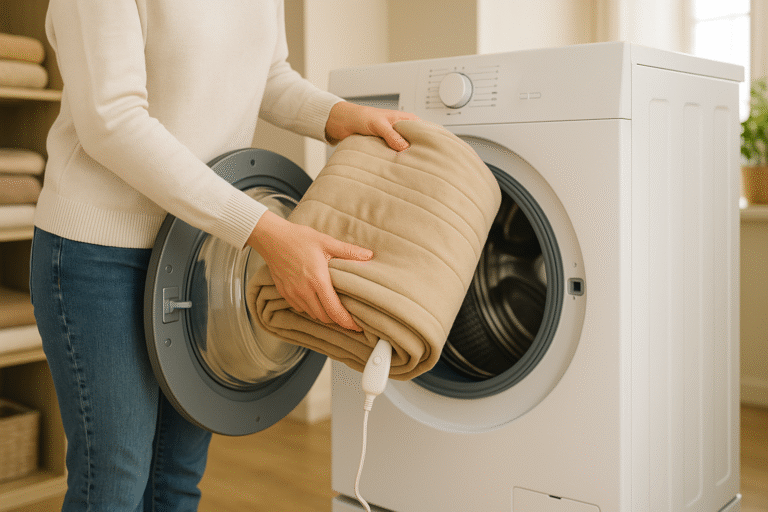
- Use a large, front-loading washer. Top-loaders with agitators can snag and damage the wires.
- Wash the blanket alone to prevent tangling.
- Select a short, gentle cycle (e.g., “delicates”) with a cold or lukewarm water setting.
- Use a small amount of mild, bleach-free detergent.
- Allow the machine to run for only a few minutes for the wash and rinse cycles.
Hand Washing (Safest Method)
- Fill a clean bathtub with cool water and a capful of gentle detergent.
- Submerge the blanket and gently swish it for a few minutes. Let it soak for 15 minutes.
- Drain the soapy water and refill with clean, cool water to rinse.
- Gently press the water out of the blanket. Do not twist or wring it out, as this can break the internal wires.
- Repeat the rinse process until all soap is gone.
3 The Crucial Drying Stage
This is where most damage occurs. High heat is the enemy of a heated blanket.
- Air Drying (Recommended): The safest way to dry is to lay the blanket flat over a clean surface, several drying racks, or a clothesline (draped, not hung by clothespins). Flip it every few hours. It may take 24 hours to dry completely.
- Tumble Drying (Use Extreme Caution): If, and only if, the label allows, you may use a dryer. Set it to the absolute lowest heat setting or an “air fluff” (no heat) cycle. Check it every 20-30 minutes and remove it while it is still slightly damp to finish air drying.
4 Final Safety Inspection
Before plugging your blanket back in, perform one last check. Ensure the blanket and all connection points are 100% dry. Reattach the control module securely. Plug it in, turn it on to a low setting, and monitor it for a few minutes to ensure it’s heating evenly and correctly. If you notice any unusual smells or hot spots, unplug it and discontinue use immediately.
Top-Loader vs. Front-Loader: What’s the Difference?
One of the most frequently asked questions about washing heated blankets is whether to use a top-loading or front-loading washing machine. The answer matters more than you might think, and it all comes down to the mechanics of how each machine type cleans your laundry.
🔵 Front-Loading Washer
Best choice for heated blankets. Front-loaders tumble the blanket gently through the water using gravity and rotation. There is no central agitator, which means significantly less mechanical stress on the delicate heating wires. The drum is also typically larger, giving the blanket room to move freely without bunching. Simply place the blanket loosely in the drum, select the gentle or delicate cycle, and let the machine do the work.
🟢 Top-Loading Washer (No Agitator)
Also acceptable, with care. Modern high-efficiency top-loaders without a central agitator are a reasonable alternative. They use impellers — low-profile cones at the bottom of the drum — to create water movement. These are gentler than traditional agitators. Distribute the blanket evenly around the drum and use the delicate or gentle cycle with a low-speed spin.
⚠️ Avoid Top-Loaders WITH a Central Agitator
Traditional top-loading machines with a tall, finned central agitator are the most dangerous option for heated blankets. The agitator spins and pulls against fabric in a way that can twist and snap the delicate internal heating wires. If a front-loader or agitator-free top-loader is not available, hand washing in a bathtub is strongly preferred over using an agitator-style machine. If you must use an agitator top-loader, wrap the blanket loosely around the agitator (don’t let it bunch up on one side) and use the shortest, most gentle cycle possible.
Regardless of which machine type you use, always keep these settings in mind: cold or lukewarm water (never hot), the lowest spin speed available, and a short cycle duration. Running the cycle for less time than a full wash is a common practice recommended by many heated blanket manufacturers, including Sunbeam, who suggests just a two-minute wash cycle on the delicate setting.
How to Remove Stains from a Heated Blanket
Stains happen — coffee spills, food smudges, pet accidents, and more. The key to removing stains from a heated blanket without causing damage is acting quickly and using the right approach for each stain type. The faster you treat a stain, the easier it is to remove without needing a full wash cycle.
The fundamental rule for stain removal on heated blankets is the same as the wash rule: be gentle, use mild products, and avoid harsh chemicals. Never use chlorine bleach, strong enzyme cleaners, or stain removers that contain solvents, as these can degrade the wire insulation just as easily as they break down stain molecules.
| Stain Type | How to Treat It | What to Avoid |
|---|---|---|
| Coffee / Tea | Blot immediately with a dry cloth to absorb as much liquid as possible. Then dampen a cloth with cool water mixed with a drop of mild dish soap and gently blot the stain from the outside in. Rinse by blotting with a clean, water-dampened cloth. Repeat until the stain lifts. | Do not rub vigorously. Do not use hot water, which can set the stain. |
| Food / Grease | Scrape off any solid material with a spoon. Apply a small amount of mild dish soap directly to the stain and let it sit for 5–10 minutes. Gently blot with a damp cloth. Rinse thoroughly by blotting with clean water. | Avoid commercial degreasers or anything containing solvents. |
| Blood | Use cold water only — never warm or hot, which causes blood to set permanently. Blot with a cold, damp cloth and a small amount of mild soap. For dried blood, apply a paste of baking soda and cold water, let it sit for 20 minutes, then blot away. | Never use hot water. Avoid hydrogen peroxide as it can damage some fabrics. |
| Urine (Pet/Human) | Blot up as much liquid as possible immediately. Mix one part mild white vinegar with two parts cool water and apply with a cloth. Let sit for 5 minutes, then blot dry. Finish by blotting with plain cool water to rinse. Air dry the area completely before use. | Avoid enzyme-based pet urine cleaners unless confirmed safe for heated blankets, as they contain solvents. |
| Wine / Juice | Blot immediately with an absorbent cloth. Do not rub. Apply a small amount of club soda or cool water with mild soap and blot gently. Rinse by blotting with clean water. | Avoid commercial stain removal sprays that contain OxiClean or bleach compounds. |
| Sweat / Body Oils | These build up over time and are best addressed with a full gentle machine wash (if the label allows) rather than spot treatment. For spot treatment, use a diluted mild detergent solution and gentle blotting. | Avoid fabric softener, which leaves residue that attracts more body oils over time. |
| Mud / Dirt | Allow mud to dry completely before treating — wet mud spreads and sets deeper into fibers. Once dry, gently brush off the surface material with a soft brush. Then treat the remaining stain with a damp cloth and mild soap. | Don’t try to clean wet mud — it will make the stain worse. |
💡 The Most Effective Stain Prevention Strategy
The single most effective way to minimize stain damage to your heated blanket is to use a washable blanket cover — a thin, soft blanket or duvet cover placed over the heated blanket that can be removed and washed frequently without any risk to the electrical components. This keeps your heated blanket cleaner for longer and reduces the frequency of full washes. Note: the cover should be breathable and should not be tucked tightly around the blanket, as this can affect heat distribution. Some manufacturers specifically advise against putting any cover over a heated blanket while it is in use; always check your product’s manual first.
The Complete Drying Guide: Can You Put a Heated Blanket in the Dryer?
Drying is the single most dangerous phase of washing a heated blanket — more damage happens here than anywhere else. Many people assume that if a blanket can be washed, it can also be dried in a standard clothes dryer. This is not always true, and assuming it is can result in permanent damage or even a fire hazard.
Here is everything you need to know to dry your heated blanket safely.
Air Drying: Always the Gold Standard
The safest drying method — and the one recommended by most heating blanket manufacturers and laundry experts — is to air dry the blanket flat. The reason flat drying is preferred over hanging is that hanging a wet blanket can cause it to stretch under its own weight, potentially shifting or stressing the internal wiring grid. Here is how to air dry your heated blanket correctly:
- After removing it from the wash, gently support the entire weight of the blanket — do not let it hang or droop from one end.
- Lay it flat across two or more drying racks spaced about a foot apart. This allows air circulation under the blanket as well as above it.
- Alternatively, drape it over a clean shower curtain rod, a deck railing, or the back of several chairs positioned side by side.
- Flip the blanket every few hours to ensure even drying on both sides.
- The blanket may take anywhere from 12 to 24 hours to dry completely depending on ambient temperature and humidity.
- Before reconnecting any electrical components, check that every part of the blanket — including the areas around the wire connection ports — is completely dry to the touch.
Machine Drying: Only When the Label Specifically Permits It
Some heated blankets are rated safe for tumble drying on the lowest heat setting. If your care label specifically states this, here is the safest protocol to follow:
- Set your dryer to the lowest heat setting available — often labeled “Air Fluff,” “No Heat,” or “Delicate.”
- Preheat the dryer for 2 minutes before putting the blanket in, per Sunbeam’s official care instructions.
- Run the dryer for no more than 10–15 minutes at a time.
- Check the blanket after each cycle. Remove it while it is still slightly damp.
- Lay it flat or drape it over a rack to finish air drying — do not put it back in the dryer until it is bone dry.
🚨 Never Use a Commercial Dryer on a Heated Blanket
Commercial dryers found in laundromats and shared laundry facilities run at significantly higher temperatures than home dryers, even on their lowest settings. This excess heat can melt wire insulation, shrink fabric, and permanently damage heating elements in a single cycle. If you do your laundry at a laundromat, always air dry your heated blanket — bring it home damp and lay it flat there. This is non-negotiable for your safety.
Can You Wash a Heated Blanket at a Laundromat?
This is a common question for apartment dwellers and those without in-unit laundry. The answer is a careful yes — for washing only, but never for drying.
The washing machines at most laundromats are typically large-capacity, front-loading commercial units, which are actually well-suited to washing bulky items like heated blankets. Their larger drums allow the blanket to tumble freely, and front-loaders don’t have the central agitator that can damage internal wiring.
However, the drying machines at laundromats are another story entirely. As noted above, commercial dryers run extremely hot and are not safe for heated blankets. Here is the recommended approach for using a laundromat:
- Use the largest front-loading washing machine available — this reduces how tightly the blanket is packed and minimizes stress on the wires.
- Use a mesh laundry bag for extra protection during the wash cycle.
- Select the coldest water temperature and the gentlest, shortest cycle available.
- After the wash cycle, remove the blanket immediately — do not let it sit in a damp washer drum.
- Do not put the blanket in a laundromat dryer. Bring it home damp and air dry it flat.
- If possible, bring a large, clean plastic bag or a laundry bag to transport the damp blanket home without it getting dirty or tangled.
Brand-Specific Washing Instructions for Popular Heated Blankets
Different manufacturers have slightly different recommendations for their specific products. While the general principles in this guide apply universally, here is a summary of the official guidance from the most popular heated blanket brands. Always defer to the most current instructions in your product’s user manual or on the manufacturer’s website, as guidance can be updated over time.
| Brand | Machine Washable? | Water Temp | Cycle | Dryer Safe? | Key Notes |
|---|---|---|---|---|---|
| Sunbeam | ✅ Yes | Cold | Delicate / Gentle, 2 minutes | Low heat, 10 min only — no commercial dryers | Pre-soak 15 mins in cold soapy water. Preheat dryer 2 mins before adding blanket. Stretch gently to original size after wash. |
| Biddeford | ✅ Yes (most models) | Cold / Lukewarm | Gentle / Delicate | Low heat only — brief cycle then air dry | Detach all cords before washing. Inspect cord attachment points for damage before each wash. |
| Beautyrest | ✅ Yes | Cold | Delicate | Low heat tumble | Front loader strongly recommended. Do not use bleach or fabric softener. |
| Bedsure | ✅ Yes (most models) | Cold / 30°C max | Gentle | Air dry preferred; low heat if needed | Wash separately. Use a mild, non-biological detergent. Reshape while damp. |
| Pure Enrichment | Varies by model — check label | Cold | Delicate | Air dry strongly preferred | Some models are spot clean only. Always detach the power module completely before washing. |
| SoftHeat / Perfect Fit | ✅ Yes | Cold | Short, gentle cycle | Low heat, 10–15 min then air dry | Features ultra-thin wire technology which is durable but still requires gentle care. |
| Serta / Degrees of Comfort | ✅ Yes | Cold or warm (not hot) | Gentle / Delicate | Low heat, brief tumble then air dry | Dual controller zones may have separate detachment points — ensure both are removed before washing. |
If your brand is not listed here, the universal safety guidelines in this article apply. When in doubt, hand washing in a bathtub with cold water and mild detergent, followed by flat air drying, is the safest approach for any heated blanket.
How Often Should You Wash a Heated Blanket?
One of the most commonly searched questions on this topic is simply: how often should I actually wash my heated blanket? The answer depends on how you use it, but here is a practical framework to help you decide.
As a general baseline, most heated blanket manufacturers and cleaning experts recommend washing once or twice per season — meaning roughly once at the beginning of the cold season when you take it out of storage, and once at the end before you put it away. This frequency balances cleanliness with the need to minimize mechanical wear on the electrical components from repeated washing.
Factors That May Increase Washing Frequency
- Nightly use directly against skin — If you sleep under your heated blanket without additional bedding between you and the blanket, body oils, sweat, and skin cells accumulate faster. Monthly washing may be more appropriate.
- Pets sharing the bed — Pet dander, fur, and occasional accidents mean you’ll likely want to wash more frequently — potentially every 2 to 4 weeks if pets sleep on or near the blanket regularly.
- Allergies or asthma — Dust mites and allergens accumulate in blanket fibers. For allergy sufferers, more frequent washing (monthly) can make a meaningful difference in nighttime respiratory symptoms.
- Visible soiling or spills — Treat these promptly with spot cleaning and follow up with a full wash as soon as practical.
- Illness — If you’ve been sick and using the blanket heavily, washing it after your illness passes is a good hygiene practice.
Factors That May Decrease Washing Frequency
- Using a blanket cover — A washable cover placed over the heated blanket acts as the primary surface that contacts your skin and collects dirt. Wash the cover weekly and the heated blanket itself only seasonally.
- Occasional or light use — If you only use your heated blanket a few times a month or on particularly cold nights, washing once per season is sufficient.
- Using over other bedding — If the blanket is used over a comforter or duvet rather than directly against skin, it stays cleaner for longer.
📌 Quick Reference: Wash Frequency Guide
Every 2–4 weeks: Nightly direct skin contact use, pet co-sleeping, allergy sufferers.
Once per month: Regular nightly use, moderate pet contact.
Once or twice per season: Occasional use, use over other bedding, or when using a blanket cover.
After illness: Always wash after prolonged illness use, regardless of schedule.
Before storage: Always wash before storing for the warm months to prevent mildew and allergen buildup during storage.
My Electric Blanket Got Wet — What Now?
Accidents happen. Whether a drink was spilled, a pet had an accident, or the blanket was caught in rain — if your electric blanket has gotten wet while it was plugged in or while the controller was still attached, it’s important to respond correctly and quickly.
🚨 Immediate Action: Unplug First, Always
If your heated blanket gets wet while plugged in, unplug it from the wall immediately. Do not touch the plug with wet hands. If the plug is wet and you cannot safely reach the plug directly, turn off the breaker for that outlet. Do not attempt to use the blanket, the controller, or any connected cords until everything has dried completely and been inspected for damage.
Once the blanket is safely unplugged and the power source is disconnected, here is what to do next:
- Detach the controller and all cords from the blanket body immediately and set them aside in a dry location.
- Blot excess liquid from the blanket surface using dry, absorbent towels. Press firmly to absorb moisture but do not twist or wring.
- Lay the blanket flat in a warm, dry, well-ventilated area. Point a fan at it to speed evaporation.
- Allow 24–48 hours to dry before considering any further action. The wire insulation and connector ports need full drying time.
- Inspect the connection ports — the areas where the controller attaches to the blanket — for any signs of corrosion, discoloration, or warping.
- Once fully dry, test the blanket on a low setting for 10 minutes while you stay nearby and observe. Check for any unusual smells, flickering heat indicators, or uneven warmth.
- If the blanket was substantially saturated with liquid (such as from a full drink spill or a pet urinating on it), a full gentle wash — following all the steps in this guide — is recommended to clean the area thoroughly after it has fully dried and been tested.
The good news is that modern heated blankets are designed with water-resistant wire insulation, and many can recover fully from accidental wetness as long as they are dried completely before being used again. The danger is not the water itself — it is running electricity through a wet blanket before it has dried.
Electric Blanket Fire Hazard: What You Need to Know
Electric blanket fires are rare but real. Understanding what causes them — and how to prevent them — is an essential part of responsible ownership. Improper washing is one of the contributing factors, but it’s far from the only one.
According to fire safety organizations, the most common causes of electric blanket fires include:
- Folding or bunching the blanket while in use — When a heated blanket is folded or crumpled while switched on, heat can become concentrated in a small area. This trapped heat can reach temperatures sufficient to ignite fabric or nearby flammable materials.
- Damaged wiring — Frayed, cracked, or pinched wires cause arcing — electrical sparks that can ignite surrounding fabric. This is the most common cause of electric blanket fires. Damaged wiring often results from improper washing (twisting, high heat), rough handling, or simply age.
- Tucking the blanket too tightly under a mattress — Like folding, this traps heat and can lead to dangerous temperature buildup.
- Leaving the blanket on unattended for extended periods — While most modern blankets have automatic shut-off features, older models do not. Never leave a heated blanket running on high heat while you sleep without the auto-off feature active.
- Using a blanket with a damaged controller — A malfunctioning controller can cause uncontrolled heating. If your controller shows signs of damage — cracks, scorch marks, a burning smell, or inconsistent behavior — replace it or the entire blanket.
- Moisture in the wiring — Plugging in a blanket before it is completely dry after washing can cause a short circuit, which in turn can generate enough heat to start a fire.
How Proper Washing Reduces Fire Risk
Washing your heated blanket correctly actually reduces fire risk by keeping the fabric clean and free from oils, dust, and debris that could be more flammable. The danger arises only when washing is done incorrectly — specifically, when high heat from a dryer damages the wire insulation, when twisting causes wire breakage, or when the blanket is plugged in before fully drying. Follow every step in this guide and your blanket will be cleaner and safer, not more hazardous, after washing.
Electric Blanket Safety Tips Beyond Washing
Keeping your heated blanket safe involves more than correct washing. The way you use and store it on a daily basis has an equally significant impact on its safety and longevity. Here are the essential safety habits every heated blanket owner should follow.
During Use
- Never fold or bunch a heated blanket while it is on. Always use it spread flat across your bed or body.
- Never tuck it tightly under the mattress — this can cause the heating elements to overheat. A loose drape over the bed is fine.
- Do not use a heated blanket with additional heavy covers piled on top of it. Insulating the heat source further increases the risk of overheating. Let the heated blanket be the outermost or only cover.
- Do not use a heated blanket as a heating pad — lying directly on top of it for extended periods (rather than underneath it) concentrates heat against your body and the surface beneath, increasing fire risk.
- Inspect the blanket and cord before each use, particularly at the start of each cold season. Look for areas of unusual firmness in the wiring (which could indicate a kinked or broken wire), discoloration of the fabric, or any damage to the connector points.
- Never use pins, safety pins, or sharp objects to attach or secure the blanket. These can pierce the wire insulation and create a shock or fire hazard.
- Keep the cord away from high-traffic areas where it could be repeatedly stepped on or caught in a door — both of which can damage the cord’s insulation over time.
Automatic Shut-Off: Why It Matters
Most modern heated blankets sold today include an automatic shut-off feature — a timer that turns the blanket off after a set period (typically 1, 8, or 10 hours) to prevent overheating if you fall asleep with it on. If you are buying a heated blanket or currently own one without this feature, consider upgrading. The auto-off feature is one of the most significant safety improvements in modern heated blanket design and dramatically reduces the risk of overnight fire incidents.
Replacing an Old Electric Blanket
No matter how well you care for your heated blanket, age is a safety factor. Electrical insulation degrades over time, and the risk profile of a very old blanket is meaningfully higher than that of a newer one. Most safety organizations and manufacturers suggest replacing electric blankets every 5 to 10 years, even if the blanket appears to be functioning normally. If your blanket is more than 10 years old, shows any signs of wear, or was made before modern safety standards became industry-standard, retiring it is the safest choice you can make.
Heated Blanket Safety for Pregnancy, Babies, and Pets
While this guide is primarily about cleaning, it would be incomplete without addressing an important question many users search for: are heated blankets safe for everyone? The answer varies significantly depending on the user.
Heated Blankets and Pregnancy
This is an area where medical professionals generally advise caution. The concern with heated blankets during pregnancy centers on the risk of overheating, which — particularly in the first trimester — has been associated with an elevated risk of certain birth defects related to neural tube development. The electromagnetic field (EMF) exposure from electric blankets is a secondary concern that some researchers have investigated, though the evidence on EMF risk from consumer-grade heated blankets remains inconclusive.
The most widely accepted guidance from obstetricians and midwives is that pregnant women should avoid using a heated blanket while sleeping — particularly in the first trimester — due to the risk of sustained elevated core body temperature. Using a heated blanket briefly to pre-warm a bed before getting in, then turning it off, is generally considered acceptable. However, always consult your own healthcare provider for personalized advice.
Heated Blankets and Babies / Young Children
Heated blankets should never be used by or for infants or toddlers. Young children cannot reliably communicate if they are overheating, and their thermoregulation is less efficient than adults. The risk of overheating — which can be life-threatening in infants — combined with the electrical components make heated blankets entirely inappropriate for young children. For newborns and infants, safe sleep guidelines recommend no loose blankets at all; for toddlers, regular blankets only. Please see our guides on best swaddle blankets for newborns and when babies can sleep with a blanket for age-appropriate warming solutions.
Heated Blankets and Pets
Cats and dogs can coexist safely with heated blankets under the right conditions, but there are important caveats. Pets may scratch, chew, or knead a heated blanket — all of which can damage the internal wiring and create a fire or shock hazard. Never leave a pet unattended with a switched-on heated blanket. If your pet uses the same bed as you and the blanket is on while you sleep, make sure the blanket’s auto-shut-off feature is active. Additionally, pet claws can puncture wire insulation over time; inspect the blanket frequently if you share it with a pet, and replace it at the first sign of wire damage.
Troubleshooting Common Heated Blanket Problems
Even with proper care, issues can arise. Here are solutions to common problems:
Problem: Blanket Stops Working After Washing
Possible Cause & Solution: This usually indicates moisture trapped in the wiring or a loose connection. First, ensure the blanket is COMPLETELY dry—this may take an additional 24 hours in a warm, dry room. Check that the controller is firmly attached. If it still doesn’t work, the internal wiring may have been damaged during the wash, and the blanket should be replaced for safety.
Problem: Uneven Heating or Cold Spots
Possible Cause & Solution: This can occur if the blanket was wrung, twisted, or folded tightly while damp, damaging the heating elements. Unfortunately, this damage is often permanent. For safety, discontinue use of a blanket with uneven heating, as it can pose a fire risk.
Problem: Strange Smell When Turned On
Possible Cause & Solution: A burning smell indicates serious danger—unplug immediately and do not use. A musty smell suggests trapped moisture. Unplug the blanket and allow it to air out completely in a dry, well-ventilated area for several days. Never use a blanket that produces any unusual odors.
Problem: Controller Light Flashes or Blanket Won’t Turn On
Possible Cause & Solution: A flashing controller light is the blanket’s built-in diagnostic warning. It often means the controller has detected a fault — commonly a loose cord connection, residual moisture at a connector point, or a wiring issue. Start by disconnecting the controller from the blanket and reattaching it firmly. Check that the cord plug is secure. If moisture may be the cause, allow another full day of drying before testing again. If the light continues to flash after all of this, consult the manufacturer’s support line or consider replacing the blanket.
Problem: Blanket Feels Stiff or Scratchy After Washing
Possible Cause & Solution: This often happens when too much detergent is used and not fully rinsed out, or when the blanket dried too quickly with too much heat, causing fabric fibers to stiffen. Run the blanket through a second gentle rinse cycle in the washing machine (no detergent) to remove detergent residue. For stiff fabric, a short tumble in the dryer on the no-heat air-fluff setting can help restore softness. Going forward, use half the amount of detergent you used previously and ensure a thorough rinse cycle.
Problem: Blanket Shrank After Washing
Possible Cause & Solution: Shrinkage in a heated blanket is almost always caused by water that was too warm or a dryer setting that was too hot. Unfortunately, significant shrinkage is usually permanent for the fabric. However, while the blanket is still damp after the next wash, gently stretch it back toward its original dimensions from each side and allow it to air dry in that stretched position. For the future, always use cold water and the no-heat dryer setting (or air dry completely).
Problem: Blanket Has a Persistent Musty Odor
Possible Cause & Solution: A musty smell usually means the blanket was stored or used while not fully dry, encouraging mildew growth within the fibers. Run the blanket through a full gentle wash cycle. Add a quarter cup of white vinegar to the rinse cycle — this is a natural, safe deodorizer and mild mildew killer that will not harm wire insulation. After washing, dry the blanket fully before storing or using it. In future, always ensure 100% dryness before folding or storing.
Essential Dos and Don’ts
Keep these simple rules in mind to ensure a long, safe life for your heated blanket.
The DOs
- DO read the care label before every wash.
- DO unplug and detach all cords and controllers.
- DO use a mild detergent and cold water.
- DO choose a short, gentle wash cycle.
- DO use a mesh laundry bag for added protection.
- DO air dry flat for the best and safest results.
- DO ensure the blanket is completely dry before reusing.
- DO store your heated blanket properly between seasons.
- DO inspect for wear and tear regularly.
- DO test on a low setting for 10 minutes after each wash before normal use.
- DO use a front-loading or agitator-free top-loading machine when possible.
- DO treat stains promptly with gentle spot cleaning.
The DON’Ts
- DON’T use bleach or fabric softener.
- DON’T wring, twist, or stretch the blanket.
- DON’T use a high-heat dryer setting.
- DON’T ever iron a heated blanket.
- DON’T dry clean it. The chemicals are hazardous to the wiring.
- DON’T plug it in until it is bone dry.
- DON’T fold or store while damp.
- DON’T use if you notice any damage to wires or controls.
- DON’T wash with other laundry that could tangle with the blanket.
- DON’T use a commercial laundromat dryer.
- DON’T use an agitator-style top-loader if a front-loader is available.
- DON’T ignore flashing controller warning lights after washing.
How to Store a Heated Blanket Properly
Proper storage is just as important as proper washing when it comes to maintaining the health of your heated blanket’s wiring. Many people unknowingly damage their blankets during storage by folding too tightly, storing in damp conditions, or compressing the blanket for months under heavy items.
Step-by-Step Storage Guide
- Wash the blanket before storing it — Body oils and biological material left in the fabric over months can break down fabric fibers and encourage mildew growth. Start storage with a clean, fully dry blanket.
- Ensure it is 100% dry — Even the slightest residual moisture can cause mildew in a closed storage space over months. Give the blanket a full 24 hours of air drying before storage, even if it feels dry to the touch.
- Coil, don’t fold the cords — Wrap the power cord and controller cord loosely in large coils rather than folding them back and forth sharply. Sharp bends in a cord’s insulation, repeated over months, can crack the insulation at the fold points.
- Fold loosely — Rather than folding tightly into a compact square, fold the blanket loosely into thirds or quarters. The goal is to avoid creating sharp, compressed creases in the wiring that could stress the insulation.
- Use a breathable storage bag — A cotton pillowcase, a large linen bag, or a purpose-made blanket storage bag allows some air circulation, preventing moisture buildup. Avoid sealed plastic bags or airtight storage containers, which trap any residual moisture and accelerate mildew.
- Store in a cool, dry location — A linen closet shelf or a bedroom storage ottoman is ideal. Avoid attics (temperature extremes), basements (humidity), or the floor of a closet where it might get damp or be compressed under other items.
- Don’t stack heavy items on top — The sustained pressure of heavy objects can compress the blanket’s internal wiring over months and cause kinks or cracks in the insulation.
🌸 Beginning-of-Season Check: When you retrieve your heated blanket from storage at the start of the cold season, take a few minutes to inspect the entire blanket before plugging it in. Run your hands over the surface and feel for any unusual stiff spots or bumps in the wiring. Check the cord and controller for cracking or discoloration. If everything looks good, plug it in on a low setting and run it for 10–15 minutes as a test before using it all night.
Heated Blanket Lifespan: When to Replace Yours
No heated blanket lasts forever — and knowing when to retire yours is just as important as knowing how to care for it. Using a heated blanket that is past its safe service life is a genuine fire and electrical hazard. Here is a practical guide to understanding how long your blanket should last, and the warning signs that it is time to replace it.
Expected Lifespan by Care Quality
| Care Level | Expected Lifespan | Key Factors |
|---|---|---|
| Excellent care (follows all guidelines) | 7–10 years | Gentle washing, flat air drying, proper storage, regular inspection |
| Average care (mostly correct) | 4–7 years | Occasional dryer use, mild twisting when handling, loose storage |
| Poor care (frequent mistakes) | 1–3 years | Hot water washing, regular dryer use, tight storage, no inspection |
Warning Signs It Is Time to Replace Your Heated Blanket
Regardless of age, replace your heated blanket immediately if you notice any of the following:
- Visible fraying, cracking, or wear on the external cord — The cord is the most exposed electrical component and is the most vulnerable to physical damage.
- Areas of the blanket that feel unusually firm, kinked, or bumpy — This indicates a bent or broken internal wire and is a potential arcing (spark) hazard.
- Burn marks or scorch spots on the fabric surface — This indicates the blanket has already experienced localized overheating and should be considered a fire risk.
- Uneven heating — cold spots or hot spots — Cold spots suggest a broken wire; hot spots suggest a shorted or pinched wire that concentrates heat in a small area, both of which are fire risks.
- A burning or melting smell when the blanket is in use — This is an urgent warning sign. Unplug immediately and do not use again.
- The controller flashes, fails to respond, or behaves erratically after inspection and reconnection — A faulty controller cannot regulate heat safely and should not be used.
- The blanket is more than 10 years old — Even without visible damage, the materials used in wire insulation degrade with age. A 10-year-old blanket has an inherently higher risk profile than a newer one.
When disposing of an old electric blanket, do not simply throw it in the regular trash. The electrical components make it unsuitable for standard landfill. Many municipalities offer small appliance recycling programs that can accept heated blankets. Contact your local waste management service for guidance.
Frequently Asked Questions
How often should I wash my heated blanket?
Unless visibly soiled, most heated blankets only need washing once or twice per season. Frequent washing increases wear on the electrical components. Using a removable, washable cover can help keep it clean between washes.
Can I wash an electric blanket with automatic shut-off?
Yes, but with extra caution. These blankets have more sensitive electronics. Always follow the manufacturer’s instructions precisely. Hand washing is often the recommended method for blankets with advanced safety features.
What’s the difference between washing a heated blanket and a regular blanket?
The key difference is the electrical wiring. Regular blankets can withstand more agitation and higher temperatures. Heated blankets require gentler cycles, cold water, and no-heat drying to protect the delicate heating elements from damage.
How long do heated blankets typically last with proper care?
With proper washing and storage, a quality heated blanket can last 5-10 years. However, if you notice any signs of wear, fraying wires, or inconsistent heating, it’s time to replace it for safety reasons.
Can I wash a heated blanket if the cord doesn’t detach?
If the power cord does not fully detach from the blanket body, hand washing is your safest option. Fill a bathtub with cool water and mild detergent. Submerge only the fabric portion of the blanket — keep the cord connection area and plug completely out of the water. Gently swish, rinse, and press out excess water. Air dry flat with the cord draped over the tub edge to keep it elevated and dry. Do not machine wash a blanket with a non-detachable cord unless the manufacturer’s instructions explicitly permit it.
Is it safe to sleep with a heated blanket on all night?
For healthy adults, sleeping with a heated blanket on all night is generally safe — provided the blanket is in good condition, used flat (not bunched or folded), and equipped with an automatic shut-off timer. The auto-off feature is especially important for nighttime use, as it prevents the blanket from running for extended periods while you are asleep and unaware of any potential issues. If your blanket does not have an auto-off feature, consider upgrading to a model that does, or use the blanket only to pre-warm your bed before turning it off to sleep.
Can I use fabric softener when washing a heated blanket?
No. Fabric softener should not be used on heated blankets. The conditioning agents in fabric softener can coat the heating wire insulation and potentially degrade it over time. Fabric softener also leaves a residue in the blanket’s fibers that can attract more dirt and body oils between washes. If you want a softer feel, add a quarter cup of white vinegar to the rinse cycle — it naturally softens fabric without leaving residue or affecting the wiring.
What type of detergent is best for washing a heated blanket?
A mild, liquid laundry detergent is ideal. Look for products labeled “gentle,” “delicates,” or “free and clear.” Liquid detergent dissolves more easily in cold water than powder detergent, reducing the risk of undissolved residue getting trapped in the blanket’s fibers. Use roughly half the amount you would for a normal load — the blanket does not need much detergent to get clean, and excess soap is difficult to rinse out completely.
Can I wash a Sunbeam heated blanket in the washing machine?
Yes — Sunbeam is one of the most popular heated blanket brands and their blankets are machine washable. Sunbeam’s official instructions call for pre-soaking the blanket for 15 minutes in mild, cold soapy water, then running a delicate or gentle cycle for just two minutes. Rinse in fresh cold water and spin dry. For drying, Sunbeam permits low-heat tumble drying for 10 minutes only (preceded by a 2-minute dryer preheat), followed by removing the blanket while still slightly damp and hanging to finish air drying. No commercial dryers.
My heated blanket controller got wet — is it ruined?
Not necessarily, but you must not use it until it has dried completely. Remove the controller from the blanket immediately and place it in a dry, well-ventilated area. Do not place it in front of a heater or use a hair dryer on it — let it air dry naturally at room temperature for at least 48–72 hours. Once dry, reconnect it to the blanket and test briefly on a low setting. If it functions normally without unusual smells or behavior, it is likely fine. If it flashes error codes, behaves erratically, or produces any smell, discontinue use and contact the manufacturer about a replacement controller.
Can I wash a heated throw the same way as a full-size heated blanket?
Yes, the same principles apply. Heated throws are typically smaller and lighter, which actually makes them somewhat easier to manage in a washing machine. Follow the same steps: check the care label, detach all cords, use cold water on a gentle cycle, air dry flat or use a brief low-heat tumble if permitted. Because they are smaller, heated throws dry faster than full-size blankets — typically 8–16 hours for air drying, depending on ambient conditions.
Does washing a heated blanket void the warranty?
Washing according to the manufacturer’s care instructions will not void your warranty — in fact, most manufacturers provide washing instructions for exactly this reason. However, washing in a way that violates the care instructions (for example, using hot water when cold is specified, or machine washing a hand-wash-only blanket) can void the warranty and also create a safety risk. Keep a photo of your care label on your phone as a quick reference before each wash.
Recommended Care Products
Using the right tools can make all the difference. Here are a few products perfect for safely caring for your heated blanket and other delicate items.

Woolite Delicates Detergent
Specifically designed for gentle cycles and hand washing. It cleans effectively without the harsh chemicals that can damage delicate fabrics and wiring insulation.
Check Price on Amazon
Sunbeam Royal Mink Heated Blanket
Looking for a new, reliably washable blanket? This Sunbeam model is a popular choice known for its plush feel and clear machine washable and dryer-safe instructions.
Check Price on AmazonBeyond the Wash: Total Blanket Care
Proper cleaning techniques are essential for all types of specialty blankets. The principles of gentle cycles and low heat are a good starting point, but every blanket has unique needs. For instance, the process for washing a weighted blanket is different due to its heavy filling. And when it comes to infant safety, it’s critical to know that heated blankets are never appropriate for babies; instead, learn about the best swaddle blankets and the right time for them by consulting our guide on when babies can sleep with a blanket. From your summer beach blanket to the throws stored on your blanket ladder, proper care ensures longevity.
| Step | Action | Key Point |
|---|---|---|
| 1 | Read Label & Inspect | Safety first; check for washability and damage. |
| 2 | Unplug & Detach Controls | Never submerge electrical parts. |
| 3 | Wash Gently | Use a delicate cycle with cold water and mild soap. |
| 4 | Dry Without Heat | Air dry flat (best) or tumble dry on “air fluff” setting. |
| 5 | Final Safety Check | Ensure 100% dryness before plugging in. |
Important Safety Reminder
Heated blankets are electrical appliances. Improper care can create fire hazards or electrical shock risks. Always prioritize safety over convenience. If your blanket shows any signs of damage—frayed wires, discolored fabric, hot spots, or unusual smells—discontinue use immediately and replace it. Your safety and the safety of your home are more important than any blanket.
For those with specific health conditions or concerns about electric blanket safety, consider exploring alternatives like microwaveable heating pads or traditional blankets for warmth during colder months.