
How to Wash a Weighted Blanket: The Definitive Guide for 2026
Your weighted blanket is an investment in comfort and calm. But its heavy, delicate nature can make laundry day intimidating. This battle-tested guide provides everything you need to know to wash your weighted blanket safely, protecting both the blanket and your washing machine.
So, can you wash a weighted blanket? At Blanket Insider, it’s a question we get all the time. The answer is a resounding yes—if you do it correctly. Unlike a standard throw, a weighted blanket’s internal filling of glass beads or poly pellets requires a specific cleaning process to prevent clumping, ripping, or damage. Tossing it in the wash without a plan can lead to a lumpy, unusable mess.
We’ve washed countless weighted blankets, from light cotton models to heavy minky giants. We know what works, what doesn’t, and why. This is our definitive guide on how to wash a weighted blanket, designed to give you the confidence to clean yours effectively and safely.
The Quick Answer: Yes, But Follow These Rules
Most weighted blankets are washable. For the best results, follow these four non-negotiable rules:
- Always Read the Care Label First: This is your most important instruction manual.
- Use a Large, Front-Loading Washer: If your blanket is over 15 lbs, use a commercial machine at a laundromat.
- Wash on a Cold, Gentle Cycle: Use a mild detergent and wash the blanket alone.
- Air Dry Flat for Safety: This is the safest method. If the label allows, tumble dry on the lowest possible heat or an “air fluff” setting.
Pre-Wash Checklist: The 3 Steps Before You Start
A few minutes of preparation will save you from costly mistakes. Complete this checklist before your blanket goes anywhere near water. This preparation phase is often overlooked but is the most critical part of the process to ensure longevity. Rushing into a wash without checking these details can lead to catastrophic failure of the blanket’s integrity, leaks of the weighted material, or damage to your washing machine.
First, inspect the blanket thoroughly for any existing damage. Look for loose threads, small tears, or weak spots in the stitching. The agitation of a washing machine, even on a gentle cycle, can easily turn a tiny pinhole into a massive tear, spilling thousands of tiny glass beads or plastic pellets into your washer’s drum and drainage system. Repair any damage with a needle and thread before washing. If you cannot repair it yourself, take it to a professional tailor or dry cleaner.
Next, consider the type of stains you are dealing with. If the blanket has specific stains like coffee, wine, or pet accidents, pre-treating them is essential. Use a gentle stain remover and test it on a small, inconspicuous area of the fabric first to ensure it doesn’t cause discoloration. Avoid harsh scrubbing, as this can weaken the fabric fibers. Gently dab the stain remover onto the affected area and let it sit for the recommended time before washing.
🏷️ Step 1: Read the Care Label
The manufacturer’s tag is your ultimate guide. It will specify if the blanket is machine washable, the safe water temperature, and the recommended drying method. Do not deviate from these instructions. Manufacturers test their products rigorously, and their guidelines are there to prevent damage.
Look for symbols indicating water temperature (usually a bucket with a number or dots), bleaching instructions (a triangle), and drying instructions (a square with a circle). If the tag says “Spot Clean Only,” do not attempt to machine wash it. If the tag is missing, check the manufacturer’s website or err on the side of caution and hand wash.
🔬 Step 2: Identify Materials
Know what you’re cleaning. A cotton cover with glass beads can handle a machine wash. A wool cover or a blanket with organic fillers (like rice or sand) is likely spot-clean or hand-wash only to prevent mold and damage. Different fabrics react differently to water and agitation.
Synthetic fabrics like polyester or minky are generally more durable and stain-resistant but can melt under high heat. Natural fibers like cotton or bamboo are breathable but may shrink if washed in hot water. The filler material is equally important; glass beads are heat-resistant and durable, while plastic pellets can melt, and organic fillers will rot if they get wet.
⚖️ Step 3: Check the Weight
This is crucial for your washing machine’s health. A wet weighted blanket is extremely heavy. If your blanket weighs more than 15-20 pounds, it’s too heavy for a standard home washer and must be washed in a large-capacity commercial machine.
Overloading your home washing machine can strip the gears, burn out the motor, or throw the drum off balance, leading to costly repairs. A wet 20lb blanket can weigh upwards of 40-50lbs. Commercial machines at laundromats are built to handle this kind of load and have stronger motors and suspension systems.
The Washing Process: Machine vs. Hand Washing
If your blanket has a removable cover, wash it separately like a normal duvet. This makes the process much easier and extends the life of the heavy inner blanket. For the inner blanket, choose the method below based on your pre-wash check. Always prioritize the gentlest method that will effectively clean your blanket.
When washing the inner blanket, remember that the goal is to refresh it and remove surface dirt and allergens, not to subject it to a heavy-duty scrub. The weighted beads inside act like an abrasive during the wash cycle, so minimizing agitation is key to preserving the fabric that holds them in place. Using the right amount of water is also critical; ensure the blanket is fully submerged but not drowning in excess water which adds unnecessary weight.
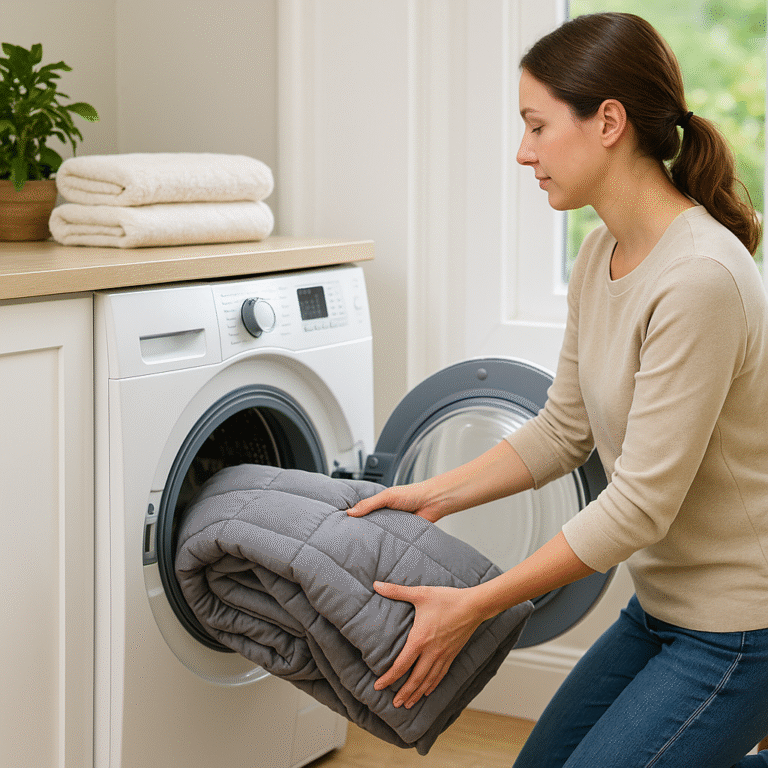
Machine Washing (for blankets <15 lbs)
Machine washing is convenient but requires strict adherence to protocol to avoid damage. Ensure your machine is in good working order before starting.
- Use a Front-Loader: A top-loader’s central agitator can rip the blanket’s stitching and cause the filler to leak. If you only have a top-loader with an agitator, consider hand washing or using a laundromat.
- Wash Alone: This ensures a balanced spin cycle. Adding other heavy items like towels can cause the load to become unbalanced, while lighter items can get trapped and damaged.
- Select a Gentle Cycle: Use cold or lukewarm water on a “delicate” or “hand wash” setting. High spin speeds can force the beads through the fabric, so choose a low or medium spin speed.
- Use Mild Detergent: Add a small amount of a gentle, bleach-free liquid detergent. Avoid fabric softeners as they can build up on the fabric and affect breathability. Powdered detergents may not dissolve fully in cold water and can leave a gritty residue.
- Add an Extra Rinse: This helps remove all soap residue from the dense material. Detergent trapped inside the blanket can cause skin irritation and degrade the fabric over time.
Once the cycle is complete, remove the blanket immediately. Leaving it wet in the machine for too long can lead to mold and mildew growth, especially in the dense filler material.
Hand Washing (for delicate or heavy blankets)
Hand washing is the safest method for almost all weighted blankets, giving you complete control over the agitation and water temperature.
- Fill a Clean Bathtub: Use cool water and a small amount of mild detergent. Ensure the tub is clean of any cleaning chemical residue before filling.
- Submerge & Soak: Gently agitate the blanket with your hands to distribute the soap. Avoid scrubbing vigorously. Let it soak for 15-30 minutes to allow the detergent to penetrate the fibers.
- Drain & Rinse: Drain the soapy water and refill with clean, cool water. Gently press on the blanket to rinse. Repeat this drain-and-fill process 2-3 times until the water runs clear and all suds are gone.
- Remove Excess Water: Do not wring or twist the blanket, as this distorts the shape and stresses the seams. Gently fold and press it against the side of the tub to remove water. You can also roll it in large, dry towels to absorb moisture, repeating with fresh towels as needed.
Hand washing is labor-intensive but guarantees that the weighted beads stay in their pockets and the fabric remains intact. It is the only recommended method for blankets with organic fillers or very delicate fabrics.
The Drying Process: Patience is a Virtue
This is the most critical stage. Improper drying can lead to mildew, mold, or heat damage to the blanket’s filling. Patience is absolutely essential here; rushing the process with high heat is the fastest way to ruin your blanket. A damp weighted blanket is a breeding ground for bacteria, so ensuring it is 100% dry before use is non-negotiable.
The drying process can take significant time depending on the humidity and temperature of your environment. Plan your wash day accordingly, ideally when you have a couple of sunny, dry days ahead. If drying indoors, ensure good air circulation by using fans or opening windows. Do not store the blanket until you are absolutely certain it is completely dry throughout, including the inner weighted pockets.
Air Drying Is Always the Safest Method
Lay the blanket flat over a clean surface, several drying racks, or a sturdy clothesline. Flip it every few hours to ensure it dries evenly and to prevent the filler from settling in one corner of the pockets. This can take 24-48 hours, but it is the best way to protect your investment. Gravity is your enemy here; hanging a wet weighted blanket by one end can stretch the fabric and distort the shape permanently. Support the weight evenly.
If the care label allows for tumble drying, only use the lowest heat or “air fluff” setting. High heat can melt plastic pellets, fusing them together into hard lumps, and weaken the fabric fibers, leading to tears. Check the blanket every 20-30 minutes during the cycle to fluff it and ensure it’s not getting too hot. Add a few wool dryer balls to help circulate air and fluff the blanket gently.
Our Recommended Cleaning Tools
Using the right products ensures a safe and effective clean without harsh chemicals. Your choice of detergent and tools can make the difference between a refreshed blanket and a ruined one. Avoid standard commercial detergents with brighteners and heavy fragrances, as these can irritate sensitive skin and degrade specialized fabrics over time.
When selecting a detergent, look for “free and clear” options that are hypoallergenic and free from dyes and perfumes. Enzymes in some biological detergents can be effective on stains but check that they are safe for the specific fabric of your blanket (e.g., enzymes can damage wool and silk). Additionally, investing in protective gear like a large laundry bag can add a layer of safety against mechanical damage during the wash cycle.

Seventh Generation Free & Clear
This plant-based, hypoallergenic detergent is tough on dirt but gentle on fabrics and skin. Perfect for a deep clean without harsh chemicals. It rinses out easily, leaving no residue behind.
Check Price on Amazon
Woolite Delicates
Ideal for hand washing or delicate cycles. Woolite is specifically formulated to protect fabrics from shrinking, stretching, and fading, making it a safe choice for any washable blanket.
Check Price on Amazon
Large Mesh Laundry Bag
For smaller weighted blankets (like those for children), washing inside a large mesh bag can provide extra protection against snagging on the washer drum and keeps the blanket contained.
Check Price on AmazonCommon Mistakes to Avoid
Steer clear of these common pitfalls to keep your blanket in perfect condition. We’ve seen many blankets ruined by simple, avoidable errors. Understanding what not to do is just as important as knowing the correct steps.
One major mistake is ignoring the drying phase. Many people wash the blanket correctly but then ruin it by blasting it with high heat in the dryer. Another is using too much detergent, thinking more soap equals cleaner. In reality, excess soap is hard to rinse out of the dense filler, leading to a stiff, scratchy blanket that attracts more dirt. Finally, never iron a weighted blanket. The heat from the iron will almost certainly melt the internal pellets and damage synthetic fabrics instantly.
A Note for Parents
While some older children benefit from weighted blankets under occupational therapist guidance, it’s crucial to know they are **not safe for infants or toddlers.** The weight can restrict breathing and movement. Always follow age and weight guidelines strictly. For information on safe sleep practices for babies, please consult our guide on when a baby can sleep with a blanket.
Frequently Asked Questions
Q: What if my blanket smells after washing?
This usually means it’s not fully dry on the inside or mold has started to grow. Let it air dry in a well-ventilated area or direct sunlight for another 24 hours. If the smell persists, you can sprinkle it with baking soda, let it sit for an hour to absorb odors, and then vacuum it off. For mildew, a wash with vinegar may be required if the fabric allows.
Q: How often should I wash the inner blanket?
If you use a removable duvet cover (and wash it regularly), you should only need to wash the inner weighted blanket 2-4 times per year to keep it fresh. However, if you use the blanket directly against your skin or if there are spills, wash it as needed, following the care instructions.
Q: Can I dry clean my weighted blanket?
Generally, no. The harsh chemicals used in dry cleaning can damage the synthetic pellets and certain fabrics. Always check the care label, but most manufacturers recommend avoiding dry cleaning unless specifically stated otherwise.
Q: What do I do if my blanket leaks beads?
Stop using the blanket immediately to prevent beads from scattering everywhere, which can be a choking hazard for pets and kids. If the hole is small, sew it shut with a tight stitch. If the damage is extensive or you aren’t comfortable sewing, contact the manufacturer or a professional repair service.
Q: Can I use vinegar to wash my weighted blanket?
Yes, white vinegar is an excellent natural softener and odor remover. You can add half a cup to the rinse cycle instead of fabric softener. It helps strip away detergent residue and leaves the fabric feeling soft without waxy buildup.
Q: Is it safe to wash a 20lb blanket at home?
Most standard home washing machines have a weight limit that includes the water weight. A 20lb blanket becomes significantly heavier when wet. Unless you have a heavy-duty, large-capacity machine rated for this load, it is much safer to take it to a laundromat.
Q: My blanket has stains that won’t come out. What now?
If gentle stain removers fail, consult a professional cleaner. Avoid using bleach or harsh scrubbing. Sometimes, a persistent stain is better than a damaged blanket. Using a duvet cover can hide the stain and prevent future ones.
Q: How do I store my weighted blanket?
Store your blanket in a cool, dry place. Avoid hanging it, as this stretches the fabric. Fold it neatly and place it in a breathable cotton bag or on a shelf. Do not store it in plastic if possible, as this can trap moisture and cause mildew.
Q: Can I wash a weighted blanket with rice or corn filling?
No. Organic fillers like rice, corn, or beans will absorb water, swell, and rot, leading to mold and a ruined blanket. These must be spot cleaned only. Do not submerge them in water.
Q: Why is my blanket lumpy after washing?
Clumping usually happens if the blanket wasn’t dried flat or if the internal pockets were damaged. Try shaking the blanket out vigorously to redistribute the beads. If the pockets have burst, the beads may have shifted permanently, requiring repair.
The Final Word: Care for Your Calm
Properly caring for your weighted blanket ensures it remains a clean, effective, and long-lasting tool for comfort and relaxation. While the process requires more care and attention than washing a standard throw, it’s straightforward once you know the rules. Always prioritize the instructions on the care label, and when in doubt, choose the gentlest method possible—hand washing and air drying are your best friends for longevity.
This same principle of mindful care applies to all your comfort items, from a specialized heated blanket to the simple swaddle for a newborn, and even the blanket you take to the beach. By caring for them well, they can continue to bring you comfort for years to come, whether in use or stored neatly on a blanket ladder. Remember, a well-cared-for blanket is a safe and cozy blanket.