
Heated Blanket vs. Space Heater: The Ultimate Winter Warmth Showdown
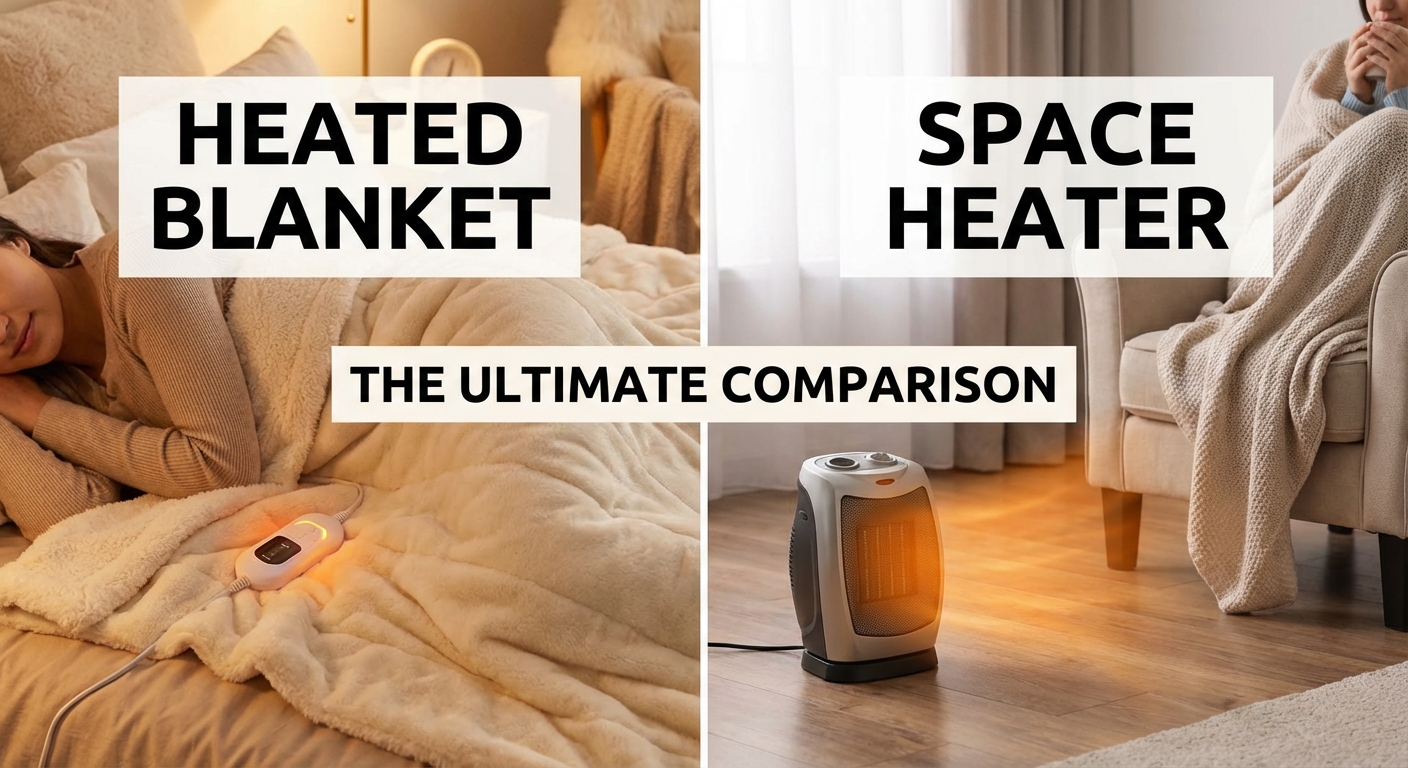
As winter settles in and the mercury drops, the eternal battle for thermal comfort begins in homes around the world. For many, cranking up the central thermostat is simply too expensive or inefficient, leading to the search for localized heating solutions. This brings us to the two heavyweight champions of personal warmth: the heated blanket and the space heater.
Choosing between a heated blanket vs. a space heater isn’t just about getting warm; it’s a decision that impacts your electricity bill, your safety, your sleep quality, and even your skin health. While space heaters are designed to warm the air around you, heated blankets focus on direct contact warmth. But which one reigns supreme for your specific lifestyle?
At Blanket Insider, we take comfort seriously. Whether you are trying to stay warm in a drafty dorm room or looking for the perfect setup for a movie night, we’ve analyzed every angle. In this comprehensive guide, we will break down the costs, safety features, efficiency, and comfort levels of both contenders to help you decide which winter warrior deserves a spot in your home.
Table of Contents
- At a Glance: The Tale of the Tape
- Contender 1: The Heated Blanket
- Contender 2: The Space Heater
- Round 1: The Cost Showdown (Energy Efficiency)
- Round 2: Safety Concerns
- Round 3: Comfort & Health Impact
- Which is Better For You? Usage Scenarios
- Maintenance: Cleaning and Storage
- Complete Buying Guide 2026
- Smart Heated Blankets and Smart Space Heaters
- Types of Heated Blankets
- Types of Space Heaters in Detail
- Heated Blanket Health Benefits
- Space Heater Room Size Guide
- Best Heated Blankets for Couples
- Space Heater Guide for Apartments
- Heated Blanket for Camping and Outdoors
- Space Heater for Bathroom Use
- Winter Energy Saving Tips
- Heated Blanket EMF and Radiation Concerns
- Top Brands Comparison
- Frequently Asked Questions
- Final Verdict: Who Wins?
At a Glance: The Tale of the Tape
Before we dive deep into the mechanics and economics, here is a quick breakdown of how these two heating methods compare side-by-side. This comparison table gives you the essential information at a glance, helping you make a quick decision based on your primary needs.
| Feature | Heated Blanket (Electric Blanket) | Space Heater (Ceramic/Oil/Fan) |
|---|---|---|
| Primary Heating Method | Direct conduction (Contact heat) | Convection or Radiation (Air/Ambient heat) |
| Energy Consumption | Very Low (60W – 100W avg) | High (750W – 1500W avg) |
| Cost to Run (Est.) | 1–2 cents per hour | 20–30 cents per hour |
| Warm-up Time | Fast (5–10 minutes) | Varies (Instant to 30 mins) |
| Portability | High (Foldable, lightweight) | Medium (Bulky, requires floor space) |
| Safety Risk | Overheating, wiring damage | Fire hazard, tripping, burns |
| Best For | Sleeping, lounging on the couch | Warming a small room, home office |
| Wattage Range | 60-200 watts | 750-1500 watts |
| Weight | 2-5 lbs (varies by size) | 5-25 lbs |
| Coverage Area | Individual (1-2 people) | Small to medium room (150-400 sq ft) |
| Noise Level | Silent | Low to moderate (fan noise) |
| Humidity Impact | None | Can dry air significantly |

Want the best of both worlds? Check out top-rated options on Amazon.
See Best Heated Blankets on AmazonContender 1: The Heated Blanket
The heated blanket, often referred to as an electric blanket, is essentially a blanket with integrated electrical heating wires. These wires are insulated and woven into the fabric—often fleece, microfiber, or sherpa—to provide direct warmth to the user. Unlike older models that were stiff and potentially hazardous, modern heated blankets are plush, smart, and incredibly safe.
How It Works
When plugged in, electricity flows through the internal wires, generating resistance heat. Because the blanket is draped directly over your body, the heat is trapped immediately against your skin and clothes, creating a micro-climate of warmth. This is known as conduction heating. You don’t need to heat the air in the room; you only need to heat yourself.
The principle behind heated blankets is elegantly simple. The heating elements—thin, flexible wires—are distributed evenly throughout the fabric. These wires are typically made of alloy materials like nickel-chromium that have high electrical resistance. When current passes through them, the resistance converts electrical energy into thermal energy. Modern heated blankets use ultra-thin wires (often less than 1mm in diameter) that are virtually undetectable to the touch, making the blanket feel just as soft and cozy as a traditional throw.
The controller unit serves as the brain of the operation. It regulates voltage to the heating wires, allowing you to select different heat levels. Most controllers feature 6-10 heat settings, giving you precise control over your warmth level. The controller also houses safety mechanisms including automatic shut-off timers (typically 8-10 hours), overheat sensors, and thermal cutoff switches that immediately cut power if temperatures exceed safe levels.
Variations and Styles
Heated blankets come in various forms to suit different needs:
- Standard Electric Throw: Perfect for the couch. If you are looking for cozy blankets for the living room, this is the tech-enhanced version. These typically measure 50×60 inches and feature single controllers.
- Bedding Size (Twin to King): Designed to stay on the bed all night, often with dual controls for partners. Full-size heated blankets (72×84 inches) are the most popular choice for couples, allowing each person independent temperature control.
- 12V Travel Blankets: These plug into car cigarette lighters, making them essential for a cozy car road trip. They typically operate at lower wattages (40-60W) and are designed for safety in vehicle environments.
- Heated Mattress Pads: These go under you rather than over. Check out our comparison of heated blanket vs. heated mattress pad for more details.
- USB Heated Blankets: Powered by USB connections, these are perfect for working at a desk or using with a power bank. They typically output 5-10W and provide gentle warmth.
- Battery-Operated Heated Blankets: Cord-free convenience using rechargeable lithium-ion batteries. Great for outdoor events, stadiums, and camping. Battery life typically ranges from 2-6 hours depending on heat setting.
- Weighted Heated Blankets: Combining the benefits of weighted blankets with heating elements for enhanced relaxation and anxiety relief. These dual-function blankets provide deep pressure stimulation along with soothing warmth.
- Heated Blanket Wraps/Wearables: Designed as wearable garments like ponchos, vests, or wraps that allow hands-free warmth while maintaining mobility.
Materials Used in Modern Heated Blankets
The fabric choice significantly impacts both comfort and heating efficiency:
- Fleece: Lightweight, soft, and excellent heat retention. The most common material for affordable heated blankets.
- Sherpa: Plush and ultra-soft with a wool-like texture on one side. Provides excellent insulation and a luxurious feel.
- Microfiber: Durable, machine-washable, and resistant to wrinkles and fading. Ideal for everyday use.
- Bamboo: Naturally hypoallergenic, moisture-wicking, and breathable. Perfect for those with sensitive skin.
- Cotton: Natural, breathable, and suitable for those who prefer organic materials. However, cotton doesn’t retain heat as well as synthetic options.
- Mink or Velvet: Premium options that provide a silky-smooth feel and superior warmth. Often found in high-end models.
✅ Pros of Heated Blankets
- Incredible Efficiency: Uses a fraction of the power of a heater.
- Targeted Warmth: Heats you, not the empty corners of the room.
- Therapeutic Benefits: Heat helps relax muscles and soothe arthritis.
- Smart Features: Auto-shutoff and multiple heat settings are standard.
- Cost-Effective: Operating costs are negligible—just pennies per hour.
- Silent Operation: No fans or motors means zero noise disturbance.
- Portable: Easy to fold, store, and take to different rooms.
- No Humidity Change: Doesn’t dry out the air or your skin.
- Versatile Use: Works on couches, beds, offices, and even cars.
- Dual Controls: Couples can each set their preferred temperature.
❌ Cons of Heated Blankets
- Restricted Movement: You are tethered by a cord.
- Wiring Texture: Sensitive sleepers might feel the wires inside.
- Maintenance: Washing requires care (see our guide on how to wash a heated blanket).
- Uneven Heating: Some areas may feel warmer than others.
- Limited Coverage: Only warms the person, not the room.
- Wear Over Time: Heating elements can degrade with excessive folding.
- Not Ideal for Pets: Some pets may chew cords or damage wiring.
- Warranty Limitations: Improper use may void manufacturer warranties.
Contender 2: The Space Heater
The space heater is a compact appliance designed to heat a single room or a specific area. Unlike central heating which pushes air through an entire house, a space heater focuses its energy output on a smaller footprint. They are the go-to solution for drafty offices, basements, or rooms with poor insulation.
Space heaters have evolved significantly over the past decade. Modern units incorporate advanced safety features, energy-efficient heating elements, and smart connectivity options that allow you to control them from your smartphone. Whether you’re looking for a budget-friendly ceramic heater for your home office or a premium oil-filled radiator for your living room, there’s a space heater designed specifically for your needs.
Types of Space Heaters
Not all space heaters are created equal. The technology used changes how the heat is delivered:
- Ceramic Heaters: Pass electricity through a ceramic plate. A fan then blows the hot air out. These are fast and safe but can dry out the air. They typically feature a PTC (Positive Temperature Coefficient) ceramic element that is self-regulating—as the element heats up, its resistance increases, naturally limiting temperature output.
- Oil-Filled Radiators: Look like old-school radiators. They heat oil inside sealed fins. They are silent and retain heat well but take longer to warm up. The thermal oil acts as a heat reservoir, continuing to radiate warmth even after the unit is turned off.
- Infrared Heaters: Emit light that heats objects (and people) directly, similar to the sun, rather than heating the air. Infrared heaters are particularly efficient in spaces where conventional heaters struggle—drafty rooms, high-ceilinged areas, or partially enclosed spaces like garages.
- Propane Heaters: Generally for outdoor use or emergencies, though indoor-safe models exist. They are extremely powerful and don’t require electricity, making them ideal for power outages.
- Micathermic Heaters: Combine convection and radiant heating using mica panels. They heat up quickly and distribute warmth evenly throughout the room.
- Convection Heaters: Use natural air circulation to warm a room. Cold air is drawn in at the bottom, heated, and released at the top.
- Baseboard Heaters: Install along the base of walls and provide consistent, even heating. Often used as permanent supplemental heating.
- Panel Heaters: Wall-mountable units that provide flat-panel radiant heat. Ideal for modern home aesthetics.
The Ambient Advantage
The biggest advantage of a space heater is that it raises the ambient temperature. If you are sitting at a desk typing, a heated blanket might restrict your arms. A space heater under the desk keeps your legs warm while leaving your hands free. For students setting up a compact dorm desk setup, a small ceramic heater is often a staple.
Unlike heated blankets that work through direct contact, space heaters warm the air itself. This creates a zone of comfort that envelops you completely—your hands, face, and all exposed areas benefit from the warmth. This ambient heating is particularly valuable in situations where you need to move freely around a space, such as working in a home office, cooking in the kitchen, or getting ready in the bathroom.
Key Specifications to Understand
When shopping for a space heater, you’ll encounter several technical specifications:
- BTU (British Thermal Units): Measures heating output. Most space heaters produce 3,000-5,000 BTUs. As a rule of thumb, you need approximately 10 BTUs per square foot.
- Wattage: Standard household outlets support up to 1,500 watts. This limits most space heaters to this maximum output.
- Coverage Area: Specified in square feet. A 1,500W heater typically covers 150-200 sq ft effectively.
- EER (Energy Efficiency Ratio): Higher EER means more heat per watt. Look for heaters with EER above 3.0.
- Thermostat Settings: Built-in thermostats allow you to set a target temperature. The heater cycles on and off to maintain it.
- Safety Certifications: UL Listed, ETL Listed, or CSA Certified indicates the heater has passed rigorous safety testing.
✅ Pros of Space Heaters
- Room-Filling Warmth: Makes the air comfortable to breathe and move in.
- Freedom of Movement: No wires attached to your body.
- Shareable: Multiple people in the room benefit from one unit.
- Fast Acting: Fan-forced models circulate warm air instantly.
- Versatile Placement: Can be placed on floors, desks, or mounted on walls.
- Whole-Room Coverage: Warms every corner, not just one spot.
- Works for Pets: Keeps the entire room comfortable for your furry friends.
- Emergency Backup: Propane models work without electricity during outages.
❌ Cons of Space Heaters
- High Energy Cost: Can significantly spike electric bills.
- Fire Risk: High wattage generates intense heat; tipping over is a hazard.
- Dry Air: Can dry out skin, eyes, and sinuses.
- Noise: Fan models can be distracting.
- Bulky Storage: Rigid design takes up significant closet space.
- Circuit Overload: Can trip breakers in older homes.
- Burn Risk: Hot surfaces can burn children or pets.
- Uneven Heating: Areas far from the heater remain cold.

Round 1: The Cost Showdown (Energy Efficiency)
When comparing a heated blanket vs. space heater, the most significant difference lies in your monthly utility bill. Let’s crunch the numbers to see the disparity.
The Math
Most space heaters run at 1,500 watts (1.5 kW). On the other hand, a typical heated blanket runs between 60 and 100 watts (0.1 kW).
Assuming the US average electricity cost is roughly $0.15 per kilowatt-hour (kWh):
- Space Heater Cost: 1.5 kW x $0.15 = $0.225 per hour.
- Heated Blanket Cost: 0.1 kW x $0.15 = $0.015 per hour.
Extended Cost Scenarios
Let’s examine various usage patterns to understand the true cost impact over a full winter season (November through March—approximately 150 days):
| Usage Scenario | Heated Blanket Annual Cost | Space Heater Annual Cost | Annual Savings |
|---|---|---|---|
| Nighttime only (8 hrs/night) | $18.00 | $270.00 | $252.00 |
| Evening use (4 hrs/night) | $9.00 | $135.00 | $126.00 |
| All day (12 hrs/day) | $27.00 | $405.00 | $378.00 |
| Weekend only (8 hrs x 2 days/week) | $5.76 | $86.40 | $80.64 |
The Verdict
Running a space heater for 8 hours a night (while you sleep) would cost approximately $1.80 per night, or roughly $54.00 per month. Running a heated blanket for the same 8 hours would cost approximately $0.12 per night, or roughly $3.60 per month.
Winner: Heated Blanket. It is nearly 15 times cheaper to operate. If your goal is purely financial savings, the blanket is the undisputed champion.
Regional Electricity Cost Differences
Your actual savings will vary based on your location’s electricity rates:
- West Virginia ($0.11/kWh): Space heater costs $0.165/hr; blanket costs $0.011/hr
- Texas ($0.12/kWh): Space heater costs $0.18/hr; blanket costs $0.012/hr
- National Average ($0.15/kWh): Space heater costs $0.225/hr; blanket costs $0.015/hr
- California ($0.25/kWh): Space heater costs $0.375/hr; blanket costs $0.025/hr
- Hawaii ($0.45/kWh): Space heater costs $0.675/hr; blanket costs $0.045/hr
In high-cost states like California and Hawaii, the savings from choosing a heated blanket become even more dramatic—potentially paying for the blanket itself within the first month of use.
Round 2: Safety Concerns
Both devices involve generating heat using electricity, which inherently carries some risk. However, the nature of these risks differs significantly, and understanding them is crucial for making an informed decision—especially if you have children, pets, or elderly family members in your home.
Space Heater Risks
Space heaters are consistently cited by fire safety organizations as a leading cause of home heating fires. The National Fire Protection Association (NFPA) reports that space heaters are involved in approximately 43% of home heating fires and 85% of associated fatalities. The risks include:
- Clearance Issues: Placing the heater too close to curtains, bedding, or furniture (combustibles). The NFPA recommends maintaining at least 3 feet of clearance around all sides of a space heater.
- Tip-Overs: If a pet knocks it over, it can burn the carpet (though modern units have tip-over switches that automatically shut off power).
- Circuit Overload: Because they draw 1500W, they can easily trip breakers or overheat old wiring. Never plug a space heater into a power strip or extension cord.
- Contact Burns: Hot surfaces can cause burns, especially dangerous for children and pets who may not recognize the danger.
- Oxygen Depletion: Some heaters (especially unvented gas/propane models) can reduce oxygen levels in enclosed spaces.
- Carbon Monoxide: Fuel-burning heaters can produce CO if not properly vented. Always ensure adequate ventilation.
Heated Blanket Risks
Heated blankets have a safer reputation today than they did in the 1990s, but risks remain:
- Internal Wire Damage: Crimping or folding the blanket can damage wires, creating hot spots. Always fold loosely along natural lines, never tightly around the controller.
- Overheating Body Temp: Using them on infants or those with low sensitivity (diabetics) can cause burns or heat stroke. (See: when can baby sleep with blanket for age guidelines).
- Wear and Tear: Old blankets without auto-shutoff are dangerous. Replace any heated blanket older than 10 years.
- Liquid Damage: Spilling liquids on the controller or blanket can create electrical hazards.
- Skin Irritation: Prolonged direct contact with heated wires can cause “erythema ab igne” (toasted skin syndrome)—a brownish discoloration of the skin.
- Fraying Cords: Inspect power cords regularly for damage. Damaged cords pose shock and fire hazards.
Safety Comparison Table
| Safety Feature | Heated Blanket | Space Heater |
|---|---|---|
| Auto-Shutoff | ✅ Standard (8-10 hour timer) | ✅ Most models have thermostats |
| Overheat Protection | ✅ Thermal cutoff sensors | ✅ Thermal fuse and tip-over switch |
| Certifications | UL/ETL Listed | UL/ETL/CSA Listed |
| Fire Risk Level | Low (if properly maintained) | Moderate to High |
| Burn Risk | Low | High (hot surfaces) |
| Safe for Unattended Use | Yes (with auto-shutoff) | No (never leave unattended) |
| Safe Near Children/Pets | With supervision | Keep out of reach |
Winner: Tie (Context Dependent). A heated blanket is generally safer to leave on while sleeping (if it has a timer), whereas a space heater should never be left unattended or running while you sleep. However, space heaters don’t suffer from the wear-and-tear wiring issues that blankets do.
Round 3: Comfort & Health Impact
Warmth is about feeling good, but it shouldn’t come at the cost of your health. Let’s examine how each heating method affects your overall wellbeing—from air quality and skin health to sleep quality and therapeutic benefits.
Air Quality and Hydration
Space heaters, particularly fan-forced ceramic ones, are notorious for drying out the air. This lowers the humidity in your room, leading to dry skin, chapped lips, and irritated sinuses. If you use a space heater, you might need a humidifier to counteract this. Research shows that indoor humidity levels drop by 10-20% when running a space heater continuously, falling well below the recommended 30-50% range.
The effects of low humidity extend beyond comfort. Dry air can:
- Exacerbate respiratory conditions like asthma and allergies
- Increase susceptibility to colds and flu (viruses thrive in dry air)
- Damage wood furniture and flooring
- Static electricity buildup causing shocks
- Worsen eczema and psoriasis symptoms
Heated blankets do not alter the room’s humidity. They keep your natural moisture intact. Furthermore, for those looking for skin benefits, using a heated blanket in conjunction with high-quality bedding—like silk pillowcases (read about silk vs satin pillowcase benefits)—can prevent the winter “dry out.”
Sleep Quality
Experts suggest sleeping in a cool room (around 65°F) with a warm bed for the best rest. A space heater warms the room, potentially making it too stuffy. A heated blanket allows you to keep the room cool for breathing while your body stays toasty. This mimics the cozy feeling of heavy bedding, similar to the benefits of weighted blankets (see weighted blanket care).
The science behind optimal sleep temperature is compelling. Your body’s core temperature naturally drops 2-3 degrees during sleep. A cool room facilitates this process, while a warm bed creates the ideal contrast. Space heaters that keep the room at 72-75°F can actually disrupt this natural cycle, leading to:
- Difficulty falling asleep (too warm)
- Increased wakefulness during the night
- Excessive sweating and dehydration
- Reduced REM sleep (the restorative phase)
Heated blankets, on the other hand, allow you to maintain the ideal bedroom temperature (60-67°F) while keeping your personal microclimate warm and cozy.
Therapeutic Benefits of Heated Blankets
Heated blankets offer significant therapeutic advantages that space heaters cannot match:
- Pain Relief: Heat therapy increases blood flow, helping to relieve chronic pain conditions like arthritis, fibromyalgia, and back pain. Many heated blankets are specifically marketed as pain relief devices.
- Muscle Recovery: Athletes use heated blankets post-workout to reduce muscle soreness and accelerate recovery.
- Stress Relief: Warmth triggers the release of endorphins, promoting relaxation and reducing anxiety.
- Better Circulation: Localized heat improves blood flow, benefiting those with poor circulation or Raynaud’s disease.
- Cold Therapy Alternative: For those with cold intolerance conditions, heated blankets provide consistent warmth without the energy drain of heating an entire room.
Health Impact Summary
| Health Factor | Heated Blanket | Space Heater |
|---|---|---|
| Humidity Levels | No impact (neutral) | Decreases significantly |
| Skin Health | Maintains natural moisture | Can cause dry, itchy skin |
| Respiratory Health | No negative effects | May worsen allergies/asthma |
| Sleep Quality | Enhances (cool room, warm bed) | May disrupt (too warm) |
| Pain Relief | Excellent (targeted heat therapy) | Minimal |
| Circulation | Improves locally | Minimal effect |
Winner: Heated Blanket. It promotes better sleep hygiene and doesn’t degrade air quality. The therapeutic benefits make it an excellent choice for those with chronic pain, circulation issues, or skin sensitivities.
Which is Better For You? Usage Scenarios
Still on the fence? Let’s look at specific scenarios to see which device fits your life. The best heating solution depends entirely on your lifestyle, living situation, and specific needs.
Scenario A: The Drafty Office
You are working from home or in a cubicle. Your hands are cold while typing.
Verdict: Space Heater. A small ceramic heater under the desk warms the bubble around you. A blanket would slide off or get caught in the wheels of your chair. (Check out best chairs for ergonomic setups).
A compact ceramic heater with a tip-over switch is ideal for office use. Position it to warm your legs and feet, leaving your hands free to type. Oil-filled radiators work well for larger offices where silent operation is important.
Scenario B: Movie Night
You are on the sofa watching Netflix with a partner. The house is chilly.
Verdict: Heated Blanket. Sharing an oversized heated throw enhances the “snuggle factor.” It’s much cozier than hot air blowing in your face. Plus, you can explore cozy home essentials to elevate the experience.
A king-sized heated blanket with dual controllers lets each person choose their perfect temperature. The shared warmth creates an intimate atmosphere that a space heater simply cannot replicate.
Scenario C: The Dorm Room
Dorm rooms often have strict rules about appliances. Space heaters are frequently banned due to fire codes.
Verdict: Heated Blanket (or Bedding). While some dorms ban electric blankets too, they are often more accepted than coil heaters. Alternatively, layering with a high-quality Sherpa vs fleece blanket might be the safest non-electric route. If space is tight, consider space-saving dorm storage to keep your blankets organized.
Always check your dorm’s specific policies before purchasing any heating device. Many dorms require UL-listed devices with automatic shutoff features. A low-wattage heated blanket (60-80W) is less likely to trip breakers than a 1500W space heater.
Scenario D: Active Living Area
You are moving around, cooking, or cleaning.
Verdict: Space Heater. You can’t wear a plugged-in blanket while cooking dinner. An oil-filled radiator can keep the kitchen/living area warm enough for you to function without bulky layers. (See kitchen tools for cozy homes).
Scenario E: Sleeping Alone
You’re single and want to stay warm while sleeping.
Verdict: Heated Blanket. The pre-heat and sleep method works perfectly. Warm the bed for 15 minutes, then either turn it off or switch to low. You’ll save energy and sleep better in a cool room.
Scenario F: Family with Kids
You have young children in the house and safety is your top priority.
Verdict: Heated Blanket (with precautions). Keep the blanket out of children’s reach when unsupervised. A ceramic space heater with a cool-touch exterior and tip-over protection is a safer space heater option if you need room-wide warmth.
Scenario G: Senior Living
An elderly person needs consistent warmth throughout the day.
Verdict: Oil-Filled Radiator + Heated Blanket Combo. The radiator provides ambient warmth without fan noise or dry air, while a heated blanket on the recliner or bed offers targeted therapeutic heat for joint pain.
Scenario H: Home Office Setup
You work from home 8+ hours and need to stay productive and warm.
Verdict: Space Heater for daytime + Heated Blanket for breaks. A ceramic heater warms your workspace during work hours. During lunch breaks, switch to a heated blanket on your couch for a cozy recharge. Check out our guide to compact desk setups for arranging your heater efficiently.
Scenario I: Outdoor Events and Tailgating
You’re attending a football game, camping, or sitting around a fire pit.
Verdict: Battery-Operated Heated Blanket. Portable heated blankets with rechargeable batteries are perfect for outdoor events where electrical outlets aren’t available. For more outdoor blanket ideas, see our guide to best blankets for outdoors.
Scenario J: Bathroom Comfort
You want warmth when stepping out of the shower.
Verdict: Space Heater (carefully placed). A small, safely positioned space heater can warm the bathroom. However, never place it near water sources. Heated towel racks offer an excellent alternative for bathroom warmth.
Ready to make a choice?
Browse All Heating Solutions on AmazonMaintenance: Cleaning and Storage
Buying the device is one thing; living with it is another. Proper maintenance ensures safety, extends the life of your heating device, and maintains optimal performance throughout the winter season.
Cleaning a Heated Blanket
Contrary to popular belief, most modern heated blankets are machine washable! However, you must detach the controller and follow specific instructions. Never dry clean them, as the chemicals can ruin the insulation.
Step-by-Step Washing Guide:
- Unplug the blanket and remove the controller completely.
- Check the care label for specific washing instructions.
- Pre-treat any stains with a mild detergent and cold water.
- Place the blanket in the washing machine alone (or with similar items).
- Use cold water on the delicate/gentle cycle.
- Add a small amount of mild liquid detergent (avoid bleach and fabric softeners).
- Run through an extra rinse cycle to remove all detergent residue.
- Never wring or twist the blanket—gently press out excess water.
- Tumble dry on the lowest heat setting, or air dry flat.
- Ensure the blanket is completely dry before plugging in or storing.
Read our full guide: How to Wash a Heated Blanket safely.
Cleaning a Space Heater
Space heaters accumulate dust, which can smell like burning when you turn them on after a long summer. Maintenance involves vacuuming the intake vents and wiping down the exterior. They are generally easier to clean but harder to store due to their rigid shape.
Maintenance Schedule:
- Weekly: Wipe down the exterior with a dry cloth.
- Monthly: Vacuum the intake and output vents with a brush attachment.
- Seasonally: Deep clean before first use each winter; inspect cords and plugs.
- As Needed: Clean immediately if you notice dust buildup or burning smells.
For oil-filled radiators, there’s minimal maintenance—the sealed oil system requires no refilling. Simply wipe the exterior and ensure the vents are clear.
Storage
Blankets can be folded (carefully, don’t crimp wires!) and placed in bags. Heaters take up closet floor space. If you are tight on space, check out best blanket storage bags for the off-season.
Heated Blanket Storage Tips:
- Fold loosely along natural fold lines—never tightly around the controller.
- Store in a breathable cotton bag, not plastic (which traps moisture).
- Keep in a cool, dry place away from direct sunlight.
- Never store heavy objects on top of the blanket.
- Include a moisture absorber packet in the storage bag.
Space Heater Storage Tips:
- Clean thoroughly before storing to prevent pest infestations.
- Wrap the cord loosely around the cord storage (if available) or use velcro ties.
- Store upright to prevent damage to internal components.
- Keep in original packaging if available for maximum protection.
- Store in a climate-controlled area to prevent moisture damage.
Complete Buying Guide 2026
Ready to purchase? This comprehensive buying guide will help you choose the perfect heated blanket or space heater for your needs. We’ve analyzed hundreds of products, user reviews, and expert recommendations to create this definitive guide.
What to Look for When Buying a Heated Blanket
1. Wattage and Heating Levels
Most heated blankets offer 6-10 heat settings. Higher wattage (150-200W) provides more intense heat but consumes more energy. For most users, a blanket with 60-100W and multiple settings offers the best balance of comfort and efficiency.
2. Size and Fit
Match the blanket size to your needs: throws (50×60″) for couches, twin (66×90″) for single beds, queen (80×90″) for couples, and king (100×90″) for larger beds. Consider heated mattress pads for bed-specific use.
3. Fabric Material
Choose based on your preferences: fleece for affordability, sherpa for luxury, bamboo for breathability, or microfiber for easy care. The fabric affects both comfort and heat retention.
4. Safety Features
Non-negotiable: auto-shutoff timer (8-10 hours), overheat protection, and UL/ETL certification. Dual controllers for queen/king sizes are essential for couples.
5. Smart Features
Premium blankets offer app control, voice assistant compatibility (Alexa/Google), programmable schedules, and preheat functions. These features add convenience but increase the price.
6. Warranty and Brand
Look for at least a 5-year warranty from established brands. Read recent customer reviews for real-world performance and durability insights.
What to Look for When Buying a Space Heater
1. Heating Technology
Choose based on your needs: ceramic for quick heating, oil-filled for silent operation, infrared for targeted heating, or propane for emergency backup. Each type has distinct advantages.
2. Room Size Coverage
Match the heater’s BTU output to your room size. General rule: 10 BTUs per square foot. A 1,500W heater (5,118 BTUs) covers approximately 150-200 square feet effectively.
3. Safety Certifications
Essential: UL, ETL, or CSA listing. Look for tip-over protection, cool-touch housing, overheat shutoff, and grounding protection. Never buy uncertified heaters.
4. Portability and Size
Consider where you’ll use it. Desk models are compact (under 10 lbs). Room heaters need wheels for easy movement. Wall-mountable options save floor space.
5. Noise Level
Fan heaters produce 40-50 dB (similar to a refrigerator). Oil-filled radiators are nearly silent (< 30 dB). Consider noise levels for bedrooms and offices.
6. Energy Features
Programmable thermostats, eco modes, and timers reduce energy consumption. Some models feature energy-saving modes that maintain comfort while minimizing power draw.
Price Ranges to Expect (2026)
| Product Category | Budget Range | Mid-Range | Premium Range |
|---|---|---|---|
| Heated Throw Blanket | $25-$40 | $50-$80 | $100-$200 |
| Full-Size Heated Blanket | $35-$60 | $70-$120 | $150-$300 |
| Smart Heated Blanket | $80-$120 | $150-$200 | $250-$400 |
| Ceramic Space Heater | $20-$40 | $50-$80 | $100-$150 |
| Oil-Filled Radiator | $40-$70 | $80-$120 | $150-$250 |
| Infrared Heater | $50-$80 | $100-$180 | $200-$400 |
Smart Heated Blankets and Smart Space Heaters
The rise of smart home technology has transformed both heated blankets and space heaters. Let’s explore how these connected devices can enhance your comfort and efficiency.
Smart Heated Blankets
Smart heated blankets offer app-controlled temperature management, scheduling, and integration with voice assistants. Key features include:
- App Control: Adjust temperature from your phone without leaving the couch.
- Scheduling: Program the blanket to pre-warm your bed before you arrive home.
- Geofencing: Some blankets can detect when you’re approaching home and start heating automatically.
- Sleep Tracking: Advanced models adjust temperature based on your sleep phase.
- Energy Monitoring: Track your electricity usage over time.
- Voice Control: Compatible with Amazon Alexa, Google Assistant, and Apple HomeKit.
- Multi-Zone Heating: Independent temperature control for each side of the bed.
Smart Space Heaters
Smart space heaters bring modern convenience to room heating:
- Wi-Fi Connectivity: Control from anywhere using your smartphone.
- Voice Commands: “Alexa, set the heater to 72 degrees.”
- Scheduling: Program wake-up heating or away-from-home energy savings.
- Learning Thermostats: Some models learn your preferences and adjust automatically.
- Energy Reports: Detailed breakdowns of heating costs and usage patterns.
- Group Control: Control multiple heaters in different rooms from one app.
- Safety Alerts: Push notifications for tip-over events, overheating, or unusual activity.
Are Smart Features Worth the Extra Cost?
Smart features typically add $30-$100 to the base price. Consider these factors:
- Convenience Value: If you frequently forget to turn off heaters or want pre-scheduled warmth, smart features pay for themselves in comfort.
- Energy Savings: Smart scheduling and geofencing can reduce energy consumption by 15-30%.
- Safety Benefits: Remote monitoring and alerts add an extra layer of protection.
- Future-Proofing: As smart homes become standard, integrated heating devices increase property appeal.
Types of Heated Blankets: A Complete Guide
Understanding the different types of heated blankets helps you choose the perfect one for your specific needs. Each type excels in different situations.
Standard Electric Throw
The most popular option for couch use. These 50×60 inch blankets provide ample coverage for one person and feature single controllers with multiple heat settings. They’re perfect for movie nights, reading sessions, or working from home on the couch.
Best For: Individuals, small living rooms, home offices.
Average Price: $30-$80.
Bedding-Size Heated Blankets
Available in twin, full, queen, and king sizes, these blankets are designed to cover your entire bed. They often feature dual controllers for couples, allowing independent temperature control on each side.
Best For: Couples, master bedrooms, guest rooms.
Average Price: $50-$150.
Heated Mattress Pads
These go under your fitted sheet, providing warmth from below. They eliminate the “weight” of a blanket and are ideal for those who kick off covers during sleep. Check out our detailed heated blanket vs heated mattress pad comparison for more information.
Best For: Side sleepers, restless sleepers, those who dislike heavy blankets.
Average Price: $60-$200.
USB Heated Blankets
Powered by USB connections, these blankets are perfect for desk use, travel, or anywhere with a USB port. They typically output 5-10W and provide gentle, consistent warmth without the intensity of traditional electric blankets.
Best For: Office workers, laptop users, travelers.
Average Price: $25-$60.
Battery-Operated Heated Blankets
Rechargeable lithium-ion batteries provide cord-free convenience. These are perfect for outdoor events, stadiums, camping trips, and tailgating. Battery life varies from 2-6 hours depending on the heat setting.
Best For: Outdoor events, camping, sports games, travel.
Average Price: $60-$150.
12V Car Heated Blankets
Designed to plug into vehicle cigarette lighters, these blankets provide warmth during long drives or while parked. They’re essential for cold-weather road trips and emergency kits.
Best For: Road trips, car camping, emergency preparedness.
Average Price: $30-$70.
Wearable Heated Blankets
Designed as ponchos, vests, wraps, or hooded blankets, these wearable options provide hands-free warmth while maintaining mobility. They’re perfect for working outdoors, walking the dog, or watching outdoor events.
Best For: Outdoor activities, pet owners, mobile workers.
Average Price: $40-$120.
Weighted Heated Blankets
Combining the therapeutic benefits of weighted blankets (deep pressure stimulation) with heating elements, these dual-function blankets provide both warmth and anxiety relief. They typically weigh 12-25 lbs in addition to the heating components.
Best For: Anxiety sufferers, insomnia, therapeutic use, sensory processing disorders.
Average Price: $80-$200.
Looking for the perfect heated blanket?
Explore All Heated Blanket Types on AmazonTypes of Space Heaters in Detail
Space heaters come in many varieties, each with unique characteristics that make them suitable for different applications. Understanding these differences is key to choosing the right one.
Ceramic Heaters
The most common type of space heater, ceramic heaters use a PTC (Positive Temperature Coefficient) ceramic heating element. A fan blows air over the heated ceramic plates, distributing warm air quickly throughout the room.
- Pros: Fast heating, compact size, affordable, lightweight.
- Cons: Fan noise, can dry air, less effective in very cold temperatures.
- Best For: Small rooms, offices, desks, quick heating.
- Coverage: 150-300 sq ft.
Oil-Filled Radiators
These heaters warm a special thermal oil contained in sealed metal fins. The heated oil radiates warmth silently and continues to emit heat even after the unit cycles off. They’re the quietest option available.
- Pros: Silent operation, retains heat, safe surface temperatures, consistent warmth.
- Cons: Slow to heat up, heavier, takes longer to cool down.
- Best For: Bedrooms, living rooms, continuous overnight use.
- Coverage: 200-400 sq ft.
Infrared Heaters
Infrared heaters emit infrared radiation that directly heats objects and people in their path, similar to how the sun warms the Earth. They don’t heat the air, making them efficient in drafty or partially enclosed spaces.
- Pros: Instant heat, energy-efficient, no air drying, works well in large spaces.
- Cons: Only heats objects in line of sight, can be expensive.
- Best For: Garages, workshops, patios, large open areas.
- Coverage: Variable (depends on wattage and distance).
Convection Heaters
These heaters use natural air circulation—cold air is drawn in at the bottom, heated, and released at the top. They provide gentle, even heating without fans.
- Pros: Even heat distribution, quiet, good for whole-room heating.
- Cons: Slower to heat, less effective in drafty spaces.
- Best For: Well-insulated rooms, bedrooms, offices.
- Coverage: 150-350 sq ft.
Micathermic Heaters
Combining mica panels with convection heating, these slim, wall-mountable units provide quick, even heating. They’re gaining popularity for their modern design and efficient performance.
- Pros: Slim profile, fast heating, quiet, energy-efficient.
- Cons: More expensive, limited models available.
- Best For: Modern apartments, wall mounting, small spaces.
- Coverage: 150-250 sq ft.
Propane Heaters
Using propane gas as fuel, these heaters are extremely powerful and don’t require electricity. They’re ideal for outdoor use, emergency preparedness, and areas without electrical access.
- Pros: Very powerful, no electricity needed, portable, good for emergencies.
- Cons: Requires fuel refills, CO risk indoors, not for enclosed spaces without ventilation.
- Best For: Camping, outdoor events, emergency backup, garages.
- Coverage: Up to 1,000+ sq ft (depending on BTU rating).
Need a space heater for your specific space?
Find the Perfect Space Heater on AmazonHeated Blanket Health Benefits
Heated blankets offer numerous health benefits that go beyond simple comfort. From pain relief to improved circulation, these therapeutic devices can significantly enhance your quality of life.
Pain Management
Heat therapy is a well-established treatment for chronic pain conditions. Heated blankets provide consistent, controlled heat that can:
- Relieve Arthritis Pain: Heat increases blood flow to joints, reducing stiffness and pain. Studies show that heat therapy can reduce arthritis pain by 20-40%.
- Reduce Back Pain: Targeted heat application relaxes tense muscles and promotes healing. Heated blankets are particularly effective for lower back pain.
- Ease Fibromyalgia Symptoms: Consistent warmth can reduce the widespread pain and tender points associated with fibromyalgia.
- Post-Surgical Recovery: Gentle heat promotes healing and reduces discomfort after surgery.
Improved Sleep Quality
As discussed earlier, the warm-bed/cool-room combination promoted by heated blankets creates optimal conditions for sleep. Additional sleep benefits include:
- Faster sleep onset (falling asleep 15-20 minutes faster)
- Reduced nighttime awakenings
- More restorative deep sleep phases
- Reduced sleep anxiety
Mental Health Benefits
The therapeutic warmth provided by heated blankets can positively impact mental health:
- Stress Reduction: Warmth triggers endorphin release, promoting relaxation.
- Anxiety Relief: The gentle pressure combined with warmth has calming effects.
- Seasonal Affective Disorder (SAD): The cozy warmth can combat winter blues.
- Relaxation Response: Regular use helps activate the parasympathetic nervous system.
Circulation Enhancement
Heat therapy improves blood circulation, which benefits:
- Raynaud’s disease sufferers
- Those with poor peripheral circulation
- Recovery from minor injuries
- General cardiovascular health
Space Heater Room Size Guide
Choosing the right space heater for your room size is crucial for both comfort and energy efficiency. An undersized heater won’t keep you warm, while an oversized unit wastes energy and can overheat the space.
BTU Calculation
The heating capacity of space heaters is measured in BTUs (British Thermal Units). Here’s how to calculate what you need:
- Measure your room: Length x Width = Square Footage.
- Apply the rule: You need approximately 10 BTUs per square foot.
- Adjust for factors: Add 10-20% for rooms with poor insulation, large windows, or high ceilings.
Room Size Recommendations
| Room Size | Recommended BTUs | Recommended Wattage | Heater Type |
|---|---|---|---|
| Small Room (100-150 sq ft) | 4,000 BTUs | 1,200W | Ceramic or Personal |
| Medium Room (150-250 sq ft) | 5,100 BTUs | 1,500W | Ceramic or Oil-Filled |
| Large Room (250-400 sq ft) | 6,000+ BTUs | 1,500W (high setting) | Oil-Filled or Infrared |
| Open Floor Plan (400+ sq ft) | 8,000+ BTUs | Multiple heaters or 240V unit | Infrared or Propane |
Factors Affecting Heater Performance
- Insulation Quality: Well-insulated rooms need less BTUs; drafty rooms need more.
- Window Size: Large windows lose heat quickly; add 10-15% BTUs per large window.
- Ceiling Height: Standard 8-foot ceilings are assumed; add 10% per additional foot.
- Room Shape: Long, narrow rooms may need multiple heaters for even coverage.
- Climate: Colder climates require higher BTU ratings.
- Number of Occupants: More people = more body heat, less BTU needed.
Best Heated Blankets for Couples
Sharing warmth with your partner is one of winter’s greatest pleasures. The right heated blanket for couples features dual controls, generous sizing, and premium comfort that enhances your together-time.
What Makes a Great Couples Heated Blanket
- Dual Controllers: Independent temperature control for each side is essential. No more arguments about “too hot” vs “too cold.”
- King or Queen Size: Ensure both partners have adequate coverage without pulling the blanket away from each other.
- Plush Material: Sherpa, mink, or velvet fabrics provide luxurious comfort that both partners will enjoy.
- Ultra-Thin Wires: Modern heated blankets have wires so thin they’re imperceptible—no more fighting over wire placement.
- Multiple Heat Settings: At least 6-10 settings per side accommodates different temperature preferences.
Common Couples Scenarios
The “One Runs Hot, One Runs Cold” Couple: Dual controllers solve this classic problem. Set your side to your preferred temperature while your partner adjusts theirs independently.
The “Movie Night” Couple: An oversized heated throw (60×80″ or larger) provides ample shared coverage for couch cuddling. Many couples find this enhances intimacy and connection.
The “Different Sleep Schedules” Couple: If one partner goes to bed earlier, the late sleeper can use the preheat feature to warm the bed before joining.
Space Heater Guide for Apartments
Apartment living presents unique heating challenges: limited space, shared walls, potential landlord restrictions, and older heating systems. Here’s how to choose and use a space heater effectively in an apartment setting.
Apartment-Specific Considerations
- Lease Restrictions: Many apartments prohibit space heaters or require specific safety certifications. Check your lease before purchasing.
- Electrical Capacity: Older apartments may have limited electrical capacity. Avoid running multiple high-wattage devices on the same circuit.
- Shared Walls: Consider your neighbors when choosing heater placement and wattage.
- Space Constraints: Choose compact, wall-mountable, or desk-sized heaters that don’t consume precious floor space.
- Insurance Requirements: Some renter’s insurance policies have exclusions for certain heater types.
Best Space Heaters for Apartments
- Ceramic Desk Heaters (400-750W): Perfect for small spaces and won’t overload circuits.
- Oil-Filled Radiators (1,500W): Silent operation won’t disturb neighbors in shared walls.
- Wall-Mounted Panel Heaters: Save floor space while providing consistent warmth.
- Micathermic Heaters: Slim profile, efficient heating, modern aesthetic.
Apartment Heating Strategies
- Zone Heating: Heat only the rooms you’re using, not the entire apartment.
- Seal Drafts: Use weatherstripping and draft stoppers to improve insulation.
- Use Curtains: Heavy curtains trap heat and reduce heat loss through windows.
- Combine Methods: Use a space heater during the day and a heated blanket at night.
Heated Blanket for Camping and Outdoors
Modern heated blankets have expanded beyond the home, offering warmth solutions for outdoor adventures. Whether you’re camping, tailgating, or attending an outdoor event, a portable heated blanket can make the experience significantly more comfortable.
Types of Outdoor Heated Blankets
- Battery-Operated Models: Rechargeable lithium-ion batteries provide 2-6 hours of warmth. Perfect for tailgating and short camping trips.
- 12V Car Blankets: Plug into your vehicle’s power outlet for extended warmth during car camping.
- USB Power Bank Models: Use with a high-capacity power bank for flexible, portable heating.
- Solar-Charged Blankets: Combine solar charging panels with heating elements for ultimate off-grid warmth.
Outdoor Use Tips
- Layer Up: Use the heated blanket as a mid-layer under a waterproof shell for maximum warmth.
- Protect from Moisture: Keep the blanket and battery dry. Use waterproof stuff sacks.
- Pre-Warm: Heat the blanket before use in cold conditions—it takes longer to warm up in sub-freezing temperatures.
- Conserve Battery: Use lower heat settings to extend battery life during long events.
- Keep Cord-Free: Battery operation is essential for safety around campfires and cooking areas.
For more outdoor blanket recommendations, check out our guide to best blankets for outdoors.
Space Heater for Bathroom Use
A warm bathroom makes winter mornings much more pleasant. However, bathroom heating requires careful consideration of safety due to the presence of water.
Bathroom Heater Options
- Wall-Mounted Fan Heaters: Specifically designed for bathroom use with IP-rated waterproofing. These hardwired units mount near the ceiling and provide instant warmth.
- Oil-Filled Radiators: Safe for bathroom use when positioned away from water sources. Their silent operation is ideal for early mornings.
- Ceramic Heaters: Use only in well-ventilated bathrooms. Never place near the tub or shower.
- Heated Towel Racks: While not technically heaters, they warm towels and provide radiant heat in small bathrooms.
Bathroom Safety Rules
- Water Distance: Keep heaters at least 3 feet from water sources.
- GFCI Protection: Always use GFCI-protected outlets in bathrooms.
- Never Unattended: Turn off bathroom heaters when leaving the room.
- Ventilation: Ensure adequate ventilation to prevent moisture buildup.
- Certifications: Use only heaters rated for bathroom use (check for IP rating).
Winter Energy Saving Tips
Whether you choose a heated blanket or a space heater, these energy-saving tips will help you stay warm while minimizing your environmental impact and utility bills.
General Winter Energy Tips
- Layer Your Clothing: Wear thermal base layers, sweaters, and warm socks before reaching for the thermostat.
- Seal Drafts: Use weatherstripping, caulk, and draft stoppers to prevent heat loss.
- Use Curtains Wisely: Open curtains during sunny days for free solar heat; close them at night for insulation.
- Lower Your Thermostat: Even 1-2 degrees can save 5-10% on heating costs. Wear warm clothes instead.
- Use Ceiling Fans: Reverse fan direction (clockwise) to push warm air down from the ceiling.
- Maintain Your HVAC: Clean filters monthly and schedule annual maintenance.
- Insulate Your Home: Add insulation to attics, walls, and floors for long-term savings.
Maximizing Space Heater Efficiency
- Zone Heat Only Occupied Rooms: Don’t heat empty spaces.
- Use a Timer or Thermostat: Automate on/off cycles to avoid wasted energy.
- Close Doors: Heat the room you’re in, not the hallway.
- Position Strategically: Place near seating areas, away from windows and drafts.
- Choose the Right Size: Oversized heaters waste energy cycling on and off.
- Combine with Insulation: Better insulation means less heater runtime.
Maximizing Heated Blanket Efficiency
- Preheat then Reduce: Use high settings to warm the bed/area, then switch to low or off.
- Layer with Regular Blankets: A heated blanket under regular blankets traps heat more efficiently.
- Use for Targeted Heating: Don’t heat the whole room—heat yourself.
- Turn Off When Not in Use: Don’t leave the blanket running in an empty room.
- Maintain Your Blanket: Clean blankets heat more efficiently than dusty ones.
The Hybrid Approach
For maximum efficiency, consider combining both methods strategically:
- Use a space heater during active daytime hours when you’re moving around the room.
- Switch to a heated blanket for evening relaxation and overnight warmth.
- This hybrid approach can reduce overall heating costs by 30-40% compared to using a space heater alone.
Heated Blanket EMF and Radiation Concerns
One of the most common concerns about heated blankets is electromagnetic field (EMF) exposure. Let’s examine what the science says about this topic.
Understanding EMF from Heated Blankets
Heated blankets do emit extremely low frequency (ELF) electromagnetic fields. These fields are generated by the electrical current flowing through the heating wires. However, it’s important to understand the context:
- ELF vs. Other EMF Types: ELF fields are different from radiofrequency (RF) radiation from cell phones or WiFi. They are the same type of field generated by power lines and household appliances.
- Field Strength: Modern heated blankets produce very low EMF levels, typically well below the safety limits set by the International Commission on Non-Ionizing Radiation Protection (ICNIRP).
- Distance Matters: EMF strength decreases rapidly with distance. By the time the field reaches your body through the blanket fabric, it’s significantly reduced.
What the Research Says
Multiple studies have investigated the health effects of ELF-EMF exposure from heated blankets:
- WHO Position: The World Health Organization states that there is no evidence that low-level ELF-EMF exposure from heated blankets causes health problems.
- Cancer Research: Large-scale epidemiological studies have not found a link between heated blanket use and increased cancer risk.
- Pregnancy: Some studies suggest caution, but no definitive evidence of harm has been established. Pregnant women should consult their healthcare provider.
- Sleep Quality: Research shows that the warmth benefits of heated blankets generally outweigh any potential EMF effects on sleep quality.
Reducing EMF Exposure
If you’re still concerned about EMF, here are practical steps to minimize exposure:
- Unplug When Not in Use: No current flow means no EMF generation.
- Use the Preheat Method: Warm the bed, then unplug before sleeping.
- Choose Quality Brands: Premium brands often have better shielding and lower EMF output.
- Use a Low-EMF Model: Some manufacturers specifically design blankets to minimize EMF emissions.
- Place Between Layers: Putting the blanket under a regular blanket adds distance between the wires and your body.
Top Brands Comparison
The market for heated blankets and space heaters includes both established brands and newer entrants. Here’s a comparison of the most popular options to help you make an informed decision.
Top Heated Blanket Brands
| Brand | Specialty | Price Range | Warranty | Key Feature |
|---|---|---|---|---|
| Berkshire Blanket | Premium comfort | $80-$250 | 5 years | Ultra-soft fabrics, whisper-quiet controllers |
| Beautyrest | Sleep-focused | $60-$180 | 5 years | True heat technology, sleep optimization |
| Sunbeam | Budget-friendly | $25-$80 | 5 years | Wide availability, reliable performance |
| Ubersweet | Smart features | $80-$200 | 3 years | App control, Alexa/Google compatible |
| Chanasya | Luxury throws | $40-$120 | 3 years | Plush materials, stylish designs |
Top Space Heater Brands
| Brand | Specialty | Price Range | Key Feature |
|---|---|---|---|
| Dyson | Premium design | $300-$600 | Multi-function (heater + fan + purifier) |
| Lasko | Value leader | $25-$80 | Wide selection, excellent value |
| De’Longhi | Oil-filled radiators | $80-$200 | Italian design, silent operation |
| Vornado | Air circulation | $40-$100 | Vortex technology for even heating |
| Honeywell | Safety focus | $30-$100 | 360-degree safety, cool-touch housing |
Ready to invest in warmth?
Shop Best Sellers on AmazonFrequently Asked Questions
1. Can I leave a heated blanket on all night?
Yes, modern heated blankets are designed for overnight use, provided they have an auto-shutoff timer and overheat protection. However, it is often recommended to use the blanket to pre-heat the bed and turn it off (or to a low setting) when you get in.
2. Which is cheaper to buy upfront?
They are comparable. You can find budget space heaters for $25-$40, and budget heated throws for the same price. High-end oil radiators and King-sized dual-control blankets both range into the $100+ territory.
3. Do heated blankets emit radiation?
Heated blankets emit extremely low frequency (ELF) electromagnetic fields (EMF). While this has been a topic of study, current consensus suggests that modern blankets pose no significant health risk. If you are concerned, simply use the blanket to warm the bed, then unplug it before sleeping.
4. Can I use a heated blanket and a space heater together?
You can, but it is generally redundant and creates a “sauna effect.” It’s better to choose one method. Using both simultaneously also increases the load on your electrical circuit.
5. Are there cordless heated blankets?
Yes! Battery-operated heated blankets exist. They are great for camping or stadiums (see best blankets for outdoors), but they usually have a shorter battery life (2-4 hours) compared to plug-in models.
6. What if I have a memory foam mattress?
Be careful. Memory foam reacts to heat. A heated blanket on top of memory foam is usually fine, but a heated mattress pad under memory foam can damage the foam’s structure. Always check the mattress manufacturer’s warranty.
7. Which is better for back pain, a heated blanket or space heater?
A heated blanket is significantly better for back pain because it provides targeted, direct heat to the affected area. This localized warmth increases blood flow and relaxes tense muscles more effectively than ambient room heating.
8. How long do heated blankets last?
With proper care and maintenance, a quality heated blanket should last 5-8 years. Factors affecting lifespan include frequency of use, washing habits, and storage practices. Replace any blanket showing signs of wear, fraying, or uneven heating.
9. Can heated blankets cause fires?
Modern heated blankets with proper safety certifications (UL, ETL) are very safe. Fire risk increases with older blankets (pre-2000s models without auto-shutoff), damaged cords, or improper use. Always follow manufacturer guidelines and replace blankets older than 10 years.
10. Are oil-filled radiators safe to leave on overnight?
Oil-filled radiators are generally considered safe for overnight use because they have lower surface temperatures and no exposed heating elements. However, never leave any heater unattended, especially near flammable materials. Use models with built-in thermostats and timers.
11. Can I use a heated blanket with a pacemaker?
Consult your doctor before using a heated blanket with a pacemaker. While the EMF levels from heated blankets are generally considered safe, medical professionals can provide personalized advice based on your specific device and condition.
12. What’s the difference between a heated blanket and a heated throw?
A heated throw is smaller (typically 50×60 inches) and designed for single-person use on a couch or chair. A heated blanket comes in standard bedding sizes (twin to king) and is designed for bed use. Both use similar heating technology.
13. Can I use a space heater in a bathroom?
Only heaters specifically rated for bathroom use (with appropriate IP ratings) should be used in bathrooms. Standard space heaters are NOT safe near water. Consider wall-mounted fan heaters designed for bathroom use or heated towel racks instead.
14. Do heated blankets use a lot of electricity?
No, heated blankets are extremely energy-efficient. A typical heated blanket uses only 60-100 watts—about the same as a standard light bulb. Running one for 8 hours costs approximately $0.12, compared to $1.80 for a space heater.
15. Can heated blankets help with arthritis?
Yes, heated blankets are commonly recommended for arthritis relief. The consistent warmth increases blood flow to joints, reduces stiffness, and helps manage pain. Many arthritis patients use heated blankets as part of their pain management routine.
16. Which is better for dorm rooms, a heated blanket or space heater?
Heated blankets are generally better for dorm rooms because they use less power (less likely to trip breakers), are often more accepted under dorm policies, and provide targeted warmth. However, always check your specific dorm’s rules before purchasing any heating device.
17. Can I machine wash a heated blanket?
Most modern heated blankets are machine washable, but you must remove the controller first. Use cold water on a gentle cycle with mild detergent. Never use bleach or fabric softener. Always check the care label for specific instructions.
18. How much does it cost to run a space heater for a month?
Running a 1,500W space heater for 8 hours daily costs approximately $54 per month (at $0.15/kWh). Costs vary by usage patterns and local electricity rates. In California ($0.25/kWh), the same usage would cost about $90 per month.
19. Are ceramic heaters better than oil-filled radiators?
Neither is universally “better”—it depends on your needs. Ceramic heaters heat up quickly and are more portable, making them ideal for temporary use. Oil-filled radiators are silent, retain heat longer, and are better for continuous overnight heating.
20. Can heated blankets help you lose weight?
While heated blankets can slightly increase your body’s metabolic rate as it works to maintain temperature, the effect is minimal and should not be relied upon for weight loss. However, better sleep quality from comfortable warmth may indirectly support healthy weight management.
21. What is the safest space heater to buy?
Oil-filled radiators are generally considered the safest because they have lower surface temperatures and no fan. Look for models with UL/ETL certification, tip-over protection, overheat shutoff, and cool-touch housing. Honeywell and De’Longhi are known for safety features.
22. Can I use a heated blanket while pregnant?
Most healthcare providers consider heated blankets safe during pregnancy when used properly. However, avoid raising your core body temperature too high. Use low to medium settings and consult your OB-GYN for personalized advice.
23. How do I choose the right size heated blanket?
Match the blanket size to your needs: throws (50×60″) for individual couch use, twin (66×90″) for single beds, full (80×90″) for full-size beds, queen (90×90″) for queen beds, and king (100×90″) for king beds. For couples, queen or king with dual controls is ideal.
24. Are infrared heaters more efficient than ceramic heaters?
Infrared heaters are more efficient at heating objects directly rather than air, making them better for drafty spaces or outdoor use. Ceramic heaters are better at quickly warming the air in a well-sealed room. Efficiency depends on your specific use case.
25. Can I use a heated blanket on a recliner?
Yes, heated throws are perfect for recliners. Look for a throw-sized blanket (50×60″) that drapes easily over the chair. Avoid placing heavy objects on the blanket that could damage the heating elements. Ensure the cord doesn’t create a tripping hazard.
Final Verdict: Who Wins?
In the battle of heated blanket vs. space heater, there is no single winner—only the right tool for the job. Your ideal choice depends on your specific lifestyle, living situation, budget, and personal preferences.
Choose a Heated Blanket if:
- You want to save maximum money on electricity bills.
- You are looking for a solution primarily for sleeping or lounging.
- You prefer a cool room but a warm body.
- You want therapeutic heat for aches and pains.
- Air quality and skin health are priorities.
- You live in a dorm or apartment with strict appliance rules.
- You need a portable, easy-to-store solution.
- Silence is important (no fan noise).
- You want targeted warmth without heating the whole room.
Choose a Space Heater if:
- You need to warm a room for multiple people.
- You need to move around the room freely (cooking, working).
- You dislike the feeling of wires or heavy fabric on your body.
- You need to heat a space quickly to take the chill off the air.
- Pets need warmth throughout the room.
- You’re working at a desk and need hands-free heating.
- The entire room needs to be comfortable, not just one spot.
- You need emergency backup heating during power outages (propane models).
Ultimately, many households benefit from owning both—a space heater for the home office during the day, and a heated blanket for the bedroom at night. This combination approach provides maximum comfort while minimizing energy costs. Whichever you choose, stay warm, stay safe, and enjoy the cozy season!
Ready to upgrade your winter comfort?
Don’t wait until the next blizzard hits. Secure your warmth today.
Shop Best Sellers on AmazonQuick Reference: The Winner by Category
| Category | Winner | Why |
|---|---|---|
| Energy Efficiency | Heated Blanket | 15x cheaper to operate |
| Safety (Sleep) | Heated Blanket | Safe for overnight use with auto-shutoff |
| Room Coverage | Space Heater | Warms entire room evenly |
| Portability | Heated Blanket | Foldable, lightweight, easy to transport |
| Mobility | Space Heater | No cord restriction on body |
| Sleep Quality | Heated Blanket | Promotes optimal cool-room/warm-bed environment |
| Health Benefits | Heated Blanket | Pain relief, circulation, therapeutic warmth |
| Noise Level | Heated Blanket | Completely silent operation |
| Humidity | Heated Blanket | Doesn’t dry out air |
| Emergency Use | Space Heater | Propane models work without electricity |