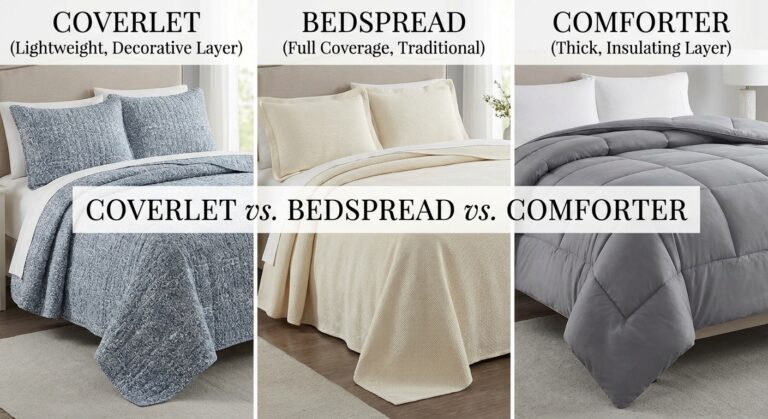
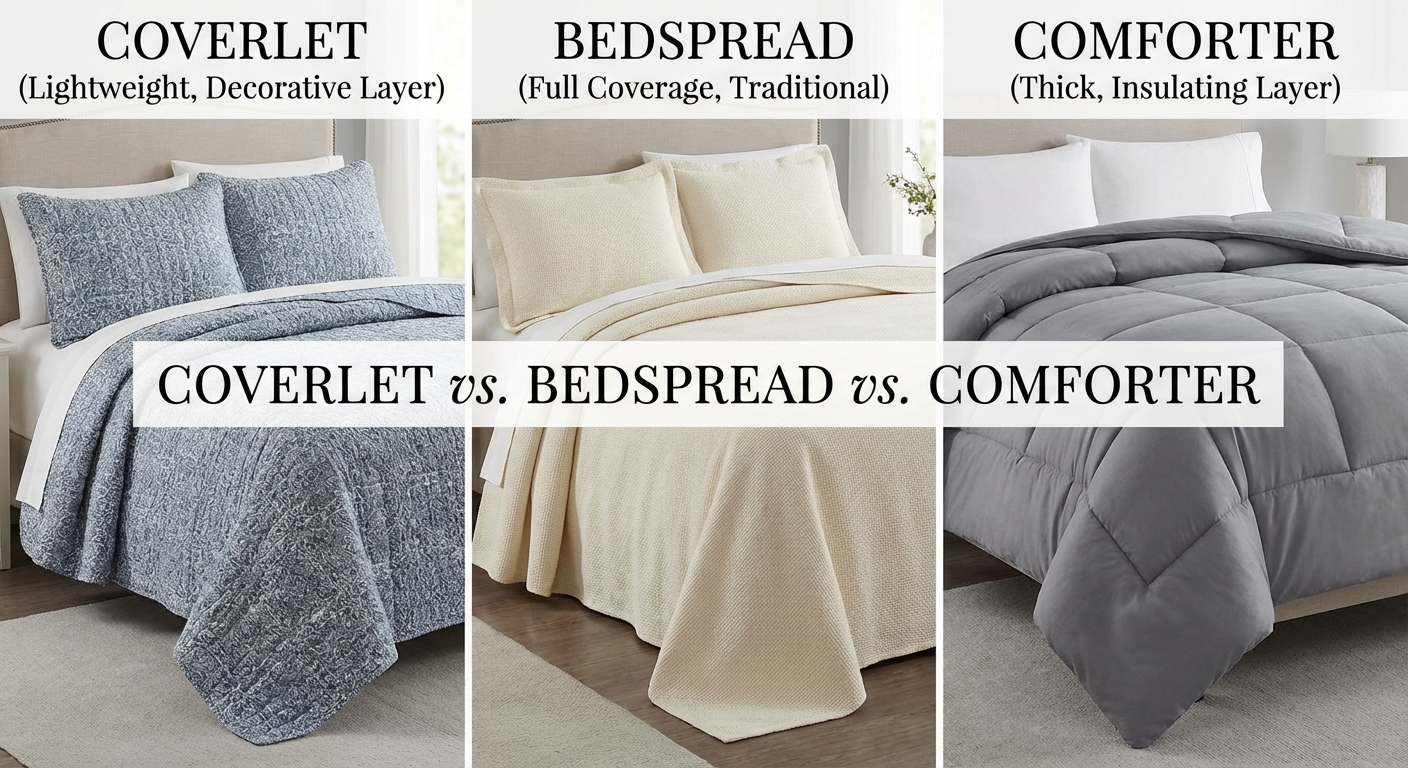
Coverlet vs. Bedspread vs. Comforter: Which Bedding Topper is Right for You?
Introduction
Walking down the bedding aisle or browsing through online catalogs for cozy home essentials can feel like learning a new language. You see terms like “coverlet,” “bedspread,” and “comforter” thrown around, often interchangeably. But make no mistake: these are three distinct bedding layers, each with its own specific function, weight, and aesthetic.
Are you looking for a floor-length traditional look? That’s a bedspread. Do you need a lightweight decorative layer for summer? That’s likely a coverlet. Or are you just trying to stay warm during a blizzard? You definitely need a comforter.
Choosing the wrong top layer can leave your bedroom looking disjointed or, worse, leave you sweating in July and freezing in January. In this comprehensive guide, we are breaking down the coverlet vs. bedspread vs. comforter debate. We will compare their warmth, sizing, and style so you can curate the perfect bed setup, whether it’s for a master suite or a compact dorm room.
But this guide goes far beyond a simple comparison. We will explore the rich history of bed coverings, dive deep into the materials and fill types that determine comfort, walk through detailed sizing charts, master the art of layering, and even share insider hotel secrets to help you build a bed that rivals a five-star resort. Whether you are furnishing your first apartment, upgrading a master bedroom, or outfitting a guest room on a budget, this article has everything you need to make an informed decision.
We will also address practical concerns that many bedding guides overlook: how to wash bulky comforters at home, how to store seasonal bedding without causing mildew, which options are best for allergy sufferers, and how to select eco-friendly bedding that is kind to both your skin and the planet. By the end of this guide, you will have a clear, confident understanding of which bedding topper suits your lifestyle, your climate, your budget, and your personal taste.
At a Glance: The Key Differences
If you are in a rush, here is the cheat sheet to help you distinguish between these three bedding heavyweights.
| Feature | Coverlet | Bedspread | Comforter |
|---|---|---|---|
| Length | Short (Covers mattress top/sides, rarely reaches floor). | Long (Reaches the floor, covers pillows). | Medium (Covers mattress sides, needs bed skirt). |
| Thickness | Thin / Lightweight. | Thin to Medium. | Thick / Fluffy / High Loft. |
| Primary Use | Decoration & Layering. | Traditional Main Cover. | Warmth & Insulation. |
| Warmth Level | Low. | Low to Medium. | High. |
| Best Season | Summer or year-round accent. | Spring/Summer. | Winter / Cold Climates. |
| Additional Comparison | Coverlet | Bedspread | Comforter |
|---|---|---|---|
| Typical Weight | 2–4 lbs | 3–6 lbs | 5–10+ lbs |
| Fill Material | None or minimal batting | Light batting or none | Down, down alternative, or synthetic fill |
| Washability | Easy (home washer) | Moderate (home washer for most) | Difficult (may need commercial washer) |
| Price Range | $30–$200 | $40–$250 | $50–$500+ |
| Bed Skirt Needed? | Yes (usually) | No | Yes (usually) |
| Pillow Coverage | No | Yes (drapes over pillows) | No |
| Reversible? | Sometimes | Sometimes | Rarely |
| Ease of Making Bed | Moderate | Very Easy (one pull) | Moderate |
| Layering Potential | Excellent | Moderate | Good (as base layer) |
A Brief History of Bedding Top Layers
Understanding the history behind coverlets, bedspreads, and comforters provides valuable context for why each exists and how they evolved into the bedding options we know today. The story of bed coverings is intertwined with advances in textile manufacturing, changes in interior design philosophy, and shifts in how people think about sleep comfort.
The Origins of the Bedspread
The bedspread is the oldest of the three, with roots tracing back centuries. Before central heating became common, the bedspread served a critical functional role: it was the primary barrier between the sleeper and the cold night air. In medieval Europe, wealthy households used heavy wool or velvet bedspreads embroidered with heraldic motifs. These were as much a status symbol as they were a source of warmth.
By the 18th and 19th centuries, the bedspread had become a cornerstone of bedroom decor. In the Victorian era, elaborately quilted and crocheted bedspreads adorned the beds of the middle and upper classes. The “counterpane,” as it was sometimes called, was expected to drape all the way to the floor, concealing the bed frame and whatever storage might be tucked beneath the bed. This floor-length tradition is exactly what modern bedspreads carry forward today.
In the American South, chenille bedspreads became enormously popular in the early 20th century. Produced in towns like Dalton, Georgia, these tufted cotton spreads became a staple of Southern hospitality. Hotels and inns across the region used them, and they remain a beloved choice for those who appreciate vintage charm.
The Rise of the Comforter
The modern comforter as we know it emerged in the mid-20th century, closely tied to the boom in synthetic textiles. Before the 1950s, most people slept under layers of cotton blankets or wool bedspreads. The introduction of polyester batting and, later, microfiber fabrics made it possible to create thick, fluffy, insulated bed covers at an affordable price.
The comforter revolution was also driven by changing attitudes toward sleep. As mattress technology improved and people began investing in better sleep, the demand for a warm, cloud-like top layer grew. The “bed-in-a-bag” concept, where a comforter set included matching shams, sheets, and decorative pillows, became a retail phenomenon in the 1980s and 1990s and remains popular today. Convenience was king, and the comforter delivered.
The Coverlet Enters the Scene
The coverlet has ancient roots, but its modern incarnation is largely a product of contemporary interior design. The term “coverlet” originally referred to any decorative bed covering, but in modern usage it specifically means a lightweight, tailored bed topper that does not reach the floor. The coverlet gained popularity as bedrooms shifted toward cleaner, more minimalist aesthetics.
As interior designers in the 2000s and 2010s embraced the layered bed look, the coverlet became an essential tool. Its thin profile made it perfect for layering over a duvet or under a decorative throw. The rise of the “hotel style” bed, with its crisp, tailored appearance, further cemented the coverlet’s place in modern bedrooms. Today, coverlets are among the most versatile bedding items available, used year-round as both a primary cover and a decorative accent.
Understanding these historical roots helps explain why each type of bedding exists and why certain design choices persist. A bedspread that drapes to the floor is not being “old-fashioned” — it is following a centuries-old tradition of concealing the bed frame. A comforter’s thickness is not incidental — it evolved to deliver maximum warmth in an era before electric blankets. And a coverlet’s tailored fit is not a limitation — it is a deliberate design choice that reflects modern tastes.
1. The Comforter: The King of Warmth
A comforter is exactly what it sounds like: a comfortable, comforting, thick blanket designed primarily for warmth. It consists of two layers of fabric stitched together with a filling in between. This filling is usually down, feathers, or a synthetic fiber (polyester batting). To keep the filling from shifting, comforters are stitched in patterns, often referred to as “baffle box” or “sewn-through” construction.
Comforters are modern staples. They are often sold in “bed-in-a-bag” sets that include shams and sheets. Unlike duvet covers, comforters have the filling built-in and do not require a separate cover, though this makes them bulkier to wash.
Understanding Comforter Construction
The way a comforter is constructed directly impacts its warmth, durability, and overall feel. There are three primary construction methods you will encounter when shopping:
Sewn-Through Construction: This is the most common and affordable method. The top and bottom layers of fabric are stitched directly together, creating small quilted pockets that hold the fill in place. While effective at preventing fill migration, sewn-through comforters can create cold spots at the stitch lines where there is no fill between the two fabric layers. This construction works well for lighter-weight comforters but is less ideal for ultra-warm options.
Baffle Box Construction: This is the premium method used in high-end down comforters. Vertical fabric walls (baffles) are sewn between the top and bottom layers, creating three-dimensional boxes that allow the fill to loft fully without compression. Baffle box construction eliminates cold spots, distributes fill evenly, and allows maximum warmth for the weight. The trade-off is a higher price point, but for cold-climate sleepers, the investment is often worth it.
Quilted or Channel Construction: Some comforters use parallel lines of stitching (channel quilting) or decorative quilted patterns. Channel quilting runs in one direction and creates a distinctive striped appearance. Decorative quilting can take various shapes and patterns. Both methods hold fill in place but may create cold spots similar to sewn-through construction, depending on stitch density.
Comforter Fill Power and Warmth Ratings
When shopping for a down comforter, you will encounter the term “fill power,” measured in cubic inches. Fill power indicates the volume that one ounce of down occupies. Higher fill power means the down is loftier and traps more air, which translates to more warmth with less weight. Here is a general guide:
- 550–650 Fill Power: Good for moderate cold. Suitable for most sleepers in temperate climates. Budget-friendly.
- 700–800 Fill Power: Excellent warmth-to-weight ratio. Ideal for cold climates. The sweet spot for most buyers.
- 850+ Fill Power: Premium luxury warmth. Extremely lightweight yet incredibly warm. Best for very cold climates or those who want the lightest possible feel.
For synthetic comforters, warmth is typically rated on a scale from 1 to 5 or described as “light,” “medium,” or “heavyweight.” Synthetic fills do not have a direct fill power equivalent, but a quality synthetic comforter with a “medium” warmth rating generally provides comparable warmth to a 600-fill-power down comforter.
When to Choose a Comforter
If you live in a colder climate or love sleeping in a “cloud-like” bed, the comforter is your best friend. It provides the highest loft (fluffiness) of the three options. However, because they don’t usually reach the floor, you might need a bed skirt to hide your box spring or under-bed storage (check out our guide on space-saving storage solutions if you need to hide clutter).
Comforters are also the top choice for people who prioritize warmth above all else. If you live in a region where winter temperatures regularly dip below freezing, a high-quality comforter with a duvet cover (or a standalone comforter) will keep you warm throughout the night without requiring you to pile on multiple blankets. The loft of a comforter traps a thick layer of warm air close to your body, creating a cocoon-like sleeping environment.
They are also an excellent choice for families with children. Kids love the plush, cozy feel of a thick comforter, and the wide availability of fun prints and character designs makes it easy to find one that appeals to younger sleepers. Just keep in mind that you will need a plan for washing, since children’s bedding tends to need more frequent laundering.
Pros
- Superior Warmth: The best option for winter.
- Fluffy Aesthetic: Makes the bed look inviting and soft.
- Convenient: Ready to use right out of the bag.
- Variety: Available in endless prints and colors.
- No Separate Cover Needed: All-in-one design for convenience.
- Excellent Loft: Creates a plush, cloud-like sleeping surface.
- Widely Available: Found at virtually every retailer.
Cons
- Laundering: Bulky and difficult to fit in standard washing machines.
- Overheating: Can be too hot for summer or hot sleepers.
- Flattening: Synthetic fills can lose their loft over time.
- Less Stylish: Can look puffy and less tailored than other options.
- Drying Time: Can take hours to fully dry after washing.
- Weight: Heavier options can feel oppressive for some sleepers.

A versatile, high-loft comforter that balances warmth and breathability perfectly.
Check Price on Amazon2. The Bedspread: The Traditionalist
The bedspread is the traditional grand-dame of bedding. Historically, it was designed to cover the entire bed—pillows, mattress, box spring, and all the way down to the floor. If you visit a historic home or a hotel with a classic aesthetic, you will likely see a bedspread.
Bedspreads are typically lightweight, woven from cotton, chenille, or wool. Because they are large enough to touch the floor, they eliminate the need for a bed skirt. They are often used as a standalone cover in warmer months or layered over a blanket in winter.
Types of Bedspreads
Not all bedspreads are created equal. There are several distinct styles within the bedspread category, each with its own characteristics and ideal use case.
Chenille Bedspreads: Made from tufted cotton yarn, chenille bedspreads are soft, lightweight, and feature a distinctive fuzzy texture. They are a classic choice for traditional bedrooms and are known for their durability. Chenille bedspreads often feature floral or scrollwork patterns created by the tufting process. They are machine washable and become softer with each wash, making them a practical choice for everyday use.
Matelassé Bedspreads: These are woven on special looms to create a raised, quilted-look pattern without actual batting or filling. The result is a sophisticated, textured appearance that mimics hand-stitched quilting. Matelassé bedspreads are typically made from cotton or cotton-blend fabrics and offer a more refined, elegant look than chenille. They are a favorite in hotel settings and upscale guest rooms.
Quilted Bedspreads: True quilted bedspreads consist of three layers: a decorative top, a thin batting in the middle, and a backing fabric, all stitched together. They offer slightly more warmth than chenille or matelassé options and come in a wide range of patterns, from traditional patchwork to modern geometric designs.
Woven Bedspreads: Some bedspreads are made from tightly woven fabrics like jacquard or damask, which create intricate patterns directly in the weave rather than through quilting or tufting. These are often heavier and more formal, suitable for master bedrooms or traditionally styled guest rooms.
Crochet and Knit Bedspreads: Handmade crochet or knit bedspreads are heirloom-quality pieces that add warmth and character to a bedroom. They are lighter than most other bedspreads and are particularly suited to spring and summer use. Granny square and popcorn stitch patterns are especially popular in farmhouse and bohemian decor styles.
Modern Usage
While less common in modern minimalist decor, bedspreads are making a comeback in “grandmillennial” and boho styles. They are excellent for guest rooms because they look very “finished” and tidy with minimal effort. If you have a foldable bed frame or a high mattress, ensure you measure the “drop” (height from mattress top to floor) to ensure the bedspread is long enough.
The grandmillennial design trend, which embraces traditional patterns, vintage furniture, and cozy aesthetics, has breathed new life into the bedspread. Younger homeowners are discovering the appeal of a bedspread’s effortless elegance — one smooth pull across the bed and everything looks neat and put together. This is especially attractive for people who find the multiple pillows and layered look of modern beds too fussy or time-consuming.
Bohemian-style bedrooms also benefit from bedspreads, particularly those with intricate patterns or handcrafted details. A vintage chenille bedspread layered with colorful throw pillows and a knit blanket at the foot of the bed creates a relaxed, eclectic look that is both inviting and visually interesting.
Pros
- Full Coverage: Hides the bed frame and storage underneath.
- Elegant Look: Provides a tidy, formal appearance.
- Lightweight: Great for hot sleepers who dislike heavy weights.
- Durability: Often made of tightly woven fabrics that last for years.
- Easy Bed Making: One pull and the bed is made.
- No Bed Skirt Required: Floor-length design eliminates the need.
- Pillow Coverage: Drapes over pillows for a seamless look.
Cons
- Dated Style: Can look old-fashioned if not styled correctly.
- Size Issues: Hard to find sizes that fit extra-thick modern mattresses properly.
- Not Very Warm: Requires additional blankets for winter use.
- Limited Warmth: Thin construction offers minimal insulation.
- Formal Appearance: May feel too stiff for casual bedroom styles.
- Finding the Right Drop: Measuring for proper floor-length fit can be tricky.

100% cotton with a classic matelassé pattern. It drapes beautifully to the floor.
Check Price on Amazon3. The Coverlet: The Modern Layer
A coverlet is the bridge between a blanket and a bedspread. It is a lightweight, non-reversible bedspread that is usually quilted or woven. The key difference is the size: a coverlet is designed to hang just past the box spring, but not to the floor. It gives a tailored, modern look that exposes the bed skirt or the legs of a decorative bed frame.
Coverlets are the chameleons of the bedding world. In the summer, they act as your primary blanket. In the winter, they are folded at the foot of the bed as a decorative accent or pulled up for an extra layer of warmth. They pair beautifully with bamboo blankets for a breathable, cooling sleep setup.
Types of Coverlets
The coverlet category encompasses several distinct styles, each suited to different aesthetics and functional needs.
Quilted Coverlets: The most common type, quilted coverlets feature three layers — a decorative top, thin batting, and a backing — stitched together in patterns ranging from simple grid lines to elaborate floral motifs. They offer a slight amount of warmth and work beautifully as both a standalone summer cover and a layering piece in cooler months.
Woven Coverlets: These are made on looms using techniques like jacquard or tapestry weaving. Woven coverlets have a more structured feel and often feature intricate geometric or botanical patterns. They tend to be slightly heavier than quilted coverlets and can serve as a substantial standalone bed cover in mild climates.
Matelassé Coverlets: Similar to matelassé bedspreads but shorter in length, these coverlets are woven to create a raised, puffy pattern without any actual batting. The result is a sophisticated, textured appearance that adds visual interest without bulk. Matelassé coverlets are popular in modern and transitional bedroom designs.
Crochet and Knit Coverlets: Handmade crochet or knit coverlets add a cozy, artisanal touch. They are lightweight and breathable, making them ideal for warm-weather use. Popular patterns include granny squares, cable knit, and lace designs.
Styling a Coverlet
Because they are thinner and often feature intricate stitching (like Matelassé), coverlets are perfect for achieving that “hotel style” layered look. You typically place a coverlet over your sheets and potentially a duvet, folding the duvet down to show off the coverlet’s texture.
Here are several popular ways to style a coverlet:
- The Clean Fold: Pull the coverlet up to the top of the mattress and fold the top edge down about 12 inches, creating a crisp fold that reveals the sheets beneath. This creates a clean, inviting look.
- The Full Drape: Pull the coverlet up to just below the pillows and let it drape evenly on all sides. This is the simplest styling approach and works well for a tidy, everyday look.
- The Foot-of-Bed Accent: Use your comforter or duvet as the primary cover and fold the coverlet at the foot of the bed. This adds a pop of color or texture without overwhelming the bed’s appearance.
- The Diagonal Drape: For a more relaxed, casual look, drape the coverlet diagonally across the bed, letting one corner hang lower than the others. This works especially well in bohemian or eclectic bedrooms.
- The Quarter Fold: Fold the coverlet in half lengthwise and then in half again widthwise, placing it neatly at the foot of the bed. This creates a structured, decorative accent.
Pro Tip: Creating the Hotel Look
To achieve that crisp, five-star hotel appearance, start with a fitted sheet, add a flat sheet, place your duvet or comforter on top, and then layer a quilted coverlet over everything. Fold the top portion of all layers back about one-third of the way to create a cascading layered effect. Finish with two sleeping pillows in standard shams standing upright against the headboard, and two decorative pillows in front.
Pros
- Versatile Layering: Works in all 4 seasons.
- Easy Care: Fits easily in washing machines; dries quickly.
- Modern Aesthetic: Tailored fit looks neat and contemporary.
- Decorative: Adds texture and color without bulk.
- Lightweight: Perfect for warm sleepers and summer use.
- Breathable: Allows air circulation for temperature regulation.
- Affordable: Generally less expensive than comforters.
Cons
- Not Standalone Warmth: You will freeze in winter using only a coverlet.
- Requires Bed Skirt: Doesn’t hide the box spring or under-bed mess.
- Sizing: Must be paired with other bedding to look “complete.”
- Thin Appearance: May look flat without proper layering underneath.
- Limited Insulation: Minimal batting provides little warmth.

Lightweight, ultrasonic quilting technology, and incredibly soft microfiber.
Check Price on AmazonUnderstanding Bedding Materials and Fabrics
The fabric used in your bedding topper affects everything from comfort and breathability to durability and care requirements. Whether you are shopping for a coverlet, bedspread, or comforter, understanding the most common materials will help you make a smarter purchase.
Cotton: The Gold Standard
Cotton is the most popular bedding fabric worldwide, and for good reason. It is breathable, soft, naturally hypoallergenic, and gets softer with each wash. Within the cotton family, there are several premium varieties worth knowing about.
Long-Staple Cotton (Pima and Supima): These varieties have longer fibers, which means fewer exposed fiber ends and a smoother, softer fabric. Supima cotton is a trademarked variety grown in the United States that must meet strict quality standards. Bedding made from long-staple cotton is more durable, resists pilling, and has a luxurious feel.
Egyptian Cotton: Often considered the pinnacle of cotton quality, genuine Egyptian cotton is grown in the Nile River Valley and features extremely long fibers. True Egyptian cotton produces a fabric that is exceptionally soft, highly absorbent, and extremely durable. However, be cautious — many products labeled “Egyptian cotton” are not genuine. Look for the Egypt Cotton logo or buy from reputable brands.
Organic Cotton: Grown without synthetic pesticides or fertilizers, organic cotton is an excellent choice for environmentally conscious consumers and those with sensitive skin. It performs identically to conventional cotton in terms of comfort and durability but carries a lower environmental footprint.
Microfiber and Polyester
Microfiber is a synthetic fabric made from extremely fine polyester fibers, often thinner than a strand of silk. It has become enormously popular in bedding due to its affordability, softness, and easy care. Microfiber coverlets and comforters resist wrinkles, dry quickly, and hold color well. However, microfiber is less breathable than natural fibers, which can be a drawback for hot sleepers.
Polyester blends are commonly used in comforters as both a shell fabric and a fill material. While polyester lacks the breathability and moisture-wicking properties of cotton, it excels in durability, wrinkle resistance, and affordability. Many mid-range comforters use a cotton-polyester blend that combines the best properties of both fibers.
Linen: The Breathability Champion
Linen, made from flax fibers, is the most breathable natural bedding fabric. It wicks moisture away from the body, stays cool in summer, and provides moderate warmth in winter. Linen bedspreads and coverlets have a distinctive relaxed, slightly wrinkled texture that adds casual elegance to any bedroom. The downside is that linen is more expensive than cotton and can feel slightly rough initially, though it softens significantly with use and washing.
Chenille: Soft and Textured
Chenille is a plush, velvety fabric made from cotton, silk, or synthetic yarns. Chenille bedspreads are known for their softness and distinctive tufted texture. They are lightweight, warm, and create a cozy, inviting atmosphere. Chenille is most commonly found in bedspreads and throws rather than comforters. The main drawback is that chenille can shed over time and may develop bare spots with heavy use.
Bamboo and Tencel (Lyocell)
Bamboo-derived fabrics (often labeled as bamboo viscose or bamboo rayon) and Tencel (made from eucalyptus wood pulp) are newer entries in the bedding market. Both are exceptionally soft, highly breathable, and have natural moisture-wicking properties. They are excellent choices for hot sleepers and people with sensitive skin. Bedding made from these materials tends to be more expensive than cotton but offers superior temperature regulation.
Velvet and Suede
Velvet and suede coverlets and throws are purely decorative, adding luxurious texture and visual richness to a bed. Velvet is traditionally made from silk but is now commonly produced from polyester or cotton blends. Suede offers a softer, more matte alternative. Both are best reserved for accent layers rather than primary bed covers, as they can trap heat and are more difficult to clean.
Fabric Weight and Thread Count
When evaluating bedding fabrics, two factors matter: fabric weight (measured in grams per square meter, or GSM) and thread count (for woven fabrics). For coverlets and bedspreads, a GSM of 150–300 provides a good balance of softness and durability. For comforter shells, a thread count of 200–400 is ideal — anything higher adds cost without meaningful improvement in feel or durability.
Be wary of marketing claims about extremely high thread counts (1,000+). Thread count alone does not determine quality. The quality of the fiber, the weave style, and the finishing process all play equally important roles. A 300-thread-count sheet made from long-staple Egyptian cotton will feel better and last longer than a 1,000-thread-count sheet made from short-staple cotton.
Fill Types: Down, Synthetic, and Beyond
The fill material inside a comforter or the thin batting in a quilted coverlet or bedspread determines warmth, weight, loft, and care requirements. Here is a detailed look at the most common fill options.
Natural Down
Down is the soft, fluffy undercoating found beneath the feathers of ducks and geese. It is the gold standard for comforter fill, prized for its exceptional warmth-to-weight ratio, incredible softness, and long lifespan. A quality down comforter can last 15–20 years or more with proper care.
Goose Down vs. Duck Down: Goose down clusters are larger than duck down clusters, which means they trap more air and provide more warmth per ounce. For this reason, goose down comforters are typically more expensive but also more efficient. Duck down is a perfectly good alternative for those on a budget, offering excellent warmth at a lower price point.
Responsibly Sourced Down: Look for the Responsible Down Standard (RDS) certification when purchasing down products. This certification ensures that the down was sourced humanely, without live-plucking or force-feeding. Many major brands now offer RDS-certified down comforters.
Down Alternative (Synthetic Down)
Down alternative fills are designed to mimic the loft and warmth of natural down using synthetic fibers, typically polyester. High-quality down alternative comforters can come surprisingly close to the feel of real down, and they offer several advantages: they are hypoallergenic, machine washable, more affordable, and cruelty-free.
The main drawback of down alternative is that it does not last as long as natural down. Over time, synthetic fills tend to clump and lose their loft, requiring replacement every 3–5 years. However, for allergy sufferers and budget-conscious shoppers, down alternative is an excellent choice.
Wool
Wool fill is a natural, breathable option that excels in temperature regulation. Wool comforters and coverlet battings keep you warm in winter and cool in summer by wicking moisture away from the body. Wool is also naturally resistant to dust mites and mold. Merino wool, in particular, is prized for its softness and lack of the “itchy” feeling associated with coarser wool varieties.
The main downsides of wool fill are weight and care requirements. Wool comforters are heavier than down alternatives and typically require dry cleaning or very careful hand washing. They are also more expensive than synthetic options but less expensive than high-quality down.
Cotton Batting
Cotton batting is the traditional fill for quilts, coverlets, and lightweight bedspreads. It provides minimal warmth, making it ideal for summer bedding and layering pieces. Cotton batting is hypoallergenic, breathable, and easy to care for. However, it compresses over time and can become lumpy if not properly quilted. Organic cotton batting is available for those who prefer an all-natural option.
Silk
Silk fill is a luxury option that provides moderate warmth with exceptional softness. Silk is naturally hypoallergenic, moisture-wicking, and temperature-regulating. Silk-filled comforters are popular in Asian bedding traditions and are gaining popularity in Western markets. However, silk fill is expensive and requires delicate care, typically dry cleaning only.
| Fill Type | Warmth | Weight | Hypoallergenic? | Durability | Price |
|---|---|---|---|---|---|
| Goose Down | Excellent | Very Light | No | 15–20 years | $$$$ |
| Duck Down | Very Good | Light | No | 10–15 years | $$$ |
| Down Alternative | Good | Medium | Yes | 3–5 years | $ |
| Wool | Very Good | Heavy | Yes (naturally) | 8–12 years | $$$ |
| Cotton Batting | Light | Medium | Yes | 5–8 years | $$ |
| Silk | Good | Very Light | Yes | 10–15 years | $$$$$ |
Complete Bedding Sizing Guide
One of the most common mistakes people make when buying bedding toppers is choosing the wrong size. A comforter that is too small looks awkward and leaves the mattress exposed. A bedspread that is too short fails to reach the floor as intended. And a coverlet that is oversized can look sloppy and bunch up on the bed.
The sizing requirements differ for each type of bedding because they are designed to drape differently. Here is a comprehensive guide to help you choose the right size for every bed configuration.
Standard Bed Sizes
| Bed Size | Mattress Dimensions | Recommended Comforter Size | Recommended Bedspread Size | Recommended Coverlet Size |
|---|---|---|---|---|
| Twin | 38″ x 75″ | 68″ x 86″ | 80″ x 108″ | 66″ x 90″ |
| Twin XL | 38″ x 80″ | 68″ x 92″ | 80″ x 113″ | 66″ x 96″ |
| Full/Double | 54″ x 75″ | 81″ x 86″ | 96″ x 108″ | 80″ x 90″ |
| Queen | 60″ x 80″ | 86″ x 92″ | 102″ x 120″ | 86″ x 94″ |
| King | 76″ x 80″ | 102″ x 92″ | 118″ x 120″ | 104″ x 94″ |
| California King | 72″ x 84″ | 100″ x 98″ | 114″ x 124″ | 102″ x 98″ |
How to Measure Your Bed for the Perfect Fit
Before purchasing any bedding, grab a measuring tape and take these measurements:
- Measure the mattress width and length. This gives you the base dimensions.
- Measure the mattress height (depth). Modern mattresses range from 8″ to 16″ or more. Measure from the base to the top of the mattress.
- Measure from mattress top to floor. If you want a bedspread that reaches the floor, measure the total drop from the top of the mattress to the floor on all three sides (head of the bed is usually against a wall).
- Add pillow width. If you want the bedding to cover your pillows (as a bedspread does), add approximately 20–24 inches to the length to account for standard or king pillows draped at the head of the bed.
- Consider mattress toppers. If you use a mattress topper (memory foam, egg crate, etc.), include its thickness in your mattress height measurement.
Important: Factor in the “Drop” for Bedspreads
The most critical measurement for bedspreads is the “drop” — the distance from the top of the mattress to the floor. A standard queen bed with a 25″ mattress height sitting on a 7″ box spring needs a bedspread that provides at least a 25″ drop on three sides. If your bedspread is too short, it will look awkwardly悬空 (suspended) rather than elegantly draped. When in doubt, measure twice and buy a size larger.
Special Considerations for High and Adjustable Beds
If you have an adjustable bed, a platform bed with a high profile, or a bed with a thick pillow-top mattress, standard sizing may not work. Adjustable beds require flexible bedding that can bend with the frame without bunching or pulling. Coverlets and lightweight bedspreads tend to work better than thick comforters on adjustable beds because they are less likely to resist the movement of the frame.
For extra-high beds (mattress top more than 30″ from the floor), you may need to shop for “tall” or “extra-long” bedspreads, or consider custom options. Some manufacturers offer bedspreads in “tall” sizes specifically designed for beds with high profiles.
The Art of Bedding Layering
Layering is the secret weapon of beautiful bedrooms. A well-layered bed adds depth, texture, color, and visual interest that a single bed cover simply cannot achieve. Understanding how to layer a coverlet, bedspread, and comforter together transforms a plain bed into a magazine-worthy focal point.
The Anatomy of a Layered Bed
Every beautifully layered bed follows the same basic structure, working from the bottom up:
- Foundation Layer (Fitted Sheet): This is your base. Choose a fitted sheet in a neutral color like white, cream, or light gray. A high-quality fitted sheet with deep pockets ensures it stays tucked under even thick mattresses.
- Flat Sheet: The flat sheet goes over the fitted sheet with the top edge folded down about 6–8 inches to create a clean cuff. This is the layer that touches your skin and should be the softest fabric you own.
- Light Blanket or Coverlet: Place a lightweight blanket or coverlet over the flat sheet. This adds a thin layer of warmth and creates a visible layer when you fold the top layers down.
- Primary Cover (Comforter, Duvet, or Bedspread): This is your main warmth layer. It should be pulled up to just below the pillows or all the way to the top of the mattress, depending on your preferred style.
- Decorative Throw: A throw blanket or decorative quilt folded at the foot of the bed adds a final pop of color, texture, or pattern.
- Pillows: Start with sleeping pillows in shams, standing upright against the headboard. Add decorative pillows in front, working from largest to smallest.
Layering Combinations by Season
Spring/Summer Combo: Fitted sheet + flat sheet + coverlet. This lightweight combination provides just enough coverage for warm nights. Fold the coverlet at the foot of the bed for the aesthetic touch without the extra warmth.
Fall/Winter Combo: Fitted sheet + flat sheet + lightweight blanket + comforter + throw. Add a quilted coverlet between the flat sheet and comforter for extra warmth and visual layering. The throw at the foot of the bed adds both style and an additional warmth option for particularly cold nights.
Year-Round Combo: Fitted sheet + flat sheet + coverlet + duvet/comforter. This is the classic hotel-style setup. The coverlet adds texture and an extra layer that can be used alone in warmer weather, while the duvet or comforter provides the main warmth.
Mixing Textures and Patterns
The most visually interesting layered beds mix different textures and patterns. Here are some proven combinations:
- Smooth + Textured: Pair a smooth cotton flat sheet with a quilted coverlet and a chunky knit throw. The contrast between smooth and textured fabrics creates visual depth.
- Neutral Base + Patterned Accent: Start with solid white or cream sheets and comforter, then add a patterned coverlet or throw for visual interest. This approach is easy to update by simply swapping out the accent layer.
- Monochromatic Layering: Use different shades of the same color family — for example, a white fitted sheet, ivory flat sheet, cream coverlet, and beige throw. This creates an elegant, sophisticated look.
- Bold Contrast: For a more dramatic look, pair a dark comforter (navy, charcoal, or black) with a light coverlet (white or cream) and metallic accent pillows. This creates a striking, modern aesthetic.
The Fold-Down Technique
One of the simplest and most effective layering techniques is the fold-down. After pulling your comforter or duvet up to the head of the bed, fold the top 12–18 inches back to reveal the sheets and any layering pieces beneath. This creates a casual, inviting look that suggests the bed has been “turned down” and is ready for sleep. The fold-down technique works with all three bedding types and instantly elevates the appearance of any bed.
Seasonal Bedding Rotation Strategy
Smart bedding rotation is one of the most effective ways to maintain comfort, extend the life of your bedding, and keep your bedroom looking fresh throughout the year. Instead of using the same bed covering year-round, rotating your bedding based on seasonal temperature changes ensures optimal sleep comfort and reduces wear on individual pieces.
Spring (March – May)
Spring is transitional weather that calls for lighter layers. Store your heavy comforter and switch to a coverlet or lightweight bedspread as your primary top layer. Keep a medium-weight blanket or quilt at hand for those unpredictable cold snaps. This is also the perfect time to wash and air out your winter comforter before storing it.
A coverlet paired with a flat sheet provides ideal comfort for spring’s variable temperatures. On cooler nights, add a lightweight throw blanket at the foot of the bed for extra warmth without the bulk of a comforter.
Summer (June – August)
Summer calls for the lightest possible bedding. A single coverlet or a lightweight cotton bedspread is often all you need. Some hot sleepers prefer to sleep with just a flat sheet and a thin coverlet draped over them for modesty and minimal warmth.
This is the ideal season for natural, breathable fabrics like linen and cotton. Avoid synthetic materials that trap heat. If you use air conditioning, keep a thin coverlet on the bed for those nights when the AC runs a bit too cold.
Fall (September – November)
Fall is another transitional season that benefits from layering. Start reintroducing your medium-weight blanket or quilt alongside your coverlet. As temperatures drop further, bring back your comforter and use the coverlet as a decorative accent at the foot of the bed.
This is also an excellent time to assess your comforter and decide if it needs to be replaced before winter. Check for flattened spots, lingering odors, or tears that may have developed during storage.
Winter (December – February)
Winter demands maximum warmth. Your comforter takes center stage as the primary top layer. For extra-cold nights, layer a blanket or coverlet underneath the comforter for additional insulation. A heavy throw at the foot of the bed provides an extra layer that can be pulled up during the coldest hours of the night.
Consider your room temperature as well. If you keep your bedroom at 60–65°F, a high-loft comforter should be sufficient. If your bedroom drops below 60°F, add a blanket layer underneath for extra warmth.
Pro Tip: The Two-Comforter System
If budget allows, invest in two comforters: a lightweight one (300–500 fill power) for spring and fall, and a heavyweight one (700+ fill power) for winter. This eliminates the need for layering extra blankets and provides perfectly calibrated warmth for each season. Between seasons, store the unused comforter in a breathable cotton storage bag.
Care and Washing Guide for Each Type
Proper care significantly extends the life of your bedding and maintains its comfort, appearance, and hygiene. Each type of bedding topper requires a different care approach, so here is what you need to know.
Washing Comforters at Home
Washing a comforter at home can be challenging due to its bulk, but it is possible with the right approach:
- Check the care label first. Always follow the manufacturer’s instructions. If the label says “dry clean only,” take it to a professional cleaner unless you are willing to accept the risk of home washing.
- Use a large-capacity washing machine. A standard home washer (3.5–4.5 cubic feet) can handle a twin or full comforter, but queen and king sizes often require a commercial-sized machine. Many laundromats offer machines specifically designed for bedding.
- Use a gentle cycle with cold or warm water. Hot water can damage down fills and cause synthetic fills to clump. Use a mild, liquid detergent (powdered detergent can leave residue trapped in the fill).
- Run an extra rinse cycle. Comforters absorb a lot of water and detergent. An extra rinse ensures all soap is removed, preventing stiffness and residue.
- Dry on low heat with clean tennis balls. The tennis balls help break up clumps and restore loft. Tumble dry on low for 1–3 hours, checking periodically. Down comforters may require multiple drying cycles.
Washing Coverlets and Bedspreads
Coverlets and bedspreads are generally much easier to wash than comforters because they are thinner and lighter. Most can be washed in a standard home washing machine on a gentle cycle with cold or warm water. Tumble dry on low or medium heat, and remove promptly to minimize wrinkles.
For chenille bedspreads, wash on a gentle cycle and avoid high heat, which can damage the tufted fibers. For matelassé coverlets, use a mild detergent and avoid bleach, which can weaken the woven patterns.
How Often Should You Wash Your Bedding?
- Sheets: Every 1–2 weeks
- Coverlets and Bedspreads: Every 2–4 weeks if used as the top layer without a blanket underneath; every 1–2 months if a blanket or sheet provides the barrier between you and the cover
- Comforters: Every 2–3 months if used with a top sheet or coverlet barrier; monthly if used directly against the body
- Decorative Throws and Pillows: Every 2–4 weeks
Using a top sheet or coverlet as a barrier between your body and the comforter significantly reduces how often the comforter needs washing. This is one of the best reasons to layer your bedding — it keeps the main comforter cleaner for longer.
Dealing with Stains
Treat stains on bedding immediately. For most stains, blot (don’t rub) the area with a clean cloth dampened with cold water, then apply a small amount of liquid dish soap or stain remover. Let it sit for 10–15 minutes, then rinse and wash as usual. For stubborn stains on down comforters, avoid using bleach or harsh chemicals that can damage the down fibers.
Refreshing Between Washes
You can extend the time between full washes by airing out your bedding regularly. On a dry day, hang your comforter or coverlet outside in fresh air and sunlight for a few hours. UV rays have a natural antibacterial and deodorizing effect. You can also use a fabric refreshener spray between washes, but avoid products with heavy fragrances if you have sensitive skin.
Another useful trick is to put your comforter in the dryer on a no-heat (air fluff) cycle for 10–15 minutes with a dryer sheet. This removes surface dust, freshens the fabric, and restores some loft without a full wash.
Seasonal Storage Solutions
Proper storage of off-season bedding protects it from dust, moisture, mildew, and pests. The wrong storage method can permanently damage even the highest-quality bedding, so it is worth investing a little time and money in proper storage solutions.
What to Store and When
If you follow a seasonal rotation, you will be storing your comforter during summer months and your lightweight coverlet or bedspread during winter. Timing your storage correctly is important — always wash and thoroughly dry bedding before storing it. Even a small amount of residual moisture can lead to mildew growth, which will ruin the fabric and create unpleasant odors.
Best Storage Options
Breathable Cotton or Canvas Storage Bags: These are the gold standard for bedding storage, especially for natural down comforters. Cotton and canvas allow air to circulate while keeping dust out. They are gentle on delicate fills and prevent the compression that can damage down loft. Many are available with zippered closures and handles for easy transport.
Vacuum-Sealed Storage Bags: These space-saving bags compress bedding to a fraction of its original size, making them ideal for small closets and apartments. However, vacuum sealing is not recommended for down comforters, as the compression can damage the down clusters and reduce loft. Vacuum-sealed bags work well for synthetic comforters, cotton bedspreads, and coverlets that are less susceptible to compression damage.
Linen Closet Shelving: If you have the space, storing bedding on open shelves in a linen closet is the simplest approach. Fold bedding neatly and place it on a shelf with adequate air circulation. Avoid stacking heavy items on top of comforters, as this can compress the fill over time.
Cedar Blocks or Lavender Sachets: Place cedar blocks, lavender sachets, or cedar chips near your stored bedding to repel moths and add a fresh scent. Avoid placing cedar directly against the fabric, as the oils can transfer and stain. A small muslin bag containing cedar chips placed on top of or beside the bedding is ideal.
Storage Mistakes to Avoid
- Never store damp or unwashed bedding. This is the fastest path to mildew and permanent odor.
- Avoid storing in plastic bags or bins without ventilation. Trapped moisture leads to mold growth. If using plastic bins, leave the lid slightly cracked or add ventilation holes.
- Do not store in attics or garages with extreme temperature fluctuations. Heat and cold extremes can damage natural fibers and fills. A climate-controlled closet or bedroom is ideal.
- Avoid direct sunlight during storage. UV exposure fades colors and weakens fibers over time.
- Do not hang comforters on hangers. The weight of a comforter can stretch the fabric and cause the fill to shift and clump. Always store flat or folded.
Allergy-Friendly and Hypoallergenic Options
Allergies are a major consideration when choosing bedding, and the type of bedding topper you select can significantly impact your sleep quality. Dust mites, mold, pet dander, and the proteins found in natural down are the most common bedding-related allergens.
Understanding Bedding Allergens
Dust Mites: These microscopic creatures thrive in warm, humid environments and feed on dead skin cells. They are found in virtually every bed and are one of the most common triggers for indoor allergies and asthma. The best defense against dust mites is regular washing in hot water (at least 130°F) and the use of allergen-proof encasements.
Natural Down Allergens: While true allergy to down feathers is relatively rare (most reactions are to dust or mold that accumulates in down), some people do experience symptoms from down products. Modern processing has significantly reduced down allergens, and many down comforters are now labeled “hypoallergenic” after undergoing rigorous cleaning processes.
Mold and Mildew: Bedding that is not properly dried or stored can develop mold, which triggers allergic reactions and respiratory issues. This is why thorough drying before storage is critical.
Best Options for Allergy Sufferers
Down Alternative Comforters: The best choice for people with down allergies. High-quality polyester fills provide similar warmth and loft without the allergenic proteins found in natural feathers.
Synthetic Coverlets and Bedspreads: Synthetic fabrics are less hospitable to dust mites than natural fibers because they absorb less moisture. Microfiber coverlets, in particular, have a tight weave that blocks dust mites from penetrating the fabric.
Wool Bedding: Naturally hypoallergenic and resistant to dust mites and mold. Wool wicks moisture away from the body, creating a drier environment that is less hospitable to allergens.
Allergen-Proof Covers: Regardless of your bedding type, you can reduce allergen exposure by using allergen-proof encasements on your mattress and pillows. These tightly woven covers create a barrier that prevents dust mites and their waste from reaching you.
Care Tips for Allergy Sufferers
- Wash all bedding in hot water (at least 130°F) every 1–2 weeks
- Use allergen-proof mattress and pillow encasements
- Keep bedroom humidity below 50% to discourage dust mite reproduction
- Consider an air purifier with a HEPA filter in the bedroom
- Replace pillows every 1–2 years, as they accumulate allergens over time
- Air out bedding regularly in fresh air and sunlight
Budget vs. Luxury: What to Expect at Every Price Point
Bedding prices vary enormously, from budget options under $30 to luxury pieces costing thousands. Understanding what you get at each price point helps you make informed decisions and avoid overpaying for features you don’t need.
Budget Tier ($20–$75)
Budget bedding coverlets, bedspreads, and comforters are widely available from big-box retailers and online marketplaces. At this price point, you can expect:
- Synthetic fills (polyester batting or down alternative)
- Microfiber or basic cotton shell fabrics
- Simple quilted or channel-stitched construction
- Decent initial softness that may diminish with washing
- Lifespan of 1–3 years with regular use
Budget options are perfectly fine for guest rooms, kids’ rooms, dorm rooms, or anyone who wants to update their bedding frequently without a major investment. The Utopia Bedding comforter and Mellanni coverlet featured earlier in this article are excellent examples of high-quality budget options.
Mid-Range Tier ($75–$250)
Mid-range bedding represents the sweet spot for most shoppers. At this price point, you can expect:
- Higher-quality cotton shells (200–400 thread count)
- Better-quality down alternative or entry-level down fills (500–600 fill power)
- Improved construction with baffle box or sewn-through quilting
- Better color retention and durability
- More design options and coordinated sets
- Lifespan of 3–7 years with proper care
This tier is ideal for master bedrooms and regularly used guest rooms. You get a noticeable upgrade in feel and durability without the premium price tag of luxury brands.
Premium Tier ($250–$500)
Premium bedding offers a significant step up in quality and comfort:
- High-quality long-staple or Egyptian cotton shells
- High fill-power down (700–800+ fill power)
- Baffle box construction for maximum loft and even fill distribution
- Superior softness and breathability
- Extended lifespan of 7–15 years
- Often from established bedding brands with strong reputations
Luxury Tier ($500–$2,000+)
Luxury bedding is an investment in long-term comfort and quality:
- The finest Egyptian or Supima cotton with sateen or percale weaves
- Premium 800+ fill power goose down
- Hand-finished construction details
- Exceptional loft, softness, and temperature regulation
- Lifespan of 15–25+ years
- Often from heritage brands or boutique manufacturers
Is Luxury Bedding Worth It?
For a bed you use every night, investing in quality bedding pays for itself over time. A $500 comforter that lasts 15 years costs about $33 per year, while a $50 comforter that needs replacing every 2 years costs the same amount annually — but with far less comfort. If sleep quality matters to you (and research consistently shows it should), premium bedding is one of the best investments you can make in your daily well-being.
Eco-Friendly and Sustainable Bedding
As environmental awareness grows, more consumers are seeking bedding options that are kind to the planet. Fortunately, the bedding industry has responded with a wide range of sustainable choices across all three categories — coverlets, bedspreads, and comforters.
Sustainable Materials
Organic Cotton: Grown without synthetic pesticides, herbicides, or fertilizers. Organic cotton farming uses less water than conventional cotton and promotes healthier soil. Look for GOTS (Global Organic Textile Standard) certification for the most rigorous organic standards.
Recycled Polyester: Made from post-consumer plastic bottles, recycled polyester (often branded as “Repreve”) reduces waste and uses less energy to produce than virgin polyester. Many comforter shells and fills are now available in recycled polyester.
Lyocell (Tencel): Made from sustainably harvested eucalyptus wood pulp in a closed-loop process that recycles 99% of the water and solvents used. Lyocell is biodegradable, breathable, and exceptionally soft.
Responsible Down Standard (RDS): When purchasing down bedding, look for RDS certification, which ensures humane treatment of birds and responsible sourcing of down and feathers.
Global Recycled Standard (GRS): This certification verifies the recycled content of textiles and ensures responsible social, environmental, and chemical practices in production.
Sustainable Brands to Consider
Several bedding brands have built their entire business around sustainability. These companies typically use organic or recycled materials, employ ethical manufacturing practices, use minimal or recyclable packaging, and offset their carbon emissions. While their products may cost more upfront, they offer peace of mind for environmentally conscious consumers.
Extending the Life of Your Bedding
One of the most sustainable things you can do is make your bedding last longer. Proper washing, regular rotation, careful storage, and prompt stain treatment all extend the life of your bedding. A comforter that lasts 15 years has a much smaller environmental footprint than three comforters that last 5 years each, even if the first one costs more.
When your bedding reaches the end of its useful life, consider donating it to a local animal shelter (they often accept used bedding for animal bedding), repurposing it as cleaning rags or craft material, or checking if the manufacturer offers a recycling program.
Best Bedding for Different Bed Types
The type of bed frame and mattress you have can influence which bedding topper works best. Different bed types present unique challenges and opportunities for bedding selection.
Platform Beds
Platform beds sit low to the ground with no box spring, which means your mattress is closer to the floor. This affects how your bedding drapes. A standard bedspread designed to reach the floor may be too long and bunch up. A coverlet is often the best choice for platform beds because its shorter drop complements the low profile. If you prefer a comforter, look for one specifically sized for platform beds, or use a bed skirt to manage the excess length.
Adjustable Beds
Adjustable beds that raise and lower the head or foot of the mattress require flexible bedding that moves with the frame. Heavy comforters can resist the movement and pull against the frame, reducing its effectiveness. Lightweight coverlets and thin bedspreads are better suited to adjustable beds because they flex easily and do not create resistance. Some bedding brands now offer “adjustable bed friendly” comforters with split designs or flexible construction.
Four-Poster and Canopy Beds
Four-poster and canopy beds are statement pieces that deserve equally impressive bedding. The tall frame creates a vertical visual element that can make standard bedding look undersized. A floor-length bedspread works beautifully with four-poster beds, creating a dramatic, elegant drape. Alternatively, a comforter with decorative throw pillows creates a lush, inviting look within the frame.
Daybeds and Trundle Beds
Daybeds and trundle beds function as both seating and sleeping surfaces, requiring bedding that looks attractive when the bed is being used as a couch. Coverlets are ideal for daybeds because they provide a tailored, upholstered look during the day and adequate coverage at night. A twin coverlet with matching shams creates a cohesive, furniture-like appearance.
Bunk Beds
Bunk beds require lightweight bedding that is easy to make in a confined space. Coverlets and thin bedspreads are the best options because they are easy to handle and do not create excessive bulk. Comforters can work on the top bunk but should be lightweight to avoid the risk of rolling off during sleep. Avoid floor-length bedspreads on bunks, as they can be a safety hazard on the top bunk.
Waterbeds and Futons
Waterbeds and futons require specially sized bedding. Waterbed comforters and covers are designed to accommodate the unique shape and movement of a water mattress. Futon covers serve as both the mattress cover and the bed topper, eliminating the need for separate bedding layers. If you use a futon as a primary bed, adding a coverlet or lightweight comforter on top of the futon cover provides additional warmth and comfort.
The Ultimate Guest Room Bedding Guide
Outfitting a guest room with the right bedding is an exercise in balance: you want your guests to feel comfortable and pampered without investing in overly personal or high-maintenance pieces. Here is how to choose the perfect bedding for a guest room.
The Ideal Guest Room Bedding Stack
The best approach for a guest room is to create a versatile, universally appealing bedding stack that works for a wide range of preferences and seasons:
- A quality mattress protector: Protects your mattress from spills, stains, and allergens.
- A neutral fitted sheet: White or cream is universally appealing and easy to bleach if stained.
- A flat sheet in the same neutral tone: Crisp, clean, and inviting.
- A medium-weight coverlet or bedspread: This is the key piece. A neutral-toned coverlet or bedspread looks polished and provides adequate coverage for most guests.
- A lightweight blanket or throw: Placed at the foot of the bed for guests who want extra warmth.
- Two sleeping pillows in standard shams: Provide a firm and a soft option if possible.
The beauty of this approach is that guests can adjust the layers to their preference. Someone who runs hot can push the coverlet to the foot of the bed and sleep under just the flat sheet. Someone who runs cold can pull up the blanket or throw for extra warmth.
Why a Bedspread Works Great for Guest Rooms
A bedspread is an excellent choice for guest rooms because it provides a complete, polished look with minimal effort. A single pull across the bed covers the mattress, pillows, and sides, creating a tidy appearance even if the bed was not perfectly made. This is especially useful for guest rooms that are used infrequently, as a bedspread keeps the bedding clean and presentable between visits.
Guest Room Bedding Mistakes to Avoid
- Don’t use dark colors. Dark bedding can feel gloomy in a guest room that may not get regular use. Light, neutral colors feel fresh and welcoming.
- Don’t use heavily scented detergent. Guests may have fragrance sensitivities. Wash guest bedding with fragrance-free detergent.
- Don’t forget extra pillows and blankets. Keep a spare pillow and blanket in the closet for guests who want more or fewer layers.
- Don’t skip the mattress protector. Guest rooms see spills and stains. A waterproof mattress protector saves your investment.
Kids’ Bedding Considerations
Choosing bedding for children involves a unique set of priorities: durability, washability, safety, and fun. Here is what to keep in mind when selecting coverlets, bedspreads, or comforters for kids.
Age-Appropriate Bedding
Toddlers (1–3 years): Lightweight coverlets or thin bedspreads are safest for young children. Avoid heavy comforters and loose bedding that can pose suffocation risks. Many pediatric organizations recommend transitioning from cribs to toddler beds with fitted sheets and lightweight blankets rather than heavy comforters.
Young Children (4–8 years): At this age, children can safely use lightweight comforters and coverlets. Fun prints, bright colors, and character themes make bedtime more appealing. Look for machine-washable options in durable fabrics, as children’s bedding takes a beating.
Tweens and Teens (9–17 years): Older children and teenagers typically want more sophisticated bedding that reflects their personal style. This is the age when kids often transition to adult bedding sizes and styles. Comforters in trendy patterns or solid colors are popular choices.
Durability and Washability
Children’s bedding needs to withstand frequent washing, spills, and general rough treatment. Microfiber coverlets and comforters are excellent choices because they are durable, stain-resistant, machine washable, and dry quickly. Cotton options are also good but may require more careful stain treatment.
Avoid bedding with delicate embellishments, loose buttons, or fragile fabrics that can be damaged by rough use or frequent washing. Simple, well-constructed pieces last longer and look better over time.
Theme and Color Considerations
While it is tempting to buy the most elaborate themed bedding available, consider that children’s interests change quickly. A comforter featuring today’s popular cartoon character may be rejected within a year. A better strategy is to choose bedding in solid colors or simple patterns that can be accented with themed throw pillows, blankets, or stuffed animals. This allows you to update the room’s look without replacing the entire bedding set.
Styling Ideas and Bedroom Design Inspiration
Your choice of bedding topper significantly influences the overall design aesthetic of your bedroom. Here are proven styling approaches for each type of bedding.
Coverlet Styling Ideas
The Minimalist Look: Choose a solid white or cream coverlet and pair it with matching white sheets and shams. Add a single accent pillow in a bold color or metallic finish. The result is a clean, modern, spa-like bedroom.
The Bohemian Layer: Use a patterned or textured coverlet in warm earth tones as the primary layer. Add throw pillows in complementary patterns and a chunky knit blanket at the foot of the bed. Surround with plants and natural textures for a boho retreat.
The Coastal Retreat: A soft blue or seafoam green coverlet paired with white sheets and sandy beige accents creates a beachy, relaxed atmosphere. Add striped throw pillows and a woven basket for a complete coastal look.
Bedspread Styling Ideas
The Classic Traditional: A white matelassé bedspread with matching shams creates a timeless, elegant look. Add a colorful quilt folded at the foot of the bed and vintage-inspired nightstands for a room that feels like a boutique hotel.
The Farmhouse Charm: A patchwork or floral quilted bedspread in muted tones pairs beautifully with rustic wooden furniture, mason jar lamps, and linen curtains. The bedspread’s traditional aesthetic anchors the farmhouse theme.
The Grandmillennial: A chenille or crochet bedspread in a vintage pattern, layered with floral pillow shams and a lace throw, creates the modern-vintage aesthetic that defines the grandmillennial style.
Comforter Styling Ideas
The Hotel Luxury: A crisp white comforter with a white duvet cover, layered with a textured coverlet folded at the foot, and topped with symmetrical pillows in graduating sizes. This is the gold standard of bedroom luxury.
The Bold Statement: Choose a comforter in a rich, saturated color — deep navy, emerald green, or burgundy — and keep everything else neutral. The comforter becomes the focal point of the room.
The Layered Neutral: Use a cream comforter as the base, add a taupe coverlet at the foot, and layer throw pillows in various shades of brown and beige. This tonal approach creates depth without relying on pattern or bright colors.
Displaying Unused Bedding
When you have multiple bedding options, display unused pieces attractively. A blanket ladder in the corner of the bedroom provides both storage and decorative display for folded blankets and throws. Decorative baskets or vintage suitcases at the foot of the bed can hold extra pillows and blankets while adding character to the room.
Hotel Bedding Secrets You Can Recreate at Home
Five-star hotel beds are famous for their inviting, luxurious feel. The good news is that the secret to a hotel-quality bed is not as exclusive as you might think. Here are the techniques and products hotels use that you can easily replicate.
The Layering Technique
Hotels use a specific layering order that creates their signature look:
- High-quality mattress with a plush topper: Most luxury hotels use medium-firm mattresses topped with a 2–3 inch down or down-alternative mattress topper. This creates the soft-yet-supportive feel that guests love.
- Fitted sheet: Hotels typically use 100% cotton sheets with a percale or sateen weave, thread count between 250 and 400.
- Flat sheet with generous fold: The flat sheet is pulled taut and folded back about 8–12 inches at the top to create a clean cuff.
- Thin blanket or coverlet: A lightweight blanket or coverlet goes over the flat sheet, also folded back at the top.
- Down comforter or duvet: The comforter is placed on top with the top edge folded back to reveal the layers beneath.
- Duvet cover (optional): Many hotels use a duvet cover over the comforter for easy washing. The cover is typically white and has a crisp, clean finish.
The Pillow Arrangement
Hotels arrange pillows in a specific order that looks both inviting and organized:
- Back row: Two large Euro shams (26″ x 26″) propped against the headboard
- Middle row: Two standard or king sleeping pillows in matching shams, standing upright
- Front row: Two decorative pillows or a single lumbar pillow for a pop of color or texture
The key to the hotel pillow look is symmetry and fullness. Use pillows that are the right size for your bed — standard pillows on a king bed look skimpy, while king pillows on a queen bed look oversized. Match your pillow sizes to your mattress.
The Crisp Finish
Hotels achieve that crisp, smooth bedding look through a few simple techniques:
- Use white bedding: White is the hotel standard because it looks clean, bright, and timeless. It also allows for hot-water washing and bleaching.
- Iron or steam your sheets: A quick pass with a steamer or iron removes wrinkles and creates that smooth, pressed look.
- Make the bed tightly: Pull the fitted sheet tight with no wrinkles. Tuck the flat sheet tightly under the mattress on all sides. The tighter the bedding, the smoother and more polished it looks.
- Use a bed skirt: If your bed frame or box spring is not decorative, a tailored bed skirt creates a clean line from mattress to floor.
Creating the “Cloud” Effect
The cloud-like appearance of hotel beds comes from oversizing the comforter and using a high-loft fill. Hotels often use king-size comforters on queen beds to create that generous, billowy drape on all sides. You can replicate this by purchasing one size up from your mattress size. The extra fabric drapes over the sides of the bed, creating a lush, opulent appearance.
Color and Pattern Selection Guide
The color and pattern of your bedding topper set the tone for your entire bedroom. Choosing wisely can make a small room feel larger, a dark room feel brighter, or a plain room feel dynamic and interesting.
Color Psychology in the Bedroom
White and Cream: Clean, fresh, and timeless. White bedding is the most versatile option, working with any color scheme or design style. Cream adds warmth while maintaining the same neutrality. Both colors promote a sense of calm and cleanliness.
Blue: Associated with tranquility and rest, blue is one of the most popular bedroom colors. Light blue bedding creates an airy, coastal feel. Navy blue adds sophistication and depth. Blue works especially well in bedrooms with natural light.
Gray: Modern, sophisticated, and incredibly versatile. Gray bedding works in both contemporary and traditional bedrooms. It pairs beautifully with almost any accent color and creates a calm, balanced atmosphere.
Green: Connected to nature and renewal, green bedding brings a fresh, organic feel to the bedroom. Sage and olive tones are calming, while emerald adds drama and luxury.
Warm Tones (Beige, Taupe, Blush, Terracotta): These colors create a cozy, inviting atmosphere. They work well in bedrooms with warm wood furniture and soft lighting.
Bold Colors (Red, Yellow, Orange): These energizing colors are best used as accents rather than primary bedding colors, as they can be stimulating rather than relaxing. Use them in throw pillows, blankets, or decorative accents.
Pattern Selection Tips
Large-scale patterns make a bold statement and work best in larger bedrooms where they have room to breathe. A large floral or geometric pattern on a comforter can be the focal point of the room.
Small-scale patterns (like small florals or tiny geometrics) read as a solid from a distance and work well in any bedroom size. They add subtle visual interest without overwhelming the space.
Stripes are versatile and timeless. Horizontal stripes can make a bed look wider, while vertical stripes can make it look longer. Striped bedding works in both modern and traditional settings.
Solid colors are the safest choice and the easiest to accessorize. A solid coverlet or comforter can be updated throughout the year by simply swapping out throw pillows and blankets.
Coordinating with Existing Decor
When choosing bedding colors and patterns, consider the existing elements in your bedroom: wall color, furniture finish, rug pattern, window treatments, and artwork. Your bedding should complement these elements, not compete with them. If your bedroom already has a lot of pattern (patterned rug, printed curtains, colorful artwork), opt for solid bedding to create visual balance. If your bedroom is mostly solid colors, a patterned bedding set can add much-needed visual interest.
Weight Comparison and What It Means for Comfort
The weight of your bedding affects how you sleep in several important ways. Understanding the weight differences between coverlets, bedspreads, and comforters helps you choose the right option for your comfort preferences.
How Weight Affects Sleep
Lightweight bedding (under 4 lbs) is ideal for hot sleepers and warm climates. It provides coverage without insulation, allowing body heat to dissipate freely. Coverlets and lightweight bedspreads fall into this category. Light bedding is also easier to wash, fold, and store.
Medium-weight bedding (4–8 lbs) provides a balance of warmth and breathability. Standard bedspreads and mid-weight comforters fall here. This weight range works for most people in temperate climates and is comfortable for year-round use when layered appropriately.
Heavyweight bedding (8+ lbs) provides maximum warmth and a cocoon-like sleeping experience. Heavy down comforters, wool comforters, and thick quilted bedspreads fall into this category. Heavy bedding is ideal for cold climates and cold sleepers, but it can feel oppressive to some people, particularly in warm weather.
Weighted Blankets: A Special Case
Weighted blankets deserve a brief mention because they are often confused with traditional comforters. Weighted blankets use glass beads, plastic pellets, or heavy fabrics to provide deep pressure stimulation, which some people find calming and anxiety-reducing. They serve a different purpose than warmth-focused comforters and are typically used in addition to, rather than instead of, regular bedding.
Weight and Joint Health
For people with arthritis, fibromyalgia, or joint pain, the weight of bedding matters significantly. Heavy comforters can exacerbate joint pain by placing pressure on sensitive areas. In contrast, the light pressure of a weighted blanket can sometimes help reduce pain perception. If you have joint issues, test different bedding weights before committing to one.
Breathability and Moisture-Wicking Properties
Breathability is one of the most important factors in sleep quality, yet it is often overlooked when choosing bedding. A bedding topper that traps heat and moisture can leave you sweaty and uncomfortable, while a breathable option keeps you cool and dry throughout the night.
Why Breathability Matters
During sleep, your body regulates temperature by releasing heat and moisture through the skin. If your bedding traps this heat and moisture, your body temperature rises, leading to discomfort, restlessness, and frequent waking. Breathable bedding allows air to circulate and moisture to evaporate, maintaining a comfortable microclimate between your body and the bed.
Breathability Ranking
Most Breathable: Linen coverlets and bedspreads lead the pack in breathability. The open weave of linen fabric allows maximum air circulation, and linen fibers are naturally moisture-wicking. Cotton is a close second, especially in percale weave.
Moderately Breathable: Wool comforters offer excellent breathability despite their warmth. Wool fibers can absorb up to 30% of their weight in moisture without feeling damp, making wool an excellent choice for people who sweat at night. Cotton-blend fabrics and matelassé coverlets also provide moderate breathability.
Less Breathable: Polyester and microfiber fabrics trap more heat than natural fibers. Down alternative comforters with polyester shells are less breathable than their down counterparts. However, advances in synthetic fabric technology have produced microfiber blends with improved breathability.
Least Breathable: Satin, velvet, and tightly woven synthetic fabrics are the least breathable options. These materials are best reserved for decorative accent layers rather than primary sleeping surfaces.
Moisture-Wicking Bedding
For hot sleepers and people who experience night sweats, moisture-wicking bedding is a game-changer. Materials that excel at moisture management include:
- Bamboo viscose: Naturally wicks moisture away from the body and dries quickly
- Tencel (Lyocell): Excellent moisture management and a silky-smooth feel
- Linen: Superior moisture absorption and quick drying
- Merino wool: Absorbs moisture without feeling damp and regulates temperature
- Performance synthetic fabrics: Engineered polyester blends designed for athletic wear are increasingly used in bedding for superior moisture management
Layering for Breathability
Interestingly, layering breathable fabrics can actually improve temperature regulation compared to using a single thick layer. Each layer creates a small air gap that acts as insulation, while the layers themselves allow moisture to wick and evaporate. This is why the hotel-style layering system (flat sheet + coverlet + comforter) works so well — you can remove or add layers to adjust your temperature throughout the night.
Hot Sleeper Strategy
If you are a hot sleeper, build your bedding system around breathability: start with bamboo or Tencel sheets, add a linen or cotton coverlet, and use a lightweight down comforter or no comforter at all. Skip polyester and microfiber materials, which trap heat. Keep a lightweight cotton throw at the foot of the bed for occasional cool nights.
Which One Should You Choose?
Still undecided? Let’s break it down by lifestyle and specific needs.
For the Hot Sleeper
If you wake up sweating, skip the comforter. A coverlet is your best bet. Pair it with cooling sheets and perhaps a thermal blanket for breathability. A bedspread is also a good option if you want full coverage without the insulation of down.
Look for coverlets made from bamboo, linen, or Tencel for the best moisture-wicking properties. Avoid synthetic fabrics that trap heat, and choose light or white colors that reflect rather than absorb heat. If you use air conditioning, keep a thin blanket nearby for those nights when the temperature drops.
For the Design Enthusiast
If aesthetics are your priority, you likely want a layering system. Use a neutral comforter or duvet as your base, and drape a textured coverlet at the foot of the bed. This creates depth and visual interest. Display unused layers on a blanket ladder for an added decor touch.
Consider investing in a quality white or neutral comforter set that can be restyled throughout the year by changing accent pillows and throws. A white comforter with a navy throw in winter becomes a white comforter with a coral throw in spring. This approach maximizes design flexibility while minimizing the number of bedding pieces you need to own.
For the “Low Maintenance” Lifestyle
If you hate making the bed and want a one-step solution, the bedspread is the unsung hero. One pull and the pillows, mattress, and sides are covered. It’s ideal for guest rooms or guys’ dorm rooms where fuss is the enemy.
A coverlet is also a good low-maintenance option because it is easy to wash, dries quickly, and looks neat with minimal effort. Avoid comforters if you dislike making the bed, as they require more careful arrangement to look presentable.
For Cold Climates
There is no substitute for a comforter. However, you can boost the warmth by adding a heavy fleece or sherpa blanket underneath. If you use a coverlet in winter, it is strictly for decoration on top of your warm layers.
Consider investing in a high-fill-power down comforter for the ultimate cold-climate sleeping experience. The initial investment pays off in years of warm, comfortable sleep. Pair it with flannel sheets for a complete cold-weather bedding system.
For Allergy Sufferers
If you suffer from allergies, choose down alternative comforters or synthetic coverlets. Avoid natural down, wool, and heavily textured fabrics that trap dust. Look for hypoallergenic labels and wash your bedding frequently in hot water to kill dust mites.
A cotton coverlet with tight quilting is an excellent choice for allergy sufferers because it provides coverage without the loft that traps allergens. Pair with allergen-proof mattress and pillow encasements for maximum protection.
For Budget-Conscious Shoppers
A coverlet offers the best value for money. It serves triple duty as a summer blanket, a year-round layering piece, and a decorative accent. A single quality coverlet can replace both a summer blanket and a bedspread, saving you money and storage space. Budget-friendly options from brands like Mellanni deliver impressive quality at accessible prices.
For Couples with Different Temperature Preferences
This is one of the most common sleep challenges. The best solution is a layered system that allows each person to customize their warmth level. Use a lightweight coverlet as the base layer, add a medium-weight blanket, and top with a queen or king comforter. The person who runs warm can push layers to their side, while the person who runs cold can pull them over.
Some couples also benefit from separate twin-size comforters on a king bed, allowing each person to control their own warmth level independently. This approach is common in Scandinavian countries and is gaining popularity worldwide.
For Small Bedrooms and Studio Apartments
In small spaces, every item in the room needs to earn its place. A coverlet is the best choice because it provides adequate coverage without the bulk of a comforter, it is easy to fold and store, and it creates a tidy, uncluttered appearance that makes the room feel larger. Avoid floor-length bedspreads in small rooms, as they can make the bed area feel heavy and oversized.
For People with Mobility Issues
If you have difficulty lifting or maneuvering heavy bedding, a lightweight coverlet is the most practical choice. It is easy to pull up and fold back, can be washed in a standard home washer, and dries quickly. Avoid heavy down comforters that require significant effort to arrange and wash.
Your Bedding Buying Checklist
Before you make your next bedding purchase, use this comprehensive checklist to ensure you are making the right choice.
Before You Shop
- Measure your mattress (width, length, height, and distance to floor)
- Determine your primary need: warmth, decoration, or layering
- Consider your climate and seasonal temperature ranges
- Assess any allergies or sensitivities
- Set a realistic budget
- Decide if you want to hand-wash or machine-wash
When Evaluating Products
- Check the exact dimensions against your bed measurements
- Read the fabric content and care instructions
- Look for fill power ratings (for down comforters) or GSM (for coverlets)
- Check for certifications (RDS for down, GOTS for organic cotton, OEKO-TEX for safety)
- Read customer reviews for real-world feedback on warmth, softness, and durability
- Check the return policy — bedding comfort is subjective and you may need to exchange
After Purchase
- Wash bedding before first use to remove manufacturing residues
- Air out down comforters for 24–48 hours to restore loft
- Test the bedding for a few nights before deciding if it meets your needs
- Register the product if the manufacturer offers a warranty
- Store the packaging until you are sure you want to keep the product
Common Mistakes to Avoid
Even well-informed shoppers can make mistakes when buying bedding. Here are the most common pitfalls and how to avoid them.
Mistake 1: Buying the Wrong Size
The most common bedding mistake is purchasing a topper that does not fit the mattress properly. Always measure your bed before shopping and check the product dimensions carefully. Remember that bedding sizes can vary between manufacturers — a “queen” from one brand may fit differently than a “queen” from another.
Mistake 2: Ignoring Care Instructions
A beautiful comforter is worthless if you cannot maintain it. Before purchasing, read the care instructions and make sure you can accommodate them. If a comforter requires dry cleaning and you prefer machine-washable bedding, it is not the right choice regardless of how nice it looks.
Mistake 3: Choosing Style Over Function
It is tempting to buy the most visually appealing bedding, but comfort and function should come first. A gorgeous velvet bedspread may look stunning but trap too much heat. A fluffy comforter may look inviting but be too warm for your bedroom. Always prioritize function and then find a style you love within those parameters.
Mistake 4: Overlooking Layering Potential
Many people buy bedding as standalone pieces without considering how they will work together. A coverlet that clashes with your comforter, or a bedspread that cannot be layered with your existing blanket, limits your options. Think about your existing bedding collection and choose pieces that complement and enhance what you already own.
Mistake 5: Neglecting the Mattress
Your bedding is only as comfortable as the mattress beneath it. Even the most expensive comforter cannot compensate for a worn-out, unsupportive mattress. If your mattress is more than 7–8 years old, consider upgrading it before investing in premium bedding. A quality mattress topper can also significantly improve comfort without replacing the entire mattress.
Mistake 6: Forgetting About Washing Frequency
If you choose bedding that is difficult to wash, you will wash it less frequently, leading to a buildup of dust mites, allergens, and odors. Choose bedding that you can realistically wash on a regular schedule. This is one of the strongest arguments for the coverlet, which is the easiest bedding type to wash and dry at home.
Mistake 7: Buying Based on Season Without Considering Layering
Purchasing only a warm comforter or only a lightweight coverlet limits your comfort across seasons. The smartest approach is to build a layered system with pieces that can be combined in different ways for different temperatures. A coverlet, a lightweight blanket, and a medium-weight comforter together give you options for every season.
Mistake 8: Falling for Marketing Hype
Phrases like “hotel quality,” “1,500 thread count,” and “ultimate luxury” are marketing terms, not guarantees of quality. Focus on the specifications that matter: fabric type and origin, fill power and type, construction method, certifications, and verified customer reviews. These tell you far more about a product’s actual quality than any marketing slogan.
Frequently Asked Questions
Final Verdict
The battle of coverlet vs. bedspread vs. comforter doesn’t have a single winner—it comes down to your personal climate and style preference.
- Choose a Comforter for maximum coziness and warmth in winter. It is the best choice for cold climates, cold sleepers, and anyone who wants that cloud-like, plush sleeping experience. Invest in quality fill and construction for years of comfortable sleep.
- Choose a Bedspread for a traditional, elegant look that covers the entire bed frame. It is the ultimate low-maintenance option, perfect for guest rooms, traditional decor, and anyone who wants a polished bed with minimal effort.
- Choose a Coverlet for versatility, layering, and a modern, tailored aesthetic. It is the most versatile option, working across all seasons as both a primary cover and a decorative layer. It is also the easiest to care for and the most budget-friendly.
Remember that these three options are not mutually exclusive. The most beautiful and functional beds often combine elements of all three: a coverlet layered over a comforter, a bedspread used as a decorative accent, or a comforter paired with a coverlet and throw for a multi-layered look. Understanding the strengths and limitations of each allows you to mix and match them strategically, creating a bedding system that is perfectly tailored to your needs.
Whichever you choose, ensure you measure your bed accurately, select materials that suit your climate and skin sensitivity, and follow proper care instructions to keep your bedding fresh and comfortable for years to come. The right bedding is not just a purchase — it is an investment in the quality of your sleep and the beauty of your bedroom.
Ready to transform your bedroom?
Shop Best Selling Bedding on Amazon