Bamboo Sheets vs. Cotton Sheets: Which Fabric Reigns Supreme?
Choosing the right bedding is arguably one of the most important decisions for your home. You spend roughly one-third of your life in bed, yet many of us treat sheets as an afterthought. For decades, cotton was the undisputed king of linens. It was reliable, crisp, and widely available. But in recent years, a challenger has emerged: bamboo.
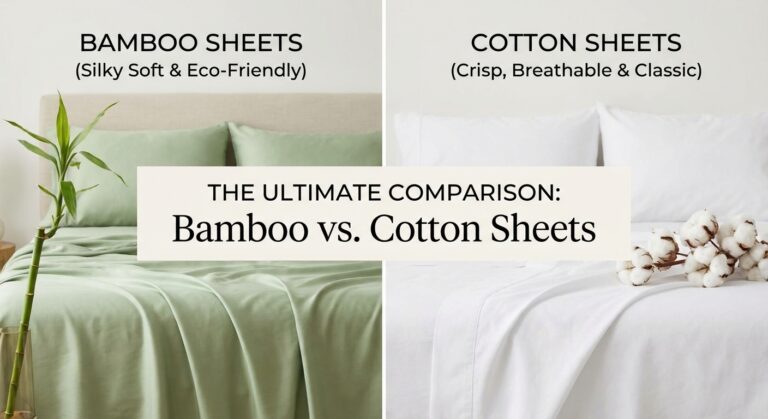
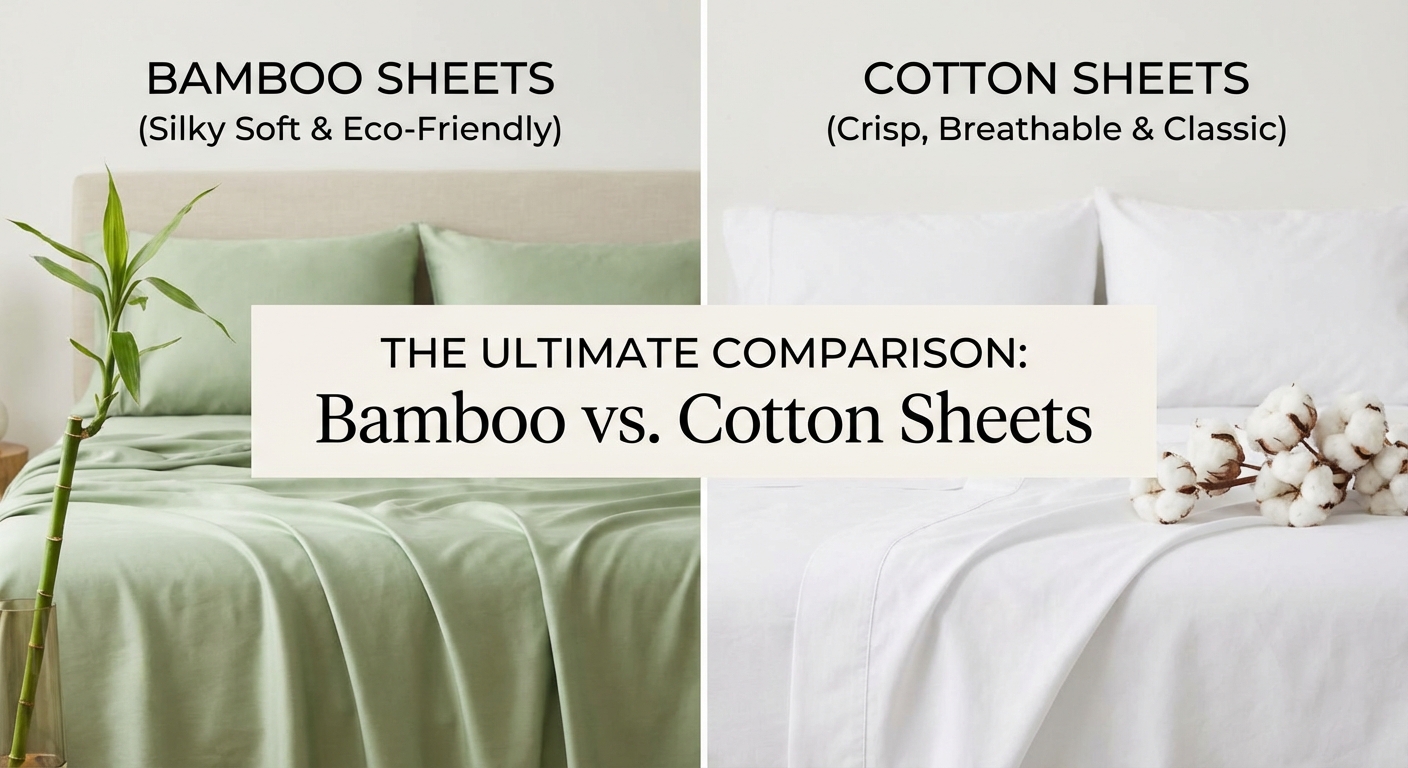
The debate of bamboo sheets vs. cotton sheets has divided sleepers, dermatologists, and eco-conscious shoppers alike. Cotton offers that classic hotel-style crispness and durability, while bamboo promises a silky, cooling touch that feels luxurious against the skin. But which one is actually better for your sleep quality, your wallet, and the planet?
At Blanket Insider, we dive deep into the fibers. Whether you are looking for the best cozy blankets for your living room or outfitting a master suite, the foundation starts with your sheets. In this comprehensive comparison, we break down breathability, durability, maintenance, and environmental impact to help you make the right choice.
At a Glance: Bamboo vs. Cotton
Short on time? Here is the rapid breakdown of how these two textile titans compare.
| Feature | Bamboo Sheets (Viscose/Lyocell) | Cotton Sheets (Percale/Sateen) |
|---|---|---|
| Feel & Texture | Silky, smooth, buttery soft (similar to silk) | Crisp (Percale) or Soft (Sateen), gets softer with time |
| Temperature Regulation | Excellent cooling; wicks moisture aggressively | Breathable, but holds moisture longer |
| Durability | High, but prone to pilling if washed incorrectly | Very High; can last for decades with care |
| Price Point | Moderate to High ($50 – $200+) | Wide Range ($20 – $500+) |
| Eco-Friendliness | Renewable plant, but chemical heavy processing | Water-intensive crop, high pesticide use (unless organic) |
| Best For | Hot sleepers, sensitive skin | Traditionalists, those who like “crisp” bedding |
The Challenger: Bamboo Sheets Explained
When we talk about “bamboo sheets,” we aren’t talking about rough plant fibers. We are usually referring to rayon, viscose, or lyocell derived from bamboo pulp. The plant itself is incredibly sustainable—bamboo is the fastest growing plant on Earth—but the transformation into fabric is where things get complex.
The Feel and Experience
Bamboo sheets are instantly soft right out of the package. They drape over the body like a heavy fluid, similar to silk but without the slippery texture that causes pillows to slide off the bed. If you have ever looked into the benefits of silk vs satin pillowcases for hair and skin, bamboo offers a similar friction-free experience for your whole body.
Cooling Capabilities
One of the biggest selling points for bamboo is its thermal regulation. Bamboo fibers have micro-gaps that allow for superior ventilation. They don’t just breathe; they actively pull moisture away from the skin. For hot sleepers or those living in humid climates, this can be a game-changer, functioning similarly to best bamboo blankets designed for summer use.
✅ Pros of Bamboo
- Hypoallergenic: Resists dust mites and mildew naturally.
- Thermal Regulation: Stays cooler than most cottons.
- Silky Texture: Gentle on sensitive skin and hair.
- Eco-Source: Bamboo grows without pesticides or excessive water.
❌ Cons of Bamboo
- Wrinkles Easily: Hard to keep looking crisp without ironing.
- Care Requirements: Can pill if washed with rough fabrics (like towels).
- Chemical Processing: Converting bamboo to viscose requires harsh chemicals (unless it’s Lyocell).
The Champion: Cotton Sheets Explained
Cotton has been the gold standard for centuries. From affordable Upland cotton to luxurious Egyptian and Pima varieties, this natural fiber is versatile. Cotton sheets are categorized not just by the fiber length (staple), but by the weave.
Understanding Weaves: Percale vs. Sateen
When shopping for cotton, you’ll encounter two main terms:
- Percale: A one-over, one-under weave that creates a matte, crisp, and cool feel. Think of a freshly pressed dress shirt.
- Sateen: A three-over, one-under weave that exposes more thread surface, creating a silky feel and a slight sheen. It is heavier and warmer than percale.
Durability and Aging
High-quality cotton sheets are incredibly robust. Unlike synthetic blends that pill and degrade, long-staple cotton gets softer with every wash. It’s the same principle behind why we love old t-shirts. If you are outfitting a room that needs to withstand wear and tear—like a student dorm (check out our dorm room accessories guide)—cotton is often the pragmatic choice.
✅ Pros of Cotton
- Durability: Can last 10+ years with proper care.
- Variety: Options for every budget, from $20 to $500.
- Easy Care: Can withstand hotter wash cycles than bamboo.
- Crispness: Nothing beats the “snappy” feel of fresh Percale.
❌ Cons of Cotton
- Environmental Cost: Conventional cotton uses massive amounts of water and pesticides.
- Initial Roughness: Cheaper cotton can feel scratchy until broken in.
- Heat Retention: Can retain body heat more than bamboo (especially Sateen).
Head-to-Head: The Decision Factors
1. Temperature Regulation (The Cooling Factor)
For those who wake up sweating, this is the tie-breaker. Bamboo is naturally hydrophilic; it wicks moisture away from the skin faster than cotton. Cotton is breathable, meaning air passes through it, but it absorbs sweat and holds it. If you are comparing cooling blankets or cooling sheets, bamboo is generally superior for extreme heat.
Winner: Bamboo
2. Durability and Maintenance
Cotton fibers are stronger than bamboo rayon fibers. You can wash white cotton sheets in hot water to sanitize them without much fear. Bamboo requires gentle cycles and cool water to prevent the fibers from weakening or pilling. If you hate reading laundry labels (we have a guide on washing weighted blankets that applies here too), cotton is more forgiving.
Winner: Cotton
3. Health and Hygiene
Bamboo is frequently marketed as antibacterial. While the raw plant is, the chemical processing strips some of these properties. However, because bamboo manages moisture better, it creates a less hospitable environment for bacteria and dust mites compared to a damp cotton sheet. For allergy sufferers, bamboo or high-end swaddle-soft fabrics are often recommended.
Winner: Bamboo (Slight Edge)
4. Environmental Impact
This is complicated. Bamboo grows fast with no pesticides, but turning it into fabric is chemically intensive (Viscose process). Cotton uses tons of water and pesticides, but Organic Cotton (GOTS certified) mitigates this. If you buy standard generic sheets, bamboo is likely slightly better. If you buy certified Organic Cotton, cotton wins.
Winner: Tie (Depends on certification)
Which Should You Buy?
Choose Bamboo Sheets If:
- You are a “hot sleeper” or experience night sweats.
- You love the slippery, silky feel of luxury bedding.
- You have sensitive skin, eczema, or hair that tangles easily.
- You want a modern look that drapes elegantly over the bed.
Choose Cotton Sheets If:
- You love the crisp, starched feel of hotel linens (go for Percale).
- You want bedding that lasts for a decade.
- You are on a budget (Upland cotton) or want ultra-luxury (Giza cotton).
- You layer your bed with heavy items like a Sherpa vs Fleece blanket and need a sturdy base layer.
Completing Your Cozy Bed Setup
Sheets are just the first layer. To truly upgrade your sleep experience, you need to consider what goes on top. The debate between a duvet cover vs comforter cover often comes down to the same preference: do you want easy washing (duvet) or simplicity (comforter)?
Furthermore, if you are styling a smaller room, space efficiency matters. Pair your new sheets with space-saving storage solutions or tuck extra linens into blanket chests and trunks to keep your bedroom clutter-free.
Don’t forget the aesthetic touches. A blanket ladder displaying your collection of merino wool throws can make even a simple cotton sheet set look like a designer showroom.
Frequently Asked Questions
1. Do bamboo sheets really keep you cooler than cotton?
Yes. Bamboo fibers are more porous and absorbent than cotton. They wick moisture away from your body faster, which facilitates evaporation and cooling. This makes them ideal for summer or for people who sleep hot.
2. What is thread count, and does it matter for bamboo?
Thread count is a massive marketing myth for bamboo. While important for cotton (where 300-600 is the sweet spot), bamboo fibers are naturally softer. A 250-thread count bamboo sheet feels softer than a 1000-thread count cotton sheet. Don’t chase high numbers with bamboo.
3. Can I wash bamboo sheets with my towels?
Avoid this! Towels are abrasive and heavy. Washing delicate bamboo sheets with rough towels causes friction, leading to pilling (those annoying little fuzzballs). Wash sheets separately or with similar lightweight fabrics.
4. Why are bamboo sheets so expensive?
The manufacturing process to turn tough bamboo grass into soft viscose is complex. Additionally, the demand for eco-friendly alternatives has driven up the market price. However, they are often comparable in price to high-end Egyptian cotton.
5. Which is better for allergies?
Bamboo generally wins here. Its moisture-wicking properties reduce the humidity in your bed, which discourages dust mites and mold growth. If you suffer from allergies, pair bamboo sheets with a hypoallergenic pet blanket if you sleep with animals.
6. Do cotton sheets get softer over time?
Yes, particularly high-quality long-staple cotton. With every wash, the fibers loosen and relax, making the fabric softer. Bamboo starts soft but stays relatively consistent, whereas cotton evolves.
Final Verdict
The battle of bamboo sheets vs cotton sheets doesn’t have a single winner because it depends entirely on what you value most in your sleep environment.
If you crave that luxurious, slippery, cool-to-the-touch feeling and don’t mind spending a bit more for temperature regulation, Bamboo is your winner. It is the modern choice for comfort and skin health.
If you prefer the classic, crisp, clean feeling of a freshly made bed and want a product that is low-maintenance and incredibly durable, Cotton (specifically Percale) is your champion. It is the timeless choice that withstands the rigors of daily life.
Whichever path you choose, ensure you invest in quality. Cheap bamboo feels like plastic, and cheap cotton feels like sandpaper. Your sleep is an investment—make it a good one.
Ready to Transform Your Sleep?
Browse the highest-rated sheets loved by thousands of sleepers.
Explore Best Selling Sheets on AmazonComplete Guide to Caring for Bamboo Sheets
One of the most important aspects of owning bamboo sheets is understanding how to properly care for them. Many first-time buyers invest in premium bamboo bedding only to ruin it within the first few months due to improper washing and drying techniques. This comprehensive care guide will ensure your bamboo sheets remain silky smooth, vibrant, and durable for years to come.
Washing Bamboo Sheets: The Step-by-Step Process
Bamboo sheets require a gentler approach compared to cotton. The fibers, while strong in their natural state, become more delicate once processed into viscose or lyocell. Here is the proper way to wash your bamboo sheets every time:
- Pre-treat stains naturally: Before putting sheets in the washing machine, spot-treat any stains with a mixture of cold water and mild dish soap. Avoid bleach or harsh stain removers, as these can break down bamboo fibers and cause discoloration. For blood stains, use cold water (never hot, as heat sets protein stains) and hydrogen peroxide.
- Use cold or lukewarm water only: Set your washing machine to a cold or lukewarm cycle, ideally between 30°C and 40°C (86°F to 104°F). Hot water causes bamboo fibers to shrink and weaken, leading to pilling and a rough texture over time.
- Select the gentle or delicate cycle: The aggressive agitation of a regular cycle can cause friction between fibers, resulting in those frustrating little fuzzballs known as pilling. The gentle cycle minimizes this friction and protects the integrity of the fabric.
- Use a mild, plant-based detergent: Choose a gentle, pH-neutral detergent without optical brighteners, fabric softeners, or bleach. These additives can coat bamboo fibers and reduce their natural softness and moisture-wicking capabilities. Eco-friendly detergents are ideal as they clean effectively without leaving residue.
- Wash sheets separately or with similar fabrics: Never wash bamboo sheets with heavy items like towels, jeans, or bedding with zippers and buttons. These rough items create friction that damages bamboo fibers. Wash your sheets with other lightweight items like pillowcases or lightweight clothing.
- Do not use fabric softener: This is a critical rule. Fabric softeners leave a waxy coating on fibers that reduces bamboo’s natural softness and its ability to wick moisture. Over time, this coating builds up and makes sheets feel less luxurious. Instead, add half a cup of white vinegar to the rinse cycle for a natural softening effect.
Drying Bamboo Sheets: Air Dry vs. Machine Dry
How you dry your bamboo sheets is just as important as how you wash them. The high heat of a tumble dryer is the number one cause of bamboo sheet deterioration.
Air Drying (Recommended): The best method for drying bamboo sheets is to hang them outdoors on a clothesline or lay them flat on a drying rack. Air drying preserves the fibers, prevents shrinkage, and eliminates the risk of heat damage. If you dry your sheets outside, avoid direct sunlight for extended periods, as UV rays can fade colors over time. A shaded, breezy spot is ideal.
Machine Drying (If Necessary): If you must use a dryer, set it to the lowest heat setting or the “air fluff” option. Remove the sheets while they are still slightly damp and finish by hanging them to air dry. This prevents over-drying, which makes bamboo fibers brittle and prone to breakage. Never use high heat, and never dry bamboo sheets with dryer sheets, as these leave a coating that reduces softness.
Ironing and Wrinkle Removal
Bamboo sheets wrinkle easily, which is one of their few drawbacks. If you prefer a crisp, smooth look, you can iron bamboo sheets on a low heat setting while they are still slightly damp. Use a pressing cloth between the iron and the fabric to prevent scorching. However, many bamboo sheet enthusiasts prefer the natural, relaxed drape of unironed bamboo and skip this step entirely.
A helpful tip for reducing wrinkles without ironing: remove your bamboo sheets from the dryer (or clothesline) immediately and put them on the bed while they are still warm. The weight of the fabric will naturally smooth out most wrinkles as the sheets cool and settle on the mattress.
Storage Tips for Bamboo Sheets
Proper storage ensures your bamboo sheets stay fresh between uses. Store them in a cool, dry place away from direct sunlight. Avoid storing bamboo sheets in plastic bags or airtight containers, as this can trap moisture and lead to mildew or a musty smell. Instead, use a breathable cotton storage bag or simply fold them and place them on a shelf in your linen closet.
If you live in a humid climate, consider adding a silica gel packet or a natural moisture absorber (like baking soda in a small open container) to your linen closet to prevent excess humidity from affecting your sheets.

Invest in quality bamboo sheets that last. Follow our care guide for maximum longevity.
Check Price on AmazonComplete Guide to Caring for Cotton Sheets
Cotton sheets are significantly more forgiving than bamboo when it comes to washing and maintenance, but that doesn’t mean you can throw them in the washer without thought. Proper care extends the life of your cotton sheets dramatically and ensures they maintain that beloved softness and crispness over many years of use.
Washing Cotton Sheets: Best Practices
The beauty of cotton sheets is their versatility. Unlike bamboo, cotton can handle higher temperatures and more aggressive washing cycles. However, following best practices will still maximize the lifespan of your bedding.
- Wash before first use: Always wash your new cotton sheets before putting them on the bed. Manufacturing processes leave residues, chemicals, and sizing agents on the fabric that can irritate skin and reduce absorbency. A first wash also removes any loose fibers and预-shrinks the fabric.
- Use warm or hot water for whites: White cotton sheets can be washed in hot water (up to 60°C/140°F) to sanitize them and remove body oils and stains. For colored sheets, use warm water (around 40°C/104°F) to prevent color fading while still getting a thorough clean.
- Choose the regular or normal cycle: Cotton fibers are strong enough to handle the regular wash cycle. The extra agitation actually helps clean the sheets more thoroughly and keeps the fibers from matting together.
- Use a quality detergent: A good quality liquid detergent works best for cotton. Powdered detergents can sometimes leave residue in the weave if the water is cold. Avoid excessive detergent—use the recommended amount or slightly less. Over-sudsing leaves residue that makes sheets feel stiff.
- Separate by color: Wash white, light, and dark cotton sheets separately to prevent color transfer. This is especially important for the first several washes when excess dye is more likely to bleed.
- Bleach sparingly (whites only): Chlorine bleach can weaken cotton fibers over time if used excessively. For whites, use oxygen-based bleach (like OxiClean) instead, which brightens without damaging fibers. Never bleach colored cotton sheets.
Drying Cotton Sheets
Cotton sheets handle the dryer much better than bamboo, but there are still considerations for optimal results.
Machine Drying: Tumble dry cotton sheets on a medium heat setting. Remove them from the dryer while they are still very slightly damp and fold them immediately, or put them on the bed. This prevents deep wrinkles from setting in and reduces the need for ironing. Over-drying cotton can make the fibers stiff and scratchy.
Air Drying: Hanging cotton sheets outdoors on a clothesline gives them a fresh, natural scent and keeps them soft. If you prefer crisp sheets, line-drying is actually the preferred method, as the wind and sunlight naturally soften the fibers while the weight of the damp fabric pulls out wrinkles.
Ironing Cotton Sheets for a Hotel-Perfect Finish
If you love that crisp, hotel-quality feel, ironing your cotton percale sheets while they are still slightly damp produces the best results. Use a medium-high heat setting and iron while the sheets are on the bed for convenience. For sateen cotton sheets, use a lower heat setting to avoid creating shine marks on the surface.
A professional trick: iron one side of the sheet while it is on the bed, then flip it and iron the other side. This produces a perfectly smooth finish on both sides that rivals luxury hotel bedding.
How to Soften Stiff Cotton Sheets
If your cotton sheets have become stiff or scratchy over time, there are several natural methods to restore their softness:
- White vinegar soak: Soak sheets in a mixture of one part white vinegar to four parts warm water for 30 minutes before washing. Vinegar breaks down detergent residue and mineral deposits that cause stiffness.
- Baking soda wash: Add half a cup of baking soda to your wash cycle. It naturally softens fibers and neutralizes odors.
- Wool dryer balls: Toss a few wool dryer balls into the dryer with your cotton sheets. They physically fluff the fibers and reduce drying time by absorbing moisture.
- Enzyme-based detergent: Switch to a detergent containing natural enzymes, which break down proteins and oils that build up in fibers and cause stiffness.
Storage Recommendations for Cotton Sheets
Cotton sheets are easy to store. Fold them neatly and place them in your linen closet. For a hotel-like presentation, fold each set into a rectangle and stack them with the pillowcases on top. Avoid compressing cotton sheets too tightly, as this can create deep-set wrinkles. If your closet is prone to humidity, ensure good air circulation to prevent mildew.
One useful tip: store each sheet set inside one of its own pillowcases. This keeps the entire set together and makes it easy to grab a complete set when you need fresh sheets. No more searching for the matching fitted sheet!
Are Bamboo Sheets Good for Winter? Cold Weather Considerations
One of the most common misconceptions about bamboo sheets is that they are only suitable for summer. While bamboo is celebrated for its cooling properties, it can absolutely be used year-round with the right approach. Understanding how bamboo behaves in cold weather helps you make an informed decision about whether it works for your winter sleep needs.
How Bamboo Behaves in Cold Weather
Bamboo sheets are thermoregulating, meaning they adapt to your body temperature. In warm conditions, they wick moisture and cool you down. In cold conditions, they actually help retain body heat by creating a breathable insulating layer against your skin. This thermoregulating property means bamboo sheets won’t make you feel freezing in winter the way some people assume.
However, bamboo does feel cool to the touch initially, which can be uncomfortable during the first few minutes of getting into bed on a cold night. This is where layering becomes important. Pair your bamboo sheets with a heavier blanket or duvet—perhaps a cozy fleece or sherpa blanket—to create a warm cocoon while still benefiting from bamboo’s moisture-wicking properties.
The Problem with Cotton in Winter
Cotton sheets, particularly sateen weaves, can actually feel warmer than bamboo in winter because cotton absorbs and holds moisture rather than wicking it away. While this might seem like an advantage in cold weather, it can backfire. If you perspire during sleep (even slightly), cotton sheets absorb that moisture and then become cold and clammy against your skin. This can leave you feeling colder than if you had been using bamboo.
This phenomenon is well-known in outdoor clothing and camping gear: cotton is often called “death cloth” because it loses its insulating properties when wet. While sheets are a different context than hiking gear, the underlying principle is the same. Cotton’s tendency to retain moisture can make it less comfortable in cold, damp conditions.
Best Winter Bedding Strategy with Bamboo
If you choose bamboo sheets for year-round use, here is the optimal winter bedding strategy:
- Start with bamboo sheets: Use bamboo as your base layer for the skin-soft, moisture-wicking benefits.
- Add a flannel or fleece blanket: Layer a medium-weight flannel blanket or a plush fleece throw over the bamboo sheets for insulation. This provides warmth while bamboo manages moisture underneath.
- Top with a thick duvet or comforter: A high-quality down or down-alternative duvet provides the primary insulation layer. The bamboo base ensures that any moisture generated is wicked away from your body before it can make you cold.
- Use a mattress pad: A quilted mattress pad adds an extra layer of insulation from below, preventing the cold mattress from drawing heat away from your body.
This layered approach gives you the best of both worlds: the luxury feel and moisture management of bamboo with the warmth and insulation of traditional winter bedding. Many sleep experts recommend this combination for hot sleepers who live in cold climates, as it prevents the overheating-and-sweating cycle that can disrupt sleep.
Bamboo vs. Flannel for Winter Sleeping
Flannel sheets are a popular winter choice, and for good reason—they are warm, soft, and cozy. But how do they compare to bamboo for cold-weather sleeping?
Flannel is a brushed cotton fabric that traps air in its raised fibers, creating insulation. It feels warm immediately and is excellent for very cold climates. However, flannel absorbs moisture rather than wicking it, which can lead to clamminess if you perspire during the night.
Bamboo, on the other hand, starts cooler but manages moisture better. For people who sleep hot even in winter (a common condition), bamboo with appropriate layering is often more comfortable than flannel, which can cause overheating. For people who are genuinely cold sleepers, flannel is likely the better choice for sheets, with bamboo reserved for warmer months.
Year-round comfort starts with quality bamboo sheets. Perfect for layering in any season.
Check Price on AmazonBamboo vs. Cotton Sheets for Children and Babies
Choosing bedding for children and babies requires extra consideration. Young skin is more sensitive, kids tend to have more allergies, and children’s bedding goes through significantly more wear and tear than adult bedding. Both bamboo and cotton have distinct advantages for young sleepers, and the right choice depends on your child’s specific needs.
Why Bamboo Works Well for Babies
Bamboo’s natural properties make it an excellent choice for infant bedding. Its hypoallergenic nature means fewer allergens in the bed, which is crucial for babies whose immune systems are still developing. Bamboo resists dust mites, mold, and mildew naturally, creating a cleaner sleep environment for vulnerable infants.
The softness of bamboo is another major advantage for babies. Infant skin is thinner and more prone to irritation than adult skin. The silky, smooth texture of bamboo minimizes friction and reduces the risk of rashes and skin irritation. This is particularly important for babies with cradle cap, eczema, or other skin conditions.
Bamboo’s temperature regulation is also beneficial for babies, who are less able to regulate their own body temperature. Overheating during sleep is a risk factor for SIDS (Sudden Infant Death Syndrome), so using breathable, moisture-wicking bedding like bamboo is recommended by many pediatricians as part of a safe sleep environment.
Why Cotton Works Well for Kids
While bamboo excels in softness and hypoallergenic properties, cotton has practical advantages that matter when it comes to children’s bedding. Kids are messy. They spill drinks, have accidents, and get food on their sheets regularly. Cotton’s ability to withstand hot wash cycles and aggressive cleaning makes it more practical for children’s bedding.
Organic cotton, in particular, is a popular choice for children’s bedding. GOTS-certified organic cotton is free from harmful chemicals and pesticides, giving parents peace of mind. It is also durable enough to survive the hundreds of washes that children’s bedding requires over the years.
Best of Both Worlds: The Hybrid Approach
Many parents find that a combination approach works best. Use bamboo pillowcases and flat sheets for the comfort and skin benefits against the child’s skin, paired with a cotton fitted sheet and cotton duvet cover for durability and easy washing. This allows you to capture the benefits of both materials where they matter most.
For nursery bedding specifically, bamboo is often the preferred choice because of its superior softness and hypoallergenic properties. As children grow and become more active (and messier), transitioning to cotton or a hybrid approach becomes more practical.
Safety Considerations for Children’s Bedding
Regardless of whether you choose bamboo or cotton, certain safety standards should always be met for children’s bedding:
- Thread count: For babies, avoid extremely high thread counts that can reduce breathability. A thread count of 200-400 is ideal.
- Fitted sheet fit: Ensure the fitted sheet fits the mattress tightly with no loose fabric that could pose a suffocation risk.
- No loose blankets for infants: For babies under 12 months, use a sleep sack instead of loose blankets, regardless of sheet material.
- Fire safety: Ensure all children’s bedding meets CPSC flammability standards.
- Certifications: Look for OEKO-TEX Standard 100 certification, which tests for harmful substances in textiles.
For older children and toddlers, both bamboo and cotton are safe choices. Focus on durability, ease of cleaning, and your child’s comfort preferences. Some children strongly prefer the silky feel of bamboo, while others prefer the crispness of cotton.
Understanding Bedding Certifications: GOTS, OEKO-TEX, FSC, and More
When shopping for bamboo or cotton sheets, you will encounter various certifications on labels and product descriptions. Understanding what these certifications mean helps you make informed purchasing decisions and ensures you are getting the quality and safety claims that manufacturers promise.
GOTS (Global Organic Textile Standard)
GOTS is the gold standard for organic textiles. This certification covers the entire supply chain, from harvesting raw materials through environmentally and socially responsible manufacturing to labeling. For cotton sheets, GOTS certification means:
- The cotton was grown without synthetic pesticides, herbicides, or genetically modified seeds.
- The processing (dyeing, finishing) uses low-impact, non-toxic chemicals.
- Workers are paid fair wages and work in safe conditions.
- The final product contains at least 95% organic fibers (for “organic” label) or at least 70% organic fibers (for “made with organic” label).
GOTS certification is more common for cotton sheets than bamboo, as organic bamboo cultivation is less standardized. However, some bamboo manufacturers are pursuing GOTS certification for their bamboo crops, particularly in China where most bamboo is grown.
OEKO-TEX Standard 100
OEKO-TEX Standard 100 is one of the most recognized certifications in the textile industry. It tests the finished product for harmful substances, including:
- Formaldehyde and other volatile organic compounds (VOCs)
- Heavy metals (lead, mercury, cadmium)
- Pesticides and herbicide residues
- Chlorinated phenols
- Allergenic dyes
- pH value (must be skin-friendly)
This certification is available for both bamboo and cotton sheets and is particularly important for people with sensitive skin, allergies, or chemical sensitivities. When a product carries OEKO-TEX Standard 100 certification, it has been independently tested and proven safe for human use, including for babies (Class I certification).
FSC (Forest Stewardship Council) for Bamboo
FSC certification applies to the bamboo raw material itself, ensuring that the bamboo was harvested from responsibly managed forests that provide environmental, social, and economic benefits. FSC-certified bamboo sheets come from sources that:
- Protect old-growth forests and biodiversity
- Respect the rights of indigenous peoples and local communities
- Ensure the long-term health and vitality of the forest ecosystem
- Practice sustainable harvesting that allows bamboo to regenerate
While FSC certification does not address the chemical processing of bamboo into fabric (that is covered by OEKO-TEX or other certifications), it ensures that the raw material is sourced responsibly. Look for this certification on bamboo sheets to ensure you are supporting sustainable forestry practices.
USDA Organic
For cotton sheets, USDA Organic certification (in the United States) or equivalent certifications in other countries guarantee that the cotton was grown according to strict organic farming standards. This means no synthetic fertilizers, no GMOs, and no sewage sludge as fertilizer. USDA Organic cotton sheets are among the most environmentally friendly options available.
What Certifications to Look For When Buying Sheets
Here is a quick reference guide for which certifications matter most for different priorities:
| Your Priority | Look For These Certifications |
|---|---|
| Chemical safety / Sensitive skin | OEKO-TEX Standard 100 (Class I for babies) |
| Environmental sustainability | GOTS (organic), FSC (bamboo source), USDA Organic |
| Fair labor practices | GOTS, Fair Trade Certified |
| All-around quality | GOTS + OEKO-TEX combination |
When evaluating certifications, always verify that the certification number on the product is valid. You can check OEKO-TEX certifications at their official website and GOTS certifications through the Textile Exchange database. Many budget brands make vague “eco-friendly” claims without actual third-party certifications—be wary of these.
Bamboo vs. Cotton Sheets: Shrinkage Rates and Fit Guide
One of the most frustrating experiences with new sheets is discovering they no longer fit your mattress after the first wash. Shrinkage varies significantly between bamboo and cotton sheets, and understanding these differences helps you choose the right size and care for your sheets properly.
Bamboo Sheet Shrinkage
Bamboo sheets, particularly those made from viscose or rayon, are more prone to shrinkage than cotton. On average, bamboo sheets can shrink between 3% and 5% after the first wash. This is primarily due to the chemical processing that creates the fibers—when exposed to water and heat, the fibers contract as they relax from the manufacturing tension.
To minimize bamboo shrinkage:
- Always wash in cold or lukewarm water (never hot)
- Use the gentle cycle
- Air dry whenever possible
- If using a dryer, use the lowest heat setting
- Consider buying one size up from your mattress dimensions if you plan to machine dry
Some bamboo sheet manufacturers pre-shrink their fabric before cutting and sewing. These “pre-shrunk” sheets experience significantly less shrinkage (typically 1-2%). Always check the product description for information about pre-shrinking.
Cotton Sheet Shrinkage
Cotton sheets also shrink, but the rate depends on the type of cotton and the weave. Here is a general breakdown:
- Upland cotton (standard): 3-5% shrinkage in the first wash
- Long-staple cotton (Egyptian, Pima): 2-4% shrinkage, with less after the first wash
- Pre-shrunk cotton: 1-2% shrinkage
- Combed cotton: 2-3% shrinkage due to the removal of short fibers
Cotton shrinkage is more predictable than bamboo shrinkage. Most high-quality cotton sheets are pre-shrunk during manufacturing, reducing post-purchase shrinkage to minimal levels. The first wash typically accounts for the majority of shrinkage, with subsequent washes producing negligible additional shrinkage.
Deep Pocket Sheets: Do You Need Them?
Modern mattresses are getting thicker, and standard sheets often don’t fit properly. If your mattress is more than 12 inches thick (including any mattress topper), you likely need deep pocket sheets. Both bamboo and cotton are available in deep pocket configurations.
Here is a general guide to mattress depth and sheet pocket size:
| Mattress Depth | Recommended Pocket Depth | Sheet Type |
|---|---|---|
| 8-11 inches | Standard (up to 14 inches) | Regular fitted sheet |
| 12-16 inches | Deep pocket (up to 18 inches) | Deep pocket fitted sheet |
| 17+ inches | Extra deep pocket (up to 22+ inches) | Extra deep pocket fitted sheet |
When choosing deep pocket sheets, remember that bamboo shrinkage may reduce the pocket depth. If your mattress is at the upper limit of a pocket depth range, consider bamboo sheets that are specifically marketed as pre-shrunk or buy the next size up in pocket depth.
Fitted Sheet Corner Depth and Elastic Quality
Not all fitted sheets are created equal, even within the same pocket depth category. The quality of the elastic and the construction of the corner seams significantly affect how well a fitted sheet stays on the mattress. Look for sheets with elastic that goes all the way around the sheet (not just at the corners) and reinforced corner seams for the best fit.
Bamboo sheets typically have good elastic quality because the fabric has natural stretch. Cotton sheets may have slightly less give, but high-quality cotton fitted sheets compensate with stronger elastic and better construction. In both cases, investing in premium sheets from reputable brands ensures better fit and longevity.
Bamboo vs. Cotton Sheets: Complete Cost Analysis and Value Breakdown
When comparing bamboo and cotton sheets, the upfront price is only part of the equation. The true cost of bedding includes the purchase price, the expected lifespan, maintenance costs, and the value you get from better sleep quality. This comprehensive cost analysis breaks down the real financial picture of both options.
Upfront Cost Comparison
Here is a realistic breakdown of what you can expect to pay for quality sheets at various price points:
| Quality Tier | Bamboo Sheets (Queen Set) | Cotton Sheets (Queen Set) |
|---|---|---|
| Budget | $30 – $50 | $15 – $30 |
| Mid-Range | $50 – $100 | $40 – $80 |
| Premium | $100 – $200 | $80 – $150 |
| Luxury | $200 – $400+ | $150 – $500+ |
At the budget end, cotton is significantly cheaper. A basic cotton sheet set from a mass-market retailer can cost half as much as an entry-level bamboo set. However, the gap narrows considerably in the premium and luxury tiers. High-end bamboo sheets are often comparable in price to premium Egyptian cotton sheets.
Cost Per Use: The True Value Metric
The more meaningful metric for evaluating bedding value is cost per use. Here is how the math works out over time:
Bamboo Sheets: A quality bamboo sheet set that costs $100 and lasts 3-5 years (with proper care) and is used approximately 300 nights per year yields a cost per use of about $0.07-$0.11. Over 5 years, that is roughly 1,500 uses for $100.
Cotton Sheets: A quality cotton sheet set that costs $80 and lasts 5-8 years (with proper care) yields a cost per use of about $0.02-$0.05. Over 7 years, that is roughly 2,100 uses for $80.
While cotton has a lower cost per use due to its longer lifespan, the difference is only a few cents per night. For most consumers, the comfort and health benefits of their preferred material outweigh the marginal cost difference.
Hidden Costs to Consider
Several hidden costs can affect the total cost of ownership for both materials:
- Water and energy for washing: Cotton can be washed in hot water and dried at higher temperatures, using more energy. Bamboo requires cold water and lower dryer settings, saving on energy costs. The difference is modest—perhaps $5-$10 per year—but it adds up.
- Detergent costs: Bamboo requires milder, often more expensive detergents. Cotton can use standard detergents. Over a year, this might add $10-$20 to the cost of bamboo sheet ownership.
- Replacement frequency: If bamboo sheets pill or deteriorate faster due to improper care, you may need to replace them sooner, increasing the long-term cost. Properly maintained, both materials provide similar value.
- Energy for climate control: Bamboo’s cooling properties may reduce air conditioning costs in summer, while cotton’s warmth may reduce heating costs in winter. These savings are highly individual and depend on your climate and sleep habits.
Is Bamboo Worth the Extra Cost?
For most people who prioritize sleep quality and comfort, the answer is yes. The premium you pay for bamboo sheets (typically 20-40% more than comparable cotton sheets) buys you:
- Superior softness from day one (no break-in period)
- Better temperature regulation for hot sleepers
- Hypoallergenic properties for sensitive skin
- A luxurious, silky feel that rivals high-end hotel bedding
However, if you are on a tight budget, prefer the crisp feel of cotton, or need bedding that withstands heavy use and frequent hot-water washing, cotton offers exceptional value. A quality cotton percale sheet set from a reputable brand at $40-$60 will provide years of comfortable sleep at a fraction of the cost of luxury bamboo.
Bamboo vs. Cotton Sheets for Eczema, Psoriasis, and Sensitive Skin
For the millions of people who suffer from eczema, psoriasis, rosacea, or general skin sensitivity, the choice of bed sheets can significantly impact their comfort and even their symptoms. The fabric you sleep on interacts with your skin for 7-8 hours every night, making it one of the most important environmental factors for managing skin conditions.
Why Fabric Matters for Skin Conditions
Skin conditions like eczema and psoriasis involve a compromised skin barrier. This means the skin is more susceptible to irritation from friction, chemical residues, temperature extremes, and moisture imbalances. The fabric of your sheets directly affects all four of these factors:
- Friction: Rough or textured fabrics create micro-abrasions that can trigger flare-ups and increase itching
- Chemical residues: Detergent residues and chemical finishes on fabric can irritate compromised skin
- Temperature: Overheating triggers itching and inflammation in many skin conditions
- Moisture: Both excessive dryness and excessive moisture can worsen skin conditions
Bamboo for Sensitive Skin
Bamboo sheets have several properties that make them particularly beneficial for people with skin conditions:
Ultra-low friction coefficient: Bamboo’s silky smooth surface creates less friction against skin than any other common bedding material, including silk. For eczema sufferers, this reduced friction means fewer micro-irritations that can trigger flare-ups. Dermatologists frequently recommend bamboo sheets for patients with severe eczema.
Moisture management: Bamboo’s moisture-wicking properties help maintain the ideal skin hydration level—neither too dry nor too damp. For psoriasis, where dry, flaky patches are common, bamboo’s breathable nature prevents the skin from drying out overnight. For eczema, where sweat can trigger intense itching, bamboo’s wicking properties reduce sweat contact with the skin.
Naturally hypoallergenic: Bamboo resists dust mites, mold, and bacteria without chemical treatments. For people whose skin conditions are triggered or worsened by allergens, this natural hypoallergenic property provides a cleaner, less irritating sleep environment.
Temperature regulation: Overheating is a major trigger for itching in eczema and psoriasis. Bamboo’s cooling properties help maintain a comfortable body temperature throughout the night, reducing the likelihood of heat-triggered flare-ups.
Cotton for Sensitive Skin
Cotton also has benefits for sensitive skin, though it generally falls short of bamboo in several key areas:
Natural fiber: Cotton is a natural, plant-based fiber that is less likely to cause allergic reactions compared to synthetic materials. For people with chemical sensitivities, organic cotton (GOTS-certified) eliminates concerns about pesticide residues.
Breathability: Cotton’s breathability helps prevent overheating and allows air to circulate around the skin. Percale weaves, in particular, are cool and airy, which benefits people whose skin conditions worsen with heat.
Durability in hot washing: Cotton can be washed at high temperatures (60°C/140°F), which is important for people with severe allergies or skin conditions. Hot washing eliminates dust mites, bacteria, and allergens more effectively than cold washing. This is a significant advantage over bamboo, which requires cold washing.
Dermatologist Recommendations
Most dermatologists recommend bamboo over cotton for patients with active skin conditions, with some important caveats:
- For active eczema flares: Bamboo is strongly recommended due to its low friction and moisture management
- For psoriasis: Both materials work well, but bamboo’s temperature regulation may provide an edge
- For contact dermatitis: OEKO-TEX certified sheets (either bamboo or organic cotton) are essential to avoid chemical irritants
- For general sensitive skin: Bamboo is preferred, but high-quality organic cotton is an acceptable alternative
Whatever material you choose, always wash new sheets before first use to remove manufacturing residues, use fragrance-free detergent, and avoid fabric softeners and dryer sheets, which leave chemical residues on fabric that can irritate sensitive skin.
Bamboo vs. Cotton Sheets for Adjustable Beds and Specialty Mattresses
Adjustable beds have surged in popularity, with more people discovering the benefits of sleeping with their head or feet elevated. However, standard sheets don’t always work well on adjustable beds. The movement of the mattress as it bends and flexes can cause sheets to pop off at the corners, bunch up, or create uncomfortable wrinkles. Understanding how bamboo and cotton perform on adjustable beds helps you make the right choice.
How Sheets Perform on Adjustable Beds
When an adjustable bed flexes, the sheet is subjected to stretching, pulling, and shifting forces that a flat mattress doesn’t create. The key properties that determine how well a sheet stays on an adjustable bed are:
- Elastic grip: The strength and coverage of the elastic around the fitted sheet edge
- Fabric stretch: The natural give of the fabric, which allows it to move with the mattress
- Corner depth: How much excess fabric is available to accommodate the mattress flex
- Smoothness: How easily the fabric slides over itself during flexion (too smooth = slides off; too rough = bunches up)
Bamboo on Adjustable Beds
Bamboo performs well on adjustable beds due to its natural stretch and silky smooth surface. The fabric’s drape allows it to conform to the changing mattress shape without creating excessive bunching. However, bamboo’s smoothness can sometimes work against it—if the fitted sheet’s elastic isn’t strong enough, the slippery fabric can slide off the mattress corners during adjustment.
To optimize bamboo sheets for adjustable beds:
- Choose sheets with deep pockets (at least 16 inches) to ensure adequate fabric to grip the mattress
- Look for sheets with all-around elastic (not just corner elastic) for a more secure fit
- Consider using sheet suspenders or clips for extra security if the sheets tend to pop off
- Buy extra-deep pocket sheets to accommodate both the mattress depth and the additional fabric needed for flexion
Cotton on Adjustable Beds
Cotton’s slightly rougher texture gives it a natural advantage on adjustable beds—it doesn’t slide off as easily as bamboo. Cotton percale, in particular, has enough grip to stay in place during mattress adjustments. Sateen cotton, being smoother, behaves more like bamboo on adjustable beds.
Cotton’s durability also makes it a practical choice for adjustable beds, which subject sheets to more mechanical stress than a static mattress. Cotton fibers are stronger and more resistant to the repeated stretching and pulling that adjustable beds create.
Best Sheets for Memory Foam and Hybrid Mattresses
Memory foam and hybrid mattresses present their own sheet challenges. These mattresses often sleep hotter than traditional spring mattresses, making bamboo’s cooling properties particularly valuable. The smooth surface of memory foam also interacts differently with sheet fabrics:
- Bamboo on memory foam: The silky smoothness of bamboo can cause sheets to shift on the smooth memory foam surface. A mattress pad between the mattress and sheet can help provide grip.
- Cotton on memory foam: Cotton’s natural texture provides better grip on memory foam, reducing shifting during sleep. Percale cotton is particularly effective at staying in place.
For hybrid mattresses (which combine memory foam with innersprings), both materials work well. The key consideration is temperature—hybrid mattresses often retain more heat than traditional innersprings, making bamboo’s cooling properties beneficial for hot sleepers.
Need sheets that stay put on your adjustable bed? Deep pocket bamboo sheets are the answer.
Check Price on AmazonBamboo vs. Cotton Sheets for Couples: When Sleep Preferences Differ
One of the most common challenges couples face in the bedroom is reconciling different sleep preferences. One partner may sleep hot while the other sleeps cold. One may prefer silky softness while the other loves crisp percale. When it comes to choosing sheets that work for both of you, understanding how bamboo and cotton serve different sleep styles helps you find a compromise.
The Hot Sleeper vs. Cold Sleeper Problem
Temperature disagreements in bed are incredibly common. Studies show that the ideal sleep temperature for most people is between 60°F and 67°F (15°C to 19°C), but individual preferences vary widely. When one partner runs hot and the other runs cold, sheet choice becomes a battleground.
Bamboo as a compromise: Bamboo’s thermoregulating properties make it an excellent compromise for couples with different temperature preferences. The moisture-wicking properties keep the hot sleeper comfortable, while the breathable insulation provides adequate warmth for the cooler sleeper. The silky smooth texture also tends to satisfy both partners’ comfort preferences.
Cotton percale as a compromise: Cotton percale’s breathability and crispness can work for both partners, especially when paired with layered blankets. The cooler sleeper can add an extra blanket, while the warmer sleeper uses fewer layers. This layered approach gives each partner control over their individual temperature.
The Feel Preference Conflict
Some partners have strong preferences about the tactile feel of their sheets. The silky smoothness of bamboo may feel slippery to someone accustomed to crisp cotton, while cotton percale may feel rough to someone who loves bamboo’s texture.
A practical solution: use bamboo sheets with a cotton flat sheet. The cotton flat sheet provides the crisp feel for the partner who prefers it, while the bamboo fitted sheet underneath provides the cooling and skin benefits for the other partner. This hybrid approach satisfies both preferences without compromise.
Queen vs. King Size Considerations
The size of your bed also affects sheet choice. King-size beds require more fabric, which increases the price difference between bamboo and cotton. A king-size bamboo sheet set may cost 30-50% more than a comparable cotton set. For couples on a budget, investing in a quality cotton sheet set and adding bamboo pillowcases provides a practical middle ground.
For couples who have different pillow preferences (one likes firm, one likes soft), using different pillowcase materials can be a simple way to accommodate both. Bamboo pillowcases benefit the partner with sensitive skin or hair concerns, while cotton pillowcases work for the partner who prefers a crisp feel.
Bamboo vs. Cotton Sheets for Pet Owners: Hair, Dander, and Durability
If you share your bed with a furry friend, your choice of sheets takes on additional considerations. Pet hair, dander, and the inevitable wear and tear from claws and paws all affect how well your bedding holds up over time. Both bamboo and cotton have specific characteristics that make them more or less suitable for pet-friendly households.
Pet Hair Resistance
Pet hair clings to fabric through static electricity and friction. The smoother the fabric surface, the easier it is to remove pet hair. This gives bamboo a slight advantage—pet hair tends to sit on the surface of bamboo sheets rather than embedding in the fibers, making it easier to brush off or vacuum.
Cotton, particularly percale weaves, has more texture that can trap pet hair in the fibers. Sateen cotton, being smoother, behaves more like bamboo in this regard. However, cotton’s durability means it can withstand the more aggressive cleaning methods needed to fully remove embedded pet hair (lint rollers, hot-water washing, etc.).
Dander and Allergies
For pet owners who are allergic to their animals (a surprisingly common situation), bamboo’s hypoallergenic properties provide a significant advantage. Bamboo naturally resists dust mites and creates a less hospitable environment for the microscopic dander particles that trigger allergic reactions. Combined with bamboo’s moisture-wicking properties, which reduce the humid environment that allergens thrive in, bamboo sheets create a cleaner sleep environment for allergy-prone pet owners.
Cotton sheets, while not inherently hypoallergenic, can be washed at higher temperatures (60°C/140°F) to kill dust mites and remove allergens more effectively than bamboo’s cold-water requirement. This hot-wash capability makes cotton a practical choice for severe allergy sufferers who need to sanitize their bedding regularly.
Durability Against Pet Wear
Cats and dogs can be tough on bedding. Claws create snags, paws create wear spots, and the general activity of pets moving around on the bed creates friction that accelerates fabric deterioration. Cotton’s superior durability makes it more resilient to this type of wear.
Bamboo sheets, while durable under normal use, are more susceptible to pilling and snagging from pet claws. If you have pets, choose a higher-quality bamboo sheet with a tighter weave, as loose weaves are more vulnerable to snagging. Alternatively, consider using a washable blanket or coverlet as a protective layer between your sheets and your pets.
Practical Recommendations for Pet Owners
- If you have cats (scratch risk): Cotton sheets are more durable against claw damage. Consider adding a washable coverlet as a protective layer.
- If you have dogs (shedding): Bamboo’s smooth surface makes hair removal easier, but cotton’s hot-wash capability is better for dander control.
- If you have allergies to pets: Bamboo’s hypoallergenic properties plus cotton’s hot-wash capability—a combination approach may be best.
- If your pets sleep in your bed every night: Prioritize durability (cotton) over luxury feel (bamboo), and invest in quality sheets that can withstand frequent washing.
For comprehensive tips on keeping your bedroom pet-friendly, check out our guide to the best pet blankets for protecting your bedding while keeping your furry friend comfortable.
Organic Bamboo vs. Organic Cotton: Which Is Really More Sustainable?
Sustainability is a major driver of consumer choice in bedding, and both bamboo and cotton have legitimate claims to being environmentally friendly. However, the full sustainability picture is more nuanced than marketing claims suggest. This section examines the complete environmental lifecycle of both materials.
Bamboo’s Environmental Story
Bamboo is often marketed as the most sustainable fabric on Earth, and there is truth to this claim—at least at the raw material stage:
- Growth rate: Bamboo is the fastest-growing plant on Earth, capable of growing up to 35 inches per day. Some species can grow 90 feet in just one year.
- Water usage: Bamboo requires approximately one-third the water that cotton needs to produce the same amount of fiber.
- Pesticide-free: Bamboo naturally repels pests, eliminating the need for pesticides and herbicides.
- Carbon sequestration: Bamboo forests produce 35% more oxygen than equivalent stands of trees and sequester significant amounts of carbon.
- Soil health: Bamboo’s extensive root system prevents soil erosion and actually improves soil quality.
- Regeneration: When harvested, bamboo regenerates from its root system without replanting, unlike cotton which must be replanted each season.
However, the processing of bamboo into fabric tells a different story. The viscose/rayon process uses carbon disulfide and other toxic chemicals to dissolve bamboo pulp into fiber. These chemicals are hazardous to workers and the environment when not properly managed. The lyocell process (used for Tencel-branded bamboo) is significantly more environmentally friendly, using a closed-loop system that recycles 99% of the solvents.
Cotton’s Environmental Story
Cotton’s environmental impact is well-documented and, frankly, troubling for conventional cotton:
- Water usage: Conventional cotton is extremely water-intensive. Producing one cotton t-shirt requires approximately 2,700 liters of water.
- Pesticide use: Cotton accounts for 16% of global insecticide use and 6% of pesticide use, despite covering only 2.4% of arable land.
- Soil degradation: Monoculture cotton farming depletes soil nutrients and contributes to soil degradation.
- Chemical runoff: Pesticides and fertilizers used in cotton farming contaminate waterways and harm aquatic ecosystems.
Organic cotton addresses many of these concerns. GOTS-certified organic cotton eliminates synthetic pesticides and fertilizers, uses 91% less water from blue water sources, and generates 46% fewer carbon emissions than conventional cotton. Organic cotton also supports biodiversity and soil health through crop rotation and natural farming practices.
The Verdict: Which Is Really More Sustainable?
The answer depends on what you prioritize and what specific products you compare:
Raw material sustainability: Bamboo wins decisively. It grows faster, uses less water, requires no pesticides, and regenerates without replanting.
Processing sustainability: Organic cotton wins if compared to conventional bamboo viscose. The lyocell process narrows this gap significantly, making lyocell bamboo comparable to organic cotton in processing sustainability.
Overall lifecycle: Lyocell bamboo and GOTS-certified organic cotton are roughly equivalent in overall environmental impact. Conventional bamboo viscose and conventional cotton both have significant environmental downsides, though for different reasons.
The bottom line: If you are choosing between conventional bamboo viscose and conventional cotton, bamboo is likely the more sustainable choice. If you are choosing between lyocell bamboo and GOTS-certified organic cotton, both are excellent sustainable options. The worst choice is cheap, conventional bamboo or conventional cotton from unknown sources with no certifications.
How Do Bamboo and Cotton Sheets Handle Color Fading and Wear Over Time?
Buying beautiful colored sheets only to have them fade into washed-out shadows of their former glory is a common disappointment. Color retention and overall aging characteristics differ between bamboo and cotton, affecting both the aesthetic longevity and the overall value of your bedding investment.
Bamboo Color Retention
Bamboo sheets generally hold dye well due to the fiber’s natural affinity for dyes. The smooth, consistent surface of bamboo fibers absorbs dye evenly, resulting in rich, vibrant colors that resist fading better than many other materials. However, several factors affect bamboo color retention:
- Washing temperature: Hot water is the enemy of bamboo color. Always wash bamboo in cold water to preserve dye molecules.
- Sunlight exposure: UV rays break down dye molecules in any fabric. If you line-dry bamboo sheets, choose a shaded location.
- Detergent choice: Bleach and harsh detergents strip color from bamboo rapidly. Use gentle, plant-based detergents only.
- Dye quality: Higher-quality bamboo sheets use reactive dyes that bond more permanently with the fibers, resisting fading much better than cheaper piece-dyed alternatives.
With proper care, quality bamboo sheets maintain their color for 2-4 years before noticeable fading begins. Premium bamboo sheets with reactive dyes can maintain their color for 5+ years.
Cotton Color Retention
Cotton’s color retention depends heavily on the type of cotton and the dyeing process:
- Reactive dyes (most quality cotton): These bond chemically with cotton fibers and resist fading well. Quality cotton sheets with reactive dyes maintain their color for 3-5 years with proper care.
- Vat dyes (for dark colors): Used for deep blacks, navies, and dark browns. These are the most fade-resistant dyes available and can maintain color for 5+ years.
- Pigment dyes (budget cotton): These sit on the surface of the fiber rather than bonding with it, resulting in faster fading. Budget cotton sheets may show noticeable fading within 1-2 years.
Cotton can tolerate more aggressive washing (including warm water and some bleaching for whites), which helps remove stains that might otherwise cause permanent discoloration. This is an advantage for maintaining the appearance of cotton sheets over time.
Overall Aging Characteristics
Beyond color, the physical aging of sheets differs between materials:
- Bamboo aging: Bamboo sheets develop a slightly fuzzier texture over time as microscopic fibers lift from the surface. This is normal and actually makes the sheets softer, though it can eventually lead to pilling if not managed. The fabric may also lose some of its initial sheen.
- Cotton aging: Quality cotton sheets get softer and more comfortable with each wash. The fibers relax and become more pliable, resulting in a lived-in comfort that many people prefer to the new-sheet feel. Budget cotton sheets, however, may become rough and scratchy over time as low-quality fibers break down.
Both materials can develop a “graying” effect over time, where white sheets gradually lose their brightness. This is caused by a buildup of body oils, detergent residue, and mineral deposits from water. Soaking white sheets in a solution of oxygen-based bleach and warm water once a month helps maintain their brightness for both bamboo and cotton.
Static Cling in Bamboo vs. Cotton Sheets: Causes and Solutions
Static cling is one of the most annoying aspects of bedding. Waking up with sheets clinging to your body, experiencing small shocks when you move, or dealing with fabric that sticks together during folding are all signs of static electricity in your bedding. Understanding how bamboo and cotton handle static helps you choose the right material and care routine.
Why Static Occurs in Bedding
Static electricity in fabric is caused by the transfer of electrons between surfaces. When two different materials rub together (like your body against sheets, or sheets against each other), electrons transfer from one surface to the other, creating an electrical charge. This charge causes the fabrics to cling together or attract to your body.
Several factors increase static in bedding:
- Low humidity: Dry air (common in winter when heating is on) allows static charges to build up more easily
- Synthetic materials: Polyester and nylon generate significantly more static than natural fibers
- Dryer use: Machine drying at high heat generates static
- Fabric softeners and dryer sheets: While they temporarily reduce static, they leave chemical residues that can build up and actually increase static over time
Static in Bamboo Sheets
Bamboo is naturally more resistant to static than many other materials, including cotton. This is because bamboo fibers have a higher moisture content, which helps dissipate electrical charges. Bamboo’s moisture-wicking properties keep a thin layer of moisture on the fiber surface, which acts as a natural conductor and prevents static buildup.
However, bamboo can still develop static in very dry conditions (such as heated rooms in winter). The following tips help minimize static in bamboo sheets:
- Use a humidifier in your bedroom during winter months to maintain 40-50% humidity
- Air dry bamboo sheets when possible (line drying eliminates the static generated by machine drying)
- Add a splash of white vinegar to the rinse cycle—vinegar neutralizes static-causing charges without leaving a residue
- Wear cotton pajamas to bed to reduce body-to-sheet static transfer
Static in Cotton Sheets
Cotton is also relatively low in static compared to synthetics, but it generates more static than bamboo in similar conditions. Cotton’s natural fibers are good conductors of electricity, which helps dissipate charges, but cotton’s tendency to dry out (especially in low-humidity environments) increases static potential.
Tips for reducing static in cotton sheets:
- Remove cotton sheets from the dryer while still slightly damp to prevent the over-drying that generates static
- Use wool dryer balls instead of dryer sheets to reduce static naturally
- Add white vinegar to the rinse cycle
- Keep your bedroom humidity above 40% during dry months
- Use a liquid fabric softener in the wash (sparingly) as a temporary static solution—though note this is not recommended for bamboo
Static Comparison: Bamboo vs. Cotton
In head-to-head static testing under identical conditions, bamboo consistently generates less static than cotton. The difference is most pronounced in low-humidity environments and after machine drying. For people who live in dry climates or who experience significant static in their bedding, bamboo is the better choice for minimizing static cling.
That said, both materials are far superior to synthetic alternatives. If static is a major concern, avoiding polyester blends and synthetic sheets entirely will make a much larger difference than choosing between bamboo and cotton.
Bamboo vs. Cotton Sheets: Hotel Standards vs. Home Use
Luxury hotels spend millions on bedding to ensure guests have the best possible sleep experience. Understanding what hotels use—and why—provides valuable insight for choosing your own home bedding. The hotel industry’s preference for specific materials and specifications reveals practical truths about bedding performance.
What Hotels Actually Use
The vast majority of luxury hotels use cotton sheets, specifically cotton sateen or cotton percale with a thread count between 300 and 600. Hotels choose cotton for several practical reasons:
- Durability: Hotel sheets must withstand industrial laundering (hot water, high-agitation cycles, commercial dryers) hundreds of times. Cotton’s robust fibers handle this abuse better than bamboo.
- Sanitization: Hotels need to wash sheets at high temperatures (often 71°C/160°F or higher) to ensure complete sanitization between guests. Cotton handles these temperatures; bamboo does not.
- Cost-effectiveness: Hotels buy in bulk, and cotton’s lower per-unit cost makes it more economical for large-scale operations.
- Guest familiarity: Most guests expect the crisp, clean feel of cotton percale or the smooth sateen finish. Bamboo’s silky feel, while luxurious, may feel unfamiliar to some guests.
However, a growing number of boutique hotels and wellness-focused accommodations are switching to bamboo or bamboo-cotton blends to differentiate themselves and appeal to eco-conscious and comfort-focused travelers.
Why Hotels Can’t Use Bamboo (But You Can)
Hotels’ inability to use bamboo effectively is actually an advantage for home users. At home, you control the washing conditions, so you can care for bamboo properly—cold water, gentle cycles, low-heat drying. Hotels simply cannot accommodate bamboo’s care requirements at scale.
At home, bamboo’s advantages become fully available:
- You can wash in cold water, preserving the fibers
- You can air dry, eliminating heat damage
- You can use gentle detergents without industrial-strength chemicals
- You can enjoy the sheets for years with proper care, rather than replacing them after months of industrial laundering
Recreating the Hotel Experience at Home
If you want that luxury hotel feel at home, here is how to achieve it:
For the classic hotel crispness: Choose cotton percale sheets with a 300-400 thread count. Wash in warm water, tumble dry on medium, and iron while slightly damp for that signature crisp finish.
For the boutique hotel luxury: Choose high-quality bamboo sheets or a bamboo-cotton blend. The silky softness and cooling properties create a spa-like experience that many boutique hotels now offer.
For the five-star upgrade: Use a bamboo fitted sheet (against your skin for comfort and cooling) with a cotton percale flat sheet (for that crisp hotel feel on top). Add a high-quality duvet and plush pillows for the complete luxury hotel bed.
For more inspiration on creating a hotel-quality bedroom, explore our guides to cozy blankets and bedspread options.
Bamboo vs. Cotton Sheets for Airbnb and Rental Properties
Short-term rental hosts face unique bedding challenges. Sheets must look appealing in listing photos, withstand frequent laundering, resist stains, and provide a comfortable experience that earns five-star reviews. The choice between bamboo and cotton for rental properties involves balancing guest experience, durability, and cost-effectiveness.
The Case for Cotton in Rentals
For most rental hosts, cotton is the practical choice. Here is why:
- Hot-water washing: Rental sheets must be sanitized between every guest. Cotton’s ability to handle hot-water washing (60°C/140°F or higher) ensures complete sanitization, which is both a hygiene requirement and a guest expectation.
- Industrial laundering durability: Rental turnovers happen fast, and sheets may go through aggressive wash-dry cycles. Cotton withstands this treatment much better than bamboo.
- Stain resistance: Cotton is more forgiving with stains and can be treated with stain removers and bleach (for whites) without damage. Bamboo stains more easily and is harder to treat aggressively.
- Lower replacement cost: If sheets are damaged or stained beyond recovery, cotton sheets are cheaper to replace.
- Guest familiarity: Most guests expect cotton sheets in a rental. The crisp, clean feel of freshly laundered cotton percale is universally understood and appreciated.
The Case for Bamboo in Premium Rentals
For luxury or boutique rental properties targeting discerning travelers, bamboo can be a differentiator:
- Memorable experience: Guests who are used to cotton sheets at home will notice and appreciate the silky softness of bamboo, leading to positive reviews and repeat bookings.
- Marketing advantage: “Bamboo sheets” is a selling point you can highlight in your listing description. Eco-conscious and luxury travelers actively seek out bamboo bedding.
- Guest comfort: Bamboo’s cooling properties can prevent guest complaints about sleeping hot, which is a common issue in rental properties (especially in warm climates).
However, using bamboo in rentals requires additional care protocols: cold-water washing, gentle cycles, and air drying or low-heat drying. This adds time and complexity to the turnover process.
Recommended Strategy for Rental Hosts
Many successful rental hosts use a hybrid approach: cotton sheets for durability and easy maintenance, with bamboo pillowcases for the luxury touch. The pillowcases provide that silky, Instagram-worthy look and feel without the durability concerns of full bamboo sheet sets.
Another popular approach is to use high-quality white cotton sateen sheets (which look luxurious and are easy to bleach if stained) paired with a decorative bamboo duvet cover or throw. This gives the appearance of luxury while maintaining practical durability.
Whatever you choose, invest in quality. Cheap sheets—whether bamboo or cotton—look and feel cheap, and guests notice. Quality sheets pay for themselves through better reviews and higher occupancy rates.
Bamboo vs. Cotton Sheets for Specific Health Conditions
Beyond general comfort, your choice of bed sheets can impact specific health conditions. From respiratory issues to chronic pain, the material you sleep on plays a role in your overall health and wellbeing. This section examines how bamboo and cotton perform for various health conditions.
Asthma and Respiratory Issues
For asthma sufferers, the bedding environment is critical. Dust mites—microscopic creatures that feed on dead skin cells—are the most common trigger for asthma symptoms. Both bamboo and cotton can host dust mites, but their moisture management properties create different environments for these allergens.
Bamboo: Bamboo’s moisture-wicking properties create a drier sleep environment, which is less hospitable to dust mites (they need humidity above 50% to thrive). Bamboo’s natural resistance to mold and mildew also reduces airborne allergens. For asthma sufferers, bamboo sheets can help reduce nighttime symptoms.
Cotton: Cotton absorbs and retains moisture, creating a potentially more humid environment for dust mites. However, cotton’s ability to be washed at high temperatures (60°C/140°F or higher) effectively kills dust mites, something bamboo’s cold-water requirement cannot match. For severe asthma, the ability to sanitize sheets through hot washing may be more important than bamboo’s moisture management.
Chronic Pain and Arthritis
For people with chronic pain conditions, the surface they sleep on can affect their comfort and pain levels. While sheets alone cannot cure or treat chronic pain, the right material can reduce friction-related discomfort and improve sleep quality.
Bamboo: The ultra-smooth surface of bamboo creates minimal friction against skin and joints. For people with arthritis or fibromyalgia, this reduced friction means less irritation during sleep and fewer micro-disruptions that can worsen pain. Bamboo’s softness also means less pressure on sensitive areas.
Cotton: Cotton percale’s crisp texture can feel rough against sensitive joints. Cotton sateen, being smoother, is more comfortable for pain sufferers. However, neither cotton weave matches bamboo’s friction-free feel. For chronic pain sufferers, bamboo is generally the more comfortable choice.
Hot Flashes and Menopause
Hot flashes affect up to 80% of menopausal women, and managing nighttime hot flashes is crucial for maintaining sleep quality during this transition. The right bedding can significantly reduce the discomfort of night sweats and hot flashes.
Bamboo: Bamboo is arguably the best bedding material for managing hot flashes. Its moisture-wicking properties pull sweat away from the skin instantly, reducing the clammy, uncomfortable feeling that accompanies night sweats. The cooling effect of bamboo’s micro-gaps provides immediate relief when a hot flash strikes. Many women going through menopause report dramatic improvements in sleep quality after switching to bamboo sheets.
Cotton: Cotton absorbs sweat but doesn’t wick it away quickly enough to prevent discomfort during a hot flash. By the time cotton has absorbed the moisture, the damage is done—you’re already uncomfortable and awake. Cotton sateen, being warmer than percale, can actually make hot flashes worse. Cotton percale is breathable but still slower to manage moisture than bamboo.
Post-Surgery Recovery
After surgery, patients spend extended periods in bed, making sheet comfort and hygiene especially important. The choice of bedding during recovery can affect wound healing, infection risk, and overall comfort.
Bamboo: Bamboo’s hypoallergenic properties reduce infection risk by creating a cleaner sleep environment. Its silky smoothness minimizes friction against incision sites and sensitive skin. The moisture-wicking properties help keep wounds dry, which is important for healing. Many post-surgical patients find bamboo sheets more comfortable than cotton for recovery.
Cotton: Cotton’s ability to be washed at high temperatures is valuable during recovery, as sheets may need frequent sanitization due to wound drainage, medication stains, or other post-surgical messes. Organic cotton’s chemical-free properties are also beneficial for patients with compromised immune systems.
Diabetes and Circulation Issues
People with diabetes often have sensitive skin that is prone to dryness, cracking, and irritation. Temperature regulation is also important, as diabetes can affect the body’s ability to regulate temperature.
Bamboo: Bamboo’s moisture management helps keep skin hydrated without creating a damp environment that could promote infection. Its temperature regulation is beneficial for diabetic patients who may experience temperature fluctuations. The smooth surface reduces friction on fragile diabetic skin.
Cotton: Organic cotton is a safe choice for diabetic patients who are concerned about chemical sensitivities. Cotton’s breathability helps regulate temperature, though it is less effective than bamboo for moisture management. For diabetic patients who experience excessive sweating, bamboo is generally the better choice.
Global Bedding Industry Trends: Bamboo vs. Cotton Market Analysis
The global bedding market is undergoing a significant transformation as consumer preferences shift toward sustainable, comfortable, and health-conscious materials. Understanding the industry trends behind bamboo and cotton sheets provides context for pricing, availability, and future developments in the bedding market.
Current Market Size and Growth
The global bed linen market (sheets, pillowcases, and duvet covers) was valued at approximately $32 billion in 2024 and is projected to grow at a compound annual growth rate (CAGR) of 6.5% through 2030. Within this market, bamboo bedding is one of the fastest-growing segments, with an estimated CAGR of 12-15% compared to cotton’s more modest 3-4% growth rate.
This growth differential reflects several trends:
- Health consciousness: Consumers are increasingly aware of the impact of bedding on sleep quality and skin health
- Sustainability demand: Eco-conscious consumers are seeking alternatives to conventional cotton
- Premiumization: Consumers are willing to pay more for bedding that provides measurable comfort benefits
- E-commerce growth: Online reviews and comparison content (like this article) are helping consumers discover bamboo as an alternative to cotton
Production Geography
Cotton production: The world’s largest cotton producers are China (approximately 25% of global production), India (21%), the United States (14%), Brazil (12%), and Pakistan (5%). The United States dominates exports, while China and India consume most of their production domestically.
Bamboo production: China produces approximately 80% of the world’s bamboo, with the remaining production spread across India, Indonesia, Vietnam, Thailand, and other Southeast Asian countries. China’s dominance in bamboo production gives it a significant advantage in bamboo textile manufacturing, as raw material proximity reduces transportation costs and environmental impact.
Price Trends and Forecasting
Cotton prices are heavily influenced by weather events, trade policies, and agricultural subsidies. The cotton market has experienced significant price volatility in recent years, driven by droughts in major producing regions, trade tensions between the US and China, and shifting agricultural policies.
Bamboo textile prices are generally more stable, as bamboo grows in a wider range of climates and is less susceptible to weather-related crop failures. However, bamboo prices are influenced by energy costs (the viscose process is energy-intensive) and chemical prices (for the solvents used in processing).
Industry analysts predict that bamboo sheet prices will continue to decrease gradually as production scales up and processing technologies improve. Cotton prices are expected to remain volatile due to climate change impacts on traditional growing regions.
Innovation and Future Developments
Both bamboo and cotton industries are investing in innovation to address their respective challenges:
- Bamboo innovations: New processing methods that reduce chemical use, blends with other sustainable fibers (hemp, linen), and improved weaving techniques that enhance durability
- Cotton innovations: Drought-resistant cotton varieties, improved organic farming techniques, and recycled cotton textiles that reduce waste
- Hybrid developments: Bamboo-cotton blends that combine the benefits of both materials, and new plant-based fibers (like sea cell and eucalyptus) that compete in the same market space
The future of the bedding industry likely involves more material diversification, with consumers choosing from an expanding range of natural and sustainable fiber options. Both bamboo and cotton will remain major players, but innovation will continue to reshape the competitive landscape.
Bamboo-Cotton Blends: The Best of Both Worlds?
For consumers who can’t decide between bamboo and cotton, bamboo-cotton blend sheets offer a middle ground that captures the benefits of both materials. These blends typically combine 40-70% bamboo with 30-60% cotton, creating a fabric that balances softness, durability, breathability, and value.
How Blends Work
In a bamboo-cotton blend, each fiber contributes its strengths to the final fabric:
- Bamboo provides: Softness, moisture-wicking, cooling properties, and hypoallergenic benefits
- Cotton provides: Durability, structure, easier care requirements, and cost reduction
The resulting fabric is softer than pure cotton but more durable than pure bamboo. It wicks moisture better than cotton alone but can be washed at slightly higher temperatures than pure bamboo. It is a genuine compromise that works well for many consumers.
Recommended Blend Ratios
The blend ratio significantly affects the final product’s characteristics:
- 70% bamboo / 30% cotton: Maximizes bamboo’s benefits while adding cotton’s durability. This ratio is ideal for people who want the full bamboo experience with slightly better longevity.
- 50% bamboo / 50% cotton: The most balanced blend. Offers a good compromise between softness and durability, with moderate cooling and moisture management. This is the most popular blend ratio for consumers who want versatility.
- 30% bamboo / 70% cotton: Primarily cotton with bamboo’s softness and cooling as enhancements. This ratio is ideal for people who prefer cotton’s feel but want some of bamboo’s benefits without the higher price.
Are Blends Better Than Pure Materials?
Blends are not inherently better or worse than pure materials—they serve different needs. Here is a quick decision guide:
| Your Priority | Best Choice |
|---|---|
| Maximum softness and cooling | Pure bamboo (100%) |
| Maximum durability and easy care | Pure cotton (100%) |
| Good balance of softness and durability | Bamboo-cotton blend (50/50 or 60/40) |
| Budget-friendly with some bamboo benefits | Cotton-bamboo blend (70% cotton / 30% bamboo) |
| Premium feel with improved durability | Bamboo-cotton blend (70% bamboo / 30% cotton) |
Blends are particularly popular with first-time bamboo buyers who want to try bamboo without fully committing to its care requirements. They are also popular with families who need durability (cotton) but want some comfort upgrade (bamboo) without the full price of pure bamboo sheets.
Best Sheets by Climate: Regional Recommendations for Bamboo and Cotton
Your local climate significantly impacts which sheet material works best for you. A one-size-fits-all recommendation doesn’t account for the dramatic differences between sleeping in tropical humidity versus arid desert heat versus cold northern winters. Here is a climate-specific guide to choosing between bamboo and cotton.
Tropical and Humid Climates
Winner: Bamboo
In hot, humid environments (Southeast Asia, the Caribbean, southern United States, tropical regions), bamboo is the clear choice. The combination of high temperature and high humidity creates a challenging sleep environment where moisture management is critical. Bamboo’s superior moisture-wicking properties keep you drier than cotton, which absorbs humidity from the air and can feel clammy. Bamboo’s natural antibacterial properties also help in humid environments where bacteria and mold thrive.
Arid and Desert Climates
Winner: Cotton Percale
In dry, hot climates (desert Southwest US, Middle East, Mediterranean summers), cotton percale excels. The dry air already provides natural cooling through evaporation, so bamboo’s superior moisture-wicking is less critical. Cotton percale’s breathability and crisp feel are ideal in dry heat, and the lack of humidity means cotton won’t become clammy. Bamboo works well here too, but cotton’s easier care (hot washing) is an advantage in dusty, sandy environments where sheets need more aggressive cleaning.
Cold Climates
Winner: Cotton Sateen (or bamboo with heavy layering)
In cold climates with long winters, cotton sateen provides more warmth than bamboo. The sateen weave’s tight construction and slight sheen create a warmer sleep surface. However, if you prefer bamboo year-round, pairing bamboo sheets with heavy blankets and a thick duvet provides adequate warmth. The key is layering—bamboo as the base for comfort, with insulating layers on top.
Four-Season Climates
Winner: Versatile approach (bamboo in summer, cotton in winter, or blends year-round)
In regions with distinct seasons, many people maintain two sets of sheets: bamboo for summer and cotton for winter. This allows you to optimize comfort for each season without compromise. Alternatively, a 50/50 bamboo-cotton blend provides reasonable performance year-round, though it won’t be as cool as pure bamboo in summer or as warm as pure cotton sateen in winter.
High-Altitude Climates
Winner: Bamboo
High-altitude environments present unique challenges: intense UV radiation, low humidity, and dramatic temperature swings between day and night. Bamboo’s temperature regulation handles these swings well, and its natural UV resistance (bamboo fibers absorb UV light better than cotton) provides some protection. The low humidity at altitude can make cotton feel scratchy, while bamboo maintains its softness.
Coastal Climates
Winner: Bamboo
Coastal environments combine moderate temperatures with high humidity and salt air. Bamboo’s moisture management handles the humidity well, and its natural antibacterial properties resist the mustiness that can develop in salty, humid air. Cotton can absorb salt and moisture, leading to a stiff, musty feeling if not washed frequently. Bamboo is easier to maintain freshness in coastal conditions.
How to Choose the Best Bamboo or Cotton Sheets: A Complete Buying Guide
With hundreds of brands and thousands of products on the market, choosing the right sheets can feel overwhelming. This buying guide walks you through the key factors to consider, common mistakes to avoid, and specific features to look for when shopping for both bamboo and cotton sheets.
Key Factors to Evaluate
- Thread count (for cotton): For cotton, aim for 300-600 thread count. Below 300 feels thin and cheap; above 600 is marketing hype with diminishing returns. For bamboo, thread count is less meaningful—focus on the feel and GSM (grams per square meter) instead.
- GSM (grams per square meter): This measures fabric weight and is more reliable than thread count for comparing sheets across materials. Bamboo sheets typically range from 150-300 GSM; cotton sheets range from 100-200 GSM for percale and 150-300 GSM for sateen.
- Fiber quality: For cotton, look for long-staple (ELS) varieties like Egyptian, Pima, or Supima cotton. For bamboo, look for bamboo lyocell (Tencel) or bamboo viscose from reputable manufacturers.
- Weave type: Cotton percale for crisp and cool; cotton sateen for smooth and warm; bamboo is typically a twill or sateen weave for maximum smoothness.
- Certifications: OEKO-TEX Standard 100 for chemical safety; GOTS for organic cotton; FSC for sustainably sourced bamboo.
- Pocket depth: Measure your mattress (including any topper) and buy fitted sheets with at least 2 inches of extra pocket depth to accommodate shrinkage.
- Elastic quality: Look for all-around elastic (not just corner elastic) and check reviews for reports of fitted sheets popping off the mattress.
Red Flags to Avoid
- Extremely high thread counts (1000+): For cotton, thread counts above 600 often indicate multi-ply yarns that are counted multiple times. This is marketing manipulation, not quality.
- No certifications: Sheets without any third-party certifications may contain harmful chemicals or be mislabeled regarding material content.
- Suspiciously low prices: Genuine bamboo sheets cost more to produce than cotton. If a “bamboo” sheet set costs less than $30 for a queen size, it’s likely a synthetic blend mislabeled as bamboo.
- Vague material descriptions: “Bamboo blend” without specifying the percentage of bamboo is a red flag. The product may contain only 5% bamboo with 95% polyester.
- No return policy: Quality sheet brands stand behind their products with generous return policies. If a brand doesn’t offer returns, they may not be confident in their quality.
Where to Buy Quality Sheets
Direct-to-consumer brands: Many quality sheet brands sell directly through their websites, cutting out retail markup. This often provides better value for the same quality.
Amazon (with caution): Amazon offers incredible variety, but quality varies wildly. Stick to brands with high review counts, verified purchase reviews, and clear certification information. Our recommended Amazon picks are vetted for quality.
Specialty bedding stores: Physical stores allow you to feel the fabric before buying, which is particularly important for sheets. Department stores and specialty bedding retailers carry quality options with expert staff who can help you choose.
What to Do After You Buy
Once you have your new sheets, follow these steps for the best experience:
- Wash before first use: Remove manufacturing residues and预-shrink the fabric
- Follow the care label: Different brands may have specific care instructions
- Give them time: Both bamboo and cotton sheets improve with a few washes. Don’t judge them solely on first impressions
- Store properly: Keep unused sheets in a breathable cotton bag in a cool, dry place

Ready to buy? Start with our top-rated cotton sheets that meet every quality criterion.
Check Price on AmazonExpanded Frequently Asked Questions
7. Can bamboo sheets cause allergic reactions?
True bamboo sheets (viscose, rayon, or lyocell derived from bamboo) are hypoallergenic and rarely cause allergic reactions. However, some people may react to the chemical processing agents used in manufacturing (if they aren’t fully washed out). Always choose OEKO-TEX certified bamboo sheets to minimize this risk. Additionally, some very cheap “bamboo” sheets may actually be polyester with a bamboo label—these can cause skin irritation.
8. How long do bamboo sheets last compared to cotton?
With proper care, quality bamboo sheets last 3-5 years, while quality cotton sheets last 5-8 years (sometimes longer). Bamboo’s shorter lifespan is due to the more delicate nature of processed bamboo fibers, which can pill and thin over time. Cotton’s stronger natural fibers hold up better to repeated washing and daily use. However, bamboo’s immediate softness means there’s no break-in period, while cotton may take several washes to reach peak softness.
9. Are bamboo sheets worth the extra money?
For hot sleepers, people with sensitive skin, and anyone who values silky smooth comfort, bamboo sheets are worth the premium (typically 20-40% more than comparable cotton sheets). The cooling properties alone can improve sleep quality significantly for people who overheat at night. However, if you prefer crisp, traditional bedding and want maximum durability at the lowest cost, cotton offers better value for your specific needs.
10. Can you put bamboo sheets in the dryer?
You can, but with caution. Always use the lowest heat setting or the “air fluff” option. Remove the sheets while they are still slightly damp and finish by air drying. High heat is the number one cause of bamboo sheet damage—it causes shrinkage, fiber weakening, and pilling. If possible, air drying is always the preferred method for bamboo sheets.
11. What thread count is best for bamboo sheets?
Thread count is largely irrelevant for bamboo sheets. Unlike cotton, where thread count indicates quality, bamboo fibers are naturally soft and smooth regardless of thread count. A 250-thread count bamboo sheet feels softer than a 1000-thread count cotton sheet. Focus instead on the feel of the fabric, the GSM (weight), and the quality of the weave. Some manufacturers use high thread counts as a marketing tactic—don’t fall for it with bamboo.
12. Do bamboo sheets shrink more than cotton?
Generally, yes. Bamboo sheets can shrink 3-5% in the first wash, compared to 2-4% for quality cotton. The key difference is that bamboo shrinkage is more sensitive to temperature—hot water can cause significant shrinkage. Cotton is also more predictable in its shrinkage pattern. To minimize shrinkage for both materials, always wash in cold or lukewarm water and follow the manufacturer’s care instructions.
13. Are bamboo sheets good for winter?
Bamboo sheets can work in winter with appropriate layering. While they feel cool to the touch initially, their thermoregulating properties help maintain comfortable body temperature throughout the night. Pair bamboo sheets with heavier blankets or a thick duvet for insulation. For very cold sleepers, cotton sateen may be a better primary sheet choice, with bamboo reserved for warmer months.
14. How do I remove wrinkles from bamboo sheets?
Bamboo wrinkles easily, but there are several effective methods: (1) Remove sheets from the dryer while still slightly damp and put them on the bed—the weight will smooth out wrinkles as they cool; (2) Iron on low heat while slightly damp, using a pressing cloth; (3) Use a handheld steamer for quick wrinkle removal; (4) Spray with a mixture of water and a small amount of white vinegar, then smooth by hand. Many bamboo enthusiasts prefer the relaxed, natural drape and skip ironing entirely.
15. Can I use bleach on bamboo sheets?
No. Chlorine bleach destroys bamboo fibers, causing them to weaken, pill, and lose their softness. Even oxygen-based bleach should be used sparingly on bamboo. For whitening bamboo sheets, soak them in a solution of cold water and oxygen-based bleach (like OxiClean) for 30-60 minutes before washing. For cotton sheets, chlorine bleach can be used on whites (but not colors), though oxygen-based bleach is gentler and equally effective for most stains.
16. What is the difference between bamboo viscose, rayon, and lyocell?
These terms describe different processes for converting bamboo into fabric: Viscose/Rayon: Uses carbon disulfide and other chemicals to dissolve bamboo pulp. This is the most common (and cheapest) method, but it’s the most environmentally intensive. Lyocell (Tencel): Uses a closed-loop process that recycles 99% of the solvents. This is more environmentally friendly and produces a higher-quality fabric. Lyocell bamboo is softer, more durable, and more expensive than viscose bamboo. Always check the label to understand which process was used.
17. Do bamboo sheets get softer over time?
Bamboo sheets start soft and remain relatively consistent in softness over their lifespan. Unlike cotton, which gets progressively softer with each wash, bamboo’s softness is established during manufacturing and doesn’t change significantly. Some people notice a slight decrease in softness over many washes, but this is minimal with proper care. The “lived-in” softness that cotton develops over time is different from bamboo’s “instant luxury” softness.
18. Are bamboo sheets antimicrobial?
The raw bamboo plant has natural antimicrobial properties (bamboo kun), but the chemical processing required to turn bamboo into fabric (viscose/rayon process) significantly reduces these properties. Lyocell bamboo retains more of the natural antimicrobial properties due to its less destructive processing. However, all bamboo sheets benefit from better moisture management, which creates a less hospitable environment for bacteria, mold, and dust mites compared to cotton. Bamboo’s antimicrobial advantage is real, but it’s primarily due to moisture management rather than inherent antimicrobial properties.
19. Can bamboo sheets help with night sweats?
Yes, bamboo sheets are one of the most effective bedding solutions for night sweats. Their moisture-wicking properties pull sweat away from the skin faster than any other common bedding material, including cotton. The cooling effect of bamboo’s micro-gap ventilation provides immediate relief when a night sweat occurs. Many people who suffer from night sweats (whether due to menopause, medication, or medical conditions) report significant improvement in sleep quality after switching to bamboo sheets.
20. Which is better for a heated mattress pad: bamboo or cotton?
Both materials work with heated mattress pads, but with different considerations. Cotton’s heat resistance makes it slightly more practical for use with heating elements—it can tolerate the higher temperatures that heated pads generate without damage. Bamboo works fine with heated pads but benefits from lower temperature settings to protect the fibers. The key is to follow the heated pad manufacturer’s recommendations regarding sheet materials and temperature settings.
The Ultimate Bamboo vs. Cotton Comparison
This comprehensive comparison table covers every factor you need to consider when choosing between bamboo and cotton sheets. Use it as a quick reference guide for your specific needs.
| Factor | Bamboo | Cotton | Winner |
|---|---|---|---|
| Initial softness | Extremely soft from day one | Softens over time | Bamboo |
| Softness over time | Stays relatively consistent | Gets progressively softer | Cotton |
| Cooling ability | Excellent cooling and moisture wicking | Breathable but absorbs moisture | Bamboo |
| Warmth | Moderate with layering | Good (especially sateen) | Cotton |
| Durability | Good (3-5 years) | Excellent (5-8+ years) | Cotton |
| Ease of care | Requires gentle care | Easy, machine washable | Cotton |
| Hypoallergenic | Excellent | Good (organic better) | Bamboo |
| Skin sensitivity | Excellent for sensitive skin | Good for sensitive skin | Bamboo |
| Environmental impact | Good (lyocell) to moderate (viscose) | Moderate (conventional) to good (organic) | Tie |
| Price range | Moderate to high | Budget to luxury | Cotton (wider range) |
| Wrinkle resistance | Poor (wrinkles easily) | Moderate (percale wrinkles, sateen less so) | Cotton |
| Static resistance | Good | Moderate | Bamboo |
| Color retention | Good with proper care | Good with proper care | Tie |
| Pet hair resistance | Good (hair sits on surface) | Moderate (hair embeds in fibers) | Bamboo |
| Hot water washing | No (cold water only) | Yes (hot water sanitizes) | Cotton |
| Best for hot sleepers | Excellent | Good (percale) | Bamboo |
| Best for cold sleepers | Good with layering | Good (sateen) | Cotton |
| Best for allergies | Excellent | Good (organic) | Bamboo |
| Best for eczema | Excellent | Good | Bamboo |
| Best for couples | Good (thermoregulating) | Good (layering flexibility) | Tie |
| Best for kids | Excellent (babies) | Excellent (older kids) | Age dependent |
| Best for rentals | Challenging care requirements | Practical and durable | Cotton |
| Luxury feel | Exceptional | Good (sateen) to very good (high-end percale) | Bamboo |
| Hotel standard | Growing adoption | Industry standard | Cotton (tradition) |
| Overall value | Higher price, higher comfort | Wider price range, better durability | Depends on priorities |
Personalized Recommendations: Who Should Buy What
Still not sure which is right for you? Here are personalized recommendations based on your specific situation, preferences, and needs.
For the Hot Sleeper
If you wake up sweating, kick off blankets at night, or live in a warm climate, bamboo is your best choice. The cooling properties and moisture-wicking ability of bamboo will transform your sleep quality. Look for bamboo lyocell sheets with a lightweight feel (150-200 GSM) for maximum cooling effect.
For the Cold Sleeper
If you always feel cold in bed, cotton sateen is your best bet. The sateen weave traps more body heat than percale, and cotton’s ability to be layered with heavy blankets makes it ideal for cold sleepers. Choose a medium-weight cotton sateen (200-300 GSM) for the best warmth-to-breathability ratio.
For the Allergy Sufferer
For allergy sufferers, the choice depends on the type of allergy. For dust mite allergies, bamboo’s moisture-wicking properties create a less hospitable environment. For chemical sensitivities, OEKO-TEX certified sheets (either bamboo or organic cotton) are essential. For severe allergies requiring hot-water sanitization, cotton’s ability to withstand 60°C+ washing makes it more practical.
For the Budget-Conscious Shopper
If budget is your primary concern, cotton offers the best value. A quality cotton percale sheet set in the $40-$60 range provides excellent comfort and durability. Bamboo’s entry-level price is higher, and very cheap bamboo sheets are often low-quality blends. If you want bamboo benefits on a budget, consider bamboo pillowcases with cotton sheets.
For the Luxury Seeker
If you want the ultimate in bedding luxury, either material can deliver at the right price point. High-end bamboo (lyocell) provides instant silky luxury, while premium Egyptian cotton (especially long-staple Giza cotton in sateen weave) provides a classic luxury experience. Both are worth the investment if comfort is your top priority.
For the Environmentally Conscious
If sustainability drives your purchasing decisions, choose between lyocell bamboo (the most sustainable bamboo option) and GOTS-certified organic cotton (the most sustainable cotton option). Both have strong environmental credentials, though for different reasons. Look for brands that are transparent about their supply chain and hold multiple certifications.
For the Practical Parent
With kids, durability and ease of cleaning trump luxury. Cotton is the more practical choice for children’s bedding—it withstands hot-water washing, resists staining better, and is cheaper to replace. For babies, bamboo’s softness and hypoallergenic properties make it worth the extra care requirements.
For the Frequent Traveler
If you appreciate luxury hotel bedding and want to recreate that experience at home, cotton percale (for the crisp hotel feel) or bamboo (for the boutique hotel luxury) are both excellent choices. Consider a bamboo-cotton blend for a versatile option that works for both the crisp and soft preferences you may develop from different hotel experiences.
For the Couple with Different Preferences
Use a hybrid approach: a bamboo fitted sheet (for cooling and comfort) with a cotton flat sheet (for the crisp feel). Add individual blankets or throws so each partner can control their own warmth level. Bamboo pillowcases can be used by the partner who prefers softness, while cotton pillowcases work for the partner who prefers crispness.
Still Deciding? Let Your Sleep Do the Talking
Whichever material you choose, quality matters more than the material itself. Invest in quality sheets and proper care, and you’ll enjoy years of comfortable sleep.
Explore All Top-Rated Sheets on AmazonQuick Care Cheat Sheet: Bamboo vs. Cotton
Print this section and keep it in your laundry room for easy reference. Following these guidelines will maximize the lifespan and comfort of your sheets.
| Care Step | Bamboo Sheets | Cotton Sheets |
|---|---|---|
| Wash temperature | Cold (30°C/86°F max) | Warm to hot (40-60°C/104-140°F) |
| Wash cycle | Gentle/delicate | Regular/normal |
| Detergent type | Mild, plant-based, pH-neutral | Standard liquid detergent |
| Fabric softener | Never (use vinegar instead) | Optional (sparingly) |
| Bleach | Never | Oxygen bleach (whites only) |
| Drying method | Air dry preferred; low heat if machine drying | Medium heat tumble dry or line dry |
| Ironing | Low heat if needed | Medium-high heat (optional) |
| Wash with | Similar lightweight fabrics only | Similar colors; towels OK for whites |
| Stain treatment | Cold water + mild soap; spot treat | Pre-treat with stain remover; hot wash OK |
| Storage | Breathable cotton bag; cool, dry place | Folded in linen closet; avoid compression |
The Science Behind Sleep Comfort: How Fabric Affects Your Rest
Understanding the science of sleep comfort helps explain why certain materials feel better than others and how your bedding choice affects your overall sleep quality. This section explores the physiological mechanisms that make bamboo and cotton feel different and why those differences matter for your health.
Thermoregulation and Sleep Quality
Research consistently shows that body temperature plays a crucial role in sleep quality. Your core body temperature naturally drops by 1-2°F (0.5-1°C) as you fall asleep, and maintaining this temperature drop is essential for deep, restorative sleep. Bedding that traps heat can prevent this temperature drop, leading to restless sleep, frequent waking, and reduced time in deep sleep stages.
Bamboo’s thermoregulating properties support this natural temperature drop by wicking moisture and allowing air circulation. When you sweat, bamboo pulls the moisture away from your skin, allowing it to evaporate and cool your body. This cooling effect mimics your body’s natural thermoregulation process, supporting deeper sleep.
Cotton also breathes and allows air circulation, but its moisture absorption (rather than wicking) means sweat stays in the fabric longer, potentially creating a damp, uncomfortable environment that interferes with temperature regulation. For people who sweat lightly, this difference is minimal. For heavy sweaters, it can be the difference between restful and restless sleep.
Skin Sensitivity and Friction
Your skin’s nerve endings are highly sensitive to friction. Rough fabrics create micro-irritations that your brain registers as discomfort, even if you don’t consciously feel it. Over the course of a night, these micro-irritations accumulate, leading to tossing, turning, and disrupted sleep.
Bamboo’s smooth surface has a friction coefficient comparable to silk, minimizing these micro-irritations. Research in textile science shows that smoother fabrics reduce tossing and turning frequency, leading to more consolidated, restful sleep. For people with sensitive skin conditions, this reduced friction can mean the difference between comfortable sleep and a night of itching and discomfort.
Moisture Management and Skin Health
Your skin loses approximately 200ml of water per night through perspiration and insensible water loss. If this moisture is trapped against your skin by absorbent fabric (like cotton), it can create several problems:
- Increased friction: Wet skin has higher friction against fabric, increasing irritation
- Bacterial growth: Warm, moist environments promote bacterial growth, which can cause body odor and skin infections
- Disrupted sleep: The uncomfortable feeling of damp sheets triggers micro-arousals that fragment sleep
- Skin drying: As cotton absorbs moisture and then dries, it can pull moisture from your skin, leading to dryness
Bamboo’s wicking properties address these issues by moving moisture away from your skin to the fabric’s outer surface, where it can evaporate. This keeps your skin drier, reduces friction, inhibits bacterial growth, and maintains a more comfortable sleeping environment throughout the night.
The Psychology of Bedding Comfort
Beyond the physical properties of fabric, the psychological perception of comfort also affects sleep quality. The feel of your sheets against your skin sends signals to your brain about safety, comfort, and relaxation. Silky, smooth fabrics (like bamboo) activate sensory receptors associated with luxury and relaxation, potentially promoting faster sleep onset. Crisp, clean fabrics (like cotton percale) activate associations with cleanliness and freshness, which can also promote relaxation.
Understanding these psychological associations helps explain why some people strongly prefer one material over another—it’s not just about physical comfort but also about the mental associations and expectations each material evokes.
Sleep science meets luxury comfort. Discover why bamboo sheets are recommended for better sleep.
Check Price on AmazonFinal Verdict: Making Your Decision
After this comprehensive exploration of bamboo vs. cotton sheets, the most honest conclusion is that neither material is universally “better”—they each excel in different areas, and the right choice depends entirely on your individual needs, preferences, and circumstances.
The Case for Bamboo
Choose bamboo sheets if you:
- Sleep hot or experience night sweats
- Have sensitive skin, eczema, or allergies
- Value immediate, luxurious softness
- Want a modern, elegant look with beautiful drape
- Are environmentally conscious (choose lyocell for best sustainability)
- Want the closest thing to sleeping on silk without the price or maintenance
- Suffer from menopause-related hot flashes
- Live in a warm or humid climate
The Case for Cotton
Choose cotton sheets if you:
- Prefer crisp, starched bedding (percale) or smooth, warm bedding (sateen)
- Want maximum durability and longevity
- Prefer easy care with hot-water washing
- Are on a tighter budget
- Need bedding that withstands heavy use (kids, pets, rentals)
- Sleep cold or want warmer bedding
- Value the traditional hotel-quality feel
- Want bedding that gets better with age
The Hybrid Approach
For many consumers, the best solution is a combination of both materials. Use a bamboo fitted sheet for comfort and cooling, paired with a cotton flat sheet for that crisp, clean feel. Add cotton pillowcases for durability and bamboo pillowcases for luxury. This hybrid approach captures the benefits of both materials where they matter most.
Quality Over Material
Regardless of whether you choose bamboo or cotton, quality should be your primary concern. A high-quality cotton sheet set will outperform a cheap bamboo set in every metric that matters—comfort, durability, and value. Conversely, a premium bamboo sheet set will provide a superior experience compared to a budget cotton set. Focus on quality indicators: certifications, thread count (for cotton), GSM, fiber quality, and brand reputation.
Invest in Your Sleep
Remember that you spend approximately one-third of your life in bed. The cost difference between budget and premium sheets, when divided by the number of nights you’ll use them, amounts to just pennies per night. Investing in quality sheets—whether bamboo or cotton—is one of the most cost-effective improvements you can make to your health, comfort, and daily well-being.
Your sheets are the foundation of your sleep environment. Choose wisely, care for them properly, and enjoy the profound difference that quality bedding makes in your life.
Ready to Transform Your Sleep?
Whether you choose bamboo or cotton, invest in quality and proper care. Your sleep—and your body—will thank you.
Explore Best Selling Sheets on Amazon