Can You Wash a Heated Blanket? Here’s the Safe Way to Do It
Yes — but not the way you wash a regular throw. Here’s exactly how to clean an electric blanket without frying the wiring, shrinking the fabric, or voiding the warranty.
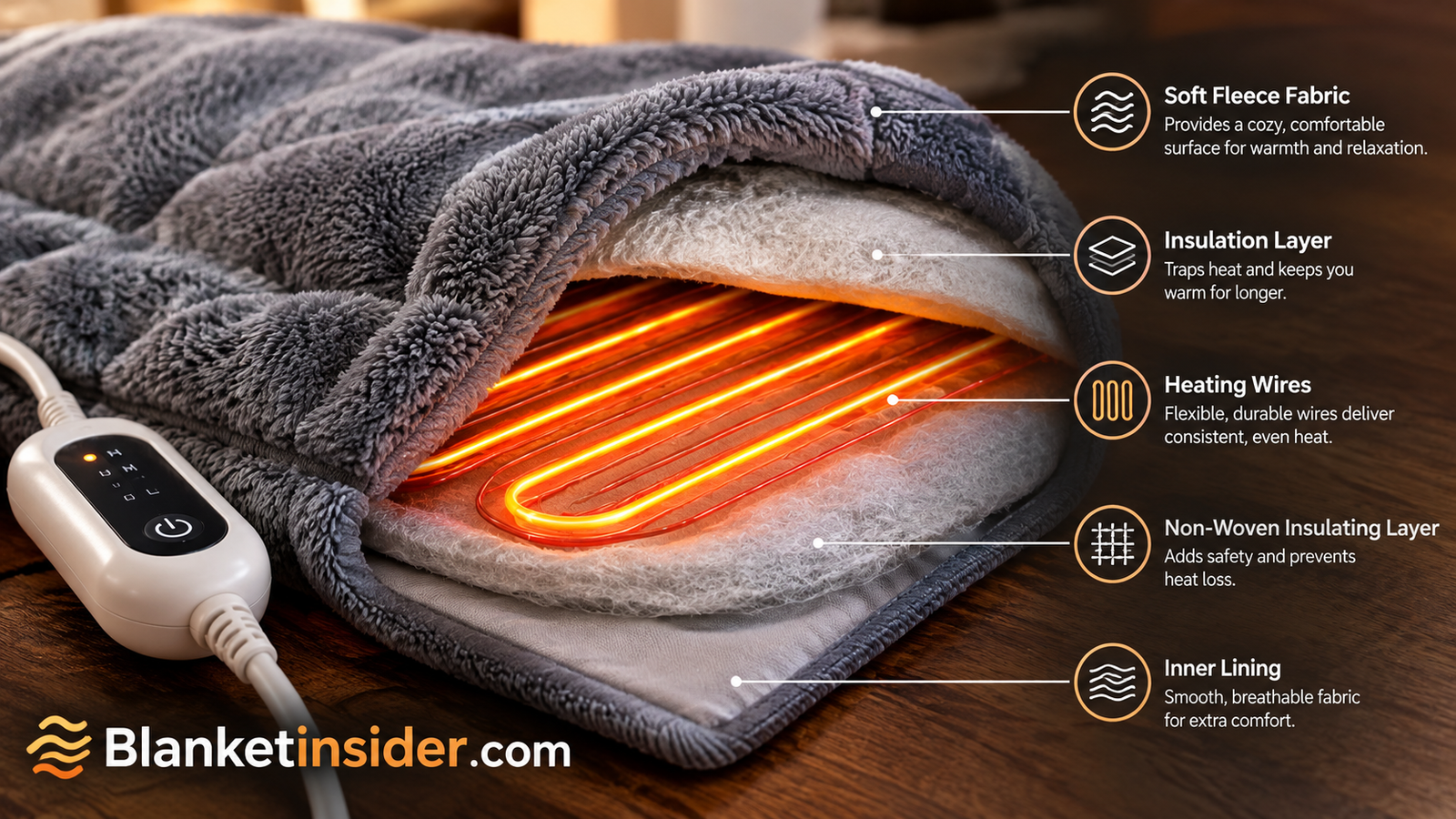
Table of Contents
If you’ve ever pulled your heated blanket out for the season and caught a faint musty smell, or noticed a coffee stain creeping across the corner, you’ve probably wondered whether it’s safe to just toss it in the washer like any other blanket. The short answer is that most modern heated blankets can be washed — but the process is different enough from washing a regular throw that doing it wrong can damage the internal wiring, trip the safety fuse, or create a genuine fire hazard. This guide walks through exactly how to check whether your specific blanket is machine-washable, how to wash it safely whether by machine or by hand, how to dry it without damaging the heating elements, and what to do if you’re not sure your blanket can be washed at all.
1. Can You Wash a Heated Blanket? The Quick Answer
Yes, the vast majority of heated blankets sold today are designed to be washed, but only under specific conditions. The controller — the plastic box with the dial or digital display that plugs into the wall — must always be unplugged and detached before any washing begins. Most manufacturers explicitly state that the controller itself is never water-safe, even though the blanket portion often is. Beyond that single non-negotiable rule, whether you can use a washing machine, need to hand wash, or should stick to spot cleaning depends on the blanket’s construction, its age, and what the manufacturer’s care label actually says.
Newer heated blankets, particularly those made in the last several years, tend to use thinner, more flexible heating wires embedded between two layers of soft fabric, which makes them considerably more washer-friendly than older models. Older blankets, especially those from decades past, often used thicker, more rigid heating coils that are far more prone to kinking, breaking, or exposing bare wire when agitated in a washing machine. If you’ve inherited an older electric blanket or bought one secondhand, treat it with more caution than a blanket purchased new.
It’s also worth noting that washability can vary between the base blanket and any add-on features. Blankets with built-in dual controls for two sleepers, extra-plush sherpa backing, or an attached fitted skirt sometimes carry slightly different washing instructions for each component, since the extra material and stitching can affect how evenly the blanket dries afterward. When a blanket has multiple layers or attached extras, check whether the care label addresses each layer separately, and when it doesn’t, treat the whole piece according to the most conservative instruction listed.

Browse Heated Blankets on Amazon
2. How Heated Blankets Are Actually Built
To understand why washing instructions vary so much between models, it helps to know what’s actually inside a heated blanket. Underneath the soft outer fabric — usually a polyester fleece, microfleece, or sherpa blend — runs a network of thin insulated wires that generate heat when electricity passes through them. These wires are typically sewn into a channel pattern that keeps them evenly spaced across the surface of the blanket, which is why you can often feel faint ridges if you run your hand across an unplugged heated blanket.
The wiring connects to a low-voltage transformer inside the detachable controller, which steps down household current to a safer level before it ever reaches the fabric. This is part of why the blanket itself can usually tolerate water while the controller absolutely cannot: the controller houses the actual electrical components that convert and regulate power, including circuit boards that are not sealed against moisture.
Newer blankets increasingly use a technology sometimes marketed as “soft heat” or “micro-wire” construction, where the heating elements are woven more like ordinary threads than traditional wire. These tend to be noticeably more flexible and more resistant to the kind of stress a washing machine puts on fabric, which is one reason newer blankets are more commonly labeled machine washable than blankets from ten or fifteen years ago.
Many current models also add dual-zone or dual-control designs, giving two people sharing a bed independent heat settings on their respective sides. Functionally, this just means two separate wiring circuits run through the same blanket rather than one continuous loop, each connecting to its own controller. From a washing standpoint, this doesn’t change much, but it does mean there are two controllers to detach rather than one, and it’s worth double-checking that both are fully unplugged and removed before any water touches the fabric.
| Construction Type | Typical Era | Washer Tolerance |
|---|---|---|
| Rigid coil wiring | Older / vintage blankets | Low — hand wash or spot clean only |
| Standard insulated wire | Common mid-range blankets | Moderate — gentle machine cycle usually fine |
| Micro-wire / soft-heat fabric | Newer premium blankets | High — most are fully machine washable |
3. Machine-Washable vs. Hand-Wash-Only: How to Tell
The single most reliable source of truth is the care label sewn into the blanket, usually along a seam or corner. Look for the standard laundry care symbols — a washtub icon with a number inside indicates machine washable at that temperature in Celsius, while a washtub icon with a hand in it means hand wash only. A washtub with an X through it means don’t wash at all, in which case dry cleaning or professional cleaning may be your only real option.
If the tag has worn off or was never legible to begin with, check the original packaging or product manual, which is often still available as a downloadable PDF on the manufacturer’s website by searching the model number. Many manufacturers also print washing instructions directly on the controller itself or on a card that shipped with the blanket.
When no documentation is available at all, a few physical clues can help you make an educated guess. Gently flex a small section of the blanket and feel for any give in the wiring — flexible wiring that bends easily without resistance is more likely to be washer-tolerant, while stiff coils that feel like they could kink are a strong signal to hand wash or avoid full immersion altogether. Also inspect the fabric for signs it was already professionally reinforced for washing, such as sealed edges or a tightly quilted channel pattern, both of which suggest the manufacturer designed it with washing in mind.
Signs It’s Likely Machine Washable
- Care label explicitly says “machine wash, gentle cycle”
- Flexible, thin wiring you can feel bend easily
- Newer model (purchased within the last few years)
- Tightly quilted or channel-stitched fabric
Signs You Should Hand Wash or Avoid Washing
- No care label, or label says “spot clean only”
- Thick, rigid coils that feel stiff when flexed
- Blanket is more than a decade old
- Any visible fraying, exposed wire, or loose stitching
4. Step-by-Step: Machine Washing a Heated Blanket Safely
If your care label confirms machine washing is safe, the process is straightforward as long as you follow a few extra precautions beyond a normal laundry load. Rushing this step is the most common reason people damage an otherwise washable blanket, so it’s worth taking the process slowly the first time.
- Unplug and detach the controller completely. Most controllers connect via a simple plug-in cord at the corner of the blanket. Set the controller aside somewhere it won’t get wet, and never place it in the machine, even inside a bag.
- Check for damage before washing. Run your hands across the entire surface feeling for exposed wire, frayed edges, or any spot where the fabric has worn thin enough to show the heating element underneath. If you find damage, don’t wash — repair or replace instead.
- Use a front-loading machine without a center agitator whenever possible. Top-loading machines with a central agitator post can twist and stress the wiring far more than a front-loader’s tumbling motion. If a front-loader isn’t available, use the gentlest, lowest-agitation cycle your machine offers.
- Wash alone or with only very light, soft items. Zippers, buttons, and heavy fabrics like denim can snag or press against the wiring channels. Washing the blanket by itself is the safest option.
- Use cold or lukewarm water and a mild, liquid detergent. Hot water can stress the adhesive that bonds the wiring channels to the fabric, and powder detergent can leave residue trapped in the seams. A gentle, dye-free liquid detergent is the safer choice.
- Select the gentle or delicate cycle with a slow spin. A high-speed spin cycle can put significant strain on the wiring at the exact moment the fabric is heaviest with water. Choose the lowest spin speed your machine allows, or skip the spin cycle and let it drip-dry instead.
- Never use bleach or fabric softener. Bleach can degrade the wire insulation over time, and fabric softener can leave a coating that interferes with heat distribution across the fabric.

Shop Gentle Detergents
5. Hand Washing Method for Delicate or Older Heated Blankets
When the care label calls for hand washing, or when you’re dealing with an older blanket where you’d rather not risk a machine’s agitation, hand washing gives you far more control over how much stress the wiring experiences. It takes longer than tossing the blanket in the machine, but it’s the safer route for anything with rigid or unknown wiring.
- Detach the controller the same way you would before a machine wash — this step is identical regardless of washing method.
- Fill a bathtub or large basin with lukewarm water and add a small amount of mild, dye-free liquid detergent, mixing it in before the blanket goes in so detergent doesn’t sit concentrated against one section of fabric.
- Submerge the blanket fully and gently press it down rather than scrubbing, twisting, or wringing. Let it soak for ten to fifteen minutes to loosen dirt and odor without any mechanical agitation on the wiring.
- Press gently along the surface to work out dirt, focusing extra attention on any visibly soiled areas, but avoid rubbing fabric against itself the way you might scrub a stain out of denim.
- Drain and refill with clean water to rinse, pressing gently again to release soap. Repeat until the water runs clear and no suds remain.
- Press out excess water without wringing or twisting. Instead, gather the blanket loosely, press it against the side of the tub, or roll it in a dry towel and press down to absorb moisture, similar to how you’d handle a wool sweater.
6. Drying Your Heated Blanket the Right Way
Drying is where a surprising number of otherwise successful washes go wrong, mostly because people default to the same high-heat tumble dry they’d use for a regular blanket. Heat and heated blanket wiring don’t mix well outside of the blanket’s own low-voltage heating function, so the drying method matters just as much as the washing method.
If your care label permits machine drying, always use the lowest heat setting available, ideally a true “air fluff” or “no heat” setting rather than anything labeled “low heat,” since even low heat settings on some dryers run hotter than heated blanket wiring is rated for. Add a few clean, dry towels to the load to help absorb moisture and reduce tumbling time, and check the blanket every ten to fifteen minutes rather than running a full standard cycle uninterrupted.
Air drying is the safer default whenever you’re unsure, and it’s the only recommended method for any blanket without clear machine-drying instructions. Lay the blanket flat on a clean, dry towel-lined surface rather than hanging it, since hanging can stretch the fabric unevenly and put lopsided tension on the wiring over the hours it takes to fully dry. Flip it periodically and reposition it to a dry section of towel if the surface underneath becomes saturated. Depending on humidity and fabric thickness, full air drying can take anywhere from several hours to a full day or more.
| Drying Method | Recommended Setting | Approximate Time |
|---|---|---|
| Tumble dry (if labeled safe) | No heat / air fluff only | 30–60 minutes, checked periodically |
| Air dry flat | Room temperature, out of direct sun | 6–24 hours depending on thickness |
| Air dry hanging | Not recommended | Avoid due to uneven fabric stress |
Before you ever plug the blanket back in and reattach the controller, make sure it’s completely dry, not just dry to the touch on the surface. Residual moisture trapped near the wiring channels is a genuine safety concern once electricity is reintroduced, so when in doubt, give it extra drying time rather than risk plugging in a blanket that’s still damp internally.
7. What Happens If You Wash It Wrong
Understanding the actual failure modes helps explain why these precautions exist rather than feeling like arbitrary caution. The most common issue after an improper wash is a section of the blanket that no longer heats, which typically means a wire inside has broken or a connection has come loose from the stress of high-speed spinning, wringing, or high heat. This kind of damage is usually not repairable at home and often means the blanket needs to be replaced.
A second common issue is a blanket that trips its safety fuse and refuses to turn on at all after washing. Many heated blankets include a built-in thermal fuse designed specifically to cut power if it detects a fault, such as moisture reaching a component it shouldn’t. This is a safety feature working as intended, but it usually means the blanket is no longer usable even though nothing looks visibly wrong.
Less dramatic but still frustrating outcomes include fabric pilling or fraying from a rough machine cycle, permanent creasing from being wrung or twisted, and lingering odor from detergent residue trapped in the wiring channels that wasn’t fully rinsed out. None of these are dangerous in themselves, but they do shorten the useful life of the blanket and are worth avoiding with the gentler techniques described above.
8. Spot Cleaning Without a Full Wash
For blankets that shouldn’t be fully washed, or for small, fresh stains on a blanket you’d rather not run through a full cycle unnecessarily, spot cleaning is often enough. It’s also the safer first move any time you’re uncertain about your blanket’s washability, since it avoids saturating the wiring entirely.
- Unplug and detach the controller before touching any liquid to the fabric, even for a small spot.
- Mix a small amount of mild detergent with cool water in a bowl, keeping the solution light rather than concentrated.
- Dampen a clean cloth, not the blanket itself, and dab at the stain working from the outside edges inward to avoid spreading it further.
- Blot rather than rub to lift the stain without driving it deeper into the fabric or agitating the wiring underneath the surface.
- Rinse the area with a second cloth dampened in plain water, blotting again to remove detergent residue.
- Air dry the spot completely before reattaching the controller or using the blanket again, using a fan or open window to speed up drying if needed.

Shop Stain Removers
9. How Often Should You Wash a Heated Blanket
Heated blankets don’t need washing nearly as often as sheets or everyday clothing, largely because they’re typically used as a top layer rather than something in direct, constant skin contact the way a fitted sheet is. Most manufacturers and fabric-care experts suggest washing a heated blanket every four to six weeks during regular seasonal use, though this can vary based on how it’s used.
If you use a mattress pad or fitted sheet underneath, or if the blanket sits on top of other bedding rather than directly against skin, you can often stretch that interval closer to once every couple of months without hygiene concerns. On the other hand, if pets sleep on the blanket, if it’s used by someone recovering from illness, or if it’s in a household with allergies, washing more frequently — closer to every two to three weeks — is reasonable, since allergens, dander, and skin cells tend to accumulate faster under those conditions than in an average household.
Between full washes, airing the blanket out by draping it over a chair or drying rack for a few hours helps reduce odor buildup and moisture retention without the wear and tear of a full wash cycle. This is a good middle-ground habit for anyone hesitant about how often to fully launder a blanket with internal wiring.
Seasonal use patterns matter too. A blanket used nightly through a long, cold winter accumulates more body oil, sweat, and general wear than one pulled out occasionally on unusually cool evenings, so it’s worth adjusting your washing schedule to actual usage rather than following a fixed calendar interval. If you notice the blanket feeling less soft than it used to, or the fabric holding onto a faint smell even right after airing it out, that’s usually a sign it’s due for a wash regardless of how much time has technically passed since the last one.
10. Washing Needs by Blanket Type
Not every heated blanket in a household serves the same purpose, and washing needs shift depending on the specific type and how it compares to other bedding categories people often ask about alongside it.
Heated Throws vs. Full-Size Heated Blankets
Smaller heated throws generally dry faster and are easier to manage in a standard washer or a bathtub for hand washing simply due to their smaller surface area. Full-size and king-size heated blankets take considerably longer to dry fully and are more likely to need a larger-capacity washer to move freely during the cycle rather than being compressed against the drum, which can concentrate stress on the wiring.
Heated Blankets vs. Heated Mattress Pads
Heated mattress pads share similar wiring concerns but add the complication of fitted corners and elastic edges, which can trap water and take longer to dry than a flat blanket. If you’re weighing the two for washing convenience specifically, a flat heated blanket is generally the easier of the two to wash and dry evenly.
Heated Blankets vs. Weighted Blankets
Weighted blankets present an entirely different washing challenge, since their weight comes from glass beads or poly pellets sewn into pockets rather than electrical wiring, and very heavy weighted blankets often exceed typical home washer capacity. Heated blankets, by contrast, are usually lighter and more manageable in a standard machine, though the electrical component obviously requires its own precautions that weighted blankets don’t have.
Smart Heated Blankets with App or Voice Controls
Newer smart heated blankets add Wi-Fi or Bluetooth connectivity to their controller, allowing temperature adjustment from a phone app or voice assistant. The added electronics live entirely inside the controller, not the fabric, so the washing process for the blanket itself is typically no different from a standard model. That said, smart controllers are often more expensive to replace than basic dial controllers, which makes it especially important to double- and triple-check that the controller is fully disconnected before any washing begins, since these units usually aren’t sold separately at low cost the way simpler replacement controllers sometimes are.
| Blanket Type | Main Washing Challenge | Best Method |
|---|---|---|
| Heated throw | Minimal — small and light | Machine wash if labeled safe |
| Full-size heated blanket | Even drying, washer capacity | Machine wash, extended air dry |
| Heated mattress pad | Elastic corners trap water | Hand wash or spot clean recommended |
| Weighted blanket | Weight exceeds washer capacity | Check duvet cover separately, spot clean insert |
11. Safety Precautions Before, During, and After Washing
Because a heated blanket is ultimately an electrical appliance wrapped in fabric, the safety considerations extend a bit beyond typical laundry care. Treating the washing process with the same seriousness you’d give to cleaning any small appliance goes a long way toward keeping both the blanket and your household safe.
Do
- Always detach the controller before any water touches the blanket
- Inspect for damage before and after every wash
- Let the blanket fully air dry before reconnecting power
- Follow the specific care label for your model whenever available
- Store the blanket loosely folded, not tightly rolled, when not in use
Don’t
- Never submerge or wet the controller under any circumstances
- Never wring, twist, or dry clean unless explicitly approved
- Never use high heat when drying
- Never plug in a blanket that feels even slightly damp
- Never continue using a blanket with exposed wire or scorch marks
It’s also worth periodically checking the cord and controller connection point for fraying or looseness, independent of washing, since this is a common early sign of wear that’s worth catching before it becomes a bigger safety issue.
If you have children or pets in the house, it’s worth storing the detached controller somewhere they can’t reach while the blanket is washing or drying, both to prevent accidental damage to the controller and to keep small hands away from the cord and plug points during a stage when the blanket isn’t in its normal, supervised position on the bed. A simple habit of placing the controller in a drawer or on a high shelf during the entire wash-and-dry process removes this risk without much extra effort.

Compare Replacement Options
12. Extending the Lifespan of Your Heated Blanket
Good washing habits are one of the biggest factors in how long a heated blanket lasts, but a few additional storage and usage habits make a meaningful difference as well. Most heated blankets, when cared for properly, last somewhere in the range of several years to roughly a decade before the wiring naturally wears out from repeated heating and cooling cycles.
Storing the blanket loosely folded rather than tightly rolled or compressed under heavy items helps prevent the wiring from developing permanent kinks over long periods of storage. A breathable storage bag or a drawer with a little room to spare works better than a tightly packed bin. Avoiding unnecessary folding creases along the exact same lines every time you store it also helps, since repeated stress on the same fold line is a common place for wiring to eventually fail.
During regular use, avoid tucking the blanket tightly under a mattress or pinning it down with heavy furniture, both of which concentrate pressure on the wiring in a fixed spot rather than allowing it to flex naturally. It’s also worth avoiding folding the blanket while it’s turned on, since bunched fabric can trap heat in a small area rather than distributing it evenly.
Finally, gentle washing on the correct cycle, thorough air drying, and prompt spot cleaning of small stains rather than letting them set in all contribute to a longer working life, keeping the wiring and fabric in better condition than neglect or overly aggressive cleaning would.
It’s also worth keeping the original packaging or at least noting down the model number somewhere accessible, such as a phone photo of the care tag, before it fades or wears off from repeated washing. If you ever need to look up official washing guidance, contact customer support about a malfunction, or check whether a warranty covers a wiring fault, having that model information on hand saves considerable time compared to trying to identify an unlabeled blanket after the fact.
Frequently Asked Questions
Can you wash a heated blanket in a top-loading washing machine?
You can, but it’s not ideal. Top-loading machines with a center agitator post put more twisting stress on the internal wiring than front-loaders. If a top-loader is your only option, choose the gentlest cycle available and consider running it without the agitator engaged if your machine allows that setting.
Do you have to remove the controller before washing?
Yes, always. The controller houses the electrical components that step down and regulate power, and it is never designed to get wet. Detach it completely before any washing, hand or machine, and keep it somewhere dry for the duration.
Is it safe to dry clean a heated blanket instead?
Generally no, unless the care label specifically approves it. Dry cleaning chemicals and high heat used in professional pressing can degrade wire insulation in ways that aren’t always visible but compromise safety over time.
Why did my heated blanket stop working after washing?
This usually means a wire inside broke from excessive agitation, wringing, or high heat during drying, or that the built-in safety fuse tripped after detecting moisture near an electrical component. Unfortunately this typically isn’t repairable at home.
Can you put a heated blanket in the dryer?
Only if the care label explicitly allows it, and even then, only on a no-heat or air-fluff setting. Standard tumble dry heat settings run hotter than heated blanket wiring is generally rated for.
How long does it take a heated blanket to air dry?
Depending on thickness and humidity, air drying typically takes anywhere from six to twenty-four hours when laid flat. Flip and reposition it periodically to speed up even drying.
Can you spot clean instead of fully washing a heated blanket?
Yes, and it’s often the safer choice for small, fresh stains, especially on blankets without clear machine-wash instructions. Dab gently with a mild detergent solution rather than saturating the whole blanket.
Is it normal for a heated blanket to smell musty before washing?
Some mild odor buildup is normal with regular use, particularly with body heat and moisture over repeated nights. Airing it out between washes helps, and a wash every four to six weeks generally keeps odor from becoming a persistent issue.
Can you use fabric softener on a heated blanket?
It’s best avoided. Fabric softener can leave a light coating on the fabric that interferes with even heat distribution across the wiring channels over time.
What water temperature is safest for washing a heated blanket?
Cold or lukewarm water is generally recommended. Hot water can stress the adhesive bonding the wiring channels to the fabric and isn’t necessary for effective cleaning of most heated blankets.
How do I know if my heated blanket is too old to wash safely?
If it’s more than a decade old, has thick rigid coils rather than flexible wiring, shows any fraying or exposed wire, or has no legible care label, treat it as too risky for a full wash and stick to spot cleaning instead.
Can you wash a heated blanket with other laundry?
It’s safer to wash it alone. Zippers, buttons, and heavier fabrics can snag on the wiring channels or press unevenly against the blanket during the wash cycle.
Will washing a heated blanket void the warranty?
Not if you follow the manufacturer’s care instructions exactly. Most warranties only void coverage when a blanket is washed against explicit label guidance, such as machine washing a spot-clean-only model, so checking the label before your first wash is worth the extra minute.
Can I wash a heated blanket in a laundromat machine?
Yes, as long as the machine offers a gentle or delicate cycle with a low spin option, and ideally a front-loading design. The same rules apply regardless of whose machine you’re using: detach the controller, use cold water, and skip the high-speed spin.
The Bottom Line
Most heated blankets can absolutely be washed safely, as long as you detach the controller every time, respect the care label’s washing method, use cold water and a gentle cycle, and let the blanket fully air dry before plugging it back in. When in doubt, spot cleaning is always the lower-risk option, and a blanket showing real signs of wear is better replaced than pushed through another wash cycle.
Shop Machine-Washable Heated Blankets