
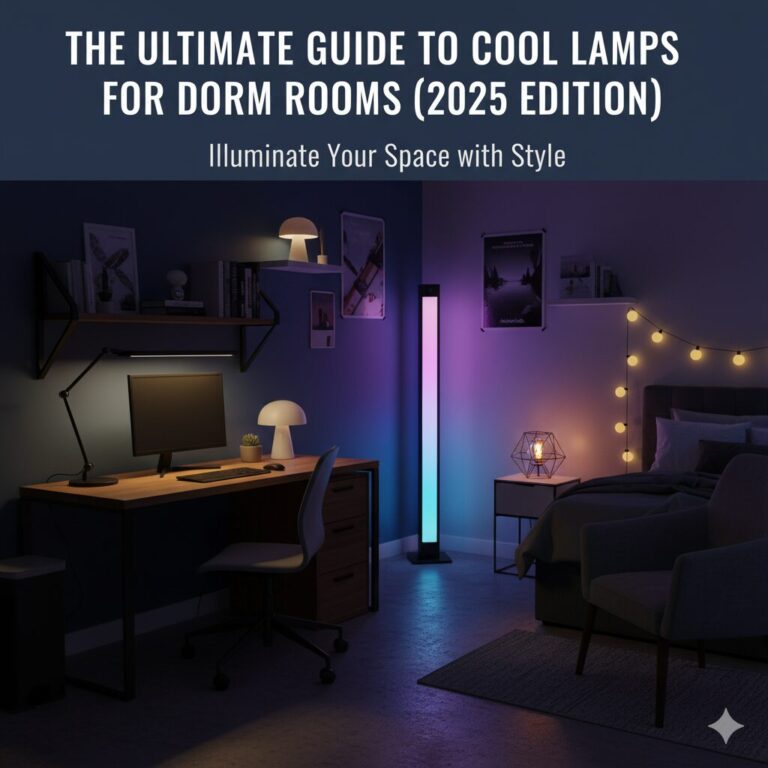
The Ultimate Guide to Cool Lamps for Dorm Rooms (2026 Edition)
Key Highlights
- Psychological Impact: Lighting isn’t just visual; it significantly impacts your circadian rhythm, stress levels, and academic performance.
- The “Layering” Rule: Never rely on a single light source. Effective dorm design requires a minimum of three distinct layers: task, ambient, and accent.
- Smart Integration: 2026 is the year of the smart dorm. App-controlled lighting allows for seamless transitions between “Focus Mode” and “Relax Mode.”
- Space Efficiency: Modern lighting solutions like monitor bars and corner lamps maximize lumen output while minimizing desk footprint.
Let’s be real—the single overhead fluorescent light in most dorms is a soul-crushing buzzkill. It’s harsh, it’s unflattering, and it makes your room feel more like a hospital waiting area than a home. The fastest, most effective way to completely transform your space from a sterile box into a personalized sanctuary is with smart lighting.
A cool lamp is more than just a light source; it’s a statement piece, a productivity tool, and a vibe creator. I’ve seen it time and again: the right lighting can make a small room feel cozy and expansive, turn a cluttered desk into an organized command center, and set the perfect mood for studying, gaming, or just chilling out. This guide is your roadmap to banishing the bad lighting blues. We’ll explore the different types of lamps that work best in a dorm, showcase top-tier products that blend style with function, and give you the expert tips you need to craft the perfect lighting scheme.
Beyond aesthetics, there is a biological imperative to upgrade your lighting. Most university housing creates environments that are perpetually stuck in “office mode.” This constant exposure to high-glare, cool-toned lighting late into the evening disrupts melatonin production, making it harder to fall asleep after a long study session. By taking control of your lighting environment, you aren’t just decorating; you are bio-hacking your sleep schedule. You are creating cues for your brain that signal when it is time to grind and when it is time to wind down. In a space as small as a dorm, where your bedroom is also your living room and your office, these visual cues are essential for maintaining mental separation between “work” and “rest.”
Dorm Lighting 101: The Three Layers
Pro designers think in layers of light. You should too! This approach adds depth and dimension to small spaces.
- Task Lighting: This is focused light for a specific purpose, like studying or reading. Your desk lamp is the prime example. It should be bright and direct to prevent eye strain.
- Ambient Lighting: This is the general, overall light that fills the room and sets the mood. It’s the replacement for that terrible overhead fixture. Think floor lamps, string lights, or LED strips.
- Accent Lighting: This is the fun stuff! It’s light that draws attention to a specific feature or just adds a pop of personality. Think sunset lamps, neon signs, or lava lamps.
A great dorm room uses a mix of all three to create a space that’s both functional and stylish.
Zone 1: The Productivity Hub – Upgrading Your Desk Lamp
Your desk is where the magic happens. It’s your study zone, your creative studio, and your gaming station. The lighting here needs to be top-notch to keep you focused and prevent headaches. But in a dorm, a desk lamp has to do more than just shine a light—it has to be a multi-tasking marvel.
When selecting a lamp for this zone, you need to consider the Color Rendering Index (CRI). A low CRI light makes colors look washed out and dull, which can be surprisingly draining over time. A high CRI lamp (90+) makes textbooks look crisp and screen colors pop. Furthermore, in 2026, the standard for desk lamps has shifted towards eye-care technology. We are looking for “flicker-free” drivers and blue-light reduction capabilities. The flickering of cheap LEDs, often invisible to the naked eye, causes rapid pupil contraction and dilation, leading to fatigue. Investing in a quality task light is investing in your GPA.

The Multi-Tasker: AFROG LED Desk Lamp with Wireless Charger
Dorm Room Reality Check: Outlets are a rare and precious commodity in a dorm room. This lamp understands the assignment. It’s not just a lamp; it’s a command center for your devices. It provides brilliant, customizable task lighting while simultaneously charging your phone wirelessly and offering an extra USB port for your AirPods or smartwatch. It’s a 3-in-1 solution that declutters your desk and streamlines your life. This is a core component of any smart compact dorm desk setup.
Key Features:
- 10W Wireless Charger
- USB Charging Port
- 5 Lighting Modes
- 7 Brightness Levels
- Auto-Off Timer
- Foldable Design
The Upside
Eliminates the need for multiple charging bricks, clearing cable clutter. The sheer range of brightness levels means it works as a intense study light or a soft nightlight.
The Downside
The base is slightly larger to accommodate the charging pad, which might be an issue on extremely narrow desks.

The Space Saver: Quntis Computer Monitor Light Bar
Dorm Room Reality Check: Desk surface area is prime real estate. A traditional lamp’s base can take up a surprising amount of it. This monitor light bar is a stroke of genius. It clips onto the top of your monitor, illuminating your entire workspace perfectly without taking up a single square inch of your desk. Its special design casts light forward, so you get zero glare on your screen, which is a major win for eye comfort during long nights.
Key Features:
- Zero Desk Footprint
- Anti-Glare Design
- Adjustable Brightness
- 3 Color Temperatures
- USB-Powered
- Easy Installation
The Upside
The absolute best option for computer science majors, gamers, or anyone with a multi-monitor setup. It creates a focused “pool” of light exactly where you need it.
The Downside
It requires a standalone monitor; it is not compatible with just a laptop screen unless you have a specific laptop-mount adapter.
Zone 2: The Vibe Creators – Ambient & Accent Lighting
This is where you fight back against the institutional feel of your room. Ambient and accent lights are all about setting a mood and injecting your personality into the space. They make your room a place you actually want to hang out in.
In the world of interior design, ambient lighting acts as the “base coat” of your room’s atmosphere. If the overhead fluorescent light is a bucket of cold water, ambient lighting is a warm bath. It softens the hard edges of cinderblock walls and makes small spaces feel less claustrophobic. By placing light sources at different heights—LED strips near the ceiling, a floor lamp in the corner, and a small lamp on a nightstand—you draw the eye around the room, creating an illusion of depth. This is crucial in 2026, where the trend of “dopamine decor” (decorating to boost mood) relies heavily on customizable color palettes.
Furthermore, accent lighting serves a social function. It signals to your roommates and friends that the room is in “chill mode.” A sunset lamp projecting a golden hour glow says “come in and hang out,” whereas a bright white desk lamp says “do not disturb.” Mastering this transition is key to navigating the social dynamics of shared living spaces. You aren’t just buying lights; you are buying social cues.

The Classic: Govee Smart LED Strip Lights
Dorm Room Reality Check: LED strips are a dorm room staple for a reason. They are the most versatile and impactful way to add color and ambient light to your entire room. Run them along the top of your walls, behind your desk, or under your foldable bed frame for small rooms for a cool underglow effect. Govee is the top brand because their app control is amazing, and the built-in microphone syncs the lights to your music for instant party vibes.
Key Features:
- App & Voice Control
- Music Sync Mode
- 16 Million Colors
- DIY Color Scenes
- Easy Peel-and-Stick
- Customizable Length
The Upside
Incredible value for the visual impact. You can change the entire color scheme of your room in seconds to match a holiday, a movie, or your outfit.
The Downside
Installation requires care; peeling them off at the end of the year can damage cheap dorm paint if you aren’t careful (tip: use a hairdryer to warm the adhesive first).

The Aesthetic Choice: Sunset Lamp Projector
Dorm Room Reality Check: Want to make your boring beige walls look amazing and create the perfect backdrop for photos and videos? This is it. The sunset lamp projects a warm, colorful orb of light that mimics a beautiful sunset. It’s an instant mood-booster and a super stylish piece of accent lighting that gets tons of compliments. It’s small, USB-powered, and adds a huge dose of personality.
Key Features:
- Creates Warm Ambiance
- 16 Color Options
- 360° Rotation
- Remote Controlled
- USB-Powered
- Compact Design
The Upside
It creates a sophisticated, “gallery-like” focal point in the room. Unlike LED strips which can feel “gamer-y,” this feels like art installation lighting.
The Downside
It is strictly for aesthetics. It does not provide enough light to read by or clean your room.

The Corner Glow-Up: Govee Lyra Smart Corner Floor Lamp
Dorm Room Reality Check: Floor space is tight, but corners are often empty and awkward. This lamp is specifically designed to turn a dead corner into a stunning feature. Its minimalist design is super sleek, and the RGBIC technology allows for incredible animated lighting effects, painting your walls with color. It’s powerful enough to serve as your main ambient light source, completely replacing the harsh overhead fixture. It is one of the ultimate dorm room accessories for guys who want a modern, techy vibe.
Key Features:
- Sleek, Minimalist Design
- Dynamic Lighting Effects
- App & Voice Control
- Music Sync Mode
- Bright & Functional
- Fits in Any Corner
The Upside
It utilizes vertical space efficiently, providing massive light output without cluttering the floor. The “moving” light scenes can simulate water, fire, or wind.
The Downside
It is pricier than a standard floor lamp, and it requires a corner to work effectively (it reflects light off the wall).
Frequently Asked Questions (FAQ)
Q: What is “color temperature” and why does it matter for a dorm room?
A: Color temperature refers to how “warm” (yellowish) or “cool” (bluish) a white light appears. It’s measured in Kelvin (K). For studying, a cool white light (around 5000K-6000K) is best as it mimics daylight and promotes focus. For relaxing, a warm white light (around 2700K-3000K) is much better as it creates a cozy, comfortable atmosphere. Look for desk lamps with adjustable color temperatures to get the best of both worlds.
[Image of color temperature scale Kelvin chart]Q: Are LED strip lights a fire hazard in a dorm?
A: Reputable, UL-certified LED strip lights (like those from Govee) are very safe. They produce very little heat and consume minimal energy. The danger comes from cheap, uncertified brands, overloading outlets, or using the wrong power adapter. Always buy from a trusted brand and follow the installation instructions. Most universities allow them, but it’s always a good idea to check your housing guidelines.
Q: How can I light a reading nook if my bed is lofted?
A: A clip-on light is your best friend here. You can find powerful LED clip-on lights that can attach directly to the bed frame or a built-in shelf. They provide direct task lighting for reading without illuminating the whole room, which is perfect if your roommate is sleeping. This is a must-have item for anyone planning on using clever space-saving dorm storage solutions like lofting their bed.
Q: What’s the best way to control all these different lights?
A: The easiest way is to invest in “smart” lights from the same ecosystem (like Govee or Philips Hue). This allows you to control all your lights—your desk lamp, floor lamp, and LED strips—from a single app on your phone. You can create “scenes” like a “Study Mode” that turns your desk lamp cool and bright while dimming the others, or a “Movie Mode” that sets everything to a chill color.
Q: Can I change the overhead light bulb in my dorm?
A: Usually, no. Most universities strictly prohibit tampering with hardwired fixtures for safety and liability reasons. Even if you can physically reach it, maintenance might fine you. This is why investing in lamps (floor and desk) is the primary way to fix your lighting situation.
Q: How many lumens do I need for a desk lamp?
A: For effective studying, you generally want a desk lamp that produces at least 450 to 800 lumens. This ensures the text on your page is clear without causing eye strain. However, having a dimmer is crucial so you can lower it when you are just browsing the web.
Q: Do salt lamps actually do anything?
A: While claims about purifying air with ions are largely scientifically unproven, salt lamps are excellent sources of *warm ambient light*. Their deep orange glow is perfect for late-night relaxation because it contains almost no blue light, meaning it won’t disrupt your sleep cycle.
Q: What is the best way to hang string lights without damaging walls?
A: Command Hooks (specifically the ones designed for fairy lights) are the gold standard. They hold strong but pull off cleanly without ripping the paint. Avoid using duct tape or clear tape, as the adhesive often degrades over the semester and leaves a sticky residue.
Q: Should I get a battery-powered lamp or a plug-in one?
A: For your main desk lamp, always go plug-in for consistent brightness. Battery lamps inevitably dim as the charge depletes. However, small battery-powered “puck lights” are great for inside closets or under shelves where cords can’t reach.
Q: Is RGB lighting unprofessional for video calls?
A: It can be. If you have a Zoom interview for an internship, turn off the neon purple strip lights. Stick to your monitor bar or a desk lamp set to a neutral white color temperature. This ensures you look well-lit and professional, rather than like you are streaming from a nightclub.