
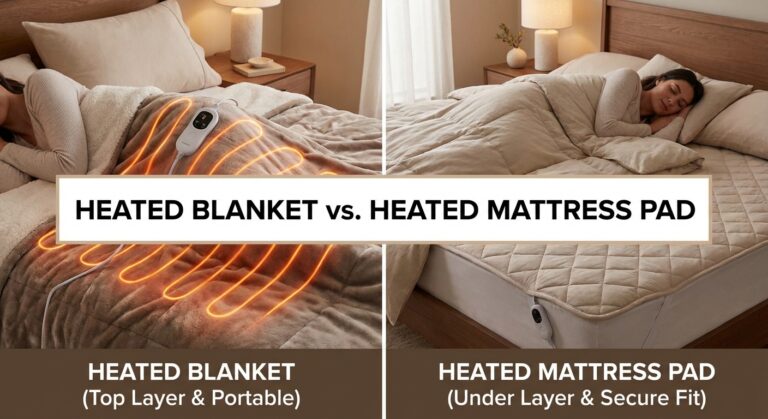
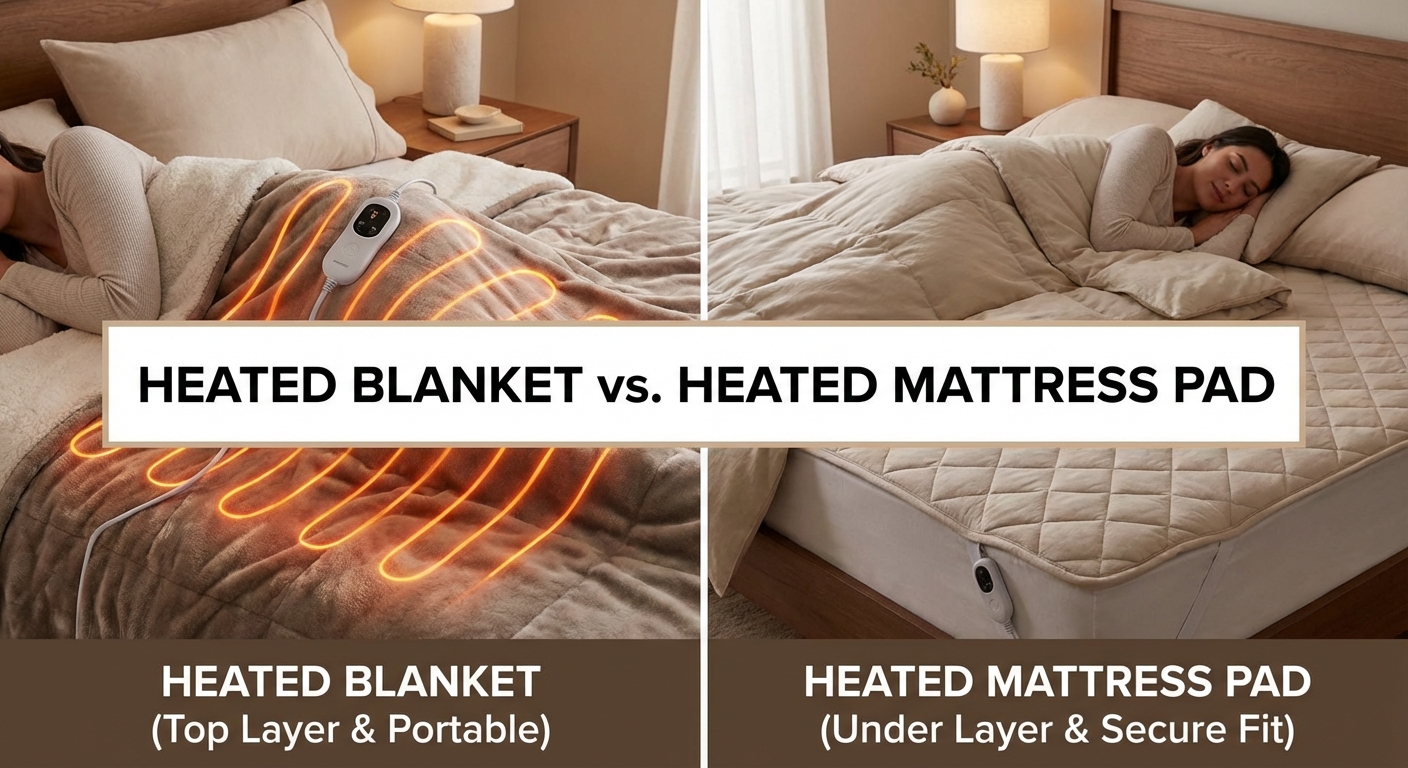
Heated Blanket vs. Heated Mattress Pad: The Ultimate Winter Warmer Guide
As winter sets in and temperatures drop, the quest for cozy home essentials becomes a top priority. Cranking up the thermostat can drain your wallet, leading many savvy sleepers to look for targeted heating solutions. This brings us to the great debate: heated blanket vs. heated mattress pad.
Both devices use electricity to generate warmth, but they operate in fundamentally different ways. One hugs you from above, while the other radiates heat from below. Choosing the wrong one could mean nights of restless leg kicking, overheating, or simply not getting the therapeutic warmth you need for your back pain.
Whether you are outfitting a drafty master bedroom or looking for dorm room accessories for a chilly student apartment, this guide will break down everything you need to know. We’ll analyze safety, efficiency, comfort, and cost to help you decide which heated bedding deserves a spot in your home.
At a Glance: Quick Comparison
Short on time? Here is the rapid breakdown of how these two heating titans stack up against each other.
| Feature | Heated Blanket (Electric Blanket) | Heated Mattress Pad |
|---|---|---|
| Placement | Goes over you (Top layer). | Goes under you (Fitted sheet style). |
| Heat Physics | Heat escapes upward (Less efficient). | Heat rises into the bed (More efficient). |
| Portability | High (Move from bed to couch). | Low (Stays on the mattress). |
| Comfort | Can be heavy; wires might be felt. | Hidden under sheets; seamless feel. |
| Therapeutic Value | General warmth. | Excellent for back/muscle pain relief. |
| Pre-heating Speed | Fast direct heat. | Slower, but retains heat longer. |
The Heated Blanket: Versatile Warmth
An electric blanket is essentially a blanket with integrated heating wires. Modern versions are made from soft fleece, plush velvet, or faux fur (learn about materials in our Sherpa vs. fleece guide). They come with a controller that plugs into the wall, allowing you to adjust heat levels.
The biggest selling point of the electric blanket is versatility. You can use it on your bed at night, drag it to the living room for a movie marathon, or even pack a specialized version for a cozy car road trip (see our guide on 12v heated blankets).
Pros
- Portability: Can be used anywhere there is an outlet (bed, couch, chair).
- Immediate Warmth: Because it sits right on top of you, you feel the heat instantly.
- Style: Available in various colors and textures to match your decor.
- Cost: Generally cheaper upfront than high-end mattress pads.
Cons
- Heat Loss: Since heat rises, much of the warmth escapes into the room rather than staying in the bed.
- Tangling: Cords can get twisted if you toss and turn.
- Wire Feel: In cheaper models, you can feel the wires through the fabric.

Experience consistent warmth with ThermoFine technology that auto-adjusts based on room temperature and your body heat.
Check Price on AmazonThe Heated Mattress Pad: The Efficient Insulator
A heated mattress pad looks just like a standard fitted mattress protector, but with heating elements woven inside. It goes directly over your mattress and under your fitted sheet. Because it is secured with elastic skirts, it stays perfectly in place, unlike a blanket that might slide off during the night.
Physics is on the side of the mattress pad. Since heat rises, the warmth generated by the pad moves upward through your body and is trapped by your duvet or comforter (read more on comforter vs duvet to choose the best top layer). This creates a “heat cocoon” effect that is incredibly energy efficient.
Pros
- Energy Efficiency: Traps heat in the bed; you can often keep the dial lower.
- Therapeutic: Provides direct heat to your back and hips, soothing aches.
- Discreet: Hidden under sheets; no unsightly wires on top of the bed.
- Dual Zones: Queen and King sizes almost always come with dual controls for couples.
Cons
- Not Portable: Once it’s on the bed, it stays on the bed.
- Installation: Requires stripping the bed to install or remove.
- Slower to Feel: Takes about 15–20 minutes to permeate through sheets to your skin.

Features 10 heat settings and dual controllers for couples. The quilted top ensures you never feel the wires.
Check Price on AmazonHead-to-Head Comparison
1. Efficiency and Heat Retention
Winner: Heated Mattress Pad.
Because the mattress pad is under you and covered by your sheets and top comforter, the heat it generates has nowhere to go but up into the bed. The bedding acts as insulation, trapping the heat. With an electric blanket, a significant portion of the heat radiates upward into the open air of the bedroom, meaning you often have to run it at a higher setting to feel the same warmth.
2. Comfort and “Wire Feel”
Winner: Heated Mattress Pad (High Quality).
Cheaper electric blankets are notorious for “lumpy” wires that you can feel against your skin. While high-end velvet blankets mask this well, a good quilted mattress pad buries the wires deep inside batting. Plus, since there is a fitted sheet between you and the pad, the tactile experience is usually smoother.
3. Portability and Versatility
Winner: Heated Blanket.
If you want to use your heating device while reading in a cozy recliner or watching TV on the sofa, a mattress pad is useless. Heated blankets are the kings of versatility. There are even throw-sized versions specifically for living room use (check our best blankets for living rooms list).
4. Maintenance and Cleaning
Winner: Tie (Depends on Model).
Both devices require care. You cannot just toss them into a high-heat dryer. Washing a heated mattress pad is slightly more cumbersome because it is bulkier and fitted. However, electric blankets tend to collect more direct debris (food crumbs, pet hair) since they are the top layer. For a detailed guide, read our tutorial on how to wash a heated blanket.
Which One is Right for You?
Choose a Heated Mattress Pad If:
- You suffer from chronic back pain or arthritis (the heat rising helps relax muscles).
- You share a bed and have different temperature preferences (dual controls are standard).
- You are a restless sleeper who kicks off top covers.
- You want to save maximum money on your heating bill by heating only the bed, not the room.
Choose a Heated Blanket If:
- You want instant gratification (heat) as soon as you turn it on.
- You want something you can move from the bedroom to the living room.
- You are renting or in a dorm where you might not have a standard mattress setup (see dorm setups).
- You prefer the weight of a blanket on top of you (though for pure weight, see weighted blankets).
Safety Considerations
Modern heated bedding is significantly safer than the models from the 80s and 90s, thanks to auto-shutoff features and overheating sensors. However, safety rules still apply.
- Avoid Pinching: Do not use heated wires on adjustable beds (like hospital beds) where wires can get pinched in the mechanism.
- Wear and Tear: Inspect cords regularly. If you see exposed wires, discard the product immediately.
- Infants and Pets: Never use heated bedding with infants. If you have pets, be wary of chewing or “kneading” claws puncturing the insulation. Read our guide on best pet blankets for safer alternatives.
- Diabetes: People with insensitivity to heat (neuropathy) should consult a doctor before using direct heating products to avoid burns.
Frequently Asked Questions
The Final Verdict
In the battle of heated blanket vs heated mattress pad, the winner depends on your lifestyle.
If you want a dedicated sleep solution that saves energy and soothes back pain, invest in a Heated Mattress Pad. It stays put, hides wires effectively, and creates a superior heat cocoon.
If you want flexibility and instant warmth that follows you from the bed to the sofa, grab a Heated Blanket. It is the ultimate cozy companion for chilly evenings anywhere in the house.
Ready to Stay Warm?
Don’t wait for the next blizzard. Equip your home with the best heating solutions today.
Shop All Heated Bedding on Amazon