
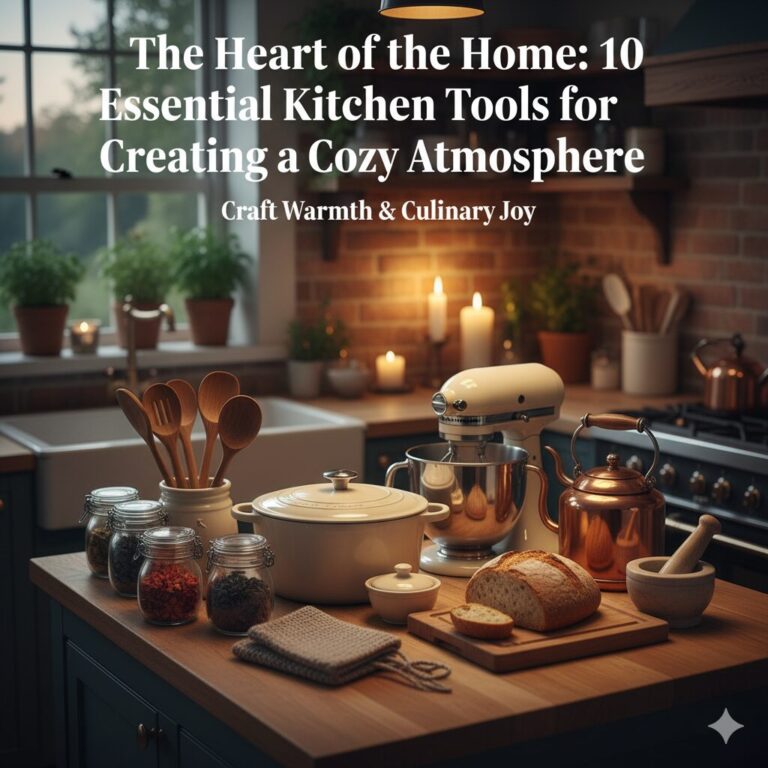
The Heart of the Home: 10 Essential Kitchen Tools for Creating a Cozy Atmosphere
A Quick Note: As an Amazon Associate, I earn from qualifying purchases. This guide is a labor of love, filled with my personal favorite kitchen tools and affiliate links. If you make a purchase through these links, I may earn a small commission at no extra cost to you. I only recommend items I’ve personally used, researched extensively, and believe in. Your support helps me keep this cozy corner of the internet running. Thank you!
The kitchen, more than any other room, has the power to generate a feeling of “cozy” that radiates throughout the entire home. It’s not just a place for cooking; it’s a sensory workshop. It’s the aroma of garlic sautéing in olive oil, the gentle bubble of a long-simmering soup, the yeasty promise of bread rising on the counter, and the warmth of the oven on a crisp autumn afternoon. In my experience, cultivating this atmosphere isn’t about having the most expensive gadgets or a massive space. It’s about having the right tools—tools that encourage a slower, more mindful approach to making food and drink.
This guide delves into the essential kitchen tools that I believe are fundamental to creating a cozy home. These are the items that form the backbone of a comforting kitchen, the true cozy home essentials. They are tools that invite you to create, to nourish, and to share. Once you’ve made a comforting meal, the goal is to enjoy it in a space that feels just as warm, whether that’s sinking into one of the best cozy recliners and lounge chairs with a bowl of soup, or wrapping up in one of the best cozy blankets for the living room with a hot mug of tea. On a winter evening, the glow from the kitchen can even complement a hearth decked out with beautiful cozy fireplace accessories. Today, we focus on where that warmth begins. Let’s explore the tools that will transform your kitchen into the true heart of your home.
The Complete Kitchen Essentials Checklist: Everything You Need to Get Started
If you’re setting up your first apartment kitchen, moving into a new home, or simply wondering whether your kitchen has all the basics, this checklist is your roadmap. I’ve organized it by priority so you can build your kitchen slowly, piece by piece, rather than feeling overwhelmed by a massive shopping list. The beauty of building a cozy kitchen is that it doesn’t happen overnight—it’s a gradual, enjoyable process of discovering what tools you truly love to use.
Must-Have Kitchen Basics (Start Here)
These are the absolute non-negotiables. If you only have a few tools, make them these. A sharp chef’s knife is arguably the most important tool in any kitchen—far more important than a fancy stand mixer or a specialty pan. Pair it with a sturdy cutting board and you can handle almost any cooking task. A medium saucepan covers everything from boiling pasta to making sauces and heating soup. A skillet—whether cast iron or non-stick—handles frying, sautéing, and searing. Add a set of measuring cups and spoons, a wooden spoon, a spatula, a colander, and a basic set of mixing bowls, and you’re ready to cook real, comforting meals.
The “Level Up” Tools (Add These Next)
Once you’ve mastered the basics and are cooking regularly, these additions will dramatically expand your capabilities. A Dutch oven opens up the world of braising and slow-roasting. A baking sheet and a 9×13 baking dish unlock the realm of oven roasting and casseroles. A good blender or food processor speeds up prep work enormously. An instant-read thermometer takes the guesswork out of cooking meat. A microplane zester transforms your cooking with fresh citrus zest, garlic paste, and finely grated hard cheese. These are the tools that separate a functional kitchen from a truly inspiring one.
The “Cozy Upgrade” Tools (For When You’re Ready to Indulge)
These are the items that add that special layer of warmth and ritual to your cooking. A beautiful ceramic mug set, an artisanal olive wood utensil collection, a hand-thrown pottery bowl for your morning oatmeal—these are the personal touches that make a kitchen feel truly yours. A cast iron skillet that develops its own character over years of use. A vintage-style tea kettle that whistles a sweet melody when the water boils. These upgrades aren’t about necessity; they’re about creating a space that brings you genuine joy every time you step into it.
What You Probably Don’t Need (Honest Advice)
After years of cooking, I’ve learned that some “essential” tools are anything but. A garlic press? A knife and cutting board do the job better and are easier to clean. An egg slicer? A knife works perfectly. A knife block? Magnetic strips or drawer inserts are more sanitary and space-efficient. A citrus juicer? Your hands and a fork work just fine. A salad spinner? Paper towels in a colander work in a pinch. I’m not against specialty gadgets if you use them constantly, but I’d rather invest in fewer, better tools that I reach for every single day.
Cast Iron Care: The Complete Guide to Seasoning, Cleaning, and Maintaining Your Skillet
If you’ve never used cast iron, the idea of “seasoning” a pan and maintaining it might seem intimidating. I promise you: it’s one of the simplest and most rewarding kitchen rituals you’ll ever develop. A well-seasoned cast iron skillet develops a natural, non-stick surface that actually improves with every use. After years of daily cooking with mine, I can fry an egg on it without a drop of oil. Here’s everything you need to know to get started.
How to Season a Cast Iron Skillet for the First Time
Most cast iron skillets come pre-seasoned from the factory, but giving them an extra layer or two of seasoning when you first get them makes a noticeable difference. Start by washing your new skillet with warm water and a soft brush—no soap needed. Dry it completely, then apply a very thin layer of flaxseed oil or vegetable shortening to the entire surface, including the handle and bottom. Place it upside down in a preheated oven at 450-500°F (230-260°C) with a sheet of aluminum foil on the rack below to catch any drips. Bake for one hour, then let it cool completely in the oven. Repeat this process two or three times and you’ll have a beautifully seasoned skillet that rivals any non-stick pan on the market.
Daily Care: The Post-Cook Ritual
The best time to clean your cast iron is right after you’ve finished cooking, while it’s still warm. Rinse it under hot water and use a stiff brush or a chain mail scrubber to remove any stuck-on food. For stubborn bits, add a generous pinch of coarse kosher salt and scrub—the salt acts as an abrasive without damaging the seasoning. Avoid soaking your cast iron or leaving it in the sink, as this can lead to rust. Once clean, dry it immediately and thoroughly. I place mine back on the stove over low heat for a minute to ensure all moisture evaporates, then apply a very thin layer of oil with a paper towel. This simple ritual takes less than five minutes and keeps your skillet in perfect condition.
What to Avoid with Cast Iron
There are a few common mistakes that can damage your seasoning. Don’t cook highly acidic foods like tomato sauce or wine-based braises for extended periods in cast iron—the acid can break down the seasoning and impart a metallic taste. Don’t use metal utensils on a freshly seasoned skillet until the seasoning has fully bonded. Don’t put your cast iron in the dishwasher. And don’t panic if you see a little rust—a quick scrub with steel wool, a re-seasoning, and you’re back in business. Cast iron is remarkably resilient. It’s the reason your grandmother’s skillet is still in perfect condition after decades of daily use.
Cast Iron Skillet Recipes That Feel Like a Warm Hug
Once your skillet is properly seasoned, the recipe possibilities are endless. Cornbread baked in cast iron develops a golden, crispy crust that no other pan can replicate. A deep-dish pizza with a perfectly crisp bottom crust is a revelation. Skillet cookies baked to gooey perfection and served warm with vanilla ice cream are the ultimate comfort dessert. A perfectly seared steak with a restaurant-quality crust, finished in the oven with butter and fresh herbs—this is what cast iron was made for. And for breakfast? Nothing beats the sizzle of bacon and eggs in a well-seasoned skillet on a lazy Saturday morning.
Cozy One-Pot Meal Ideas That Will Fill Your Home with Warmth
One of the greatest joys of a cozy kitchen is the ability to create entire meals in a single pot. One-pot cooking isn’t just convenient—it’s a philosophy. When all the ingredients meld together in a single vessel, flavors develop a depth and complexity that’s hard to achieve with separate components. Here are some of my favorite one-pot meals that perfectly embody the spirit of cozy cooking.
Classic Beef Stew with Root Vegetables
This is the quintessential cold-weather comfort food. Cut chuck roast into generous chunks and sear them in a hot Dutch oven until deeply browned. Remove the beef and sauté onions, carrots, and celery until softened. Add garlic, tomato paste, and a generous splash of red wine. Return the beef along with beef broth, potatoes, thyme, and a bay leaf. Bring to a gentle simmer, cover, and transfer to a 325°F oven for two to three hours. The result is tender, fork-falling-apart beef in a rich, velvety sauce that tastes like it simmered for days. Serve it in deep bowls with crusty bread for sopping up every last drop.
Slow Cooker Chicken Tortilla Soup
This is the kind of meal that makes your whole house smell incredible by the time you walk through the door. Place boneless chicken breasts in your slow cooker with diced tomatoes, black beans, corn, onion, garlic, cumin, chili powder, and chicken broth. Cook on low for six to eight hours or high for three to four. When you’re ready to eat, shred the chicken with two forks right in the pot and stir everything together. Serve topped with avocado, sour cream, shredded cheese, and crispy tortilla strips. It’s the kind of meal that makes everyone gather around the table with big smiles and even bigger bowls.
One-Pan Roasted Chicken Thighs with Vegetables
Sometimes the coziest meals are the simplest. Arrange bone-in, skin-on chicken thighs on a sheet pan surrounded by halved Brussels sprouts, wedges of sweet potato, and thick slices of red onion. Drizzle everything generously with olive oil, season with salt, pepper, smoked paprika, and rosemary, and roast at 425°F for about 35-40 minutes until the chicken skin is deeply golden and crispy. The vegetables caramelize in the chicken fat, creating a side dish that’s arguably better than the main. It’s a complete meal on one pan with minimal cleanup—perfect for a busy weeknight when you still want something deeply comforting.
Hearty Lentil and Vegetable Soup
Lentil soup is one of the most underappreciated comfort foods in existence. It’s inexpensive, nutritious, and incredibly satisfying. In a large pot, sauté diced onion, carrots, and celery. Add minced garlic, cumin, turmeric, and smoked paprika. Pour in vegetable broth and a cup of rinsed green or brown lentils. Simmer for 30-40 minutes until the lentils are tender. Stir in a handful of fresh spinach or kale at the end for color and nutrition. The result is a thick, hearty soup that wraps you in warmth on even the coldest evening. Make a big batch on Sunday and enjoy it for lunches throughout the week—it only gets better as the flavors meld.
Seasonal Comfort Food: How to Cook with the Rhythm of the Year
There’s a reason certain dishes feel more comforting at certain times of the year. Our bodies and minds naturally crave different flavors and textures as the seasons change. Learning to cook with the seasons is one of the simplest ways to make your kitchen feel more connected to the world outside your window, and it ensures you’re always eating the freshest, most flavorful ingredients available.
Autumn: The Season of Warm Spices and Root Vegetables
Fall is when the cozy kitchen truly comes alive. The air turns crisp, the leaves change color, and suddenly every meal feels like it should be something warm and deeply flavored. This is the season for butternut squash soup, apple cider-braised pork, and pumpkin bread baked in your Dutch oven. Root vegetables—sweet potatoes, parsnips, turnips, beets—roast beautifully and develop an incredible sweetness when caramelized in the oven. Stock your pantry with cinnamon, nutmeg, allspice, and cloves, and let the aroma of these spices fill your home on cool evenings. A batch of homemade chili simmering on the stove while leaves fall outside the window is one of life’s great pleasures.
Winter: Braises, Stews, and Baked Goods
Winter is the season of patience. The best winter meals take time—long braises, slow-simmered stews, bread that rises slowly in a warm corner of the kitchen. This is when your Dutch oven and slow cooker earn their keep. A pot of beef bourguignon, a hearty chicken and dumplings, or a rich lamb tagine simmering for hours creates an atmosphere of warmth that no thermostat can replicate. Winter is also baking season. The oven running for hours fills the house with an irresistible warmth, and the rewards—fresh bread, cinnamon rolls, fruit crumbles—are the ultimate comfort food. There’s something magical about pulling a loaf of crusty sourdough from the oven on a snowy afternoon.
Spring: Light, Fresh, and Hopeful
As winter recedes, the kitchen transitions to lighter fare. Spring brings fresh herbs, tender greens, and the first strawberries of the season. A spring risotto with asparagus and peas, a bright lemon chicken, or a simple pasta with fresh basil and cherry tomatoes—these dishes are comforting in their own way, lighter but no less satisfying. This is also the time to start an indoor herb garden on your windowsill. Fresh rosemary, thyme, basil, and mint at your fingertips transform everyday cooking into something special.
Summer: Grilled, Chilled, and Shared
Summer cooking is about simplicity and sharing. The best summer meals happen outdoors, around a grill, with friends and family gathered close. Grilled corn with herb butter, watermelon and feta salad, pasta salad with fresh vegetables, and homemade ice cream churned in the afternoon heat. Even in summer, a cozy kitchen plays a role—it’s where you assemble the ingredients, mix the marinades, and prepare the feast. The warmth of a summer kitchen is different from winter’s warmth; it’s the warmth of anticipation, of gathering, of celebration.
What Makes a Kitchen Tool “Cozy”?
A “cozy” kitchen tool isn’t defined by its price tag or its technology. In my view, it’s defined by its function and feel. These tools generally fall into one of three categories:
- Tools for Slowing Down: These are items that excel at low-and-slow cooking methods. Think of Dutch ovens for braising, slow cookers for all-day stews, and pour-over coffee makers that turn a morning routine into a ritual. They encourage patience and reward it with incredible depth of flavor.
- Tools Made from Natural Materials: There’s an inherent warmth in tools made from wood, ceramic, and cast iron. A sturdy wooden spoon feels better in the hand than plastic. A ceramic mug retains heat and has a comforting heft. These materials connect us to a more traditional, grounded way of cooking.
- Tools for Creating Comforting Aromas: The most powerful sense tied to memory and emotion is smell. The best cozy tools are vessels for creating these nostalgic aromas—baking dishes for cakes and casseroles, a good stockpot for simmering broth, or a simple kettle for fragrant tea.
Part 1: The Stovetop Workhorses for Slow Simmering
The stovetop is where the magic begins. The sound of a gentle simmer is the universal soundtrack to a cozy kitchen. These are the pots and pans that are built for creating those foundational one-pot meals, soups, and sauces that warm you from the inside out.

Lodge 6-Quart Enameled Cast Iron Dutch Oven
If I could only choose one piece of cookware for the rest of my life, it would be this Dutch oven. It is the undisputed king of cozy cooking. Its heavy cast-iron construction provides incredible heat retention and distribution, making it perfect for searing meat and then slowly braising it for hours until it’s fall-apart tender. I’ve made countless batches of chili, pot roast, and even no-knead bread in mine. The enamel coating means you get all the benefits of cast iron without the hassle of seasoning, and it’s beautiful enough to go straight from the stove to the center of the dinner table. It feels like an heirloom piece, a vessel for creating memories as much as meals.
- Exceptional heat retention for braising
- Versatile for stovetop, oven, and table
- Durable enamel is easy to clean
- Incredible value for the quality
- Extremely heavy, especially when full
- Enamel can chip if handled roughly

Lodge 12-Inch Cast Iron Skillet
A cast iron skillet isn’t just a pan; it’s a project and a partner. This 12-inch Lodge is a kitchen icon. The more you use it, the better its natural non-stick “seasoning” becomes. There’s nothing cozier than the sizzle of bacon on a Saturday morning or the sight of a perfect golden-brown crust on a skillet cornbread. I use mine for everything from frying eggs to baking giant skillet cookies. It imparts a unique flavor and crust that you simply can’t get from other pans. It requires a bit of care, but that ritual of cleaning and oiling it after use becomes a satisfying part of the cooking process itself. It’s an indestructible tool that will genuinely last for generations.
- Unrivaled for searing and creating crusts
- Naturally non-stick when seasoned
- Extremely durable and affordable
- Can be used on any heat source
- Requires proper care and seasoning
- Reactive with acidic foods like tomatoes
Part 2: The Oven Alchemists for Baking and Roasting
The oven is the heart of the kitchen’s warmth, both literally and figuratively. The tools we use in it are designed to transform simple ingredients into bubbling casseroles, crusty breads, and sweet treats. The aroma of something baking is the very definition of a cozy home.

Staub Ceramics 13×9-inch Rectangular Baking Dish
While glass baking dishes are functional, there’s a special quality to stoneware. This 13×9 baker from Staub is my absolute favorite. Stoneware heats gently and evenly, which I’ve found results in perfectly cooked casseroles without scorched edges, and brownies that are gooey in the middle and just right on the sides. Its thermal properties mean it also keeps food hot for a long time on the dinner table. The enamel finish is gorgeous, scratch-resistant, and makes cleanup surprisingly easy. It feels substantial and elegant, elevating simple dishes like mac and cheese into something special.
- Superior even-heating properties
- Excellent heat retention
- Beautiful design for oven-to-table use
- Resistant to thermal shock
- Heavier than glass or metal
- Higher price point

KitchenAid Artisan Series 5-Quart Stand Mixer
For anyone who loves to bake, a KitchenAid stand mixer is the ultimate cozy-making machine. It’s the gateway to homemade bread, cookies, cakes, and whipped cream. Having one on my counter encourages me to bake more often. The power of the motor kneads bread dough effortlessly, saving my arms and resulting in a better texture. The 5-quart bowl is the perfect size for a standard batch of cookies or a couple of loaves of bread. Beyond its incredible performance, it’s an iconic piece of design that adds a touch of charm and personality to any kitchen. It’s an investment, but one that pays off in countless delicious, comforting, and aromatic baked goods.
- Powerful motor for kneading and mixing
- Iconic, timeless design
- Huge range of available attachments
- Built to last for decades
- Significant investment
- Takes up considerable counter space
Part 3: The Countertop Rituals for Cozy Beverages
A warm mug in your hands is like an internal blanket. The ritual of preparing a hot beverage can be a meditative, comforting practice that punctuates the day. These tools are designed to elevate that daily ritual from a mundane task to a moment of pure, cozy enjoyment.

COSORI Electric Gooseneck Kettle with Presets
I am a firm believer that a good electric kettle is a non-negotiable kitchen tool. This COSORI gooseneck model is my top pick because it blends precision with beauty. The gooseneck spout provides a controlled, gentle pour, which is ideal for pour-over coffee but also just feels more elegant for tea. The real game-changer is the five temperature presets. Different teas (and coffee) taste best at specific temperatures, and this takes the guesswork out. It heats water incredibly fast and has a ‘hold temp’ function that I use constantly. The ritual of selecting the right temperature and slowly pouring the water is a wonderfully mindful way to start the day or unwind in the evening.
- Five precise temperature settings
- Heats water very quickly
- Elegant design and controlled pour
- Keep warm function is very useful
- Smaller capacity (0.8L)
- Alert beeps are a bit loud

Bosmarlin Large Ceramic Coffee Mugs (Set of 4)
The vessel you drink from matters. A cozy mug needs to have a satisfying weight, a handle that fits your hand comfortably, and a shape that feels good against your lips. This set of mugs from Bosmarlin ticks all the boxes for me. At 18 ounces, they are generously sized for a big cup of coffee, soup, or hot cocoa. The thick ceramic walls provide excellent insulation, keeping your drink warmer for longer. What I love most is the reactive glaze; each mug has a slightly unique, earthy pattern, making it feel artisanal and special. They are the kind of mugs that you find yourself reaching for over and over again—your designated “cozy” mug.
- Large, comfortable 18-ounce size
- Thick ceramic retains heat well
- Beautiful and unique reactive glaze finish
- Sturdy and dishwasher safe
- Too large to fit under some single-serve brewers
Dutch Oven Recipes: 5 Comforting Meals You Can Make in One Pot
The Dutch oven is perhaps the most versatile piece of cookware you’ll ever own. It can replace a stockpot, a skillet, a baking dish, and even a bread cloche. If you’ve just invested in a beautiful Dutch oven and are wondering what to make beyond the obvious stew, here are five of my all-time favorite recipes that showcase its incredible range.
No-Knead Crusty Bread
This is the recipe that convinced me that a Dutch oven is essential. The technique is almost absurdly simple: mix flour, yeast, salt, and water, let it sit overnight, shape it into a ball, and bake it in a screaming-hot Dutch oven with the lid on for 30 minutes, then remove the lid for another 15-20 minutes. The trapped steam creates a crust that rivals any bakery loaf. The interior is chewy, airy, and full of complex flavor from the long fermentation. I bake one every week and it’s become a beloved ritual that fills the kitchen with the most intoxicating aroma.
French Onion Soup
True French onion soup requires patience—the onions need to caramelize slowly for at least 45 minutes to an hour until they’re deeply golden and sweet. In a Dutch oven, the even heat distribution makes this process foolproof. Sliced yellow onions, a knob of butter, and a pinch of salt are all you need to start. Stir occasionally, resist the urge to rush, and watch as the onions transform into a jammy, caramelized base. Add beef broth, a splash of white wine, fresh thyme, and a bay leaf. Ladle into oven-safe bowls, top with crusty bread and a generous pile of Gruyère, and broil until bubbly and golden. It’s winter in a bowl.
Coq au Vin
This classic French braised chicken dish is the epitome of cozy cooking. Sear chicken thighs until the skin is golden and crispy, then remove them and sauté mushrooms, pearl onions, and lardons (thick-cut bacon) in the rendered fat. Add a bottle of good red wine, chicken broth, garlic, thyme, and a bay leaf. Return the chicken, cover, and braise in a 325°F oven for about an hour. The wine reduces into a rich, deeply flavored sauce that’s perfect for spooning over the tender chicken. Serve with mashed potatoes or egg noodles for a meal that feels like it came from a countryside inn.
Braised Short Ribs
There are few things more comforting than short ribs braised until they’re so tender they practically dissolve on your tongue. Season bone-in short ribs generously and sear them on all sides until deeply browned. Remove them and build a braising liquid with onion, carrot, celery, tomato paste, red wine, and beef stock. Return the ribs, add fresh rosemary and thyme, cover, and cook low and slow in the oven for three to four hours. The meat becomes impossibly tender, and the braising liquid reduces into a glossy, deeply savory sauce. Serve over creamy polenta or buttered egg noodles for a meal that’s worth every minute of cooking time.
Chicken and Dumplings
This is the ultimate comfort food—a creamy, hearty stew topped with pillowy dumplings that steam to perfection under the lid of your Dutch oven. Sauté chicken thighs with onion, celery, and carrots. Add flour to create a roux, then slowly pour in chicken broth and a splash of cream. Add herbs like thyme and parsley, then drop spoonfuls of a simple biscuit dough on top. Cover and simmer without peeking for about 15 minutes. When you remove the lid, you’re greeted with plump, tender dumplings sitting atop a rich, creamy stew. It’s the kind of meal that makes everyone at the table go quiet with contentment.
Part 4: The Finishing Touches and Handheld Helpers
Beyond the major players on the stove and in the oven, a truly cozy kitchen is equipped with smaller tools that make the process of cooking more tactile, enjoyable, and efficient. These are the items that you’ll reach for daily, the unsung heroes of comfort food.

Crock-Pot 7-Quart Programmable Slow Cooker
The slow cooker is the magical appliance that does its best work while you’re busy with the rest of your day. There is no greater cozy feeling than walking in the door after a long day to the incredible aroma of a meal that has been simmering for hours. This 7-quart Crock-Pot is my go-to. It’s large enough for a whole chicken or a big batch of pulled pork. The programmable digital timer is a key feature, allowing you to set the cook time and then it automatically switches to a “warm” setting. This prevents overcooking and means dinner is ready whenever you are. It’s the ultimate tool for low-stress, high-reward cozy meals.
- Programmable timer with auto-warm feature
- Large capacity for families or batch cooking
- Dishwasher-safe stoneware insert
- Extremely easy to use
- Bulky to store
- Exterior can get quite hot to the touch

Bodum Chambord French Press Coffee Maker
While drip coffee is fast, the French press offers a ritual. The simple act of boiling water, letting the grounds bloom, and slowly pressing the plunger is a wonderfully tactile and mindful way to make coffee. The Bodum Chambord is a design classic for a reason. Its borosilicate glass beaker is durable and the multi-level filter ensures minimal sediment in your cup. The coffee it produces is rich, full-bodied, and aromatic—a true sensory experience. Using a French press encourages you to slow down and savor the five minutes it takes, turning your coffee break into a genuine moment of peace.
- Produces rich, full-flavored coffee
- Simple, timeless, and elegant design
- No paper filters required
- Easy to clean and dishwasher safe parts
- Can leave a small amount of sediment
- Glass beaker requires careful handling

FAAY 5-Piece Olive Wood Utensil Set
Every cozy kitchen needs a crock of wooden utensils. They are quieter and gentler on cookware than metal, and they don’t transfer heat. This set, made from olive wood, is my personal favorite. The dense wood is incredibly durable and has a stunning, unique grain pattern on each piece, making them beautiful enough to display. The feel of a solid, smooth wooden spoon in your hand as you stir a risotto is one of cooking’s simple pleasures. They won’t scratch your non-stick pans or the enamel on your Dutch oven, making them both a practical and an aesthetic choice.
- Beautiful, unique olive wood grain
- Durable and gentle on all cookware
- Doesn’t conduct heat
- Comfortable and warm in the hand
- Hand-wash only
- Requires occasional oiling to maintain

J.K. Adams French Tapered Rolling Pin
For baking pies, cookies, and pastries, a good rolling pin is essential. I vastly prefer the simple, French-style tapered design over the American-style with handles. This maple wood pin from J.K. Adams is a perfect example. The tapered ends allow you to pivot and turn with incredible control, and you can feel the thickness of the dough under your hands much more intuitively. It’s a simple, elegant tool made from a single piece of wood. The act of rolling out dough on a floured surface is a nostalgic, comforting process, and this tool makes that process a pure joy. It connects you to a more traditional way of baking.
- Excellent control and feedback from dough
- Simple, durable, single-piece design
- Easy to clean and store
- Made from high-quality maple wood
- Takes some practice for beginners
- Requires hand-washing
Slow Cooker Meal Prep: How to Make Your Weeknights Effortlessly Cozy
Meal prepping with a slow cooker is one of the greatest gifts you can give yourself. There’s a particular kind of comfort in knowing that tonight’s dinner is already working its magic while you go about your day. The slow cooker doesn’t just save time—it transforms ingredients in ways that high-heat cooking simply can’t replicate. Collagen in tough cuts of meat melts into silk, flavors deepen and meld, and the entire kitchen fills with an aroma that makes coming home feel like a reward.
The Sunday Prep Ritual
I’ve developed a Sunday routine that makes my weeknights infinitely more cozy. After my weekly grocery run, I spend about an hour prepping slow cooker meals for the week. I’ll chop vegetables, measure out spices, and portion everything into labeled freezer bags. When Tuesday rolls around, all I have to do is dump the contents of a bag into the slow cooker in the morning, add liquid, and press start. By the time I’m home from work, dinner is ready. Some of my favorite freezer-to-slow-cooker meals include pot roast with potatoes and carrots, white chicken chili, beef and broccoli, and Italian sausage with peppers and onions.
Slow Cooker Tips for the Best Results
A few principles I’ve learned over years of slow cooker cooking. First, brown your meat before adding it to the slow cooker—this extra step adds incredible depth of flavor through the Maillard reaction. Second, add dairy and fresh herbs at the very end of cooking, not at the beginning, as they can break down and become grainy or lose their brightness. Third, resist the urge to lift the lid during cooking—every peek adds 15-20 minutes to your cook time. Finally, don’t overfill your slow cooker. The pot should be between half and three-quarters full for optimal heat circulation and food safety.
Slow Cooker Desserts You Didn’t Know Were Possible
Yes, you can make dessert in a slow cooker, and some of the results are astonishing. A slow cooker chocolate lava cake is almost criminally easy—mix the batter, pour it in, and let it cook for a couple of hours until the edges are set and the center is molten. Bread pudding made in a slow cooker is custardy, warm, and deeply comforting, especially on a cold evening. And perhaps my favorite discovery: poached pears in spiced wine, cooked low and slow until they’re tender and infused with cinnamon, star anise, and vanilla. It’s an elegant dessert that requires almost zero effort.
Cozy Kitchen Organization: Making the Most of Small Spaces
Not everyone has a sprawling farmhouse kitchen, and that’s perfectly fine. Some of the coziest kitchens I’ve ever been in were tiny galley kitchens in city apartments, where every square inch was thoughtfully utilized. The key to a cozy small kitchen isn’t having more space—it’s making the space you have work harder and feel more intentional. Here are my best strategies for organizing a compact kitchen without sacrificing warmth or functionality.
Go Vertical with Storage
When counter and cabinet space are at a premium, look up. Wall-mounted magnetic knife strips free up drawer space and keep your most-used tools accessible. Floating shelves display your most beautiful pieces—ceramic bowls, wooden cutting boards, spice jars—while keeping them within arm’s reach. A hanging pot rack transforms your cookware collection into a design feature. Even the inside of cabinet doors can be utilized: install small hooks for measuring cups, a rail system for cutting boards, or adhesive spice racks. The goal is to make every surface work double duty without feeling cluttered.
The “Daily Reach” Principle
Organize your kitchen based on how frequently you use each item. Your daily essentials—the chef’s knife, wooden spoon, spatula, cutting board, and favorite skillet—should be the easiest things to reach. Store them in a countertop crock, on a magnetic strip, or in the most accessible drawer. Items you use weekly—the stand mixer, Dutch oven, slow cooker—go in nearby cabinets. Things you use monthly or seasonally—the turkey roaster, the canning supplies—go on high shelves or in less accessible storage. This system means you spend less time rummaging and more time cooking.
Beautiful Storage That Doubles as Decor
In a small kitchen, storage needs to be beautiful because it’s always on display. A ceramic crock filled with wooden utensils by the stove is both functional and charming. Wicker baskets on open shelves hold onions, garlic, and root vegetables while adding natural texture. Glass jars filled with pasta, rice, and dried beans create a pantry-worthy display. A wooden cutting board leaning against the backsplash becomes part of the kitchen’s visual story. When your storage is beautiful, organization feels effortless and your kitchen naturally develops that lived-in, cozy aesthetic.
The Art of a Capsule Kitchen
Think of a capsule kitchen like a capsule wardrobe: a curated collection of versatile, high-quality pieces that work together harmoniously. Instead of owning twenty different pans, own four excellent ones that cover every cooking task. Instead of a drawer full of mismatched measuring cups, own one nesting set. A capsule kitchen reduces visual clutter, makes everything easier to find, and ensures that every tool you own is one you genuinely love to use. It’s the ultimate expression of the “less but better” philosophy, and it’s the fastest path to a kitchen that feels calm, intentional, and deeply cozy.
Kitchen Lighting and Ambiance: Creating a Warm Glow That Invites You In
Lighting is one of the most overlooked elements of a cozy kitchen, yet it might be the most important. The difference between harsh, bright overhead lighting and warm, layered lighting is the difference between a laboratory and a living room. The right lighting transforms your kitchen from a place where you merely prepare food into a place where you want to linger, sip wine, and chat while dinner simmers on the stove.
Warm Bulbs Are Non-Negotiable
The single most impactful change you can make to your kitchen’s atmosphere is switching to warm-toned light bulbs. Look for bulbs rated between 2700K and 3000K on the Kelvin scale. This range produces the soft, golden light that mimics candlelight and sunset—the light that makes food look delicious and people look beautiful. Cool-toned bulbs (4000K and above) make a kitchen feel clinical and sterile, no matter how beautiful the decor. Every bulb in my kitchen is 2700K, and the difference is night and day.
Layer Your Lighting
The coziest kitchens have multiple light sources at different heights. Overhead lighting provides general illumination, but it should never be the only source. Under-cabinet lights cast a warm glow on your countertops and make food prep feel intimate and focused. A small table lamp or pendant light over a breakfast nook creates a pool of warm light that draws you in. And nothing—absolutely nothing—creates ambiance like candlelight. A few candles on the counter or a windowsill during evening cooking transforms the entire mood of the room. I keep a small collection of beeswax candles that I light every evening during the fall and winter months, and the subtle honey scent combined with the warm glow is pure magic.
The Power of Dimmers
If you install nothing else, install a dimmer switch for your main kitchen light. Being able to adjust the brightness from bright task lighting during food prep to a soft glow during dinner is transformative. Many dimmer switches are easy to install yourself and cost very little. When you dim the lights and light a candle, your kitchen becomes a completely different space—one that invites relaxation and connection rather than just efficiency.
Building a Cozy Kitchen on a Budget: How to Create Warmth Without Breaking the Bank
You absolutely do not need to spend a fortune to create a warm, inviting kitchen. Some of the most charming kitchens I’ve ever seen were filled with a mix of thrift store finds, hand-me-downs, and carefully chosen affordable pieces. The secret is knowing where to invest and where to save. Here are my strategies for building a cozy kitchen without the sticker shock.
Invest in These, Save on Those
Some tools are worth spending more on because you’ll use them daily and their quality directly affects your cooking. A good chef’s knife, a well-made cast iron skillet, and a quality Dutch oven are investments that pay for themselves over years of use. On the other hand, you don’t need a $300 stand mixer when you’re starting out—a $30 hand mixer works beautifully for most home bakers. You don’t need artisan mugs when a thrift store has a shelf full of charming ceramic options. A mismatched collection of vintage bowls and plates can be cozier than a matching set from a department store.
Thrift Stores and Secondhand Shopping
Some of my favorite kitchen pieces came from thrift stores and estate sales. A well-seasoned cast iron skillet for $5. A beautiful ceramic baking dish for $3. A set of wooden utensils for a dollar. Vintage kitchen tools have a character and quality that’s hard to find in modern mass-produced items. The patina on an old copper pot, the wear on a vintage wooden cutting board—these marks tell a story and add to the cozy, lived-in feel of a kitchen. Don’t overlook garage sales, flea markets, and online marketplace listings either. You’d be surprised what people are willing to part with for very little.
Dollar Store and Budget Finds
Some of the best kitchen organization tools come from the dollar store. Glass jars for pantry storage, simple ceramic bowls for mise en place, basic kitchen towels, and even some decent utensils can all be found for a dollar or two. A set of inexpensive linen dish towels in neutral colors looks far more expensive than it is. Simple glass spice jars with handwritten labels create a beautiful, uniform look for a fraction of the price of a matching set. The point isn’t to buy the cheapest version of everything—it’s to be creative about where you find value.
DIY Cozy Touches
Some of the coziest kitchen elements are things you can make yourself. A simple wooden cutting board sanded and oiled by hand. A hand-knit dishcloth in a warm color. A small herb garden in recycled glass jars on the windowsill. A bunch of dried lavender or eucalyptus hanging from a hook. These handmade touches carry a warmth that no store-bought item can replicate, and they’re often the elements that guests notice and comment on. They make your kitchen feel authentically yours.
Setting Up Your First Apartment Kitchen: A Beginner’s Guide to Cozy Cooking
Setting up your first kitchen is one of the most exciting parts of living on your own. It’s the space where you’ll learn to nourish yourself, where you’ll host your first dinner party, where you’ll comfort yourself with a bowl of soup on a hard day. The key is to start simple and build over time. You don’t need everything at once—you need the right handful of things to get started, and the rest will naturally follow as your skills and confidence grow.
Your First Five Purchases (In Order)
Here’s exactly what I’d buy if I were starting my kitchen from scratch today, in the order I’d buy them. First, a good 8-inch chef’s knife and a wooden cutting board—these two items alone will handle 80% of your cutting tasks. Second, a 10-inch non-stick skillet for eggs, stir-fries, and everyday cooking. Third, a 2-quart saucepan with a lid for pasta, rice, and sauces. Fourth, a set of basic measuring cups and spoons, a wooden spoon, and a silicone spatula. Fifth, a half-sheet baking pan for roasting vegetables, baking cookies, and toasting nuts. With these five purchases, you can make almost anything. Total investment? Probably under $100, and each piece will last for years.
Learning to Cook: Where to Start
Starting to cook can feel overwhelming, but it doesn’t have to be. Begin with dishes that have few ingredients and simple techniques. Scrambled eggs, pasta with olive oil and garlic, roasted vegetables, a basic stir-fry. These are the foundational skills that everything else builds on. As you gain confidence, add one new technique at a time. Learn to sear meat properly. Master the art of making a pan sauce. Try baking a simple loaf of bread. Each new skill expands your repertoire and makes your kitchen feel more and more like your own.
Making a Small Rental Kitchen Feel Like Home
Rental kitchens often have bland, builder-grade finishes and limited customization options. But there are plenty of renter-friendly ways to add warmth. A colorful rug in front of the sink makes a huge difference. A few well-chosen plants—herbs on the windowsill, a pothos on top of the cabinet—bring life to the space. Stick-on tile backsplash strips can transform a plain wall without permanent modifications. A beautiful set of dish towels, a ceramic utensil crock, and a few pieces of pottery displayed on open shelving can make even the most generic rental kitchen feel personal and inviting.
Wooden Cutting Boards and Kitchen Textiles: The Unsung Heroes of a Cozy Kitchen
Some of the most important elements of a cozy kitchen aren’t cookware at all—they’re the surfaces and textiles that add warmth, texture, and functionality to the space. A beautiful wooden cutting board and well-chosen kitchen linens can transform the feel of your kitchen more than any expensive appliance.
Choosing the Right Wooden Cutting Board
A wooden cutting board is one of the most tactile, sensory tools in your kitchen. The sound of a knife on wood is a soft, satisfying thock—nothing like the harsh clatter of plastic or glass. End-grain boards are the gold standard: the wood fibers stand vertically, which means the knife edge slides between them rather than cutting across them. This makes end-grain boards self-healing to a degree and much gentler on your knife edges. Look for boards made from maple, walnut, or cherry—these hardwoods are dense enough to resist deep knife marks while being soft enough to protect your blades. Avoid bamboo, which is technically a grass and is very hard on knife edges. A board that’s at least 1.5 inches thick will be stable and substantial enough for daily use.
Caring for Your Wooden Board
Wooden cutting boards require a bit of care, but the maintenance is simple and becomes second nature. Never put a wooden board in the dishwasher—the heat and moisture will cause it to warp and crack. Instead, wash it by hand with warm water and mild soap, then dry it immediately and stand it upright to air dry completely. Once a month, or whenever the wood looks dry, apply a generous coat of food-grade mineral oil or a beeswax-and-oil conditioner. Let it soak in overnight, then wipe off the excess. This simple routine keeps your board beautiful and functional for decades. A well-maintained wooden board develops a gorgeous patina over time that tells the story of every meal you’ve prepared on it.
Kitchen Textiles That Add Warmth
Kitchen textiles are one of the easiest and most affordable ways to add warmth and personality to your kitchen. Swap out your dish towels for linen or cotton ones in warm, earthy tones. A set of cloth napkins in a soft, muted pattern turns an ordinary meal into a small occasion. An apron—especially a well-made one in a beautiful fabric—makes cooking feel more like a ritual and less like a chore. And don’t underestimate the power of a good oven mitt. A thick, well-padded mitt in a warm color not only protects your hands but adds a pop of personality every time you pull something from the oven. These small textile choices accumulate into a kitchen that feels layered, thoughtful, and genuinely inviting.
The Cozy Power of Kitchen Towels
I keep a rotating collection of kitchen towels in various fabrics and weights. A thick, waffle-weave cotton towel for heavy-duty drying. A soft linen towel for delicate dishes and glassware. A lightweight cotton towel for drying hands and wiping counters. A flour-sack towel for covering bread dough as it rises and for straining yogurt. Each has its purpose, and having the right towel for the right task makes the mundane work of kitchen cleanup feel more pleasant and even a little luxurious. Choose towels in colors that complement your kitchen’s palette—they’ll be visible and used daily, so they might as well be beautiful.
Meal Planning and Food Preservation: A Cozy Kitchen Approach to Reducing Waste
One of the most comforting aspects of a well-run kitchen is the knowledge that nothing goes to waste. Meal planning and basic food preservation aren’t just practical skills—they’re expressions of respect for the ingredients you’ve chosen and the money you’ve spent. When you plan your meals thoughtfully and preserve your leftovers creatively, your kitchen becomes a place of abundance rather than a place where food goes to expire.
Simple Meal Planning That Actually Works
I don’t believe in rigid meal plans that tell you exactly what to eat on each day of the week. Life is too unpredictable for that. Instead, I plan meals around a theme: Monday is pasta night, Tuesday is tacos, Wednesday is soup and bread, Thursday is sheet-pan dinner, Friday is pizza or takeout. Within each theme, I choose recipes based on what’s in season, what looks good at the market, and what I already have in the pantry. This flexible approach prevents the stress of following a strict plan while still ensuring that I always have a direction for dinner. I keep a running list of meals I want to try on a notepad stuck to the fridge, so when inspiration strikes, it’s captured and ready when I need it.
Batch Cooking and Freezing
One of the coziest kitchen habits is cooking once and eating twice—or three times. When I make a big pot of chili, I portion the extras into freezer-safe containers and label them with the date and contents. On a busy night, pulling a homemade meal from the freezer is infinitely more satisfying than ordering takeout. Soups, stews, sauces, and casseroles all freeze beautifully. I even freeze individual portions of cooked rice and beans for quick weeknight meals. The key is to cool food quickly before freezing, use airtight containers, and eat frozen meals within three months for the best flavor and texture.
Pickling and Fermenting: Easy Preservation Techniques
You don’t need a full canning setup to preserve food at home. Quick pickles—vegetables submerged in a simple brine of vinegar, water, salt, and sugar—are ready in 24 hours and keep in the refrigerator for weeks. I make quick pickled red onions almost every week; they’re incredible on tacos, sandwiches, salads, and grain bowls. Sourdough bread and fermented hot sauce are other projects I’ve experimented with, and the process of fermentation has taught me patience and a deeper appreciation for the transformative power of time and microbes. The beautiful thing about these preservation techniques is that they’re also deeply cozy activities—the slow, deliberate process of preparing and preserving food connects you to centuries of tradition.
Kitchen Safety Tips: Protecting Yourself and Your Home While Cooking
A cozy kitchen is a safe kitchen. While we’re focused on the warmth and joy of cooking, it’s important to remember that the kitchen is also one of the most potentially dangerous rooms in the house. Hot surfaces, sharp knives, boiling water, and open flames demand respect and awareness. Here are the safety practices I follow every time I cook.
Knife Safety Fundamentals
The most important thing you can do for knife safety is keep your knives sharp. A dull knife is far more dangerous than a sharp one because it requires more force to cut, which means less control and a higher chance of slipping. Learn to use a honing steel to maintain the edge between sharpenings, and invest in a whetstone or professional sharpening service once or twice a year. Always cut on a stable surface—a damp towel under your cutting board prevents it from sliding. Use the “claw” grip with your non-cutting hand, curling your fingertips under so your knuckles guide the blade. And never, ever try to catch a falling knife. Step back and let it fall.
Fire Safety in the Kitchen
Unattended cooking is the leading cause of kitchen fires. Never leave the stove or oven unattended, especially when cooking at high heat. Keep a fire extinguisher rated for grease fires (Class B or K) within easy reach and know how to use it. If a grease fire starts, smother it with a lid or baking soda—never water, which will cause the fire to spread violently. Keep flammable items—dish towels, oven mitts, paper towels—away from the stovetop. And make sure your smoke detectors are working and positioned appropriately, ideally not directly above the stove where normal cooking vapors can trigger them.
Safe Food Handling
Proper food handling prevents foodborne illness and ensures the meals you prepare are safe for everyone at the table. Always wash your hands thoroughly before and after handling raw meat, poultry, or seafood. Use separate cutting boards for raw proteins and produce—color-coded boards make this easy. Cook meat to safe internal temperatures: 165°F for poultry, 160°F for ground meats, 145°F for whole cuts of beef and pork. Refrigerate leftovers within two hours and use them within three to four days. These simple practices are second nature to experienced cooks, but they’re worth revisiting regularly to keep them top of mind.
Ergonomics and Comfort
Safety also means taking care of your body during long cooking sessions. Stand on an anti-fatigue mat if you have hard floors—your feet and back will thank you. Use proper lifting technique when carrying heavy pots full of water or hot dishes from the oven. Keep frequently used items at counter height to avoid constant bending or reaching. And take breaks when you’re working on a long recipe—step away from the stove for a few minutes, stretch, and hydrate. A cook who feels good produces better food and has more fun in the kitchen.
Kitchen Gift Ideas for Home Cooks: Thoughtful Presents That Will Actually Be Used
Finding the perfect gift for someone who loves to cook can be surprisingly challenging. You want something that’s practical enough to be used regularly but special enough to feel like a genuine treat. Here are my favorite kitchen gift ideas, organized by budget, that any home cook would be thrilled to receive.
Under $25: Small but Meaningful
A set of quality wooden spoons or a beautiful olive wood utensil. A microplane zester—this is one of those tools that cooks didn’t know they needed until they have one, and then they use it constantly. A jar of high-quality flaky finishing salt, like Maldon. A beautiful ceramic spoon rest. A beeswax food wrap set for eco-friendly food storage. A set of hand-poured candles in kitchen-friendly scents like rosemary, lemon, or cinnamon. A quality kitchen timer in a retro style. These are the kinds of gifts that feel personal and thoughtful without being overwhelming.
$25-50: The Sweet Spot
A sharpener for kitchen knives—a practical gift that shows you care about their cooking experience. A beautiful tea towel set in linen or cotton. A mortar and pestle in marble or granite. A quality instant-read thermometer. A beautiful olive oil or aged balsamic vinegar. A cookbook from a chef they admire. A cast iron trivet for protecting countertops from hot pans. A set of nesting mixing bowls in ceramic. This price range is where you can find truly special items that become permanent fixtures in someone’s kitchen.
$50-100: The Thoughtful Splurge
A quality chef’s knife from a reputable brand. A beautiful Dutch oven in a signature color. A set of stoneware baking dishes. An elegant electric kettle with temperature presets. A handcrafted wooden cutting board. A cast iron skillet that will last a lifetime. A set of large ceramic mugs. These are the gifts that become heirlooms—the items that recipients will use for years and think of you every time they do.
The Gift of Experience
Sometimes the best kitchen gift isn’t a physical object at all. A cooking class with a local chef, a subscription to a meal kit service, a farmers market gift card, or a guided food tour of your city can be even more memorable than any tool. These experiences expand someone’s culinary horizons and create memories that last far longer than any gadget. If you know someone who’s just getting into cooking, offering to cook a meal together—teaching them a recipe that’s special to your family—is perhaps the most meaningful gift of all.
Indoor Herb Garden: Growing Fresh Flavor Year-Round in Your Kitchen
There’s something deeply satisfying about snipping fresh herbs from a pot on your windowsill while you cook. An indoor herb garden is one of the simplest and most rewarding additions to a cozy kitchen. It adds a splash of living green to your space, provides fresh flavor for your cooking, and connects you to the slow, natural process of growing food—even if it’s just a few sprigs of basil at a time.
The Best Herbs for Indoor Growing
Not all herbs thrive indoors, but several do exceptionally well on a sunny windowsill. Basil is the star of the indoor herb garden—it loves warmth and sunlight and will produce abundantly if you harvest regularly. Rosemary is hardy and drought-tolerant, making it perfect for cooks who sometimes forget to water. Thyme and oregano are compact and prolific. Mint grows aggressively in a pot and is perfect for teas and cocktails. Chives are cheerful and easy, with a mild onion flavor that’s perfect for finishing soups, eggs, and salads. Parsley and cilantro can be grown indoors, though they prefer cooler temperatures and may bolt quickly in a warm kitchen.
Setting Up Your Kitchen Herb Garden
Choose pots with drainage holes and use a quality potting mix designed for herbs. Place them in the sunniest spot you have—a south-facing windowsill is ideal. Water when the top inch of soil feels dry, and feed with a diluted liquid fertilizer once a month during the growing season. The most important rule is to harvest frequently. Regular trimming encourages bushy growth and prevents herbs from becoming leggy. Don’t be afraid to harvest aggressively—a basil plant that’s regularly pruned will produce far more leaves than one that’s left to grow tall and flower.
From Garden to Table: Cooking with Fresh Herbs
Fresh herbs transform ordinary dishes into something special. A handful of torn basil leaves on top of a pasta dish adds brightness and color. Fresh rosemary on roasted potatoes creates an irresistible aroma. Chopped chives on scrambled eggs elevate a simple breakfast into something restaurant-worthy. A sprig of fresh thyme in a pot of soup adds a subtle, earthy depth that dried herbs simply can’t match. The key is to add fresh herbs at the end of cooking, or as a finishing touch, to preserve their delicate flavor and vibrant color. Cooking with fresh herbs from your own garden—however small—adds an element of pride and connection to your food that makes every meal feel a little more special.
How to Care for Your Enameled Dutch Oven: Keep It Beautiful for Decades
An enameled Dutch oven is a significant investment, and with proper care, it will last a lifetime—often being passed down through generations. Unlike raw cast iron, enameled cookware doesn’t require seasoning, but it does benefit from a few care practices that keep the enamel looking beautiful and performing at its best.
Daily Cleaning
After each use, let your Dutch oven cool slightly before cleaning—thermal shock from plunging a hot pot into cold water can cause the enamel to crack. Fill it with warm, soapy water and let it soak for 15-20 minutes if there’s stuck-on food. Use a soft sponge or nylon brush to clean; avoid steel wool or abrasive scrubbers that can scratch the enamel. For stubborn stains or discoloration on the interior, create a paste of baking soda and water, apply it to the stain, let it sit for 15 minutes, then scrub gently. The interior of your Dutch oven may develop brownish stains over time—this is completely normal and doesn’t affect performance.
What to Avoid
Never use metal utensils on the enamel surface—opt for wooden, silicone, or nylon tools instead. Don’t preheat an empty Dutch oven on high heat, as this can damage the enamel. Avoid cooking highly acidic foods for extremely long periods, though occasional tomato-based dishes are perfectly fine. Never cut food directly in the pot, as this can scratch the enamel. And while the exterior enamel is quite durable, treat it with care to preserve its glossy finish.
Storing Your Dutch Oven
Store your Dutch oven with the lid slightly ajar or inverted to allow air circulation, which prevents moisture buildup and musty odors. If you stack items inside for storage, place a soft cloth or paper towel between them to prevent scratching. Keep it in a dry location, and if you notice any chips in the enamel, continue using it—small chips on the interior don’t pose a safety concern and will darken with use.
Your Cozy Kitchen Questions, Answered
How can I make my kitchen feel cozier without buying new tools?
Atmosphere is key! Start by changing your lighting. Use warm-toned bulbs (around 2700K) and add a small, dimmable lamp to a corner of your counter. Introduce natural textures: put your most-used utensils in a ceramic crock, keep fruit in a wooden bowl, and use linen dish towels. Finally, engage the sense of smell. Simmer a small pot of water with a cinnamon stick, citrus peels, and cloves on your stovetop for an instant cozy aroma.
What is the most versatile “cozy cooking” tool for a small kitchen?
Without a doubt, a 4 to 6-quart Dutch oven is the most valuable player in a small kitchen. It can perform the functions of a stockpot, a skillet, a baking dish, and even a bread cloche. Its ability to go from stovetop to oven to table saves on space and dishes. If you can only invest in one high-quality piece, make it this one.
Are wooden cutting boards better than plastic for a cozy feel?
Yes, from an aesthetic and experiential standpoint. A thick, end-grain wooden cutting board adds immense warmth and character to a countertop. The sound and feel of a knife on wood is much more pleasant than on plastic. Wood is also naturally antimicrobial. While plastic boards are often dishwasher-safe and practical for raw meat, a beautiful wooden board for bread, cheese, and vegetables is a key element of a cozy kitchen.
I love baking, but what’s one simple tool that can make it feel cozier?
A simple kitchen scale. This might sound clinical, but hear me out. Using a scale to measure ingredients by weight (like bakers do) instead of volume is more accurate, results in fewer dishes, and feels more intentional and ritualistic. It encourages you to slow down and be precise. The cozy feeling comes from the confidence that your baked goods will turn out perfectly every time, removing the stress and making the process pure joy.
How often should I replace my kitchen tools?
Quality kitchen tools, especially those made from cast iron, stainless steel, and hardwood, can last a lifetime with proper care. Non-stick pans typically need replacing every 3-5 years, depending on use and care. Wooden utensils should be replaced when they develop deep grooves or cracks that can harbor bacteria. Sharp knives can be resharpened many times before they need replacing. The key is to buy quality in the first place, maintain your tools properly, and replace only when necessary.
What’s the best way to start a meal prep routine?
Start small. Pick one day a week—Sunday is popular—and spend just 30-60 minutes prepping ingredients for the coming week. Wash and chop vegetables, cook a pot of rice or grains, prepare a batch of protein, and portion out snacks. As this becomes habitual, you can expand to preparing full meals. The key is consistency, not perfection. Even prepping a few ingredients in advance makes weeknight cooking significantly faster and less stressful.
How do I transition from a cluttered kitchen to a minimalist, cozy one?
Start by removing everything from your counters and cabinets. Only put back the items you use weekly or more. Store rarely-used items in less accessible spots. This process often reveals how many duplicate or single-use tools we accumulate. Then, focus on making the remaining items beautiful—display your best pieces, organize with intention, and let negative space breathe. A less cluttered kitchen is easier to clean, more pleasant to work in, and inherently cozier.
What’s the best way to make a rental kitchen feel like home?
Focus on the things you can add, not the things you can’t change. A colorful area rug, a set of beautiful dish towels, a ceramic utensil crock, some potted herbs, and a few pieces of handmade pottery can completely transform a bland rental kitchen. Stick-on tile backsplash, peel-and-stick wallpaper, and under-cabinet lighting are all renter-friendly upgrades that make a huge difference without permanent modifications.
Conclusion: Crafting Comfort, One Meal at a Time
A cozy kitchen is not something you buy; it’s something you build over time, one thoughtful choice at a time. It’s built with the tools you choose to bring into your home and the meals you choose to create with them. Each sizzle in the skillet, each loaf of bread from the oven, and each perfectly brewed cup of tea is an act of crafting comfort.
I hope this guide has inspired you to look at your kitchen tools not just as objects, but as partners in the art of making a home. By selecting items that are functional, durable, and beautiful to you, you create an environment that encourages you to slow down, to cook with intention, and to find joy in the simple, profound act of nourishing yourself and the people you love.