
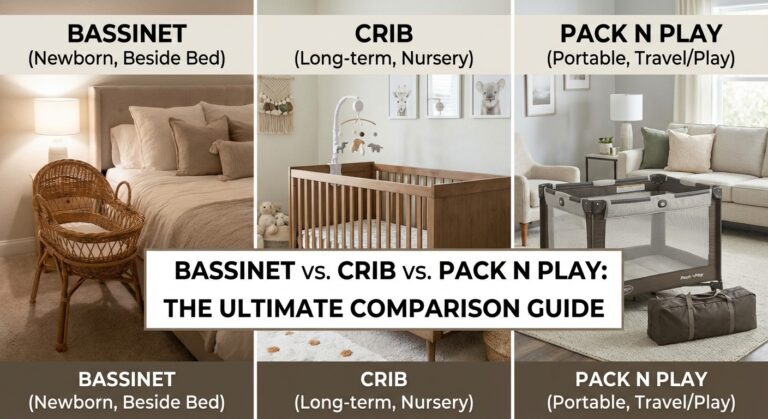
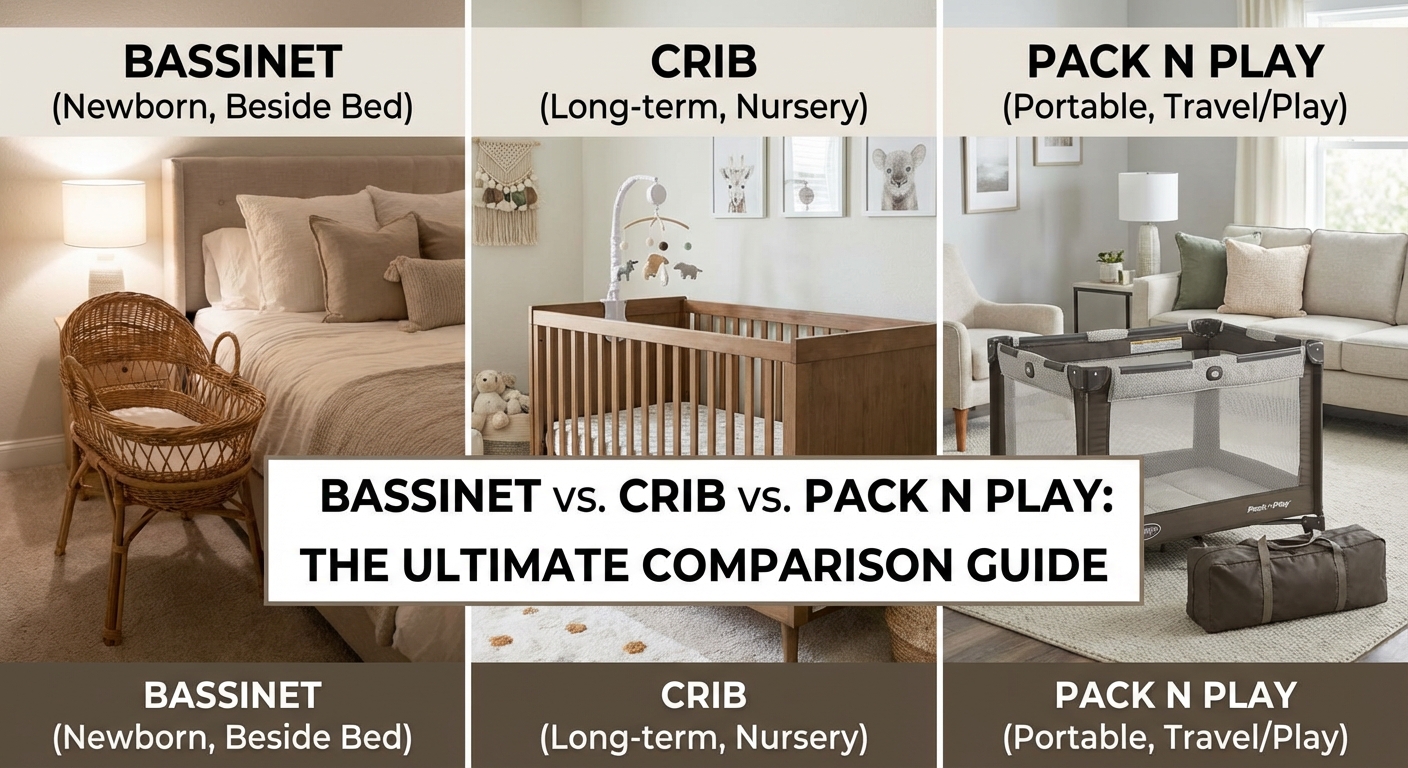
Bassinet vs. Crib vs. Pack ‘n Play: The Ultimate Sleeping Guide
Walking into a baby store or browsing online catalogs can feel like navigating a labyrinth. Between the high-tech gadgets and the endless swatches of fabric, one question looms larger than most: Where is the baby actually going to sleep?
It sounds like a simple question, but the “Big Three” of baby sleep—the bassinet, the crib, and the pack ‘n play (or playard)—all vie for your attention. Each has a distinct purpose, a different lifespan, and a unique footprint in your home. Are you setting up a permanent nursery? Do you need something right next to your bed for midnight feedings? Or are you planning to travel to Grandma’s house every other weekend?
At Blanket Insider, we understand that safe sleep is the cornerstone of a happy home. We’ve analyzed safety standards, convenience factors, and long-term value to bring you this comprehensive showdown: Bassinet vs. Crib vs. Pack ‘n Play. By the end of this guide, you will know exactly which sleeping sanctuary is right for your little one.
At a Glance: The Sleep Comparison
Short on time? Here is the quick breakdown of how these three sleep solutions stack up against each other.
| Feature | Bassinet | Standard Crib | Pack ‘n Play (Playard) |
|---|---|---|---|
| Primary Use | Newborn bedside sleep (Room Sharing) | Permanent nursery sleep | Travel, naps, and safe play |
| Age Range | 0 – 5 months (until rolling) | 0 – 3+ years (convertible) | 0 – 3 years (weight limits apply) |
| Footprint | Small & Compact | Large & Permanent | Medium & Portable |
| Portability | Moderate (room-to-room) | None (Stationary) | High (Folds into bag) |
| Cost | $60 – $300+ | $150 – $1,000+ | $50 – $250 |
| Mattress | Thin pad included | Sold separately (firm/thick) | Thin, segmented pad included |
1. The Bassinet: The Newborn Nest
A bassinet is a small, elevated bed designed specifically for newborns. Because the American Academy of Pediatrics (AAP) recommends room-sharing (but not bed-sharing) for at least the first six months, a bassinet is often the first choice for new parents. Its compact size allows it to fit right next to the parents’ bed, making those 3 AM feedings much easier.
Why Choose a Bassinet?
The primary appeal is proximity. Many modern bassinets swivel over your mattress or have drop-down sides, allowing you to soothe your baby without getting out of bed. For mothers recovering from a C-section, this accessibility is invaluable.
Furthermore, newborns can sometimes feel “lost” in a giant crib. The cozy, enclosed walls of a bassinet can mimic the tightness of the womb, especially when paired with a proper swaddle.
✅ Pros
- Space Saving: Perfect for small apartments or master bedrooms.
- Convenience: Ideal for night feeds and checks.
- Mobility: Many have wheels to move from bedroom to living room.
- Lower Height: Easier to lay a sleeping baby down gently.
❌ Cons
- Short Lifespan: Only usable until baby rolls over or pushes up (approx. 4-5 months).
- Weight Limit: Usually caps at 15-20 lbs.
- Cost Efficiency: An extra expense before buying a crib.
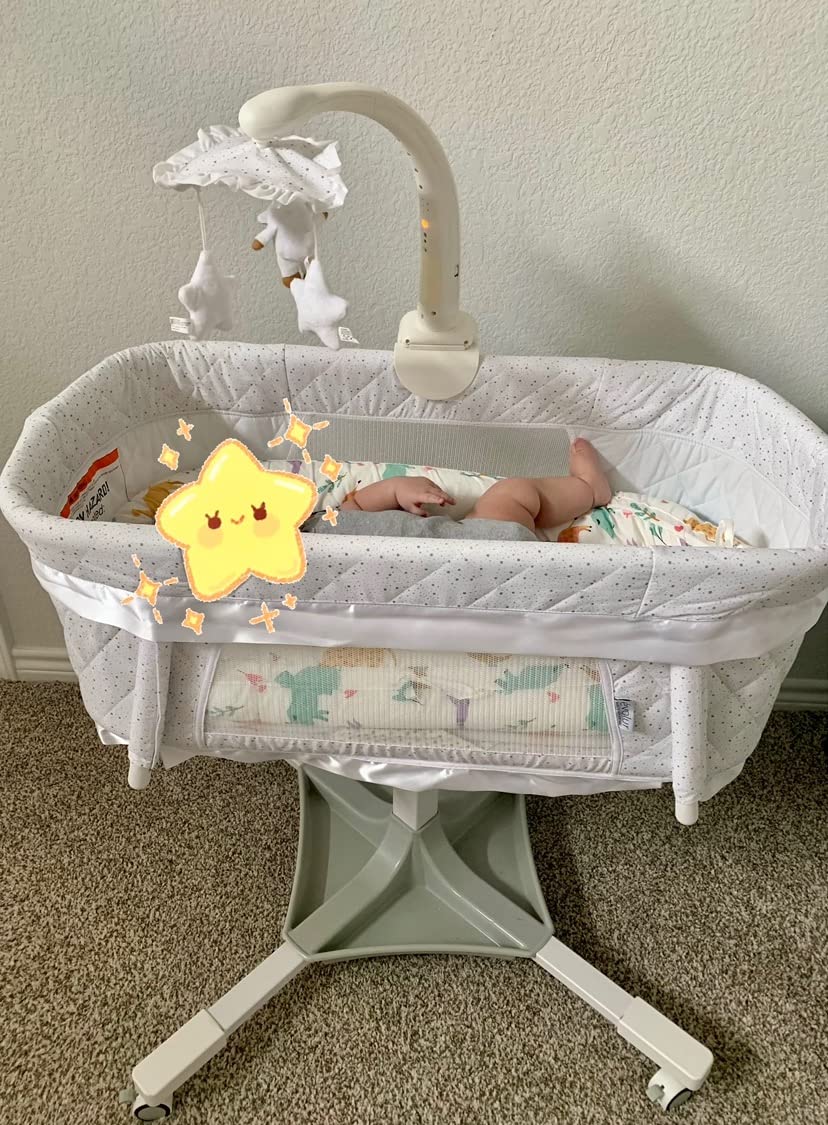
Looking for the safest bedside option? Check out this top-rated swivel bassinet.
Check Price on Amazon2. The Crib: The Long-Term Investment
The crib is the centerpiece of the traditional nursery. It is sturdy, spacious, and designed to last for years. While a bassinet is a temporary solution, the crib is where your child will likely sleep from infancy well into toddlerhood. Most modern cribs are “convertible,” meaning they transform into a toddler bed and eventually a full-size headboard.
Why Choose a Crib?
If you have the space, a crib is the most economical choice in the long run. You buy it once, and you are set for years. Crib mattresses are standardized and generally thicker and more supportive than the thin pads found in bassinets or playards. This support is crucial as your baby grows heavier.
Since the crib is larger, you can safely introduce baby blankets and comfort items once the baby reaches the appropriate age (usually after 12 months—see our guide on when baby can sleep with a blanket).
✅ Pros
- Longevity: Usable from birth to 3+ years.
- Durability: Built to withstand jumping toddlers.
- Aesthetics: Available in countless styles to match nursery decor.
- Support: Provides the most comfortable and supportive sleep surface.
❌ Cons
- Immobile: Once built, it rarely leaves the room.
- Large Footprint: Requires a dedicated wall or room.
- Price: High upfront cost (plus the cost of a mattress).

3. The Pack ‘n Play (Playard): The Versatile Traveler
The “Pack ‘n Play” (a term popularized by Graco, though technically a playard) is the Swiss Army Knife of baby gear. It is a portable crib with mesh sides, a metal or plastic frame, and a segmented mattress pad that folds up into a compact carrying bag.
Why Choose a Pack ‘n Play?
Versatility is key here. Many modern playards come with a “bassinet insert” that clips to the top, allowing you to use it for a newborn at bedside height. Once the baby outgrows the insert, you remove it, and the baby sleeps on the bottom mattress.
Beyond sleep, it serves as a safe containment zone for play. If you need to shower or cook, you can place your crawling infant in the playard with some toys, knowing they are safe. It’s also the undisputed king of travel. Whether you are visiting relatives or just need a safe spot in the living room among your cozy home essentials, the Pack ‘n Play delivers.
✅ Pros
- Portability: Folds up for travel or storage.
- Multifunctional: Sleep, play, and changing station (on some models).
- Value: Often cheaper than a crib and includes the mattress.
- Breathable: Mesh sides provide excellent airflow.
❌ Cons
- Comfort: The mattress is often thin and hard compared to a crib.
- Size: Larger than a bassinet but smaller than a standard crib.
- Low Height: Placing a heavy sleeping baby on the bottom level can strain your back.

Detailed Comparison: Which One Fits Your Lifestyle?
Space Considerations
If you live in a one-bedroom apartment or want to keep the baby in your room for a full year, space is a premium.
Winner: Bassinet (Short term) or Mini Crib. A bassinet has the smallest footprint. However, if you need longevity in a small space, consider a Mini Crib, which is smaller than a standard crib but larger than a bassinet.
Safety and Sleep Quality
All three options—when purchased new and certified by the CPSC—are safe for sleep. However, the Crib generally offers the highest quality sleep because you can choose a specific mattress firmness. Pack ‘n Play mattresses are notoriously thin to ensure they fold, which some babies find uncomfortable as they get heavier.
Regardless of which you choose, safe sleep rules apply: Back to sleep, firm surface, and no loose bedding. Save the cute quilts for when they are older (read more on safe blanket use here).
Travel and Flexibility
If you plan to travel, the Pack ‘n Play is non-negotiable. Even if you own a crib, you will likely need a playard for trips. Many parents skip the bassinet entirely and use a Pack ‘n Play with a bassinet attachment in their bedroom, saving money by buying one less piece of furniture.
The Verdict: What Should You Buy?
Scenario A: The “One and Done” Parent
Recommendation: Buy a Pack ‘n Play with a Bassinet and Changer attachment.
This serves as your newborn bassinet, your travel crib, and your toddler playpen. It is the most cost-effective route.
Scenario B: The Design & Comfort Conscious
Recommendation: Buy a Bassinet for months 0-4, and a Convertible Crib for month 5+.
This offers the best experience. You get the convenience of bedside swiveling early on, and the baby graduates to a high-quality, comfortable mattress in a beautiful nursery later.
Scenario C: The Small Space Dweller
Recommendation: Buy a Mini Crib.
A mini crib is the size of a Pack ‘n Play but looks and functions like a wooden crib. It often has wheels, fitting through doorways, and can last until the child is 2 years old.
Setting Up the Environment
Once you’ve chosen the bed, the environment matters. Ensure you have soft, ambient lighting (dimmable lamps work best for night feeds) to avoid waking the baby fully. Additionally, consider temperature regulation. While adults might like cooling blankets, babies need a consistent temperature, best achieved with a sleep sack rather than loose sheets.
Frequently Asked Questions
Yes! There is no medical requirement for a bassinet. You can put a newborn in a crib from day one. However, the crib might not fit in your bedroom, making room-sharing difficult, and reaching deep into a crib for a tiny newborn can be hard on your back.
Yes, as long as it meets current safety standards and you are using the mattress pad provided by the manufacturer. Do not add extra mattresses or thick blankets to a playard, as this creates a suffocation risk.
You must move the baby when they reach the weight limit of the bassinet (usually 15-20 lbs) OR when they start showing signs of rolling over or pushing up on hands and knees. This typically happens between 3 to 5 months.
Yes. Bassinets, cribs, and playards all have different dimensions. A standard crib sheet will not fit a playard safely. Always buy tight-fitting sheets designed specifically for your mattress type.
Proceed with caution. Safety standards change frequently (drop-side cribs are now banned, for example). If buying used, check for recalls and ensure no slats are broken or missing. It is generally safer to buy a new crib to ensure it meets current CPSC guidelines.
A bassinet is for newborns only (0-5 months). A mini crib is a smaller version of a standard crib but can support a baby up to toddlerhood (1-2 years), often with adjustable mattress heights.
Final Thoughts
The debate of bassinet vs. crib vs. pack ‘n play doesn’t have a single correct answer because every family’s home and lifestyle is different. Ideally, a combination works best for most: a bassinet for those exhausted early weeks, followed by a sturdy crib for the growing years, with a pack ‘n play stored in the closet for adventures.
Whichever option you choose, prioritize safety certifications and follow the manufacturer’s height and weight limits. Your baby’s sleep (and yours!) is worth the investment.
Ready to set up the nursery?
Browse the safest and most comfortable sleep solutions available today.
Shop All Baby Sleep Gear on Amazon