
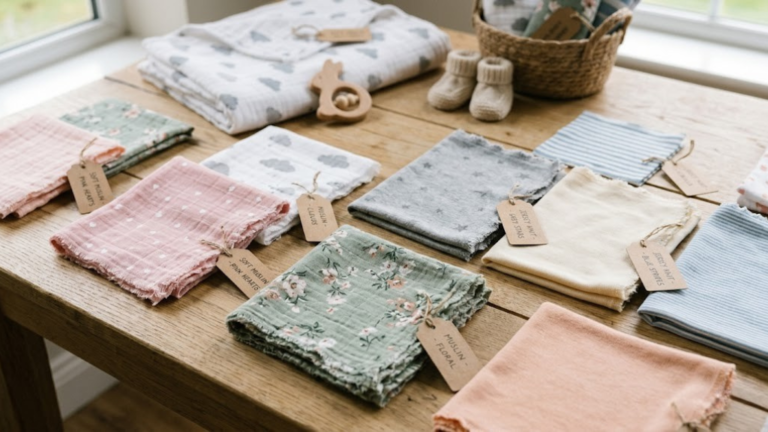
Are Receiving Blankets and Swaddles the Same Thing? Everything New Parents Need to Know
When you walk into a baby shower or browse a newborn checklist, the terms “receiving blanket,” “swaddle blanket,” and “muslin wrap” get thrown around almost interchangeably. For first-time parents, this is genuinely confusing — and understandably so. These items look similar, feel similar, and both end up wrapped around your baby. But they serve different primary purposes, come in different sizes, and are made from different types of fabric.
Understanding the distinction will save you money, nursery space, and — most importantly — help you use the right tool at the right time. The difference matters most when it comes to sleep safety. A loose receiving blanket in a crib poses risks that a properly fitted swaddle does not. Let’s get into it.
What Exactly Is a Receiving Blanket?
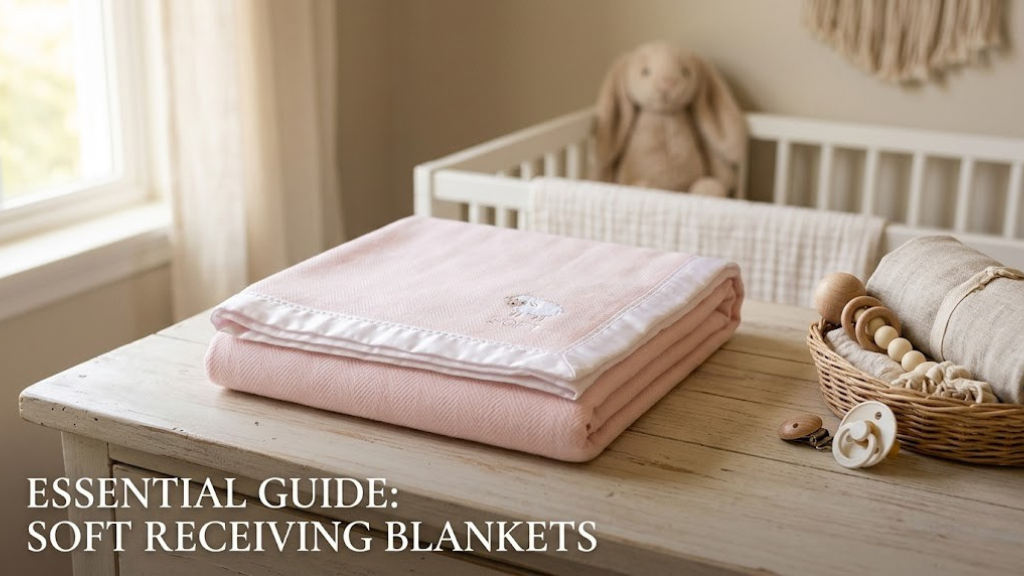
Receiving blankets: lightweight, versatile, and essential for the newborn stage.
A receiving blanket is a small, lightweight square of soft fabric — typically measuring around 30×30 to 30×40 inches — that is given to new parents in the hospital and used in the first weeks and months of a baby’s life. The word “receiving” literally comes from the idea of receiving a baby into the world, and these blankets have been a maternity ward staple for generations.
What sets receiving blankets apart from every other type is their sheer versatility. They’re the Swiss Army knife of the baby world. While they are often used to loosely swaddle newborns, that’s just one of their many jobs.
Everything You Can Do With a Receiving Blanket
- Light swaddling: Wrapping a newborn loosely for warmth and comfort
- Burp cloth: Draped over the shoulder during feeding
- Nursing cover: Provides privacy while breastfeeding in public
- Changing pad liner: A quick clean layer on any surface
- Tummy time mat: Soft base for supervised floor time
- Stroller shade: Draping over a stroller canopy for sun coverage
- Spit-up shield: General-purpose cleanup cloth
- Newborn photo prop: Soft, neutral backdrop for those first pictures
This multifunctionality is why most experienced parents recommend stocking 6–10 receiving blankets. You’ll use multiple a day without even trying. Because they’re lightweight and thin, they’re also easy to wash and dry quickly — which matters enormously when you’re running on no sleep and every baby item seems to need laundering at once.
Receiving blankets are typically made from woven cotton or flannel, making them less stretchy and slightly less ideal for tight, secure swaddling. They work well for newborns under about 8 pounds, but as babies grow and get more active, a dedicated swaddle blanket provides a more reliable wrap.
For a complete look at how blanket types change as your baby grows, check out our guide on baby sleep blanket safety timelines — it’s a fantastic resource for understanding exactly when to transition between different types of baby coverings.

Soft, durable, and trusted by hospitals — a classic choice for your newborn’s first weeks.
What Is a Swaddle Blanket — Really?
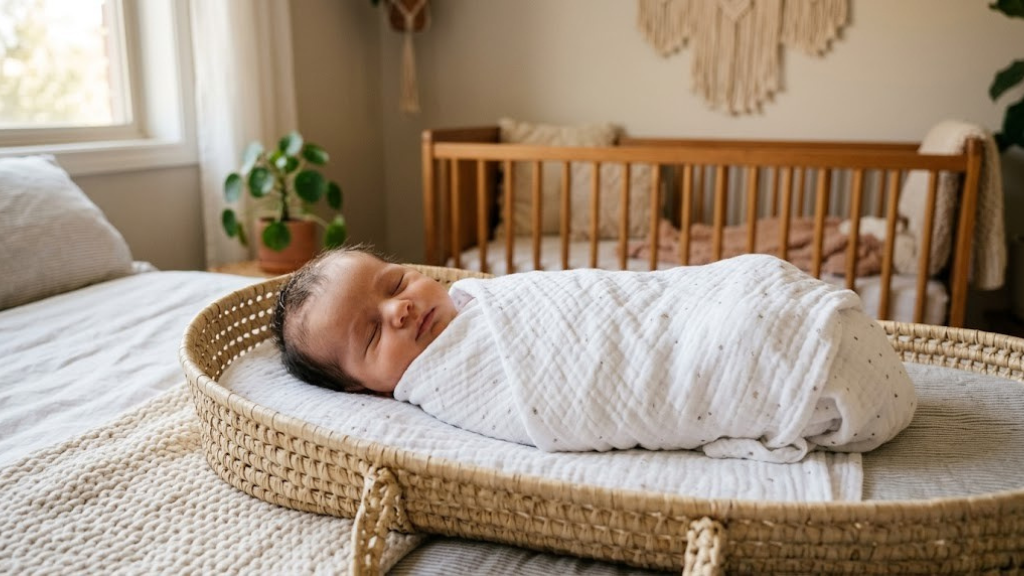
A well-executed swaddle is snug but not restrictive — a key distinction from loose wrapping.
A swaddle blanket is purpose-built for one primary goal: wrapping a baby snugly enough to calm them by recreating the sensations of the womb. The gentle compression of a proper swaddle suppresses the Moro reflex (also called the startle reflex), which is the involuntary arm-flailing that wakes newborns frequently during sleep.
Swaddle blankets come in two main styles, and understanding the difference is crucial:
1. Swaddle Wrap Blankets (Traditional Style)
These are large, square or rectangular pieces of fabric — typically 40×40 to 47×47 inches — designed to be folded and wrapped around the baby. Muslin cotton and bamboo blends are the most common materials because they’re breathable yet stretchy enough to hold their shape. The larger size is non-negotiable: you need extra fabric to complete the fold, tuck under the back, and keep the wrap secure.
2. Structured Swaddles (Wearable Swaddles)
These are swaddle products with Velcro wings, zipper closures, or snap fasteners that take the guesswork out of wrapping. Brands like SNOO, Happiest Baby, Halo, and Love to Dream have popularized this format. They’re ideal for parents who struggle to keep a traditional swaddle tight (which is most parents, initially). While these look nothing like a blanket, they serve the same swaddling function.
Our comprehensive roundup of best swaddle blankets for newborn sleep goes deep into which wraps survive active babies, which work best for hot sleepers, and which are easiest for sleep-deprived parents to master at 3 AM.
The Stretchy Advantage
Many dedicated swaddle blankets are made from jersey knit cotton or stretchy bamboo blends, which give slightly when the baby moves — making the wrap more forgiving and less likely to come loose. This stretchiness is one of the clearest functional differences from a standard receiving blanket’s woven fabric, which doesn’t give as much.
Key Differences: Receiving Blankets vs Swaddles
Side-by-Side Feature Comparison
Detailed Comparison Table
| Feature | Receiving Blanket | Swaddle Blanket |
|---|---|---|
| Primary Purpose | Multi-use: wrapping, burping, covering | Secure swaddling for sleep |
| Typical Size | 30×30″ to 30×40″ | 40×40″ to 47×47″ |
| Fabric | Woven cotton, flannel | Muslin, jersey knit, bamboo |
| Stretchiness | Minimal to none | Moderate to high |
| Swaddle Security | ⬤ Moderate | ✔ High |
| Suppress Moro Reflex | ⬤ Partially | ✔ Effectively |
| Can Be Burp Cloth | ✔ Yes | ✘ Not ideal |
| Machine Washable | ✔ Usually | ✔ Usually |
| Structured Versions | ✘ No | ✔ Yes (Velcro/zip) |
| Price Range | $1–$5 each | $10–$30+ each |
| Useful Age Range | Newborn through toddler | Newborn to ~4 months |
Can a Receiving Blanket Replace a Swaddle Blanket (or Vice Versa)?
This is the million-dollar question for registry-building parents. The answer is nuanced, and it depends on your baby’s age, size, and sleep situation.
Using a Receiving Blanket as a Swaddle
Technically, yes — you can swaddle a newborn with a receiving blanket. In fact, this is exactly what hospital nurses do in the delivery room using a method called the “diamond fold” or “burrito wrap.” For a brand new baby who isn’t very active yet and weighs under 8 pounds, a receiving blanket swaddle can work reasonably well.
The problems arise as the baby grows:
- The smaller size leaves less fabric to work with, making a secure wrap harder to achieve
- Woven cotton doesn’t give, so the wrap can feel restrictive without actually being snug
- Active babies (even at 6–8 weeks) can easily break free from a receiving blanket swaddle
- A loose swaddle is a SIDS risk if the blanket ends up covering the face
If you use a receiving blanket to swaddle, always ensure the wrap is snug enough that it cannot unravel during sleep. A loose blanket in a sleeping baby’s space is a suffocation hazard. When in doubt, switch to a dedicated swaddle product with fasteners.
Using a Swaddle Blanket as a Receiving Blanket
You can use a large muslin swaddle blanket for many of the same purposes as a receiving blanket — it works as a nursing cover, a lightweight layer, or a stroller drape. However, it won’t work as well as a burp cloth (it’s too large and floppy) and can feel unwieldy for quick clean-ups. Many parents use their muslin swaddles as receiving blankets after the swaddling stage is over, which makes them a great value proposition.
For a detailed breakdown of where swaddling fits in the broader sleep journey, our guide on swaddle vs sleep sack — when to make the switch walks you through the exact signs that tell you it’s time to transition.
Pros & Cons — Tap Each Card to Flip
Hover or tap the cards to reveal the details

The gold standard in muslin swaddling — lightweight, breathable, and gets softer with every wash.
Fabric Guide: What Are They Made From?
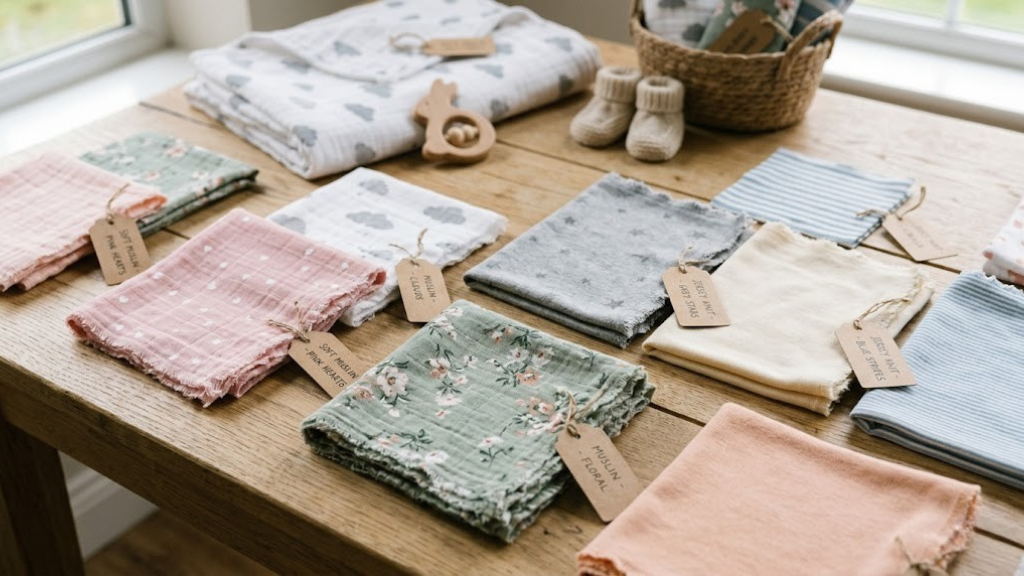
Fabric choice dramatically affects breathability, softness, and swaddle performance.
Receiving Blanket Fabrics
Flannel is the classic receiving blanket material — soft, warm, and cozy. It’s the fabric of those iconic pastel hospital blankets with little footprint patterns. The tightly woven structure means it holds its shape and doesn’t stretch, which is both its virtue and limitation. It launders easily and holds up to repeated washing, which matters when you’re running them through the machine constantly.
Woven cotton is lighter than flannel and works well in warmer climates. It’s breathable but similarly non-stretchy. Polyester fleece versions add warmth but sacrifice breathability — not ideal for swaddling over long periods since baby temperature regulation is critical.
Swaddle Blanket Fabrics
Muslin deserves its own paragraph because it has become synonymous with swaddle blankets. This open-weave cotton fabric is exceptionally breathable — the loose weave allows airflow, preventing overheating during sleep. It’s also slightly stretchy in the diagonal direction, which helps it conform to a baby’s body without constricting circulation. And critically, it softens with every wash — so the 20th use feels better than the first.
Bamboo is the premium choice. Bamboo-derived rayon is silky soft, naturally antimicrobial, and one of the most temperature-regulating fabrics available. Babies who run warm or have sensitive skin benefit enormously from bamboo swaddle blankets. Check out our article on the best bamboo blankets to understand why bamboo has become such a staple in premium baby products.
Jersey knit is the stretchy, T-shirt-like fabric used in some of the most popular swaddles. Its four-way stretch makes it forgiving for beginners — even if your technique isn’t perfect, the elasticity helps the wrap stay put. The tradeoff is that jersey knit retains more heat than muslin, so pay attention to room temperature.
Breathability & Temperature Regulation by Fabric Type
If you’re curious about how to clean and care for these different fabrics without damaging them, our guide on washing delicate baby blankets covers the essential care steps for muslin, bamboo, and jersey fabrics.
Does Size Really Matter? (Yes, More Than You Think)
One of the most practical differences between receiving blankets and swaddle blankets is their size — and it has a direct impact on function and safety.
Why Receiving Blankets Are Smaller
At 30×30 inches, a receiving blanket is sized for versatility, not for deep wrapping. It’s large enough to drape over a shoulder as a burp cloth, cover a nursing baby, or loosely wrap a newborn — but it doesn’t give you the surplus fabric needed to create a truly secure swaddle with layers tucked underneath.
Why Swaddle Blankets Need to Be Larger
A proper swaddle wrap requires you to fold down one corner, lay the baby on the diagonal, bring one side across the body, tuck it under, bring the bottom flap up, then wrap the other side around and tuck behind the back. This process consumes fabric rapidly. With a 47×47 inch square, you have generous material for all the layers and tucks. With a 30×30 inch receiving blanket, you may find yourself running out of fabric mid-wrap — which is frustrating and potentially dangerous if the wrap is loose.
| Blanket Type | Common Sizes | Best For | Works as Swaddle? |
|---|---|---|---|
| Receiving Blanket | 30×30″, 30×40″ | Multi-use, light wrap | ⬤ Newborns only |
| Muslin Swaddle | 40×40″, 47×47″ | Sleep swaddling | ✔ Excellent |
| Large Muslin/Multi-use | 47×47″ to 60×60″ | Swaddle + multi-use | ✔ Excellent |
| Structured Swaddle | Sized by weight (S/M/L) | Foolproof sleep wrap | ✔ Built-in |
| Stroller Blanket | 30×40″, 40×50″ | Warmth on the go | ✘ No |
For parents who want one blanket to do double duty as both a receiving blanket and a swaddle, look for larger muslin squares in the 47×47 inch range — you’ll get the versatility of a receiving blanket with enough fabric for a secure wrap. Our guide to the best uses for a 40×30 blanket explores how different dimensions affect what you can and can’t do with a blanket.
Safety: The Rules Every Parent Must Know
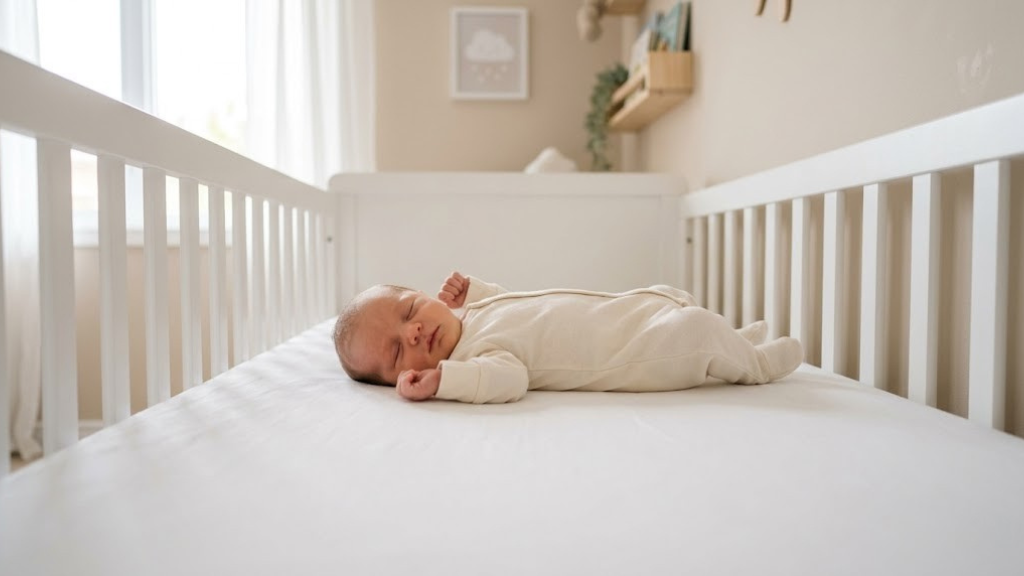
Safe sleep means firm mattress, back to sleep, and no loose bedding — swaddles included.
Whether you’re using a receiving blanket or a swaddle blanket, safe sleep guidelines from the American Academy of Pediatrics (AAP) are non-negotiable. Baby sleep safety has evolved significantly in recent decades, and the guidance is clear and consistent.
Universal Safe Sleep Rules
- Back to sleep: Always place a swaddled baby on their back — never stomach or side
- Firm, flat surface: A firm crib or bassinet mattress, not a bouncer, swing, or sofa
- No loose bedding: If using a receiving blanket as a cover (not swaddle), the baby must not be able to pull it over their face
- Room sharing, not bed sharing: Keep baby’s sleep space in your room but in their own safe sleep area
- Right temperature: Baby should be warm but not sweaty — overheating is a significant risk factor
Swaddle-Specific Safety Rules
- Stop when rolling begins: The moment your baby shows any signs of rolling — even during awake time — swaddling must stop. A rolled swaddled baby cannot push up and risks suffocation.
- Hip safety: The swaddle should never be tight around the hips and legs. The International Hip Dysplasia Institute recommends the “hip-healthy swaddle” technique where legs can bend and spread naturally.
- Snug arms, loose hips: The arms should be snug (to prevent the Moro reflex) but the lower body must have freedom of movement.
- Check for overheating: Signs include sweaty hair, flushed cheeks, rapid breathing, or a hot chest. If any are present, remove a layer immediately.
A loose receiving blanket placed in a crib, even tucked under a mattress, is not an AAP-approved safe sleep practice. For any sleep period, use either a properly executed swaddle, a structured wearable swaddle, or nothing at all. Save the receiving blanket for awake time, feeding, and supervised cuddling.
For a comprehensive timeline of what’s appropriate at each age, our detailed baby sleep blanket safety timeline breaks down the exact transitions from swaddle to sleep sack to toddler blanket.
Safety Ratings at a Glance
How Many of Each Do You Actually Need?
Registry overwhelm is real. Every product seems essential when you’re preparing for a newborn, and the blanket category is no exception. Here’s a practical breakdown based on actual usage patterns — not marketing copy.
Receiving Blankets: Stock Up
You will use receiving blankets constantly and in ways you haven’t anticipated. Expect to go through 3–5 per day in the newborn stage — one for each feeding (burp cloths), one for tummy time, one in the diaper bag. With laundry every 2–3 days, you’ll want at least 8–12 in rotation.
- Minimum: 6 receiving blankets
- Comfortable: 8–10 receiving blankets
- Stress-free: 12 receiving blankets
- Swaddle blankets: 4–6 (rotate 2–3 per night with spares)
- Structured swaddles: 2–3 (one on, one in the wash, one spare)
Swaddle Blankets: Quality Over Quantity
For sleep swaddles, you don’t need a large quantity — but you do need quality. Two or three high-quality muslin swaddles in heavy rotation will serve you better than six mediocre ones. If you’re using Velcro or zip swaddles, two is generally enough since they don’t absorb spit-up the way receiving blankets do.
The Math: Cost Comparison
| Item | Qty Needed | Cost Each | Total Spend | Use Duration |
|---|---|---|---|---|
| Receiving Blankets | 8–10 | $2–$5 | $20–$50 | Newborn → Toddler |
| Muslin Swaddle Blankets | 4–6 | $10–$20 | $50–$120 | 0–4 months |
| Structured Swaddles | 2–3 | $20–$40 | $50–$120 | 0–4 months |

Pediatrician-recommended structured swaddle with three swaddling options — perfect for babies who break out of traditional wraps.
Top Products Compared: Receiving Blankets vs Swaddle Blankets
With hundreds of options across both categories, we’ve narrowed it down to the most tested, most recommended products across different needs and budgets.
Filter by Your Priority
| Product | Type | Size | Fabric | Price | Rating |
|---|---|---|---|---|---|
| Gerber Flannel Receiving Blankets | Receiving | 30×30″ | Flannel Cotton | ~$12/4pk | ⭐ 4.7 |
| Aden + Anais Classic Muslin | Swaddle/Multi | 47×47″ | Muslin Cotton | ~$45/4pk | ⭐ 4.8 |
| Simple Joys by Carter’s Muslin | Swaddle | 40×40″ | Muslin Cotton | ~$20/4pk | ⭐ 4.6 |
| HALO SleepSack Swaddle | Structured Swaddle | S/M/L | 100% Cotton | ~$30–$35 | ⭐ 4.9 |
| Ergobaby Swaddler | Structured Swaddle | 0–3mo / 3–6mo | Organic Cotton | ~$28 | ⭐ 4.7 |
| Burt’s Bees Baby Receiving | Receiving | 30×40″ | Organic Muslin | ~$20/3pk | ⭐ 4.5 |
| Little Unicorn Muslin Quilt | Multi-use | 47×47″ | Muslin Cotton | ~$35 | ⭐ 4.6 |
| Nested Bean Zen Swaddle | Structured Swaddle | 0–6 months | Cotton + Velcro | ~$35 | ⭐ 4.8 |
For our fully tested roundup with real newborn feedback, visit our top baby swaddle blankets 2026 — muslin vs stretchy review, which puts the most popular options through rigorous real-world testing.

Organic, GOTS-certified, and sized large enough for a truly secure swaddle with room to grow.
What About Muslin Blankets? Where Do They Fit?
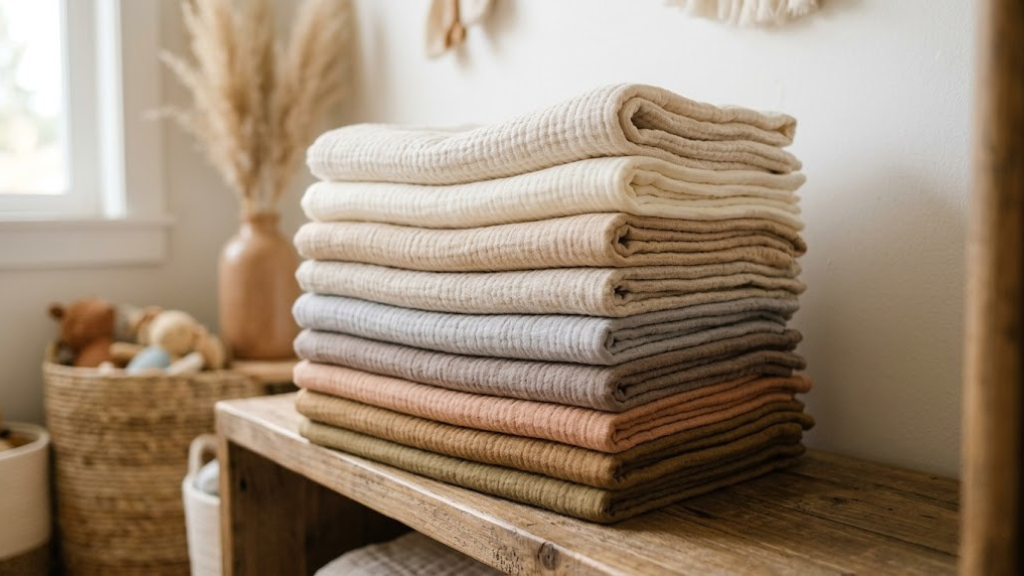
Muslin blankets occupy a middle ground between receiving blankets and swaddle blankets.
You’ve probably noticed that muslin comes up constantly in conversations about baby blankets. That’s because muslin occupies a genuinely unique middle ground — it’s made to the size of a swaddle blanket but can serve as a receiving blanket, a swaddle, a stroller cover, and more.
The term “muslin blanket” is technically a fabric descriptor (open-weave cotton), not a product category. Muslin can be used to make receiving blankets, swaddle blankets, or large multi-use wraps. The key variable is size — a 30×30 inch muslin square functions as a receiving blanket, while a 47×47 inch muslin square functions as a swaddle. This is exactly why the categories overlap and why parents get confused.
Our in-depth guide on receiving blanket vs swaddle vs muslin covers every distinction in granular detail, including specific product recommendations for each category. If you want the deepest possible dive into this topic, that’s your resource.
The Muslin “Holy Trinity”
When to Transition Away From Swaddling
Understanding when to stop swaddling is as important as knowing when to start. The biggest mistake parents make is continuing to swaddle too long because the baby “still sleeps well in it.” Safety must override convenience.
Signs It’s Time to Stop Swaddling
- Baby rolls from back to side or back to stomach during awake time
- Baby consistently breaks out of the swaddle (especially arms out)
- Baby seems frustrated or distressed in the swaddle at sleep time
- Baby reaches 3–4 months of age (the window when rolling typically begins)
- Any hint of rolling during sleep — this is the emergency signal
What Comes After Swaddling?
The transition path is: swaddle → transitional swaddle (one arm out, then both out) → sleep sack. Sleep sacks (wearable blankets) keep the baby warm and enclosed without restricting the arms, making them safe for rollers. They continue to be used through toddlerhood for many families.
For a complete breakdown of this transition and how to navigate it without ruining everyone’s sleep, our guide on when to switch from swaddle to sleep sack is the definitive resource.
After Swaddling: What to Do With Your Swaddle Blankets
Don’t let those beautiful muslin swaddles gather dust after the swaddling stage ends. At 47×47 inches, they make excellent:
- Lightweight play mat / tummy time surface
- Nursing cover or privacy wrap
- Stroller canopy drape for sun and wind protection
- Beach or park blanket as baby gets older
- Toddler comfort blanket (the extra softness from all those washes is a bonus)
Frequently Asked Questions
The Bottom Line: Know Your Tools, Trust the Difference
Receiving blankets and swaddle blankets are not the same thing — they’re complementary tools that serve your baby at different moments and in different ways. Receiving blankets are the hardest-working multi-purpose item in your nursery. Swaddle blankets are the specialized sleep-safety tool that every newborn deserves in those critical first months.
Stock your nursery with 8–10 good receiving blankets (flannel or cotton for year-round use), 4–6 breathable muslin or bamboo swaddle blankets, and consider 2–3 structured swaddles with Velcro or zippers for those 3 AM moments when technique goes out the window. That combination covers every scenario from hospital arrival to the sleep regression phase — and beyond.
Above all, keep safety front and center: snug wraps, back to sleep, and stop swaddling the moment rolling begins. Your baby’s sleep — and yours — depends on getting this right.
→ See Our Top Tested Swaddle Blankets