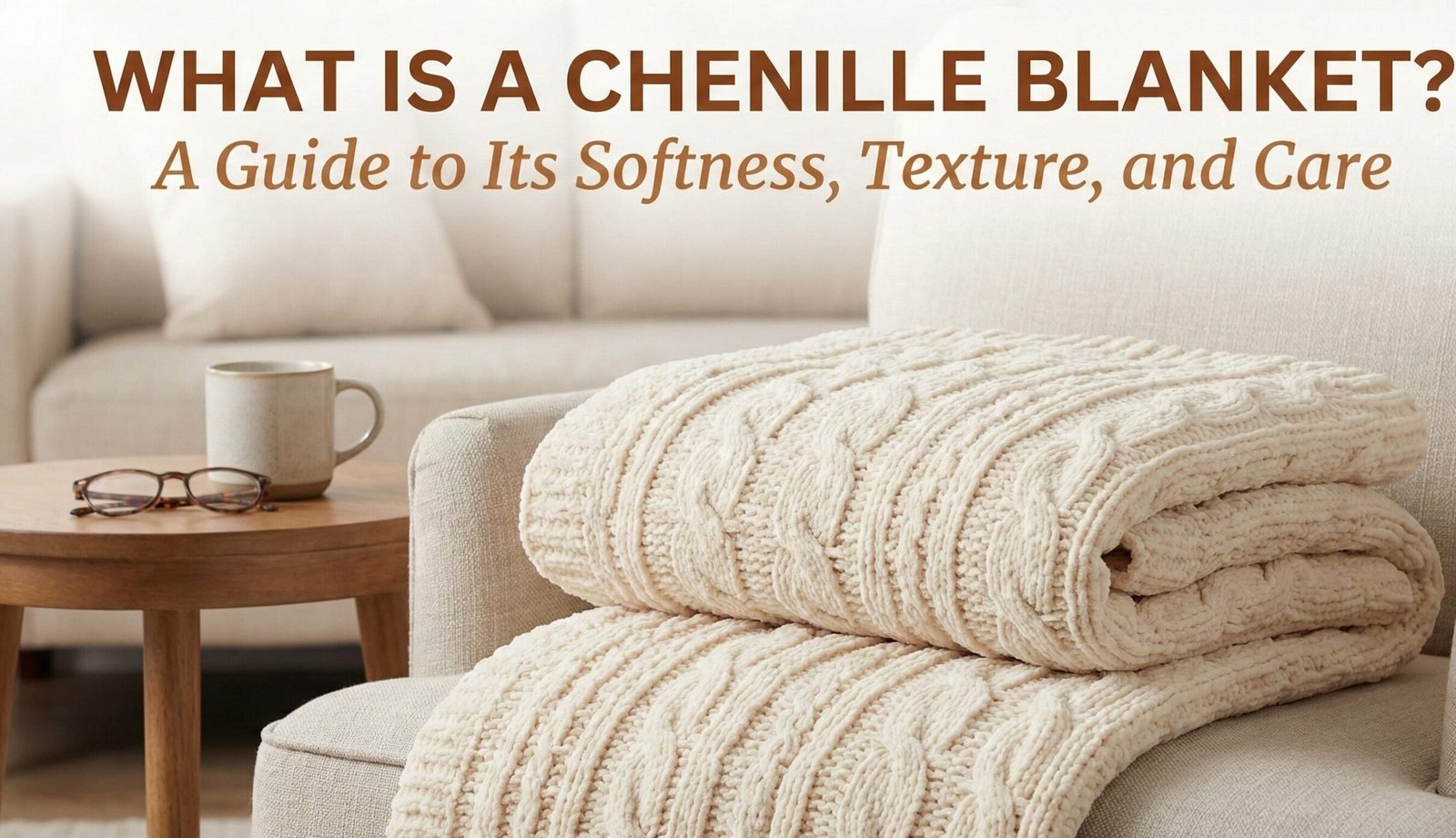
What is a Chenille Blanket? (And How to Choose the Best One)
You have seen them draped elegantly over designer sofas or folded neatly at the foot of luxury hotel beds. They shimmer slightly in the light and feel unbelievably soft to the touch. But what exactly is a chenille blanket, and why is it considered the crown jewel of cozy home decor?
Named after the French word for “caterpillar” due to its fuzzy texture, chenille is more than just a fabric—it is an experience. Its unique construction creates an iridescent sheen that catches the light beautifully, while the soft pile fibers deliver a tactile sensation that few other fabrics can match. From the living room to the bedroom, chenille blankets have earned their place as one of the most versatile and luxurious home textiles available today.
In this comprehensive guide, we will unravel the mystery of chenille, explore its rich history, compare it to every major competing fabric, and review the best chenille throw blankets you can buy today to upgrade your comfort game. Whether you are a first-time buyer or a seasoned chenille enthusiast looking to expand your collection, this guide covers everything you need to know.
Quick Decision: Is Chenille Right For You?
Short on time? Here is the cheat sheet to decide if this fabric matches your lifestyle:
- Choose Chenille If: You want a sophisticated, iridescent look for your living room and prioritize softness over durability. It is perfect for adults who love luxury textures, anyone decorating a guest room or master bedroom, and people who enjoy that velvety, weighted sensation when they curl up on the couch.
- Avoid Chenille If: You have cats with claws (they love to pull the loops), if you need a rugged outdoor blanket, or if you are looking for something that can withstand daily heavy use without any maintenance.
- The Feel Test: It feels like a velvety, fuzzy corduroy—soft, dense, and slightly weighted. The pile fibers stand perpendicular to the core yarn, creating a texture that is simultaneously plush and structured.
- Budget Expectation: Quality chenille throws range from $25 for budget options to $150+ for premium brands. Expect to invest a bit more than fleece, but the aesthetic payoff is significantly higher.
What is Chenille Fabric?
The term “chenille” refers to the type of yarn used to create the fabric, not the fiber itself. The yarn is manufactured by placing short lengths of yarn, called the “pile,” between two core yarns and then twisting them together. This causes the pile to stand at right angles to the core, creating that signature fuzzy, caterpillar-like softness that makes chenille instantly recognizable.
What sets chenille apart from other soft fabrics is its construction method. Unlike woven fabrics where threads interlace at right angles, or knit fabrics where loops interlock, chenille starts with a specially engineered yarn. The pile fibers are cut to uniform lengths and trapped between two twisted core threads. When the twist is applied, the pile fibers radiate outward in every direction, creating a cylindrical, three-dimensional texture that catches light from multiple angles.
This unique construction gives chenille its characteristic iridescent sheen—it looks different depending on which direction the light hits the fibers. In one direction, the blanket may appear deep and rich in color; in another, it may shimmer with a lighter, almost silvery quality. This play of light is one of the reasons chenille fabrics are so prized in interior design.
While originally made from cotton, modern chenille is often made from acrylic, rayon, or polyester to increase durability and reduce shrinkage. Each material brings its own characteristics to the finished product, which we will explore in detail in our yarn types section. The fabric can be woven, knitted, or crocheted, and each production method yields a slightly different texture and weight.
If you are exploring different textures, you might also be interested in what is a minky blanket, which offers a similar softness but with a synthetic, smoother finish.
The History of Chenille
Understanding where chenille comes from adds a layer of appreciation for this remarkable fabric. Its journey from a French textile innovation to a global home decor staple spans centuries and continents.
Chenille fabric was first produced in France, where weavers in the Lyon region—already famous for their silk production—began experimenting with a new type of yarn. The technique involved placing short pile fibers between two twisted core threads, creating a yarn that was softer and more dimensional than anything available at the time. Initially, chenille was made exclusively from silk and used primarily for clothing and upholstery.
The industrial revolution transformed chenille from a luxury handcraft into a mass-produced textile. New spinning machines could produce chenille yarn at scale, and the fabric began appearing in homes across Europe and America. During this period, chenille was primarily used for curtains, bedspreads, and tablecloths. The Victorian era saw chenille become a symbol of refined taste, with elaborate chenille bedspreads adorning bedrooms in upper-class homes.
In the American South, chenille took on a new identity. The “chenille robe” or “chenille bedspread” became a cultural icon, produced by textile mills in towns like Dalton, Georgia—now known as the “Carpet Capital of the World.” These hand-tied bedspreads featured elaborate patterns of tufted chenille on cotton backing, and they became a staple of Southern hospitality. Roadside stands selling chenille bedspreads were a common sight along Southern highways.
The development of synthetic fibers like acrylic and polyester revolutionized chenille production. These materials were cheaper to produce, more durable, easier to dye, and significantly more resistant to shrinking and fading. Synthetic chenille could be machine washed—a game-changer that made the fabric accessible to a much wider market. The 1970s saw a massive resurgence of chenille bedspreads, particularly in earthy tones like avocado green and harvest gold.
Today, chenille has been reimagined for contemporary tastes. High-end designers use chenille for everything from throw blankets to upholstered furniture, and the fabric has become synonymous with accessible luxury. Modern chenille combines the softness of traditional construction with advanced fiber technology, resulting in products that are softer, more durable, and more versatile than ever before. The chunky knit chenille blanket trend, which exploded on social media, introduced a whole new generation to this timeless fabric.
From its humble beginnings in French silk mills to its current status as a home decor essential, chenille has proven its staying power. Its ability to adapt to new materials and manufacturing techniques while retaining its signature softness is a testament to the brilliance of its original design.
How Chenille is Manufactured
The manufacturing process behind chenille is what gives the fabric its distinctive texture. Understanding this process helps you appreciate why quality matters and why some chenille blankets outperform others.
Step 1: Creating the Chenille Yarn
The process begins with the yarn itself. Unlike traditional yarn, which is simply spun from fibers, chenille yarn requires a multi-stage construction process:
- Pile Fiber Preparation: Short lengths of fiber (typically 1/8 to 1/4 inch long) are cut to uniform length. These will become the soft, fuzzy pile that you feel on the surface of the blanket. The fiber can be cotton, acrylic, polyester, rayon, or a blend.
- Core Thread Placement: Two core threads are positioned parallel to each other on a specialized loom. These core threads will serve as the backbone of the yarn, holding the pile fibers in place.
- Pile Insertion: The cut pile fibers are placed perpendicular to the core threads, sandwiched between them. The density of these pile fibers determines how plush the final yarn will be.
- Twisting: The two core threads are twisted together, trapping the pile fibers securely between them. As the twist is applied, the pile fibers spring outward in all directions, creating the characteristic cylindrical, fuzzy appearance of chenille yarn.
- Quality Inspection: The finished yarn is inspected for uniformity. Any irregularities in pile length or density are flagged, as these will show up as visible defects in the finished blanket.
Step 2: Creating the Fabric
Once the chenille yarn is produced, it can be turned into fabric using several methods:
Woven Chenille
The chenille yarn is used as either the warp (lengthwise) or weft (crosswise) threads in a weaving process. Woven chenille tends to be the most durable and has the most structured appearance. The pile fibers stand upright from the woven base, creating a dense, plush surface.
Knitted Chenille
The chenille yarn is knitted on industrial knitting machines. Knitted chenille is more flexible and drapes more naturally than woven versions. This method is commonly used for throw blankets and apparel because the knit structure allows the blanket to conform to the body.
Crocheted Chenille
For chunky knit blankets and artisanal pieces, chenille yarn is crocheted by hand or machine. Crocheted chenille has the most open, textured appearance and is often used for statement pieces. The larger stitch pattern allows more air to circulate, making crocheted chenille blankets lighter than their woven counterparts.
Tufted Chenille
In tufted production, the chenille yarn is punched through a backing fabric to create loops or cut pile. This method is commonly used for bedspreads and area rugs. Tufted chenille can achieve very dense, uniform pile heights that feel exceptionally soft underfoot.
Step 3: Finishing Treatments
After the fabric is created, it undergoes finishing treatments that enhance its performance:
- Singeing: Loose surface fibers are removed with a controlled flame or heated plate, reducing initial shedding.
- Shearing: The pile is trimmed to a uniform height for a consistent, polished appearance.
- Anti-static Treatment: Many synthetic chenille blankets receive an anti-static coating to prevent the static cling that can attract lint and pet hair.
- Water Repellent Coating: Some premium chenille blankets receive a light water-repellent treatment that helps resist spills and makes cleaning easier.
- Pre-washing: High-quality manufacturers pre-wash chenille blankets to remove loose fibers and prevent initial shrinkage.
Understanding Chenille Yarn Types
The fiber content of chenille yarn dramatically affects the blanket’s feel, durability, care requirements, and price. Here is a detailed breakdown of each common chenille fiber type.
Polyester Chenille
Feel: Soft, slightly synthetic sheen, consistent texture throughout.
Durability: Excellent. Polyester resists stretching, shrinking, and wrinkling. It holds its shape well even after multiple washes.
Care: Machine washable, quick drying, resistant to stains and mildew. The easiest chenille type to maintain.
Best For: Everyday use, families with children, pet owners, and anyone who wants low-maintenance luxury. This is the most common type of chenille blanket on the market.
Price Range: $20-$80 for a standard throw blanket.
Acrylic Chenille
Feel: Very soft, often indistinguishable from natural fibers. Slightly warmer than polyester due to its wool-like properties.
Durability: Good. Acrylic resists fading and mildew, but can pill over time with heavy use.
Care: Machine washable on gentle cycle. Lay flat to dry to prevent stretching. Avoid high heat.
Best For: People who want the warmth and feel of wool without the allergenicity or high maintenance. Excellent for cooler climates.
Price Range: $25-$100 for a standard throw blanket.
Cotton Chenille
Feel: Natural, breathable, slightly less plush than synthetic options. Gets softer with each wash.
Durability: Moderate. Cotton chenille is strong but can shrink if not pre-treated. The pile may flatten over time with heavy use.
Care: Machine washable in cold water. Tumble dry on low or lay flat. May need occasional ironing to restore luster.
Best For: Hot sleepers, people with sensitive skin, summer use, and anyone who prefers natural fibers. Also great for baby blankets due to its breathability.
Price Range: $30-$120 for a standard throw blanket.
Rayon/Viscose Chenille
Feel: Incredibly silky and smooth. Rayon chenille has the most pronounced iridescent sheen of all chenille types. Feels cool to the touch.
Durability: Moderate. Rayon is stronger when wet than dry, but the fibers can weaken with aggressive washing. Requires more careful handling.
Care: Hand wash or gentle machine cycle in cold water. Lay flat to dry. Avoid wringing or twisting.
Best For: Special occasion throws, decorative blankets, and anyone who prioritizes aesthetics and luxury feel over rugged durability.
Price Range: $40-$150 for a standard throw blanket.
Silk Chenille
Feel: The pinnacle of softness and sheen. Silk chenille has a natural luster that synthetic fibers attempt to replicate. It drapes like liquid.
Durability: Lower than synthetic options. Silk is strong for its weight but susceptible to UV damage and requires professional cleaning.
Care: Dry clean only or very gentle hand wash with silk-specific detergent. Store in a breathable garment bag away from direct sunlight.
Best For: Collectors, luxury decor enthusiasts, and heirloom pieces. Not recommended for everyday use.
Price Range: $100-$400+ for a standard throw blanket.
Chenille Blanket Size Guide
Choosing the right size chenille blanket depends on how you plan to use it. A throw blanket for the couch has very different requirements than a bed blanket for a king-size mattress. Here is a comprehensive size chart to help you decide.
| Size Name | Dimensions (inches) | Dimensions (cm) | Best Use |
|---|---|---|---|
| Small Throw | 40 x 50 | 102 x 127 | Decorative accent, kids, lap blanket |
| Standard Throw | 50 x 60 | 127 x 152 | Couch throw, reading blanket, most versatile size |
| Large Throw | 50 x 70 | 127 x 178 | Tall adults, full-body couch coverage, layering |
| Oversized Throw | 60 x 80 | 152 x 203 | Sharing, queen bed topper, floor blanket |
| Twin | 66 x 90 | 168 x 229 | Twin beds, dorm rooms, daybeds |
| Full/Queen | 90 x 90 | 229 x 229 | Full and queen beds, blanket layering |
| King | 108 x 90 | 274 x 229 | King and California king beds |
| King Cal | 108 x 102 | 274 x 259 | California king beds with extra length |
Choosing by Use Case
Couch Throw
The standard 50 x 60 inch throw is the most popular choice for couch use. It provides enough coverage to wrap around your shoulders while leaving your legs free. If you are taller than 6 feet, consider the 50 x 70 inch large throw for full coverage.
Bed Blanket
For use as a top blanket on a bed, choose a size that matches your mattress. A good rule of thumb is to add 20 inches to the mattress width for proper drape on each side. For queen beds, a 90 x 90 inch blanket provides ideal coverage.
Nursery
For nursery use, the small throw (40 x 50) is ideal. It is large enough to swaddle a baby but small enough to store easily. Always follow safe sleep guidelines and keep loose blankets out of the crib for infants under 12 months.
Outdoor/Travel
For camping, road trips, or travel, a standard throw (50 x 60) strikes the right balance between portability and coverage. Consider a lighter GSM chenille for travel to keep weight down.
Chenille Weight & GSM Guide
GSM stands for “grams per square meter” and is the standard measurement for fabric weight. Understanding GSM helps you predict how warm, heavy, and substantial a chenille blanket will feel before you buy it.
| Weight Category | GSM Range | Feel | Best For | Season |
|---|---|---|---|---|
| Lightweight | 150-250 GSM | Airy, breathable, gentle drape | Summer use, air-conditioned rooms, decorative accents | Spring/Summer |
| Medium Weight | 250-350 GSM | Balanced warmth, substantial but not heavy | Year-round use, couch throws, most popular weight | Year-round |
| Heavyweight | 350-450 GSM | Cozy, warm, weighted sensation | Fall/winter use, cold climates, bed blankets | Fall/Winter |
| Ultra-Heavy | 450+ GSM | Very dense, maximum warmth, blanket-like weight | Extreme cold, heavy blanket lovers, layered bed styling | Winter |
The most popular weight for chenille throw blankets is the medium range (250-350 GSM). This weight provides enough warmth for cool evenings without feeling too heavy or stifling. It also drapes beautifully over furniture, which is why interior designers tend to favor medium-weight chenille for styling purposes.
For bed blankets, heavier options (350+ GSM) are generally preferred because they provide the warmth and weight that most people associate with a comfortable sleeping environment. The added weight can also have a calming effect similar to a lightweight weighted blanket, which we will discuss in the health benefits section.
Comparison: Chenille vs. The Competition
How does chenille stack up against other popular blanket materials? We have expanded this comparison to cover six major competing fabrics so you can make an informed decision.
Master Comparison Table
| Feature | Chenille | Minky | Fleece | Velvet | Faux Fur | Sherpa |
|---|---|---|---|---|---|---|
| Texture | Fuzzy, velvety, textured | Smooth, slick, silky | Matte, wool-like softness | Dense, smooth, plush | Long pile, fluffy, luxurious | Fluffy, bumpy, warm |
| Appearance | Iridescent shimmer | Shiny, uniform | Flat, matte | Deep, rich color | Natural fur look | Two-tone (smooth + fluffy) |
| Warmth | Medium | Heavy/Warm | Light to Medium | Medium | Heavy/Warm | Heavy/Warm |
| Durability | Moderate (snag risk) | High | High | Moderate (crush risk) | Moderate (matting) | High |
| Breathability | Good | Moderate | Excellent | Moderate | Low | Moderate |
| Pet Friendly | Poor (snagging) | Good | Good | Poor (claw marks) | Poor (hair trapping) | Good |
| Price Range | $$-$$$ | $$-$$$ | $-$$ | $$$-$$$$ | $$-$$$$ | $-$$ |
| Best Use | Decorative throw, styling | Baby blankets, lap use | Everyday, kids, outdoor | Formal decor, accents | Statement piece, luxury | Winter layering, bedding |
Detailed Fabric Breakdowns
Chenille vs. Velvet
Texture: Velvet has a smooth, dense pile that feels uniform and sleek. Chenille has a fuzzier, more dimensional texture with visible pile fibers.
Appearance: Velvet absorbs light for a deep, rich color. Chenille reflects light for an iridescent shimmer. Velvet looks more formal; chenille looks more casual and cozy.
Durability: Velvet can crush and show permanent marks from pressure (like a wine glass ring). Chenille is more resistant to crushing but more prone to snagging.
Verdict: Choose velvet for formal settings and dramatic color impact. Choose chenille for everyday comfort and casual elegance.
Chenille vs. Wool
Texture: Wool has a natural, slightly coarse texture that softens with use. Chenille is consistently soft from the first touch.
Warmth: Wool is naturally warmer due to its crimped fibers that trap air. Chenille provides medium warmth but is more breathable in moderate temperatures.
Care: Wool requires special care (hand wash or dry clean) and is prone to felting. Synthetic chenille is machine washable and far easier to maintain.
Allergies: Wool can trigger allergies and skin sensitivities. Chenille (especially synthetic) is hypoallergenic and safe for sensitive skin.
Verdict: Choose wool for maximum natural warmth and sustainability. Choose chenille for easier care, hypoallergenic properties, and consistent softness.
Chenille vs. Cashmere
Softness: Cashmere is often considered the softest natural fiber. Chenille (especially rayon or silk varieties) comes remarkably close at a fraction of the price.
Price: Cashmere blankets typically start at $150 and can exceed $500. Chenille offers a similar luxury feel for $30-$100.
Durability: Cashmere pills easily and requires delicate handling. Chenille (polyester) is more durable for everyday use.
Verdict: Cashmere is the ultimate luxury if budget is no concern. Chenille delivers 80% of the experience at 20% of the price.
Chenille vs. Microfiber
Texture: Microfiber is ultra-smooth and lightweight. Chenille has more texture and a more substantial feel.
Value: Microfiber is typically the most affordable option. Chenille costs slightly more but offers a more premium look and feel.
Durability: Both are highly durable. Microfiber resists pilling better, while chenille may develop minor pilling over time.
Verdict: Choose microfiber for budget-conscious everyday use. Choose chenille when you want a step up in aesthetics and texture.
Chenille vs. Faux Fur
Texture: Faux fur has long, flowing pile that mimics real animal fur. Chenille has shorter, denser pile with a more structured appearance.
Warmth: Faux fur is typically warmer due to its thicker pile. Chenille provides medium warmth with better breathability.
Maintenance: Faux fur requires regular brushing to prevent matting and can trap pet hair deeply in its pile. Chenille is easier to shake out and clean.
Verdict: Choose faux fur for maximum visual impact and winter warmth. Choose chenille for a more versatile, year-round option.
Chenille vs. Sherpa
Texture: Sherpa has a two-sided design with a smooth exterior and a bumpy, fleece-like interior. Chenille has a consistent texture throughout.
Warmth: Sherpa is generally warmer due to its insulating bumpy interior. Chenille provides balanced warmth without overheating.
Style: Sherpa has a casual, outdoorsy aesthetic. Chenille has a more refined, elegant appearance that works in formal settings.
Verdict: Choose sherpa for casual warmth and outdoor-inspired decor. Choose chenille for sophisticated styling and versatile use.
For a list of other top contenders for your home, check out our guide on the best cozy blankets for living room styling.
Best Chenille Throw Blankets: Our Top Picks
We have analyzed fabric density, shedding reports, washability, and customer reviews to bring you the best options on the market across multiple price tiers.
1. The Luxury Pick: Bourina Textured Chenille Throw
Known for its geometric patterns and high-density weave, this blanket resists shedding better than cheaper alternatives. It has a fantastic drape, making it perfect for styling the end of a bed or draping over a reading chair. The Bourina throw is available in a wide range of colors, from muted neutrals to bold jewel tones, making it easy to match any decor scheme. The high-density weave ensures the blanket maintains its appearance even after multiple washes, and the textured pattern adds visual interest without overwhelming the room.

Experience the Shimmer: Add a touch of elegance to your sofa with this high-rated, silky-soft Chenille throw.
Check Price on Amazon2. The Budget Pick: Bedsure Chenille Woven Blanket
If you want the look of chenille without the high price tag, Bedsure offers a lightweight option that punches above its weight class. It is softer than cotton throws but durable enough for everyday movie nights. The woven construction gives it a more structured appearance than knitted alternatives, and the fringe detailing adds a classic touch. Just be careful with jewelry, as the looser weave can snag. For the price, it is hard to beat the value proposition—especially if you are decorating a dorm room or guest room on a budget.
3. The Chunky Knit: Handmade Chenille
Chunky knit blankets are trending, and chenille yarn makes them lighter and softer than wool. These are statement pieces—massive, fluffy, and incredibly warm. They are quintessential cozy home essentials. The oversized stitch pattern creates a bold visual statement while the chenille yarn ensures the blanket remains soft and comfortable. These blankets work particularly well as accent pieces on beds, in reading nooks, or draped over the arm of a sofa.

The Viral Trend: Get the chunky knit look without the itchy wool feel. Super plush and machine washable.
Check Price on Amazon4. The Premium Choice: High-End Woven Chenille
Premium woven chenille blankets use tighter weave densities and higher-quality yarn to create a blanket that feels substantially more luxurious than budget options. The pile density is typically 30-50% higher, which translates to a softer feel, better light reflection (more shimmer), and improved durability. These blankets often feature reinforced edges and professional finishing that prevents fraying. If you are buying a chenille blanket as a long-term investment for your home, the premium tier is worth the extra cost.
5. The All-Weather Pick: Lightweight Chenille
Not all chenille blankets are heavy winter accessories. Lightweight chenille (150-250 GSM) offers the signature chenille texture in a breathable package that works year-round. These thinner blankets are perfect for air-conditioned rooms in summer, as decorative throws that do not add bulk, and for layering with other blankets in colder months. They are also the easiest chenille type to wash and dry, making them ideal for high-use areas.
Styling Chenille in Every Room
One of the greatest advantages of chenille blankets is their versatility. They can elevate the aesthetic of virtually any room in your home. Here is how to style chenille for maximum impact in each space.
Living Room
The living room is chenille’s natural habitat. Drape a throw over the arm of your sofa for an instant upgrade, or fold it neatly at the corner for a curated look. The iridescent sheen of chenille catches natural light from windows beautifully, making it a focal point. Pair with matching or complementary throw pillows for a cohesive design. For sectionals, try two throws in coordinating colors—one on each end—to balance the visual weight.
Bedroom
At the foot of the bed, a chenille throw adds a layer of luxury that transforms a basic bed setup into a hotel-quality display. Fold the throw into a neat rectangle and place it across the lower third of the bed. For a more relaxed look, drape it casually across one corner. Chenille works particularly well in master bedrooms where the soft texture creates a calming, inviting atmosphere. Consider coordinating your chenille throw with your duvet cover and shams for a pulled-together look.
Nursery
A soft chenille throw can add warmth and style to a nursery. Drape it over the rocking chair for a cozy reading corner, or use it as a decorative accent in a crib (for display only—never for sleep). Cotton or acrylic chenille works best in nurseries due to its breathability and easy-care properties. Choose light, calming colors like soft white, cream, or pastel shades that complement the nursery palette.
Dorm Room
Dorm rooms are notoriously plain, and a chenille throw is one of the easiest ways to add personality and comfort. A single throw can transform a generic dorm bed into a cozy retreat. Choose a color that reflects your style—deep jewel tones for a sophisticated look, or bright colors for a fun vibe. The throw also serves double duty as a blanket for studying on the couch or a lap covering during late-night study sessions.
RV & Camper
RVs benefit from textiles that add warmth without consuming too much space. A lightweight chenille throw (under 250 GSM) provides comfort during travel without adding bulk to your storage compartments. The iridescent quality of chenille can also make a small RV interior feel more spacious and inviting by reflecting light around the space. Choose wrinkle-resistant varieties since RV storage tends to compress fabrics.
Home Office
A chenille throw draped over your office chair adds warmth during long work sessions and elevates the look of your workspace. If your office doubles as a guest room, a folded chenille throw on a shelf or in a basket signals hospitality to overnight guests. Neutral tones like charcoal, navy, or cream work well in professional settings, while richer colors can add energy to a creative workspace.
Styling Tips from Interior Designers
- The Casual Drape: Throw the blanket over one arm of the sofa, letting it cascade naturally. This creates an effortless, lived-in look that invites people to sit down and get comfortable.
- The Neat Fold: Fold the blanket into thirds lengthwise, then in half. Place it at the foot of the bed or over the back of a chair. This structured approach works well in formal or minimalist spaces.
- The Basket Display: Roll the blanket and place it in a decorative basket next to the couch or bed. This keeps the blanket accessible while adding a textural element to the room.
- The Layer Stack: Layer a chenille throw over a chunkier blanket (like a knit or sherpa) for a rich, textured look. The contrast in textures creates visual depth.
- The Chair Accent: Fold the blanket over the back of a dining chair or accent chair. This adds softness to hard furniture and creates a welcoming atmosphere in any room.
Chenille for Every Season
While chenille is often associated with cold weather, its versatility makes it suitable for year-round use when you choose the right weight and fiber type.
Spring
Spring calls for lighter layers as temperatures begin to warm. A lightweight chenille throw (150-250 GSM) in pastel or floral tones adds a fresh touch to your decor. Cotton chenille is ideal for spring because it is breathable and moisture-wicking. Use it as a light covering during unpredictable spring evenings when the temperature drops after sunset. Drape it over outdoor furniture for cool-weather patio dining.
Summer
Summer chenille should be ultra-lightweight and breathable. Choose cotton or bamboo-blend chenille in the 150-200 GSM range. These blankets are perfect for air-conditioned rooms where a light layer adds comfort without overheating. Light colors like white, cream, or soft blue reflect heat and keep the room feeling cool. Use as a decorative accent rather than a functional blanket during peak summer.
Fall
Fall is chenille’s prime season. Medium-weight chenille (250-350 GSM) in warm autumn tones—rust, burnt orange, deep burgundy, forest green—creates a cozy, inviting atmosphere. This is the time to bring out your chenille throws and use them regularly. Pair with pumpkin-scented candles and warm lighting for the ultimate fall ambiance. Acrylic chenille works particularly well in fall because it provides warmth without the heaviness of wool.
Winter
Winter demands heavy chenille (350+ GSM) in rich, deep colors. This is when chenille truly shines as a comfort fabric. Layer it over a heavier blanket for maximum warmth, or use it as your primary throw for cold evenings on the couch. Velvet-toned chenille in navy, emerald, or charcoal creates a luxurious winter aesthetic. For the ultimate cozy setup, pair a heavy chenille throw with a heated blanket underneath.
The key to year-round chenille use is having a rotation of blankets in different weights. A lightweight cotton chenille for summer, a medium-weight acrylic for spring and fall, and a heavy polyester for winter gives you the perfect chenille experience in every season.
Chenille for Different Lifestyles
Not everyone uses blankets the same way. Your lifestyle, household composition, and personal needs should all influence your chenille choice.
👶 Families with Kids
Children are hard on textiles, so durability is paramount. Choose polyester chenille in darker colors that hide stains. Look for machine-washable options with tight weaves that resist snags. Medium-weight chenille (250-350 GSM) is ideal because it is warm enough for movie nights but light enough for kids to manage. Avoid very light colors unless you enjoy frequent laundry sessions. The Bedsure chenille is a popular choice among parents for its balance of softness and durability.
🐱 Pet Owners
Pets—especially cats—present unique challenges for chenille. The looped pile structure is irresistible to cats who love to knead or scratch. If you have cats, choose tightly woven chenille with short pile fibers that are harder to hook with claws. Alternatively, designate a specific chenille throw as the “pet blanket” and keep your good ones on higher surfaces. For dogs, chenille works well as long as you choose darker colors that hide fur. Regular lint rolling keeps chenille looking fresh.
💜 Allergy Sufferers
Chenille can be an excellent choice for allergy sufferers, but the fiber type matters. Synthetic chenille (polyester or acrylic) is hypoallergenic and does not harbor dust mites the way natural fibers can. Avoid silk or wool chenille if you have sensitive skin or respiratory allergies. Look for chenille that has been pre-washed and sealed in packaging to minimize exposure to factory dust. Regular washing (every 2-3 weeks) keeps allergen buildup to a minimum.
💚 Hot Sleepers
If you tend to overheat at night, chenille can still work for you—just choose wisely. Lightweight cotton chenille (150-250 GSM) provides a comforting layer without trapping excessive heat. The breathable weave of cotton chenille allows air to circulate, preventing the “sauna effect” that heavier blankets create. Avoid polyester chenille if you are a hot sleeper, as synthetic fibers retain more heat. Use chenille as a top layer that you can kick off during the night without disrupting your sleep setup.
👨🍽 Senior Citizens
Chenille blankets offer several benefits for elderly individuals. The soft texture is gentle on aging skin that may be thin or sensitive. The medium weight provides a comforting, weighted sensation that can reduce anxiety and promote better sleep. Choose machine-washable options in lighter colors that are easy to see and handle. Avoid very heavy chenille that may be difficult to lift or move. The iridescent sheen of chenille can also add visual warmth to a room, which is psychologically comforting.
🏠 College Students
Dorm rooms and first apartments benefit enormously from chenille throws. A single throw can transform a generic bed into a stylish setup and provide warmth during study sessions. Choose medium-weight chenille in colors that match your personal style. Machine-washable options are essential for dorm life—look for polyester or acrylic that can handle frequent washing. The Bedsure chenille is a popular dorm choice for its affordability and durability.
DIY & Chunky Knit Chenille
The chunky knit chenille blanket trend has taken social media by storm, and for good reason. These oversized, fluffy blankets are stunning statement pieces—and many of them can be made at home with minimal skill.
Why Chenille for Chunky Knits?
Chenille yarn is the preferred material for chunky knit blankets because it produces a softer, lighter result than wool. A chunky knit wool blanket can weigh 10-15 pounds and feel scratchy against the skin. The same blanket made with chenille weighs 5-8 pounds and feels like wrapping yourself in a cloud. Chenille yarn also has more body than wool, which helps the oversized stitches hold their shape without collapsing.
Arm-Knit Chenille Blanket
Materials: 6-8 skeins of chunky chenille yarn (jumbo weight, 25 yards per skein).
Time: 1-2 hours.
Instructions: Cast on 15-20 stitches using your arms as needles. Knit every row (garter stitch) until the blanket reaches your desired length. Bind off and weave in ends. No knitting needles required—your arms are the tools. This is the fastest way to create a chunky chenille blanket and is perfect for absolute beginners.
Finger-Knit Chenille Blanket
Materials: 8-10 skeins of chunky chenille yarn.
Time: 2-4 hours.
Instructions: Use your fingers to create a chain stitch, then connect the chains into a rectangular shape. This technique produces a more open, lace-like texture than arm knitting. The result is a lighter, airier blanket that works well for spring and summer. It is also a great project to do while watching TV.
Large-Needle Knit Blanket
Materials: 10-12 skeins of chunky chenille yarn, size 50mm (US 100) knitting needles.
Time: 4-8 hours.
Instructions: Cast on 30-40 stitches. Knit in stockinette stitch (alternating knit and purl rows) for a smooth, classic look. The large needles create uniform, professional-looking stitches. This method produces the most polished result but requires basic knitting knowledge. Add fringe at the ends for a finished look.
Crochet Chunky Blanket
Materials: 12-15 skeins of chunky chenille yarn, size 25mm crochet hook.
Time: 6-12 hours.
Instructions: Use a large crochet hook to create a simple granny square or ripple pattern. Crochet allows for more complex patterns and color combinations than knitting. This method produces the most structured result with the best stitch definition. Perfect for crafters who want a more customized blanket.
Sustainability & Eco-Friendly Chenille
As consumers become more environmentally conscious, the chenille industry has responded with sustainable options. Here is what to look for if eco-friendliness is a priority.
Sustainable Fiber Options
- Recycled Polyester Chenille: Made from post-consumer plastic bottles, recycled polyester chenille diverts waste from landfills while producing a fabric that is virtually identical to virgin polyester. The recycling process uses 59% less energy than producing new polyester. Several major brands now offer recycled chenille throws at competitive prices.
- Organic Cotton Chenille: Grown without synthetic pesticides or fertilizers, organic cotton chenille is better for the environment and for your skin. The Global Organic Textile Standard (GOTS) certification ensures that the entire production process meets strict environmental and social criteria. Organic cotton chenille is typically 20-30% more expensive than conventional cotton chenille.
- Bamboo Chenille: Bamboo is a fast-growing, renewable resource that requires minimal water and no pesticides. Bamboo chenille has natural antibacterial properties and is incredibly soft. However, the processing of bamboo into fabric (viscose process) involves chemicals, so look for bamboo lyocell, which uses a closed-loop chemical process that recycles 99% of the solvent.
- Tencel/Lyocell Chenille: Made from sustainably harvested wood pulp, Tencel chenille is produced in a closed-loop process that recycles water and solvents. The resulting fabric is silky smooth, breathable, and biodegradable. It is one of the most environmentally friendly chenille options available.
What to Look For
Eco-Friendly Shopping Checklist
- Look for OEKO-TEX Standard 100 certification (ensures no harmful chemicals)
- Check for GOTS certification (for organic cotton products)
- Choose recycled polyester when available
- Prefer brands with transparent supply chains
- Look for products made in countries with strong environmental regulations
- Choose natural dyes or low-impact synthetic dyes
- Opt for minimal packaging or recyclable packaging
- Consider the product’s end-of-life: can it be recycled or composted?
The most sustainable blanket is the one you use for years, so durability should be a key factor in your decision. A high-quality chenille throw that lasts a decade is more eco-friendly than a cheap one that needs replacing every year.
Shopping Guide: How to Choose the Best Chenille Blanket
With so many options on the market, knowing what to look for can save you from disappointment. Here are the key quality indicators to evaluate when shopping for a chenille blanket.
Quality Indicators
- Pile Density: This is the most important quality indicator. Hold the blanket up to light—if you can see through it easily, the pile density is low. Higher density means more pile fibers per square inch, resulting in a softer, more durable blanket. Premium chenille has at least 300 pile fibers per square inch.
- Weave Tightness: Examine the base fabric where the pile is attached. A tight, even weave with no gaps or loose threads indicates good construction. Gently tug at the pile—low-quality chenille will shed fibers easily when pulled.
- Pile Height: Chenille pile typically ranges from 1/8 inch to 1/2 inch. Shorter pile (1/8-1/4 inch) is more durable and less prone to snagging. Longer pile (1/4-1/2 inch) is softer and more luxurious but requires more care.
- Edge Finishing: Look for tightly bound, serged edges that prevent fraying. Some premium chenille throws feature decorative fringe or tassels, which should be securely attached and evenly spaced.
- Weight Heft: When you pick up the blanket, it should feel substantial—not flimsy or paper-thin. A heavier feel generally indicates higher pile density and better construction.
Red Flags to Avoid
- Excessive shedding on first touch: Some initial shedding is normal, but heavy shedding indicates low-quality yarn or poor construction.
- Uneven pile height: If some areas look thicker than others, the manufacturing quality is inconsistent.
- Strong chemical smell: High-quality chenille should have no detectable odor. A strong chemical smell suggests poor finishing treatments.
- Extremely low price: If a chenille throw seems too cheap, it likely uses low-density pile, poor-quality yarn, or minimal finishing treatments.
- No fiber content label: Legitimate manufacturers always disclose fiber content. Missing labels are a red flag for counterfeit or mislabeled products.
- $15-$25: Budget tier. Acceptable for occasional decorative use, but expect lower pile density and potential shedding.
- $25-$50: Mid-range. Good balance of quality and value. Suitable for regular everyday use.
- $50-$100: Premium tier. High pile density, excellent construction, minimal shedding. Best for long-term use.
- $100+: Luxury tier. Exceptional softness, premium materials, professional finishing. An investment piece.
Color & Pattern Guide
The color and pattern of your chenille blanket can dramatically affect the mood and style of a room. Here is how to choose the right one.
Color Psychology for Chenille
Neutral Tones
Colors: Cream, ivory, taupe, gray, charcoal, black.
Mood: Sophisticated, timeless, versatile. Neutral chenille works in any room and pairs with any decor style. Cream and ivory are the most popular choices for their ability to brighten a space while adding warmth.
Best For: Formal living rooms, master bedrooms, minimalist spaces, and anyone who wants a safe, elegant choice.
Warm Tones
Colors: Rust, burnt orange, burgundy, gold, mustard, terracotta.
Mood: Cozy, inviting, energetic. Warm tones create a sense of warmth and comfort even before you touch the blanket. The iridescent quality of chenille makes warm colors appear especially rich and dimensional.
Best For: Fall decor, reading nooks, rustic or farmhouse-style rooms, and spaces that need a pop of warmth.
Cool Tones
Colors: Navy, forest green, teal, slate blue, lavender, sage.
Mood: Calming, refreshing, sophisticated. Cool tones have a soothing effect that promotes relaxation. They work particularly well in bedrooms and spaces designed for unwinding.
Best For: Bedrooms, home offices, coastal or modern decor styles, and anyone who prefers a calming aesthetic.
Pastels & Brights
Colors: Blush pink, mint green, sky blue, lemon yellow, coral, lilac.
Mood: Playful, fresh, youthful. Pastel chenille has a soft, dreamy quality that works beautifully in nurseries and spring/summer decor. Bright colors add energy and personality to any space.
Best For: Nurseries, kids’ rooms, spring/summer decorating, and anyone who wants to add a cheerful touch.
Pattern Guide
- Solid Colors: The most versatile option. Solid chenille relies on its texture and sheen for visual interest. Works in any decor style.
- Geometric Patterns: Chevron, herringbone, diamond, and stripe patterns add structure and modern appeal. Popular in contemporary and mid-century modern spaces.
- Floral Patterns: Classic and romantic. Floral chenille works well in traditional, cottage, and farmhouse-style rooms.
- Textured Weaves: Some chenille blankets feature raised patterns created by varying the weave density. These add visual and tactile interest without introducing additional colors.
- Fringe & Tassels: Decorative edges add a bohemian or artisanal touch. Fringe length varies from subtle 1-inch accents to dramatic 4-6 inch tassels.
Layering with Chenille
Layering blankets is a design technique that adds depth, texture, and warmth to your bed or living space. Chenille is an ideal layering fabric because of its unique texture and drape.
Bed Layering Technique
- Base Layer: Start with a fitted sheet and flat sheet as your foundation.
- Primary Blanket: Add your main blanket (comforter, duvet, or quilt) as the primary warmth layer.
- Chenille Layer: Fold a chenille throw across the lower third of the bed. This adds texture and color while providing an extra warmth layer that can be pulled up during cold nights.
- Pillow Arrangement: Layer your pillows from largest (back) to smallest (front), using chenille pillowcases or shams to tie the look together.
Couch Layering Technique
On a couch, layering creates visual interest and practical warmth options:
- Drape a heavy blanket (sherpa or knit) over the back of the couch.
- Fold a chenille throw over one arm for a contrasting texture.
- Add chenille or velvet throw pillows to tie the textures together.
- Place a lightweight chenille or fleece in a basket nearby for easy access.
Health Benefits of Chenille
Beyond aesthetics and comfort, chenille blankets offer several subtle health benefits that make them more than just a decorative accessory.
Thermoregulation
Chenille’s pile construction creates an insulating layer of air between your body and the environment. This trapped air acts as a natural temperature regulator, keeping you warm in cold conditions and preventing overheating in moderate temperatures. Unlike synthetic fleece, which can trap heat and cause sweating, chenille’s woven or knitted base allows some air circulation, providing a more balanced thermal experience.
Sensory Comfort
The soft, textured surface of chenille provides gentle sensory stimulation that can have a calming effect on the nervous system. This is particularly beneficial for individuals with anxiety, autism spectrum conditions, or sensory processing differences. The tactile experience of running your fingers through chenille pile activates nerve endings in the fingertips, sending calming signals to the brain. This is similar to the principle behind stress balls and fidget toys, but more subtle and natural.
Stress Reduction
The act of wrapping yourself in a soft, weighted blanket triggers the release of serotonin and dopamine—neurotransmitters associated with relaxation and happiness. While chenille blankets are not weighted blankets per se, heavier chenille throws (350+ GSM) provide enough weight to activate this comfort response. The ritual of settling into a cozy spot with a chenille throw can become a powerful stress-relief habit.
Sleep Quality
Using a chenille throw as a light blanket layer can improve sleep quality by providing the right amount of warmth without overheating. The soft texture against the skin promotes relaxation, while the medium weight provides a gentle sense of security. For people who toss and turn, the smooth drape of chenille allows the blanket to move with you without bunching or tangling.
Skin-Friendly
High-quality chenille, especially cotton or silk varieties, is gentle on sensitive skin. Unlike wool, which can cause itching and irritation, chenille’s pile fibers are cut smooth and do not have the microscopic barbs that make wool scratchy. For individuals with eczema, psoriasis, or general skin sensitivity, chenille is one of the softest and most comfortable blanket options available.
Pros & Cons of Chenille
The Good
- Aesthetics: Looks expensive and elevates room decor with its iridescent sheen.
- Softness: Incredible tactile feel against the skin—consistently rated among the softest fabrics.
- Warmth: Traps heat well due to the fuzzy pile construction.
- Drape: Falls beautifully over furniture, creating elegant visual lines.
- Versatility: Works in every room, every season, and nearly every decor style.
- Hypoallergenic: Synthetic chenille is safe for allergy sufferers and sensitive skin.
- Lightweight: Despite its plush appearance, chenille is lighter than many comparably soft fabrics.
- Color Variety: Available in a vast range of colors and patterns.
The Bad
- Snagging: The pile loops can be pulled by claws, zippers, or rough surfaces.
- Shedding: Low-quality chenille can shed fuzz, especially in the first few washes.
- Friction Wear: Can wear down in high-traffic seating areas over time.
- Pilling: Some chenille types develop small fabric pills after extended use.
- Static: Synthetic chenille can generate static electricity in dry environments.
- Care Requirements: Requires more careful washing than fleece or microfiber.
- Price: Higher quality chenille costs more than comparable fleece options.
- Pet Sensitivity: Not ideal for households with cats or dogs that scratch furniture.
Care & Maintenance Tips
Chenille has a reputation for being finicky, but modern synthetic chenille is often machine washable. Here is a comprehensive guide to keeping your chenille looking new for years.
Washing
- Check the Label: Always read the care label first. Different fiber types have different washing requirements. Polyester and acrylic chenille are the most machine-friendly; cotton requires cold water; rayon and silk should be hand-washed or dry-cleaned.
- Use Cold Water: Hot water can cause the pile fibers to mat and the fabric to shrink. Always use cold or lukewarm water (below 30 degrees Celsius / 86 degrees Fahrenheit).
- Choose Gentle Cycle: The gentle or delicate cycle minimizes agitation, which protects the pile fibers from being pulled or twisted. Use a slow spin speed to prevent the blanket from tangling.
- Use Mild Detergent: Harsh detergents can damage the pile fibers and strip the fabric’s natural sheen. Use a mild, liquid detergent without bleach or fabric softener. Fabric softener can actually coat the pile fibers and reduce their softness over time.
- Bag It: If possible, wash the blanket inside a mesh laundry bag. This prevents the loops from snagging on the agitator or other clothes. The mesh bag also helps maintain the blanket’s shape during the wash cycle.
Drying
- Best Method: Air Dry: Lay the blanket flat on a clean, dry surface away from direct sunlight. Reshape the blanket while it is still damp to maintain its dimensions. This method preserves the pile texture and prevents shrinkage.
- Quick Method: Tumble Dry Low: If you need the blanket dried quickly, use the lowest heat setting available. Remove the blanket while it is still slightly damp and finish air drying. High heat can melt synthetic fibers and flatten the pile.
- Avoid Hanging: Never hang a wet chenille blanket on a clothesline. The weight of the water will stretch the fabric and distort its shape.
Storage
- Fold, Don’t Hang: Fold chenille blankets loosely and store them on a shelf or in a drawer. Hanging creates creases and stretches the fabric.
- Breathable Storage: Store in a cotton pillowcase or breathable storage bag. Avoid plastic bags, which can trap moisture and promote mildew.
- Cedar or Lavender: Place cedar blocks or lavender sachets near stored chenille to repel moths and keep the blanket smelling fresh.
- Avoid Direct Sunlight: Prolonged exposure to direct sunlight can fade chenille colors. Store away from windows or in a dark closet.
Proper storage is also key to preventing dust buildup in the pile. We recommend using a dedicated blanket basket to keep your chenille throws safe when not in use.
Troubleshooting Common Issues
Problem: The fuzzy pile starts to pull out of the core yarn, looking like little worms protruding from the fabric surface.
Cause: This happens when the core yarn twist is too loose, allowing pile fibers to slide out. It is more common in budget chenille with lower-quality yarn.
Fix: Do not pull them! Snip them carefully with scissors close to the base. For prevention, choose tightly woven chenille and avoid aggressive washing.
Problem: The blanket looks matted and lifeless after sitting on it repeatedly or after washing.
Cause: Pile fibers are being compressed by body weight or by the tumbling action of the washing machine.
Fix: Toss it in the dryer on “Air Fluff” (no heat) with a tennis ball or dryer ball to refluff the pile. Alternatively, use a fabric brush to gently lift the pile fibers back to their upright position.
Problem: A loop has been pulled out by a pet claw, zipper, or rough surface.
Cause: The pile fibers are not permanently fixed—they are held in place by the core yarn twist, which can be disrupted by sharp objects.
Fix: Use a crochet hook or a needle to gently push the loop back into the weave. Never cut a structural loop! If the loop is too far gone, tuck the remaining yarn to the back of the fabric and secure with a small stitch.
Problem: The blanket generates static shocks, especially in dry winter weather.
Cause: Synthetic fibers (polyester, acrylic) build up static charge through friction with skin or other fabrics.
Fix: Add a splash of white vinegar to the rinse cycle when washing—this neutralizes static. You can also lightly mist the blanket with water before use, or run a dryer sheet over the surface.
Problem: Small fabric balls form on the surface after extended use.
Cause: Short fibers work their way to the surface through friction. This is common in all fabrics but more noticeable on chenille due to the pile construction.
Fix: Use a fabric shaver or lint remover to gently remove pills. Wash the blanket inside out to reduce friction with other items. Choosing higher-quality chenille with longer staple fibers reduces pilling.
Problem: The vibrant color of your chenille blanket has dulled over time.
Cause: UV exposure from sunlight, harsh detergents, and hot water can all cause color fading.
Fix: Wash in cold water with mild detergent. Dry away from direct sunlight. For heavily faded blankets, a fabric dye bath can restore color—polyester chenille requires special fiber-reactive dye.
Common Chenille Myths Debunked
Misinformation about chenille is widespread. Here are the most common myths and the reality behind each one.
“Chenille is only for cold weather.”
RealityWhile heavier chenille is ideal for winter, lightweight chenille (150-250 GSM) works perfectly in spring and summer. Cotton chenille is breathable enough for year-round use, and many people use lightweight chenille throws as air-conditioning season accessories. The key is matching the GSM to the season, not avoiding chenille altogether.
“All chenille sheds badly.”
RealityInitial shedding is normal for any new chenille blanket, but it typically subsides after 2-3 washes. High-quality chenille with tightly twisted core yarn sheds very little after the break-in period. The key indicator of shedding potential is pile density—denser pile sheds less because the fibers are more securely trapped in the core twist.
“Chenille cannot be machine washed.”
RealityMost modern synthetic chenille (polyester and acrylic) is fully machine washable on a gentle cycle. Even cotton chenille can be machine washed in cold water. Only silk and some rayon chenille require hand washing or dry cleaning. Always check the care label, but do not assume chenille is hand-wash only.
“Chenille is outdated and old-fashioned.”
RealityWhile chenille has a long history, it has been thoroughly modernized. Contemporary chenille comes in current colors, modern patterns, and updated textures that fit seamlessly into today’s interiors. The chunky knit chenille trend has introduced the fabric to a new generation of design enthusiasts. Major home decor brands continue to feature chenille in their latest collections.
“Expensive chenille is always better than cheap chenille.”
RealityPrice is a general indicator of quality, but not an absolute one. A $30 chenille throw from a reputable manufacturer can outperform a $60 throw from an unknown brand. Focus on pile density, weave tightness, and fiber content rather than price alone. Read reviews from verified purchasers to gauge real-world quality.
Online Shopping Tips
Buying chenille blankets online requires a different approach than shopping in person, since you cannot touch the fabric before purchasing. Here is how to shop smart.
Reading Reviews Effectively
- Filter for Verified Purchases: Focus on reviews from verified buyers who have owned the product for more than a month. These reviews reflect real-world durability and performance.
- Look for Photos: Customer-uploaded photos give you a more accurate representation of color, texture, and size than professional product photos, which often use flattering lighting and angles.
- Search for Keywords: Use Ctrl+F to search reviews for keywords like “shed,” “snag,” “soft,” “thin,” “color,” and “wash.” These targeted searches reveal the most relevant information quickly.
- Check Negative Reviews: Negative reviews often reveal product weaknesses that positive reviews overlook. Pay attention to recurring complaints—if multiple reviewers mention the same issue, it is likely a real problem.
- Star Rating Distribution: A product with mostly 5-star and 1-star reviews (a “bimodal” distribution) suggests inconsistent quality. A product with a smooth distribution centered around 4 stars is more reliable.
Best Online Retailers for Chenille
- Amazon: Widest selection, most customer reviews, easy returns. Use the “Amazon’s Choice” and “Best Seller” badges as quality shortcuts. Filter by 4+ stars and read the top critical reviews.
- Wayfair: Excellent for home decor-focused chenille throws. Offers detailed product specs including fabric weight, dimensions, and fiber content. Good for comparing similar products side by side.
- Target: Good mid-range options with easy in-store returns. Store-brand chenille throws offer solid value.
- West Elm / Pottery Barn: Premium options with guaranteed quality. Higher prices but backed by strong return policies and customer service.
Return Policy Considerations
Final Verdict
A chenille blanket is the perfect intersection of style and comfort. It offers a level of sophistication that fleece cannot match, with a softness that wool can only dream of. While it requires a bit more care to prevent snags, the luxurious feel and shimmering look make it a worthwhile addition to any home.
Whether you choose a budget-friendly Bedsure throw for everyday use or splurge on a premium woven chenille for your master bedroom, the key is matching the blanket to your lifestyle. Consider your household composition (kids, pets, allergy sufferers), your climate (warm vs. cold), and your aesthetic preferences (modern, traditional, bohemian) when making your decision.
Remember these key takeaways:
- Polyester chenille offers the best balance of softness, durability, and ease of care.
- Medium-weight chenille (250-350 GSM) is the most versatile for year-round use.
- The standard 50 x 60 inch throw is the most popular size for couch use.
- Wash in cold water on a gentle cycle to preserve the pile texture.
- Chenille is not ideal for pet owners with cats—the looped pile is too tempting to resist.
Ready to wrap yourself in luxury? Check the prices above and choose the one that fits your decor style best. Your living room—and your comfort level—will thank you.