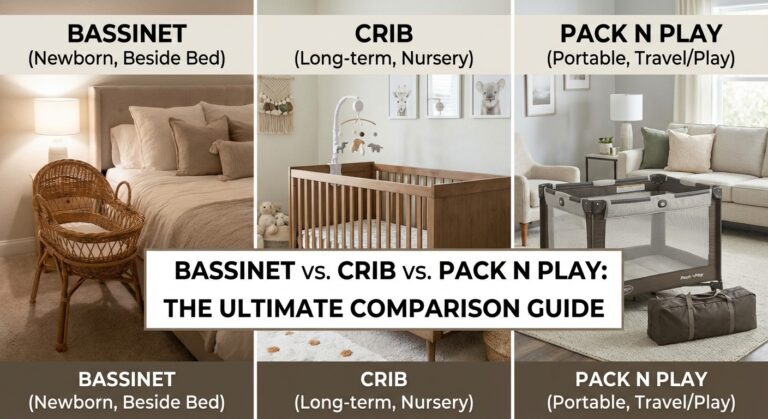
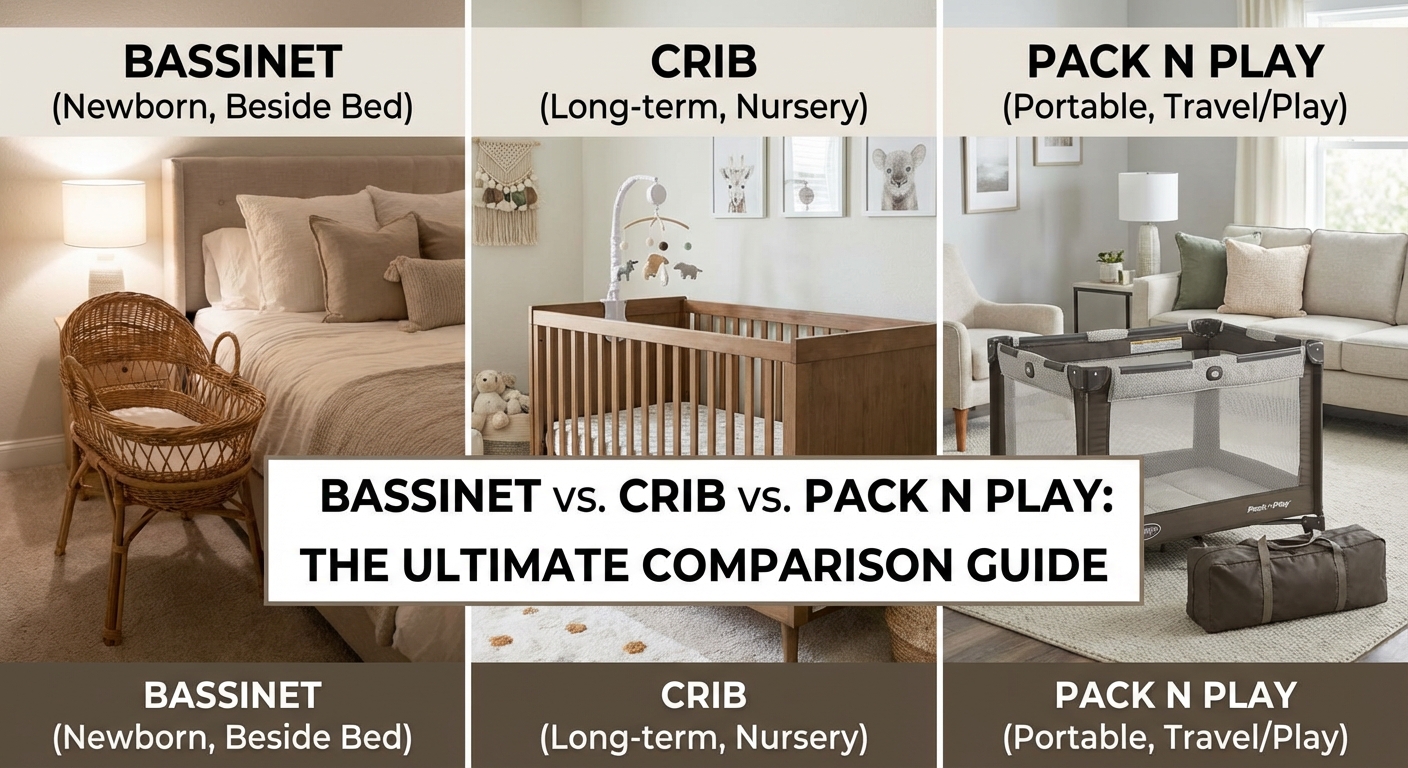
Bassinet vs. Crib vs. Pack ‘n Play: The Ultimate Sleeping Guide
Walking into a baby store or browsing online catalogs can feel like navigating a labyrinth. Between the high-tech gadgets and the endless swatches of fabric, one question looms larger than most: Where is the baby actually going to sleep?
It sounds like a simple question, but the “Big Three” of baby sleep—the bassinet, the crib, and the pack ‘n play (or playard)—all vie for your attention. Each has a distinct purpose, a different lifespan, and a unique footprint in your home. Are you setting up a permanent nursery? Do you need something right next to your bed for midnight feedings? Or are you planning to travel to Grandma’s house every other weekend?
At Blanket Insider, we understand that safe sleep is the cornerstone of a happy home. We’ve analyzed safety standards, convenience factors, and long-term value to bring you this comprehensive showdown: Bassinet vs. Crib vs. Pack ‘n Play. By the end of this guide, you will know exactly which sleeping sanctuary is right for your little one.
Table of Contents
- At a Glance: The Sleep Comparison
- Understanding Safe Sleep Guidelines (AAP, CPSC, ASTM Standards)
- The Bassinet: The Newborn Nest (Complete Guide)
- The Crib: The Long-Term Investment (Complete Guide)
- The Pack ‘n Play: The Versatile Traveler (Complete Guide)
- Additional Sleep Options: Moses Baskets, Mini Cribs, Co-Sleepers, and Floor Beds
- Material and Construction Comparisons
- Brand Comparison: Top Manufacturers Reviewed
- Mattress Quality and Comfort Analysis
- Sleep Environment Setup: Temperature, Lighting, and White Noise
- Assembly and Maintenance Guide
- Baby Sleep Development Milestones by Age
- Transitioning Between Sleep Surfaces
- Travel Considerations and Portable Solutions
- Budget Planning: Cost Breakdown Over Time
- Multiples and Twins: Special Considerations
- Premature and Special Needs Baby Sleep
- Eco-Friendly and Sustainable Options
- Common Mistakes New Parents Make
- Expert Recommendations and Pediatrician Advice
- The Verdict: What Should You Buy?
- Frequently Asked Questions (Complete FAQ)
- Final Thoughts
At a Glance: The Sleep Comparison
Short on time? Here is the quick breakdown of how these three sleep solutions stack up against each other.
| Feature | Bassinet | Standard Crib | Pack ‘n Play (Playard) |
|---|---|---|---|
| Primary Use | Newborn bedside sleep (Room Sharing) | Permanent nursery sleep | Travel, naps, and safe play |
| Age Range | 0 – 5 months (until rolling) | 0 – 3+ years (convertible) | 0 – 3 years (weight limits apply) |
| Footprint | Small & Compact | Large & Permanent | Medium & Portable |
| Portability | Moderate (room-to-room) | None (Stationary) | High (Folds into bag) |
| Cost | $60 – $300+ | $150 – $1,000+ | $50 – $250 |
| Mattress | Thin pad included | Sold separately (firm/thick) | Thin, segmented pad included |
Understanding Safe Sleep Guidelines: AAP, CPSC, and ASTM Standards
Before we dive deep into each sleep solution, it is absolutely critical to understand the safety frameworks that govern baby sleep products in the United States. These standards exist because tragically, unsafe sleep environments remain one of the leading causes of infant mortality. The American Academy of Pediatrics (AAP), the Consumer Product Safety Commission (CPSC), and ASTM International all play roles in keeping your baby safe.
The AAP Safe Sleep Recommendations
The AAP updates its safe sleep guidelines periodically based on the latest research. As of the most recent update, the core recommendations remain consistent and have been in place since 2011:
- Back to sleep: Always place your baby on their back for every sleep, both naps and nighttime. This single recommendation has significantly reduced the rate of Sudden Infant Death Syndrome (SIDS) since the “Back to Sleep” campaign began in 1994.
- Firm, flat surface: The sleep surface must be firm and flat. No pillows, blankets, crib bumpers, stuffed animals, or positioners should be in the sleep area. This rule applies to bassinets, cribs, and pack ‘n plays equally.
- Room-sharing without bed-sharing: The AAP recommends babies sleep in the parents’ room, on a separate surface, for at least the first 6 months—and ideally for the first year. This reduces the risk of SIDS by as much as 50%. It is important to note that “room-sharing” means a separate sleep surface in the same room, NOT bed-sharing.
- Avoid overheating: Do not overdress the baby or use heavy blankets. A wearable blanket or sleep sack is the recommended way to keep your baby warm. The ideal room temperature is between 68°F and 72°F (20°C to 22°C).
- Pacifier use: Offering a pacifier at nap time and bedtime has been shown to reduce SIDS risk. However, do not force it, and do not attach it to clothing or a string.
- Avoid smoke exposure: Babies should not be exposed to cigarette smoke, and pregnant women should avoid tobacco and alcohol use.
- Immune protection: Keeping up with immunizations and breastfeeding (if possible) provides protective benefits against SIDS.
CPSC Safety Standards for Bassinets, Cribs, and Playards
The CPSC enforces mandatory safety standards for all infant sleep products sold in the United States. Here is what they require for each category:
Bassinets
The CPSC requires bassinets to meet standard 16 CFR Part 1218, which mandates stability testing, mattress flatness requirements, and structural integrity checks. Bassinets must have a sleep surface that is at least 15 inches deep from the top of the mattress to the lowest point of the side walls, preventing the baby from rolling or falling out. Any bassinet with an inclined sleep surface above 10 degrees has been banned since March 2022, following multiple recalls and infant deaths associated with inclined sleepers.
Cribs
Full-size cribs must comply with 16 CFR Part 1219, and non-full-size cribs with 16 CFR Part 1220. The most significant change in crib safety history occurred in 2011 when the CPSC banned drop-side cribs. All cribs manufactured or sold in the US after June 2011 must have fixed sides. Slats must be no more than 2 3/8 inches apart, and the mattress must fit snugly with no gaps larger than two finger widths. The crib must also withstand rigorous testing, including mattress support strength tests and corner post height requirements to prevent strangulation.
Pack ‘n Plays / Playards
Playards must meet 16 CFR Part 1241, which covers structural integrity, mattress thickness, and locking mechanisms. The mattress pad included with the playard must be no more than 1 inch thick when compressed. This is a critical safety requirement—adding aftermarket mattresses or thick padding to a playard is dangerous and creates a suffocation risk. The locking mechanisms must engage securely, and the playard must remain stable even when a child pushes against the sides.
Warning: Inclined Sleepers Are Banned
As of March 2022, the CPSC has banned inclined infant sleep products with an inclined sleep surface greater than 10 degrees. This ban followed multiple infant deaths and recalls of products like the Fisher-Price Rock ‘n Play and the Kids II Rocking Sleepers. If you have an older inclined sleeper or bassinet, stop using it immediately and dispose of it properly. The safest sleep surface is always flat and firm.
ASTM International Standards
ASTM International develops voluntary consensus standards that many manufacturers voluntarily follow. ASTM F2194 covers bassinet and cradle safety, ASTM F1169 covers full-size cribs, and ASTM F406 covers non-full-size cribs and playards. While not always legally mandated, products that meet ASTM standards have undergone rigorous third-party testing. When shopping for baby sleep products, look for labels that indicate the product meets both CPSC and ASTM standards.
JPMA Certification: The Gold Standard
The Juvenile Products Manufacturers Association (JPMA) certification is a voluntary program where manufacturers submit their products for independent testing beyond the minimum CPSC requirements. Products that receive JPMA certification have been tested for safety, durability, and functionality. While not required, JPMA certification provides an additional layer of assurance that a product is safe and well-made. Look for the JPMA certification seal on packaging or product descriptions.
Pro Tip: How to Check for Recalls
Always check the CPSC recall database at cpsc.gov before purchasing any baby sleep product, especially second-hand items. You can search by product name, brand, or category. Sign up for email alerts to be notified if a product you own is recalled after purchase. This simple step could save your baby’s life.
1. The Bassinet: The Newborn Nest
A bassinet is a small, elevated bed designed specifically for newborns. Because the American Academy of Pediatrics (AAP) recommends room-sharing (but not bed-sharing) for at least the first six months, a bassinet is often the first choice for new parents. Its compact size allows it to fit right next to the parents’ bed, making those 3 AM feedings much easier.
Why Choose a Bassinet?
The primary appeal is proximity. Many modern bassinets swivel over your mattress or have drop-down sides, allowing you to soothe your baby without getting out of bed. For mothers recovering from a C-section, this accessibility is invaluable. The ability to reach over and gently pat your baby back to sleep without standing up can mean the difference between getting another hour of rest and being fully awake for the day.
Furthermore, newborns can sometimes feel “lost” in a giant crib. The cozy, enclosed walls of a bassinet can mimic the tightness of the womb, especially when paired with a proper swaddle. The smaller space can actually help newborns feel more secure during those first few weeks when the transition from the womb to the outside world is still very fresh.
Types of Bassinets: Which Style Is Right for You?
Not all bassinets are created equal. Over the years, the bassinet market has evolved significantly, offering parents a range of options designed for different needs and budgets.
Traditional Bassinets
The classic bassinet is a simple, basket-like bed on legs or a stand. These are typically the most affordable option, ranging from $60 to $150. They feature a shallow, oval-shaped sleep surface with mesh or fabric sides and often come with a fitted sheet. Traditional bassinets are lightweight and easy to move from room to room, making them ideal for parents who want the baby nearby during the day and at night. However, they lack the advanced features of more modern designs and typically have a lower weight limit of around 15 pounds.
Bedside Sleepers / Arms Reach Co-Sleepers
Bedside sleepers take the bassinet concept a step further by attaching directly to the parents’ bed. One side of the bassinet drops down or opens, creating a continuous sleep surface between the parent’s mattress and the baby’s sleep area. This design is particularly beneficial for breastfeeding mothers who need quick access to the baby during nighttime feedings. Arms Reach is one of the most well-known brands in this category. These units typically cost between $150 and $250 and offer a larger sleep surface than traditional bassinets, often accommodating babies up to 20 pounds or until they can push up on their hands and knees.
Swivel Bassinets
Swivel bassinets feature a rotating base that allows the bassinet to swing over the parents’ bed and then rotate back to its own stand. This design combines the convenience of a bedside sleeper with the flexibility of a standalone unit. The HALO BassiNest is perhaps the most famous swivel bassinet on the market, and for good reason—it rotates 360 degrees, has a lowering wall for easy access, and includes vibration, soothing sounds, and a nightlight. Swivel bassinets typically range from $200 to $350 and are a favorite among new parents who want the premium bedside experience.
Smart Bassinets
The newest category in the bassinet market is the smart bassinet, which incorporates technology to help soothe the baby automatically. The SNOO, created by Dr. Harvey Karp (author of “The Happiest Baby on the Block”), uses sensors to detect when the baby is fussing and responds with gentle rocking and white noise. While the SNOO is the most well-known smart bassinet, other brands like the Graco Soothe ‘n Sway and the 4moms mamaRoo Sleep offer similar features at lower price points. Smart bassinets can cost anywhere from $250 to $1,700, with the SNOO being at the premium end of that range. While expensive, many parents swear by the sleep-improving benefits and consider it a worthwhile investment.
Moses Baskets
A Moses basket is a traditional woven bassinet, typically made from palm leaf, wicker, or maize husk. These baskets are lined with soft fabric and often come with a hood and carry handles. Moses baskets have been used for centuries and offer a natural, aesthetic appeal that many parents love. They are lightweight and easy to carry from room to room. However, they typically have a shorter lifespan than other bassinets, usually lasting only until the baby is about 3 to 4 months old or reaches 15 pounds. Prices range from $80 to $300 depending on materials and craftsmanship.
✅ Pros
- Space Saving: Perfect for small apartments or master bedrooms.
- Convenience: Ideal for night feeds and checks.
- Mobility: Many have wheels to move from bedroom to living room.
- Lower Height: Easier to lay a sleeping baby down gently.
- Proximity: Keeps baby within arm’s reach for the first critical months.
- Portability: Easy to move between rooms during daytime naps.
- Swaddling Friendly: The enclosed design complements swaddling for womb-like comfort.
❌ Cons
- Short Lifespan: Only usable until baby rolls over or pushes up (approx. 4-5 months).
- Weight Limit: Usually caps at 15-20 lbs.
- Cost Efficiency: An extra expense before buying a crib.
- Limited Space: As baby grows, they may feel cramped.
- Mattress Quality: Included mattress pads are often thin and less comfortable.
- No Play Function: Unlike a pack ‘n play, bassinets are for sleep only.
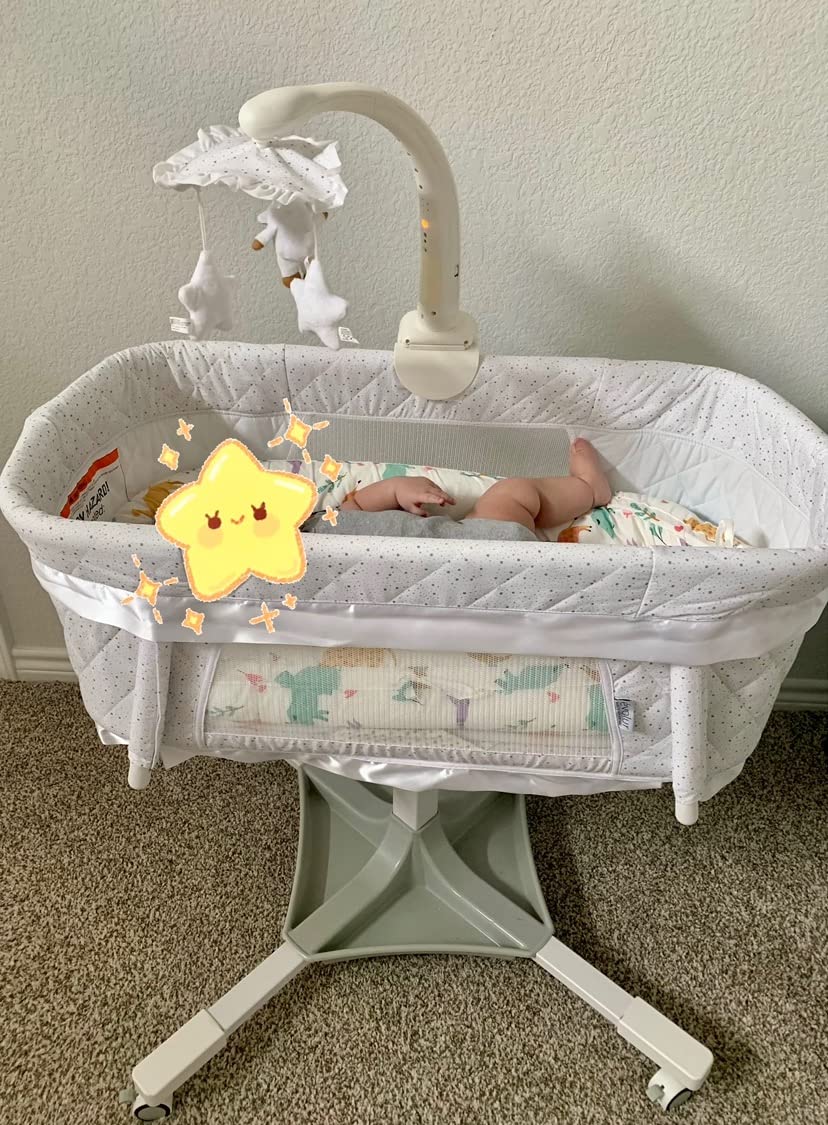
Looking for the safest bedside option? Check out this top-rated swivel bassinet.
Check Price on AmazonBassinet Weight and Height Limits: Why They Matter
Understanding weight and height limits is crucial for bassinet safety. The CPSC mandates that bassinets must support a minimum weight of 30 pounds, but most bassinets on the market have a lower practical limit of 15 to 20 pounds. This is not because the structure cannot hold more weight, but because once a baby reaches a certain size, they may be able to roll over, push up, or climb out, which creates a fall risk.
You must stop using the bassinet when your baby meets ANY of these criteria:
- Reaches the weight limit specified by the manufacturer (usually 15-20 lbs)
- Begins to roll over in either direction (typically around 4 months)
- Can push up on hands and knees
- Attempts to sit up unassisted
- Reaches the height where their head is within 2 inches of the top of the bassinet walls
Most babies outgrow their bassinet between 3 and 5 months of age. While this may feel like a short time, remember that the newborn period is the most critical time for room-sharing, and a bassinet serves its purpose beautifully during this window.
Bassinet vs. Crib Safety: Which Is Safer?
Both bassinets and cribs, when they meet current CPSC safety standards, are safe for infant sleep. However, they offer different safety advantages. Bassinets are designed specifically for newborns and provide a more enclosed, womb-like environment that can reduce the startle reflex (Moro reflex) that often wakes babies. Cribs, on the other hand, offer more space and are designed for a wider age range. The key safety factor for any sleep surface is that it meets current standards, is free from recalls, and is used according to the manufacturer’s instructions.
One safety concern specific to bassinets is that some older models had soft, padded sides that could pose a suffocation risk if the baby’s face pressed against them. Modern bassinets use breathable mesh sides to mitigate this risk. Always check that the bassinet you are considering has mesh or breathable sides, and never add aftermarket padding or accessories that are not specifically designed for that bassinet model.
How to Choose the Best Bassinet for Small Spaces
If you live in a small apartment or your bedroom is compact, choosing the right bassinet requires measuring your available space carefully. Here are some tips for selecting a bassinet for small spaces:
- Measure your bedside space: Most bassinets require 6 to 12 inches of clearance from your bed. Measure the space between your bed and the nearest wall or furniture piece.
- Consider a bedside sleeper: These attach directly to your bed, eliminating the need for floor space alongside it. They are ideal for co-sleeping arrangements without bed-sharing.
- Look for wheels: A bassinet with locking wheels can be rolled out of the way during the day and brought back to the bedside at night.
- Foldable designs: Some bassinets fold flat for storage, which is perfect if you need the space during the day or for occasional use.
- Vertical storage: Consider a bassinet that can be stored vertically in a closet when not in use.
Bassinet Sheets and Accessories
Buying the right sheets for your bassinet is important for both safety and comfort. Bassinet mattresses come in various shapes and sizes—oval, round, and rectangular—so you need to buy sheets that fit your specific model snugly. Loose sheets are a suffocation hazard. Most bassinet manufacturers sell fitted sheets designed specifically for their mattresses. Cotton and organic cotton sheets are the most breathable options, which helps regulate your baby’s temperature.
In terms of accessories, keep it minimal. The AAP recommends a bare sleep surface with no additional items. You may want to purchase a waterproof mattress protector to go under the fitted sheet, as accidents are inevitable. Some bassinets also offer canopies or mobile attachments, but these should be removed once the baby can reach them, typically around 4 months old.
2. The Crib: The Long-Term Investment
The crib is the centerpiece of the traditional nursery. It is sturdy, spacious, and designed to last for years. While a bassinet is a temporary solution, the crib is where your child will likely sleep from infancy well into toddlerhood. Most modern cribs are “convertible,” meaning they transform into a toddler bed and eventually a full-size headboard.
Why Choose a Crib?
If you have the space, a crib is the most economical choice in the long run. You buy it once, and you are set for years. Crib mattresses are standardized and generally thicker and more supportive than the thin pads found in bassinets or playards. This support is crucial as your baby grows heavier.
Since the crib is larger, you can safely introduce baby blankets and comfort items once the baby reaches the appropriate age (usually after 12 months—see our guide on when baby can sleep with a blanket).
Types of Cribs: A Complete Breakdown
Standard Full-Size Cribs
A standard full-size crib is the classic option that most people picture when they think of a baby’s bed. These cribs measure approximately 52 inches long by 28 inches wide and are designed to accommodate a standard full-size crib mattress (also 52″ x 28″). Standard cribs are available in a wide range of styles, from simple and functional to ornate and decorative. Prices range from $150 for basic models to over $1,000 for designer options. The main advantage of a standard crib is that it will last for years—many are designed to convert into a toddler bed, daybed, and eventually a full-size headboard and footboard.
Convertible Cribs (4-in-1 and 3-in-1)
Convertible cribs are among the most popular options for modern parents because they offer exceptional long-term value. A 4-in-1 convertible crib starts as a standard crib, then converts to a toddler bed (with an included or separately purchased toddler rail), a daybed (removing one side), and finally a full-size headboard (and sometimes footboard). This means one purchase can serve your child from birth through their teenage years. The initial cost may be higher ($200 to $600), but when you consider that you won’t need to buy a toddler bed or a headboard later, the value becomes clear. Popular 4-in-1 cribs include the Graco Benton, the DaVinci Kalani, and the IKEA SNIGLAR.
Mini Cribs
A mini crib is a smaller version of a standard crib, typically measuring around 38 inches long by 24 inches wide—roughly the size of a pack ‘n play but constructed like a traditional wooden crib. Mini cribs are an excellent choice for parents who want the durability and aesthetic of a wooden crib but need to save space. They fit through doorways easily, can be rolled from room to room on built-in wheels, and are perfect for small nurseries, shared bedrooms, or grandparents’ homes. Most mini cribs can accommodate a baby from birth until about 1 to 2 years old, depending on the child’s size. Some mini cribs are also foldable for storage. Prices typically range from $150 to $400.
Round Cribs
Round cribs are a statement piece that adds a unique, elegant touch to any nursery. Measuring approximately 45 to 60 inches in diameter, these cribs are larger than standard cribs and require custom bedding. The circular design allows the baby to sleep facing any direction, which some parents find appealing. Round cribs are typically more expensive ($300 to $1,500+) due to their specialized construction and the custom bedding required. While they are visually stunning, they do take up more floor space than rectangular cribs and may not fit in smaller nurseries.
Travel Cribs
While not a traditional “crib” in the nursery sense, travel cribs deserve mention here. These are lightweight, portable cribs designed specifically for travel. They fold down to a compact size that fits in an airplane overhead compartment or a car trunk. Popular travel cribs include the BabyBjörn Travel Crib Light, the Guava Lotus, and the Nuna Sena Aire. Unlike pack ‘n plays, which are designed for both sleep and play, travel cribs prioritize portability and weight, often weighing as little as 10 to 13 pounds. They are ideal for families who travel frequently and want a consistent, familiar sleep surface for their baby.
Antique and Second-Hand Cribs
While vintage and antique cribs can be beautiful, they pose significant safety risks. Drop-side cribs, which were common in older designs, were banned by the CPSC in 2011 due to multiple infant deaths caused by the drop-side mechanism detaching. If you are considering a second-hand crib, thoroughly inspect it for the following:
- No drop-side mechanisms (these are banned and unsafe)
- All slats are intact and properly spaced (no more than 2 3/8 inches apart)
- No broken, missing, or loose hardware
- The mattress support is secure and cannot be displaced
- No cutouts in the headboard or footboard that could trap a child’s head
- The corner posts are no higher than 1/16 inch above the side rails (to prevent clothing strangulation)
- The crib is not on the CPSC recall list
✅ Pros
- Longevity: Usable from birth to 3+ years.
- Durability: Built to withstand jumping toddlers.
- Aesthetics: Available in countless styles to match nursery decor.
- Support: Provides the most comfortable and supportive sleep surface.
- Convertible Options: Many transform into toddler beds and headboards.
- Standardized Mattress: Easy to find fitted sheets and mattresses.
- Resale Value: Quality cribs hold their value well on the secondhand market.
❌ Cons
- Immobile: Once built, it rarely leaves the room.
- Large Footprint: Requires a dedicated wall or room.
- Price: High upfront cost (plus the cost of a mattress).
- Assembly Time: Can take 1-3 hours to assemble.
- Weight: Heavy and difficult to move once assembled.
- No Portability: Cannot be taken on trips or moved easily.

Crib Mattress Guide: What to Look For
The crib mattress is arguably just as important as the crib itself. A good crib mattress provides the firm, flat support that your baby needs for safe sleep and proper development. Here is what to consider when choosing a crib mattress:
Firmness
The AAP recommends a firm sleep surface for infants. A mattress that is too soft can conform to the shape of the baby’s face, creating a suffocation risk. The “press test” is a simple way to check firmness: press your hand into the center and edges of the mattress. If it springs back immediately, it is firm enough. If your hand leaves an impression, the mattress is too soft.
Fit
The mattress should fit snugly in the crib. There should be no gaps larger than two finger widths between the mattress and the crib frame. A gap that is too large can trap a baby between the mattress and the crib side. Always measure your crib’s interior dimensions before purchasing a mattress.
Material Types
Crib mattresses come in several material types:
- Innerspring: Traditional coil mattresses that offer good support and durability. They tend to be heavier but can last for years.
- Memory Foam: Contours to the baby’s body for comfort. However, not all memory foam mattresses are firm enough for infant use—look for high-density foam specifically rated for infant sleep.
- Organic: Made from natural materials like organic cotton, wool, or coconut coir. These are free from harmful chemicals and are a good choice for parents concerned about off-gassing. Brands like Naturepedic and Nook offer popular organic options.
- Dual-Sided: These mattresses have a firm infant side and a softer toddler side, making them a versatile investment that grows with your child.
Waterproof and Breathability
A waterproof cover is essential for protecting the mattress from diaper leaks and spit-up. Look for mattresses with a food-grade waterproof surface that doesn’t use PVC or phthalates. Breathability is also important—some mattresses feature ventilation holes or a breathable core that promotes airflow, reducing the risk of overheating.
GREENGUARD Gold Certification
For parents concerned about indoor air quality, look for crib mattresses with GREENGUARD Gold certification. This certification means the mattress has been tested for over 10,000 chemicals and VOCs (volatile organic compounds) and meets strict chemical emission limits. This is especially important for nurseries, as babies spend a large portion of their day sleeping and breathing in whatever chemicals may be off-gassing from their sleep surface.
Crib Assembly Tips
Most cribs require assembly, and the process can be time-consuming. Here are some tips to make it easier:
- Read the instructions first: Before you start, read through the entire manual. This helps you understand the process and identify any parts that might be tricky.
- Lay out all parts: Unpack everything and lay out all parts and hardware on a clean, flat surface. Cross-reference with the parts list in the manual.
- Use the right tools: Most cribs come with an Allen wrench, but having a screwdriver and a rubber mallet can make the process smoother.
- Tighten everything: Once assembled, go back and tighten every bolt and screw. Cribs endure a lot of wear and tear, and loose hardware can create safety hazards.
- Test the mattress support: Push down on each corner of the mattress support to ensure it is secure and does not shift or make noise.
- Check slat spacing: Use a standard soda can (approximately 2 5/8 inches in diameter) to verify that no two slats are more than 2 3/8 inches apart.
Crib Safety Inspection Checklist
Monthly Crib Safety Inspection
- All screws, bolts, and hardware are tight and secure
- No broken, cracked, or splintered wood
- Slats are all intact and properly spaced (no more than 2 3/8 inches apart)
- Mattress fits snugly with no more than two finger-width gaps
- Mattress support is secure and does not shift
- No cutouts in headboard or footboard that could trap a head or limb
- Corner posts are flush with the side rails (no more than 1/16 inch protrusion)
- No stickers, wall hangings, or decorative items within baby’s reach
- Crib is not placed near window blinds, curtains, or cords
- No crib bumpers, pillows, blankets, or stuffed animals in the crib
When to Lower the Crib Mattress
Most cribs come with an adjustable mattress height with two or three positions. Starting with the highest position makes it easier to lay a newborn down and pick them up. However, you must lower the mattress as your baby grows:
- Highest position: Newborn to when baby can push up on hands and knees (usually around 5-6 months)
- Middle position: When baby can push up but cannot yet stand (around 6-9 months)
- Lowest position: When baby can stand in the crib (usually around 9-12 months). This is the safest position for babies who are standing, as it prevents them from climbing or falling out.
Once your child can climb out of the crib at the lowest setting, it is time to transition to a toddler bed. This typically happens between 18 months and 3 years, depending on the child’s size and development.
Crib Bedding: What You Need (and What You Don’t)
The AAP’s safe sleep guidelines make it clear: the crib should contain only a firm mattress and a fitted sheet. No pillows, no blankets, no crib bumpers, no stuffed animals, and no positioners. Here is a complete breakdown of what you need and what you can skip:
Essential Crib Bedding
- Fitted crib sheet (2-3): Buy at least two fitted sheets so you have a backup when one is in the wash. Organic cotton is the most breathable and comfortable option.
- Waterproof mattress protector (1-2): Place this under the fitted sheet to protect the mattress from leaks and spills.
Optional After 12 Months
- Lightweight blanket or sleep sack: For babies over 12 months, a lightweight blanket or wearable sleep sack can be introduced. See our guide on when baby can sleep with a blanket.
- Comfort object: After 12 months, some pediatricians allow a small, lightweight comfort object like a thin security blanket or small stuffed animal.
Never Use in the Crib
- Crib bumpers (linked to multiple infant deaths and now banned in the US)
- Sleep positioners or wedges
- Large stuffed animals or pillows
- Heavy blankets or quilts (for babies under 12 months)
- Sleeping bags or sacks that are not size-appropriate
3. The Pack ‘n Play (Playard): The Versatile Traveler
The “Pack ‘n Play” (a term popularized by Graco, though technically a playard) is the Swiss Army Knife of baby gear. It is a portable crib with mesh sides, a metal or plastic frame, and a segmented mattress pad that folds up into a compact carrying bag.
Why Choose a Pack ‘n Play?
Versatility is key here. Many modern playards come with a “bassinet insert” that clips to the top, allowing you to use it for a newborn at bedside height. Once the baby outgrows the insert, you remove it, and the baby sleeps on the bottom mattress.
Beyond sleep, it serves as a safe containment zone for play. If you need to shower or cook, you can place your crawling infant in the playard with some toys, knowing they are safe. It’s also the undisputed king of travel. Whether you are visiting relatives or just need a safe spot in the living room among your cozy home essentials, the Pack ‘n Play delivers.
Types of Pack ‘n Plays: Features and Variations
Basic Pack ‘n Play
The basic model includes the playard frame, a thin mattress pad, and a carrying bag. These are the most affordable option, typically costing between $50 and $100. While they don’t include extra features like a bassinet or changer, they serve the fundamental purpose of providing a safe sleep and play space. The Graco Pack ‘n Play Day2Dream is a popular basic model that is simple to set up and fold.
Pack ‘n Play with Bassinet Insert
This is the most popular configuration. The bassinet insert clips to the top of the playard, positioning the baby at a higher, more accessible level for the first few months. This is essentially a two-in-one solution that combines a bassinet and a playard. Once the baby outgrows the bassinet (usually around 3-5 months), you remove the insert and use the playard with the mattress on the bottom. Prices range from $100 to $200.
Pack ‘n Play with Bassinet and Changer
The premium configuration adds a removable changer station on top of the bassinet. This creates a complete care station where you can sleep, change, and soothe the baby all in one unit. Some models even include a storage organizer for diapers and supplies. This is the ultimate “one and done” solution for parents who want maximum functionality with minimal furniture. Prices range from $150 to $300.
Pack ‘n Play with Soothing Features
Some pack ‘n plays include built-in soothing features like vibration, music, mobile, and nature sounds. The Graco Sense2Snooze, for example, detects the baby’s crying and automatically activates soothing features. While these extras can be convenient, they are not necessary for safe sleep and may add to the cost without providing significant long-term value, as the baby will likely outgrow interest in the mobile and sounds by 4-5 months.
Pack ‘n Play Weight Limits and Age Guidelines
Understanding when to stop using a pack ‘n play is important for safety. There are typically two weight limits to be aware of:
- Bassinet insert: Usually 15 pounds OR when the baby can push up on hands and knees (whichever comes first)
- Lower sleep surface: Usually 30 pounds OR 35 inches tall
- Playard function: Usually 30 pounds OR 35 inches tall
For the bassinet insert, most babies outgrow it between 3 and 5 months. For the lower sleep surface and playard function, children can typically use it until they are 2 to 3 years old, depending on their size and whether they try to climb out.
✅ Pros
- Portability: Folds up for travel or storage.
- Multifunctional: Sleep, play, and changing station (on some models).
- Value: Often cheaper than a crib and includes the mattress.
- Breathable: Mesh sides provide excellent airflow.
- Safe Containment: Serves as a safe play space for crawlers and toddlers.
- Travel Ready: Folds into a compact bag for easy transport.
- Bedtime Consistency: A familiar sleep surface for travel helps babies maintain sleep routines.
❌ Cons
- Comfort: The mattress is often thin and hard compared to a crib.
- Size: Larger than a bassinet but smaller than a standard crib.
- Low Height: Placing a heavy sleeping baby on the bottom level can strain your back.
- Assembly Difficulty: Some models are challenging to fold and unfold.
- Mattress Quality: The included pad is not designed for permanent nightly use.
- No Aesthetic Appeal: Mesh sides and metal frames are functional but not decorative.

Can a Baby Sleep in a Pack ‘n Play Every Night?
This is one of the most common questions parents ask, and the answer is yes, a baby can safely sleep in a pack ‘n play every night as long as it meets current CPSC safety standards and you are using the manufacturer-provided mattress pad. The AAP considers playards to be a safe sleep surface when used correctly.
However, there are some practical considerations. The mattress in a pack ‘n play is thinner and firmer than a standard crib mattress. As your baby grows heavier, they may find the thin mattress less comfortable. Some parents opt to purchase a thicker, playard-specific mattress to improve comfort, but this must be done carefully—any aftermarket mattress must fit the playard exactly with no gaps, and it must be no thicker than the manufacturer specifies. Adding an aftermarket mattress that is too thick or doesn’t fit properly creates a suffocation risk.
Pack ‘n Play Mattress Topper: Should You Use One?
Many parents find the included mattress pad uncomfortable for their baby and wonder if adding a topper or a thicker mattress is safe. The short answer is: it depends. If you choose to use an aftermarket mattress or topper, follow these guidelines:
- It must be specifically designed for your pack ‘n play model
- It must fit snugly with no gaps around the edges
- It must not exceed the thickness recommended by the manufacturer
- It must meet current CPSC safety standards
Brands likehiccapop and Moonlight Slumber make popular playard mattress toppers that are designed to fit standard pack ‘n plays. These toppers are typically about 1.5 to 2 inches thick and provide a more comfortable sleep surface without compromising safety. However, always check the specific recommendations for your pack ‘n play model before adding any aftermarket product.
Pack ‘n Play for Newborn Sleep: Is It Safe?
Yes, a pack ‘n play with the bassinet insert attached is a safe and popular option for newborn sleep. The bassinet insert positions the baby at a higher level, making it easier to lift the baby in and out. The mesh sides provide excellent breathability, and the firm mattress pad meets the AAP’s safe sleep surface requirements.
Some pediatricians actually prefer the pack ‘n play over a standalone bassinet for newborns because the playard is a larger, more enclosed space that provides good airflow. The mesh sides are a safety feature that some bassinets lack (though modern bassinets have improved in this area). If you are looking for a single product that serves as a newborn sleep solution, a travel crib, and a toddler play space, a pack ‘n play with a bassinet insert is an excellent choice.
How to Fold a Pack ‘n Play: Step-by-Step Instructions
One of the most common complaints about pack ‘n plays is that they can be difficult to fold and unfold. Here is a step-by-step guide to folding most standard pack ‘n plays:
- Remove the baby and all items from the playard
- Remove the bassinet insert (if attached) by unclipping it from the frame
- Remove the mattress pad and set it aside
- Locate the folding mechanism in the center of the playard floor (usually a latch or pull tab)
- Pull up on the center mechanism while pushing the sides inward
- The sides should collapse inward as you pull the center up
- Once collapsed, fold the frame in half (most models fold in half lengthwise)
- Wrap the mattress pad around the folded frame
- Secure with the attached straps or place in the carrying bag
Practice folding and unfolding your pack ‘n play a few times at home before you need to do it at a relative’s house or hotel. The first few attempts can be frustrating, but once you get the hang of it, the process takes about 30 seconds to a minute.
Additional Sleep Options: Moses Baskets, Mini Cribs, Co-Sleepers, and Floor Beds
While bassinets, cribs, and pack ‘n plays are the “Big Three” of baby sleep, there are several other options worth considering depending on your family’s needs and lifestyle.
Moses Baskets: The Traditional Choice
As mentioned in the bassinet section, Moses baskets are woven baskets lined with soft fabric. They offer a beautiful, natural look and are very portable. Moses baskets are particularly popular in the UK and among parents who prefer a more traditional or Montessori-inspired approach to baby care. The main drawback is their short lifespan—most are suitable only until the baby is about 3 to 4 months old. They also need to be placed on a stand, which adds to the overall cost.
Co-Sleepers and Bedside Sleepers
Co-sleepers and bedside sleepers are designed to be placed directly next to the parents’ bed, with one side that opens or drops down to create a continuous sleep surface. This design supports the AAP’s room-sharing recommendation while maintaining a separate, safe sleep space for the baby. Popular models include the Arms Reach Clear-Vue Co-Sleeper and the Baby Delight Beside Me Dreamer. These products are an excellent compromise for parents who want the closeness of bed-sharing without the risks.
Montessori Floor Beds
A Montessori floor bed is a mattress placed directly on the floor (or on a very low frame) in a child-proofed room. The concept is based on the Montessori educational philosophy, which emphasizes independence and freedom of movement. Proponents argue that a floor bed allows babies and toddlers to get in and out of bed independently, fostering autonomy and self-confidence. However, floor beds are generally not recommended for infants under 12 months because the sleep environment must be carefully controlled. A floor bed in a non-child-proofed room can be dangerous. If you are considering a floor bed, wait until your child is at least 1 year old and ensure the room is completely child-proofed, with no cords, outlets, furniture to climb, or small objects within reach.
Baby Hammocks
Baby hammocks are fabric slings that cradle the baby in a curved position, mimicking the womb. They are popular in Australia and New Zealand, where brands like the Amby Baby Hammock have a devoted following. The gentle rocking motion can help soothe fussy babies and some parents report that their babies sleep longer in a hammock than in a flat crib. However, there are concerns about the curved sleep surface not being flat as recommended by the AAP. If you choose to use a baby hammock, use it only for supervised naps and follow the manufacturer’s age and weight guidelines carefully.
Bassinets vs. Cribs: Decision Framework
To help you decide between a bassinet and a crib, consider these key questions:
- Do you plan to room-share for the first 6 months? If yes, a bassinet is the most convenient option.
- Do you have space for a crib in your bedroom? If yes, you could skip the bassinet and use a mini crib instead.
- Are you breastfeeding? A bedside bassinet or sleeper makes nighttime feeds much easier.
- Are you on a tight budget? A pack ‘n play with a bassinet insert can serve as both a bassinet and a travel crib, saving money.
- Do you want a permanent nursery setup? Invest in a quality convertible crib that will last for years.
- Do you travel frequently? A pack ‘n play is essential, regardless of what you use at home.
Material and Construction Comparisons
The materials used in baby sleep products affect durability, safety, weight, and aesthetics. Here is a comparison of common materials used in bassinets, cribs, and playards:
Wood
Wood is the traditional material for cribs and is also used in some high-end bassinets. Common wood types include pine, birch, beech, and maple. Wood cribs are durable, attractive, and available in a wide range of finishes. Hardwoods like maple and beech are more durable but also more expensive. Softwoods like pine are more affordable but may dent or scratch more easily. All wooden cribs should be finished with non-toxic, water-based paint or stain to ensure they are safe for babies who may chew on the rails.
Metal
Metal is the primary material used in pack ‘n plays and some bassinets. Steel or aluminum frames provide strength and durability while remaining lightweight enough for portability. Metal frames are also easy to clean and do not absorb odors. The downside of metal is that it can feel cold and clinical compared to the warmth of wood. However, for a product designed for portability and functionality, metal is the ideal choice.
Plastic
Plastic is used in joints, connectors, and some components of baby sleep products. High-quality, BPA-free plastic is safe and durable. However, cheaper plastic components can crack or break over time, which is why it is important to choose products from reputable manufacturers who use quality materials.
Mesh and Fabric
Mesh sides are a standard safety feature on pack ‘n plays and many modern bassinets. The mesh provides ventilation and allows parents to see the baby from a distance. Look for tightly woven mesh that cannot be stretched or pulled by the baby’s fingers. Fabric components, such as the mattress pad cover and lining, should be machine-washable and made from breathable, non-toxic materials. Organic cotton and bamboo fabric are popular choices for their softness and breathability.
Material Safety: What to Look For
When evaluating the materials in a baby sleep product, check for the following certifications:
- GREENGUARD Gold: Low chemical emissions, safe for indoor air quality
- GOTS (Global Organic Textile Standard): Organic cotton and textiles
- Oeko-Tex Standard 100: Tested for harmful substances
- CPSC Compliance: Meets federal safety standards
- ASTM Compliance: Meets international safety standards
Brand Comparison: Top Manufacturers Reviewed
Choosing a reputable brand is one of the best ways to ensure you are getting a safe, high-quality product. Here is an overview of the most popular brands in each category:
Bassinet Brands
- HALO: Known for the BassiNest swivel bassinet, HALO is a leader in safe sleep advocacy. Their products are well-designed, easy to use, and backed by strong customer support. The HALO BassiNest Swivel Sleeper is one of the most recommended bassinets by pediatricians.
- SNOO: The premium smart bassinet by Dr. Harvey Karp. Uses responsive technology to automatically soothe the baby. Expensive ($1,700 new) but available for rent. Many parents report dramatically improved sleep with the SNOO.
- 4moms: Known for the mamaRoo Sleep bassinet, which combines gentle rocking motion with white noise and multiple soothing settings. A mid-range option ($250-$350) that offers smart features at a lower price point than the SNOO.
- Graco: Offers affordable, reliable bassinets with practical features. The Graco Soothe ‘n Sway and Dream Suite Bassinet are popular budget-friendly options.
- Arm’s Reach: The pioneer of bedside co-sleepers. Their clear-view and dreamer models are popular for parents who want to bed-share safely.
Crib Brands
- Graco: One of the most popular crib brands, offering a wide range of convertible cribs at affordable prices. The Graco Benton and Graco Lauren are best-sellers.
- DaVinci: Known for the Kalani 4-in-1 convertible crib, which consistently ranks as a top pick for its quality, value, and non-toxic finish.
- Babyletto: A modern, eco-friendly brand offering stylish cribs made from sustainable New Zealand pine. The Babyletto Hudson and Hudson Convertible Crib are popular among design-conscious parents.
- IKEA: Offers budget-friendly cribs like the SNIGLAR and the MINNEN, which are simple, functional, and made from sustainable materials.
- Pottery Barn Kids: Premium cribs with beautiful designs, but at a higher price point ($500-$1,500+).
Pack ‘n Play Brands
- Graco: The original and most popular pack ‘n play brand. The Graco Pack ‘n Play series includes dozens of models at every price point, from basic ($50) to premium ($250).
- 4moms: The 4moms Breeze Plus is a popular premium playard known for its one-push open and close mechanism.
- Chicco: The Chicco Lullaby Primo and Chicco Lullaby Go are well-regarded for their quality construction and comfortable mattress.
- UPPAbaby: The UPPAbaby Remi playard offers a premium, easy-to-use option with a one-step fold and a comfortable mattress.
Sleep Environment Setup: Temperature, Lighting, and White Noise
Choosing the right sleep surface is only half the battle. Creating an optimal sleep environment is equally important for your baby’s safety and comfort. Here is how to set up the perfect sleep environment regardless of which sleep surface you choose.
Temperature Regulation
The ideal room temperature for a sleeping baby is between 68°F and 72°F (20°C to 22°C). Overheating is a risk factor for SIDS, so it is important to dress your baby appropriately for the temperature rather than relying on blankets. A good rule of thumb is to dress the baby in one more layer than you would wear comfortably. A lightweight sleep sack or wearable blanket is the safest way to keep your baby warm without the risk of loose bedding covering their face.
TOG Ratings Explained
If you are using a sleep sack or wearable blanket, understanding TOG ratings is important. TOG (Thermal Overall Grade) measures the warmth of a fabric. Here is a general guide:
- 0.5 TOG: For warm rooms (74°F+ / 23°C+)
- 1.0 TOG: For average rooms (69-73°F / 21-23°C)
- 2.5 TOG: For cool rooms (61-68°F / 16-20°C)
- 3.5 TOG: For cold rooms (below 61°F / 16°C)
Always pair the sleep sack with the appropriate clothing underneath. In warmer weather, a short-sleeve onesie with a 0.5 TOG sleep sack is sufficient. In cooler weather, a long-sleeve onesie or footed pajamas with a 2.5 TOG sleep sack may be needed.
Lighting
Babies are sensitive to light, and a dark room promotes longer, more restful sleep. Consider installing blackout curtains or shades in the nursery to block external light, especially during daytime naps and early morning hours when the sun rises early. For nighttime feedings and diaper changes, use a dimmable lamp or a nightlight with a warm, red-toned light. Red light is less disruptive to melatonin production than blue or white light, making it easier for both you and the baby to fall back asleep after a nighttime feeding.
White Noise
White noise machines are a popular sleep aid for babies because they mimic the sounds of the womb (blood flow, heartbeat, and digestive sounds). Studies have shown that white noise can help babies fall asleep faster and stay asleep longer. When using a white noise machine:
- Place the machine at least 7 feet away from the baby’s sleep surface
- Keep the volume at or below 50 decibels (roughly the volume of a quiet conversation)
- Use continuous white noise rather than sounds that loop or have sudden changes
- Turn it off once the baby is asleep, or keep it at a low volume throughout the night
Baby Monitor Placement
A baby monitor provides peace of mind by allowing you to hear or see your baby from another room. When setting up your monitor:
- Place the camera or audio unit at least 3 feet from the sleep surface
- Ensure cords are at least 3 feet from the crib to prevent strangulation risk
- Position the camera so you can see the entire sleep surface
- Test the monitor’s range from the farthest point in your home
- Consider a breathing monitor (like the Owlet or Snuza) for additional monitoring, though these are not a substitute for following safe sleep guidelines
Humidity and Air Quality
Maintaining proper humidity levels (between 30% and 50%) in the nursery helps prevent dry skin, congestion, and respiratory irritation. In dry climates or during winter months when heating systems dry out the air, a cool-mist humidifier can help. Clean the humidifier regularly to prevent mold and bacteria growth. Also, ensure good air circulation by keeping the nursery well-ventilated and avoiding the use of scented candles, essential oil diffusers, or air fresheners in the baby’s room.
Assembly and Maintenance Guide
Proper assembly and regular maintenance are essential for keeping baby sleep products safe and functional. Here is a comprehensive guide for each type of sleep surface.
Bassinet Assembly and Maintenance
Most bassinets require minimal assembly—often just unfolding the frame and attaching the mattress pad. However, some higher-end models with swivel bases or electronic features may take 20-30 minutes to assemble. Always follow the manufacturer’s instructions and ensure all locking mechanisms are engaged before placing the baby in the bassinet.
For maintenance, wipe down the frame with a damp cloth and mild soap as needed. Machine-wash the fitted sheet and mattress pad cover regularly (at least once a week). Check the legs and wheels for stability before each use, and ensure the swivel mechanism (if applicable) operates smoothly.
Crib Assembly and Maintenance
Crib assembly is the most involved of the three. Most cribs take 1-3 hours to assemble, depending on the complexity of the design. Having two people makes the process much easier. After assembly, perform the safety inspection checklist outlined earlier in this guide.
For ongoing maintenance, check all hardware monthly and tighten any loose bolts or screws. Clean the crib with a damp cloth and mild soap. If the finish becomes chipped or peeling, sand and refinish the area with non-toxic paint or stain. Never use a crib with a damaged finish, as the baby may ingest paint chips.
Pack ‘n Play Assembly and Maintenance
Pack ‘n plays are designed for quick setup and takedown, but the first time can be confusing. Practice setting up and folding the playard at home before you need it on the go. Most pack ‘n plays take less than a minute to set up once you are familiar with the mechanism.
For maintenance, wipe down the frame and mesh with a damp cloth and mild soap. The mattress pad can be spot-cleaned with a damp cloth and mild detergent. Allow all components to dry completely before folding and storing. Check the locking mechanisms regularly to ensure they engage properly, and inspect the mesh for tears or holes.
Deep Cleaning Guide
Every few months, give your baby’s sleep surface a thorough deep cleaning:
- Disassemble all removable components
- Wash all fabric components in warm water with a gentle, fragrance-free detergent
- Wipe down all frame components with a solution of equal parts water and white vinegar (a natural disinfectant)
- Allow everything to air dry completely in a well-ventilated area
- Inspect all components for damage during reassembly
- Replace any worn or damaged components
Baby Sleep Development Milestones by Age
Understanding how your baby’s sleep patterns change over time helps you choose the right sleep surface at the right time. Here is a month-by-month breakdown of what to expect:
Transitioning Between Sleep Surfaces
Knowing when and how to transition your baby from one sleep surface to another is crucial for maintaining safe sleep and healthy sleep habits.
From Bassinet to Crib
The transition from bassinet to crib typically happens between 3 and 5 months. Signs that your baby is ready include:
- Reaching the bassinet’s weight limit (usually 15-20 lbs)
- Rolling over consistently
- Pushing up on hands and knees
- Appearing cramped in the bassinet
To make the transition smoother, try these tips:
- Start with naps in the crib before moving to nighttime sleep
- Place the bassinet sheet in the crib to transfer familiar smells
- Maintain the same bedtime routine
- Be patient—some babies adjust immediately, while others take a few nights
From Bassinet to Pack ‘n Play
If you are transitioning from a bassinet to a pack ‘n play (rather than a crib), the process is similar. The main difference is that the pack ‘n play mattress may feel different from the bassinet mattress. Some babies notice the change in texture and firmness, while others don’t seem to mind. Using the same fitted sheet in both the bassinet and the pack ‘n play can help with the transition.
From Crib to Toddler Bed
The transition from crib to toddler bed is a significant milestone. Signs that your child is ready include:
- Climbing out of the crib (this is a safety issue and should be addressed immediately)
- Expressing interest in a “big kid bed”
- Reaching 35 inches tall (the typical height limit for cribs)
Make the transition exciting rather than scary. Let your child help choose new bedding, and use a bed rail to prevent falls. Keep the bedtime routine consistent, and be prepared for some testing of boundaries as your child adjusts to their new freedom.
Swaddle Transition
If you are swaddling your baby, you will need to transition out of the swaddle when your baby starts showing signs of rolling (usually around 3-4 months). This transition often coincides with the transition from bassinet to crib. Options include:
- Gradual approach: Swaddle one arm out for a few nights, then both arms out, then remove the swaddle entirely
- Zip-up transition sacks: Products like the Zipadee-Zip or the Love to Dream transition sack allow baby to move their arms while still providing a sense of snugness
- Direct to sleep sack: Some babies transition directly from a swaddle to a wearable sleep sack without issues
Travel Considerations and Portable Solutions
Traveling with a baby requires planning, especially when it comes to sleep. Here is how to ensure your baby sleeps safely and comfortably on the go.
Travel Sleep Solutions by Vehicle
Car Travel
If you are driving to your destination, a pack ‘n play is the most practical travel sleep solution. It fits in most car trunks (especially when folded) and provides a familiar sleep surface at your destination. If you are staying in hotels, call ahead to confirm that the hotel can accommodate a pack ‘n play in the room. Many hotels offer cribs or pack ‘n plays upon request, though they may charge a fee.
Air Travel
Flying with a baby requires a more compact sleep solution. A travel crib like the BabyBjörn Travel Crib Light or the Guava Lotus is lightweight (10-13 lbs) and folds into a compact carry bag that meets airline carry-on size requirements. These travel cribs set up in seconds and provide a familiar, safe sleep surface wherever you go. Alternatively, some airlines offer bassinets for long-haul flights (usually attached to the bulkhead), but availability is limited and must be reserved in advance.
Hotel Considerations
When staying in hotels, always bring your own sleep surface if possible. Hotel-provided cribs may be older models that don’t meet current safety standards, and you have no way of knowing how well they have been maintained. If you must use a hotel crib, inspect it thoroughly before use, checking for broken slats, loose hardware, and a snug-fitting mattress.
Consistency Across Environments
One of the biggest challenges of traveling with a baby is maintaining sleep consistency. Babies thrive on routine, and a change in environment can disrupt their sleep. Here are some tips to maintain consistency:
- Bring familiar items from home, such as the same fitted sheet, a familiar sleep sack, and a white noise machine
- Maintain the same bedtime routine, even when traveling
- Use blackout curtains or portable blackout shades in hotel rooms
- Bring a small nightlight for nighttime feedings
- If using a travel crib, set it up in the same position relative to your bed as the home sleep surface
Grandparents’ House Setup
If your baby regularly visits grandparents, consider setting up a dedicated sleep space at their home. Options include a mini crib, a portable playard, or even a bassinet if the visits are frequent during the newborn period. Having a familiar sleep surface at grandparents’ house reduces disruption and makes visits more enjoyable for everyone.
Budget Planning: Cost Breakdown Over Time
Understanding the total cost of each sleep solution over time helps you make a financially informed decision. Here is a detailed cost breakdown for each option.
Bassinet + Crib Combo
| Item | Cost Range | When Purchased |
|---|---|---|
| Standard Bassinet | $60 – $300 | Birth |
| Full-Size Crib | $150 – $600 | Birth or 3-5 months |
| Crib Mattress | $50 – $250 | With crib |
| Crib Sheets (2-3) | $15 – $40 | With crib |
| Bassinet Sheets (2-3) | $10 – $30 | With bassinet |
| Waterproof Protectors (2) | $10 – $20 | With each surface |
| Total | $295 – $1,240 |
Convertible Crib Only
| Item | Cost Range | When Purchased |
|---|---|---|
| 4-in-1 Convertible Crib | $200 – $600 | Birth |
| Crib Mattress (dual-sided) | $100 – $250 | With crib |
| Crib Sheets (2-3) | $15 – $40 | With crib |
| Waterproof Protectors (2) | $10 – $20 | With crib |
| Total | $325 – $910 |
Pack ‘n Play Only (Budget Option)
| Item | Cost Range | When Purchased |
|---|---|---|
| Pack ‘n Play with Bassinet | $80 – $200 | Birth |
| Extra Fitted Sheet | $8 – $15 | With pack ‘n play |
| Waterproof Protector | $5 – $10 | With pack ‘n play |
| Total | $93 – $225 |
Premium All-in-One Solution
| Item | Cost Range | When Purchased |
|---|---|---|
| SNOO Smart Bassinet (or rental) | $1,700 (or $170/mo) | Birth |
| Convertible Crib | $200 – $600 | Birth or 3-5 months |
| Crib Mattress | $100 – $250 | With crib |
| Travel Pack ‘n Play | $80 – $200 | When traveling begins |
| Sheets and Protectors | $30 – $80 | Ongoing |
| Total | $580 – $2,830+ |
Multiples and Twins: Special Considerations
Parents of twins, triplets, or other multiples face unique challenges when it comes to sleep arrangements. Here are some considerations specific to multiples:
Room Setup
The AAP recommends room-sharing for the first 6 months, but this can be logistically challenging with multiples. If you have a large enough bedroom, you may be able to fit two bassinets or a mini crib and a bassinet. If space is limited, consider using a pack ‘n play with a bassinet insert for each baby, as these take up less floor space than traditional bassinets. Alternatively, you can room-share with one baby while the other sleeps in a nearby room with a monitor.
Coordinated Sleep Schedules
Getting multiples on the same sleep schedule is one of the most important things you can do for your sanity. While it may not happen immediately, working toward synchronized naps and bedtime routines will make your life significantly easier. Using identical sleep surfaces (such as two pack ‘n plays or two bassinets) can help create a consistent environment for each baby.
Budget Considerations
Buying two of everything doubles the cost, so budget-friendly options become even more important. Pack ‘n plays are often the most economical choice for multiples because they serve as both a sleep surface and a play space. Some parents also find success buying one quality crib and using a pack ‘n play for the second baby, or using two pack ‘n plays for the first few months and transitioning to two cribs later.
Same-Size vs. Different-Size Multiples
If your multiples are different sizes (which is common with fraternal twins), they may outgrow their sleep surfaces at different times. Keep this in mind when choosing products, and be prepared to transition one baby before the other.
Premature and Special Needs Baby Sleep
Babies born prematurely or with special medical needs may have unique sleep requirements that affect your choice of sleep surface.
Preemie Sleep Considerations
Premature babies often need extra warmth and monitoring. Some bassinets and cribs are designed with preemie-specific features, such as smaller sleep surfaces and enhanced temperature monitoring. The HALO BassiNest Preemie Edition, for example, has a lower weight limit and a more enclosed design. Always follow your neonatologist’s or pediatrician’s specific recommendations for your preemie’s sleep environment.
Preemie parents should also be aware of the “Back to Sleep” recommendation, which is especially important for premature babies, who are at higher risk for SIDS. Always place your preemie on their back for sleep, and consider using a wearable sleep sack instead of blankets for warmth.
Babies with Reflux
Babies with gastroesophageal reflux disease (GERD) may benefit from a slight incline during sleep. However, the CPSC has banned inclined sleep surfaces greater than 10 degrees. If your baby has reflux, talk to your pediatrician about safe options. Some parents find that a firm, flat surface with frequent burping during and after feedings is sufficient. Others may be prescribed a specific wedge or positioning device that meets safety standards.
Mobility Challenges
For babies with mobility challenges or developmental delays, a pack ‘n play with a bassinet insert can be particularly useful, as it positions the baby at a more accessible height for parents who need to provide frequent care. Some specialized baby equipment, such as the Special Tomato Soft-Touch Sitter, can be placed inside a pack ‘n play to provide additional support.
Eco-Friendly and Sustainable Options
As environmental consciousness grows, many parents are seeking baby sleep products made from sustainable, non-toxic materials. Here is how to make environmentally responsible choices:
Materials to Look For
- Sustainable wood: Look for cribs made from FSC-certified wood or sustainable species like New Zealand pine (used by Babyletto and DaVinci)
- Organic cotton: For sheets and mattress covers, GOTS-certified organic cotton ensures no pesticides or harmful chemicals were used in production
- OEKO-TEX certified fabrics: Tested for over 100 harmful substances
- Natural latex mattresses: An eco-friendly alternative to synthetic foam, natural latex is derived from rubber trees and is biodegradable
- Water-based finishes: Cribs finished with water-based paint or stain are free from the VOCs found in oil-based finishes
Brands Leading in Sustainability
- Babyletto: Uses sustainable New Zealand pine and non-toxic, lead-free finishes
- Naturepedic: Offers organic crib mattresses made from organic cotton, organic wool, and organic latex
- Newton Baby: The Newton Baby Crib Mattress is 100% breathable, washable, and made from food-grade materials
- IKEA: Committed to sustainable materials and offers affordable, eco-friendly cribs
Second-Hand Considerations
Buying second-hand is one of the most eco-friendly choices you can make, as it keeps products out of landfills and reduces the demand for new manufacturing. However, safety must be the priority. Always check for recalls, ensure the product meets current safety standards, and inspect thoroughly for damage. Cribs that meet current standards (no drop-sides, proper slat spacing) can be safely used second-hand, but bassinets and playards with fabric components should be thoroughly cleaned and inspected for wear.
Common Mistakes New Parents Make
Even well-intentioned parents can make mistakes when it comes to baby sleep. Here are the most common pitfalls to avoid:
Using Second-Hand Drop-Side Cribs
Drop-side cribs were banned by the CPSC in 2011 due to multiple infant deaths. Despite the ban, these cribs still circulate in the second-hand market. Never use a drop-side crib, regardless of how sturdy it appears. The drop-side mechanism can detach and create a dangerous gap between the mattress and the crib side.
Adding Extra Mattresses or Padding
Adding a thicker mattress or extra padding to a bassinet or pack ‘n play to “make it more comfortable” is dangerous. The thin mattress included with these products is designed to be firm and safe for infant sleep. A thicker mattress creates a gap between the mattress and the sides, which can trap a baby’s limb or head.
Using the Bassinet Too Long
Some parents continue using the bassinet after the baby has clearly outgrown it because they enjoy the convenience. This is unsafe. Once the baby can roll over, push up, or reaches the weight limit, they must be moved to a crib or pack ‘n play immediately.
Ignoring Weight Limits
Weight limits exist for safety, not suggestion. Exceeding the weight limit of any sleep surface compromises its structural integrity and creates a risk of collapse or fall.
Over-Dressing the Baby
Parents often over-dress their babies for sleep, which increases the risk of overheating—a known SIDS risk factor. Use a sleep sack with an appropriate TOG rating rather than multiple layers of clothing and blankets.
Placing the Crib Near Windows
Cords from window blinds and curtains pose a strangulation risk, and direct sunlight can cause overheating. Place the crib away from windows, and ensure no cords are within reach of the crib.
Using Unapproved Accessories
Positioners, wedges, bumpers, and sleep aids that are not specifically designed for your sleep surface can be dangerous. Always follow the AAP’s recommendation of a bare sleep surface: firm mattress, fitted sheet, and nothing else.
Not Preparing for the Transition
Waiting until the baby has outgrown the bassinet to start thinking about a crib or pack ‘n play can cause unnecessary stress. Have the next sleep surface ready before you need it so the transition can happen smoothly and safely.
Expert Recommendations and Pediatrician Advice
We reached out to pediatricians and child sleep consultants for their top recommendations on baby sleep surfaces. Here is what they had to say:
What Pediatricians Recommend
Most pediatricians agree that the safest sleep setup is a firm, flat surface in the parents’ room for the first 6 months. Whether that surface is a bassinet, crib, or pack ‘n play is less important than following safe sleep guidelines. The key factors are:
- The surface meets current CPSC safety standards
- It is used according to the manufacturer’s instructions
- The baby is placed on their back for every sleep
- The sleep surface is free of loose bedding, pillows, and soft objects
- The room temperature is appropriate (68-72°F)
What Sleep Consultants Say
Child sleep consultants often emphasize the importance of consistency. Once you choose a sleep surface, try to use it consistently for all naps and nighttime sleep. This helps the baby associate that surface with sleep, making it easier for them to fall asleep and stay asleep. Sleep consultants also recommend setting up the sleep environment before the baby arrives, so you are not scrambling to assemble a crib or set up a bassinet while caring for a newborn.
The AAP’s Bottom Line
The AAP’s official recommendation remains clear: room-sharing without bed-sharing for the first 6 months (and ideally the first year) reduces the risk of SIDS by up to 50%. The specific type of sleep surface is less important than following the ABCs of safe sleep:
- A – Alone: Baby sleeps alone in their own sleep surface (no co-sleeping, no bed-sharing)
- B – Back: Baby is always placed on their back for every sleep
- C – Crib: Baby sleeps in a crib, bassinet, or playard that meets current safety standards
Detailed Comparison: Which One Fits Your Lifestyle?
Space Considerations
If you live in a one-bedroom apartment or want to keep the baby in your room for a full year, space is a premium.
Winner: Bassinet (Short term) or Mini Crib. A bassinet has the smallest footprint. However, if you need longevity in a small space, consider a Mini Crib, which is smaller than a standard crib but larger than a bassinet.
Safety and Sleep Quality
All three options—when purchased new and certified by the CPSC—are safe for sleep. However, the Crib generally offers the highest quality sleep because you can choose a specific mattress firmness. Pack ‘n Play mattresses are notoriously thin to ensure they fold, which some babies find uncomfortable as they get heavier.
Regardless of which you choose, safe sleep rules apply: Back to sleep, firm surface, and no loose bedding. Save the cute quilts for when they are older (read more on safe blanket use here).
Travel and Flexibility
If you plan to travel, the Pack ‘n Play is non-negotiable. Even if you own a crib, you will likely need a playard for trips. Many parents skip the bassinet entirely and use a Pack ‘n Play with a bassinet attachment in their bedroom, saving money by buying one less piece of furniture.
Long-Term Value
For long-term value, the Convertible Crib wins. A 4-in-1 convertible crib can serve your child from birth through their teenage years as a headboard. The initial investment is higher, but the cost per year of use is the lowest of any option. If budget is a primary concern, the pack ‘n play offers the best short-term value, serving as a bassinet, crib, and play space for $100-$200.
Convenience and Ease of Use
For convenience during the newborn period, the Bassinet wins. The proximity to the bed, the easy accessibility, and the compact size make nighttime care much easier. For ongoing convenience and versatility, the Pack ‘n Play wins, as it transitions seamlessly from sleep surface to play space to travel crib.
Aesthetics and Nursery Design
If nursery design is important to you, the Crib is the clear winner. Cribs come in a vast array of styles, colors, and finishes that can complement any nursery theme. Bassinets are more limited in design options, and pack ‘n plays are purely functional in appearance. However, some brands like Babyletto and Pottery Barn Kids offer bassinets and mini cribs that are both functional and visually appealing.
Cleaning and Hygiene
All three options are relatively easy to clean, but the Pack ‘n Play has a slight edge because its mesh sides and removable mattress pad make it easy to wipe down and spot-clean. Bassinets with removable, machine-washable covers are also easy to maintain. Cribs require the most effort due to their larger size and fixed structure, though regular wiping and occasional refinishing keep them in good condition.
The Verdict: What Should You Buy?
Scenario A: The “One and Done” Parent
Recommendation: Buy a Pack ‘n Play with a Bassinet and Changer attachment.
This serves as your newborn bassinet, your travel crib, and your toddler playpen. It is the most cost-effective route.
Scenario B: The Design & Comfort Conscious
Recommendation: Buy a Bassinet for months 0-4, and a Convertible Crib for month 5+.
This offers the best experience. You get the convenience of bedside swiveling early on, and the baby graduates to a high-quality, comfortable mattress in a beautiful nursery later.
Scenario C: The Small Space Dweller
Recommendation: Buy a Mini Crib.
A mini crib is the size of a Pack ‘n Play but looks and functions like a wooden crib. It often has wheels, fitting through doorways, and can last until the child is 2 years old.
Scenario D: The Frequent Traveler
Recommendation: Buy a Convertible Crib for home and a Travel Crib for trips.
If you travel frequently (monthly or more), investing in a dedicated travel crib like the BabyBjörn Travel Crib Light is worth it. It is lighter and more compact than a pack ‘n play, sets up in seconds, and provides a consistent sleep surface wherever you go.
Scenario E: The Budget-Conscious Parent
Recommendation: Buy a Pack ‘n Play with Bassinet and skip the standalone bassinet.
A pack ‘n play with a bassinet insert provides a safe newborn sleep surface, a travel crib, and a play space for under $150. You can always add a crib later if you want a permanent nursery piece.
Scenario F: The Twins/Multiples Family
Recommendation: Start with Two Pack ‘n Plays with Bassinet Inserts.
This is the most space-efficient and cost-effective option for multiples. Once the babies outgrow the bassinet inserts, they can continue using the lower sleep surface. You can transition to two cribs later if desired, but many families find that pack ‘n plays serve them well through the toddler years.
Scenario G: The Co-Sleeping Advocate
Recommendation: Buy a Bedside Sleeper.
If you want to follow the AAP’s room-sharing recommendation while maintaining a separate safe sleep surface, a bedside sleeper like the Arms Reach Clear-Vue is the ideal choice. It attaches directly to your bed and allows you to easily reach the baby for feedings and comfort.
Setting Up the Environment
Once you’ve chosen the bed, the environment matters. Ensure you have soft, ambient lighting (dimmable lamps work best for night feeds) to avoid waking the baby fully. Additionally, consider temperature regulation. While adults might like cooling blankets, babies need a consistent temperature, best achieved with a sleep sack rather than loose sheets.
Cozy Home Essentials for New Parents
Beyond the sleep surface, there are several items that can make the newborn period more comfortable for both parents and baby. A quality nursing pillow can make feeding sessions more comfortable. A good swaddle or sleep sack helps the baby feel secure. And a reliable baby monitor gives you peace of mind when the baby is sleeping. Investing in these essentials alongside your sleep surface choice will help create a safe, comfortable, and functional nursery.
Frequently Asked Questions
Yes! There is no medical requirement for a bassinet. You can put a newborn in a crib from day one. However, the crib might not fit in your bedroom, making room-sharing difficult, and reaching deep into a crib for a tiny newborn can be hard on your back.
Yes, as long as it meets current safety standards and you are using the mattress pad provided by the manufacturer. Do not add extra mattresses or thick blankets to a playard, as this creates a suffocation risk.
You must move the baby when they reach the weight limit of the bassinet (usually 15-20 lbs) OR when they start showing signs of rolling over or pushing up on hands and knees. This typically happens between 3 to 5 months.
Yes. Bassinets, cribs, and playards all have different dimensions. A standard crib sheet will not fit a playard safely. Always buy tight-fitting sheets designed specifically for your mattress type.
Proceed with caution. Safety standards change frequently (drop-side cribs are now banned, for example). If buying used, check for recalls and ensure no slats are broken or missing. It is generally safer to buy a new crib to ensure it meets current CPSC guidelines.
A bassinet is for newborns only (0-5 months). A mini crib is a smaller version of a standard crib but can support a baby up to toddlerhood (1-2 years), often with adjustable mattress heights.
Yes, as long as you use the bassinet insert for the first few months. The bassinet insert positions the baby at a higher level, which is safer for newborns and more convenient for parents. Once the baby can push up or roll over (usually 3-5 months), remove the insert and use the lower mattress.
The lower sleep surface of a pack ‘n play is rated for use until the baby reaches 30 pounds or 35 inches tall, which typically occurs between 2 and 3 years of age. However, some toddlers may try to climb out earlier, in which case you should transition to a toddler bed.
You can add a mattress topper that is specifically designed for your pack ‘n play model, fits snugly with no gaps, and does not exceed the manufacturer’s recommended thickness. Adding a generic mattress or thick padding that is not designed for the playard is not safe and creates a suffocation risk.
It depends on your priorities. If convenience and bedside proximity during the newborn period are your top concerns, a bassinet is the better choice. If you want a single product that serves as a bassinet, travel crib, and play space, a pack ‘n play with a bassinet insert is more versatile and cost-effective.
Most babies sleep equally well in either surface, as long as it meets safety standards and is used consistently. The crib mattress is generally thicker and more comfortable, which may make a difference as the baby gets heavier. However, some babies prefer the enclosed feel of the pack ‘n play’s mesh sides.
Yes! Many parents use a bassinet for nighttime sleep in their bedroom and a crib for daytime naps in the nursery. This can help the baby become accustomed to sleeping in both surfaces, making the eventual transition from bassinet to crib easier.
All three—bassinet, crib, and pack ‘n play—are equally safe when they meet current CPSC and ASTM safety standards and are used correctly. The safest sleep product is one that is used according to the manufacturer’s instructions, with a firm, flat surface and no loose bedding.
Buy at least 2-3 fitted sheets for each sleep surface you use. Babies are prone to diaper leaks and spit-up, so having extras on hand means you are not doing laundry at 3 AM. Organic cotton sheets are the most breathable and comfortable option.
No. Standard crib mattresses are too large and too thick for pack ‘n plays. A standard crib mattress measures 52″ x 28″ and is 4-6 inches thick, while pack ‘n play mattresses are typically smaller and no more than 1 inch thick when compressed. Using a crib mattress in a pack ‘n play creates dangerous gaps and compromises safety.
The AAP recommends waiting until your baby is at least 12 months old before introducing a blanket. Before that, use a wearable sleep sack for warmth. When you do introduce a blanket, start with a small, lightweight one and ensure the baby can easily move it away from their face. See our guide on when baby can sleep with a blanket for more details.
A smart bassinet can be a worthwhile investment if nighttime sleep is a high priority and your budget allows. The SNOO, for example, has been shown to add 1-2 hours of sleep per night for many babies. However, it is not necessary for safe sleep, and many babies sleep well in standard bassinets or pack ‘n plays. If you decide to invest in a smart bassinet, consider renting one instead of buying to reduce the cost.
Yes, you can use different sleep surfaces for naps and nighttime sleep. However, consistency helps babies learn to sleep better. If possible, try to use the same surface for all sleep periods. If you must use different surfaces, maintain the same bedtime routine regardless of where the baby is sleeping.
For small apartments, look for a pack ‘n play with a slim profile and easy fold mechanism. The Graco Day2Dream and the 4moms Breeze Plus are popular options for small spaces. If space is extremely limited, consider a bedside bassinet or sleeper instead, as these take up less floor space.
Not necessarily. A pack ‘n play with a bassinet insert can serve as the primary sleep surface for the first year, and the lower mattress can be used as a toddler bed. However, if you want a permanent, comfortable sleep surface for your child’s growing years, a crib is a worthwhile addition. Many parents use both—a pack ‘n play for travel and a crib for home.
Check for the following: it meets current CPSC safety standards (16 CFR Part 1218), it is not on the CPSC recall list, the sleep surface is firm and flat, the sides are breathable (mesh), the mattress fits snugly with no gaps, and the weight limit has not been exceeded. Look for JPMA or ASTM certification for additional assurance.
No. As of March 2022, the CPSC has banned inclined infant sleep products with an inclined sleep surface greater than 10 degrees. All sleep surfaces for infants should be flat and firm. Inclined sleepers, rockers, and swings should not be used for sleep.
The ideal nursery temperature for baby sleep is between 68°F and 72°F (20°C to 22°C). Overheating is a risk factor for SIDS, so dress your baby appropriately for the temperature using a sleep sack rather than loose blankets. A room thermometer in the nursery helps you maintain the right temperature.
Consider the following: do you need a bassinet insert for newborn use? Do you need a changer? Do you travel frequently? What is your budget? The Graco Pack ‘n Play series offers options at every price point and feature level. For most families, a pack ‘n play with a bassinet insert provides the best balance of functionality and value.
Yes, for most families. A 4-in-1 convertible crib can serve as a crib, toddler bed, daybed, and headboard, providing years of use from a single purchase. The initial cost is higher than a standard crib, but the long-term value is excellent. If you plan to have more than one child, a convertible crib can serve multiple babies over many years.
Final Thoughts
The debate of bassinet vs. crib vs. pack ‘n play doesn’t have a single correct answer because every family’s home and lifestyle is different. Ideally, a combination works best for most: a bassinet for those exhausted early weeks, followed by a sturdy crib for the growing years, with a pack ‘n play stored in the closet for adventures.
Whichever option you choose, prioritize safety certifications and follow the manufacturer’s height and weight limits. Your baby’s sleep (and yours!) is worth the investment.
Remember the core principles of safe sleep: Back to sleep, alone on a firm surface, and in the parents’ room for the first 6 months. Whether that surface is a $300 smart bassinet or a $50 basic pack ‘n play, what matters most is that it meets current safety standards and is used correctly.
As your baby grows, their sleep needs will change. Stay attuned to developmental milestones, transition sleep surfaces when necessary, and maintain a consistent bedtime routine. These habits, established early, will serve your child well for years to come.
Take the time to research, compare, and choose the sleep solutions that best fit your family’s needs. The peace of mind that comes from knowing your baby is sleeping safely is priceless.
Ready to set up the nursery?
Browse the safest and most comfortable sleep solutions available today.
Shop All Baby Sleep Gear on Amazon