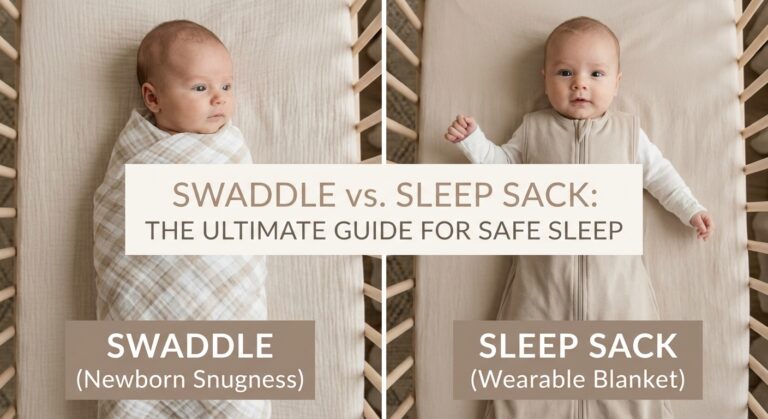

Swaddle vs. Sleep Sack: Which Is Safer for Your Baby?
Bringing a newborn home is a blur of joy, exhaustion, and an endless stream of decisions. One of the most critical choices you’ll make in those early days concerns sleep safety. The debate of swaddle vs. sleep sack confuses many new parents. Should you wrap them up like a tight little burrito, or zip them into a wearable blanket?
The answer isn’t just about preference—it’s about developmental stages, safety guidelines, and the elusive quest for a full night’s sleep. Both swaddles and sleep sacks are designed to keep your baby warm without the suffocation risks associated with loose bedding, which is why they are top recommendations at Blanket Insider.
In this comprehensive guide, we will break down the differences, the safety implications, and the perfect timeline for transitioning from one to the other so you—and your baby—can rest easy. Whether you are a first-time parent trying to decode all the baby gear jargon or a seasoned pro welcoming a new addition, this guide covers everything from the science behind the startle reflex to the best brands for every budget.
Table of Contents
- At a Glance: Swaddle vs. Sleep Sack
- The Swaddle: A Deep Dive
- How to Swaddle a Baby: Step-by-Step Tutorial
- Common Swaddling Mistakes to Avoid
- The Sleep Sack: A Deep Dive
- Understanding TOG Ratings: The Complete Temperature Guide
- Sleep Sack Sizing Guide
- Swaddle vs. Sleep Sack: The Detailed Showdown
- How to Transition from Swaddle to Sleep Sack
- Seasonal Guide: Swaddle & Sleep Sack for Every Weather
- Best Swaddle & Sleep Sack Brands Compared
- Creating the Perfect Baby Sleep Environment
- Sleep Regression and Your Swaddle/Sleep Sack Strategy
- Swaddle vs. Sleep Sack for Special Situations
- Verdict: Which One Should You Buy?
- Baby Sleep Schedule by Age
- Swaddle & Sleep Sack for Reflux and Colic
- Organic and Eco-Friendly Options
- Weighted Products Safety Deep Dive
- Complete Baby Safe Sleep Checklist
- Frequently Asked Questions
- Debunking Common Swaddle & Sleep Sack Myths
- Final Thoughts
At a Glance: Swaddle vs. Sleep Sack
Before diving into the deep details, here is a quick reference guide to help you understand the core differences between these two essential baby sleep products.
| Feature | Swaddle | Sleep Sack (Wearable Blanket) |
|---|---|---|
| Primary Function | Restricts arm movement to prevent startle reflex. | Keeps baby warm without loose blankets; allows movement. |
| Age Range | Newborn to ~2-3 months (until rolling). | Newborn to Toddlerhood (safe indefinitely). |
| Fit | Tight compression around torso and arms. | Loose around hips/legs, fitted at neck/arms. |
| Safety Concern | Risk if baby rolls over; hip dysplasia if too tight. | Must be sized correctly to prevent slipping over face. |
| Mobility | Low (Arms are bound). | High (Arms free, legs free to kick). |
| Diaper Changes | Full unwrap required; often wakes baby. | Bottom zipper allows diaper access without full removal. |
| Cost Range | $5–$40 depending on type. | $15–$60+ depending on material and brand. |
| Material Options | Muslin, cotton, bamboo, jersey knit. | Cotton, fleece, merino wool, bamboo, micro-fleece. |
Contender 1: The Swaddle
Swaddling is an ancient practice that involves wrapping a baby snugly in a blanket or a specialized cloth. The goal is to mimic the tight, cozy environment of the womb. For a newborn who has spent nine months in a confined space, the freedom of an open crib can feel overwhelming and insecure. Research shows that the womb applies constant, gentle pressure on a developing baby’s body, and the swaddle replicates this sensation, providing a sense of security that can dramatically reduce fussiness and improve sleep quality.
The Science Behind Swaddling
From a neurological standpoint, swaddling works because it activates the baby’s proprioceptive system—the sense of body position in space. When an infant feels snug compression on their torso and arms, the brain receives signals similar to what it experienced in utero. This triggers a calming reflex, lowers cortisol levels, and promotes deeper, more restful sleep. A 2022 study published in the Journal of Pediatrics found that properly swaddled newborns slept an average of 45 minutes longer per stretch compared to unswaddled infants, with fewer nighttime awakenings overall.
Why Parents Love It
The primary benefit of the swaddle is its ability to suppress the Moro reflex (or startle reflex). Newborns often jerk their arms involuntarily during sleep, which can wake them up. A swaddle pins the arms gently against the body, preventing this disruption. It is often the first line of defense for soothing a fussy infant. Pediatricians and neonatal nurses frequently recommend swaddling as the single most effective soothing technique for babies in the first eight weeks of life.
Beyond the startle reflex, swaddling provides several additional benefits that new parents should understand:
- Extended Sleep Periods: By preventing involuntary arm movements, swaddles help newborns achieve longer uninterrupted sleep cycles, which is critical for brain development and growth hormone release.
- Temperature Consistency: A properly wrapped swaddle maintains a stable micro-environment around the baby’s core, preventing the rapid temperature fluctuations that can wake a sleeping infant.
- Reduction in SIDS Risk Factors: By keeping babies on their backs and preventing them from rolling into unsafe positions, swaddling aligns with the American Academy of Pediatrics safe sleep guidelines.
- Soothing Colic and Reflux: The gentle pressure on the abdomen can help soothe babies suffering from gas pain, colic, and mild gastroesophageal reflux (GERD).
- Improved Parent-Infant Bonding: When a baby sleeps better, parents sleep better. This reduces parental stress and creates more positive interactions during waking hours.
Types of Swaddles
- Traditional Blanket Swaddle: A large square of muslin or cotton (typically 47″ x 47″ or larger) that you fold manually into a diamond shape. This gives you the most control over tightness and positioning but requires practice and technique. Check out our guide on best baby blankets to find the perfect material for this method.
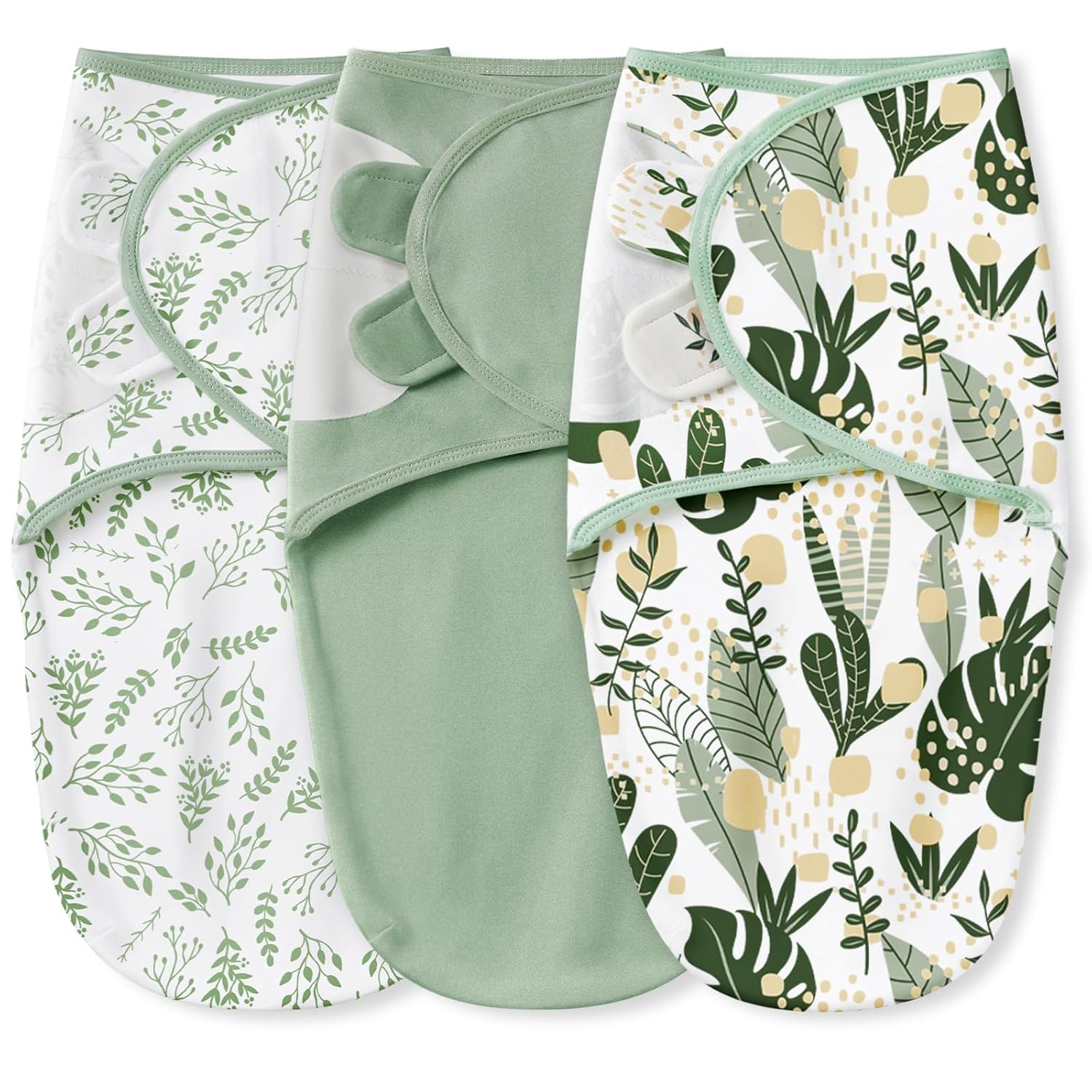
- Velcro / Hook-and-Loop Swaddles: These have “wings” with fasteners that make it impossible for the baby to wiggle free. They are much easier for sleep-deprived parents to use at 2 AM. Brands like Halo and Aden + Anais popularized this design.
- Zip-Up / Pod / Cocoon Swaddles: All-in-one zip-up versions that provide compression without complex wrapping. They are the most foolproof option for first-time parents.
- Swaddle Sacks with Removable Wings: Hybrid designs that start as a full swaddle and gradually allow one or both arms out as the baby grows. These are excellent transitional products.
- Arm-Free Swaddles: Some swaddles leave the arms completely free while still compressing the torso. These are useful for babies who resist having their arms pinned down.
- Organic and Eco-Friendly Swaddles: Made from GOTS-certified organic cotton, bamboo viscose, or hemp. These are ideal for babies with sensitive skin or eczema and are better for the environment.
Swaddle Materials Explained
The material of your swaddle significantly impacts comfort, temperature regulation, and breathability. Here is a breakdown of the most common swaddle fabrics:
- Muslin Cotton: The most popular swaddle material. Muslin is lightweight, breathable, and gets softer with each wash. It is ideal for warm climates and for parents who want a versatile fabric that can double as a nursing cover or burp cloth. Typically 100% cotton with an open weave.
- Bamboo Viscose: Naturally hypoallergenic and moisture-wicking. Bamboo fabric is exceptionally soft—often compared to cashmere—and has natural temperature-regulating properties. It is more expensive than muslin but excellent for babies with sensitive skin or eczema.
- Jersey Knit Cotton: A stretchy, form-fitting fabric that provides more compression than muslin. Jersey knit is excellent for babies who need a tighter swaddle to suppress the startle reflex effectively.
- Cotton Flannel: A heavier, warmer option suitable for cooler months. Flannel provides more insulation but can cause overheating in warm weather.
- Hemp: An eco-friendly, durable option that is naturally antimicrobial. Hemp swaddles are thicker and more structured than muslin but offer excellent breathability.
✅ Pros of Swaddles
- Prevents startle reflex, leading to longer sleep stretches.
- Calms colicky babies by mimicking the womb.
- Keeps baby on their back (the safest sleep position).
- Prevents scratching of the face.
- Helps soothe babies with reflux and gas pain.
- Affordable—traditional blankets cost as little as $5-10.
- Lightweight and portable for travel.
❌ Cons of Swaddles
- Safety Limit: Must stop IMMEDIATELY once baby shows signs of rolling.
- Hip Health: Improper swaddling (legs too straight) can cause hip dysplasia.
- Overheating: Too many layers can raise body temp dangerously.
- Learning Curve: Blanket swaddling takes practice; loose swaddles are dangerous.
- Disrupted Diaper Changes: Full unwrapping is often required.
- Escape Artists: Some babies wiggle free from poorly secured swaddles.
How to Swaddle a Baby: Step-by-Step Tutorial
Learning to swaddle properly is one of the most important skills new parents can develop. A loose or improper swaddle can unravel during the night and create a suffocation hazard. Follow these detailed steps to achieve the perfect swaddle every time.
Method 1: The Classic Diamond Fold (Traditional Blanket Swaddle)
This is the time-tested method used by pediatric nurses worldwide. It requires a large muslin or cotton blanket (at least 44″ x 44″).
Method 2: The Velcro Swaddle (Easiest for Beginners)
Velcro swaddles are designed to be foolproof. They typically have a flat back panel, two side wings, and a secure velcro closure at the top.
Common Swaddling Mistakes to Avoid
Even well-intentioned parents can make swaddling errors that compromise safety or comfort. Here are the most common mistakes and how to avoid them:
- Swaddling Too Loosely: A loose swaddle can come undone during sleep and bunch up near the baby’s face, creating a suffocation hazard. If your baby can wriggle one arm free regularly, the swaddle is too loose. The fabric should be snug enough to stay in place all night.
- Swaddling Too Tightly Around the Hips: This is the most common cause of hip dysplasia in swaddled babies. The International Hip Dysplasia Institute recommends that the swaddle should be “loose at the hips” to allow the baby’s legs to bend up and out in a natural “frog position.” A swaddle that pins the legs straight together can interfere with proper hip joint development.
- Overheating the Baby: Parents often add layers under the swaddle or use thick flannel blankets. Overheating is a known risk factor for SIDS. Use a single layer of lightweight muslin or cotton and monitor the room temperature (68-72°F is ideal).
- Continuing to Swaddle Past Rolling Age: This is the most dangerous mistake. Once a baby shows signs of rolling (usually around 2-3 months, sometimes earlier), swaddling must stop immediately. A swaddled baby who rolls onto their stomach cannot push themselves up or reposition their head, dramatically increasing suffocation risk.
- Covering the Baby’s Face: The top of the swaddle should always be well below the baby’s chin. Never fold swaddle fabric over the baby’s head or face. The baby’s nose and mouth must remain completely uncovered at all times.
- Using a Swaddle with Legs Straight: Some parents tuck the baby’s legs straight down and wrap them tightly. This not only risks hip dysplasia but is also uncomfortable. The baby’s legs should naturally fall outward in a “frog leg” position inside the swaddle.
- Double Swaddling Incorrectly: While some parents use two blankets for a more secure wrap, this can trap excessive heat. If double swaddling, use two thin muslin blankets rather than one thick one.
- Ignoring the Baby’s Cues: Not all babies like being swaddled. If your baby consistently screams, fights the swaddle, or seems more distressed after being wrapped, they may not be a good candidate. In this case, try a sleep sack from birth instead.
Contender 2: The Sleep Sack
A sleep sack, often called a wearable blanket, is essentially a sleeping bag for your baby with armholes and a neck opening. Unlike a swaddle, it does not confine the arms. It is designed to be worn over pajamas to add a layer of warmth without the risk of loose bedding covering the baby’s face.
The Safer Alternative to Blankets
The American Academy of Pediatrics (AAP) strongly advises against loose blankets, pillows, or bumpers in the crib to reduce the risk of SIDS (Sudden Infant Death Syndrome). A sleep sack solves the “cold baby” problem by staying on the baby securely all night. It’s a staple of cozy home essentials for any new parent. The AAP’s safe sleep guidelines specifically recommend wearable blankets as the appropriate way to keep infants warm during sleep.
How Sleep Sacks Work
Sleep sacks function as a wearable layer that replaces the need for loose blankets. They feature armholes that allow free movement of the arms, a fitted neckline that stays in place, and a wide bottom that allows legs to move freely. Most sleep sacks close with a zipper—either a single zipper from the top or a two-way zipper that opens from the bottom for easy diaper access. The key safety feature is that a properly fitted sleep sack cannot ride up over the baby’s face, unlike a loose blanket that can shift during the night.
When to Use It
Sleep sacks are generally introduced when the swaddle is no longer safe—usually around 2 to 3 months of age when the baby starts trying to roll over. However, many parents use them from birth if their baby dislikes being swaddled. They are spacious at the bottom, allowing for “frog leg” positioning which is excellent for hip development.
Types of Sleep Sacks
- Standard Sleep Sacks: Basic wearable blankets with armholes and a zipper closure. Available in various TOG ratings and materials.
- Sleep Sacks with Armholes vs. Sleeves: Most sleep sacks have open armholes for breathability. Some models have attached sleeves for extra warmth in winter. Sleeveless designs are more common and safer.
- Sleep Sacks with Feet: Designed for toddlers who are walking, these have enclosed feet or foot holes that allow safe walking while still preventing the child from climbing out of the crib.
- Transitional Sleep Sacks: Hybrid products with removable swaddle wings that convert to a sleep sack. These are ideal for the transition period.
- Organic Sleep Sacks: Made from certified organic cotton or bamboo, free from harmful chemicals and dyes. Ideal for sensitive skin.
Sleep Sacks vs. Sleep Sacks with Arms: What’s the Difference?
Some manufacturers produce “sleep sacks with arms” (also called “sleeping bags with sleeves”). While these look similar to traditional sleep sacks, they have some important differences. Sleep sacks with arms provide more warmth coverage but may be less breathable. They are generally suitable for colder climates but should be used with caution in warm weather to prevent overheating. Standard sleeveless sleep sacks are more versatile and are the most commonly recommended option by pediatricians.
✅ Pros of Sleep Sacks
- Safe Long-Term: Can be used well into toddler years.
- Hip Healthy: Allows legs to move and bend freely.
- Easy Diaper Access: Most have inverted zippers.
- Temperature Control: Available in different TOG ratings (thickness).
- No Startle Disruption After Transition: Once baby adjusts, sleep sacks maintain consistent sleep associations.
- Travel-Friendly: Easy to pack and use anywhere.
❌ Cons of Sleep Sacks
- No Reflex Control: Doesn’t stop the startle reflex in newborns.
- Sizing Critical: If neck hole is too big, it can slip over the face.
- Mobility: An older baby can stand up in the crib while wearing one.
- Cost Over Time: You’ll need multiple sizes as baby grows.
- Material-Specific Warmth: Wrong TOG rating can cause overheating or cold.

Understanding TOG Ratings: The Complete Temperature Guide
One of the most confusing aspects of choosing a sleep sack is understanding TOG ratings. TOG stands for Thermal Overall Grade, a unit of measurement that indicates how much warmth a fabric provides. The higher the TOG rating, the warmer the sleep sack. Choosing the right TOG rating for your baby’s sleep environment is crucial for preventing both overheating (a SIDS risk factor) and being too cold (which can also disrupt sleep).
TOG Rating Chart: What to Wear Based on Room Temperature
| Room Temperature | TOG Rating | What to Wear Under Sleep Sack | Best For |
|---|---|---|---|
| 75-80°F (24-27°C) | 0.2 TOG | Light onesie or just diaper | Hot climates, summer months |
| 69-73°F (21-23°C) | 0.5 TOG | Short-sleeve onesie | Warm rooms, spring/summer |
| 65-68°F (18-20°C) | 1.0 TOG | Light cotton pajamas | Moderate climates, year-round |
| 60-64°F (16-18°C) | 1.5 TOG | Long-sleeve cotton pajamas | Cooler rooms, fall/winter |
| Below 60°F (Below 16°C) | 2.5 TOG | Warm cotton or fleece pajamas | Cold climates, winter months |
Why TOG Ratings Matter More Than You Think
Overheating is one of the leading risk factors for SIDS. Research has consistently shown that babies who are kept too warm during sleep have a higher risk of sudden infant death. The AAP recommends keeping the room between 68-72°F (20-22°C) and dressing the baby appropriately for the temperature rather than relying on room heaters alone. A properly rated sleep sack takes the guesswork out of this equation. If you know your nursery is 66°F, you can choose a 1.0 TOG sack with light pajamas and know your baby is comfortably dressed.
Similarly, babies who are too cold during sleep will wake more frequently, cry more, and have difficulty settling. While cold is not a direct SIDS risk, it significantly impacts sleep quality and can lead to sleep deprivation for both baby and parents. Using the TOG rating system ensures optimal comfort regardless of the season.
How to Layer Under a Sleep Sack
The TOG rating of your sleep sack is designed to work as part of a layering system. Here is a general guide for layering:
- Summer (75°F+): 0.2 TOG sleep sack + diaper only, or 0.5 TOG + light onesie
- Spring/Fall (65-74°F): 1.0 TOG + cotton onesie or light pajamas
- Winter (55-64°F): 1.5 TOG + long-sleeve pajamas, or 2.5 TOG + light pajamas
- Very Cold (Below 55°F): 2.5 TOG + warm pajamas + consider a warmer sleep sack or additional layer
Always err on the side of fewer layers. You can add a layer if the baby seems cold, but removing layers when overheated is harder to do mid-sleep. A good rule of thumb is to dress the baby in one more layer than what an adult would be comfortable wearing in the same room.
Sleep Sack Sizing Guide
Choosing the correct size for a sleep sack is one of the most important safety considerations. A sleep sack that is too large can slip over the baby’s face, while one that is too small can restrict movement and cause discomfort. Here is a comprehensive sizing guide:
| Size Label | Weight Range | Height Range | Typical Age | Key Considerations |
|---|---|---|---|---|
| Newborn / Preemie | Under 8 lbs | Up to 21 inches | 0-1 month | Ensure neck opening is snug; check for premature baby labels |
| Small / Infant | 8-13 lbs | 21-26 inches | 1-4 months | Most common starter size; measure baby before purchasing |
| Medium | 13-18 lbs | 26-30 inches | 4-12 months | Check that head cannot slip through neck opening |
| Large | 18-26 lbs | 30-35 inches | 12-24 months | Transition to footed sleep sack for walkers |
| X-Large / Toddler | 26-36+ lbs | 35-40 inches | 24+ months | Consider sleep sack with feet for active toddlers |
How to Measure Your Baby for a Sleep Sack
To get the right fit, measure your baby’s weight and height (length). Most brands size by weight, but height is equally important—a tall, lean baby may need a larger size than their weight suggests. Measure your baby while they are lying down on a flat surface from the top of their head to the bottom of their feet.
Swaddle vs. Sleep Sack: The Detailed Showdown
1. Safety and SIDS Prevention
Both products are safer than loose blankets. However, the swaddle has a “safety expiration date.” Once a baby can roll from back to stomach, a swaddle becomes dangerous because the baby cannot use their arms to push up or reposition their head, increasing suffocation risks. A sleep sack allows full arm freedom, making it the only safe choice for rolling babies.
The key safety distinction is that the swaddle actively restricts arm movement, which is beneficial for non-rolling newborns but dangerous for babies who can roll. The sleep sack, on the other hand, keeps arms completely free at all times, which means even if a baby rolls, they can push themselves up or turn their head to breathe. The AAP’s safe sleep guidelines specifically address this distinction, making it clear that the swaddle should only be used during the period when babies are not yet rolling.
2. Ease of Use (Diaper Changes)
Imagine it’s 3 AM. You need to change a diaper in the dark—perhaps lit only by a soft glow (check out our recommendations for lamps that provide soft ambient light, which work great in nurseries too).
Swaddle: You usually have to unwrap the entire burrito, waking the baby up fully. Even with velcro swaddles, you need to unfasten the wings, change the diaper, and re-swaddle—all while trying to keep the baby calm and sleepy. This can add 5-10 minutes to each diaper change.
Sleep Sack: Most modern sacks have zippers that open from the bottom up, allowing you to change the diaper while keeping the baby’s upper body warm and sleepy. This is one of the biggest practical advantages of sleep sacks for nighttime diaper changes. Some brands even have two-way zippers that allow you to unzip just the bottom portion for quick changes.
3. Temperature Regulation
Overheating is a risk factor for SIDS. Swaddles involve wrapping layers around the baby, which can trap heat if not monitored. Sleep sacks come with specific TOG ratings (Thermal Overall Grade) that tell you exactly how warm they are.
Tip: Just like you verify care instructions when learning how to wash specialized blankets, always check the TOG rating of a sleep sack to match your room’s temperature.
Temperature regulation is one area where sleep sacks have a clear advantage. Because they are designed with specific thermal ratings, you can precisely match your baby’s sleepwear to the room temperature. Swaddles, by contrast, rely on the parent’s judgment about how many layers to use, which can lead to inconsistent temperature management. Many parents over-swaddle in an attempt to keep the baby warm, inadvertently creating an overheating risk.
4. The Transition Phase
The hardest part is the bridge between the two. When the baby rolls but still has the startle reflex, sleep suffers. To bridge this gap, parents often use:
- Transitional Swaddles: Sacks with “wings” that zip off, allowing one arm out at a time.
- Sleep Suits: Padded suits that dampen the startle reflex without pinning the arms.
- Swaddle-to-Sleep-Sack Converters: Products designed to gradually transition from a full swaddle to a sleep sack over 1-2 weeks.
5. Cost Comparison
Swaddles, especially traditional muslin blankets, are generally more affordable. A set of 3-4 muslin swaddles can cost $15-25. Velcro swaddles typically range from $15-30. Sleep sacks tend to be more expensive, ranging from $20-60 depending on the brand and material. However, sleep sacks last much longer—a single sleep sack can be used from 2 months to 2 years or beyond, while swaddles are only useful for 2-3 months. When you factor in the extended use period, sleep sacks often provide better long-term value.
6. Portability and Travel
Both products are travel-friendly, but swaddles have a slight edge. A muslin swaddle blanket weighs virtually nothing and folds down to the size of a handkerchief. It can double as a nursing cover, burp cloth, stroller shade, or changing pad cover. Sleep sacks are slightly bulkier but still pack easily. For travel, many parents bring a sleep sack for nighttime sleep and a swaddle blanket for daytime use.
How to Transition from Swaddle to Sleep Sack: A Step-by-Step Guide
Transitioning from a swaddle to a sleep sack is one of the most challenging sleep changes in a baby’s first year. The swaddle has been their comfort cocoon for months, and suddenly removing that compression can cause significant sleep disruption. Here is a proven, gradual transition method that minimizes the impact on everyone’s sleep.
The Gradual One-Arm-Out Method
This method, recommended by many pediatric sleep consultants, involves transitioning one arm at a time over 5-7 days. This allows the baby to adjust slowly to the reduced compression.
The Cold Turkey Method
Some parents prefer to switch directly from a full swaddle to a sleep sack without a gradual transition. This method involves stopping the swaddle and starting the sleep sack on the same night. While this can result in 3-5 rough nights of sleep, some babies adjust quickly. This method works best for babies who are already showing signs of rolling, as the safety concern outweighs the sleep disruption.
Signs Your Baby Is Ready to Transition
- Rolling Attempt: Any sign of rolling from back to front means the swaddle must go immediately, regardless of whether the transition plan is complete.
- Breaking Free: If your baby regularly escapes one or both arms from the swaddle, they may be ready for more freedom.
- Reduced Startle Reflex: As babies mature (around 3-4 months), the Moro reflex naturally diminishes. You may notice fewer wake-ups related to startling, even without a swaddle.
- Increased Activity: Babies who kick vigorously, bring hands to mouth, or try to reach toys are showing readiness for arm freedom.
- Age Milestone: Most babies naturally outgrow the need for a swaddle between 2-4 months, regardless of other signs.
Seasonal Guide: Swaddle & Sleep Sack for Every Weather
Choosing the right swaddle or sleep sack for each season is essential for your baby’s comfort and safety. Different seasons require different materials, TOG ratings, and layering strategies. Here is a comprehensive seasonal breakdown:
Summer
Room Temp: 75-80°F
TOG Rating: 0.2-0.5
Swaddle: Single-layer muslin
Sleep Sack: Lightweight cotton or bamboo, 0.5 TOG
Under Layer: Diaper only or light onesie
Tip: Avoid fleece or thick materials entirely. A single muslin swaddle or the thinnest sleep sack is all you need.
Spring
Room Temp: 65-72°F
TOG Rating: 0.5-1.0
Swaddle: Muslin or light cotton
Sleep Sack: Cotton, 1.0 TOG
Under Layer: Light cotton onesie
Tip: Spring weather is unpredictable. Keep both lighter and heavier options accessible for temperature swings.
Fall
Room Temp: 60-68°F
TOG Rating: 1.0-1.5
Swaddle: Cotton jersey or flannel
Sleep Sack: Cotton or micro-fleece, 1.5 TOG
Under Layer: Long-sleeve cotton pajamas
Tip: Transitional weather means you may need to adjust layers nightly. Keep a thermometer in the nursery.
Winter
Room Temp: 55-65°F
TOG Rating: 1.5-2.5
Swaddle: Flannel or fleece-lined
Sleep Sack: Fleece or merino wool, 2.5 TOG
Under Layer: Warm fleece or cotton pajamas
Tip: In very cold climates, consider a 2.5 TOG sleep sack with fleece pajamas. Never use a space heater directly in the nursery.
Merino Wool Sleep Sacks: Worth the Investment?
Merino wool sleep sacks deserve special mention because they are naturally temperature-regulating. Unlike synthetic materials, merino wool wicks moisture away from the skin while trapping warmth, making it effective across a wider range of temperatures. Brands like Woolino offer merino wool sleep sacks that can be used year-round, potentially eliminating the need to buy multiple TOG-rated sacks. The downside is the higher price point ($50-$100+), but the versatility and longevity make them a worthwhile investment for many families.
Summer Swaddling Tips
Swaddling in summer requires extra caution to prevent overheating. Follow these guidelines:
- Use a single layer of lightweight muslin cotton—nothing heavier.
- Consider swaddling with just a diaper underneath, or a very light onesie at most.
- Keep the room cool (use air conditioning if available) between 68-72°F.
- Check the baby’s neck frequently for signs of sweating.
- Consider switching to a sleep sack earlier if overheating is a concern.
Best Swaddle & Sleep Sack Brands Compared
With so many brands on the market, choosing the right one can be overwhelming. Here is a comparison of the most popular and highest-rated swaddle and sleep sack brands based on safety, quality, design, and value:
| Brand | Product Type | Key Features | Price Range | Best For |
|---|---|---|---|---|
| Love to Dream | Swaddle Up (arms-up swaddle) | Allows arms in “hands up” position; natural self-soothing; zipper closure | $25-35 | Babies who resist having arms down; natural sleep position |
| Halo SleepSack | Sleep sack and swaddle | Inverted zipper; TOG rated; available in cotton, micro-fleece, and premium fabrics | $15-40 | Best overall value; hospital-recommended; widely available |
| Aden + Anais | Muslin swaddles | Premium muslin cotton; breathable; stylish prints; multi-use | $15-50 | Parents who want premium muslin; multi-functional use |
| Kyte Baby | Sleep sack | Bamboo rayon fabric; incredibly soft; TOG rated; footie options | $36-50 | Softness; temperature regulation; sensitive skin |
| Burt’s Bees Baby | Sleep sack | Organic cotton; GOTS certified; affordable; multiple TOG options | $15-25 | Budget-friendly organic option; eco-conscious parents |
| Woolino | Sleep sack | Merino wool lining; year-round temperature regulation; fits 2 months to 2 years | $89-109 | Long-term investment; extreme temperature regulation |
| Zipadee-Zip | Transitional swaddle/sleep sack | Star-shaped design; provides gentle compression while allowing movement; safe for rolling | $28-35 | Transition from swaddle to sleep sack; rolling babies |
| Gunamuna | Sleep sack | Organic materials; oversized fit; magnetic closures; premium quality | $39-59 | Premium quality; magnetic ease-of-use |
Budget-Friendly Options
You don’t need to spend a fortune on sleep gear. Many affordable options perform just as well as premium brands:
- Amazon Basics muslin swaddles: Often available in multipacks for under $20, these are surprisingly soft and durable.
- SwaddleMe by Parent’s Choice: A Walmart exclusive that offers velcro swaddle functionality for under $10.
- Target’s Cloud Island brand: Budget-friendly sleep sacks with good TOG ratings for under $15.
- Gerber swaddles: Basic, reliable cotton swaddles available at most grocery stores and pharmacies.
Creating the Perfect Baby Sleep Environment
Choosing between a swaddle and a sleep sack is just one piece of the puzzle. Your baby’s overall sleep environment plays an equally important role in sleep quality and safety. Here is how to optimize the nursery for the best possible sleep:
Room Temperature
The AAP recommends keeping the nursery between 68-72°F (20-22°C). This temperature range is ideal for baby sleep and reduces the risk of overheating. Use a reliable room thermometer placed near the crib (not directly above it) to monitor temperature throughout the night. Avoid placing the crib near windows, heaters, or air conditioning vents, as these can create temperature fluctuations.
White Noise Machines
White noise is a game-changer for baby sleep. It mimics the constant whooshing sounds of the womb and helps mask household noises that might wake a sleeping baby. Research shows that consistent white noise at 50-65 decibels (similar to a soft shower) can help babies fall asleep faster and stay asleep longer. Place the white noise machine at least 7 feet away from the crib and keep the volume moderate—loud enough to be heard over a closed door, but not so loud that you need to shout over it.
Blackout Curtains
Babies are sensitive to light, and even small amounts of light can disrupt their circadian rhythm. Blackout curtains or shades help create a dark sleep environment that promotes melatonin production. This is especially important during summer months when daylight extends into early evening bedtime hours. Many parents find that a dark room helps their baby sleep 1-2 hours longer per stretch.
Safe Sleep Surface
Regardless of whether you use a swaddle or sleep sack, the sleep surface must be safe:
- Use a firm, flat mattress with a fitted sheet—nothing else.
- No pillows, blankets, bumper pads, or stuffed animals in the crib.
- The crib should meet current safety standards with properly spaced slats.
- Avoid crib bumpers, which have been banned by the CPSC due to suffocation risks.
- Place the crib away from cords, curtains, and blind strings.
Pacifier Use at Sleep Time
The AAP recommends offering a pacifier at nap time and bedtime once breastfeeding is well established (typically around 3-4 weeks). Studies have shown that pacifier use during sleep reduces the risk of SIDS by approximately 50%. If the pacifier falls out after the baby falls asleep, there is no need to replace it. Note that swaddled newborns may have difficulty keeping a pacifier in, so this is another advantage of transitioning to a sleep sack as the baby grows.
Sleep Position
Always place your baby on their BACK to sleep—this is the single most important safe sleep practice. Both swaddles and sleep sacks should be used with back sleeping. The “Back to Sleep” campaign has been credited with reducing SIDS rates by more than 50% since its introduction in 1994. Never place a baby to sleep on their side or stomach, even if they seem more comfortable.
Sleep Regression and Your Swaddle/Sleep Sack Strategy
Sleep regressions are temporary periods when a baby who was previously sleeping well suddenly begins waking frequently, taking shorter naps, and being generally fussier. Understanding how swaddles and sleep sacks interact with sleep regressions can help you navigate these challenging periods.
The 4-Month Sleep Regression
The 4-month sleep regression is often the most challenging because it coincides with the need to transition from a swaddle to a sleep sack. At around 4 months, a baby’s sleep cycles mature from the newborn pattern to a more adult-like pattern with shorter cycles. This means they naturally wake between cycles (which adults do too, but we learn to put ourselves back to sleep). When you combine this developmental change with the swaddle-to-sleep-sack transition, it can feel like a perfect storm of sleep deprivation.
Strategies for Managing the Transition During Regression
- Start the transition early: Begin the one-arm-out method around 3 months, before the regression hits, so the baby has already adjusted by the time regression occurs.
- Offer extra comfort: During the transition, you may need to offer more soothing—rocking, shushing, or gentle patting—to help the baby settle without swaddle compression.
- Be consistent: Once you start the transition, don’t go back to a full swaddle. This creates confusion and can make the transition take even longer.
- Use a transitional product: Products like the Zipadee-Zip or nested bean transitional sacks can bridge the gap between swaddle and sleep sack.
- Adjust expectations: Sleep may temporarily worsen before it gets better. This is normal and temporary. Most babies adjust to sleeping without a swaddle within 5-7 days.
The 8-Month Sleep Regression
At around 8 months, another common regression occurs, often linked to separation anxiety and physical milestones (pulling to stand, crawling). While this regression doesn’t directly relate to swaddle-to-sleep-sack transition, your sleep sack strategy matters here too. Babies who are used to a sleep sack may stand up in the crib for the first time, which can be alarming for parents. The sleep sack is actually beneficial during this phase because it can make it harder for babies to climb out of the crib—the sack acts as a gentle restraint that prevents them from getting a leg over the crib rail.
The 18-Month Sleep Regression
At 18 months, toddlers may resist the sleep sack as they develop independence and want to make their own choices. Some toddlers actively try to remove the sleep sack. At this stage, consider transitioning to a footed sleep sack or a regular blanket (if the child is over 12 months and the crib has been converted to a toddler bed). The key is to maintain the sleep association while respecting the child’s growing autonomy.
Swaddle vs. Sleep Sack for Special Situations
Every baby is different, and some situations require special considerations when choosing between a swaddle and a sleep sack:
Preemie Babies
Premature babies often benefit greatly from swaddling because they missed the final weeks of womb compression. However, preemies have unique needs: they are often smaller, have thinner skin, and may have medical equipment attached. Use preemie-sized swaddles that are specifically designed for smaller bodies. Many NICUs have protocols for swaddling preemies, and you should follow their guidance. Once preemies reach their original due date, they can transition to standard swaddles and then sleep sacks following the same timeline as full-term babies.
Colic and Reflux Babies
Babies with colic or gastroesophageal reflux disease (GERD) often benefit from the gentle abdominal pressure that a swaddle provides. The compression can help reduce gas pain and may keep the baby more upright-ish (though they should always be placed on their back to sleep). However, some reflux babies do better with a sleep sack because they can bring their hands to their mouth for self-soothing. Experiment with both options to see which your baby prefers. Elevating the head of the crib slightly (using a wedge under the mattress, not pillows) can also help with reflux.
Babies Who Hate Being Swaddled
Not all babies enjoy being swaddled. Some hate having their arms restricted and will fight the swaddle from day one. If your baby consistently resists swaddling—screaming when wrapped, wriggling free within minutes, or seeming more distressed than comforted—it’s perfectly fine to skip the swaddle and use a sleep sack from birth. The goal is a calm, sleeping baby, and if a sleep sack achieves that better than a swaddle, use the sleep sack.
Twins and Multiples
With twins, you’ll need double the sleep gear, which can be expensive. Consider buying multipacks of muslin swaddles and sleep sacks. Some parents find that one twin loves the swaddle while the other prefers a sleep sack—be flexible and follow each baby’s cues. Synchronized sleep is the goal, but it’s rarely achieved, so having options for each baby is wise.
Babies in Daycare
If your baby attends daycare, you’ll need to communicate your swaddle/sleep sack preferences to caregivers. Many daycare centers have specific policies about swaddling—some allow it, others don’t. Check with your daycare provider before your baby starts. Most daycares are comfortable with sleep sacks, making them a safer choice if daycare is in your near future.
Swaddling and Breastfeeding
Some mothers worry that swaddling interferes with breastfeeding, but this is generally not the case. Swaddling actually can help breastfeeding mothers by keeping the baby calm and reducing the likelihood of the baby flailing during feeding. However, always unswaddle for feeding time to ensure the baby can bring their hands to the breast and latch properly. After feeding, re-swaddle or transition to a sleep sack for sleep.
Bedsharing and Co-Sleeping
The AAP recommends room-sharing (baby in the same room as parents) but not bed-sharing (baby in the same bed). If you are following safe room-sharing guidelines, a sleep sack is the appropriate sleep garment. Swaddled babies should never be brought into an adult bed, as the swaddle can come loose and create hazards. If you are bedsharing against medical advice (as some cultures practice), use a wearable sleep sack, not a swaddle, and follow all safe bedsharing practices.
Verdict: Which One Should You Buy?
Phase 1: The Newborn Stage (0-2 Months)
Winner: The Swaddle.
Newborns crave containment. The swaddle is the most effective tool for getting long stretches of sleep during the “fourth trimester.” Unless your baby absolutely hates it, start here. Many pediatricians recommend beginning with a swaddle in the hospital and continuing at home.
Phase 2: The Transition (2-3 Months)
Winner: Transitional Products.
During this period, use a transitional swaddle with removable wings, or gradually transition to a sleep sack using the one-arm-out method. This is the bridge period where safety and comfort need to be carefully balanced.
Phase 3: The Roller (3 Months+)
Winner: The Sleep Sack.
Once the rolling begins, the swaddle must go. The sleep sack becomes the new bedding standard. It provides the sleep association (“when I put this on, it’s time to sleep”) without the danger.
Phase 4: The Sitter (6-9 Months)
Winner: The Sleep Sack.
As babies learn to sit up, the sleep sack continues to provide warmth and comfort. At this stage, the sleep sack also serves as a gentle deterrent against standing and climbing out of the crib.
Phase 5: The Toddler (12 Months+)
Winner: The Sleep Sack (with feet).
Toddlers move a lot. Traditional sleep sacks are great to prevent them from climbing out of the crib, but “walker sacks” with foot holes allow them to walk around safely in the morning. At around 18-24 months, most children naturally outgrow the sleep sack and transition to regular blankets in a toddler bed.
When to Buy Both
For most families, the ideal strategy is to have both swaddles and sleep sacks on hand. Buy 2-3 swaddles for the newborn phase and 2-3 sleep sacks for the months (and years) that follow. This way, you’re prepared for every stage without scrambling to order products in the middle of a sleep regression.
Building Your Nursery?
Ensure you have both swaddles for now and sacks for later.
Shop All Baby Sleep GearComplete Baby Safe Sleep Checklist
Whether you choose a swaddle or a sleep sack, safe sleep practices remain the same. Use this comprehensive checklist to ensure your baby’s sleep environment meets the highest safety standards:
Frequently Asked Questions
You must stop swaddling as soon as your baby shows signs of trying to roll over. This can happen as early as 8 weeks but typically occurs around 3 to 4 months. If you see them rocking onto their side, it is time to switch to a sleep sack immediately. Some babies roll earlier than expected, so always be vigilant and stop swaddling at the first sign of rolling activity.
Yes! If your newborn dislikes the swaddle or if you prefer not to swaddle, a sleep sack is perfectly safe from day one. Just ensure the neck and armholes are fitted correctly so the baby doesn’t slip down inside the sack. Newborn-specific sleep sacks with smaller neck openings are available for babies under 8 pounds.
This depends on the room temperature and the TOG rating of the sack. Generally, a cotton onesie or footed sleeper is sufficient. Avoid overheating; the baby’s chest should feel warm, not hot or sweaty. Consult our TOG rating chart above to match the right combination of sleep sack and clothing for your room temperature.
The AAP updated their guidelines in 2022 to advise against weighted swaddles and sleep sacks. The weight can potentially restrict breathing or impair the baby’s arousal mechanism. Stick to non-weighted, standard wearable blankets. If you see a “weighted” or “gentle pressure” sleep sack marketed as safe for babies, avoid it—the AAP has explicitly warned against these products.
Yes. The International Hip Dysplasia Institute acknowledges sleep sacks as “hip-healthy” products because they allow ample room for the baby’s legs to bend up and out at the hips, unlike tight swaddles that straighten the legs. If your baby is at risk for hip dysplasia, a sleep sack is the preferred sleep garment after the newborn stage.
No. The purpose of a sleep sack is to replace loose blankets. Adding a blanket on top reintroduces the suffocation risk. If the baby is cold, switch to a higher TOG (thicker) sleep sack or add a layer of clothing underneath. The sleep sack is designed to be the final layer—no additional blankets should be added.
Babies are messy. Aim for at least 3 of the current stage: one in use, one in the wash, and one backup for those inevitable middle-of-the-night blowouts. As your baby grows and transitions between stages, you’ll accumulate a collection. Having extras also ensures you always have a clean one ready, even during laundry day.
Not strictly necessary, but very helpful. Going from “arms bound” to “arms free” cold turkey can cause sleep regression. A transitional product like a Zipadee-Zip or a convertible swaddle with removable wings softens the change. However, some parents successfully transition directly to a sleep sack without any transitional product.
Yes, this is actually a common transitional step. Swaddling with arms out provides torso compression while allowing the baby to use their hands for self-soothing. This can be an effective middle ground between a full swaddle and a sleep sack. Some babies prefer this arrangement long-term, especially if they like sucking their hands to fall asleep.
The terms “sleep sack” and “sleep bag” are used interchangeably by most brands and parents. They both refer to the same product: a wearable blanket with armholes and a neck opening. In the UK and Australia, “sleep bag” is the more common term. In the US, “sleep sack” is more prevalent. Both are safe, effective sleep garments.
A properly wrapped swaddle should be snug around the chest but not restrictive. The “two-finger test” is the standard: you should be able to slide two fingers between the swaddle and the baby’s chest. If you can’t, it’s too tight. Also, the baby’s hips should be loose enough that their legs can fall outward naturally. If the baby seems uncomfortable, has difficulty breathing (watch for rapid chest movement), or their skin turns blue or red, the swaddle is too tight.
Generally, this is not recommended. Using both simultaneously can cause overheating and restrict the baby’s movement unnecessarily. If you’re in the transition phase, use one or the other—not both. The only exception is if a pediatrician specifically recommends a particular layering arrangement for a medical reason.
The AAP recommends waiting until a child is at least 12 months old before introducing a blanket in the crib. Even then, use a lightweight blanket and place it only at the foot of the crib, not near the baby’s face. Many parents continue using sleep sacks well into toddlerhood (2-3 years) because they are safer and easier than managing loose blankets.
Sleep sacks can help deter climbing because the sack restricts leg movement, making it harder for toddlers to get a leg over the crib rail. However, they are not foolproof—determined toddlers may still find ways to climb out. Once a child can climb out, it’s time to lower the crib mattress to its lowest setting or transition to a toddler bed.
Bamboo sleep sacks offer several benefits: they are naturally hypoallergenic, moisture-wicking, temperature-regulating, and incredibly soft. For babies with sensitive skin, eczema, or who tend to overheat, bamboo can be worth the premium. However, standard cotton sleep sacks are perfectly adequate for most babies. The best choice depends on your baby’s specific needs and your budget.
No. Sleep sacks should never be worn in a car seat, stroller, or any harness-based device. The loose fabric can bunch up and interfere with the harness straps, creating a safety hazard. For car travel, dress the baby in appropriate clothing for warmth and place a blanket OVER the harness straps (not under them) if additional warmth is needed.
Debunking Common Swaddle & Sleep Sack Myths
Misinformation about baby sleep products abounds. Here are the most common myths and the evidence-based truth behind each:
Myth 1: “Swaddling causes SIDS.”
Truth: When done correctly and stopped at the appropriate age, swaddling does not increase SIDS risk. In fact, the AAP lists swaddling as a recommended practice for newborn sleep. The danger arises when swaddling is continued past the rolling stage or when the swaddle is too loose, which are user errors, not inherent flaws in swaddling itself.
Myth 2: “Sleep sacks are just a marketing gimmick.”
Truth: Sleep sacks are a proven safety intervention. The AAP specifically recommends wearable blankets as an alternative to loose bedding. They are not a luxury item—they are a fundamental safe sleep tool that directly reduces suffocation risk from loose blankets.
Myth 3: “You should swaddle your baby 24/7.”
Truth: Swaddling should be reserved for sleep time and supervised awake time. Do not swaddle during feedings or when the baby is awake and active. Babies need freedom to move their limbs for physical development during waking hours.
Myth 4: “Babies can’t overheat in a swaddle.”
Truth: Babies are extremely susceptible to overheating, and swaddling can contribute to this if layers are not managed carefully. Overheating is a known risk factor for SIDS. Always use a single layer of lightweight fabric and monitor room temperature.
Myth 5: “All sleep sacks are the same.”
Truth: Sleep sacks vary significantly in material, TOG rating, fit, zipper quality, and safety features. A cheap, poorly designed sleep sack with a loose neck opening is not the same as a properly fitted, TOG-rated wearable blanket from a reputable brand. Always research before purchasing.
Myth 6: “If a baby rolls in a swaddle, they’ll just roll back.”
Truth: A swaddled baby’s arms are pinned to their sides, making it physically impossible to push up or reposition. This is why a swaddled baby who rolls onto their stomach is at dramatically increased suffocation risk. Never test this—stop swaddling at the first sign of rolling.
Myth 7: “You can’t use a sleep sack in summer.”
Truth: Sleep sacks come in a range of TOG ratings, including ultra-lightweight 0.2 TOG options designed specifically for warm weather. A lightweight sleep sack is actually safer than a loose blanket or nothing at all in an air-conditioned room.
Myth 8: “Swaddling stunts physical development.”
Truth: When used appropriately (0-3 months, back sleeping only), swaddling does not impair physical development. Babies need limb freedom during waking hours, which is why swaddling should be limited to sleep time. The 2-3 month period when swaddling is used is also when babies are not yet doing much physical development that requires arm movement.
Myth 9: “Your baby will never sleep without a sleep sack.”
Truth: While sleep sacks create a helpful sleep association, babies do eventually transition out of them (typically between 2-4 years). The association is positive—it signals “time to sleep”—and is easily managed when the time comes to transition to a regular blanket in a toddler bed.
Myth 10: “Hand-me-down sleep sacks are always safe.”
Truth: While sleep sacks can be reused, inspect them carefully before using a hand-me-down. Check for worn zippers, loose threads, stretched neck openings, and ensure they meet current safety standards. Old sleep sacks may have neck openings that have stretched with use, creating a potential hazard.
Baby Sleep Schedule by Age: How Swaddles & Sleep Sacks Fit In
Understanding your baby’s evolving sleep needs helps you choose the right sleep product at the right time. Babies’ sleep patterns change dramatically during the first two years, and knowing what to expect—and what sleep gear to use at each stage—can save you hours of frustration and sleepless nights.
Newborn Stage: 0-6 Weeks
Newborns sleep 14-17 hours per day, but in short stretches of 2-4 hours around the clock. Their circadian rhythm is not yet developed, meaning they have no concept of day and night. This is the peak swaddle stage. The Moro reflex is at its strongest, and swaddling is the most effective tool for extending sleep stretches. During this stage, your baby will sleep in 2-3 hour blocks, wake to eat, and go right back to sleep. A properly swaddled newborn may sleep one longer stretch of 4-5 hours at night, which feels like a miracle to exhausted parents.
Early Infancy: 6-12 Weeks
By 6-8 weeks, some babies begin showing early signs of rolling, and the swaddle’s window is narrowing. Sleep stretches begin to lengthen slightly, with some babies achieving a 5-6 hour stretch at night. This is the ideal time to begin thinking about the transition from swaddle to sleep sack. Start the one-arm-out method during this period so the transition is complete before rolling begins in earnest. Some parents find that this period coincides with increased fussiness as the baby’s brain develops rapidly, making the calming effect of the swaddle even more valuable during these weeks.
Mid-Infancy: 3-4 Months
The 3-4 month period is a major turning point. The Moro reflex is fading, rolling is imminent or has begun, and the 4-month sleep regression typically hits. This is when the swaddle-to-sleep-sack transition should be complete. Your baby will now sleep in a sleep sack for all naps and nighttime sleep. Sleep stretches can reach 6-8 hours by 4 months for well-trained sleepers. The sleep sack becomes the new sleep association—putting it on signals to the baby that sleep time has begun. Many parents notice that their baby becomes more active during sleep at this age, kicking and stretching, which is why the freedom of a sleep sack is so important.
Older Infancy: 5-8 Months
Babies at this age typically sleep 12-15 hours per day with 2-3 naps. The sleep sack is now firmly established as the sleep garment. Many babies begin sitting up during this stage, and the sleep sack continues to provide warmth without loose bedding risk. This is also when separation anxiety may begin to affect sleep, and the sleep sack’s comfort association becomes even more valuable. The consistent sleep cue of putting on the sleep sack can help soothe a baby who is anxious about being left alone in the crib.
Late Infancy: 9-12 Months
By 9-12 months, babies are crawling, pulling to stand, and possibly walking. They sleep 12-14 hours with 2 naps (transitioning to 1 nap around 12-15 months). The sleep sack serves a dual purpose: warmth and climb prevention. A sleep sack makes it harder for babies to get a leg over the crib rail, which can delay crib escapes. Consider a sleep sack with feet if your baby is an early walker, as this allows them to walk safely if they stand up during the night. Some parents report that the sleep sack adds an extra 2-3 months of safe crib sleeping before their baby can climb out.
Toddler Stage: 12-36 Months
Toddlers sleep 11-14 hours with 1-2 naps. Sleep sacks with feet are ideal for this age. They prevent climbing out of the crib while still allowing safe walking for early morning wake-ups. Most children naturally transition out of sleep sacks between 2-4 years when they move to a toddler bed. At that point, a lightweight blanket is appropriate, though some children prefer to keep their sleep sack for comfort and familiarity. The transition to a regular blanket is often easiest when done during a period of stability—not during a major life change like moving to a new house or starting daycare.
| Age | Sleep (24 hrs) | Naps | Recommended Product | TOG Guidance |
|---|---|---|---|---|
| 0-6 weeks | 14-17 hours | 8-12 (short) | Swaddle | 0.5-1.0 TOG |
| 6-12 weeks | 13-16 hours | 5-8 (short-medium) | Swaddle or transitional | 0.5-1.5 TOG |
| 3-4 months | 12-16 hours | 3-4 (medium) | Transition to sleep sack | 0.5-2.0 TOG |
| 5-8 months | 12-15 hours | 2-3 (medium-long) | Sleep sack | 0.5-2.5 TOG |
| 9-12 months | 12-14 hours | 2 (long) | Sleep sack (with feet for walkers) | 0.5-2.5 TOG |
| 12-36 months | 11-14 hours | 1-2 | Footed sleep sack to blanket | 0.5-2.5 TOG |
Swaddle vs. Sleep Sack for Reflux and Colic Babies
Parents of babies with gastroesophageal reflux disease (GERD) or colic face unique sleep challenges. The discomfort from these conditions can make sleep even more elusive, and choosing the right sleep product can make a meaningful difference in both comfort and sleep quality.
How Swaddling Helps Reflux Babies
The gentle compression of a swaddle can provide relief for babies with reflux in several ways. First, the pressure on the abdomen may help reduce the amount of gas and air in the stomach, which can minimize reflux episodes. Second, the calming effect of swaddling can help a fussy, uncomfortable baby settle more quickly, reducing the crying that often worsens reflux symptoms. Third, swaddled babies tend to stay on their backs more consistently, which is the recommended sleep position for reflux management.
However, there are important caveats. The swaddle should not be wrapped too tightly around the abdomen, as this can increase intra-abdominal pressure and potentially worsen reflux. Instead, the swaddle should be snug around the chest and arms while remaining looser around the belly. Some parents find that swaddling with a small gap between the bottom of the swaddle and the diaper allows the abdomen to expand comfortably while still providing arm compression.
How Sleep Sacks Help Reflux Babies
Sleep sacks offer reflux babies the benefit of arm freedom, which allows them to bring their hands to their mouth for self-soothing. Babies with reflux often find comfort in sucking—whether on a pacifier, their fingers, or their hands—and the sleep sack’s open-arm design facilitates this. Additionally, some sleep sacks are designed with a slightly elevated upper body position, which can help gravity keep stomach contents down. The key is that sleep sacks do not restrict the baby’s ability to burp or release gas during sleep, which is important for reflux management.
Colic Considerations
Colic, defined as excessive crying in an otherwise healthy baby (typically 3+ hours per day, 3+ days per week), is one of the most challenging conditions new parents face. While there is no cure for colic, swaddling is consistently recommended as one of the most effective soothing techniques. The womb-like compression activates the baby’s calming reflex and can reduce the intensity and duration of colic episodes. Many colicky babies respond particularly well to a tight swaddle combined with white noise and gentle rocking—a combination often called the “5 S’s” popularized by Dr. Harvey Karp.
Once colic typically resolves around 3-4 months (the same time babies outgrow the swaddle), the transition to a sleep sack can coincide with the colic’s natural resolution, making the timing work in your favor. Parents who swaddle colicky babies often report that the transition to a sleep sack happens more smoothly because the worst of the colic has already passed by that point.
Tips for Managing Sleep with Reflux or Colic
- Elevate the head of the crib slightly (2-3 inches) using a wedge under the mattress, not pillows or blankets.
- Keep baby upright for 20-30 minutes after feedings before laying them down.
- Offer smaller, more frequent feedings to reduce the volume of milk in the stomach at one time.
- Use a firm sleep surface—never use inclined sleepers or positioners, which the AAP has warned against.
- Swaddle during the colicky phase, then transition to a sleep sack as colic improves.
- Try different swaddle tightness levels—some reflux babies prefer a looser wrap around the belly.
- Keep a sleep log to identify patterns in when reflux or colic episodes are worst and plan sleep accordingly.
Organic and Eco-Friendly Swaddle & Sleep Sack Options
As awareness of environmental sustainability and chemical exposure grows, many parents are seeking organic and eco-friendly options for their baby’s sleep products. Here is what to look for and which brands lead the way in sustainable baby sleep gear.
Why Choose Organic?
Baby skin is significantly thinner and more absorbent than adult skin, meaning babies absorb a higher percentage of whatever is on their clothing and bedding. Conventional cotton farming uses pesticides and herbicides that can leave residual chemicals on fabrics. Organic cotton is grown without synthetic pesticides, and organic certification (such as GOTS—Global Organic Textile Standard) ensures that the entire supply chain meets strict environmental and social criteria.
Additionally, organic farming practices use less water, produce fewer greenhouse gases, and promote biodiversity. By choosing organic swaddles and sleep sacks, you’re making a choice that benefits both your baby’s health and the planet. The upfront cost may be slightly higher, but organic products often last longer due to higher-quality construction, making them more economical over time.
Materials to Look For
- GOTS-Certified Organic Cotton: The gold standard for organic textiles. Ensures no harmful chemicals were used in growing or processing the cotton. GOTS certification covers every step from harvesting to manufacturing.
- Oeko-Tex Standard 100: Tests for harmful substances in finished textiles. Products with this certification have been tested for over 100 harmful chemicals and are considered safe for babies.
- Bamboo Viscose/Rayon: While bamboo itself is a fast-growing, sustainable plant, the process of turning it into fabric involves chemicals. Look for bamboo fabrics processed in closed-loop systems that recycle solvents back into the system rather than releasing them into the environment.
- Hemp: One of the most sustainable textile fibers. Hemp requires minimal water, no pesticides, and actually improves soil health by returning nutrients to the ground. Hemp swaddles are durable and get softer with each wash, eventually rivaling the softness of premium cotton.
- Merino Wool: A renewable, biodegradable fiber that is naturally temperature-regulating and antimicrobial. Merino wool sleep sacks from brands like Woolino can last from 2 months to 2 years of age, significantly reducing textile waste.
- Lyocell/Tencel: Made from sustainably harvested wood pulp using a closed-loop manufacturing process that recovers 99% of the solvent used. Incredibly soft, moisture-wicking, and gentle on sensitive skin.
Top Eco-Friendly Brands
- Burt’s Bees Baby: Offers GOTS-certified organic cotton sleep sacks at affordable prices. Widely available at major retailers and trusted by millions of parents.
- Coyuchi: Premium organic cotton sleep sacks and blankets with a focus on sustainability, fair trade, and timeless design.
- Nesting Toy: Small-batch, handmade organic cotton swaddles with unique prints and certified organic materials. Each purchase supports small artisans.
- Kyte Baby: Uses bamboo rayon in their sleep sacks, which is softer than cotton and naturally temperature-regulating. Their fabric is OEKO-TEX certified.
- Woolino: Merino wool sleep sacks that last from 2 months to 2 years, reducing waste from multiple size purchases. A single Woolino replaces 4-6 standard sleep sacks.
- Ergopouch: Australian brand using organic cotton and bamboo with a focus on ergonomics, hip health, and natural temperature regulation.
- Pehr: Offers organic cotton swaddles with modern, stylish prints. GOTS certified and designed in Canada with a focus on quality and sustainability.
How to Wash Organic Swaddles and Sleep Sacks
Organic fabrics are generally easy to care for, but following the right washing routine preserves their softness and integrity for longer. Use a gentle, fragrance-free detergent (fragrances can irritate baby skin). Wash in warm water (not hot, as hot water can break down organic fibers faster) and tumble dry on low or hang to dry in the sun. Avoid fabric softeners and dryer sheets, which can coat organic fibers and reduce their natural breathability. Many organic cotton products actually get softer with each wash, so resist the temptation to use fabric softener. For the best results, wash new organic swaddles and sleep sacks before first use to remove any residual manufacturing chemicals and to soften the fibers.
Weighted Sleep Sacks and Swaddles: A Safety Deep Dive
In recent years, weighted swaddles and sleep sacks have gained popularity, with brands marketing them as providing “gentle pressure” that mimics the feeling of being held. However, the American Academy of Pediatrics has explicitly warned against these products, and understanding why is crucial for every parent.
What Are Weighted Sleep Products?
Weighted sleep sacks and swaddles contain small glass beads or plastic pellets distributed throughout the fabric, adding 1-2 pounds of weight to the garment. The idea is that this weight provides deep pressure stimulation, similar to a weighted blanket for adults, which can promote calmness and reduce anxiety. Some brands market these as “smart” sleep products that adapt to the baby’s movement, but the fundamental concern remains the same regardless of the marketing language.
Why the AAP Warns Against Them
The AAP’s concern is centered on several key safety issues that every parent should understand:
- Restricted Breathing: The added weight on a baby’s chest can potentially restrict their breathing, especially in newborns whose rib cages are still developing and soft. Unlike adults, babies cannot adjust to breathing restrictions as effectively.
- Impaired Arousal Mechanism: If a baby’s airway becomes partially obstructed, they need to be able to arouse (partially wake up) and reposition themselves. The added weight may impair this critical survival mechanism that helps protect against SIDS.
- Inability to Self-Position: If a baby rolls into an unsafe position while wearing a weighted product, the weight may prevent them from pushing up or rolling back to a safe position.
- Lack of Clinical Evidence: There is no peer-reviewed research demonstrating that weighted sleep products are safe for infants. The claims made by manufacturers have not been validated through rigorous scientific study or clinical trials.
- Uneven Weight Distribution: As a baby moves during sleep, the weighted beads can shift and pool in one area, potentially creating uneven pressure that could affect breathing patterns or blood circulation.
- Heat Retention: Some weighted products use heavier, denser materials that can trap heat more effectively than standard fabrics, adding an overheating risk on top of the weight concerns.
The Regulatory Landscape
As of 2024, the CPSC (Consumer Product Safety Commission) has issued warnings about weighted infant products, and some retailers have voluntarily stopped carrying them. However, these products remain legal to sell in most markets, placing the burden of safety awareness on parents. Always check for the latest AAP guidelines and CPSC warnings before purchasing any sleep product for your baby.
Safe Alternatives for Deep Pressure
If your baby responds well to pressure-based soothing, there are several safe alternatives to weighted products:
- Traditional swaddling: Provides firm compression without any added weight. The compression comes from the snug wrap of the fabric itself.
- Snug-fitting sleep sacks: Some sleep sacks are designed to fit more closely around the torso while remaining loose at the hips, providing gentle pressure.
- Swaddling with one arm out: Provides torso compression while allowing arm freedom for self-soothing and safety.
- Sleep pods or cocoons: Snug-fitting zip-up products that provide gentle compression through their shaped design, not added weight.
- Gentle patting and holding: Skin-to-skin contact and rhythmic patting during the settling period provide deep pressure naturally and strengthen the parent-child bond.
- Swaddle with a firm wrap: A tightly (but safely) wrapped swaddle using a stretchy jersey or muslin fabric provides compression that many babies find deeply calming.
Final Thoughts
The swaddle vs. sleep sack debate isn’t really a debate at all—it’s a timeline. The swaddle is your best friend for the first few months of life, helping your newborn feel secure and sleep longer. The sleep sack is the trusty successor that keeps your growing baby safe and warm for years to come.
Understanding when to switch is the key to safe sleep. Trust your instincts, watch for rolling signs, and enjoy those precious moments of quiet slumber—however fleeting they may be. The most important thing is that your baby sleeps safely, comfortably, and soundly.
Here is a quick summary of everything we’ve covered:
- Swaddles are best for 0-3 months when babies need containment and startle reflex suppression.
- Sleep sacks are safe from birth and can be used indefinitely into toddlerhood.
- Stop swaddling immediately at the first sign of rolling.
- Use the TOG rating chart to match your sleep sack to the room temperature.
- Transition gradually using the one-arm-out method for the smoothest change.
- Always follow safe sleep guidelines: back to sleep, bare crib, firm mattress.
- Choose quality brands, but budget options can work just as well.
Remember, there is no single “right” answer—every baby is different. Some babies thrive in swaddles, while others prefer sleep sacks from day one. The key is to observe your baby’s cues, follow safety guidelines, and adapt as they grow. You’ve got this, and your baby is lucky to have a parent who cares enough to research the best options.
Don’t Compromise on Safety
Find the highest-rated, pediatrician-approved sleepwear for every stage.
Explore Best Selling Baby Sleepwear